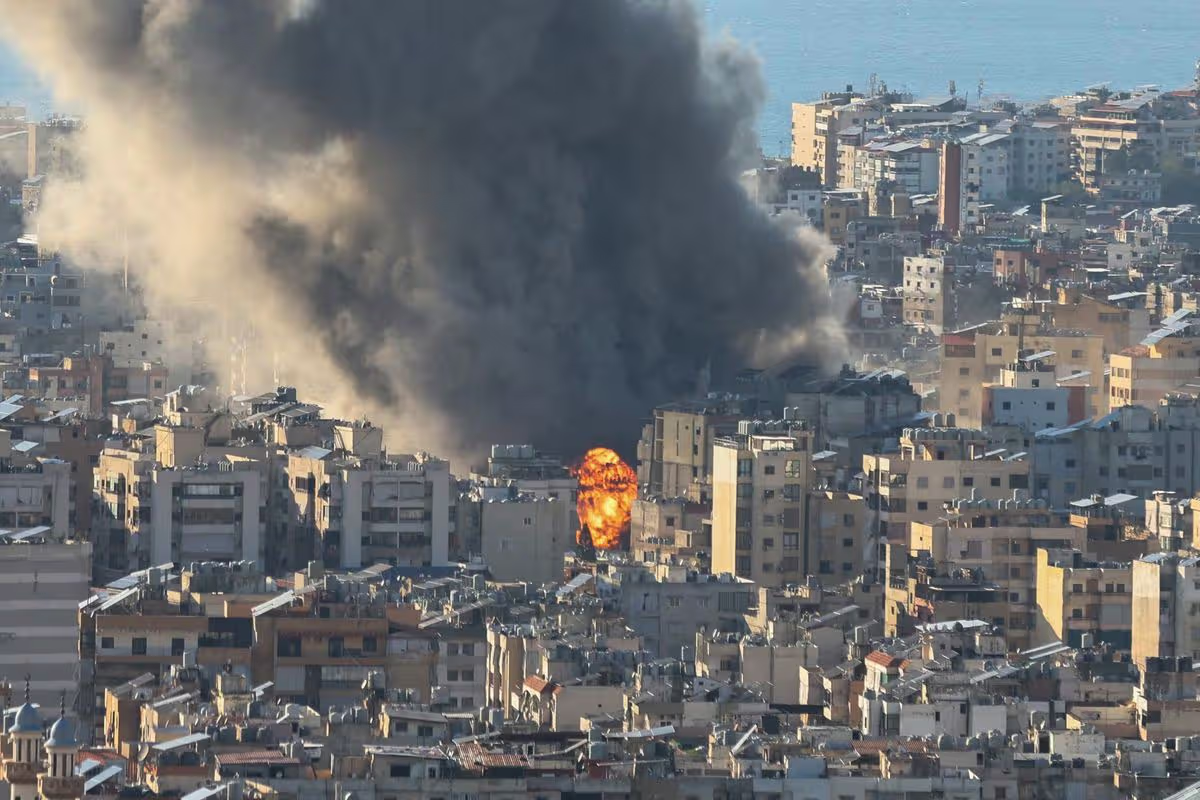
In a blow to Brits planning to get away for summer 2026, experts have revealed that the situation in the Middle East could cause holiday prices to rise, even in destinations not affected by the conflict
This article contains affiliate links, we will receive a commission on any sales we generate from it. Learn more
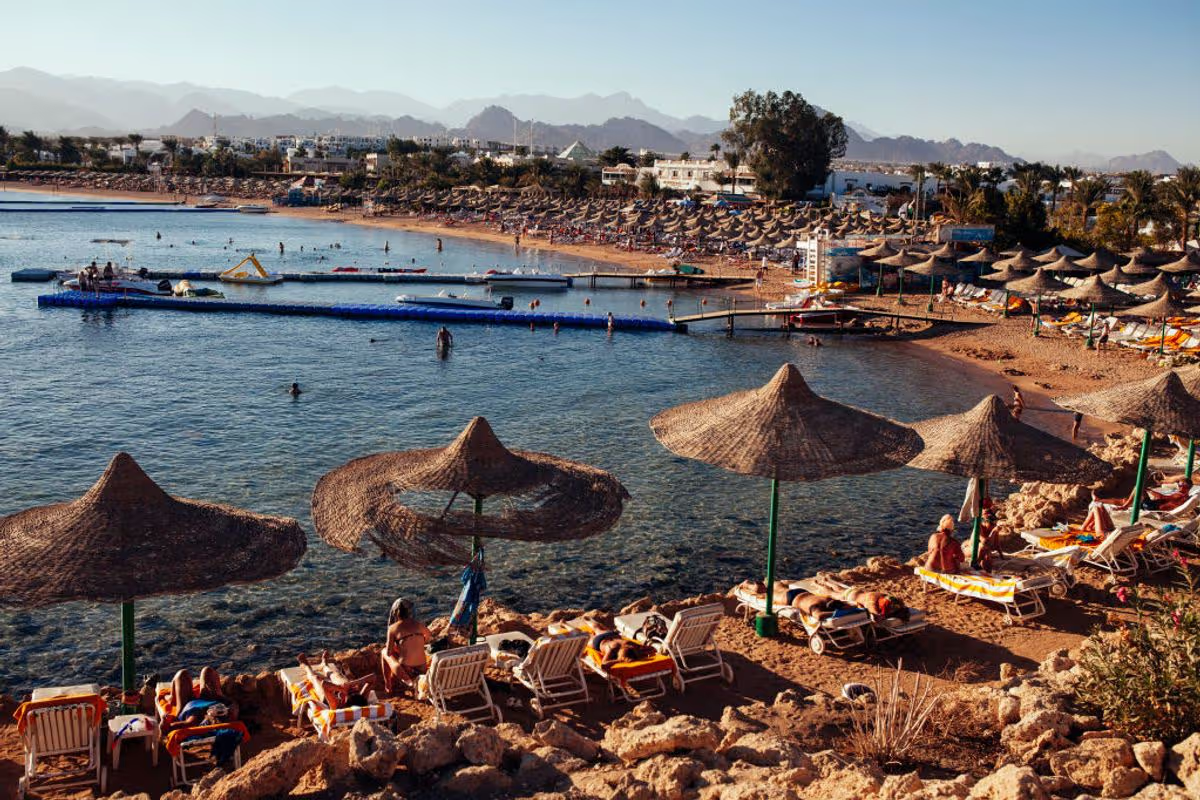
Brits could find their usual break is more expensive this year(Image: Getty Images)
Brits planning to get away overseas for Easter or summer this year are being warned they may need to expand their budget, as holiday prices could rise across all destinations.
Hannah Mayfield, a qualified financial advisor, has explained that the situation in the Middle East could have a “knock-on effect” on prices, following similar patterns seen during times of instability. Even those who opt for a UK-based staycation, or visit countries nowhere near the Middle East, could see higher prices for flights, accommodation, and even everyday spending.
Hannah explained: “Rising tensions in the Middle East can have a knock-on effect on holiday costs, even if you’re travelling somewhere completely different. But this isn’t a new phenomenon. We’ve seen similar patterns during previous periods of geopolitical instability, where travellers change their plans and demand shifts toward destinations perceived as safer.”
Hannah, who is working with travel insurers PayingTooMuch, gave the reasons why flight prices could rise: “Airlines can face higher operating costs during periods of geopolitical instability. If flights need to avoid certain airspaces, routes can become longer. At the same time, global oil prices usually rise during conflicts in major energy-producing regions, and that can eventually feed through into the price for fuel. For travellers, that might mean more expensive plane tickets.”
And it’s not just overseas jaunts that could become more expensive. Hannah said: “There’s also the potential impact on taking holidays, especially to destinations closer to home. If some holidaymakers decide not to travel as far afield, demand for popular destinations such as coastal towns, national parks and major cities can increase.
“When that happens, accommodation prices often rise during peak periods, particularly if availability is limited.” This could mean that, like during Covid, staycations could become pricier.
If you’re planning a trip, even to ‘safe’ destinations, you Hannah advises: “When travel feels more uncertain making sure you have the right level of cover for your trip becomes even more important, so you are less likely to face unexpected costs. Booking early, staying flexible with travel dates, comparing travel insurance policies and prices for flights can make a noticeable difference to the overall cost of a trip.”
She also had this warning: “Most standard travel insurance policies don’t cover acts of war, so conflicts itself may not typically have a direct impact on premiums. However, travellers should always check their policy details carefully, so they understand exactly what is and isn’t covered.
“Consider getting a policy that offers additional cover for travel disruptions which can offer another layer of protection in situations where official government travel advice changes and costs can’t be recovered elsewhere. It’s also worth noting that travel insurance does not cover events that are already known at the time the policy is purchased.”
Hannah, who also runs What is Wealth, which offers financial education for women, also gave some additional money saving tips for holidaymakers: “Keeping an eye on exchange rates and fuel prices can also help holidaymakers budget more accurately and avoid unexpected costs closer to their trip.”
Have a story you want to share? Email us at webtravel@reachplc.com
A major travel update has been issued by the Foreign, Commonwealth and Development Office for Brits travelling to Cyprus as tensions in the Middle East escalate
14:45, 05 Mar 2026Updated 14:47, 05 Mar 2026
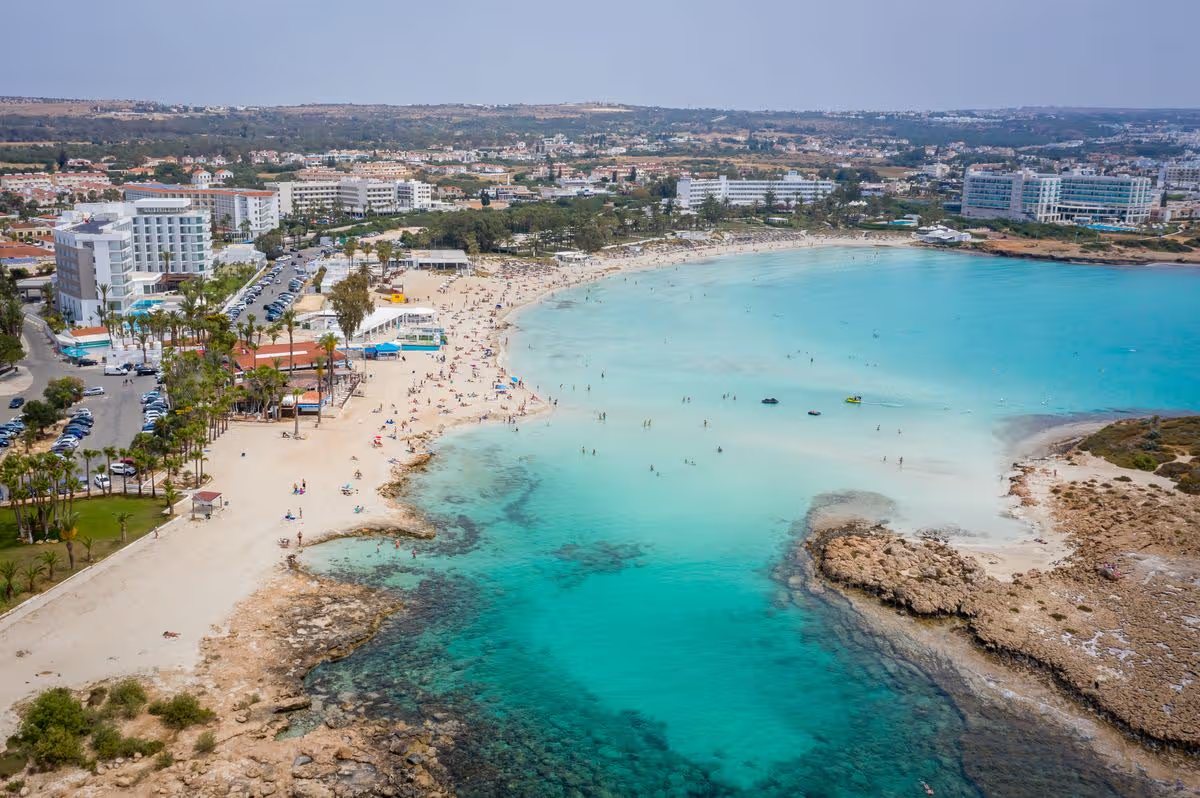
A fresh warning has been issued for travel to Cyprus(Image: Getty Images)
The Foreign, Commonwealth and Development Office (FCDO) has issued an update on travel to Cyprus, amid the ongoing conflict in the Middle East.
Today (Thursday, 5 March), the FCDO has warned that “terrorist attacks in Cyprus cannot be ruled out”. In the updated advice, the Foreign Office stated: “There is a high threat of terrorist attack globally affecting UK interests and British nationals, including from groups and individuals who view the UK and British nationals as targets. Stay aware of your surroundings at all times.”
They added that terrorist attacks “could be indiscriminate, including in places visited by foreign nationals.” Following the update, they stated that the UK Counter Terrorism Policing has information and advice on staying safe abroad and what to do in the event of a terrorist attack.
While there is currently no advice against travel to Cyprus, the Foreign Office warns that the “regional escalation poses significant security risks and has led to travel disruption”. The UK government also warned of a suspected drone strike at the RAF Akrotiri base that took place on March 2.
“On 2 March 2026, the Sovereign Base Areas Administration confirmed a suspected drone impact at RAF Akrotiri. British nationals in the Sovereign Base Areas should follow instructions from the Sovereign Base Areas Administration British Bases Cyprus Facebook. British nationals in the Republic of Cyprus should follow any instructions from Cypriot local authorities,” the guidance reads.
“For British nationals, they advise the following:
“Read If you’re affected by a crisis abroad – GOV.UK. This includes guidance on “how to prepare for a crisis” with suggestions on what you might include in your emergency supplies and “what to do in a crisis”
“Sign up to FCDO Travel Advice email alerts
“Monitor local and international media for the latest information
“Sign up to local information alerts/resources and follow the instructions of the local authorities
“Keep your departure plans under review, and ensure your travel documents are up to date”.
On Wednesday (March 4) it was also confirmed that various airlines had cancelled flights from the UK to parts of Cyprus amid tensions in the Middle East, including easyJet, Ryanair, British Airways and TUI. Following the Foreign Office update, airlines may issue further updates on travel to Cyprus, but this is yet to be confirmed at the time of writing.
If you have an upcoming holiday, it’s best to stay in touch with your holiday provider – although they are prioritising people who are travelling imminently. As the situation is ever-evolving, travel advice can change quickly, so it’s best to check the latest Foreign Office travel advice for a destination before making any travel plans.
For more information on travel advice for Cyprus, or other areas in the Middle East, you can visit the Foreign Office website. You can also find more information on how to minimise your risk if there’s a terrorist attack while you’re away on the government website.
Do you have a travel story to share? Email webtravel@reachplc.com
British Airways has warned all services from Oman up until March 7 are now fully booked as the scramble to return from the Middle East continues amid regional tensions
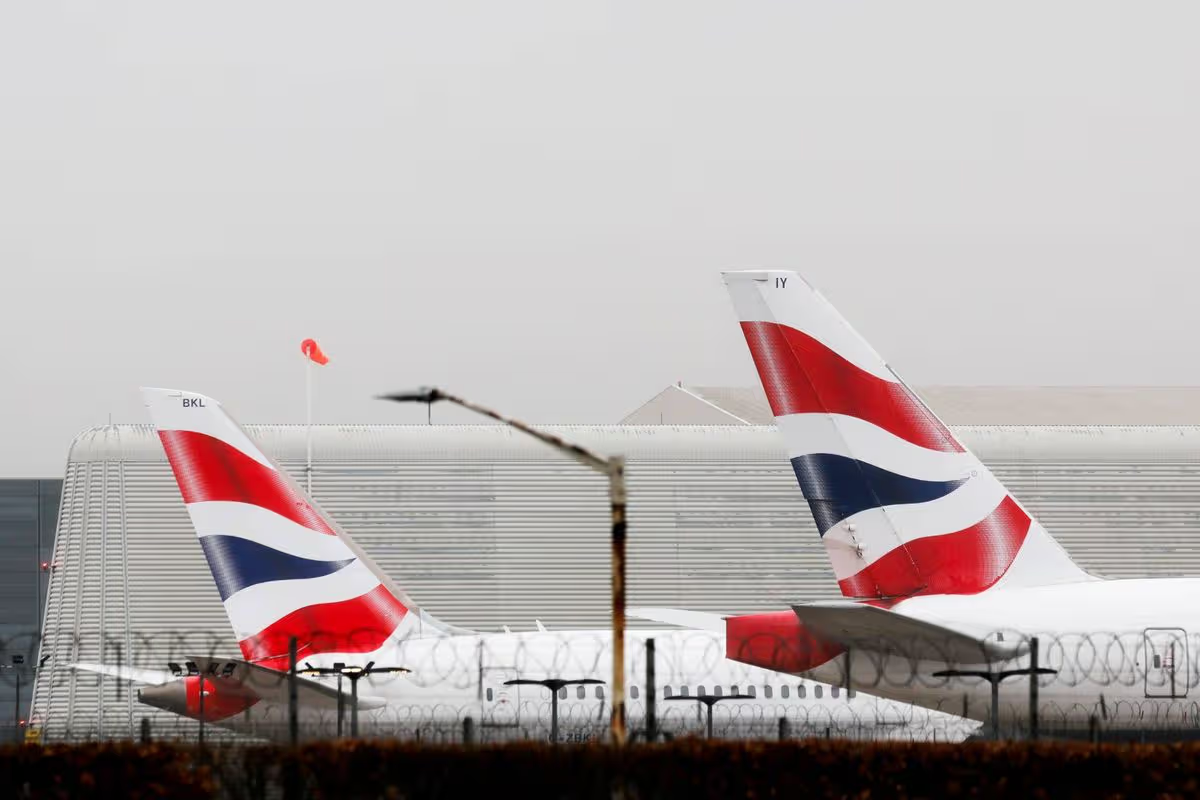
(Image: AFP via Getty Images)
British Airways has issued a warning that flights returning to the UK are ‘fully booked’ as the rush to get back from the Middle East intensifies.
In its most recent public statement, the UK’s flag carrier cautioned that all services departing from Oman through to 7 March are now completely full.
“Flights from Muscat on 5, 6 and 7 March are now fully booked. We will continue to review the situation and, if we are able to, we will add additional services,” a BA spokesperson stated at 2.14pm on Wednesday.
Oman is the nearest nation to major hubs, including Dubai and Abu Dhabi, with accessible airspace. Out of the 136 flights scheduled to depart from Oman today, just 14 have been axed so far. This stands in stark contrast to the UAE, Bahrain, Kuwait, Iraq and Lebanon, where most flights remain grounded.
The latest guidance from BA reads: “We remain unable to operate flights from Abu Dhabi, Amman, Bahrain, Doha, Dubai and Tel Aviv. We have scheduled further flights from Oman (Muscat) to London Heathrow departing on 6 and 7 March.
“Flights are for our customers with an existing booking who are in Oman or the UAE. If you wish to travel on one of these flights, please contact us via our dedicated phone line on +44 203 467 3854. Our teams will also be getting in touch with our customers.”
One BA flight bound for London Heathrow left Muscat after just a short delay this morning. Another is scheduled to leave at 2.30am local time tomorrow, and a third at the same time on Saturday.
Home Office minister Alex Norris has announced that a Government-chartered plane, which failed to depart from Muscat, is now scheduled to leave for the UK on Thursday.
However, he was unable to provide an exact departure time.
Mr Norris expressed confidence that the first Government rescue flight departing Oman amidst the escalating conflict in the Middle East would take off on Thursday, following an overnight delay. When questioned by LBC about the reason for the delay, he explained: “It didn’t take off because there are operational reasons… about getting passengers on board, and it wasn’t able to happen in the time that it had to happen. So that’s now going to go today instead.”
Earlier on BBC Breakfast, Mr Norris said: “We made sure we got them (the passengers) hotel rooms for the night as well, and we are facilitating and rebooking today’s flight. We hope that they do, and there’s multiple flights after it as well.”
In other news, Defence Secretary John Healey is en route to Cyprus in an attempt to defuse tensions with the island’s government following a drone strike on the British base RAF Akrotiri.
Mr Healey is expected to land in Cyprus later on Thursday. His visit follows the Cypriot high commissioner to Britain expressing his disappointment at the UK Government’s response to defending the island.
On Monday night, a hangar at RAF Akrotiri was struck by an Iranian-made Shahed drone, launched from Beirut in Lebanon, according to Cypriot officials. Two further drones detected on Monday were sh.
Shot down by British warplanes that took off from Akrotiri.
The UK has deployed air defence destroyer HMS Dragon to aid in the protection of Cyprus, although the Type 45 warship isn’t expected to set sail until next week.
Wildcat helicopters equipped with anti-drone capabilities have also been sent to the island and are anticipated to arrive this week.
In other developments in the conflict:
– Iran’s ambassador Seyed Ali Mousavi was summoned by the UK Government on Wednesday.
– A US submarine sank an Iranian warship in the Indian Ocean.
– Iran persisted in launching attacks at countries across the region, with Saudi Arabia and Kuwait targeted with missiles and drones.
– Western officials reported that the rate of Iranian missile strikes had declined, estimating that Tehran had several more days of capability to continue based on the current firing rate – although they warned that the decrease could also be a result of Iran trying to conserve its stockpiles.
– Turkey reported that a “ballistic munition” launched towards it from Iran was intercepted by Nato air defences.
– Economic uncertainty continued over the conflict in a region that plays a crucial role in international oil and gas supplies.
Amid the escalating Middle East conflict, Wizz Air has issued an update and confirmed that it has extended its cancellation period for four of its destinations
16:23, 04 Mar 2026Updated 18:24, 04 Mar 2026
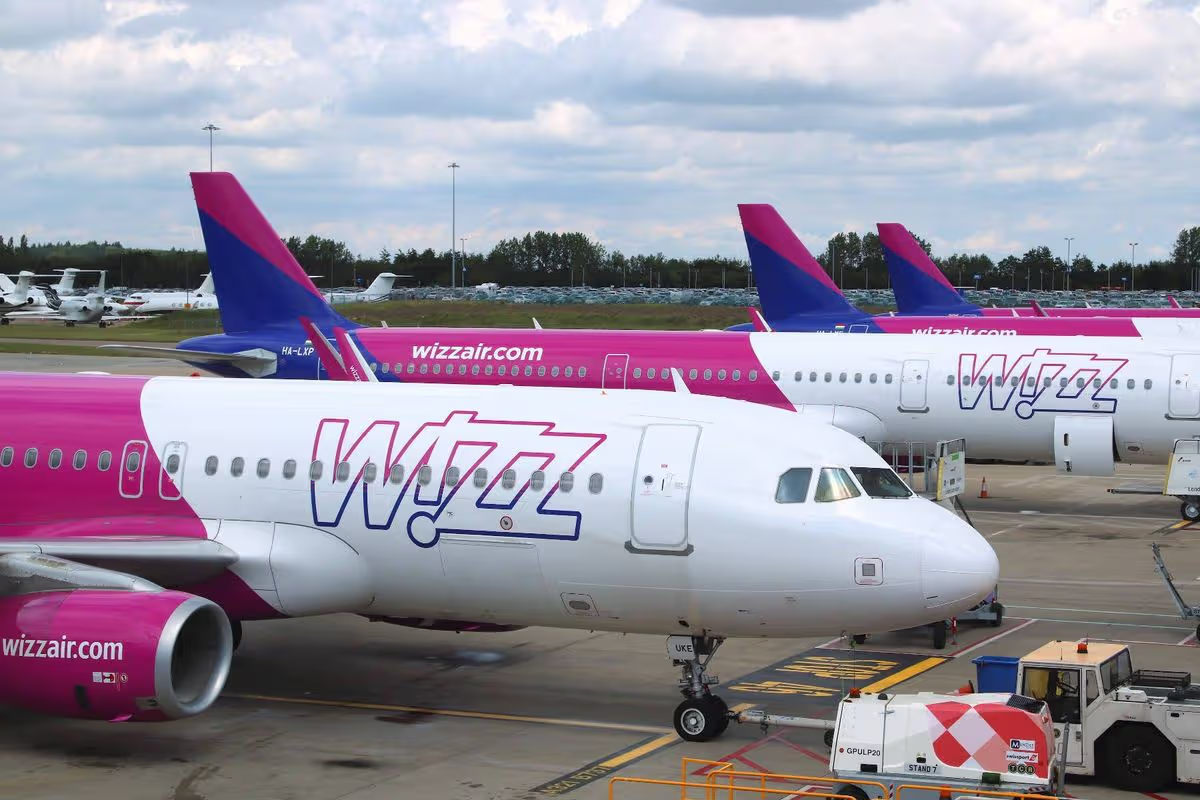
More Wizz Air flights remain grounded amid the Middle East conflict(Image: Getty Images)
Wizz Air has issued a major update for four destinations and has extended its flight cancellations.
The conflict in the Middle East has caused significant travel disruptions for airlines, with thousands of flights cancelled as the Foreign, Commonwealth & Development Office (FCDO) warns against travel to parts of the region. Tensions remain high following the US-Israeli strikes on Iran that began over the weekend, with further attacks being carried out.
As the conflict escalates, Wizz Air has confirmed that it is suspending all flights to and from Israel, Dubai, Abu Dhabi, and Amman up to and including Sunday, 15 March. They had originally planned to cancel these flights until 7 March, but as the conflict shows no signs of slowing, they have extended the cancellation period.
A Wizz Air spokesperson confirmed: “Wizz Air confirms that, following the recent escalation of the security situation in Iran, the airline is suspending all flights to and from Israel, Dubai, Abu Dhabi, Amman up to and including 15 March, pending structural schedule changes reflecting reduced demand. Flights to and from Saudi Arabia will resume as planned from 8 March inclusive.
“The airline is closely monitoring developments and remains in ongoing contact with local and international authorities, aviation safety agencies, security authorities, and relevant governmental bodies. Operational decisions will continue to be reviewed, and the flight schedule may be adjusted as the situation evolves.
“The safety and security of our passengers, crew and aircraft remain Wizz Air’s highest priority. We acknowledge the disruption this may cause and appreciate the understanding of our customers. Passengers with affected bookings will be contacted directly with information regarding their options.”
The extension comes just a few days after Wizz Air first announced that it had suspended all flights to Israel, Dubai, Abu Dhabi, and Amman. Wizz Air joins other major airlines that have cancelled or amended hundreds of flights to parts of the Middle East amid the chaos.
Wizz Air, which has been working hard to ensure passenger safety, confirmed that flights to and from Saudi Arabia will recommence as planned from 8 March. In a bid to support passengers who need to travel to or from Israel, Wizz Air is planning to add flights to Sharm El Sheikh (SSH) from various European airports.
If approved, the extra flights, which will provide a connection between Israel and Europe, will begin on Friday, 6 March. They will be as follows:
Budapest (BUD): from 3 to 10 weekly flights
Rome Fiumicino (FCO): from 11 to 18 weekly flights
London Luton (LTN): from 4 to 8 weekly flights
Milan Malpensa (MXP): from 6 to 11 weekly flights
Sofia (SOF): from 0 to 3 weekly flights
Ensure our latest lifestyle and travel stories always appear at the top of your Google Search by making us a Preferred Source. Click here to activate or add us as your Preferred Source in your Google search settings.
Do you have a travel story to share? Email webtravel@reachplc.com
Many Brits have been left stranded in Dubai after Israel and the US’ attacks on Iran. Here’s all the latest guidance from airlines
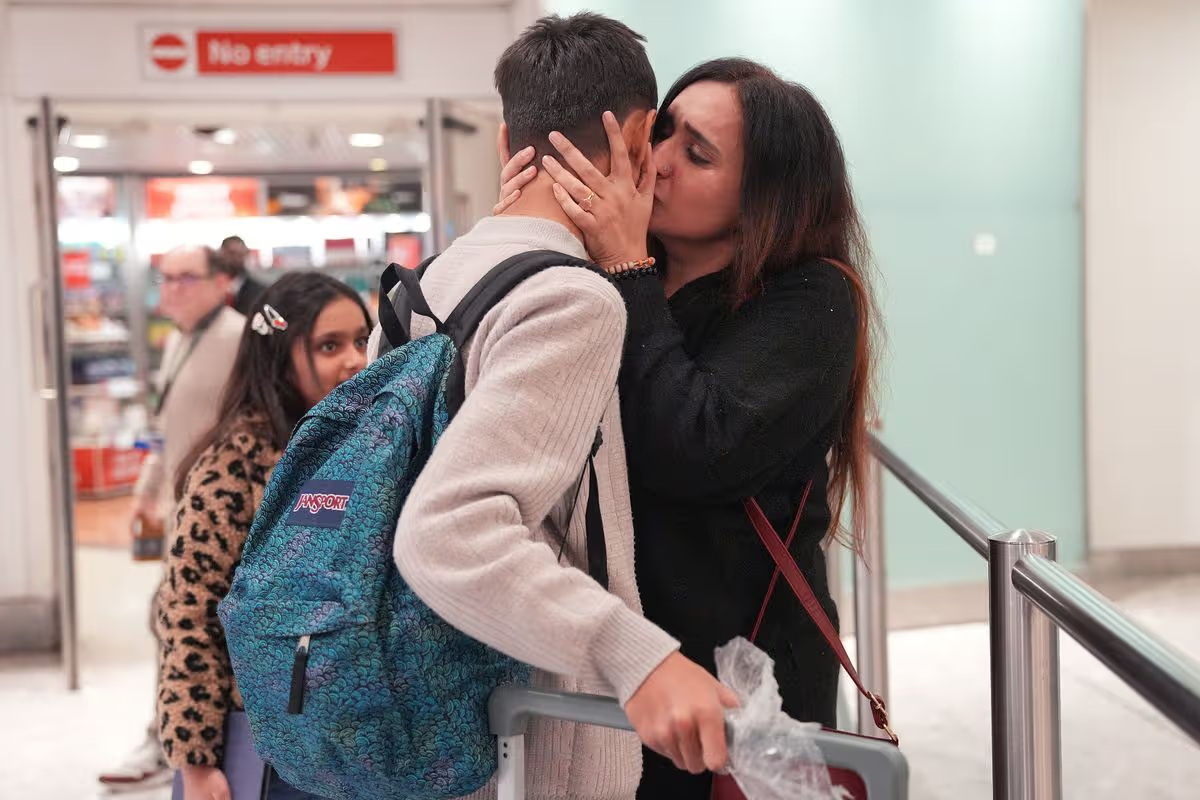
A 12 year old Brit, Ahmad Ali, was stranded alone in Dubai for three nights on his return to the UK from Pakistan. Yesterday, he finally made it back home(Image: PA)
Many Brits are still left stranded in the Middle East as Iran’s counter attacks continue.
Brits and Europeans from other nations are fearing being caught in the crossfire after the Iranian regime let loose at neighbouring nations, including the United Arab Emirates (UAE). Hundreds of people stranded abroad have said they are seeing and hearing bombs rain down near their accommodation, with some advised on ways to board up their windows to prevent them shattering in the event of an explosion.
An explosion was heard close to the US consulate building in Dubai on Tuesday night, with a fire breaking out. There were also reports of explosions and air raid sirens going off in Doha, the capital of Qatar, and air raid sirens sounding in Kuwait city. Iran is continuing strikes in the Middle East after US-Israeli military action started at the weekend.
Brits stuck in the Middle East and those with holidays booked to tourist hotspots like Dubai are now scrambling for answers from airlines on what to do next.
After residents received a state-wide warning to remain vigilant and remind renters of basement bunkers, many British immigrants and visitors in Dubai are facing a new challenge – how to leave and return safely home.
Emirates says on its website: “All scheduled Emirates flights to and from Dubai remain suspended until 2359hrs UAE time on March 4, due to airspace closures across the region.
“Emirates continues to operate a limited number of passenger repatriation and freighter flights on March 3 and 4. We are accommodating customers with earlier bookings as a priority on these limited flights.
“Please do not go to the airport unless you have been notified directly by Emirates or hold a confirmed booking for these flights. Emirates continues to monitor the situation, and we will develop our operational schedule accordingly.”
Manchester Evening News reports that, overall, Emirates is now running 45 flights scheduled from Dubai for today, with seven returning Brits to the UK.
Qatar Airways
Yesterday morning (March 3), Qatar Airways stated flights were still “temporarily suspended”. Taking to X (Twitter), the official account wrote: “Qatar Airways will resume operations once the Qatar Civil Aviation Authority announces the safe reopening of Qatari airspace”.
They added that the next update will be posted on March 6, 0900 Doha time (0600 UTC) and that passengers should watch the official app or website for the latest flight information.
The UK government has confirmed that around 300,000 British nationals are currently in Gulf countries affected by the escalating conflict. Of those, 102,000 have registered their presence with the Foreign Office as officials draw up contingency plans, including the possibility of a large-scale evacuation.
Sir Keir Starmer said the government is “looking at all options to support our people”, while Foreign Secretary Yvette Cooper indicated that detailed preparations are under way. British nationals in Bahrain, Israel, Kuwait, Palestine, Qatar and the UAE have been urged to register online and monitor official travel advice, which could change rapidly.
British Airways
Speaking to the Mirror, British Airways said: “We’re continuing to do everything we can to support customers and colleagues in the region and are in regular contact with them”.
“We currently remain unable to operate flights from destinations including Dubai, Doha, Abu Dhabi, Bahrain, Amman, and Tel Aviv. We’re aware that a number of our customers are now in Oman, where the airspace is currently open. Working with the relevant authorities, we’ve been able to schedule a flight from Muscat to London, departing at 02:30 local time on March 5. Existing customers who are in Oman can let us know they wish to travel on this flight via a dedicated phone line: +44 203 467 3854”.
The advised: “Customers should continue to follow the latest safety advice from local government and the Foreign Office. Customers are advised NOT to travel to the airport unless they have a confirmed booking”. They added that “flights to Cairo, Riyadh, and Jeddah continue to operate as normal”.
The airline went on, saying: “We have actioned a flexible customer booking policy which allows all customers due to travel between London Heathrow and Abu Dhabi, Amman, Bahrain, Doha, Dubai, Tel Aviv in the coming days the option to change the date of their flights for free or get a refund. Customers travelling to Larnaca can rebook for a different date for free. Customers travelling to these destinations in the coming days can also change their booking to a different route with no change fee but will need to pay the fare difference,” ended BA.com.
British Airways has also said: “If you are due to fly between London Heathrow and Abu Dhabi, Amman, Bahrain, Doha, Dubai or Tel Aviv you can change your flight free of charge up to and including 29 March. Customers travelling up to and including March 4 may also request a full refund”. Those concerned have been recommended to keep up with the latest on the FCDO and their airline/travel provider websites for real-time guidance.
Wizz Air
Wizz Air states: “The airline is now suspending all flights to and from Israel, Dubai, Abu Dhabi and Amman up to and including Sunday, March 15 (previously March 7), pending structural schedule changes reflecting reduced demand. Flights to and from Saudi Arabia will recommence as planned from March 8 inclusive”.
Virgin Atlantic
Virgin Atlantic says that some flights were resumed yesterday between London Heathrow Airport, Dubai and Riyadh.
A spokesperson shared: “The safety and security of our customers and people is always our top priority, and our operation is subject to ongoing assessments”
“We are contacting customers regarding their travel arrangements. We’d like to thank them for their patience and understanding and recommend that all customers due to travel to or from Dubai and Riyadh over the next 48 hours check the status of their flight on virginatlantic.com before going to the airport.
“We continue to monitor the situation in the Middle East with ongoing dynamic assessments and active changes to our flight routings based on the latest information and guidance, if required”. These are the ongoing flights now resumed:
VS400 London Heathrow – Dubai, Tuesday March 3
VS242 London Heathrow – Riyadh, Tuesday March 3
VS401 Dubai – London Heathrow, Wednesday March 4
VS243 Riyadh – London Heathrow, Wednesday March 4
The airline ewill not fly over Iran and flights “to India and Maldives may experience slightly longer flight times,” says a recent update. A spokesperson tells the Mirror: “All flights will carry appropriate fuel to allow for short notice re-routing” and that “all cancellations are being continuously updated”.
“To provide greater flexibility for customers with affected upcoming travel plans, Virgin Atlantic and Virgin Atlantic Holidays has introduced flexible booking options, which remain under constant review. For full details and contact information for customer teams please see https://www.virginatlantic.com/travel-news/middle-east-airspace”.
“Virgin Atlantic customers with a cancelled flight who are away from home for longer than planned will have all reasonable expenses, accommodation and transport covered. They are asked to submit all receipts via our website”.
Ethiad
Etihad, Emirates and Qatar Airways have continued to suspend their commercial flights and are currently only operating a small number of repatriation flights, Manchester Evening News reports.
An Emirates flight from Dubai and a Qatar Airways departure from Doha landed at Manchester Airport this morning. In total, Emirates is operating seven flights from Dubai to the UK while Etihad has two Abu Dhabi departures.
The airline said on Wednesday that Etihad’s flights to and from Dubai are suspended until at least Friday morning. All scheduled flights to and from Abu Dhabi remain suspended until 2pm UAE time on Thursday. The airline has warned travellers to only head to the airport if contacted directly by Etihad.
The Foreign Office has updated its advice for a number of destinations including Cyprus, Turkey, and Egypt as the Middle East war continues following US-Israel strikes on Iran
The Foreign Office has updated its Egypt travel advice(Image: Getty Images)
The Foreign Office has updated its travel advice for a number of destinations including Turkey, Cyprus and Egypt amidst the chaos of the Middle East war, following US-Israeli strikes on Iran.
Although at the time of writing the UK government isn’t advising against travel to all of these destinations, it has updated its advice around “regional tension” and possible escalations in the areas. For Brits who have travel plans booked, as there isn’t an advisory against travel in general to these countries, holidays and flights in theory can go ahead as planned.
If you’re due to travel in the next few weeks but don’t want to because of the ongoing conflict, you do have a few options. It’s unlikely that you’ll be able to cancel and get a full refund, but get in touch with your tour operator or airline, as they may allow you to rebook your trip to a later date, without charging you a fee.
If a company cancels your holiday or flight, then it’s a different story; in this case, you are entitled to a full refund. You may be offered rebooking options which you can take, but if you’d rather get your money back then you are entitled to do so. The same applies if the Foreign Office does issue a ‘do not travel’ warning, as it has done with the UAE. In this case, firms and airlines need to cancel your trip and offer you a full refund. If you try and travel against Foreign Office advice, your travel insurance will be invalidated.
It’s worth noting that airlines and holiday companies are currently prioritising customers due to travel within the next couple of weeks – if your trip is a few months away, you may be asked to get back in touch closer to the time.
Check out the latest travel advice for Cyprus, Turkey and Egypt below.
Cyprus travel advice
Currently, the Foreign Office doesn’t advise Brits against travel to Cyprus, with most holidays and flights currently going ahead. However, the UK government has warned of a suspected drone strike at the RAF Akrotiri base that took place on March 2. “British nationals in the Sovereign Base Areas should follow instructions from the Sovereign Base Areas Administration British Bases Cyprus Facebook. British nationals in the Republic of Cyprus should follow any instructions from Cypriot local authorities,” the guidance reads.
Authorities have also updated advice to warn of the “regional escalation” in the area. “Regional escalation poses significant security risks and has led to travel disruption,” it states, adding: “British nationals should:
“read If you’re affected by a crisis abroad – GOV.UK. This includes guidance on “how to prepare for a crisis” with suggestions on what you might include in your emergency supplies and “what to do in a crisis”
“sign up to FCDO Travel Advice email alerts
“monitor local and international media for the latest information
“sign up to local information alerts/resources and follow the instructions of the local authorities
“keep your departure plans under review, and ensure your travel documents are up to date.”
Turkey travel advice
Currently, the Foreign Office doesn’t advise Brits against travel to Turkey in general, with most holidays and flights currently going ahead. There is a ‘do not travel’ warning within 10km of Turkey’s border with Syria “due to fighting and a heightened risk of terrorism”, but this was in place before the Middle East conflict.
Like Cyprus, the advice has also been updated to warn of the “regional escalation” in the area. “Regional escalation poses significant security risks and has led to travel disruption,” it states, adding: “British nationals should:
“read If you’re affected by a crisis abroad – GOV.UK. This includes guidance on “how to prepare for a crisis” with suggestions on what you might include in your emergency supplies and “what to do in a crisis”
“sign up to FCDO Travel Advice email alerts
“monitor local and international media for the latest information
“sign up to local information alerts/resources and follow the instructions of the local authorities
“keep your departure plans under review, and ensure your travel documents are up to date.”
Egypt travel advice
The Foreign Office has updated its Egypt travel advice to warn Brits of “a heightened risk of regional tension” following the Middle East conflict. Its latest advice explains: “There is a heightened risk of regional tension. Escalation could lead to travel disruption and other unanticipated impacts.
“British nationals should take sensible precautions, considering their own individual circumstances. These include:
read If you’re affected by a crisis abroad – GOV.UK. This includes guidance on “how to prepare for a crisis” with suggestions on what you might include in your emergency supplies and “what to do in a crisis”
sign up to FCDO Travel Advice email alerts
monitor local and international media for the latest information
sign up to local information alerts/resources and follow the instructions of the local authorities
stay away from areas around security or military facilities.”
Currently it doesn’t advise against all travel to Egypt, however it does advise against travel to certain regions of the country. It’s worth noting these advisories are unrelated to the Middle East conflict, and were already in place. These include warning against all but essential travel to the Egypt-Libya border, North Sinai, Northern part of South Sinai, Eastern part of Ismailiyah Governorate. There is also advice against travelling to the Western Desert including the area west of the nile Valley and Nile Delta Regions, although there are some exceptions such as Luxor and Valley of the Kings (check the Egypt travel advice for full details).
Check the latest air travel status including departures from popular holiday destinations such as Dubai, Cyprus and Egypt after the Iran war forced airports to close and airlines to cancel flights
War in the Middle East is causing flight disruption across the world(Image: AFP via Getty Images)
Conflict between Iran, the US and Israel has spread across the Middle East and triggered widespread airspace closures, sparking major disruption to flights, and leaving thousands of British tourists stranded abroad.
Popular holiday destinations including Egypt, Abu Dhabi and Dubai are among those to ground all flights or severely limit departures, but the ‘ripple effects’ are also impacting travel to and from a number of other countries, including Cyprus and Turkey.
Here’s all the latest on flight cancellations, cruise ships and your rights if something goes wrong:
Ensure our latest headlines always appear at the top of your Google Search by making us a Preferred Source.Click here to activate or add us as your Preferred Source in your Google search settings.
The UK Foreign Office now advise against all but essential travel to the UAE, Qatar and Bahrain.
Airspace closures mean flights to and from the United Arab Emirates (including Dubai and Abu Dhabi), Qatar, Saudi Arabia, Lebanon, Kuwait and Oman are almost entirely cancelled, with aviation largely reserved for military and cargo flights.
If you have a flight due soon to one of these countries, you should get in touch with your airline as soon as possible.
While flights to and from Cyprus, Egypt and Turkey are going ahead largely as scheduled, they may be subject to short-notice delays or cancellations, so you should check regularly with your airline before you travel.
Dubai and UAE travel advice
The Foreign Office advises against all but essential travel to United Arab Emirates.
Your travel insurance could be rendered invalid if you travel against this advice.
British nationals currently in the country should stay indoors due to risk of missile attacks, and the current advice reads: “Remain indoors in a secure location, avoid all travel and follow instructions from the local authorities.”
Cyprus travel advice
After a suspected Iranian-made drone was fired at the RAF base at Akrotiri, the Foreign Office updated its advice to read: “Regional escalation poses significant security risks and has led to travel disruption.
“British nationals in the Sovereign Base Areas should follow instructions from the Sovereign Base Areas Administration. British nationals in the Republic of Cyprus should follow any instructions from Cypriot local authorities.”
Turkey travel advice
The Foreign Office advises against all travel to within 10km of the border with Syria due to “fighting and a heightened risk of terrorism”.
Egypt travel advice
There is “heightened risk of regional tension” which “could lead to travel disruption and other unanticipated impacts”, the Foreign Office said.
Which airlines have cancelled flights?
A handful of flights will bring British nationals stranded in the Middle East back to Britain today – but the majority of departures from the region remain cancelled.
The current Emirates flight status is that the airline plans to operate two flights to Heathrow, and one each to Gatwick and Manchester. At least some of these flights will be operated by the airline’s A380 jets, which can each carry up to 615 passengers depending on how they are configured.
Emirates usually operates 146 weekly flights to the UK, which is the equivalent of about 21 per day.
Etihad Airways has scheduled one UK flight on Tuesday, from Abu Dhabi to Heathrow.
Qatar Airways, which usually serves Heathrow and Gatwick from Qatar, said on Tuesday morning that its operations remain suspended because of the closure of Qatari airspace.
British Airways has cancelled its timetabled flights to Heathrow from Abu Dhabi, Amman, Bahrain, Doha and Dubai on Tuesday.
The airline told passengers: “We are closely monitoring the situation and have cancelled a number of our flights to the Middle East.
“Safety is always our top priority and we would never operate a flight unless it was safe to do so.”
Passengers with bookings on certain routes up to March 15 are being allowed to amend the date to fly on or before March 29.
Virgin Atlantic axed a flight from Dubai to Heathrow.
What about connecting flights?
You could also be affected if you’re due on a flight that changes at an airport disrupted by the war – such as Abu Dhabi, which acts as a major hub for connecting flights to Thailand, Vietnam, India, Australia and New Zealand. Check with your airline in advance if you’re in any doubt.
What if I’m stuck abroad?
British nationals currently in the Gulf have been advised by the Foreign Office to remain indoors and follow local authorities. Plans for evacuation repatriation flights are going ahead, but at a very limited capacity, and you should not make plans around these until you have been contacted by British consular staff.
What are my rights if something goes wrong with my flights?
Don’t cancel your own ticket if your destination or connecting flight is affected – instead, wait for the airline to cancel the flight.
If you cancel voluntarily, you will likely forfeit your right to a full refund or rebooking under UK air passenger rights.
It’s important to check your travel insurance, as standard policies will usually cover extended emergency medical expenses if you are stranded abroad – but many exclude cancellation or curtailment costs arising directly from acts of war.
What about cruise ships?
Thousands of cruise line passengers are currently trapped in ports in the Middle East due to the war in Iran.
At least six well-known ships from big companies, including TUI, are reported to be at a standstill and awaiting news of when they can leave.
Cruise liners affected include TUI Cruises’ ships Mein Schiff 4 and Mein Schiff 5, which are stranded in the ports of Abu Dhabi and Doha. The cruise line has had to cancel its upcoming departures due to the lack of operating repatriation flights.
The MSC Euribia remains docked in the port of Dubai, under strict security measures, with embarkations suspended until further notice.
The ships Celestyal Journey and Celestyal Discovery have also had their departures cancelled and are being kept under supervision in regional ports.
TUI Cruises said in its latest alert: “We are currently monitoring the evolving situation in the Middle East region and the latest guidance from the UK Foreign, Commonwealth & Development Office (FCDO).”
Disruption ‘could last weeks’
Last night, US president Donald Trump said the joint US-Israel military operation in Iran could last four to five weeks or “far longer”.
Aviation consultant John Strickland said it could take weeks to clear the backlog of passengers, even if the conflict ends sooner.
He said: “It’s a bit uncertain (when that will happen) because of course it will depend on how long the airspace restrictions remain in place.
“But factoring in the high volumes of normal daily traffic and the high capacity of aircraft such as the A380 and the Boeing 777, plus the fact that other flights covering similar routes operate at high occupancy, then it will certainly be quite a period of time which would likely run into weeks.”