Cacan Sullivan’s goal came after teenager Julian Hall, 18, had given Mauricio Pochettino’s side the lead in Mexico friendly.
Published On 4 Oct 20264 Oct 2026
Cavan Sullivan became the youngest US international goalscorer in history as the United States defeated archrivals Mexico 3-0 in a friendly international in Arizona on Saturday.
Sullivan, who is poised to join English Premier League side Manchester City next year, netted a superbly taken goal in the 62nd minute to double the USA lead at the State Farm Stadium in Glendale.
Recommended Stories
list of 4 itemsend of list
At 17 years and five days, Sullivan beat Mathis Albert’s five-day-old record as the youngest US goalscorer.
Albert, aged 17 and 31 days, scored during Tuesday’s 4-2 defeat of Chile.
“These are the moments you dream of when you’re three, four, five or six-years-old,” Sullivan said.
“I manifested this moment, not just these past couple of hours when I found out I was starting, but my whole life,” he added.
Sullivan’s strike came after another teenager — 18-year-old Julian Hall — had given Mauricio Pochettino’s side the lead in the 28th minute.
Hall’s goal was his third in as many games since being handed his international debut by US coach Pochettino in last week’s defeat of Peru. Hall also scored in the victory over Chile.
The loss puts more pressure on Mexico coach Rafael Marquez, who is still seeking his first win since taking over following the World Cup.
Mexico dominated possession and territory early on but were unable to find a way through a well-organised United States defence.
Instead, it was the hosts who took the lead just before the half-hour mark with a superbly worked goal from Hall.
Gio Reyna surged into the penalty area to collect a pass from Alex Freeman and ghosted past Mexico midfielder Erik Lira to reach the byline.
Reyna’s low cross was parried away by Mexico goalkeeper Raul Rangel, but only as far as Hall, who lashed in from close range to make it 1-0.
Mexico’s best chance came early in the second half when Roberto Alvarado’s rasping shot from the edge of the area was tipped over the bar by US goalkeeper Diego Kochen.
Pochettino’s side doubled their lead on 62 minutes when Sullivan’s persistence in chasing down a long ball was rewarded after Rangel mishit a pass to the American outside his area.
Sullivan coolly took his time and chipped home from long range to make it 2-0.
“I just remember chipping the ball, hoping it didn’t hit the crossbar or go over,” Sullivan said of his strike. “I was getting nervous when it was in the air and then everything was a blur.”
A miserable night for Mexico got worse shortly afterwards when substitute Luis Chavez was shown a red card for shoving a hand into the face of Sebastian Berhalter in the 68th minute.
The United States completed the scoring in the 84th minute when Malik Tillman latched onto a poor Mexico backpass and smashed a shot into the top corner for 3-0.
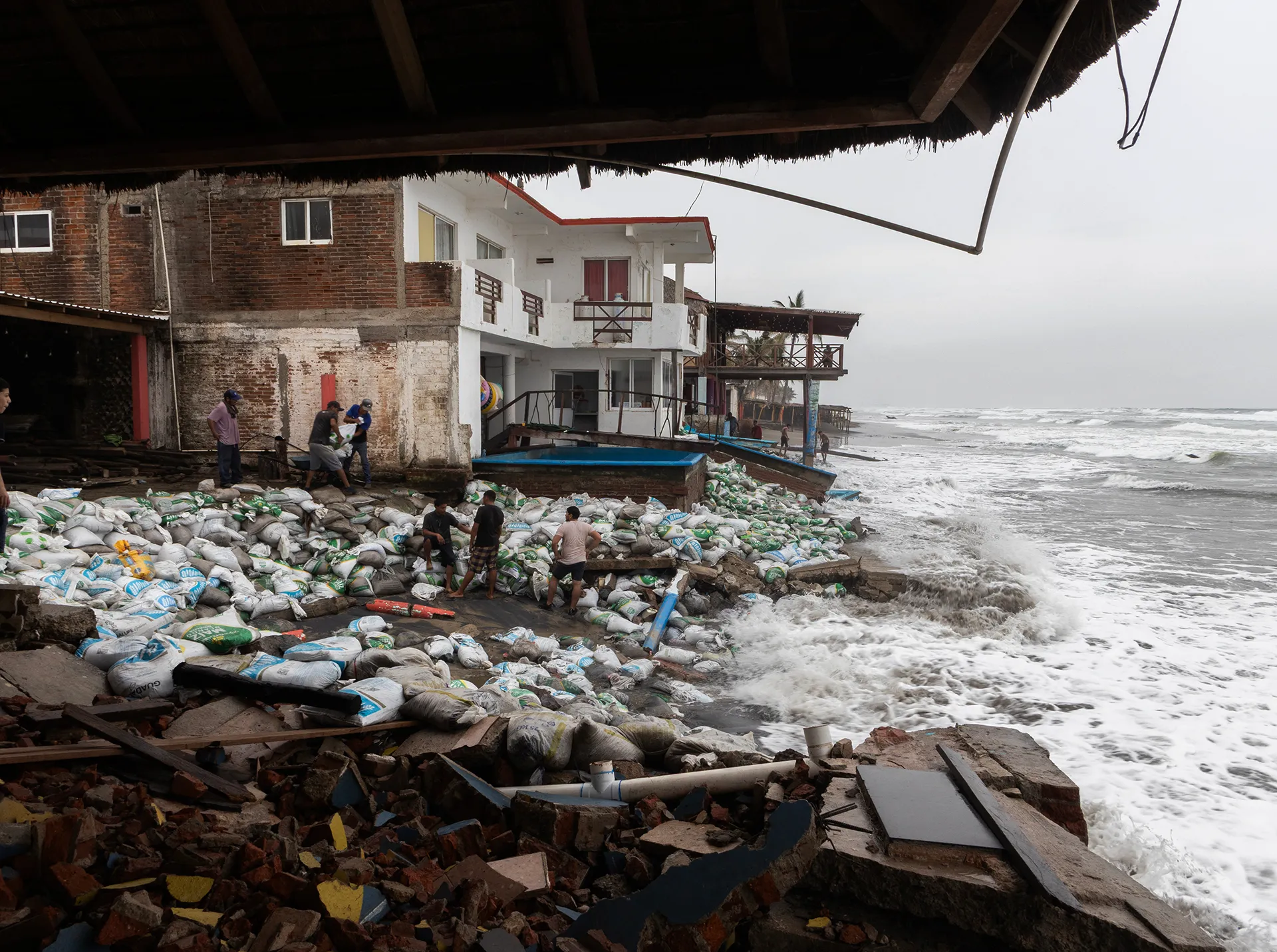
Heavy rains could cause life-threatening flooding and landslides on Mexico’s Pacific Coast, the US National Hurricane Center warned.
Published On 24 Sep 202624 Sep 2026
Hurricane Polo has sent heavy rain and strong waves across Mexico’s Pacific coast, while Tropical Storm Nolo is approaching Hawaii with the potential for catastrophic flooding.
Early on Thursday, the hurricane was swirling about 130 miles (209 kilometres) south-southwest of the Mexican city of Zihuatanejo. It was moving northwest at 7mph (11kph) and forecast to turn west-northwest later in the day, taking it further out to sea, before turning northwest on Saturday.
Polo was forecast to maintain Category 5 strength as it moves along Mexico’s coast over the next few days.
While the eye and the strongest winds were expected to remain at sea, the heavy rains could cause life-threatening flooding and landslides, warned the US National Hurricane Center in Miami.
A hurricane watch was issued for Hawaii county and disaster preparations are under way because Tropical Storm Nolo could hit the island on Friday or Saturday, warned the National Weather Service.
John Bravender, a weather service warning coordination meteorologist, said during a news conference on Wednesday afternoon that the tropical storm could develop into a major hurricane.
Hawaii County Mayor Kimo Alameda told residents in a video message that they should start preparing for the storm. He urged them to put together emergency kits with food, water and medications, as well as trim vegetation and clear drains.
“This is a very serious situation,” he said. “We do believe that the rain is going to come. It’s coming already.”
Governor Josh Green’s office said public schools and state and county offices across Hawaii’s Big Island will close on Thursday and Friday, while Maui County will shut them on Friday ahead of the threat of heavy rain, winds and flooding.
US-led anti-cartel alliance backs sanctions against crime groups after Trump urges stronger action.
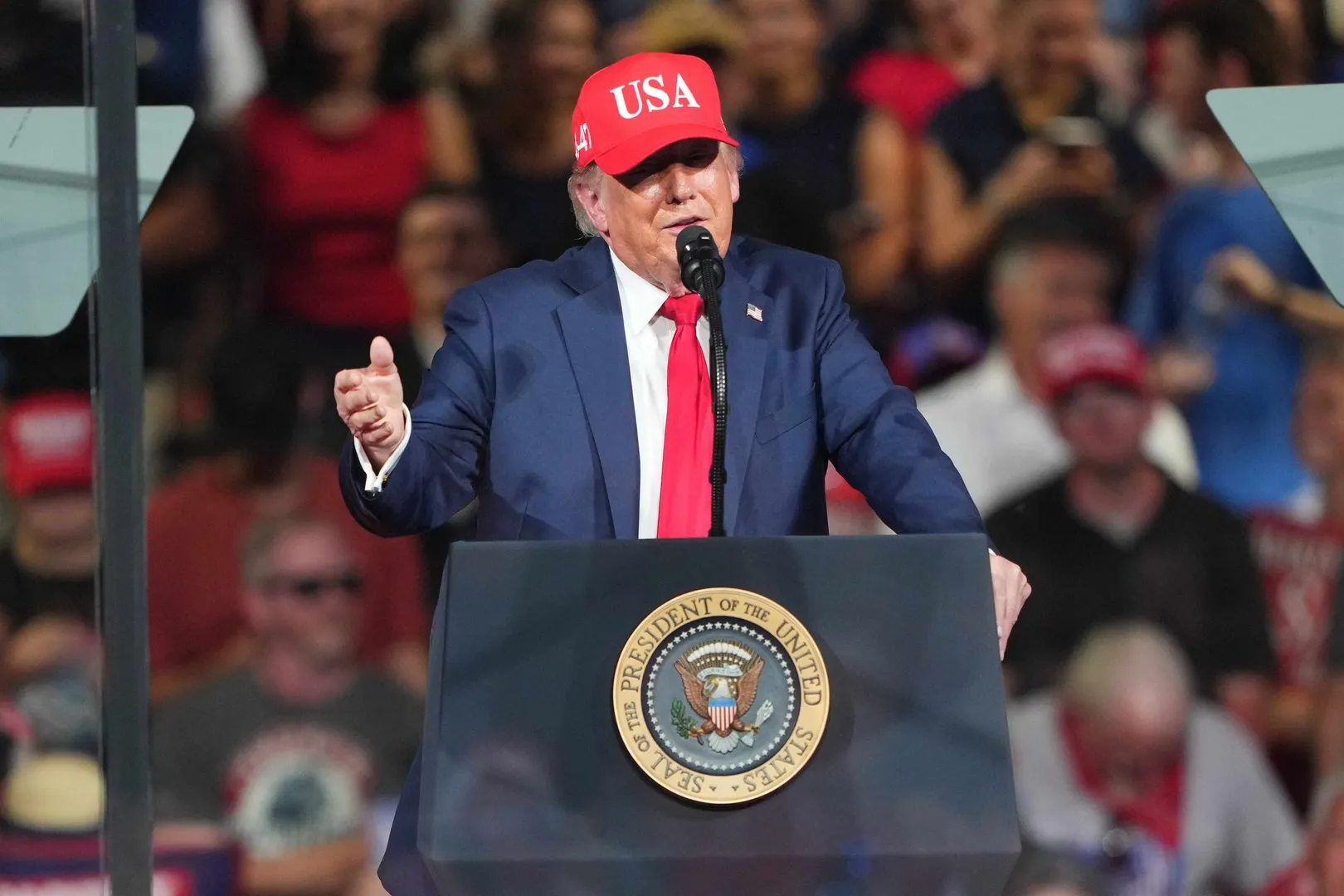
United States President Donald Trump has pledged to use “unmatched military might” against drug cartels in the Western Hemisphere during a meeting of the Washington-led Shield of the Americas coalition in New York City.
In a meeting with leaders and foreign ministers from the anti-cartel alliance, Trump on Tuesday urged member countries to join the US in targeting 24 criminal organisations, which he earlier described as the “ISIS of the Western Hemisphere”.
Recommended Stories
list of 3 itemsend of list
He said he was asking “all nations in the Shield of the Americas to formally designate narco-terrorists as common threats to stability and apply crushing sanctions” against all of the groups. The meeting took place on the sidelines of the annual United Nations General Assembly (UNGA) in New York City.
The coalition’s 15 governments later issued a joint statement saying they intended to impose asset freezes and visa restrictions on members and supporters of the groups and to pursue criminal charges against them.
At the top of the list are two groups that have been declared “terrorist” organisations by Washington: Mara Salvatrucha (MS-13) – one of Central America’s most powerful criminal gangs – and Tren de Aragua, a Venezuelan gang that is also active in Colombia, Peru and Chile.
The list also includes major Mexican cartels, Colombian armed groups such as the National Liberation Army, Brazil’s Primeiro Comando da Capital and Comando Vermelho groups, and Peru’s Shining Path.
Al Jazeera’s Alessandro Rampietti, reporting from Bogota, Colombia, said the statement was largely symbolic for now, because each country must follow its own legal procedures.
“For example, here in Colombia, it will require a law to pass in Congress. We understand that the government here has asked Congress to move forward in drafting such a law. So while the consequences may not be immediate, this is clearly an important step towards building what the US has been trying to do in Latin America [through] this alliance,” he added.
The coalition is made up of governments closely aligned with Trump, including Argentina, Ecuador and El Salvador, whose leaders he has praised or endorsed. Colombia and Peru joined after Trump-aligned presidents took office in recent months.
Brazil and Mexico have not joined.
US Secretary of State Marco Rubio, who also attended, praised “the emergence of strong leaders who are committed to the challenge of taking on transnational terrorism”.
The gathering was the administration’s latest effort to rally the region behind a more aggressive approach to drug trafficking. Since returning to office last year, Trump has designated cartels as foreign terrorist organisations and ordered dozens of strikes on boats in the Caribbean and eastern Pacific that US officials say were carrying narcotics bound for the US.
The strikes have killed more than 223 people, and UN experts say they violate international law and could amount to crimes against humanity.
The Trump administration’s National Security Strategy, released late last year, laid out plans for a revamped Monroe Doctrine, the 19th-century policy asserting US primacy in the hemisphere that critics associate with decades of US intervention.
Trump has also spoken of retaking the Panama Canal and annexing Greenland and Canada. On Tuesday, he signed an agreement on Greenland that stopped short of his demand that the island become US territory.
The focus on the hemisphere has raised concerns across the region.
Brazilian President Luiz Inacio Lula da Silva, in his UN speech, bristled at the approach, warning countries in Latin America and the Caribbean of “renewed hegemonic temptations”.
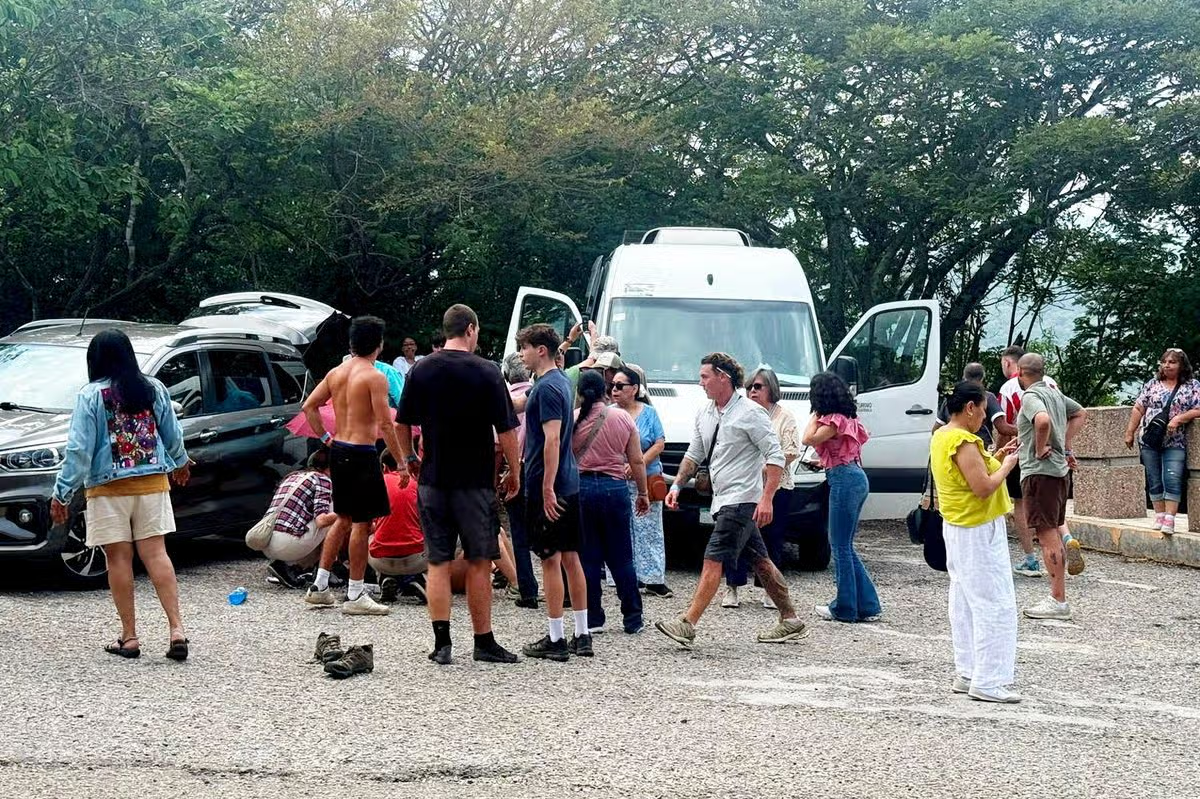
A number of passengers needed medical treatment after the accident near the Sumidero Canyon in Chiapas, south-eastern Mexico
A photo of the aftermath of the accident(Image: James Gamble / SWNS)
A group of backpackers including several Brits cheated death when their Mexican tour bus was stopped by a single bollard – as it rolled towards a terrifying 1,000m drop. They paid for a tour of the Sumidero Canyon in Chiapas, south-eastern Mexico, in July and, after walking around to take in the view, boarded their tour bus at the top of a steep drop – when it started rolling backwards.
The group say they feared they were headed for the canyon and many of them started diving off the bus headfirst to save themselves. Luckily, the bus hit a bollard and came to a stop before going over the edge.
But many of the passengers have been left traumatised by the near-death ordeal, with some suffering physical injuries and needing hospital treatment. James Gamble, 30, from Portsmouth, said: “I honestly thought I was going to die. It was hands-down the most terrifying experience of my life.
“Everyone was diving off the bus headfirst, thinking we were headed for the canyon. I just imagined the bus tilting backwards with nothing I could do.
“It was horrific. I didn’t stop shaking for an hour afterwards; people who weren’t even on the bus were crying and having panic attacks.”
James says that one passenger, Madeleine Glen, had tried to grab the handbrake as the bus was rolling, but it was already up. Several passengers were hospitalised following the terrifying incident after injuring themselves fleeing the bus.
Sophie Badelt, 22, from Switzerland, hit her head on a parked car as she dove from the moving bus and was bleeding profusely. A British nurse from another tour of the canyon helped to bandage her head while they waited for an ambulance.
Brit Hugo Evans, 20, was also injured in the ordeal and bandaged at the scene by paramedics. He said: “I dove out of the van, headfirst – that was the only option. I was in a blind panic. I thought we were going to die for sure.
“I hit my head on the floor and there was a lot of blood. I thought we were headed for the cliff. Everyone was freaking out when Sophie was screaming… She was drenched in blood. It was terrifying.”
The tour left on July 9 and cost 600 Mexican Pesos (£25.66) per person. All the passengers have since been refunded, and Sophie says that she has been compensated for her medical bills after weeks of back-and-forth.
There were three Dutch passengers – Britt van Engelen, 28, Yesol Sihn 29, and Floris van Neer, 30. Also onboard was Belgian tourist Hanne, 23, and Australian pair Garrison Hamlin, 28, and Brodie Hampson, 28.
James, a former journalist, says he stayed on the bus until it came to a halt and that he has been left shaken by the ordeal. He added: “We took some photos of the canyon at the viewpoint and were told to get back on the bus. The van was parked on a hill and I was sat near the back.
“We all piled back on the bus and, as the last people were getting on, we started rolling backwards. Maddy tried the handbrake, but it was already up and panic set in within seconds.
“Then there was an almighty crash as we hit the bollard and the five of us still on darted off the bus. The first thing we saw was Sophie lying on the floor, crying desperately for help and with blood seeping out of her head.”
US judges affirm migrants must have opportunities to voice safety concerns before deportation to unfamiliar nations.
Published On 19 Sep 202619 Sep 2026
A US federal appeals court has rejected the Trump administration’s policy of rapidly deporting migrants to countries other than their own – a ruling that could next go before the Supreme Court.
On Friday, a three-judge panel of the 1st US Circuit Court of Appeals in Boston largely upheld a February decision that found the Department of Homeland Security’s so-called third-country removal policy unlawful.
Recommended Stories
list of 3 itemsend of list
The case stems from a class-action lawsuit testing what due process migrants are owed before being sent to nations with which they have no ties.
Writing for the panel, US Circuit Judge Seth Aframe said migrants must be given a “meaningful” chance to raise safety concerns before removal, rejecting the Trump administration’s narrower reading of the law.
The court did overturn part of the ruling on procedural grounds, concerning whether officials must first try deporting migrants to countries they have ties to.
Trina Realmuto, a lawyer for the plaintiffs at the National Immigration Litigation Alliance, said the decision confirmed that “due process and the protections Congress enacted against persecution and torture cannot be circumvented by putting someone on a plane to a country that was never part of their removal proceedings”.
The DHS did not immediately comment. The Trump administration is expected to appeal the ruling.
Under Trump, the US has struck agreements allowing it to send more than 25,000 migrants to at least 29 third countries, most often Mexico, according to Third Country Deportation Watch, a tracker run by the rights groups Refugees International and Human Rights First.
The policy, adopted in March 2025, allowed removals with only minimal notice if officials had diplomatic assurances against persecution.
The controversial programme has reached the Supreme Court twice.
In 2025, the justices cleared the way for eight men, including nationals of Cuba, Myanmar and Vietnam, to be deported to South Sudan, a country the US State Department advises against visiting because of “crime, kidnapping, and armed conflict”.
The DHS called the removals “a win”, while rights groups said they flouted basic protections.
The Trump administration’s immigration agenda has faced a string of setbacks this month.
A federal judge blocked planned caps on student and journalist visas, calling the government’s justification “exceptionally weak”, while a coalition of 22 states and Washington, DC, sued to stop a separate rule that would let officials deny green cards to immigrants who lawfully use public benefits.
US President Donald Trump had tried to pressure the Fed to lower rates, but it voted unanimously to raise them instead. In response, Trump is now threatening to end trade with countries the US has a trade deficit with – namely Canada, Mexico and the European Union.
Native authorities issue condolences after two adults and a child swept away by floodwaters in southwestern US state.
Published On 17 Sep 202617 Sep 2026
Indigenous authorities in the United States have said that three people have been killed in flooding in the southwestern state of New Mexico, where heavy rains left roadways blocked by water.
Navajo Nation President Buu Nygren said on Wednesday that police had responded to reports of people being swept away by floodwater at 12:30am (06:30 GMT) near the community of Newcomb in northwestern New Mexico.
Recommended Stories
list of 3 itemsend of list
Nygren said that two adults and a child were killed in the incident and offered condolences to the community, while advising residents to exercise caution in areas impacted by rainfall.
“There are no words that can ease the pain of losing a loved one so suddenly, and our hearts are especially heavy knowing that three lives were lost,” Nygren said. “To the family, relatives, and loved ones who are grieving today, we offer our deepest condolences. We pray that you are surrounded by strength, comfort, and the love of your family and community in the difficult days ahead.”
The National Weather Service (NWS) in Albuquerque, New Mexico, issued a special briefing on Tuesday warning of the possibility of widespread thunderstorms in the coming days. The service repeated those warnings on Wednesday, noting that moisture levels are expected to be at record levels for mid-September.
“A Flash Flood Watch is in effect for the western third of New Mexico and the South Central Mountains today,” NWS Albuquerque said in a social media post on Wednesday. “However, flash flooding could occur anywhere in central and northern New Mexico today.”
Heavy rainfall is predicted across parts of Arizona, New Mexico, Colorado and Utah through Thursday. Flash flood warnings were issued for parts of northwestern New Mexico, along with flash flood watches for large areas of central and northern Arizona.
The deaths on Wednesday come several weeks after three hikers were swept away and dozens were rescued after heavy rainfall caused flooding at the Grand Canyon, a popular destination for tourists and outdoor recreation in Arizona.
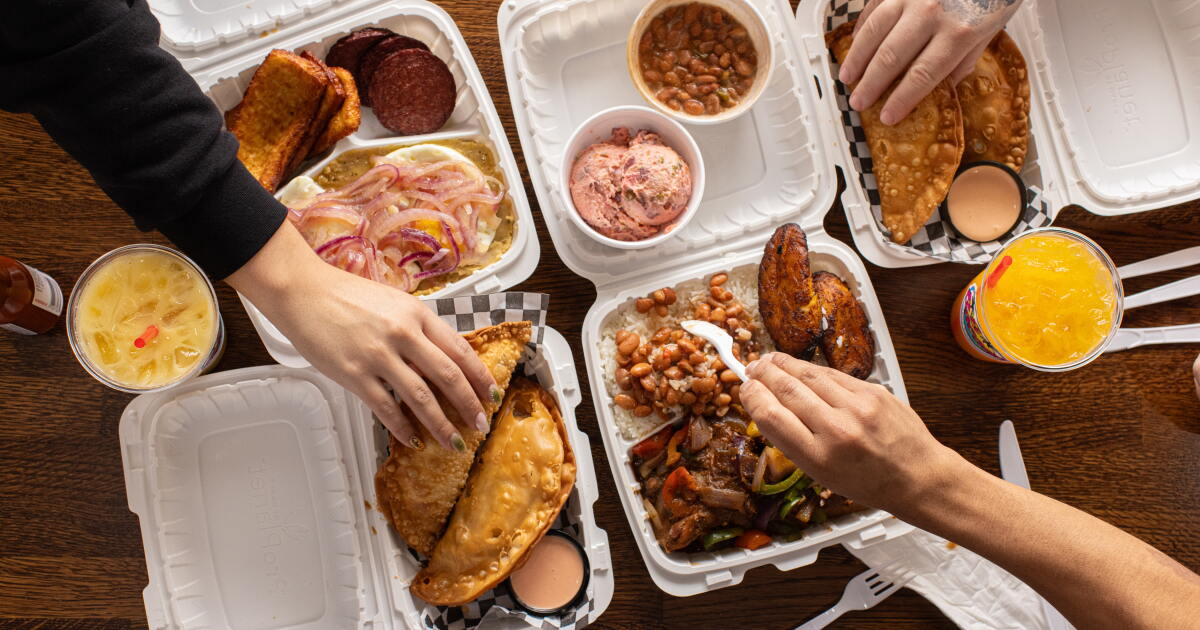
The line at Holbox during the midweek lunch hour has become a cultural sensation, a queue of locals and visitors trailing past the automatic doors and around the parking lot like devotees angling for the latest iPhone series or limited-release sneakers. Believe the lauds, including ours when we named Holbox as The Times’ 2023 Restaurant of the Year. Gilberto Cetina’s command of mariscos is unmatched in Southern California — his ceviches, aguachiles and tostadas revolutionary in their freshness and jigsaw-intricate flavors. The smoked kanpachi taco alone — clinched with queso Chihuahua and finished with salsa cruda, avocado and drizzles of peanut salsa macha — is one of the most sophisticated things to eat in Los Angeles.
Holbox could be considered for the top ranking on its own strength. But in a year when disasters tore at our city, honoring the power of community feels more urgent than ever. Cetina’s seafood counter doesn’t thrive in a vacuum. Holbox resides inside the Mercado La Paloma in South L.A. The mercado is the economic-development arm of the Esperanza Community Housing Corp., a nonprofit organization founded in 1989 that counts affordable housing and equitable healthcare among its core missions. When the mercado was in the incubation stage, Esperanza’s executive director Nancy Ibrahim interviewed would-be restaurateurs about their challenges and hopes in starting a business. Among the candidates was Cetina’s father, Gilberto Sr., who proposed a stall serving his family’s regionally specific dishes from the Yucatán. Their venture, Chichén Itzá,was among the eight startups when the mercado opened in a former garment factory nearly 25 years ago, in February 2001.
Step into the 35,000-square-foot market today, and the smell of corn warms the senses. Fátima Juárez chose masa as her medium when she began working with Cetina at Holbox in 2017. Komal, the venue she opened last year with her husband, Conrado Rivera, is the only molino in L.A. grinding and nixtamalizing heirloom corn varieties daily. Among her deceptively spare menu of mostly quesadillas and tacos, start with the extraordinary quesadilla de flor de calabaza, a creased blue corn tortilla, bound by melted quesillo, arrayed with squash blossoms radiating like sunbeams.
Wander farther, past the communal sea of tiled tables between Holbox and Komal, to find jewels that first-timers or even regular visitors might overlook.
Taqueria Vista Hermosa, run by Raul Morales and his family, is the other remaining original tenant. Order an al pastor taco, or Morales’ specialty of Michoacan-style fish empapelado smothered in vegetables and wrapped in banana leaf. The lush, orange-scented cochinita pibil is the obvious choice next door at still-flourishing Chichén Itzá, but don’t overlook crackling kibi and the brunchy huevos motuleños over ham and black bean puree. The weekends-only tacos de barbacoa de chivo are our favorites at the stand called Oaxacalifornia, though we swing through any time for the piloncillo-sweetened café de olla and a scoop of smoked milk ice cream from its sibling juice and snack bar in the market’s center. Looking for the comfort of noodles? Try the pad see ew at Thai Corner Food Express in the far back.
The everyday and the exquisite; the fast and the formal (just try to score a reservation for Holbox’s twice-a-week tasting menu); a food hall and sanctuary for us all. Mercado La Paloma embodies the Los Angeles we love.
MARFA, Texas — Landowners, ranchers and business owners in the Big Bend region of Texas along with a nonprofit organization dedicated to protecting the region’s landscape and heritage are suing to stop the Trump administration’s plans to build a wall and other border infrastructure through the remote section of the state.
The lawsuit, filed by Conserve Big Bend and with the support of dozens of landowners, comes as the administration is ramping up a $46-billion effort to line the roughly 2,000-mile southern border with a collection of 30-foot steel bollard walls, vehicle barriers and technology intended to keep out smugglers and migrants.
In Texas, the effort has run up against numerous lawsuits and bipartisan opposition from sheriffs, elected officials, tour guides, environmental groups and landowners.
Officials backing the wall “were woefully unprepared for the hornet’s nest they stirred up because they had no idea how much we love this place,” said David Keller, an archaeologist and historian who specializes in the Big Bend and lives in the region.
“For us, the Big Bend is not an empty place on the map,” he said. “It is our home.”
As part of its wall-building efforts, the administration has waived numerous regulations and statutes designed to protect the environment, archaeology or wildlife, on the basis that there’s an urgent need to protect the border in what Homeland Security has called areas of “high illegal entry.”
But in the lawsuit announced Monday, the plaintiffs argue that when it comes to the Big Bend region, that’s not an accurate description. They’ve cited historical statistics issued by Customs and Border Protection showing how few people cross the border in Big Bend compared with other areas along the U.S.-Mexico border.
Big Bend has about 500 miles of border with Mexico — roughly one quarter of the length of the border from the Pacific Ocean to the Gulf of Mexico. But the region only accounted for about 1% of arrests, according to the lawsuit’s stats.
The plaintiffs are arguing that the Department of Homeland Security is misusing powers from Congress that allow the secretary broad authority to waive regulations in order to build border walls or other infrastructure in areas where there are large numbers of people trying to cross into the country illegally.
“That determination is legally and factually unsound and unsupported,” the plaintiffs wrote.
The lawsuit filed Monday is the latest in efforts to slow or stop the administration’s plans in Texas and elsewhere.
The biggest outcry has come over Customs and Border Protection’s plans for the Big Bend National Park, which sits in a far southwestern corner of Texas where the Rio Grande separates the U.S. from Mexico.
The park’s remote and rugged location, its steep limestone canyon walls and crystal clear starry night views attract visitors from around the world. The government has said in court hearings that no final plans have been decided for what will be built in the park but plans made public so far have included building a new road, installing detection technology and barriers to stop vehicles from crossing the border.
When bulldozers were spotted clearing land in the park in August, people across the state were outraged. CBP Commissioner Rodney Scott temporarily paused construction-related activity in the park but many activists and residents would like to see even more changes to the administration’s plans in the broader Big Bend region.
Native American groups have argued that the construction could inhibit their ability to practice their faith and is damaging important religious sites while environmentalists worry the wall will cause flooding or keep animals from migrating.
Landowners who’ve lived and worked along the Rio Grande for years have questioned how they’ll feed livestock or water their crops if they can’t access the river.
The reporter may have misheard the comment, or maybe the person being quoted actually said it, or something odd happened in the editing process.
For the record:
4:45 p.m. Sept. 9, 2026A previous version of the story misspelled the name of the curator of a new exhibit at the California Museum in Sacramento. His name is Sean Manwaring.
Whatever: This is what appeared in the Feb. 20, 1985 edition of the Oakland Tribune, quoting a UC Berkeley professor about a protest against immigration sweeps in the Bay Area.
“This probably won’t stop the Iron Ass [federal government] from making raids in the Eastbay.”
“Iron Ass” is how someone might hear the acronym INS, the Immigration and Naturalization Service, the forerunner to ICE.
And now, 40 years on, it fits right into the kind of angry, derisory language many Americans use for the present-day hammer-handed operations of federal immigration officers, around the country, especially here in California.
California has always been — and that’s a couple of centuries of “always” — at the fulcrum of the immigration-deportation seesaw in the U.S., with national policies yo-yoing between kicking workers out and inviting them in. Consider the foreign-born who joined the Gold Rush, the Chinese railroad workers, and still and always the Latino population along the long, wide international border.
Get the latest from Patt Morrison
Los Angeles is a complex place. Luckily, there’s someone who can provide context, history and culture.
By continuing, you agree to our Terms of Service, which include arbitration and a class action waiver. You agree that we and our third-party vendors may collect and use your information, including through cookies, pixels and similar technologies, for the purposes set forth in our Privacy Policy such as personalizing your experience and ads.
That underlies the name of a new exhibition at the California Museum in Sacramento, “Help Wanted/Leave Now!” about the “revolving door” of programs and practices that have alternately enticed and expelled workers, legal and undocumented.
The U.S. border with Mexico represents a political borderline but it cannot sever many decades of complicated history and culture. And it’s left us with endless paradoxes and contradictions of who belongs where, with the U.S. government shifting to and fro on deciding and enforcing that, depending on the American economy, and American politics.
Sean Manwaring is curator of the exhibit. “We have historically recruited foreign workers who set down roots, become members of the community, and then, when there’s an economic downturn or it becomes politically expedient, it’s kind of a revolving door.”
The endless argument is that undocumented immigrants, who work for less because of their needs and their vulnerability, take jobs that Americans will, or that Americans won’t do. Something else Americans won’t do: pay higher prices for food, 90 years ago or now.
Last year, the Kansas City Federal Reserve bank, one of 12 regional Feds, noted on its website, “Historically, the supply of U.S.-born farm workers has not been sufficient to meet demand for farm jobs at the going wage rate, contributing to a largely foreign-born workforce.” Even the H-2A legal process for hiring seasonal foreign workers “would likely be more expensive than employing undocumented workers.”
A 1924 immigration law that created the Border Patrol also revealingly put it under the control of the federal labor department. Cheaper Mexican workers had been welcomed during World War I, and were still coming north more casually back then, even as a U.S. labor group was beginning to agitate for organizing American migrant farmworkers.
But when the 1929 market crash and the Depression knifed the American economy, the blame for unemployment in the southwest and California in particular fell on these Mexicans, and the government’s “Mexican Repatriation” program sent hundreds of thousands back to Mexico, some voluntarily, some not, and some numbers of them American citizens.
Once, border migration patterns resembled a loop: thousands of laborers, mostly men, commuted here once or twice a year from Mexico to jobs in the fields, then on to other jobs once harvests were over. Then they’d take their earnings home to Mexico as breadwinners and comparatively rich men, and stay until the next year’s season.
But as U.S. policies over decades squeezed the border shut on this back-and-forth commuting, some workers chose to stay on the side of the border where they could find work, and a number brought their families north to settle, legally or otherwise.
Oct. 15, 1963: Mexican workers in the bracero program work in pepper fields in the Firebaugh area in Fresno County. This image is from the Los Angeles Times Archive at UCLA.
(Bill Murphy / Los Angeles Times)
And then that pendulum swung again. In 1942, Americans by the millions left their peacetime jobs for the war and wartime industries, and the “Bracero” program — from “brazo,” the Spanish word for “arm” — filled in the gaps in the domestic workforce with contracts for employers of Mexican workers, usually in agriculture or on railroads.
Under the program, the U.S. screened Mexicans for aptitude for the work, and for attitude. Manwaring shared with me the notes of Henry P. Anderson, a historian and farm labor organizer, who took a guided tour of a Calexico bracero processing center in 1958:
“Those deemed expendable were described one at a time: this one is too tall, he is too ‘cocky,’ that one a ‘loafer,’ another ‘lazy and irresponsible,’ he’s a ‘smart aleck,’ this one a ‘ladykiller’ and not ‘peon’ enough. On the other hand the ‘right man,’ according to the guide, was ‘built right. He’s a farm worker, you can tell that … he hasn’t got any big ideas. He’s got the right attitude. He’s humble, not fresh and cocky. He’s an Indian type, probably from Jalisco or Guanajuato.’”
Feb. 1, 1954: Unpublished photo from the Mexicali border crossing during the bracero program. Not known if these men are entering or leaving United States.
(Frank Q. Brown / Los Angeles Times)
Through the bracero program’s 22-year span, as many as 4 million workers came in and presumably went home — though not always; a generation of families came here, or were born here, and stayed. About 15 years after it ended, a former Texas labor commissioner and ranking Labor Department official overseeing the program went public. He characterized wages for braceros as unconscionably low, the food substandard and the housing prison-like. “It was not altruistic at all. The bracero program was definitely created by the farmer who needed to make a dollar.”
And then America’s policy yo-yoed again: in 1953, even as the bracero program was still operating, the federal government launched “Operation Wetback,” to rid the country of undocumented immigrants.
With its heavy-handed “sweeps” of labor camps and factories, American citizens were indiscriminately caught up in the operations, just as ICE is doing now.
Consider the breezy tone of a 1931 story in the Los Angeles Evening Citizen News, reporting on 1,200 Mexicans deported from L.A. County in a day, with the casual note that “virtually none of them” was “an undesirable alien — many are American citizens.”
“L.A. was really ground zero for these raids during Operation Wetback and the Mexican deportation,” said Manwaring. Those 1,200 deportees were among at least 50,000 deported from LA County in five months of 1931 — as much as a third of the county’s Mexican and Mexican American population.
Emilia Castaneda was no more than 10 years old when her Boyle Heights family was deported in the 1930s. In an archival videotaped interview made when she was in her late 70s or 80s, and now part of the exhibition, she remembered being teased by the girls in the parochial school she ended up attending in Mexico. “You’re not one of us,” they mocked her. “Go home.”
Just like today, as agriculture and other food chain businesses were hard-hit by Trump’s aggressive deportations, some industries and regions in earlier “sweeps” also asked for carve-outs and exemptions.
“I wouldn’t say there was a backlash but it really impacted agricultural networks across California and Arizona,” said Manwaring. “We came across specific requests from county officials like in Yuma, Arizona, asking for exceptions because they needed these workers, they didn’t have enough help.”
What’s called the Texas Proviso was a wink-and-nudge agribusiness-friendly federal loophole crafted in the early 1950s that for more than 30 years made it a crime to harbor or transport undocumented immigrants — but not a crime to hire them. (Federal law criminalized that in 1986.)
From the Los Angeles Times, June 18, 1954 front page headline: 500 Nabbed by L.A. Wetback Raiders.
(Los Angeles Times)
The 1950s enforcement drive also put the word “wetback” into casual use. Official statements and news stories used it to mean anyone here without documentation. It was derived from the people who waded across Texas’ Rio Grande into the U.S., but it was sometimes used interchangeably with any Latino workers. Sometimes it just got clipped to “wets.”
In 1961, as astronaut Alan Shepard sat aboard his Redstone rocket waiting to become the first American launched in space, hours of delays forced him to urinate in his space suit. “Well,” he remarked nonchalantly, “I’m a wetback now.”
Not much has changed. Court records released this July confirmed that ICE agents had been referring to immigrants during raids with such slurs as “wet” and “tonk,” the last term reportedly derived from the sound an agent’s utility flashlight makes when hitting a migrant’s head.
A 1956 crime drama called “Wetbacks” was a B picture about a human smuggling ring victimizing the undocumented. The Los Angeles Examiner’s movie reviewer called it a “tedious, amateurishly made picture [that] supposedly deals with how illegal Mexican immigrants are smuggled into this country.”
One of the paradoxes of these periodic anti-undocumented worker campaigns is how they divided Latino communities: the “I did it the right way” people who managed to get visas, the people whose forebears may have come illegally but are now themselves established, and the paperless people who have just arrived, or who have lived here for years under the radar.
Cesar Chavez with Richard Ybarra during the 1973 Coachella Grape Strike.
(Richard Ybarra)
César Chávez lived that paradox. The co-founder of the United Farm Workers — along with Dolores Huerta, an advisor on this exhibition — was a U.S. citizen. In the 1960s and into the 1970s, he wanted immigration officials to keep out undocumented workers, believing they’d be exploited as strikebreakers for growers and erode his union’s bargaining power. By the 1980s, though, he was endorsing immigration reform and protections, especially in the face of President Reagan’s recession-era 1982 “Operation Jobs” sweeps.
A Los Angeles Times survey that same year found that within three months of those raids, 80% of the booted-out workers were back on the job. Many of the Americans hired to replace them soon quit. They didn’t like the wages or the working conditions.
The employment manager of B.P. John furniture maker, in Santa Ana, told The Times, 75 of the American-born workers soon quit on him. “They told me they found another job, that the work was too hard, that there wasn’t enough pay.”
In June 1954, The Times covered the Border Patrol’s plans for L.A. Herman Landon, the local immigration chief, described a “stockade” being built in Elysian Park to “imprison illegal Mexicans flushed out” of factories, hotels, and “skid row saloons” at the rate of a thousand or two per day.
Farmers had once requested immigrant workers from smugglers by the truckload, and counted by “the head,” like livestock. When the feds moved in, workers were deported south of the border, sometimes far south, by bus, by ship, by plane. The feds briefly charged each worker $10 each for the cost of being deported.
The caption of a June 1952 photo in the McAllen, Texas, Evening Monitor that showed men boarding a deportation plane read, “It’s a quick bite to eat then off into the wild blue yonder for these wetbacks.” The newspaper offered a $5 prize in a contest to name the airborne deportations. Not all readers were cheering. One acidly suggested calling it “Truman’s Gestapo Airlift.”
The human numbers for any of these programs, coming in or kicking out, are hardly ever confirmed, but over all this time we are talking about the movement of millions — and the deaths, still uncounted.
Trump said he always planned to model his deportations on the Eisenhower-era operation.
“We’re rounding them up in a very humane way, a very nice way,” Trump told “60 Minutes.”
In July 1954, under Eisenhower, 88 workers died of sunstroke in the desert below Calexico, where they’d been deported.
A poster size photo in San Pedro of Alex Pretti, a registered nurse who was fatally shot by ICE agents in Minneapolis.
(Gina Ferazzi / Los Angeles Times)
In the first 17 months of the second Trump administration, at least 52 people died in ICE custody. ICE agents have shot and killed at least six more people, some in their cars, and some right out in public, like Alex Pretti in Minneapolis, and Keith Porter Jr., shot last New Year’s Eve in front of his L.A. apartment building by an off-duty ICE agent.
The deaths recall a deportation sweep in 1948, when a plane carrying 28 workers back to Mexico, with a crew of four, caught fire and crashed near Coalinga. The press coverage then identified the crew but not the dead Mexican workers, whose individual stories were finally told 70 years later in Tim Z. Hernandez’s book “All They Will Call You.”
The grave marker for the Mexican nationals killed in a 1948 plane crash did not include their names.
(Michael Robinson Chavez / Los Angeles Times)
The title is a line from Woody Guthrie’s celebrated song “Deportees,” about the crash, and what it signified in a nation that used and used up its foreign workers, and it ends like this:
“Is this the best way we can grow our big orchards?/Is this the best way we can grow our good fruit?/To fall like dry leaves to rot on my topsoil/And be called by no name except ‘deportees’?”
Explaining L.A. With Patt Morrison
Los Angeles is a complex place. In this weekly feature, Patt Morrison is explaining how it works, its history and its culture.
MEXICO CITY — When the Trump administration announced this summer that illegal crossings into the U.S. from Mexico had reached historical lows, Homeland Security Secretary Markwayne Mullin declared, “Our border is CLOSED to lawbreakers.”
Even so, the administration continues to pressure both Mexico and U.S. officials serving there — publicly and behind the scenes — to curb illegal immigration further. The crackdown has prompted smugglers to become more creative, turning more often to tunnels once reserved for transporting drugs.
White House Deputy Chief of Staff Stephen Miller, in the White House on Sept. 4, has been the main architect of the Trump administration’s immigration policies.
(Jacquelyn Martin / Associated Press)
Stephen Miller, the main architect of President Trump’s immigration policies, has been in near-daily communication with senior U.S. law enforcement officials, including the U.S. ambassador to Mexico, Ronald Johnson, looking for new ways to stop migrants from entering the United States, according to people familiar with the conversations.
An average of 400 migrants were apprehended while crossing into the U.S. every day in July, according to data by U.S. Customs and Border Patrol. It’s a precipitous drop from the thousands who crossed daily at the peak of a migrant surge in 2022.
Sometimes the number of crossings has dropped to 200 a day. But for Miller, that reduction is still not enough, said sources not authorized to speak publicly about internal matters. Miller’s goal, they said, is to have zero migrants entering the U.S.
Miller has directed officials to increase investigations into migrant smuggling networks, people familiar with his directives said.
Mexican Foreign Minister Roberto Velasco Álvarez, left, and U.S. Secretary of State Marco Rubio in Washington, where they met Aug. 26 to discuss what the minister called “priority issues on the bilateral agenda.”
(Chip Somodevilla / Getty Images)
Since returning to the White House in 2025, Trump has often asked Mexican President Claudia Sheinbaum to crack down on immigration. On Aug. 26, Secretary of State Marco Rubio met with Mexico’s foreign minister, Roberto Velasco Álvarez, and urged him to take “decisive action on illegal immigration,” according to a statement from the State Department.
The Trump administration’s border crackdown has been so effective it’s forced some smugglers literally underground.
Mexican drug cartels are increasingly turning to tunnels built for drug smuggling to ferry migrants into the United States. They are linking into sewer drains, according to people familiar with the trend.
Though the number of migrants apprehended while using tunnels appears to be relatively small — there are no hard statistics — authorities believe it is increasing, given the crackdown on the border and financial incentive for the cartels to smuggle people and not just drugs.
“Enforcement along the border has become more robust and that has increased the demand for alternative methods of passage,” said David Shirk, director of the Justice in Mexico program at the University of San Diego.
The Trump administration has added extra miles of razor wire to border fences, has increased surveillance technology and uses autonomous Predator drones with surveillance and infrared technology to monitor swaths of the border for migrants crossing into the U.S.
1
2
1.A bulldozer sits near Santa Elena Canyon on Aug. 14 in Big Bend National Park, Texas, where contractors have begun construction of a border wall. (Brandon Bell/Getty Images)2.Protesters gather in San Antonio, Texas, on Aug. 28 to demonstrate against construction of a border wall in Big Bend National Park. (Alma E. Hernandez/San Antonio Express-News via Getty Images)
And, picking up on Trump’s “build the wall” pledge from his initial run for president, more border barriers are being built.
Trafficking through cross-border tunnels is not new. In 2023, Ken Salazar, then the U.S. ambassador to Mexico, said there were at least 200 tunnels that spanned the border. Many of them were found linking Tijuana and San Diego.
But in a twist, some tunnels now connect to drainage and sewer systems. This May, authorities captured 19 migrants, including three unaccompanied minors, in the San Diego storm water drainage system. A remote surveillance camera spotted the migrants emerging from the system.
The smugglers were two brothers who had previously been charged with methamphetamine trafficking in the Northern California town of Yreka in 2017.
Smugglers employ tunneling specialists whose work is getting more sophisticated, outfitting the tunnels with lights, ventilation systems and sometimes mini rail lines. Many tunnels are faster, safer and much more expensive for migrants who would otherwise face increasingly dangerous mountain and desert routes, experts said.
Last year, Customs and Border Protection and Homeland Security Investigations agents also found a tunnel that ran under the Rio Grande from Ciudad Juárez, Mexico into El Paso.
The passage tapped into the El Paso sewer system, where, according to U.S. authorities, migrants surfaced from a manhole. They climbed into a box truck outfitted with a trap door that was parked over the manhole.
Cartels charge migrants from Latin America up to $15,000 dollars each to use tunnels to El Paso, an official familiar with the dynamics said. For people from the Middle East or Southeast Asia, the price can be as high as $25,000.
The tunnel traffic continues to vex U.S. officials.
A Homeland Security Task Force drug investigation of a supposed retail store in Otay Mesa, Calif., resulted in the discovery of a sophisticated cross-border tunnel leading to Tijuana.
(U.S. attorney’s office)
In Tijuana, one tunnel discovered last year stretched from Tijuana to what appeared to be a Buy 4 Less store near the Otay Mesa port of entry. The store never had customer traffic, so U.S. law enforcement suspected it hid a tunnel and began monitoring the business.
Authorities raided the building and found the entrance to a tunnel controlled by the ruthless Jalisco New Generation Cartel. It was 55 feet deep and nearly half a mile long. It featured a hydraulic lift, ventilation and a rail and cart system. Authorities stopped a freezer truck after it left the location and seized more than a ton of cocaine, worth roughly $45 million.
In 2024, U.S. law enforcement found a tunnel in the border town of San Luis, Ariz. Authorities said it was used to smuggle migrants and drugs. Its exit was hidden in an abandoned KFC restaurant.
This article was co-published with Puente News Collaborative. Fisher is a special correspondent.
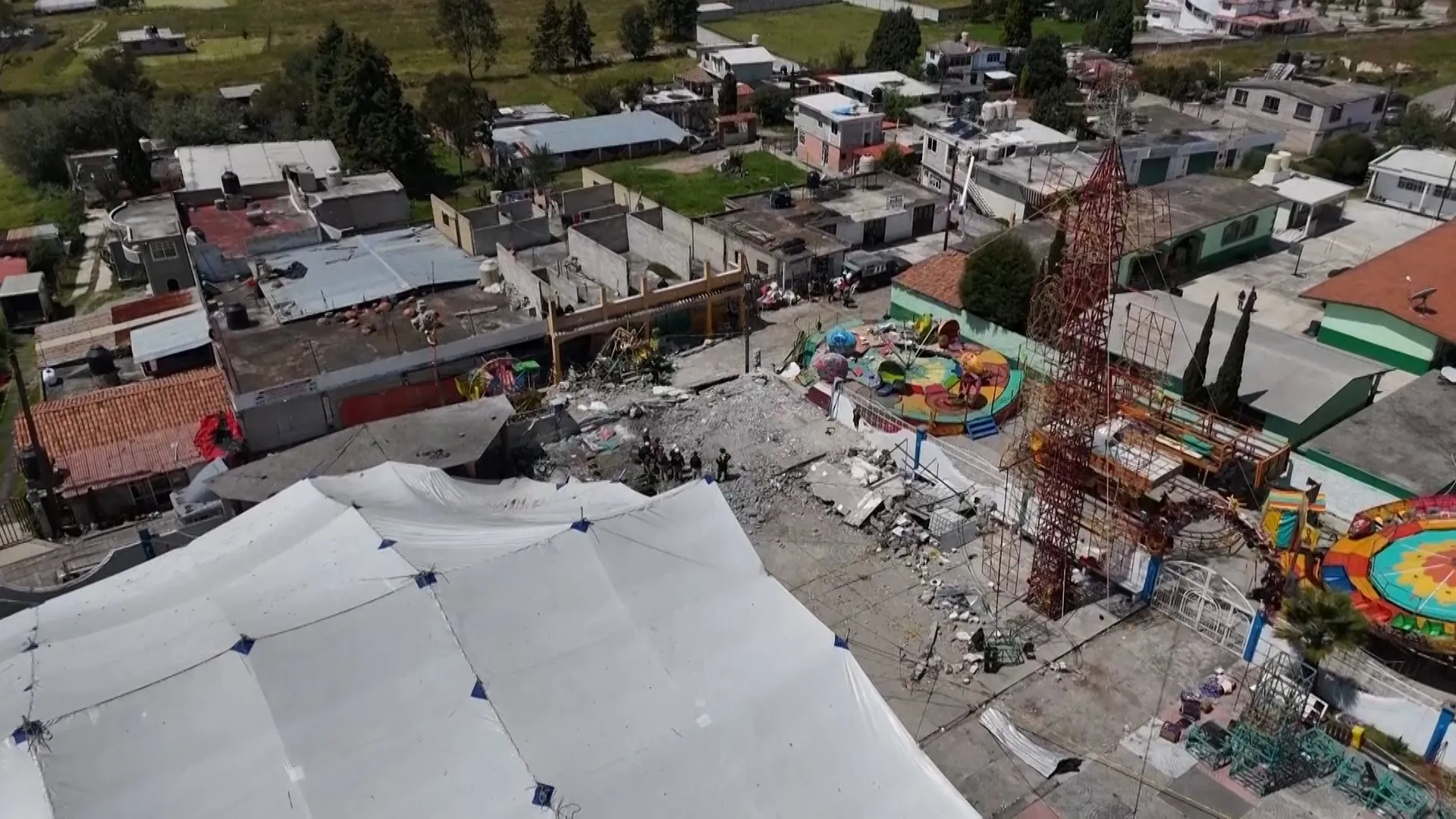
At least 10 people were killed and around 60 wounded in central Mexico when fireworks detonated during a religious festival. Residents had been honouring the patron saint of Temascalcingo, a municipality in central Mexico, when tragedy struck.