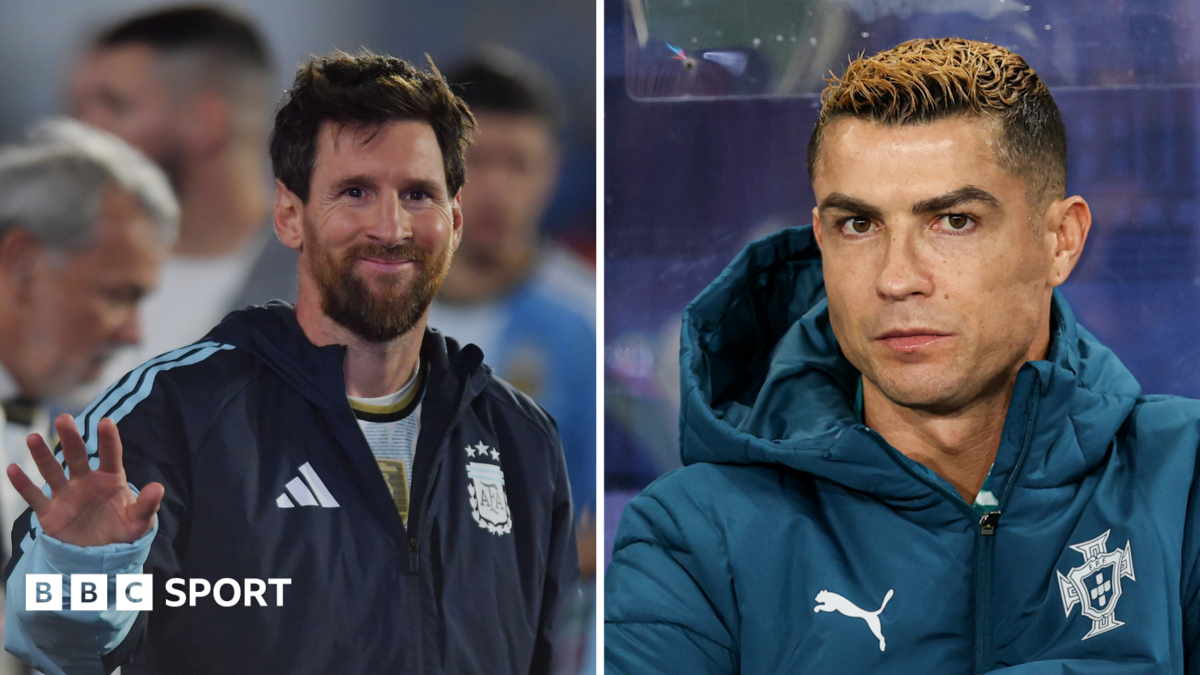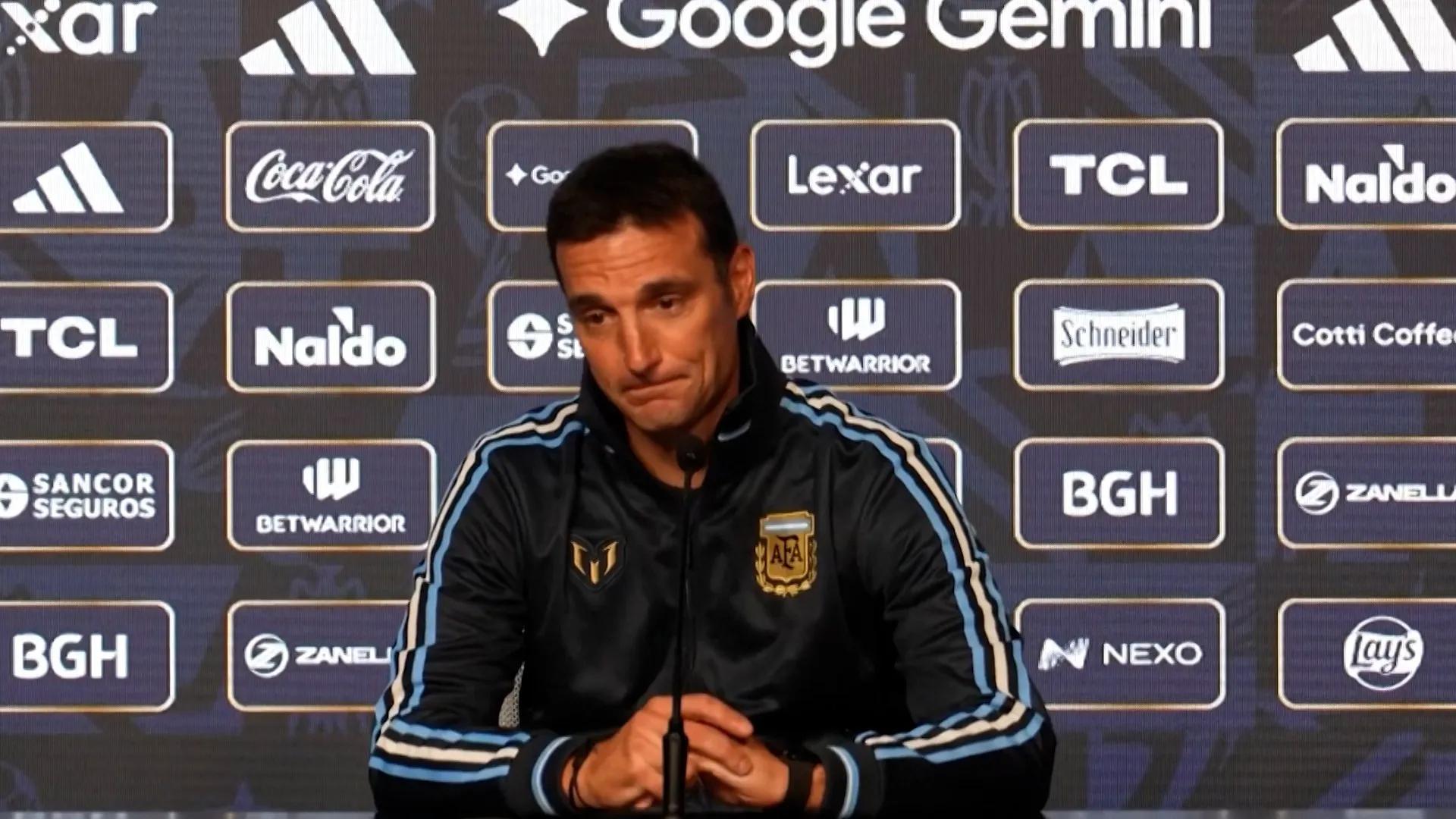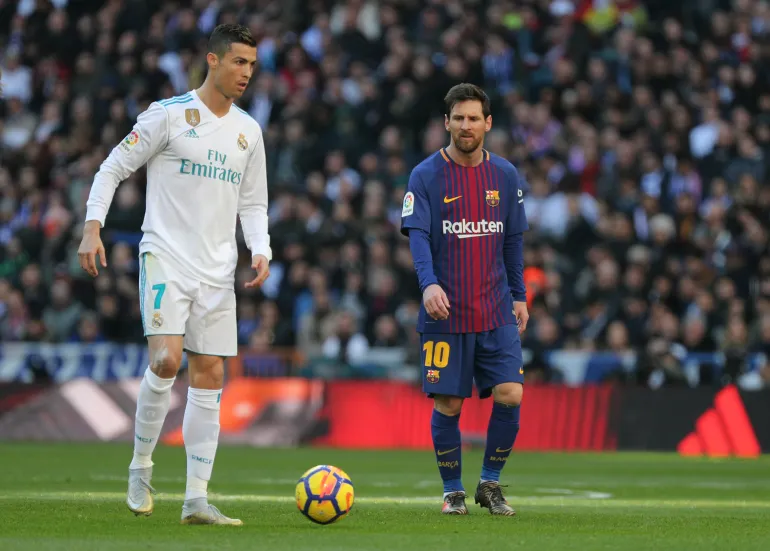
messi

Lionel Messi: How Argentina great picked apart England with masterclass World Cup performance

England scored through Anthony Gordon in the 55th minute and held the lead for half an hour.

Fernandez struck a brilliant equaliser in the 85th minute, after Messi picked him out near the edge of the penalty area.

Lautaro Martinez then won the game in stoppage time with a header from Messi’s cross.

Between Gordon’s goal and Argentina’s equaliser, England had only 12% of the ball which meant they spent most of the second half defending in deep positions.

It became a tussle of Argentina’s attack versus England’s defence, which lived a charmed life for a while.

Argentina persisted though, with Messi exploiting weaknesses in England’s structure and flaws in individual players’ habits to inspire his side’s comeback.

After getting some joy against Messi in the early stages of the game, Anderson’s front-footed approach became less effective with Messi adapting on the fly to his direct opponent’s playing style.

In fact, Messi began to use Anderson’s aggression against him. He held the ball for as long as possible, drawing the 23-year-old out, before flicking the ball around the corner for team-mates in the knowledge there was now space to attack in the zone Anderson had vacated.

Source link

Lionel Messi, Argentina score World Cup semifinal win over England

The jury is still out on whether Lionel Messi is the greatest soccer player ever. But there should be no doubt he’s the greatest to ever play in a World Cup.

And you don’t need the records, the wins or the goals to prove that — although he certainly has enough of those. You just need to see Messi at his most magical, as he was Wednesday, setting up a pair of game-changing goals in a seven-minute span to lift Argentina to a 2-1 win over England and into Sunday’s World Cup final with Spain.

“It’s really hard to speak right now, but I’m going to try not to cry,” Lautaro Martínez, who scored the winning goal two minutes into stoppage time, said in Spanish. “I’m already overwhelmed inside. It’s incredible. Everything we’ve achieved is just incredible.”

Like their 13-game World Cup unbeaten streak, dating to the opening game of the 2022 tournament in Qatar. Or back-to-back trips to the final, which gives them a chance to become the first repeat champion in the men’s tournament since Brazil in 1962.

Argentina's Lautaro Martinez scores in front of England goalkeeper Jordan Pickford and other English players.

Argentina’s Lautaro Martinez scores his team’s second goal in front of England goalkeeper Jordan Pickford (1) and fellow England players Ezri Konsa (2) and John Stones (5) during a World Cup semifinal in Atlanta on Wednesday.

(Erik S. Lesser / Associated Press)

But it hasn’t been easy. Eleven of Argentina’s 19 goals — including both scores in Wednesday’s semifinal — have come after the 75th minute. They trailed in the 80th minute or later in two of their last three knockout games, only to rally both times.

And Messi has either scored or assisted on three of the four goals that rescued Argentina.

“This group, in the face of adversity, keeps going, keeps going, and never gets tired,” Martínez said. “And we have the best in the world as our example.”

On Wednesday that meant heartache for England, which was as close to a World Cup final as it has been in six decades, leading 1-0 on Anthony Gordon’s second-half goal with just five minutes left in normal time.

But after taking the lead, England turned strangely conservative, dropping all 11 players behind the ball at times, daring Argentina to score. Eventually it did, with Enzo Fernández curling a right-footed shot from about 20 yards past England keeper Jordan Pickford and in at the left post to tie the game.

It was a pass from Messi that found Fernández in space at the top of the box, earning the Argentine captain his record 11th World Cup assist.

“The opponent doubted themselves,” Argentine coach Lionel Scaloni said. “We smelt blood and went for it. We all felt it. “

The tie didn’t last for long though, with Messi threading a perfect cross from the right wing to Martínez, who found space between English defenders John Stones and Ezri Konsa at the far post. Messi’s pass just cleared the leaping Stones, then dipped to Martínez, who nodded it home.

England's Harry Kane and England's Jude Bellingham are dejected after losing to Argentina during a World Cup semifinal.

England’s Harry Kane and England’s Jude Bellingham are dejected after losing to Argentina during a World Cup semifinal on Wednesday in Atlanta.

(Jeff Roberson / Associated Press)

When the ball hit the net, the sellout crowd at Atlanta’s massive Mercedes-Benz Stadium erupted.

“Once again, despite falling behind, we managed to turn the game around in stoppage time. That speaks volumes about this group, about this team that never settles, always wants more, always strives for more,” Martínez said.

It also gives Messi a chance to strive for more in Sunday’s final. He has already played in more World Cup games, scored more World Cup goals and had more World Cup assists than any man in history. With a win over Spain, he can join another elite group of men: those who have won back-to-back World Cup titles.

History will eventually decide if it was Messi’s brillance or the tactical surrender of England coach Thomas Tuchel that truly turned the game around. Tuchel, however, said he had no regrets.

“We played the matches how they were,” he said. “We overcame every obstacle. We were very, very close today. It’s not a moment now to analyze the full tournament because we lost a crucial match.”

His captain, Harry Kane, who lost in the semifinal of a World Cup for the second time in three tournament, was also not interested in second-guessing.

Argentina's Lionel Messi sits on the shoulders of a teammate and celebrates after beating England.

Argentina’s Lionel Messi sits on the shoulders of a teammate and celebrates after beating England in a World Cup semifinal on Wednesday in Atlanta.

(Rebecca Blackwell / Associated Press)

“We had a lot of good moments in this tournament, a lot of good games,” he said. “We talked about knocking on the door. We’re close, we just have to find that missing piece in the final stage of the tournament.”

They may be closer than they think: England is the only team this century to score the first goal in a World Cup semifinal but not reach the final, according to the OptaJoe statistical service.

Argentina’s team, meanwhile, is missing nothing — except maybe a second title,

“The people of Argentina should celebrate being in a final,” Scaloni said. “This group of players is difficult to describe in words. They are so special. I’m getting emotional. They fight for everything.

“We’re going to try to win the final. But what else does this team need to do? There isn’t much else to say. I’m eternally grateful to this group of players.”

Sports editor Iliana Limón Romero contributed to this report.

Source link

How World Cup senior citizens like Lionel Messi have stayed fit

While every World Cup introduces viewers to new young stars, this tournament featured eight players who were older than 40 — one more than the number of over-40 players in the previous 22 World Cups combined.

Among them were Portugal’s Cristiano Ronaldo, 41, and Mexico’s Memo Ochoa, 40, who were playing in their sixth World Cups alongside Argentina’s Lionel Messi, a relative youngster at 39. No one has played in more men’s World Cups.

But while Ronaldo and Ochoa have gone home, Messi will be playing in his third semifinal in four tournaments Wednesday when Argentina, the reigning champion, faces England at Mercedes-Benz Stadium in Atlanta.

The newfound longevity of elite soccer players has been made possible by advances in sports medicine, diet and analytics that measure everything from biomechanics and heart rate to muscular output and sleep cycles, all in real time. And injuries that once ended careers can now be repaired through outpatient procedures.

Argentina star Lionel Messi holds his jersey up and shows off his sculpted abs after a World Cup win over Switzerland.

Argentina star Lionel Messi holds his jersey up and celebrates with teammates after a World Cup quarterfinal win over Switzerland on Saturday in Kansas City, Mo.

(David Ramos / Getty Images)

“Over the past 10, 20 years, the sports science within the game has changed a lot,” said Liam Anderson, an exercise physiologist at the University of Birmingham in England, who has worked as an applied practitioner in top-flight professional soccer for more than a decade.

“Players are now definitely more aware of their bodies and I think the professionalism has changed quite a lot as well. But they’re also in tune with the things which are helping them recover, manage their training load and ultimately stay fitter and healthier for longer.”

Gone are the days when chain-smoking Dutch legend Johan Cruyff would light up a cigarette on the bench, French world champion Zinedine Zidane would smoke in the locker room and George Best would party and drink so hard he would disappear for days at a time.

“There’s a couple of reasons,” Dr. Michael Joyner, a specialist in the physiology of elite athletes at the Mayo Clinic, said of the growing lifespan of soccer players. “The first is that people just make a lot more money and as a result, there’s tremendous incentive to keep playing. The second is people are taking much better care of themselves.”

“You just don’t hear about people like George Best anymore,” said Joyner, speaking for himself and not the clinic where he works.

“Diet is huge,” Anderson added. “High-protein diets and fueling with carbohydrates for matches. Nutritional strategies have changed considerably in the last 10-15 years.”

And those diets are tailored by position since a midfielder, who may run more than seven miles in a match, burns more calories than a goalkeeper.

As the eldest player in Major League Soccer, Diego Chara has had to make some concessions to age.

“It’s a little detailed,” said Chara, a midfielder with the Portland Timbers. “Talking about recovery time, it maybe takes a little bit longer than before. Nutrition. Working in the gym, it’ll be longer than other players.”

But if Chara, 40, is an old man in a league where the average age is younger than 26, he would have been something of whippersnapper in this summer’s World Cup.

The Portland Timbers' Diego Chará passes the ball under pressure from the Columbus Crew's Wessam Abou Ali.

The Portland Timbers’ Diego Chará passes the ball under pressure from the Columbus Crew’s Wessam Abou Ali on Feb. 21in Portland, Ore.

(Amanda Loman / Associated Press)

Soccer isn’t the only sport in which 40 is the new 30.

Serena Williams returned to Wimbledon this summer at age 44 and at least half a dozen athletes 40 and older showed up at the Milan-Cortina Olympics last February hoping to medal. Four of them succeeded, including American Elana Meyers Taylor, 41, who became the oldest athlete to win an individual gold in Winter Olympics history in the women’s monobob.

It isn’t unheard of for athletes to be golden in their golden years. Ted Williams hit .316 at 41 and Gordie Howe played 80 games and had 41 points in his final NHL season at 52. Nolan Ryan threw a no-hitter and pitched 173 innings at 44 while Tom Brady quarterbacked the Tampa Bay Bucs to a Super Bowl title at 43.

But if those age-defying performances were outliers, playing into your mid-40s and even early 50s may soon become, if not common, at least less unusual.

“People are just staying in better shape, taking care of themselves,” Joyner said. “Career-changing or career-ending injuries are no longer career-ending injuries. It just goes on and on, all of this stuff combined.”

American Serena Williams, 44, serves against Australian Maya Joint during a match at Wimbledon on June 30.

American Serena Williams, 44, serves against Australian Maya Joint during a match at Wimbledon on June 30.

(Cameron Spencer / Getty Images)

State-of-the-art training centers and access to top-line sports medicine have also become more accessible, even in poor countries.

“The elite level has spread and really become global, as opposed to where there used to be pockets,” Joyner said. “The opportunities to compete are so great.”

Few team sports are as physically demanding as soccer, though, which makes both the growing number of seasoned citizens and their performances noteworthy. Messi has averaged nearly a game a week for club and country during the past 23 years, yet he entered the semifinals of this tournament tied for the scoring lead with France’s Kylian Mbappé, who is 12 years younger.

Ronaldo has played even more games yet he became the oldest player to score in a World Cup knockout game when his penalty kick helped eliminate Croatia and midfielder Luka Modric, who will be 41 in less than two months.

“They’ve probably lost a little bit off the top, but their experience and their mind make up for that,” said Scott Trappe, a professor of human bioenergetics at Ball State. “So the overall package of them as a sports person is really they’re contributing at a high level. I think we’re going to continue to see this movement.

Portugal's Cristiano Ronaldo celebrates scoring a World Cup group stage goal against Uzbekistan on June 23 in Houston.

Portugal’s Cristiano Ronaldo celebrates scoring a World Cup group stage goal against Uzbekistan on June 23 in Houston.

(Charlotte Wilson / Getty Images)

“They like playing the sport and as long as they can and contribute and they make these teams, they’re going to do it. I don’t see the trend going away.”

And that will not only change the way we think of sports and athletes, it will completely rewrite the record book. Messi, for instance, entered the semifinals of this World Cup as the tournament’s all-time leading scorer with 21 goals. But that was just one ahead of Mbappé, who could appear in another three or four World Cups.

“No question,” Trappe said. “You look what’s going on in pro cycling. We’ve got some guys in their upper 30s competing in the Tour de France, but we also have a teenager competing. So this lifespan, what used to be a five- to eight-year period for cycling at the at the highest levels is turning out to be, you know, double or triple that.”

Both Messi and Ronaldo have benefited from how they play as well, walking rather running for long stretches of the game to conserve energy for the burst they need to lose a defender. It’s a strategy Mbappé, Norway’s Erling Haaland and other young players have adopted and if they do that over enough games, the wear and tear it saves could add years to the end of their careers.

“We are expanding. The age will start moving up a little bit further up and players’ careers will definitely be longer,” Anderson said. “The sort of normal distribution of playing age will begin to move forward and that experience within the squad will be key.’

Argentina's Lionel Messi dribbles the ball during the World Cup quarterfinal.

Argentina’s Lionel Messi dribbles the ball during the World Cup quarterfinal match against Switzerland on Saturday in Kansas City, Mo.

(Charlie Riedel / Ap Photo/charlie Riedel)

Consider Wednesday’s semifinalists. In its quarterfinal win, Argentina used six players older than 32 and two — Messi and defender Nicolas Otamendi — who are over 38. The spine of England’s team runs from goalkeeper Jordan Pickford through defender John Stones to striker Harry Kane, who are all 32.

“We’re coming up with new ways on how to improve and maximizing potential,” Anderson said. “God gave us what we are and it’s maximizing that, not necessarily changing that.”

That knowledge won’t stay in the stadiums and locker rooms for long, expanding to others who choose to adopt the same wellness discipline as professional athletes.

“It cycles down,” Trappe said. “We’re studying that in the lab at a pretty high level. This sort of healthy lifestyle in terms of functionality and extending into our later years and having a higher quality life, there’s data starting to emerge there.

“These types of things are going to trickle into that for sure.”

Source link

Why so many Latin Americans are rooting against Argentina in the World Cup

Argentina may be the last Latin American team standing in the World Cup, but don’t expect many fans in Mexico to be cheering for La Albiceleste — the lads sporting the classic white and blue stripes.

“There’s no way I want the Argentines to win,” said Roberto García, 55, who owns a clothing shop in the Mexican capital. “How can one sympathize with a team that has such a supremacist, racist discourse?”

The Argentine squad — reigning world champions led by seemingly ageless superstar Lionel Messi — faces off Wednesday in a semifinal match against England. Argentina is seeking its fourth World Cup, which would put it in a second-place tie for global titles with Germany and Italy, trailing only Brazil and its five cups.

But Argentina’s performance in the 2026 World Cup has again put the spotlight on a contentious fact of life in world soccer: The current of disdain that the Argentine side has long inspired among a certain segment of Latin American fans, especially those in Mexico.

Santa Ana resident Reynaldo Flores Jr., 10, center, reacts during the final minutes of a game between Mexico and England

Reynaldo Flores Jr., 10, center, reacts during the final minutes of a round of 16 knockout match between Mexico and England during a World Cup watch party at Chapter One in Santa Ana on July 5.

(Ronaldo Bolaños / Los Angeles Times)

A combination of factors are to blame: Mexico’s repeated World Cup losses to Argentina, a series of questionable refereeing decisions seeming to favor Argentina, Messi’s massive media presence and ongoing discourse on social media — where legitimate analysis coexists with passionate opinions and misinformation.

Deeper cultural resentments are also a factor. Many in the region have long complained that Argentines, many of whom have predominantly European ancestry, think they’re better than the rest of Latin America.

Critics say that Eurocentric superiority complex was on display this summer when Argentine journalist Eduardo Feinmann declared on air, after Mexico was eliminated in a close match with England: “I detest Mexicans, I detest them with my soul. … The envy they feel for us, not only in football but in everything.”

Feinmann’s comments sparked such widespread ire that Mexican President Claudia Sheinbaum weighed in, calling his remarks “appalling.”

Later, Feinmann said his words were not directed at the Mexican people — while musing that Sheinbaum had bigger things to worry about, like combating narco-trafficking, violence and corruption.

The World Cup by its nature stokes nationalism, and the deployment of stereotypes and even outright racism has long been a feature of the tournament. Last week, for example, a former Spanish prime minister, Mariano Rajoy, sparked outrage when he said that the French national soccer team, which includes members with African immigrant backgrounds, “does not have any French players.”

At two Argentina matches during this year’s tournament, fans from the country were recorded hurling racist slurs at an African American streamer. Online critics were quick to dredge up comments by a former Argentinian leader as proof of the country’s bias. “The Mexicans came from the Indians, the Brazilians came from the jungle, but we Argentines came from the ships … from Europe,” former Argentine President Alberto Fernández said in 2021.

A boy wearing an Argentina jersey waves American flags as fireworks explode

A boy wearing an Argentina jersey waves American flags as fireworks explode during the annual Independence Day Celebration in the predominantly Latino community of Lynwood on July 3.

(Mario Tama / Getty Images)

Many Argentines say they, too, are appalled by such comments. “We reject it completely,” said actress Karenina Ivankovic, 37. “But you’ll find rude people everywhere.”

She moved from her native Argentina to Mexico City 13 years ago, and said she is shocked by the wave of “xenophobia” directed at her countrymen during this year’s tournament.

People have sent her nasty messages online, and strangers have stopped her on the street to tell her they hope Argentina loses. And she said several Argentine friends were physically attacked at a festival in Mexico City organized by FIFA, soccer’s world governing body.

People love Argentine music, Ivankovic said. They love Argentine beef.

“But during the World Cup,” she said, “they hate us.”

She thinks that may in part be because of how serious Argentines take their fútbol.

“Argentina lives in crisis,” she said. “Economic crisis, political crisis. Soccer is something that unites us. We say there’s no better hug than after Argentina has scored a goal.”

But at the end of the day, she said, people need to relax and remember that what’s at stake is just a tournament trophy.

“It’s become very political and personal,” she said. “But it’s just a game.”

Even some fans in Mexico express remorse about the wave of anti-Argentine sentiment — much of which has been playing out, sometimes crudely, online.

“It’s too bad that all this hate directed at the Argentines doesn’t allow us to appreciate that they have the best player in the world, Messi,” said Carlos Romero Díaz, 37, a car salesman here who was rooting for the South Americans. “Yes, Argentina generates a lot of anger, but at the end of the day, they score goals and win games.”

While Mexico has never won a World Cup, Mexico City’s iconic Estadio Azteca has been the site of some of Argentina’s greatest soccer triumphs, notably its championship in the stirring 1986 World Cup.

Argentina player Diego Maradona outjumps England goalkeeper Peter Shilton to score with his 'Hand of God'

Argentina player Diego Maradona outjumps England goalkeeper Peter Shilton to score with his “Hand of God” goal as England defenders Kenny Sansom (top), Gary Stevens (center) and Terry Fenwick look on during the 1986 FIFA World Cup at Estadio Azteca in Mexico City.

(Getty Images)

A quarterfinal match between Argentina and England featured two of soccer legend Diego Maradona’s greatest hits: the so-called “Goal of the Century,” by all accounts a masterpiece strike; and Maradona’s infamous “Hand of God” goal, an illegal hand-goal that was allowed to stand because no referee saw the infraction.

But Mexico’s losses to Argentina have left a strong mark too. No other team has eliminated Mexico as many times in a World Cup.

After Argentina defeated Mexico 2-0 during group play in the 2022 World Cup, a video from inside the Argentine locker room began circulating, showing Messi — who scored one of the goals — taking off a soccer boot while a Mexican jersey lay on the floor.

Mexican boxer Saúl “Canelo” Álvarez interpreted the scene as the Argentine captain deliberately kicking the jersey and accused him of disrespecting Mexico — an allegation that Messi denied.

Years later, Messi acknowledged that the incident had altered the perception some Mexican fans had of him.

“I’ve always felt very loved by the people of Mexico. I’ve never disrespected anyone,” he said during an interview with “Simplemente Fútbol.”

Although Mexico is at the center of much of the debate, critical sentiment toward Argentina has taken hold among fans from other Latin American countries.

Social media has been flooded with posts from users in Colombia, Chile, Uruguay, Ecuador and Peru questioning refereeing decisions or expressing disapproval of Argentina, while messages mocking rival teams also proliferated from Argentine accounts.

As Argentina continues its quest for another World Cup title, the debate over whether it has simply been the best team in the tournament or also the one most favored by circumstances will continue to dominate soccer conversation in Latin America.

Staff writers Linthicum and El Reda reported from Mexico City and McDonnell from Boston. Special correspondent Sánchez Vidal reported from Mexico City and special correspondent Andrés D’Alessandro from Buenos Aires.

Source link

World Cup 2026: Lionel Messi and the lengths to which Argentina have gone to protect him

Rodrigo de Paul has become, in this Argentina squad, what Jose Manuel Pinto once was at Barcelona, or Luis Suarez later became: the team-mate with whom Messi instantly feels at home.

Their bond was forged on international duty. Until then, the midfielder’s only connection to Messi had been asking for a photo after a Valencia–Barcelona match, which he proudly posted on social media.

One afternoon, he noticed Messi leave training alone, looking subdued. Concerned, De Paul waited about 40 minutes before knocking on his door.

“Fancy a mate and a game of truco?”

A friendship began, with its own strict etiquette. Mate, the drink, together every morning in De Paul’s room. In order of arrival, Leo first, then other members of the squad. If they got up too early, they have to wait for the moment to get to De Paul’s room, nobody can jump the routine.

De Paul sometimes calls Messi ‘El Pequeno’ (the little one), even though he is the oldest in the room.

He needles him, treats him like a normal guy rather than a monument, because that is what Messi actually more often than not wants: to be Leo, not Messi. De Paul knows him well enough to sense when to leave him alone, too.

Walking out to the pitch, Messi leads, De Paul at his side, the rest of the squad fanning out behind almost in a wedge – like a street gang protecting its leader.

For many of this group Messi was never simply a team-mate first, he was the childhood idol on television, the reason some of them picked up a ball at all.

The whole squad wears the same boots, the Adidas Adistar Messi. For his birthday in June, the players wore a T-shirt printed with a photo of themselves alongside Leo from some point across his years with the national team.

Source link

World Cup 2026: Chance to face Lionel Messi once in a lifetime – Nico O’Reilly

England left-back Nico O’Reilly is relishing the “once-in-a-lifetime opportunity” to face Lionel Messi in Wednesday’s World Cup semi-final against Argentina.

Thomas Tuchel’s secured a place in the final four with a draining 2-1 win against Norway in the Miami heat on Saturday, and now face a match in Atlanta against the defending world champions, who saw off Switzerland 3-1.

It will be the first time Messi has faced England, and at 39, it could be the last. Manchester City defender O’Reilly has never faced him at club level either.

“I can’t wait,” O’Reilly, who will probably have to defend against Messi one-on-one if he starts at left-back, told BBC Radio 5 Live.

“It’s a once-in-a-lifetime opportunity. He’s coming towards the end of his career. For me personally, he’s the best player to ever touch a football pitch. And yeah, I can’t wait for the challenge.”

Messi began the tournament with a hat-trick in a 3-0 win against Algeria as he became the all-time leading goalscorer in World Cup history, equalling Miroslav Klose’s record of 16, which had stood since 2014.

The Argentina captain has since scored five more to take that record – his total of eight goals putting him joint-first with France’s Kylian Mbappe in the Golden Boot race, and taking his career World Cup tally to 21.

While the eight-time Ballon d’Or winner is Argentina’s main threat, England goalkeeper Jordan Pickford warned against ignoring the other talents in Lionel Scaloni’s side.

“He has scored so many goals and contributed to so many over his career. It’s great to finally come up against him after so long, and watching him as a kid,” Pickford told media at England’s training base in Kansas on Monday.

“We all know how good Messi is but we also know how good Argentina are. We can’t solely rely on [stopping] Messi. We’ve got to focus on their other strengths and the weaknesses we can take advantage of.”

The winner of the semi-final will face either France or Spain – who play each other on Tuesday (20:00 BST) – in the World Cup final at the New York New Jersey Stadium on Sunday, 19 July (20:00 BST).

Source link

Are Messi, Mbappe, Yamal and Kane in the best World Cup semifinals yet? | World Cup 2026 News

The two finalists from Qatar 2022 could well be on course for a rerun as the FIFA World Cup 2026 draws to a close.

Lionel Messi led Argentina to glory four years ago against a France side that were defending the title they won at Russia 2018.

Recommended Stories

list of 4 itemsend of list

Argentina and France overcame Croatia and Morocco, respectively, in the semifinals, both surpassing expectations to reach that stage.

This time, however, both teams will face sides considered serious contenders for the title.

Al Jazeera takes a look at whether we are witnessing the best last-four lineup in World Cup history, and with it, potentially, the beautiful game’s greatest finale.

France forward Kylian Mbappe (10) stands next to Argentina forward Lionel Messi (10) before the start of extra time of the 2022 World Cup final
France forward Kylian Mbappe (left) stands next to Argentina forward Lionel Messi during the 2022 World Cup final [Yukihito Taguchi/Reuters]

The class of 2026 – France, Spain, England, Argentina

The lineup for the 2026 semifinals marks the first time since FIFA rankings began – in 1992 – that the current top four sides in the world have made it to this stage.

France currently hold the number one spot, and are led by one of the most feared strikers in the world, Kylian Mbappe, while also boasting the reigning Ballon d’Or winner, Ousmane Dembele.

Argentina are ranked second and led by a player in Lionel Messi who, after having helped his side become only the third to defend a World Cup, may well be acknowledged as the greatest of all time.

Spain are ranked third and boast La Liga starlet Lamine Yamal of Barcelona. The Spanish have reached the semis with a miserly defence, but the stage may now be set for Yamal to fully shake off the memory of the calf injury that forced him to miss the end of the domestic season and shine much as he did in helping the Spanish to the Euro 2024 title.

England are the lowest-ranked of the remaining teams but considered the second favourites to lift the title behind France. This is mainly based on the incredible talents of not only Harry Kane, but also Jude Bellingham, who some suggest may be regarded as the greatest player to emerge from England, should he continue to drag the side all the way.

There is also a feeling, though, that England’s wide players may now be allowed to come to the fore with the game set to open up against more attack-minded opponents.

FranceÕs Hugo Lloris lifts the trophy as they celebrate after winning the World Cup
France’s Hugo Lloris lifts the trophy as they celebrate winning the 2018 World Cup [Kai Pfaffenbach/Reuters]

Russia 2018 – France, Croatia, Belgium and England

France lifted their second World Cup when they beat final debutants Croatia to seal the crown. Croatia were the heavy underdogs, and they themselves beat an England side seen as surprise semifinalists.

Belgium enjoyed a long run as the number one side in the world through the period, although their star-studded squad failed to fulfil their potential at major tournaments.

Brazil 2014 – Germany, Argentina, Brazil and Netherlands

The Germans claimed their fourth title in South America after stunning the tournament hosts, Brazil, with a 7-1 demolition in their last-four clash.

Lionel Messi was named player of the tournament, but could do little to inspire insipid matches against the Netherlands and Germany. Both matches went to extra time: Argentina sealed a 1-0 win in the semifinal before losing on penalties after a 0-0 draw against the Germans in the final.

Germany’s Manuel Neuer was named the goalkeeper of the tournament, which perhaps said it all about the German efficiency that year, which saw the semifinal mauling regarded as more of a blip than the result of free-flowing football. Much of the headline-grabbing scoreline was down to Brazil’s underwhelming squad.

Referee Horacio Elizondo, right, of Argentina shows France's Zinedine Zidane a red card during their World Cup 2006 final
Referee Horacio Elizondo, right, of Argentina shows France’s Zinedine Zidane a red card during their World Cup 2006 final [Jerry Lampen/Reuters]

Germany 2006 – Italy, France, Netherlands and Portugal

The final was marred by Zinedine Zidane’s head-butt that resulted in the red card that would end his playing career, but overall, it was two sides in decline following golden generations, and ended with Italy claiming their fourth title after penalties.

A young Ronaldo was to be spotted for the first time at the global showpiece, but better days were to come for Portugal, while Germany were heavily reliant on Bastian Schweinsteiger and Miroslav Klose in an otherwise average side.

England's Paul Gascoigne is tackled
England’s Paul Gascoigne is tackled during a match against Egypt at the 1990 World Cup [Reuters]

Italy 1990 – West Germany, Argentina, Italy and England

The football was bleak, but the names were legendary. Regarded as one of the poorest World Cups of modern times, the football was conservative, and the day-and-age of lumping anyone with any skill still reigned over the game.

Germany were led and marshalled by Lothar Matthaus, while Jurgen Klinsmann and Rudi Voller were the dead-eye duo in attack that seemed to find a way to the end of every cross and through ball. The pair were enough to see off one of England’s finest generations – with Paul Gascoigne and Gary Lineker the standouts – in the semifinals, and Diego Maradona and the defending champions Argentina in the final.

Italy’s Salvatore Schillaci etched his name into World Cup folklore as an iconic player when he stole the show from some of the bigger and more glamorous players to seal the Golden Boot with six goals.

The football was brutal throughout, and the most romantic part of the tournament was the wonder of the Italian cities and their history, as well as the tournament’s theme tune: Nessun Dorma, sung by Luciano Pavarotti. If only the football had hit the same notes.

Diego Maradona scores for Argentina against England
Diego Maradona scores for Argentina against England in the 1986 quarterfinals [Juha Tamminen/Reuters]

Mexico 1986 – Argentina, West Germany, France and Belgium

Argentina and, in particular, Diego Maradona lit up the finals. Mainly due to Maradona’s brilliant second goal in his side’s 3-2 win against England in the quarterfinals, which also saw him net the infamous “Hand of God” goal as the diminutive forward challenged English keeper Peter Shilton for a ball in the air.

It was otherwise mostly blood and thunder at the tournament, and neither West Germany, France, nor Belgium particularly illuminated, but it was a worthy mention for Maradona’s emergence. His five goals were only pipped for the Golden Boot by Lineker’s six strikes.

West German President Walter Scheel, third from right, and Prince Bernhard of the Netherlands, right partially covered by an unidentified official, welcome the members of the Dutch and West German national soccer team prior to their Football World Cup Final
German captain Franz Beckenbauer, third from left; and behind him, Dutch captain Johan Cruyff, the team’s out for the 1974 final [Peter Hillebrecht/AP]

West Germany 1974 – West Germany, Netherlands, Brazil and Poland

The world was introduced to “Total Football” at the 1974 edition, with Johan Cruyff setting the tone for the sharp passing and movement of the Dutch. It was not enough to topple the hosts, however, who claimed their second crown.

Brazil, meanwhile, were beginning their decline, which would last nearly 20 years, following the retirement of Pele at the previous edition.

Brazil's Pele is hoisted on the shoulders of his teammates after Brazil won the World Cup final against Italy
Brazil’s Pele is hoisted on the shoulders of his teammates after Brazil won the 1970 World Cup final against Italy [AP]

Mexico 1970 – Brazil, Italy, West Germany and Uruguay

The world got its first glimpse at a new way of playing football: the Brazilian way. Pele debuted at the 1958 edition and was the solitary target of the boot boys – the players that spent the whole match kicking opponents as high as they could – until the 1970 edition, when he was joined by the first great international side of superstars.

England had the timeless talent of Bobby Charlton when they won it in 1966, but it was overwhelmingly a tournament of bullies. Indeed, Pele was given the full treatment by England in the quarterfinals, where the Brazilians’ attempt at a third straight title ended.

In 1970, however, it was nearly impossible to get near the pace and play of the Brazilians, as well as the power.

They were well ahead of their time and remain one of the greatest to grace the game. They were also furlongs ahead of any opposition.

The verdict: Is the class of 2026 the best semifinal lineup in World Cup history?

It is very hard to see past the array of talent on display across all four of the sides; so much so that Messi and the defending champions are now seen as the outsiders in this stage.

The answer will truly lie in the football, and the teams that have had to endure not only the rise of the professional and tactical standard across the globe, but also the emergence of so many new nations that will hope to hold their own for years to come.

DR Congo and Cape Verde delighted, and have given the world a taste of things to come, especially with a 64-team tournament mooted for the 2030 edition.

For now, however, all eyes are on four nations, who could produce the global game’s most beautiful moment.

Source link

Argentina vs Switzerland: World Cup quarterfinal – Messi, prediction, news | World Cup 2026 News

Three wins to go. How can your team reach the final and win the World Cup 2026? Click here to find out.

Who: Argentina vs Switzerland
WhatFIFA World Cup 2026 – Quarterfinal
Where: Kansas City Stadium in Kansas City, Missouri, the United States
When: Saturday at 8pm (01:00 GMT on Sunday)
How to follow: We will have all the build-up on Al Jazeera Sport from 22:00 GMT before our live text commentary stream.

Recommended Stories

list of 3 itemsend of list

After two gruelling knockout contests, defined by controversies more than goals, Argentina enter the business end of the World Cup.

The reigning champions outclassed most title contenders in the group stage, thanks to the unstoppable striking force of Lionel Messi.

But their unconvincing, stuttering run in the knockout phase – where they were pitted against far inferior opponents – has raised a question: Can Argentina really retain their title?

Up next for the two-time world champions is Switzerland, who have quietly made a remarkable return to the quarterfinals for the first time in 72 years.

The impressive duo of Breel Embolo and Johan Manzambi has won Swiss hearts, and Saturday’s clash offers them a chance to seek revenge for a World Cup defeat by Argentina in 2014.

How did Argentina and Switzerland reach the quarterfinals?

Argentina had a strong showing in the first round, topping Group J by beating Austria, Jordan and Algeria. In the round of 32, they were pushed to their limits by Cape Verde before squeezing past 3-2 in extra time, and came from two goals down to beat Egypt 3-2 in a controversial last-16 contest which drew allegations of officiating bias.

Switzerland topped Group B with an unbeaten record, winning against Canada and Bosnia and Herzegovina, and drawing with Qatar. They beat Algeria 2-0 in the round of 32 and beat Colombia 4-3 on penalties to reach the quarterfinals for the first time in 72 years.

Argentina's fans celebrates at the end of the 2026 World Cup round of 16 football match between Argentina and Egypt at Atlanta Stadium in Atlanta on July 7, 2026. (Photo by Thomas COEX / AFP)
Argentina’s fans celebrate after their team reached the quarterfinals [Thomas Coex/AFP]

‘Argentina are not invincible’: Swiss coach

What started out as a confident campaign has slowly turned into a shaky title defence for Argentina.

Tournament debutants Cape Verde – the smallest nation to play in the World Cup knockouts – gave Argentina a wake-up call, forcing the reigning champions to dig deep for victory.

The Argentinian suffering continued in the next game, where they trailed 2-0 against Egypt before turning it around in stoppage time – in a contest where the opposition accused the referee of favouring the title holders.

These performances have pushed Argentina down to fourth in the pecking order of the favourites, while they’ve also slipped from the top spot to number two in the FIFA rankings.

It has instilled the belief in the Swiss camp that beating Argentina is not out of reach.

“We’re up against the defending champions, which is a unique opportunity. ‌At the same time, we’ve realised that Argentina are not invincible,” Switzerland coach Murat Yakin said.

“It should be an interesting match from a tactical point of view.”

Can ageing Messi keep up with the demands of the World Cup?

At 39, when most players’ careers are long behind them, Messi is proving that age is just a number.

In his sixth and possibly last World Cup, Messi has maintained a perfect record, scoring in each of Argentina’s five matches so far. His eight goals keep him second in the Golden Boot race, only behind France’s Kylian Mbappe, who has also scored eight goals but has played a game more, on account of assists.

Although no longer at his athletic peak, Messi is still very much carrying the burden of the goal-scoring duties for his national team – and rescued them from early elimination in the round of 16 with a goal and assist.

In a rare show of emotion, he even broke down after that game, saying he was desperate for his World Cup journey to continue.

But after his own admission of fatigue after playing 120 minutes against Cape Verde and pushing hard against a resilient Egypt, Messi’s ageing body is fighting to keep up with the gruelling demands of tournament football.

As the stakes get higher and the margins for error reduce, it begs the question: Will age finally catch up with him?

Lionel Messi reacts.
Argentina’s forward #10 Lionel Messi is lifted by teammates as they celebrate a come-from-behind victory against Egypt in the round of 16 [Odd Andersen/AFP]

Argentina vs Switzerland predictions

The Opta supercomputer gives Argentina a 57.1 percent likelihood of winning in regulation time, while Switzerland’s chances of winning are 18.7 percent.

The model estimated a 24.2 percent probability of the game going to extra time.

Argentina vs Switzerland: TV schedule, kickoff

  • Argentina: TyC Sports, TyC Sports Play (10pm, Argentina Time)
  • Switzerland: SRF, RSI, RTS (3am on Sunday, Central European Summer Time)
  • United Kingdom: ITV1, ITVX, STV (2am on Sunday, British Summer Time)
  • US: FOX, FOX One, Telemundo App, Telemundo Network, Peacock (9pm, Eastern Daylight Time)

To check the TV listings for your country, head to FIFA’s TV listing schedule here.

Who will the winner face in the semifinals?

The winner of the Argentina vs Switzerland match will face either Norway or England in the semifinals in Atlanta on Wednesday.

Argentina vs Switzerland: Head-to-head

The two countries have met seven times, with Argentina winning five of those matches, while two ended in a draw.

Argentina have also won both of their World Cup games against Switzerland: 2-0 in a group game in 1966 and 1-0 in the round of 16 in 2014, which was also the last meeting between the sides in any competition.

Only ⁠three players remain from the 2014 meeting: Messi, Swiss captain Granit Xhaka, and defender Ricardo Rodriguez.

Argentina vs Switzerland: Team news

While no injuries are reported in the Argentina camp, Switzerland’s Manzambi and Jaquez are out with knee and muscle injuries, respectively, while Aebischer is doubtful.

Manzambi, Switzerland’s 20-year-old breakout star, also missed the last game.

Argentina’s predicted lineup

(4-1-3-2): Martinez (goalkeeper); Molina, Romero, Lisandro, Tagliafico; Paredes; De Paul, Enzo, Mac Allister; Messi, Lautaro

Switzerland’s predicted lineup

(4-2-3-1): Kobel (goalkeeper); Zakaria, Elvedi, Akanji, Rodriguez; Freuler, Xhaka; Vargas, Rieder, Ndoye; Embolo

Source link

World Cup Golden Boot: Messi leads Mbappe, Haaland before quarterfinals | World Cup 2026 News

Messi is the top goal scorer after tallying his eighth against Egypt, with Erling Haaland and Kylian Mbappe next best.

Argentina superstar Lionel Messi has, once again, taken the lead in the race for the World Cup’s Golden Boot award after scoring his eighth goal in his country’s thrilling 3-2 win over Egypt in the round of 16 on Tuesday.

Messi’s goal brought Argentina back on level terms after they were 2-0 down in the match in Atlanta, and also helped him break away from the rest of the pack.

Recommended Stories

list of 4 itemsend of list

For three days, French talisman Kylian Mbappe and Argentinian great Lionel Messi rubbed shoulders as the joint leaders – with seven goals apiece – in the race to be the tournament’s top goal scorer, but Haaland’s double in Norway’s round of 16 win against Brazil put him level with both on Sunday.

When the World Cup’s knockout stage began, Messi became the first to reach seven goals when Argentina beat Cape Verde on Friday, and Mbappe matched him a day later as France beat Paraguay.

England’s Harry Kane took his tally to six goals after scoring in England’s thrilling 3-2 win over Mexico late on Sunday.

Spain’s Mikel Oyarzabal and Mbappe’s teammate Ousmane Dembele are hot on their heels with four goals each.

Here’s everything you need to know about FIFA’s Golden Boot award:

Lionel Messi in action.
Messi shoots at goal during the Argentina-Egypt last-16 tie at Atlanta Stadium [Nathan Ray Seebeck/Imagn Images via Reuters]

What’s the FIFA Golden Boot award and how is it decided?

FIFA’s Golden Boot is awarded to the player with the most goals at the end of the tournament.

France’s Mbappe is the current holder after scoring eight goals in Qatar at the 2022 World Cup.

If two players are tied on the same number of goals at the end of the tournament, then the player with the most assists will win the award.

If those tiebreakers cannot split two players, then the Golden Boot is handed to the player who achieved their goals and assists in the least number of minutes.

Haaland celebrates
Erling Haaland celebrates after the match as Norway qualify for the round of 16 [Issei Kato/Reuters]

Which players are the top goal scorers at World Cup 2026?

  1. Lionel Messi (Argentina) – 8 goals, 1 assist
  2. Kylian Mbappe (France) – 7 goals, 2 assists
  3. Erling Haaland (Norway) – 7 goals, 0 assists
  4. Harry Kane (England) – 6 goals, 1 assist
  5. Ousmane Dembele (France) – 4 goals, 2 assists
  6. Mikel Oyarzabal (Spain) – 4 goals, 1 assist

How many Golden Boot awards have current World Cup players won?

Mbappe, Kane and James Rodriguez are all looking to bag the top goal-scorer prize for a second time.

England’s Kane won the award in 2018 in Russia, while Colombia’s Rodriguez was the top scorer in 2014 in Brazil.

No player has ever won the award more than once.

Entering the quarterfinals, Mbappe gets his chance first to increase his goal tally when France plays Morocco on Thursday.

Which player has scored the most goals in a single World Cup?

French forward Just Fontaine holds the record after scoring an incredible 13 goals at the 1958 tournament in Sweden.

Sandor Kocsis scored 11 at the 1954 tournament in Switzerland, while West Germany’s Gerd Muller bagged 10 at the World Cup 1970 in Mexico.

Kylian Mbappe in action.
France’s forward Kylian Mbappe practices ahead of his nation’s quarterfinal tie against Morocco on Thursday in Boston [Franck Fife/AFP]

Who has scored the most goals in FIFA World Cup history?

  1. Lionel Messi (Argentina) – 21
  2. Kylian Mbappe (France) – 19
  3. Miroslav Klose (Germany) – 16
  4. Ronaldo (Brazil) – 15
  5. Harry Kane (England) and Gerd Muller (West Germany) – 14

Source link

Lionel Messi is the ultimate summer romance: Why he’s so beloved

Everyone knew going in that Lionel Messi would be the narrative centerpiece of the 2026 World Cup. Easily the most recognized name in the competition, Messi is considered by many to be the greatest soccer player of all time and, as the captain of 2022 winner Argentina, he is the reigning World Cup champ. At 18, he scored his first World Cup goal in 2006 and has competed in every World Cup since. He celebrated his 39th birthday before this year’s knockout rounds began, so it’s not unreasonable to assume that this will be his last.

No matter what Messi did, or failed to do, it would be News. Everyone with even a passing interest in the event knew this. Including me.

But I didn’t expect to completely fall for the guy. He’s a professional male athlete, for heaven’s sake, and I don’t emotionally invest in professional male athletes. Admire some of them, sure; watch with bated breath and then scream in astonishment when they pull off some amazing feat or another, absolutely. But the only athletes that have ever touched my heart have been women — Nadia Comăneci; Billie Jean King and the Title IX-sparking stars of women’s tennis; Dorothy Hamill; Brandi Chastain and 1999 Women’s World Cup winners; Venus and Serena Williams; Simone Biles; Caitlin Clark.

But here I am, at age 62, truly, madly, deeply in love with Lionel Messi.

I know, I know, me and half the world. Which normally would serve as an effective prophylactic. I am habitually wary of super-intense fandoms and the men who inspire them; stadiums filled with people chanting a single name inevitably set off internal alarm bells. As I have asked several times in columns throughout the years, how many “heroes” must we watch falter under pressure or be exposed for decidedly unheroic acts before we wise up and get out of the pedestal-placement business?

Yet here I am, stalking him on Instagram, up all hours flicking through interviews and career highlight clips. (I even watched the Apple TV docuseries “Messi Meets America”!) Here I am, literally praying to God, who clearly has more important things to do, for Argentina to advance and screaming Messi’s name every time he scores, assists or pretty much does anything at all.

In a matter of weeks, I have become addicted not just to watching the man play but seeing how he reacts when a shot is made or a game won.

Every World Cup player is happy when they or their team scores, but Messi is delighted. Like a kid seeing a puppy under the tree on Christmas morning. Like he cannot believe this wonderful thing that has just happened even if he was the one who sweat and ran and defied physics to make it happen.

His smile is infectious and even when he is running toward the stands, arms spread wide, after making some impossible shot or other, it never seems self-congratulatory. He is simply filled with joy and wants to spread it around. The field, the stadium, the world.

And his hugs. Long, deep, radiating emotion, utterly unself-conscious. Everyone needs to find someone who hugs them like Messi hugs people — teammates, coaches, opposing players, young fans. I could watch videos of him hugging his mentor and former teammate Ronaldinho or Argentina coach Lionel Scaloni all day long. (I’m not saying I have, nor am I saying I haven’t.)

Sometimes the hype gets a bit nauseating — former teammates who claim he never makes a mistake, commentators who refer to him as superhuman (despite the fact that he has missed as many penalty kicks as he has made in this World Cup). Whether Messi himself agrees that he is the GOAT is none of my business, but he doesn’t act like many sports stars who have received similar adulation. He doesn’t peacock, he doesn’t preen; he is visibly angry with himself when he doesn’t produce. He isn’t perfect — in various past games, he has gotten into heated disputes and shoving matches and famously (and many believe deservedly) taunted Netherlands coach Louis van Gaal during World Cup 2022. But for a man who has been such a star for so long, he presents himself as simply a player among players. The captain, certainly, but not the most important person on the field.

That is the most lovable, and superhuman, thing about him.

It feels pretty basic, not to mention embarrassing, to have a sudden summer crush on Messi, but I don’t care. He’s married to his childhood sweetheart, has three adorable sons and a picture of his mother tattooed on his back. He lets his teammates hoist him in the air and allows sports commentators to regularly (and lovingly) refer to him as “Little Messi.” He gets angry sometimes, but in this tournament he has yet to noticeably hector the refs or rumble with his opponents. He wants to win, obviously, but his joy comes from playing the game well rather than defeating another team.

That’s why, despite my newfound addiction to Messi delight, the moment I loved him best was when he didn’t celebrate at all. In the round of 32, Argentina (No. 2 in FIFA rankings) seemed guaranteed a win over Cape Verde (67). But even with Messi’s early goal, the game was a nail-biter, with Cape Verde scoring two brilliant goals while their goalie Vozinha made eight saves, including four shots (one of them a free kick) from Messi. After Argentina won in additional playing time, there was none of the usual jubilation. Instead, a subdued Messi walked to the midfield to shake hands with his opponents, a sign of exhaustion, no doubt, but also of respect. He hugged Vozinha and told him that his country should be proud of him.

The exuberance was back Tuesday, however, when, after trailing Egypt for most of the round of 16 game, Argentina managed to pull off the comeback of the tournament, going from a 0-2 deficit to a 3-2 win after the 79th minute, with Messi scoring the tying goal.

This time, the smiles, the hugs, the radiant joy filling Atlanta Stadium could have powered the entire state of Georgia. This time, Messi was so happy, he wept.

So did I. The World Cup is over in less than two weeks, and France and Spain are currently the 1-2 favorites to win the thing. My love for Messi is, after all, just a summer romance.

And as with any summer romance, I want it to last forever.

Source link

Argentina vs Egypt: FIFA World Cup last 16 – Messi, Salah, prediction, news | World Cup 2026 News

Four wins to go. How can your team reach the final and win the World Cup 2026? Click here to find out.

Who: Argentina vs Egypt
WhatFIFA World Cup 2026 – Round of 16
Where: Atlanta Stadium, Atlanta, Georgia, the United States
When: Tuesday, July 7, at 12pm (16:00 GMT)
How to follow: We will have all the build-up on Al Jazeera Sport from 12:30 GMT before our live text commentary stream.

Recommended Stories

list of 4 itemsend of list

Get ready for a spicy battle of the number 10s – a dazzling duel between Lionel Messi and Mohamed Salah, two of the greatest forwards in world football, as Argentina face Egypt in the World Cup round of 16.

Argentina have been the clear favourites in every game they’ve played at the tournament, but after being made to work for victory in the last tie, the presumption that the reigning champions are unbeatable has been broken.

Egypt, on the other hand, are on a historic run of their own, gearing up to chase a first-ever quarterfinal berth. One of only two African sides remaining at the tournament, they carry the hopes of the continent and have gone toe-to-toe with the world’s best.

Al Jazeera tells you everything about Argentina vs Egypt:

How did Argentina and Egypt reach the round of 16?

Argentina topped Group J with a perfect record of nine points, winning against Austria, Algeria and Jordan. In the round of 32, they were pushed to extra time by a resilient Cape Verde team before edging past the tournament debutants 3-2 in a thrilling contest.

Egypt came second in Group G with five points, drawing with Belgium and Iran and winning against New Zealand. They defeated Australia 4-2 on penalties in the round of 32 after the game was tied 1-1 following extra time. It marked the first-ever World Cup knockout for Egypt, who made their tournament debut in 1934.

More World Cup history beckons for Messi

This tournament’s Golden Boot race is one for the ages.

Argentina legend Messi, France’s Kylian Mbappe and Norway’s Erling Haaland are all tied at seven goals, with Mbappe leading the list, his two assists breaking the tie.

If Messi – who has scored in each of Argentina’s four games so far – finds the net against Egypt, not only will he become the Golden Boot leader, but he will also join Guillermo Stabile (1930) as the only Argentina player to score eight goals in a single World Cup.

But ahead of Tuesday’s last-16 tie, there have been concerns about fatigue, and it’s not just limited to Messi.

Argentina were forced to play extra time by Cape Verde in the heat in Miami in the US on Friday, while Egypt-Australia went all the way to penalties on the same day. Those gruelling knockout games left both teams with little time for rest and recovery.

Argentina's forward #10 Lionel Messi reacts during the 2026 World Cup round of 32 football match between Argentina and Cape Verde at the Miami Stadium in Miami Gardens on July 3, 2026.
Argentina’s 39-year-old forward Lionel Messi played the full 120 minutes against Cape Verde [AFP]

Messi admitted after the last match that he was tired, and he lamented Argentina’s inability to press their opponents high up the pitch.

Meanwhile, Egypt relied heavily on their defensive organisation and looked to Salah and Manchester City forward Omar Marmoush to launch counterattacks against ⁠Australia, an approach they could employ again against Argentina.

For Egypt, a fully fit Salah could be crucial after the attacking winger entered the Australia match with a hamstring concern and at times appeared reluctant to sprint at full speed during a draining 120-minute ‌contest.

If Egypt stun Argentina, they will become the fifth African nation to reach the World Cup quarterfinals after Cameroon (1990), Senegal (2002), Ghana (2010) and Morocco (2022 and 2026).

Argentina vs Egypt prediction

The Opta supercomputer gives Argentina a 69.1 percent likelihood of winning in regulation time, while Egypt’s chances of winning are 12.3 percent.

The model estimates a 18.5 percent probability of the game going to extra time.

Argentina vs Egypt: Kickoff, TV schedule

  • Argentina: TyC Sports, TyC Sports Play (1pm, Argentina Standard Time)
  • Egypt: beIN Sports (7pm, Egypt Standard Time)
  • US: FOX, FOX One, Telemundo App, Telemundo Network, Peacock (noon, Eastern Daylight Time)
  • United Kingdom: BBC One, BBC iPlayer (5pm, British Summer Time)

To check the TV listings for your country, head to FIFA’s TV listing schedule here.

Argentine fans celebrate at the end of the 2026 World Cup round of 32 football match between Argentina and Cape Verde at the Miami Stadium in Miami Gardens on July 3, 2026. (Photo by ROBERTO SCHMIDT / AFP)
Argentina supporters are hoping for a back-to-back World Cup triumph [Roberto Schmidt/AFP]

Who will the winner face in the quarterfinals?

The winner of the Argentina vs Egypt match will play either Switzerland or Colombia in the quarterfinals in Kansas City in the US on Saturday, July 11.

Argentina vs Egypt: Head-to-head

This will be the first World Cup match between Argentina and Egypt.

Their last meeting was a friendly in Cairo in 2008, which Argentina won 2-0.

Argentina are on an eight-game winning run against African nations at the World Cup, with two of those coming in this edition (3-0 vs Algeria, 3-2 vs Cape Verde). No side in the competition’s history has won three games against African opponents in a single edition before.

Argentina vs Egypt: Team news

Argentina’s Gonzalez (ankle injury) and Medina (physical discomfort) are doubtful, while Egypt’s Fatouh (muscle) and El Fotouh (hamstring) are out injured.

Argentina’s predicted lineup

(4-4-2): E Martinez (goalkeeper); Molina, Romero, L Martinez, Tagliafico; De Paul, Mac Allister, Fernandez, Almada; Messi, Lautaro

Egypt’s predicted lineup

(4-2-3-1): Shobeir (goalkeeper); Hany, Ibrahim, Rabia, Hafez; Fathy, Ateya; Ashour, Salah, Marmoush; Zico

Egypt's midfielder #08 Emam Ashour celebrates after scoring the opening goal during the 2026 World Cup round of 32 football match between Australia and Egypt at the Dallas Stadium in Arlington on July 3, 2026. (Photo by Paul ELLIS / AFP)
Egypt’s midfielder Emam Ashour is the team’s leading scorer at the tournament, with two goals [Paul Ellis/AFP]

Source link

Messi scores again but Argentina given World Cup upset fright by Cape Verde | World Cup 2026 News

Lionel Messi opens scoring but Argentina taken to extra time by Cape Verde, which threatened greatest World Cup upset.

Reigning champions Argentina needed an ⁠extra-time own goal to overcome ⁠a Cape Verde side with incredible levels of resilience 3-2 in a thrilling contest and secure their spot in the last 16 of the World Cup.

The Africans, playing in their first World Cup, had twice come from a goal down on Friday ⁠to silence the vast majority of the crowd of 64,478 packed into a hot and humid Miami Stadium.

Recommended Stories

list of 4 itemsend of list

Six minutes into the second period of extra time, Lionel Messi swung a corner into the box, and Cristian Romero rose to head home off the arm of Cape Verde centre-back Diney Borges ⁠and finally set up a date with Egypt in Atlanta next Tuesday.

Messi had, almost inevitably, given Argentina the lead in the 29th minute with his seventh goal of the tournament, but Deroy Duarte equalised just before the hour mark.

The Blue Sharks held on to send the match into an additional half hour before Lisandro Martinez lashed a sumptuous shot into the roof of the net in the second minute of the first period of extra time to put Argentina ahead again.

Cape ‌Verde were not done yet, however, and left back Sidny Lopes Cabral curled a beautiful shot into the top corner of the net in the 103rd minute of the contest to put the scores back on level terms at 2-2.

Lopes Cabral could have equalised again after Romero’s goal, but his finely struck free kick was saved by Argentina goalkeeper Emiliano Martinez, who had to be at his best to deny Cape Verde in the dying minutes.

Cape Verde were beaten but far from outclassed by the three-times world champions as they put in a fourth magnificent display of teamwork and grit at their first World Cup.

The only one of the four World Cup debutants to make it to the last 32 and ⁠ranked 67th in the world coming into the tournament, Cape Verde had hoped to frustrate Argentina as they did ⁠Spain, Uruguay and Saudi Arabia in group-stage draws.

They succeeded, while showing no shortage of quality of their own, for much of the game with a never-say-die desperation and a neat pass-and-move game.

Cape Verde's Sidny Lopes Cabral scores their second goal past Argentina's Emiliano Martinez
Cape Verde’s Sidny Lopes Cabral scores their second goal past Argentina’s Emiliano Martinez [Paul Childs/Reuters]

Messi aside, Argentina were largely bereft of ideas against an obdurate defence and Cape Verde libero Kevin Pina was the most impressive player on the park for long periods ⁠of the contest.

It was Argentina who made the breakthrough in the 29th minute, however, when Lisandro Martinez lofted a long ball over the top of the defence to the feet of Messi.

The 39-year-old maestro took a touch with the ⁠outside of his left boot and buried it in the roof of Vozinha’s net for ⁠his 20th goal over six editions of football’s global showpiece.

Cape Verde knew they would need to score to keep their World Cup campaign alive and Duarte fired a shot at goal soon after half-time that drew a diving save out of Martinez.

Just before the hour mark, captain Ryan Mendes was freed down the right, and his pass into the box found the Dutch-born midfielder, ‌who controlled the ball with his left foot before drilling it past Martinez with his right.

Messi had a chance to put Argentina back in front four minutes later when he was played through on goal, but Vozinha stood up well to keep his shot out of the net.

One of Messi’s trademark ‌free ‌kicks was tipped away by Vozinha in the 72nd minute, and Cape Verde defender Pico Lopes had to intervene to prevent Enzo Fernandez from scoring 10 minutes later.

Cape Verde held on to force the dramatic period of extra time, and they will now return home heroes having put their tiny island-nation firmly on the footballing map.

Source link

Cristiano Ronaldo and Lionel Messi keep breaking records

“I couldn’t care less about others,” Ronaldo said in the mixed zone on Tuesday when asked about Messi’s five goals in the opening two games of the World Cup …Mbappe also scored.”

As much as the Portugal forward may say otherwise, seeing the biggest stars in world football come to the fore at this tournament would have been a source of motivation. Especially Messi.

“I believe both players have improved football over the years, and their rivalry is important for themselves to grow,” Martinez conceded.

“He wants to be the best at what he does,” Rooney said of Ronaldo’s attitude towards Messi. “So, of course, when the other top forwards are scoring goals, he wants to be top of that list. His response here is exactly what you’d expect.

“He’s selfish in the sense that he wants to be the best, but he’s a team player also. It’s incredible to watch Messi last night and Ronaldo tonight. At their age, it’s incredible what they are doing.”

Ronaldo and Messi have both had to adapt their games to stay at the top.

Since turning 35, Messi has found a new level on the international stage, scoring 12 goals in his last nine World Cup matches. That’s two more than Ronaldo’s total of 10 and would place him seventh on the all-time World Cup scoring list, level with Brazilian icon Pele.

Messi had scored just six in his first 19 games in the competition, between the ages of 18 and 34.

The turn in form has happened since leaving Barcelona. It could be argued since leaving the Catalan club, he may have prioritised playing for Argentina. Many from his country argued that he had not when competing at the top of Europe in his peak years.

Source link

World Cup 2026: Messi, Mbappe, Haaland contest best ever Golden Boot race? | World Cup 2026 News

The race for the Golden Boot at World Cup 2026 is shaping up to be one for the history books.

After just two games, Argentina talisman Lionel Messi leads the way with five goals, followed by France’s Kylian Mbappe and Erling Haaland of Norway with four goals each.

Recommended Stories

list of 4 itemsend of list

Germany’s Deniz Undav has three with Jonathan David of Canada on the same mark after a hat-trick against Qatar.

A further 20 players have scored twice in their opening two games, including 2018 Golden Boot winner Harry Kane of England, Cristiano Ronaldo of Portugal, Vinicius Jr of Brazil and Mikel Oyarzabal of Spain.

The stars are all shining and, given the rate of scoring so far, it seems possible double figures might be needed to win the Golden Boot, something done only three times in history – by Hungary’s Sandor Kocsis in 1954, Just Fontaine of France four years later and Gerd Muller of Germany in 1970.

Fontaine holds the record of 13 goals in one World Cup in just six matches in Sweden, but the expanded 48-team format in 2026 means the nations qualifying for the semifinals in July will play an unprecedented eight games in this edition.

At the 2006 World Cup in Germany and in South Africa four years later, only five goals were needed to claim the Golden Boot while nobody has scored more than eight in the past 13 editions, a feat achieved only by Brazil’s Ronaldo in 2002 and Mbappe four years ago in Qatar.

Kylian Mbappe scored twice against Iraq and claps France fans.
Kylian Mbappe followed his double against Senegal with another against Iraq in this year’s World Cup [Siphiwe Sibeko/Reuters]

Why have so many goals been scored at World Cup 2026?

It took just 33 matches for a century of goals to be racked up in this edition, second only to 1954 in terms of pace.

After Portugal’s 5-0 win over Uzbekistan on Tuesday, 139 goals had been scored across the first 45 games – the most in the group stages of a single edition of the finals, overtaking the 136 scored in 2014 in three fewer matches.

The record number of goals in one edition came in Qatar 2022 with 172 from 64 games. With an extra 40 matches in the new expanded format that went into effect this year, it was always likely to be broken, but the rate of scoring suggests the old mark will be obliterated.

The Adidas Trionda ball used at the World Cup 2026.
The Adidas Trionda ball used in World Cup 2026 [Simon Fearn/Imagn Images]

One reason for the increase in goals might be the Adidas Trionda ball, which FIFA commissioned for this World Cup.

Before the tournament, FIFA said it boasts several key performance innovations, including intentionally deep seams designed to produce optimal in-flight stability by ensuring sufficient and evenly distributed drag as the ball travels through the air – in short, it flies through the air – while the surface of the ball is designed to increase grip when striking or dribbling in wet or humid conditions, which we have seen plenty of in the opening matches.

Austria head coach Ralf Rangnick said: “This ball is as fast as a cannonball. If you kick the ball in the right position, it’s extremely difficult to save.”

The controversial addition of hydration breaks to each half may also mean players are performing at their peak for longer, leading to the glut of late goals so far. Of course, the fact that 48 teams are taking part, drawn from the world’s leading 85 teams in the rankings, means there are some mismatches in the first phase.

Colombia coach Nestor Lorenzo also said attackers are more protected by officials than they used to be, which may contribute to the increased scoring, adding: “They didn’t have this protection some 20, 30 years ago when they were hit a lot more, when rough play was a lot more common.

“Today, any team that defends well and uses counterattacks and tries to play can manage to do well.”

Erling Haaland celebrates a goal against Senegal.
Erling Haaland has scored two goals in each of his first two World Cup appearances. [John Sibley/Reuters]

Who is likely to win the Golden Boot?

Much will depend on fitness and, of course, how deep a country goes in the tournament, but Messi has to be considered the favourite to win his first accolade.

The 38-year-old scored seven goals at the last World Cup and has now scored in six straight tournament matches, having netted in every knockout round in Qatar and the first two games of this edition. He even missed a penalty against Austria, which would have made it back-to-back hat-tricks.

Argentina’s final group game on Sunday is against already eliminated Jordan although Messi’s inclusion from the start in that one is by no means a given as his side have already secured the top spot in Group J.

They look set for favourable knockout fixtures, though, with the potential for Uruguay or Cape Verde in the last 32, potentially Australia or Iran in the round of 16 and the possibility of Croatia or Colombia in the quarterfinals, should they make it.

Only in the semifinal might they come up against a powerhouse nation, likely in the form of England or Brazil or dark horses Japan, Norway or Mexico.

Mbappe also looks likely to have a favourable run and is likely to feature against Norway on Friday in the group finale, which will decide the top spot in Group I.

Winning the group could mean a round of 32 meeting with Sweden, Germany the potential opponents in the last 16 and the Netherlands or Morocco awaiting in the last eight.

Whoever finishes second out of France and Norway could face a tricky task against the Ivory Coast in the last 32 with Brazil or Japan awaiting the winners and the possibility of England lurking in the quarterfinals, which might put a ceiling on Haaland’s prospects, despite having scored 59 goals in 52 international games for Norway.

Kane will seek to enter the conversation with England facing a must-win Group L finale on Sunday against Panama with the prospect of a last-32 meeting with Cape Verde to follow and Mexico likely lying in wait in the Azteca (known during the World Cup as Mexico City Stadium) in the round of 16.

Cristiano Ronaldo may have left it too late to begin a real quest, given Portugal face Colombia on Sunday in their final Group K game and could face resolute Ghana in the last 32 with Spain potential opponents in the last 16.

But Vinicius Jr could add to his two goals when Brazil face Scotland on Thursday in their final Group C game although the knockout rounds would appear a stiffer test.

Source link

World Cup 2026: Messi, Mbappe, Haaland & Kane in Golden Boot race for the ages – who will win?

Records have been falling from day one for the game’s most feared forwards.

Messi now leading the all-time World Cup list has taken a lot of the headlines, and rightly so.

But he isn’t the only one who has been setting records this tournament.

Mbappe now tops France’s goalscoring charts, Haaland is Norway’s leading World Cup scorer – after just two games – while Kane has equalled Gary Lineker’s World Cup record for England.

And all of them will have their sights set on France’s Just Fontaine’s 1958 record of 13 goals scored in one tournament.

Only three players – Fontaine, Gerd Muller for Germany in 1970 and Hungary’s Sandor Kocsis in 1954 – have ever hit double figures at a single World Cup.

It would not be a surprise if that select list has grown by the end of this tournament.

The new 48-team format certainly looks to have increased the potential for goals. With more lower-ranked teams, the world’s best attackers have prospered.

The World Cup winners will also have to play one more round than ever before – again increasing the chance for goals.

Former France defender Gael Clichy told BBC Sport: “Kylian Mbappe is part of the generation which [has] that fearless factor.

“I remember when I started you had to give respect to the older generation when you came in, and you were not trying to do a nutmeg to the old men.

“This generation, they have respect, but differently. Don’t talk about age, talk about performance.”

So, back to the small matter of the race for the Golden Boot.

“It’s not something I’m thinking about right now,” said Mbappe. “Leo always scores. He always has and always will.

“If I start watching him, I’ll feel like I have to do even more, so no, I don’t watch what he’s doing. I’m only thinking about helping my team – by helping the team, I score goals and get closer to that kind of level.”

Norway boss Stale Solbakken has, perhaps unsurprisingly, pushed Haaland’s cause.

“He is the best striker – he is not playing for France or Argentina, he scores for Norway. He’s scored four goals now, two braces on the biggest stage,” he said.

“It’s easier to win the Golden Boot when you play for France and Argentina, but we’ll try to give Erling more games, and more help also in the next games. So he’s on fire and I’m very happy for him that he can score on the biggest stage.”

USA striker Folarin Balogun has made a decent enough start to the tournament himself, with two goals in his first two games.

But he probably summed it up the best, when he joked: “I think it’s annoying. Seeing players like Messi, Mbappe, Haaland – they’re so inevitable. I think they’re scoring a goal a game, sometimes more.

“For me, it’s just about trying to get to that level – to be inevitable as well.”

Source link

Last one, the best one? How Lionel Messi keeps doing it at the World Cup | World Cup 2026

Lionel Messi cemented his status as arguably the greatest football player of the modern era after sweeping aside several records as he powered his side to the round of 32 at the World Cup — the Argentinian captain’s record sixth appearance.

Messi broke the record for the highest number of goals in the history of the World Cup after scoring his team’s opening goal in their Group J match against Austria on Monday.

Recommended Stories

list of 4 itemsend of list

He then added another in the final minutes, taking his tally to 18 goals in six tournaments to reach the top of the charts to deafening roars at Dallas Stadium in Arlington, Texas.

Austria coach Ralf Rangnick, who has revived the national side since taking over in 2022, attempted to break down the nearly 39-year-old Argentinian maestro’s work ethic.

“Lionel Messi maybe doesn’t put in the same legwork as in the past,” Rangnick said.

“He likes to stay on the side, and sometimes he likes to stop in front of the goal, in the offside position.

“That doesn’t mean that they have one man less, but they have one man less that works in the counter-pressing.

“But that makes him so dangerous, because he might be in a position, free in a position, and we need to be prepared for that.

“We shouldn’t have too many transition moments, and not allow transition moments, and not allow him to be free to accept the ball.”

‘Very angry’

That notion unravelled in front of a frenzied crowd of 70,000 dominated by Argentina fans decked out in light blue and white.

Messi pulled an early penalty wide to pass up the chance to move clear of Miroslav Klose for the most World Cup goals.

Messi said afterwards that he was “very angry” with himself, and then twice came close to scoring after that, only for Austria captain David Alaba to deny him twice.

And then came the big moment, Messi sweeping in on 38 minutes after being set up by Facundo Medina.

Just as Rangnick had warned, Messi had ambled into space and was all alone to score with a trademark swing of his left foot.

It was his 17th World Cup goal, and his 18th arrived when Messi pounced again in the fifth minute of injury time.

This time, the veteran squeezed home as several defenders threw themselves desperately at the ball.

Messi, at his sixth World Cup, was still going strong in the 95th minute.

The goals took the maestro to five at this edition, having hit a hat-trick in a 3-0 win over Algeria.

That was Messi’s first treble at a World Cup.

epa13057293 Lionel Messi of Argentina celebrates with teammates after winning the FIFA World Cup 2026 group stage match Argentina against Austria, in Dallas, USA, 22 June 2026. EPA/JEFFREY MCWHORTER
Lionel Messi of Argentina celebrates with teammates after winning the FIFA World Cup 2026 group stage match Argentina against Austria, in Dallas, USA, on June 22, 2026 [Jeffrey McWhorter/EPA]

Last Messi the best one?

Argentina coach Lionel Scaloni, Messi’s teammate at the 2006 World Cup, has built an ecosystem around Messi to allow his captain to do his thing.

That means letting others do the running around him.

Not that Messi is totally exempt from the dirty work.

“Today, when the team was struggling without possession, he put in the work,” Scaloni said.

“You could see his commitment, that speaks volumes about him.”

Renowned Spanish journalist Guillem Balague, who wrote an authoritative biography of Messi, said before the World Cup that this version of the player was “very different” from the one that burst onto the scene with Barcelona in the early 2000s.

“Messi has reinvented himself at least five times to evolve into the player he is now for Argentina and Inter Miami,” Balague wrote in a column for the BBC.

“He has adapted so he can dominate and stay ahead of a game that has always been chasing him,” he added.

He noted how Pablo Aimar, Messi’s childhood idol, once said: “The last Messi is always the best Messi.”

That version is a player who walks more than he runs, said Balague, but “still sees everything first”.

“Critics once used this [lack of running] against him. Now it reads as mastery,” he wrote.

Source link

Lionel Messi scores brace as Argentina beat Austria 2-0 at World Cup 2026 | World Cup 2026 News

Messi scores twice to become all-time leading scorer in men’s World Cup history as Argentina reach knockout rounds.

Lionel Messi became the leading scorer in World Cup history as the captain struck twice to give Argentina a 2-0 win over Austria and send the champions into the last 32.

The player widely regarded as the greatest of all time pounced late in the first half in Texas on Monday with a trademark left-footed finish after neat build-up play.

Recommended Stories

list of 4 itemsend of list

The predatory goal added to his hat-trick in Argentina’s opening match to make it 17 in total at the World Cup.

The 38-year-old then sealed the match deep in injury time after a scramble in the box, as he outfoxed four defenders who lined up to keep the ball out.

It should have been even better for Messi, who missed a penalty early on, stunning a fiercely pro-Argentina 70,649 crowd at the air-conditioned home of the Dallas Cowboys.

With both sides knowing a win would put them into the knockout rounds with a game to spare, Lautaro Martinez was brought down in the box, sandwiched by two Austrian players.

Referee Amin Mohamed gave a penalty after a VAR intervention, and a wall of noise went up as Messi stepped forward on nine minutes.

But his run-up was slow and his weak effort off target, dragging it wide.

For all his brilliance, Messi – who turns 39 on Wednesday – is surprisingly poor from the penalty spot by his standards.

He also saw his spot-kick saved by Wojciech Szczesny in a 2-0 win over Poland at the 2022 World Cup, where Argentina went on to be champions, and missed at the 2018 tournament.

In the 19th minute Messi had a clear sniff at goal, only for Austria captain David Alaba to steal the ball off his toes at the last moment as he danced through on goal.

Alaba denied Messi again just after the half-hour mark, blocking his goalbound shot with goalkeeper Alexander Schlager stranded.

Ralf Rangnick’s Austria, who beat debutants Jordan 3-1 in their opener, were content to sit back. They did not have a shot on target in the first half.

Soccer Football - FIFA World Cup 2026 - Group J - Argentina v Austria - Dallas Stadium, Arlington, Texas, U.S. - June 22, 2026 Argentina's Lionel Messi celebrates scoring their first goal IMAGN IMAGES via Reuters/Troy Taormina TPX IMAGES OF THE DAY
Messi celebrates scoring Argentina’s first goal [Troy Taormina/Reuters]

Messi makes history

And then the came the big moment, Messi sweeping in on 38 minutes after being set up by Facundo Medina, with Thiago Almada cleverly letting the ball run through his legs to leave Argentina’s talisman all on his own and the goal gaping.

The Argentina fans, who greatly outnumbered their Austrian counterparts, rose to acclaim their hero.

Messi had equalled Miroslav Klose’s all-time mark of 16 World Cup goals when hitting a hat-trick in a 3-0 win over Algeria in the holders’ opening game.

Lionel Scaloni’s side failed to build on their lead, and the second half drifted, neither side creating much.

If anything, Austria threatened slightly more, but Argentina goalkeeper Emiliano Martinez was only once seriously troubled.

And then up popped Messi to have the last word at the death.

Julian Alvarez’s initial ‌attempt ‌was saved by Schlager but the rebound was worked to Messi who, after seeing his first shot blocked, pounced to drive in a low strike from six yards out that confirmed the points.

Source link

World Cup 2026: How do you stop Lionel Messi, Kylian Mbappe, Erling Haaland and Harry Kane?

Next game: Senegal, Tuesday 01:00 BST

Haaland had to wait until the age of 25 not just to make his World Cup debut, but his international tournament bow too.

And the Leeds-born striker is clearly eager to make up for lost time.

“He’s the opposite of Mbappe and Messi,” Williams said. “He’ll beat you without the ball, which makes it even more dangerous.

“You want to help your midfield by squeezing up, so they don’t have to cover too much distance.

“But as soon as you leave the space in behind, he’s going to exploit that straight away.”

One of the keys to limiting Haaland’s influence, Williams says, is to prevent his team mates getting the ball to him.

“You’ve got to stop the balls in behind first and foremost,” Williams said. “Stop the supply going into him.

“If you can play your distances between your midfield and limit his chances, you’ve got half a chance.

“There’s not many times when he actually drops in, gets the ball, beats four players, and scores his own goal, so he does feed off what he’s getting served.”

Haaland is the most clinical of the four, with 57 goals in just 51 caps.

“He’s more lethal,” Williams added. “If he gets a chance, it’s probably going to be a goal.”

What about dealing with Haaland one on one?

“Around the box, you’ve got to get tight and try to get him on his right foot,” Williams said.

“Then you’re just going to have to be as strong as you can, don’t be clever, just get the ball away and buy time.”

Source link

World Cup 2026: Scotland’s Ryan Christie pursues more dreams on same stage as idol Lionel Messi

Christie has just signed a new deal with Bournemouth and will remain at the club until 2029. He is, as they say, in a good place. Messi’s exploits at 38 – he will be 39 this month – offers Christie a world of encouragement that this World Cup doesn’t necessarily have to be his last.

In England, he sees players getting better with age, guys in their mid-30s who are still operating well at the top level. “Some are pushing for the high-30s and still churning out unbelievable performances week in, week out,” he said.

Head coach Clarke has spoken often about the dynamic of starters and finishers, the importance of having influential players coming off the bench late on. That was the scenario Christie found himself in against Haiti. Tense moments, those.

Would he rather be a starter or a finisher? “I honestly don’t mind,” he commented. “I’m not too sure, to be honest. The manager’s been very, very big on that, especially since we’ve come into the camp.

“He’s making everybody realise that every single person in our squad is going to be needed at some point, whether some boys play three, four, five minutes, some players might play every minute, but everybody’s got a massive part to play. Everybody’s taking that on and doing their bit so far.”

So to Boston for Morocco on Friday. One point and Scotland are more or less guaranteed a place in the knockouts. One stellar 90-minute performance, however challenging, and they’re history makers.

“It’s a dream come true to even play in a World Cup, but you have to quickly adjust your targets and adjust your mindset,” added Christie. “From being happy to be here you want to go and create more and keep pushing the bar. The manager has kept the foot to the floor.”

Having achieved one dream by making it to America, Christie is now pursuing another. Morocco await – the greatest test of his football life.

Source link