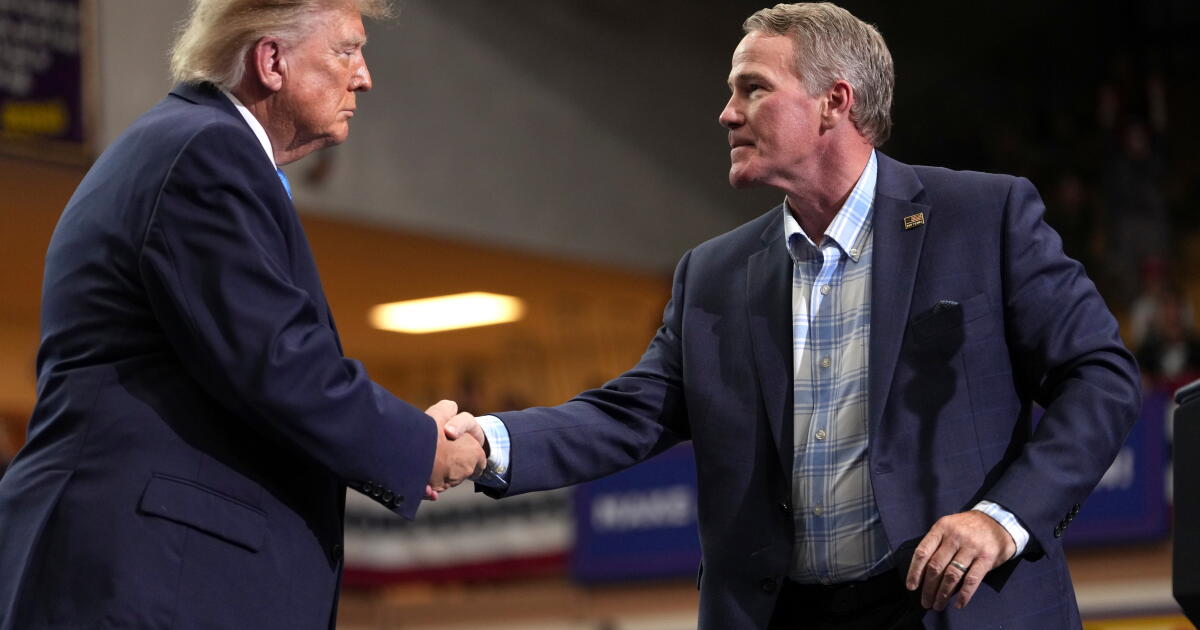
COLUMBUS, Ohio — Campaign mailers urging Ohio voters to support a socialist U.S. Senate candidate over Democratic nominee Sherrod Brown are being underwritten by a newly incorporated PAC with ties to President Trump’s MAGA Inc., public filings show.
The mailers are sponsored by Enough Promises Ohio PAC and began arriving in voters’ mailboxes in recent days. They promote independent candidate Greg Levy over Brown with messages such as “Join the Revolution” and “Send a Worker to the Senate.” Levy describes himself as “Socialist running for the U.S. Senate to represent Ohio in 2026” on his X account.
Levy condemned the fliers for falsely impersonating his campaign and engaging in “dirty tricks” designed to mislead voters. He said he is considering legal action.
“This is a highly undemocratic practice and does a disservice to voters in Ohio and throughout the country,” he wrote on X.
According to Federal Election Commission filings, Enough Promises Ohio was founded on Sept. 29. It has not yet had to disclose its contributors, but additional federal filings lay out a trail of associations linked to Republicans.
Enough Promises paid the firm Seven Farms more than $397,000 on two dates last week for printing, postage and mail services either supporting Levy or opposing Brown. Seven Farms, also a new entity, lists as its address the same South Carolina business suite as the one used by Whistlestop Strategies LLC.
Whistlestop is a direct mail outfit operated by Big Dog Strategies LLC, the strategy firm that advises Trump’s MAGA Inc. super PAC and that managed Republican Sen. Bernie Moreno’s successful campaign against Brown in 2024.
Messages seeking comment were left with Enough Promises Ohio and Big Dog.
MAGA Inc. and affiliated groups began pouring huge sums of cash into midterm races in September, after party officials had been urging Trump to begin spending some of the fortune he had amassed to help embattled Republicans before it was too late.
Smyth writes for the Associated Press. AP writer Jill Colvin in New York contributed to this report.
At the Republican Party’s midterm convention, President Trump said he would make his crusade against transgender rights a major campaign issue ahead of the Nov. 3 election — calling the message that “men should not be playing in women’s sports” one of his party’s “great sound bites of all time.”
During a recent campaign trip, Gov. Gavin Newsom, a longtime LGBTQ+ advocate and likely Democratic contender for president in 2028, stood by his remark last year that allowing transgender athletes to compete in girls’ sports is “deeply unfair,” saying, “I haven’t been able to figure out how to make it fair from my perspective.”
For the second election cycle in a row, the rights of transgender people have taken center stage politically, despite their accounting for only about 1% of the U.S. population and many voters identifying other issues as far more important — splitting Republicans and Democrats, but also Democrats among themselves and putting the party on the defensive.
Transgender athlete AB Hernandez, third from right, sits with other athletes at the CIF State Track Championship finals in Clovis on May 30, 2026.
(Tomas Ovalle / For The Times)
The politics are part of a much broader, international battle playing out in education, sports and the law, from local California classrooms and high school sports to the Olympic stage and the U.S. Supreme Court. Polling for years has shown most Americans oppose discrimination against transgender people, but also that a majority — including a substantial portion of Democrats — oppose transgender athletes participating in girls’ sports and children receiving gender-affirming care such as surgery or puberty blockers.
Republicans are pushing a well-funded message that transgender rights should be dismantled across the board, in healthcare, education, sports, the military and public spaces such as restrooms. Conservative mega-donors such as Elon Musk have spent millions amplifying that message in competitive races from Alaska to Ohio to Texas.
And to some degree, those tactics have worked. While many Democrats have ardently defended transgender rights, particularly in California, others in the party have sided with Republicans or softened their support.
Democratic Senate candidate James Talarico appears with Jeffrey Epstein abuse survivors in Dallas on Sept. 10.
(Anja Schlein / Dallas Morning News )
James Talarico, the Democratic U.S. Senate candidate in Texas, backpedaled from past votes by saying young transgender athletes shouldn’t be allowed to play “if it risks safety or fairness,” while others including Rob Sand, a candidate for Iowa governor, and Rep. Marcy Kaptur (D-Ohio) have said they shouldn’t play.
Such messaging has dismayed transgender people and their families, as well as LGBTQ+ rights groups who have been trying to refine Democratic messaging on trans issues since Vice President Kamala Harris — another longtime LGBTQ+ advocate from California — responded to Trump’s anti-trans attacks in 2024 with a message some considered muddled.
Imara Jones, a transgender journalist and founder of TransLash Media, a platform built to spotlight trans people’s own experiences, said the party’s conflicting messaging “underscores the degree to which the Republicans have actually successfully weaponized trans issues.”
“You’re seeing a really sharp political calculus among Democrats,” Jones said, with those “in tight races, where they need to have Republican votes,” bending one way, and others who “want to make a statement about principle” and defending LGBTQ+ rights moving in the other.
Many Democrats in California say they believe the issue is a moral one and that Democrats only hurt themselves by ceding ground on human rights.
A volunteer for Toni Atkins, the former president pro tempore of the California State Senate, is silhouetted holding a Pride flag at the Harvey Milk Coachella Valley Diversity Breakfast, at the Palm Springs Convention Center in Palm Springs Thursday, May 8, 2025.
(Allen J. Schaben / Los Angeles Times)
“The solution is not to be ambiguous, but to be firm that we support basic human rights and the basic humanity of trans people,” said state Sen. Scott Wiener (D-San Francisco), a leader on pro-LGBTQ+ legislation running to replace retiring Rep. Nancy Pelosi (D-San Francisco). “Then go on to talk about the big issues facing our country, like this illegal war, like the fact that Congress has done nothing to regulate AI, like the explosive cost of energy and child care and housing.”
A national conversation
Trump has signed executive orders to bar transgender athletes from competing in girls’ sports, prohibit federal funding for gender-affirming care for youth, oust transgender service members from the military and deny recognition of transgender and nonbinary identities on critical documents such as passports.
The Justice Department has sued California and other states over their trans-inclusive sports policies, and successfully threatened large hospitals into ending gender-affirming care programs. The Centers for Medicare and Medicaid Services barred federal Medicaid spending on gender-affirming medication or surgeries for minors.
Martin Makary, commissioner of the Food and Drug Administration, speaks at Health and Human Services headquarters in Washington on Dec. 18, 2025.
(Stefani Reynolds / Bloomberg)
Trump campaigned on such policies, and he and other Republicans clearly see them as helpful in the midterms. In his convention speech, Trump said he’s been surprised more Democrats haven’t abandoned transgender rights given polling showing a majority of Americans oppose transgender athletes in girls’ sports.
“They say it’s an 80/20 issue,” Trump said, in an apparent reference to a January 2025 New York Times/Ipsos poll that found 79% of respondents believed transgender athletes should not be allowed to compete in women’s sports. More recent polls have shown a smaller majority opposed.
Demonstrators at a Rainbow Families Action march in Emeryville, Calif., on Dec. 8, 2025.
(Jessica Christian / San Francisco Chronicle )
Arne Johnson, a Bay Area father of a transgender child who helps run the advocacy group Rainbow Families Action, said being targeted by Republicans is scary, but watching Democrats “find ways to be more flexible about the rights of human beings” has been profoundly disappointing.
But he said he’s also been encouraged by some more recent polling showing Americans moving back toward the middle on transgender rights, which he believes is in part due to people being deluged with anti-trans ads getting frustrated that the political conversation isn’t focused on issues they care more about, like affordability and healthcare.
Ramiro Sarmiento, a spokesperson for the Human Rights Campaign, which has tracked at least $50 million in anti-trans political ads this cycle, agreed, saying, “MAGA wants to talk about trans kids because they’re losing the conversation voters actually care about.”
Conservative groups reject that framing. Many deny tht transgender people exist, while others say they are working to protect cisgender children or defend religious beliefs. They have also scoffed at Democrats who have changed their positions in the lead-up to the election, with the conservative American Principles Project accusing Talarico of only pretending to shift away from his “gender radicalism” on sports in order to win votes.
Allison Schuster, a White House spokesperson, said the Biden administration “spent four years pushing a radical agenda” of gender-affirming care for children, while Trump “pledged to restore common sense” and has since “delivered by consistently taking strong action to protect children from these dangerous, life-altering medical practices.”
The fight in California
In California, transgender athletes competing in youth sports has been raised as an issue in the governor’s race, where Republican hopeful Steve Hilton has rallied against their inclusion, and featured prominently in the races for the next state attorney general and the next state superintendent of public schools.
Transgender athlete AB Hernandez competes for Jurupa Valley High School at the 2025 CIF state track and field championships.
(Tomas Ovalle / For The Times)
Several Democrats running for Congress in the state have been criticized for their records on transgender rights, including San Diego City Councilmember Marni von Wilpert, who is seeking the redistricted congressional seat of departing Rep. Darrell Issa (R-Bonsall), as well as Reps. Adam Gray (D-Merced) and Derek Tran (D-Orange).
Christian Martinez, a National Republican Congressional Committee spokesperson, has accused Von Wilpert of having a “perverted agenda [that] pushes hormone treatments on kids,” and Gray of being “for they/them, not for Californians.”
Marni von Wilpert, a Democratic candidate for California’s 48th Congressional District, canvasses in a neighborhood Friday, May 29, 2026, in San Marcos, Calif.
(Gregory Bull / Associated Press)
California Atty. Gen. Rob Bonta’s office is fighting on multiple fronts to protect gender-affirming care and successfully rebuffed a Justice Department lawsuit over the state’s transgender sports policies. But pressure is coming not only from the Trump administration.
The California Interscholastic Federation, which oversees high school athletics, also revised its rules to ensure that transgender athletes in individual sports do not displace cisgender ones from rankings or medal podiums. And after local California teachers sued, the U.S. Supreme Court in March ruled against a controversial California student privacy law that precluded teachers from revealing a child’s interest in presenting in gender nonconforming ways in school to their parents if the child requested confidentiality, finding that the policy infringed on parents’ rights and the free exercise of religion.
Meanwhile, state lawmakers just passed at least a dozen measures aimed at bolstering LGBTQ+ rights, including by restoring an LGBTQ+ youth suicide and crisis hotline; helping discharged LGBTQ+ service members find housing and jobs; requiring California gender-affirming healthcare providers who are subpoenaed to inform Bonta’s office if they intend to respond; improving access to HIV prevention care and enhancing LGBTQ+ data privacy.
Newsom signed all those measures into law — his office said California “will not stand” for Trump’s “all-out assault on the LGBTQ community” — but vetoed a bill that would have barred future governors from allowing the extradition of abortion or gender-affirming care providers in California to states where such care is illegal, citing concerns about reduced executive discretion.
The 2026-27 state budget appropriated $66 million for gender-affirming care, including up to $30 million for underinsured patients in the Uncompensated Care Program, $26 million to assist organizations that provide such care and $10 million to cover care for poor children who lost it under the new Medicaid rules. Wiener called the latter a “short-term solution” that will protect kids while the state figures out a more permanent billing pathway under Medi-Cal.
A.W., a Bay Area mother of a transgender teenager who requested anonymity because she fears being targeted by the Trump administration, said her child’s gender-affirming care — a lifeline for him in recent years — was disrupted by the Medicaid rule change, and the state’s temporary fix was too little, too late.
A.W. said families like hers “shouldn’t have to make medical decisions based on politicians in Washington,” particularly for care so critical to her son and other kids. “If he had not had access to gender-affirming care, I don’t know where we would be,” she said. “It scares me to think about it.”
Times staff writer Dakota Smith contributed to this report.
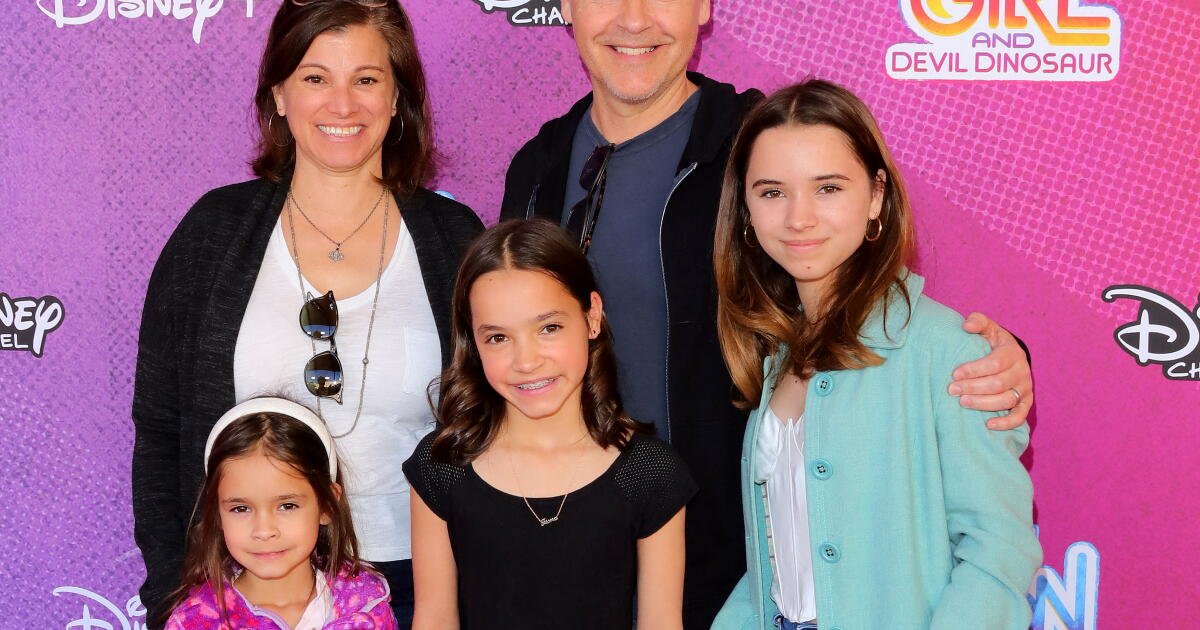
Actor Chad Lowe returned to Instagram on Thursday for the first time following the Sept. 29 death of his 13-year-old daughter Fiona.
The actor shared a spiritual message from author and psychologist Gerry Hussey through Instagram Stories.
“When you ask yourself the deeper, bigger questions,” Hussey said on Olivia Hunt’s podcast “On Healing” after being asked about God, “and you move beyond the human existence — as through meditation or something — as you experience transcendental experience, [you find] we are connected to everything that is.
“And there’s nothing there, but peace and love,” he continued. “When we die. Where do we go? We return to a state of peace and love.”
Fiona’s manner of death was ruled a suicide by the Los Angeles County Medical Examiner in a report released Oct. 2. She died in a hospital.
“We are deeply heartbroken by the loss of our beloved Fiona,” Lowe, the Emmy-winning star of “Life Goes On,” and his family said in a Sept. 29 statement announcing Fiona’s death.
Fiona was the second of Lowe and his wife Kim Painter’s three daughters. The couple also shares Mabel, 17, and Nixie, 10.
Mabel shared an emotional post about her sister on Oct. 3.
“I love you so much fiona,” Mabel wrote in a post containing photos of the sisters. “i wish your short time here was easier and i hope your mind is at ease now. I will honor you forever and keep your memory alive. I love you, i hope you knew just how much.”
Lowe is the brother of “St. Elmo’s Fire” actor Rob Lowe, whose youngest son paid tribute to his late cousin after her death. He posted Emily Dickinson’s poem “Hope Is the Thing With Feathers,” according to an Oct. 5 Page Six report.
“HOPE is the thing with feathers that perches in the soul, and sings the tune without the words, and never stops at all,” John Owen Lowe shared in an Instagram Stories post. “And sweetest in the gale is heard; and sore must be the storm that could abash the little bird that kept so many warm.”
Chad and Rob’s father, Chuck, shared a photo of his granddaughter on Instagram after her death was announced, per People, with the caption, “Rest in peace sweet Fiona.”
The minuscule yet distinctly humanoid figure of a fairy flaps its wings as it flies into the ancient ruins of a bygone kingdom. Guiding a young heroine to meet a mysterious faun, for a moment, the fantastical creature looks as though it might cross the threshold of the screen.
It is in that instant that Guillermo del Toro — wearing 3D glasses while sitting at the Academy Museum of Motion Pictures’ imposing David Geffen Theater for a tech check — chuckles with pride as if to say, “Look at that.” Later that night, almost 1,000 fans were transported into his entrancing 2006 masterwork, “Pan’s Labyrinth,” (a.k.a. “El Laberinto del Fauno”) at the premiere of the new 3D version.
Back in theaters across the country on Friday (which is also Del Toro’s 62nd birthday), “Pan’s Labyrinth” is celebrating its 20th anniversary with a new 4K restoration, available in both 2D and in the aforementioned 3D transfer that Del Toro himself oversaw.
Doug Jones, left, plays the faun that beckons to Ofelia, right, played by Ivana Baquero in “Pan’s Labyrinth.”
(Scott A. Garfitt / Andreea Alexandru / Invision / AP)
As brutal as it is spellbinding, the Mexican filmmaker’s modern classic unfolds during the Spanish Civil War — more precisely, in 1944 — as young Ofelia (Ivana Baquero) and her pregnant mother move into the camp run by the ruthless Capt. Vidal (Sergi López).
Amid the bloodshed, Ofelia discovers an underworld of magical entities, including the alluring faun (Doug Jones), who convinces her that she is a princess who must reclaim her royal status.
By winning three Academy Awards and being nominated for two more — one for Del Toro’s screenplay, the other for foreign language film, representing Mexico — “Pan’s Labyrinth” signified an artistic watershed moment in Del Toro’s career. These accolades came after he directed two comic-book adaptations for Hollywood studios: “Blade II” and “Hellboy.”
Beyond the recognition, the experience felt spiritually transformative for the Guadalajara native; not the least because of the hurdles he overcame to bring it to fruition.
“‘Pan’s’ marks a big divide in what I did before and what I did after. I became invested in a different way in filmmaking,” Del Toro tells me. “I don’t know how to describe it, but filmmaking became a religion, as opposed to something that I could do. It fused with me.”
Though the film is now regarded as one of the greatest works of the 21st century, when Del Toro set out to make it, the industry was not receptive to his ideas.
“Everything I thought I wanted to say about war in ‘Devil’s Backbone’ seemed obsolete, because we had gone through 9/11 and the world had changed,” Del Toro recalls. “I didn’t want to do an American movie. I was being offered a lot of comic- book movies and said, ‘I got to do a companion piece for “Devil’s Backbone” no matter what.’ But nobody wanted to do the movie.”
One key objection was the mature tone of the narrative, in which the child protagonist is directly confronted and endangered by the evils derived from fascist ideologies.
“They said, ‘If it’s a fairy tale then it should be a family movie,’ because I’d been offered ‘Narnia’ a year before by [former Walden Media chief executive] Cary Granat,” Del Toro tells me.
“He said, ‘Why don’t you do ‘Narnia’?’ And I said, ‘Because I want to do my own version of a fairy tale where the lion doesn’t resurrect and it’s about a pitiless world against a boundless imagination.’”
Del Toro’s interest in stories where the woes of children are taken seriously was spurred by ‘Los Olvidados,’ Luis Buñuel’s classic from 1950, about a group of neglected children surviving a harsh reality in the streets of Mexico City.
“When I saw ‘Los Olvidados,’ I was in my early teens,” says Del Toro. “I thought every time somebody told a story about a child that was unsentimental and that was a little brutal — it could be ‘The Spirit of the Beehive’ or ‘Los Olvidados’ or ‘The Red Balloon’ or even Bobby Driscoll in ‘The Window’ — whenever you saw a child in real danger, a child in jeopardy, a child in moral dilemma, like ‘The Fallen Idol,’ I really was transported.”
Children, Del Toro believes, are often invisible to adults. They are “cartoons” in the eyes of “regular adults.” Thus, when his mother started reading child psychology books to better understand a young Del Toro, he read them as well, so that he could try to manipulate her.
Del Toro laughs mischievously as he remembers his antics. “I would do exactly what the book said, and I realized I could work within that preconception and make my grandma buy me horror comic books or make my mom allow me to miss school,” Del Tor recalls. “Ofelia is very strong. That was the point of the movie for me. I wanted to see the clash of wills between a young kid and a fascist captain, and I wanted to see the kid win.”
(Teresa Isasi / Picturehouse)
Del Toro’s mother, Guadalupe, died in 2022. But she lives on in cinema, thanks to the 1985 landmark queer Mexican film “Doña Herlinda and Her Son,” by director Jaime Humberto Hermosillo, where she played the titular Doña Herlinda.
And if you look closely, you’ll also find Del Toro in the movie, which was filmed in Guadalajara.
“I have a cameo with my ex-wife in it. Lorenza. She’s the receptionist and I appear dancing in Chapala, but I’m super thin, so you can never recognize me,” he says. “I’m dancing with a girl that I liked, but I was already in the throes of dating the one who became my wife, Lorenza.”
Then there was the question of the picture’s language. Del Toro wouldn’t waver on making “Pan’s Labyrinth” in Spanish.
“Many of them said, ‘We’ll do it if you do it in English — set in Spain, same ending, the girl dies, no problem, but in English.’ And I said, ‘I can’t. It’s not true to the movie.’ I’m not saying you can never do that, but it’s always this ‘Zorro’ thing like, ‘Are you in a hurry, señor?’ or ‘Come to the hacienda,’” he says, doing a funny, exaggerated accent on the Spanish words.
“If you’re trying to contrast reality versus fantasy, the reality has to be in its language, in its location,” Del Toro adds, emphasizing his resolve to make the movie in his native tongue. “I thought, ‘This is about the reality clashing with the fantasy. I have to make the reality stylized, but I don’t want to do it in English, because then everything is a construct. Everything is just an idea.’”
In 2026, the film’s bilingual appeal is a major component of the marketing strategy that Cineverse — the entertainment company that Del Toro approached to handle the restoration and rerelease of “Pan’s Labyrinth” — is implementing to reach audiences across the country.
“A lot of our messages are in English and in Spanish. The messaging around the making of the 3D — Guillermo likes to say ‘F— AI,’ but we positioned it as ‘Made for humans, for humans. Hecho por humanos, para humanos,’” says Yolanda Macias, chief motion pictures officer at Cineverse. “That’s a really strong message that has resonated with our fans.”
A Mexican American woman whose parents emigrated from Jalisco, Macias sees “Pan’s Labyrinth” as a timeless movie that’s as relevant today as it was two decades ago.
“We are not ignoring a very important segment of the audience, which is the Latino population who have always, in my experience, shown an interest in creators from Mexico or from Latin America,” Macias says. “And we are so proud of Guillermo for being that person for this audience.”
When first envisioning “Pan’s Labyrinth,” Del Toro found himself grappling with existential concerns related to the meaning and relevance of what each person leaves behind when they are gone. Can anything we mortals create stand the test of time? Does it matter?
(Gina Ferazzi / Los Angeles Times)
“One of the things I was going through was I thought, ‘Is making movies worth it? You give them years and years and years, and then they just move down the current into the oblivion of the culture,’” Del Toro says. “A central theme in the film is, ‘Can we give our lives to something that doesn’t change the world?’ That’s why the movie ends with a little flower blooming in a dried tree. That’s all that is left of her story in the real world.”
His films will one day too become flowers left not only as proof of his time on earth, but perhaps as messages for those to come who have the sensibility to appreciate them.
“You can say, ‘Ofelia lived in the other kingdom,’ but in the real world, there’s only one tiny flower. And that’s why it says, ‘For those that know where to look.’ Because that’s what we do as filmmakers. When you ‘discover’ a filmmaker, you say, ‘I discovered this guy Fellini.’ Well, he’s been there for a while, but sure. Or you discover Miyazaki or Mamoru Oshii … They’re continents, but they are only in maps that are very secret. I like that image.”
So long as they are found, Del Toro doesn’t worry that much about how people encounter them.
“[Films] live on to a certain degree. Like when we were shooting ‘Frankenstein,’ I said, ‘We will live forever in the Netflix queue,’” he recalls, trying not to laugh. “Theatrical is the best. There’s no comparison. But I remember my childhood, I saw all the Universal monster movies on TV, and they were monumentally important for me. There’s something to be said about accessibility that is also important.”
I agree with him — and mention that some of the most revelatory movie-watching experiences for me as a young cinephile happened thanks to bootleg DVDs, which I would buy as a teen in Mexico City.
“I love the pirate DVDs in Mexico,” says Del Toro with a laugh. “I’ll tell you a little story: We went to promote ‘Hellboy’ in Mexico City, and we were having coffee. A guy came in and said, ‘You want to buy movies?’ And he had ‘Hellboy’ already, opening week … and it didn’t have a cover either!”
Another distinction that “Pan’s Labyrinth” holds is that it was the last film in Spanish that Del Toro directed. But that could change, he says; he still has another project he’d like to make in Mexico.
“I actually have an idea that I would love to shoot, but I want to make it a drama. I don’t want to make it a fantasy movie,” he explains. “I have a great story that I want to shoot one day. It’s a kidnapping scene from three points of view. The victim, the people doing the pickup, and another component that I will not reveal.” (Del Toro’s late father, Federico, was famously kidnapped in Guadalajara in the late 1990s.)
The thought of Del Toro making another Mexican film in the future, reminded me that the original screenplay for his period ghost story, “The Devil’s Backbone,” was set in Mexico, but a lack of funding forced him to shift the production to Spain, with the help of Pedro Almodóvar’s company El Deseo.
“It was about a traveling circus during the [Mexican] revolution with a mother, a father and a boy. It was full of jarred fetuses. The boy was a clown, and the father was a magician. I was trying to do Bergman’s ‘Hour of the Wolf’ or ‘The Magician’ — modest but creepy,” he explains. “But it was very different. I had the orphanage, I had the legend of the fetuses and a ghost; and I had the devil live in the monastery.”
In any language, Del Toro is a fierce advocate against the use of generative AI in artistic creation. He believes that anything touched by humans has a better chance to endure. The love audiences still hold for “Pan’s Labyrinth” is a testament to this sentiment.
“[Pan’s Labyrinth”] is very truthful to who I was. And whenever you are able to be truthful, people feel that it matters to you,” Del Toro says. “And when you think it matters to someone, you cherish it.”
WASHINGTON — Political advertising warns about Democratic plots to defund the police. Campaign events feature law enforcement unions and tough talk about law and order. Stump speeches boast about record low levels of violent crime.
From coast to coast, Republicans are focusing on public disorder, illegal immigration and violent crime in midterm campaigns as voters sour on their party’s handling of the cost of living and the war with Iran.
Democrats have tried to counter the attacks by recruiting candidates with law enforcement backgrounds and emphasizing their own anti-crime plans, but Republicans believe it’s a rare opportunity to go on the offensive in an otherwise challenging year.
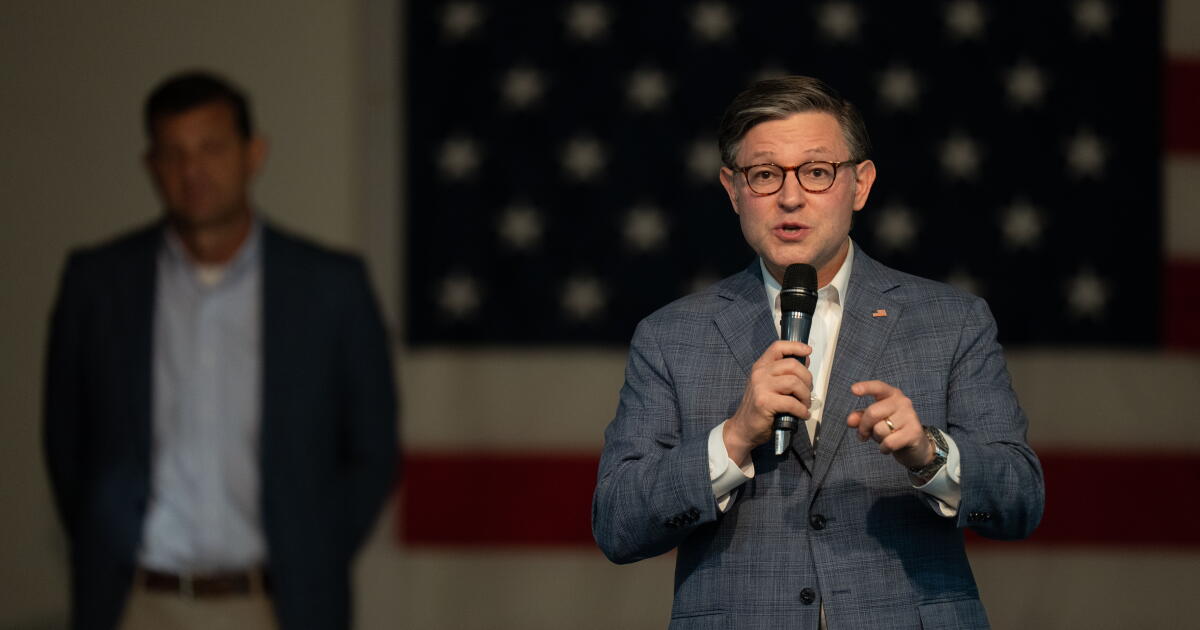
“Do you know that right now we have the lowest violent crime rate in 126 years in America right now? Because we emphasize the rule of law,” House Speaker Mike Johnson recently told an audience at Louisiana State University. Crime rates have generally trended down since the 1990s with a brief spike during the COVID pandemic. “We have the most secure border we have had in the past half century.”
President Trump returned to the topic Monday night in Nebraska, warning about how the country used to be before he returned to the White House.
“We had a border with people pouring in, crime like nobody’s ever seen,” he said.
Republicans say Democrats will ‘defund the police’
In Georgia, Michigan, Nevada, Texas and Wisconsin, Republican candidates for governor have attacked their Democratic rivals as weak on crime or warned they could cut police funding. Texas Gov. Greg Abbott, for instance, has lambasted Democratic nominee and state Rep. Gina Hinojosa for not supporting legislation that would require judges to deny bail to illegal immigrants charged with a violent crime.
Hinojosa has campaigned on her tenure as a civil rights lawyer and criticized Abbott’s crime policies as violating civil liberties.
Rick Jackson, a billionaire healthcare executive running in Georgia, has repeatedly attacked Democratic opponent Keisha Lance Bottoms over her tenure as Atlanta mayor.
“I grew up in the type of neighborhood Keisha Lance Bottoms abandoned,” Jackson said at a summer campaign rally. “I know who gets hurt when politicians defund the police.”
In an interview with Atlanta station 11Alive, Bottoms emphasized that her administration gave pay raises to police and firefighters, and said she called for increased federal funding for public safety during her time as mayor.
Crime warnings pervade congressional races
It’s a similar story in U.S. House races.
In Virginia’s first congressional district, Rep. Rob Wittman has attacked his Democratic opponent, prosecutor Shannon Taylor, over her allegedly “soft on crime” record in office. In Michigan’s 10th district, Republican Michael Bouchard is running on his service as a Bronze Star Army captain and son of a longtime local sheriff. He’s claimed his Democratic opponent, former prosecutor Christina Hines, supports “woke, soft on crime, socialist policies.”
In Colorado’s eighth district, Rep. Gabe Evans touts his time as a police officer against Democratic challenger Manny Rutinel. And in Wisconsin’s third district, Rep. Derrick Van Orden hopes to win a third race against Democratic nominee Rebecca Cooke by painting her as a communist who wants to defund the police.
Republicans hope that by reprising warnings of crime and disorder the party can reenergize their disillusioned base and win back skeptical moderate voters who have drifted over concerns like affordability.
Democratic rivals have responded in kind. Taylor aired an ad featuring 13 local sheriffs who endorsed her campaign. Rutinel aired ads with local police and rolled out a safety plan that called for greater police funding and drug prevention programs. Hines said she’ll continue to prioritize public safety and prosecute corruption in Washington. Cooke has vowed to fully fund police departments in Congress.
Not all Republicans see crime as a winning issue
It’s yet to be seen if the strategy will prove effective.
“We’ve got to talk about it. I think that in many ways, we are the victim of our own success because it’s off the headlines a little bit more,” said Sen. Eric Schmitt, a Missouri Republican and former state attorney general. “Having a completely secure border now, no one even talks about it. But that’s a huge accomplishment from where we were at before.”
An AP-NORC poll conducted in September found that border security — which Trump and Republicans often link to crime — was a relative strength for the Republican president, with 48% of U.S. adults saying they approved of his performance on the issue. But that was still a decline from a year ago, when his approval on border security was at 55%.
Not everyone in the party is sold on Republicans rehashing the crime message.
“I don’t see that bubbling up as a major issue for the voters,” said Sen. Thom Tillis, a North Carolina Republican who chose not to seek reelection this year. Aiming to make the race to succeed Tillis a referendum on crime, Republicans have run ads claiming that Democratic nominee Roy Cooper went easy on convicts during his two terms in the governor’s mansion.
Black political leaders have criticized the ads as racist and reminiscent of past Republican campaigns that used dog whistles to appeal to suburban white voters. Trump made the message explicit when he invoked the infamous 1988 “Willie Horton” ad and displayed dozens of mugshots of men of color on a jumbotron during a rally stumping for Michael Whatley, Cooper’s Republican rival.
In contrast to his party’s messaging, Tillis noted his state’s safety in recent years.
“Frankly, when I hear somebody talking about crime in Charlotte, I live 25 minutes from downtown. I’m not worried about walking through Charlotte at night,” said Tillis.
Democrats accuse Trump of corruption
National Democrats contend that Republicans’ message on violent crime is undercut by the Trump administration’s hardline immigration enforcement actions, which resulted in the killing of two American protesters in January and the fatal shootings of multiple undocumented people. They accuse Trump of corruption and have hammered Republicans for alleged complicity in the president’s self-dealing.
“This is the biggest criminal organization that we’ve ever seen,” said Sen. Ruben Gallego, an Arizona Democrat, of the current White House.
He added that, “Democrats should be pushing back with the fact that, if not for the fact that he was president, this guy would be leading some type of mafia right now.”
Lauren Bis, a White House spokeswoman, said “extreme Democrats are trying to deflect from their radical soft on crime agenda.”
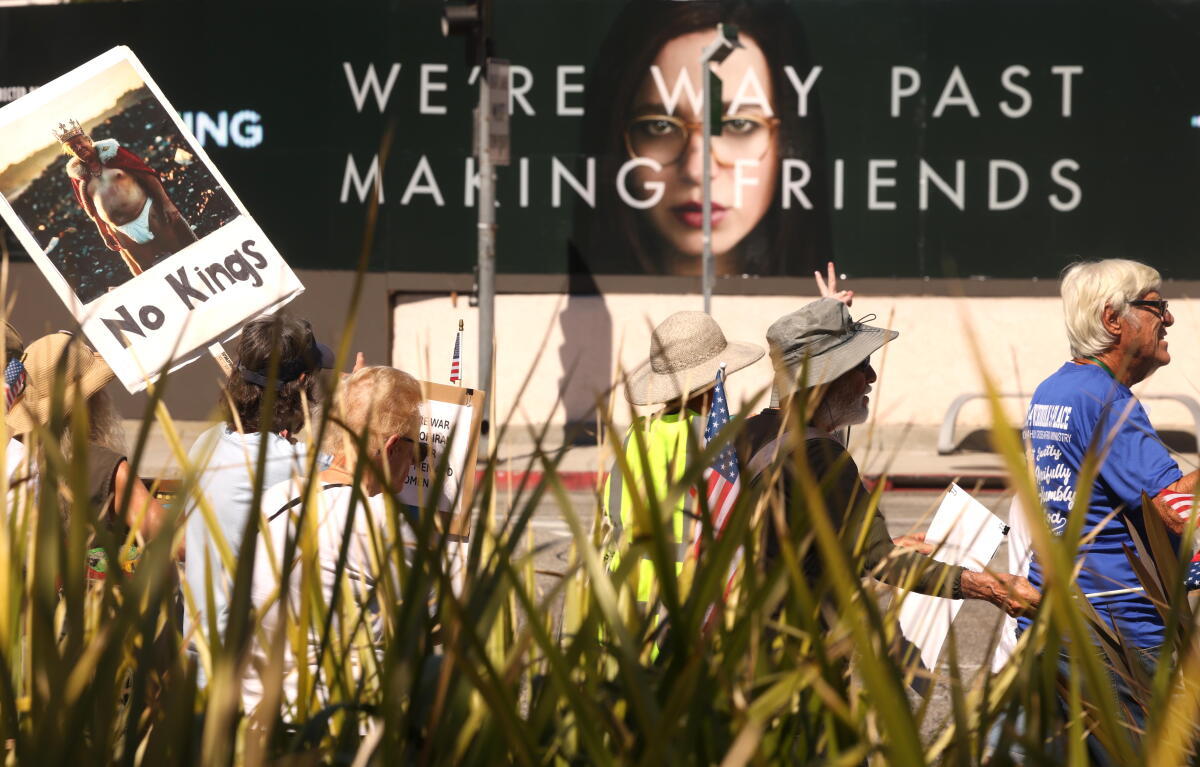
On a sweltering Saturday, around 100 people gathered in Culver City for a rally and march to deliver a message to several major media companies: Help us protect our democracy.
Spotlighting Sony Pictures Studios, Apple, Pinterest and Amazon MGM Studios, all with local offices, protesters demanded that the companies sign on to the “Business for Democracy Pledge” ahead of the elections in November.
After hearing from a few speakers outside Culver City’s City Hall, the band of demonstrators marched a few blocks to the offices of Sony Pictures Studios. From there — walking by posters for the upcoming Sony release “The Social Reckoning” — they made their way back across downtown Culver City to stop outside the historic Culver Studios, now owned by Amazon MGM.
Local groups Culver City and Friends Rising and Keep Showing Up led the protests. This week, they sent letters to the chief executives of all four corporations asking them to sign the pledge. No response has been received. (Messages from The Times to spokespeople for all four companies also were not returned.)
“Businesses and particularly large corporations like Sony, Apple, Pinterest and Amazon, who are our focus today, have a particular role to play in defending democracy,” Phil Ansell, leader of Culver City and Friends Rising, said before the rally. “They have weight, and this administration cares what business says.”
He added, “We’ve seen internationally that in situations where democracy has been under threat, that when the business community stands up for democracy, it can make a huge difference in preventing a full-on shift to authoritarianism.”
Bryan “Bubba” Fish, Vice-Mayor of Culver City, was on hand as a featured speaker and noted how Culver City, a relatively small community that is home to offices for multiple international media companies, is uniquely positioned to help ensure residents’ voices are heard.
“The message of this event is that these major corporations, that are the largest and richest corporations in the history of the planet, benefit from our civilized society,” Fish said before the rally. “…The only reason they’ve been able to grow to the size that they are is because we have stable, legitimate governance, and the bare minimum should be that they commit to defending and speaking out when our elections and our democracy is at risk. That should be the floor.”
Fish added, “We’re here saying you’re a part of our community, stand for free and fair elections and defend democracy alongside us.”
Demonstrators march to the offices of Sony Pictures Studios and past posters for the upcoming Sony release “The Social Reckoning.”
(Genaro Molina/Los Angeles Times)
Reverend Dr. Frances Wattman Rosenau, pastor at Culver City Presbyterian Church, spoke outside of both Sony and Amazon MGM.
“Democracy is one of our core values as a country, and me as a person of faith, I care deeply about giving voice to the voiceless and making sure that no one is marginalized,” Rosenau said while walking from one location to the other. “And calling our business partners to come alongside us is an act of partnership. It’s time for everybody to be in the boat and rowing, affirming what we stand for as a people for the common good.”
The Culver City event is one of a series around the country this week in collaboration with the group May Day Strong. Representatives of other local activist groups, including PowerSwitch Action, National Nurses United and Singing Resistance Santa Monica, were also in attendance on Saturday.
Amy Schur, campaign director with Alliance of Californians for Community Empowerment (ACCE), is involved with coordinating the national campaign for the “Business for Democracy” pledge.
“We’re in a unique moment where people are rising up all across the country of their own accord,” Schur said. “People are seeing what’s at stake. So they’re ready to march, they’re ready to speak out.”
Schur noted that much work remains to harness that energy and turn it into real change.
“The critical question is, can we do it in ways that are strategic and have the impact that we need in this moment?” she said. “Just marches are not enough because it’s kind of easy to ignore those. But when it’s a march with a purpose and calling out big corporations, it has more impact.”
The march in Culver City was one of several nationwide actions this week.
(Genaro Molina/Los Angeles Times)
Ansell noted that companies such as Apple and Amazon spoke out after the insurrection of Jan. 6, 2021 and hopes they will continue in that same spirit.
“We’re here today to say don’t wait for the equivalent of January 6 to happen again,” Ansell said. “Commit yourself now publicly to opposing any efforts to undermine this election. And our view is that to the extent that many large corporations across this country take that public stance, it will significantly reduce the risk of a major effort to subvert this election.”
Organizers see Saturday’s protest as part of an ongoing effort and hope more people will feel empowered to participate.
“People are not alone,” Ansell said. “No one should feel like they have to stay home alone and despair. There are many opportunities for action, and we have to be prepared. Today’s action is one of many to defend this election.”
WASHINGTON — A Massachusetts man was arrested Thursday in a federal case alleging he cyberstalked conservative podcaster and former Trump administration official Katie Miller, targeting her dozens of times with menacing phone calls and messages, according to court papers.
Authorities say the man contacted Katie Miller at least 40 times over the course of several weeks, sometimes leaving disturbing voicemails and text messages about her and her husband, Stephen Miller, who serves as White House deputy chief of staff. He also sent messages to phone numbers for her parents, according to prosecutors.
John Anthony Proia III, 41, is charged with one count of cyberstalking. An attorney listed for him didn’t immediately respond to an email seeking comment on Thursday.
The court documents do not identify the victim by name, but a person familiar with the matter confirmed that it is Katie Miller. The person spoke on the condition of anonymity to discuss non-public parts of the investigation.
“Those who use technology to harass, intimidate or torment others should understand that attempts to anonymize their criminal conduct will not shield them from prosecution,” Leah Foley, the U.S. Aattorney for Massachusetts, said in an emailed statement. “We will find you, and we will hold you accountable.”
In a social media post Thursday, Katie Miller thanked Justice Department and FBI officials for keeping her and her family safe.
“Good to see a Boston grand jury indict this man,” she wrote.
The investigation contributed to upheaval inside the FBI’s Washington field office, where two top counterterrorism supervisors were recently reassigned by the office’s leader in part because of dissatisfaction over their handling of and approach to the Miller probe, according to multiple people familiar with the matter who spoke on condition of anonymity to discuss non-public personnel changes.
Darren Cox, the assistant director in charge of the Washington office, said in a statement that the reassignments were not ordered by Director Kash Patel and that the moves were a personnel decision “based on our constant evaluation of mission needs. Any suggestion otherwise is false.”
WASHINGTON — Since the 2024 election, Democratic congressional candidates have reached a consensus about how to broadly discuss the border — make it secure — but they still lack a cohesive message about ICE.
Some advocate abolishing the agency, while others offer visions for how to rein it in and reform it.
Meanwhile, for Republicans, President Trump’s immigration policies have offered a win on one issue (the border) while creating another issue that many voters find troubling (violence during raids).
Some battleground Republicans are distancing themselves from Trump and have shifted from talking about mass deportations to emphasizing deporting criminals.
Most voters don’t care more about immigration than the cost of living. But it remains an important issue, and for both Republicans and Democrats, the balance in messaging about immigration is delicate, as about half of Americans see the administration’s tactics against immigrants as too aggressive.
As the Nov. 3 midterms approach, Democratic candidates in various states including Illinois, Minnesota and New Jersey have said Immigration and Customs Enforcement should be abolished. In Michigan, progressive Senate candidate Abdul El-Sayed has said as much — and taken aim at fellow party members.
“The idea that somehow we can’t say ‘abolish ICE’ because we’re so afraid of what they’re going to say, when we’ve seen ICE terrorize people in our streets,” he said before Michigan’s Senate primary in July. “To me, it is exactly the kind of cowardice that we don’t need from Democrats.”
The Democratic dilemma was crystallized last month when Democratic National Committee members approved dueling messages — one to abolish ICE, the other to reform it.
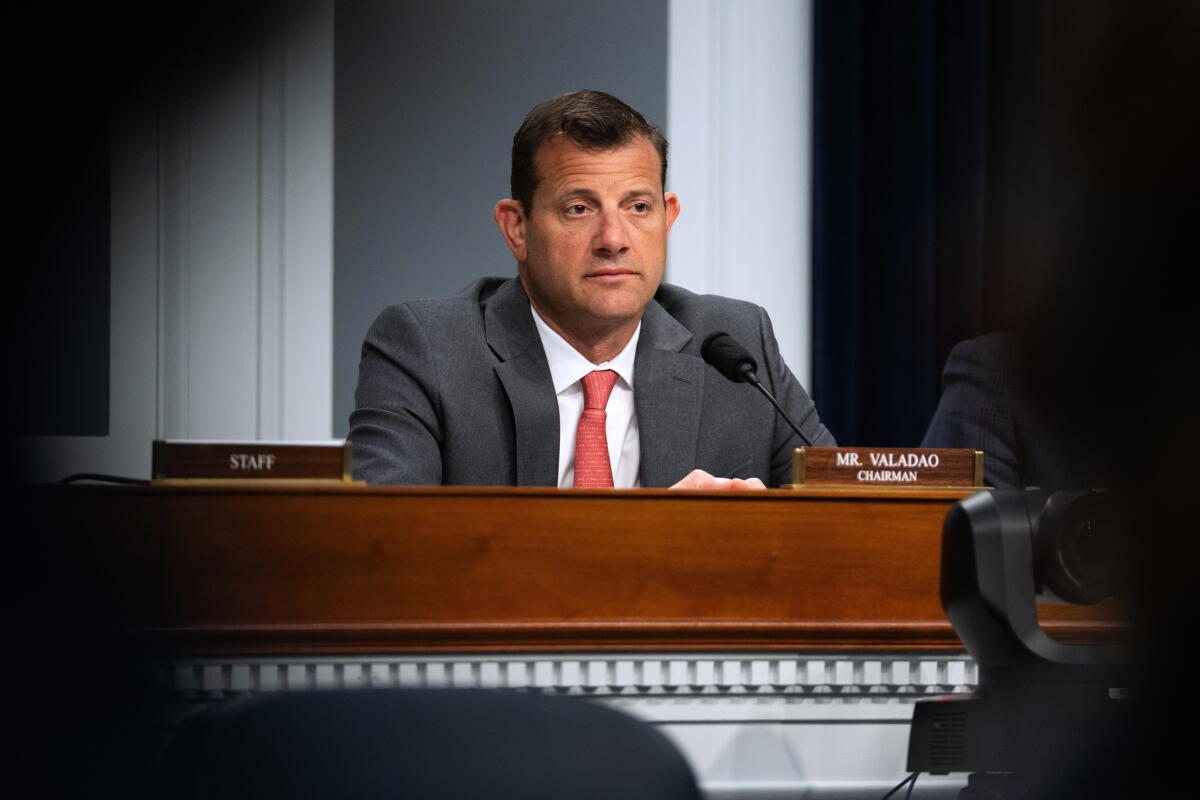
Among those in the reform camp is Randy Villegas, the political science professor running against Rep. David Valadao (R-Hanford) in California’s Central Valley.
Rep. David Valadao (R-Hanford), presiding over a congressional subcommittee meeting in Washington on March 6, is seeking reelection in California’s 22nd District.
(Allison Robbert / Ap Photo/allison Robbert)
Villegas is in favor of a pathway to citizenship for longtime immigrants as well as a secure border. He’s called for ending the use of for-profit detention facilities and prosecuting ICE agents who engage in illegal conduct.
It’s a personal issue too. Villegas is the son of immigrants from Mexico, and, according to a 2021 NPR story, his brother is a DACA recipient, granted protection under the Deferred Action for Childhood Arrivals program. He said the constituents of the mostly rural 22nd District deserve a representative who understands the effects of the broken immigration system; he recalls his mother being unable to visit her sister when she was dying of cancer.
“Kern County was ground zero for these ICE raids last year. What did Valadao do or say about it? Absolutely nothing. This is somebody who likes to pretend they’re a moderate on immigration. He voted to triple ICE’s budget,” Villegas said in an interview, noting that he organized a local workshop with immigration attorneys.
After the raids, led by Customs and Border Protection agents who were reported to have gone “rogue” weeks before President Biden left office, Valadao released a statement saying he had spoken to agency officials and urged them to target “criminals rather than those responsible for producing our nation’s food supply.”
Valadao, a dairy farmer and the son of immigrants from the Azores islands of Portugal, says on his campaign website that he supports a “reasonable and responsible” pathway to citizenship, a guest worker program that could stabilize the agricultural workforce and a focus on removing immigrants who have committed serious crimes.
Last year, he sponsored the Dignity Act, a bipartisan bill that would create a new temporary legal status for immigrants who meet certain requirements and pass a criminal background check.
Valadao declined an interview request but said in a statement that “our immigration system is broken after decades of inaction, and it’s critical that we restore law and order while recognizing the contributions of people who have lived and worked peacefully in our communities for years.”
In Texas, Democratic Senate candidate James Talarico frequently has said that the southern border should be treated “like our front porch,” with a welcome mat and a lock on the door.
Talarico says immigration enforcement is necessary but that resources should be refocused to target cartels, gang members and human traffickers. As for ICE, he said the government should “tear down this secret police force and replace it with an agency that is actually going to focus on public safety.”
Texas Atty. Gen. Ken Paxton, a Republican candidate for the U.S. Senate, has embraced President Trump’s crackdown on immigration.
(Tony Gutierrez / Ap Photo/tony Gutierrez)
Centrist Democratic strategists said Talarico’s messaging strikes the right tone for swing voters.
During the Biden administration, voters lost trust with Democrats on immigration and border security, said Sarah Pierce, a former U.S. Citizenship and Immigration Services official who leads immigration work at the center-left think tank Third Way. That needs to stay top of mind for Democratic candidates, she said.
“Americans don’t trust that Democrats are even willing to enforce immigration laws, so obviously there’s a lot of pressure on the party to rectify that,” Pierce said. “At the same time, this is the most anti-immigrant administration we’ve had in history.”
Talarico’s opponent, Texas Atty. Gen. Ken Paxton, touts Trump’s hard-line immigration policies and has made border security a key part of his campaign.
Paxton also believes states should work with the federal government on immigration enforcement. This year, his office conducted raids in Houston and transferred 50 immigrants to ICE custody.
James Talarico, the Democratic Senate candidate in Texas, has called for reforming Immigration and Customs Enforcement but unlike some Democratic candidates, he has not called for abolishing the agency.
(Danielle Villasana / Getty Images)
Matt Terrill, a Republican strategist who was chief of staff for then-Sen. Marco Rubio’s 2016 presidential campaign, said Republican candidates need Trump to turn out the GOP base so they retain control of Congress.
Some Republican candidates are conveying a more nuanced message, but it might not matter to voters who already feel betrayed by Trump. That’s the assessment of Matthew Dallek, a political historian at George Washington University who studies Republican and Homeland Security politics.
“A lot of Republican candidates are struggling to figure out a message on what had been a great political strength that has turned into a major liability,” Dallek said. “Different Republicans are giving different answers to try to appeal to the Latino vote, maybe to independents, to voters who might typically vote Republican and support closed borders, but think that ICE has gone too far.”
Many Republican candidates aren’t avoiding immigration. A Third Way analysis of last month’s spending on immigration-related ads in competitive House and Senate races found that Republicans had spent more than $50 million — five times more than Democrats.
At issue, however, is the messaging. Earlier this year, White House officials and House Republican leaders reportedly told their members to avoid talking about “mass deportations” and talk up removing criminals.
Rep. Gabe Evans, who is running for reelection in Colorado, described the distinction as “gangbangers, not grandmas.”
At the Republican National Convention in 2024, Rep. Monica De La Cruz (R-Texas) denounced “open borders” before a crowd waving signs reading “mass deportation now!”
As the Trump administration’s enforcement campaign took shape, however, she signed a letter to House Speaker Mike Johnson calling on ICE to focus its resources on arresting immigrants with criminal records, and in March she intervened after local high school mariachi performers were detained.
This month, De La Cruz released a campaign ad, featuring the wife of a DACA recipient who was detained this year by ICE. The wife said that she had voted for Democrats before, “but Monica puts people over politics.”
A representative for De La Cruz did not respond to requests for comment.
Her opponent, Tejano musician Bobby Pulido, said he doesn’t like talking in absolute terms like abolishing ICE. But without the historic funding approved by Republicans this year, the agency would have been prevented from continuing what he sees as bad policy on humanitarian and economic levels.
But Pulido also says that the Biden administration waited too long to impose border restrictions.
“It feels like it went from ‘let ‘em all in’ to ‘kick ‘em all out,’” he said in an interview. “I don’t think that either one is good. We need immigrants, but everybody always says do it the legal way. We have to actually legislate pathways for that to happen.”
One Republican has directly broken with Trump in her bid for reelection. In a campaign ad released Sept. 17, Florida Rep. Maria Elvira Salazar, standing in front of the White House, speaks directly to the president. “The same Hispanics who helped you get to the White House in 2024 feel betrayed today,” she said.
Polling shows that many in that district, where Latinos make up three-quarters of registered voters and more than half were born outside the U.S., now think Trump’s immigration crackdown has gone too far. Polls also show Salazar is deadlocked with her opponent, Eliott Rodriguez, a fellow Cuban American and newscaster who fired back at her for voting in favor of Trump’s policies.
Lorraine Kelly sent a sweet message to her mum, Anne Kelly, on Tuesday’s episode of the show
Lorraine Kelly sent a sweet message to her mum, Anne Kelly, on Tuesday’s episode of the show (Image: ITV)
Lorraine Kelly revealed her mum had suffered a ‘bad fall’ on Tuesday’s episode of Lorraine.
During the latest installment, Lorraine, 66, marked her mum Anne Kelly’s 85th birthday with a sweet message live on air before sharing a sad update regarding her mother.
Lorraine said: “Happy birthday to my wee mum. Happy birthday. There we are” to which a photo of Lorraine and Anne appeared on screen before a picture of Lorraine, Anne and her brother Graham was also shown.
In a sad update, Lorraine added: “Sadly, she’s back in hospital. She had a bad fall. She’s in Hairmyres Hospital. So thanks to everybody that’s looking after her, saw her at the weekend, of course. But yeah, God bless her. I hope she has a good day.”
Lorraine continued: “Mum, have a great day. Have a great day as much as you can. Happy birthday!”
Taking to Instagram, Lorraine also shared a post for her mother, writing: “Happy 85th birthday to my mum. Sadly celebrating in hospital today after a bad fall resulted in broken arm.
“Saw her at weekend and she’s getting well looked after. Hopefully back home with us soon #birthday #mum.”
Responding in the comments, one person said: “Happy birthday to your mum, hope she gets well soon” with a heart emoji.
Another account wrote: “Happy birthday hope you’re better soon xx” while another follower added: “Happy Birthday wishes to your lovely mum. Hope she has a good recovery.”
A different show watcher put: “Happy birthday/speedy recovery” while another fan added: “Happy birthday to your gorgeous mum. It’s my birthday tomorrow xx.”
Earlier this year, Lorraine announced the death of her dad. The Scottish broadcaster took to Instagram at the time to share the devastating news with her online followers.
Lorraine’s father, John, worked as a TV service engineer and was known for his passion for science and astronomy, which the TV presenter had inherited from him.
Sharing a snap of herself and her late dad, the ITV star said: “Very sad news. My dad has died. I am mourning the man who bought me a telescope when I was five years old, who watched the moon landings with me and taught me to always be curious and interested in everything. He was in poor health but it has still been a shock.
“Any of you who have experienced a similar loss will know how my brother Graham and I are feeling. Our priority is taking care of my mum and the family would very much appreciate privacy at this distressing time. We will miss you dad.”
Lorraine continues on weekdays at 9:30am on ITV and ITVX
Houston Texans’ linebacker Azeez Al-Shaair has spoken to sports journalists about his $11,941 fine by the NFL for wearing the name of Palestinian child Hind Rajab, who was killed by Israeli forces in Gaza, on his eye black during a game.