Great Britain’s Joe Truman said team-mate Matt Richardson’s withdrawal was “not ideal” and they had started “on the back foot” as they exited in the first round of the men’s team sprint at the World Track Cycling Championships.
The 27-year-old, who had also been expected to contend for medals in the individual sprint and keirin, said he would co-operate with a British Cycling investigation into the allegations.
His withdrawal overshadowed preparations for the event in Shanghai, though Britain’s women did secure silver in the team sprint.
Emma Finucane, who is Richardson’s partner, Sophie Capewell and Rhianna Parris-Smith finished fastest in qualifying, and beat France but lost to hosts China in the gold-medal race.
The men’s team – Truman, Ed Lowe and Harry Ledingham-Horn – finished fifth in the qualifying stage but were beaten by fourth-placed Australia in the opening round of head-to-head races.
“We came with a bit of a last-minute change, obviously,” said Truman. “We all said this morning we’re here just to ride our bikes.
“We’re on the back foot a bit but let’s just put our best foot forward, put a time on the board at the start of Olympic quali and we got a time to be proud of.
“None of us are riding in ideal circumstances but we’re professional athletes and so it’s what we train to do – we train to race when it’s not perfect – so I think we did OK. We’re looking ahead to the next couple of years and think we’re in a great spot.”
Elsewhere on day one, Britain’s women and men progressed as first and second fastest respectively in qualifying for the team pursuit events.
Meanwhile, Abigail Miller finished 17th of 24 riders in the women’s scratch race.
Two Iranian nationals have been charged with terror offences over an alleged plot to target the Jewish community in Manchester ahead of Yom Kippur, Counter Terrorism Policing has said.
Rahman Salehi, 35, and Salam Ahmadyan, 36, are accused of preparing to commit an act of terrorism or assisting another to commit an act of terrorism on or before 20 September.
The duo were arrested in the Northern Quarter area of the city, when thousands of British Jews were in synagogues.
Home Secretary Shabana Mahmood said the news two Iranian men have been charged over an alleged plot in the Manchester area would be “deeply distressing” to the Jewish community and added “both suspects arrived by small boat several years ago”.
The men are due to appear at Westminster Magistrates’ Court on Saturday.
One of five men arrested near RAF Fairford in the early hours of Sunday morning had dialled 999 himself, the BBC understands.
The suspect called the police at 00:45 BST, almost an hour before a female farmer also dialled 999 after seeing men in balaclavas.
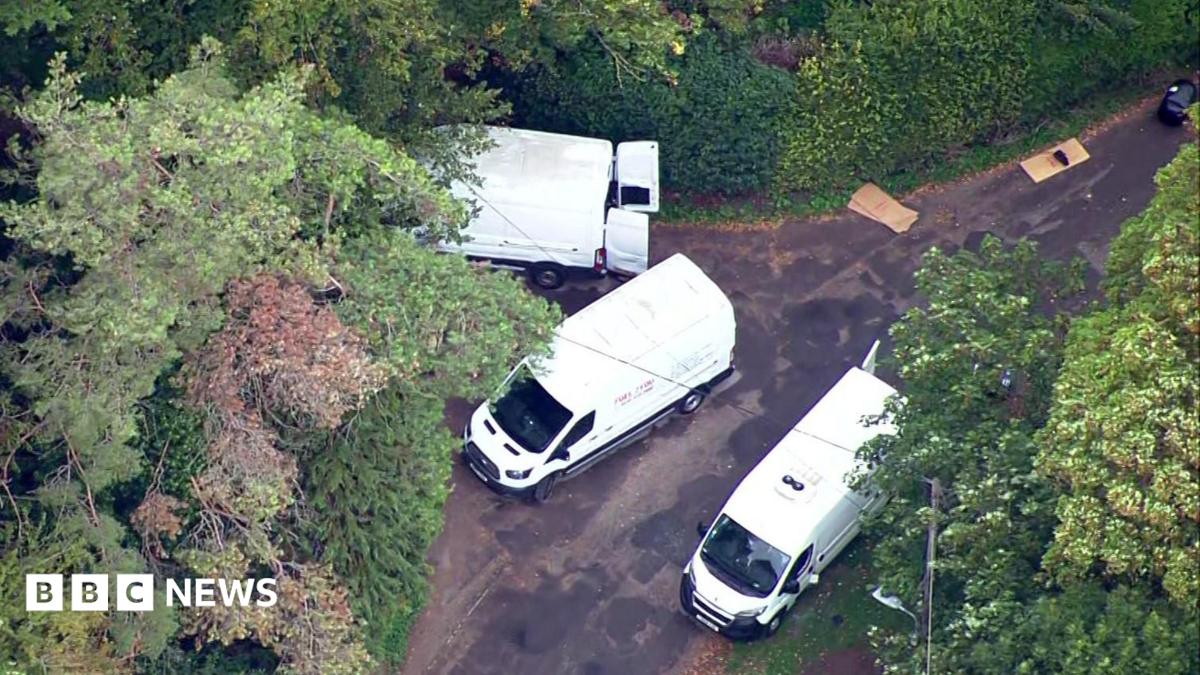
The five were arrested on suspicion of explosives offences and later terrorism offences after three vans were spotted, sparking a major security incident around the Gloucestershire base which the US military operates.
They were released on bail on Monday in what police described as an “investigative decision” “grounded in experience and strategy”.
Police say a quantity of petrol but no explosive devices were found during searches of the vans.
Police were alerted to “three suspicious vehicles” in Whelford, a village which lies directly east of the base, by the farmer.
She told the BBC it was “pure luck” she had spotted them, having arrived home to find the road blocked and a “large group of hooded and masked men”.
“I believe that my 999 call foiled whatever plans they had,” she said.
A bomb disposal team arrived on scene shortly afterwards and a 400m (1,312ft) cordon was put in place.
But Assistant Commissioner Laurence Taylor, head of Counter Terrorism Policing, told reporters on Tuesday that the police response that morning had been due to “a range of information”.
Police cordons near the base are expected to be completely lifted on Wednesday, while residents from the 85 homes evacuated on Sunday have been allowed to return to their properties.
The five men are all UK nationals aged between 23 and 25. Four of them live in Westminster and one in Camden, and searches of their homes are now complete.
Taylor previously said their bail was “subject to stringent conditions on their movement and contact with others” as they remained under investigation.
“The safety of the public is at the forefront of our investigative decision-making, and this was certainly the case yesterday,” he said on Tuesday.
“I understand why this development was surprising to some, but I would like to reiterate that this is an investigative decision and one which is grounded in experience and strategy.”
The RAF base has been used as a forward operating location by the US Air Force for decades.
In recent months, US bombers have taken off from the base for the Middle East, after the UK approved a US request to use it for defensive strikes on Iran.
US President Donald Trump on Tuesday told journalists he was “disappointed” the five men had been released on bail.
Details continue to come in, but police in the United Kingdom have declared a “major incident” and ordered evacuations near RAF Fairford after the arrest of “several men on suspicion of offenses under the explosives act,” the Gloucestershire Constabulary stated.
RAF Fairford is a major hub for U.S. military aircraft in the United Kingdom. It is a regular host of strategic assets, including bombers and U-2 spy planes. It also acts as a pit stop for other aircraft, including fighters, that are being ferried to and from the United States. Bomber strikes launched from Fairford were a central aspect of major U.S. combat operations against Iran earlier this year.
“A number of properties are currently being evacuated in the Whelford area following the declaration of a major incident,” the Gloucestershire Constabulary also announced today in light of the incident.
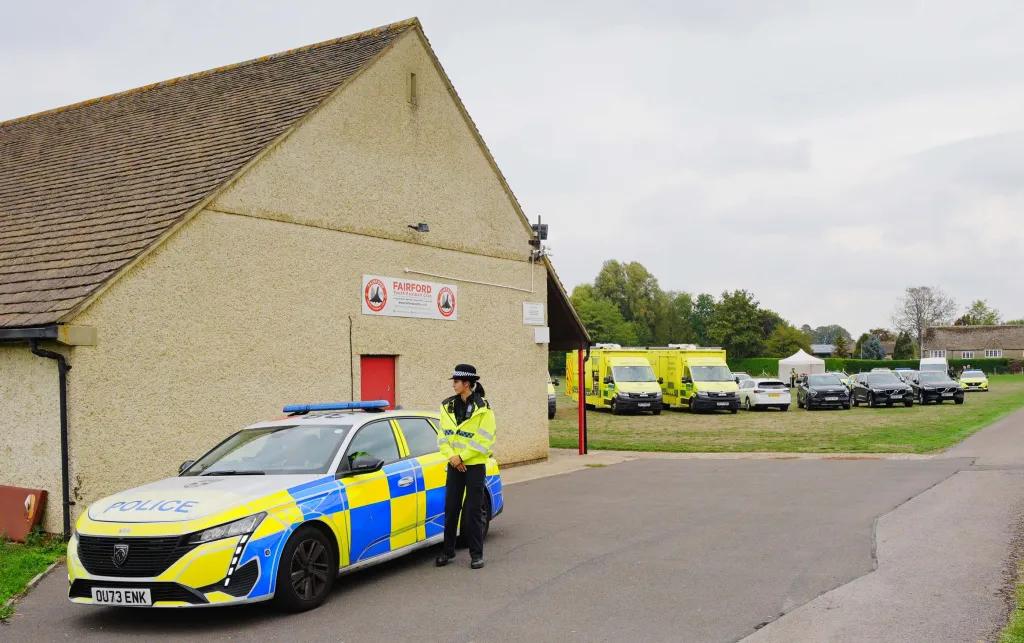
Emergency services in Fairford after a major incident has been declared, with armed police manning a cordon near the village of Whelford in Gloucestershire, near RAF Fairford, which is used by the United States Air Force (USAF). (Photo by Ben Birchall/PA Images via Getty Images) Ben Birchall – PA Images
The evacuations were spurred by the arrests.
“The Army’s specialist explosive ordnance disposal team are currently examining a number of vehicles,” Gloucestershire Constabulary added. “The local residents are being evacuated to a nearby leisure center.”
“A cordon is currently in place, but we’d like to reassure people that we believe this incident is contained,” the law enforcement agency explained. “We are working closely with our partners and are enacting the well-rehearsed plans we have in place.”
The incident began around 12:45 AM local time Sunday “when police received a call relating to three suspicious vehicles traveling towards RAF Fairford,” according to Gloucestershire police Assistant Chief Constable Richard Ocone. “Armed officers responded and subsequently arrested five men in the Whelford area on suspicion of committing offenses under the Explosives Act. The men were taken into custody, where they remain.”
“A 400-meter cordon has been put in place around the vehicles while the army’s explosive ordnance disposal unit examined them,” Ocene continued. “As a precaution, around 85 households have been advised to evacuate while these examinations take place.”
BREAKING:
The British authorities issue a first official statement on the suspected terror plot against RAF Fairford
They sent in a local low-ranking policemen to deliver a statement saying 5 men have been arrested and that people shouldn’t speculate about the case.
Video has emerged showing British military explosive ordnance disposal robots reportedly defusing the vans used by the suspects.
“We are aware of the current reporting, for questions regarding off-base incidents please contact the local authorities,” a U.S. Air Force spokesperson told us in response to our questions about whether the incident had raised force protection levels at RAF Fairford or other installations in the area hosting American forces. Unconfirmed reports by the local aviation spotter community claimed RAF Fairford had been placed under what is called FPCON Delta, the highest level of alert at U.S. military installations.
The incident at RAF Fairford has been escalating overnight, this is what is clear so far.
Gloucestershire Police has announced that they have arrested multiple men on suspicion of offences under the Explosives Act, and that they have declared a Major Incident.
“For operational security reasons we will not discuss specific force protection measures,” the Air Force spokesperson added. “The 501st Combat Support Wing and our fellow UK-based Wings remain vigilant and will take appropriate actions to ensure the safety and security of our U.S. service members, civilians, contractors, and their families. We constantly assess a variety of factors that determine what measures we institute or modify to protect our installations, our people and their families.”
It is unclear if airfield operations at RAF Fairford have been affected. U.S. Air Force officials did not immediately respond to our request for comment.
The British Defense Ministry did not immediately provide comment on this unfolding event.
RAF Fairford is a major hub for U.S. military aircraft, with strategic assets, like B-1B Lancer bombers, being forward deployed to the base and tactical and other assets often using it as a pit stop during flights ‘across the pond.’
A U.S. Air Force B-1B Lancer at RAF Fairford. (U.S. Air Force photo by Tech. Sgt. Robert M. Trujillo) Tech. Sgt. Robert Trujillo
As mentioned, RAF Fairford played a key role in major combat operations against Iran earlier this year. No connection has been established yet between today’s incident and any particular group, but the base has drawn direct threats from the regime in Tehran in the past.
“The American aggressor army, which used to launch cruise missiles from its vessels in the Indian Ocean in its aggression after the official resumption of the war, with the end of the missile reserves of the aforementioned vessels, yesterday switched to using B1 planes flying from Fairford Air Base, England,” Tasnim News Agency, a quasi-state outlet in Iran with ties to the country’s powerful Islamic Revolutionary Guard Corps (IRGC), claimed on Telegram on July 23. “As the officials of the Ministry of Foreign Affairs also stated, any base that is used to invade Iran’s territory is our legitimate goal.”
the enemy must pay the price for its breach of promises, and this time we will not allow America to use deceptive ceasefires to replenish its oil and ammunition stockpiles and then resume attacks once again.
Considering its importance to U.S. military operations, the base is a major potential target for nefarious actors, in general. Like other bases across Europe, it is a major potential target for Russia’s ‘hybrid war’ or ‘gray zone’ activities, as well.
Asked about the threats at the time, a British official told us that the country was prepared to defend itself.
“Our Armed Forces are ready to keep the United Kingdom safe from any kind of attacks, whether it’s on our soil or from abroad,” a government official told TWZ. “The UK stands ready 24/7 to defend itself. This includes through operating a layered approach to air and missile defense, provided by Royal Navy, British Army and Royal Air Force assets equipped with a range of advanced capabilities, working closely with our NATO allies.”
“In the Defense Investment Plan we have made air and missile defense a priority after years of underfunding, dedicating £790 million to enhance protection of the UK homeland and overseas bases from air, drone and missile threats,” the official added. “That is complemented by more than £2 billion of funding to deliver further air defense and counter-drone capabilities, and to upgrade and sustain our Typhoon fleet.”
This is a developing story.
UPDATE: 10:49 AM Eastern –
A Temporary Flight Restriction (TFR) has been imposed over Whelford, Gloucestershire, following the incident. It applies to all aircraft, including “any small balloon, any kite, any UAS and any parachute, including a parascending parachute or paramotor,” according to the FAA. “Pilots are forbidden to fly within the designated area without permission.”
Americans have demonized us as criminals, buffoons, lechers, invaders, criminals and job stealers since the fall of the Alamo. Latino culture typecasts hombres as eternal machos always a few drinks away from brawling or bawling. Educators view us as underachievers. The political class long stereotyped Latino men as a sleeping giant who could change the country, if only we showed up to vote with the same enthusiasm as attending a Raiders game or lining up for a sneaker drop.
The blame game continues. A study released this month by UCLA’s Latino Policy & Politics Institute basically paints Latino men as little better than MAGA minions, trumpeting a gender gap on standing up to this administration’s deportation deluge, defending democracy and “fighting the Trump agenda.” To the media and to outraged internet commentators, it didn’t matter that two-thirds of Latino men had responded that each of those three issues was “very important” or “somewhat important.”
We just aren’t anti-Trump enough, which marks us as alien to the president’s critics. The UCLA paper’s cover page even features a red man and a blue woman conversing in what look like Aztec speaking glyphs — as if the sexes can’t understand each other and probably never will.
To explain the Latina-Latino political chasm, UCLA offers hypotheses straight out of “Men Are From Mars, Women Are From Venus.” The women supposedly work more in caretaker jobs like teaching and healthcare, softening their views toward the least of us. The men are in blue-collar sectors with a Darwinian outlook. But it doesn’t take a fancy academic paper to come to that conclusion — all you need to do is, you know, talk to Latino men.
When Trump descended that damned escalator in 2015 to announce his first presidential run by sliming Mexican immigrants as rapists and drug dealers, I knew that this racist excuse for a leader — the most anti-Latino politician in our nation’s history — would nevertheless appeal to many Latino men.
The reasons were evident: Trump’s fame. His strongman persona. His riches. His default setting of, as we Mexicans say, me vale madre — I don’t give a damn what people think. Yet three successive Democratic presidential campaigns willfully ignored these flashing sirens, instead insisting that Green New Deals and diversity, equity and inclusion programs would appeal to working-class Latino men.
Pundits thought we were still motivated by the radical politics of the Chicano movement, as previous generations were. What they didn’t realize was that assimilation had transformed Latino men into the modern equivalent of President Nixon’s silent majority.
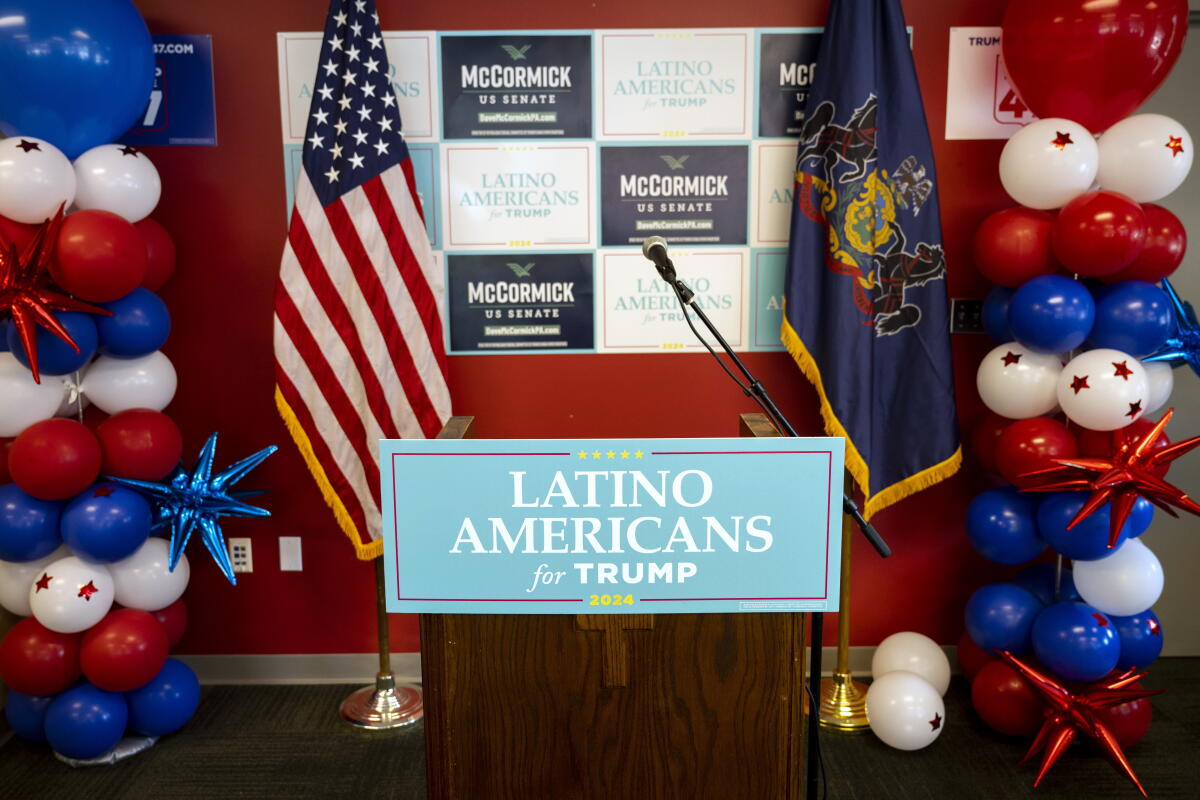
A “Latino Americans for Trump” office in Reading, Pa., during the 2024 elections.
(Joe Lamberti / Associated Press)
I’ve always thought Latino male Trumpers were deluded — but I’ve always understood where they’re coming from. They’re believers in rancho libertarianism, my neologism for the individualistic politics exemplified by the Mexican men who raised me and who I grew up with.
Rancho libertarians, like their Scotch-Irish cousins from another mother, are forever skeptical of government, respect insurgents who want to take on the establishment, love their people and subscribe to a bootstraps approach to life. Not as praiseworthy is a tendency to dislike being told what to do, and in proving a point, to not only cut off their nose to spite their face but to lop off their heads as well.
No wonder so many Latino men went for Trump. To quote another Mexican saying, por eso estamos como estamos. That’s why we’re the way we are.
And look at what it’s earned us.
MAGA has been a miasma on this land, but especially for the blue-collar Latinos whom Trump increasingly courted with each election cycle. Immigration agents have arrested U.S.-born Trump supporters and thrown their friends and family members into squalid detention centers to await certain deportation. Diesel and gas prices are outrageously high, after Trump started a war with Iran that seems to have no end.
Nothing has degraded more for Latino men, however, than the simple pleasures of life.
When my dad and my brother had a pool party for some cousins and their children last month at our Anaheim home — no more than 15 people — the cost of carne asada, chicken, chorizo and tortillas from a local carnicería was more than $200. That side of the family never supported Trump while not exactly being wokosos, either. As Spotify blasted Antonio Aguilar and Banda El Recodo, they complained about the economy and the Republicans who have rubber-stamped the Trump agenda, when we should have been talking about the Dodgers and vacations back to our ancestral Mexico state of Zacatecas.
If my Arellano cousins are ready to stick it to Trump on election day, so should the Latino men who supported him two years ago.
In 2024, Latinos were the pivotal vote that delivered swing states to Trump. In this year’s midterms, Latino men are the swing vote within that constituency, from congressional races once considered safely red in Texas and Florida to local elections across the country. It’s gotten so dire for Republicans that Florida Rep. Maria Elvira Salazar put out a television ad warning Trump that “the same Hispanics who brought you to the White House … feel betrayed today.”
Honor remains big among rancho libertarians, and no politician has insulted the Latino way of life more than Trump. Helping to flip the House and Senate to the Democrats wouldn’t end his influence, but it sure would help. Plus, it would be a perfect rebuke to a pendejo who fooled too many good Latino men.
American society, whether the left or the right wing, will never fully accept us. We’ll always be thought of as too conservative, too dumb, too reactionary, too violent by too many.
Well, if we’re going to be loathed, we might as well stand on the right side of history. It’s time for Latino men to stand up and hit Trump with another Mexican saying: