medium company

Prominent Latino group blasts proposed Paramount-Warner merger

A prominent Latino group is raising fresh concerns about Paramount Skydance’s proposed acquisition of Warner Bros. Discovery, saying the blockbuster deal would crush Latino workers and small businesses that support Hollywood.

In an open letter to California Atty. Gen. Rob Bonta, the League of United Latin American Citizens urged the state’s top prosecutor to continue his legal fight to block Paramount’s proposed $111-billion takeover of the media company that owns HBO, CNN, HGTV and the Warner Bros. film and television studios.

“No state has more to lose from this disastrous merger … than California,” LULAC National President Roman Palomares and Chief Executive Juan Proaño wrote in the six-page letter sent to Bonta late Sunday.

Thousands of jobs would be lost, and Latino voices could be squelched should the deal go through as it is drawn, the LULAC leaders said.

“The current form of the consolidation would have a devastating and unacceptable impact on Latinos, including those who reside in the Los Angeles community,” they wrote, noting Latinos make up 40% of the state’s population and nearly half of Los Angeles County, where HBO and the Paramount and Warner Bros. studios are based.

At least 4,500 jobs in Southern California would be lost if the merger goes through, according to a 120-page report last week from Los Angeles County’s economic office.

Paramount’s proposed merger has carved deep divisions and become increasingly contentious.

In recent days, Gov. Gavin Newsom, Los Angeles Mayor Karen Bass and Democratic gubernatorial nominee Xavier Becerra publicly pressured Bonta to settle the lawsuit to avoid a drawn-out court fight.

Politicians have been reacting to Paramount’s threat to move its studio, and potentially Warner Bros., from Hollywood to Tennessee or Texas unless Bonta backs down.

Theater owners and two major Hollywood unions — the Directors Guild of America and the International Alliance of Theatrical Stage Employees — have joined the parade pleading for a settlement. But the Writers Guild of America and Teamsters have steadfastly opposed the merger, warning about its potential impact on working writers and film crews.

Paramount Chief Executive David Ellison was set Monday to meet Bonta and others representing the 12 states that sued to block the transaction. But Bonta abruptly canceled the mediation session, accusing Paramount of “playing games,” leaking details and making misrepresentations about the talks despite agreeing to keep them confidential.

Paramount later denied that it was the source of the leaks.

Paramount didn’t immediately comment on the LULAC letter, but previously has touted the merger as a way to build a stronger competitor amid a pullback in local production. The company said it would “invest $30 billion annually in production and release at least 30 films a year,” a commitment that would lead to “more jobs over time, and ultimately, a stronger, more durable entertainment industry for generations to come.”

“To have it thrown in your face that Paramount will leave Los Angeles if they don’t get what they want is really just tantamount to a threat … one that will be devastating to Latinos,” Proaño said in an interview with The Times.

“There is a significant number of small businesses — Latino small businesses — and Latino residents, employees and workers that support this industry,” Proaño said. “We’ve been invisible, we’ve been silent — but we wanted to make sure that LULAC is not silent in this moment.”

In its letter, LULAC pointed to Hollywood’s most recent mergers, including Discovery’s 2022 acquisition of WarnerMedia from AT&T, saying such tie-ups underscore how media consolidation tramples over Latino voices, particularly when companies resort to job eliminations and other cost cuts to balance the expense of a corporate takeover.

After Warner Bros. Discovery Chief Executive David Zaslav took the helm, his company plodded through years of turmoil and massive layoffs. The movie “Batgirl,” which was set to feature a young Afro-Latina as lead actor, was shelved to gain tax benefits. Warner also canceled “Gordita Chronicles,” a TV show about an immigrant Dominican family, despite solid viewership.

Latino families make up “a significant portion of the film and television industry audience,” the letter said, adding that Motion Picture Assn. data show Latinos annually attend more movies per person in theaters than any other demographic group.

“Hollywood returns almost nothing for that loyalty,” the letter said. “Latino characters filled only 5 percent of speaking roles across 1,300 top-grossing films.”

“These and other harms are not collateral to the antitrust case,” LULAC’s letter said. “They are consequences of the diminished competition that will result. Every studio absorbed by a rival is one fewer buyer for a script, one fewer employer for a crew and one fewer distributor willing to bet on a story its franchise slate does not need.”

Warner Bros. Discovery nearly drowned in debt that it took on to finance its $43-billion buyout from AT&T in 2022. Ellison’s proposed Warner Bros. takeover also will be heavily leveraged with nearly twice the debt that resulted from Zaslav’s previous deal.

David Ellison has lined up nearly $80 billion in debt financing to buy out Warner investors. The tech scion is relying on a guarantee from his billionaire father, Oracle co-founder Larry Ellison, and $24 billion in equity financing from three Middle Eastern sovereign wealth funds, representing the royal families of Saudi Arabia, Qatar and Abu Dhabi.

The deal comes one year after the Ellison family bought Paramount, which had been on the ropes because of significant under-investment over the years.

“Paramount followed the same script: within months of closing its Skydance merger in August 2025, it laid off roughly 2,000 employees, about ten percent of its workforce, just after dismantling its diversity programs earlier that year,” the LULAC letter reads.

“This time, Zaslav’s going to walk away with a billion-dollar parachute and Paramount may end up with these crown jewels assets when it comes to movie-making and television programming,” Proaño said.
Source link

Eddie Huang: On new novel ‘Come Undone,’ Anthony Bourdain and Baohaus

On the Shelf

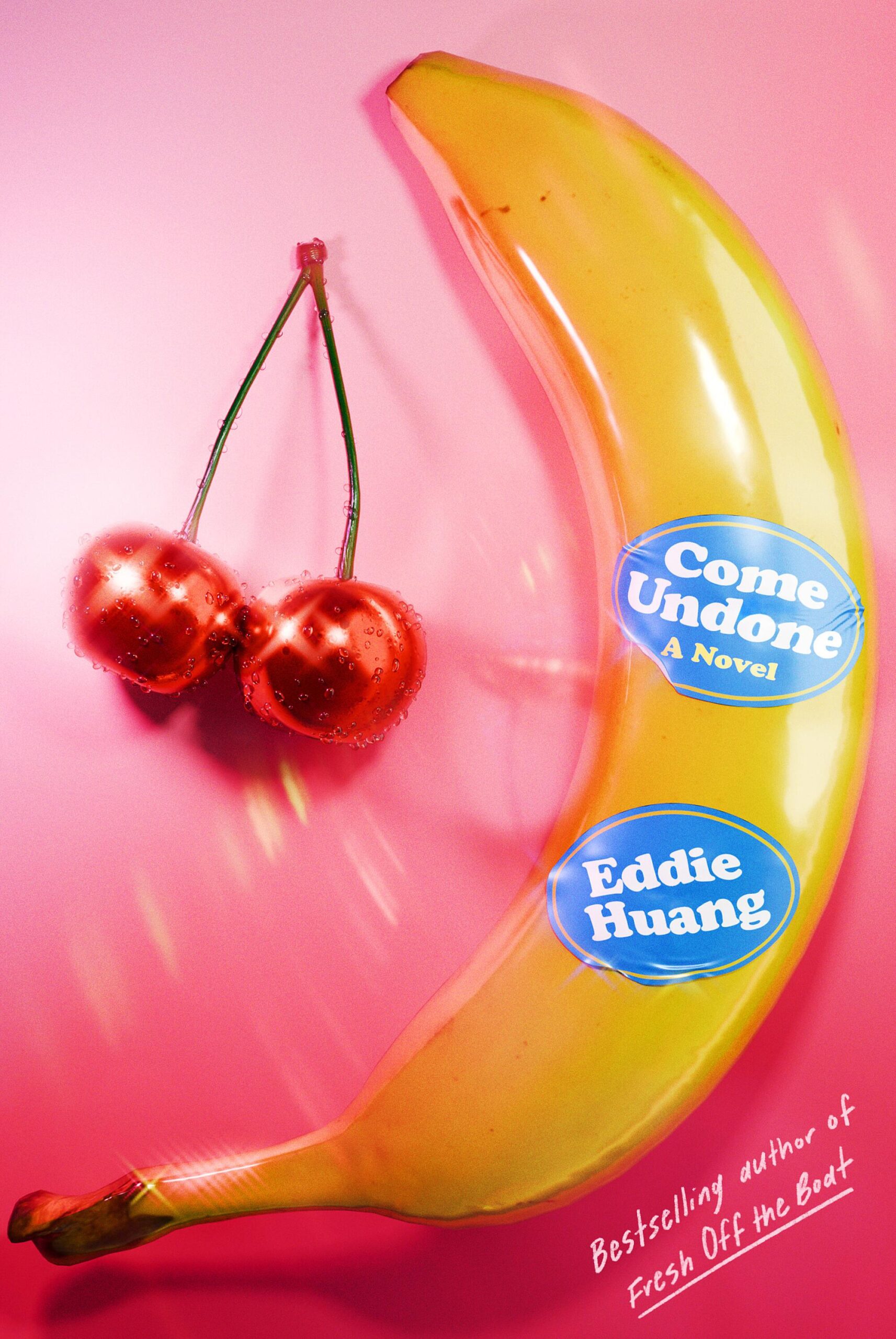
Come Undone: A Novel

By Eddie Huang
One World: 240 pages, $29

If you buy books linked on our site, The Times may earn a commission from Bookshop.org, whose fees support independent bookstores.

Eddie Huang has never felt lighter. Last month, after his debut novel, “Come Undone,” finally released, something shifted.

“I have a family. I feel healed,” he said over coffee and short ribs in Santa Monica hours ahead of a live talk with Ottessa Moshfegh, the bestselling, critically acclaimed author of Huang’s favorite book, “My Year of Rest and Relaxation.”

“People always write me off as a personality or a multi-hyphenate,” he said. “It’s a nice way of saying I’m not really good at anything. But I didn’t have any of that this time.” He leaned forward, serious. “I have to be honest. I do think the Knicks are a big, big part of it.”

His beloved Knicks winning the championship, he said, kept him from spiraling over the book. In person, Huang subdues his ironic braggadocio with polite eye contact and rolling belly laughs at his own jokes. For years, audiences have watched Huang resist whatever box you put him in. His particular brand of cultural fluency — a rapid-fire mix of food, fashion, basketball, politics and pop culture — is what made the “Gua Bao Bad Boy impossible to categorize.

For most of his career, Huang has seemed constitutionally incapable of standing still. Chef. Memoirist. TV host. Filmmaker. Lawyer. Comic. Podcaster. His first book, “Fresh Off the Boat,” became the longest-running network sitcom centered on an Asian American family, even as Huang publicly distanced himself from the show. Since leaving post-fires L.A. for New York, he’s reopened Baohaus — returning to the kitchen that built his career. Waiting for him at home after the book tour is his wife, Natashia Perrotti, and their 2-year-old son.

Now there’s “Come Undone,” fiction that Huang called his most honest — and vulnerable — work to date.

“It’s sort of this next-gen auto fiction type thing that is creating its own rules,” Moshfegh said ahead of their Q-and-A. “It made me think about my own appreciation for the experience of male heterosexuality and how much it’s been commodified.”

The book follows Hubie, a globe-trotting food-show host drifting through Chateau Marmont, Madeo, Nobu and other “dirtbag L.A” (as Huang coins) spots. He meets Janine, his equal in appetite and id, sending him into a tailspin of yearning and loops of Sky Ferreira’s “Everything Is Embarrassing” on sadboi walks. The “two walking red flags” decide to try to make it work.

"Come Undone: A Novel" by Eddie Huang

Huang called the novel an “autofictional riddle.” The puzzle isn’t especially difficult if you’ve followed his relationship with Perrotti, who co-hosts their podcast, “Canal Street Dreams.” Marrying a writer, she’s learned, often means finding out what he feels by reading it. “We’ll get into a fight,” she said, “and I’ll wake up to a Substack article about it.”

It’s also part of the private life she’s since conceded. “It’s annoying,” she added. “But now I can read it, and maybe understand him a little bit better. He’s trying to communicate through the writing, like sending somebody a song and saying, ‘I want you to listen to these lyrics.’”

The novel goes further, drawing from experiences the couple has never discussed publicly. In the novel, Hubie and Janine’s relationship pivots after an ectopic pregnancy ends in loss. Perrotti said the scene is fictionalized but mirrors a similar experience they had early in their own relationship.

“It brought us closer together,” she said. “It was the catalyst for us realizing we were serious.”

Before Huang could finish the book, the life he was writing about had to fall apart. “This book was very much about breaking up with your family to start your own,” he said. “There was a lot of anger in the book that had not been resolved.”

By the end of 2024, Huang had stopped speaking to his mother. The break followed what he described as a blowup at a Cheesecake Factory. It also unlocked the ending he’d been chasing.

Eddie Huang.

Eddie Huang.

(Jason Armond / Los Angeles Times)

Looking back, Huang thinks the earlier versions failed because he was still arguing with her. He’s still trying, in some way, to communicate with her through his writing. “If there’s one person I wish would read the book,” he said, “it would be my mom.”

There were other chapters he had to close the book on, mainly Hollywood. His foray into fiction coincided with the writers’ strike, drying up all his income and future projects. That same year, he became a father. “I had to accept and realize that my value was not in making money,” he said. “Because for three years, I couldn’t.”

He recalled a particular low point researching life insurance policies. “I had to rebuild my whole self. Really love myself despite not being able to offer anybody anything.”

That new certainty didn’t make Huang any less willing to pick fights. Last year, as his documentary “Vice Is Broke” — an autopsy of the media company behind “Huang’s World” and its eventual bankruptcy — awaited release, Huang said distributor Mubi shelved the film after he boycotted the company over Sequoia Capital’s investment in an Israeli defense technology startup. (Mubi denied this and said it still planned to distribute the film.)

The ghost of Vice still lingers in today’s media ecosystem in what he called our “era of cartel journalism:” creators navigating a world of blurred incentives and corporate interests. He traced this instinct to challenge those systems back to Socrates’ “gadfly” — the person whose job was to annoy power. “As a writer, you should be challenging people,” he said. “If your memoir can be turned into a sitcom, it probably wasn’t challenging.”

Eddie Huang.

Eddie Huang.

(Jason Armond / Los Angeles Times)

After the 2025 L.A. fires drove his new family back to New York, Huang went back to cooking. He worked pop-ups, reopened Baohaus and found himself alongside line cooks half his age. In March 2025, he rewrote the novel in five days. That same month “was the first month I didn’t overdraft my credit card,” he said, with the majority of his income today coming from the restaurant. It’s allowed him to make films, write books and walk away from deals he doesn’t believe in. “Being a chef is the anchor that allows me to maintain my artistic integrity.”

For years, comparisons to Anthony Bourdain followed Huang everywhere. The two eventually became friends.

“He was one of the few people who was as advertised,” Huang said. “Nicer and more generous in person. And wounded.”

Bourdain is the only real person who appears in “Come Undone” under his own name.

When Huang mentions him, he stops talking. He covers his face. Tears come.

“I don’t believe in God,” he said, “but I asked the universe why for many, many years.”

Bourdain’s suicide, he said, was one of the reasons he walked away from “Huang’s World” in 2018. At the time, few people understood why. “It was Tony. It was family. It was everything.”

Eddie Huang.

Eddie Huang.

(Jason Armond / Los Angeles Times)

Now, looking back, Huang thinks he was writing “Come Undone” toward a different ending than the one he’d imagined.

“This book is a guy saying, ‘I don’t want to be like my biological father,’” he said. “And, in the most respectful, loving way, I don’t want to go out like Tony.”

He paused. “I needed to name the sadness in me. I needed to allow myself to be loved.”

Huang is already writing another memoir about getting back into the kitchen. Still, he said, these days, he’d rather write fiction.

Rudi, an L.A. native, is a freelance art and culture writer. She’s at work on her debut novel about a stuttering student journalist.

Source link