Food or medicine? The impossible choices facing Sudan’s chronically ill | Drugs
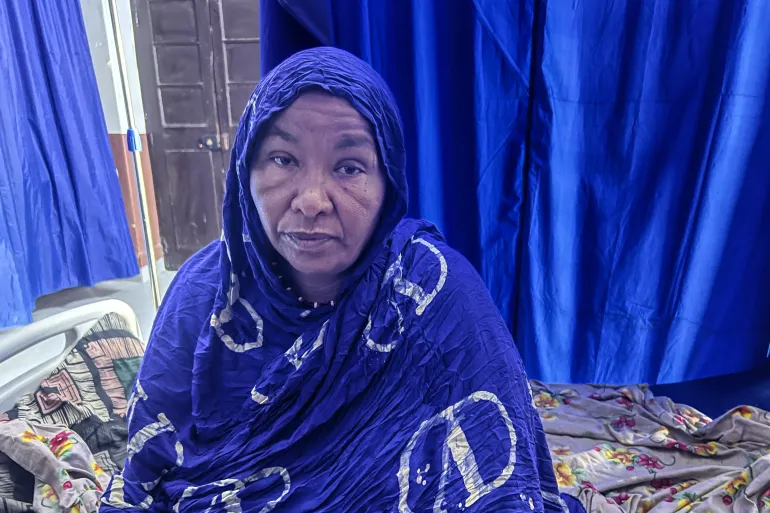
Hasanat al-Rashid, 48, has lived with diabetes for 15 years, and the three-and-a-half-year civil war between Sudan’s military and the Rapid Support Forces paramilitary group has worsened her situation. Finding the treatment she needs has become a daily struggle.
When the war broke out in April 2023, she was forced to flee south from her home in Haj Yousif in Khartoum North to Umm Daw Ban in Khartoum State.
Recommended Stories
list of 3 itemsend of list
During her displacement, she went for days without medication and was forced to eat foods unsuitable for her condition, such as asida, a traditional Sudanese porridge.
She underwent operations on her foot twice when she developed complications of diabetes, including a severe infection.
She moved between hospitals in Gezira State south of Khartoum, seeking treatment in Rufaa, Wad Madani and Al-Hasahisa. When fighting spread to these areas in December 2023, she fled again, arriving in Port Sudan, a city on the Red Sea that was less affected by the war.
Her condition has worsened to the point that she now has to use insulin every day and with this comes added costs, something that forces diabetes sufferers in Sudan to choose between medicine and other essentials, such as food.
“The doses vary depending on whether my blood sugar is high or low,” she told Al Jazeera.
The war has pushed income levels in Sudan back to those last seen in the 1990s, according to the United Nations Development Programme. This means Hasanat and other diabetes sufferers are struggling to afford the medicine they need to treat the condition.
Hasanat’s doctor recommended she use an insulin pen, a device used to inject insulin under the skin. She would need one or two of the devices a month, but the cost at 70,000 Sudanese pounds ($8) is more than she can afford up front, so she opts for a vial of insulin.
This is cheaper at 17,000 Sudanese pounds ($1.80), but there is the additional cost of buying ice every day to keep the insulin cool. She spends 180,000 pounds ($20) a month on ice to preserve the medicine. But she is able to spread these costs out through the month, making the vials her only viable option even if the overall costs are higher than an insulin pen.
“It may last a month or less, but the challenge is that I don’t have a refrigerator, so I struggle to store the insulin properly,” she said.
She also needs painkillers and vitamins on a regular basis to manage complications caused by the diabetes.

The rising cost of treatment
Fatima Adam, 75, is among the patients at Port Sudan Hospital struggling to afford the medicines she needs to manage her hypertension and a thyroid condition.
She was admitted to the hospital with complications caused by high blood pressure, which has started to impact her heart. Too unwell to speak to Al Jazeera herself, her daughter, Aisha, described how the rising cost of treatment has affected her whole family.
Before the war, Fatima received medicine through the National Health Insurance Fund. She paid a quarter of the cost while the fund covered the rest. But when the war started and the economy collapsed, the medicines she needed were no longer covered by the scheme.
“My mother takes six different medicines because hypertension has affected her heart in addition to her thyroid medication. The war has made things harder because the prices of these medicines have gone up,” Aisha told Al Jazeera.
The responsibility for paying for Fatima’s treatment and supporting her and her daughter falls on her son, who works as a casual worker. With no fixed income, he goes to the market every day in search of work but sometimes returns home empty without any luck.
“Sometimes, when my brother finds work, we buy enough medicine to last a month. Other times, we have to buy smaller quantities and take the medicines intermittently,” Aisha said.
She bought a month’s supply of her mother’s medication a few days ago for 160,000 Sudanese pounds ($17.80), a substantial expense for a family whose income depends on day labour but essential to treating Fatima’s condition.
War damage
The war has caused an estimated $500m in losses to medicine stocks, infrastructure and transport fleets, dealing a major blow to Sudan’s pharmaceutical supply system, the National Medical Supplies Fund told Al Jazeera.
The National Medicines and Poisons Board estimated that only eight of the 30 pharmaceutical factories in Khartoum that shut down during the conflict have resumed operations despite the security situation in the capital recently improving.
This has increased Sudan’s reliance on imported medicines, but the subsequent depreciation of the Sudanese pound has driven up the costs of pharmaceutical procurement and production.

Hossam al-Naeem, who works as a pharmacist in Port Sudan, said customers with diabetes and hypertension require regular painkillers and vitamins to help their overall condition.
“I feel deeply saddened when I see the expressions on some patients’ faces as they ask about the prices of medicines and discover how much they have increased because of the depreciation of the Sudanese pound,” Hossam told Al Jazeera.
The currency’s collapse has created added challenges for pharmacists. Before the war, a dollar traded for roughly 600 Sudanese pounds. Now black-market currency traders are quoting rates of 9,300 pounds to the dollar, meaning higher costs for most goods in Sudan.
Sometimes Hossam incurs losses himself when he finds that the prices of drugs have risen sharply, and keeping essential medicines stocked is becoming difficult.
“I used to sell a strip of cold and flu tablets for 6,000 Sudanese pounds [70 cents]. But when I went to buy new stock, I found that the supplier’s price was also 6,000 pounds per strip. That means I made no profit, not even enough to cover the pharmacy’s operating costs,” he said.
The struggle to afford heart medication
Huda Mahmoud, 58, lives in el-Obeid, the capital of North Kordofan state in south-central Sudan, where drone attacks and other violence remain a problem while the military is making advances towards the city.
Huda has lived with heart problems for more than 12 years and described the impacts of the war as being physical, financial and emotional.
“I take five different medicines. There was a time when they weren’t available, and I suffered a lot. Sometimes, I had to ask people in Wad Madani, Sennar or Port Sudan to send them to me,” she told Al Jazeera. “The medicines were extremely expensive, costing me 300,000 Sudanese pounds [$33.30] a month.”
Taking medication has become a carefully managed routine with each pill tied to a specific time of day.
“I’ve become tied to my pills: this one before eating, that one afterwards. If I forget one, my heart starts beating very fast,” she added.
In March, Huda was forced to travel from el-Obeid to Omdurman. Following her strict treatment regimen has become increasingly difficult during repeated periods of upheaval.
She has now returned home to el-Obeid, where her regular medicine is priced at 151,000 Sudanese pounds ($16.80) a month, something she can barely afford.
Her greatest fear is running out of medicine or being unable to afford her next supply, which would put her at risk of a blood clot.
“I’m afraid of becoming incapacitated. I used to be responsible for the whole household, but now I need help. I feel like I’ve become a burden on my family,” she said.
![Women queue at a pharmacy in Tehran [Al Jazeera]](https://i0.wp.com/www.aljazeera.com/wp-content/uploads/2026/09/1arann-1790588624-1790672728.jpeg?w=640&ssl=1)