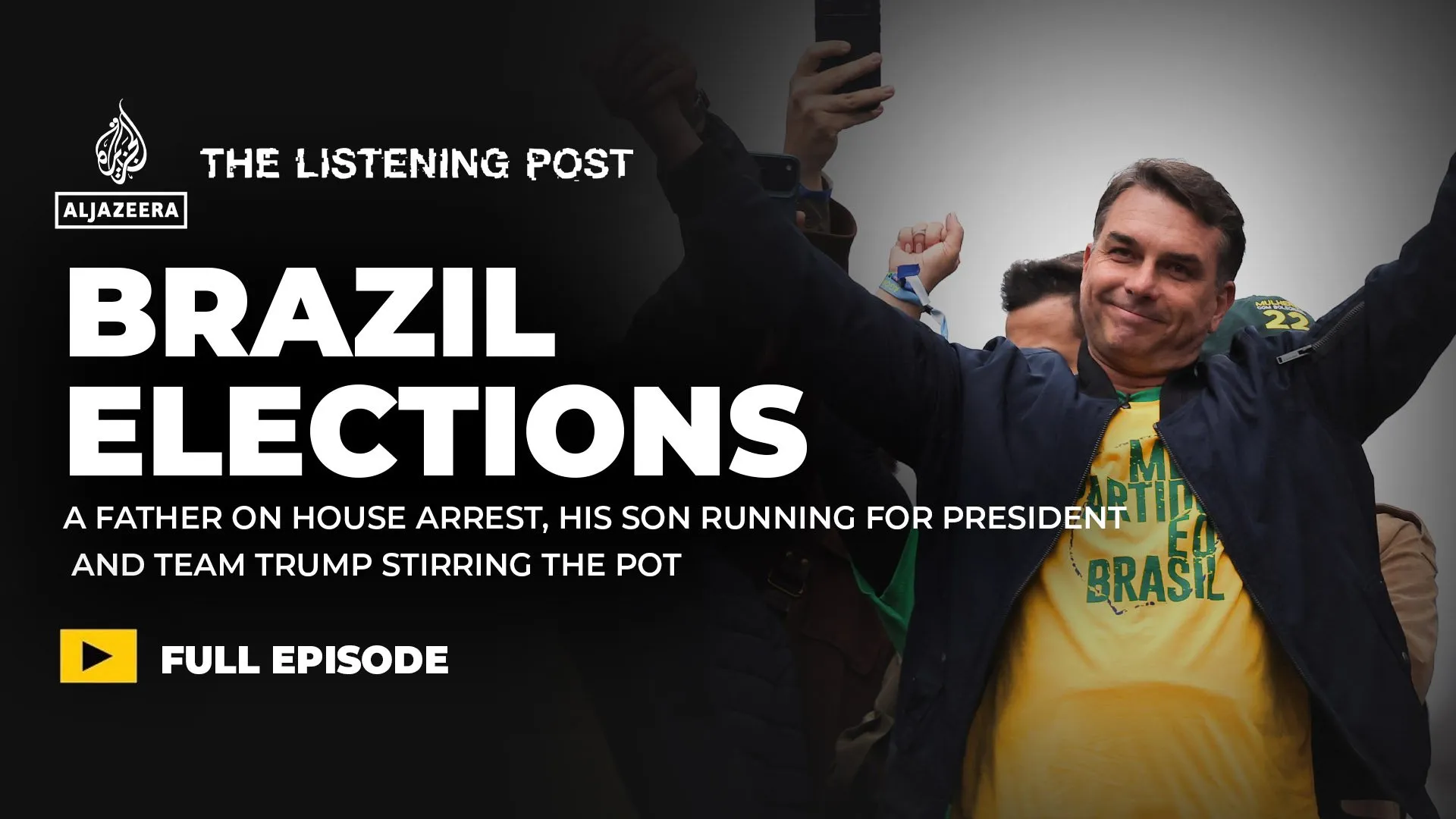
As Brazilians head into national elections, there’s a familiar name on the ballot: Bolsonaro. Not former President Jair Bolsonaro. It’s his son Flavio, who is presenting himself to the electorate as a more moderate version of his father.
Election coverage has been dominated by a major corruption scandal – the biggest banking fraud case in the country’s history. Brazilians are accustomed to corruption scandals involving political figures. The coverage tends to be framed as: they’re all equally corrupt.
Contributors: Andrew Fishman – President & co-founder, Intercept Brasil David Nemer – Professor, University of Virginia Andre Pagliarini – Professor, Louisiana State University Natalia Portinari – Reporter, O Globo
On our radar: Donald Trump’s decision to bar three news outlets from the White House appears to have backfired after journalists organised a media boycott and a judge overturned the ban. Tariq Nafi has been tracking the latest duel between the US president and the media.
Spain’s neo-Nazis: spectacle vs reality
A fringe neo-Nazi movement in Spain, Nucleo Nacional, has attracted a growing online following by packaging incendiary and slickly produced content. The mainstream media attention the group has received has made a marginal organisation appear far larger and more influential than it is. The Listening Post’s Elettra Scrivo travels to Madrid – where she comes face-to-face with Nucleo Nacional’s members – to look at the reality that lies behind the spectacle.
Featuring: Miquel Ramos – Author, ‘Antifascistas’ Urszula Mrozowska – Digital researcher in hate speech and extremism
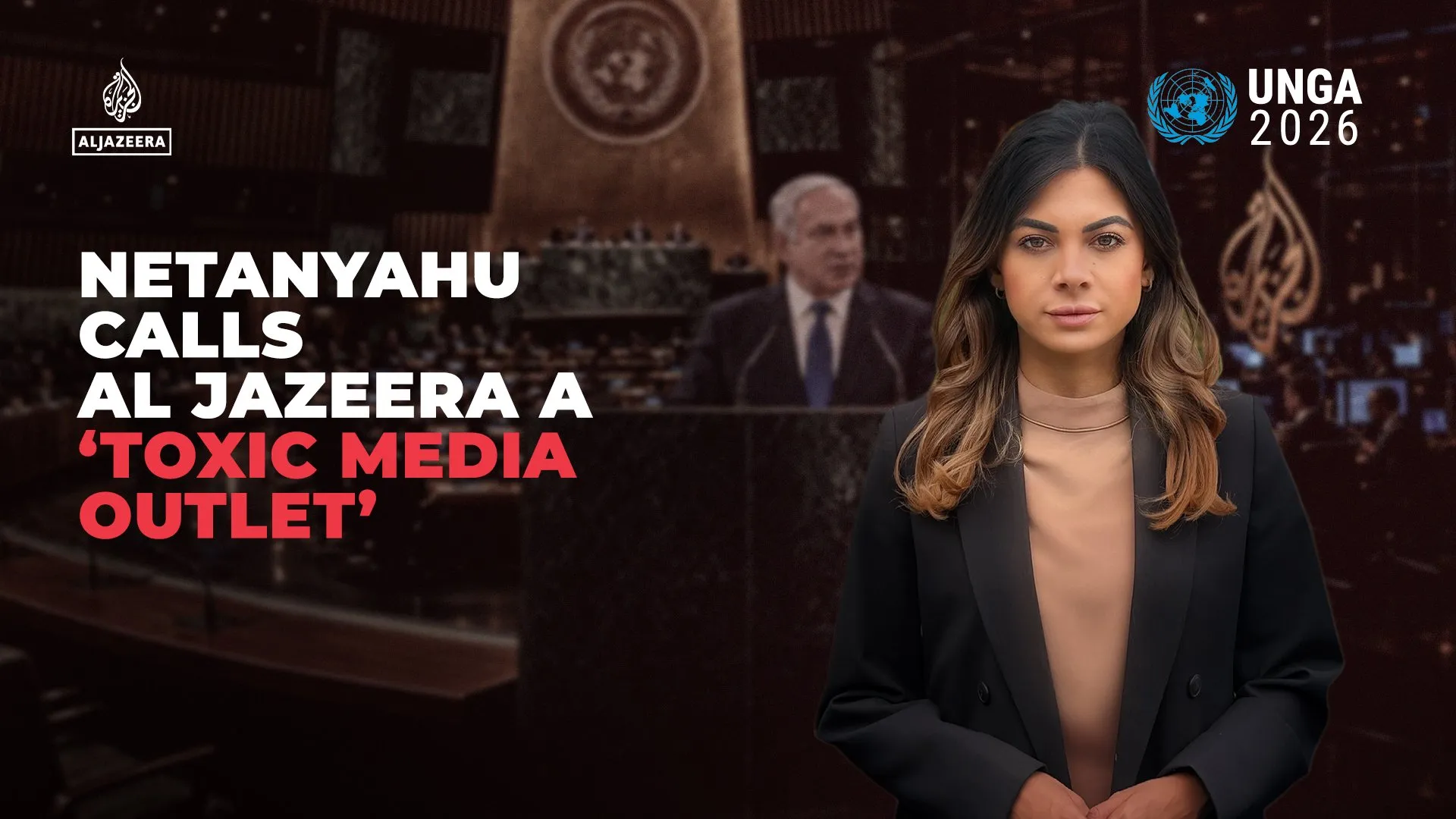
Israeli Prime Minister Benjamin Netanyahu called Al Jazeera a “toxic media outlet” and described the media as an “eighth front” in Israel’s war. But Israel has killed Palestinian journalists, shut down Al Jazeera’s operations and restricted media access to Gaza. Al Jazeera’s Noor Wazwaz explains.
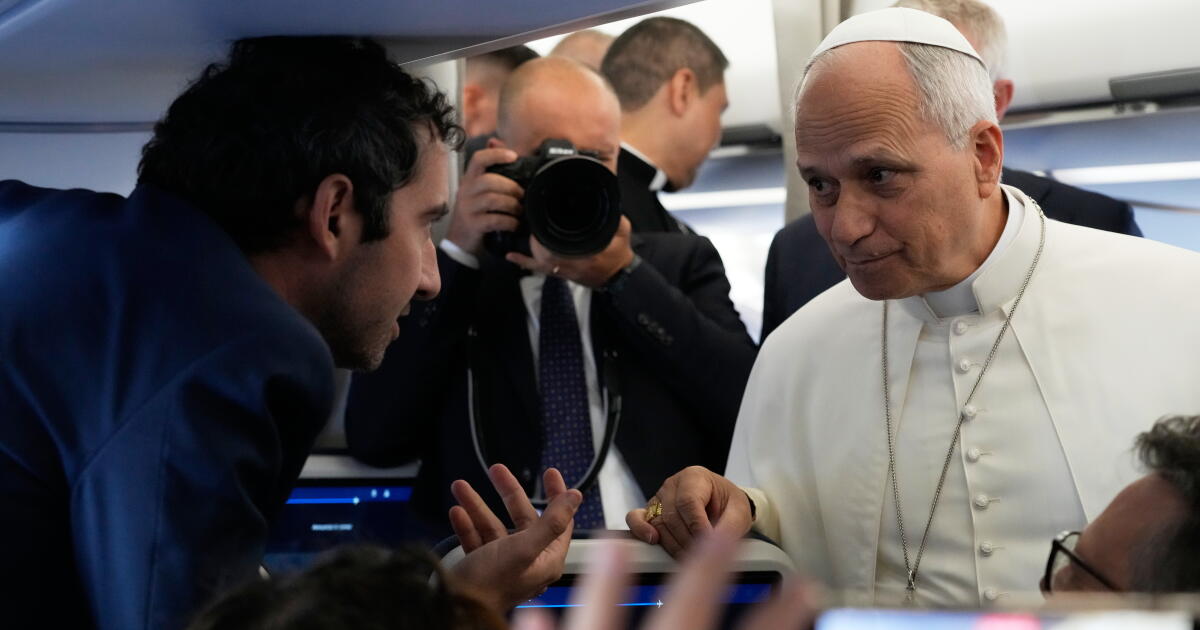
ABOARD THE PAPAL PLANE — Pope Leo XIV told journalists they were welcome to report on him, as he responded to the Trump administration’s attempt to bar U.S. media from the White House and affirmed the importance of journalists covering public figures.
Leo spoke to reporters Friday on his way to France for a four-day visit. Asked by a CNN reporter about the Trump administration’s attempt to bar CNN and other reporters, Leo said the media was welcome on his plane.
“I am very happy that here, you are all welcome,” he said. Good media coverage is important, he said, and equally important “that we have it all the way around, for everyone”
CNN, MS NOW and Politico were back at the White House on Thursday after a judge handed them a reprieve from President Trump’s ban, but the extraordinary showdown between him and outlets whose coverage he dislikes continued.
On a high-profile day when Chinese leader Xi Jinping was visiting Washington and attending a state dinner, no major American network was airing live coverage, and both CNN and MS NOW said their journalists were denied access to Xi’s state dinner arrival.
The American pope has long affirmed the need for free and independent press, a point he made in one of his first audiences as pope. Speaking to journalists who covered the 2025 conclave that elected him, Leo called for the release of imprisoned journalists and affirmed the “precious gift of free speech and the press.”
That said, since the COVID-19 pandemic, independent media have been prevented from covering photo opportunities inside the pope’s private studio when heads of state visit. Additionally, many of the pope’s private audiences with other groups and individuals are closed to non-Vatican press.
Leo had opposed Trump on the war
Leo’s airborne comments about Trump followed his April back-and-forth over the American president’s criticism of his opposition to the Iran war. Leo’s position won him points with some Parisans opposed to Trump’s policies who came out in droves to celebrate the first official state visit by a pope in 18 years.
“He dared, at his level, to oppose the American president,” said retiree Thierry Marien, who lined up hours early to grab a spot on the popemobile route to Notre Dame cathedral, where Leo was to celebrate vespers later Friday. “Not because he is opposed to the American president but because he’s opposed to countries where we can see there’s a risk of their political systems becoming a bit more dictatorial and there are already enough of those in the world.”
“I appreciated that he did that. He could quite easily have said to himself, ‘In my situation, I won’t criticize any heads of state,’” he said.
Leo took further distance from the Trump administration policies later Friday by making a lengthy visit to UNESCO, the U.N. cultural and educational agency, from which the U.S. has withdrawn as part of its retreat from the international organization.
Leo, who has championed multilateral diplomacy, toured the UNESCO grounds inside and out, greeted its employees and received a guided tour of some of its art collections. He then delivered a speech on the values UNESCO espouses to promote peace through culture and education.
Leo apologizes to reporters
Also on the flight Friday, Leo also apologized for missing an opportunity to speak with the press the last time he traveled internationally, when his Iberia charter broke down in Spain’s Canary Islands and he returned home solo on the king’s private jet, skipping his traditional airborne press conference.
More than 70 reporters and the Vatican delegation waited for several hours at the airport for a replacement plane to arrive. Leo addressed the media’s disappointment when he came to the back of the plane to greet reporters.
“A special mention I would like to make for those of you who were traveling with me when we returned to Rome from Spain,” he said. “I want to apologize personally for an incident, that I had nothing to do with, but which I know left a number of you unhappy with the fact that we couldn’t have the flight back together back to Rome.”
In other comments to reporters, Leo said he believed his alma mater Villanova would be the fan favorite when the Augustinian university plays the Catholic University of Notre Dame’s basketball team in Rome on Nov. 1.
“They tell me that the people coming to the match, 90% are Villanova and 10% Notre Dame, so the voice of the people of God will be very strong on the Villanova side,” Leo said.
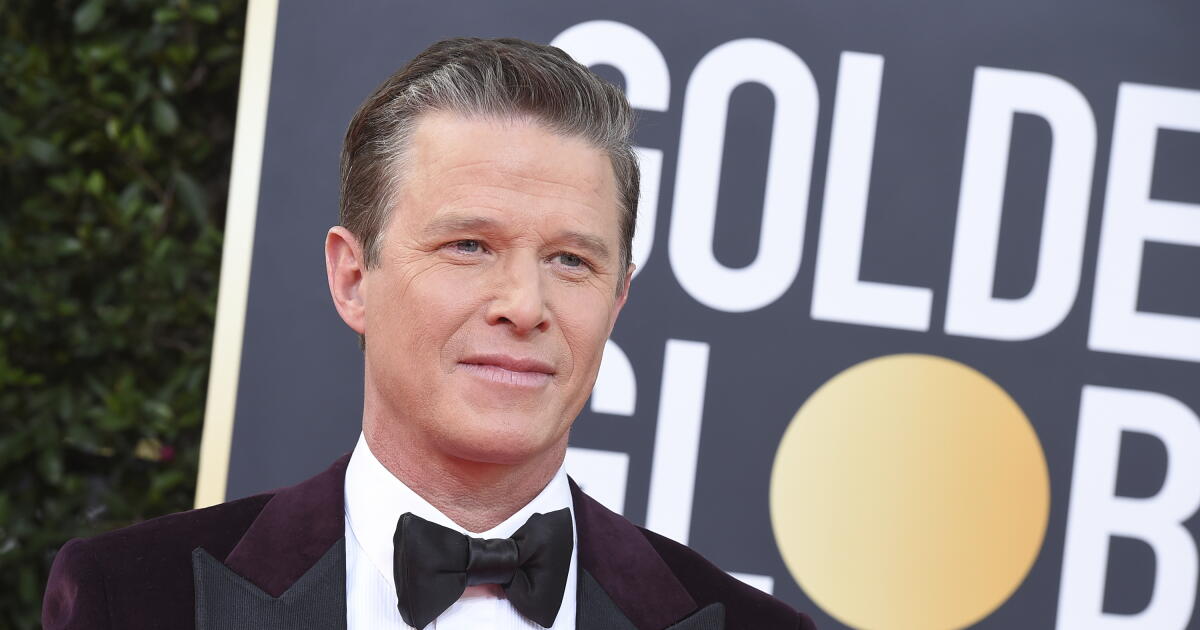
Billy Bush, the veteran on-air host whose career was derailed by a crude off-camera conversation he had with President Trump in 2005, has signed on as a contributor to Fox News.
Bush will comment on cultural issues across Fox News Media platforms. He made his first appearance Tuesday on Fox News Channel’s “Jesse Watters Primetime.”
“I’m excited to join Fox News Media and its loyal audience to share my perspective on the people, ideas and moments shaping today’s culture as well as the ones trying to undo it!” Bush, 54, said Tuesday in a statement.
The longtime media personality is the nephew of former President George H.W. Bush and cousin to the 43rd president George W. Bush. He made his own mark on political history when audio of a 2005 conversation he had with Trump, then host of the NBC reality series “The Apprentice,” surfaced during the 2016 presidential campaign.
In the tape, made while Bush was co-host of NBC’s syndicated entertainment news show “Access Hollywood,” Trump boasted about his ability to kiss women and grope their genitals with impunity because he is a celebrity. Bush is heard chuckling and encouraging Trump’s coarse chatter as the future president crudely talked about how he tried to have sex with Nancy O’Dell, then a co-host on “Access.”
Bush is also seen on camera telling “Days of Our Lives” soap opera actress Arianne Zucker to embrace Trump just after the exchange.
Trump’s presidential campaign survived the scandal as he went on to defeat Hillary Clinton that November. Bush did not fare as well.
Bush’s career was on the ascent at the time that the tape made news, having been named co-host of the third hour of NBC’s “Today” in August 2016. He was part of the network’s coverage of the 2016 Summer Olympics coverage in Rio and Prince William’s wedding to Kate Middleton.
But the tape drew outrage from Bush’s female colleagues at NBC News. He apologized for his role in the conversation, saying he “was younger, less mature, and acted foolishly in playing along.” He was suspended from “Today” in October 2016 and did not return to the program as the network chose to pay out his contract.
Bush landed at the syndicated show “Extra” in 2019 and hosted for five seasons. He currently hosts a digital show, “Hot Mics with Billy Bush,” that covers sports, politics, entertainment, tech and pop culture.
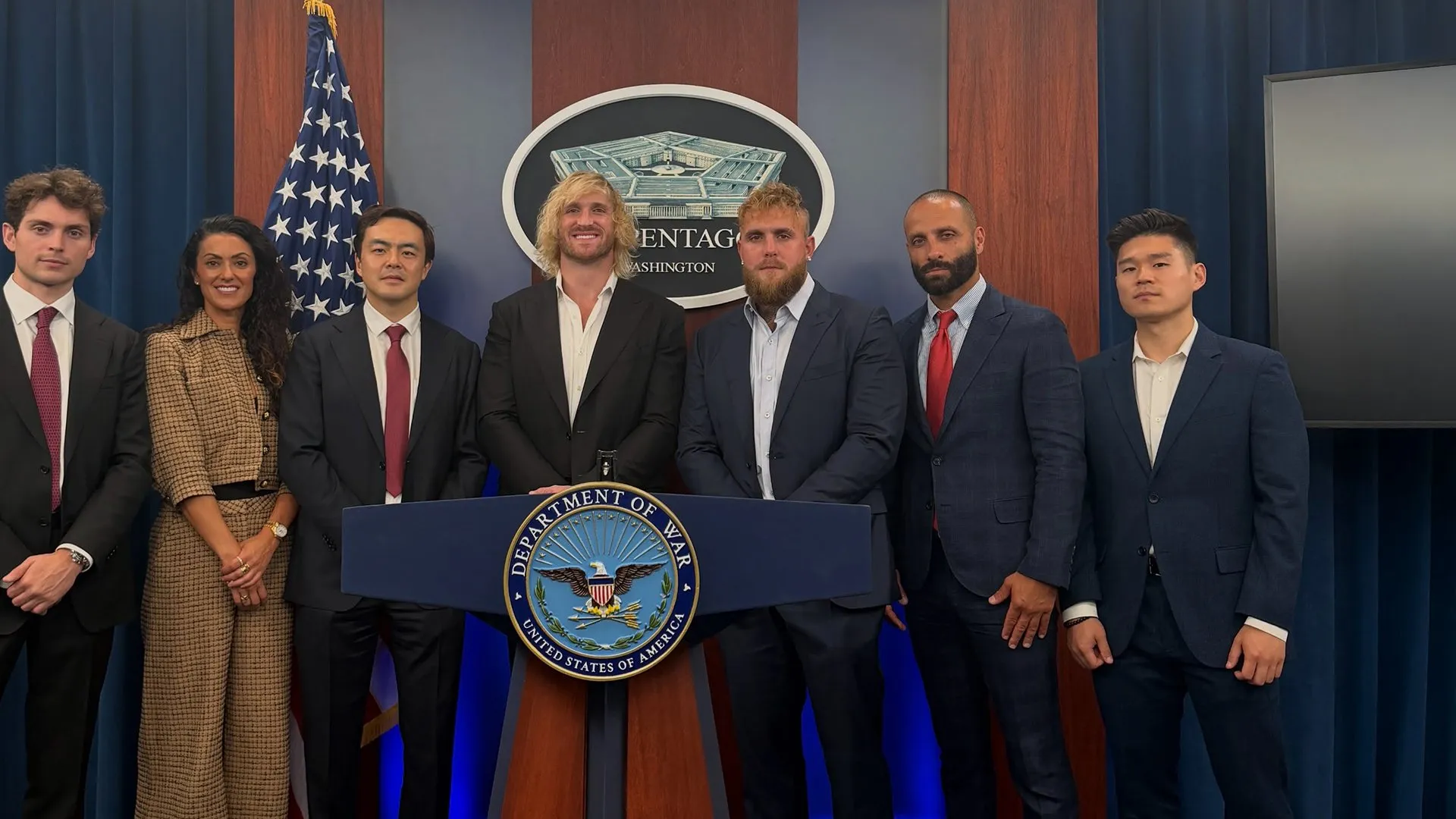
Influencers Jake and Logan Paul visited the Pentagon and addressed US troops last week, praising them for serving the country. It isn’t clear who invited them, but they met Defense Secretary Pete Hegseth, whose department said they came ‘to meet with our warriors’.
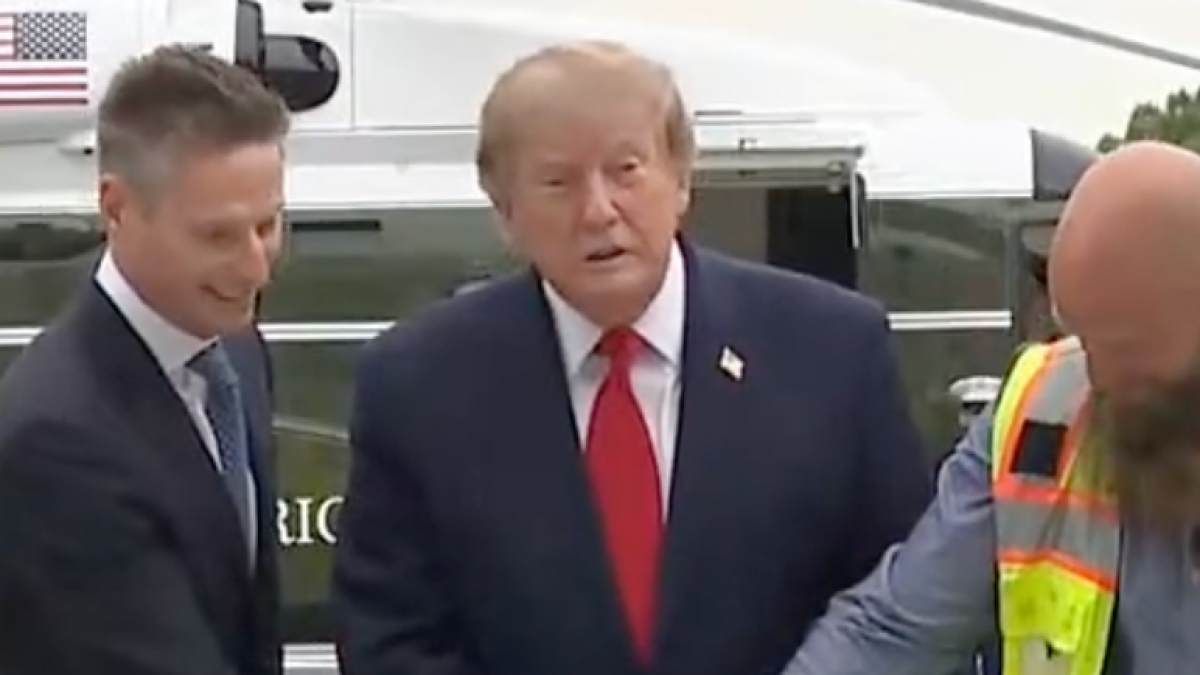
US President Trump unveiled a new White House helicopter pad as major US TV networks stayed away in protest over CNN, a member of the network ‘pool’, being banned from the grounds. As Trump spoke, the thunder of a helicopter rendered the president inaudible from start to finish.
A mysterious object filmed hovering over Tehran has sparked online speculation, with theories ranging from a children’s kite to advanced military surveillance equipment, while Iranian authorities have not identified it.
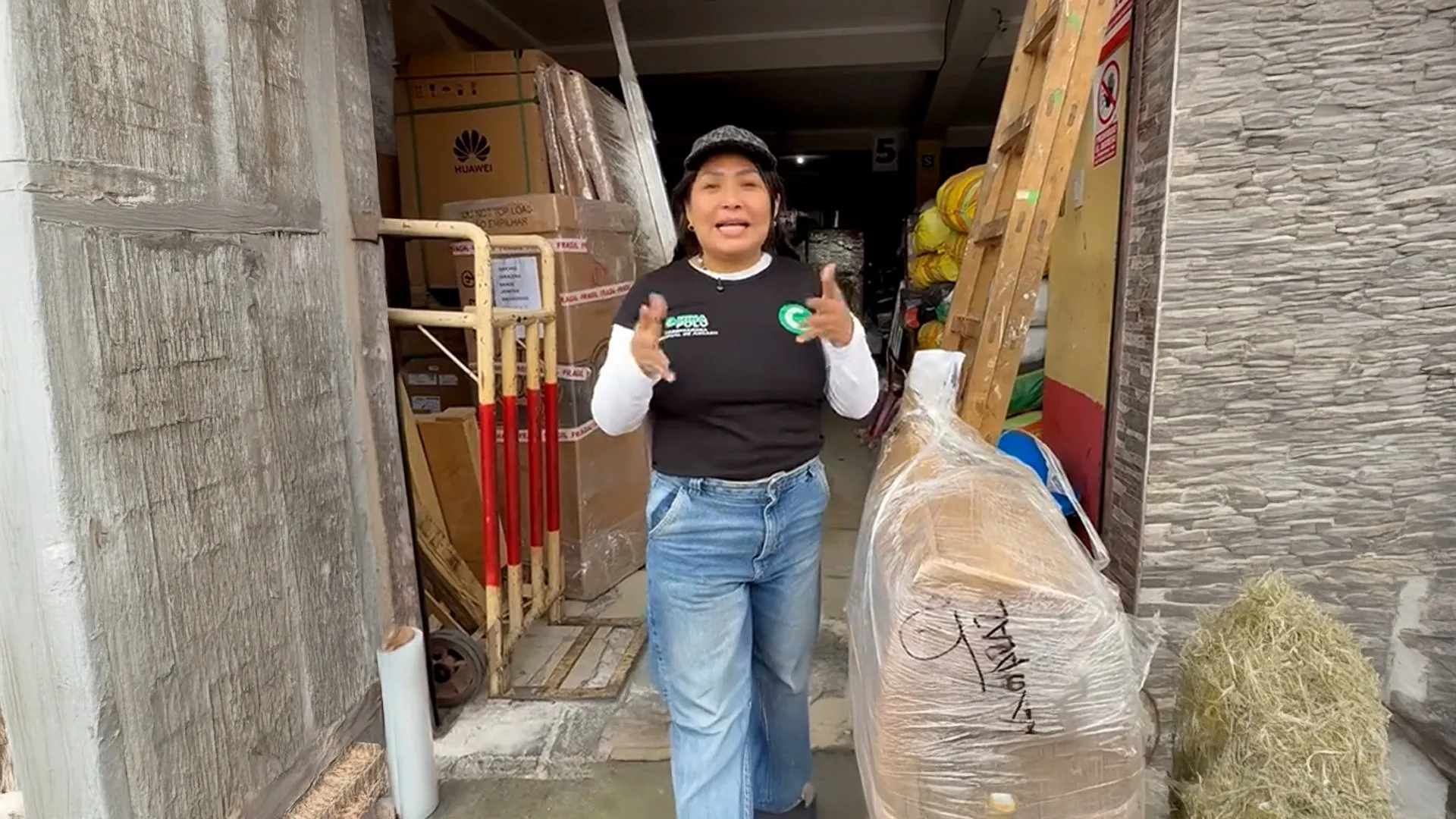
A Peruvian journalist running for political office has been shot dead while out campaigning. Susy Aponte Polo, known as China Polo, was killed just a week after revealing she had received death threats over her investigation into a police chief.
Israel’s bitter political divisions are particularly sharp before the country’s October elections. But the furious response to a new documentary about the military’s actions in the genocidal war on Gaza has revealed an issue that much of Israel’s political and media establishment appears united on.
Few of the central allegations in NAZA, made by Israeli filmmakers Yuval Abraham and Rachel Szor, are new. Reports that the Israeli military was relying on artificial intelligence systems to generate targets in Gaza, often killing the inhabitants of entire buildings to kill just one individual identified by the system, were reported in April 2024.
Recommended Stories
list of 4 itemsend of list
Other accusations against Israel, such as committing genocide, deliberately causing a famine, and unlawfully killing children, have also not received much attention in Israel.
In contrast, NAZA has unleashed a litany of abuse from across Israel, and brought the allegations to the centre of Israel’s political debate.
Culture Minister Miki Zohar reacted to the film’s premiere at the Venice Film Festival – where it received a 25-minute standing ovation – by calling for the directors to be stripped of their citizenship and to be investigated by the internal intelligence service for treason.
Army chief Eyal Zamir has dismissed the film as being built on blood libel and ordered a legal probe to hunt down its military and intelligence sources.
Prime Minister Benjamin Netanyahu also cited the film when advancing legislation to revoke citizenship from anyone deemed to be smearing the country’s soldiers, while in the coastal city of Ashdod, graffiti branding the directors “traitors” has appeared on the walls.
“You can’t really understand the extent of the madness from outside of the country,” Orly Noy, an editor at Local Call, which first carried many of the accusations contained in the film, said. “They’re attacking the friends and families of [the filmmakers] Yuval Abraham and Rachel Szor. They’re talking about revoking their citizenship. They’re asking the Shin Bet to investigate them – for making a film, and it isn’t just the politicians. Journalists, who you might expect to show some kind of solidarity with them, are competing to attack them. It’s scary.”
Denial
In late 2025, the Committee to Protect Journalists reported escalating censorship and harassment in Israel, with Israeli journalists telling the organisation that the media’s approach had become “part of the war effort” and, by extension, significantly shaped Israeli view of their war on Gaza.
In October 2025, a study by the Israeli think tank Molad found that only 3 percent of Channel 12’s coverage of the first six months of the war mentioned Gaza’s humanitarian crisis. Of 206 war-related images and video clips broadcast by the network, Israel’s most-watched channel, only two showed Palestinian civilian casualties.
Nevertheless, before the film’s release, polls found that most Israelis believed the coverage they were receiving of the military’s conduct in Gaza was balanced.
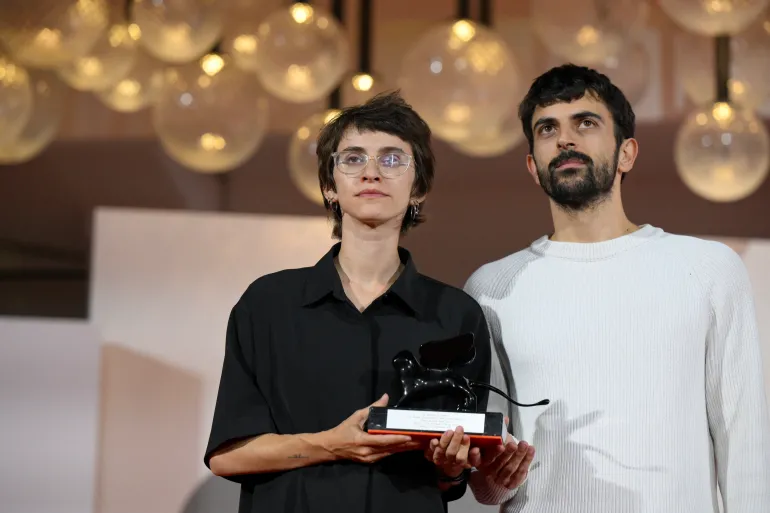
Director Yuval Abraham and Director Rachel Szor winners of the Special Jury Prize for “Naza” attend a photocall on the red carpet following the closing ceremony of the 83rd Venice Film Festival at Venice Lido on September 12, 2026 [Tiziana Fabi/AFP]
“I guess it was because the mainstream media outlets in Israel did not investigate the conduct of the army during the war in Gaza, and hardly covered the war from the Palestinian point of view,” Anat Saragusti, the Israeli jurist and journalist responsible for press freedom at the Union of Journalists in Israel, said of the shock that had accompanied the release of the film. “[The Israeli media] hardly reported on the human toll and the scale of the humanitarian crisis in Gaza.”
Compounding the gap, Saragusti said, was a deep-seated national narrative: that the war had been imposed on Israel, that Hamas had carried out a massacre on October 7, 2023, and that Hamas’s use of civilians as human shields made mass casualties in Gaza all but unavoidable.
Palestinian deaths, in this telling, were framed less as the product of Israeli conduct than as collateral damage forced on Israel by its enemy’s tactics, she said.
Lynch mobs
“Even journalists that usually support the anti-Netanyahu bloc have criticised the filmmakers,” Israeli political sociologist Daniel Bar-Tal said.
“Israeli Jews deny the genocide,” he continued, “Even all the opposition parties joined the vicious criticism of the filmmakers.”
The language used against the filmmakers has been echoed by some of Netanyahu’s most prominent political rivals.
On Monday, former military chief and one of Netanyahu’s principal rivals Gadi Eisenkot denounced the film for “moral blindness, a detachment from reality, and harm to the State of Israel in a difficult hour”.
Former Prime Minister Naftali Bennett, who is also running in October’s election, called the film a “horrific blood libel against our sons and daughters”.
“Everything gets heightened the closer to the election we get,” Noy said. “But I think only now, for those of us who live here, is the extent of the fascism becoming clear. Journalists, politicians and the media are forming some kind of incitement machine.”
“I’ve had anxieties over where Israel had been going for a long time,” she said, “but right now I’m genuinely worried for my friends and colleagues.”
The US president insists media outlets report ‘fiction and lies’ as he enforces new bans on White House access.
Published On 18 Sep 202618 Sep 2026
United States President Donald Trump has announced that, effective immediately, CNN, MS NOW and Politico are banned from the White House.
On Friday, Trump posted on social media his displeasure with the media outlets’ coverage of his administration.
“I am proud to announce that, effective immediately, I am banning Fake News CNN, MSNOW … from the White House as a result of their constant “reporting” FAKE NEWS!” Trump wrote.
“Media Outlets shouldn’t be able to constantly write or report FICTION and LIES when they’re covering the President of the United States, the Trump Administration, or the United States of America. Other Fake News Media Outlets to follow.”
Speaking to reporters later on Friday at the White House, Trump said the outlets “purposely write negative news.”
“You get so tired of reading and seeing fake news,” he told reporters in the Oval Office. “They purposely write negative news, and they do that because they want to try and diminish the Republicans and a Republican administration. And honestly, we’ve done a fantastic job.”
Asked why he is taking the action now, Trump said it is because of the news organizations’ “cumulative” coverage.
Al Jazeera’s Alan Fisher reported from Washington that Trump’s ban will likely be challenged soon.
“The United States has the First Amendment [of its Constitution] that says the government cannot restrict access to this sort of thing,” he said.
“Other presidents have been angry at press coverage before. Lyndon B Johnson used to rail about it. Richard Nixon wondered whether or not he could ban certain people from the White House as well,” he said. “At every point, they were told it’s not a good look.”
While in office, Trump has repeatedly criticised the press for what he says is unfair coverage and has even verbally targeted reporters for their reporting.
Acclaimed Russian film director who won 2026 Grand Prix award at Cannes, has been critical of the war in Ukraine.
Published On 18 Sep 202618 Sep 2026
The winner of a prestigious Cannes Film Festival award has been declared a foreign agent by Russian authorities for his criticism of Moscow’s war in Ukraine.
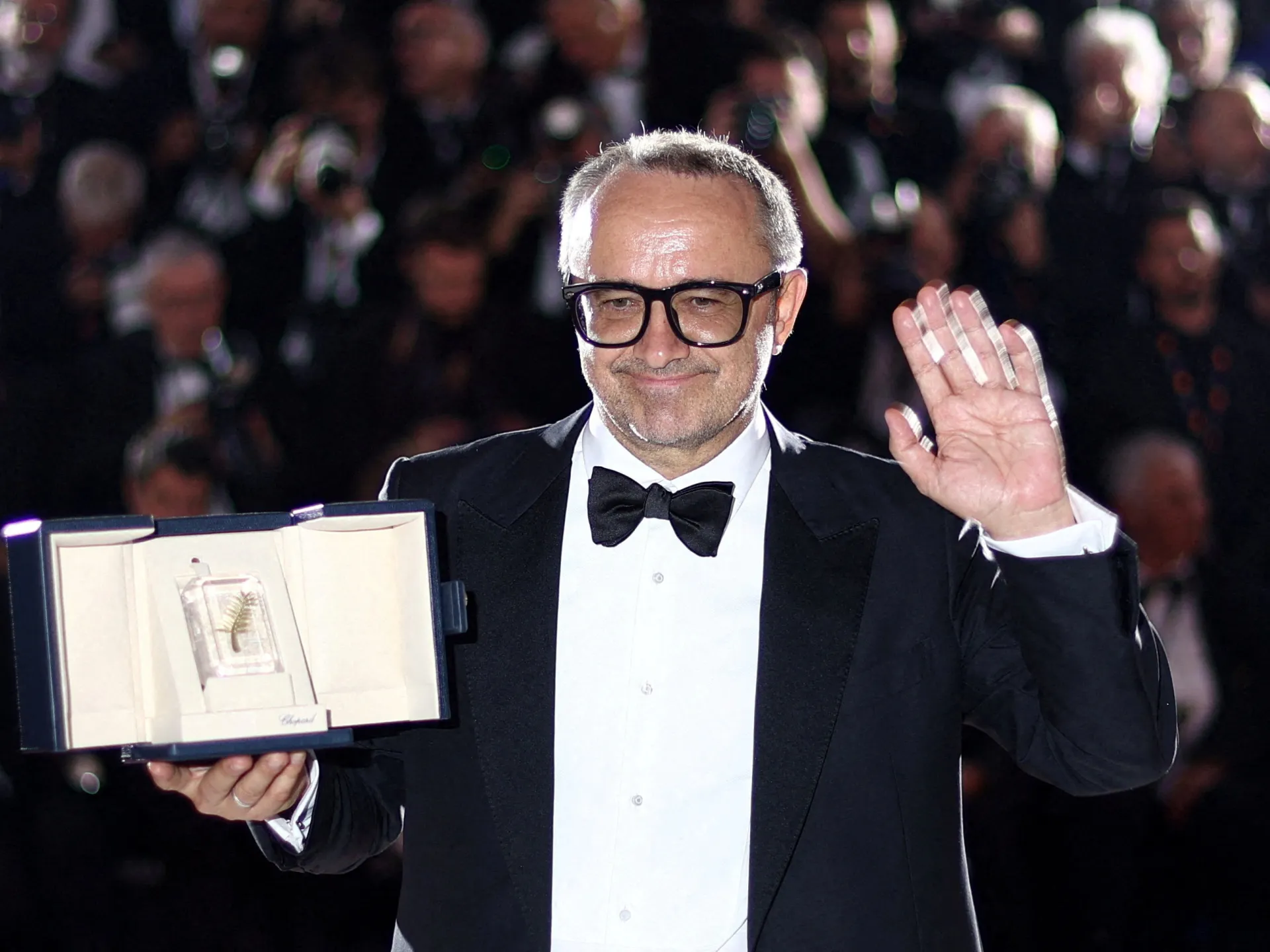
Acclaimed Russian film director Andrey Zvyagintsev was designated a “foreign agent” by the Kremlin on Friday, according to state news agency TASS.
Recommended Stories
list of 3 itemsend of list
Zvyagintsev won the 2026 Grand Prix at the Cannes Film Festival for, Minotaur, a film depicting a Russian businessman who is forced to decide which of his employees should be mobilised to go and fight in Ukraine.
“Millions of people on both sides of the front line dream of only one thing: for the massacres to stop,” Zvyagintsev said in his acceptance speech, adding that Russian President Vladimir Putin was the only person capable of ending the war.
Moscow has kept casualty numbers from the fighting in Ukraine heavily restricted and has not provided timely or complete public updates, but estimates of Russian soldiers killed in the four-year war range from anywhere from 200,000 to half a million.
Russia’s Ministry of Justice on Friday accused Zvyagintsev of disseminating “false information about decisions taken by the public authorities of the Russian Federation and the policies they pursue”.
“He interacted with foreign agents and resides outside the Russian Federation,” it said.
The 62-year-old director, who has lived outside Russia since the COVID pandemic, is known for a series of other films including, The Return, The Banishment, and, Leviathan, a bleak portrayal of life in rural Russia.
People listed as foreign agents are subjected to onerous bureaucratic requirements and restrictions on their income in Russia.
They are barred from holding public office and forced to register their activities with the authorities.
They also have to add warnings on everything they publish, including on social media, that the content was produced by a foreign agent.
The label adds connotations of espionage to numerous people, including public figures, whom it deems to be engaging in anti-Russian activity with support from abroad.
Previously, writer Boris Akunin and rock musician Boris Grebenshchikov have been labelled as foreign agents by Moscow.
DUBAI: Film AlUla has signed a memorandum of understanding with international film financier Sherborne Media at the 2026 Toronto International Film Festival, establishing a financial framework designed to expand production support for Saudi, regional, and international filmmakers shooting in AlUla in the northwest of Saudi Arabia.
Qualifying productions filming in AlUla will be able to access debt financing solutions secured against available production rebates, grants, incentives, and soft money. The combined support packages will cover up to 50 percent of eligible production expenditure incurred in AlUla.
The partnership aims to address one of the filmmaking industry’s key barriers: upfront liquidity for producers against their contracted rebate and incentives receivables, ensuring sufficient cash flow to facilitate production.
By providing a standardized, transparent process for financial due diligence, the initiative supports established Saudi, MENA (Middle East and North Africa), and international storytellers in bringing their projects to life using AlUla’s production facilities, purpose-built soundstages, and historic landscapes.
The partnership will also integrate workforce development opportunities to support the sustainable growth of Saudi Arabia’s film industry. Film AlUla and Sherborne will collaborate on structured training programmes, crew upskilling, and local hiring initiatives to build long-term regional production capacity.
Zaid Shaker, acting executive director of Film AlUla, said: “Financing remains one of the most critical challenges facing creators today — particularly for emerging creators in Saudi Arabia and the region. Our partnership with Sherborne Media allows us to establish an efficient, transparent mechanism that bridges the gap between creative vision and financial execution. By pairing our state-of-the-art facilities and rebate structures with institutional debt solutions, we are providing a reliable platform for local and international artists to tell authentic, compelling stories – right here in AlUla.”
Alastair Burlingham, CO-CEO of Sherborne Media, said: “Saudi Arabia’s screen sector is expanding rapidly, supported by strategic leadership and infrastructure investment. After the successful financing and production of ‘Chasing Red’ earlier in 2026, and leveraging the services offered by Caravan — our Saudi joint venture company with Stampede — we are delighted to join forces with Film AlUla during TIFF 2026 to help facilitate its growth by introducing a structured financing model.
“Curated credit facilities against soft money and incentives receivables give producers the financial certainty required to execute high-quality feature and television projects efficiently in AlUla.”
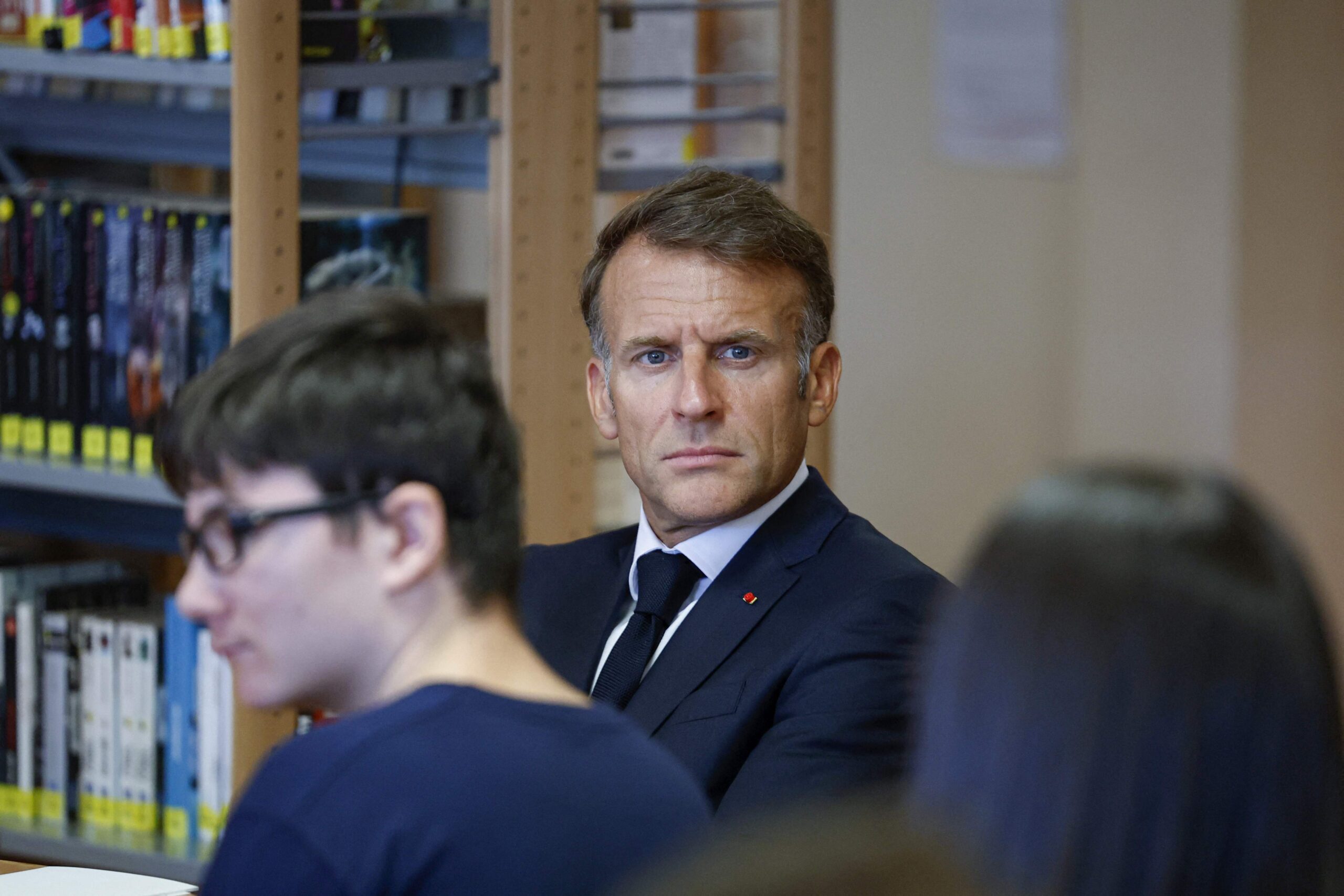
Paris: The French government submitted a reworked proposal to ban social media for children, after its previous ban was struck down by the country’s top constitutional authority, President Emmanuel Macron said on Monday.
“After rigorous technical work the government today is notifying” the European Commission of the new draft, Macron wrote on X. The notification is a key step, as it ensures that the legislation is in line with European Union laws.
California, home to the world’s largest tech companies, is placing more guardrails around social media and artificial intelligence as child safety concerns escalate.
On Thursday, California Gov. Gavin Newsom signed more than 10 bills aimed at keeping young people safe online.
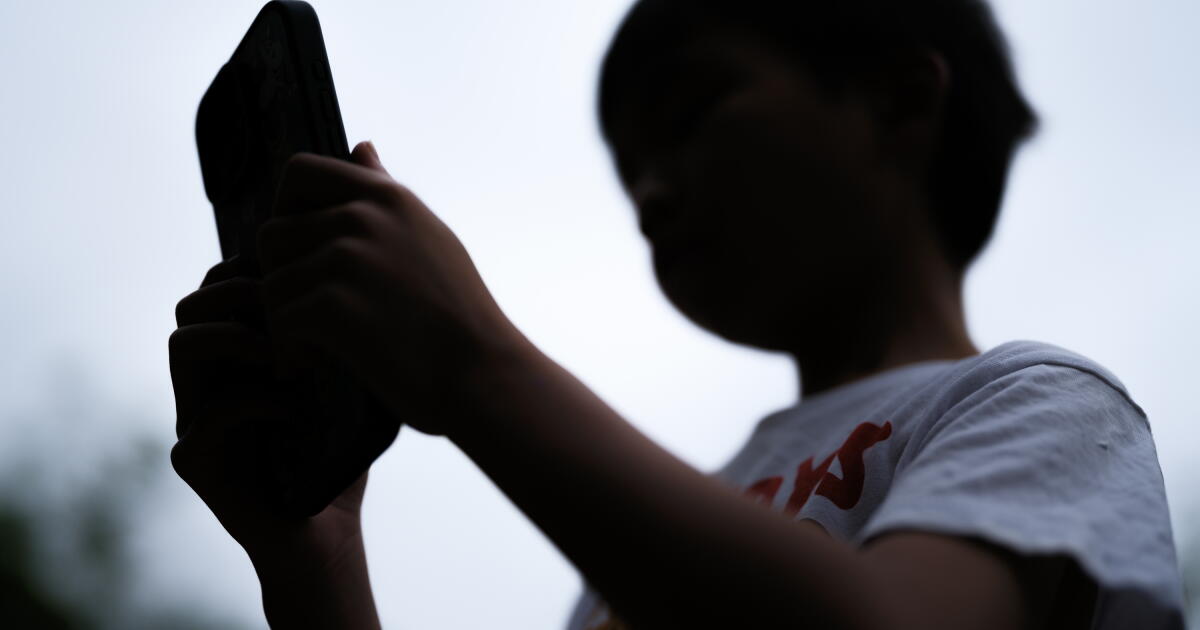
From suicides to sextortion, parents and their children are wrestling with how social media and AI chatbots could be harming people’s mental and physical health. The anxiety comes as technology becomes more powerful, playing a bigger role in classrooms, offices and homes.
California lawmakers have tried to tackle online safety concerns for years and they’ve faced intense lobbying from tech companies with deep pockets. The state’s laws have a disproportionate impact on the global tech industry because so many of the field’s titans are based here.
“We cannot hand children technology engineered by some of the most sophisticated companies in the world, and then place the burden on kids to defend themselves against it,” said California First Partner Jennifer Siebel Newsom in a news conference Thursday in the San Francisco Bay Area.
The California governor, who has tried to strike a balance between safety concerns and supporting innovation, has rejected online safety bills in the past that he thought were too restrictive or premature.
The batch of new legislation includes Senate Bill 1119, which would require companion chatbot operators to assess risks, notify parents in certain cases if their child threatened to harm themselves, and take other safety steps.
Lawmakers named the bill Adam’s Law, after Adam Raine, a California teen who died by suicide in 2025 after conversing with OpenAI’s ChatGPT. The teen’s parents sued OpenAI, alleging in the lawsuit that ChatGPT provided information about suicide methods that the teen used. OpenAI and Pinterest publicly expressed support for the bill on Thursday.
Adam Raine’s mom, Maria, said in the news conference that the new law will help save lives and hopes that other states will enact similar legislation.
“Powerful AI companionship chatbots were unleashed on our kids with vastly inadequate protections. Adam was an early adopter of AI, and so many of us parents did not understand the dangers back then,” said Maria Raine, who came to the event with a photo of her son.
Suicide prevention and crisis counseling resources
If you or someone you know is struggling with suicidal thoughts, seek help from a professional or call 988. The nationwide three-digit mental health crisis hotline will connect callers with trained mental health counselors. Or text “HOME” to 741741 in the U.S. and Canada to reach the Crisis Text Line.
At the event, Democratic and Republican politicians shared their experiences as parents who have seen firsthand how technology affects children.
Assemblyman Josh Lowenthal (D-Long Beach) said parents are seeing anxiety and depression among children who grew up in front of screens.
“That anxiety is because the pace of technology is moving faster than government can put guardrails in, and that’s left families across the state struggling to figure out how to keep their kids safe,” Lowenthal said.
Lowenthal introduced Assembly Bill 1709, which Newsom also signed. It would bar certain online platforms from providing an “addictive feature” such as autoplay and feeds that display recommended content to users under 16 years old.
Tech industry groups opposed the bill, raising concerns that it could cut off access to social media’s benefits, such as people’s ability to connect with family and friends. Tech industry groups such as TechNet say that lawmakers should enforce current laws to strengthen parental controls rather than pass new ones.
NetChoice, which has sued California and other states to block the enforcement of new online safety laws, said in a statement that the group has First Amendment concerns about the new bills Newsom signed.
“The state cannot simply describe speech as addictive and then claim a right to regulate access to it,” said Zach Lilly, Director of Government Affairs at NetChoice. “Whether the governor and legislature choose to respect it, Californians have a right to express themselves, and NetChoice will continue to fight for that right.”
The new safety restrictions come as tech companies, including Meta, Google and others, face more scrutiny over how they design products. The companies have suffered several legal blows in courtrooms in California this year.
Meta, which owns Facebook and Instagram, agreed in August to pay up to $17 billion and make child-safety changes to resolve a multistate lawsuit. The lawsuit accused the tech company of designing and deploying harmful features while misleading the public about them.
As part of the settlement, Meta said it would impose time limits and mute notifications during certain hours for teens. Young people would also have the option to choose to view a non-algorithmic social media feed that isn’t personalized and disable autoplay.
Earlier this year, Meta and YouTube also lost a social media addiction lawsuit in Los Angeles.
While new legislation goes further than the settlements, some countries have passed stricter restrictions on social media. Last year, Australia started banning social media for children under 16, though enforcement has posed a challenge because teens are finding ways to get around the restriction.
Newsom, who pushed for federal regulation, said that he thinks California’s approach to social media is “better” than Australia’s because children are “all figuring out a way to game that system.”
“This is about the features themselves. This is about actually addressing the problem, the scrolling, the algorithms,” he said.
Safety concerns around technology have also heightened as companies double down on advancing artificial intelligence.
This week, a researcher for AI company Anthropic said he left the company over concerns that AI companies, including OpenAI, are “gambling with our lives” as they race ahead to improve AI that could surpass human intelligence.
The researcher, Jacob Coxon, shared a viral social media post that said: “People building AI earnestly believe that it could kill us all by the end of the decade.”
Newsom signaled the work to protect children isn’t over.
“We need to move, but one thing we’re not doing is we’re not sitting back and we’re not letting it rip,” he said.
Court also acquits Dow Jones on the charge of dismissal over Selina Cheng’s leadership role with the Hong Kong Journalists Association.
Published On 10 Sep 202610 Sep 2026
A Hong Kong court has convicted Dow Jones for trying to deter a journalist from taking a union role, but also acquitted the publisher on the charge of dismissal over the role, in a case that raised concerns about media freedom in the city.
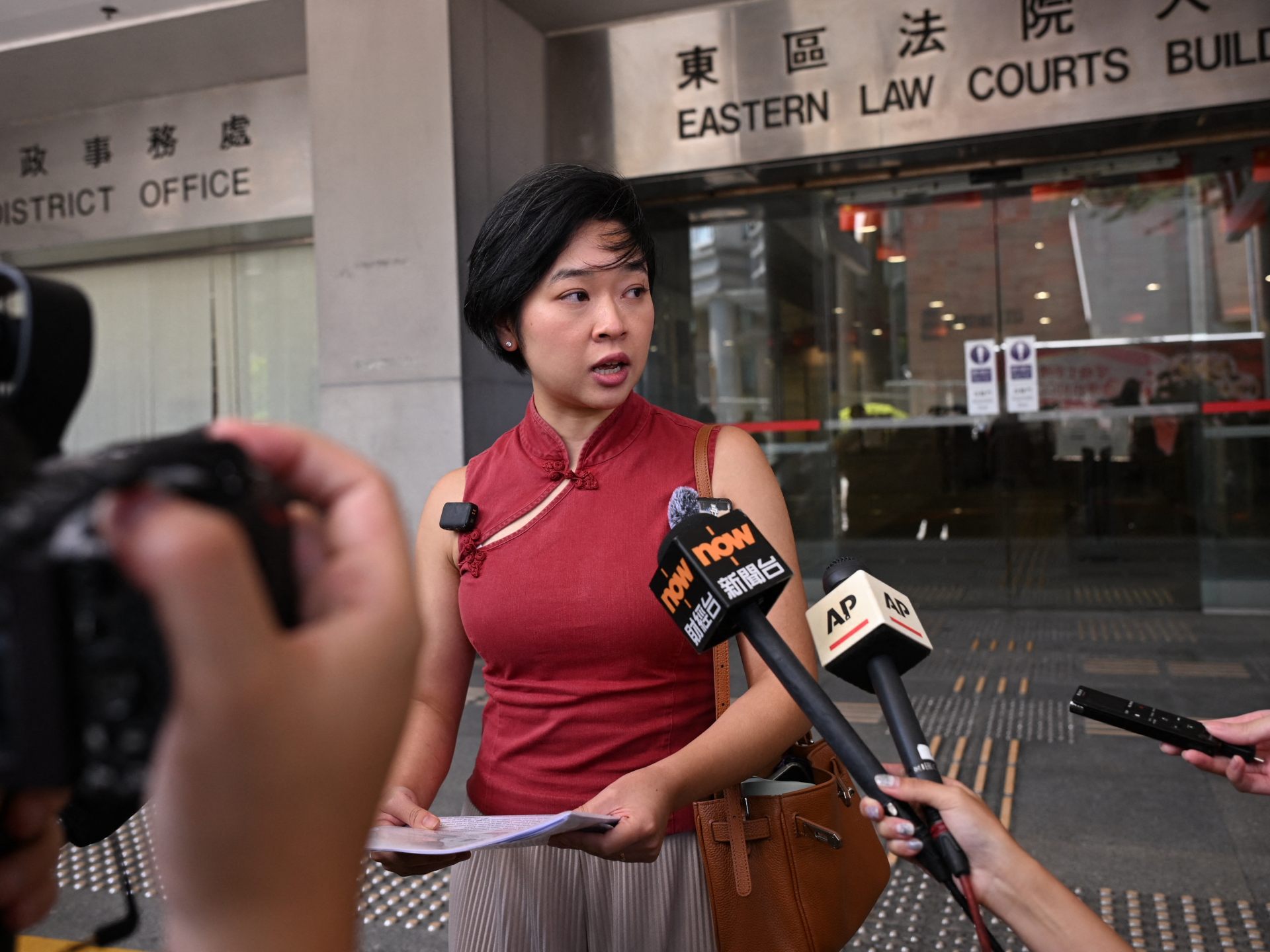
Selina Cheng, who was fired by the Wall Street Journal (WSJ) in July 2024, had accused the newspaper’s publisher Dow Jones of unlawfully terminating her employment over her role chairing the Hong Kong Journalists Association (HKJA) and of trying to prevent her from standing for a union position.
Recommended Stories
list of 3 itemsend of list
The court found the company guilty on Thursday of trying to prevent Cheng’s right to run for the union chairmanship.
However, the judge sided with Dow Jones’ argument that she was made redundant because of corporate restructuring, and not due to her role as HKJA chair.
The right to take part in a trade union is protected by Hong Kong’s labour laws. An employer found guilty on “prevent or deter” charges could be fined up to 100,000 Hong Kong dollars ($12,755).
“If reporters’ employment rights are not sufficiently safeguarded, or when their rights are violated and not enforced in law, then we can no longer work safely as reporters,” Cheng told reporters outside the court after the ruling.
The judge said the company’s requirement that Cheng seek prior permission to take a union role was an “unjustified deterrent” of her rights.
Dow Jones said it disagreed with the ruling and was evaluating next steps.
“The Wall Street Journal has a long and proud history as an employer in Hong Kong. Throughout that time, we have remained deeply respectful of its labour laws and supportive of our employees’ rights, while publishing excellent, impartial journalism about the region,” a spokesperson said.
Sentencing is expected to be handed down at a later date.
Cheng launched a private prosecution last year for illegal termination, after filing a complaint with the Labour Department that did not result in a prosecution.
Founded in 1968, the HKJA is Hong Kong’s longest-established journalists’ organisation and one of the last remaining groups advocating for media rights in the city.
Although Hong Kong was once known for its independent news outlets, media freedom has come under strain and many outlets have disbanded since Beijing imposed a 2020 national security law following sometimes violent pro-democracy protests, according to international rankings and HKJA surveys.
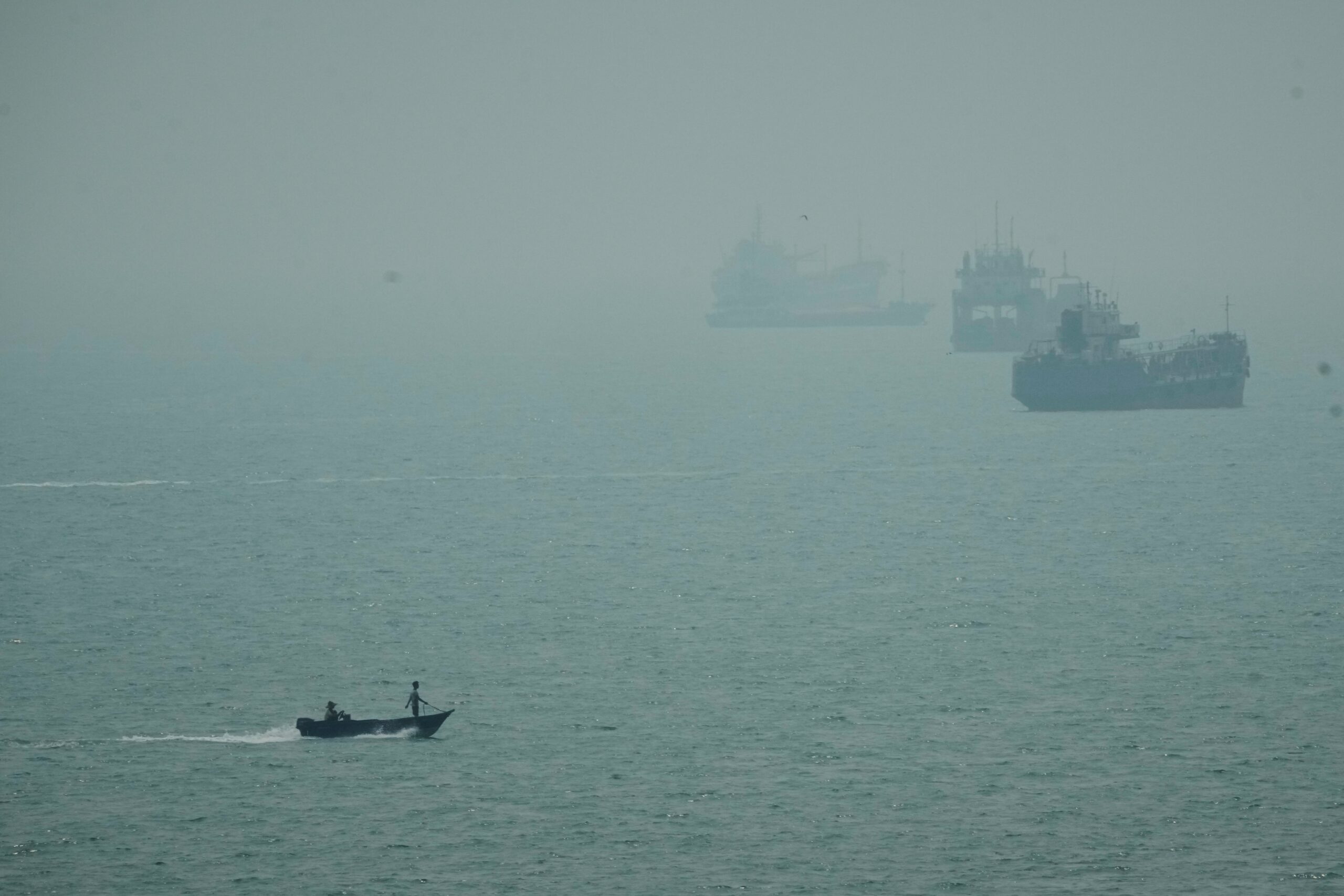
Iran’s Revolutionary Guards said Wednesday they attacked two US vessels, eight oil tankers and 10 “non-compliant vessels” trying to pass through the Strait of Hormuz, state media reported.
“Two US vessels, eight oil tankers, and 10 non-compliant vessels attempting to pass through the prohibited and unsafe zone of the Strait of Hormuz were targeted,” the Guards said in a statement published by the official IRNA.
Meanwhile, six cargo ships transited the Strait of Hormuz yesterday, Tuesday, compared to nine ships the previous day and an average of about 12 ships over ten days, according to shipping data released today, Wednesday.
These numbers may change, as some ships typically choose not to operate their transponders during the voyage.
Preliminary data from Kpler at 0200 GMT showed that five of the six ships entered the strait while one exited, and the group included a Panamax-sized tanker and a medium-sized tanker.
The US-Israeli war on Iran escalated yesterday, Tuesday, as Houthi militia in Yemen, allied with Tehran, launched attacks on Saudi cities, further involving the kingdom in the conflict.
Simultaneously, US forces targeted several Iranian oil tankers, while Iran struck a US base in Jordan.
Meanwhile, 25 cargo ships transited the Bab El-Mandeb Strait yesterday, Tuesday, with 11 ships entering and 14 exiting the other vital Middle Eastern waterway.
This compares to an average of about 27 ships transiting the Bab El-Mandeb Strait over the past ten days.
Among the ships that transited the Bab El-Mandeb Strait were two Suezmax tankers, eight Aframax tankers, and a Very Large Crude Carrier.
SAN DIEGO — As dusk approached San Diego’s seaside enclave of Ocean Beach, its Sunset Cliffs bustled on a recent Friday evening.
Two engaged couples posed for wedding photos in between joggers, dog walkers and sightseers who clamored around Osprey Street to enjoy the day’s majestic sunset.
It was a deceptively idyllic setting for what authorities say is continued lawbreaking and peril, which authorities just can’t seem to quash.
Share via
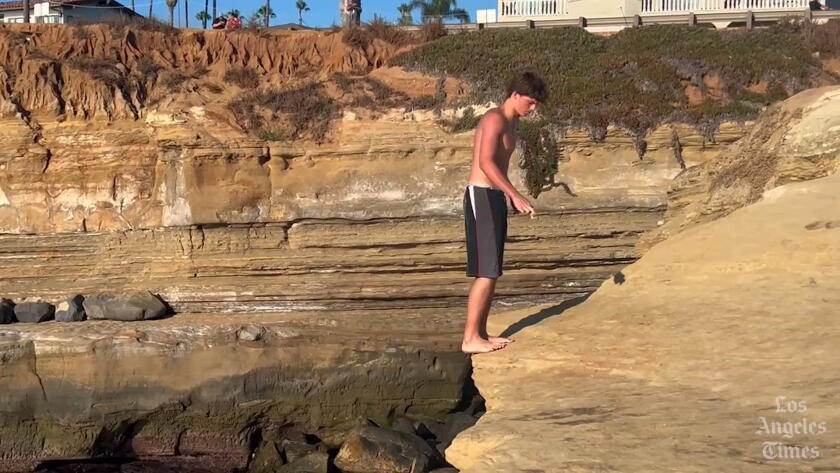
The lawbreakers were gathered this day on a cliff and a nearby arch, a crowd of around 50 young people — 14- to 20-year-olds, mostly males. Buoyed by a youthful sense of invincibility, they dared one another to leap, waiting for another to move, like emperor penguin chicks before a first arctic plunge.
After a few minutes, there was a dive off the arch, followed by a cannonball from the next person, a backflip from a third and then other more spectacular and daring stunts from the flock.
No one was injured that day, but that hasn’t always been the case.
People jump into the water at Sunset Cliffs. San Diego officials urge visitors to avoid jumping, but that doesn’t stop tourists and thrill-seekers.
At least three individuals were rescued after suffering injuries this summer at Sunset Cliffs, leading police to ramp up enforcement as locals debate the need for safety versus the merits of youthful rites of passage.
California dreaming
Back home in Iowa, Marcus English said he’d probably be hosting bonfires or hitting up local pools in mid- to late August. Instead, the 17-year-old was at the cliffs enjoying his last few days off before beginning his senior year of high school.
“There are some places to jump, some lakes in Iowa,” he said, “but nothing like this.”
English wangled a stop during a weeklong family trip to California that included national park visits to stop by Sunset Cliffs, which he saw on social media.
The vistas and cool breezes represented quintessential California to the Midwesterner, equal parts “what I saw on Instagram and a movie.”
English spread out his arms, squatted and then leaped before taking a roughly 15-foot plunge from the arch into the shallow waters. He jumped multiple times on consecutive days.
“It’s just so freeing,” he said of his leaps. “There’s nothing like it.”
‘Hopefully I can walk again’
Jumping happens at several places throughout the cliffs.
The most common launch point is from the arch, with drops ranging from 15 to 20 feet depending on the water level, said a San Diego Police Department spokesperson.
The more exotic and dangerous plunges happen from the adjacent cliffs, with youngsters jumping from 20 to 40 feet, and some as much as 50 feet.
What makes the latter leap more treacherous is a rock ledge that juts out about 10 to 15 feet from the cliffs. Jumpers have little room to run and gain momentum (unlike at the arch) and must clear that formation before hitting the water.
This summer’s safety debate reached a fever pitch in late July. A 17-year-old jumper, according to social media footage, struck the ledge with his backside and crashed into the water.
For his part, the unnamed 17-year-old said in a since-deleted social media post that he suffered six fractured vertebrae and a badly bruised tailbone and needed nine stitches in his foot. The Times could not independently reach him.
Spectators watch people jump into the water from the arch at Sunset Cliffs.
“For everyone who wants to tell me I’m an idiot for doing that, trust me, I’m aware,” he said. “Hopefully I can walk again, but I’m just trying to take it slow.”
Sunset Cliffs have attracted visitors and tragedies
Injuries and deaths from jumping at the cliffs date to the 19th century, San Diego Reader noted earlier this year.
A schoolboy named Waldham slipped off the cliffs after a scrum with friends and broke his arm in 1881. One of the earliest deaths came in 1926, when a 3-year-old wandered from his home on Narragansett Avenue and fell to his demise.
Police and lifeguards were unsure as to the most recent jumping fatality, with one official pointing to the 2019 death of 15-year-old Anthony Womack, a National City resident.
Brook Hjelm, the mother of 23-year-old Brian Wilson, who died swimming at Sunset Cliffs in 2015, told the local CBS station she would like to see photos of those who had died posted along with danger signs in the area. “Put signs up of our young men and women that we lost,” Hjelm said. “Let them see the face of something that associates them with what truly is at stake.”
Tracking the action
Attention surrounding Sunset Cliffs injuries ebbs and flows much like the current, according to Frank Gormlie, a longtime San Diego County resident who tracked incidents more than a decade ago.
Gormlie, the founder and editor of Ocean Beach’s online newspaper, OB Rag, scoured media archives and spoke with residents.
“It had gotten so bad that I wanted to chronicle what was going on,” Gormlie said.
His research documented 11 deaths and dozens of injuries during that time span. Those statistics came from jumps, along with vehicular, climbing and health incidents.
Some incidents had little to do with jumping, such a surfer smashing into the rocks. But a 43-year-old woman slipped and fell to her death in 2015, while two jumpers needed crane-assisted rescues after suffering serious injuries, according to Gormlie.
The Sunset Cliffs siren’s song
“People have been visiting the Sunset Cliffs for years because it has a beauty that shocks,” Gormlie said. “But I think social media has found its way to the next generation of adventure seekers who don’t know about the dangers.”
The Sunset Cliffs area is Instagram-ready, and social media has drawn some visitors looking to brave the leap.
Gormlie said swimming and diving are local rites of passage. He noted that Ocean Beach residents commonly “shoot the OB pier” — surfing under that the town’s pier — a risky stunt that Gormlie did as an 18-year-old before shipping off for college.
Gormlie jumped from the cliffs in 2014, shortly after turning 65.
He wrote about his experience through an anonymous post, saying he “did it for all those guys and women my age who drive by every day and secretly wish they could jump off too.”
All rescues involved San Diego Fire-Rescue Department lifeguards and personnel. The department shares jurisdiction of Sunset Cliffs with the San Diego Police Department and rangers with the city Department of Parks and Recreation, said Candace Hadley, Fire-Rescue public information officer.
Hadley wanted to remind potential jumpers that the act of leaping from the cliffs violates a San Diego municipal code and could result in fines of $100 or more. Frequent fliers could be smacked with $1,000 fines.
“Cliff jumping isn’t just illegal in San Diego, it’s extremely dangerous,” Hadley said. “One misstep could lead to a life-altering injury or worse.”
Her office tends to offer education on the dangers of jumping, she said, while San Diego police dealout penalties.
The problem of jumpers at Sunset Cliffs has been part of achallenging summer for the lifeguards, who have made 5,480 rescues across the 17 miles of San Diego coastline they patrol from June 1 to Sept. 1. Extreme heat has driven more people to the beach, and high surf fueled by Pacific tropical storms has added to the dangers.
The rescues have mostly been of swimmers not properly judging the strong currents. In a normal year, Hadley said, the lifeguards make about 7,500 to 8,000 rescues.
Sgt. Saum Poorsaleh, San Diego police public information officer, said his department had issued more than 50 citations at Sunset Cliffs and dispensed about 350 warnings, written and oral, since mid-June.
But he said the department is short-handed, and increasing enforcement permanently is not feasible.
“There are warning signs all over the cliffs noting the dangers, but people still jump,” Poorsaleh said. “Mix in social media — which is drawing in tourists from all over the country — and a young person’s feeling of invincibility and there’s a chance for trouble.”
Visitors have been jumping at the Ocean Beach location for decades. One local said he jumped after turning 65, calling it “irresistible.”
San Diego City Councilmember Jennifer Campbell, who represents Ocean Beach, recently issued a statement reminding visitors “to prioritize safety and not jump from the cliffs.”
“The cliffs can be unpredictable,” she said, “and changing tides, strong currents, rough surf, and hidden rocks can quickly create life-threatening conditions.”
A longtime local tradition
Lyne Miller has lived all her life in Ocean Beach, where saltwater runs in locals’ veins and it’s not uncommon to see residents toting surfboard as they ride a bike or golf cart to the beach.
From a young age, Miller, 80, said she promised her mom that she “would never jump.”
Miller says the number of teens arriving at the beach, likely driven by social media, “is more than ever.”
But she acknowledged that locals had been jumping at Sunset Cliffs since at least the 1950s in surf-centric Ocean Beach.
“This is a playground for those who love the water, who love the ocean,” she said. “I hope if there’s a crackdown on jumping, it’s not harsh.
“I don’t necessarily feel negative about the jumpers,” she added. “I just wish they would be smarter and jump from safer spots at better times.”
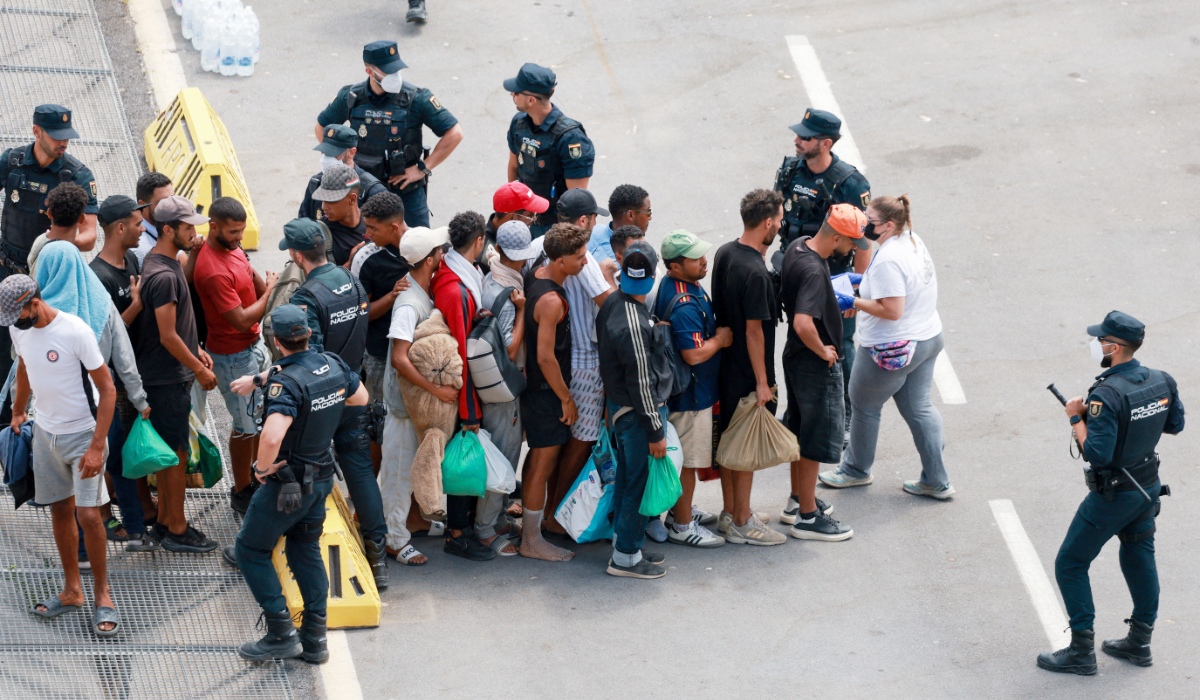
RABAT: Moroccan media have criticized a Spanish police report that accused Morocco’s security forces of failures as tens of thousands of migrants crossed into the Spanish territory of Ceuta.
More than 70,000 migrants entered Ceuta from Morocco on July 30 and 31 in an unprecedented, chaotic surge that left scores dead and sparked European Union infighting over the touchy issue of migration.
The Spanish police report seen by AFP flagged a Moroccan police response of “total permissiveness” that it said facilitated the rush, with some officers directing migrants toward the water.
Moroccan police numbers around the border post were “clearly smaller than usual” and officers “made no serious attempt” to stem the surge, said the report.
But Spain’s Prime Minister Pedro Sanchez has consistently avoided blaming Morocco, noting that there was no “solid proof” that the North African country orchestrated the migrant rush.
Sanchez’s leftist government has tried for years to improve the countries’ historically delicate relations — notably over the status of Ceuta and Spain’s other north African territory, Melilla.
Moroccan authorities have yet to comment on the leaked police report, but several Moroccan media outlets have weighed in on its allegations.
Moroccan news site Hespress on Friday called it “particularly weak,” saying it lacked material evidence and contained “glaring contradictions.”
Hespress said the police report sought to make Morocco “the scapegoat” in Spanish political and judicial disputes.
Moroccan news site Le Desk on Thursday described the report as “botched,” pointing to factual errors including a reference to June 30 instead of July 30.
And TelQuel said that claims by some media that the report directly accused Morocco of “planning and executing” the influx were false, adding that the allegations did not name any Moroccan official as responsible.
News site Medias24 challenged the “permissiveness” claim by arguing that it was based solely on one satellite image that was “obviously just a snapshot.”
Last month, a senior Moroccan official told AFP on condition of anonymity there had been no Moroccan security failures during the influx.
SACRAMENTO — Long the epicenter of the global tech industry, California is taking more action to shield its children, communities and workers from the threats posed by the very industry that’s become central to the state’s identity and enviable economy.
State lawmakers on Monday passed new safeguards around social media and artificial intelligence — and are poised to approve restrictions on data centers — at a time when technology has become intertwined with people’s daily lives.
Efforts to rein in the power of Big Tech extend beyond concerns that TikTok, Instagram and other social media platforms are harming young children.
Unions and workers worry that AI will take their jobs, and lawmakers are trying to tackle privacy and safety issues as AI features get added into smart glasses and toys. Californians are concerned that the proliferation of data centers will increase their electricity bills and strain water supplies.
“There’s a heightened level of tech anxiety right now, and that manifests itself from social media to data centers to AI taking jobs,” said Assemblyman Josh Lowenthal (D-Long Beach). “People are coalescing and they’re demanding that policymakers make change.”
The Democratic governor has acknowledged the challenge of adopting regulations that protect the public without going too far and potentially stifling the technology industry’s growth, which brings critical revenue to the state budget.
“I think that’s the constant tension,” Newsom said in an interview earlier this summer. “We’re constantly sort of fighting that balance.”
The governor, who has close relationships in the technology industry from his time in San Francisco, said only a couple other states have attempted to regulate artificial intelligence like California. The state, he said, leads on regulation of social media.
“We’re not rolling over, certainly,” Newsom said. “We’re leaning forward, and we’re iterating. We will push the boundaries and litigate.”
The looming restrictions on social media follow a landmark Meta Platforms legal settlement aimed at making social media safer for young people. Parents, politicians and child advocacy groups are worried that social media is contributing to depression, anxiety, eating disorders and other issues.
The actions being pushed in the California legislature are more sweeping than that settlement, however. One of the bills passed by lawmakers on Monday, Assembly Bill 1709, would bar certain online platforms from providing an “addictive feature” to users under 16 years old and add ways to verify users’ ages.
Under the bill, prohibited addictive features include autoplay and feeds that display recommended content.
The addictive nature of autoplay and other features is “harmful, full stop, and that they’re not appropriate for the developing brain,” said Lowenthal, who authored the bill.
After watching technology “run free” in California for years, legislators are now seeking to “pump the brakes a little bit,” said Samantha Vigil, a UC Davis researcher who built a registry tracking social media legislation in states across the country.
“They want to reevaluate what is working,” said Vigil. “What is healthy and beneficial, and what is progress just for the sake of having a new iteration of something?”
All 50 states have introduced or passed some type of digital media or technology-related legislation, tackling smartphone use in schools, social media and chatbots, Vigil said.
Other countries have taken more stringent steps to limit social media use among young people. Australia banned social media use for those under 16, but enforcing the law has been challenging because young people have tried to get around the restrictions.
California isn’t trying to ban social media; instead, it’s trying to limit how platforms design their features.
Parents and state attorneys general have not waited for policy makers to act. They have sued Meta, Google and other tech companies over the alleged harms their products have done to young people.
In late August, Meta, which owns Facebook and Instagram, agreed to pay up to $17 billion and make child-safety changes to resolve a multi-state lawsuit alleging the tech company designed and deployed harmful features while misleading the public about potential harms. Meta and YouTube also lost a social media addiction lawsuit earlier this year in Los Angeles.
Assembly Bill 1709 goes further. For example, Meta’s settlement gives teens the option to pick a non-algorithmic feed and turn off autoplay but, unlike in the legislation, it’s not mandatory. The bill would also apply to other platforms outside of Meta. Meta declined to comment.
Tech industry and business group opposing the bill say it is too blunt and could cut off access to social media’s benefits, according to the bill’s analysis.
“The durable path is to enforce the targeted laws California already has and to strengthen parental tools rather than an overlapping framework whose scope can be redrawn by regulation,” said Robert Boykin, TechNet’s Executive Director for California and the Southwest.
California lawmakers passed another Lowenthal bill aimed at holding social media liable for harm caused to children. Under Assembly Bill 2, social media companies could face fines of up to $1 million per child for negligent harm.
California lawmakers this year also attempted to tackle two other perils of the technological world — the rapid development and implementation of artificial intelligence and the proliferation of the massive data centers that are essential to sustaining the AI universe.
National and state union leaders have urged California legislators and Newsom to protect workers from the threats of AI to replace workers, saying it posed an existential threat to the foundation of a healthy, productive democracy.
“AI must remain a tool controlled by humans, not the other way around,” said Sen. Jerry McNerney (D-Pleasanton).
The state Legislature on Monday approved McNerney’s bill, Senate Bill 947, which would bar employers from “solely” using automated decision-making systems to discipline or fire employees. If an employer primarily relies upon this system, a human must verify the decision.
Lawmakers also approved Senate Bill 951, introduced by Sen. Eloise Gomez Reyes (D-Colton), which would require employers to provide a 60-day advance notice to workers and local and state governments before AI-related layoffs. Lawmakers also approved Assembly Bill 1609, which requires large private businesses that serve customers to provide access to human customer service representatives and to disclose to use of chatbots.
They passed another bill by Sen. Steve Padilla (D-Chula Vista) that enacts a four-year moratorium on the sale and manufacturing of AI-chatbot powered toys over concerns that the technology can harm children.
On Friday, lawmakers agreed on a compromise on proposed legislation to regulate energy use by California’s growing data center industry, measures prompted by community fears about the massive complexes. Lawmakers say the legislation would help protect consumers from growing electricity costs driven upward by the sprawling facilities and to track the centers’ immense energy and water consumption.
At a June hearing on Senate Bill 886 to regulate data centers’ energy use, Assemblymember Pilar Schiavo (D-Chatsworth) said it’s just “a handful of companies that are gonna make trillions of dollars” from AI. They should pay for related utility infrastructure upgrades, she added.
“People, I would argue, are not even begging to use AI,” she said. “They’re struggling to figure it out to keep up with the times, but don’t even really want it.”
The California legislature is expected to vote on two of the bills to regulate the controversial industry within the next day.
Whether Newsom will embrace the legislature’s efforts to corral big Tech in California — in part of in whole — remains unclear.
Newsom last year vetoed a similar AI bill from McNerney to ban automated decision-making systems to discipline employees over worries that it could restrict companies’ ability to use customer ratings. That element was dropped in this year’s legislation.
Newsom last year signed Assembly Bill 56 that required social media platforms to display mental health warning labels to users under 18 starting in January 2027. But he also vetoed Senate Bill 771 that aimed to hold social media platforms liable if they amplified content that contributed to hate crimes and other violent acts, saying that the legislation was “premature” and current civil rights laws might be adequate.
Lowenthal said he’s heard from California families who are anxious about social media and seeking “relief” from their concerns about how the platforms are affecting their children.
“This is a kitchen-table topic,” he said. “I’ve yet to find a family with school-age children in the state of California, any corner of the state, that is not going through this right now.”
Times staff writer Taryn Luna contributed to this report.
The Federal Communications Commission under Trump has tried to target news outlets for spreading ‘fake’ news.
Published On 30 Aug 202630 Aug 2026
United States President Donald Trump says he will report a prominent NBC television journalist to the federal agency in charge of regulating broadcast news outlets for “rebuke or punishment”.
In a post on Truth Social on Sunday, Trump took issue with Kristen Welker’s characterisation of his endorsements of electoral candidates as having “mixed results” in the primaries leading up to November’s elections.
Recommended Stories
list of 3 itemsend of list
“How can anyone be allowed to say this, working for freely given public airwaves?” Trump wrote. He also posted, without any attribution of where he got the data, a chart showing 98 percent of the candidates he endorsed had won their elections.
“Because of this purposeful inaccuracy, she will be reported to the FCC,” the Federal Communications Commission, he said.
Welker hosted the 2020 presidential election debate between Trump and former President Joe Biden and currently hosts NBC’s weekly news programme Meet the Press.
‘Crooked networks’
In June, Welker had a one-on-one interview with Trump that ended in a heated exchange as she pressed the Republican president on continuing to claim the Democratic Party had cheated in the 2020 presidential election, in which Biden defeated Trump.
“Your elections are crooked, and you’re crooked, and Meet the Press is crooked and so is ABC and CBS and CNN. You’re one-sided crooked networks,” Trump said shortly before pulling off his microphone and leaving the interview.
Trump, who has long had a tumultuous relationship with those US television news networks, has increasingly threatened to use the FCC to target what he says is false news.
This month, ABC News’s owner, Disney, sued the FCC, saying the agency was conducting an early licence review of eight of the network’s stations, a move that it said was “retaliation” against it. ABC said the FCC was seeking “a media industry too fearful of official reprisal to report the news freely”.
The review followed a row between the network and the FCC after Trump and his wife Melania called on it to fire late-night TV host Jimmy Kimmel over a joke he had made about her.
President Trump has also filed several multibillion-dollar civil lawsuits against news outlets alleging defamation. Last year, he filed a $10bn lawsuit against the BBC, which he said unfairly edited a clip of him speaking just before his supporters stormed the US Capitol on January 6, 2021, to make it seem like he had called for violence.
Trump sued The New York Times for $15bn and The Wall Street Journal for $10bn, alleging defamation over reporting on issues such as how he amassed his wealth and his relationship to convicted sex offender Jeffrey Epstein. A judge threw out the case against The Wall Street Journal. Trump refiled the case against The New York Times after a judge dismissed the first complaint against the newspaper last year.
Attempts to compel reporters to reveal sources
The warning from Trump also comes as his administration has taken the rare step of using the courts to try to pressure journalists into giving up confidential sources for stories that have pointed out wrongdoing.
This month, The New York Times said agents from the FBI showed up at the home of one of its reporters in February to deliver a subpoena seeking cooperation for an investigation into a story that revealed how a secret US Navy SEALs mission in North Korea had ended up with them opening fire on a North Korean boat.
In July, the US Department of Justice also tried to subpoena three other journalists from the newspaper after they reported on security concerns with the president’s new Air Force One jet. Investigators were seeking phone records of the journalists but withdrew the requests after a federal judge upbraided the tactic in court, saying they were violating the First Amendment, a provision in the US Constitution that protects freedom of the press.
Reporters at The Wall Street Journal and The Washington Post have also been subpoenaed in recent months for national security coverage, including for reporting on internal Pentagon warnings about the US-Israel war on Iran.
News media freedom groups like the Committee to Protect Journalists have criticised the Trump administration for targeting critical media. In April, the group Reporters Sans Frontieres, or Reporters Without Borders, said the US has fallen to a “historic low” in its annual global press freedom rankings, dropping from 57th in the world to 64th.
An ICE official tells Al Jazeera the British political commentator overstayed his visit in the US and will be removed.
Published On 28 Aug 202628 Aug 2026
Milo Yiannopoulos, a far-right British commentator known for previously being a vocal supporter of United States President Donald Trump, has been detained by Immigration and Customs Enforcement (ICE).
A spokesperson for the US Department of Homeland Security told Al Jazeera that Yiannopoulos was taken into custody at the Louis Armstrong International Airport in New Orleans, Louisiana, on Thursday.
Recommended Stories
list of 3 itemsend of list
He allegedly overstayed his legal authorisation to remain in the US after entering the country through New York City on May 14, 2019.
“Yiannopoulos was issued a final order of removal by an Immigration Judge on July 22, after failing to show up for his immigration hearing,” the spokesperson wrote on Friday. “He will remain in ICE custody pending removal.”
The Department of Homeland Security also posted a photo to social media that appeared to be a mugshot of the 41-year-old conservative firebrand who, in June 2025, called on the Trump administration to “deport millions and millions and millions of people”.
In the post, the department warned that those detained for overstaying their visit would be “arrested and deported without a chance to return”.
The Department of Homeland Security posted a photo on Friday identified as Milo Yiannopoulos [Department of Homeland Security]
Online records do not specify which ICE detention facility is currently holding Yiannopoulos. Instead, it refers “family members and legal representatives” to contact the ICE field office in Alexandria, Louisiana, for additional details.
Reports indicate Yiannopoulos was in New Orleans for a concert by the musician Ye, formerly known as Kanye West. TMZ was the first to report Yiannopoulos’s detainment.
Laura Loomer, a top Trump ally known for spreading conspiracy theories, appeared to take credit for Yiannopoulos’s detainment, calling it a “great day for America”.
She also denounced Yiannopoulos’s work with former US Representative Marjorie Taylor Greene, a Trump supporter-turned-critic.
“I was the first person to report on the fact that Milo was in the US illegally where he incited violence against President Trump and worked for Marjorie Traitor Greene,” Loomer wrote on the social media platform X. “When Milo called for me to be assassinated, I reported him to ICE and FBI.”
Loomer has publicly sparred with Yiannopoulos for years. He previously exposed what he purported to be Loomer’s mental health struggles in a September 2024 post, claiming she had been involuntarily committed to psychiatric facilities.
Yiannopoulos, known for his online trolling and anti-Islamic postings, was permanently banned by X’s predecessor, Twitter, in July 2016. His account was reinstated when Elon Musk took over the company.
After that, Yiannopoulos returned to the platform with a series of inflammatory posts, including one that called the “Muslim world functionally retarded”.
More recently, the 41-year-old founded a Los Angeles-based talent management called Tarantula that offers, in its own words, “unrivalled connections, capital and expertise” to a host of celebrities and public figures.
The site lists a number of controversial “past and present” clients like Trump, Ye, convicted fraudster “Pharma Bro” Martin Shkreli and rapper Azealia Banks.













![Milo Yiannopoulos is seen in a photo posted to social media by the United States Department of Homeland Security on Friday [File: DHS]](https://i0.wp.com/occasionaldigest.com/wp-content/uploads/2026/08/HQ1aa0bW4AAMjfi-1787951756.jpg?w=640&ssl=1)