medal

Winter Olympics 2026: Alina Muller scores in overtime as Switzerland beat Sweden to claim bronze medal

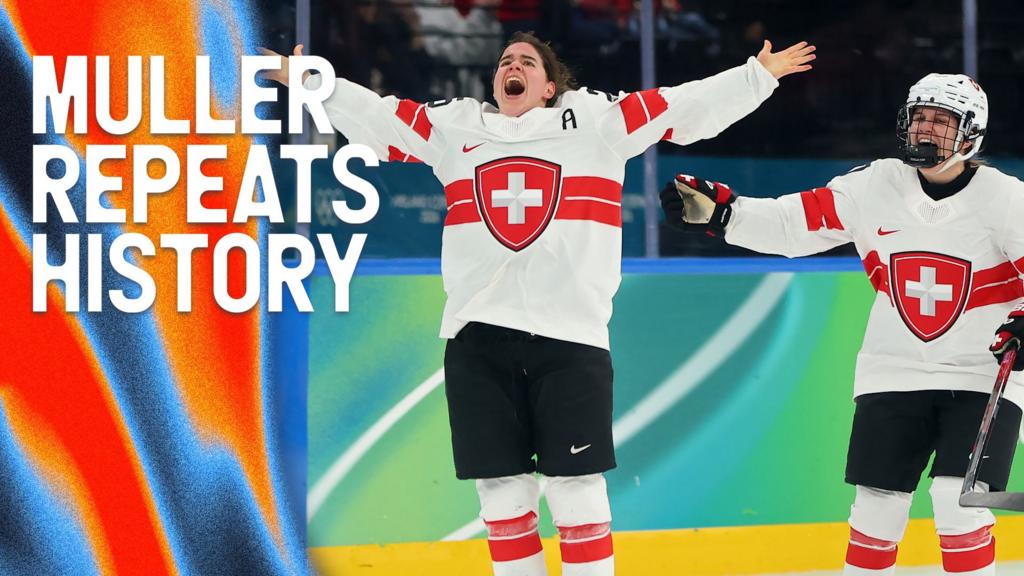
Alina Muller repeats history from Sochi in 2014, scoring an overtime winner as Switzerland beat Sweden 2-1 to claim bronze in the women’s ice hockey at the 2026 Winter Olympics.

Muller scored the winner 12 years ago as a 15-year-old against the same opponents in a 4-3 victory to win the bronze medal.

WATCH MORE: Winter Olympics Video

Available to UK users only.

Source link

Winter Olympics 2026: GB medal hopes still alive after double win over US

Great Britain’s women’s team are in a similarly precarious position.

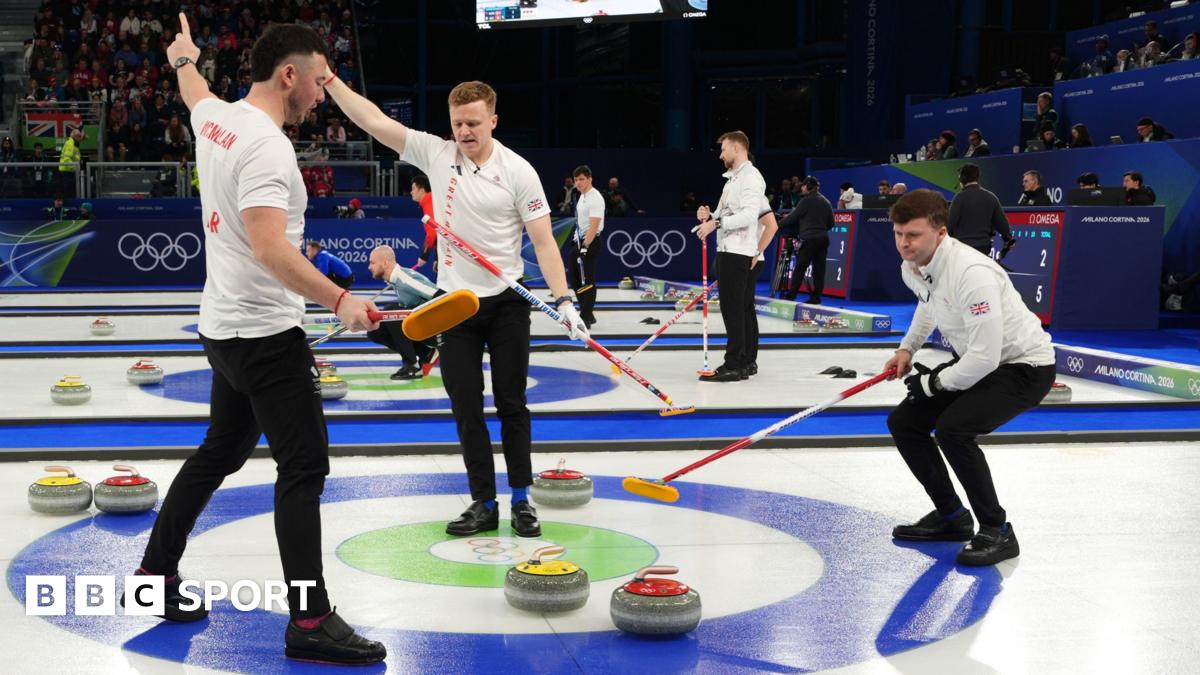
The inexperienced rink – with only Jen Dodds surviving from the 2022 gold-medal winning team – finished sixth in last year’s World Championships and were some way short of their best against the US, with opportunities missed and mistakes made.

It looked for all the world like their chances were gone, trailing 7-6 going into the final end, and without the hammer.

However, Rebecca Morrison executed a sensational double takeout with her final throw and the Americans faltered under pressure, botching their effort to hand the British rink an implausible 8-7 triumph.

The Scottish quartet still need to win their final two games and hope for favours elsewhere if they are to salvage a place in the medal matches.

The next hurdle is a meeting with bottom-of-the-table Japan later on Wednesday (18:05 GMT) before they face second-bottom Italy on Thursday (13:05).

“There was a lot at stake but we just need to keep believing,” Morrison told BBC Sport. “We were up against it but we’re here to fight and that’s what we did.”

Source link

‘Blade Angels’ are pushing to end U.S. 20-year medal drought

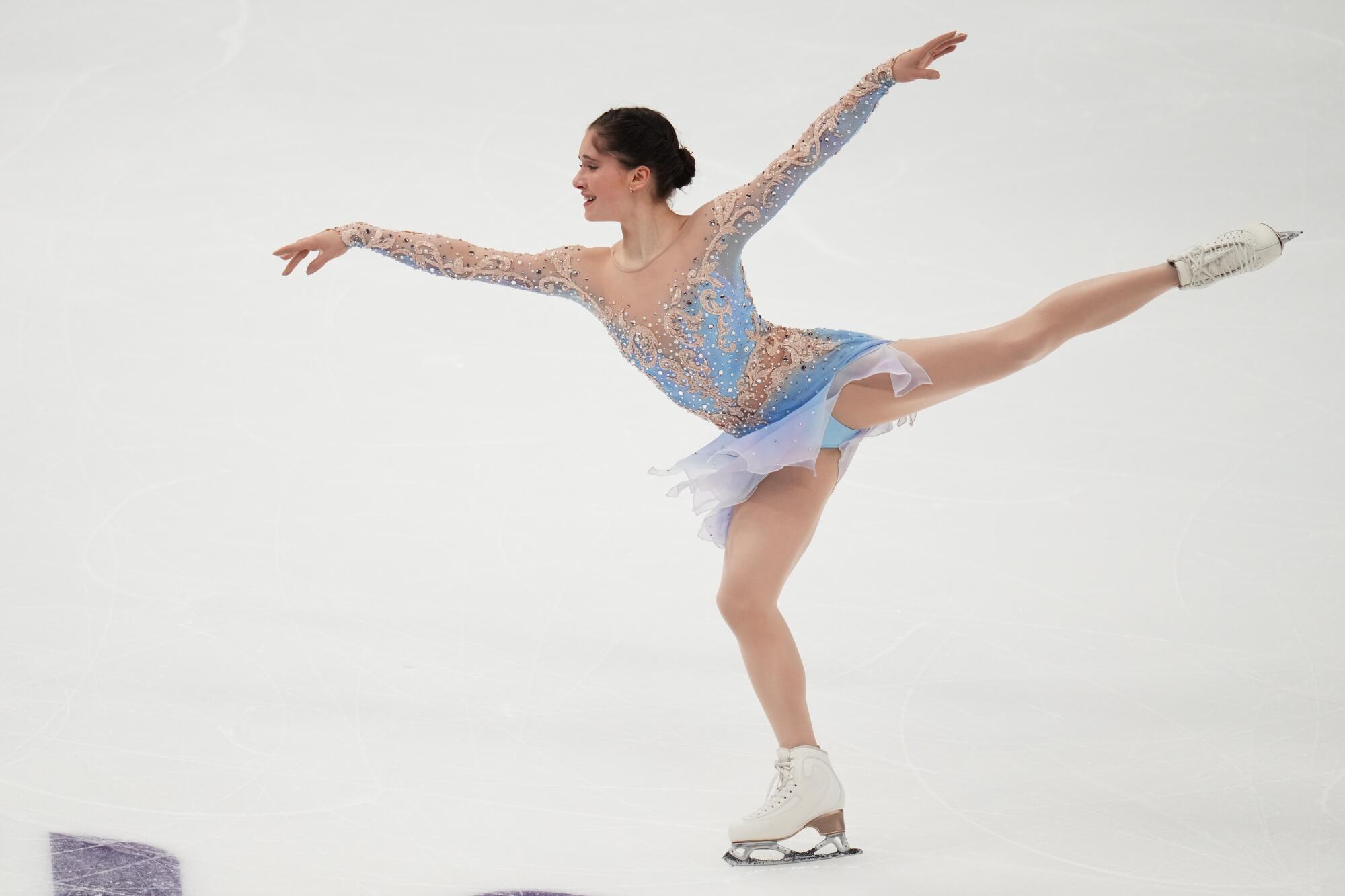
After a one-hour on-ice training session and on the way to yet another interview, Isabeau Levito has one big problem on her mind.

One of the plants in the U.S. figure skater’s room has started growing mold. She needs to figure out how to wrangle it.

“That’s our task of the day,” Levito said Monday.

Nevermind that the biggest competition of her life was starting in about 24 hours.

Isabeau Levito competes during the free skating competition at the U.S. figure skating championships on Jan. 9.

Isabeau Levito competes during the free skating competition at the U.S. figure skating championships on Jan. 9 in St. Louis.

(Jeff Roberson / Associated Press)

Levito and the United States’ “Blade Angels” are trying to stay calm under pressure at the Olympics, where chaos has reigned at Milano Ice Skating Arena.

The United States was expected to dominate figure skating in Milan, but has yet to win a gold medal in an individual event entering Tuesday’s women’s short program. A supposed sure-fire gold medal disappeared in stunning fashion with Ilia Malinin’s eighth-place collapse. Three-time reigning world ice dance champions Madison Chock and Evan Bates settled for a “bittersweet” silver that was marred by judging controversies.

But the talent and depth on what is likely the best U.S. women’s Olympic team in decades could help end a 20-year Olympic medal drought in women’s singles skating. The last U.S. woman to stand on an Olympic podium for an individual event was Sasha Cohen in 2006. Sarah Hughes’ 2002 gold medal was the last for the United States in women’s singles.

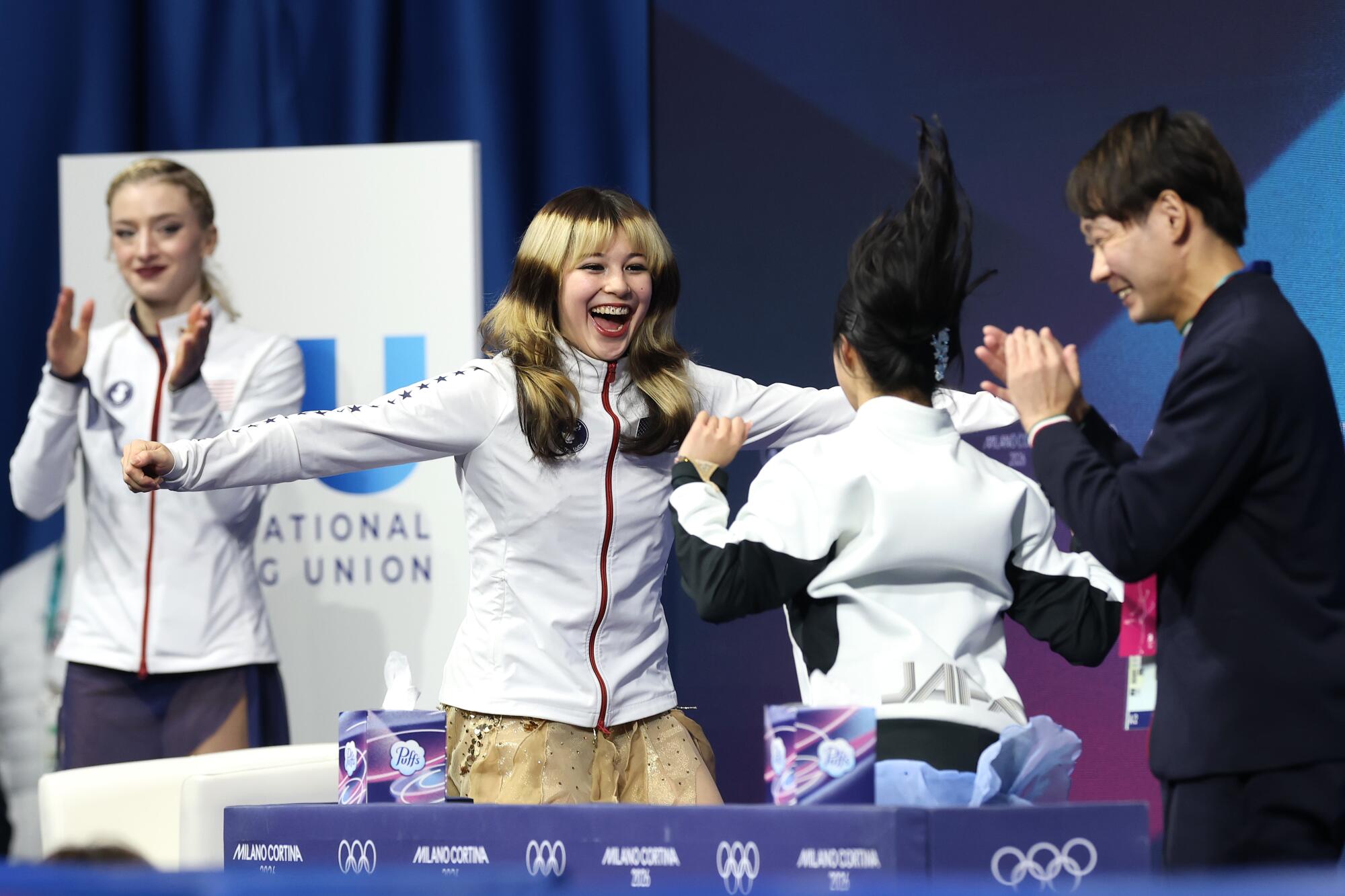
Alysa Liu has already ended one skid. The reigning world champion was the first U.S. woman to win the world title since 2006. With blonde horizontal stripes dyed into her black hair and a piercing in her upper lip, the 20-year-old Liu is putting an alternative spin on figure skating.

Three-time national champion Amber Glenn combines power in her triple axel with emotion on the ice.

Levito, the 2024 world silver medalist, is the classic balletic skater who packs a humorous punch behind her teenage smile.

In a sport that once pitted young women against each other to fit a singular “ice princess” mold, the “Blade Angels” find their strength in their diversity.

“I really like that we’re all so different,” Levito said. “We have our own strengths and our own personalities and our own ways we want to look and appear. … We all have the same passion for the sport and have very aligned goals of wanting to do our best, and once we do that, we’re all happy, regardless of who beat who.”

NBC announcing team Tara Lipinski and Johnny Weir dubbed the trio of medal contenders “the big three,” but the skaters workshopped their own nickname after nationals. They nixed “Babes of Glory” and “Powerpuff Girls” for copyright concerns. Their final choice was a mashup of “Blades of Glory” and “Charlie’s Angels.” If you like it, credit Liu.

“If people don’t like it,” Liu said, “don’t say I made it.”

Liu and Glenn have already won a gold medal in Milan, helping the United States win the team event in dramatic fashion. But with the two events spaced more than one week apart, “being in a high-pressure atmosphere for so long takes its toll,” Glenn said.

The 26-year-old has faced additional challenges on social media at the Games. She had to resolve potential copyright issues concerning her free skate music and received threats for comments she made during a news conference when asked about President Trump’s policies regarding the LGBTQ+ community. Glenn, who identifies as bisexual and pansexual, encouraged people in the queer community to “stay strong during these hard times,” refusing to avoid political conversations because “politics affect us all.”

American Amber Glenn competes during the team skate at the Winter Olympics in Milan on Feb. 8.

American Amber Glenn competes during the team skate at the Winter Olympics in Milan on Feb. 8.

(Natacha Pisarenko / Associated Press)

While she said Monday she doesn’t regret the comments, she has also had to take a break from social media to focus on her remaining competitions at the Olympics.

“I’m happy to do what I do and stand for what I stand for,” Glenn said. “But it has been —”

She paused.

“Complicated.”

Not only are the Olympic Games the largest stage for many sports and a dream that begins from childhood, but the spotlight has only increased with social media in recent years, Glenn said. Amid the pressure, she tries to lean on her teammates and embody the advice of U.S. figure skating alumni who tell her simply “enjoy it.”

“Four years ago, I could never have imagined even making it here,” Glenn said. “To just be here is a privilege that I don’t take lightly, and I need to remind myself of that and to just really soak in the experience, not just the results.”

Isabeau Levito skates during the U.S. figure skating championships  on Jan. 11 in St. Louis.

Isabeau Levito skates during the U.S. figure skating championships on Jan. 11 in St. Louis.

(Jeff Roberson / Associated Press)

To reset after the team competition, the “Angels” went with the pairs skaters — whose competition started one week after the team event wrapped — to train at a U.S. facility in Bergamo, about a 50-minute drive outside of Milan. The training sessions are longer than what’s available at the competition venue, said Levito, who only took two training sessions in Milan before Tuesday’s short program.

The last U.S. figure skater to take Olympic ice, Levito has passed her time at the Games in the Olympic village. After making the Olympic team, the New Jersey native was most excited about the village. To her, it was going to be like “a magic kingdom,” she said before the Games.

It’s lived up to every expectation. She walks by the Olympic rings every morning. She and her teammates lounged in front of the TV watching the pairs competition Sunday and Glenn ordered ramen. Levito and U.S. ice dancer Christina Carreira named the adopted plants in their shared room Christabeau and Isatina. Levito is loving the experience so much that she won’t even harp on the fact that she briefly battled food poisoning.

She felt “horrible” off the ice, but it didn’t affect her training.

“When I was skating,” Levito said, “I flipped a switch in my head.”

She’ll need to switch it again Tuesday.

Source link

Winter Olympics 2026: Johannes Hoesflot Klaebo wins record ninth gold medal in cross-country skiing

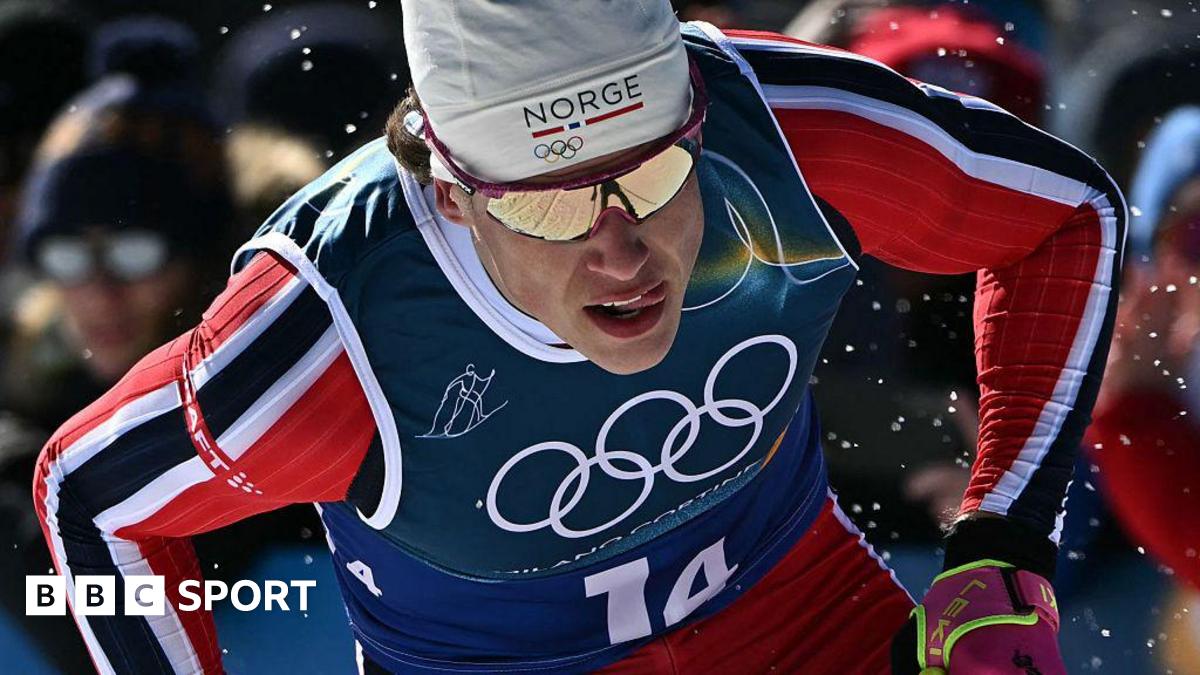
Johannes Hoesflot Klaebo, Norway’s king of cross-country skiing, became the Winter Olympics’ outright most successful athlete with a record ninth gold medal.

Klaebo led his nation to the top of the podium in the men’s 4×7.5km relay – alongside team-mates Emil Iversen, Martin Loewstroem Nyenget and Einar Hedegart – for his fourth title of the Milan-Cortina Games.

At 29 years old, it adds to the three golds he won in Pyeongchang in 2018 and two in Beijing four years later, while he is also a 15-time world champion.

His medal haul could yet grow further, with two further opportunities for gold in the men’s team sprint on Wednesday and 50km classic race on Saturday.

In Sunday’s relay, the Norwegian quartet won by a 22.2 second margin, with France and hosts Italy winning silver and bronze respectively.

Source link

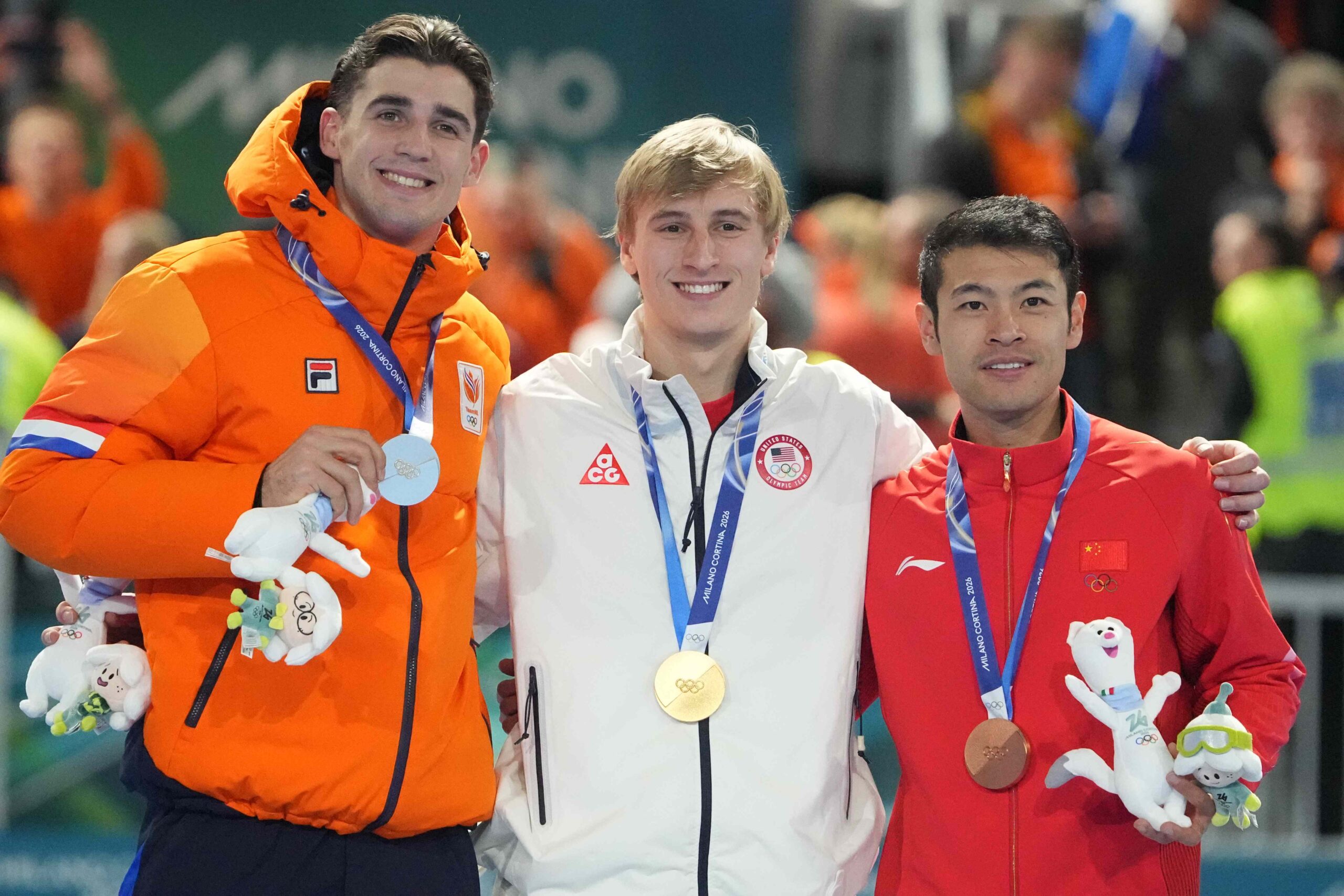
What Is an Olympic Gold Medal Really Worth? What About Silver and Bronze?

Key Takeaways

  • Olympic gold medals aren’t solid gold, but they’re still worth thousands based on metal content alone.
  • Most U.S. Olympians no longer owe federal taxes on medal-related prize money, easing a long-standing financial burden.
  • The real value of a medal often comes after the podium, through exposure, endorsements, and career opportunities.

With the Winter Olympic Games Milano Cortina 2026 in full swing, attention extends beyond the competition itself to a practical question: what is an Olympic medal actually worth?

The answer depends on how you define “worth.” There’s the literal value of the metal, the tax implications that could follow, and then the much bigger value that comes from status, visibility, and opportunity.

Are Olympic Gold Medals Actually Solid Gold?

Despite the name, Olympic gold medals are not solid gold. Even though the tradition of a solid gold medal was established in 1904, forging the medals 100% out of gold didn’t last long, as it became too costly after World War I. As a result, the top medal hasn’t been made of solid gold since the 1912 Olympic games.

Today, gold medals are primarily made of silver, with a relatively thin coating of pure gold on the surface. The exact specifications vary slightly, but the general formula has remained consistent. A modern Olympic gold medal typically contains 523 grams of sterling silver, with approximately six grams of gold plated on top. This allows it to look like gold and feel substantial, while also carrying enormous symbolic weight.

Silver medals are indeed solid, made of 525 grams of sterling silver. Bronze medals meanwhile contain no precious metals at all, typically containing 90 percent copper and other alloys, such as tin and zinc.

As a result, the true value of each medal comes more from the prestige of being a medalist and the opportunities it may offer than from the raw materials that comprise each medal.

What Gold, Silver, and Bronze Medals Are Worth at Today’s Metal Prices

Metal prices fluctuate constantly, so any estimate is a snapshot in time. Using current pricing, gold is trading around $5,000 per troy ounce, and silver around $80 per troy ounce. Six grams of gold works out to be worth about $965 at current prices, while the silver portion of a gold medal, about 523 grams, is worth about $1,345. Added together, the raw metal value of a gold medal currently lands around $2,310.

Silver medals, made of 525 grams of sterling silver, would be worth around $1,350, while bronze medals are worth far less from a materials standpoint. With copper currently priced at about $0.37 per ounce and a bronze medal comprising 495 grams of copper, the third-place medal would be worth less than $7 at today’s prices.

Do Olympic Athletes Have To Pay Taxes on Their Medals?

Fortunately for U.S. athletes, the tax picture has changed over time. In the past, medals and associated prize money were treated as taxable income, meaning athletes could owe federal taxes on both the cash bonuses and the fair market value of the medal itself.

That shifted in 2016, when Congress passed the United States Appreciation for Olympians and Paralympians Act of 2016. The legislation allows most U.S. Olympic and Paralympic athletes to exclude medal-related prize money from federal income taxes if their overall income falls below a certain threshold. The intent was to prevent athletes, many of whom train for years with limited financial support, from being hit with tax bills simply for winning.

Important

The exemption applies only to certain medal-related income and doesn’t extend to endorsement deals, appearance fees, or other earnings that often follow Olympic success.

Why Medals Are Worth Far More Than the Raw Materials

If medals were only worth their metal content, they’d be impressive keepsakes, but not life-changing ones. The real value comes from what the medal represents and what it unlocks.

An Olympic medal can raise an athlete’s profile overnight, leading to endorsements, sponsorships, and paid appearances that weren’t on the table before. The impact often lasts well beyond competition, opening doors to coaching, leadership roles, and media opportunities long after the Games are over.

Those opportunities don’t look the same for every medalist—or arrive all at once. For some athletes, especially gold medalists, the exposure of winning on the sport’s biggest stage can translate quickly into major endorsement deals. For others, the payoff is more gradual, showing up as smaller sponsorships, speaking fees, or a clearer path into post-competition careers built on recognition and trust.

Winning multiple medals can also amplify the effect, creating a sustained spotlight that brands and audiences tend to value more than a single podium finish.

While the metal in an Olympic medal may only be worth a modest sum, the visibility it brings can reshape an athlete’s earning potential in ways that far outlast the Games themselves—making its true value less about what it’s made of, and more about what it makes possible.

Good News for Olympians Starting in 2026

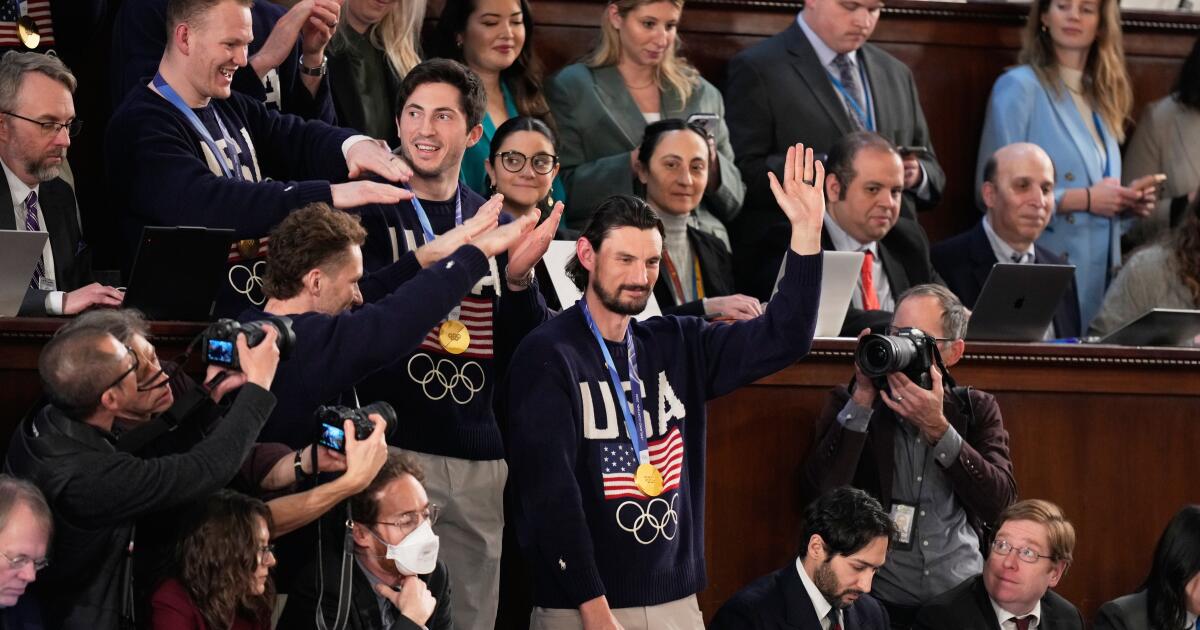
For the first time in history, every U.S. Olympic athlete is getting something they’ve never had before: guaranteed financial support just for making a team. Thanks to a $100 million gift from financier Ross Stevens, every U.S. Olympian and Paralympian competing in the Milan-Cortina Games will be eligible for $200,000 in future benefits, whether they medal or not, providing a long-term boost for careers that often pay little during competition.

Source link

Brazil wins first gold medal for South America at Winter Olympics | Winter Olympics

NewsFeed

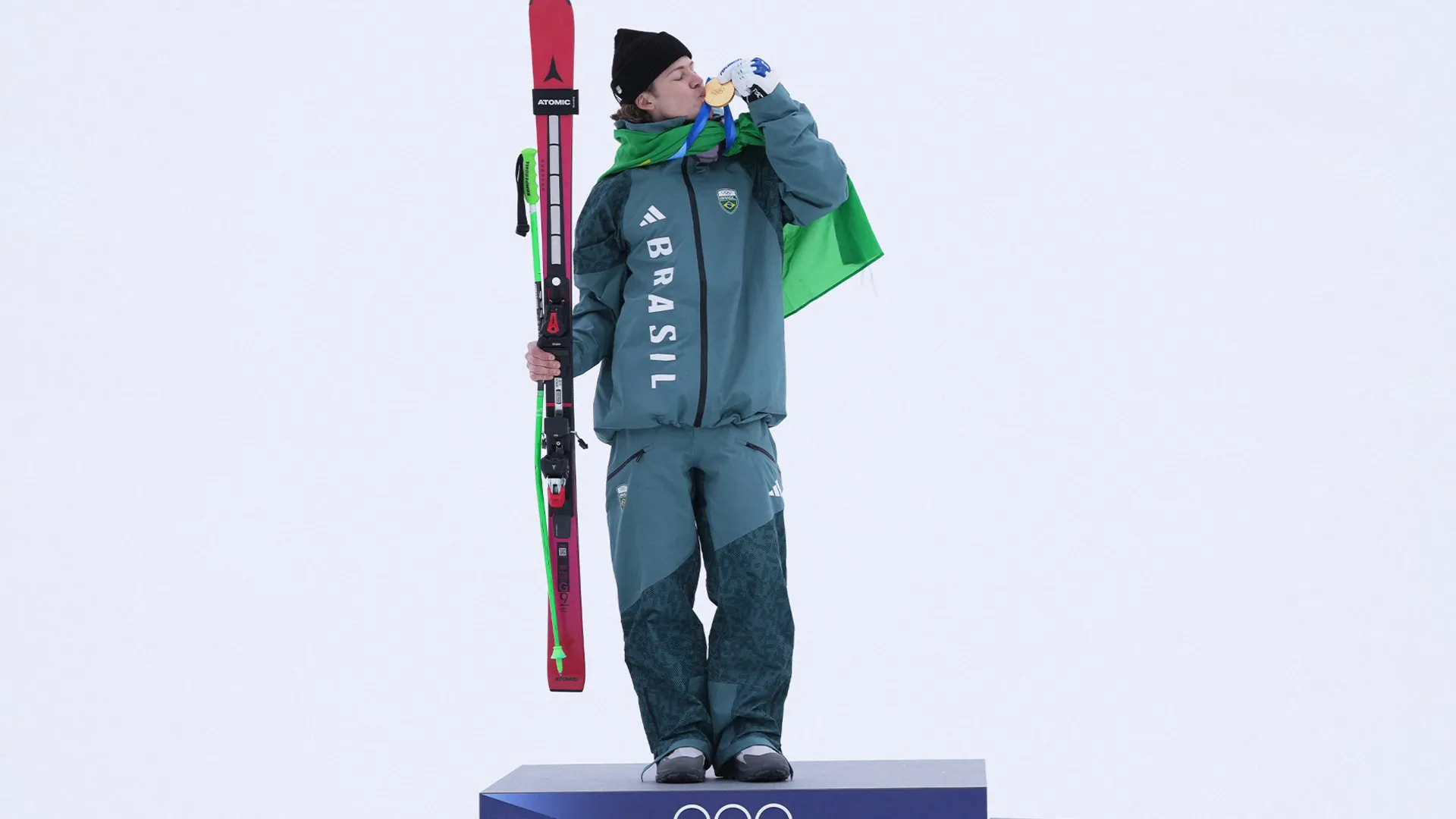
Brazil became the first South American country to win gold at the Winter Olympics with Lucas Pinheiro Braathen securing victory in the giant slalom event in Italy. At the press conference afterwards, Braathen said hearing Brazil’s national anthem was a proud moment after growing up watching its football team triumph.

Source link

Ilia Malinin talks crippling anxiety that cost him an Olympic medal

He popped the quad axel. He stumbled across the ice. He tried to hide the pained expression.

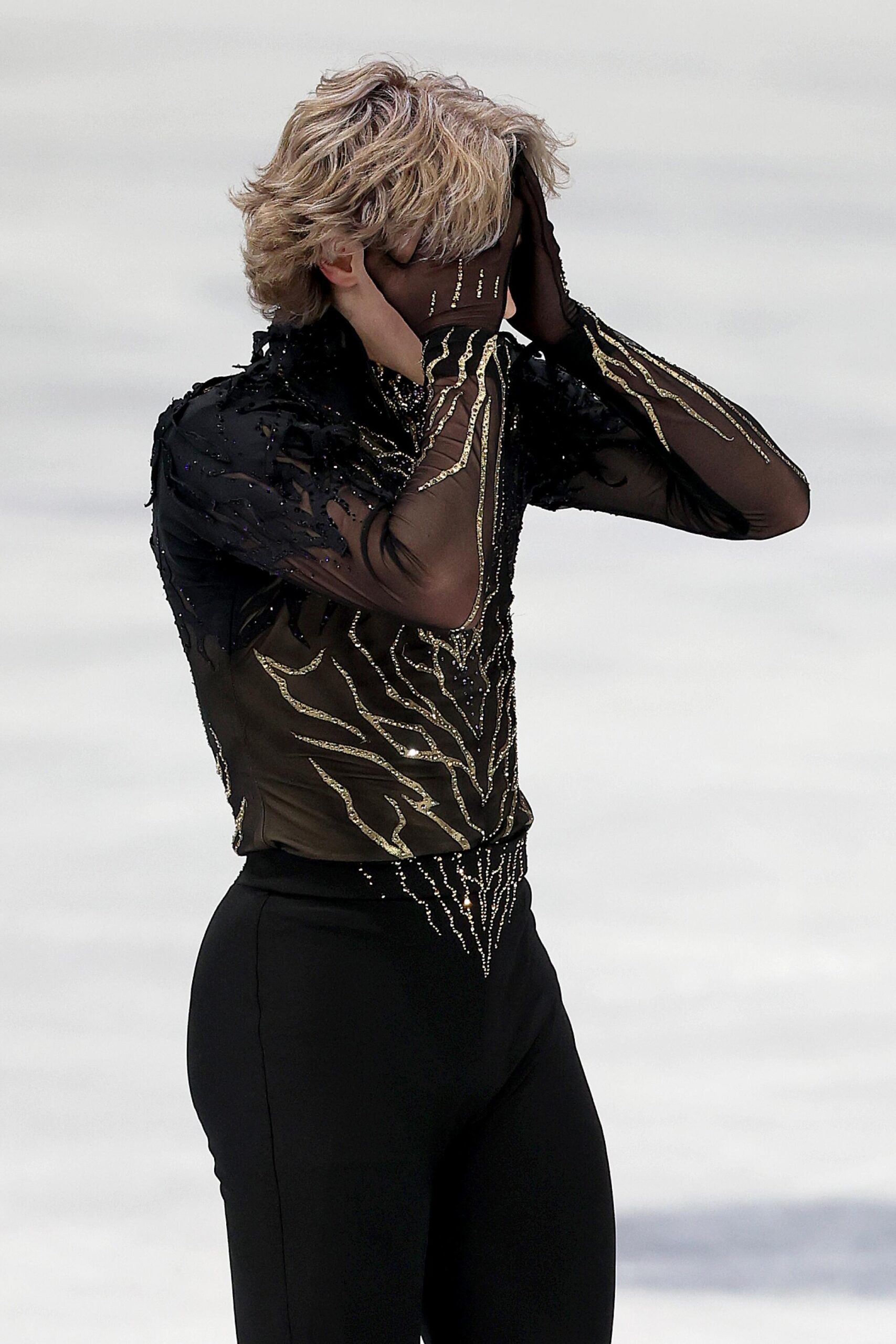
Ilia Malinin fell apart in the men’s free skate, tumbling from near lock to win the gold medal to eighth place after a disastrous performance Friday. After his music ended, Malinin covered his anguished face. He put his hands on his knees, shook his head in disbelief and scrunched his face, hoping to hold back the tears.

It was the first time since November 2023 that he hadn’t won a competition.

“I just thought that all I needed to do was go out there and trust the process that I’ve always been doing with every competition,” Malinin said with tear-stained cheeks. “But, of course, it’s not like any other competition. It’s the Olympics.”

American Ilia Malinin reacts after stumbling through the men's singles free skate at the Winter Olympics on Friday.

American Ilia Malinin reacts after stumbling through the men’s singles free skate at the Winter Olympics on Friday in Milan.

(Robert Gauthier/Los Angeles Times)

Malinin skated four times at the Milan-Cortina Games, helping the United States to a team gold medal with a clutch free skate that clinched the one-point win. But the 21-year-old had just one clean skate in his first Games experience. He explained his slow start during the team event as “Olympic nerves.”

There was no explaining away Friday’s flop.

“I think people only realize the pressure and the nerves that actually happen from the inside,” said Malinin, whose technical advantage was supposed to be insurmountable for his opponents. “It was really just something that overwhelmed me. I just felt like I had no control.”

After Malinin’s score was announced, Kazakhstan’s Mikhail Shaidorov covered his mouth in shock. He was the new Olympic champion. Shaidorov claimed his country’s first Olympic gold in figure skating. His coach held his arm up like a boxing champion as a legion of Kazakh fans seated in the corner above the kiss-and-cry booth where skaters wait for their score waved their country’s teal and yellow flags. Malinin hugged him. He pointed to Shaidorov’s chest.

“You deserve it,” Malinin said.

Japan’s Yuma Kagiyama shook off several falls in his program to fight for his second consecutive Olympic silver. His countryman Shun Sato was in tears after learning he took the bronze.

Ilia Malinin's father, Roman Skorniakov, holds his head in his hands during his son's stumbles at the Olympics

Ilia Malinin’s father, Roman Skorniakov, reacts during his son’s performance at the men’s singles free skate at the Winter Olympics on Friday in Milan.

(Robert Gauthier/Los Angeles Times)

The United States’ Andrew Torgashev finished 12th with his season’s best 259.06-point total. Maxim Naumov stumbled through several jumps in his free skate to finish 20th overall with a 223.36 point total. The 24-year-old who lost both parents in a plane crash last year earned a standing ovation from actor Jeff Goldblum, who was in the stands behind the judges.

As the groups progressed toward the medal contenders, the crowd filled Milano Ice Skating Arena to the brim. Fans in suites in the rafters leaned over glass panes to get a better look. Volunteers and arena workers stood at the top of the concourse with no open seats left to claim.

While rising to the top of the sport with his stunning jumps and crowd-pleasing backflip, Malinin said his mission was to boost the popularity of figure skating to get this kind of attention outside of just the Olympic stage.

But standing at the center of the ice as fans waved U.S. flags from every corner, Malinin, the “Quad God” who looked invincible just three months ago when he became the first person to land seven quadruple jumps in one program, felt scared.

“Especially going into that starting pose, I just felt like all the just traumatic moments of my life really just started flooding my head,” Malinin said. “It was just like so many negative thoughts that just flooded into there, and I just did not handle it.”

He started off the program with a strong quad flip. Then he bailed mid-air on his signature quad axel that he had yet to attempt in the Olympics. The crowd gasped. Panic started when Malinin downgraded a planned quadruple loop to a double two jumps later.

American Ilia Malinin falls while competing in the men's singles free skate at the Winter Olympics in Milan on Friday.

American Ilia Malinin falls while competing in the men’s singles free skate at the Winter Olympics in Milan on Friday.

(Robert Gauthier/Los Angeles Times)

Behind the boards, his father and coach, Roman Skorniakov covered his face. Coach Rafael Arutyunyan, who has worked with Malinin part-time since 2021, paced back and forth. He hit the padded boards for encouragement before Malinin lined up for a three-jump combination.

Malinin fell again.

The program couldn’t end soon enough just to allow the 21-year-old a chance to hide after years of being in the spotlight as the presumed next Olympic champion.

“Being the Olympic gold hopeful is really just a lot to deal with,” Malinin said, “especially for my age.”

Malinin’s free skate music includes self-narrated voiceovers telling the story of his personal journey growing in the sport. As it begins, he uncovers his face. His words echo over the speakers.“The only true wisdom,” Malinin says in the program, “is in knowing you know nothing.”

After this result, that couldn’t be more true.

Source link

Winter Olympics: U.S. takes silver in mixed doubles curling

Korey Dropkin and Cory Thiesse became the first U.S. curlers to medal in Olympic mixed doubles competition Tuesday, but the medal wasn’t the one they were trying to achieve.

The American pair lost in a dramatic final, 6-5, to the Swedish brother-sister combo of Isabella and Rasmus Wrana at the Cortina Curling Olympic Stadium in Cortina d’Ampezzo, Italy.

Dropkin and Thiesse led going into the final throw of the match.

A team skipped by John Shuster won gold in 2018, the last time the U.S. reached the medal podium in the sport. Shuster was also part of the only other U.S. medal-winning team, in 2006. That team was skipped by Peter Fenson.

Dropkin and Thiesse are the first Americans to win a medal in mixed doubles, which joined the Olympic calendar in 2018, while Thiesse is the first American woman to win a curling medal.

The U.S. reached the final when an incredible shot by Thiesse on the final delivery of Monday’s semifinal scored two points, turning a deficit into a 9-8 upset of Italy, a team that had beat the Americans in round-robin play. Sweden routed Britain 9-3 in its semifinal. Italy defeated Britain 5-3 for the bronze medal.

Source link

Winter Olympics 2026: Bruce Mouat & Jen Dodds denied curling bronze as GB medal wait continues

In a game of fine margins, Mouat and Dodds were repeatedly an inch or two away from where they needed to be.

They started with the hammer – theoretically advantageous in allowing a team to control a match – and had a shot in the first end to take three points.

However, Dodds’ effort was fractionally out and the Italians stole one. It would be a recurring theme as Constantini and Amos Mosaner dictated the contest.

The British pair levelled, before the hosts edged back ahead in a cagey third end and pinched another in the third. Again, it was a near-miss from Dodds.

That had Italy 3-1 ahead at the interval and GB chasing.

One in the fifth was less than they wanted but a big mistake by Mosaner in the sixth opened the door. Was this going to be the moment the momentum shifted?

It wasn’t. Constantini – a picture of tranquility throughout – played a perfect shot to ensure the Italians edged two clear again with two to play.

GB needed a big score, and deployed their powerplay, but again could only take one and were left needing a steal to even force an extra end.

They couldn’t. And they were left to face the nightmare scenario of another Games in which they have finished in fourth place and without a mixed doubles medal.

“We spoke last night about how lucky we are to be playing at the Olympics as best mates,” Mouat added. “We are two people that grew up together and never really knew where we could go with curling. It has been pretty special with Jen.

“I’m obviously pretty gutted but I’m so proud of us for sticking at it.”

In Beijing, they responded the right way, with women’s gold and men’s silver. What will they do this time?

Source link

Brittany Bowe falls short of medal in strongest speedskating race

Brittany Bowe will bow out of the Olympics without a medal in her best event.

A four-time Olympian who said the Milan-Cortina Games will be her last, Bowe was edged off the podium in the final pair of the speed skating 1,000-meter race Monday, finishing fourth with a time of one minute and 14.55 seconds. Japan’s Miho Takagi bumped the 37-year-old American out of third place with a time of one minute, 13.59 seconds.

The Netherlands’ Jutta Leerdam set an Olympic record to win gold, clocking in at one minute, 12.31 seconds. She bested her own teammates’ Olympic record set minutes before to push Femke Kok down to silver.

Kok clapped with a resigned look on her face after Leerdam’s time flashed on the screen. Black mascara stained Leerdam’s cheeks as she skated around the arena, saluting the legion of Dutch fans that filled the stands at Milano Speed Skating Stadium. Her fiance, YouTuber-turned-boxer Jake Paul, was in the stands and moved to tears.

Jutta Leerdam of the Netherlands celebrates winning the gold medal.

Jutta Leerdam of the Netherlands celebrates winning the gold medal in the women’s 1,000-meter speedskating race at the Winter Olympics in Milan on Monday.

(Luca Bruno / Associated Press)

Erin Jackson, the 2022 Olympic gold medalist in the 500 meters who was skating through three herniated discs in her lower back, finished sixth. Racing in the 1,000 meters for the first time in her Olympic career, she clapped cordially at the end of the race. Bowe, who set the world record in the 1,000 meters in 2019, hugged her coaches before disappearing off the ice.

Already longtime friends, the Americans became inextricably linked in 2022. Bowe gave up her qualifying spot in the 500 meters for the Beijing Olympics after Jackson slipped during the U.S. Olympic trials. Bowe had already qualified in other disciplines. She knew Jackson had potential to win a medal. The decision to relinquish her spot was easy, she said at the time.

Jackson made the sacrifice worth it, becoming the first Black woman to win an individual gold medal in the Winter Olympics. Bowe, who still raced in the 500 meters after an additional spot became free, finished 16th.

Bowe instead relied on her top event, the 1,000 meters, for her chance at the podium. The world record holder in the event — which she set in 2019 — won bronze in Beijing for her first individual Olympic medal.

American Erin Jackson competes in the women's 1,000-meter speedskating race at the Winter Olympics.

American Erin Jackson competes in the women’s 1,000-meter speedskating race at the Winter Olympics in Milan on Monday.

(Luca Bruno / Associated Press)

But the experience felt “empty,” Bowe said in retrospect. With empty stands during the pandemic-affected Games, Bowe missed the energy of the crowd and especially her family and friends.

Bowe wasn’t lacking for crowd noise Monday. The oval was encircled by a ring of orange. Dutch fans roared every time one of their competitors zoomed by. Even when Kok and Leerdam were warming up, gliding by at a snail’s pace compared to skaters during their race, the crowd cheered. They waved in acknowledgment.

When Kok crossed the finish line, she raised both fists triumphantly. Her time of one minute, 12.59 seconds was good enough for the Olympic record, but Leerdam blazed past her only two pairs later.

Bowe and Jackson will still race in Jackson’s specialty of the 500 meters, while Bowe will finish her Olympic career in the 1,500 meters.

Source link

Americans poised to win their first Winter Olympics medal

Welcome to your daily review and preview of this year’s Milan-Cortina Olympics. My name is John Cherwa and I’m your tour director for the Games wondering when the United States will get off the schneid and win a medal. Educated guess alert: How about today? Can you say team figure skating?

Saturday was the first day that medals were awarded at the Milan-Cortina Games and not unexpectedly, the host country is doing the best, sweeping all three medal types with a gold in the women’s 3,000 speed skating (Francesca Lollobrigida—before you ask, yes, a grand-niece to Gina) and silver and bronze in the men’s downhill (Giovanni Franzoni and Dominik Paris).

The U.S. squeezed out a 21st in speed skating with Annika Belshaw and 10th in the downhill courtesy of Kyle Negomir.

There is no doubt there is a home country advantage for a variety of reasons: familiarity with the competition venues, easier qualification (the home country gets in every event) and enthusiastic crowds urging them on.

Let’s look. 2022 Beijing, China had 15 medals, only nine in South Korea; 2018 PyeongChang, 17 in 2018, eight in Sochi; 2014 Sochi, Russia had 29 that year to 13 four years earlier; 2010 Vancouver, closer with a 26-24 edge for Canada; 2006 Turin, no edge as Italy had 11 compared to 13 in Salt Lake City; 2002 Salt Lake City, the U.S. had 34 medals in Utah and only 13 in 1998 in Nagano.

Italy had 17 medals in Beijing, meaning it has only 15 more medals to top 2022.

Elsewhere on Saturday:

— The U.S. women’s hockey team beat Finland, 5-0, to go 2-0 in pool play.

— The U.S. mixed curling team, after starting 2-0, lost both matches on Saturday to Britain (6-4) and South Korea (6-5).

— Sweden went 1-2 in the women’s 10K skiathlon as Jessie Diggins topped the U.S. team finishing eighth after a crash on the first lap. The U.S. has never won a medal in cross-country skiing and Diggins was a pre-race medal contender.

— Norway won the women’s normal hill ski jumping competition, with Annika Belshaw being the tops at 21st for the U.S.

— Japan won gold and silver in the men’s snowboard Big Air competition. Ollie Martin of the U.S. was bounced off the stand by the last competitor and finished fourth.

— Despite a mediocre second-place performance by the “Quad God” Ilia Malinin, the U.S. holds the lead with one day to go in the team figure skating. Madison Chalk and Evan Bates of the U.S. won Saturday’s ice dance competition.

NBC GoldZone gets demoted

We have taken the unusual step to demote NBC’s GoldZone (on Peacock) to the SilverZone after a dreadful gaffe on Saturday. In the U.S.-South Korea mixed team curling match, the U.S. rallied with three points in the final frame to tie South Korea sending it to an extra frame. It was down to the last stone to be sent by South Korea with the match on the line. GoldZone, at this moment, cuts to commercial seconds before the final throw. When it came back from the break it went to a canned package on Malinin before picking up figure skating coverage. South Korea won on the last stone and the U.S. and NBC (now) SilverZone lost. Another big gaffe and they could drop to the BronzeZone. Presumably, NBC won’t repeat and pull a Heidi (from 1968) during today’s Super Bowl game.

In case you were wondering

During the Games, we’ll try and answer some questions you might have but didn’t know who to ask. Now you have a spot. We’ll generate a lot of the questions but if you have one, please send to my boss, newsletter editor Houston Mitchell at his email. He prefers to be called Mr. Mitchell as he’s really tired of people saying “Houston, we have a problem.”

In honor of today’s big events:

Why do they indicate winners when only about a fourth of the downhill field has gone down the course? Unlike sports in which the best people start last (like golf, figure skating etc.) the best skiers go first . So, if you are seeded higher than 15th, your chances of winning are small and highly unusual. The seeding is decided by FIS points and a random bib draw of the top 15 skiers. There are two reasons, the course gets choppier every time a skier goes down the hill so the earlier you run the better chance of fresh and fair snow you have. And, the later in the day it is, the less firm the snow is because of the sun.

— What’s the difference between ice dancing and pairs in figure skating? In short, pairs is way more athletic. In ice dance there are generally no jumps or throws as there are in other disciplines. Skaters also have to stay within two lengths of each other, unlike pairs. Ice dancing is also the most scandal plagued discipline because of the subjectivity of scoring since there are few jumps, throws or lifts. There have also been rumors of deals made between countries. There have been fixing scandals in 1998, 2002 and 2014.

Best Thing to Watch on TV today

It’s going to sound a lot like Saturday, but the big story today is the likely first medal for the United States in the team competition in figure skating. It starts with the pairs at 10:30 a.m. PST and ends with the men’s singles, starring Ilia Malinin , at 2:55 p.m. Anything short of a gold will be a disappointment. If you are up early enough, the other big event is the women’s downhill with the return of Lindsey Vonn, who tore her ACL last week. It starts at 2:30 a.m. PST with Vonn being the 13th woman down the hill. If you want to just hang all day, there are four medal events today in snowboard, starting around 4 a.m. PST and going until about 6 a.m. PST.

Sunday’s full Olympic TV and streaming schedule

Sunday’s live TV and streaming broadcasts for the Milan-Cortina Winter Olympics unless noted (subject to change). All events stream live on Peacock or NBCOlympics.com with a streaming or cable login. All times Pacific. 🏅 — medal event for live broadcasts.

MULTIPLE SPORTS
7:45 p.m. — “Primetime in Milan” (delay; after Super Bowl): Figure skating, skiing, luge, curling, cross-country skiing and more. | NBC

ALPINE SKIING
2:30 a.m. — 🏅Women’s downhill | USA
6:20 a.m. — Women’s downhill (re-air) | NBC

BIATHLON
5:05 a.m. — 🏅Mixed 4X6-kilometer relay | Peacock
5:45 a.m. — Mixed 4X6-kilometer relay (delay) | NBC

CROSS-COUNTRY SKIING
3:30 a.m. — 🏅Men’s skiathlon | USA
8:50 a.m. — Men’s skiathlon (re-air) | USA

CURLING
Mixed doubles (round robin)
1 a.m. — Norway vs. Czechia | Peacock
1 a.m. — South Korea vs. Estonia | Peacock
1:55 a.m. — Mixed doubles highlights | USA
5:30 a.m. — U.S. vs. Estonia | USA
5:35 a.m. — Canada vs. Sweden | Peacock
5:35 a.m. — Britain vs. Switzerland | Peacock
5:30 a.m. — Italy vs. Czechia | Peacock
10 a.m. — U.S. vs. Sweden | Peacock
10 a.m. — Canada vs. South Korea | Peacock
10 a.m. — Italy vs. Britain | Peacock
10 a.m. — Switzerland vs. Norway | Peacock
2 p.m. — U.S. vs. Estonia (re-air) | CNBC
4 p.m. — U.S. vs. Sweden (delay) | CNBC
6 p.m. — Italy vs. Britain (delay) | CNBC

FIGURE SKATING
🏅Team competition
10:30 a.m. — Pairs, free skate | USA
11:45 a.m. — Women’s free skate | USA
12:55 p.m. — Men’s free skate | USA
10:30 p.m. — Team competition, final day (re-air) | USA

HOCKEY
7:40 a.m. — France vs. Sweden | Peacock
12:10 a.m. — Czechia vs. Finland | Peacock
2 p.m. — Czechia vs. Finland (delay) | USA
5:30 p.m. — France vs. Sweden (delay) | USA

LUGE
4:30 a.m. — Men’s doubles, training | Peacock
8 a.m. — Men’s singles, Run 3 | USA
9:45 a.m. — 🏅Men’s singles, final run | USA
7:30 p.m. — Men’s singles, runs 3-4 (re-air) | USA

SKI JUMPING
10 a.m. — Men’s normal hill, training | Peacock

SNOWBOARDING
Midnight — Men’s and women’s parallel giant slalom, qualifying | USA
4 a.m. — 🏅Men’s and women’s parallel giant slalom, finals | Peacock
4:30 a.m. — 🏅Men’s and women’s parallel giant slalom, finals (in progress) | NBC
4:30 a.m. — Men’s big air, final (re-air) | USA
7:30 a.m. — Men’s and women’s parallel giant slalom, finals (re-air) | USA
10:30 a.m. — Women’s big air, qualifying | Peacock
3:30 p.m. — Women’s big air, qualifying (delay) | USA

SPEEDSKATING
7 a.m. — 🏅Men’s 5,000 meters | NBC

In case you missed it …

Check out the following Milan-Cortina Olympics dispatches from from the L.A. Times team on the ground Italy:

Doctors explain how Lindsey Vonn can ski at Olympics with a ruptured ACL

‘Quad God’ Ilia Malinin conserves energy in Olympic debut; U.S. still leads team skate

Hilary Knight and U.S. women’s hockey routs Finland, works to avoid norovirus

Italian police fire tear gas in clash with anti-ICE protesters near Olympics venue

Meet the ‘Quad God.’ Why Olympic star Ilia Malinin might revolutionize figure skating

NBC juggles emotions of Savannah Guthrie’s family tragedy, celebrating the Winter Olympics

Italians embrace unity — except with JD Vance — during Olympics opening ceremony

Review: Winter Olympics opening ceremony was a sleek Italian spectacle, as only they could deliver

Photos from the sweeping 2026 Milan-Cortina Olympics opening ceremony

NBC’s Mike Tirico ready to pull off an Olympic-sized feat at Super Bowl

Inside the Milan Olympic village: real beds, free tech and other athlete perks

From cathedrals to Dolomites: Milan-Cortina Olympics pose a massive logistical test

How climate change is threatening the future of the Winter Olympics

Alysa Liu 2.0: How retirement, perspective helped the U.S. star reach new heights

The power of teamwork: Inside U.S. figure skating’s new Olympic golden age

Hilary Knight’s hockey achievements go beyond gold medals and championships

Everything you need to know about ski mountaineering, the newest Olympic sport

Ten U.S. athletes to watch at the Milan-Cortina Winter Olympics

Until next time…

That concludes today’s Sports Report Olympic Edition newsletter. If you have any feedback, ideas for improvement or things you’d like to see, email newsletter editor Houston Mitchell at houston.mitchell@latimes.com. To get this newsletter in your inbox, click here and select The Sports Report.

Source link

What Is an Olympic Gold Medal Worth? What About Silver and Bronze?

Key Takeaways

  • Olympic gold medals aren’t solid gold, but they’re still worth thousands based on metal content alone.
  • Most U.S. Olympians no longer owe federal taxes on medal-related prize money, easing a long-standing financial burden.
  • The real value of a medal often comes after the podium, through exposure, endorsements, and career opportunities.

As the upcoming Winter Olympic Games Milano Cortina 2026 approaches, attention naturally shifts to records, rivalries, and the prestige of making it to the podium. But after the celebrations end, a practical question always resurfaces: What are those medals actually worth?

The answer depends on how you define “worth.” There’s the literal value of the metal, the tax implications that follow, and then the much bigger value that comes from status, visibility, and opportunity.

Are Olympic Gold Medals Actually Solid Gold?

Despite the name, Olympic gold medals are not solid gold. Even though the tradition of a solid gold medal was established in 1904, forging the medals 100% out of gold didn’t last long, as it became too costly after World War I. As a result, the top medal hasn’t been made of solid gold since the 1912 Olympic games.

Today, gold medals are primarily made of silver, with a relatively thin coating of pure gold on the surface. The exact specifications vary slightly, but the general formula has remained consistent. A modern Olympic gold medal typically contains 523 grams of sterling silver, with approximately six grams of gold plated on top. This allows it to look like gold and feel substantial, while also carrying enormous symbolic weight.

Silver medals are indeed solid, made of 525 grams of sterling silver. Bronze medals meanwhile contain no precious metals at all, typically containing 90 percent copper and other alloys, such as tin and zinc.

As a result, the true value of each medal comes more from the prestige of being a medalist and the opportunities it may offer than from the raw materials that comprise each medal.

What Gold, Silver, and Bronze Medals Are Worth at Today’s Metal Prices

Metal prices fluctuate constantly, so any estimate is a snapshot in time. Using current pricing, gold is trading around $4,900 per troy ounce, and silver around $85 per troy ounce. Six grams of gold works out to be worth about $945 at current prices, while the silver portion of a gold medal, about 523 grams, is worth about $1,430. Added together, the raw metal value of a gold medal currently lands around $2,375.

Silver medals, made of 525 grams of sterling silver, would be worth around $1,435, while bronze medals are worth far less from a materials standpoint. With copper currently priced at about $0.38 per ounce and a bronze medal comprising 495 grams of copper, the third-place medal would be worth less than $7 at today’s prices.

Do Olympic Athletes Have To Pay Taxes on Their Medals?

Fortunately for U.S. athletes, the tax picture has changed over time. In the past, medals and associated prize money were treated as taxable income, meaning athletes could owe federal taxes on both the cash bonuses and the fair market value of the medal itself.

That shifted in 2016, when Congress passed the United States Appreciation for Olympians and Paralympians Act of 2016. The legislation allows most U.S. Olympic and Paralympic athletes to exclude medal-related prize money from federal income taxes if their overall income falls below a certain threshold. The intent was to prevent athletes, many of whom train for years with limited financial support, from being hit with tax bills simply for winning.

Important

The exemption applies only to certain medal-related income and doesn’t extend to endorsement deals, appearance fees, or other earnings that often follow Olympic success.

Why Medals Are Worth Far More Than the Metal

If medals were only worth their metal content, they’d be impressive keepsakes, but not life-changing ones. The real value comes from what the medal represents and what it unlocks.

An Olympic medal can raise an athlete’s profile overnight, leading to endorsements, sponsorships, and paid appearances that weren’t on the table before. The impact often lasts well beyond competition, opening doors to coaching, leadership roles, and media opportunities long after the Games are over.

Those opportunities don’t look the same for every medalist—or arrive all at once. For some athletes, especially gold medalists, the exposure of winning on the sport’s biggest stage can translate quickly into major endorsement deals. For others, the payoff is more gradual, showing up as smaller sponsorships, speaking fees, or a clearer path into post-competition careers built on recognition and trust.

Winning multiple medals can also amplify the effect, creating a sustained spotlight that brands and audiences tend to value more than a single podium finish.

While the metal in an Olympic medal may only be worth a modest sum, the visibility it brings can reshape an athlete’s earning potential in ways that far outlast the Games themselves—making its true value less about what it’s made of, and more about what it makes possible.

Good News for Olympians Starting in 2026

For the first time in history, every U.S. Olympic athlete is getting something they’ve never had before: guaranteed financial support just for making a team. Thanks to a $100 million gift from financier Ross Stevens, every U.S. Olympian and Paralympian competing in the Milan-Cortina Games will be eligible for $200,000 in future benefits, whether they medal or not, providing a long-term boost for careers that often pay little during competition.

Source link

‘New evidence’ sends Jordan Chiles bronze medal case sent back to CAS

Jordan Chiles might be able to keep the bronze medal she won, then was stripped of, at the 2024 Paris Olympics after all.

On Jan. 23, Swiss Federal Supreme Court sent the U.S. gymnast’s case back to the Court of Arbitration for Sport to re-examine the matter “on the basis of an audio-visual recording” that could provide evidence in Chiles’ favor, the court said Thursday in a news release.

“The Federal Supreme Court acknowledged that this new evidence may justify a modification of the contested award,” Switzerland’s highest court stated. “It referred the case back to the CAS for it to re-examine the situation, taking this new evidence into account.”

Chiles initially was deemed the fifth-place finisher in the women’s floor exercise final on Aug. 5, 2024, but was bumped up to third place after a judging inquiry placed by U.S. coach Cecile Landi gave Chiles an extra tenth of a point.

The decision resulted in a viral moment on the medal stand, as Chiles and U.S. teammate and silver medalist Simone Biles bowed to gold medalist Rebeca Andrade of Brazil.

Days later, however, the CAS ruled that Landi’s inquiry was registered four seconds too late and that Chiles’ original score of 13.666 should be restored. That decision knocked the UCLA star back down to fifth place.

Chiles, with the support of the United States Olympic and Paralympic Committee and USA Gymnastics, filed an appeal of that ruling with Switzerland’s Supreme Court in September 2024. Her appeal maintains that the CAS had refused to allow video evidence she feels would show that Landi’s inquiry was filed within the required time frame.

In its Thursday statement, the Swiss court acknowledged that the video could “lead to a modification of the contested award in favour of the applicants, since the CAS could consider, in the light of this audio-visual sequence, that the verbal inquiry made on behalf of Jordan Chiles had been made before the expiry of the regulatory one-minute time limit.

“The Federal Supreme Court therefore partially overturns the contested award and refers the case back to the CAS for a new ruling, taking into account the probative value of the audio-visual recording in question.”

In a statement emailed to The Times on Thursday, the CAS agreed with the Swiss court’s ruling that “new evidence provided by the athlete after the CAS decision justifies a re-examination of the appeal.”

“During the Olympic Games, CAS renders sporting decisions in a demanding time frame,” the statement read. “CAS cannot reopen a closed procedure without the agreement of all Parties. Following the [Swiss Supreme Court’s] decision, CAS can now ensure a thorough judicial review of the new evidence that has since been made available.”

Maurice M. Suh, one of the attorneys representing Chiles, issued a statement Thursday praising the decision.

“We are delighted that the Swiss Federal Supreme Court has righted a wrong and given Jordan the chance she deserves to reclaim her bronze medal,” Suh said. “… We appreciate that Jordan will receive a full and fair opportunity to defend her bronze medal. She is ready to fight vigorously, and we look forward to helping her achieve that result.”

Source link