measles

Facemasks compulsory at health centres at popular UK Spain tourist hotspot after measles outbreak

‘Young tourist’ tests positive as all people using health centres will have to wear face masks to cut spread

An alert has been issued after a hotspot much loved by UK tourists was hit by an outbreak of measles, with a young tourist testing positive. The Public Health Surveillance Service has detected at least six people affected by a measles outbreak in Mallorca, the Balearic Regional Ministry of Health has reported in a statement.

The patients have been treated at the same hospital, as their cases are linked, although the source of the infection does not originate from the healthcare setting and has therefore been classified as a community outbreak. To try to clamp down on the outbreak all people using health centres will have to wear face masks.

The epidemiological investigation has determined that the first case was that of a young child on holiday who attended the paediatric A&E department at Son Espases University Hospital on July 19. The secondary cases began to show symptoms at the end of July. The Majorca Daily Bulletin has only just reported on the outbreak. No information has yet been released on the nationality of the tourist.

Five of the six people affected by the outbreak have not been vaccinated against measles, whilst there is no record of vaccination for the sixth. The Directorate-General for Public Health, in coordination with IBSalut Balearic health service and in accordance with the protocols of the National Epidemiological Surveillance Network, has activated a monitoring and control plan that includes immediate prevention and protection measures to contain the outbreak.

Public Health service in Majorca said it is carrying out contact tracing and has asked close contacts of those infected to monitor their health closely for 23 days following exposure, particularly those who are unvaccinated.

In addition, it has issued an internal recommendation for the use of FFP2 face masks in all healthcare settings as a priority measure for the prevention, protection and control of the outbreak, as well as mandatory self-monitoring for symptoms and a review of the vaccination status of all staff at health centres and hospitals in Mallorca.

The Foreign Office-backed Travel Health Pro site said: “Measles is a highly infectious viral illness, with potentially serious, life-threatening complications. Travel remains an important risk factor for the international spread of measles.

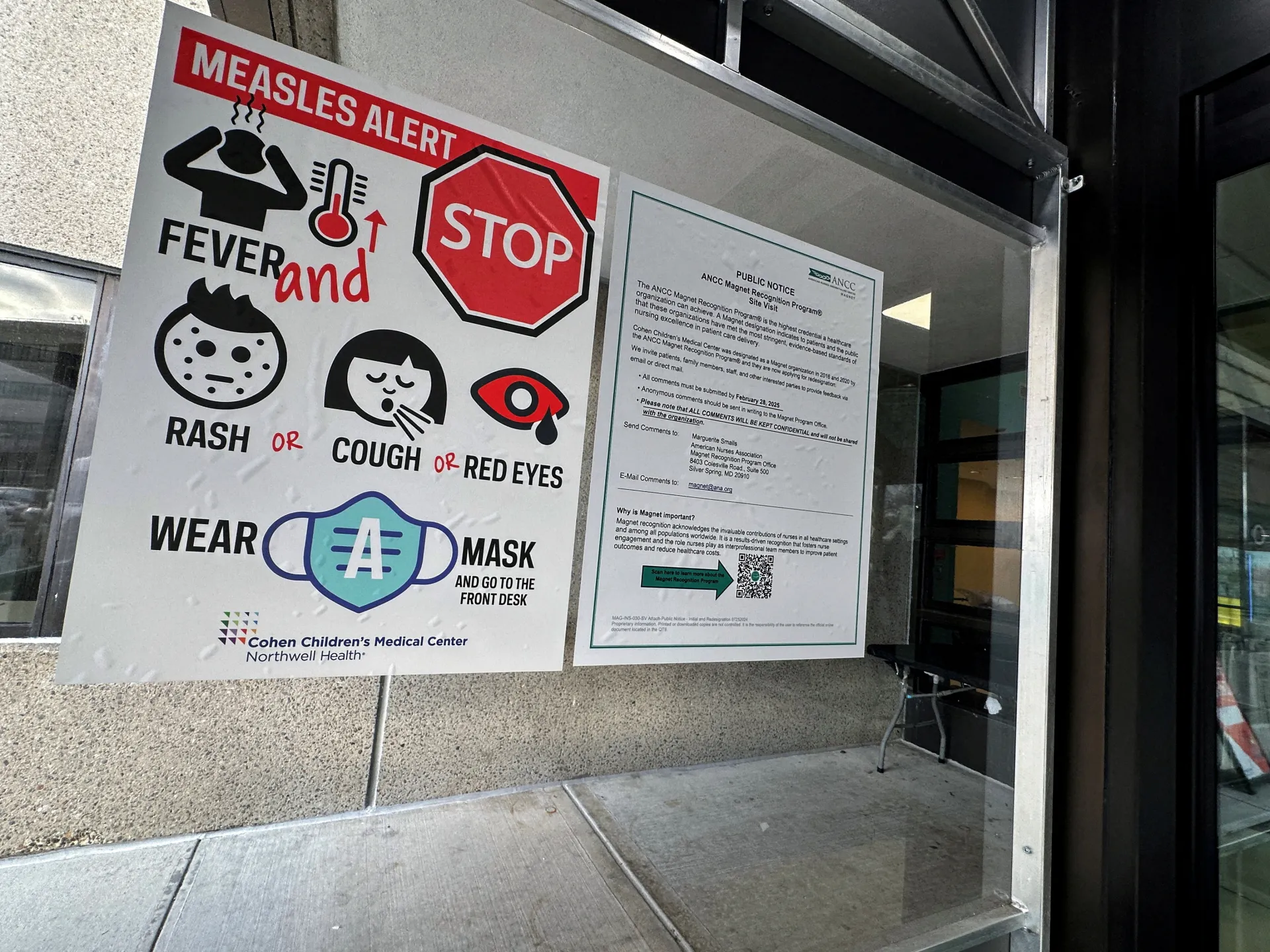
“Measles is spread by airborne or droplet (coughing, sneezing, drops from mouth/nose) transmission. Initial symptoms can include fever, runny nose, red, sore eyes (conjunctivitis) and cough. A rash usually then appears after a few days. This starts on the face/head and then spreads over the body, arms and legs in three to four days. People are infectious from the day symptoms first appear to four days after the rash starts. The incubation period (time from exposure to measles virus to symptoms starting) is about ten days but can be between seven and 18 days.”

Complications of measles infection can include otitis media (ear infections), diarrhoea, pneumonia and convulsions (fits). Rarely, encephalitis (brain inflammation) or sub-acute sclerosing pan-encephalitis (fatal late onset brain inflammation) can occur. Risk of death from measles complications is age-related and is higher for children younger than one year and adults. Measles can be more severe in immunosuppressed individuals and during pregnancy, and increases the risk of miscarriage, stillbirth, or preterm delivery.

It added: “Travellers with no history of measles infection or who are unvaccinated or incompletely vaccinated may be at risk from measles when visiting countries reporting cases, especially if staying with friends or family and mixing with local people.”

All UK travellers should make sure they are up to date with the measles, mumps and rubella (MMR) or measles, mumps, rubella and chickenpox (MMRV) vaccines, according to current UK recommendations.

Source link

CDC: U.S. Measles cases reach 35-year high of 2,318

A nurse administers a measles vaccine to a child at a public health center in Nejapa, El Salvador, in April. The United States just reached a record high of measles cases this year. File Photo by Javier Aparicio/EPA

July 24 (UPI) — Measles cases have hit a record high in the United States since the virus was declared eliminated in 2000, the Centers for Disease Control and Prevention said.

The CDC said there have been 2,318 confirmed cases of measles so far this year, which beats last year’s record-breaking number of 2,289. Last year, two unvaccinated children died of the disease. More measles cases have been reported in the United States in the past two years than in all the years from 2000 through 2024 combined, The New York Times reported.

In November, a panel of experts will meet to decide if the United States has lost its status as a country that has “eliminated” the disease.

“This is just going to keep happening,” Jennifer Nuzzo, director of the Pandemic Center at the Brown University School of Public Health, told The Times. “It’s going to mean living in a perpetual state of vulnerability and risk until we get vaccination levels up.”

Last year, the largest outbreak was in South Carolina, and many of this year’s cases stem from that event. It was declared to have ended in April. Now, there’s an outbreak that started last summer along the Utah-Arizona state line and has spread throughout the Beehive State. More than 100 cases have also been reported in Lancaster County, Pa., this year.

The CDC reported 35 new measles outbreaks this year.

Measles is especially good at finding pockets of people with weak immunity.

“It’s going to find people who aren’t immune,” Dr. David Kimberlin, a pediatric infectious disease expert at the University of Alabama at Birmingham, told The Times. “It’s like a heat-seeking missile.”

Funding cuts to public health are also a concern.

Dr. Farrell Tobolowsky, medical director the San Francisco Department of Public Health’s communicable disease program, said two cases this year meant activating several contract tracing investigators.

“I don’t think our department can currently handle more than one (case) without calling in additional staff,” Tobolowsky said at a briefing hosted by the Big Cities Health Coalition, CNN reported.

“It is something that we’re concerned about all the time and is on our minds all day, every day,” she said. “Not only if there’s another measles case, but if anything else comes that is of high consequence at the same time, it will be difficult to manage two things at once.”

Courtney Spencer, a spokesperson for the Department of Health and Human Services, said the department has mounted an “aggressive outbreak response,” and said it’s given $8.5 million to states to help contain outbreaks.

She added that the department has said, “[The measles, mumps and rubella] vaccination remains the best protection against measles.”

But other professionals blame the federal government for at least part of the spread.

“We have seen virtually no national messaging. We’ve seen no ad campaigns,” Dr. Jonathan Temte, a former chair of the CDC vaccine advisory committee, said of HHS. “I think that really tells us something about their priorities.”

Dr. Andrew Racine, president of the American Academy of Pediatrics, called it a failure: “This essentially is a public health failure, and it’s avoidable.”

Source link

Foreign Office Spain vaccine advice for all UK tourists

Spain is the most popular destination for UK holidaymakers

Anyone planning a trip to Spain should act eight weeks before travelling, according to the latest Foreign Office advice.

The Foreign, Commonwealth and Development Office (FCDO) provides advice for travel to more than 220 countries and territories across the globe, covering everything from entry requirements and safety risks to health precautions and regulations. The FCDO recommends that those heading to Spain check the most up-to-date vaccination advice at least eight weeks before they set off, and find out where to get their vaccines and whether any fees apply.

Holidaymakers are directed to the Spain page on the TravelHealthPro website, which states: “Travellers [to Spain] should be up to date with routine vaccination courses and boosters as recommended in the UK. These vaccinations include for example measles-mumps-rubella (MMR) vaccine and diphtheria-tetanus-polio vaccine.”

It’s worth noting, however, that there are no certificate requirements for entry into Spain. Those visiting Spain are also urged to ensure their tetanus jabs are up-to-date.

TravelHealthPro guidance adds: “Travellers should thoroughly clean all wounds and seek medical attention for injuries such as animal bites/scratches, burns or wounds contaminated with soil.” TravelHealthPro also recommends that all holidaymakers make sure they have sufficient travel insurance.

It adds: “If visiting European Union (EU) countries, carry an European Health Insurance Card (EHIC) or a Global Health Insurance Card (GHIC) as this will allow access to state-provided healthcare in some countries at a reduced cost, or sometimes for free.

“The EHIC or GHIC, however, is not an alternative to travel insurance.”

Source link

Brits abroad issued health warning as illness surges across Europe and beyond

Health experts are urging Brits to ensure they are “up-to-date” with their vaccines

Brits planning a summer getaway have been urged to ensure they are “up-to-date” with their vaccinations. The warning follows an “increase” in measles cases globally, including across parts of Europe and Asia.

Measles is a highly infectious viral infection that triggers cold-like symptoms, red eyes, and a characteristic blotchy rash. In severe instances, it can result in serious complications such as meningitis and seizures, and can be fatal.

In guidance published on the Travel Health Pro website, experts highlighted that the disease has risen in numerous countries. They said: “The summer holidays provide opportunity to explore different countries, head off for a city break, have a beach holiday or take the children to visit friends and family overseas.

“Good preparation and planning ahead helps ensure a safe and enjoyable trip. Travellers should be up to date with routine vaccination courses and boosters as recommended in the UK.

“These vaccinations include, for example measles-mumps-rubella (MMR). Measles is a risk in many countries, and there has been an increase in measles cases and outbreaks reported worldwide, including in parts of Africa, Asia, Europe, and the Americas, including Canada and the United States.” Data from the European Centre for Disease Prevention and Control revealed that a total of 3,607 measles cases were reported by 30 EU/EEA member states in the year following 1 April 2025.

Breaking down the figures further, it stated: “Of 3,029 individuals (84.0 per cent of all cases) with a known age and vaccination status, 2 369 (78.2 per cent) were unvaccinated, 320 (10.6 per cent) were vaccinated with one dose of a measles-containing vaccine, 301 (9.9 per cent) were vaccinated with two or more doses, and 32 (1.1 per cent) were vaccinated with an unknown number of doses.

“During the 12-month period, five deaths (case fatality rate (CFR): 0.139 per cent) attributable to measles were reported to ECDC by France (three), Netherlands (one) and Romania (one).”

Meanwhile, a report by the World Health Organisation (WHO) and United Nations Children’s Fund (UNICEF) discovered that measles cases in Europe reached their highest level in 2024 since 1997. A total of 127,350 measles cases were recorded in the European Region in 2024, double the figure reported for 2023 and the highest number since 1997.

Children under five made up more than 40 per cent of reported cases in the Region – covering 53 countries across Europe and Central Asia. Over half of the reported cases necessitated hospitalisation. A total of 38 deaths have been documented, according to preliminary data received as of 6 March 2025. The resurgence has been linked to falling vaccination rates. Dr Hans P Kluge, WHO regional director for Europe, warned: “Measles is back, and it’s a wake-up call. Without high vaccination rates, there is no health security. As we shape our new regional health strategy for Europe and Central Asia, we cannot afford to lose ground.

“Every country must step up efforts to reach under-vaccinated communities. The measles virus never rests-and neither can we.”

Measles cases are also on the rise across the UK. Figures from the UK Health Security Agency (UKHSA) revealed that in 2024, there were 2,911 laboratory-confirmed measles cases in England – the highest annual total recorded since 2012. In 2025, there were a total of 959 laboratory-confirmed measles cases. Data for 2023 to 2025 and historical data are available.

Between 1 January 2026 and 11 May 2026, there have been 542 laboratory-confirmed measles cases reported in England, an increase of 65 cases since the last report on 27 April 2026.

Symptoms

The virus transmits very quickly. Initial symptoms typically resemble those of a common cold, with a distinctive rash emerging several days afterwards.

The first symptoms of measles can include:

  • A high temperature
  • A runny or blocked nose
  • Sneezing
  • A cough
  • Red, sore, watery eyes

The rash initially appears on the face and behind the ears, subsequently spreading across the entire body. Occasionally, the spots associated with the measles rash become raised and merge, creating blotchy patches. These are typically not itchy.

The NHS cautions that measles can trigger severe complications should it migrate to other bodily areas, particularly the lungs or brain. Potential consequences include pneumonia, meningitis, loss of vision, and convulsions. In the most serious instances, the disease can be life-threatening.

How to prevent the spread

Measles is spread when an infected person breathes, coughs or sneezes. You’re infectious from when you first have symptoms (around four days before the rash appears) until four days after you get the rash.

The NHS advises that to curb the transmission of the infection, individuals must remain absent from educational institutions or workplaces for a minimum of four days following the emergence of the rash. According to its website, the guidance states: “Stay off nursery, school or work for at least four days from when the rash first appears. Also try to avoid close contact with babies and anyone who is pregnant or has a weakened immune system.”

However, the initial step if you or your child develops measles is to arrange an urgent consultation with your GP. The NHS advises: “Measles can spread to others easily. Call your GP surgery before you go in.

“They may suggest talking over the phone or arrange for you to come to a part of the surgery where you’re separated from others. You can also call 111 or get help from 111 online.”

After seeing a GP, there are things you can do to help ease the symptoms and reduce the risk of spreading the infection. It can help to:

  • Rest and drink plenty of fluids, such as water, to avoid dehydration
  • Give your child paracetamol for children or ibuprofen for children if they’re distressed or uncomfortable – check the packaging or leaflet to make sure the medicine is suitable for your child, or speak to a pharmacist or GP if you’re not sure
  • Adults can take paracetamol or ibuprofen for a high temperature
  • Use cotton wool soaked in water that has been boiled and allowed to cool to gently remove any crusts from your or your child’s eyes
  • The NHS also recommends you:
  • Open windows and doors to help reduce the risk of measles spreading – only open the top window or use safety catches if you have young children
  • Wash your hands often with soap and warm water
  • Use tissues when you cough or sneeze and throw them in the bin immediately after using them
  • Do not share cutlery, cups, towels, clothes, or bedding

Vaccination

Having the MMRV or MMR vaccine is the “best way” to prevent measles. The NHS says: “Both vaccines also protect you from mumps and rubella, and the MMRV vaccine also protects you from chickenpox.

“The MMRV vaccine is offered to all young children in the UK. The MMR vaccine is recommended for adults and older children if they were not vaccinated when they were younger.”

Ask at your GP surgery if you’re not sure you or your child has had either of these vaccines. Your GP can vaccinate you for free on the NHS.

Source link