McLaren

F1 Q&A: Red Bull, Lambiase’s move to McLaren, starts in wet, race strategy and 1976 cars compared with 2026

This is a very similar situation to the one that surrounded Red Bull’s former head of strategy, Will Courtenay, who is now McLaren’s sporting director.

It emerged at the 2024 Singapore Grand Prix that Courtenay had signed to join McLaren when his contract ended, and Red Bull emphasised that he would not be allowed to leave before 2026.

They did not specify exactly when in 2026, and BBC Sport has been told that negotiations were held that led to him starting work at McLaren on 1 January this year.

Despite that, for the entirety of last year, Courtenay stayed in his previous role, even though Red Bull were fighting McLaren for the drivers’ championship.

For now, the same thing will happen with Lambiase – he will continue in his role as Red Bull’s head of racing and race engineer to Verstappen for the foreseeable future.

However, just because Red Bull’s statement announcing his departure said he would not be joining McLaren until 2028 does not necessarily mean that will be the case.

McLaren’s statement said Lambiase would join “no later than 2028”. That means they will be hoping to come to an agreement with Red Bull that shortens that timeframe.

It’s worth pointing out, meanwhile, that McLaren have emphasised that Lambiase is joining to provide support for team principal Andrea Stella, not ultimately replace him.

Stella has until now been fulfilling the role to which Lambiase has been appointed, that of chief racing officer, in addition to that of team principal.

Stella said last week: “Zak (Brown, the chief executive officer of McLaren Racing) and I have built a flat team structure, in which it is essential to ensure all leaders are properly empowered, but at the same time, we must guarantee there is always the necessary level of long-term support.

“It goes without saying that, with this approach, the dual role I currently hold could not be sustainable in the long run.”

McLaren have indirectly – but very clearly – rejected what are said to be inaccurate reports that Stella is on his way to Ferrari.

Stella said in a statement issued by McLaren on Friday: “Some of the recent rumours, including those regarding astronomical salaries and mythical pre-contracts, have made me smile.

“It almost seems as though the ‘silly season’, which usually begins before summer, has arrived early!

“I’m quite used to this sort of thing by now and I take with a smile. It almost looks as if some envious pastry chef has tried to spoil the preparation of a good dessert at the McLaren patisserie. However, we do know very well how to distinguish the good ingredients from the poisoned biscuits.”

Source link

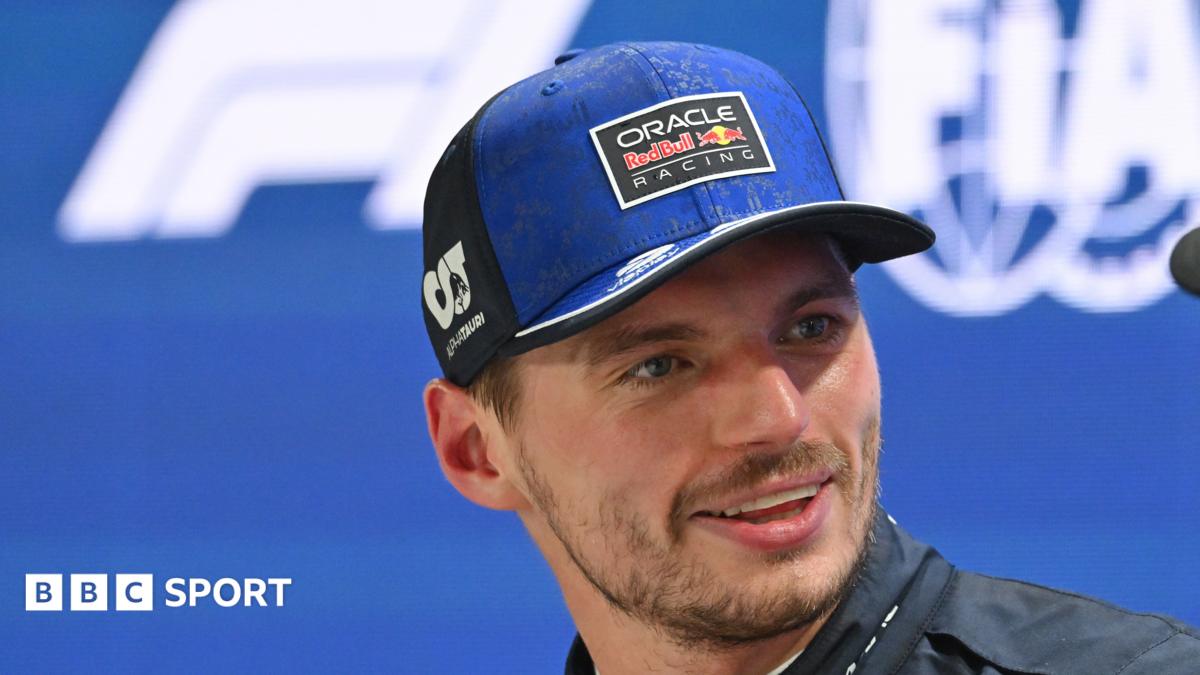
Max Verstappen’s Red Bull engineer Gianpiero Lambiase to join McLaren

Lambiase’s impending departure from Red Bull, even if it is the best part of two seasons away, underlines how much has changed at the former world champions in a short time.

Since the start of 2024, Red Bull have lost, for different reasons, Marshall, Newey, Wheatley, Courtenay, and of course Horner, all cornerstones of the team’s success, not just with Verstappen but with their previous four-time champion Sebastian Vettel as well.

And now Lambiase has decided to leave, too.

It is symbolic of the work that needs to be done by new team principal Laurent Mekies, which has been underlined by the team’s difficult start to the season under F1’s new rules.

Those regulations have led to Verstappen questioning his future in F1, as he made clear in his candid interview with BBC Sport after the Japanese Grand Prix.

Red Bull have found both their new chassis and first in-house engine lagging behind the best in the first three races of 2026, and Verstappen is in the unfamiliar position of ninth in the championship, with a best result of sixth place.

Verstappen and Lambiase are close, but it is Red Bull’s lack of competitiveness rather than his race engineer’s departure that will be the focus of Verstappen’s decision on his future.

Unless there is a dramatic turnaround in form from the team, Verstappen will be contractually free to leave Red Bull at the end of this season, based on performance clauses in his contract.

The question for him then will be does he want to stay and commit to helping them rebuild, move to another F1 team, or go and race elsewhere in motorsport?

Some of that answer will depend on what changes F1’s bosses make to the rules – not just in terms of tweaks for the remainder of 2026, but potentially bigger changes from 2027.

Such as, for example, potentially increasing the fuel-flow rate of the new engines so the 50-50 split between internal combustion and electrical power leans more towards the former, and energy management becomes less of a thing.

If Verstappen does decide to leave Red Bull, McLaren would be an attractive proposition as an alternative, even if they are committed to their current drivers Lando Norris and Oscar Piastri.

And Lambiase’s move there not only reflects McLaren’s progress in recent years but also their determination not to rest on their laurels.

Stella and chief executive officer Zak Brown have led a remarkable turnaround at McLaren that made them into championship winners in a short timeframe.

But they are aware of their vulnerabilities and are working to address them.

One of those is the weight placed on Stella’s shoulders. The Italian is a remarkable leader blessed with rare emotional intelligence, but the team have been aware for some time of how much he has on his plate.

This has led to a number of changes, some of them implemented quietly behind the scenes, and others – like this one – more public.

McLaren have created an enviable team culture where openness, transparency and mutual support are valued and encouraged.

It’s partly why it’s hard to see why Stella would move back to Ferrari, even if there are constant unfounded rumours that he might for obvious reasons – he’s Italian, he spent the first part of his career there and it’s clear why Ferrari might want him back.

Indeed, senior McLaren insiders insist Stella is going nowhere and that Lambiase is being introduced to free him from aspects of race operational management to focus more on leadership, where his skills are more valuable.

It’s also why it’s easy to see how a character such as Lambiase – straightforward, dynamic, down to earth – would fit in so well at McLaren.

Source link

F1 Q&A: Aston Martin, McLaren, Mercedes, safety cars and changes to lap times

The race report from Suzuka actually mentioned that more than half Aston Martin’s deficit to the front was caused by the chassis.

That information came from a very senior and knowledgeable figure over the course of the Japanese Grand Prix weekend.

It also tallies with what other teams are seeing on the GPS data to which all have access, in terms of the cars’ speed on different parts of the track.

The exact split in terms of the losses that can be attributed to car and engine at Aston Martin-Honda is not known, and it’s probably not possible to know, as of course the behaviour of the engine can also have an impact on the cornering performance of the car.

It’s worth adding that, while it’s true that much of the public focus has been on the Honda engine, and especially the severe vibrations that have been causing reliability problems, team principal Adrian Newey has been clear that the car is also lacking.

It’s also the case that it’s not clear where the vibrations are coming from – are they intrinsic to the engine, or is there something about the way the engine is mounted to the chassis that exacerbates them?

In Australia, Newey said that on the chassis side “we’re maybe the fifth best team, so sort of potential Q3 qualifiers on the chassis side, but with the potential to be up front at some point in the season”.

On average over the four qualifying sessions of the first three races, including for the sprint in China, the Aston Martin is 3.6 seconds off the pace.

The fifth fastest team on average are Alpine, at 1.268secs off the pace, followed by Haas at 1.567secs.

So Aston Martin are about 2.3secs off qualifying in the top 10, with the majority down to the chassis and the rest the engine.

In other words, put a Mercedes engine in the car, and it would be about where Alpine or Haas are. Exactly as Newey suggested.

Given the Aston Martin’s troubled birth – effectively starting again when Newey arrived in March last year, a delayed entry into the wind tunnel until April, and a consequent compressed development programme – that sounds entirely feasible.

The car is overweight, and is especially poor in high-speed corners.

The fundamental point, though, is that it doesn’t really matter where exactly the deficit lies between car and engine. Both Aston Martin and Honda are a long way from being competitive, both know that’s the case, and both have a lot of work to do.

Source link