massie

With Sen. Cassidy’s primary defeat, Trump’s revenge campaign continues

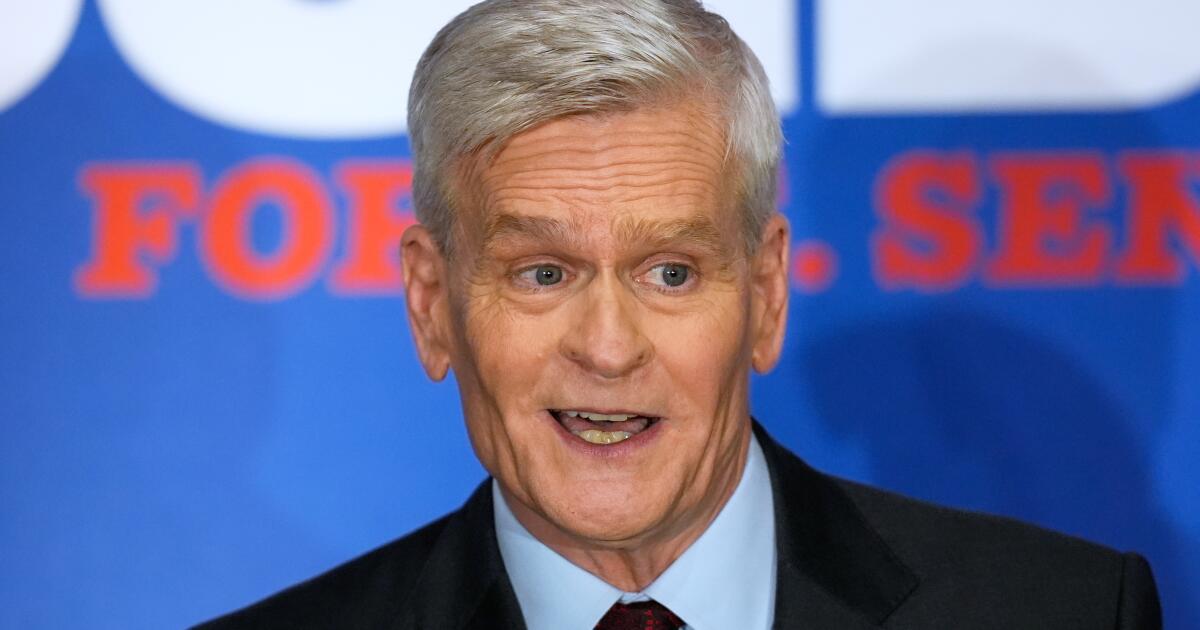
President Trump succeeded in his effort to defeat Sen. Bill Cassidy in Louisiana’s Republican primary, a signal of the enduring strength of the president’s hold on his party despite an unpopular war and soaring gas prices.

Cassidy was one of seven Republican senators in 2021 who voted to convict Trump on the impeachment charge of inciting an insurrection on Jan. 6 that year. He placed last in a three-way race Saturday against U.S. Rep. Julia Letlow, who was endorsed by Trump, and state Treasurer John Fleming.

“His disloyalty to the man who got him elected is now a part of legend, and it’s nice to see that his political career is OVER!” Trump said of Cassidy on social media late Saturday.

With 92.3% of ballots tallied, Letlow had 44.8% of the vote and Fleming had 28.3%. Cassidy trailed with 24.7%.

Letlow and Fleming will advance to a runoff next month. Whoever wins that contest is virtually assured victory in November in deep-red Louisiana. In his last reelection in 2020, just months before his vote to convict Trump, Cassidy won 59% of the vote.

In a primary season where Trump is crusading to vanquish members of his party with whom he’s been at odds, the Louisiana race comes just days before the president tries to oust another Republican foe, Rep. Thomas Massie of Kentucky. But Trump has opted so far to stay out of a hard-fought Texas GOP runoff later this month between incumbent Sen. John Cornyn, a traditional conservative, and state Atty. Gen. Ken Paxton, who is more politically aligned with the president’s MAGA movement.

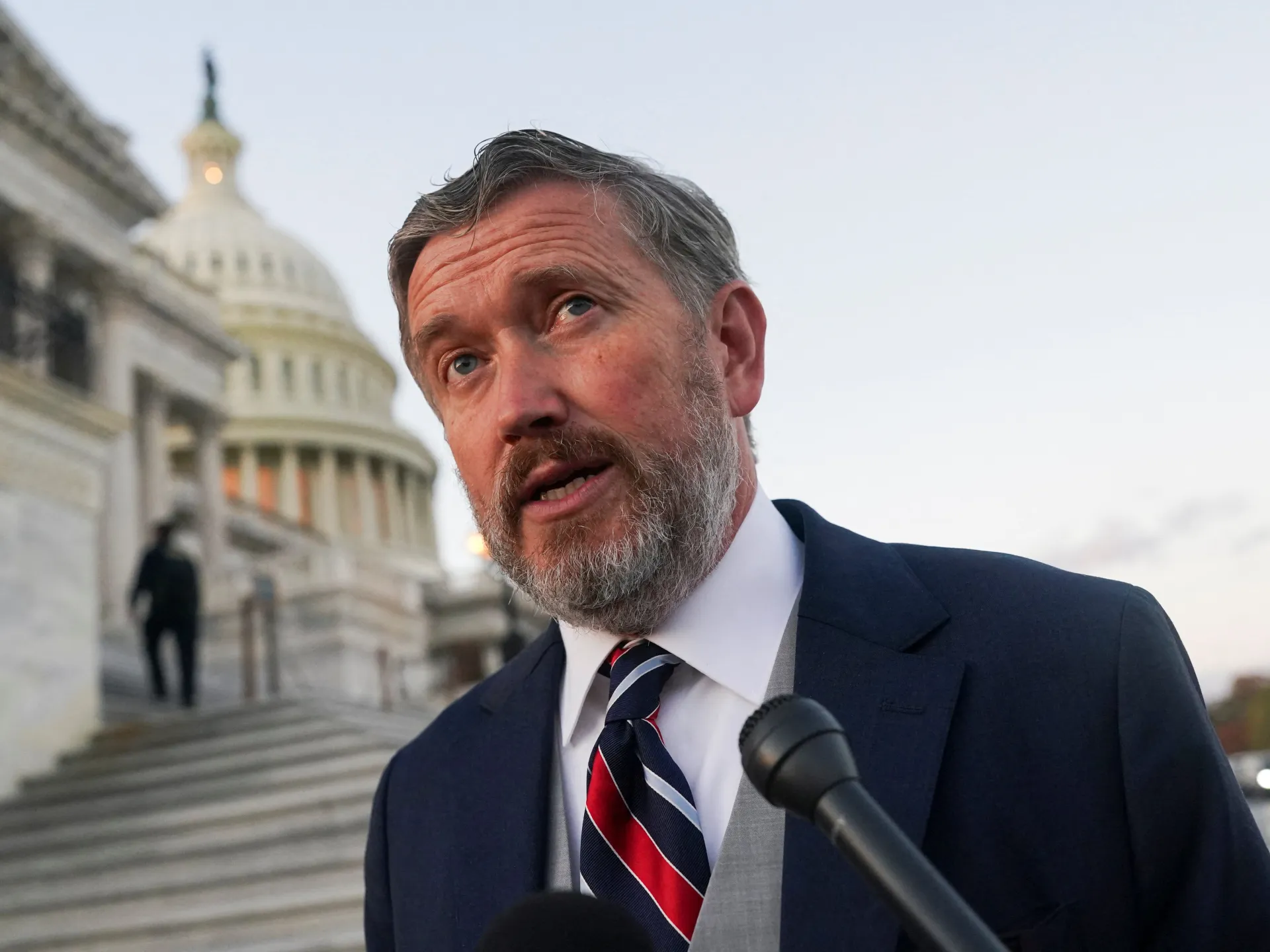
Massie, who faces a primary that has become the most expensive of its kind, said Sunday on ABC’s “This Week” that’s he’s confident he will prevail Tuesday despite a string of social media insults from the president and fundraising by Trump allies such as billionaires Miriam Adelson and Paul Singer.

“I think it’s going to help my fundraising,” Massie said. “People don’t like this.”

With state polls showing Massie with a slight lead, the congressman said, “that’s why the president is losing sleep and tweeting about me.”

Trump’s success in defeating Cassidy left the Louisiana senator defiant: “Let me just set the record straight. Our country is not about one individual, it is about the welfare of all Americans and it is about our Constitution.”

“If someone doesn’t understand that and attempts to control others through using the levers of power, they’re about serving themselves, they’re not about serving us,” he added.

Trump has attacked Cassidy for his 2021 vote and his opposition to some aspects of his agenda, particularly vaccine and other health policies pushed by Health Secretary Robert F. Kennedy Jr. During Kennedy’s Senate confirmation hearings last year, Cassidy, who is a doctor, expressed deep skepticism about the nominee’s anti-vaccine views, but ultimately voted to confirm him.

Trump recently blamed Cassidy for thwarting the nomination of wellness influencer Casey Means as surgeon general. Means is a longtime ally of Kennedy’s, and Cassidy had also questioned her stance on vaccinations.

On Saturday morning, Trump continued his attacks, calling Cassidy a “a disloyal disaster” on social media. He later congratulated Letlow on her first-place finish.

In his concession speech, Cassidy said: “I find that people of character and integrity don’t spend their time attacking people on the internet.”

Despite the president’s opposition to his candidacy, Cassidy had run ads featuring images of Trump, praising top White House issues that the senator had supported including the president’s massive tax package enacted last year, while casting Letlow as insufficiently conservative.

The outcome also notches a high-profile win for Kennedy’s political operation, which supported Letlow and opposed Cassidy in the race. The two men have repeatedly clashed over nominations and the department’s changes to vaccine policy. With certainty of his departure when his term ends in January, Cassidy could make the health secretary’s job even more difficult as he finishes out his term with an eye to his legacy and priorities.

Cassidy’s departure will also leave a leadership vacuum for the GOP atop the Senate Health Committee next year. The panel oversees health agencies and confirmations for key leadership positions at the agencies, and Cassidy brought his medical expertise to the role. He has built a reputation as a healthcare policy wonk willing to work across the aisle.

Only two other Republican senators who broke with Trump in his 2021 impeachment trial, Susan Collins of Maine and Lisa Murkowski of Alaska, remain in the Senate. Collins, who represents a state Trump lost in 2024, has largely avoided the president’s wrath while she fights for her political life in one of the most competitive races of the midterms. Murkowski won reelection in 2022.

“You can disagree with President Trump, but if you try to destroy him you’re going to lose because this is the party of Donald Trump,” South Carolina Sen. Lindsey Graham said Sunday on NBC’s “Meet the Press.”

“There’s no room in this party to destroy his agenda or to destroy him or his family as a Republican,” Graham said. “It’s just a reality.”

Cohrs Zhang writes for Bloomberg. Bloomberg writers Tony Czuczka and Se Young Lee contributed to this report.

Source link

Kentucky Republicans love Trump. Will they ignore him and reelect Thomas Massie?

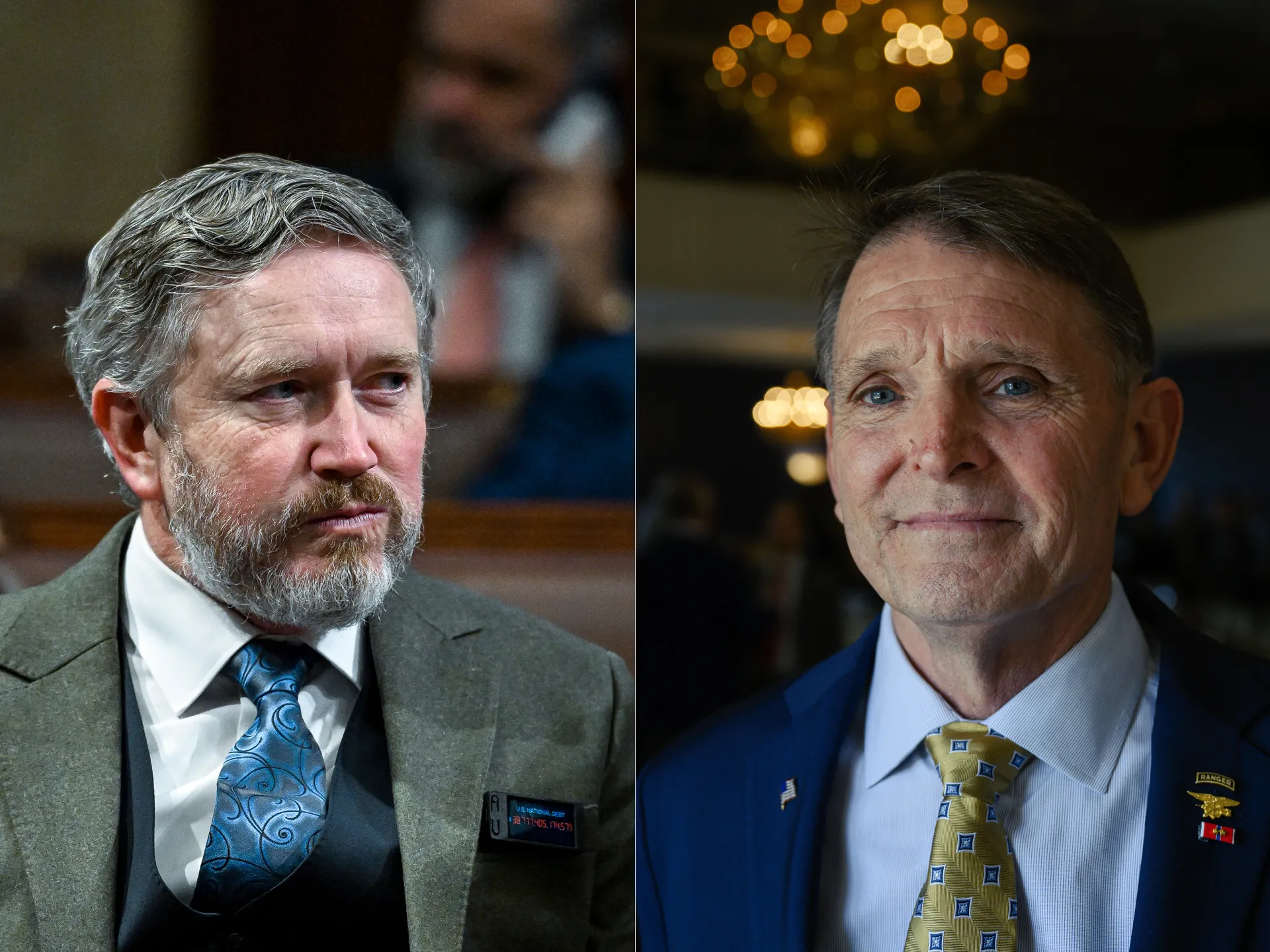
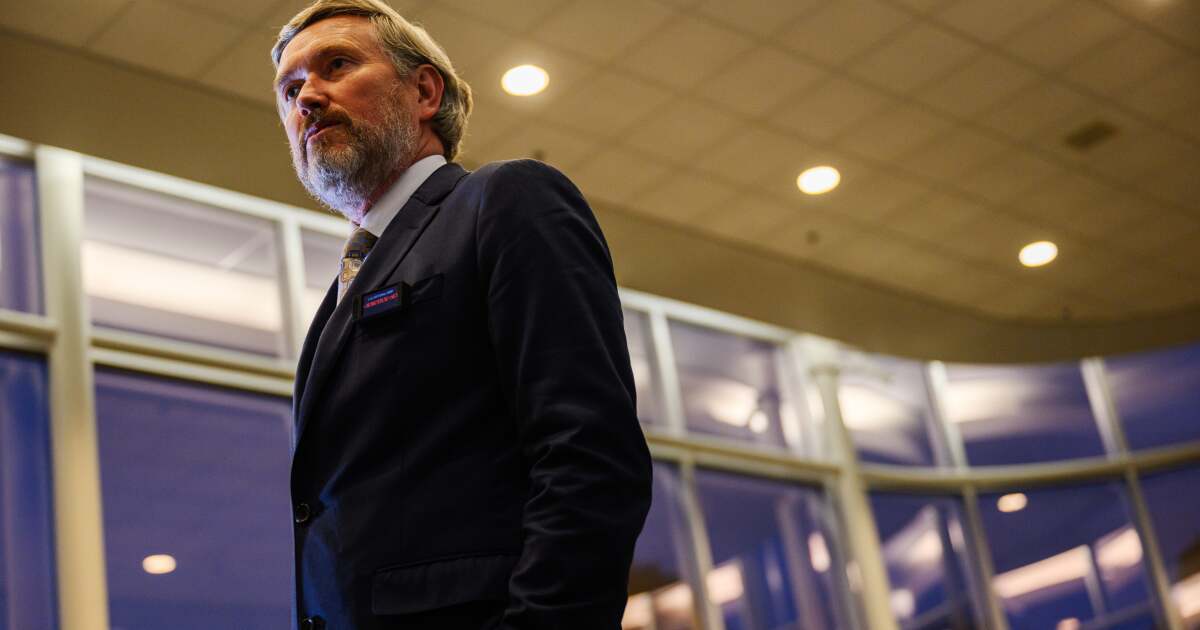
Rep. Thomas Massie was stuck in Washington for a vote on Capitol Hill, so one of his supporters made the pitch for his campaign in a banquet hall packed with Republicans in northern Kentucky.

The audience had just heard Ed Gallrein, who was drafted by President Trump to run against Massie in next Tuesday’s primary, describe the congressman as suffering from “a severe case of Trump derangement syndrome.”

Then Gex Williams, a state senator backing Massie, told the audience at the Lincoln Day Dinner not to worry about all that.

“If you are thinking that you can’t be for President Trump and for Thomas Massie, you certainly can be,” Williams said.

Whether voters agree will determine whether Massie’s political career survives Trump’s most aggressive attempt to purge the Republican Party of dissenters. The president already succeeded last week in dislodging several Indiana state senators who opposed his redistricting plan, and he’s supporting a primary challenge against U.S. Sen. Bill Cassidy in Louisiana on Saturday.

But nothing compares to the vitriol against Massie, whom Trump has called a “moron” and a “nut job” who “will go down as the WORST Republican Congressman.” Trump made an unusual trip to Kentucky to campaign against Massie, and some of the president’s top advisors are working to help Gallrein, a former Navy SEAL.

Massie angered Trump by voting against his signature tax legislation over concerns of adding to the national debt, pushing for the release of the Jeffrey Epstein files and opposing his decision to go to war with Iran. His positions, Massie insists, reflect the America First promises Trump initially made on the campaign trail.

In a Kentucky district where the president won by 35 points two years ago, Massie told the Associated Press that the upcoming primary is “by far the most challenging reelection I’ve ever faced.”

Party loyalty or ideological purity?

The race is playing out across Kentucky’s 4th Congressional District, which sweeps northeast from the outskirts of Louisville along the Ohio River, through the suburbs south of Cincinnati and over to the lush foothills and old coal towns of Appalachia.

Voters here have sent Massie back to Congress ever since his first election in 2012, embracing his stalwart independence and jaunty personality. Back in 2020, they brushed off Trump’s social media demand to “throw Massie out of Republican Party” because he was a “third rate Grandstander.”

Now, Republican voters are debating whether they will do the same thing again.

“If all we’re doing is pulling in yes men, then how do you grow from that? How do you have the best end product if everyone just says, ‘Oh yeah, that’s a great idea,’” said Tonya Young, an attendee of the Lincoln Day Dinner who is leaning toward Massie but still undecided.

“However, I do feel like it’s important to stay loyal. That’s where, I’m like, I’m a hot mess,” said the 57-year-old special education teacher. “Sometimes you have to just bite the bullet and compromise on things.”

Young said she will plumb through the Republican-backed bills that Massie voted against before she makes up her mind. What isn’t a major part of her calculation is Trump’s endorsement of Gallrein or his epithets against Massie.

Young still supports Trump, rating his second term at a “B to a C+” relative to his campaign promises. During Trump’s first term, Young said, she’d “probably put more stock in” his endorsement.

‘I’m going to vote for Massie even though he makes me mad’

At the Lincoln Day Dinner in Covington, well-dressed Republicans sat at circular tables, ate dinner and listened attentively as candidates gave speeches.

Steve Jarvis, a 77-year-old retired law enforcement officer, who stood near the late night coffee station, has decided to vote against Massie for the very first time.

“Made me sad, truly it does,” said Jarvis, wearing a bespoke American flag bow tie made of feathers, “I like Massie.”

When Massie first ran for Congress, Jarvis bought a Massie campaign sign, sized for a freeway overpass, and planted it outside his home, a few doors down from which lived Massie’s opponent.

But some of Massie’s departures from the party, he said, “made me nuts. I can’t do it anymore.”

One was Trump’s flagship Big Beautiful Bill, which Massie voted against citing the consequent budget deficit and increased inflation.

“I understand voting your principle once or twice,” said Jarvis, “but at some point in time when it becomes crucial, I think they have to get in line.”

Gallrein, he said, would get in line.

Jana Kathman came to a different conclusion.

“I’m going to vote for Massie even though he makes me mad,” she said while shopping for bagels at a local farmers market outside Covington.

The 56-year-old registered nurse said, “I just like him as a person, I like how he lives his life, and I know he stands very strong with his convictions.”

Though she still likes Trump, his endorsement and attacks don’t impress her.

“I don’t like when Trump plays the little games as soon as someone opposes him, but we know that’s how Trump lashes out,” Kathman said.

‘Antibodies’ to Trump’s electoral broadside

Gallrein mounted the stage at the Lincoln Day Dinner with a prepared speech. He grew up on a family farm, was inspired by President Reagan to join the Navy SEALs and was recently asked by Trump to serve his country again in Congress.

He hyped up Trump — “Do you know he doesn’t take a salary?” — and launched into a list of Trump-backed policies Massie had voted against, lumping him in with the “radical Democrats.”

Gallrein declined an interview request, and he’s declined to attend candidate forums and debates with Massie.

Several voters said they were grateful for Gallrein’s service, but still don’t have a grasp of his platform, aside from his fidelity to Trump.

Massie argues that’s why Kentucky should stick with him, using what has become a go-to refrain.

“Politicians promise during the campaign, and then they go to D.C. to go along to get along,” he said. “My opponent is promising to go along to get along.”

Massie is hopeful that Trump’s anger will blow over once he wins the primary.

“Once this race is over, I don’t think there’s any benefit to him attacking me, I’ll have the antibodies from a natural infection,” Massie said chuckling.

After years of being considered a conservative gadfly in Congress, he said, maybe he has some of those antibodies already.

“This will be the booster shot,” he said.

Bedayn writes for the Associated Press.

Source link

Trump’s Indiana wins show his power over GOP with more primaries and redistricting debates ahead

Five months ago, President Trump was stinging from one of the first political defeats of his second term as Republican state senators defied him on redistricting in Indiana. Now he has proved he can still punish wayward party members after he endorsed a slate of challengers who defeated almost every one of those lawmakers he wanted to dislodge.

The results will likely bolster Trump’s confidence heading into upcoming Republican primaries where he wants to help oust more incumbents, including U.S Sen. Bill Cassidy of Louisiana and U.S. Rep. Thomas Massie of Kentucky.

Indiana’s primary also ratchets up the pressure on Republican lawmakers in other states to move aggressively to redraw congressional district boundaries before the November elections. Alabama and Tennessee have already begun special sessions that could limit Black voters’ strength in Democratic-leaning districts, and some of Trump’s allies in South Carolina want to follow suit.

State Sen. Linda Rogers, one of the Indiana lawmakers who voted against redistricting and lost her seat Tuesday, said the outcome “will probably discourage others in other states.”

“If someone is going to ask you to take a tough vote, you may think twice about your conscience and what’s best for your community and instead what’s best for you and your career,” she said.

Redistricting efforts began last year, when Trump saw an opportunity to give Republicans an additional edge, but they were supercharged last week when the U.S. Supreme Court gutted a provision of the Voting Rights Act that influenced how political lines are drawn.

Trump’s success in Indiana, aided by more than $8.3 million in campaign cash in races that usually see very little spending, reaffirmed the president’s continued strength within a Republican Party that he has dominated for a decade, despite his inevitable slide toward lame-duck status and his sagging poll numbers.

“Historic night for Indiana as Republicans stood with me and President Trump to nominate some great America First conservatives,” Gov. Mike Braun, R-Ind., posted on social media. “I look forward to winning big in November and serving Hoosiers with this team in the statehouse!”

Trump backed primary challenges against seven Republican state senators who rejected his redistricting plan in December. Five of the president’s candidates won, and another race remained too close to call.

Trump was relatively restrained on social media about the voting. He shared a series of photos celebrating the victories of candidates he endorsed in Indiana and Ohio, which also held primaries Tuesday. But he otherwise passed on boasting or renewing his attacks on Massie or Cassidy.

Massie has been among the members of Congress who frustrated the president by pressing for release of the Jeffrey Epstein case files. Cassidy was among the Republican senators who voted to convict Trump on 2021 impeachment charges after the Jan. 6 riot.

James Blair, one of Trump’s top political advisers, was more direct, posting an image from the movie “Gladiator” depicting Russell Crowe’s ancient Roman character Maximus exulting after a combat victory.

Rogers, the Indiana state senator, faced almost $670,000 in television advertising against her, funded by political action committees associated with Braun and U.S. Sen. Jim Banks, R-Ind.

She said she did not regret her vote against redistricting.

“It would have been easy for me to hit that ‘yes’ button,” she said. “To hear the number of people who asked me not to, then the number of people who thanked me, would mean I wasn’t representing them.”

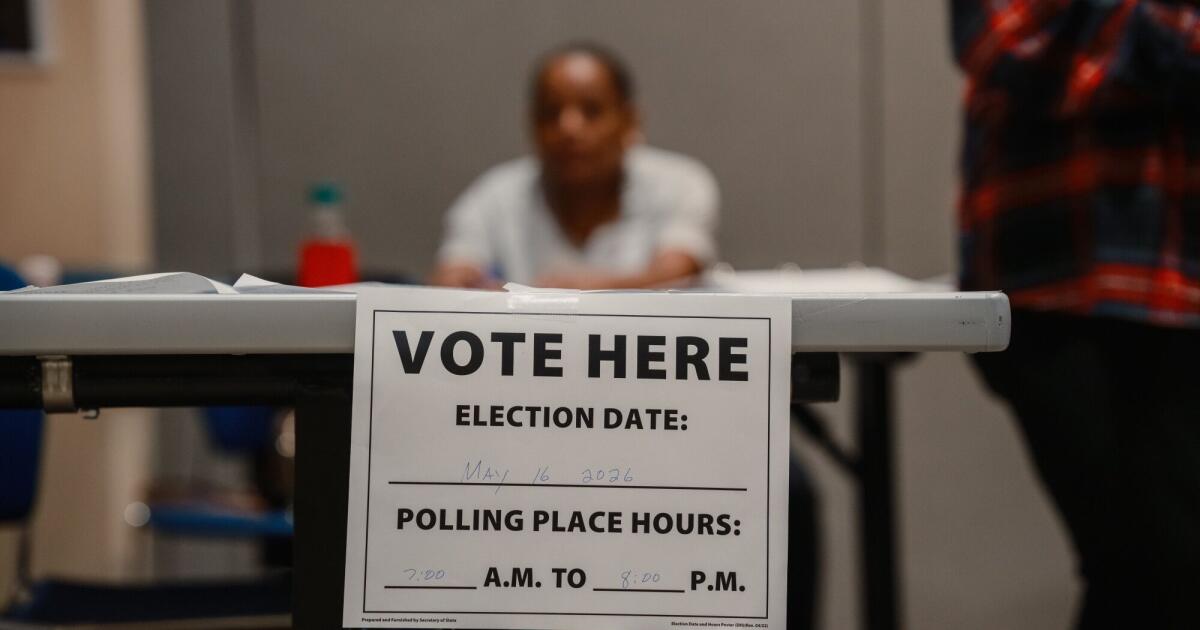
Louisiana’s primary, in which Trump has endorsed U.S. Rep. Julie Letlow over Cassidy, is set for May 16. Kentucky, where Trump has endorsed Massie’s challenger, retired Navy SEAL Ed Gallrein, will hold its primary May 19.

Beaumont and Barrow write for the Associated Press.

Source link