massie

Contributor: The GOP is collapsing under Trump’s loyalty tests

Americans always say they want politicians with backbone — men and women of principle who will stand up for what they believe in, even when it’s unpopular.

And every so often, the American people prove their commitment to this noble aspiration by firing anybody who actually tries it.

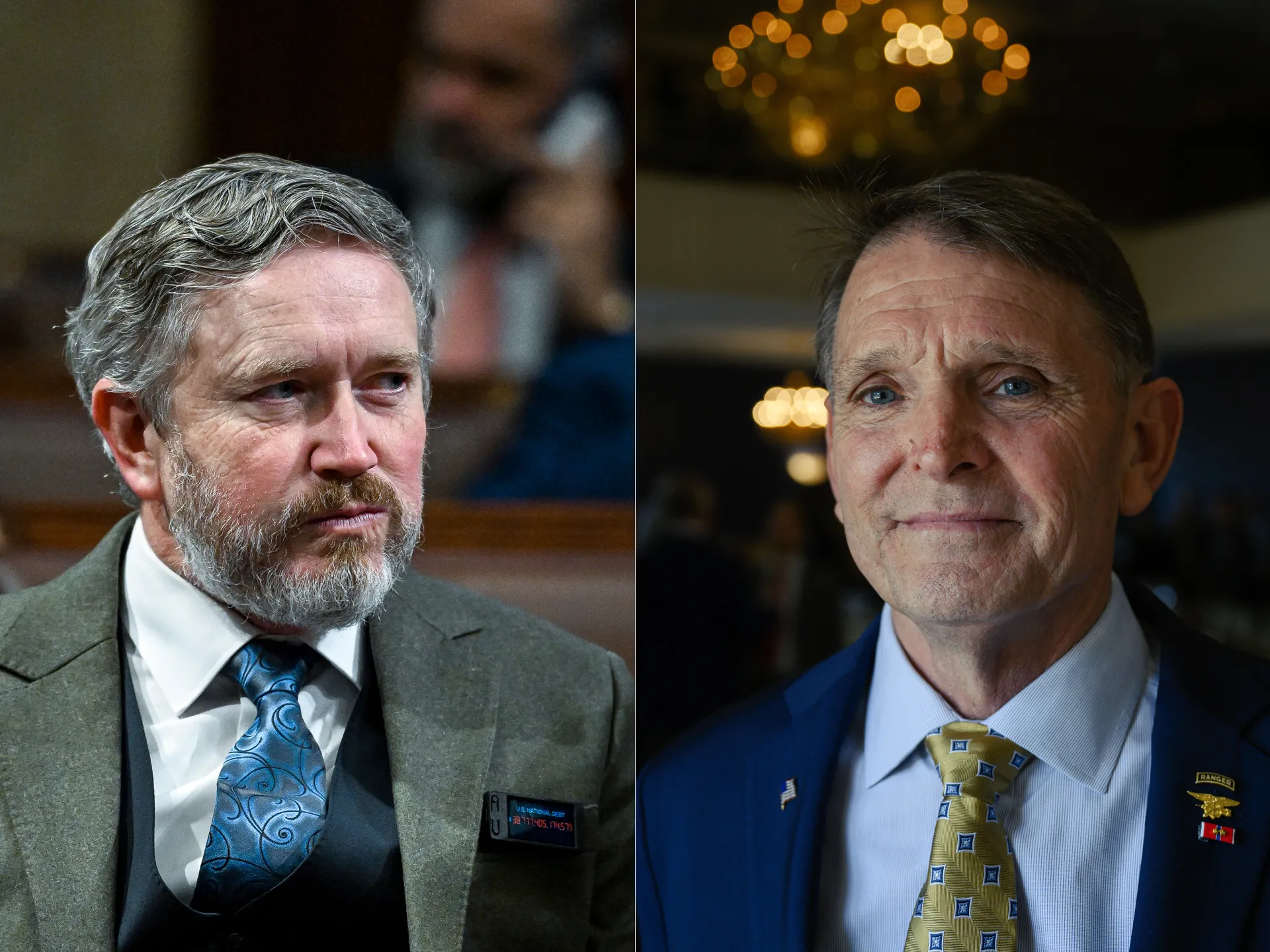
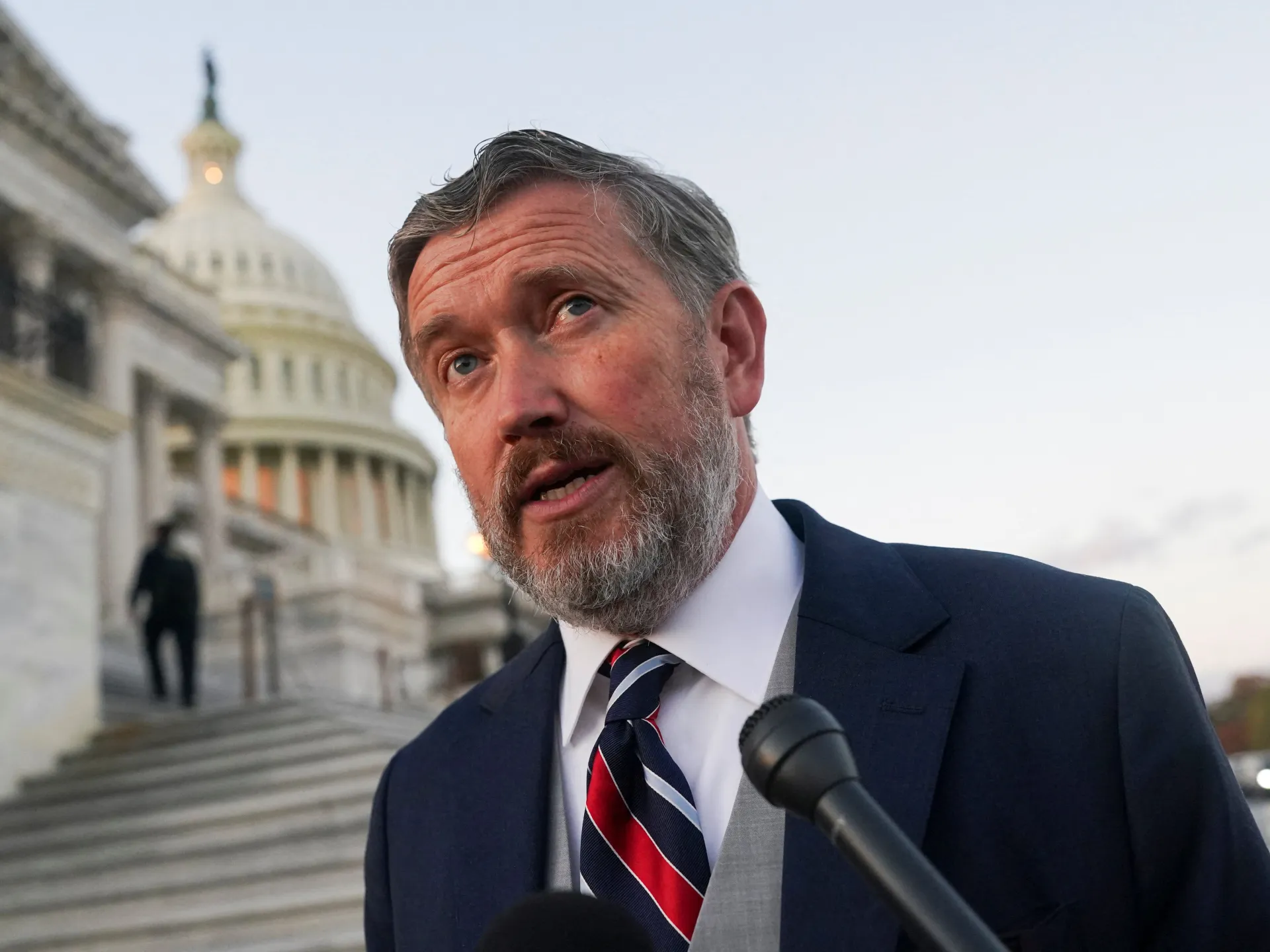
Take Republican Rep. Thomas Massie, who just lost a reelection bid by double digits after President Trump’s affiliated committees dumped enough money into Kentucky to purchase, well, Kentucky.

Massie committed the cardinal sin of modern Republican politics: He behaved as though Congress were a coequal branch of government instead of the warm-up act before a Trump rally.

He bucked Trump on spending, Iran and — in what apparently qualified as political suicide — whether or not to release the Epstein files. For this display of independent thought, Massie was summarily retired by what can only be described as the Trump cult (formerly known as the Republican primary electorate).

Before anybody accuses me of hyperbole, consider the remarkably revealing example presented recently on the New York Times podcast, “The Daily.”

At a town hall in Burlington, Ky., one voter explained to Massie that Trump is basically omniscient.

“As I see it,” the voter said, “the one person in the whole United States, maybe the world, that understands everything and has input to everything is Donald Trump.”

Not content with mere earthly wisdom, Trump also possesses universal awareness, superior intelligence and perhaps even low-level clairvoyance. The voter continued that Trump “gets more information, more meetings, more everything” than anybody else in government.

When Massie noted that Trump opposed releasing the Epstein files, the man calmly explained that if Trump changed positions, “there was a reason” — one too profound for ordinary mortals to comprehend.

Massie’s reply deserves to be bronzed and mounted over the entrance to the U.S. Capitol: “I don’t give anybody but God that kind of trust.”

Unfortunately, for a large portion of the Republican electorate (about 55%, based on the Kentucky primary results), those words constitute sacrilege against their earthly savior.

As South Carolina Sen. Lindsey Graham cheerfully boasted on NBC’s “Meet the Press” on Sunday, “This is the party of Donald Trump.” Which is true in much the same way North Korea is the party of Kim Jong Un.

The one ironic twist in all of this is that Americans finally managed to punish somebody over the Epstein files — only it turned out to be the guy who wanted them released.

There’s American justice for you.

Massie isn’t the only Republican currently being fitted for concrete shoes. Trump also helped finish off Louisiana Sen. Bill Cassidy, whose unforgivable crime was voting to convict Trump during the impeachment trial following Jan. 6. And Trump has endorsed controversial Texas Atty. Gen. Ken Paxton over incumbent Sen. John Cornyn, which in today’s GOP primary environment is roughly the equivalent of finding a horse head in your bed.

Now, to be fair, Cassidy and Cornyn are no Massie, who openly opposed Trump and paid the price standing upright. Cassidy and Cornyn demonstrated brief moments of independence, only to spend years vainly performing political interpretive dance routines in hopes of regaining Trump’s favor.

Still, there may be a silver lining here for students of political irony.

Trump’s endorsement of Paxton will force Republicans to spend enormous sums defending a deep red state that would ordinarily require little more than a campaign sign and a pickup truck.

Meanwhile, Trump is creating resentful lame-duck Republicans in Congress who now possess the most dangerous attribute in politics: nothing left to lose.

But the broader message is unmistakable. Trump wants Republicans to understand that disagreement will not be tolerated. No criticism. No distancing. No independent branding.

The party line is whatever Trump said five minutes ago, amended by whatever he says five minutes from now. By now, everyone knows this to be true.

Which would be excellent news for Trump, if not for one small complication: The rest of the country appears to be tiring of his act. Recent polling shows Trump’s approval slipping to 37%, while Democrats gain major ground, surging to a +11 on the generic congressional ballot.

Trump, it seems, has created a situation in which Republicans can either oppose him and be destroyed in a primary, or they can embrace him and risk losing the House and the Senate in November’s general election. It’s the old “damned if you do, damned if you don’t” conundrum.

The point is this: With the midterms approaching, Trump is making sure Republicans are ensnared in the gravitational pull of his unpopularity.

That may satisfy the president’s desire for complete loyalty. It may also hand Democrats control of both chambers of Congress.

Trump is settling all family business this week, by purging those pesky disloyal Republicans. Only time will tell whether he’s also purging America’s non-Republican “swing” voters, as well.

Matt K. Lewis is the author of “Filthy Rich Politicians” and “Too Dumb to Fail.”
Source link

The GOP’s YOLO caucus is small but growing. That may spell trouble for Trump’s congressional agenda

The YOLO caucus is in session.

In a Republican-led Congress defined by deference to President Trump, there’s a small but steadily growing cohort who have found themselves more willing to break with the White House. Although the president maintains a firm grip on Republican voters, the expanding club could hinder his agenda on everything from the Iran war to immigration funding at a moment when his party holds a tenuous majority on Capitol Hill.

Sen. Bill Cassidy of Louisiana is the newest member of the club. Just days after losing his primary to a Trump-backed challenger, Cassidy on Tuesday reversed himself on legislation involving the war in Iran and voted with Democrats to rein in U.S. military action.

“The way our Constitution is set up, Congress should hold the executive branch accountable,” he told reporters the day before.

Sen. John Cornyn of Texas could be next after Trump endorsed Ken Paxton, Cornyn’s rival for the Republican nomination in next week’s runoff.

Rep. Thomas Massie of Kentucky is perhaps a founding member of the YOLO caucus — slang for “you only live once,” used to punctuate unbothered or even foolhardy behavior. He frustrated Trump since the president’s first term, and his status was solidified after losing his primary on Tuesday to a Trump-backed challenger. Massie has enraged Trump by voting against his signature tax and spending bill and by pushing for the release of the Jeffrey Epstein files.

He hinted there’s more to come before he leaves office.

“I got seven months left in Congress,” Massie said with a grin during his concession speech as the crowd erupted.

More Republicans feel free to shrug off Trump

Other similarly situated Republicans include Sen. Thom Tillis, who was a fierce critic of former Homeland Security Secretary Kristi Noem and has more recently turned his attention to Defense Secretary Pete Hegseth. There’s also Sen. Lisa Murkowski of Alaska, who joined Democrats last week in a bid to curb Trump’s war powers in Iran. Sens. Susan Collins of Maine and Mitch McConnell of Kentucky have voted against some of Trump’s Cabinet picks. And in the House, Rep. Don Bacon of Nebraska has pushed to reclaim congressional power over tariffs.

“If the legislative branch always votes with the president, we do have a king,” Massie said in his concession speech Tuesday.

This hardly amounts to a revival of the Never Trump movement that some Republicans unsuccessfully hoped would curb the president’s excesses during his first term or block him from returning to office. Many in the party, including Trump’s occasional detractors, have either stood by or been unable to block the president as he launched the war in Iran and presided over an aggressive immigration enforcement operation and the dismantling of the federal workforce.

Today’s unencumbered Republicans don’t fit into an ideological box. But they are united by a sense of emboldening that can only be attained in a few ways in Trump’s Washington.

Many, like Tillis, McConnell and Bacon, have decided to retire and can cast votes knowing they’ll never again have to face Republican primary voters. Others like Collins and Murkowski have more leeway because they represent states that tend to reward political independence. And some like Massie banked on the idea that voters could support both Trump and someone who occasionally crossed him.

It’s a paradox for Trump. As he demands total loyalty and pushes out Republican dissenters, he’s left with a growing cohort who, for one reason or another, owe Trump nothing.

Democrats look to capitalize

That could be a problem for Senate Majority Leader John Thune and House Speaker Mike Johnson, who are already governing with threadbare majorities. Shifting loyalties of even a few Republican lawmakers could dramatically complicate the ability for either chamber to pass substantial legislation ahead of the November midterm elections.

Thune called Cornyn a “principled conservative” and “very effective senator” on Tuesday.

“None of us control what the president does,” he said.

The next tests could come later this week as Thune pushes a funding package for Immigration and Customs Enforcement and Customs and Border Protection designed to pass on a party line basis.

Democrats are eager to pounce.

Speaking at an event in Washington on Tuesday sponsored by the Center for American Progress, House Democratic leader Hakeem Jeffries said he would aim to drive a wedge between Republicans by using a so-called discharge petition to bring issues directly to the floor for a vote.

That tactic has been successful in securing House passage on issues including the Epstein files and temporary protection of Haitian immigrants.

“When we’re disciplined and when we’re focused and when we put pressure in particular on the so-called swing seat Republicans, they have been breaking with us,” Jeffries said.

California Gov. Gavin Newsom told reporters on Tuesday that Trump’s endorsement of Cornyn’s rival was a sign that his political power lies within the Republican base — not the American public at large.

“He’s showed the only influence he has, and that’s an outsize influence within the base of the party,” the potential 2028 Democratic presidential contender said. “Otherwise he’s shown little to no influence with the American people.”

Counting the votes

That leaves Republicans gaming out how they might cobble together the votes needed to pass legislation.

Sen. John Hoeven of North Dakota called Cassidy a “good friend” and said the loss was “tough for him.” He said Cassidy “will always vote in line with what he thinks is best” but doubted he will become a less reliable Republican vote.

His fellow Louisianan, Sen. John Kennedy, said Cassidy deploys power “rationally and maturely” and “will continue to do the same thing.”

Cassidy repeatedly rejected the notion that he will spend his final months in Washington as a troublemaker for Trump, saying he’s going to do “what’s good for my country and my state.”

Yet the independent streak that ended his political career quickly resurfaced. A week after Trump visited China, Cassidy spoke of a Western alliance that’s “totally falling apart” and will be unable to “push back on the threat China represents.” He seemed stunned that the administration would create a nearly $1.8-billion fund to compensate Trump allies who they believe have been unjustly investigated and prosecuted.

“I just came off the campaign trail,” he said. “People are concerned about making their own ends meet, not about putting a slush fund together without a legal precedent.”

Sloan and Cappelletti write for the Associated Press. AP writer Stephen Groves in Washington contributed to this report.

Source link

Republican Thomas Massie who stood up to Trump defeated in Kentucky primary | US Midterm Elections 2026 News

With an estimated 72 percent of the vote counted, Ed Gallrein led with 54.4 percent to Massie’s 45.6 percent.

US President Donald Trump has tightened his grip on the Republican Party as Kentucky voters ousted one of the few conservative lawmakers willing to openly challenge his authority.

Congressman Thomas Massie‘s defeat, which was predicted by US news networks, including NBC and CNN, about two hours after polls closed on Tuesday, marks another victory in Trump’s campaign to punish dissent within Republican ranks.

Recommended Stories

list of 4 itemsend of list

With an estimated 72 percent of the vote counted, former Navy SEAL Ed Gallrein led with 54.4 percent of the vote to Massie’s 45.6 percent.

The Associated Press news agency called the race for Gallrein, whose campaign was backed by Trump’s endorsement as well as millions of dollars from pro-Trump and pro-Israel political lobby groups.

The contest, widely described as the most expensive House of Representatives primary in US history, saw more than $32m spent on advertising and offered the latest evidence of Trump’s hold over Republicans. It followed the primary defeat on Saturday of another Trump critic, Senator Bill Cassidy of Louisiana, as well as losses for dissenting Republican state lawmakers in Indiana earlier this month.

“Massie got Trumped. Donald Trump is the sun and the moon and the stars in the Republican Party in Kentucky,” Kentucky-based Republican strategist TJ Litafik said.

A test of Trump’s influence

The Kentucky vote was closely watched as a test of whether Trump’s hold on Republican voters remained firm despite concerns over his war on Iran, growing inflation and declining personal approval ratings, and whether there was still space in the party for lawmakers willing to break with him.

Massie had angered Trump by opposing US military action in Iran and Venezuela, criticising aid to Israel, resisting parts of the president’s agenda, and backing efforts to release files related to the late sex offender Jeffrey Epstein.

The president spent months attacking Massie, a libertarian-leaning seven-term congressman, calling him a “moron”, a “nut job” and a “major sleazebag”.

“Dealing with him is just horrible. I don’t think he’s a Republican… He’s not a libertarian,” Trump told reporters after polls opened on Tuesday.

“Sometimes they say he’s really a Dumb-ocrat. He votes against us all the time,” Trump said, using a nickname he frequently deploys against Democrats.

‘I’m not running against President Trump’

In the northern Kentucky city of Covington, Rob Barkley, a former Trump supporter who backed Massie, said the president’s attacks had pushed him further towards the congressman.

“He’s on the Republican side, so he has a conservative mindset,” Barkley told US media after casting his ballot.

“But he’s not as far-right leaning as Trump’s politics,” he said.

Massie, who voted with Trump roughly 90 percent of the time during the president’s second term, framed the contest as a broader test of independence within the Republican Party.

“I’m not running against President Trump. Most of the people voting for me support President Trump like I do,” Massie said.

Secretary of Defense Pete Hegseth also made a rare appearance in Massie’s district on Monday to campaign for Gallrein.

Federal law restricts government employees from engaging in partisan political activity while on duty, but Hegseth’s office said he attended in a personal capacity and that no taxpayer money was used.

Trump later revealed that Hegseth’s campaign appearance came just hours before the US had expected to launch a new military assault on Iran, although the operation was later postponed.

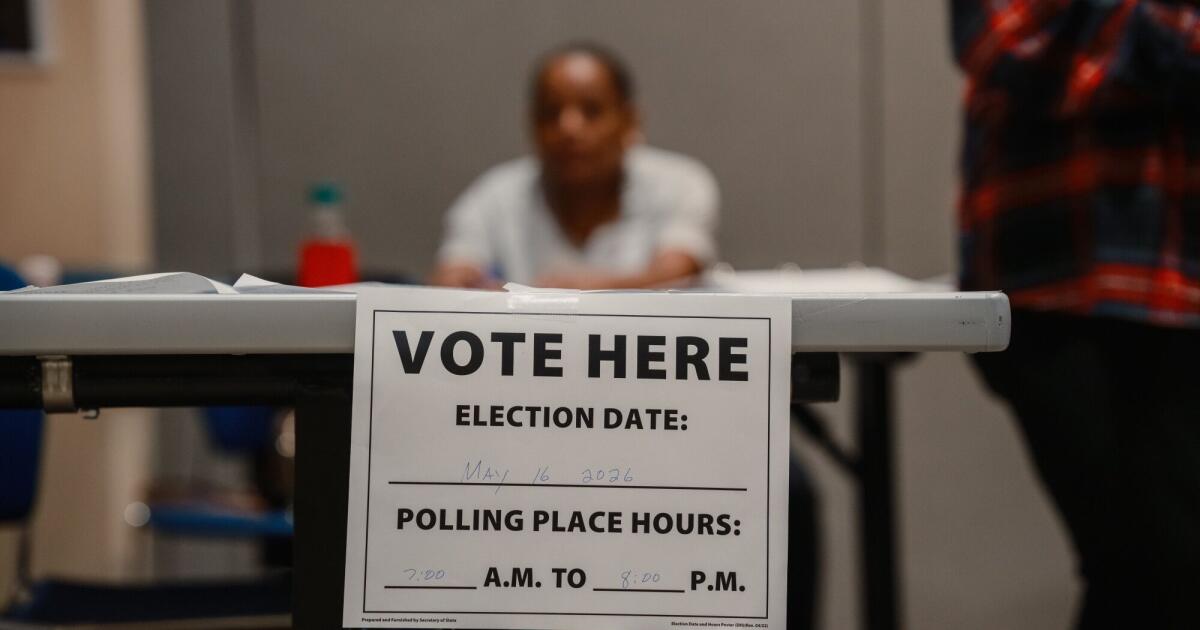
Several US states, including Georgia and Pennsylvania, held primaries on Tuesday in advance of November’s midterm elections, but the Kentucky race emerged as one of the night’s most closely-watched contests.

Massie, first elected in 2012, had long been one of Trump’s most persistent Republican critics.

Source link

Massie race breaks spending record as pro-Israel groups target Trump critic | US Midterm Elections 2026 News

The race pitting a candidate endorsed by President Donald Trump against Congressman Thomas Massie, a rare Republican critic of Israel, has become the most expensive House of Representatives primary contest in the history of the United States.

The avalanche of spending, totalling more than $34m by Monday, according to official records, highlights the significance of the elections that could oust one of the few Republican opponents to the war with Iran.

Recommended Stories

list of 3 itemsend of list

In the final stretch of the campaign ahead of Tuesday’s vote, Massie has sought to highlight the oversized role of pro-Israel groups – including the American Israel Public Affairs Committee (AIPAC) – in the race.

He said the election will be a “referendum on foreign policy” and whether pro-Israel lobby groups will be able to “bully” members of Congress.

“You can tell that I’m ahead in the polls, and they’re desperate,” Massie told ABC News on Sunday.

“That’s why they’re sending the secretary of war to my district tomorrow. That’s why the president’s losing sleep and tweeting about this. That’s why AIPAC has dumped another $3m into my race this weekend.”

Trump has been incessantly bashing Massie on social media, and in an unusual move, Pentagon chief Pete Hegseth has travelled to Kentucky to campaign for Ed Gallrein, the Navy SEAL veteran challenging the congressman.

Massie has been critical of the unconditional US military aid to Israel and of the country’s abuses in Gaza and Lebanon. He has also helped spearhead the push for the release of government files related to the late sex offender Jeffrey Epstein.

The money

Despite the intensity of the race, the candidates have not raised record amounts of money themselves.

The bulk of the spending, more than $25.8m, has come from outside groups, known as super political action committees (super PACs).

Super PACs are usually used by special interest groups to spend heavily to oppose or support a candidate without the constraints of legal limits on direct campaign contributions.

Pro-Israel groups and donors have played a central role in the flood of funds and ads directed against Massie, with three groups linked to them spending more than $15.5m in the race, Federal Election Commission (FEC) data shows.

United Democracy Project (UDP), AIPAC’s election arm, has spent more than $4.1m.

The RJC Victory Fund, which is affiliated with the Republican Jewish Coalition, came in with around $3.9m.

MAGA KY has been the largest spender, at $7.5m.

The PAC’s finances have not been made fully public. But available records show that one of the group’s top funders is Paul Singer, a pro-Israel billionaire investor who has also made the largest individual donation to UDP over the past year – $2.5m.

MAGA KY also received funds from Preserve America PAC, a group linked to Israeli-American megadonor Miriam Adelson.

Details of the finances of Preserve America PAC remain unclear for this election cycle. But Adelson donated $106m to the PAC in 2024 to help elect Trump as president.

Trump has openly admitted that Adelson and her late husband Sheldon Adelson have influenced his Middle East policies.

Before the race in Kentucky’s Fourth Congressional District, the most expensive House primary was the 2024 election that ousted then-Democratic Congressman Jamaal Bowman, in which pro-Israel groups, including AIPAC, were also the largest spenders.

The third most expensive primary also involved AIPAC and its pro-Israel allies, who succeeded in helping defeat progressive Congresswoman Cori Bush in 2024.

The Trump factor

Beyond the millions of dollars in pro-Israel spending, Massie needs to survive another potent force in Republican politics – Trump’s wrath.

The US president has all but purged the party of lawmakers who have disagreed with him on major issues.

Most recently, Senator Bill Cassidy – who voted to convict Trump after the January 6, 2021, US Capitol riot – lost his primary to a challenger backed by the US president.

Trump is actively campaigning against Massie. In less than 24 hours between Sunday and Monday, the US president fired off three social media posts berating the congressman, calling him “weak”, “pathetic” and a “bum”.

“The worst Congressman in the long and storied history of the Republican Party is Thomas Massie,” Trump wrote on his Truth Social platform on Monday. “He is an obstructionist and a fool. Vote him out of office tomorrow, Tuesday. It will be a great day for America!”

However, Massie appears to have a few advantages that other Republican dissidents lacked.

Over the years, the congressman has built a reputation as a combative, principled libertarian and has gained popularity among right-wing commentators.

His campaign directly raised $5.5m, significantly more than Gallrein’s $3.1m, while also receiving outside support from pro-gun rights and libertarian PACs.

Massie has also been endorsed by some of his Republican colleagues, including Congresswoman Lauren Boebert, an outspoken right-wing lawmaker.

And due to the involvement of pro-Israel groups, Massie’s supporters are arguing that the race is not all about Trump, who remains popular amongst Republican voters.

“Why does Trump hate Massie? Is the congressman a secret liberal? Not at all,” right-wing commentator Tucker Carlson said in his newsletter on Monday.

“Unlike nearly everyone else in the Republican Party, Massie has refused to go along with the White House’s abandonment of the America First principles that got the president elected. He is one of the few honest people in politics. Everyone who cares about our country should root for him.”

Source link

With Sen. Cassidy’s primary defeat, Trump’s revenge campaign continues

President Trump succeeded in his effort to defeat Sen. Bill Cassidy in Louisiana’s Republican primary, a signal of the enduring strength of the president’s hold on his party despite an unpopular war and soaring gas prices.

Cassidy was one of seven Republican senators in 2021 who voted to convict Trump on the impeachment charge of inciting an insurrection on Jan. 6 that year. He placed last in a three-way race Saturday against U.S. Rep. Julia Letlow, who was endorsed by Trump, and state Treasurer John Fleming.

“His disloyalty to the man who got him elected is now a part of legend, and it’s nice to see that his political career is OVER!” Trump said of Cassidy on social media late Saturday.

With 92.3% of ballots tallied, Letlow had 44.8% of the vote and Fleming had 28.3%. Cassidy trailed with 24.7%.

Letlow and Fleming will advance to a runoff next month. Whoever wins that contest is virtually assured victory in November in deep-red Louisiana. In his last reelection in 2020, just months before his vote to convict Trump, Cassidy won 59% of the vote.

In a primary season where Trump is crusading to vanquish members of his party with whom he’s been at odds, the Louisiana race comes just days before the president tries to oust another Republican foe, Rep. Thomas Massie of Kentucky. But Trump has opted so far to stay out of a hard-fought Texas GOP runoff later this month between incumbent Sen. John Cornyn, a traditional conservative, and state Atty. Gen. Ken Paxton, who is more politically aligned with the president’s MAGA movement.

Massie, who faces a primary that has become the most expensive of its kind, said Sunday on ABC’s “This Week” that’s he’s confident he will prevail Tuesday despite a string of social media insults from the president and fundraising by Trump allies such as billionaires Miriam Adelson and Paul Singer.

“I think it’s going to help my fundraising,” Massie said. “People don’t like this.”

With state polls showing Massie with a slight lead, the congressman said, “that’s why the president is losing sleep and tweeting about me.”

Trump’s success in defeating Cassidy left the Louisiana senator defiant: “Let me just set the record straight. Our country is not about one individual, it is about the welfare of all Americans and it is about our Constitution.”

“If someone doesn’t understand that and attempts to control others through using the levers of power, they’re about serving themselves, they’re not about serving us,” he added.

Trump has attacked Cassidy for his 2021 vote and his opposition to some aspects of his agenda, particularly vaccine and other health policies pushed by Health Secretary Robert F. Kennedy Jr. During Kennedy’s Senate confirmation hearings last year, Cassidy, who is a doctor, expressed deep skepticism about the nominee’s anti-vaccine views, but ultimately voted to confirm him.

Trump recently blamed Cassidy for thwarting the nomination of wellness influencer Casey Means as surgeon general. Means is a longtime ally of Kennedy’s, and Cassidy had also questioned her stance on vaccinations.

On Saturday morning, Trump continued his attacks, calling Cassidy a “a disloyal disaster” on social media. He later congratulated Letlow on her first-place finish.

In his concession speech, Cassidy said: “I find that people of character and integrity don’t spend their time attacking people on the internet.”

Despite the president’s opposition to his candidacy, Cassidy had run ads featuring images of Trump, praising top White House issues that the senator had supported including the president’s massive tax package enacted last year, while casting Letlow as insufficiently conservative.

The outcome also notches a high-profile win for Kennedy’s political operation, which supported Letlow and opposed Cassidy in the race. The two men have repeatedly clashed over nominations and the department’s changes to vaccine policy. With certainty of his departure when his term ends in January, Cassidy could make the health secretary’s job even more difficult as he finishes out his term with an eye to his legacy and priorities.

Cassidy’s departure will also leave a leadership vacuum for the GOP atop the Senate Health Committee next year. The panel oversees health agencies and confirmations for key leadership positions at the agencies, and Cassidy brought his medical expertise to the role. He has built a reputation as a healthcare policy wonk willing to work across the aisle.

Only two other Republican senators who broke with Trump in his 2021 impeachment trial, Susan Collins of Maine and Lisa Murkowski of Alaska, remain in the Senate. Collins, who represents a state Trump lost in 2024, has largely avoided the president’s wrath while she fights for her political life in one of the most competitive races of the midterms. Murkowski won reelection in 2022.

“You can disagree with President Trump, but if you try to destroy him you’re going to lose because this is the party of Donald Trump,” South Carolina Sen. Lindsey Graham said Sunday on NBC’s “Meet the Press.”

“There’s no room in this party to destroy his agenda or to destroy him or his family as a Republican,” Graham said. “It’s just a reality.”

Cohrs Zhang writes for Bloomberg. Bloomberg writers Tony Czuczka and Se Young Lee contributed to this report.

Source link

Kentucky Republicans love Trump. Will they ignore him and reelect Thomas Massie?

Rep. Thomas Massie was stuck in Washington for a vote on Capitol Hill, so one of his supporters made the pitch for his campaign in a banquet hall packed with Republicans in northern Kentucky.

The audience had just heard Ed Gallrein, who was drafted by President Trump to run against Massie in next Tuesday’s primary, describe the congressman as suffering from “a severe case of Trump derangement syndrome.”

Then Gex Williams, a state senator backing Massie, told the audience at the Lincoln Day Dinner not to worry about all that.

“If you are thinking that you can’t be for President Trump and for Thomas Massie, you certainly can be,” Williams said.

Whether voters agree will determine whether Massie’s political career survives Trump’s most aggressive attempt to purge the Republican Party of dissenters. The president already succeeded last week in dislodging several Indiana state senators who opposed his redistricting plan, and he’s supporting a primary challenge against U.S. Sen. Bill Cassidy in Louisiana on Saturday.

But nothing compares to the vitriol against Massie, whom Trump has called a “moron” and a “nut job” who “will go down as the WORST Republican Congressman.” Trump made an unusual trip to Kentucky to campaign against Massie, and some of the president’s top advisors are working to help Gallrein, a former Navy SEAL.

Massie angered Trump by voting against his signature tax legislation over concerns of adding to the national debt, pushing for the release of the Jeffrey Epstein files and opposing his decision to go to war with Iran. His positions, Massie insists, reflect the America First promises Trump initially made on the campaign trail.

In a Kentucky district where the president won by 35 points two years ago, Massie told the Associated Press that the upcoming primary is “by far the most challenging reelection I’ve ever faced.”

Party loyalty or ideological purity?

The race is playing out across Kentucky’s 4th Congressional District, which sweeps northeast from the outskirts of Louisville along the Ohio River, through the suburbs south of Cincinnati and over to the lush foothills and old coal towns of Appalachia.

Voters here have sent Massie back to Congress ever since his first election in 2012, embracing his stalwart independence and jaunty personality. Back in 2020, they brushed off Trump’s social media demand to “throw Massie out of Republican Party” because he was a “third rate Grandstander.”

Now, Republican voters are debating whether they will do the same thing again.

“If all we’re doing is pulling in yes men, then how do you grow from that? How do you have the best end product if everyone just says, ‘Oh yeah, that’s a great idea,’” said Tonya Young, an attendee of the Lincoln Day Dinner who is leaning toward Massie but still undecided.

“However, I do feel like it’s important to stay loyal. That’s where, I’m like, I’m a hot mess,” said the 57-year-old special education teacher. “Sometimes you have to just bite the bullet and compromise on things.”

Young said she will plumb through the Republican-backed bills that Massie voted against before she makes up her mind. What isn’t a major part of her calculation is Trump’s endorsement of Gallrein or his epithets against Massie.

Young still supports Trump, rating his second term at a “B to a C+” relative to his campaign promises. During Trump’s first term, Young said, she’d “probably put more stock in” his endorsement.

‘I’m going to vote for Massie even though he makes me mad’

At the Lincoln Day Dinner in Covington, well-dressed Republicans sat at circular tables, ate dinner and listened attentively as candidates gave speeches.

Steve Jarvis, a 77-year-old retired law enforcement officer, who stood near the late night coffee station, has decided to vote against Massie for the very first time.

“Made me sad, truly it does,” said Jarvis, wearing a bespoke American flag bow tie made of feathers, “I like Massie.”

When Massie first ran for Congress, Jarvis bought a Massie campaign sign, sized for a freeway overpass, and planted it outside his home, a few doors down from which lived Massie’s opponent.

But some of Massie’s departures from the party, he said, “made me nuts. I can’t do it anymore.”

One was Trump’s flagship Big Beautiful Bill, which Massie voted against citing the consequent budget deficit and increased inflation.

“I understand voting your principle once or twice,” said Jarvis, “but at some point in time when it becomes crucial, I think they have to get in line.”

Gallrein, he said, would get in line.

Jana Kathman came to a different conclusion.

“I’m going to vote for Massie even though he makes me mad,” she said while shopping for bagels at a local farmers market outside Covington.

The 56-year-old registered nurse said, “I just like him as a person, I like how he lives his life, and I know he stands very strong with his convictions.”

Though she still likes Trump, his endorsement and attacks don’t impress her.

“I don’t like when Trump plays the little games as soon as someone opposes him, but we know that’s how Trump lashes out,” Kathman said.

‘Antibodies’ to Trump’s electoral broadside

Gallrein mounted the stage at the Lincoln Day Dinner with a prepared speech. He grew up on a family farm, was inspired by President Reagan to join the Navy SEALs and was recently asked by Trump to serve his country again in Congress.

He hyped up Trump — “Do you know he doesn’t take a salary?” — and launched into a list of Trump-backed policies Massie had voted against, lumping him in with the “radical Democrats.”

Gallrein declined an interview request, and he’s declined to attend candidate forums and debates with Massie.

Several voters said they were grateful for Gallrein’s service, but still don’t have a grasp of his platform, aside from his fidelity to Trump.

Massie argues that’s why Kentucky should stick with him, using what has become a go-to refrain.

“Politicians promise during the campaign, and then they go to D.C. to go along to get along,” he said. “My opponent is promising to go along to get along.”

Massie is hopeful that Trump’s anger will blow over once he wins the primary.

“Once this race is over, I don’t think there’s any benefit to him attacking me, I’ll have the antibodies from a natural infection,” Massie said chuckling.

After years of being considered a conservative gadfly in Congress, he said, maybe he has some of those antibodies already.

“This will be the booster shot,” he said.

Bedayn writes for the Associated Press.

Source link

Trump’s Indiana wins show his power over GOP with more primaries and redistricting debates ahead

Five months ago, President Trump was stinging from one of the first political defeats of his second term as Republican state senators defied him on redistricting in Indiana. Now he has proved he can still punish wayward party members after he endorsed a slate of challengers who defeated almost every one of those lawmakers he wanted to dislodge.

The results will likely bolster Trump’s confidence heading into upcoming Republican primaries where he wants to help oust more incumbents, including U.S Sen. Bill Cassidy of Louisiana and U.S. Rep. Thomas Massie of Kentucky.

Indiana’s primary also ratchets up the pressure on Republican lawmakers in other states to move aggressively to redraw congressional district boundaries before the November elections. Alabama and Tennessee have already begun special sessions that could limit Black voters’ strength in Democratic-leaning districts, and some of Trump’s allies in South Carolina want to follow suit.

State Sen. Linda Rogers, one of the Indiana lawmakers who voted against redistricting and lost her seat Tuesday, said the outcome “will probably discourage others in other states.”

“If someone is going to ask you to take a tough vote, you may think twice about your conscience and what’s best for your community and instead what’s best for you and your career,” she said.

Redistricting efforts began last year, when Trump saw an opportunity to give Republicans an additional edge, but they were supercharged last week when the U.S. Supreme Court gutted a provision of the Voting Rights Act that influenced how political lines are drawn.

Trump’s success in Indiana, aided by more than $8.3 million in campaign cash in races that usually see very little spending, reaffirmed the president’s continued strength within a Republican Party that he has dominated for a decade, despite his inevitable slide toward lame-duck status and his sagging poll numbers.

“Historic night for Indiana as Republicans stood with me and President Trump to nominate some great America First conservatives,” Gov. Mike Braun, R-Ind., posted on social media. “I look forward to winning big in November and serving Hoosiers with this team in the statehouse!”

Trump backed primary challenges against seven Republican state senators who rejected his redistricting plan in December. Five of the president’s candidates won, and another race remained too close to call.

Trump was relatively restrained on social media about the voting. He shared a series of photos celebrating the victories of candidates he endorsed in Indiana and Ohio, which also held primaries Tuesday. But he otherwise passed on boasting or renewing his attacks on Massie or Cassidy.

Massie has been among the members of Congress who frustrated the president by pressing for release of the Jeffrey Epstein case files. Cassidy was among the Republican senators who voted to convict Trump on 2021 impeachment charges after the Jan. 6 riot.

James Blair, one of Trump’s top political advisers, was more direct, posting an image from the movie “Gladiator” depicting Russell Crowe’s ancient Roman character Maximus exulting after a combat victory.

Rogers, the Indiana state senator, faced almost $670,000 in television advertising against her, funded by political action committees associated with Braun and U.S. Sen. Jim Banks, R-Ind.

She said she did not regret her vote against redistricting.

“It would have been easy for me to hit that ‘yes’ button,” she said. “To hear the number of people who asked me not to, then the number of people who thanked me, would mean I wasn’t representing them.”

Louisiana’s primary, in which Trump has endorsed U.S. Rep. Julie Letlow over Cassidy, is set for May 16. Kentucky, where Trump has endorsed Massie’s challenger, retired Navy SEAL Ed Gallrein, will hold its primary May 19.

Beaumont and Barrow write for the Associated Press.

Source link