
monsitj/iStock via Getty Images

Published on
Crude prices retreated on Monday as US President Donald Trump confirmed a peace agreement with Iran and both sides announced a lifting of their respective blockades of the Strait of Hormuz.

At the time of writing, the front month contract on US West Texas Intermediate (WTI) crude was down almost 6% from Friday’s close to roughly $80 per barrel, while Brent crude, the international standard, dropped around 5% to about $83 per barrel.
The specific concessions made by each side are still unclear and there are questions surrounding whether the Prime Minister of Israel will respect the withdrawal of troops from southern Lebanon, which, according to the Prime Minister of Pakistan is included in the deal.
Benjamin Netanyahu has yet to publicly address the US-Iran deal, or the issue of Lebanon, and CNN has reported that the Prime Minister of Israel is seeking an urgent meeting with US President Donald Trump after this week’s G7 summit.
Nonetheless, markets are reacting swiftly to the prospect of the Strait of Hormuz slowly reopening and the potential that the Iran war is closer to ending than reigniting.
The freshly announced peace deal is currently expected to be signed on Friday.
At the open, European markets also rose on the news that there is meaningful progress in ending the Iran war.
Both the Euro Stoxx 50 and the broader pan-European Stoxx 600 traded over 1% higher at the start of Monday’s session.
The UK’s FTSE 100, Germany’s DAX 30, Italy’s FTSE MIB, Spain’s IBEX 35, the Netherlands’ AEX and Switzerland’s CH20, all traded between 0.5% and 1% higher than their Friday close.
France’s CAC 40 led the pack and rose almost 1.5%.
In the US, S&P500 futures traded over 2% higher and the teach-heavy Nasdaq 100 rose more than 3%.
In other trade dealings on Monday, Asia-Pacific markets jumped overnight with South Korea’s Kospi climbing over 5%, recovering from a 4% drop on Friday, while Japan’s Nikkei 225 also traded roughly 3% higher.
Australia’s S&P/ASX 200 rose 0.8%, while Hong Kong’s Hang Seng Index jumped about 0.5% and Shangai’s SSE climbed over 1.5%.
SpaceX lands on public markets as the sixth largest US company by market value.

Published On 12 Jun 202612 Jun 2026
SpaceX has debuted on US markets with a market valuation of more than $2 trillion, minting CEO Elon Musk as the world’s first trillionaire.
Shares are set to open on Friday at $150 per share, marking a 6.6 percent increase from the initial public offering (IPO) price, valuing the company at $1.96 trillion putting the aerospace company on track to become the sixth-largest company in the United States.
list of 4 itemsend of list
The company sold $75bn in shares, immediately valuing it at $1.77 trillion. The IPO was oversubscribed four times higher than was otherwise expected, according to the Reuters news agency.
Of the institutional investors allocated, according to Bloomberg News, as much as 70 percent went to what are called long-only investments — a strategy in which holders buy assets based on the expectation that their value will grow over time — and sovereign wealth funds, including those from Saudi Arabia and Kuwait as well.
SpaceX President Gwynne Shotwell and Chief Financial Officer Bret Johnsen rang the Nasdaq MarketSite in New York City opening bell at 9:30am local time as US markets opened.
On Thursday, protesters gathered outside the MarketSite to protest the IPO amid continued allegations that Grok, part of xAI, a subsidiary of SpaceX, allowed users to create non-consensual deepfake sexualised images before the IPO debut.
Shares of SpaceX did not trade until the middle of the trading day as the exchange collected buy and sell orders and underwriters delayed trading until supply and demand were balanced.
“We would expect SpaceX to see an immediate pop in trading due to the hype around the deal, north of 20 percent perhaps,” said Samuel Kerr, global head of equity capital markets at Mergermarket. “Anything lower would actually make me nervous.”
Exchanges and trading firms are eager to avoid the technical mishaps that marred Meta’s 2012 debut. With SpaceX widely viewed as a dress rehearsal for a new generation of mega-listings, market participants will also be watching for signals on investor appetite in advance of forthcoming IPOs for AI heavyweights Anthropic and OpenAI.
The landmark listing cemented Musk’s status as the first trillionaire ever and propelled SpaceX into the ranks of the world’s most valuable companies — even though the firm posted a loss of nearly $5bn last year and generated only a fraction of the revenue brought in by similarly valued tech giants.
The surge comes amid growth driven by its Starlink subsidiary, which drives as much as 80 percent of its revenue.
On Friday, SpaceX launched its Falcon 9 rocket with 29 satellites into space from Cape Canaveral in Florida.
Wall Street and Asian markets rally on hopes for an end to the US-Israel war on Iran.

Published On 12 Jun 202612 Jun 2026
Stock markets have surged following US President Donald Trump’s announcement that he called off planned strikes against Iran and a peace deal with Tehran is imminent.
Wall Street’s benchmark S&P500 index finished nearly 1.8 percent higher on Thursday, ending a three-day streak of losses for the biggest single-day gain since April.
list of 4 itemsend of list
The tech-focused Nasdaq Composite jumped 2.5 percent, while the older, blue-chip Dow Jones Industrial Average gained about 1.9 percent.
The rally continued in the Asia Pacific on Friday, with markets in Japan, South Korea, Taiwan, Hong Kong, and Australia racking up gains.
South Korea’s Kospi, the best-performing major index this year, surged more than 8 percent in morning trading, while Japan’s benchmark Nikkei 225 rose as much as 4 percent.
Taiwan’s TAIEX gained about 2.4 percent, and Australia’s ASX 200 rose about 1.8 percent.
In Hong Kong, the Hang Seng Index was up more than 1 percent.
Brent crude, the primary international benchmark for oil prices, fell about 1 percent to below $89.50 a barrel on hopes for a return to normality in the Strait of Hormuz, which in peacetime carries about one-fifth of global energy supplies.
The market rebound came after Trump on Thursday suggested that a deal to end the war on Iran could be signed as soon as this weekend.
“We just made a great settlement of the war with Iran… subject to finalisation of documents,” Trump told reporters in the Oval Office of the White House.
Iran has not publicly confirmed Trump’s claims, but a Ministry of Foreign Affairs spokesman told reporters a memorandum of understanding with the US is “under consideration”.
“For the rally to be sustained, investors will want to not only see the actual deal being signed, but a complete reopening of the Strait of Hormuz,” Khoon Goh, head of Asia research for ANZ Bank, told Al Jazeera.
“Only then will we see the gains extend.”
Fabien Yip, a market analyst at the online broker IG Group in Sydney, Australia, said the rally reflected a “meaningful easing of geopolitical risk”, as well as anticipation over Friday’s market debut of SpaceX, set to be the largest of its kind in history.
“The broader read on today’s Asian follow-through is that dip-buying interest remains genuine,” Yip told Al Jazeera.
“That matters for how you characterise what’s happened over the past week.
“This looks less like a structural break in the bull market and more like a healthy reset after a rapid, near-straight-line advance, the kind of consolidation that can potentially extend a rally’s longevity.”
Investors are bracing for an ECB rate hike on Thursday. Markets expect the European Central Bank to raise rates by 25 basis points, which could weigh on growth and corporate earnings. Investors are also awaiting guidance on whether further hikes will follow.
ING said in an analysis on Thursday morning that: “We expect the ECB to hike by 25 basis points from 2.0% to 2.25%, supported by a hawkish tone, but the bar has risen to surprise markets. Despite oil prices testing new lows earlier this week, the EUR curve is increasingly set on three rate hikes.”
Stock markets across Europe opened in positive territory despite the drop in Asian shares following another sell-off in AI-related stocks on Wall Street on Wednesday.
The Euro Stoxx 50 opened 1.2% higher but the broader pan-European Stoxx 600 rose was flat in early trading.
Germany’s Dax and France’s CAC 40 were both up by 1%, while the UK’s FTSE 100 led with a 1.2% gain. Meanwhile, Italy’s FTSE MIB rose by 0.7%.
In other dealings, Asian shares mostly fell on Thursday after another sell-off in artificial intelligence stocks weighed on Wall Street, while oil prices rose.
Japan’s Nikkei 225 lost 0.5%, South Korea’s Kospi fell 0.2%, and Australia’s S&P/ASX 200 slipped 0.2%. Taiwan’s Taiex declined 0.4%.
Hong Kong’s Hang Seng index edged 0.2% higher, while Shanghai’s Composite index dropped 0.2%.
On Wall Street, on Wednesday, the S&P 500 fell 1.6%, marking its first consecutive decline in three weeks. The Dow Jones Industrial Average dropped 1.9%, while the Nasdaq Composite lost 2%.
Wall Street has been unsettled since last week, when AI stocks reversed course after hitting record highs. Investors are weighing whether the recent pullback has eased concerns over excessive optimism or signals the beginning of a more prolonged downturn.
Super Micro Computer, which sells AI servers, plunged 28% after announcing late on Tuesday plans to raise $7 billion through sales of common stock and convertible preferred shares. Companies often seek to raise capital when share prices are elevated, though such moves can dilute existing shareholders’ stakes.
Micron Technology swung between gains and losses before ending down 4.7%. The stock has experienced sharp volatility in recent sessions, having fallen 7.7% last Thursday, dropped a further 13.3% on Friday and then rallied 9.9% on Monday. Despite the swings, its shares remain up 212.5% so far this year.
Nvidia, the chipmaker that has grown into a nearly $4.9 trillion company on the back of the AI boom, was the biggest drag on the S&P 500 after falling 3.7%. Broadcom, another major AI beneficiary, lost 5.1%.
Some pressure on AI-related shares may also be linked to investors raising cash ahead of several high-profile stock market debuts in the United States. SpaceX’s initial public offering could take place later this week.
Weakening stocks for companies with big fuel bills also pulled the market lower. United Airlines sank 6.2%, and cruise operator Carnival fell 6.3% after oil prices rose due to the latest fighting in the war with Iran.
Brent crude rose 1.8% to $93.10 a barrel on Wednesday after President Donald Trump warned that Iran would “pay the price” for stalled negotiations between the two sides over the conflict. The war has effectively closed the Strait of Hormuz to oil tankers, disrupting crude shipments from the Persian Gulf to customers worldwide.
Higher oil prices have added to inflationary pressures. A report released on Wednesday showed US consumer prices rose in May at the fastest annual pace in three years.
Traders are increasingly betting that the Federal Reserve will need to raise its benchmark interest rate at least once this year in response to persistent inflation and a resilient labour market.
Higher yields can slow economic growth and weigh on a range of investments, including stocks and cryptocurrencies. They tend to hit the most highly valued assets hardest, and some critics argue that enthusiasm around AI has inflated a market bubble.
In early European trading, Brent crude was up by 0.5% at $93.60 a barrel, while US benchmark crude gained 0.7% to $90.70.
The US dollar traded at 160.58 Japanese yen in the morning. The euro rose slightly to $1.1542, and the UK pound cost $1.3377.
The gold prices dipped by 0.6% to $4,109.60 an ounce.

Global stocks extend retreat as rate hike fears, Middle East tensions rattle markets
Source link

Credit markets shrug off geopolitical turmoil as investors seek yield, SocGen says
Source link
As the rally in AI stocks fades, investors were cautious at the open on Friday, with European markets opening to mixed sentiment following steep falls in Asian markets.
Indices in London and Frankfurt quickly moved into negative territory, with the FTSE 100 dropping nearly 0.4% and the DAX losing 0.3% right after the opening. The Paris CAC 40 and the IBEX 35 in Madrid were both up 0.3%, while Milan’s main index was flat. So was the EURO STOXX 50, a benchmark index of 50 blue-chip companies from the eurozone.
Investors are awaiting the latest US non-farm payrolls report and keeping an eye on developments in the Middle East.
The US job data is important for forecasting what the Fed’s next move could be. Kathleen Brooks, research director at XTB, said in a market note, “There is now a near 40% chance of a rate hike by year-end. We expect financial markets to be extremely sensitive to today’s data,” adding that this will be the first such report with Kevin Warsh as chairman of the Federal Reserve.
In the UK, the latest data from Halifax showed that house prices unexpectedly declined in May. House prices fell 0.1% month on month, but were still up 0.5% year on year, missing expectations for a 1% jump.
Oil prices stabilised after falling on Thursday. Brent crude, the international benchmark, was slightly down and traded at $94.73 per barrel at 10:00 CET. It had been trading at about $70 per barrel before the start of the war in late February.
Benchmark US crude was little changed at $92.51 a barrel.
Oil prices remain under pressure as the Strait of Hormuz, a narrow waterway crucial for global oil and natural gas transport, remains effectively closed, and the war-induced energy shock is threatening to slow economic growth and fuel inflation in many countries.
American and Iranian negotiators reached a tentative deal last week to extend their ceasefire, but the agreement has not been finalised. Meanwhile, developments in Lebanon have cast doubt on the prospects for a permanent end to the conflict.
On Thursday, the Iran-backed Lebanese militant group Hezbollah rejected the latest ceasefire agreement between the Lebanese and Israeli governments.
“While there are few signs of progress in US-Iran talks, the oil market continues to trade on expectations of an imminent deal that would resume flows through the Strait of Hormuz,” ING commodities strategists Warren Patterson and Ewa Manthey wrote in a report.
Wall Street rallied on Thursday after falling oil prices and bond yields eased pressure on US stocks. Banks, small-cap companies and other stocks that had previously been left behind by the euphoria around artificial intelligence led the gains.
Banks also helped lead the market, including gains of 5% for Goldman Sachs, 4.7% for Fifth Third Bancorp and 4.4% for U.S. Bancorp.
They helped to more than make up for losses among some AI stocks, which took a sudden back seat after dominating the market. Analysts have been saying AI stocks may have run too high, becoming too expensive, and that the broader US stock market may be set for a slowdown following an unrelenting streak of nine straight winning weeks for the S&P 500, its longest since 2023.
On Wall Street on Thursday, computer chipmaker Broadcom’s shares sank 12.6% after it issued guidance that fell short of investors’ expectations, raising concerns about the wider AI and technology sector.
US memory chip maker Micron Technology dropped 7.7%, and cybersecurity company CrowdStrike Holdings fell 3.8%.
Still, the benchmark S&P 500 climbed 0.4%, and the Dow Jones Industrial Average gained 1.7% to a record high. The tech-heavy Nasdaq Composite edged 0.1% lower.
But in Asia, investors dumped key AI-related shares, with South Korea’s SK Hynix plunging 8.6% and Samsung Electronics shedding 5.4%.
The Kospi dropped 5.1% to 8,199.44. The index has roughly doubled over the past year, lifted by gains in major technology companies.
Japan’s Nikkei 225 slipped 1.3% to 66,573.85, with technology shares leading the decline, even as official data showed that Japan’s real wages rose for the fourth consecutive month. Chip equipment maker Tokyo Electron’s shares fell 7%.
Hong Kong’s Hang Seng declined 1.2% to 24,948.96, while the Shanghai Composite Index fell 0.3% to 4,045.45.
Australia’s S&P/ASX 200 fell 0.7% to 8,623.50.
Taiwan’s Taiex gave up 1.3%, while India’s Sensex was up 0.1%.
In other trading early on Friday, the US dollar fell to 159.96 Japanese yen from 160.03 yen. The euro was trading at $1.1635, up 0.2%. Gold prices were down 0.3%, trading at around $4,490.70.
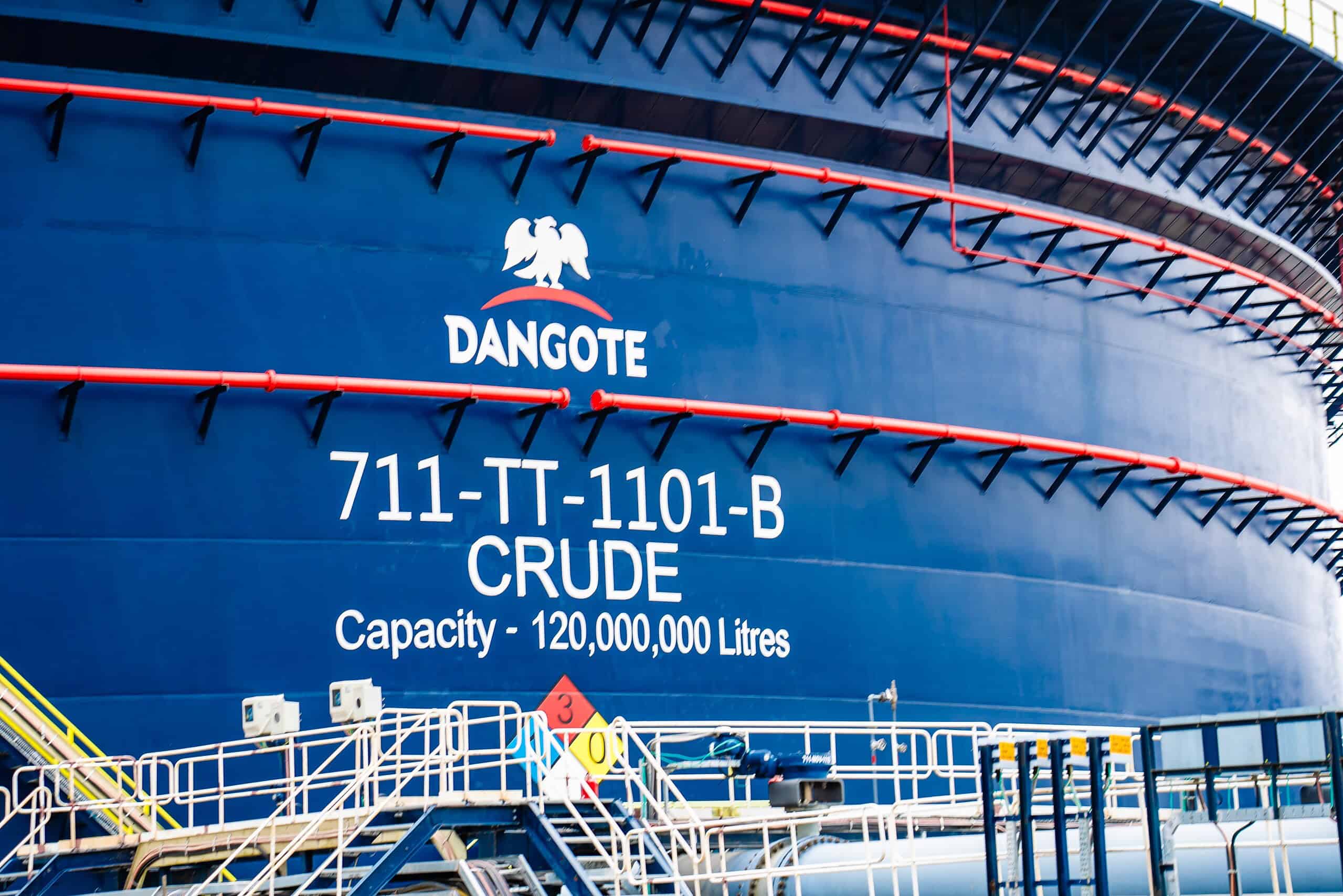
A $50 billion refinery valuation tests liquidity across African capital markets.
Dangote Refinery’s initial public offering is shaping up to be one of the most historic capital markets events for the continent—a referendum on whether Africa can mobilize the liquidity and investor confidence required to finance a globally competitive industry.
Chinenyem Anyanwu, CEO of Lagos-based Dependable Securities, said the offering is attracting both institutional investors and first-time investors, including Nigerians in the diaspora.
“The expectation is very high among the investing public,” Anyanwu tells Global Finance. “Some are Nigerians outside the country, while others are foreign investors looking for exposure to a strategic African industrial asset.” Aliko Dangote, chairman of the Dangote Group, disclosed that requests for private placement had surpassed $2 billion.
Speaking during a visit by executives from First HoldCo, the parent company of First Bank of Nigeria, Dangote said the company would be unable to meet all requests. He added that the response demonstrates investors’ confidence in the project.
Interest has also come from prominent Nigerian investors. Femi Otedola, chairman of First HoldCo, has said he plans to invest $100 million in a private placement ahead of the IPO, with proceeds from the sale of his stake in Geregu Power.
Although early market estimates put the refinery at about $50 billion, Dangote has said advisers are still determining the final valuation. Despite plans to offer only 10% of the equity to the public, the IPO would still be unprecedented for African exchanges.
“Ten percent of the refinery is still a substantial offering,” Anyanwu said. “It is larger than the market capitalization of many companies currently listed on the Nigerian Exchange, so demand is unlikely to be a problem.”
The refinery, which began operations in 2024, has already begun reshaping Nigeria’s energy trade by reducing reliance on imported fuel and positioning the country as an exporter of refined petroleum products. Built at an estimated cost of $20 billion, the 650,000-barrels-per-day facility in Lagos, where Dangote Group is headquartered, is expected to expand capacity in the coming years.
This article appears in the June 2026 issue of Global Finance Magazine.
Benchmark Nikkei 225 tops 68,000 for first time as AI-driven buying frenzy shows no signs of slowing down.
Published On 3 Jun 20263 Jun 2026
Japan’s stock market has hit an all-time high as a global buying frenzy driven by AI shows no signs of slowing down.
The Nikkei 225 rose nearly 3 percent on Wednesday, lifting the benchmark index above 68,000 for the first time.
list of 4 itemsend of list
The latest surge continues a banner year for Japan’s stock market, which is up nearly 33 percent so far in 2026.
“Investor enthusiasm over the AI boom is helping drive Asian equity markets higher,” Khoon Goh, head of Asia research at ANZ, told Al Jazeera.
“While strong demand for high-end chips has seen the top semiconductor companies in Taiwan and South Korea rally strongly, this is also benefiting Japanese markets, which are also getting some tailwind from a weak yen.”
Japanese firms involved in the semiconductor business led the gains.
Tokyo Electron, Japan’s largest manufacturer of semiconductor equipment, soared as much as 14 percent in morning trading.
Advantest, which supplies testing equipment to the semiconductor industry, rose more than 5.5 percent.
Shin-Etsu Chemical, a supplier of silicon wafers used in integrated circuits, gained about 4 percent.
Softbank, which is heavily invested in AI models, chips and data centers, fell about 3 percent, after overtaking auto giant Toyota on Monday to become Japan’s biggest company by market capitalisation.
Ferocious demand for AI chips has been driving record-breaking rallies in stock markets across the globe, taking key indexes in the US, Japan, South Korea, Taiwan to record highs.
During the past month, three memory chip makers – South Korea’s SK Hynix and Samsung Electronics, and US-based Micron – entered the elite club of firms with a market capitalistion of at least $1 trillion.
Only 17 companies have hit the milestone, all but five of which are based in the United States.
Despite concerns about the sustainability of the sky-high valuations in the sector among some investors, tech companies are continuing to commit huge sums to AI-related infrastructure.
US tech giants are expected to spend about $800bn on AI-related capital investment in 2026, according to Goldman Sachs.
Google parent company Alphabet on Monday became the latest Silicon Valley giant to outline its AI-related investment plans, announcing that it would sell $80bn worth of shares to help fund expected capital expenditures of $180-190bn in 2026.
Published on •Updated
Crude prices climbed in early Asian trading on Monday after Israeli troops pushed further into Lebanon over the weekend, fuelling investor fears that the broader Middle East conflict could escalate rather than move towards a peace deal.
At the time of writing, West Texas Intermediate (WTI) crude was up 2.88% at $89.88 per barrel, while Brent crude rose 2.43% to $93.33 per barrel.
The Israeli advance has taken place despite a nominal ceasefire in place since 17 April and just days before the next round of direct talks between Lebanon and Israel, scheduled at the State Department on 2 and 3 June.
In other early trade dealings on Monday morning, Asia-Pacific markets were mixed with South Korea’s Kospi climbing 1.31%, while Japan’s Nikkei 225 edged up 0.17%. The broader Topix index, however, slipped 0.3%.
Australia’s S&P/ASX 200 fell 0.21%, while Hong Kong’s Hang Seng Index gained 0.73%. Mainland China’s CSI 300 dipped 0.32%.
Tokyo-listed shares in SoftBank Group, meanwhile, surged 5% after the Japanese conglomerate unveiled plans to invest €45 billion over the next five years to develop artificial intelligence infrastructure in France.
In the US, stock futures were flat after Wall Street pushed further into the record books on Friday. The major indexes extended the market’s recent winning streak and closed out a solid month of gains.
The S&P 500 rose 0.2%, notching its seventh consecutive gain and ninth straight winning week — the longest such streak since 2023. The benchmark index set an all-time high for the fourth day in a row.
The Dow Jones Industrial Average gained 0.7% and the Nasdaq composite added 0.2%. The Dow and Nasdaq also reached new heights after posting record highs earlier last week.
Big technology stocks have been behind much of the market’s record-breaking streak. Their pricey stock values give them more influence in directing the market higher or lower. In May alone, technology stocks within the S&P 500 rose more than 15%, while most of the sectors in the benchmark index actually lost ground.
“The rally has been largely tech-led and supported by resilient earnings, but the key question is whether it can be sustained,” wrote Angelo Kourkafas, senior global strategist at Edward Jones, in a research note.
Tech stocks also powered the market higher Friday. Microsoft rose 5.4% and Broadcom gained 4.7%.
Additional sources • AP

naphtalina/iStock via Getty Images
Wall Street closed the week higher as easing Middle East tensions, softer-than-expected inflation data, and strong corporate earnings boosted investor sentiment.
Investor sentiment improved after President Donald Trump said a framework to end the conflict with Iran and restore shipping
Markets betting a deal will reopen the Strait of Hormuz and soothe the deep global economic uncertainty cast by the closure of the vital oil & gas route.
Published On 27 May 202627 May 2026
The United States stock market has been hovering near record highs and oil prices have plunged amid new hope that a ceasefire deal between the US and Iran is close.
The rally came on Wednesday as negotiations continued between Washington and Tehran, with markets betting that a deal would reopen the vital Strait of Hormuz, easing oil and gas supply concerns and soothing the deep uncertainty afflicting the global economy.
list of 3 itemsend of list
Oil prices declined sharply after Iran’s state broadcaster said it had obtained a preliminary document outlining a framework for a potential deal.
The price of US crude fell 5.5 percent to settle at $88.68, while Brent crude, the international oil benchmark, decreased to $92 after prices traded above $100 last week.
The report suggested that Iran would allow traffic through the strait at pre-war levels within 30 days. It added that the US would lift its naval blockade on Iranian ports.
Prices remained subdued even after the White House dismissed the report as a “complete fabrication”.
The S&P 500 rose 0.1 percent and added to its all-time high set the day before. The Dow Jones Industrial Average was up 243 points, or 0.5 percent, with an hour remaining in trading, and the Nasdaq composite was 0.1 percent higher.
Wednesday is far from the first time markets have rallied amid reports of a possible end to the war, only to slump once more as negotiations fail to deliver a resolution.
However, the strength of the current surge reflects statements over the past week that suggest the two parties may be closer than ever to reaching a deal.
President Donald Trump said during a cabinet meeting on Wednesday that US officials were not yet satisfied with the agreement, “but we will be”.
“I think they’re starting to give us the things that they have to give us,” he said. “And if they do, that’s great, and if they won’t, then the man on my left will have to finish them off,” he said, pointing at Defense Secretary Pete Hegseth.
It remains unclear whether the two parties have come to an understanding on the major sticking points, including the fate of about 440 kilogrammes (970lbs) of highly enriched uranium; Iran’s nuclear infrastructure, which the US has long insisted it wants to see dismantled in its entirety; Tehran’s ballistic missiles and its support for armed groups in the region.
It is also not clear whether a halt in hostilities in Lebanon would be part of a deal. Iranian officials have repeatedly said that any agreement would have to include that. However, Prime Minister Benjamin Netanyahu this week ordered the Israeli military to step up its attacks against Hezbollah.
There are also questions on whether Washington would agree to lift its sanctions against Iran and release millions in frozen assets.
Brent crude edged 2.5% higher on Tuesday and seems to have steadied around $100 per barrel at the time of writing, as US-Iran negotiations stall.
On the other hand, WTI dropped over 4% and is trading around $92.6 per barrel.
Overall, oil prices were declining since last Wednesday as the framework for a peace deal, or at least a longer and more encompassing ceasefire, between the US and Iran was seemingly on the verge of being agreed.
However, Iran accused the US of breaching the current ceasefire after Washington carried out what it described as defensive strikes in the southern part of the country.
Iran’s foreign ministry stated that the US attacks in the Hormozgan province, where Iranian media reported hearing explosions early Tuesday, amounted to a “serious violation” of the fragile ceasefire that has been in effect for almost seven weeks.
Meanwhile, US Secretary of State Marco Rubio said negotiations aimed at ending the conflict could require “a few days” to reach an agreement.
On Monday, US President Donald Trump also reiterated nuclear demands in a social media post, as tensions continue to surround the fundamental aspects of a possible agreement.
Investors appear to have mixed reactions to the developments with some markets seeming to price in a decrease in the probability that a deal is imminent.
In Europe, the Euro Stoxx 50 has fallen more than 0.7% while the broader pan-European Stoxx 600 is trading around 1% lower as we approach the close of Tuesday’s session.
The UK’s FTSE 100, Germany’s DAX 30, France’s CAC 40, Italy’s FTSE MIB, the Netherlands’ AEX and Switzerland’s CH20 have all dropped between 0.1% and 0.7%.
Over in Asia, Japan’s Nikkei 225 and Taiwan’s TAIEX closed flat, but South Korea’s KOSPI jumped 2.5% primarily driven by a continuous demand for AI-related equities.
However, US markets appear completely decoupled from other indices and the broader situation. Not only have WTI prices continued to fall on Tuesday but the S&P 500 also opened 0.6% higher.
Both the US and Iran had signalled headway toward a memorandum of understanding that could end the conflict and resume maritime traffic through the blocked Strait of Hormuz, while allowing negotiators a 60-day window to tackle more complicated matters such as Iran’s nuclear activities and supplies.
In his latest remarks, US Secretary of State Marco Rubio stated that the Strait of Hormuz must remain accessible “one way or the other” as traffic through the chokepoint has dropped sharply, with only a few dozen ships currently using the route each day, compared with the usual 125 to 140 vessels.
Iran has continued to permit limited shipping, prioritising vessels connected to allied or friendly nations and arranging passage through state-to-state agreements.
Continuous reports of attacks in the Strait of Hormuz underscore how far from the normalisation of energy flows and other supplies the global economy still is.
On Tuesday, the United Kingdom Maritime Trade Operations (UKMTO) reported that a tanker experienced an external blast near the waterline on its port side.
According to the agency, the vessel was located about 60 nautical miles from Muscat, the capital of Oman.
UKMTO said the tanker and all crew members were unharmed, although a quantity of bunker fuel spilled into the sea.
This is the most recent reported incident near the Strait of Hormuz at the time of writing.
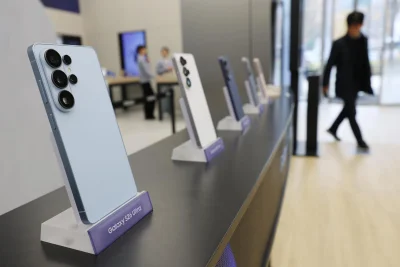

Samsung Electronics Co. topped smartphone markets in Central and South America, the Middle East and Southeast Asia in the first quarter, industry data showed Monday. In this photo, Galaxy S26 Ultra phones are on display at the Samsung Gangnam store on March 11, 2026. File Photo by Yonhap
Samsung Electronics Co. topped the smartphone markets in Central and South America, the Middle East and Southeast Asia in the first quarter on steady sales of its premium Galaxy S26 and budget Galaxy A series smartphones, industry data showed Monday.
According to the data compiled by industry tracker Omdia, Samsung Electronics sold some 12.9 million units of smartphones in the Central and South American market in the January-March period, accounting for 37 percent of the total 34.8 million smartphones sold there over the cited period.
Omdia said the performance was driven by solid sales of Galaxy A series smartphones as Samsung Electronics responded to market demand with a diversified product lineup.
In the Middle East market, where smartphone sales fell 6 percent on-year to 11 million units in the first quarter, Samsung Electronics led the market with a market share of 34 percent on strong demand for the latest Galaxy S26 and Galaxy A series smartphones.
The company also sold 4.6 million smartphones in the Southeast Asian market, accounting for 21 percent of all smartphones sold there in the first quarter.
Omdia said strong sales of the Galaxy S26 series, launched in January, and steady demand for the Galaxy A series helped Samsung Electronics expand its market share in Southeast Asia, where quarterly smartphone sales fell 9 percent from a year earlier.
Earlier, Omdia said Samsung Electronics ranked No. 1 in the global smartphone market in the first quarter with a 22 percent market share.
Copyright (c) Yonhap News Agency prohibits its content from being redistributed or reprinted without consent, and forbids the content from being learned and used by artificial intelligence systems.

Political turmoil rattles emerging markets as election risks mount
Source link
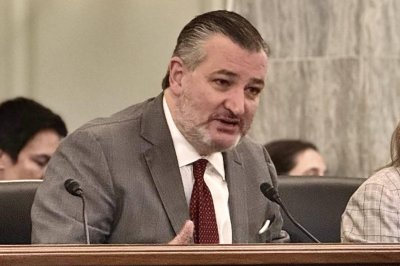

Sen. Ted Cruz, R-Texas, speaks Wednesday at a Senate subcommittee hearing focused on the recent surge in popularity of sports betting and betting by minor. Photo by Erika Tulfo/Medill News Service
WASHINGTON, May 20 (UPI) — As sports betting and prediction market platforms like Kalshi and Polymarket grow in popularity, U.S. senators on Wednesday weighed the need to regulate use of the platforms by minors.
One main issue senators raised during a hearing by the Senate Commerce Subcommittee on Consumer Protection, Technology and Data Privacy was how prediction markets use social media to advertise their platforms to underage users, putting them at risk of a gambling addiction.
“Young people are being inundated with advertisements on social media. Their favorite influencers and sports figures are introducing minors to betting,” said Sen. Marsha Blackburn, R-Tenn., who chaired the hearing.
“This is not safe. It needs to stop, and advertising to minors is disgusting,” Blackburn said.
The “No Sure Bets: Protecting Sports Integrity in America” hearing was intended to discuss the prevalence of sports betting and its impact on the integrity of matches.
It followed a unanimous Senate vote last month to ban its members and their staffs from trading on prediction market platforms, and the senators seemed determined to do more. Issues surrounding gaming continue to be a hot topic in Congress, where more than 10 active bills are related to prediction markets.
Some recent high-profile scandals surrounding prediction market platforms have also drawn attention to the industry, including the arrest of U.S. Army soldier Gannon Van Dyke last month. He was charged with using classified information to profit from a Polymarket wager related to the capture of Venezuelan president Nicolás Maduro in January.
In the same month, Kalshi fined and suspended from its platform three congressional candidates for betting on the outcomes of their own elections.
In the hearing, Sen. John Hickenlooper, D-Colo., criticized prediction markets like Kalshi for hiring social media influencers to promote their platforms to adolescent users.
“I think it’s specifically dangerous for minors to get into sports betting, and especially on prediction markets. That’s why almost all the states say [the legal betting age] is 21, not 18,” Hickenlooper said.
“Prediction markets let users as young as 18 bet on sports, but they also market their products to younger, more vulnerable audiences who are in many cases adept at getting around the platform precautions.”
A study released in January by Common Sense Media found that more than one-third of adolescent boys aged 11 to 17 admitted to engaging in gambling over the past year. Almost 60% of those who have been gambling said that they were exposed to gambling content through social media.
Kalshi, in an email, denied advertising to minors and pointed to recently implemented consumer protection measures, including requesting a selfie from the user to supplement documents verifying their age.
Hickenlooper grilled Patrick McHenry, a former U.S. representative now acting as senior adviser to the Coalition for Prediction Markets, on the guardrails to ensure underage users could not access their platforms.
McHenry pointed to the Commodity Futures Trading Commission, which oversees prediction markets and regulates them as a form of financial derivative rather than an avenue for gambling.
“The CFTC is a cop on the beat. It has the capacity to oversee this market, just as they’ve done with a broader commodities marketplace that has been around and well-versed for decades,” he said.
The Commodity Futures Trading Commission’s jurisdiction over prediction markets has been a contentious topic, since users can trade event contracts related to sports, weather, politics and more.
The Prediction Markets Are Gambling Act, which Sen. Adam Schiff, D-Calif., introduced in March, seeks to ban prediction markets from listing contracts that resemble sports bets, arguing that such contracts are considered gambling and should be subject to state regulation.
The agency argues that sports event contracts were treated as “swaps,” a term used to describe events that have potential economic consequences.
But Sen. Ted Cruz, R-Texas, pushed back against the classification of sports contracts on prediction markets as financial derivatives.
“What is the economic consequence of whether a pitcher throws a ball or strike?” he asked.
Another bill specifically targeting digital gambling advertisements to minors was introduced Monday. Sens. Richard Blumenthal D‑Conn., and Katie Britt, R‑Ala., are advocating the Gaming Advertisement to Minors Enforcement Act, which would implement a federal ban on sports betting ads on social media platforms for minors.

monsitj/iStock via Getty Images
Veteran investor George Noble said investors should avoid long-dated bonds and instead focus on energy, commodities, and gold miners as rising deficits, sticky inflation, and higher yields reshape markets.
(George Noble, in collaboration with Seeking Alpha, will host the
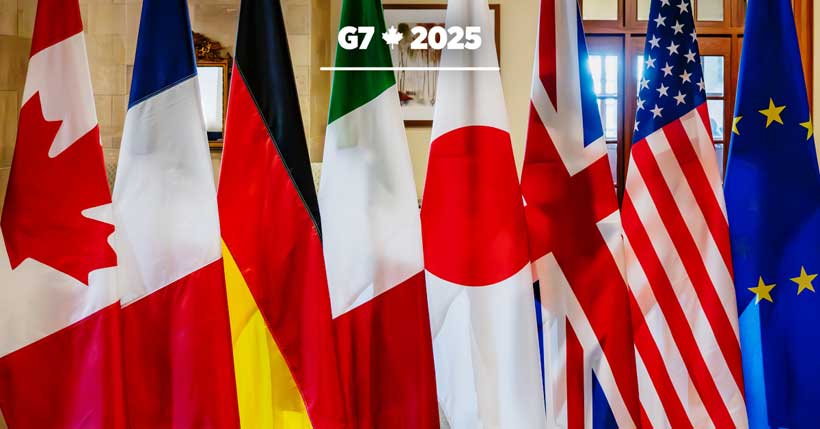
Finance ministers from the Group of Seven met in Paris to address rising global financial instability triggered by a bond market selloff and concerns over inflation linked to the ongoing conflict involving Iran.
The meeting comes at a time when global bond markets from Tokyo to New York are under pressure, as investors anticipate that higher energy prices could force central banks to maintain or increase interest rates.
Officials are also preparing for a broader discussion on structural global imbalances and coordination ahead of an upcoming G7 leaders summit.
Bond yields have risen sharply across major economies as investors reassess inflation risks. Markets are increasingly focused on whether rising energy costs will translate into sustained price pressures that limit the ability of central banks to ease policy.
French officials have described the current situation as a correction rather than a crisis, though they acknowledge growing sensitivity around sovereign debt levels and fiscal sustainability.
The volatility has raised concerns particularly in highly debt sensitive economies such as Japan, where bond market movements are closely watched for spillover effects.
Despite the shared concerns, divisions remain among G7 members over how to respond to global economic instability.
European officials have emphasized the need for coordinated, temporary, and targeted responses to market shocks, while acknowledging that consensus with the United States may be difficult.
Some members argue that global economic imbalances are becoming structurally entrenched, with consumption and investment patterns increasingly misaligned across major economies.
A central focus of the discussions is the growing imbalance in global economic activity. European officials argue that long term trends show excessive consumption in some economies, under consumption in others, and insufficient investment in parts of Europe.
These structural disparities are seen as contributing to persistent trade tensions, capital flow imbalances, and financial market instability.
Officials warn that without coordinated policy responses, these imbalances could eventually lead to more severe market corrections.
Another key agenda item is the global competition over critical minerals and rare earth supply chains, which are essential for electric vehicles, renewable energy systems, and defense technologies.
G7 members are exploring ways to reduce dependence on dominant suppliers, particularly China, through coordinated investment, joint procurement strategies, and diversification of supply chains.
Proposals under discussion include pooled purchasing mechanisms, market monitoring systems, and industrial policy coordination to strengthen supply security.
The G7 meeting highlights a convergence of financial instability and geopolitical fragmentation. Rising bond yields and inflation fears are no longer isolated market issues but are now directly linked to geopolitical disruptions in energy supply and global trade routes.
At the same time, disagreements within the G7 reflect deeper structural tensions in the global economy, particularly around debt levels, consumption patterns, and industrial policy priorities.
Efforts to coordinate on critical minerals signal a shift toward more strategic economic alignment among advanced economies, where supply chain security is becoming as important as price stability.
Overall, the meeting underscores a global transition toward a more fragmented and politically driven financial system, where economic coordination is increasingly shaped by geopolitical risk rather than purely market based forces.
With information from Reuters.
Uzbekistan’s National Investment Fund, known as UzNIF, began trading on the London Stock Exchange on Monday, marking the country’s first international equity offering.
The fund, which is managed by Franklin Templeton, also launched simultaneously on the Tashkent Stock Exchange through a dual listing structure, bringing Uzbek state-linked assets to international equity markets for the first time.
The opening ceremony at the London Stock Exchange brought together executives, investors and Uzbek officials, with speakers presenting the listing as a significant step in the country’s efforts to expand access to international capital markets.
Speaking during the ceremony, Julia Hoggett, Chief Executive Officer of the London Stock Exchange, described the IPO as “the first ever international IPO out of Uzbekistan” and said the transaction could help “more global investment to flow” into the country’s economy.
Hoggett also said the dual listing marked “a new chapter both in London and in Tashkent”, adding that the offering connected international investors with a portfolio of Uzbek companies through a single fund managed by an international asset manager.
Saida Mirziyoyeva, Head of the Administration of the President of Uzbekistan, said Uzbekistan was preparing “new listings” and expanding private sector participation, while also working on plans linked to the proposed Tashkent International Financial Centre.
Speaking from the London Stock Exchange balcony, Mirziyoyeva said the IPO was “not just about raising capital” but also about “building trust in a new generation of Uzbek institutions”.
Jenny Johnson, President and Chief Executive Officer of Franklin Templeton, described the IPO as “a defining and historic milestone” for both Uzbekistan and Franklin Templeton, saying the transaction had generated more than $2.8 billion in investor demand globally.
Johnson said orders exceeded the initial offering by more than four times during the bookbuilding process, which ran from late April to mid-May. She added that the domestic offering in Tashkent had become the country’s “largest local listing to date”, allowing local investors to participate alongside international institutional funds.
Thirty percent of the fund’s shares were offered internationally through global depositary receipts, while part of the allocation was also made available to domestic investors through the Tashkent Stock Exchange.
According to previously released information from the fund and its advisers, international demand reached around $2.9 billion (€2.6bn), with more than 160 institutional investors participating in the offering. Among them were BlackRock, Franklin Templeton and Redwheel.
The IPO raised approximately $603.6 million (€540m), valuing the fund at around $1.95 billion (€1.74bn) at the offer price. The shares were sold by Uzbekistan’s Ministry of Economy and Finance, meaning the proceeds from the transaction will go to the state rather than directly to the fund itself.
The international tranche included more than 23 million global depositary receipts, or GDRs, listed in London under the trading symbols UZNF and UZ20. One GDR represents 64,700 shares in the fund.
Cornerstone investors, including funds and accounts managed by BlackRock, Franklin Resources and Redwheel, as well as treasury companies linked to the Allan & Gill Gray Foundation, committed a combined $300 million (€268m) to the offering.
UzNIF was established in 2024 under a presidential decree and is managed by Franklin Templeton, the US-based investment company that oversees more than $1.4 trillion (€1.25 trn) in assets globally and operates in more than 150 countries.
The fund’s portfolio includes stakes in 13 state-linked companies operating in sectors considered strategic for the Uzbek economy, including electricity distribution, thermal power generation, hydropower, telecommunications, aviation, rail infrastructure, utilities and banking.
Among the companies included in the portfolio are Uzbektelecom, Uzbekistan Airways, Uzbekhydroenergo and several state energy and infrastructure operators.
The listing also reflects broader efforts to develop domestic capital markets in Uzbekistan and increase participation from local investors alongside international institutions.