Josh Kerr says breaking the men’s mile world record is an “an awesome achievement” but hints he could attempt to set a new mark.
Kerr, 28, beat Moroccan Hicham El Guerrouj’s 1999 time, crossing the line in three minutes 42.66 seconds.
The Scot became the seventh British athlete to claim the mile record and first since Steve Cram in 1985. Kerr’s previous best personal best over the mile was a British record of 3:45.34.
“The biggest goal that I had [this year] was going after the world record in the mile,” Kerr told BBC Breakfast. “It was a perfect year for it.
“With the history that the UK have in the mile distance, obviously with Sir Roger Bannister breaking the four-minute mile back in 1954 and then the slew of incredible British athletes that we had for a long time – [Sebastian] Coe, Cram, [Steve] Ovett – it was just time for me to bring that distance and that record back home to the UK.
“To be able to break that record by nearly half a second was an awesome achievement.
“On another day, with maybe a little bit more favourable wind, I could maybe take another little chunk off it. It’s with us now and if we’re in the fitness for it again, we’ll maybe go after it and take a good more chunk off it.”
In order to afford a last-minute ticket to the World Cup final at New York New Jersey Stadium — widely billed as the single most expensive sporting event ever played in the United States — you might have to be a millionaire, as the cost for a coveted seat at the venue crossed the $2m mark less than 24 hours before kickoff.
As Lionel Messi’s Argentina face Spain and their teenage superstar Lamine Yamal, ticket prices have soared on the resale market.
By Friday, nearly all tickets appeared to be sold, with a few listed on FIFA’s sales platform at about $32,000 apiece.
On Saturday, there were no last-minute tickets available on the site. However, FIFA’s resale platform had tickets available from a little less than $10,000 to as high as $2.3m.
The final caps a World Cup where fans were willing to shell out more than ever for a seat at the quadrennial showpiece, as ticket buyers confounded even the greatest cynics in the face of sky-high prices.
It is a fitting end to a tournament that has tested the limits of what fans will spend, with FIFA’s gamble paying off after concerns over visa restrictions and domestic unrest in the US.
“What FIFA did a very good job of was determining what demand would be because people [were] paying these absurd prices for just about all the 104 matches,” said Scott Friedman, a ticketing expert who previously worked for the Cleveland Cavaliers.
“A year ago, we didn’t think people would be travelling with Trump’s ICE stuff and all this other conspiracy stuff. But it’s the most popular tournament in the world by far globally, and FIFA, to their credit, they set the prices high, and people ended up paying them.”
According to the Reuters news agency, an analysis of FIFA attendance data found that more than half the 72 group matches were attended to capacity, with most others only a few hundred fans short of a full house. About 99.7 percent of available seats were filled during the preliminary stage matches, FIFA said.
The data erased early concerns that FIFA’s infamously steep prices would put off fans, after swaths of empty seats were seen around the Guadalajara Stadium for the June 11 match between South Korea and Czechia.
Higher prices, higher demand
As the tournament expanded to its largest-ever field, however, with 48 teams involved, so too did interest among fans.
Prices were set initially at $575 a ticket for group games — more than double the most expensive group ticket available during the 2022 tournament — but FIFA’s dynamic pricing system meant that many ticket holders paid far more.
Hundreds of tickets were still available for the final on Wednesday, priced at little more than $7,000 on FIFA’s platform, a surprising fact that prompted speculation over whether FIFA had finally gone too far with its prices.
But the batch of seats available was likely the result of a process known as “slow ticketing”, Friedman explained, a common practice in mega-events in which organisers restrict inventory to motivate buyers.
“They can act like they already sold their seats and kind of just dribble them in accordingly to obviously increase market demand,” said Friedman, who runs the Ticket Talk Network, dedicated to exploring how seats for sports mega-events are bought and sold.
“Like, ‘Oh, there’s only so-and-so amount of tickets left available in the section, I better buy now,’”
A screenshot of the seat map showing available tickets to the World Cup final on the FIFA Marketplace.
‘No one really knows how this works’
An opaque “dynamic pricing” process has also proven a boon for FIFA, as the sport continues its uneasy evolution from a working-class game to a pastime of the wealthy.
FIFA introduced dynamic pricing for the first time at this tournament, allowing ticket prices to fluctuate based on real-time demand and other factors.
“One reason for the frustration over the last few months is that no one really knows how this works,” said Adam Elmachtoub, an associate professor of industrial engineering and operations research at Columbia University.
“People are willing to accept dynamic pricing — we deal with it for airfare, we deal with it even [for] buying clothes — but I think when it’s such a high-profile event, transparency will help a lot.”
FIFA introduced a small number of lower-cost tickets in response to backlash over prices, as politicians including New York City Mayor Zohran Mamdani lobbied for locals to have access to affordable seats.
A high-quality tournament also spurred demand, with the four top-ranked nations in the semifinals for the first time since rankings were introduced, and Sunday’s final will feature the 39-year-old Messi in what is probably his final World Cup match.
“The notion of what is fair pricing here is complex because entertainment is not like a necessity,” said Elmachtoub.
Fan appetite holds up
Lax rules around the resale market in the US have only served to accelerate the pocket-emptying around the tournament, with second-hand ticket sellers largely empowered to set their own prices.
The rules in the US stand in contrast to cohosts Mexico, where resellers are prohibited from listing their tickets above what they spent — and much of the rest of the world.
A flood of final-week listings brought prices down on resale platform SeatGeek, with the average ticket for the final listed for more than $11,000 as of Friday. Still, that figure easily made the final the most expensive event that the platform had sold, 8 percent above the 2024 Super Bowl, SeatGeek said.
“What we’re seeing with this year’s World Cup is that demand fluctuates with every round and every match-up reveal,” said Chris Leyden, senior director for marketing at SeatGeek.
“The appetite for this tournament has held up remarkably well from the group stage through the knockouts.”
An Argentina fan holds a sign for a match ticket in Kansas City before his team’s quarterfinal against Switzerland [Lee Smith/Reuters]
World Cup for ‘a happy few’
Human rights experts warned, however, that the tournament remained out of reach for far too many fans.
At what FIFA President Gianni Infantino had promised would be the most inclusive World Cup, supporters from multiple countries were unable to obtain visas, according to the Sport & Rights Alliance.
“It’s been a World Cup for a happy few,” Ronan Evain, executive director of Football Supporters Europe, told reporters.
“Those in Europe, Norwegians, Scottish, who have enough purchasing power to travel to the US, don’t need a visa to enter the country and can afford the extortionate ticket prices.”
Ten newly identified victims were buried as the more than 8,000 slain Bosnian Muslim men and boys were remembered.
Published On 11 Jul 202611 Jul 2026
Thousands have gathered in Bosnia and Herzegovina to mark 31 years since the Srebrenica genocide, as leaders and activists worldwide use the anniversary to call on people to fight dehumanisation.
On Saturday, mourners, survivors, foreign dignitaries and religious leaders gathered at the Srebrenica-Potocari Memorial Center to commemorate those who were killed in 1995. People took part in the annual peace march before 10 newly identified victims were buried.
Recommended Stories
list of 3 itemsend of list
Bosnian Serb forces overran the eastern Bosnian town of Srebrenica on July 11, 1995, killing more than 8,000 Bosnian Muslim men and boys over several days. Srebrenica had been declared a protected “safe area” by the United Nations Security Council two years earlier.
Denis Becirovic, Chairman of the Presidency of Bosnia and Herzegovina, said honouring those who were killed was crucial to maintaining stability.
“If we fail to preserve the truth about our past, we will have neither a present nor a future,” he said.
The Dutch ambassador to Bosnia and Herzegovina, Henk van den Dool, said education was key to preventing a repeat of similar atrocities.
“One of the common goals we share with the Srebrenica Memorial Center, with the mothers, and with the survivors is to translate this enduring warning into meaningful action. One of the most meaningful and effective ways to do that is through education,” he said.
Pursuit of justice
Every year on July 11 , newly identified victims are buried at the Srebrenica-Potocari Memorial Center, as investigators continue to search for the remains of people buried in mass graves in surrounding areas.
More than a thousand victims remain missing following the genocide, which is widely recognised as the worst atrocity committed in Europe since the Holocaust during the Second World War.
Pakistani Prime Minister Shehbaz Sharif called the massacre “a crime against humanity”, while the Mayor of London, Sadiq Khan, posted on X that he was “deeply moved” during his trip to Srebrenica last week.
“Today, as we stop to remember the victims and families who mourn them, we must also commit ourselves to fighting violence and dehumanisation wherever we encounter it and stopping hatred from taking hold,” Khan said.
More than 100,000 people were killed during the Bosnian War between 1992 and 1995. The conflict followed the dissolution of Yugoslavia, triggering a series of ethnic conflicts and wars of independence among the Balkan states that had previously formed a single country.
In recent days, campaigners have drawn comparisons between the Srebrenica genocide and Israel’s genocidal war on Gaza. Kenneth Roth, former executive director of Human Rights Watch, decried that senior Israeli officials are yet to be held legally accountable for their crimes.
“The United Nations this week remembered the genocide in Bosnia – the 8,000+ Muslim men and boys killed in Srebrenica in July 1995. The leaders of the genocide were convicted. The perpetrators of Israel’s genocide in Gaza remain at large,” Roth said on X.
Weekly insights and analysis on the latest developments in military technology, strategy, and foreign policy.
The U.S. Navy’s Nimitz class aircraft carrier USS Abraham Lincoln has been underway for 210 straight days – well over half a year – in support of Operation Epic Fury and the subsequent blockade of Iran. This looks to be a record-setting milestone. Lincoln, the flagship of Carrier Strike Group 3 (CSG-3), is currently operating in Middle Eastern waters.
Aircraft attached to Carrier Air Wing 9 fly over the flight deck of USS Abraham Lincoln, June 28, 2026. U.S. Navy photo U.S. Central Command Public Affa
Abraham Lincoln, the fifth Nimitz class supercarrier and self-styled “most capable CSG in the fleet,” departed Naval Base Guam on December 12, 2025, after a quick one-day port call. Port calls, or temporary visits to friendly countries, allow the crew to disembark for “liberty” – to step on solid ground – and break up the grueling, nonstop schedule experienced during deployments. However, the stop in Guam, a strategic U.S. territory in the Western Pacific, was so brief that much of the crew likely never went ashore.
USS Abraham Lincoln pulls into Naval Base Guam for a scheduled port visit, Dec. 11, 2025. U.S. Navy photo by Valerie Maigue Valerie Lynn Maigue
Lincoln and CSG-3, made up of more than 5,000 Sailors and Marines, quietly left Naval Base San Diego three weeks earlier on November 21, 2025. At the time, the U.S. military buildup in the Caribbean was the focus of public attention, and Lincoln was expected to conduct a routine Pacific patrol. An Iran contingency was on the table following Operation Midnight Hammer, when B-2 bombers struck nuclear targets deep inside Iran, and Lincoln’s Composite Training Unit Exercise (COMPTUEX) included preparing for a fight in the Middle East. COMPTUEXs are weeks-long capstone training events for carrier strike groups that come right before they deploy.
Abraham Lincoln pulls out of San Diego on November 21, 2025. U.S. Navy photo by Mass Communication Specialist 3rd Class Mario Castro Gamez Petty Officer 3rd Class Mario Castro Gamez
After leaving Guam, Lincoln conducted operations in the South China Sea before entering the Indian Ocean and arriving in the northern Arabian Sea in late January. Aircraft from Carrier Air Wing (CVW) 9 launched sorties in the opening salvo of Operation Epic Fury, and the CSG was instrumental in enforcing the naval blockade that followed. Since the Memorandum of Understanding (MOU) was signed on June 17, Lincoln has remained in the northern Arabian Sea, launching retaliatory strikes during the recent skirmishes.
F-35C Lightning II, attached to Marine Fighter Attack Squadron (VMFA) 314, staged for flight operations on the flight deck of USS Abraham Lincoln in support of Operation Epic Fury, Mar. 3, 2026. U.S. Navy photo U.S. Central Command Public Affa
The CSG has been deployed for more than seven months now and would likely be among the first naval assets to rotate out of the theater if an agreement is reached between the U.S. and Iran. The details and scale of the drawdown of forces in the U.S. Central Command (CENTCOM) AOR, as per the MOU agreed to by American and Iranian officials last month, are to be determined within 30 days if a final deal is reached before the deadline in mid-August. A new spate of tit-for-tat strikes just this week has created serious uncertainty around future talks between Washington and Tehran. More than 20 U.S. Navy surface combatants are still operating in the region.
“We’ve officially claimed the title for most consecutive days at sea for any modern aircraft carrier,” Lt. Commander Alexis Travis, an officer currently serving aboard Lincoln, wrote on Instagram on June 16.
We have reached out to the Navy to confirm whether this is indeed a record-breaking period at sea. However, we have not received a response as of the time of publication.
In June 2020, the U.S. Navy did announce that the Nimitz class carrier USS Dwight D. Eisenhower and the Ticonderoga class cruiser USS San Jacinto had set a new record after spending 161 days consecutively operating at sea. Eisenhower did not make a stop in port until the next month, having been at sea for 206 consecutive days in the end. This was, in part, due to the COVID-19 pandemic, when port access was severely limited due to quarantine restrictions. The carrier had left Norfolk in January 2020 for a deployment to the Middle East and launched combat sorties during Operation Freedom’s Sentinel in Afghanistan, returning home nearly seven months later without a single stop. Prior to that, USS Theodore Roosevelt held the record in 2002, supporting the post-9/11 response. Roosevelt left Norfolk in September 2001 to participate in Operation Enduring Freedom and spent 160 days at sea before anchoring in Bahrain for a reprieve in February the following year.
USS Dwight D. Eisenhower transits the Arabian Sea on June 12, 2020, during a record-setting deployment. U.S. Navy photo by Mass Communication Specialist 1st Class Aaron Bewkes
In April, USS Gerald R. Ford, the newest American carrier and largest in the world, logged the longest deployment on record at 326 days. Ford, while deployed for nearly eleven months, was operating primarily in the U.S. European Command-6th Fleet area of responsibility (AOR) and U.S. Southern Command-4th Fleet AOR, which is relatively friendly territory, and made at least nine port calls in Marseille, Oslo, Palma de Mallorca, Split, St. Thomas Island, and Souda Bay. Between port calls and stops to refuel and make emergent repairs, Ford averaged a visit to port every 36 days.
USS Gerald R. Ford arrives at the NATO Marathi Pier Complex in Souda Bay, Crete, Greece, during a scheduled port visit on Feb. 23, 2026. U.S. Navy photo by Mass Communication Specialist 3rd Class Hannah Donahue Petty Officer 3rd Class Hannah Donahue
The Lincoln CSG, which also includes guided-missile destroyers from Destroyer Squadron (DESRON) 21, served as the tip of the spear in Operation Epic Fury. DESRON 21 fired dozens of Tomahawk Land Attack Missiles (TLAMs) against Iran, and provided defensive measures for the CSG, using Standard Missiles and other armaments to intercept incoming threats. The embarked “air wing of the future,” CVW 9, launched thousands of sorties and pressured Iran’s southern axis during the 40-day war, successfully escorted commercial ships through the contested Strait of Hormuz, and hunted and disabled Iranian-affiliated vessels attempting to run the blockade. The carrier’s air wing notably includes F-35C Joint Strike Fighters assigned to Marine Fighter Attack Squadron 314 (VMFA 314), giving it better penetrating capabilities. The CSG has proven its ability to blend and interoperate high, medium, and low-end naval and joint capabilities, for offensive and defensive purposes, as well as integrate across platforms, including manned and unmanned systems, conventional and unconventional, surface and subsurface, overt and covert, and more, during nonstop combat operations.
USS Abraham Lincoln, USS Michael Murphy, USS Frank E. Petersen Jr., USNS Henry J. Kaiser, USNS Carl Brashear, USCGC Robert Goldman, and USCGC Clarence Sutphin. Jr. sail in formation in the Arabian Sea, Feb. 6, 2026. U.S. Navy photo by Mass Communication Specialist 1st Class Jesse Monford
The destroyers escorting Lincoln were able to make port calls before the war began, but some have been at sea for over four months. USS Frank E. Petersen Jr., the Integrated Air and Missile Defense (IAMD) Commander, moored at Navy Terminal in the Port of Duqm, Oman, for two days in mid-February. USS Michael Murphy, the last destroyer to leave the Persian Gulf before the first shots were fired, docked in Dubai, UAE, from February 25-27, and left the day before the city was targeted in the initial waves of Iran’s counterattack. Satellite imagery reviewed by TWZ at the time showed Murphy’s precise location the day prior was targeted. USS Spruance, the only San Diego-based destroyer operating with CSG-3, deployed on the same day as Lincoln, and has been at sea for just as long, with one port call in December in Guam. Spruance was spotted firing a black TLAM on the first day of Epic Fury.
Arleigh Burke-class guided-missile destroyer USS Spruance fires a Tomahawk Land Attack Missile (TLAM) in support of Operation Epic Fury, Feb. 28, 2026. U.S. Navy photo NAVCENT Public Affairs
“Literally no one signed up for this,” Lt. Commander Travis also wrote on Instagram. “And yet here we are, still doing it safely and successfully. Just a strong group doing tough stuff, breaking records and then waking up and doing it again.”
When the crew serving tirelessly aboard Lincoln will next set foot on land is unknown, and with the fate of the U.S.-Iran MOU similarly uncertain, it may be some time.
Contact the author: ian.ellis-jones@teamrecurrent.io
Demonstrators mark the second anniversary of a 2024 protest where 60 people were killed by security forces.
Published On 25 Jun 202625 Jun 2026
Kenyan police have dispersed protesters in the capital and detained others who took to the streets in memory of the demonstrators who were killed in anti-government rallies against tax rises two years ago.
Interior Minister Kipchumba Murkomen said on Thursday that a total of 355 people were arrested in various parts of the country. He called those detained “criminals” and apologised for the use of barricades and other security measures aimed at containing the protests.
Recommended Stories
list of 3 itemsend of list
“We regret the inconveniences occasioned by these measures, and at the same time appreciate their effectiveness in securing the city and other parts of the country,” Murkomen told reporters.
A correspondent for the Reuters news agency also saw police fire tear gas to disperse people who were gathering peacefully outside of Nairobi’s police station after forces detained six people outside parliament, where they had laid flowers.
According to the Kenya National Commission on Human Rights, organisers had planned to mark the second anniversary of the demonstrations that had left at least 60 people dead after protesters had breached parliament grounds in 2024.
But in Nairobi, shops and restaurants in the central business district remained closed as police set up roadblocks with water-cannon trucks.
Reporting from Nairobi, Al Jazeera’s Malcom Webb explained that the heavy police response to the protest was due to the government’s desire to avoid a repeat of the events two years ago.
“This comes following a series of different protests in recent weeks, some led by [President William] Ruto’s political opponents, others by transport unions over increases in fuel prices and a state of simmering discontent that hasn’t really recovered since that day two years ago when dozens of people were killed,” he said.
Opposition leaders joined the victims of alleged police brutality and families of protesters who were killed in the crackdown before they headed to parliament.
“As parents, we sought permission just to come here … to mourn and lay flowers for our children. But when we arrived, we were shocked because the police blocked us,” said Edith Wanjiku, whose 19-year-old son Ibrahim Kamau was killed in 2024.
“That is very shameful,” she continued.
“And one thing I would ask of President Ruto: those police officers who killed the children – because they are known – I am only asking for justice for those children and also compensation,” she added.
Protest organisers have said that they want a credible investigation into past police conduct and guarantees against the use of excessive force.
While Ruto has acknowledged what he called “instances of excessive and extrajudicial actions by members of the security services” and said last week that two billion Kenyan shillings ($15.5 million) had been set aside for victims of protest-related abuses, some activists have said it was not enough.
Thousands gathered in Tehran on the eve of Ashura, the first since the killing of Iranian supreme leader Ali Khamenei. Mourners carried flags, banners and images of Khamenei as Iran prepared to commemorate one of the most significant events in the Shia calendar.
Yamal makes a goal-scoring return for Spain as European champions get their World Cup campaign back on track.
Inspired by Lamine Yamal, Spain strolled to a 4-0 win over Saudi Arabia in Group H, as Mikel Oyarzabal restored his reputation with two goals and Luis de la Fuente’s side found their groove after an underwhelming World Cup opener.
Yamal opened the scoring in the 10th minute on Sunday and Oyarzabal, who failed to register a touch in the opening half hour in Monday’s scoreless draw with Cape Verde, scored twice in quick succession as Spain had the game wrapped up by half-time.
An own goal shortly after the interval failed to reopen the floodgates, as Spain used the opportunity to make changes and rest their scorers.
De la Fuente celebrated his 65th birthday in style, and Yamal, whose only football in the last two months came as a substitute against Cape Verde, sparked life into the team that returned to Atlanta Stadium.
A huge cheer greeted Yamal’s first touch, twisting and turning his marker before playing a teasing cross that was cleared by Abdulelah Al-Amri, the scorer of Saudi Arabia’s goal in their 1-1 match with Uruguay.
The opening goal came with Oyarzabal sending an inviting ball across the box, and Yamal being there to slide in at the back post and score his first World Cup goal.
Having toiled in vain in their opening game, the goal relaxed Spain, who began to carve open the Saudi defence at will, and the second goal came from a corner.
Dani Olmo sent the ball back into the mix which the Saudis failed to clear and Aymeric Laporte nodded down to Oyarzabal, who bundled the ball into the net.
Three minutes later, Spain were in again with a beautifully worked goal. Pedro Porro floated a pass into the area and the ball never touched the ground until it found the net.
Marc Cucurella’s hooked pass found Olmo, who headed into the six-yard box for Oyarzabal to tap it in on the volley, as the striker proved that given the right service, he is Spain’s man to deliver.
Spain replaced Yamal and Oyarzabal for the second half, but picked up where they left off when the Saudi goalkeeper blocked Cucurella’s volley from a corner and the ball ricocheted off defender Hassan Al-Tambakti and into the net.
The European champions continued to create chances, but understandably took their foot off the gas on a day when even Vozinha, Cape Verde’s 40-year-old hero keeper, would have struggled against this version of Spain, who look back to their best.
Spain advance to four points in the standings, while Saudi Arabia stay on one after two games each. The other teams in the group, Cape Verde and Uruguay, meet later on Sunday in Miami.
Oyarzabal said he was happy to get the win and to have given his own performance after criticism of how he played against Cape Verde.
“It’s not about proving myself. I’ve always said I feel loved by my teammates, the coach, the staff day to day. That’s what counts for me,” he told the media.
“People will talk outside. We know how the football world works, but we have to stay relaxed.”
Yamal said it was a “dream” to score in a World Cup.
“I watched the last World Cup from a classroom, so being able to score here with my mum and my family in the stands is a dream come true,” he said.
Here’s a bit of Dodgers trivia for the bandwagon fans in our midst: Who was the manager before Dave Roberts?
That was 11 years ago. He is Don Mattingly, who returns to Dodger Stadium on Friday as manager of the Philadelphia Phillies.
The Phillies were 9-19 when they fired Rob Thomson and replaced him with Mattingly. They are 20-8 since then, a better record than the Dodgers have posted over the same span.
In Philadelphia, Mattingly got his chance because the Phillies were losing. In Los Angeles, Mattingly departed amid a run of winning.
For Mark Walter and what was then a new Dodgers ownership group, that was not enough. As Walter enters his first offseason as the Lakers’ controlling owner, it’s worth keeping that in mind.
“They have a hunger for victory that is the greatest I’ve ever seen, without exaggeration,” former Dodgers general manager Ned Colletti told me.
In two seasons with Rob Pelinka as president of basketball operations and JJ Redick as coach, the Lakers won division titles both times, failing to get out of the first round of the playoffs one year and failing to get out of the second round of the playoffs the next.
In 2013 and 2014, with Colletti as GM and Mattingly as manager in the first full seasons of Walter’s ownership, the Dodgers won division titles both times, failing to get out of the first round one year and failing to get out of the second round the other.
In 2015, the Dodgers won the division but failed to get out of the first round of the playoffs. Friedman offered Mattingly a short-term extension, and Mattingly opted for a long-term deal to manage the Miami Marlins.
After Walter and Co. took over the Dodgers, Mattingly told me Wednesday, there was one year he thought he might be fired: 2013, when the Dodgers started 30-42 and fell 9 1/2 games out of first place in mid-June. The Dodgers then reeled off 42 wins in 50 games and won the division by 11 games.
He appreciated that Walter, team president Stan Kasten and eventually Friedman did not simply bring in a new manager at their first chance.
“You get to evaluate and see,” Mattingly said, “and you have your vision for where you want it to go, and sustain it. That’s the thing they’ve been great at: sustaining it. It’s been year after year. You can’t really doubt what they’re doing.”
Kasten’s first move was not to fire Colletti, but to ask what ownership could provide for him so that he could do a better job. The owners quickly responded by funding the addition of impact players (Adrián González and Hanley Ramirez), extending the contract of a popular home-grown player (Andre Ethier), revitalizing the Dodgers’ Latin American talent pipeline (Yasiel Puig and Julio Urías), renovating the clubhouse and, at Mattingly’s suggestion, refreshing the family room.
“We started to be able to compete with a different mindset, which was invaluable,” Colletti said.
Similarly, with Friedman and former Dodgers general manager Farhan Zaidi as consultants, the Lakers have added two positions for assistant general managers, overhauled the scouting staff, created more room at team headquarters by relocating their G League affiliate to the Coachella Valley, and borrowed from the Dodgers’ playbook in modernizing medical and biomechanical facilities.
This summer could be critical in determining the future of the Lakers, including who runs them. Walter can spend all he wants, as he does with the Dodgers, but the luxury-tax penalties in the NBA are more severe than in baseball and could restrict the roster flexibility so coveted by the likes of Friedman and Zaidi. A star-studded roster beyond Luka Doncic — say, a trade for Giannis Antetokounmpo? — could require the Lakers to sacrifice the draft picks that also would limit roster flexibility.
The Lakers will have the resources. Walter will want to see the creativity and the championships — or, at least, the path to them. Ultimately, he will decide what he did with the Dodgers: Does he have the best people he can get running the team?
“You see many organizations that win, and then they take a step back,” Colletti said. “They feel like they have some goodwill in the bank, they don’t have to chase the biggest free agents, and they don’t need to re-invest in the team or the stadium.
“From my vantage point, all the way up and down that organization and especially at the ownership level, it’s almost like they’ve never won, and they’re hungry to get there. To be there and be unsatisfied — that quest to be as great as you can be — is one of the great indicators of the excellent ownership it is.”
In the meantime, any advice for Pelinka and Redick? Colletti let out a hearty laugh.
“Do your best,” he said, “and turn it up a notch.”
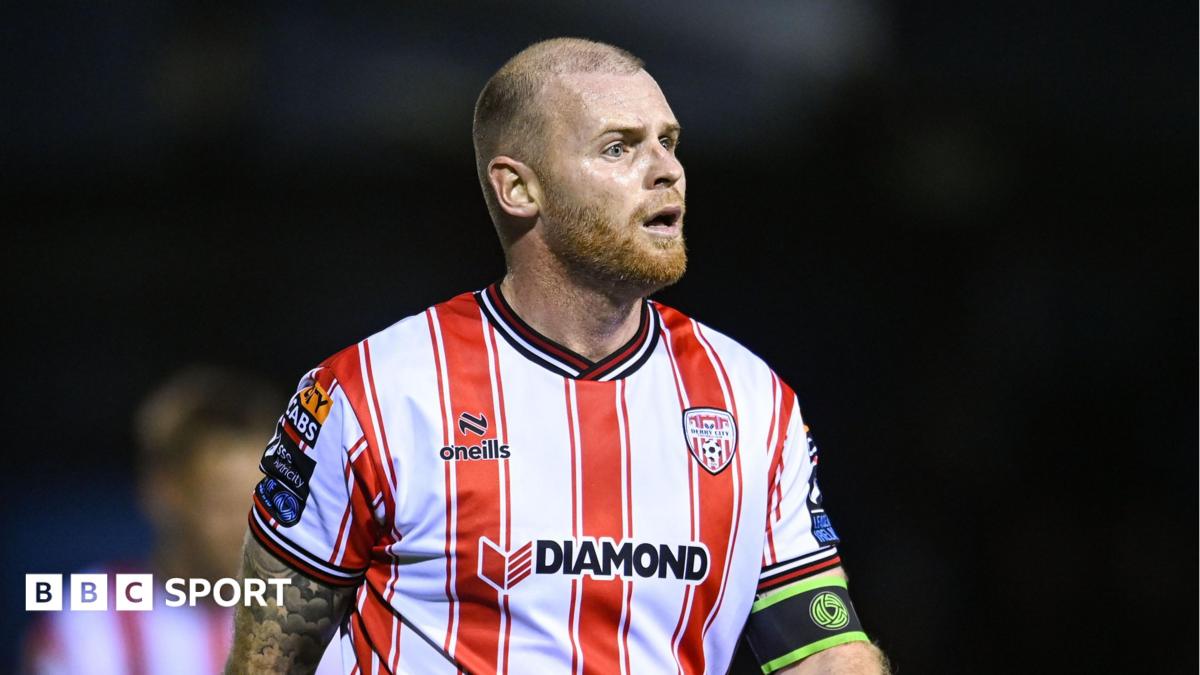
Mark Connolly has been appointed Derry City director of football after his decision to call time on his playing career.
Connolly left Derry to link up with former Candystripes boss Ruaidhri Higgins at Coleraine in January.
The Clones-born defender, 34, started his professional career at Bolton before spells at Crawley Town, Kilmarnock and Dundee United, where he won the Scottish Championship title in 2020.
He joined Derry in 2022 following a loan stint at Dundalk and helped the Brandywell club win the 2022 FAI Cup.
“I am delighted to rejoin the club in a new role and I can’t wait to get started,” said Connolly.
“I look forward to working with Tiernan [Lynch, manager] and everyone at the club to help create an environment where players, staff and the academy can thrive.”
Coleraine boss Higgins said Connolly “had a great influence on the group” during his time at the Showgrounds as the Bannsiders won the Irish Cup for the first time since 2018.
“He probably didn’t play as much as he would’ve liked towards the end, but his high level of professionalism remained the same,” said Higgins.
“Mark has been exemplary with me and my staff throughout our years working together at Derry City and Coleraine.
“Naturally at 34-years-old, you think about what’s next in your career and this new role at Derry City is a brilliant opportunity for him.
“I’m not surprised he’s been offered that role as he has all the characteristics to be a success. We wish him the very best of luck in the next stage of his career.”
Derry City sit sixth in the League of Ireland Premier Division standings and host Bohemians on Friday (19:45 BST), a game that can be watched on the BBC iPlayer, BBC Sport website and app.
Two amateurs with unforgettable names made their mark at Riviera Country Club on Saturday.
Asterisk Talley and Aphrodite Deng — both barely old enough to get behind the wheel — turned in remarkable performances in the third round of the U.S. Women’s Open, each proving she belongs among the best players in the game.
On a postcard day, Talley assembled a bogey-free round suitable for framing. The 17-year-old from Fresno had five birdies a day after a 75 put her in peril of missing the cut. By the end of her morning round, she had gone from an afterthought to a tie for 15th.
“I was just feeling like the hole was so big today,” said Talley, who has gone 22 consecutive holes without a bogey. “Couldn’t miss.”
According to Elias Sports Bureau, Talley’s 66 was the third-lowest round by a woman in a major championship since 1980. It was also the lowest score by an amateur in the final two rounds of a U.S. Women’s Open.
Deng, 16, made a similar splash later in the day, opening her round with three consecutive birdies to play her way near the top of the leaderboard. Last year, she became the first Canadian to win the U.S. Girls’ Junior Championship.
Asterisk Talley watches her tee shot on the fifth hole during the second round of the Chevron Championship tournament in April.
(David J. Phillip / Associated Press)
It’s rare for a player to go from junior champion to contender in the Open in back-to-back years, but not unheard of. In 1975, defending junior champion Nancy Lopez finished tied for second in the Open.
As of press time Saturday, the lowest round of the day — and the tournament — was the 75 of Charley Hull, a crowd favorite who has won three times on the LPGA Tour but is still looking for her first major victory.
Hull, who is English, is a colorful character who went viral during the 2024 Open for smoking a cigarette while signing autographs and playing. She finished second in that tournament at Lancaster (Pa.) Country Club.
Like Talley, Hull was in danger of missing the cut after opening with unspectacular rounds of 73 and 72. On Saturday, she had seven birdies and a bogey. That left her tied for sixth at the end of her round.
“I kind of like chasing,” Hull said of her move up Saturday. “I just find it more fun and just I can then be free and then just play golf how I want to play golf.”
Methodically moving up the board is No. 1-ranked Nelly Korda, the biggest needle mover in women’s golf. She collected five consecutive wins last season and seven overall. Though she finished in a runner-up spot at Erin Hills last year, she has yet to win an Open.
Korda frequently found trouble off the tee in the opening round and shot a 73, but came back strong Friday with a 67 and had two birdies in her first six holes Saturday.
“It was weird because I was striking it so well Monday through Wednesday, and all of a sudden I just really didn’t,” Korda said after her Friday round. “I had no idea what was going on [Thursday] with my driver. So I tried to figure it out on the range after the round and kind of got a little bit of something kind of going.”
A big story heading into the weekend was the rise of Alison Lee, who held the lead after Friday and is balancing motherhood with her chase for her first major championship. She is staying with her parents in Valencia, who are watching her 1-year-old son, Levi, while she plays.
Lee, who played at UCLA, cooled a bit Saturday with two bogeys in her first four holes and was midway through her round at press time.
Also in contention is Jennifer Kupcho, who shot a 66 on Thursday. If she continues to hold her position near the top of the leaderboard, and if former USC standout Allisen Corpuz is in the mix, it could get interesting.
Kupcho’s husband, Jay Monahan, caddies for Corpuz, who won the 2023 Open at Pebble Beach.
“Jay and I don’t talk about golf,” Kupcho said. “We get back, and we don’t talk golf. I think that’s one thing that’s been really good about our relationship. … If I do want to talk about it, I’ll talk to him, but he’s not going to bring it up to me.”