mark baldassare

Multiple California ballot measures remain undecided

The fate of multiple high-stakes California ballot propositions remained undecided Wednesday, as poll workers continued to tally votes from across the state.

Other measures have generated decisive action from voters on such issues as public funding for housing and voter identification.

Six races have been called by the Associated Press, according to The Times tracker. They include four propositions — 1, 2, 3 and 37 — and two failed measures — 39 and 44. Eight remained undecided.

So far, there have been no big surprises, said Mark Baldassare, statewide survey director at the Public Policy Institute of California. The verdicts are “consistent with what we were seeing in the preelection polling.”

Undecided

Among the undecided items is Proposition 4, which would allow state and local governments to use public money to help finance political campaigns — something California largely has prohibited since 1988. The measure would lift that prohibition, subject to restrictions on how the money could be used and who could receive it. As of Wednesday, votes were leaning slightly against the proposition.

Another undecided item, Proposition 5, would change the process for recalling an elected official. It would separate the decision to recall the official from the choice of who replaces them, creating a second election or appointment process to determine the successor. The race was very tight Wednesday, with votes in favor holding a narrow edge.

Proposition 38 is leaning toward a passing vote by a solid margin. The measure would authorize the state to issue $8.4 billion in bonds to fund immunology and immunotherapy research that aims to cure and prevent cancer, heart disease and Alzheimer’s disease. Half the money would go to a single UC-affiliated nonprofit research institute, with the other half distributed through research grants.

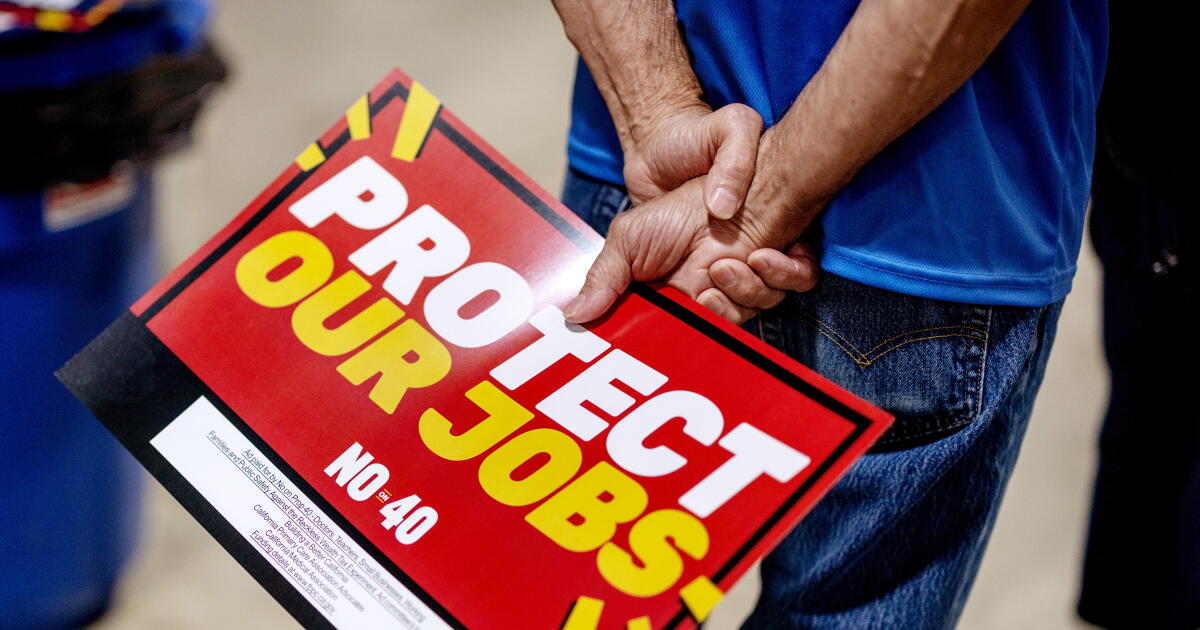
One closely watched item, Proposition 40 — the so-called “billionaire tax” — also is leaning toward a likely rejection from voters. The proposition would create a one-time 5% tax on individuals and trusts with wealth of more than $1 billion, with the revenue going toward healthcare, food assistance and education. State officials estimated it would generate tens of billions of dollars for the state, but others, including Gov. Gavin Newsom, warned that it would lead wealthy residents to leave California and lead to future budget problems.

Two separate ballot measures, Proposition 41 and Proposition 42, were crafted to nullify the wealth tax and still remain too close to call.

Proposition 43, meanwhile, would require a two-thirds vote, rather than a simple majority, to approve certain local government taxes. It was leaning toward rejection.

Another big-ticket item, Proposition 45, was opposed by a small margin of voters but still too close to call. It would change the state’s landmark environmental review process, the California Environmental Quality Act, by shortening deadlines and permitting rules for public and private development projects. Supporters say it would cut costly delays and expedite essential housing, transportation, water, health and education projects. But opponents say it would clear the path for more artificial intelligence data centers.

Prop. 45 “has been interesting all along because it fits in with concerns about housing affordability,” Baldassare said. However, it also raised questions about “unintended consequences” for the environment.

“CEQA reform is complicated, let’s face it,” he said. “That has made the voters more split.”

Passed

The passing propositions each won with what were considerable margins Wednesday.

They included Proposition 1, which authorizes $11.25 billion in state bonds to finance affordable housing programs, with $1.25 billion set aside for housing for veterans.

Another passing item, Proposition 2, gives lawmakers the ability to put more money into California’s “rainy day fund,” doubling the reserve from 10% to 20% of the state’s general fund revenues. It also would require the state to save more in years when tax revenues are high, helping to weather economic ups and downs. It passed with a clear majority, according to The Times tracker.

Voters also approved Proposition 3, which permanently extends a high-income tax increase on California’s highest earners. The increase was approved by voters in 2012 and was scheduled to expire in 2031. The money generated by Proposition 3 would flow to education, with 89% going to K-12 schools and 11% to community colleges. It is separate from Proposition 40 — the more controversial tax on California’s wealthiest citizens, which remains undecided.

“We saw a majority of Californians in our poll saying that the wealthy should be taxed,” Baldassare said. And while voters were warned that Proposition 40 could push billionaires out of the state, Proposition 3 seemed a more palatable way to do that.

Proposition 37 passed with a clear majority of the vote. It authorizes up to $25 billion in state-issued bonds to create a loan program to help middle-income Californians buy newly constructed homes. Qualified buyers can borrow up to 17% of the price of the home while contributing 3% of the down payment from their own funds.

“There’s been strong support for the idea of spending more money on housing affordability through bonds, not taxes, and that explains the support that we saw all along for Proposition 1 and Proposition 37, despite the fact that it’s a lot of bond money,” Baldassare said.

Rejected

Californians rejected Proposition 39, which would have required voters to provide government-issued identification when voting in person or provide identifying information on mail-in ballots. It would have changed California’s signature-based voter identification system and was a resounding rejection of the broader fight playing out over onerous voter ID measures at the national level.

This was another measure where voters received a clear message, including from governor-elect Xavier Becerra, who urged Californians to vote no, Baldassare said.

“We saw in our polling before the election that most Californians don’t think that there’s a problem with the way that we go about our elections and casting ballots and counting votes … so that sort of didn’t align with thinking,” he said.

California voters also resoundingly rejected Proposition 44. The act would have required certain nonprofit community health clinics serving low-income and medically underserved populations to spend at least 90% of their annual revenue on health care services. Those that fell short would be penalized. As of Wednesday morning, a whopping 82% of votes were against the proposition, more than any other.
Source link

Democrats dominate California but face challenges after election

For all their dominance, California Democrats will emerge from Tuesday’s election facing considerable challenges.

As polls show nearly 6 out of 10 Californians believe the state is going in the wrong direction and even more anticipate bad financial times ahead, the state’s new governor and legislators will have to confront some chronic problems, including a severe budget deficit, housing unaffordability, homelessness, and rising energy and insurance costs.

They will also have to grapple with difficult decisions on whether the state can provide Medi-Cal healthcare to low-income residents, how to make the state more resilient to climate change, and who pays for wildfire damage.

“There’s not going to be a long honeymoon period,” said Mark Baldassare, the survey director at the nonpartisan Public Policy Institute of California.

Californians are in a “pretty grumpy mood,” Baldassare said. Although their dissatisfaction is mostly hyperpartisan, with Democrats pointing the finger at President Trump and Congress as Republicans blame Gov. Gavin Newsom and Sacramento legislators, he said, a majority of Californians are worried about the state of the economy and want to see better government performance.

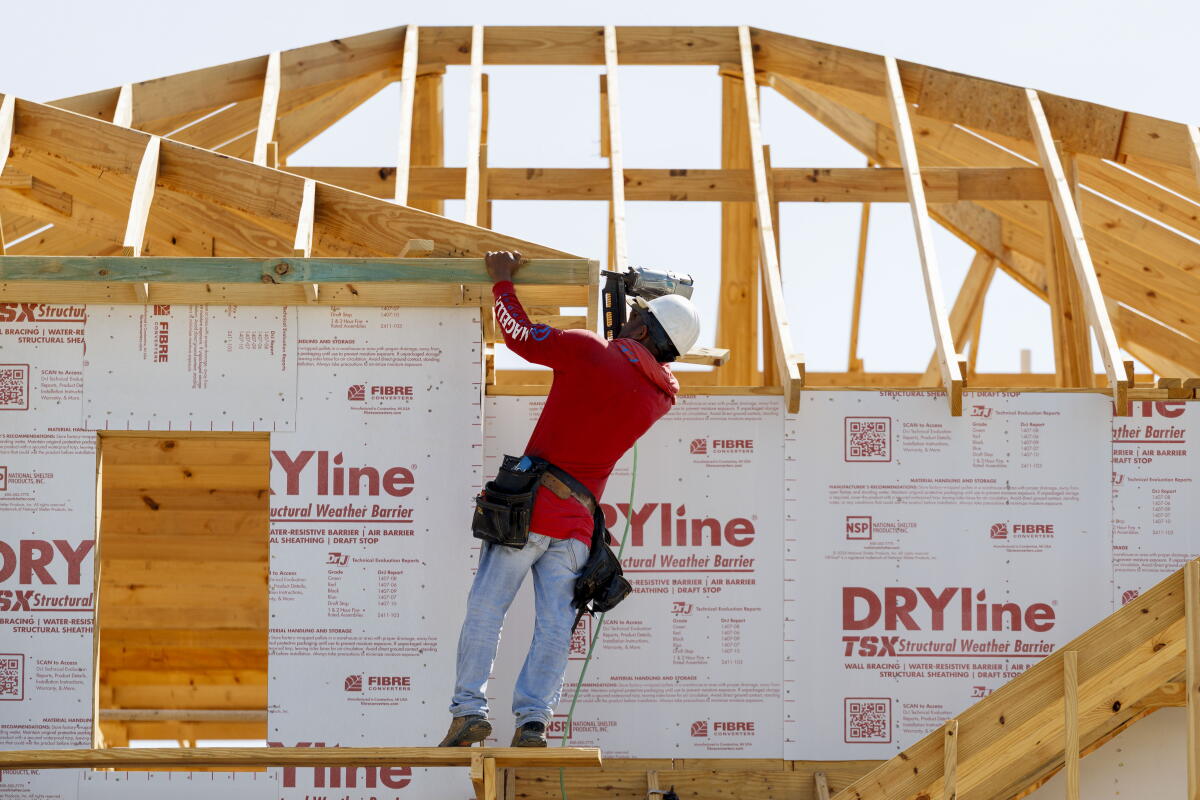
A construction worker on a new home under construction at the Taylor Morrison Avalon at Cypress

A construction worker on a new home under construction at the Taylor Morrison Avalon at Cypress.

(Bloomberg via Getty Images)

Affordability and housing

For voters, a key concern is unaffordability. More than half of Californians rank cost of living, inflation and the economy — along with housing cost and availability — as the most important issues facing California today.

The state has long suffered from a housing shortage, driven largely by local zoning restrictions, high construction costs and lengthy permitting bureaucracy. Newsom made housing a centerpiece of his 2018 gubernatorial campaign, initially pledging to build 3.5 million homes by 2025. He has largely fallen short of that goal.

Since Newsom took office in 2019, about 692,000 homes have been built across the state.

“I don’t know if anyone sees a new direction to go,” said Thad Kousser, a professor of political science at UC San Diego. California Democrats have passed a slew of laws designed to solve the housing crisis and spur home building, he said, but although they have helped at the margins, prices keep creeping up.

The median price of a California home has risen from about $570,000 in 2018 to $900,000 in 2026.

Even if California’s housing woes are partly a product of its successful economy, Kousser said, “that’s no solace for anyone trying to make the rent or have a place to live, so these will remain defining problems for the next governor.”

Before the governor can do anything, voters will decide whether to pass a series of consequential propositions on housing and taxes.

Proposition 1 would allow the state to borrow $11.25 billion for low-income and veteran housing, and Proposition 37 would allow the state to amass a $25-billion down payment assistance program for middle-class households. Proposition 45 would enable the state to overhaul the California Environmental Quality Act to speed up reviews for housing, roads and water projects — a proposal that leaves many torn between protecting the environment and wanting more affordable housing.

“There are going to be a series of difficult choices that Californians will have to make,” Baldassare said.

Budget woes

One of the governor’s first challenges out of the gate will be submitting a state budget in January to legislators.

This fiscal year, California has an estimated $18.5-billion operating deficit, according to the state’s nonpartisan Legislative Analyst’s Office. By the end of the year, the office predicts the state’s “wall of debt” to balloon to about $29 billion — even as the state’s economy and revenue have grown.

Lee Ohanian, a professor of economics at UCLA, said the major issue California faces is that the state budget has expanded about 75% in the last eight years. This translates to a 40% increase when adjusted for inflation.

California’s budget growth is particularly alarming, Ohanian said, considering politicians have had limited success in addressing major challenges such as homelessness and had delayed maintenance of public road and water infrastructure.

“It would have been one thing if that 75% increase had fixed all those issues,” Ohanian said. “But the next governor and state Legislature are going to be faced with some of the same exigencies that we’ve had for a very long time and they may struggle to pay for those repairs and that deferred maintenance. The question is: Where is the money going to come from?”

In many cases, Ohanian said, California’s ballooning budget has not resulted in higher quality of public services. The state’s school budget per classroom is over $500,000 a year, he noted, well above the national average. But only about 38% of California students met or exceeded state standards in mathematics.

“The Democratic Party just needs to at some point have a come to-Jesus moment,” Ohanian said. “With the amount of money we’re spending, we can do better.”

Leisure Picon, 35, with her 3-year-old daughter, Ivanka Mendoza, for a doctor's appointment in Lynwood

Leisure Picon, 35, with her 3-year-old daughter, Ivanka Mendoza, for a doctor’s appointment in Lynwood

(Irfan Khan / Los Angeles Times)

Healthcare for the masses?

After pledging in 2018 to bring universal healthcare to California, Newsom set about expanding the state’s Medi-Cal program that began under his predecessor, Gov. Jerry Brown.

In 2024, California expanded Medi-Cal to cover all income-eligible adults, regardless of immigration status.

Spending on Medi-Cal now accounts for 40% of the state’s total spending and is expected to reach $219 billion this fiscal year — more than double what it was a decade ago. But as the state faces massive cuts in federal Medicaid funding, rising healthcare costs and budget shortfalls, it has begun to roll back that commitment.

Last year, Newsom and state legislators agreed to freeze new enrollment for Medi-Cal benefits for adult immigrants without legal status. Next year, many adults under 60 enrolled in the program will also face a $30 monthly premium.

Democrat Xavier Becerra, who polls predict will beat Republican Steve Hilton by a wide margin, has promised to protect Californians’ health by “cracking down on fraud” and “cutting waste.” Becerra has significant healthcare experience after serving as secretary of Health and Human Services under President Biden, but he has yet to provide specific policy details.

More or less taxes? And who pays?

As Californians become more concerned about affordability, Baldassare said, they are becoming increasingly fiscally conservative. Polls now show a majority of Californians now say that they’d rather pay lower taxes and have fewer services.

But at the same time, about 6 in 10 likely voters also say the wealthiest Californians should pay more taxes.

“There’s a more liberal orientation, but that doesn’t translate into people saying ‘I want to pay higher taxes and have more services,’” Baldassare said. “It just is ‘I want to have more services. I want to be sure that we’re going to have healthcare’… but looking to others to take that fiscal responsibility.”

The midterms offered Californians a chance to weigh in on who should pay. The measure that grabbed the most headlines was Proposition 40, the so-called billionaire tax that would authorize the state to impose a new one-time tax on residents with assets over $1 billion.

But Californians also got to vote on a string of other tax measures that could affect the state’s budget. Propositions 41 and 42 would constrain state government’s ability to raise potential taxes on assets in the future, and Proposition 43 would make it more difficult for special taxes to be increased by local governments.

Proposition 3 would make permanent a temporary tax increase enacted in 2012 on individuals who earn at least $371,000 a year to fund schools and healthcare. Kousser described the original 2012 tax increase as a game-changer that allowed the state to redistribute wealth from rich to poor regions.

“If that political deal falls apart,” he said, “the state will face much more strain.”

Embers blow down a street as the Palisades fire ravages a neighborhood amid high winds in the Pacific Palisades neighborhood

Embers blow down a street as the Palisades fire ravages a neighborhood amid high winds in the Pacific Palisades neighborhood.

(Ethan Swope / Associated Press)

Who pays for wildfires?

As California contends with ever more catastrophic wildfires, Democratic politicians have so far failed to agree on who should be financially liable when a fire is sparked by electrical equipment: Wildfire victims? Insurers? Utility company investors? Ratepayers?

Earlier this year, Newsom pushed a controversial plan to limit utility companies’ liability, arguing that holding them fully financially responsible would raise the state’s already high power bills and thwart utilities’ ability to modernize and meet state clean-energy mandates.

But Newsom’s deal would have shifted more of the cost to property insurers, risking the prospect of rising insurance premiums. After wildfire victims dubbed the plan a corporate bailout, Newsom abandoned most of it and tried to push a compromise that would help fire victims receive quicker compensation. That deal also fell through, however, when the Assembly declined to vote on it

Political experts agree it will be a tricky issue to resolve.

The utility companies are not popular, said Rob Stutzman, a GOP strategist. Yet to shore up utilities’ risk profile and prevent upward pressure on utility rates, he said, the state will probably have to grant some liability caps.

“We’re going to pay for it through utility rates, or insurance rates, or subsidies from the government,” Stutzman said. “Those are basically the three options — and none of those are going to be that pleasant for the governor or for the Legislature.”

Artificial intelligence

With momentum building for regulating AI, California is in a unique position as the hub of the technology boom.

Politicians in Sacramento face intense lobbying from major tech companies and venture capitalists as they seek to limit AI’s potential for disruption and misinformation without stifling an industry that’s fueling the state’s economic growth — and has provided a critical stream of tax revenue to the state.

But some political experts say the issue may not prove as thorny for California as issues like housing or wildfires.

Most voters oppose data centers in their areas and support AI safeguards. Even some AI pioneers are calling out for more regulation. In recent weeks, Anthropic and OpenAI have written open letters to Newsom urging stronger safety requirements.

“That creates an unparalleled political opportunity for a governor and the state to lead the nation in addressing the issues,” Kousser said.

Source link