maria corina machado

Maria Corina’s Pitch for Elections in Venezuela, Explained

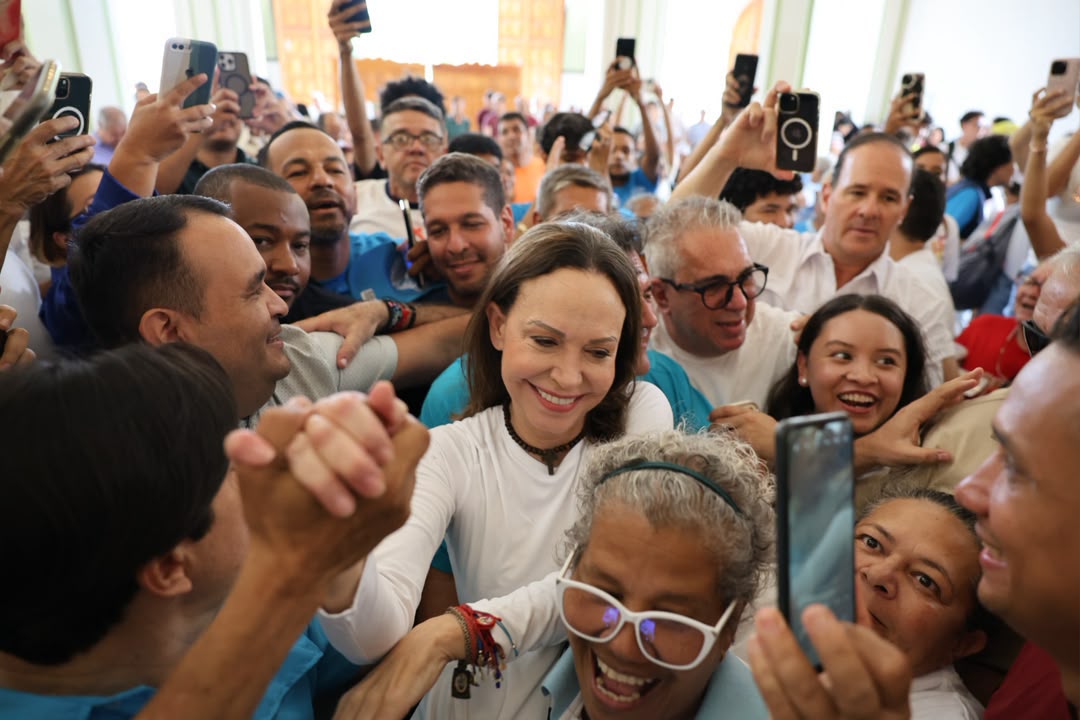
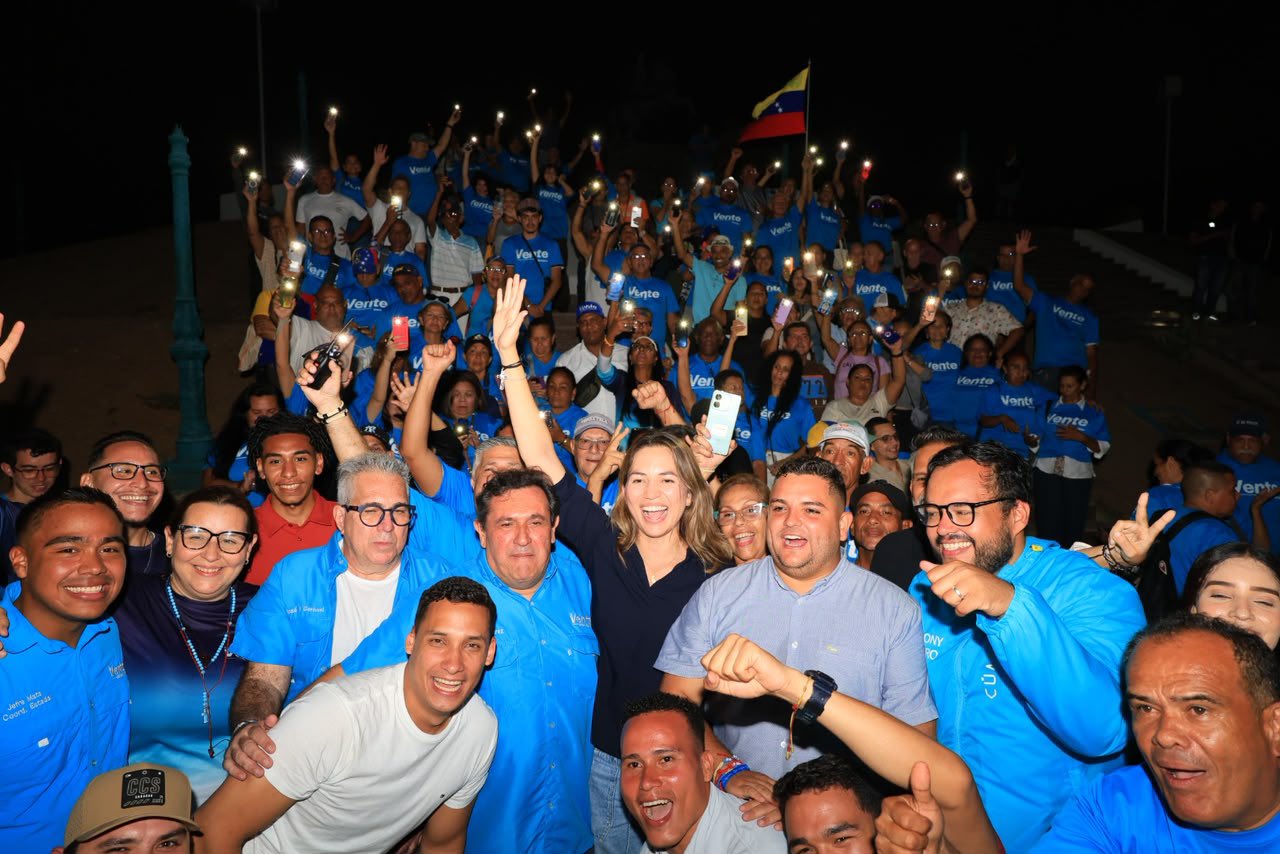
Photo: Humberto Villalobos in February 2023, months before the last opposition primaries

While Washington’s focus seems to be shifting toward security and armed groups, Machado’s team keeps its priorities clear, looking beyond the immediate circumstances. The Nobel Peace Prize laureate keeps saying that an election will be the vehicle to channel a transition to democracy—an event where the anti-chavista movement sees itself as the clear winner. Following the 2023 and especially the 2024 elections (where the coalition successfully defended a clear victory for Edmundo González by collecting and publishing 85% of the official tally sheets), it is not far-fetched to say that this is where the Venezuelan opposition’s greatest strengths lie, even under adverse conditions.

At Caracas Chronicles, we sat down with Humberto Villalobos—Vente Venezuela’s electoral chief, who coordinated Machado’s famous defense machinery—to discuss the current gap between ideal electoral conditions and reality, now that the publication of the Panama Manifesto has opened the opposition to negotiating elections with chavismo, naming Machado as the leader (or conductora) of the process.

Machado’s team is proposing changes that, to a large extent, aim to “demolish” the electoral system as we know it. Among other measures, this involves migrating to a hybrid system that would get rid of the ExCle voting machines, (paper ballots would be counted by hand), establishing a CNE in a novel fashion, improving the Venezuelan Electoral Registry so it accurately reflects how the population is scattered both inside and abroad, and implementing a mechanism to legalize political party competition in practice.

Once a new CNE is formed and the electoral calendar is published, Villalobos says this study could contribute to the renewal of the Electoral Registry. Under the proposal, the Registry would be renewed in three months.

This is a baseline proposal that could change in a scenario where Villalobos views the US as the guarantor of an agreement: “Delcy will make proposals, we will too, and in the end, all those things will be considered to yield something reasonable.” He envisions an election that is “simpler to produce,” stripping away the obvious strategic advantages that chavismo has historically claimed for itself during elections. “Under other conditions,” Villalobos says, “none of this would even be on the table. But here they proved to us that they can pass an energy reform in 15 days. You could do something similar to make elections happen, something just as important as pumping oil.”

First: an independent citizen register

Villalobos began by describing the need to produce a rigorous study of the local and migrant populations to understand the country’s actual electoral reality. The opposition would gather information directly from the people to understand who still lives where the Electoral Registry says they do, who left the country, and how many voters would require a change in their polling station. Villalobos calls this empadronamiento: the creation of a citizen residency register. The objective, he notes, is for the majority of voters to update their addresses through a digital platform featuring biometric facial recognition (ABIS) identification mechanisms, or at registration points operated by a network of enumerators or empadronadores

Once a new CNE is established and the electoral calendar is released, this study could assist in overhauling the Electoral Registry, the current state of which Villalobos calls “disastrous.”

“While citizens are changing their voting addresses, they could also support a political party. From that, you would yield parties with validated groups of voters.” 

The digital platform and the network already exist. Vente has started the process with its own members, and all current enumerators hold positions within the party: “We originally thought of it just for Vente, and as we grew, we envisioned it as a solution for all Venezuelans.” They would only need the people’s consent to use their data. Villalobos admits that managing a database of this scale carries an enormous burden of responsibility, but the alternative would mean negotiating while relying exclusively on data managed by the chavista state, which “treats it as its own asset.”

“At the end of the day, we are the only ones ready to do it. The systems being employed are the ones we already used in the 2024 presidential election. We simply added an extra feature that allows for enrollment of this type,” Villalobos asserts. “That feature handled half of the tally sheets we transcribed. And that gives you the certainty that you can handle millions. Furthermore, the guarantee is being provided by María Corina Machado.”

Second: ad hoc CNE, Electoral Registry, and political parties

The proposal rests on the premise that the CNE’s current structure is too flawed to fix simply by appointing a new board of rectors (or “electoral commission,” as Marco Rubio has called it). They propose a new, temporary electoral authority termed ad hoc CNE, an entity created specifically to manage an electoral transition. From that point on, it would only require a new specialized company to carry out the formal overhaul of the Electoral Registry

“More than one company is already preparing its bid under the terms we are working with,” Villalobos says. “That bidding process would have to be run by the new CNE, a natural process that nobody else can handle.”

Data from the independent, citizen register “would serve as a foundation” for the state provider to shorten the process. Villalobos assures that, in this manner, the new Registry could be ready in three months. Meanwhile, political parties that have been suspended or intervened since the last decade would be legalized through groups of voters that endorse these political organizations. “While citizens are changing their voting addresses, they could also support a political party. From that, you would yield parties with validated groups of voters. That would save us a lot of time.” The concept of groups of voters (grupos de electores) exists in Venezuelan legislation, though not necessarily for these purposes. A new statute for the ad hoc CNE, Villalobos suggests, could change that.

The electoral expert noted that one additional provider would be needed to manage the calendar and the elections. Identity verification made possible by the technology first implemented in the independent citizen register would thus help the ad hoc CNE assign party representatives and witnesses.

Third: goodbye to the machines

The most ambitious part of the proposal is to discard the electronic voting system that has been in place in Venezuela throughout this century and move to a mixed system featuring manual counting and automatic transmission.

According to Villalobos, paper ballots would be counted by hand by polling station members in the presence of party representatives. Afterward, a photo and a scan of the voting tally sheet would be taken. The data of all votes would then be transmitted from the polling station to the CNE, the political parties, international institutions linked to the electoral process, universities, and media outlets.

“It works almost like a blockchain, because you will have multiple repositories of the original document, which prevents it from being altered. It isn’t a galactic development like a voting machine that does absolutely everything,” Villalobos says. “It would be a matter of scanning something, transcribing it, and sending it. That fits on a smartphone.”

Villalobos noted they will push to ensure there are no polling stations where it is impossible to deploy a witness.

He maintains that the current system operates like a “black box” where voters are forced to accept the results transmitted by the machines, which he claims can be manipulated by those managing the CNE. But didn’t the physical tally sheets printed by these machines on July 28, 2024—which proved Edmundo González won the election by a 2-to-1 margin—serve to show that the count itself wasn’t manipulated, but rather that the CNE simply fabricated results declaring Maduro the winner? Villalobos insists that the current technology failed because, regardless, opposition witnesses were unable to obtain 15% of the tally sheets. He asserts that without representatives at a polling center, “there are ways they can change your result.”

“The extraordinary concept of having a machine that does everything is not dominant worldwide. In Colombia [referring to the first round of presidential elections where Abelardo de la Espriella secured the majority of votes], where the process was not the fastest, we already had the results of all tally sheets within an hour and a half. All of them, not a single one was missing.”

Finally, Villalobos was emphatic that voting must end strictly at a specific hour (in Venezuela, polling stations commonly close at 6 pm, but voting can be extended if there are still voters in line). He also stressed that the opposition will push to ensure there are no polling stations where it is impossible to deploy a witness. In the 2024 presidential election and previous ones, voting centers were set up inside Misiones Vivienda (state housing complexes), communal council headquarters controlled by the ruling party, and military bases—places where the likelihood of a clean process and of collecting the printed tally sheet is usually much lower.

“Voting systems were created to resolve conflicts. The first step is for all of us to believe we won’t be cheated, because otherwise, we go right back to the same thing,” he concludes. “In any election, they can change the result of a polling center if you don’t have anyone there. That’s why we are going to motivate people to stay at the centers, to have the fiesta right there. So that you walk away from that center knowing it is impossible for them to change the results.”

Source link

Attacking the Death Star Isn’t Enough to Build the New Republic

It’s more evident by the minute that Darth Delcy’s plan is to avert the creation of the New Republic by giving the Empire a technocratic, trade-friendly outlook. The path between defeating Darth Maduro and dismantling the Empire has turned out to be treacherous. Master Machado has tried to reassert her leadership by visiting foreign galaxies, but can’t find a breakthrough with the Viceroy.

Delcykrats are trying to conduct a swift takeover of the layered system Darth Maduro inherited from the Emperor. Madurokis are being neutralized or quietly assigned to minor planets, as is the case of Grand Moff Padrino in Agraria. Grand Admiral González López and Envoy Plasencia, old friends of Darth Delcy, are making strides, one within the Imperial High Command, the other across intergalactic diplomacy. Grand Vizier Jorge, Darth Delcy’s cunning brother, is running the senate and recasting the new imperial order through the language of old Scarlet propaganda.

The new imperial order

Viceroy Trump looks unwilling to press the ruling Delcykrats as long as he gets unrestricted access to on-demand resources such as kyber crystals and beskar steel. As Darth Delcy’s power and appeal before the Trade Federation has grown, she has terminated initial gestures of reconciliation that were initially needed for appeasement. A new Death Star is in the works, and to build a superior weapon for durable rule, Darth Delcy knows time is her most valuable asset.

Chief Envoy Rubio has reassured Master Machado that the galaxy first needs to stabilize and revive its economy before any transition can take place. Lately, however, the envoys that visit Carascant have said nothing about Republican reform, and a great deal about kyber crystals and the resumption of intergalactic travel.

The Empire does not need either Darth Maduro or Darth Delcy to prevail. It only needs the New Republic project to fail.

Aligning the interests of the victors of the November referendum with those of the New Republic will be a challenge for rebel aides Mon Meda and Pedro Organa. They won’t just need to keep a level of coordination with allies of growing importance, but to safeguard Master Machado’s position before Viceroy Trump while keeping the new hope alive.

The struggle for Republican foundations

At the same time, a genuinely independent Imperial High Court could become the first meaningful check on Imperial power. The courts are also expected to oversee the Council of Electoral Battles, still controlled by Madurokis whom Darth Delcy has left untouched to avoid triggering her pending matchup with Master Machado. These two institutions will be critical to the third phase that Chief Envoy Rubio is purportedly pursuing, and might determine the success of Viceroy Trump’s plan after capturing Darth Maduro. Control over courts and the Battles Council will determine whether the final electoral contest—backed by the Trade Federation—can take place on credible terms.

The Rebel struggle will gradually shift toward navigating a far more intricate web of factions within a fragmented Trade Federation.

The near future provides an opportunity for the new order to strengthen. The Trade Federation’s influence over Darth Delcy depends on Viceroy Trump’s grip on power, which will face its biggest challenge in the November referendum. The unchecked power the Viceroy currently has allows him to circumvent any criticism over Carascant. But change in the Trade Federation’s balance of power could make bipartisan support essential for the future of the New Republic.

The Trade Federation’s reckoning

These alliances will likely be essential to maintain pressure and decisively advance the New Republic’s agenda. Nonetheless, Viceroy Trump’s polarizing grip on the narrative has created deep seated resistance amongst potential allies. The struggle will gradually shift away from merely managing and appeasing Viceroy Trump and his Envoys, and toward navigating a far more intricate web of factions within a fragmented Trade Federation.

When Darth Maduro was defeated but no New Republic was allowed to emerge, the Empire did not dissolve, it adapted. Its new faces and colors are not signs of weakness but mechanisms of survival, designed to delay or prevent the formation of a New Republic. “Permanent victory” is an illusion. The Empire does not need either Darth Maduro or Darth Delcy to prevail. It only needs the New Republic project to fail.

What follows for Master Machado and the Rebellion is therefore not a triumphant return, but a sequence of calculated risks. The next chapter will depend on whether Master Machado returns as the leader of a Rebellion or as the effective architect of a New Republic. The Empire is determined to prevent her return or neutralize her immediately. If she returns solely as a symbol of resistance, Imperial forces will seek to frame her as a destabilizing threat to Viceroy Trump’s plan, increasing the risk of escalation against her.

If, however, her return becomes the centerpiece of a multilateral New Republic project backed by the Trade Federation, it would directly undermine Darth Delcy’s strategy. In that scenario, any move against Master Machado would signal to Viceroy Trump that Delcy cannot control the coalition she leads. At the same time, Master Machado’s movement can position itself as a more credible alternative for institutional reconstruction.

This shift, from diplomatic cover during resistance to an instrument of internal legitimacy, opens a narrow but meaningful window for the New Republic’s success.

The past 12o days show that Venewoks have not yet earned their Endor moment. As in the Star Wars movies, dismantling an Empire and building a New Republic will take a long and arduous journey. Normally the credits would unroll now, but the crisis continues and Darth Delcy’s intentions are crystal clear.

Source link

Machado’s Return Is the Real Test of Venezuela’s Political Opening

The real test of Venezuela’s current political moment will not be institutional, but political. It will not lie in the appointment of a new prosecutor, or in any decision taken by a parliament that, by design, reflects the preferences of those in power. It will lie in something far less controllable: the return of María Corina Machado.

For months, there has been talk of normalization, of technocratic adjustment, even of a transition managed from within. It is an appealing idea, but an illusory one. As usual, chavismo does not administer space, it occupies it. The notion that it would suddenly evolve into a system governed by technocratic restraint, even under US pressure, was always more wishful thinking than analysis.

What has changed is not the nature of the system, but our understanding of it. For years, it was assumed that power rested on a rigid internal balance, a kind of tripod between civilian leadership, party machinery, and the military. The uneventful sidelining of Vladimir Padrino López suggests otherwise. Now relegated to an almost theatrical role as Agriculture Minister, he makes appearances at cattle shows in Borsalino hats and Panerai watches. We have long known that chavismo’s superpower is its adaptability. It can reshuffle, absorb shocks, and reallocate power without fracturing, even at its highest levels, and carry on.

That adaptability cuts both ways. It helps explain why Delcy Rodríguez has been able to consolidate authority despite presiding over the country under the tutelage of the “yankee devil”, and despite earlier doubts about her staying power. It also explains why the government has been able to pursue a limited opening without losing control. But it also sets the limits of that opening.

Because the one problem the system has not been able to solve is credibility.

An empty pitch

The effort to attract investment has run into a wall that legal reforms and external signaling cannot easily overcome. Investors are not simply looking for incentives, they are looking for guarantees, that power is legitimate, that rules will be upheld, that today’s opening will not be reversed tomorrow. So far, those guarantees do not exist.

As I have argued before, none of this means that capital will stop flowing into Venezuela altogether. It won’t. There are firms that know how to operate in this environment, firms that have built their business models around political risk rather than in spite of it.

Take Grupo Cisneros, which is moving to secure a $1 billion investment fund aimed at Venezuela’s recovery. Or Chevron, which has doubled down on its presence through a major asset swap with PDVSA, expanding its stake in key projects in the Orinoco Belt.

What is not arriving, at least not yet, is transformational capital, the kind that requires predictability, legal certainty, and a credible political horizon.

These are not naïve entrants. They are actors with long experience navigating the Venezuelan system. Cisneros has remained a player despite fines and suspensions over the years. Chevron, for its part, has effectively become the most important American economic partner of the current government, maintaining operations through multiple political cycles and regulatory frameworks.

But that is precisely the point.

This is not the kind of capital Venezuela needs.

What is arriving, or staying, is adapted capital, capital that knows how to survive volatility, negotiate through informal institutions, and operate without full guarantees. What is not arriving, at least not yet, is transformational capital, the kind that requires predictability, legal certainty, and a credible political horizon.

And that gap cannot be closed through reforms alone. It cannot be legislated into existence, nor negotiated deal by deal. It requires something more fundamental: confidence that power in Venezuela is not entirely discretionary.

The pressure map

The timing of this becomes even more significant in light of Venezuela’s re-engagement with the IMF and the World Bank. After years of isolation, the country is once again being folded back into the international financial system, opening the door to technical assistance, debt restructuring, and eventually, fresh financing. It is the clearest signal yet that normalization, at least at the institutional level, is moving forward.

But this only sharpens the underlying problem.

These institutions can help stabilize accounts, restructure liabilities, and provide liquidity. What they cannot do is manufacture credibility where it does not exist. Their return signals that Venezuela is being treated, once again, as a country with which business can be conducted. It does not guarantee that the rules of that business will hold.

In some ways, Delcy has the easier hand to play. The current arrangement in Venezuela has become useful to Donald Trump in ways that go beyond the country itself. With the Iranian campaign failing to deliver the results he had anticipated, Venezuela has quietly taken on the role of a foreign policy success story, something tangible he can point to, both in terms of energy security and geopolitical leverage.

That utility is not uniform across his coalition. For more isolationist voters in what is often referred to as flyover country, a stable Venezuela that does not require further military involvement, and that contributes to stabilizing US energy prices, is a net positive. 

Detaining Machado, after appearances at CERAWeek and high-level meetings in Europe and Washington, would send a clear and immediate signal to the very actors the government has been trying to court.

Venezuelan crude is already easing pressure on US fuel costs, reinforcing the perception that the current arrangement delivers practical benefits.

But in South Florida, the picture is different. Latino voters, particularly Venezuelans, are already uneasy with the administration’s immigration policies, and are far less inclined to accept stability under a reconfigured chavista leadership as an acceptable endpoint. They are drawn instead to Machado’s message, and increasingly wary of what a prolonged Delcy Rodríguez-led government would mean. For them, the issue is not stability alone, but the absence of a credible electoral horizon.

This creates a tension within Washington’s own political logic. On one hand, there is an incentive to consolidate what appears to be working: restored oil flows, renewed financial channels, and growing international engagement with Caracas. On the other, there remains a constituency that expects something more, a path toward elections, not just normalization.

Machado, in this context, faces a more complex task than it might appear. She is not only trying to pressure the Venezuelan government, she is also trying to persuade a cautious administration that pushing beyond the current equilibrium is worth the risk, that the next step is not to stabilize the system as it is, but to open it further.

And she is doing so with limited institutional backing. Much of the Venezuelan civil society ecosystem aligned with MAGA politics appears more focused on maintaining its own access to the White House than on advancing a coherent strategy for Venezuela itself. That leaves Machado in a familiar position, carrying the burden of political escalation largely on the legs of her own prestige, but now within a much tighter set of constraints.

This is where María Corina Machado reenters the picture, not just as a political actor, but as a structural variable. Her return forces a choice that cannot be deferred. Allow her back into the country, or stop her.

Detaining her, after appearances at CERAWeek and high-level meetings in Europe and Washington, would send a clear and immediate signal to the very actors the government has been trying to court. These are not abstract observers, they are the same executives and investors now being asked to commit capital. Arresting her would not simply be a domestic political decision, it would be read as a statement about the limits of the current opening.

Allowing her to return is not costless either. It risks projecting weakness toward a base that has been conditioned to expect control. It creates space for mobilization, for coordination, for a reactivation of political pressure that the system has worked hard to contain.

But at this stage, that is a more manageable risk.

A constrained confrontation

Chavismo has shown that it can absorb internal contradictions. It can tolerate limited openings while maintaining overall control. What it is less equipped to manage, at least at this point, is a collapse in external credibility at the precise moment it is trying to rebuild it.

This is also not a confrontation between unconstrained actors. Machado is operating within limits of her own. She understands that an uncontrolled escalation could be interpreted in Washington as an attempt to derail a strategy that, for now, tolerates the current arrangement. Her leverage depends not only on mobilization, but on preserving her external legitimacy.

What emerges from this is not a clean confrontation, but a constrained one. Both sides are pushing, but neither is free to push all the way. Machado needs to generate pressure without triggering a rupture that works against her. The government needs to contain that pressure without closing the space in ways that undermine its own economic strategy.

That is what makes her physical presence in the country so consequential. Without it, the reactivation we are beginning to see, student movements regaining traction, party structures reopening, political figures cautiously returning, remains fragmented. With it, that energy has a focal point. 

And that is precisely why her return has become the real test. Not whether the system can produce institutional outcomes aligned with its interests, but whether it can tolerate, and ultimately absorb, the presence of the one actor it does not fully control, without undoing the fragile equilibrium it is trying to build.

Source link