maria corina machado

Machado’s Return Is the Real Test of Venezuela’s Political Opening

The real test of Venezuela’s current political moment will not be institutional, but political. It will not lie in the appointment of a new prosecutor, or in any decision taken by a parliament that, by design, reflects the preferences of those in power. It will lie in something far less controllable: the return of María Corina Machado.

For months, there has been talk of normalization, of technocratic adjustment, even of a transition managed from within. It is an appealing idea, but an illusory one. As usual, chavismo does not administer space, it occupies it. The notion that it would suddenly evolve into a system governed by technocratic restraint, even under US pressure, was always more wishful thinking than analysis.

What has changed is not the nature of the system, but our understanding of it. For years, it was assumed that power rested on a rigid internal balance, a kind of tripod between civilian leadership, party machinery, and the military. The uneventful sidelining of Vladimir Padrino López suggests otherwise. Now relegated to an almost theatrical role as Agriculture Minister, he makes appearances at cattle shows in Borsalino hats and Panerai watches. We have long known that chavismo’s superpower is its adaptability. It can reshuffle, absorb shocks, and reallocate power without fracturing, even at its highest levels, and carry on.

That adaptability cuts both ways. It helps explain why Delcy Rodríguez has been able to consolidate authority despite presiding over the country under the tutelage of the “yankee devil”, and despite earlier doubts about her staying power. It also explains why the government has been able to pursue a limited opening without losing control. But it also sets the limits of that opening.

Because the one problem the system has not been able to solve is credibility.

An empty pitch

The effort to attract investment has run into a wall that legal reforms and external signaling cannot easily overcome. Investors are not simply looking for incentives, they are looking for guarantees, that power is legitimate, that rules will be upheld, that today’s opening will not be reversed tomorrow. So far, those guarantees do not exist.

As I have argued before, none of this means that capital will stop flowing into Venezuela altogether. It won’t. There are firms that know how to operate in this environment, firms that have built their business models around political risk rather than in spite of it.

Take Grupo Cisneros, which is moving to secure a $1 billion investment fund aimed at Venezuela’s recovery. Or Chevron, which has doubled down on its presence through a major asset swap with PDVSA, expanding its stake in key projects in the Orinoco Belt.

What is not arriving, at least not yet, is transformational capital, the kind that requires predictability, legal certainty, and a credible political horizon.

These are not naïve entrants. They are actors with long experience navigating the Venezuelan system. Cisneros has remained a player despite fines and suspensions over the years. Chevron, for its part, has effectively become the most important American economic partner of the current government, maintaining operations through multiple political cycles and regulatory frameworks.

But that is precisely the point.

This is not the kind of capital Venezuela needs.

What is arriving, or staying, is adapted capital, capital that knows how to survive volatility, negotiate through informal institutions, and operate without full guarantees. What is not arriving, at least not yet, is transformational capital, the kind that requires predictability, legal certainty, and a credible political horizon.

And that gap cannot be closed through reforms alone. It cannot be legislated into existence, nor negotiated deal by deal. It requires something more fundamental: confidence that power in Venezuela is not entirely discretionary.

The pressure map

The timing of this becomes even more significant in light of Venezuela’s re-engagement with the IMF and the World Bank. After years of isolation, the country is once again being folded back into the international financial system, opening the door to technical assistance, debt restructuring, and eventually, fresh financing. It is the clearest signal yet that normalization, at least at the institutional level, is moving forward.

But this only sharpens the underlying problem.

These institutions can help stabilize accounts, restructure liabilities, and provide liquidity. What they cannot do is manufacture credibility where it does not exist. Their return signals that Venezuela is being treated, once again, as a country with which business can be conducted. It does not guarantee that the rules of that business will hold.

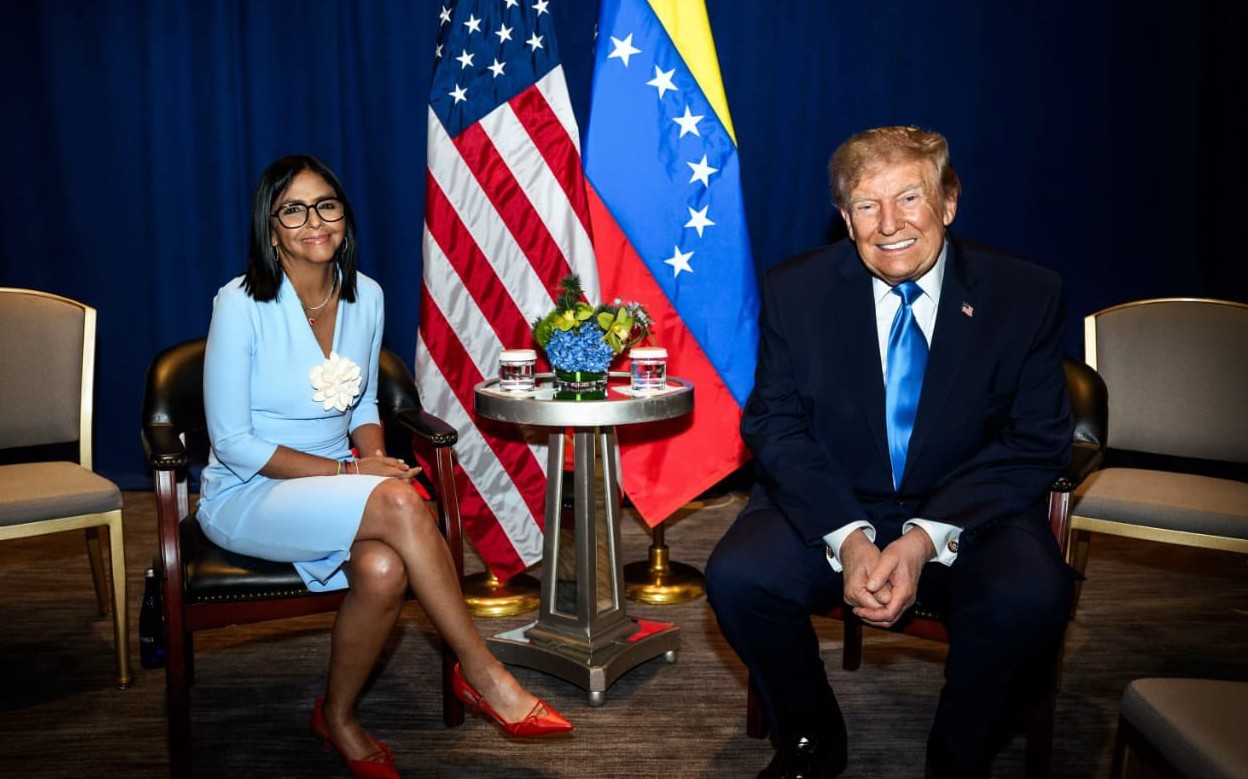
In some ways, Delcy has the easier hand to play. The current arrangement in Venezuela has become useful to Donald Trump in ways that go beyond the country itself. With the Iranian campaign failing to deliver the results he had anticipated, Venezuela has quietly taken on the role of a foreign policy success story, something tangible he can point to, both in terms of energy security and geopolitical leverage.

That utility is not uniform across his coalition. For more isolationist voters in what is often referred to as flyover country, a stable Venezuela that does not require further military involvement, and that contributes to stabilizing US energy prices, is a net positive. 

Detaining Machado, after appearances at CERAWeek and high-level meetings in Europe and Washington, would send a clear and immediate signal to the very actors the government has been trying to court.

Venezuelan crude is already easing pressure on US fuel costs, reinforcing the perception that the current arrangement delivers practical benefits.

But in South Florida, the picture is different. Latino voters, particularly Venezuelans, are already uneasy with the administration’s immigration policies, and are far less inclined to accept stability under a reconfigured chavista leadership as an acceptable endpoint. They are drawn instead to Machado’s message, and increasingly wary of what a prolonged Delcy Rodríguez-led government would mean. For them, the issue is not stability alone, but the absence of a credible electoral horizon.

This creates a tension within Washington’s own political logic. On one hand, there is an incentive to consolidate what appears to be working: restored oil flows, renewed financial channels, and growing international engagement with Caracas. On the other, there remains a constituency that expects something more, a path toward elections, not just normalization.

Machado, in this context, faces a more complex task than it might appear. She is not only trying to pressure the Venezuelan government, she is also trying to persuade a cautious administration that pushing beyond the current equilibrium is worth the risk, that the next step is not to stabilize the system as it is, but to open it further.

And she is doing so with limited institutional backing. Much of the Venezuelan civil society ecosystem aligned with MAGA politics appears more focused on maintaining its own access to the White House than on advancing a coherent strategy for Venezuela itself. That leaves Machado in a familiar position, carrying the burden of political escalation largely on the legs of her own prestige, but now within a much tighter set of constraints.

This is where María Corina Machado reenters the picture, not just as a political actor, but as a structural variable. Her return forces a choice that cannot be deferred. Allow her back into the country, or stop her.

Detaining her, after appearances at CERAWeek and high-level meetings in Europe and Washington, would send a clear and immediate signal to the very actors the government has been trying to court. These are not abstract observers, they are the same executives and investors now being asked to commit capital. Arresting her would not simply be a domestic political decision, it would be read as a statement about the limits of the current opening.

Allowing her to return is not costless either. It risks projecting weakness toward a base that has been conditioned to expect control. It creates space for mobilization, for coordination, for a reactivation of political pressure that the system has worked hard to contain.

But at this stage, that is a more manageable risk.

A constrained confrontation

Chavismo has shown that it can absorb internal contradictions. It can tolerate limited openings while maintaining overall control. What it is less equipped to manage, at least at this point, is a collapse in external credibility at the precise moment it is trying to rebuild it.

This is also not a confrontation between unconstrained actors. Machado is operating within limits of her own. She understands that an uncontrolled escalation could be interpreted in Washington as an attempt to derail a strategy that, for now, tolerates the current arrangement. Her leverage depends not only on mobilization, but on preserving her external legitimacy.

What emerges from this is not a clean confrontation, but a constrained one. Both sides are pushing, but neither is free to push all the way. Machado needs to generate pressure without triggering a rupture that works against her. The government needs to contain that pressure without closing the space in ways that undermine its own economic strategy.

That is what makes her physical presence in the country so consequential. Without it, the reactivation we are beginning to see, student movements regaining traction, party structures reopening, political figures cautiously returning, remains fragmented. With it, that energy has a focal point. 

And that is precisely why her return has become the real test. Not whether the system can produce institutional outcomes aligned with its interests, but whether it can tolerate, and ultimately absorb, the presence of the one actor it does not fully control, without undoing the fragile equilibrium it is trying to build.

Source link

De Gaulle vs. María Corina: Resisting Great-Power Tutelage

There is a familiar critique of María Corina Machado. That she is too rigid, not particularly interested in adjusting to the diplomatic realities surrounding Venezuela’s political crisis, and not especially inclined toward compromise.

The argument is straightforward. Moments like this are supposed to require flexibility, negotiation, and a willingness to adapt. From that perspective, her style can seem poorly suited to the situation.

But that reading is at best incomplete. It assumes a level of intransigence that is not always reflected in how she has actually operated, particularly in her dealings with international actors. More importantly, it assumes that Venezuela is going through a conventional political transition, one where the main challenge is to manage an orderly redistribution of power.

That is not quite what is happening.

Because in deeper national crises, the issue is not only how power changes hands, but whether the country still sees itself as a functioning political community. And in those moments, the tension is not simply between rigidity and pragmatism, but between adaptation and the risk of political dilution.

This is not a new tension. During World War II, Charles de Gaulle was widely seen by his allies as arrogant, inflexible, and almost impossible to work with. Franklin D. Roosevelt dismissed him as a prima donna who “thinks he is France.” Winston Churchill, more begrudgingly, called him “the heaviest cross I have to bear,” and both struggled with what they saw as his refusal to behave like the leader of a defeated country.

Preserving the idea of France as a nation, even in defeat, required a certain political stubbornness, one that inevitably generated friction with allies focused on managing the war.

Between them, Churchill and FDR sketched a portrait of a man too rigid, too proud, too self-appointed to be useful, and yet too symbolically indispensable to ignore.

De Gaulle, after all, had no real army at the outset, no territory, and no state apparatus behind him. Yet he insisted on speaking, and acting, as if France still existed as a sovereign political force.

From the outside, that posture often looked unreasonable, even counterproductive. From the French perspective, it was something else. De Gaulle understood that if the leader who claimed to represent France began to behave primarily as a dependent actor, the country itself risked being seen that way. Preserving the idea of France as a nation, even in defeat, required a certain political stubbornness, one that inevitably generated friction with allies focused on managing the war. At the same time, De Gaulle was careful to express gratitude for the support France depended on, even as he resisted being defined by it. The challenge was not to reject alliances, but to avoid being politically reduced by them. It was precisely that balance, difficult and often uncomfortable, that later allowed him to reappear not just as a political figure, but as the embodiment of France’s return.

There is a long tradition in political history of what the French call l’homme providentiel, the idea that, in moments of acute national crisis, certain figures come to embody more than a political program. They are read, sometimes reluctantly, as necessary to the resolution of the crisis itself. Charles de Gaulle was often described in those terms, not because he sought to cultivate that image, but because the collapse of the French state created a vacuum that only a figure with that kind of symbolic authority could fill.

In a very different context, María Corina Machado’s role in this most recent chapter of Venezuela’s history has taken on a similar tone. Not as a conventional political leader, but as a figure onto whom broader expectations about national recovery have been projected. That does not resolve the practical challenges of the moment, but it does complicate the assumption that she can simply be treated as another actor within the process.

More recently, Volodymyr Zelenskyy has faced a similar tension. Ukraine’s survival depends heavily on Western support, particularly from the United States, yet his relationship with Washington, especially under Donald Trump, has often been marked by visible strain. At times, Zelensky has had to absorb public criticism, adjust his tone, and even appear deferential in ways that, from the outside, can look uncomfortable. But that is only part of the picture. He has also been careful to consistently express gratitude for American support, acknowledging that it has been essential in sustaining Ukraine’s defense, even as he continues to press for more assistance and assert Ukraine’s strategic value. The result is not a simple posture of defiance or submission, but something more complex. A constant negotiation between dependence and dignity.

Machado is operating within that same tension. Venezuela’s political crisis is often framed as a negotiation problem, one that can be managed through calibrated concessions, international mediation, and gradual normalization. But that framing misses something more fundamental. For a large part of the country, the issue is not simply how power is redistributed, but whether the outcome reflects the democratic mandate that has already been expressed. In that context, a leadership style that appears inflexible from the outside may in fact be responding to a different constraint altogether, the need to sustain the idea that Venezuela has not accepted its political condition as final.

Political processes can be negotiated, structured, and even externally supported, but they cannot fully stabilize without a sense that they reflect the will of the society they claim to reorder.

If there is a lesson in De Gaulle’s trajectory, it is not simply that difficult leaders can prove indispensable, but that political arrangements built around figures who lack legitimacy tend to remain fragile. Over time, systems that attempt to bypass the actors who embody a country’s political mandate often find themselves circling back to them, not out of preference, but out of necessity.

Something of that dynamic is beginning to surface in Venezuela. The events of early January created a sense, however fleeting, that a political opening might finally take shape. That expectation has not materialized in a way that is broadly felt, and the gap between anticipation and outcome is beginning to generate visible frustration. What is emerging instead is a more ambiguous configuration, a transition that gestures toward change without fully convincing that it has arrived.

In that context, the question is not whether María Corina Machado is a comfortable actor within the process, but whether a process that unfolds without her can secure broad social buy-in. The instinct to view her primarily as a destabilizing force risks missing a more basic point. In moments like this, the leaders who carry political legitimacy are often the ones systems struggle to accommodate, even as they become increasingly difficult to exclude. Winston Churchill, who had once found De Gaulle exasperating, would later acknowledge as much: “Here was a man who, though not elected, though not even accepted by all Frenchmen, nevertheless represented France… He was the spirit of France.”

That may be the uncomfortable reality of moments like this. Political processes can be negotiated, structured, and even externally supported, but they cannot fully stabilize without a sense that they reflect the will of the society they claim to reorder. The difficulty is that the figures who embody that will are rarely the easiest to incorporate.

They are, more often than not, the ones who insist on speaking as if the country they represent has not yet accepted its condition as final.

Source link

Star, Interrupted | Caracas Chronicles

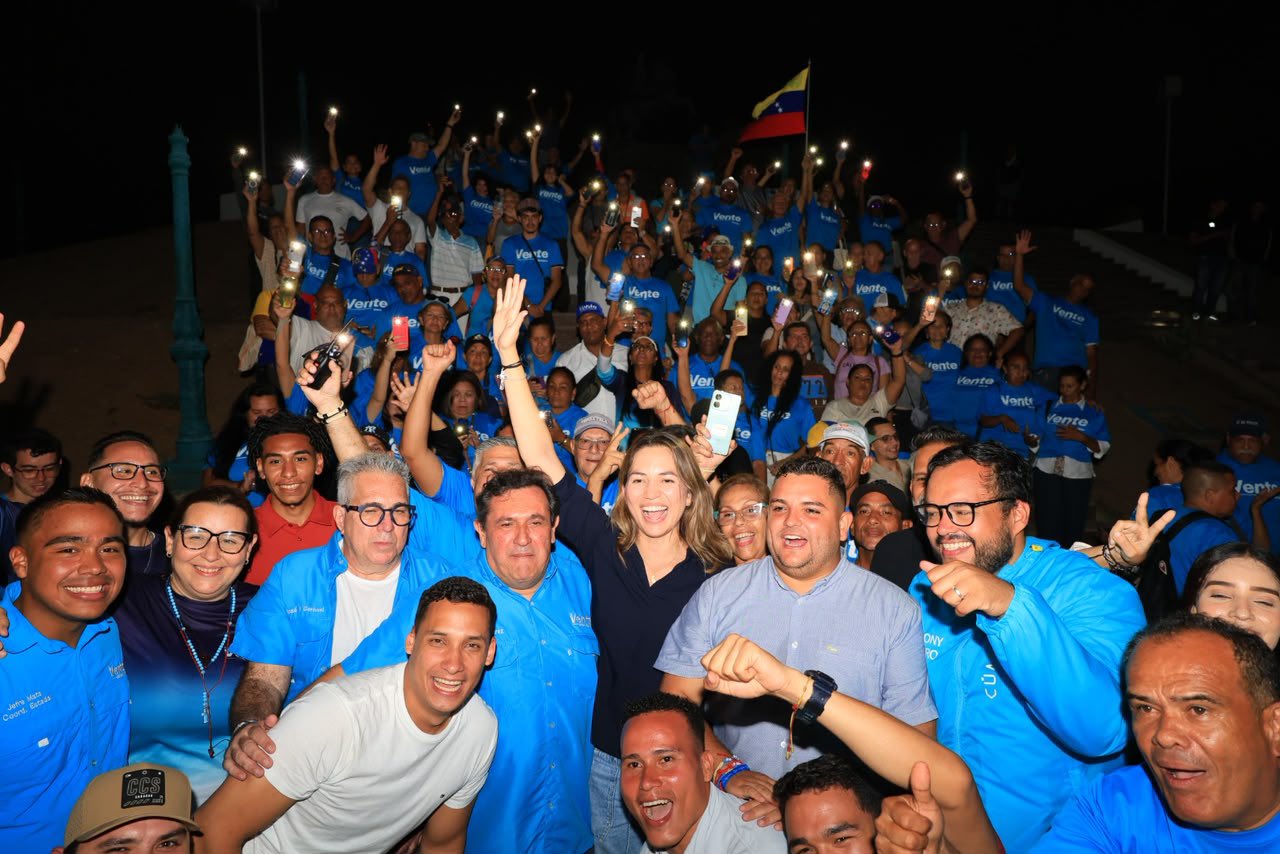
When Maria Corina Machado comes to town, you expect a lot of emotions. This week in Santiago, millennial bros swooned over her. Young women elbowed each other for a selfie. Cops had to contain throngs of people looking for a hug or a kind word. 

Do you think I could take a picture with her?” inquired an anxious teenager. “She made me cry,” said an expressive professional woman. “She gives us all hope,” declared a curmudgeonly older gentleman with a trembling voice.

Mind you, this was the reaction from the Chileans.

Witnessing Maria Corina in action, particularly after her Nobel Prize win, is a sociological phenomenon. It’s not about her. It’s the effect she has on others. After a day tagging along to three different events, I felt I was seeing something very special. 

The irony is that these events happened on the same day that the New York Times reported that Trump had asked her not to go back to Venezuela just yet. The most popular figure in the country, the one who can really unite Venezuelans behind a bold new agenda aligned with Washington’s interests … and they want her stored in a cupboard a little longer. 

It’s baffling.

First off, the obvious: her political capital remains intact. If anything, it is bigger and more intense, surrounded by the veneer of real accomplishments and international recognition. The effect this political supernova has on Venezuelans, at least in this part of the world, is as strong as ever. Nobody in the country can conjure up this amount of goodwill. Give it up folks – it’s not even close.

But her aura goes beyond Venezuela. 

One event hosted by a local university brought together a veritable who’s-who of Chilean society – all the politicians, all the businesspeople, many academics … and me, el marido de Katy, lurking in a corner.

Maria Corina made her entrance with Chile’s new President, José Antonio Kast, and his wife Pía. People enthusiastically applauded Kast – which is natural, since he had been inaugurated the day before, won with 60% of the vote, and let’s face it, this was his crowd. 

Until the US realizes what they have, Maria Corina remains an elusive icon, patiently waiting for her time, planning, gaining strength, and keeping hope alive.

But Maria Corina garnered not one, not two, but three standing ovations. Hell, they stood up to applaud her when they announced her name. Kast and all the others were gracious enough to recognize the star power and bask in her aura. María Corina, if anything, seemed a bit embarrassed by it all.

Where does this come from?

It’s easy to reduce Maria Corina’s appeal to her masterful handling of emotions. We all know she talks about families ripped apart, about hugging, about the heroic 2024 campaign. “Mis adorados venezolanos” peppers her speeches.

However, I think it goes beyond that. The key to her connection with people is trust.

As the great Frances Frei explains, trust in leadership depends on three things: empathy, logic, and mastery.

The empathy part we know. Her speeches are tinged with the tragedy that has befallen us all: lost dreams, broken families, violence that belies belief. 

Yet it’s in the logic and the mastery that she brings it home.

The way that she frames the Venezuelan drama makes all the logical sense in the world—it’s about good and evil, about criminal networks controlling the State, and about a regime that has sown division. Fifteen years ago, we at Caracas Chronicles used to dismiss this rhetoric as extreme. It was all true, and now we know, and it all makes sense.

And that is where the mastery part comes in. Her speeches also contain a nod to the learning that has happened in Venezuela. People listening seem to know—now—that freedom is worth fighting for, that there is no free lunch, that respect and decency have a place at the table. Expropiar es robar. Indeed.

Her speech, delivered impeccably, with no teleprompter, links these three elements together in a way that makes both the cynic and the true believer nod in agreement.

How on Earth does the US administration not see that this is a rare political asset that needs to be deployed? 

Mind you, she wasn’t perfect. At that event, I thought she missed an opportunity to talk about the business opportunities a free Venezuela would have for Chilean companies. In her speeches, she does not effectively address the raging xenophobia many Venezuelans abroad face. 

But those are minor things.

Venezuela faces many tough choices in the coming years. Policy decisions will not be easy, and it’s going to take an enormous amount of political skill to see them through. Only someone like Maria Corina can conjure up the trust of the Venezuelan people that can deliver the difficult decisions that lie ahead. 

The US has an ally waiting to work on what needs to be done. Nobody in the country has what she has. She is aligned with you. She gave you her damn medal. She’s right there.

Until the US realizes what they have, Maria Corina remains an elusive icon, patiently waiting for her time, planning, gaining strength, and keeping hope alive. You won’t see these kinds of events in Miami or Houston. It’s not part of her plan. They want her to keep a low profile, for now. That’s a shame. 

She’s a star. Interrupted.

Source link