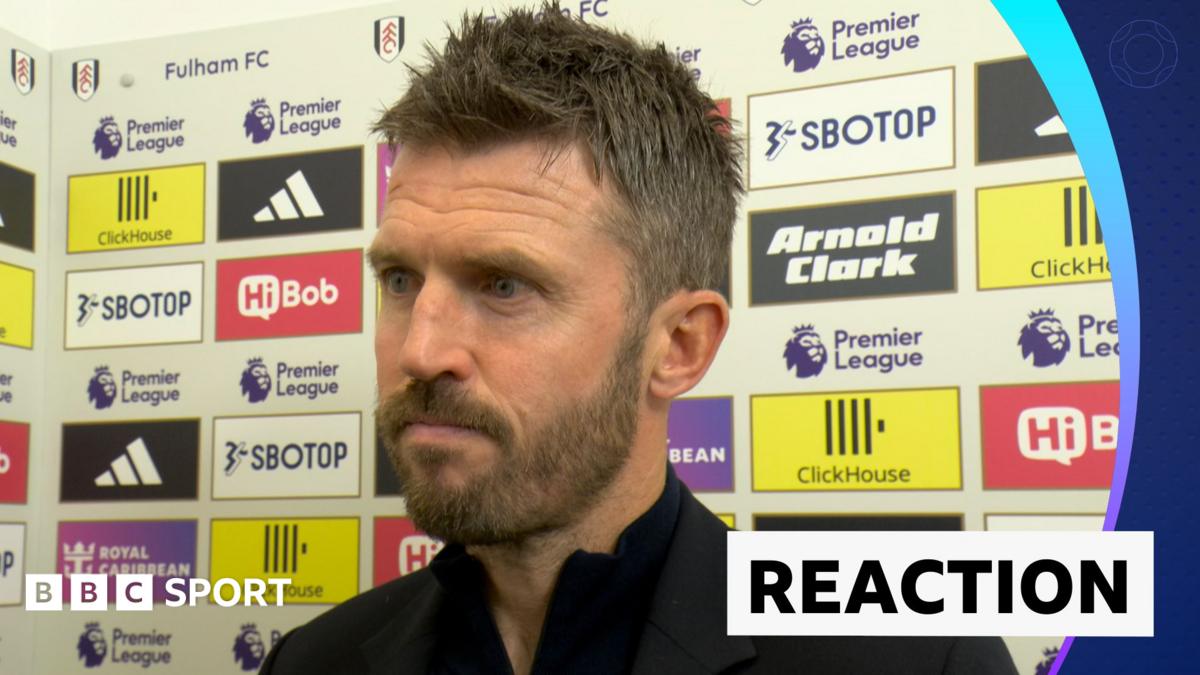
Carrick impressed Man Utd 'kept belief' to earn draw at Fulham
Manchester United head coach Michael Carrick is impressed his side “kept their belief” to come from a goal down to earn a draw against Fulham at Craven Cottage.
Source link
Manchester United head coach Michael Carrick is impressed his side “kept their belief” to come from a goal down to earn a draw against Fulham at Craven Cottage.
Source link

Arsenal steal a last gasp leveller through Smilla Holmberg, denying Eva Olid her first win as Manchester United manager in her third game in charge.
Source link

TV host Jeff Brazier admits he has made too many mistakes bringing up sons Bobby and Freddy.
He became a single dad after his ex, Big Brother star Jade Goody, died from cervical cancer in 2009 aged just 27.
Jeff — who has since had years of therapy — believes that if model Bobby, 23, and Race Across The World star Freddy, 21, had been raised by the man he is today, they may have escaped some of the trauma, turmoil and family fallouts.
He told the Sun on Sunday: “You always look back with hindsight and feel like, ‘If only I was the version of myself I am today 20 years ago, how much of a better experience of me they would have had’.
“Maybe that might have eliminated some of the bumps in the road we’ve had . . . you look at the things you could have done better.”
Those “bumps” have at times proved particularly painful for Freddy, with much of the family tension centred around his close bond with his maternal grandmother Jackiey Budden, 69.
READ MORE ON JEFF BRAZIER
Jeff has always considered Jade’s mum to be a bad influence on the boys.
And Freddy, who has been to rehab, been sectioned and suffered manic episodes, has previously claimed Jackiey got him “hooked” on cannabis.
Things got so bad that last year, a concerned Jeff started legal proceedings in a bid to keep Jackiey away from his son.
Yet despite their clashes, Jeff and Freddy have always found their way back to each other — most recently in March following the arrival of Freddy’s daughter Isla with his on-off girlfriend Holly Swinburn.
Jeff, 47, says: “Thanks to all the mistakes and all the lessons and the learnings along the way, I get to love Isla with a sense of confidence.
“The strength of connection you can have with a grandchild is really special.
“With Isla, it just feels natural, effortless and easy, and there’s no complications around it.”
Jeff can often be seen on This Morning, has worked with The One Show and TNT Sports and now fronts the Let’s Save Water campaign, urging families to make small changes to help tackle Britain’s shortage after the hot summer.
But the TV star admits he has struggled since his sons moved out of the family home in Essex.
“When they left, I went through nine months of what felt like absolute grief,” he admits.
“It’s not just the absence of your children. It’s more the grieving of the role that you played, that you got really comfortable playing.
“It felt like a slow relinquishing of control and responsibility, to the point where you feel redundant.
“Life is a lot quieter right now — the peace can be deafening — but there’s also part of you that’s, like, ‘Shouldn’t I be doing something for someone somewhere?’ ”
Jeff’s home is also quieter following the end of his seven-year marriage to PR executive Kate Dwyer last year.
Yet Jeff, who first found fame on reality show Shipwrecked in 2001, is learning to embrace this new chapter and finally put himself first.
He is also discovering how to play again so that he can be the best grandfather possible.
It was Freddy, who suffers from ADHD, who first told him he needed to loosen up, while they filmed Celebrity Race Across The World in 2024.
Jeff, who spent much of his childhood in foster care, said: “He basically hit the nail on the head.
“As a child, I probably didn’t play that much, or feel safe to play. I’m trying to undo that.”
In a bid to become more playful, Jeff has even signed up to wrestle strangers after discovering the unusual kind of therapy at a spiritual festival.
“The more you do it, the more you free something up and heal something,” he says.
“Obviously, no one’s allowed to hurt anyone. But to go and enjoy retreats like that, you’re basically taking your inner child with you.
“That’s where I hope I will be in ten years — running a retreat on a renovated farm in the countryside.
“I would still be exercising and showing up for people, and I’d be looking after numerous grand- children and feel all the love.”
Could that future also include finding love again?
“I hope so,” he says. “Yeah, I believe that will happen to me.”
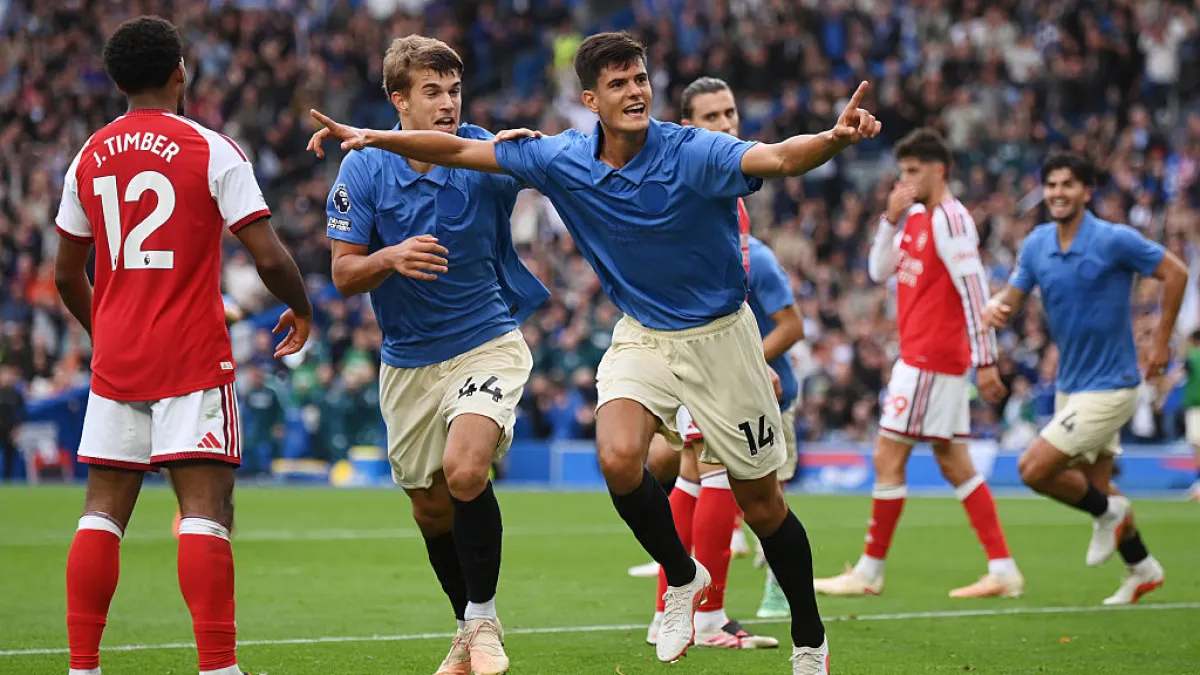
Arsenal in shock 3-0 loss at Brighton to lose top spot in the Premier League on goal difference to Manchester City.
Published On 19 Sep 202619 Sep 2026
Arsenal slumped to a first loss in their Premier League title defence – and it was a heavy one at Brighton.
After four straight wins for the champions, the 3-0 defeat at the Amex Stadium on Saturday came out of nowhere. Conceding the third goal from a corner — typically an area of strength for Arsenal – summed up an unusually sloppy performance from Mikel Arteta’s team.
Pascal Gross and Charalampos Kostoulas scored in the first half with shots from outside the penalty area, before Chema Andres completed the win with a header at the back post from Gross’s corner.
The victory will have been especially sweet for Brighton manager Fabian Hurzeler, who said “only one team tried to play football” after his team’s narrow home loss to Arsenal last season.
Arsenal have often struggled against Brighton, which was the last team to inflict such a heavy defeat on the Gunners in any competition — winning 3-0 at Emirates Stadium in May 2023.
It completed a brilliant week for Brighton, after beating Coventry 5-0 in the league last weekend and coming from two goals down in midweek to beat Manchester United 3-2 away in the English League Cup.
Manchester City — the other team to win their first four games — can now move three points clear in the standings by beating Sunderland on Sunday.
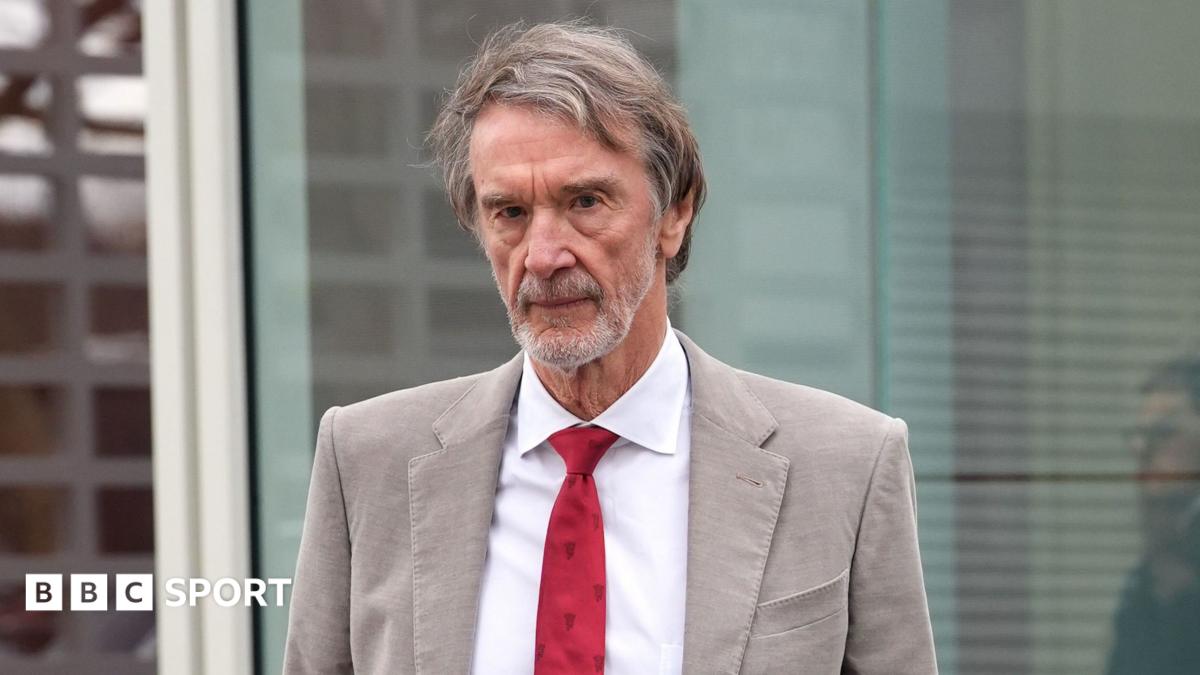
The Manchester United Muslim Supporters group says club co-owner Sir Jim Ratcliffe “must go” after he spoke out against immigration levels and said the country was “on the slide”.
Billionaire Ratcliffe, who is one of Britain’s richest people and founder of petrochemical giant Ineos, made the comments in an interview with the BBC on Saturday.
Ratcliffe said the UK was in decline because of a combination of high taxes and high immigration.
He has previously apologised for “offending some people” with his language after saying the UK had been “colonised by immigrants”.
At the time, in February, United responded by saying the club “prides itself” on being “inclusive”, while BBC Sport cited a source familiar with the Glazer family as understanding the club’s majority shareholders were “horrified” by his initial remarks and saw them as showing “disregard for their ownership”.
“We condemned those comments then,” said a statement of no confidence from Manchester United Muslim Supporters Club (MUMSC) in the club’s ownership, issued on Saturday.
“He [Ratcliffe] subsequently apologised for his choice of language. We hoped a lesson had been learned. Clearly, it has not.
“This week, Sir Jim has again placed immigration and people receiving benefits at the centre of his explanation for Britain’s problems, arguing that nobody is ‘tough enough’ to deal with either.
“We find these latest comments deeply disappointing and completely unacceptable.”
Ratcliffe campaigned for a Leave vote in the 2016 European Union referendum and has been a tax resident in Monaco since 2020.
He acquired a 27.7% stake in Man Utd in 2024, and has since restructured the organisation, overseeing 450 redundancies, overhauling senior management and sacking two managers.
MUMSC highlighted that United’s “players, staff, stewards, security teams and supporters come from different countries, cultures, ethnicities, religions and backgrounds”.
The group added: “Manchester United would not be Manchester United without them. That diversity isn’t a weakness of Manchester United. It is part of Manchester United.”
In the statement, the MUMSC also called on the Glazer family to go.
MUMSC said its members were among the club’s fans who hoped Ratcliffe’s arrival “would finally signal meaningful change” after the Glazer family had “presided over Manchester United’s decline”.
However, the group pointed to “higher ticket prices” and “a stadium allowed to deteriorate”, along with “a football team that continues to fall further behind where Manchester United should be”, among their concerns which “now extend beyond the pitch”.
Manchester United entered the weekend sitting 13th in the Premier League after gaining four points from their first four Premier League games, and they were knocked out of the Carabao Cup on Wednesday with a 3-2 home defeat by Brighton.
“After years of decline, broken promises and repeated failure, Manchester United Muslim Supporters’ Club has lost confidence in the current ownership structure of Manchester United Football Club,” MUMSC concluded.
“Enough is enough. It is time for change. The Glazers and Sir Jim Ratcliffe must go.”

As President Trump tries to convince voters that Democrats have let crime run amok, he’s digging into the country’s political past to cite one of the most controversial campaign advertisements that relied heavily on racist tropes.
During a campaign stop Wednesday in Gastonia, N.C., to stump for Republican U.S. Senate candidate Michael Whatley, Trump resurrected a 1988 George H.W. Bush presidential campaign ad featuring Willie Horton, a Black man convicted of rape and assault after his release through a Massachusetts prison furlough program.
A grainy black-and-white prison photo of Horton was used in the ad targeting then-Massachusetts Gov. Michael Dukakis, who was ahead of Bush in the polls. On Wednesday, Trump evoked the Horton ad in an effort to convince voters Democratic former Gov. Roy Cooper, Whatley’s opponent in the Senate race, is soft on crime.
“Willie Horton was a bad guy, really bad guy,” Trump said, before comparing Dukakis’s release of Horton to the pretrial release of a Black man who faces a murder charge for last year’s killing of a white Ukrainian refugee in Charlotte, N.C.
But Cooper was not the governor when the man was released or when he was later charged with killing the refugee.
“Same thing as this, same as, same exact thing,” the president told the crowd in Gastonia.
It’s the second time Trump has invoked Willie Horton while campaigning for his party. Last month during a speech in Las Vegas, Trump called the Charlotte killing a “Willie Horton — modern day” tragedy.
“After the Willie Horton ad dropped, Bush established a lead in the polls and never looked back,” said Andra Gillespie, a political scientist at Emory University outside Atlanta. “They showed the picture, and you ascribed race onto it. It wasn’t sufficiently condemned as racism.”
A spokeswoman for the Republican National Committee, which organized the Gastonia campaign rally, defended Trump’s reference to Horton.
“Roy Cooper emptied prisons and released thousands of violent monsters onto North Carolina streets,” RNC National Press Secretary Natalie Baldassarre said in a statement to the Associated Press. “The results had deadly consequences, and every Democrat who supports abolishing or defunding the police, paroling criminals, and implementing lax bail policies will have to answer for their dangerous records in November.”
Wednesday’s rally cited the Aug. 22, 2025, killing of white 23-year-old Iryna Zarutska on a commuter train in Charlotte.
Decarlos Brown Jr., who is Black, faces murder and other charges in Zarutska’s stabbing, which was captured on video. Court records showed that at the time of the attack, Brown had 14 prior cases in Mecklenburg County, including serving five years for robbery with a dangerous weapon. Doctors had diagnosed him with schizophrenia.
Republicans and other influential voices in Trump’s Make America Great Again movement claimed the attack showed how Democratic elected leaders in large cities across the U.S. failed to protect residents, while some conservative commentators suggested Democrats were ignoring an unfounded “black-on-white” crime problem.
“He should have been locked up for many, many years,” Trump said Wednesday of Brown.
“Nobody used to think of North Carolina as a dangerous state, criminally dangerous,” Trump added while blaming Cooper. “It was apple pie, right? Now, it’s one of the most violent, one of the worst in the whole nation.”
According to 2024 FBI crime data, North Carolina ranked 19th for statewide violent-crime rates in a 50-state comparison.
During the Gastonia rally, a mosaic of mug shots was displayed on a large screen for the crowd. Trump claimed Cooper had cut a deal with “radical activists” to release “some of the worst criminals in the nation into North Carolina.”
“He released these people. This is just a small group of them,” the president said, pointing to the mug shots that overwhelmingly featured Black people.
Although it is unclear under what circumstances the people in the mug shots were released, state corrections officials have said Brown was not released early from prison or under Cooper’s COVID-era prisoner-release settlement that Trump referenced.
Before fatally stabbing Zarutska, according to court records, Brown had been on a pretrial release over a misdemeanor offense that was ordered by a magistrate after Cooper left office.
Republicans are under pressure to win over swayable voters as the November midterms approach with Democrats pushing to gain control of the House, the Senate, or both. Some political strategists say part of the ploy of adding Horton to the North Carolina Senate campaign is to rile up Trump’s base.
“He’s tapping into the anger to remind Republican voters of what he thinks their first principles are in hopes that will be successful for Republican candidates,” Gillespie said.
“He’s doing this to try and divert attention away from criticism of how he’s governing at the moment,” she added. “Democrats want to make the story of this election Trump’s low approval numbers, the war in Iran, inflation, being preoccupied with things that don’t make a whole lot of sense when there are really serious things going on in the country.”
Dewey Clayton, professor emeritus of political science at the University of Louisville, said Trump and other Republicans may be thinking that what worked before in the 2016 and 2024 elections presumably will work again in this year’s midterms.
“It was very effective,” Clayton said. “You do not necessarily have to look at it as racial, in and of itself, although [race] clearly becomes a component. In 2026, talking about ads going back in the 1980s? I’m sure he had consultants that were basically saying this is tried and true.”
The GOP may need the push in November, Gillespie warns. “I think the motivation by going back to these old strategies is there is real concern about Republican enthusiasm and you might see lower Republican turnout,” she said.
The tactic speaks to desperation by Trump and the Whatley campaign, according to Morgan Jackson, a partner with Nexus Strategies in Raleigh.
“Trump brings up Willie Horton to stoke racial division, something he’s used for the last 10 years,” said Jackson, who is chief strategist for Cooper’s campaign. “It is very clear from the president’s speech last night their only goal is to sow division and hate and lies. Michael Whatley doubles down in support of that effort.”
Jackson also said Trump and Whatley are trying to change the election’s message of “rising inflation and the cost of everything.”
“They want to use inflammatory rhetoric, hate speech and lies to sow division in a chance to win an election,” he said. “By referencing Willie Horton, they are showing their hand very clearly.”
The AP sent an email Thursday seeking comment from Whatley’s Senate campaign.
Williams writes for the Associated Press. Williams reported from Detroit. AP videojournalist Erik Verduzco in Gastonia, N.C., contributed to this report.
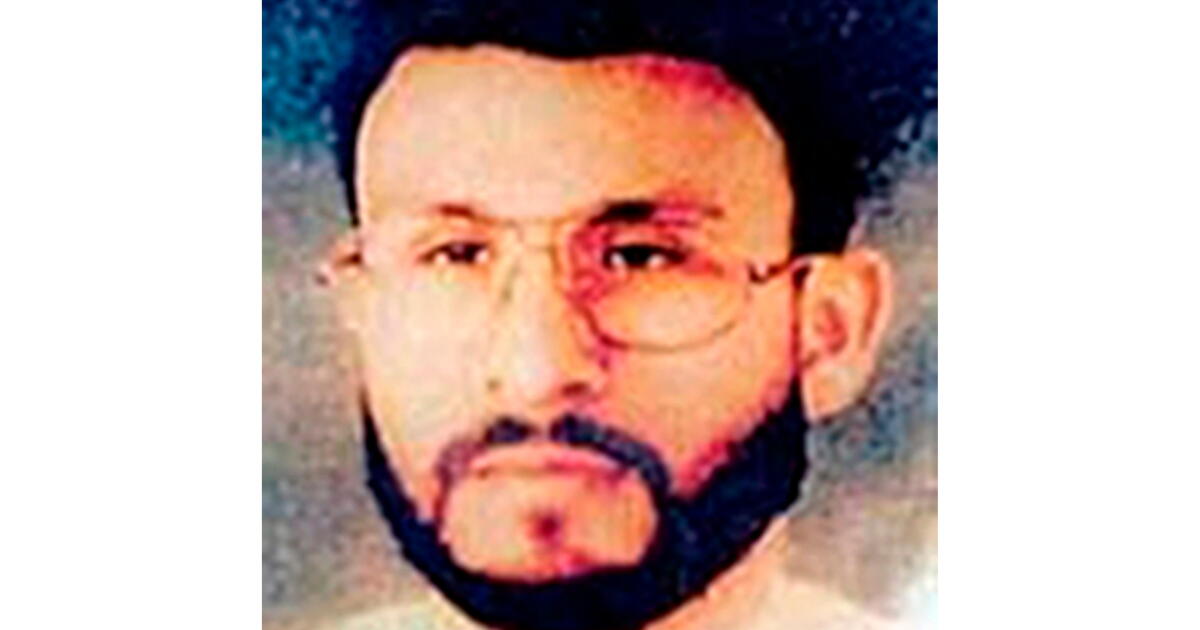
FT. MEADE, Md. — A man initially accused of being a high-profile Al Qaeda figure and who was tortured in CIA custody appeared Thursday at a hearing to review his detention at the U.S. military prison at Guantanamo Bay, Cuba, where he has been held for 20 years without charges.
A U.S. government official said Abu Zubaydah, who wore a neatly trimmed beard and glasses, had “probably” served as one of Osama bin Laden’s most trusted facilitators. The roughly 20-minute hearing offered rare visibility into the secretive military court proceedings of a suspect who had been tortured at CIA black sites during the U.S. war on terrorism and whose case still has not been resolved 25 years after the attacks of Sept. 11, 2001.
Zubaydah’s unidentified government-assigned representative and his private attorney, Annika Conrad, both acknowledged he had known Bin Laden, the 9/11 mastermind. But they said Zubaydah was never a member of the militant group that Bin Laden founded.
Conrad argued that Zubaydah poses no security threat to the United States and that it can no longer justify his detention. She said Zubaydah should be approved for transfer out of Guantanamo, which would kick off a multiyear process that includes finding a country to accept him.
Conrad said Zubaydah is prepared to accept a range of security measures, including continuous monitoring. Conrad said he has the financial and personal support of his family, has rejected any extremist views “and simply wants to live a life of peace.”
She also argued that a chief military prosecutor for U.S. military commissions, which oversees the 15 men still held at Guantanamo Bay, has said it is unlikely that Zubaydah will be charged. The Office of Military Commissions declined to comment.
Zubaydah’s attorney said the most the government can offer is a “probable association” to Bin Laden after more than two decades and noted that Zubaydah declined a direct request from Bin Laden to work for Al Qaeda.
Conrad also cited the torture that Zubaydah experienced, describing him as “a greatly injured man” who lost his left eye and his ability to write in English and “frequently struggles to recall words.”
Zubaydah’s detention is being reviewed by a U.S. government panel of senior defense, intelligence and homeland security officials. The Periodic Review Board was created under the Obama administration to evaluate prisoners and determine whether they could be released without posing a threat to national security.
The review panel issued no immediate ruling Thursday. A live video feed of the unclassified portion of his hearing at Guantanamo was made available to reporters at Ft. Meade, an Army base in Maryland.
Detainees are not permitted to speak at their review hearings, and Zubaydah sat in silence next to his attorney and the government representative. Dressed in a gray suit jacket and patterned gray tie, he often pressed his left index finger to his left temple or fidgeted with something in his hands. A worn-looking book sat in front of him.
Zubaydah’s lawyers, Conrad and Ahmed Almudallal, said in a statement before the hearing that he may never face charges.
“For the first time in over two decades, the military’s chief prosecutor believes it is unlikely our client will ever be charged,” the attorneys said. “This is a major change in circumstances that warrants he be cleared for transfer.”
Almudallal and Conrad said Zubaydah has “no intent to engage in violence against the United States in the future.”
“Now, at 55 years old, he’s eager to reconnect with his family and live out the rest of his days as a free person,” they said. “Twenty-four years in prison plus being ‘patient zero’ in the U.S. government’s torture program has been punishment enough.”
Zubaydah was thought to be a high-ranking member of Al Qaeda when he was captured in Pakistan in 2002. A Palestinian born in Saudi Arabia, Zubaydah was tortured abroad before being transferred to Guantanamo in 2006.
The U.S. later dropped the claim that Zubaydah was one of the most senior figures in Al Qaeda, although it has continued to regard him as a security risk. Zubaydah’s lawyers have repeatedly said over the years that he was not an Al Qaeda member and point to waterboarding and other harsh treatment he experienced in the early 2000s.
Zubaydah was the first person in the CIA’s detention and interrogation program after 9/11 and subjected to what is now widely viewed as torture. He was held at CIA black sites in Poland and Lithuania, according to the European Court of Human Rights.
Zubaydah was waterboarded more than 80 times in a month at one point and confined over 11 days in a coffin-size box, among a raft of other mistreatment, a Senate report found.
In 2022, the Supreme Court dismissed a lawsuit by Zubaydah, who was seeking testimony from two former CIA contractors as part of an investigation into his treatment when he was held in Poland. The court rejected his case because the government said it would expose state secrets, despite much of the information having been widely reported.
In January, a lawyer for Zubaydah said the British government had agreed to pay a “substantial sum” to settle a lawsuit that said U.K. intelligence agencies were complicit in his torture. Attorney Helen Duffy said the confidential settlement was symbolically and practically significant for the “intolerable suffering” that Zubaydah endured.
A British parliamentary committee found in 2018 that U.K. security and intelligence services were aware Zubaydah was being tortured but continued to provide questions for the CIA to ask him without seeking assurances of his condition.
Finley writes for the Associated Press.
By Tim Sullivan and Russ Bynum
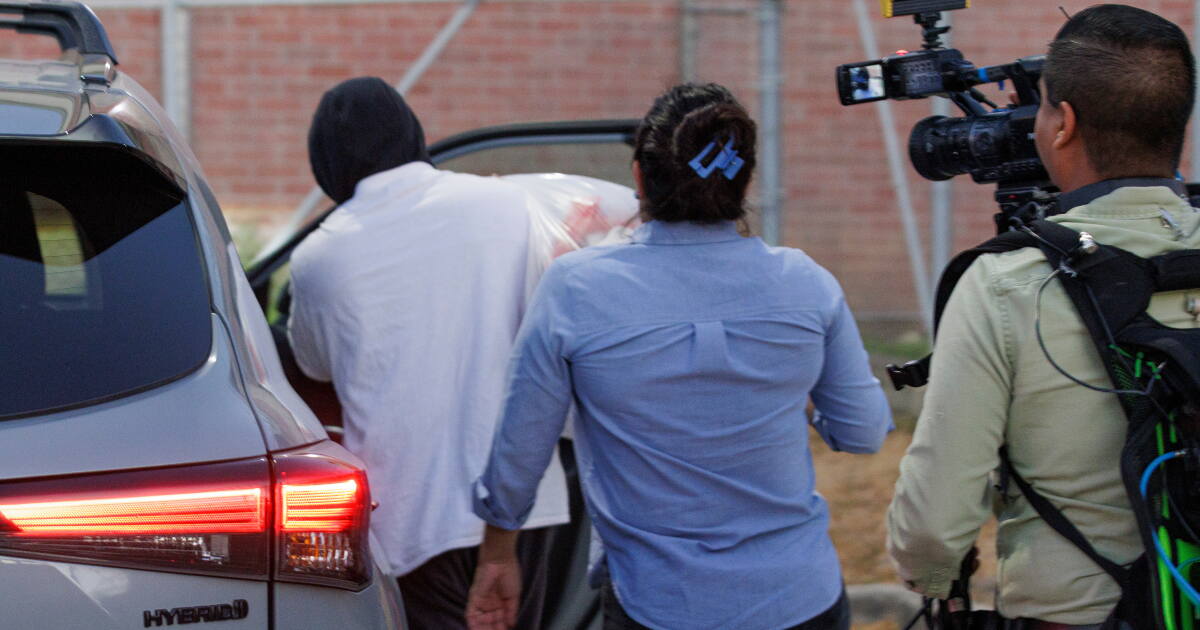
MINNEAPOLIS — A federal immigration officer charged with shooting and wounding a Venezuelan man in January and lying about the circumstances to investigators made a brief initial appearance Thursday before a Minnesota judge after state authorities arrested him ahead of a separate hearing in federal court.
During Thursday’s hearing, Judge Paul Scoggin granted Immigration and Customs Enforcement officer Christian Castro bond. Castro wore an orange jumpsuit and appeared behind a glass enclosure.
His attorney, Daniel Gerdts, declined to comment.
Castro was being held without bond after the Minnesota Bureau of Criminal Apprehension arrested him Wednesday in downtown Minneapolis on state charges of assault and false reporting of a crime stemming from the shooting of Julio Cesar Sosa-Celis. Scoggin set bail at $400,000 with no conditions and $200,000 with conditions.
Castro also faces federal charges stemming from the shooting, which occurred during a federal immigration crackdown in the Minneapolis area. Prosecutors say Castro falsely told investigators he had been attacked with a broom and a shovel.
Castro’s arrest by Minnesota authorities and appearance in state court followed a dispute between Minnesota prosecutors and Texas’ governor over Minnesota’s attempts to extradite Castro from his home state to face the state charges. One of the conditions Scoggin set for the lower bail amount for Castro was that he not fight extradition should he be released.
The lead prosecutor for the county handling the state case told reporters after the hearing that “Castro invented a story to justify shooting through a front door into a house with multiple people in it.”
“His appearance in a Hennepin County courtroom today is a critical step in our efforts to hold him accountable for that shooting,” Hennepin County Attorney Mary Moriarty said during a news conference.
The next court hearing for Castro is scheduled for Friday. That hearing will be in federal court in St. Paul and involves the federal case in which he is charged with making false statements to investigators regarding the shooting. Castro’s defense attorneys in the federal case have said he plans to plead not guilty.
It’s the first Justice Department prosecution of a federal officer for actions taken during this year’s massive Operation Metro Surge, which brought thousands of agents to the Twin Cities and led to sweeping protests, arrests and the fatal shootings of two U.S. citizens by federal officers.
In both the federal and state cases against Castro, prosecutors say he shot Sosa-Celis in the leg while firing through the front door of a Minneapolis home. They say Castro later falsely reported he had been attacked with a broom handle and a snow shovel.
Minnesota authorities have battled with President Trump’s administration over who should handle any charges against Castro. The Department of Homeland Security has called Minnesota’s prosecution of Castro “unlawful and nothing more than a political stunt,” saying only federal authorities have jurisdiction.
Minnesota charged Castro months before his federal indictment. He was arrested in Texas in May on the Minnesota charges. But Texas Gov. Greg Abbott last month refused to sign an extradition warrant to hand him over to Minnesota authorities. He was released in Texas and soon after was indicted on the federal charges. He then turned himself in to federal authorities and returned to Minnesota on his own.
Sullivan and Bynum write for the Associated Press. Bynum reported from Savannah, Ga.
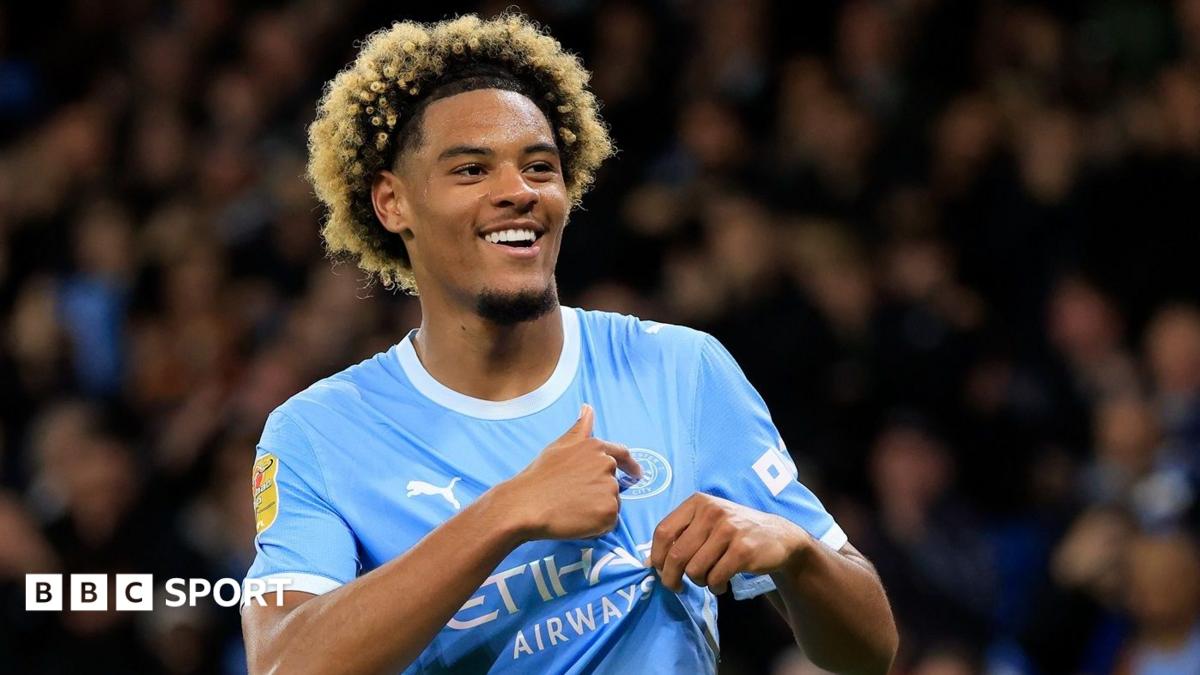
The youngster joined City’s academy at under-nine level and he really started to make a name for himself last term.
Samba scored 24 goals and provided 10 assists in an eye-catching first full season with the under-18s, including curling home a stunning free-kick to help City win the FA Youth Cup final against rivals Manchester United in May.
On his debut, Samba played the entire 90 minutes and fully grasped his opportunity.
With City struggling for openings, Samba broke the deadlock by flicking home a header – he celebrated by blowing a kiss in the direction of family and friends in the stands, before curling in a delightful second later in the game.
Samba was afforded a generous ovation towards the end of the game when being deservedly named man of the match.
“[I’m] satisfied not just for the goals but for the performance too,” said manager Maresca.
“I asked him in the last three, four days – when I decided to play him as nine – he said he never played there. He is not a nine for sure, but he was good.
“He is young, full of energy, strong, can finish, can set [players up]. He made some good decisions in the first half. I am happy but they are young and we have to go slowly, slowly.
“Hopefully we can give him more chances.”
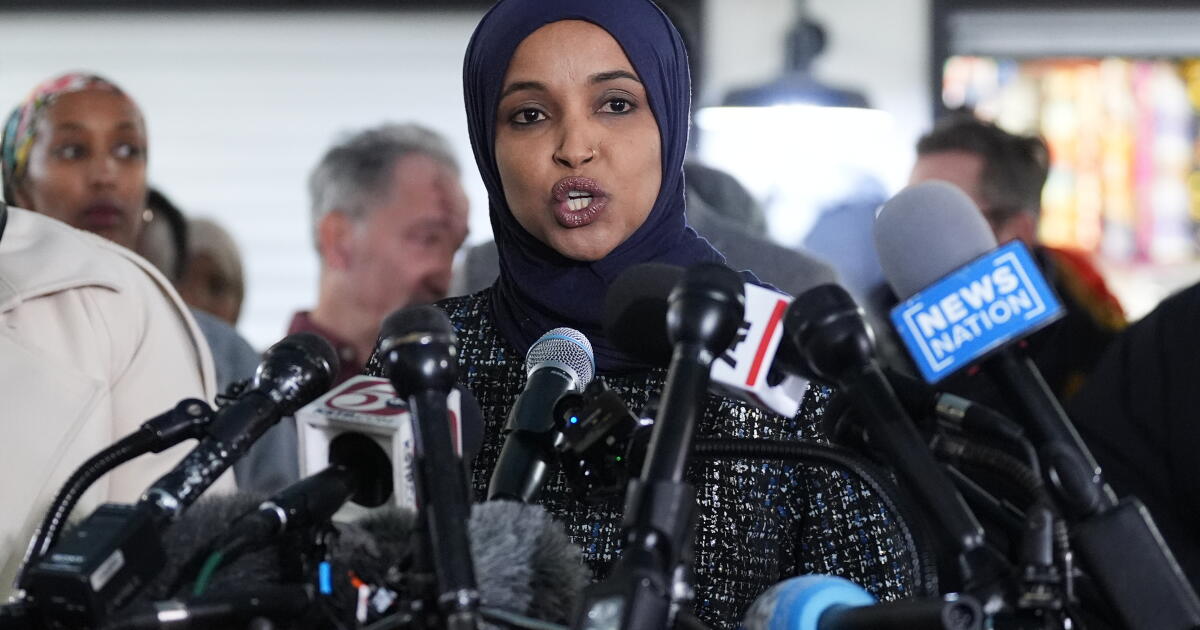
MINNEAPOLIS — The man who sprayed vinegar at Democratic U.S. Rep. Ilhan Omar during a Minneapolis town hall was sentenced Thursday to 14 months in prison after reaching a deal with prosecutors.
Anthony Kazmierczak, 56, was sentenced nearly eight months after the Jan. 27 assault. At the time, Minneapolis-St. Paul was subject to an immigration crackdown that led to angry protests, arrests and the deaths of two U.S. citizens. Prosecutors had recommended a 14-month prison term.
He also was sentenced to three years of supervised release, which includes no contact with Omar. U.S. marshals escorted him from the courtroom after the hearing.
During an earlier hearing, Kazmierczak was unable to explain his actions.
“It’s fuzzy,” he told U.S. District Judge Joan N. Ericksen when asked what he remembered.
Witnesses saw Kazmierczak jump up from the audience during the meeting, spraying liquid from a syringe at Omar and saying she was “splitting Minnesota apart.” Omar’s security officers quickly tackled Kazmierczak to the ground, then took him to police officers who placed him under arrest.
Omar was not injured and continued with the town hall after the arrest.
“I’m sorry if I scared you,” he wrote to Omar later, accepting responsibility for what he’d done.
Authorities later determined he’d sprayed her with a mixture of water and apple cider vinegar. He was charged with assaulting a U.S. officer.
The government sentencing memorandum, submitted to the court by prosecutors, said he had texted at least three people indicating he planned to do something at the meeting involving Omar “but would not answer their questions about his intent.”
He also sent messages to a neighbor to arrange for dog care and contacts for a bail bond company.
The sentencing memo said Kazmierczak had long struggled with alcohol abuse, had “a history of mental and emotional health concerns” and also had a string of health issues tied to a 2022 diagnosis of Parkinson’s disease.
Omar, a refugee from Somalia, has long been a target of President Trump’s anti-immigrant rhetoric. After she was elected seven years ago, Trump said she should “go back” to her home country. He has described her as “garbage” and said she should be investigated.
In social media posts, Kazmierczak had criticized former President Biden and referred to Democrats as “angry and liars.” Trump wants the U.S. to be “stronger and more prosperous,” he wrote.
The attack on Omar came amid Operation Metro Surge, when more than 2,000 immigration officers swept through the Twin Cities in a dramatic crackdown that led to angry protests, arrests and the deaths of two U.S. citizens.
Sullivan writes for the Associated Press.


MADRID: Raphinha scored a hat trick as Barcelona earned yet another big win on Wednesday, routing Racing Santander 7-2 for its best-ever start to a season.
The Catalan club had never won seven games in a row. It has won six straight in the league and another in the Champions League.
Gabriel Jesus and Lamine Yamal also found the net for Barcelona, which has scored at least five goals in five of its seven matches across all competitions this season.
In the English League Cup, Manchester United was stunned 3-2 by Brighton after squandering a two-goal lead to crash out in round three.
In the Europa League, Benfica beat AC Milan 2-0 on the road in the first round of the league stage.
Barcelona and Raphinha stay red-hot in Spain
With his hat trick, Raphinha took his league-leading tally to nine goals in six matches. The Brazil forward has scored a goal in all but one game this season.
“Happy for the goals and for the victory, which is the most important thing,” Raphinha said. “The players have the hunger to always want more. It’s a mentality to always try to score more goals and to create more scoring opportunities.”
João Cancelo also scored for Barcelona, which was helped by an own-goal from Racing’s Asier Villalibre. Maguette Gueye and Yassir Zabiri scored for the visitors.
Barcelona has only failed to score fewer than four goals this season in a 2-0 win against Athletic Bilbao.
Barcelona had previously won six games in a row to start the season — in 1929-30, 1960-61 and 2018-19, the club said.
Yamal had a goal disallowed for offside, missed a penalty and hit the post before finally scoring late for Barcelona.
The La Liga champion has also crushed Elche, Rayo Vallecano and Valencia in the league, and Feyenoord in the Champions League.
Hansi Flick’s team has outscored opponents 33-7 in seven games across all competitions. Barcelona has a three-point league lead over Real Madrid, which won at Elche on Tuesday.
Barcelona goalkeeper Joan García was replaced by Wojciech Szczesny at halftime because of an apparent injury. Szczesny’s blunder led to a Racing goal after the goalkeeper tried to control the ball inside the area and was robbed in front of the net.
Atletico Madrid routed visiting Osasuna 4-0 with goals by Jonathan David, Lee Kang-In, Robin Le Normand and Álex Baena.
It was the second win in a row for Diego Simeone’s team, which moved to third. Osasuna has lost three in a row.
Sevilla jumped to fourth by winning 1-0 at Deportivo La Coruña with a second-half goal by Miguel Sierra. Sevilla has won two in a row. Deportivo stayed seventh.
The game between Levante and Athletic Bilbao was postponed because of heavy rain in the city of Valencia.
United upset by Brighton rally in League Cup
Manchester United was booed at Old Trafford after it fell to a third defeat of the season, and second in as many games following Sunday’s loss to Manchester City.
“We had the game exactly where we wanted it and let it get away from us in a big way,” United coach Michael Carrick told Sky Sports. “We can’t accept that as a group. I take responsibility for it.”
United led 2-0 after 10 minutes through goals from Shea Lacey and Mason Mount. But Brighton rallied with Charalampos Kostoulas pulling one back before halftime, and Pascal Gross and Maxim De Cuyper secured victory after the break.
Defeat means United has suffered elimination from the League Cup at the earliest stage for the second season in a row after being knocked out by fourth-tier Grimsby last year.
Benfica tops Milan as Europa League kicks off
Benfica beat AC Milan in the highlight match in the Europa League.
Dodi Lukébakio and Jakub Kaminski scored a goal in each half for the Portuguese club.
Sparta Prague won 4-1 at Ararat-Armenia for the round’s biggest victory.
Sunderland beat visiting AZ Alkmaar 1-0 in its first European match in more than seven decades. Lyon won 2-1 at Anderlecht, while Bayer Leverkusen defeated visiting Celje 2-0.
Celta Vigo’s winless start to the season reached seven matches after a 1-0 loss at Omonia.
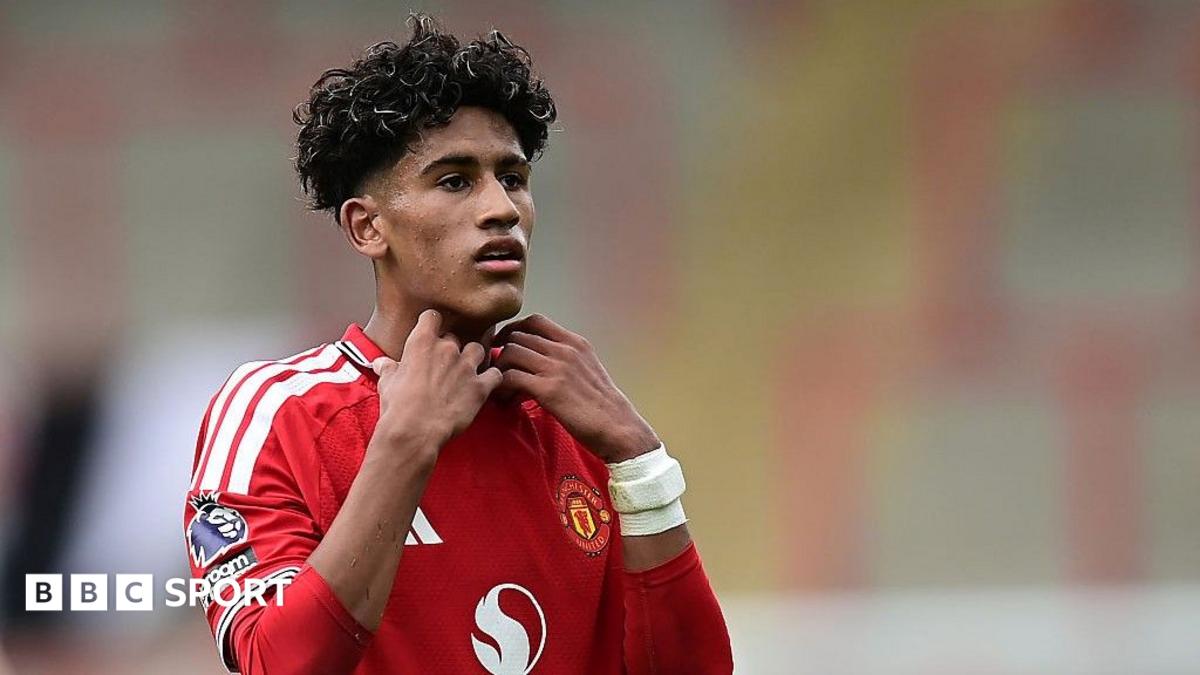
In the past 24 hours there has been a backlash against Gabriel and his family, for the direction he is taking and around his professionalism and attitude.
Sources close to the player believe this is massively unfair and overlooks the dedication and commitment which means he is so well-regarded by so many clubs.
In addition, he is not the first young player to have a difference of opinion over their future direction with their club.
Jadon Sancho was 17 when he stopped training at City to force through a £10m move to Borussia Dortmund in the belief that he would play more often in Germany than under Pep Guardiola.
Morgan Rogers was Barry’s team-mate in the West Brom side that reached the FA Youth Cup semi-final in 2019. Within three months he had left for City, a move completed on his 17th birthday.
Sources feel that, in meetings with the United hierarchy that led to Gabriel committing his short-term future to the club last summer, promises were made over his career path that have not been kept.
He did start to appear in senior training sessions, initially under Ruben Amorim and then Michael Carrick, but speculation around a senior debut last season, which could only be in the FA Cup, was doused by Under-18s coach Darren Fletcher, who had by now taken the senior team manager’s role on an interim basis following Amorim’s dismissal. Fletcher felt it was too early for Gabriel.
It had been anticipated that Gabriel would feature during United’s pre-season programme.
His absence from the trip to Helsinki for a meeting with Wrexham on 18 July was put down to the date he returned for pre-season training.
He was part of every squad after that, but played only once, for eight minutes against Atletico Madrid in Stockholm.
Did that lack of action sow the seeds of discontent? Gabriel travelled to Trondheim for a meeting with Rosenborg on 24 July. Carrick used 11 substitutes that day. Gabriel was one of two United players who did not come on. Five of those who did have left, either permanently or on loan.
It was noted that 18-year-old Tynan Thompson was given a 45-minute senior debut against Leeds United at Croke Park – another game Gabriel travelled to but was not involved in – three weeks after his arrival from Tottenham.
Nevertheless, it was felt Gabriel was likely to become United’s youngest player this autumn – probably in the EFL Cup.
While the third-round draw delivered an Old Trafford rematch with Brighton, United’s Champions League schedule opened up another avenue.
It is conceivable that Azerbaijani champions Sabah could be the least difficult home game Carrick’s side have this season.
United were 3-0 up at half-time and Carrick had used all five substitutes by the 72th minute.
But Gabriel was not among them. As with Max Dowman at Arsenal last season, Uefa’s registration rules meant that, because he was 15, Gabriel could only feature if he was named on United’s A list of players.
It is not entirely clear why that did not happen. United named a maximum of 25 players, but among them was midfielder Manuel Ugarte, who will not play until after the registration window opens again in January because of a knee injury. Thompson was also on the list.
United coaches have previously suggested that Gabriel is not yet at the physical level required to be a senior player. Sources close to the player reject this.
Instead, they see how Arsenal gave Dowman his chance at 15 and Bayern Munich gave Lennart Karl his debut at 17, and wonder why United are not doing the same.


Are the brakes finally being slammed on the artificial intelligence race? Or are we simply witnessing a wake-up call that has come too late?
Developers are coming forward in numbers these days to say that the speed and direction of travel of AI, machine learning and the tech reaching the human level of intelligence is threatening human existence.
Jacob Coxon, the researcher who quit Anthropic last week, feared that those developing AI systems are “genuinely frightened” for the future of humanity. His words echo a growing anxiety in the field, as well as in government, about the challenges and dangers posed by AI. At this late stage, could there still be room for a U-turn that keeps the machine at the service of humanity, instead of human existence becoming a victim of the machines that have already been built?
Ask anyone on the street and — though they would be all for the progress and the positives the tech is offering in many fields touching human life — they would be quick to roll their eyes in despair when they reflect on AI, the uncertainties it brings and their future job security. Scratch the surface further and their anxiety surges about the impact unregulated tech companies are having on their children, potentially exposing them to unmoderated, manipulated content and often-damaging influence.
People are quick to despair when they reflect on AI, the uncertainties it brings and their future job security
Mohamed Chebaro
Their worries take a turn when they reflect that, even if they safely navigate their children’s youth, the job market may be permanently changing, hurting their prospects in the digitally automated and largely autonomous world of tomorrow.
It was troubling when I read recently that Microsoft co-founder Bill Gates had called, in a 6,000-word essay, for society to intentionally keep certain roles off-limits to the machine. His proposal of setting aside 40 percent of occupations as “human-reserved” is bizarre to say the least, as he better than anyone should be aware that markets, economies and competition do not work this way.
The words of Gates and the AI developers and researchers point to a grave lapse. It seems we have rushed into a race to make the machine supreme, giving artificial general intelligence agency over humans, who could ultimately be replaced by AI and advanced robots. The developers seem to have fallen into the trap of the machine becoming an end in itself and not a tool to serve and ensure the well-being of individuals.
It is not usual for companies and entire industries to plead with the world to make them work less and advance at a slower pace. And who and which institutions should heed their calls when we live in a highly fractured and geopolitically splintered world, in which superpowers and medium powers are vying for supremacy, with AI and its tools becoming their most potent vehicles?
The tech industry has clearly become too big to fail and too big to slow down. An AI slowdown — if there were suggestions its progress could be reversed or even stalled — would significantly affect the long-term direction and costs of the infrastructure boom.
It was surprising and unusual to hear key world leaders defend the sector. In the race for the vast supremacy and advantages it offers, their posture is understandable. The political imperative to press ahead was made clear by both Washington and Beijing. That appears to show that, whatever the private sector does, governments will want to drive this capability precisely because of, not despite, the risks that are now being flagged.
Governments want to drive this capability precisely because of, not despite, the risks that are now being flagged
Mohamed Chebaro
In this competitive world, there is no place for existential worries or fears for humanity and its survival. One country’s slowdown is another’s chance to catch up.
Calls for guardrails, rules and regulations are being constantly ignored or watered down. In a world where multilateralism is waning, technological restrictions like arms controls are useless unless solid conventions enforce them internationally.
The prospect of a multilateral agreement on hard-and-fast rules limiting the capacity of AI seems far-fetched. US President Donald Trump made that clear, saying on social media that “There is a SICK conspiracy going on against AI and Data Centers, and the only one that is happy about it is China.” The reply from Beijing came through an editorial in China’s state-backed Global Times, which claimed that AI warnings were a “Cold War playbook” targeting Beijing.
A call by Anthropic CEO Dario Amodei to slow the pace of AI development won rare backing from SpaceXAI’s Elon Musk and OpenAI’s Sam Altman, with all evoking AI “doomerism.” This should surely not be ignored.
The solution should be simple: more cooperation in order to regulate.
According to these tech supremos, reports that swarms of AI agents have been increasingly found to be collaborating with others and hacking outside systems, or that their power was being used to develop harmful biological agents, are just the beginning. The same AI tools might have the potential to take down the internet and everything that relies on it, such as power grids, transport infrastructure, water supplies and banking systems. All of which could be the first call for an act of aggression by any group or state.
AI has become a crucial tool of economic and military prowess. Calls for protocols and conventions to restrain the tech realm have long irked most companies. Yet, if we are to believe some in the tech community, the world has in its hands a calamity in the making that surpasses even the existential nuclear threat, which was ultimately constrained through global moratoriums and conventions. AI is a different beast and, since its onset, humans have been the victims in the name of reducing labor costs.
Over the past decade, labor has become a mere number on a cost sheet. The fear is that humanizing work once again would be a far more complex task — one that the tech giants, the financiers and the state are not ready to undertake, even if it could save humanity from eventual extinction. The world has long since departed from the mindset that the machine should serve humans and not the other way round.
Mohamed Chebaro is a British-Lebanese journalist with more than 25 years of experience covering war, terrorism, defense, current affairs, and diplomacy.
Mohamed Chebaro is a British-Lebanese journalist with more than 25 years’ experience covering war, terrorism, defense, current affairs and diplomacy. He is also a media consultant and trainer.
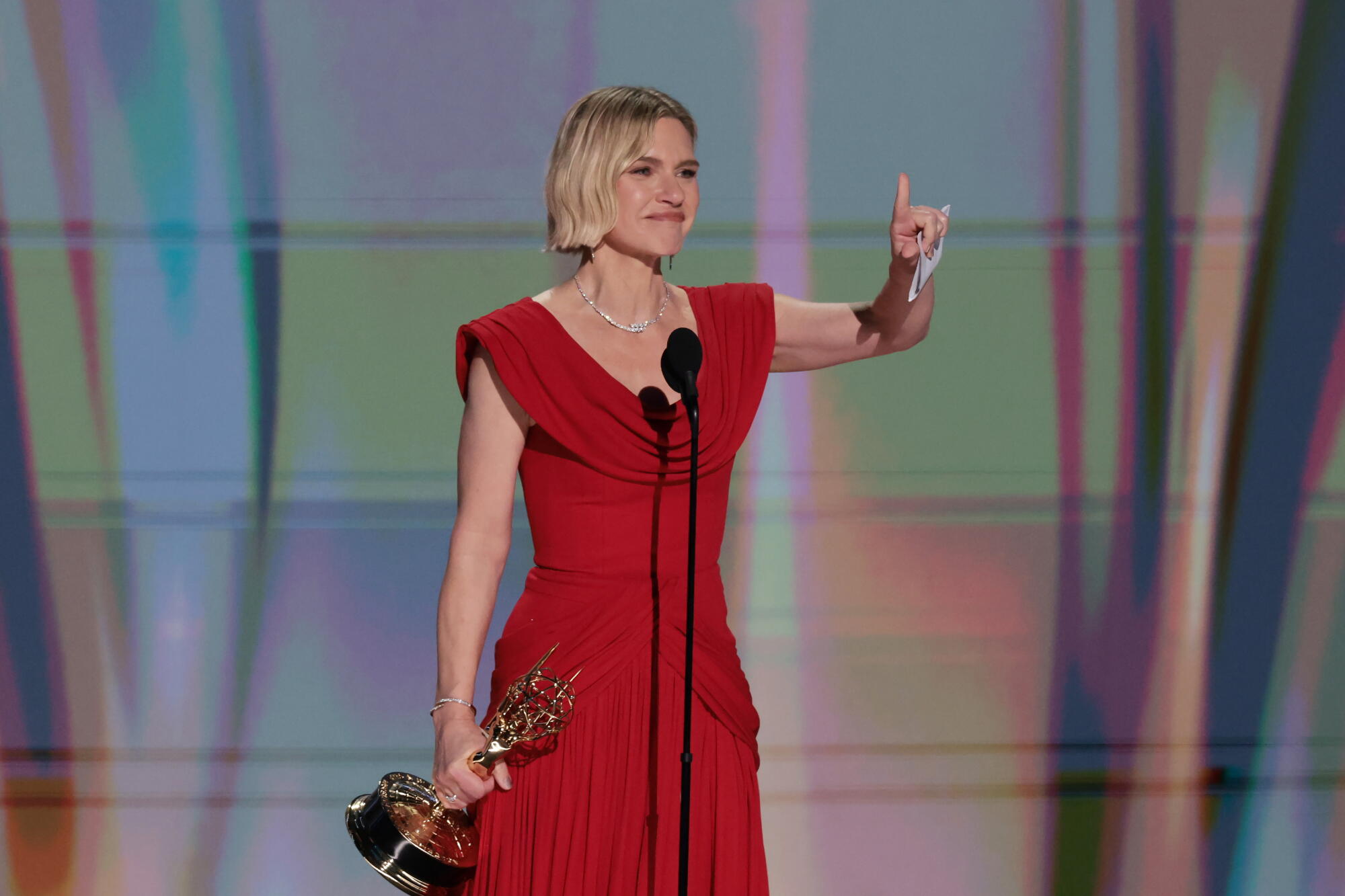
The 78th Primetime Emmy Awards saw a number of firsts: A first-time host, a first-time Emmy winner and the first to win two lead acting Emmys in a night. These notable achievements were coupled with moments of remembrance for legendary actors and creators, like Dolly Parton, Rob Reiner and Catherine O’Hara, among many others.
With Mariska Hargitay at the helm, the show ran at a quick pace without feeling rushed, giving room to winners to say their thanks in acceptance speeches while still having moments of fun in between. Here, our writers discuss some of the best moments of the ceremony. — Maira Garcia

Rhea Seehorn finally won an acting Emmy, an accolade that was long overdue.
(Robert Gauthier/Los Angeles Times)
If you appreciate Rhea Seehorn’s complex, subtle acting, her dynamic range and her deadpan humor, then you’ve probably found the Emmys to be maddening over the years. She famously wasn’t nominated for playing poker-faced attorney Kim Wexler on “Better Call Saul” until the show’s two-part final season. And she never won, not even for the raw, heartbreaking work she did in those last episodes. So seeing her win, finally, for her lead turn on “Pluribus” was thrilling, long overdue recognition that, given her history, made you wonder if it would ever come. Awards voters typically don’t appreciate nuanced acting, too often equating “best” with “most.” But Seehorn’s work on “Pluribus” was undeniable. Playing Carol Sturka, a sad woman forced to save the world from happiness and hive mind, Seehorn had the role of a lifetime and ran with it. This Emmy was a long time coming, and you could feel that when she choked up on stage accepting it. Her palpable joy thanking “Pluribus” creator Vince Gilligan, wiping away tears, is one reason why we keep watching the ceremony. — Glenn Whipp

Matthew Rhys with his double Emmy haul for “The Beast in Me” and “Widow’s Bay.”
(Ronaldo Bolanos/Los Angeles Times)
It was the sort of epic night that might make life vest-wearing mayor Tom Loftis jolt from his boat seat in shock or compel the villainous real estate heir Nile Jarvis to scarf down a whole rotisserie chicken with a glint in his eye — Matthew Rhys, the actor who brought both characters to life on screen, won two Emmys during Monday’s ceremony.
In doing so, he achieved a feat no actor has accomplished in 78 editions of the Emmy Awards: he won two lead acting Emmys in the same night. He was recognized for lead actor in a limited series for his turn in Netflix’s psychological thriller “The Beast in Me,” where he played Nile equal parts charming and terrifying. Later, he took the stage to accept the lead comedy actor prize for his optimistic but skeptical take on a mayor of a small, haunted island town in Apple TV’s horror comedy “Widow’s Bay.”
Rhys didn’t react like his characters might have — instead, he thanked his homeland: “To the great and good people of Wales… we are a small but mighty nation!”) And he took in the moment being feted by his partner, Keri Russell, who hung on him with pride as he made his way back to the main seating area after his first win.
The double wins add to Rhys’s collection of gold across the acting categories. In 2018, he took home the prize for lead drama actor for “The Americans.” — Yvonne Villarreal

Martin Short, left, with his “Only Murders in the Building” co-star Steve Martin on the red carpet at the Emmys.
(Christina House/Los Angeles Times)
Rhys may have taken home lead actor Emmys for limited series and comedy series, but the award for best reaction belongs to Martin Short.
During Rhys’ acceptance speech for lead actor in a comedy, the camera briefly panned to Short, who was nominated for “Only Murders in the Building,” just in time to catch him ripping paper into pieces — presumably his speech — and throwing it on the floor in anger and disbelief.
It lasted only a few seconds, but Short took advantage of the moment.
The timing. The commitment. The expressive performance. Short’s full comedic arsenal was on display before the camera moved on. It was the kind of quick visual gag that was easy to miss, and plenty of people probably did. But for those who caught it, I hope it was worth the spit-take. I am certainly glad I had a napkin at hand.
Short may have lost the Emmy, but his comedic timing remains undefeated. Stay funny, Short. — Anthony Solorzano

Michael J. Fox received the Bob Hope Humanitarian Award for his work and advocacy on Parkinson’s disease.
(Robert Gauthier/Los Angeles Times)
In an Emmys telecast full of genuine emotion — Reba McEntire’s musical celebration of Dolly Parton, a heartbreaking In Memoriam segment that ended with Jamie Lee Curtis’ personal tribute to Rob Reiner — the most moving moments were claimed by Michael J. Fox, receiving the Bob Hope Humanitarian award.
Fox’s decades-long battle with Parkinson‘s disease, and for those who suffer from it, is well known, as is his refusal to let it define him or his career — he received his 19th Emmy nomination this year, for guest actor in “Shrinking.” But when he first came out on stage, in a wheelchair and classic black, he spoke first about his admiration for Bob Hope, a man whose tireless support of soldiers “and military families like mine” illuminated, for Fox, the necessity of showing up for others. “When it starts to get tough, you show up, you help, and if you add a little joy while you’re doing it, that’s so you know it’s even better.”
The utter silence of that room as he spoke, the admiration on all those famous faces said it all. Fox remains as he has long been — funny, sincere, wildly talented and one of the most courageous people many of us will ever know. — Mary McNamara

Mariska Hargitay didn’t take herself too seriously as host, cracking a number of silly jokes throughout the night.
(Robert Gauthier/Los Angeles Times)
Host Mariska Hargitay was refreshingly lewd and charmingly self-deprecating as the first female host of the Emmys in 15 years.
By not taking herself too seriously, she set a laid-back tone for a high pressure show that for many nominees feels like a life or death moment.
Winning is not everything, Hargitay regularly reminded the crowd, with bits that grounded actors’ experience, like a clip from a 1984 B-horror film she starred in called, “Ghoulies,” which, as she explained to everyone, is a film, “where a monster pops out of a toilet.”
“Jamie Lee Curtis isn’t the only scream queen around here,” Hargitay quipped.
That joke came after an ongoing series of goofy, blue wisecracks, including one about “Law & Order” producer Dick Wolf, saying his real name was “Richard Penis;” that her “SVU” character, Olivia Benson, was “America’s sweetheart sex cop;” that aging fans who once loved and watched “Hannah Montana” would soon need “Hannah Mammogramas;” and an aside about her packed work schedule, noting that “Margo may have money troubles, but Mariska’s doing just fine.”
She ended the night with a mic drop by introducing Woody Harrelson and Matthew McConaughey as “my two favorite flavors of vape.” — Jessica Gelt

A sampling of Mariska Hargitay’s hairstyles at the Emmy Awards.
(Robert Gauthier/Los Angeles Times)
Beach waves, bombshell, Targaryen-inspired twists, luscious locks and a tousled bob. Mariska Hargitay changed her hairstyle so many times throughout the Emmy Awards it was hard to keep track. One can only imagine the quick work happening backstage to get her hair coiffed amid costume changes. And one can only hope there was a wig wall somewhere inspired by Catherine O’Hara’s Moira Rose. The bombshell blowout was reportedly a tribute to her late mother, ‘50s starlet Jayne Mansfield — Hargitay took home two Emmys earlier this month for a documentary she directed about her. Her quick-turn tresses were yet another example of the first-time host’s infectious enthusiasm. — Brittany Levine Beckman

John Mulaney introduced the award for lead actor in a drama series, but not before sending up men.
(Robert Gauthier/Los Angeles Times)
I’ll say it: I’m not sure how I feel about John Mulaney. I’ve waffled over the years. I used to love his work, then I found it tired, then I fell off the bandwagon altogether. So believe me when I tell you: I wasn’t sure how I’d feel about him presenting lead actor in a drama series. I wasn’t primed to like his speech. And yet.
He won me — I’m not necessarily a certified Mulaney hater, but certainly not a full-blooded Mulaney lover — over with a truly funny arpeggio of riffs about the mediocrity we accept from men and male actors. I was trepidatious, as was the live audience. (“This award is for the guys. Just men being men,” is a scary start.)
But then Mulaney rounded the curve with a tongue-in-cheek reference to the “Bluey” dad controversy and I sat up straighter. If the line, “some of the men in this category do method acting, and some do regular, less annoying acting” didn’t get me, then “they can play anything, these nominees, not just doctors — they can play a cop or an FBI agent or a secret agent, and then that’s it, no other examples,” certainly did. Don’t get me started on the DJ Khaled quote (I loved it).
Let this man host an awards show, as he is clearly trying to do. I recognize the game, and I respect it.
Also: a very honorable mention to Meg Stalter dressed as a literal Emmy statue. Meg, you are the only method actor I respect. — Laura Zornosa

Emma D’Arcy and Emilia Clarke nodded to “Game of Thrones” before presenting the award for lead actress in a limited series or television movie .
(Robert Gauthier/Los Angeles Times)
One of the last things I ever expected to see on an awards show in 2026 is the Mother of Dragons speaking in High Valyrian on stage. So “Game of Thrones” star Emilia Clarke hitting the stage with “House of the Dragon’s” Emma D’Arcy to present the award for lead actress in a limited series or television movie was a pleasant surprise.
“In the ‘Game of Thrones’ universe, Emilia is my great-great-great-great-really-great granddaughter,” D’Arcy said. “And in honor of our shared Targaryen lineage, Emilia is going to address you in High Valyrian — our mother tongue — and I will translate.”
Clarke earned four Emmy nominations during “Game of Thrones’” run for portraying Daenerys Targaryen, one of the last surviving members of the family that long reigned over Westeros. D’Arcy, meanwhile, plays Rhaenyra Targaryen in “House of the Dragons,” which is set at a time when there are so many Targaryens that a war of succession became inevitable.
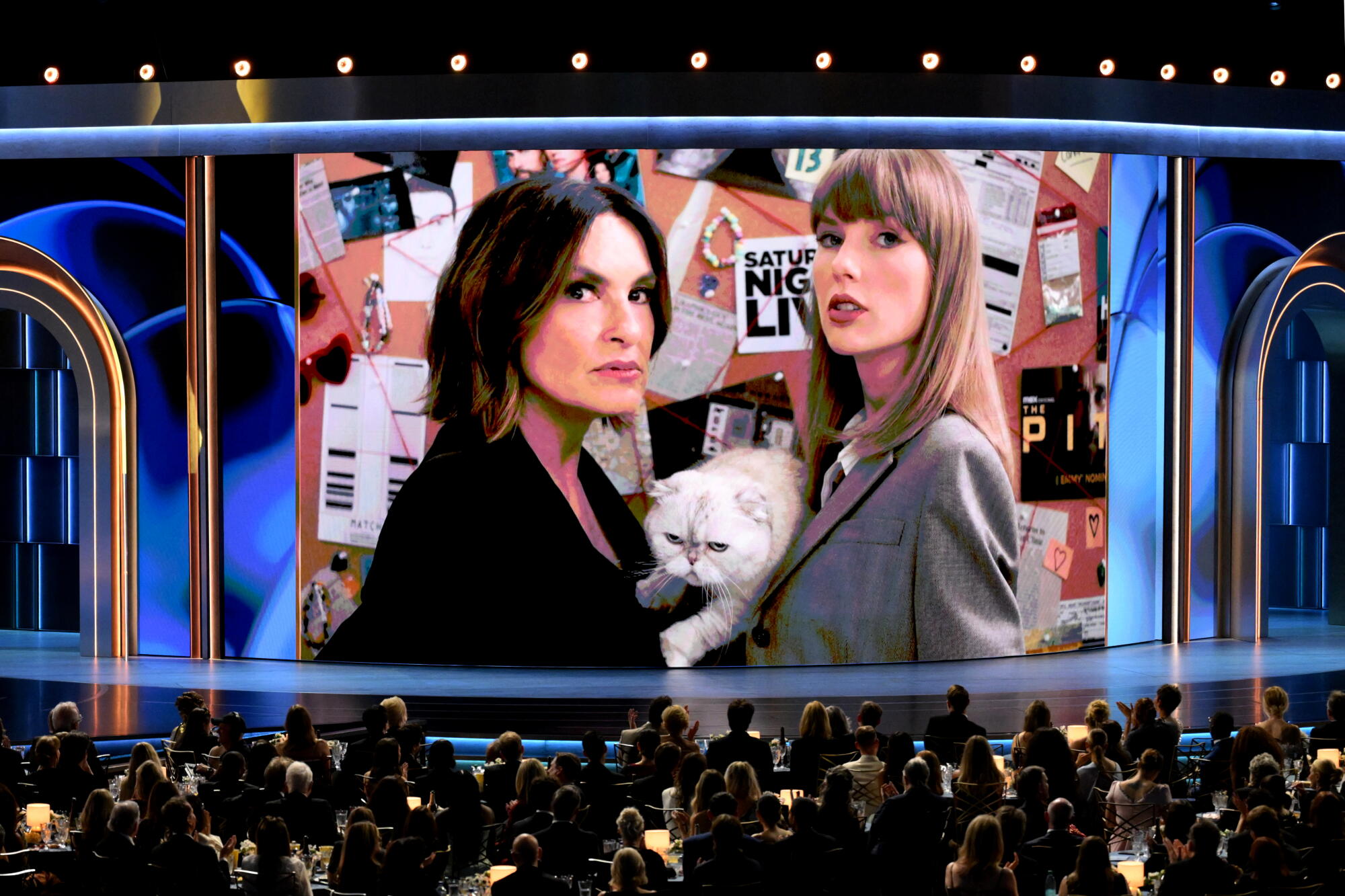
The Targaryen team-up was my favorite but it wasn’t the only name-based collaboration of the night. An earlier segment saw Olivia Benson, the fan-favorite “Law & Order: SVU” character played by Hargitay, share the screen with another Olivia Benson — Taylor Swift’s cat that is named after her. The cat made a surprise cameo along with the mega pop star in a pre-recorded segment about the likelihood of Swift appearing at the Emmys. — Tracy Brown

Marcello Hernández presented an award, but not before presenting some dinner invitations to a few people in the crowd.
(Robert Gauthier/Los Angeles Times)
When I saw “SNL’s” Marcello Hernández would be presenting at the Emmys, I knew it would be a special moment, and he didn’t let me down. The actor, who presented the award for directing for a comedy series, promptly made himself at home, shouting out, “Donde ‘tan los Latinos?” He then took the opportunity to say hello to a few fellow actors in the room.
“Very quickly, I would like to say hello to Harrison Ford,” he said, looking at the actor sitting in the audience, who gave an exasperated look and waved. “You are a legend and a real inspiration to me and I would like to invite you to have dinner at my house.”
The room erupted in laughter, but he wasn’t finished. He then extended an invitation to Zendaya and her partner, Tom Holland: “I want to say hi to Zendaya, you’re a beast and you’re amazing. And I saw you and I wanted to play it cool, and I decided I can’t do that. So I would like to invite you and Spider-Man to have dinner at my house.”
Then he proceeded to invite Oscar Isaac, the Guatemalan actor who utilizes his given name professionally, suggesting they might be related. “You are so good in ‘Beef’ and you are also Hernández, like I am. So we could be cousins, you never know. And I will see you at Christmas, I will cook you whatever you want.”
Lastly, he said a hello to Matthew McConaughey, and quoted his Cuban tía, who told him if he works very hard, he can hang out with “Matthew McCon-i-purse.” It was a light-hearted speech that spoke to anyone who suddenly finds themselves in a room wondering how they got there. — M.G.
As the fall equinox approached from a week away, the Primetime Emmy Awards made its 78th visit, leaving trophies in some hands, the honor of just being nominated for others and bupkes for the rest of the thousands who make what we call television. Once again I have been called to witness (from afar) and report, so let’s get down to it.
It was the turn of NBC (and Peacock) in the round robin of major networks who broadcast the show, and to keep things literally in-house it was hosted by Mariska Hargitay, “America’s sweetheart sex cop Olivia Benson” from the network’s “Law & Order: Special Victims Unit” and broadcast from the Peacock Theater, formerly the Microsoft Theater, formerly the Nokia in #DTLA, formerly downtown Los Angeles.
When reviewing the Emmys, or any awards show, as television in its own right, the only real questions are what distinguishes it from its many previous appearances on the karmic wheel of life — how it tricks up the basic, immutable form, like different decorations on the same sugar cookie recipe you have been using forever. Anything unexpectedly or especially moving, rousing, funny or strange, things that go against the grain of a production that wants to keep things controlled in order to bring the ship in on time.
This year the critic has been given the gift of Hargitay, primarily a serious actor (and director and producer), following in a long line of comedians and comic actors. There have been other serious actors as host, for example, Raymond Burr in 1959, Tom Selleck in 1984 and Angela Lansbury in 1993. And certainly, if you’re looking for someone to represent the medium rather than merely to comment on, celebrate or joke about it, you could do no better than Hargitay, the longest-serving actor on the longest-running prime-time live-action series on American TV. She’s beautiful, glamorous, self-possessed. She was recently on Broadway in “Every Brilliant Thing,” which involved a degree of what comedians call “crowd work,” so standing up in front of a live audience of people no more famous than she wasn’t going to throw her. Professional comedian Nate Bargatze, who hosted last year, was much more of a dark horse.

Emmys host Mariska Hargitay with singer Taylor Swift and her cat Olivia Benson on screen during a skit the 78th Primetime Emmy Awards.
(Patrick T. Fallon / AFP via Getty Images)
Although I would have bet on a pre-filmed “Special Victims Unit” routine to open the show, which is why I’m not a gambler, it wasn’t until an hour in that it appeared. (It involved murder-style boards, concerning the Case of Whether Taylor Swift would be making an appearance; she did, in the bit.) The pre-filmed production number that did open the show began with Hargitay and her actual good friend New York Knick Jalen Brunson steaming their clothes when Hargitay suddenly realizes she is due across the country to host the show. This led to Joan Jett’s “I Love Rock ’N Roll” reconceptualized as “I Love TV Screens,” which included the “Widow’s Bay” sea hag revealed to be Jennifer Coolidge, bringing boba tea (rhymes with “TV”); other rhymes matched “eating beef” and “watching ‘Beef’” and “Ed Gein” and “mean.” It moved to the live stage, with Hargitay flanked by dancers with television heads. Both segments felt more effortful than funny, but not unfunny.
On her own, however, Hargitay was above all a woman having a good time, never less than likable and game and enthusiastic, managing the scripted patter as well as anyone might have. Her monologue included several jokes about age, one about “L&O” producer Dick Wolf’s real name (Richard Penis), and another about her inability to pronounce “finale” because she’d never been in one. As is practically an Emmys tradition, some of these were confusing (even to the people performing it), or went on too long (Nick Offerman, cornered at his table, describing his work as an erotic house painter), or just had the effect of having been put on their feet without much, if any, rehearsal. Presenting the final award, for outstanding comedy, Woody Harrelson and Matthew McConaughey, told to stretch — the show was actually running short — described the plot of their upcoming Apple series, “Brothers,” until they were allowed to move on.
As to what the Television Academy calls “creative elements,” everything that isn’t a presentation or a speech, they advertised tributes to the 30th anniversary of “Buffy the Vampire Slayer,” certainly a typo, and the 50th of “Charlie’s Angels,” a logical impossibility, but these were really just themed groupings of presenters — Sarah Michelle Gellar and David Boreanaz in the former, Kate Jackson, Cheryl Ladd and Jaclyn Smith in the latter. (The Angels managed a few words for Farrah Fawcett, but none for Shelley Hack, Tanya Roberts or David Doyle.) But there were full tributes to Dolly Parton (Sally Field enthused, Reba McEntire sang); to James Burrows, with Jamie Lee Curtis pivoting emotionally to talk about old friend Rob Reiner, who won a posthumous guest appearance Emmy this year for “The Bear”; and to Catherine O’Hara, with her “Home Alone” child Macaulay Culkin and “Schitt’s Creek” children Annie Murphy and Dan Levy, who spoke to “helping her build a TV character over the age of 60 that wears leather miniskirts and eight-inch heels and speaks in a strange, sometimes unintelligible transatlantic accent, and know that she will not scare an audience away.”
And there was Julianna Margulies presenting the Bob Hope Humanitarian Award to Michael J. Fox, who, in his usual way, was eloquent and funny, and let the people know about the goodness of Bob Hope, setting up a punchline in the bargain. Like a lot of you, I love Michael J. Fox, and I’m just going to leave that here, with a pile of soaked-through tissues.
John Mulaney stole the show as a presenter at the 78th Emmy Awards ceremony at the Peacock Theater in Los Angeles.
(Robert Gauthier / Los Angeles Times)
But what America will mostly remember from this night was John Mulaney, introducing the award for lead actor in a drama, and burning the house down with a routine that went wherever it wanted. “They can play anything, these nominees. Not just doctors. They can play a cop or an FBI agent or a secret agent. And then that’s it. No other examples.”
“Since the creation of television, men have been historically underrepresented,” Mulaney said, explaining that the medium was all “beauty contests and children talking to hand puppets until the early ’60s. Until a man walked out and said, ‘Enough. My name is Fonzie and the president’s been shot.’” Mulaney is a man who has convulsed crowds in arenas and stadiums, but, as a local, nothing made me laugh harder than the words, “You know, I was shooting down Barham last night at 90 miles an hour.”
Nothing against Hargitay, but it’s clear that Mulaney should host this show, and every awards show, from now on.
WASHINGTON: Jason Eaton insisted he was acting on orders from the CIA and Mossad when he shot three Palestinian college students who were walking past his home a few days after Thanksgiving. He said the US and Israeli intelligence agencies transmitted the messages to him via FM radio and that God was commanding him to protect his Jewish neighbors.
Eaton’s claims were at the heart of his insanity defens e as he went on trial Monday on attempted murder charges in a case that shook Burlington, Vermont, and reverberated in the West Bank, where the three wounded men grew up and became friends as schoolmates in Ramallah before moving to the US for college.

The November 2023 shooting, weeks after the start of the Israel-Hamas war, spawned calls for a hate crime investigation. But no hate crime charges were filed as questions persisted about whether anti-Palestinian animus, an altered mental state or something else had compelled Eaton to open fire on Hisham Awartani, Tahseen Aliahmad and Kinnan Abdalhamid, who were all 20 at the time.
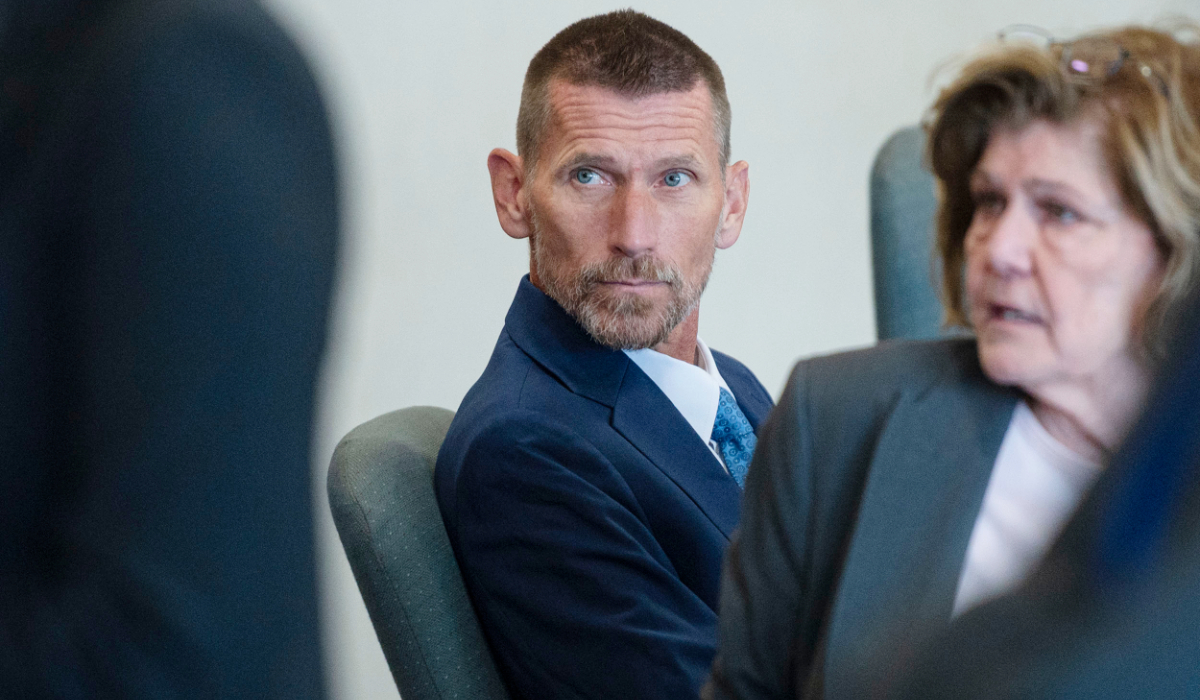
The men testified one after another as Eaton, now 51, watched stoically from the defense table in a Burlington courtroom. He has pleaded not guilty but doesn’t dispute that he was the shooter. If convicted, he faces up to life in prison. If found not guilty by reason of insanity, he could be ordered to undergo mental health treatment.
Defense lawyer Joshua O’Hara, previewing testimony from a defense psychiatrist, told jurors in an opening statement that Eaton was suffering from a delusional, psychotic disorder after losing his job at a credit union two weeks before the shooting.
While listening to a local NPR affiliate, Eaton believed he was hearing messages that he attributed to the CIA, O’Hara said. At first, the messages were encouraging and validating, the lawyer said, but subsequent messages turned dark, insisting that Eaton “has to go out and shoot somebody.”
Prosecutor Sally Adams told jurors that a state psychiatrist who is slated to testify concluded that Eaton did not have a mental disease or defect. Evidence will show he intended to kill the men, was not legally justified in shooting them, and does not meet the test of legal insanity, Adams said.
Authorities found three shotguns in Eaton’s apartment and a Ruger .380-caliber handgun that crime lab testing concluded was the gun used in the shooting, Adams said. Eaton had purchased the gun seven months earlier from a Vermont gun store.
“If the defense tries to focus on the story that Mr. Eaton tells about why he intended to kill these three young men, that story is only part of the whole picture,” said Adams, the chief administrative deputy at the Chittenden County State’s Attorney’s Office.
Awartani, Aliahmad and Abdalhamid, all of whom are now 23, told jurors of their holiday weekend visit to Awartani’s grandmother’s house, a trip to a bowling alley to celebrate his twin cousins’ birthday, and the walk they took near the University of Vermont campus after dusk that ended in bloodshed.
Awartani, who was studying at Brown University in Rhode Island at the time, said they were smoking cigarettes and speaking a mix of English and Arabic. Two of them said they were wearing traditional Palestinian scarves known as keffiyehs. Awartani said he first noticed Eaton standing on a porch as they approached the apartment house where he lived.
Within seconds, Awartani said, Eaton was off the porch and walking toward them. His face was expressionless and he didn’t say anything. As Eaton got to about five to 10 feet (1.5 to 3 meters) away, “he pulled out a handgun and started shooting at us,” said Awartani, who was paralyzed from the waist down in the shooting and now uses a wheelchair.
Jacob Pyne, who lived in a different apartment in the same house as Eaton, testified that he heard four to six gunshots, followed by footsteps going up the stairs of the apartment house. He said he ran outside and heard two men speaking, one of whom was more vocal and yelling, “I’ve been shot, help me.” He then brought the men blankets and called 911.
Abdalhamid, a student at Haverford College near Philadelphia, said he fled and hid behind another home after seeing Aliahmad fall to the ground. He said he only realized later when he sat down that he had also been wounded. Awartani was shot in the chest and the bullet ricocheted off his scapula, causing paraplegia in his spinal cord. Aliahmad, who was a student at Trinity College in Connecticut, was struck in the collarbone, and Abdalhamid was shot in the right buttock.
O’Hara, the supervising attorney at the Chittenden County Public Defender Office, told jurors that Eaton was confused by the messages he said he was receiving, and became convinced that the CIA and Mossad were enlisting him into “overwatch duty” to protect a Jewish family living across the street.
“These were delusions,” O’Hara said. “He believed in the moment that he was doing something that was right. He had been commanded to do this. And that he did not have the ability to appreciate the wrongfulness of his conduct in the moment because he believed he’d been instructed to do this by a government agency or God.”

A former employee of Activision Blizzard is suing the Santa Monica-based game company, alleging she was sexually harassed and subject to retaliation.
In a lawsuit filed in Los Angeles County Superior Court on Wednesday, the woman, filing anonymously as Jane Doe, says the game giant “fostered and tolerated a pervasive ‘frat boy’ workplace culture,” where male employees and supervisors “openly objectified women, viewed and displayed pornography” and made demeaning sexual remarks in her presence.
She is seeking unspecified compensatory damages, including for lost wages, benefits and earning capacity.
“We take these allegations seriously. We strive to maintain a respectful and inclusive workplace, and we do that through best-in-class policies and systems designed to prevent and address harassment, discrimination, and retaliation, and by holding employees accountable for their behavior,” said a Blizzard spokesperson in a statement to The Times.
The woman, who said she worked for the company for 14 years beginning in 2009 in its sound department, accuses 10 men of subjecting her variously to harassment, physical assault, inappropriate touching and inappropriate comments.
Between 2011 and 2012, she alleges, one co-worker lured her to his apartment, where he repeatedly touched her leg and “blocked her exit, threaten[ing] her with physical violence and attempted to rape her.” He continued to demand dates and spread sexual rumors about her calling her a “bitch” and “slut” in front of co-workers and a male manager, according to the suit.
Over five years starting in 2010, Jane Doe says that she was “repeatedly sexually harassed” by another man, a re-recording mixer with whom she worked with, and who told her that she would “be risking her career if she reported him,” the complaint states.
She further alleges that a third man, Blizzard’s audio director, “repeatedly touched” her leg “in a sexual manner without her permission” and when she rejected his advances he “retaliated against her by sabotaging her work and ensuring that she was denied a promotion.”
According to the suit, Jane Doe’s complaints and reports to her supervisors and human resources about her alleged treatment were dismissed and they “failed to take timely or effective corrective action.”
Further, the former employee says that she was “required to work excessive and unsafe hours” and told not to report overtime.
As a result of the harassment, the employee says in her complaint, she suffered suffered depression “and was required to seek ongoing psychiatric care” before being discharged in April 2024.
A year earlier, Activision Blizzard and California’s Civil Rights Department reached a roughly $50-million settlement agreement to resolve an employment discrimination and equal pay lawsuit. .
The Civil Rights Department sued Activision Blizzard in 2021, alleging that women at the company were regularly subjected to sexual harassment, paid less, denied promotions and met with retaliation when they raised concerns with managers.
For the record:
11:19 a.m. Sept. 11, 2026An earlier version of this story incorrectly described the amount Activision agreed to pay to compensate women who worked for the company in California from Oct. 12, 2015, to Dec. 31, 2020.
As part of the agreement, Activision Blizzard agreed to pay up to $45.75 million to compensate women who worked for the company in California from Oct. 12, 2015, to Dec. 31, 2020. The company also agreed to pay $9.1 million to cover the Civil Rights Department’s attorneys fees and costs.
Activision Blizzard also settled a case with the federal Equal Employment Opportunity Commission. As part of that 2022 settlement, the company agreed to establish an $18-million fund for workers who experienced sexual harassment or discrimination, among other types of workplace misconduct.
Activision Blizzard has denied all wrongdoing.

Chelsea bullied a disjointed Manchester United side to claim a dominant 5-0 win, their first of the Women’s Super League season.
Source link
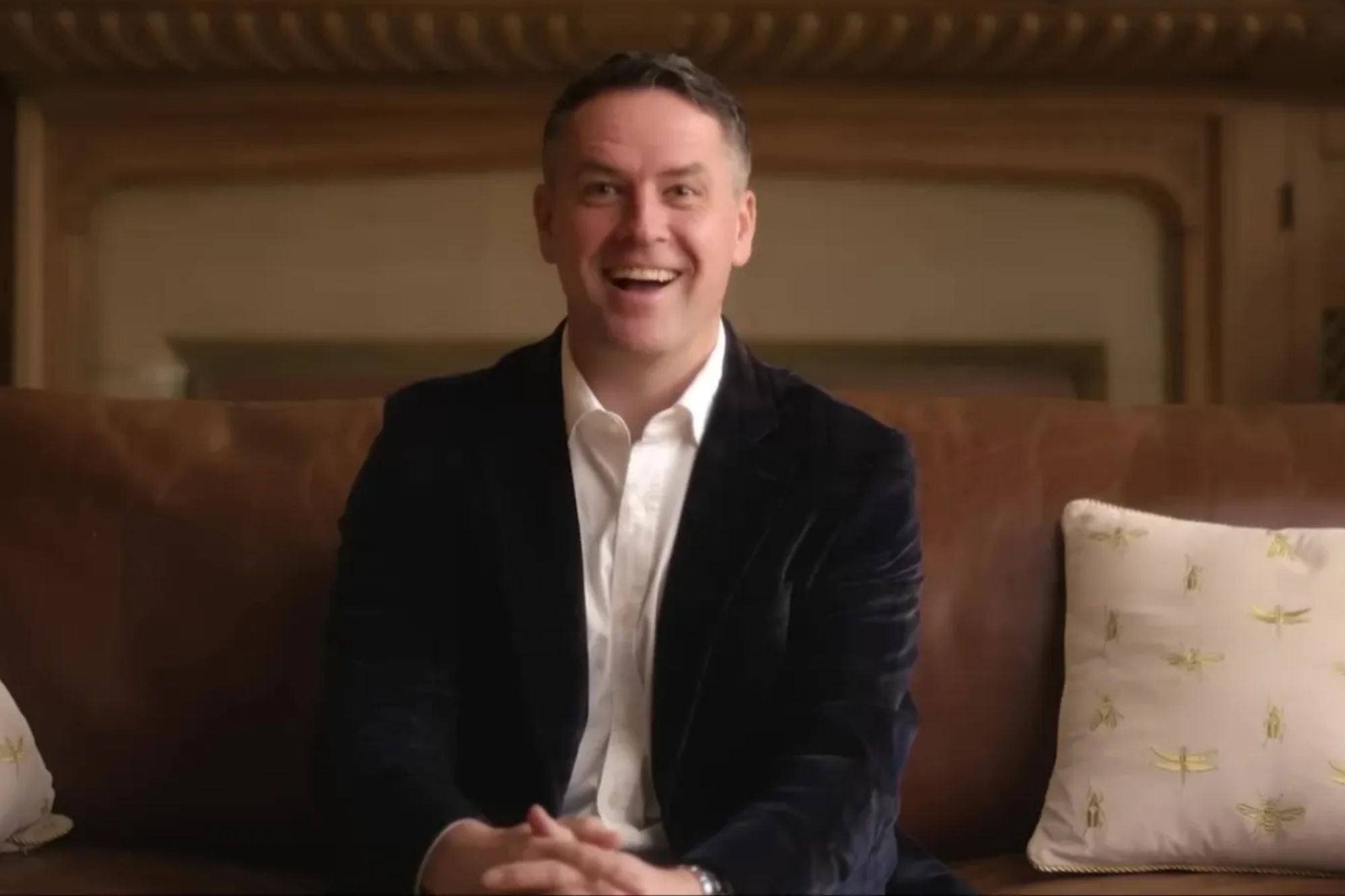

ONCE dubbed “the most boring man in football” Michael Owen’s choice to sign up for a fly-on-the-wall Amazon documentary about his family was unexpected to say the least.
The former England striker turned pundit, 46, allowed cameras to follow him, his wife Louise and their children Gemma, James, Emily and Jessica as they balance family life with running a horse racing business in Cheshire.
And it was a distinctly left-field move from Michael, who – unlike celebrity documentary subjects David Beckham, Wayne Rooney and the larger-than-life Tyson Fury – has largely stayed out of the spotlight.
He is seen joking in six part series Meet The Owens that he is now best known as a “boring p***k” or “Gemma Owen’s dad” after she appeared in Love Island, raising questions about why he would agree to film the at-home-with style show.
And we can reveal that the ex-footballer – often referred to as ‘the most boring man in football’ – signed up for his TV payday after ploughing £13 million into his racing business pushed him to his financial limit.
While he may have other streams of income, accounts for Michael’s company Owen Promotions show it holds just £7,219 in cash and owes £2.3m to creditors.
It also has three outstanding loans, two of which were taken out in March 2022 and February 2024 with Leeds-based MR Denton Properties.
A further loan was taken out in February 2024 with Andrew Black, who co-founded Betfair.
Two other loans with Grosvenor Funding, which claims to offer “fast and flexible” bridging loans were paid off in 2023.
And all five loans were secured using parts of the Owens home estate – a 42-acre estate he bought in 2001 for £4million.
Speaking in Meet the Owens, which is now number 3 on the Amazon Prime UK chart, Michael revealed he has had to put “£12 or £13 million” into Manor House Stables to build it to its current level.
But he admits the business – which makes cash by persuading investors to back the horses they buy at auction – still desperately needs investors.
And he describes their current status as: “Premier League. Brighton, but not seventh, but kind of bottom half.”
Footage from the first episode shows the racing enthusiast giving pal Jamie Carragher a tour of the impressive grounds and stables, showing off a horse owned by Sir Alex Ferguson and another he owns along with Paul Scholes, Steve McManaman and Owen Hargreaves.
Drone shots show the impressive site from the air, while graphics also flash up on screen showing how the structure works – a handy guide for any would-be investors.
One source told us: “Michael is passionate about Manor House and racing, and he has done an incredible job on Manor House.
“The problem is that it is a big money pit and you can pour millions into it without any guarantee of winning horses.
“He loves it, and would never walk away, but it would be naive to say it hasn’t had a massive impact on his finances.
“And the pressure is never ending because as a business, you have to buy horses each year – for £90,000 or more – and try to find investors for them.
“Then the million-dollar question is whether or not those horses win, as the stables need winners to succeed.
“But the reality is that you only win a very small percentage of the races in which you have horses.”
Michael is now the sole shareholder for Manor House Stables LLP, which owns the stables, after director and co-owner Andrew Black resigned in March 2022 after six years.
Accounts show the company has healthy assets of approximately £13.6million.
Yet the source said the business still has a way to go before it becomes a money-spinner, rather than a money pit.
They added: “The Amazon payday has come at a good time for Michael, but he is also hoping the airtime for Manor House will attract more investors.
“The more money that comes in, the better the horses and the more winners we will see here.
“That will help the business move higher up the rankings among the top British stables.
“Michael loves racing and he is driven by passion for the sport, but he is also very competitive and wants to win.”
Previously, a source told us: “Michael is extremely determined to succeed in racing. He has poured millions of his own money into Manor House, and he will not stop until he’s at the very top.
“Signing up to broadcast this to the world was a huge risk for him, and he’s desperate for it to work.
“Michael is keen to show off how much Manor House is a reputable and successful stable, and he hopes putting the business on screen ends up being a help rather than a hindrance.”
A spokesperson for Michael declined to comment.
MEXICO CITY — He’s been called the “MAGA man” of Latin America, a brash political provocateur whose social media assaults boosted right-wing campaigns from his native Argentina to Central America.
His career as political consultant and co-founder of an ultra-right online outlet made him a rich man and helped elect Trump-aligned politicians across the region. The Economist gave him the “MAGA Man” label, while political commentators gave him another nickname — the “Steve Bannon of Latin America” — a nod to the longtime Trump ally and advisor.
Now, however, Fernando Cerimedo, 45, sits in a maximum-security prison in Bolivia, accused of masterminding a murder-for-hire plot: The attempted femicide of his pregnant mistress, Nadia Beller, 33, a Bolivian lawyer and activist.
It’s a stunning collapse for a onetime ad man with a dodgy reputation who rose to become the go-to digital campaign guru for Latin America’s ascendant right wing. Cerimedo’s signature boasts, exaggerations and peddling of false election-fraud narratives reflected those of his political model, President Trump.
Cerimedo also is another example of how right-wing political operatives outside the United States — as recently in Colombia and Germany — have adopted Trumpian tactics and messaging.
The fall of the “King Midas of the Latin American right,” said Daniel Matamala, a prominent Chilean journalist, stunned “the ecosystem of fake news, bots, trolls and disinformation that has taken this region by storm in recent years.” Speaking on his podcast, Matamala added, “The name of Cerimedo looms like a ghost over the summit of the radical right.”
The Aug. 17 attack on Beller was a seemingly well-planned ambush that was captured by security cameras, the grainy images widely disseminated on social media.
One of two would-be assassins dressed as fast-food deliverymen pulled out a pistol and shot Beller point blank outside a hotel in the eastern Bolivian city of Santa Cruz. She fell to the ground and, according to her account, feigned death. The next day, at dawn, Cerimedo was arrested as he was about to board a plane to Buenos Aires.
Cerimedo set up the hit, prosecutors charge, in a nefarious attempt at damage control. Beller had threatened to expose his alleged criminal behavior and physically abusive behavior toward her while revealing Cerimedo, a married man with two children, as the father of her unborn child.
Cerimedo is also under investigation for alleged illegal enrichment and potential links to cocaine trafficking.
He has denied any wrongdoing.
Even before Cerimedo’s arrest, Latin American journalists had begun unmasking Cerimedo as a prodigious purveyor of fake news — about himself. New reports revealed that his frequent boasts about U.S. connections — that he attended Harvard, trained with U.S. Navy SEALs, worked in the Obama White House — were fanciful.
“He certainly exaggerated things,” said Damian Merlo, a Miami-based consultant who worked with Cerimedo on the 2023 campaign of Argentine President Javier Milei, a Trump favorite. “I never really got the impression that Cerimedo was ‘MAGA’s man in Latin America.’ The guy could hardly speak English! But that’s how he sold himself.”
Many times, the sales pitch worked. It was Cerimedo who helped broker then-candidate Milei’s celebrated 2023 interview with Tucker Carlson, at the time a Trump confidant, an appearance that thrust Milei into the international spotlight.
Like Milei, Cerimedo seemed to relish any proximity to Trump-land.
In February, at the inaugural “Hispanic Prosperity Gala” — a right-wing pep rally held at Trump’s Mar-a-Lago estate — Cerimedo was honored as “Hispanic Political Consultant of the Year.’” From the podium, he spoke of Latin America’s “culture war” and the need to ensure that “the left never again returns” to governments that have elected conservative leaders.
Switching to heavily accented English, Cerimedo gave a shout-out to Brad Parscale, Trump’s former campaign manager, whom Cerimedo thanked for “believing [in] me all the time and giving me your technology.”
Parscale declined to comment.

Fernando Cerimedo, an advisor to the National Party, points at a map of Honduras on Dec. 1, 2025, one day after voters went to the polls to elect Nasry Asfura president.
(Moises Castillo / Associated Press)
Both Cerimedo and Parscale were involved in last year’s campaign that resulted in the election of Honduran President Nasry Asfura, whom Trump backed publicly.
Last year, Cerimedo was a key player in the election of Bolivian President Rodrigo Paz, the center-right, U.S.-educated son of a former president who transitioned from Marxist firebrand to moderate. The ascension of Paz broke almost two decades of leftist rule by the Movement for Socialism party of ex-President Evo Morales.
Cerimedo had no official capacity in Paz’s government, but he enjoyed insider status. He accompanied Paz in March to Trump’s anti-narco “Shield of the Americas” summit, a confab of mostly conservative leaders at Trump’s Doral resort in south Florida.
Among the items found in searches of Cerimedo-linked properties, authorities say, was a business card listing him as Paz’s “chief adviser” — a nonexistent post.
“Mr. Cerimedo never had the authorization to represent … the presidency, the government or my family,” a deeply discomfited Paz said in Facebook message last month.
How exactly Cerimedo got into politics — and how he became a right-wing rabble-rouser — remains somewhat opaque. According to media accounts, he worked a series of uninspiring jobs — including stints as a taxi driver, a schoolteacher and an employee of insurance and computer firms — before veering into advertising. In 2019, he assisted the campaigns of several leftist Peronist candidates in provincial races in Argentina, and later founded his own consultancy, Numen.
Cerimedo first gained prominence in neighboring Brazil. That’s where he championed false election-fraud narratives following the narrow reelection defeat in 2022 of President Jair Bolsonaro — a MAGA stalwart — in his reelection bid against Luiz Inácio Lula da Silva, a leftist. Cerimedo’s “Brazil Was Stolen” livestream exacerbated the sense of outrage among Bolsonaro loyalists, who took to the streets in mass protests.
The Brazil exposure helped catapult Cerimedo into successful presidential campaigns in Argentina (Milei), Honduras (Asfura) and Bolivia (Paz). His arrest prompted Chilean lawmakers to create a commission to investigate Cerimedo’s possible role in that nation’s recent electoral shift to the right.
With Cerimedo’s name now toxic, Paz, Milei and other former allies have distanced themselves.
Also ditching Cerimedo was his close partner, Javier Negre, a right-wing Spanish media entrepreneur who, in 2024, purchased 50% ownership of Cerimedo’s La Derecha Diario (The Daily Right), an online, Spanish-language MAGA megaphone. The site strongly backed Colombian President Abelardo de la Espriella — who had Trump’s support — during his tight campaign this summer.
Following Cerimedo’s arrest, Negre announced that he had bought out his former partner in La Derecha Diario.
In Bolivia, the Cerimedo scandal has taken on the character of a Latin American telenovela.
A recovering Beller, shot three times in her upper body, granted interviews from her hospital bed, dishing on her lover’s alleged brutality and criminality.
According to Beller’s testimony to authorities, Cerimedo tricked her into the near-fatal rendezvous outside the hotel. He told her that a source was waiting to share details about the purported rape of a 13-year-old, she said. The supposed rapist? Bolivian ex-President Morales — a despised figure on the Latin American right.
The case has seen the once high-flying Cerimedo reduced to a slumping presence in a hoodie as authorities have shuffled the baldish, heavyset figure to hearings and lockups. Last week, he was transferred while awaiting trial to Bolivia’s maximum-security Chonchocoro prison, infamous for its high-altitude, ill-heated confines.
“I want to see my children!” a sobbing Cerimedo declared at one point in earshot of the media.
His legal team has pushed back. A defense lawyer, Margarita Arce, questioned whether Cerimedo had impregnated Beller and asserted to reporters that Beller staged a “self-inflicted attack” to smear Cerimedo and undermine the Bolivian government.
But prosecutors have sided with Beller, who told the Argentine daily Clarín: “Fernando Cerimedo wanted to kill me because I can tell everything that I know.”
Times staff writer Ana Ceballos in Washington and special correspondents Andrés D’Alessandro in Buenos Aires and Cecilia Sánchez Vidal in Mexico City contributed to this report.

WASHINGTON — The Department of Homeland Security drew backlash over an AI-generated social media post featuring a Sikh man facing off against a character made to look like Optimus Prime from the movie “Transformers.” The agency later deleted the image.
Posted Wednesday to the official X account for DHS, the image created by artificial intelligence depicted the “Transformers” character opposite a bearded man wearing a bandanna over his hair. The image, made to look like a movie poster, stated, “America for Americans.”
“Get off our roads, you don’t know how to drive Mr. Singh,” it continued.
The post was denounced as “racist propaganda” and “completely unacceptable.”
The administration and DHS make no effort to hide their obvious bigotry, casting suspicion on millions of Americans based on their background and appearance, in this case, the Sikh community.
DHS’s grotesque advertising campaign is hateful, disgraceful, and un-American. pic.twitter.com/zkYGTTfOjL
— Senator Adam Schiff (@SenAdamSchiff) September 10, 2026
Other X posts by DHS that reference Transformers remain online.
Sikh Americans and elected officials condemned the image and accused the Trump administration of using racist imagery to stigmatize Sikhs while promoting its deportation campaign.
Hasbro, which owns the franchise, issued a statement saying the posts by DHS were made “without permission and do not represent the Transformers brand or Hasbro.”
Singh, which translates to “lion,” is the most common last name for Sikh men.
DHS said the post depicted Harjinder Singh, an Indian truck driver accused of causing a fatal crash last year that left three people dead after his 18-wheeler collided with their minivan in Florida. He has pleaded not guilty to vehicular homicide charges.
In photos released by DHS, Harjinder Singh wears similar clothes as the man in the now-deleted AI image.
In an emailed statement, a Homeland Security spokesperson, who did not identify themself, called criticism of the post “nonsensical drivel.” The spokesperson did not respond to a question asking why it had removed the post.
“Harjinder Singh is an illegal alien from India who should never have been in our country,” the statement said, adding that he had been granted a commercial driver’s license by California.
In its campaign against immigrant commercial drivers, the Trump administration has repeatedly pointed out Sikh and Indian truckers, who make up about 20% of that industry’s workforce.
The department recently cited California as a problem state that allows drivers who don’t speak sufficient English to obtain licenses. It also started a tip line asking members of the public to report truck drivers they suspect of being undocumented.
The press office of California Gov. Gavin Newsom, which shared the deleted image in its own X post, called the post “disgusting” and “racist propaganda.”
Noting that the Central Valley is home to a large Sikh community, Rep. David Valadao (R-Hanford) called the post “completely unacceptable” and said he’s glad it was removed.
“No American should be targeted because of their faith or their name,” Valadao wrote on X.
The Sikh Coalition noted that the DHS post comes as the country mourns the 25th anniversary of 9/11, after which Sikhs were targeted for hate crimes.
“We remain fearless in identifying as Sikhs — even when our government portrays us as enemies,” the coalition wrote on X.
A man was arrested this week near Kris Jenner’s home in Calabasas on suspicion of stalking. It wasn’t the reality TV star’s first brush with the alleged stalker.
Officers with the Los Angeles County Sheriff’s Department on Monday arrested the man, identified as 25-year-old Zenwilliam Robson, after he was detained by Jenner’s security in her neighborhood, The Times confirmed.
It was not clear whether Jenner was at home at the time of Robson’s arrest.
Robson was booked Monday evening and charged with one misdemeanor count of trespassing and refusing to leave private property, according to court records.
He is currently jailed at the Twin Towers Correctional Facility in downtown Los Angeles and is set to appear in court on Sept. 22. A representative for Robson could not immediately be reached for comment.
A representative for the “Keeping Up With the Kardashians” star declined to comment. But according to a source familiar with the case who was not authorized to speak publicly, Jenner’s team is aware of Robson and that he tried to contact the 70-year-old reality TV personality and businesswoman in the past.

