
Malmo

Saunas, cinnamon buns and coastal scenery on the new rail route from Malmö to Oslo | Scandinavia holidays

‘This carriage is due for modernisation. Don’t miss the opportunity to experience 90s Germany style,” reads the sign on the door to the dining carriage. The couple inside aren’t missing theirs: they’re taking endless selfies in the clinical pink-and-turquoise carriage that looks like a hospital canteen and smells like cinnamon buns and strong filter coffee.

I’m on Snälltåget’s iconic red-shelled train, on the Swedish rail company’s new route from Malmö to Oslo – a 6.5-hour journey along Sweden’s picturesque western corridor. Until now, the journey between the two cities involved long bus rides and fragmented train transfers. This direct line is easier and cheaper, with tickets starting at £11 each way. It’s already a hit, shuttling more than 25,000 passengers since launching this summer.

I was first seduced by Scandi rail travel a decade ago on a journey from Stockholm to Gothenburg, when I was berthed in a cosy dark-wood cabin and listened to a pianist play in a dining car. This time, starting in Malmö, I will take advantage of the new route to make a series of stops along the country’s western shore.

In my view Malmö, across the Øresund Bridge from Copenhagen, is too often overlooked in favour of Stockholm. The southern port city is less polished than the capital and grittier, but its residents seem more outgoing and curious. Within an hour of arriving, I’m invited to drinks by a group of local people – a level of openness I never experienced living in Stockholm. Almost half of the population is under 35, and 187 nationalities are represented, making it a hotbed of creativity. In the centre of town, the Form/Design Center occupies a former 16th-century grain store, now a meeting point and exhibition space for design, crafts and architecture enthusiasts. Then, there are Moderna Museet and Malmö Konsthall modern art galleries.

Points of View by Tony Cragg, a public artwork in Malmö. Photograph: Danita Delimont/Alamy

At Möllevången, or Möllan, a trendy neighbourhood popular with creatives, everybody looks as if they’re at art college, or have just returned from a weekend in Berlin. My friend Rob, who has lived in Malmö for nearly a decade, guides me through Folkets Park, the “people’s park”, pointing out his favourite pizza spot, Far i Hatten, which occupies cute wooden huts. We find a table at Ava nearby for a beer on a leafy square dotted with hip restaurants and organic wine bars – it feels like Malmö’s equivalent to London Fields in Hackney. Resisting the urge to continue our purposefully staid bar crawl, we down a nightcap at Bar Bobo and call it a night.

Snälltåget operates just one direct Oslo-bound train a day, at 6.38am from Malmö Central (plans are in the works to increase this next year), so it’s an early start at a station teeming with families and backpackers with rucksacks the size of fridge-freezers. We soon pass the romanesque towers of Lund Cathedral before chugging through pancake-flat yellowing agricultural fields, then skirt Apelviken bay – Varberg’s long, sandy horseshoe beach popular for kitesurfing and surfing.

Varberg is Sweden’s equivalent of a coastal British market town. It’s got bunting, cobbled streets, intimate cafes and a weekend market with vendors peddling fresh vegetables, fruit, marmalade, leather belts and socks. It’s also a spa town, which inspired my visit. I was intrigued by its pretty, Moorish-inspired Kallbadhuset (cold bath house), set on wooden piles above the Kattegat sea, where for about £8 visitors gain access to segregated men’s and women’s saunas, both with spellbinding sea views. A plunge in the brisk water after the sauna proves the perfect antidote to a 6am start after a bottle of red wine the night before. Floating on my back, I look up to see a group of Swedish veterans sitting on a wooden bench, baring all (it’s a nude bathhouse), the building’s mustard shades completing an almost Hockney-esque scene.

The Snälltåget. Photograph: Trygve Finkelsen/Alamy

According to a sign outside Skarpe Nord – a community-run women’s bathing spot nearby – people have been nude-bathing in Varberg for more than 100 years. Walking along the promenade by a cavernous passage of blasted rocks that resembles a secret pathway from Lord of the Rings, I pass a collection of other designated naked bathing spots. But with the grey weather showing no sign of clearing, my hotel’s spa proves more inviting.

In the bowels of Hotell Gästis hides a replica of Vladimir Lenin’s favourite bathhouse. The hotel’s owner, Lasse Diding, built the spa as a homage to his idol, inspired by a visit to the original bathhouse in St Petersburg in the 1980s. This slightly eerie space is clad in more than 75,000 cobalt tiles and decorated with candlelit busts of communist leaders.

Diding’s interest in the communist movement began during the Vietnam war and never left him. The eccentric entrepreneur is responsible for Varberg’s many visible politically left-leaning monuments – a giant Palestine flag, Hotell Havanna (an ode to revolutionary Cuba) and a statue of Danuta Danielsson, who became a symbol of solidarity after hitting a marching neo-Nazi with her handbag in Växjö in 1985.

The following morning, I hop on the fast train to Gothenburg, a 39-minute ride away. After checking in at the sophisticated, French boudoir-style Hotel Pigalle, just five minutes’ walk from Central station, I wander along Kungsgatan, the city’s modern shopping artery, towards Magasingatan. The area is packed with vintage shops (Ragtime, Pop and Humana) and craft stores such as Customwood, which makes bespoke wooden furniture to order.

skip past newsletter promotion


Sweet treats. Photograph: Gabriella Stroem/Getty Images

I grab a fika (the Swedish tradition of taking a break to drink coffee and indulge in a sweet treat) at Da Matteo, a barn turned cafe spread across three floors. The Scandi-industrial interiors are straight out of a design magazine, as bespectacled folk work away on their laptops. Scents of bread and coffee drift from the in-house bakery and coffee roastery; my bullar (a classic cardamom bun) and a latte cost just under a tenner.

Wandering around Slottsskogen park later, I remember why I wanted to move to Gothenburg after a fleeting first visit all those years ago. Sweden’s second-largest city is compact and easy-going. It has a rough-around-the-edges feel like Malmö in places, with the liveability, nature and culture of Stockholm. At its heart is the pretty old town of Haga, which has narrow cobbled streets, inviting wafts of baked goods and the sound of creaky, wooden trams chugging by. And Slottsskogen is my favourite park in Europe. Roughly the size of Hyde Park, it’s home to deer, penguins and Gotland ponies, and exactly the kind of place you can spend long hours strolling without purpose.

The Gothenburg to Oslo leg of the journey is the cinematic climax. It starts with rolling green pastures, cows grazing on a riverbank and forests thick with towering conifers beneath a blue summer sky. Then nature really starts showing off: lakes widen, trees grow greener and granite canyons appear grander with every kilometre, drawing excited kids to press their noses against the windows.

Oslo from Vettakollen viewpoint. Photograph: Sean Harrison/Alamy

Keen to see it up close, after pulling into Oslo I dump my bags at Citybox, a minimalist hotel a few minutes’ walk from the station, and head north to Sognsvann. This lake and recreational area on the outskirts of the city is the starting point for a circular walk up to Vettakollen, a popular viewpoint. After an easy, 30-minute uphill hike, I reach a rocky mound skirted by pine trees, where families are picnicking. Oslo unfurls in the distance, the urban sprawl of metal and glass stretching to the fjord. For me, this is what makes Scandinavia special: the urban and the natural worlds seamlessly colliding.

The trip was provided by Visit Sweden. One-way tickets from Malmö to Oslo with Snälltåget cost from 149 Swedish kronor (£11). Double rooms at Hotell Gästis from £90. Doubles at Hotel Pigalle from £85. Single rooms at Citybox Oslo from £68


Source link

Multicultural Malmo: Swedish city loathed by far right braces for election | Elections News

*Some interviewees asked that their surnames be withheld because of the political nature of the interviews.

Malmo, Sweden – A very Swedish political tradition is playing out in Malmo, the country’s third-largest city. Rows of twee campaign booths, known as “election cottages”, are packed into a corner of the central square.

Recommended Stories

list of 3 itemsend of list

National polls have Sunday’s election on a knife-edge, with the centre-left opposition bloc led by the Social Democrats just a few percentage points ahead of the right-wing group – a gap that has tightened over the past month.

In the middle of the row, representatives of the Left Party and the far-right Sweden Democrats (SD), bitter rivals from opposite ends of the political spectrum, campaign a metre apart.

Migration is a key election issue. Multicultural Malmo, with more than a third of the city’s 368,000 residents born outside Sweden, has become the centre of the debate.

For the right, the city represents failures of integration, a cautionary tale it says of what happens when immigration goes unchecked. Beyond Sweden, Malmo draws disproportionate interest.

In 2017, the populist English politician Nigel Farage branded it the “rape capital of Europe”, a claim a leading Swedish criminologist dismissed as nonsense, while Germany’s far-right AfD has used it in its narratives about the dangers of immigration.

Strength in diversity

In the city’s town hall, a grand building with a Dutch Renaissance-style facade, Anfal Mahdi, an opposition councillor in Malmo for the Left Party, sits amid the splendour of green velvet chairs, historical oil paintings and royal portraits.

Right-wing politicians ignore the socioeconomic challenges of living in the areas built under Sweden’s “Million Programme”, she said, referring to an ambitious scheme to build one million new homes between 1965 and 1974.

It began as a social housing initiative for working-class Swedish families. In later decades, as many of those families moved out, the apartments were allocated to migrant and refugee newcomers.

Observers say what began as a utopian welfare project gradually became the physical framework of today’s segregated suburbs.

Mahdi, whose family fled Iraq after the Gulf War, grew up in one of these areas during cuts to the welfare state that had defined modern Sweden, as public spending tightened after its early-1990s economic crisis.

But what they lacked in welfare, they made up for in diversity, she said.

“I had friends from Bosnia, Palestine, Somalia and when we grew up we did not have much, but we leant on each other,” she said.

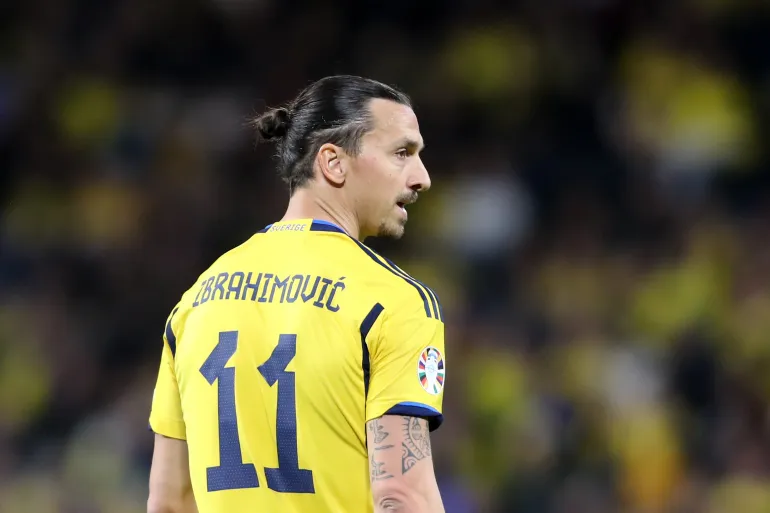
The city’s most famous son, Zlatan Ibrahimovic, grew up in Rosengard, a Million Programme estate on Malmo’s eastern side that police still classify as a “particularly vulnerable area”. The famous footballer regularly credits the area for shaping the skill and confidence that defined his career.

STOCKHOLM, SWEDEN - MARCH 24: Zlatan Ibrahimovic of Sweden looks on during the UEFA EURO 2024 qualifying round group F match between Sweden and Belgium at Friends Arena on March 24, 2023 in Stockholm, Sweden. (Photo by Linnea Rheborg/Getty Images)
Zlatan Ibrahimovic grew up in Rosengard and went on to become Sweden’s all-time top goalscorer [File:Linnea Rheborg/Getty]

“It’s often in these neighbourhoods that people can shine; there is a sense of community that doesn’t exist elsewhere,” said Adam*, a 20-year-old florist who also grew up in one of the areas Sweden officially labels “vulnerable”.

He rejects the stereotypes associated with Malmo, saying young people here are far more concerned with the cost of living, finding work and the everyday pressures of getting by.

Mahdi shared this sentiment, saying “wallet politics”, relating to healthcare and unemployment, are central issues for all sections of society.

Healthcare tops voters’ concerns nationally, while unemployment in Malmo, at around 11 percent, is among the highest of any Swedish municipality.

A Green Party campaigner in Malmo, behind are stands belonging to the Moderate Party and Communist Party of Sweden, September 9, 2026
A Green Party campaigner in Malmo, behind are stands belonging to the Moderate Party and Communist Party of Sweden, September 9, 2026 [Nils Adler/Al Jazeera]

But not everyone sees it that way.

Lena, a 78-year-old campaigner for the Moderate Party, which leads the right-wing bloc, believes integration along with schooling are taking centre stage. At the last election cycle, it was care for the elderly, she said.

Jacob, a 19-year-old resident who was speaking to representatives of various parties, said a taboo has been broken with more young people turning right, including towards the SD, now polling as Sweden’s second-largest party.

The far-right party with neo-Nazi roots could enter government for the first time if the right-wing bloc wins: Prime Minister Ulf Kristersson has promised cabinet posts, including the migration portfolio.

Anfal Mahdi in Malmo town hall, January 9, 2026
Anfal Mahdi in Malmo town hall, January 9, 2026 [Nils Adler/Al Jazeera]

‘Divisive politics’

Sara, a woman in her twenties of Palestinian heritage, said “divisive politics” are normal now. The rhetoric around immigration and Islam in particular has left her feeling some “don’t want integration or even assimilation, they just want you to leave”.

Under the current right-wing government, many teenagers who grew up in Sweden with their families were ordered to leave on turning 18 while their parents were allowed to stay. The government paused the separation in March after a public outcry and moved to reform in June.

In February, the Swedish Migration Agency ordered an eight-month-old boy born in the country, Emanuel, to be deported alone to Iran while the rest of his family kept their permits.

Thousands of pro-Palestine protesters march through the streets of Malmo, May 11, 2024
Thousands of pro-Palestine protesters march through the streets of Malmo, May 11, 2024 [Nils Adler/Al Jazeera]

The system concerns Binto Drammeh, whose father is of Gambian heritage.

“Our uncle was made to leave as he didn’t meet the income threshold,” she told Al Jazeera.

The government has repeatedly raised the salary threshold for work permits, most recently in June, when it increased from 80 to 90 percent of the Swedish median wage.

Failing to meet it could ultimately lead to a deportation order.

Criminal networks

Crime is another main election issue.

With a population of 10.6 million, Sweden has one of Europe’s highest rates of deadly gun violence, even though lethal violence fell last year to its lowest level since 2012.

Among the challenges, criminal networks are recruiting children as young as 12 to transport weapons, sell drugs and carry out contract killings. In 2024, Danish gangs were found to be hiring Swedish teenagers to carry out shootings and bombings.

How to tackle the problem divides the parties.

The right prioritises punishment and deterrence, while the left and centre-left emphasise tackling root socioeconomic causes, rehabilitation and preventive social work. The lines are not always clean, however: the Social Democrats backed lowering the age of criminal responsibility, while the Left, Green and Centre parties voted against it.

TikTok politics

Young voters appear more engaged than at the last election.

Lena of the Moderate Party said: “I haven’t met one person who said they won’t vote,” while Mahdi said the Palestine issue has had a galvanising effect.

“Right now, all the posts on my TikTok page are from party accounts; they got a lot of likes and views and many videos are trending,” said Jacob, the 19-year-old resident.

Yet some are undecided about whom to vote for, partly because of Sweden’s unusual bloc system. Built on the idea of consensus, it means a vote for one party’s policies may be diluted in coalition, or are hard to push through.

“I will be honest, I have not voted yet,” Adam said, as he looked out at the array of campaign booths next to his flower stand. “Young people are interested in politics, but many of us think that no matter who comes, nothing will really change.”

A Social Democrat Party poster (left) reads ‘Now it is the ordinary folks’ turn’ and Left Party posters read ‘Yalla, Yalla housing for all’ and ‘Good schools for every young person’.

Source link