The Sea Ranch Lodge, a focal point of a Northern California getaway destination that blends minimalist design with the rocky shores and meadows of the Sonoma County coastline, might have a growth spurt in its future.
Owners of the Lodge at Sea Ranch, which includes 17 hotel rooms, on Sept. 3 presented neighbors in the closely restricted community with plans that include 23 added guest rooms, a dining courtyard, a new dining space, a library and a “space for relaxation and movement.”
The Danish architecture firm BIG: Bjarke Ingels Group and San Francisco-based landscape architects Lutsko Associates are part of these plans. To become reality, however, those plans need to win design approval and permits from the Sea Ranch Assn. (which includes the lodge and surrounding homes) and Sonoma County.
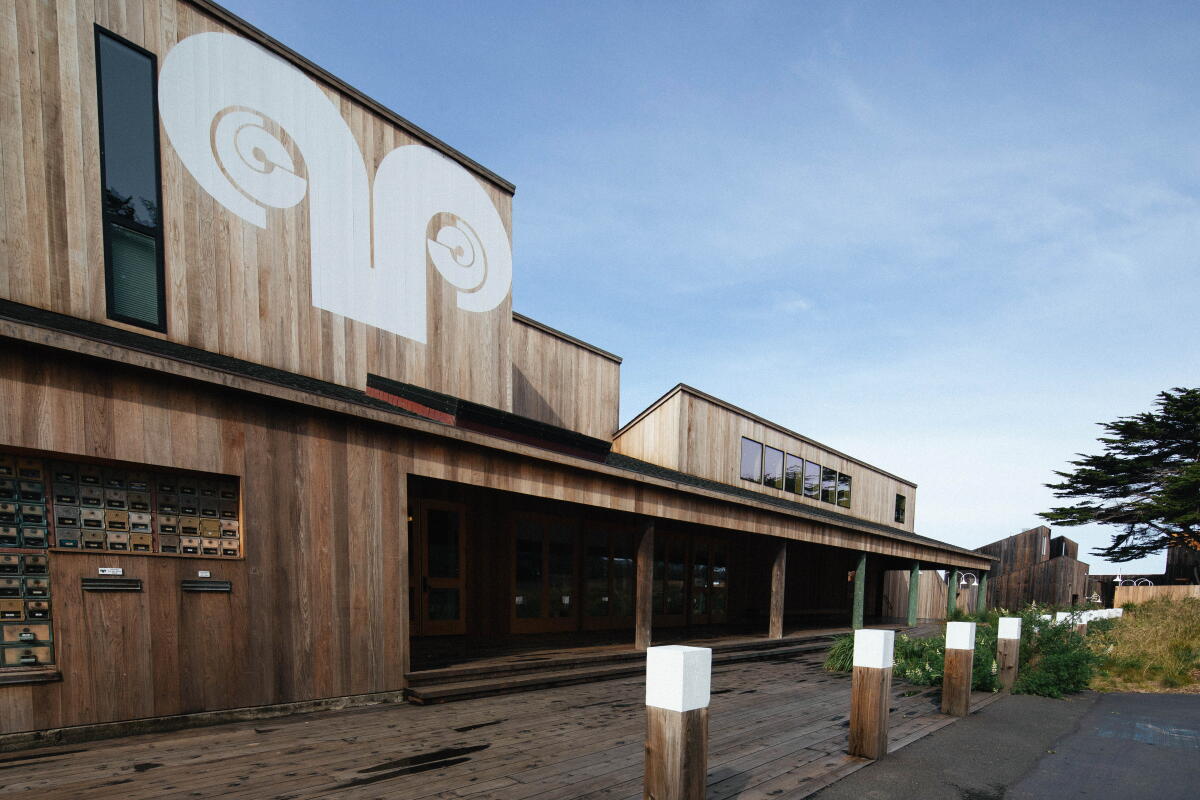
The ram’s horns at the Sea Ranch Lodge were designed by artist Barbara Stauffacher Solomon.
(Myung J. Chun / Los Angeles Times)
The current owners of the lodge took over in 2018, completed a major renovation in 2023 and wish “to remain private,” a representative said. The Wall Street Journal has reported that the investors’ group includes San Francisco-based brothers Patrick and John Collison, who founded the tech company Stripe; venture capitalist Robin Chan; and Twitch co-founder Justin Kan.
The 53-acre lodge property is only one piece of the Sea Ranch puzzle. The surrounding development, which broke ground in 1964, includes about 2,200 homes and lots on roughly 7,000 acres, all subject to strict design standards enforced by the Sea Ranch Assn.
The homes, mostly clad in wooden exteriors, none more than two stories high, are scattered along 10 miles of coastline about 100 miles north of San Francisco. The nearest town is Gualala, about six miles north.
Rooms at the Sea Ranch Lodge often rent for $600 nightly or more. Many visitors rent neighboring Sea Ranch homes from Airbnb, Vrbo or local companies including Gualala-based Sea Ranch Rentals and Sea Ranch Escape. In fall, rental rates for homes often start around $400 nightly.
Widely praised as an model for environmentally sensitive building, the development sparked a years-long legal battle over public access to the coast. The result is a combination of private and public access: Six public-access trails cross Sea Ranch to on their way to the shoreline, while Sea Ranch residents retain access to several private beaches.
An ocean view along the trails at the Sea Ranch Lodge.
ONE airline has scrapped two of its routes to New York for the winter season – including one from London.
As a result, there will just be one remaining transatlantic route from the UK.
Norse is scrapping two of its routes to New York CityCredit: Alamy Stock PhotoNorse appears to have scrapped the route from the end of OctoberCredit: Getty
Data from OAG Schedules Analyser revealed that Norse had planned for 41,600 two-way seats on routes to New York (JFK) from London Gatwick and Rome Fiumicino Airport during the winter 2026-27 season.
Sign up for the Travel newsletter
Thank you!
Each was scheduled to operate as many as three-weekly flights.
The latest schedules reveal that these routes will continue through the rest of the summer season – but regular service will end from late October.
On its website, the last date to fly from London Gatwick to or from New York City with Norse is on October 24.
Without these two routes, the only transatlantic service from Norse during the winter is between London Gatwick and Orlando.
Their withdrawal leaves Norse without New York service during the winter and sees London Gatwick-Orlando as its only scheduled transatlantic route during the season.
According to Aviation Weekly, the airline’s planned winter network has been reduced by around 105,500 seats.
The two New York routes account for about 83,200 of the seats removed.
MAJOR railway lines are closed due to a gas leak leaving commuters stranded in rush hour – with the disruption expected to last all day.
Passengers are urged not to travel between Reading and Swindon as engineers frantically attempt to fix the issue, while other routes are seeing significant delays.
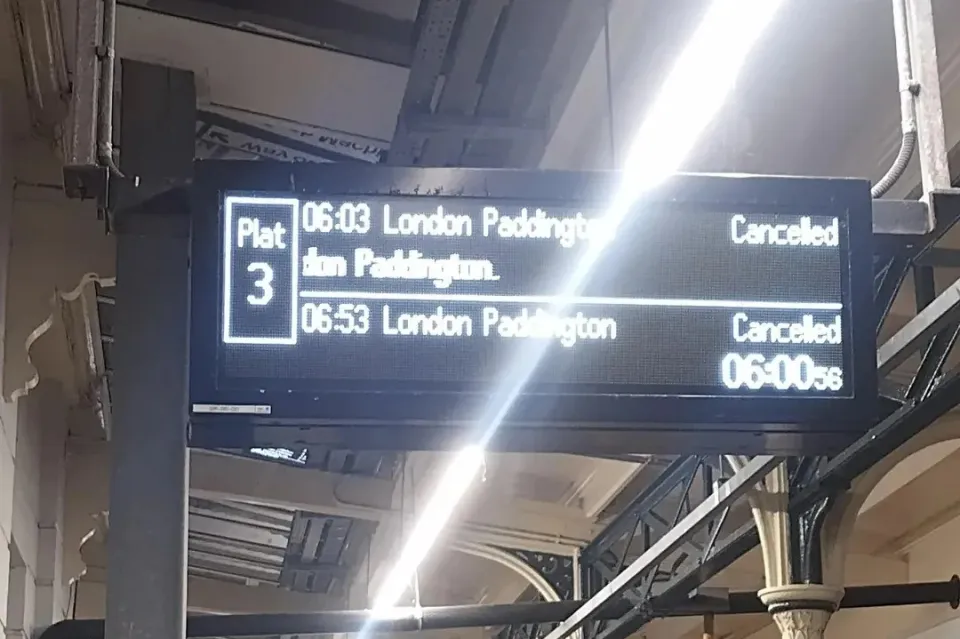
Trains to Paddington from Reading cancelled at 6am this morningCredit: RedditThe station is among those affectedCredit: Getty
The gas leak close to railway land at Didcot Parkway in South Oxfordshire is expected to cause severe disruption throughout Wednesday.
The Reading-Didcot section of the route is the gateway from Paddington towards Swindon, Bristol, Bath, South Wales, Cheltenham and other parts of the West Country.
Sign up for the Travel newsletter
Thank you!
Diversions are in place but Great Western Rail is cancelling some services outright because trains can’t get through Reading-Didcot.
A total of 72 services to and from Didcot are cancelled, while 39 have been axed at Oxford and 45 at Reading.
One social media user posted a photo from Swindon showing trains to Paddington cancelled at 6am.
They wrote: “Apparently there’s been a gas leak around Didcot Parkway so they’ve cancelled most of the services, and no replacement bus services running either.
“The staff at Swindon reckon this will last all day and probably tomorrow.”
Another person responded: “Absolutely ridiculous… not good enough.”
GWR is running roughly one train an hour Paddington-Bath/Bristol via a diversionary route – a fraction of the normal capacity.
It has warned only to travel if absolutely necessary.
Replacement buses are running between Swindon, Didcot and Reading but Network Rail says capacity won’t be enough for everyone.
CrossCountry is also telling passengers not to travel between Reading and Oxford – with one person responding to the company’s X post with: “Thanks for ruining my whole day.”
Network Rail said: “Engineers from gas distribution company SGN are on site working to rectify the problem as quickly and safely as possible.
“Network Rail and train operators are working together to manage the impact on passengers, but normal services cannot operate until the leak has been repaired because the railway falls within the safety exclusion zone.
“Severe disruption is expected to long-distance services that would usually travel through Didcot, and passengers are being warned that trains able to run either side of the affected area will be extremely busy.
“GWR will continue to operate as many trains as possible either side of the incident.”
GWR expects to be able to operate services between:
Reading and London Paddington
Swindon and Cheltenham Spa
Swindon and Chippenham/Bath/Bristol
South Wales to Bristol Temple Meads
Worcester and Oxford
An hourly service between London Paddington and Bath/Bristol via an alternative, diversionary route
Oxford and Didcot
An hourly service Bristol Temple Meads and Didcot
Usual timetabled services that do not run between Reading and Didcot
A limited bus replacement service will operate between Swindon, Didcot and Reading
TWO major tech outage have caused hundreds of flight cancellations and delays across the UK this month – yet Brits will struggle to get any compensation, according to experts.
Earlier this month a major Air Traffic Control failure in the UK resulted in thousands of flights cancelled across the globe.
Thousands of flights have been disrupted by two Air Traffic Control failures in the UK this monthCredit: Reuters
And another failure yesterday caused more than 200 flight cancellations and widespread delays.
With the two incidents less than two weeks apart, many travellers have been left out of pocket.
Unfortunately, it’s bad news – the NATS issue was classed as an “extraordinary circumstance” which means travellers are not entitled to cash compensation.
The maximum compensation you can get is for long-haul flights which are delayed four hours or more, which would be £520.
This is only for when the problems are caused by the airline, directly, however.
Lisa Minot, Head of Travel previously said: “Airlines are only required to give you compensation if the delay or cancellation is the airline’s fault, as in a technical failure on a plane or issues with crew.
The two incidents took place less than two weeks apartCredit: Getty
“In this situation, where ATC is the reason for the chaos, there is unfortunately no compensation due.”
But one thing you should note is that airlines have a duty of care.
This means that when you flight is delayed, they must provide you with food, drink and accommodation.
Sometimes the airline might provide you with a voucher, but if this isn’t provided you can keep your receipts to claim back any expenses.
Often airlines will automatically book you accommodation, but you may also be asked to book accommodation yourself through its website or a dedicated app.
Travellers are advised to always check with airport staff though before booking any hotel yourself.
And passengers are unlikely to get compensationCredit: GettyThough airlines do have a duty of careCredit: PA
And make sure to keep your receipts for your hotel as well, to claim back your costs.
Don’t book anything lavish though – airlines will usually only cover a hotel at a reasonable price.
Airlines will usually have a dedicated expenses claims page for you to fill out on its website.
The CAA also recommends asking for an itemised receipt to show what you purchased and how much was spent on each thing.
Lisa added: “Check your insurance policy to see if you have any redress if you have incurred additional costs like missing a concert or unable to pick up car hire. You may be able to claim for that.
“Generally for delays, if an airline looks after you or provides you with food and drink or hotels, you cannot claim for the same costs against your travel insurance.”
ONE of the UK’s biggest cities will see trains cancelled for nearly a week during the busy Christmas period.
No trains will be running at Birmingham New Street from December 24 to 28 while the station undergoes a £13million upgrade.
Birmingham New Street will have no trains for five daysCredit: Network RailDuring this time engineering works will be carried outCredit: Alamy
Services will then resume on Tuesday, December 29.
Upgrades include work on the overhead power lines, which keep the trains moving.
Sign up for the Travel newsletter
Thank you!
The Christmas closure will mark the first phase of the overall three-year project to upgrade the station, with future phases taking place over Christmas 2027 and 2028.
Network Rail has said that it is working to minimise the impact but has warned travellers that journeys will take longer.
During the engineering work, the station building will stay open, which means travellers can still head to the shops.
There will also be staff on hand to help out with queries.
Martin Colmey, route director for Network Rail Central route, said: “Birmingham New Street is at the heart of the rail network, supporting millions of local, regional and national journeys every year.
“Much of the overhead line equipment dates back to the 1960s and needs to be replaced. This £13m investment has been carefully planned to make the railway more reliable.
It is part of a wider three year project at the stationCredit: Alamy
“There is never a good time for this type of work and we have done all we can to reduce its impact as much as possible.
“Christmas is a quieter time, but we know it will affect journeys at an important time of the year.
“We want to make people aware as early as possible so they can plan ahead.
“As soon as tickets are available to buy for Christmas travel, there will be clear, detailed information to help passengers plan their journeys and make informed decisions.”
FAA halts East Coast flights due to equipment outage, affecting major US airports in New York, Newark, and Philadelphia.
Published On 21 Sep 202621 Sep 2026
The United States Federal Aviation Administration (FAA) has halted flights to several busy East Coast airports amid an equipment outage, snarling more than 1,000 flights.
On Monday, the FAA issued ground stops at large commercial airports, including New York’s John F Kennedy International (JFK) and LaGuardia; Newark Liberty International in New Jersey, as well as Boston Logan and Philadelphia International Airport.
Recommended Stories
list of 4 itemsend of list
The flights were halted on the day that 130 world leaders and dozens of ministers were arriving in New York for the annual high-level meeting of the United Nations General Assembly.
US Transportation Secretary Sean Duffy said in a post on social media platform X that flights have resumed into New York’s LaGuardia and into Philadelphia, but that ground stops are still in effect at Newark, JFK, and Teterboro Airport in New Jersey. The ground stop has also been lifted in Boston.
FAA Administrator Bryan Bedford told reporters on Monday that it had “lost the primary circuit” at what is called Philadelphia TRACON, or Terminal Radar Approach Control, which controls air traffic into Philadelphia and airports across the busy northeast US airspace.
Bedford said that the backup fibre had a break and told reporters that it could take up to 13 hours to repair. He said the cut was between the city of New Brunswick, New Jersey, and Newark, New Jersey, which is home to Newark Liberty International Airport.
“An Amtrak construction crew accidentally cut into a fiber line in New Jersey which caused a telecom outage and forced FAA to pause flights in the Northeast,” Duffy said in a post on X.
Newark delays
At Newark alone, more than 1,000 flights had been delayed or cancelled. Throughout the US, there were nearly 4,000 delayed flights and 500 cancelled.
United Airlines said it would waive change fees for impacted travellers. Newark serves as a major hub for the airline.
“Flights that had been destined for Newark have either been held at their departure airport or diverted to alternative airports. Once the FAA outage is resolved, we will work to safely get our customers to their destinations and have issued a travel waiver to give our customers flexibility to manage their travel plans,” a representative for United Airlines said in a statement provided to Al Jazeera.
Newark has recorded the highest levels of delays and cancellations of any airport, according to FlightAware, which tracks flight disruptions in real time. As of 3pm Eastern Time in the US (19:00 GMT), 31 percent of departing flights from Newark had been cancelled, along with 29 percent of inbound flights. Meanwhile, 17 percent of departing flights from the United hub had been delayed, as had 17 percent of inbound flights.
A ground stop was also issued at Teterboro Airport in New Jersey, a private airport neighbouring New York City.
Hundreds of flights have been delayed at major airports in the US after construction workers accidentally cut a cable needed for air traffic control.
Ground stops and delays were issued on Monday afternoon for airports in New York, Pennsylvania, New Jersey and Massachusetts.
Hours later, US Transportation Secretary Sean Duffy said the cable had been repaired and airports would resume normal operations, though delays were still expected.
The major east coast disruption came ahead of the UN General Assembly (UNGA) in New York City on Tuesday, which is expected to be attended by scores of world leaders arriving into New York-area airports.
That includes UK Prime Minister Andy Burnham, who managed to board his flight before the delays began and was expected to arrive on time.
The delays happened after the damaged cable impacted the Terminal Radar Approach Control system, which is used to guide planes during takeoff and landing, transport officials said.
New Jersey public transportation agency NJ Transit told CBS News, the BBC’s US partner, that its construction workers had accidentally severed the line and that markers had been wrongly placed at the digging site.
The BBC has reached out to NJ Transit for comment.
Duffy earlier said the damage was caused by workers from Amtrak, the US national operator of intercity railroad service, who were doing the construction work. This “caused a telecom outage” which forced the Federal Aviation Administration (FAA) to ground flights, Duffy posted on X.
An Amtrak spokesperson said in a statement, reported by US media, that the incident involved a NJ Transit contractor. Telecommunications company Verizon, which owns the cable, also said it was not responsible.
The severed cable was actually a backup network, and the error was only discovered after the primary circuit failed, according to the head of the FAA, Bryan Bedford.
Newark Liberty International Airport in New Jersey – one of the three major airports that services New York City – was the most heavily impacted by today’s air traffic control disruptions, according to flight-tracking website FlightAware.
It reported that 267 departing flights were delayed today, while a further 257 flights destined for Newark were also delayed.
John F Kennedy International Airport and LaGuardia Airport, both in New York, were also affected, as was Philadelphia International Airport.
One passenger, Douglas Tewnion, said he boarded a flight to New York from Edinburgh and that his plane had been diverted to Boston, Massachusetts instead.
He told the BBC that, two hours after his flight was due into New York, he and the other passengers were still “sitting on the same plane, on the tarmac at Boston with no information”.
Though “everyone is in good spirits”, Tewnion said “it’s just a pain” to see two more hours waiting added onto a lengthy flight.
Two years ago, the biggest record labels took artificial intelligence music generators to court for copyright infringement. Now several of them are licensing their catalogs to those same companies, and the deals are starting to turn into products.
The latest example came earlier this month, when Suno, an AI music company valued at $5.4 billion, released its first models built with licensed music from Warner Music Group, BMG and Believe. Rival Udio has licensing deals with Universal Music Group and Warner.
The companies are pitching AI as a new revenue stream for artists. But so far, none of them have disclosed what artists will be paid, how many artists have opted in, or how much input individual musicians have over whether their work is used. And some musicians and songwriters are fearful of how these AI deals might affect livelihoods.
“It’s sort of a creepy and ominous cloud,” said Matt Evans, a 35-year-old Pasadena resident who’s played brass instruments on shows like “The Late Late Show With James Corden” and Netflix’s “Dr. Seuss’s Red Fish, Blue Fish.” “The fact that I could do something once and then it could be reused, and if that’s not negotiated in a contract, then I never got to make a choice to receive additional compensation. It all comes down to the loss of money.”
The American Federation of Musicians sued Universal and Warner in June, alleging the labels licensed recordings its members played on to Suno and Udio without paying those musicians or telling the union which recordings were involved. The labels have moved to dismiss the case.
In 2024, Universal, Sony Music Entertainment and Warner sued Suno and Udio for copyright infringement, alleging the AI companies trained their models on copyrighted songs spanning many artists, genres and time periods. The settlements began the following year. Universal settled with Udio in October and became its partner, and Warner settled with both Udio and Suno in November, signing licensing deals with each.
“The reason why they would settle this is they think they’re going to profit more from licensing music to them rather than from the outcome of a lawsuit,” said Jane Davidson, an entertainment attorney at Nolan Heimann who specializes in copyright and trademark infringement.
More deals followed. Udio signed with Merlin, which licenses music on behalf of independent labels, and with independent publisher Kobalt. Suno signed with BMG in August and with Believe, owner of the DIY distribution platform TuneCore, this month. Spotify, which wasn’t part of the lawsuits, struck deals with Universal and Merlin.
Not everyone is settling. Sony filed a second lawsuit against Udio over more than 30,000 recordings, and it is still suing Suno alongside Universal, which is licensing its music to Udio and Spotify at the same time. Sony and Universal also filed a new lawsuit last week alleging that Suno’s latest model still infringes on their copyrighted works. In July, a Munich court ruled against Suno in a case brought by GEMA, which collects royalties for German songwriters and publishers.
The deals between labels and AI music platforms — on which consumers can create full songs from text prompts — share a basic promise. Artists signed to the participating labels can opt in and will be credited and paid.
But each company is building something different. Udio operates under a “walled garden” model favored by Universal, in which songs made on the platform can’t be downloaded or distributed elsewhere. Spotify’s tool, a planned paid add-on for Premium subscribers, has no launch date. Suno lets users download what they make and release it elsewhere, with download caps and watermarks meant to curb abuse; songs made with its new models can be distributed through Believe and TuneCore.
Whether an artist opts out depends on who owns the rights. Songs typically carry two copyrights — one for the composition, usually held by songwriters and their publishers, and one for the sound recording, usually owned by the label. Every contract is different, so it’s unclear how AI products will handle music where those rights are split.
Waveforms of audio files from various instruments are displayed on a computer screen during the making of an AI musical piece at Suno.
(Robert F. Bukaty / Associated Press)
“These companies are able to make deals on behalf of their artists, and their control over their music is pretty significant based on what major label contracts typically say,” Davidson said. “But I expect that we will have some artists that push back against this and say that they didn’t authorize the use of their music for this purpose.”
Warner’s agreement with Suno, for example, lets artists opt in to having their names, likenesses, voices and compositions used in AI-generated music. But Jack Brody, Suno’s chief product officer, acknowledged that labels “ultimately have their contracts in place that will have some say in what an artist can and can’t do.” It’s also not always clear whether opting out keeps an artist’s recordings out of AI training, or only out of fan-facing features.
Michelle Lewis, a songwriter and the co-founder and chief executive of the nonprofit Songwriters of North America, said the composition side of that copyright split is often the harder one to defend.
“With AI, it’s so much easier to tell if you’ve infringed on the sound recording. You know what Beyoncé and Drake’s voices sound like,” said Lewis, who wrote Cher’s “A Different Kind of Love Song,” Little Mix’s “Wings” and the music for the Disney Jr. show “Doc McStuffins.” “But songwriting is so much more nebulous, so much harder to sue.”
“From the creator side, nobody asked for this. We like our job,” added Lewis. “The job is the process and what makes it special, interesting and artful.”
Some musicians argue the deals can’t cover rights the labels don’t control. A proposed class action filed last month by Jason Isbell and other musicians alleges Suno lets users generate songs that evoke specific artists’ identities without their consent, a right-of-publicity claim the plaintiffs say belongs to performers no matter who owns their recordings. Suno disputes the claims.
Session musicians like Evans are pushing back through their union.
“By licensing our members’ performances to AI platforms like Suno and Udio without consent, credit, or compensation, companies like Universal, Warner Records, and Atlantic are bypassing the very human creators who made their catalogs valuable in the first place,” AFM International President Tino Gagliardi said in a statement.
The labels have disputed the claims and argue that these deals advance the interests of artists and songwriters.
Jonathan Wyner, head of artistic technology initiatives at Berklee College of Music’s Emerging Artistic Technology Lab, compared the AI deals to the arrival of streaming services. Wyner has advised Suno.
“It’s a good step, and I think it was an inevitable step, especially if you want to stay engaged with musicians and the creative community,” he said.
That comparison cuts both ways. Streaming grew the industry while fueling years of complaints about artist pay.
Damon Krukowski, a musician and the legislative director at United Musicians & Allied Workers, said the deals so far don’t seem to benefit working-class musicians and could be used to cut them out entirely.
“It’s a new technology, but it’s not a new corporate story,” Krukowski said. “But the tools are even more powerful. It seems within their possible reach to destroy the labor market. The major labels are just seeing dollar signs without any regard to the long-term health or sustainability of this industry, because they’re envisioning an industry without artists who can push back.”
Brody disputed that, saying Suno is building ways for independent and unsigned artists to benefit, such as its deal with Believe and TuneCore.
With terms under wraps, it’s too early to know whether any of this will pay off for artists. The tests are still ahead — whether Sony and Universal win or settle, and what the first payouts actually look like.
“A label making a deal and an individual artist having a choice are not necessarily the same thing,” said Drew Silverstein, the senior advisor for AI at music tech company BandLab Technologies. “Our music industry has a long history of new revenue streams coming into existence that benefit certain folks, and create great financial opportunities for rights holders.”
BBC Radio 2 legend Bob Harris has shared a new health update amid his cancer battleCredit: whisperingbob/ InstagramBob presented The Country Show from April 1999 to April 2026Credit: Instagram/whisperingbob
Bob’s Instagram followers flocked to share their reactions to his newsCredit: whisperingbob/ InstagramLast month, Bob shared an update saying the cancer was “taking more of a hold”Credit: instagram
“I was speaking this morning with my oncologist, the amazing Costi and we are going to continue with my cancer treatment.
“We’re getting back under control, I was a little bit worried a short time ago, but everything is getting back under control now.
“I can see the pathway of my life ahead of me opening up again.”
At this point, Bob revealed he also had a second piece of news to share, but would reveal it on Tuesday at 10am.
One person commented: “Excellent news Bob!!!!”
Another added: “Excellent news Bob, everyone is 100% backing you for your recovery.”
It comes after Bob shared a devastating health update on his cancer battle last month, as he revealed the disease is “taking more of a hold.”
He said: “It has been a while since I last posted a health update and I want to let you know how I’m getting on, because there have been some changes with my cancer diagnosis.
“As regular followers will know, earlier this year I was forced to step back from BBC Radio 2 to concentrate on treatment and rest.
“I have been missing my programmes so much, but this space has given me a most beautiful summer here at home, enjoying a most precious commodity… TIME.“
Bob continued: “I feel very blessed to have been able to spend lovely moments with family and friends (some of which I’ve posted here on Instagram) in the glorious summer sunshine, but during this time my cancer has been getting more of a hold.
“I still feel well but I am now at the start of an intensive course of intravenous radiotherapy which we are confident will keep things at bay. I should know the outcome quite soon.”
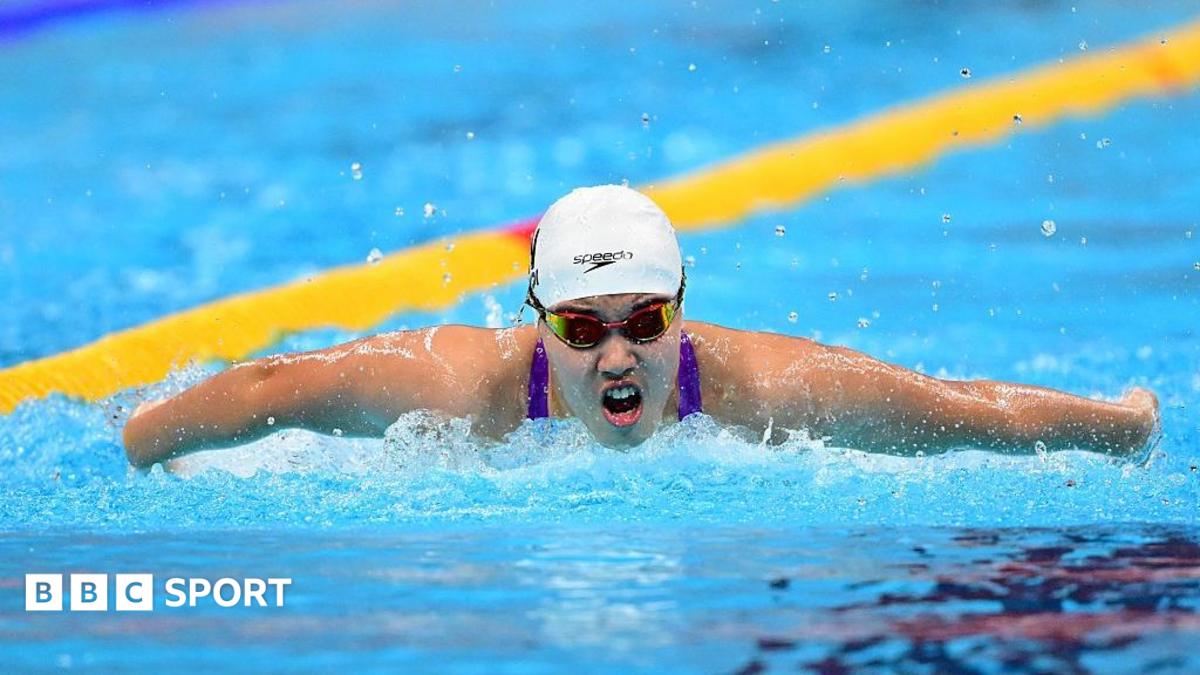
Chinese schoolgirl Yu Zidi lit up the opening day of the Asian Games with a record‑breaking 200m butterfly gold medal secured by a performance she described as “only so‑so”.
The 13‑year‑old claimed her first major gold in two minutes 05.08 seconds, an Asian Games record that took almost half a second off compatriot Zhang Yufei’s mark from three years ago.
Yu, who is strongly tipped to make an impact at the 2028 Los Angeles Olympics, won by over three seconds in Tokyo from her team-mate Chang Mohan.
“It was only so-so,” a smiling Yu said after receiving her medal, adding that her butterfly technique “is still slightly lacking”.
“I hope I can swim even faster. I improved my time by 0.9 seconds here, and I believe I will perform better next time,” she continued.
Yu, who will take part in two more individual events at the Asian Games, became the youngest ever swimmer to win a medal at the World Championships when she took bronze as a 12-year-old as part of China’s 4x200m freestyle relay team last year.
ED Sheeran has made a major show change as he admitted he was “afraid” of being pelted by projectiles after the Macklemore controversy.
The singer yesterday broke his silence on the huge Palestine row, which saw Macklemorebe pulled from his gigs over comments about the conflict – andhis own band quit in protest.
Singer Ed Sheeran admitted he was ‘afraid’ to be near the crowd at his show last night for fear they would throw projectiles at himCredit: ReutersMacklemore was pulled from Ed Sheeran’s gigsCredit: Redferns
As masked protesters waving Palestinian flags gathered outside the Lincoln Financial Field venue in Philadelphia, Ed took to the stage.
Near the end of the gig, Ed confessed he was forced to pivot from his original show plan over fears he didn’t know what the “audience would be like.”
Sign up for the Showbiz newsletter
Thank you!
Speaking at his stadium show, Ed said: “The show itself, at this point in the show, to be honest like I usually go out to B stage and I’m gonna be totally honest with you I didn’t know what the audience would be like tonight.
“I didn’t know if I was going to have things thrown at me. I didn’t know if people would be angry at me.”
The audience cheered as Ed continued: “I apologise that today is not the usual Loop show where I stand on the B stage but I was afraid of standing in the middle.
“I will admit that.”
Elsewhere in the show, Ed broke down in tears as he bowed to pressure threatening the future of his US tour, Loop, and apologised.
He said he had tried not to be a “political commentator” because he wanted his music to be about “unity”.
Ed Sheeran broke down in tears at his Philadelphia gig last nightCredit: InstagramThe 35-year-old told fans he’d questioned whether he even wanted to be an artist anymore following the controversyCredit: YouTube
But then admitted on stage: “I cannot hide how I feel about it anymore.”
“What is happening in Gaza is catastrophic and unjustifiable and disproportionate.
“My heart has been broken by the scale of devastation and loss of civilians’ lives, children’s lives.
“And the systemic injustice we are seeing unfold in the West Bank cannot be overlooked.”
The controversy started when US rapper Macklemore was banned by Gillette Stadium owner Robert Kraft from performing at the venue at a gig planned for later this month.
Kraft said he would not “provide a platform for hate speech” after the rapper spoke out about Palestine onstage.
But when Macklemore was pulled from the tour, several other support acts quit in solidarity – including Ed’s own band.
Other acts who dropped out included Grammy award-winning musician Finneas, Irish singer Aaron Rowe and Danish singer Lukas Graham.
Thousands then cancelled tickets and the musician was unsure if he’d be able to carry on with performances at all.
Emotional Ed said he had questioned whether he “wanted to be an artist at all” after the toxic fallout.
The devastated star thanked his fans for still coming out to his gig, saying: “This concert is still a place where everyone is welcome and everyone here can stand beside people that have opposing views, and everyone can stand beside people that they don’t agree with on everything, but they can all agree on singing these songs.”
The outage marks at least the sixth one this year after a United States-imposed energy blockade went into effect.
Published On 19 Sep 202619 Sep 2026
Cuba has worked to restore power after suffering a significant blackout that left many parts of the country in the dark.
The state-run company in charge of operating the country’s electrical system, Union Electrica (UNE), said nearly half of its customers in the capital of Havana had regained power on Saturday.
Recommended Stories
list of 3 itemsend of list
“The re-establishing is being done gradually, as conditions permit,” UNE posted on social media.
The latest blackout, at least the 12th since late 2024, first affected five of Cuba’s eastern provinces, including Havana, before spreading across the whole island. It is at least the sixth this year alone.
Cuban authorities told the Reuters news agency on Friday the collapse was the result of a failure in high-voltage transmission lines in the central part of the country. UNE said “unstable weather conditions” also played a role.
For years, Cuba’s ageing infrastructure and fuel shortages have led to sporadic blackouts. But power outages have become more frequent after the United States, in a bid to put political and economic pressure on the country’s government, imposed an energy blockade in January.
United Nations human rights experts have condemned the US oil blockade, calling it a violation of international law and warning that Cuba risks becoming a “silent Gaza” as shortages and blackouts grow ever more critical.
Some of the island’s residents said they were already out of power when Friday’s blackout happened.
“Yesterday, I’d gone without power for 24 hours. They turned the lights on for an hour, and then the grid collapsed,” Havana resident Frank Lorenzo, 23, told Reuters.
Others, like Lidia Fernandez, told the news agency AFP that a lack of fuel makes it difficult to power backup generators, which run on imported diesel.
“It’s one thing after another: no water, no gas for cooking, no electricity,” the 36-year-old teacher said.
Fernandez added, “Honestly, I don’t know how we haven’t gone crazy.”
A HUGE expansion at a major American airport that was supposed to open this year has been pushed back to 2027.
New York‘s John F. Kennedy International Airport in America is currently undergoing one of its biggest-ever transformations costing £7.1billion.
John F. Kennedy International Airport in New York, America, is undergoing a massive £14.2billion transformationCredit: Port Authority BuildsThis includes the replacement of Terminal OneCredit: Port Authority Builds
The centre of the project is the New Terminal One, which was expected to open before the end of this year but has now been pushed back to the first quarter of 2027.
The airport has confirmed that testing is needed before the terminal opens to passengers.
Sign up for the Travel newsletter
Thank you!
Once open, the terminal – which will have replaced the old one – will have 13 gates plus a temporary gate in its first phase of opening.
When the first phase is complete, the airport will move on to the second phase, which includes demolishing the former terminal.
The second phase will also add nine gates, making a total of 23 gates at the completed terminal – 22 of which will be for wide-bodied planes commonly used for long-haul, international flights.
The 241,548sqm terminal will be the largest at the airport and inside there will be 27,871sqm of shops, restaurants and six lounges.
One of those lounges is Air France‘s largest lounge outside Paris, spread across two floors.
Inside the lounge, there will be seating for up to 400 travellers, with different dining areas celebrating French food and a bar with French wines and Champagnes.
The new terminal was meant to open before the end of this year but has now been pushed backCredit: Port Authority BuildsOnce it does open, it will have 23 gates – 22 of which will be for long-haul flightsCredit: Port Authority BuildsOther terminals at the airport, including Terminal 8 (pictured) are undergoing upgrades as wellCredit: Port Authority Builds
Other spaces inside the terminal will include an “indoor green space” and “family-friendly amenities”.
And travellers will be able to spot a variety of public art installations too.
Airlines that will feature at the New Terminal One include Air France, KLM, Etihad Airways, LOT Polish Airlines, EVA Air, Turkish Airlines, Air New Zealand, Air China and Philippine Airlines.
The project forms part of an even larger £14.2billion transformation at the airport, where there will also be a new Terminal 6 and upgrades at three other terminals.
Airlines at Terminal 6 are expected to include JetBlue, United Airlines and other Star Alliance carriers.
At Terminal 4, there will be 10 new gates and an expanded check-in and arrival area.
Terminal 8 will then undergo a £300million upgrade, including adding new gates and transforming the retail spaces.
New York is a popular destination among British travellers, with around one million Brits heading to the city each year.
Flights between the UK and New York typically take between seven and eight hours and cost from £380 return.
All Creatures Great and Small fans were quick to share their thoughts on the first episode of the new Channel 5 series.
22:41, 17 Sep 2026Updated 22:41, 17 Sep 2026
Channel 5 viewers were quick to comment on the romance plot in series 7(Image: CHANNEL 5)
Beloved Channel 5 period drama All Creatures Great and Small has returned.
On Thursday (September 17), fans were thrilled when a brand new series kicked off as the residents of Darrowby were now settling into a post-war existence. The episode kicked off with James in London, as Channel 5 viewers got to see Helen’s (Rachel Shenton) sister Jenny (Imogen Clawson) as a nurse in the city.
However, when the couple returned to Darrowby, trouble arose as a new vet arrived in the village, which didn’t sit well with Siegfried (Samuel West), who accused him of trying to poach his clients from Skeldale House.
Fans also saw the return of Dorothy (Maimie McCoy), who made a comeback during the festive special last year and has since sparked a romance with Siegfried.
Although during the episode, it seems as though the pair are including Mrs Hall (Anna Madeley) on their dates, as they spoke about going to see a film at the cinema later that night.
Elsewhere, Helen and Mrs Hall spoke about her return as Helen mentioned her being back had ‘made a difference’. Mrs Hall agreed as she said: “In more ways than one.”
Despite Helen joking that it meant she was keeping Siegfried out of their hair, Mrs Hall remarked: “No, she’s exactly what he needs. I had a feeling she would be if he gave her another chance.
Helen replied: “He doesn’t know how lucky he is to have you, do you know that?” As it seemed as though she was suggesting there was more to their friendship than is said, Mrs Hall didn’t notice.
As Dorothy later suggested, the three of them saw another film, Mrs Hall told her she didn’t mind if they wanted to spend time just the two of them, as she told her: “I’d hate to feel like I was getting in the way.”
Her friend replied: “If anyone is getting in the way, it’s me. You’re working, and here I am getting under your feet.” Mrs Hall added: “If you were in my way, I’d tell you.”
Later on, Siegfried was frazzled over the new arrival as Dorothy assured him he had no reason to worry over it, although Mrs Hall didn’t seem too convinced as she stayed quiet on the matter.
The interactions between the three characters didn’t go unnoticed with viewers, as many were quick to comment on the episode as they noticed the only link between Siegfried and Dorothy is Mrs Hall.
On X, one person said: “Both Dorothy and Siegfried are basically dating Audrey because she is the only common interest they have. brilliant.” Someone else added, “Audrey is the glue between Siegfried and Dorothy. These two do not have much in common, which became obvious. D doesn’t know Siegfried needs truth, not flattery, and Siegfried doesn’t even want her opinion.”
Another person added: “Wait. Why is Dorothy so hesitant to spend time alone with Siegfried, without Audrey there as well? Are things not going well? ill-matched?” While someone agreed: “So the cracks are already visible? Just what my predictive analysis hinted at. We would see stuff already, but things are going south just yet.”
All Creatures Great and Small continues Thursdays on Channel 5 from 9pm
ONE airport express bus fare has dropped by a whopping £9 thanks to a new government scheme.
It’s great news for holidaymakers heading to a major Scottish airport, as passengers can now get a single journey for just £2 rather than £11.
The Airport Express fare along with public buses has dropped to £2Credit: Getty ImagesThe usual price for the Airport Express bus fare was £11Credit: First Bus
The regional bus fare cap has recently come into force in Glasgow meaning prices has been significantly reduced.
Mostly it’s across public buses in the areas towns or cities – but that also applies to the Glasgow Airport Express service.
Sign up for the Travel newsletter
Thank you!
So anyone travelling to Glasgow Airport can now get there for £2.
The fare was introduced in Glasgow and the majority of West Scotland from September 7.
The cap has been funded by Transport Scotland and applies across Glasgow, Ayrshire, Dunbartonshire, Renfrewshire, Lanarkshire and Inverclyde.
On its website, First Bus states: “All single journeys on First Bus services across Glasgow and the surrounding areas are capped at just £2 from 7 September no matter how far you’re travelling.
“That’s £2 to get to work. £2 to meet friends. £2 to head into town. Even £2 to start your journey to the airport on the Glasgow Airport Express.”
The £2 bus fare cap is set to come into force in parts of England too from next year.
The government announced in July 2026 that single bus tickets will be capped at £2 in areas of England outside London from January 1 until December 31 2027.
It comes as drop-off fees have risen to £7 for 15 minutesCredit: Alamy
The expansion will create nearly 700 additional rooms, with the hotels expected to begin welcoming guests between late 2026 and 2028
A popular hotel chain has announced plans to open 10 new locations across the UK. The expansion will create nearly 700 additional rooms, with the hotels expected to begin welcoming guests between late 2026 and 2028.
The properties will be positioned near major railway stations, motorways, stadiums, business centres and visitor attractions. Hilton confirmed the hotels will operate under Spark by Hilton, its value-focused “premium economy” brand.
The company says Spark offers reliable and comfortable accommodation at an accessible price, although room rates and individual opening dates have not yet been announced. A total of 672 rooms will be added across nine locations in England and one in Wales.
The new hotels will open in Cardiff, Coventry, Derby, Doncaster, Hull, Peterborough, Runcorn, Sunderland, Wakefield and Washington. The 10 properties have been signed through an agreement between Hilton and UK hotel owner and operator AG Hotels Group.
Paul Blackmore, vice-president of development for the UK and Ireland at Hilton, said: “With nearly 700 rooms in the pipeline, including the brand’s first hotel in Wales, Spark continues to gain momentum.”
The full list of new hotels is:
Spark by Hilton Cardiff North – 51 rooms
Spark by Hilton Coventry Walsgrave – 48 rooms
Spark by Hilton Derby Station – 100 rooms
Spark by Hilton Doncaster East – 51 rooms
Spark by Hilton Hull Central – 51 rooms
Spark by Hilton Peterborough Norman Cross – 99 rooms
Spark by Hilton Runcorn – 53 rooms
Spark by Hilton Sunderland Northern Spire Bridge – 63 rooms
Spark by Hilton Wakefield South – 77 rooms
Spark by Hilton Washington Newcastle South – 79 room
Spark by Hilton Dunfermline – 53 rooms
The Dunfermline property is separate from the 10 hotels included in the latest agreement. Spark by Hilton launched in 2023 and now has more than 275 hotels operating worldwide, with over 200 additional properties in development.
ONE of the capital’s busiest Tube lines is used by around 400,000 passengers each day, but it is soon getting a major £3.4billion upgrade.
The Piccadilly Line in London will undergo a series of closures between this month and the end of November to carry out upgrades on the line and to prepare for new trains to be delivered.
The Piccadilly Line will be the first deep Tube service to have air-conditioned trainsCredit: TFLThe trains will also have 10 per cent more capacityCredit: TFL
The Tube line is one of the busiest in the capital with 210million passengers every year.
Closures on the line include the following dates:
Sign up for the Travel newsletter
Thank you!
Night Tube September 18 between Hyde Park Corner and Northfields
September 19 to 20 between Hyde Park Corner and Acton Town
Night Tube September 25 between Cockfosters and Acton Town
September 26 to 27 between Cockfosters and Uxbridge
Night Tube October 16 to 18 between Hammersmith and Heathrow and Uxbridge
October 28 to 30 between Cockfosters and Uxbridge
Night Tube October 30 to November 1 with no service on the entire line
Night Tube November 20 to November 22 between Hammersmith and Heathrow and Uxbridge
Win one of five incredible holidays to Turkey, the Norwegian fjords and Spain by voting in The Sun’s Travel Awards – enter here to win.
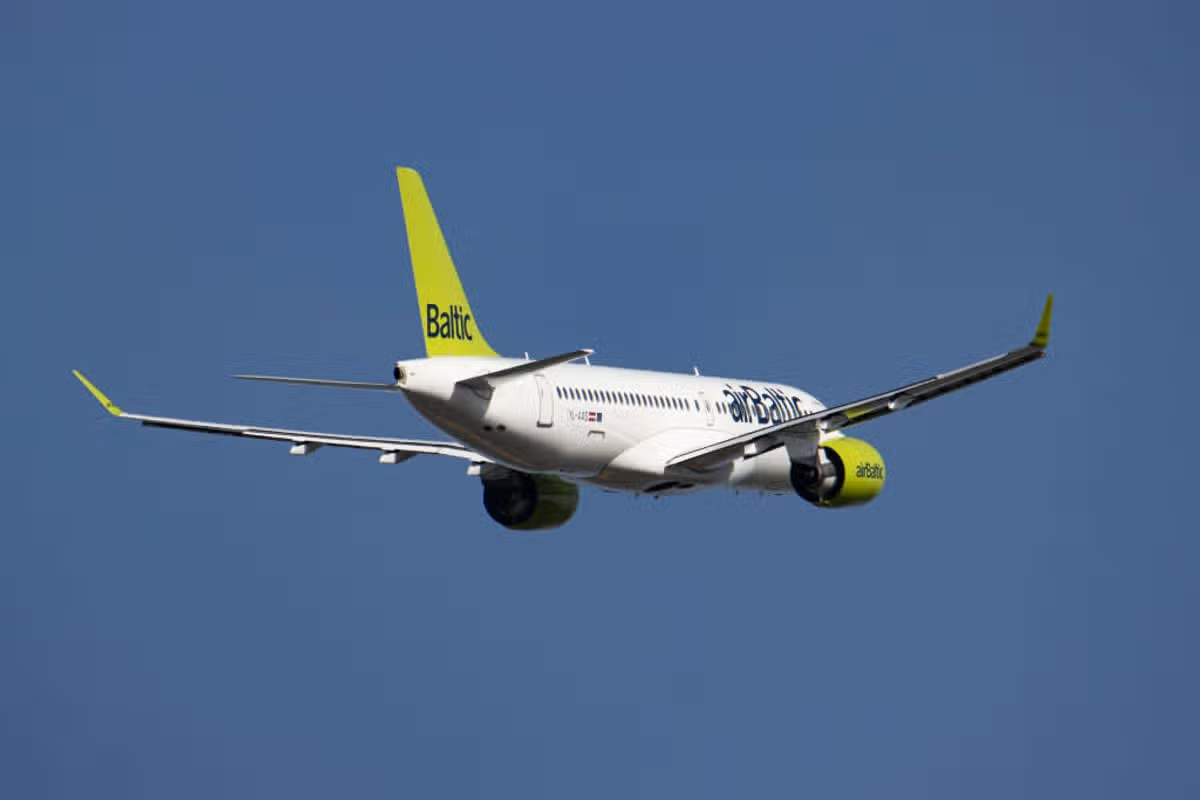
AirBaltic, the national airline of Latvia, has filed fo Chatper 11 protection in New York. The airline currently operates direct services between London Gatwick and Riga, as well as twice-weekly seasonal Aberdeen to Riga service
AirBaltic has filed for bankruptcy, casting the airline’s future in serious doubt.
Latvia’s national airline filed for Chapter 11 protection in New York on 14 September as it seeks to restructure its debts.
AirBaltic currently operates direct services between London Gatwick and Riga, as well as twice-weekly seasonal Aberdeen to Riga service. These serve approximately 4,144 passengers each week, according to AirAdvisor.
Earlier this year, the airline announced it would launch flights from the UK to Lapland in December, offering five new routes to Kuusamo in Finnish Lapland from European airports, including services from London Gatwick and Manchester.
The airline plans to reduce its fleet from 54 aircraft to 36 by the end of 2026, while some staff members may also lose their jobs. CEO Erno Hilden has said that consultations are underway regarding workforce reductions, although no figure has been decided.
AirBaltic has faced a number of financial challenges since it took a €30 million (£26 million) state loan in April 2026, the company said in a statement, “including increased fuel costs arising from the crisis in the Middle East.”
Supervisory board chairman Andrejs Martinovs said in a written statement: “We have carefully assessed the restructuring options available to the company, with one priority in focus – to give airBaltic the best possible basis to continue operating and to build a sustainable financial structure. Under court supervision and with protection from creditor claims, this process provides a clear framework and timetable for reaching agreements with creditors, including aircraft lessors and other stakeholders. At the same time, it allows the company to continue operating.”
What does this mean for passengers?
If you have a flight booked with airBaltic, you shouldn’t panic. Passengers should not interpret the word ‘bankruptcy’ as meaning the airline has stopped flying and cancel valid bookings themselves – it has not cancelled any flights.
The airline has a commitment for €350 million (£300 million) in financing, subject to court approval, and insists that scheduled flights, bookings and customer services are continuing normally.
AirBaltic said flights would operate as scheduled during the court-supervised process, which it expects to finish by June next year.
Flights departing the UK fall under UK261. Riga to UK services are protected under EU passenger-rights rules because they depart from an EU airport. In either direction, a cancellation would normally allow passengers to choose between reimbursement and rerouting.
Anton Radchenko, Aviation Expert and CEO of AirAdvisor, said: “Chapter 11 is designed to give a company space to keep operating while it restructures, so I would not cancel a valid airBaltic booking when the airline is still flying and says the ticket remains valid. Cancelling voluntarily could leave the passenger subject to the ticket’s normal restrictions, whereas waiting for the airline’s decision preserves their statutory rights if the service is later changed or cancelled.
“I would use this moment to identify exactly what protects the booking. A direct flight is not usually ATOL protected, airline-failure insurance is not standard, and the practical fallback may depend on whether the passenger booked a genuine package, paid directly by credit card or can make a chargeback claim.
If airBaltic cancels while continuing to operate, passengers should request a refund or rerouting and the necessary care rather than accepting whichever option is presented first. Fixed compensation may also apply depending on the notice and reason, but if an airline ceases trading completely, possessing a legal claim does not guarantee immediate repayment, which is why the financial protection behind the booking matters.”
The European Union entry-exit system (EES) has caused repeated delays for Brits at major EU airports this year
14:40, 13 Sep 2026Updated 14:50, 13 Sep 2026
(Image: Anadolu, Anadolu via Getty Images)
British holidaymakers heading abroad may finally be able to breathe a sigh of relief over the widely-criticised EES system. The scheme forces non-EU residents to queue at special machines in airports before gaining entry to 29 nations within the so-called Schengen area – essentially the majority of the European Union.
However, there have been persistent reports of lengthy delays – some stretching to as long as four hours. A new report in the Sunday Times now reveals that the European Union has shelved the controversial entry-exit system (EES) across at least nine countries.
Portugal, Italy, France, Belgium, the Netherlands, Germany, Malta, Greece and Switzerland are all understood to have been granted permission to postpone full implementation of EES. The newspaper reports that there appears to be no deadline by which these countries must adopt the scheme, which has already sparked widespread reports of enormous queues at European airports this summer in destinations such as Mallorca, Faro, the Canary Islands and Milan.
The scheme has faced fierce criticism from Ryanair and others. The European Union describes the Entry/Exit System (EES) as an automated IT system designed to register non-EU nationals travelling on short stays each time they cross the external borders of participating European countries.
Following years of postponements, the system was rolled out from October 2025, with full implementation originally anticipated by the following April. However, faced with the prospect of significant border queues due to software failures, officials granted countries a 150-day grace period during which they could drop the checks to avoid travel chaos.
That rule ended on September 6. The EU previously insisted there would be no extension.
Yet the Sunday Times reports that at least nine Schengen countries are understood to have told the European Commission, which is responsible for overseeing the EES, that they would not enforce the new controls in full until the technology and systems were working correctly.
They have informally been allowed to do so with no time limits apparently in place to adopt the system, it is being reported. One of the main purposes of the system is to track whether non-EU citizens have spent more than their permitted 90 days in the bloc in a rolling 180-day period.
Social media has been awash with debate about the scheme. One post on Reddit saw a traveller say: “They made a mess of it. Seems many basic things like it is hit and miss on the document scanning but also things like people walk up with hats and headphones and the machine doesn’t tell them to remove them, and organisational things like if the machine errors the traveller has to back out and has no where to go.
“The right way to do this would have been progressive: start by getting some people eg 5% going through the machine lane, everyone else through normal.
“The vendor observes problems, fixes them, once machine working well, increase to 10%, then 20% and so on.” Another person said: “The general lack of functionality of so many IT systems across the EU is kind of astonishing.”
A third added: “It’s worse than that. There isn’t even consistent protocol/IT support within a single EU airport.”
Another put it more simply, saying: “I just miss having stamps.”
‘People are missing their flights’
Nadia, from Greater Manchester, told the Guardian in August she had made two trips to Schengen areas this summer. A trip to Tenerife in June was “quite straightforward”, but her experience in July at Frankfurt airport where she was picking up a connecting flight home, was much less so.
“The queue there was ridiculously long, and there was very limited information,” she says. “People were wandering around trying to work out where they needed to go.
“I’m very well travelled and pretty confident, but even I was slightly unsure and was thinking, is there some other queue I should be joining? There was no one nearby to check with without losing your place.”
Eventually, her passport was checked. “He didn’t actually take fingerprints then,” says Nadia, who is a solicitor. “I think the queue was so long they decided to dispense with that.
“It’s the efficiency of the system I question and the fact that individual member states’ systems do not talk to one another. They shouldn’t need to get information again if you have already gone through. It’s pretty shambolic, and I think people missing their flights because of it is just not acceptable, especially when there’s no recourse; it’s not your fault.”
Ryanair chief executive Michael O’Leary has repeatedly complained about EES. Speaking earlier this year, he said: “There’s a bit of Brexit in this too. Here, you voted for Brexit – f***ing join the queue.”
OASIS have launched a countdown to a major announcement with a drone display above their beloved Manchester City’s home ground.
Over the past few weeks, Liam, 53 and Noel Gallagher, 59, have dropped a string of cryptic clues about their next world tour, and last night they continued to hype up the buzz.
Rockers Noel and Liam Gallagher have teased a major Oasis announcementCredit: GettyThe band put on a drone light show over the Man City stadiumCredit: PA
Oasis reformed two years ago, after the long-feuding brothers caused the band to split-up in 2009.