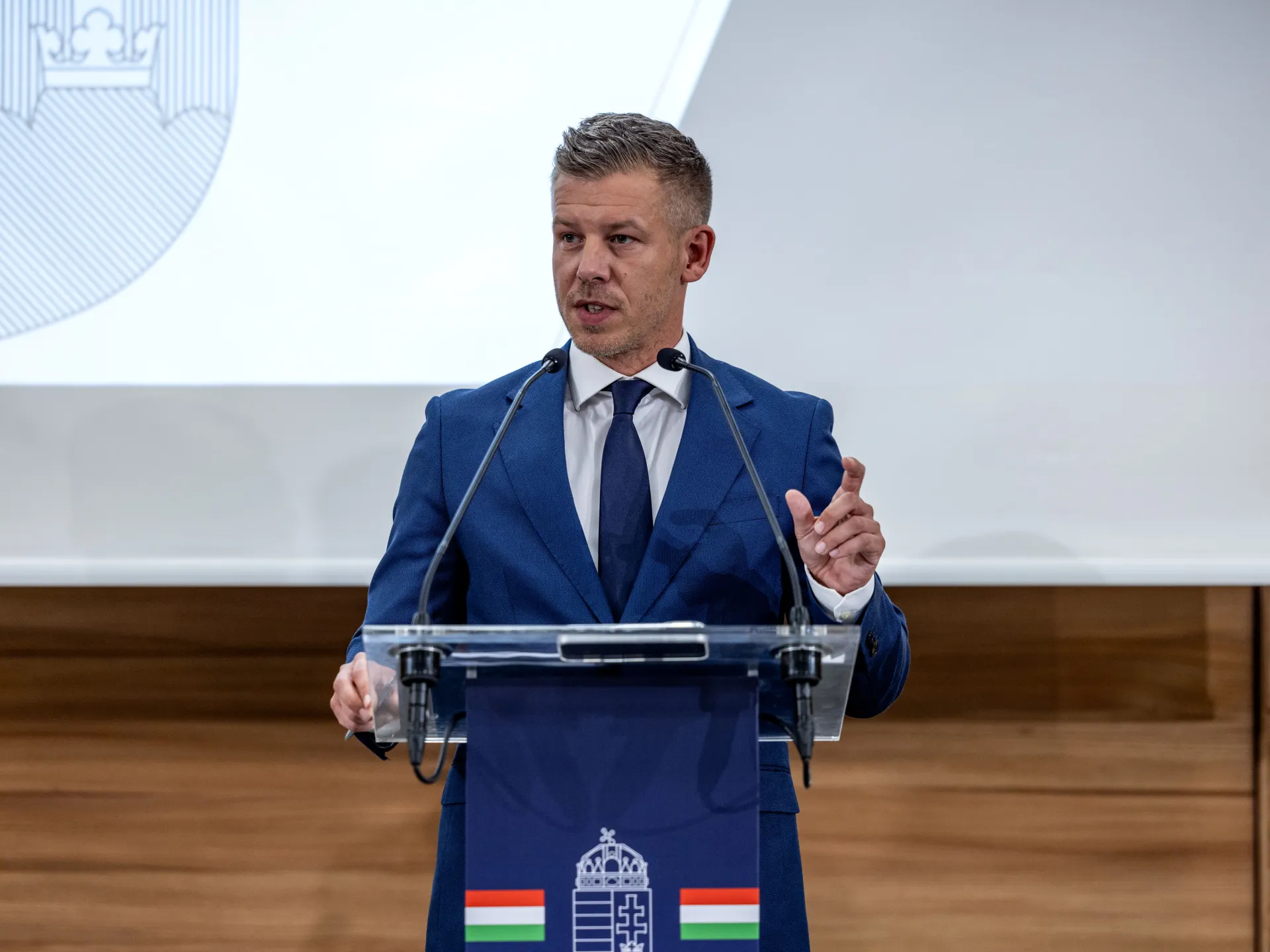
Magyar

Hungary Nears EU Funding Deal as Peter Magyar Holds High Stakes Brussels Talks

Hungarian Prime Minister Peter Magyar said he expects to finalize a political agreement with Ursula von der Leyen over the release of billions of euros in frozen European Union funds during talks in Brussels.

The negotiations focus on unlocking financial support that had been suspended under the previous government led by former Prime Minister Viktor Orban due to long standing EU concerns regarding corruption, rule of law standards, and judicial independence.

Hungary is seeking access to approximately 6.5 billion euros in EU recovery grants and 3.9 billion euros in low interest loans before a critical August deadline. Additional structural funds worth around 7 billion euros also remain frozen.

The talks come at a crucial moment for Hungary’s economy, which has struggled with weak growth, fiscal pressure, and budgetary strain over the past three years.

Why It Matters

The potential agreement carries major economic and political significance for both Hungary and the European Union.

For Hungary, securing the release of EU funds is essential to stabilizing public finances, supporting economic growth, and restoring investor confidence. The country’s economy has experienced prolonged stagnation, while high spending pressures and limited fiscal flexibility have increased urgency around external financing.

For the European Union, the negotiations represent an important test of how Brussels balances financial support with enforcement of democratic and governance standards among member states.

The dispute over frozen funds has become one of the most prominent examples of tensions between the EU and governments accused of weakening judicial independence or failing to address corruption concerns.

A successful agreement could signal improving relations between Brussels and Hungary after years of political friction under Orban’s leadership.

Key Stakeholders

Hungary’s Government

Prime Minister Peter Magyar is under pressure to secure financial relief while also demonstrating willingness to meet EU governance expectations.

European Commission

The European Commission must balance political compromise with maintaining credibility on rule of law enforcement and anti corruption standards across the bloc.

Hungarian Economy

Businesses, investors, and public institutions in Hungary are closely watching the outcome because EU funding plays a major role in infrastructure, development, and economic stability.

European Union Member States

Other EU governments are monitoring the negotiations as they could shape future disputes involving rule of law conditions and access to EU financial support.

Analysis

The negotiations reflect a broader shift in Hungary’s relationship with the European Union following the political transition away from Viktor Orban’s administration.

Under Orban, disputes with Brussels became increasingly confrontational, particularly over democratic governance, judicial reforms, media freedoms, and corruption allegations. Peter Magyar appears to be pursuing a more pragmatic approach focused on rebuilding trust with EU institutions while securing urgently needed economic support.

However, the remaining disagreements over anti corruption measures suggest Brussels still wants stronger guarantees before fully releasing funds. This highlights the EU’s growing willingness to use financial leverage as a tool for enforcing governance standards within member states.

For Hungary, the pressure is primarily economic. Frozen EU funds have limited the government’s financial flexibility at a time when growth remains weak and fiscal conditions are strained. Unlocking the money would provide both immediate economic relief and an important political victory for Magyar’s government.

At the same time, the negotiations also carry symbolic importance for the EU itself. Brussels will want to demonstrate that compromise does not come at the expense of accountability, especially after years of criticism over democratic backsliding within the bloc.

Future Outlook

If a political agreement is finalized, Hungary could begin unlocking critical EU funding in the coming months, easing fiscal pressure and improving economic confidence.

However, implementation will remain important. Brussels is likely to continue closely monitoring Hungary’s anti corruption reforms and governance commitments before fully releasing all frozen funds.

A successful deal may also help normalize Hungary’s relationship with the European Union after years of tension, potentially opening the door for broader cooperation on economic and political issues.

At the same time, the outcome could influence future EU disputes involving rule of law conditions and financial oversight, particularly as Brussels increasingly links access to funding with governance standards.

For Hungary, the immediate priority remains economic stabilization. But politically, the negotiations may also determine whether Peter Magyar can establish a more cooperative and sustainable relationship with Europe while distancing his administration from the confrontational legacy of the Orban era.

With information from Reuters.

Source link

Hungary’s New PM Magyar Picks Karman to Lead Fiscal Recovery

Hungary’s state-heavy ‘Orbánomics” is officially over. Enter Péter Magyar, who wishes to ‘mend relations’ with the EU.

Now that Péter Magyar has taken office as Hungary’s new prime minister, he will look to András Karman, his nominee for finance minister, to execute a rapid fiscal pivot, dismantling 16 years of state-heavy “Orbánomics” and restoring investor confidence in the Central European hub.

Real GDP is expected to grow by 1.7% to 2.3 % this year, with average consumer prices rising 3.8% and the unemployment rate at 4.2%, according to the International Monetary Fund’s April World Economic Outlook.

The outgoing government of Viktor Orbán did not give Karman much to work with, as the first-quarter cash-flow deficit reached 3.4 trillion forints ($11.3 billion). At 80% of the full-year target, leaving the incoming administration with negligible fiscal headroom.

“[Former Prime Minister Viktor] Orbán has always regarded fiscal order as equal with neoliberal ideology or austerity attitude, or ‘something the Left does in office,’” says Péter Ákos Bod, professor emeritus in the Department of Economic Policy at Corvinus University of Budapest and former governor of the Central Bank of Hungary.

Path to Stabilization

Growth is picking up after a three-year post-pandemic stall. Fitch Ratings now projects GDP to rise by 2.3% this year and 2.6% in 2027, driven by a rebound in domestic demand and heavy investment in the auto and battery sectors.

However, fiscal risks persist. While inflation is cooling toward 3.5%, the deficit widened to 5% last year and is expected to hit 5.6% in 2026. This “fiscal slippage” led Fitch to issue a negative Sovereign Outlook in December, signaling the narrow window Karman has to stabilize the books.

A life-long banker, Karman’s immediate task will be to free approximately €17 billion in EU Cohesion Funds and a Recovery and Resilience Facility, which have been frozen since late 2022.

“While the funds ostensibly hinge on meeting 27 ‘super milestones’ around judicial independence, anti-corruption, and procurement transparency,” said Sili Tian, a Central and Eastern Europe analyst at the Economist Intelligence Unit. “We expect a relatively quick disbursement as Mr. Magyar seeks to quickly mend relations with the EU.”

That may be difficult to achieve, he said, as many Orbán loyalists are entrenched across the bureaucracy, the tax authority, the judiciary, and Hungary’s largest enterprises, some with tenure into the 2030s.

Longer-term goals, such as exiting the EU’s Excessive Deficit Procedure, will require Hungary to reduce its budget deficit and its debt-to-GDP ratio. The process will likely take longer than the incoming government’s four-year term.

Justin Keay contributed to this article.

Source link

Péter Magyar sworn in as Hungary’s new prime minister

1 of 2 | Peter Magyar, left, takes the oath of office as prime minister of Hungary during the inaugural session of the new National Assembly in Budapest, Hungary, Saturday. Photo by Tibor Illyes/EPA

May 9 (UPI) — Péter Magyar has been sworn in as Hungary’s new prime minister, ending Viktor Orban’s 16-year, right-wing leadership.

“I will not rule over Hungary — I will serve my country,” Magyar said Saturday after he took the oath of office in parliament, The BBC reported.

Magyar’s Tisza Party now holds 141 out of 199 seats in the parliament. That’s up from none because the party was formed two years ago.

Orbán’s Fidesz party dropped from 135 to 52 seats in the election in April.

Tisza is not a strong swing to the left; Magyar, 44, was once a Fidesz Party operative. But on March 15, 2024, he left the party to join Tisza, then an unknown startup.

Now, Magyar is a center-right politician: not quite a liberal or progressive, and definitely a conservative. But he is pro-Europe and European Union, which Orbán was not.

The EU flag was hung on the Hungarian parliament building for the first time since 2014.

Magyar had invited people to join him to “write Hungarian history” together Saturday and “step through the gate of regime change.” Supporters gathered outside the parliament building, cheering and waving Hungarian flags.

Leftist and liberal parties will have no seats in the parliament for the first time since 1990, when Hungary broke free of the Soviet Union. But Budapest’s liberal mayor Gergely Karácsony said the new regime is still cause for celebration.

“Teachers fired, civilians and journalists humiliated, small churches torn apart,” Karácsony wrote on social media. “We can finally leave this era behind us — but first, let us remember the everyday heroes and express our gratitude with a farewell to the system.”

“This is the first time I feel like it’s good to be Hungarian,” Erzsébet Medve, 68, from Miskolc in northeastern Hungary, told The Guardian. “I feel like I could cry.”

Orbán and the Fidesz government cut education funding in Hungary. “The government had enough money, but they didn’t spend it there,” said Medve, a teacher.

Marianna Szűcs, 70, said she hoped Hungary would become more livable. “Now we feel like our children and grandchildren have a future here.”

New Tisza ministers said that while there will be no revenge against Orban’s people, those guilty of financial crimes will be held accountable. There will be a new office created to “recover stolen assets.”

“I don’t think that we should talk about a guillotine,” said Zoltán Tarr, incoming minister for Social Relations and Culture.

“We are talking about investigations and actions which are totally in line with the rule of law. Interestingly enough, the current chief prosecutor, and the police, have started certain investigations which they did not start before the election. They are questioning people.”

The Magyar government plans to convince the EU to release $20 billion in funds that the EU had held back from the Orbán government.

“I’m not worried, I’m excited,” Tarr said. “We are serving the country. We are serving the people. We are not here to rule. We are here to serve. We are here to fulfill a mandate.”

Source link

From Insider to Insurgent, Péter Magyar Topples Orbán’s Illiberal System

The rise of Péter Magyar marks one of the most significant political shifts in Hungary’s modern history. His victory over Viktor Orbán ends a 16 year era defined by centralized power and strained relations with the European Union.

What makes Magyar’s ascent particularly striking is that he did not emerge from outside the system, but from within it.

From insider to challenger

Magyar was once closely associated with Orbán’s ruling Fidesz party and initially echoed many of its political themes, including nationalism and scepticism toward liberal European norms.

His turning point came in 2024, when he publicly broke with the government and sharply criticised corruption and the concentration of power. This positioned him as a credible reformist with insider knowledge of how the system operated.

Dismantling an illiberal model

Orbán’s “illiberal democracy” was built on gradually consolidating control over key state institutions, including the judiciary and media. Over time, checks and balances weakened, allowing the ruling party to dominate political life.

Magyar’s understanding of this structure allowed him to directly challenge its foundations, particularly by focusing on corruption and institutional accountability, issues that resonated with voters.

Building a broad coalition

Over two years of campaigning, Magyar evolved politically. He travelled extensively, engaging with voters across the country and broadening his appeal beyond a narrow ideological base.

According to Zsolt Enyedi, Magyar became a unifying figure for pro democracy forces, offering a platform that different groups could rally around. This ability to bridge divides proved crucial in defeating a deeply entrenched political machine.

A more pragmatic approach to Europe

Magyar is not an uncritical supporter of the European Union, but he is expected to take a more constructive approach than his predecessor. Economic realities, particularly the need to unlock suspended EU funds, will push his government toward cooperation with Brussels.

This creates a pragmatic dynamic where reform is driven not only by political vision but also by financial necessity.

A difficult transition ahead

The transition of power is likely to be complex. Magyar has already expressed concern about actions taken by elements of the outgoing administration, suggesting resistance within the system he now seeks to reform.

Rebuilding institutions, restoring trust, and dismantling entrenched networks will take time and political capital.

Analysis

Péter Magyar’s victory highlights a key dynamic in political change within entrenched systems: transformation often comes from insiders who understand the machinery of power.

However, electoral success is only the first step. The deeper challenge lies in restructuring institutions that have been shaped over more than a decade. This process is inherently slow and politically sensitive.

Magyar must navigate competing pressures. Domestically, he faces a conservative and somewhat eurosceptic electorate. Internationally, he is expected to repair relations with the European Union and align more closely with its standards.

This balancing act will define his leadership. While his victory opens the door to democratic renewal, the outcome will depend on whether he can convert political momentum into lasting institutional change.

With information from Reuters.

Source link