A NEW attraction with an enormous lagoon and bright white sands is set to open a few hours from the UK.
Called Alovera Beach, it’s set to open in summer 2028 and the catch is that it’s nowhere near the coast.
Alovera Beach will be just outside of Madrid with a blue lagoon and white sandsCredit: Crystal LagoonsThe inland beach will be easy for Brits to reach thanks to quick and cheap flightsCredit: Crystal Lagoons
Instead, the company called Crystal Lagoons is hoping to open Europe’s largest man-made beach just outside of Spain’s capital, Madrid.
The project itself that’s 104,000 square metres is being built at the cost of €29million (£24.3million).
Sign up for the Travel newsletter
Thank you!
At its centre will be a 21,000-square-metre artificial lagoon which will be surrounded by 16,000 square metres of white sand which makes for the perfect sunbathing spot.
The lagoon will be suitable for swimming as well as watersports like kayaking, paddleboarding and aqua fitness classes.
There will also be children’s attractions, relaxation spaces, food outlets and cafes.
On the sand will be an adults-only beach club with separate lounges to relax in as well as restaurants.
During the summer it’s hoping to hold seasonal events too including concerts, guest celebrations and even business events.
Looking at the details on its website, it looks like entry will be through memberships and daily passes.
Plans for Alovera Beach started back in 2017 and it has just taken a huge step forward with developers signing a formal construction-start document on October 21, 2026.
If all goes to plan, work is set to complete in March 2028 with it opening to the public a few months later in the summer months.
There will be room for watersports as well as relaxation and events at the beach clubCredit: Crystal Lagoons
When it does open, the inland beach will be easy for Brits to reach as Alovera is a 45-minute drive from Madrid.
One-way flights are as little as £20 and Brits can get there in less than two and a half hours.
The company has made 1,000 projects across 60 countries including the Evermore Orlando Resort.
It has a range of accommodation including guest rooms and suites to Walt Disney World around two enormous beach areas where visitors can try out kayaking and paddleboarding.
The lagoon here is larger than 25 Olympic-size swimming pools and has has two beach areas.
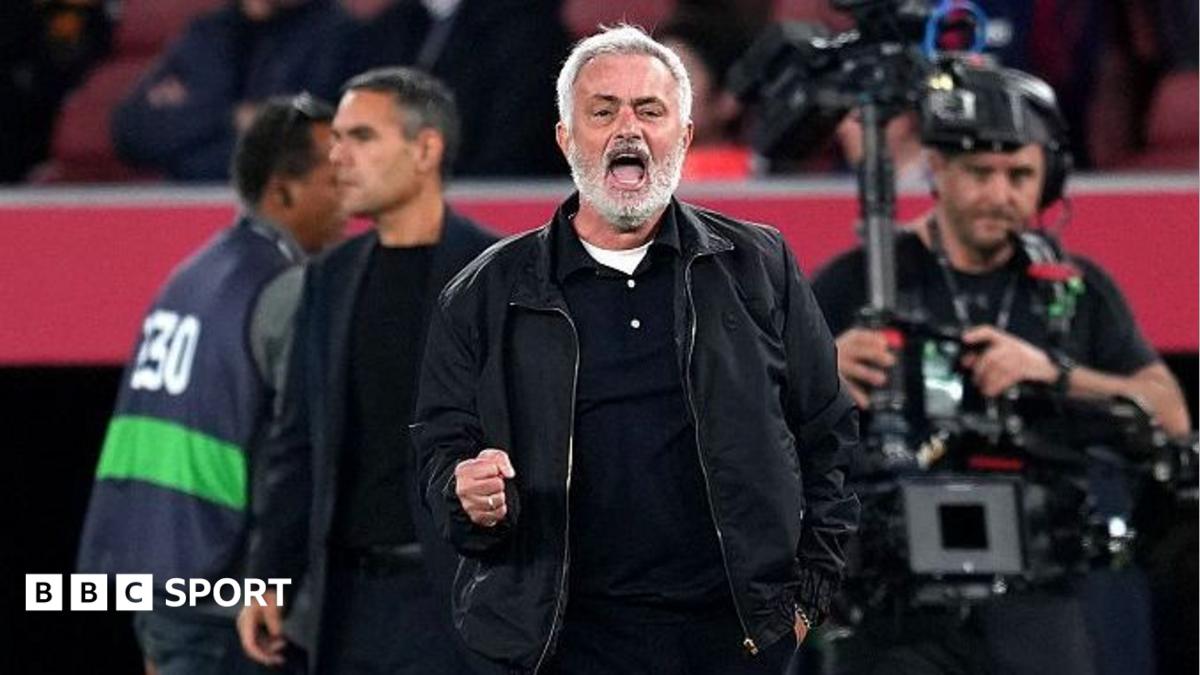
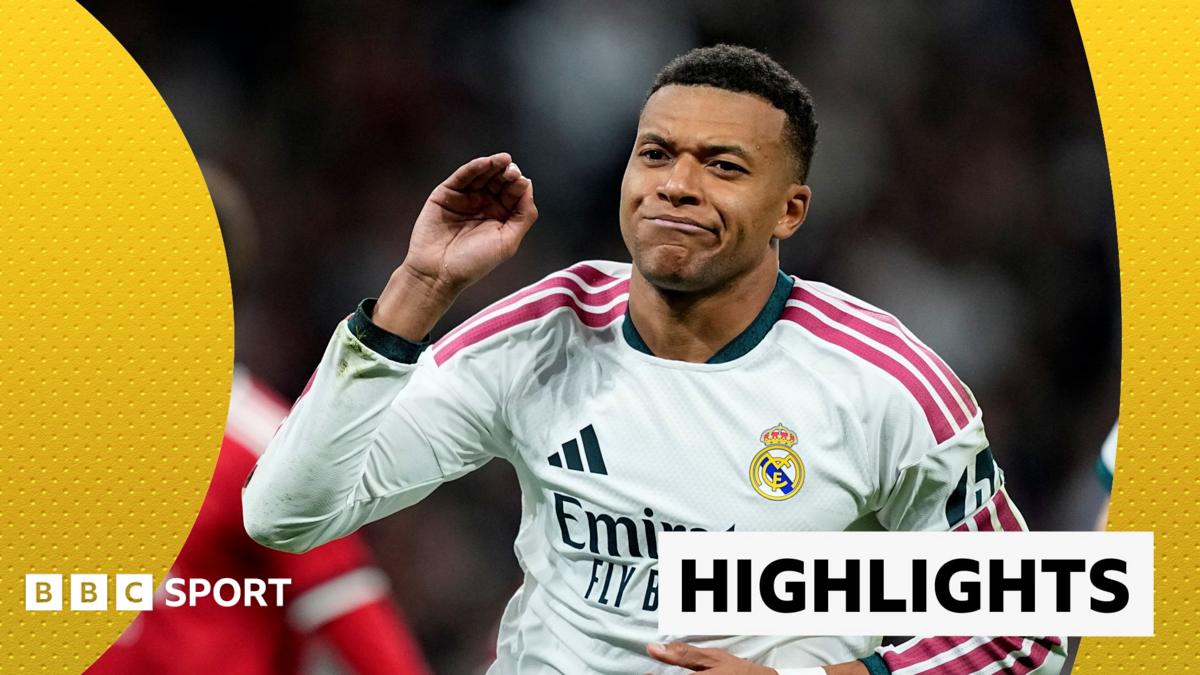
The Real Madrid manager celebrated Kylian Mbappe’s late winner at Barcelona on Sunday with a trademark knee slide, as he maintained his midas touch over their bitter rivals.
Mourinho has become just the third Real boss to go six El Clasicos in a row without defeat – 13 years after he last led Los Blancos in this fixture.
Four wins and two draws in his past six matches in charge of Real Madrid against Barcelona put him up there with Miguel Munoz (1962 to 1965) and Vicente del Bosque (2001 to 2003) as Real managers who have gone six in a row without defeat against the old enemy.
It was also just a second victory in eight games against Barcelona for Real, with the return of Mourinho to the fixture haunting the reigning champions
And more importantly for Mourinho, Mbappe’s double in Real’s 2-1 win ended Barcelona’s nine-game unbeaten domestic run with a crucial Clasico victory at the Camp Nou.
A Real defeat would have allowed Barcelona to establish a commanding nine-point advantage but the result has transformed the top of La Liga, bringing Mourinho’s side to within three points of their rivals.
“In my view, Real Madrid do not play to win at the Camp Nou, Real Madrid play to win La Liga,” he said.
“We could win with luck, but we won with calmness and with all merit,” he said. “It’s a very strong group. Everyone works very hard. Everyone was ready to win.
“The credit goes to the players. When you win, the credit goes to the players. But when you lose, the blame falls on you. And that’s why we see coaches being sacked from their positions every week.”
The Portuguese, who returned to Real 13 years after his first stint in charge this summer, has now won six and lost six El Clasicos.
He said: “I’ve learned that I have an extraordinary group, with the quality and mindset to play.
“In midfield, having a mix of talents gives us more than just having two players with similar characteristics. This mix of talents gives us balance when defending and quality when we go on the attack.
“We’ve beaten several teams by four or more goals, but this is Barca, and the players put on a great performance. We need to continue like this and don’t go over the moon after this win.”
Barcelona boss Hansi Flick said he didn’t want to give excuses for the defeat but admitted his team lacked fresh legs after a demanding few weeks.
“We missed the freshness,” he said. “It’s not easy for our players. We have to recover well, train well and we have to respond from this defeat.
“In big games, small things are important and they decide the games and today, it wasn’t on our side.
“I can see that today we were not fresh and this is what we have to change.”
French superstar Kylian Mbappe scores brace for Madrid to inflict Barcelona’s first domestic defeat of the campaign.
Published On 25 Oct 202625 Oct 2026
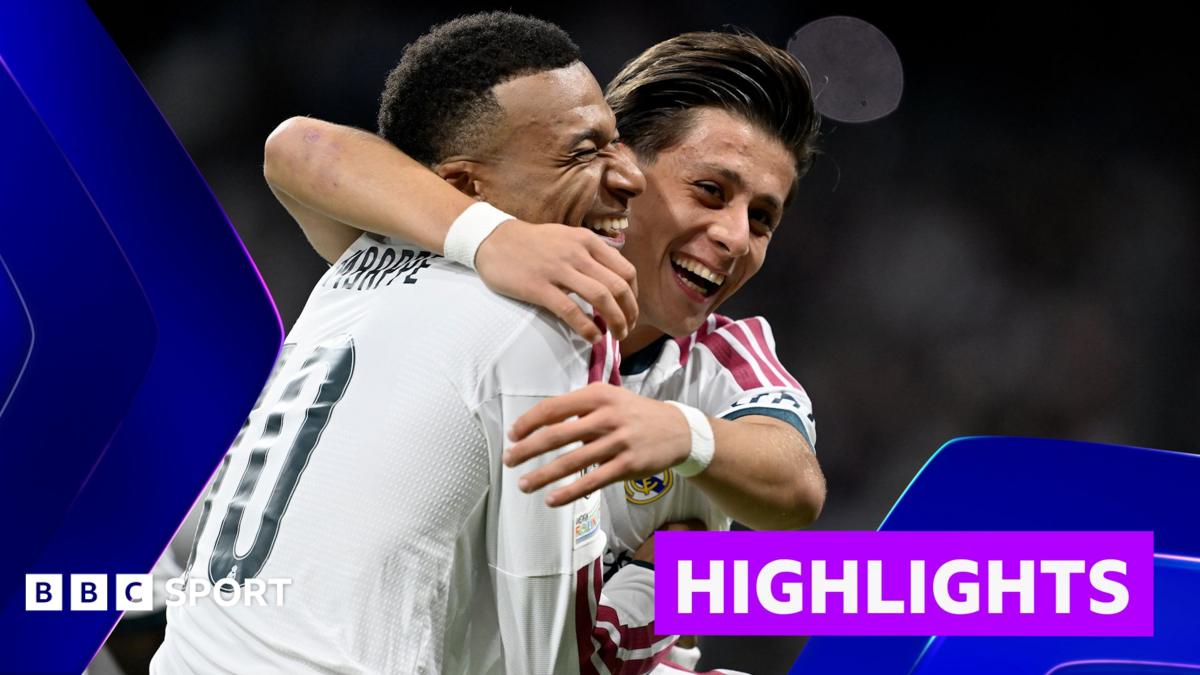
Kylian Mbappe struck twice to earn Jose Mourinho’s Real Madrid a 2-1 El Clasico victory over La Liga leaders Barcelona at Camp Nou, cutting the gap to three points.
French superstar Mbappe opened the scoring before half-time on Sunday and then slotted home late on to inflict Barca’s first domestic defeat of the campaign after Raphinha had equalised for the champions.
Real Madrid remain third, behind Atletico Madrid and Hansi Flick’s Barca, who had won their first nine games before a chastening week.
The Catalans suffered a second straight defeat after losing on Tuesday against Paris Saint-Germain in the Champions League.
Barca had won six of the seven previous Clasicos since the German arrived but were surprisingly subdued against Mourinho’s side.
“In general we didn’t have a great game, in the first half we weren’t ourselves, there were a lot of things we could have done better,” Barcelona midfielder Pedri told DAZN.
“We wanted to win the Clasico in front of our fans, but the season is very long … a league is not won here.”
Los Blancos, without suspended winger Vinicius Junior, won their fifth straight game across all competitions and are finding their footing under veteran Portuguese coach Mourinho.
After two trophyless seasons Madrid turned back to Mourinho to try and stop Barca’s dominance, and this result will give them hope they are on the right track.
The opening period of the game was cagey, with few opportunities.
Barca defender Pau Cubarsi twice reacted well to shut down Mbappe, while Real Madrid’s Marc Cucurella took a rapid liking for Lamine Yamal’s shirt, constantly grabbing at the 19-year-old winger.
Anthony Gordon, playing in his first Clasico since joining Barcelona from Newcastle, backheeled the ball to Raphinha, who fired narrowly wide as Barca threatened.
The hosts were dealt a setback when young defender Xavi Espart pulled up hurt and needed to be replaced by Alejandro Balde before the half-hour mark.
Andriy Lunin, playing in goal for Madrid after Thibaut Courtois pulled out of the squad with flu, saved at his near post from Gordon before the visitors took the lead.
Mbappe scored his 10th league goal of the season and also his easiest, with Barca’s Gerard Martin clearing a cross straight at the Frenchman, who deflected it into the net.
Barca responded by carving out a glorious chance for an equaliser but teenage sensation Yamal for once miscued in front of goal, firing wide when poised to level.
The game opened up and Yan Diomande came close to doubling Madrid’s lead before half-time, drilling into the side-netting.
Martin redeemed himself early in the second half as he held off Jude Bellingham, who could neither beat the defender nor find a free Mbappe.
Raphinha, who had a quiet first half, pulled Barcelona level just after the hour mark.
Pedri fed the Brazilian, La Liga’s top goalscorer with 13, who fired through Bellingham’s legs and Lunin could not keep the shot out.
The Ukrainian goalkeeper did make a superb save to deny Martin at a corner, as Barcelona flowed forward with the wind finally in their sails.
Yamal bent an effort wide with Lunin at full stretch and Barca substitute Frenkie de Jong had a shot desperately blocked by Dean Huijsen.
There was a sting in the tail for the Catalans though as substitute Gabriel Jesus lost possession and Madrid raced through on goal.
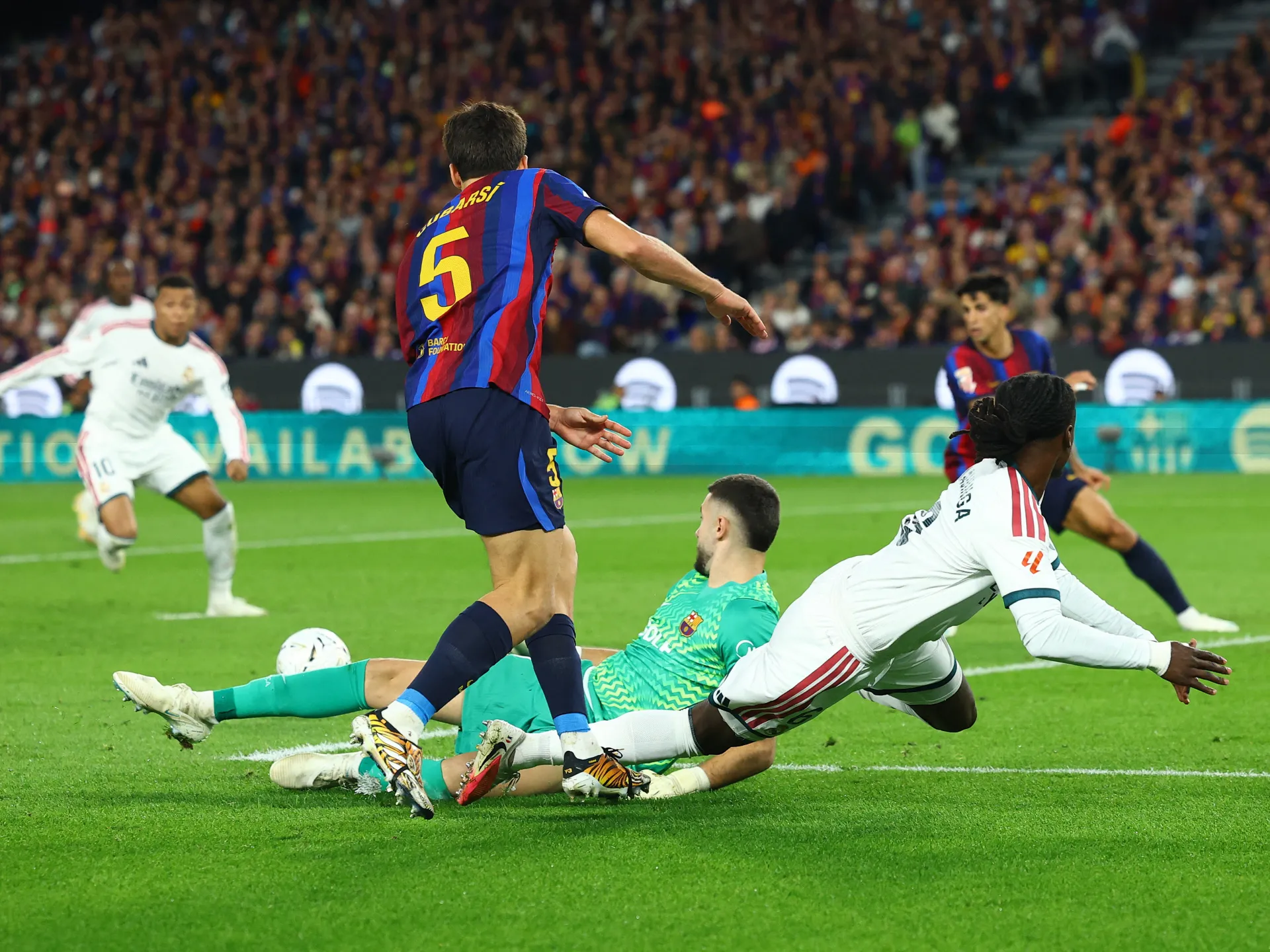
Eduardo Camavinga beat Cubarsi and unselfishly cut the ball back for Mbappe to tuck home his second of the night into an empty net with Joan Garcia drawn out of position.
Demonstrators want pensions to remain indexed to inflation and the gender pension gap to be eliminated.
Published On 24 Oct 202624 Oct 2026
Approximately 25,000 people have gathered in the Spanish capital in support of the state pension scheme, as protests continue across Europe, prompted by a range of issues, including the cost of living, school conditions and alleged corruption.
Protesters from across the country marched through Madrid on Saturday before next month’s general election.
Recommended Stories
list of 3 itemsend of list
The pressure on Spain’s state pension scheme is being driven by several factors, including an ageing population, a low birth rate and wage stagnation, as well as a declining ratio of workers to pensioners.
Demonstrators are concerned that the state pension scheme could be significantly weakened depending on who wins next month’s election. The country’s monthly pension bill hit a record high this year of almost 14.5 billion euros ($16.2bn).
Protesters marched from Atocha train station to the Gran Via, Madrid’s busiest and most famous street.
Several of the demonstrators carried banners reading “protect and guarantee our pensions”.
Emilio Delgado serves as the deputy spokesperson of the left-wing party Mas Madrid in the Assembly of Madrid. Posting on X, he said that “no pension should be below the minimum wage. A lifetime of work deserves a dignified retirement.”
Protesters want pensions to remain indexed to inflation and are calling for the gender pension gap to be eliminated.
Prime Minister Pedro Sanchez has accused the right-wing Popular Party (PP) of planning to weaken inflation-linked pension increases if it wins next month’s election.
However, leader Alberto Nunez Feijoo said on Monday that he would continue to raise pensions in line with inflation if his party wins the vote.
Sanchez has pledged to protect pensions if he remains in office and says the current pension system is affordable.
The system has gradually become more reliant on state funding because of a growing number of pensioners and increases in monthly payments.
Real Madrid maintain their 100 per cent start in the Champions League as they comfortably beat Leipzig 4-1, with Bernardo Silva scoring his first goal for Madrid since moving from Manchester City in the summer.
Kylian Mbappe and Yan Diomande score stunners as Real beat Leipzig to make it three from three in Champions League.
Published On 21 Oct 202621 Oct 2026
Real Madrid claimed a third Champions League victory in as many games, thrashing RB Leipzig 4-1 on Wednesday, with Kylian Mbappe and Yan Diomande among the goalscorers for Jose Mourinho’s side.
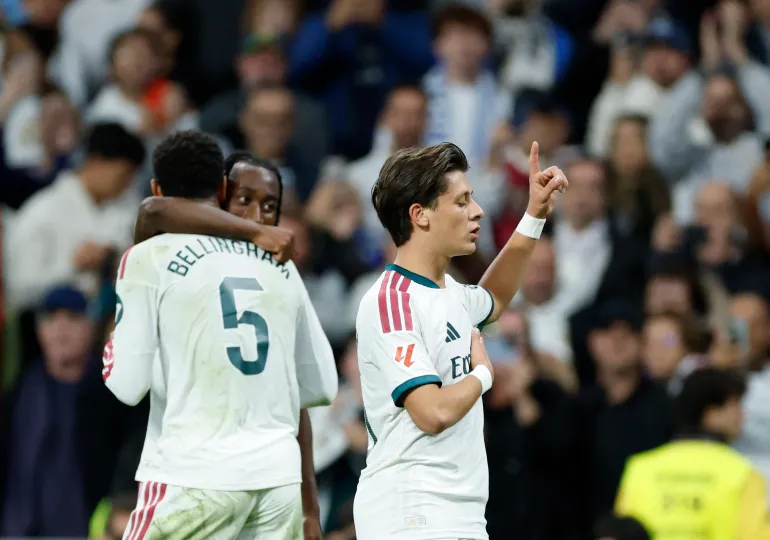
Bernardo Silva opened the scoring for Madrid from close range late in a tight first half, with Arda Guler doubling the advantage of the record 15-time European champions soon after the interval.
Recommended Stories
list of 4 itemsend of list
Mbappe bent home a third before Tidiam Gomis pulled one back for the German side, and Diomande rammed a volley into the top corner late on to cap Madrid’s triumph.
Their fourth consecutive win across all competitions will boost Madrid’s morale ahead of Sunday’s La Liga Clasico against bitter rivals Barcelona.
Without a major trophy in two seasons and after a shaky domestic start, Madrid can at least boast a perfect record in Europe, unlike Barca after their defeat at Paris Saint-Germain on Tuesday.
Mourinho started Vinicius, serving a four-match ban in La Liga, on the left flank and benched former Leipzig winger Diomande, despite his improving form.
The coach also brought Bernardo Silva and Eduardo Camavinga into midfield and put midfielder Federico Valverde at right-back again, as he did in Sunday’s win at Sevilla.
Visitors Leipzig created the first big chance, with Madrid stopper Thibaut Courtois getting down low to make a superb save from Romulo Cardoso.
Vinicius, who improved on a poor showing at Roma last week without breaking out of his rut, drew a full-stretch save from Leipzig’s Maarten Vandevoordt.
Madrid carved out an advantage in the final stages of a low-key first half when Valverde cut the ball back for Guler, whose shot Vandevoordt saved. However, the goalkeeper could not clear it, and Silva darted in to prod over the line.
It was the former Manchester City midfielder’s first goal for the club after joining this summer.
Vandevoordt saved well from Valverde’s fierce effort before Guler put Madrid two goals ahead in the 52nd minute.
Jude Bellingham crossed to the back post and Mbappe nodded the ball across goal, with Guler able to hold off a defender and turn home.
Mbappe lashed a shot into the side netting after Bellingham teed it up, as Madrid looked to put the game out of sight.
Mourinho sent on Diomande for Vinicius with 20 minutes remaining, and the Brazilian looked disappointed on the bench, knowing he cannot play again until November 4, when Madrid visit AEK Athens.
Madrid’s record 140 million-euro ($157m) signing, Diomande, pulled the ball back to Mbappe on the edge of the box for Madrid’s third, and the French forward bent it home.
Leipzig quickly grabbed a consolation goal at the other end as Dean Huijsen switched off, with Gomis firing past Courtois.
Diomande ended proceedings with a bang, rattling an emphatic volley from Brahim Diaz’s cross into the top corner for his third goal in his last four appearances.
Real Madrid beat Sevilla 4-1 a day after Barcelona thrashed Real Betis 5-2, as the Spanish giants prepare for El Clasico.
Published On 19 Oct 202619 Oct 2026
Kylian Mbappe scored twice as Real Madrid closed the gap on La Liga leaders Barcelona to six points with a 4-1 win over Sevilla at the Santiago Bernabeu, a week before the rivals meet.
Despite the absence of suspended Vinicius Jr, Real produced the fluid attacking football the team had been lacking of late, with Arda Guler again orchestrating their best work on Sunday.
After a stale opening, the Turkish international sparked the match into life.
Sevilla appealed for a red card following an incident involving Guler and Peque Fernandez, but Guler responded minutes later by collecting Yan Diomande’s pass and arrowing a shot into the top corner.
Arda Guler scored his second goal of the La Liga season for Real Madrid [Oscar Del Pozo/AFP]
Mbappe scored an equally impressive second in the 37th minute, turning brilliantly to burst through on goal before calmly beating Odysseas Vlachodimos.
Fede Valverde, restored to right back by coach Jose Mourinho, made a crucial block to deny Felix Correia just before the hour as Sevilla threatened to work their way back into the contest.
Diomande then exploited the space created by Sevilla’s more adventurous approach, evading his marker before sending Mbappe in behind the defence. Andres Castrin brought down the French forward, who got to his feet to convert the resulting penalty and effectively settle the contest.
Substitute Manu Bueno reduced Sevilla’s arrears with a composed finish 10 minutes from time after Mbappe cheaply surrendered possession deep inside his own half.
Diomande restored Real’s three-goal advantage two minutes later, capping a fine display with a thunderous strike.
Eder Militao received a warm ovation when he came on in the 85th minute for his first appearance since undergoing hamstring surgery in April.
Mourinho will take encouragement from one of the most complete performances of his second spell at Real as they prepare for next Sunday’s pivotal meeting with Barcelona.
Real, who have won three straight games in all competitions following the international break, climbed to third on 21 points, one behind Atletico Madrid, while Sevilla are sixth on 14.
Lamine Yamal has begun the season in superb form for Barcelona [Jorge Guerrero/AFP]
Earlier on Saturday, Barcelona beat Real Betis 5-2 to make it nine wins from nine and stretch their blistering league tally to 39 goals.
Lamine Yamal lit the fuse with a dazzling opener before Rodri, Gabriel Jesus, Eric Garcia and substitute Dani Olmo joined the party, while Valentin Gomez and Ez Abde replied for Betis, who played much of the second half with 10 men after Facundo Bernal was sent off for head-butting Lamine.
Barca moved to 27 points, five above Atletico, who won 1-0 at Espanyol, while third-placed Betis have 19 and Real Madrid sit fourth on 18 before welcoming Sevilla on Sunday.
Elsewhere, Osasuna withstood second-half pressure from Racing Santander to win 2-0 in Jagoba Arrasate’s first game back as manager.
Two flying saves from Ionut Radu denied Alaves a point in a 2-1 defeat to Celta Vigo, while Real Sociedad won 5-2 at Malaga.
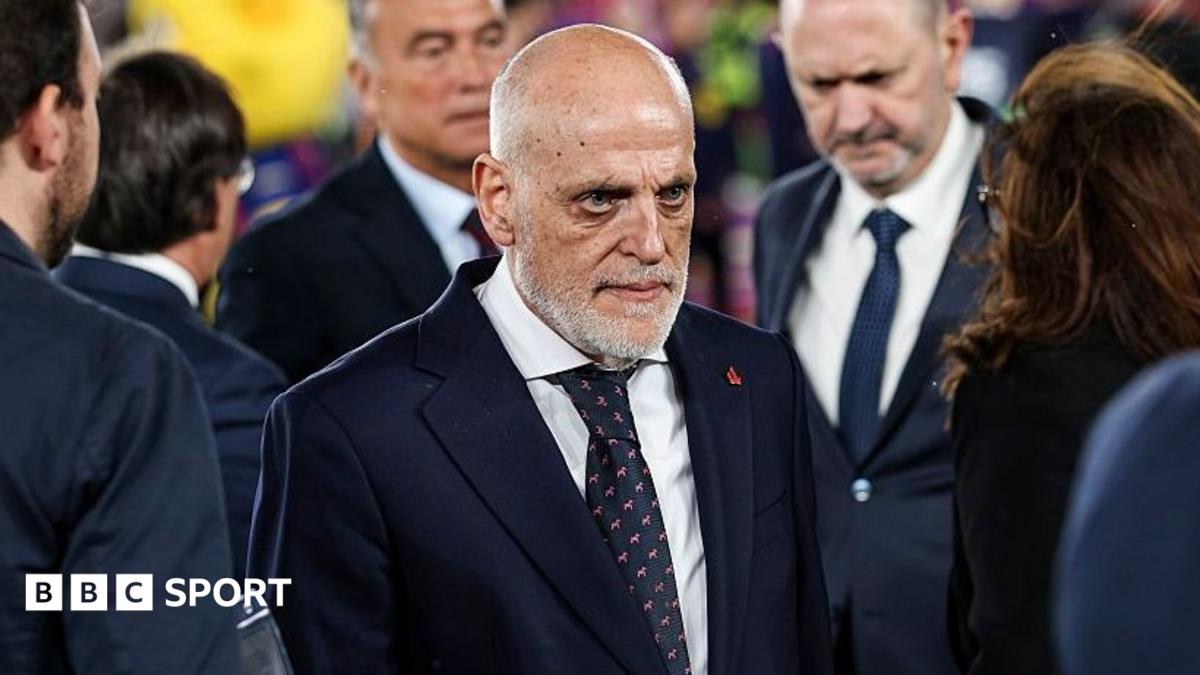
Real Madrid have called for the “immediate resignation” of La Liga president Javier Tebas after he drew comparisons between the club’s management and Nazi propaganda chief Joseph Goebbels.
Tebas said Real Madrid’s communication and the use of its in-house TV channel “recalls propaganda mechanisms exploited by Goebbels”.
Real Madrid have called the statement “deeply offensive” and “morally repugnant”.
The club have also demanded Tebas steps down as both the head of the Spanish top flight and vice-president of the Spanish Football Association (RFEF).
“Real Madrid considers it absolutely intolerable and extraordinarily serious that someone holding two positions of utmost responsibility in Spanish football resorts to a comparison with the propaganda methods of the Nazi regime to discredit our club, its management and its television,” the club said.
In a lengthy post published on X on Friday, Tebas said: “Real Madrid’s management directs an orchestra of mouthpieces and Real Madrid TV leads the singing.
“Their score is always the same: select the plays that suit them, repeat the grievance, feed the suspicion, and point fingers at the enemies.
“That method recalls propaganda mechanisms exploited by Goebbels, Nazi Germany’s minister of propaganda: systematic repetition, construction of an enemy, and subordination of facts to the narrative.”
Tebas later said he was drawing comparison with “those propaganda techniques” and “not with an ideology”.
Real Madrid rejected this clarification, saying it did not mitigate the “institutionally unworthy nature of his statements”.
The club added: “These statements constitute yet another episode in the repeated attacks by Javier Tebas against Real Madrid, its president and its media outlets.”
Last month, Tebas criticised Real Madrid for claiming there was a refereeing conspiracy against the club.
Jose Mourinho enjoyed a Roma reunion to remember as Real Madrid completed an astonishing comeback by scoring three late goals to claim a 4-3 away win in the Champions League on Wednesday.
Marten de Roon gave the hosts a deserved opener before Kylian Mbappe struck back on his 100th Champions League appearance to level the scores at the break.
Recommended Stories
list of 4 itemsend of list
Two Donyell Malen strikes in the space of six minutes early in the second half seemed to take the game away from the 15-time European champions as Roma ran rampant.
But Real scored three goals in the space of seven minutes late on, all stemming from corners, to turn the game on its head as Carlos Espi, Endrick and ex-Roma defender Antonio Rudiger struck at a stunned Stadio Olimpico.
Mourinho was a popular figure, leading Roma to the UEFA Conference League title and an Europa League final during two-and-a-half years in charge.
The home crowd honoured the Portuguese with banners and chants in Roma’s first home Champions League match in more than seven years, and the hosts started strongly as Mario Hermoso forced Thibaut Courtois into a flying fingertip save.
Roma took a deserved lead when De Roon swept a shot past Courtois from 25 yards in the 20th minute, and almost doubled it when Malen’s powerful shot squirmed under Courtois before being plucked off the line.
However, one costly moment of switching off proved enough to send them back to square one within five minutes of the opener being scored.
Hermoso misjudged an interception to allow Mbappe a clear run at goal, and the French striker’s deflected shot flew into the roof of the net to level the scores with Real’s first meaningful chance of the game.
Mbappe marked his Champions League centurion status – he is the youngest player to reach the milestone, aged 27 – with his 72nd tournament goal, one that moved him into the all-time top five ahead of Real legend Raul Gonzalez.
The equaliser appeared to subdue Roma and steady Mourinho’s men, who twice threatened a second before the break as Marc Cucurella and Jude Bellingham came close.
Roma take game to Real Madrid
But Roma boss Gian Piero Gasperini insisted pre-match that Roma would not compromise on their full-throttle style regardless of opposition, and he was true to his word as they came out firing after the break.
Roma quickly retook the lead when half-time substitute Rodrigo Mora fed the ball to Malen, who finished brilliantly by taking the ball in his stride with his first touch and lifting it over Courtois with his second.
Things got even better for the Italians just six minutes later when Malen raced onto a through ball to power home his second, given following a VAR review after initially being flagged for offside.
Real looked for a response as Mbappe twice tested Pierluigi Gollini, before having his second goal of the night ruled out for offside.
But set-pieces proved to be the key to unlock the Roma defence, as Espi tucked home a close-range rebound from a header to pull one back before Endrick powered home a header from another corner just two minutes later.
The final blow was struck by Rudiger in the 90th minute, the defender getting in front of his marker to guide home a close-range finish and complete an extraordinary turnaround.
The result leaves Real Madrid with six points from their opening two league phase matches, while Roma are on one point.
Shakhtar Donetsk beat AEK Athens in London debut
Nomadic Ukrainian champions Shakhtar Donetsk celebrated moving into their new Champions League “home” at Stamford Bridge by storming back to beat AEK Athens 3-1.
Fans of the club turned up in the thousands to support the team, who emerged from the tunnel draped in blue-and-yellow national flags.
The Greek side took the lead in the 28th minute through Lovro Majer but Pedrinho levelled confidently from the penalty spot just six minutes later.
With about 10 minutes of normal time to go, Vinicius Tobias found the net from a tight angle and substitute Gleiker Mendoza made the game safe, smashing home after cutting in from the left.
The result leaves Shakhtar on four points after two games, following a draw against PSV Eindhoven in their opening match in the league phase of the Champions League.
Giant-killers Bodo sink Dortmund in Champions League
Fredrik Sjovold’s 52nd-minute strike secured a 1-0 victory for Bodo/Glimt over Borussia Dortmund, extending the Norwegian side’s remarkable home record against Europe’s elite.
Bodo were a cut above the 2024 Champions League runners-up and took the lead through Sjovold just after the break.
Dortmund improved in the final half hour but were unable to strike back, despite a late chance for Felix Nmecha.
Dortmund join Manchester City, Inter Milan and Sporting as recent big-name scalps on the artificial turf of Bodo’s Aspmyra stadium.
Aston Villa put six past Fenerbahce in record rout
Aston Villa recorded their biggest ever European victory as Nicolas Jackson inspired a 6-0 rout of Fenerbahce.
Unai Emery’s side won at Villa Park for the first time this season to maintain their 100 percent start in Europe’s elite club competition.
Swiss forward Johan Manzambi put Villa in front, and Jackson was on target twice before the interval.
Ross Barkley scored twice in the second half before Tammy Abraham’s late strike completed the rout.
Who: Atletico Madrid vs Manchester United What: UEFA Champions League, matchday 2 Where: Estadio Metropolitano, Madrid, Spain When: Tuesday, October 13, at 9pm (19:00 GMT) How to follow: Al Jazeera Sport will bring you all the build-up and live updates from 16:00 GMT.
Action in Europe’s premier club competition returns with a matchday two clash between in-form La Liga side Atletico Madrid and Premier League strugglers Manchester United.
There are contrasting moods in the camps ahead of Tuesday’s fixture in the Spanish capital.
Atletico are challenging Barcelona for the top spot in Spain’s top flight, while Man United are in the bottom half of England’s Premier League, several places below all their traditional rivals.
Left winger Alex Baena and striker Jonathan David have been running the show for Atletico, while playmaker Bruno Fernandes and marksman Bryan Mbeumo are trying to keep United’s hopes alive of turning things around.
Atletico and Man United are set to clash for only the fifth time in history and the third in the Champions League.
Here’s all you need to know about the match:
How have Atletico Madrid played this season?
Atletico have made a promising start to the 2026-27 La Liga season, as they sit in second place, five points adrift of leaders and title holders, Barcelona.
Of the eight league games they have played, Atletico have won six, drawn one and lost one.
That keeps Atletico 25th and Man United fourth in the league phase of this year’s Champions League.
The top eight teams at the end of the league phase qualify directly to the knockout rounds.
Atletico Madrid vs Manchester United: Predictions
Opta’s supercomputer has given Atletico a 48.5 percent probability of victory, while Man United have a 27.2 percent chance and a draw is estimated at a likelihood of 24.3 percent.
Atletico Madrid vs Manchester United: Head-to-head
Matches: 4
Atletico wins: 2
Man United wins: 0
Draws: 2
Encounters:
March 15, 2022: Manchester United 0-1 Atletico Madrid (Champions League)
February 23, 2022: Atletico Madrid 1-1 Manchester United (Champions League)
November 06, 1991: Manchester United 1-1 Atletico Madrid (UEFA European Cup Winners Cup)
October 23, 1991: Atletico Madrid 3-0 Manchester United (UEFA European Cup Winners Cup)
Atletico Madrid vs Manchester United: Form guide
(Last five matches across all competitions, latest match first)
Atletico Madrid: W-W-W-W-L
Manchester United: D-D-L-L-W
Alex Baena celebrates scoring for Atletico [File: Fran Santiago/Getty Images]
Who are the top players to watch?
Alex Baena and Jonathan David (Atletico): Baena is in good form for club and country, with four goals and two assists for Atletico this season. Further up the pitch, centre-forward David has three goals and two assists.
Bruno Fernandes and Bryan Mbeumo (Man United): Midfielder Fernandes, the United captain, has been the team’s top scorer with four goals in all competitions, while the playmaker also has an assist. Forward Mbeumo, meanwhile, has three goals and an assist.
What have the coaches said?
Diego Simeone (Atletico):
On Julian Alvarez failing to find the net so far this season: “I think strikers with Julian’s characteristics always need goals, not just him. It’s true that beyond his finishing, he’s a team player, a player that can link very well, he can assist and he’s got many more tools than just goalscoring.”
On facing Man United: “The game will be long, it will be tough and we have to manage our efforts to compete well.”
Michael Carrick (Man United):
On United’s poor form: “We’ve got to stay positive and keep doing the right things. We need to do better and we need more points, of course we do.”
On facing Atletico: “We’ve got big games coming up and are looking forward to Tuesday now. A fresh start, a fresh game and we will go there looking forward to the game.”
Did you know?
Atleti are unbeaten in the four meetings between the sides (W2 D2). Their most recent encounters came in the 2021-22 Champions League round of 16, where they drew 1-1 in Madrid before winning 1-0 in Manchester.
Atleti also dethroned United as European Cup Winners’ Cup holders in 1991-92, winning the second-round tie 4-1 on aggregate (3-0 home, 1-1 away).
United have lost only one of their last 11 matches against Spanish opponents (W7 D3). They beat Athletic Bilbao 3-0 away and 4-1 at home in the last fixtures in the 2024-25 Europa League semifinals to make it three successive victories.
United’s last 10 matches against Spanish opponents have produced 35 goals, an average of 3.5 per game.
United manager Michael Carrick is under pressure after a poor start this season [File: Carl Recine/Getty Images]
Team news and predicted lineups
Atletico Madrid
Atletico have a fully fit squad.
Predicted starting XI:
Jan Oblak; Marc Pubill, Cristian Romero, David Hancko; Marcos Llorente, Pablo Barrios, Koke, Giuliano Simeone; Kang-in Lee, Alex Baena; Julian Alvarez
Manchester United
As many as five United players are out with injuries. Those include Patrick Dorgu (hamstring), Benjamin Sesko (shin), Tom Heaton (abdomen), Manuel Ugarte (knee) and Matthijs de Ligt (back).
Real Madrid forward Vinicius Junior sent off for pulling Villarreal player’s hair in 1-0 La Liga victory.
Published On 10 Oct 202610 Oct 2026
Yan Diomande earned Real Madrid a tight 1-0 victory over Villarreal on Saturday to keep them six points behind La Liga leaders Barcelona, even though winger Vinicius Junior was sent off for hair-pulling.
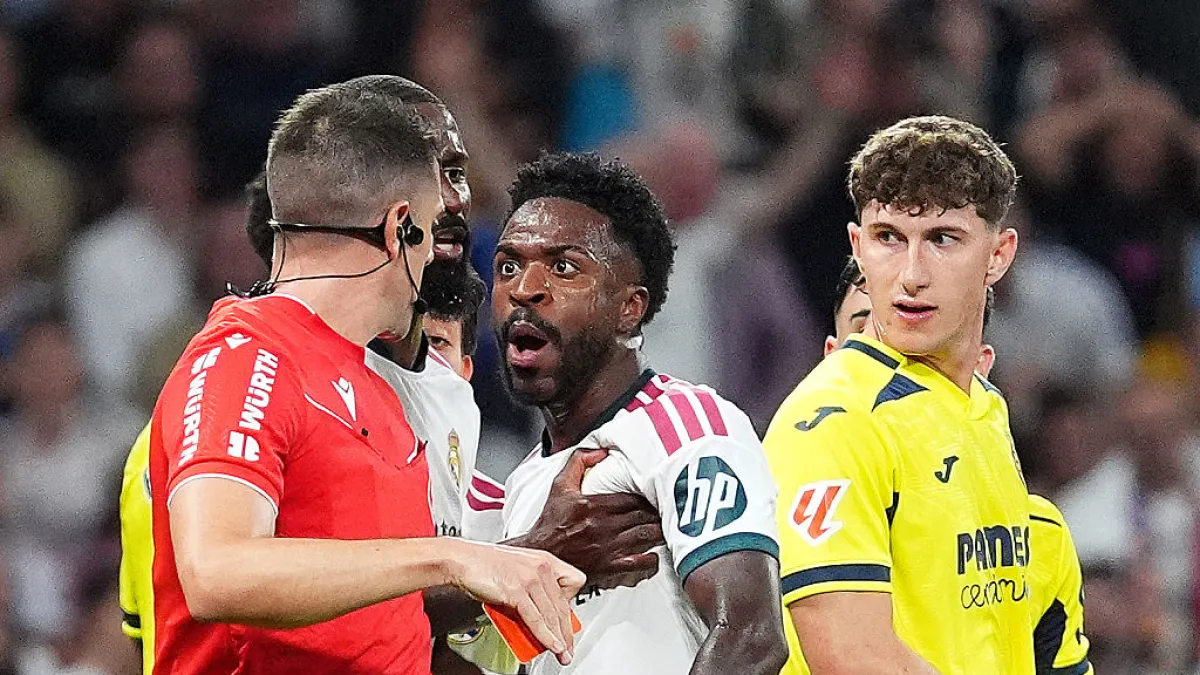
Brazil international Vinicius, on as a substitute, scored, but his goal was disallowed. He was then dismissed after a VAR review showed he had pulled the hair of Villarreal’s Nathan Saliba.
Recommended Stories
list of 4 itemsend of list
Jose Mourinho’s Madrid battled through the final stages with 10 men but held on to win and go provisionally third.
Champions Barca lead La Liga after a 3-0 win over Getafe, while Atletico Madrid are five points behind in second after they edged Alaves 2-1.
Striker Kylian Mbappe was fit to start the match for Madrid at their Santiago Bernabeu stadium after suffering a knee problem playing for France during the international break.
There was a smattering of whistles for the superstar forward, with some fans believing he has been unprofessional in recent weeks, but also applause from other supporters.
Mbappe, a candidate for the Ballon d’Or trophy later this month, was Madrid’s most threatening player in the first half, although he had little competition.
Mourinho started with out-of-form winger Vinicius on the bench, following his trips to Australia and India with Brazil during the international break.
Madrid improved defensively, giving Villarreal few chances of note, but struggled to build much in attack themselves in a drab opening half.
Mbappe struck the post from Alvaro Carreras’s layoff as Madrid pushed Villarreal back early on.
Villarreal soon gained a foothold and restricted Madrid’s opportunities, until Mbappe forced a good save from Peter Gulacsi.
There was some more mild whistling for Madrid’s display from their fans at half-time, but they were soon able to celebrate summer arrival Diomande’s first goal for the club.
The Ivorian winger, Madrid’s record 140 million euro ($157m) signing, produced a sharp low finish into the far corner after good work from Federico Valverde to play him in.
Vinicius thought he had doubled Madrid’s lead after Jude Bellingham charged in down the left and cut the ball back for him.
However, the winger’s joy turned to anger after referee Isidro Diaz de Mera was called to watch Vinicius’s hair pull on Saliba in the buildup by VAR and sent off the Brazilian, voiding the goal.
Madrid’s Belgian goalkeeper Thibaut Courtois, who had made a couple of smart saves earlier in the half, produced an acrobatic stop to thwart Carlos Romero.
Mbappe was denied again by Hungarian goalkeeper Gulasci as the forward left the Bernabeu frustrated in his hunt for goals, although his team were able to clinch three important points to stay on Barca’s trail.
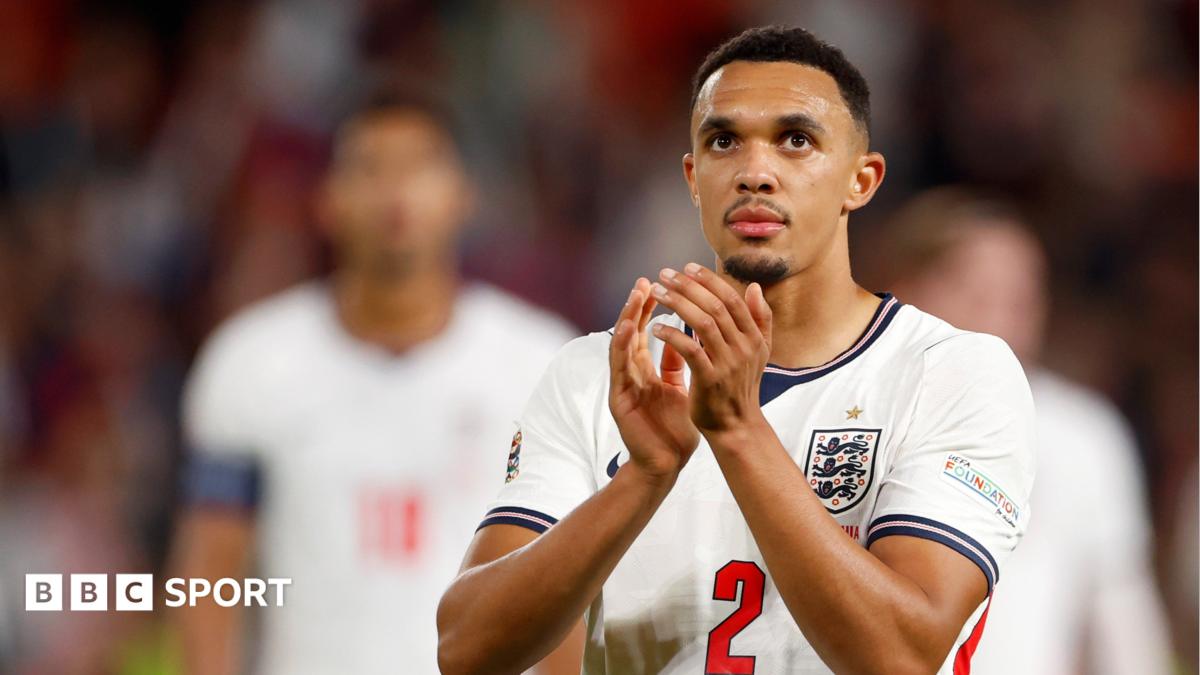
Gordon, the grateful beneficiary of Alexander-Arnold’s class, said: “I make that run time and time again and only a certain number of players have that ability, technique and bravery to be willing to make the mistake trying that pass. That’s why he’s so good and I’ve been dying to play with him for that reason.
“He’s had his own journey with England. He would’ve liked to have played more than he has but he’s been a great character during this camp. I’ve really enjoyed being around him.”
Alexander-Arnold is a risk taker, both in the defensive and attacking context, but only Elliot Anderson (41) made more passes in the final third than he did (32), while only Anthony Gordon, with four, created more chances than the defender’s three.
Tuchel, it should be stated, is not alone in having doubts about Alexander-Arnold.
Who can forget – although many would love to – Sir Gareth Southgate’s ill-fated attempt to utilise Alexander-Arnold as a midfielder at Euro 2024? It was ditched after 54 minutes of England’s second game against Denmark never to be seen again.
More will be revealed if Tuchel persists with Alexander-Arnold against Croatia behind closed doors in Rijeka on Saturday – but this must be close to make or break time for this lavishly-talented player who is 28 on 7 October.
If he cannot convince Tuchel in this camp, and surely that one moment of game-changing skill must be fixed in the head coach’s mind, then you wonder if he ever will.
Alexander-Arnold said: “It was amazing. It’s always an honour to represent my country. It’s been a long time, but I’ve always believed I can play for England. That belief has always been there and it was about proving it at club level. The manager gave me a chance, now hopefully he is happy with how I played.”
How happy? Time, and Tuchel, will tell.
Alexander-Arnold, however, could not have done any more as England, who sealed the three points with captain Harry Kane’s 87th goal in 123 international appearances, got their Nations League campaign going in Prague.
Hundreds of protesters have set up tent encampments in central Madrid to demand government action on soaring housing costs and evictions, as demonstrations spread to Barcelona. Spain currently faces a deficit of 750,000 homes, with the central bank warning the shortage could exceed one million by 2028.