CINCINNATI — The Dodgers celebrated clinching a postseason berth with a champagne toast. Simple. Restrained. Leaving room for larger celebrations to come.
“The message was, ‘We haven’t come close to playing our best baseball yet,’” manager Dave Roberts said after the Dodgers’ 4-1 win over the Reds on Monday. “And here we are with 12 games left, getting a ticket to the postseason. And that says a lot about this entire organization. And just to finish strong.”
It marked the Dodgers’ 14th straight playoff berth, tying a record set by the Atlanta Braves from 1991 to 2005.
“It’s different than anything I’ve experienced, for sure,” Tarik Skubal said of the understated celebration. “But I think it just speaks to the people in this room and what they expect out of this team. That was cool. A little toast and move on. Forget it happened. We’ve got more to accomplish.”
Most teams don ski goggles to celebrate with champagne and beer showers. The Dodgers will save the messier celebration for clinching the division. Their win over the Reds (70-80) trimmed that magic number to three.
It was fitting that Skubal, the Dodgers’ big trade-deadline acquisition, was on the mound for the clincher. He’s progressively improved in his eight starts with the Dodgers. And on Monday, he breezed through seven shutout innings, allowing just four baserunners (three singles and a walk).
“I think a lot of the struggles have been me versus me,” Skubal said. “Thinking too much out there, not competing the way I know how to compete. Just thinking too much about pitch selection at times and trying to be too fine and not challenging guys.”
He has grown more comfortable with the pitching coaches and his catchers, and it has brought out a better version of him. Skubal seems to be peaking at the right time — just as Roberts hoped for the team as a whole.
Even after clinching the division likely this week, the Dodgers (91-59) will be playing for seeding, aiming for at least a first-round bye.
“It’s always helpful in the sense of giving your guys a break to reset,” Roberts said. “But given all the tax and where our guys are health-wise, to get that week would be huge. So we’ve still got to play well to finish out the season to get to that point.”
The position-player group has been hit the hardest down the stretch.
Designated hitter Shohei Ohtani (right biceps and left knee), center fielder Andy Pages (left hand fracture) and backup catcher Dalton Rushing (sprained right elbow) are on the IL. First baseman Freddie Freeman was out of the lineup Monday managing right knee soreness, and second baseman Miguel Rojas was playing through shoulder soreness after aggravating a longstanding partial tear in a labrum.
“You’ve got to give credit to the front office,” said Teoscar Hernández, who hit a two-run homer Monday. “They put together a really good team, [a] deep team that has a little bit of too much of everything. A lot of pitchers, a lot of position players here, players that can play all over the field. We’re one of the oldest teams. We know [injuries] are going to happen throughout the season. So, we’ve just gotta be ready, and the team has to be ready, and everybody else.”
Here are more specific injury updates provided by Roberts:
— Ohtani is set to hit off a tee Tuesday. Up until this point, he’s been working out, lifting and undergoing treatment.
— Pages hit softer balls Monday and will advance to hitting baseballs in the cage Tuesday. “He’s trending really well,” Roberts said.
— Freeman is expected to return to the lineup Tuesday, but Roberts will continue to keep a close eye on him. “Where we’re at in the season, an IL is not an option in the sense of — I personally don’t think we have a better option,” Roberts said. “So I don’t think it needs to be 10 days. But could it be more than one? That’s a fair question. And I’ve got to talk to the training staff, Freddie, and ultimately make that decision. But I don’t think IL would make sense at all.”
— Rojas did not receive a cortisone injection as he had initially predicted when he hurt his shoulder Sunday. But he said it’s still a possibility as he manages pain in his shoulder. The Reds have left-handed starters scheduled for two of the four games, making Rojas’ right-handed bat valuable.
“Right now it’s front of mind, it’s not great,” Roberts said of the Dodgers’ injury situation. “But I will say this: Once you get to October, athletes have a magical way of feeling better. It happens every single year, where there’s that extra adrenaline that athletes get when you get to the postseason.”
For Orville Peck, the best Sundays are basically all the same. And they are pretty similar to every other day of the week too. The masked country singer (and now actor) got sober three years ago and has figured out a routine that helps him stay clear-minded and present with the people in his life whom he cares about.
In Sunday Funday, L.A. people give us a play-by-play of their ideal Sunday around town. Find ideas and inspiration on where to go, what to eat and how to enjoy life on the weekends.
“If I don’t keep up that routine, especially on a day like a Sunday, it quickly falls into no day feeling fun,” he says. “[The routine], which to some people is like, ‘Oh God, that looks like hell,’ is fun for me because it is fun for me to show up for myself.”
Peck’s latest album, “Mule,” which details his sobriety journey, is out Friday. That same day, he’s headlining the Hollywood Bowl, one of his favorite venues in the city.
Peck currently lives in the Hollywood Hills and has been in Los Angeles, on and off, for 18 years. “It’s definitely home to me,” he says. “I met my partner there. I’ve had some of the most important moments of my life in Los Angeles. I will always love this city.”
It’s also particularly conducive to his new lifestyle. “There’s a ton of other crazy people going to the gym and swimming and going to [12-step] meetings every single day,” Peck says. “So I’m in appropriately obsessive company for sure.”
This interview has been lightly edited and condensed for length and clarity.
5 a.m.: Early to rise
I wake up painfully early. I’ve been doing that since I was a toddler. I used to hold my mother’s eyelids open in the morning to get her to wake up.
When I wake up, the first thing I will do is meditation. I do transcendental meditation. I find every other form of meditation impossible. I’ll do TM for 20 minutes. My partner started doing it and I saw how much he was benefiting from it, so I decided to go and take the course and just loved it.
And then I’m an avid journaler, so I usually journal for probably about half an hour in the morning.
7 a.m.: Caffeination and hydration
I will make a very large iced coffee. I’m not snobbish about coffee, I’ll drink whatever.
I also fill up a massively obnoxious water bottle that has times on it that I carry everywhere. It looks like performative hydration, but it’s literally because if I don’t challenge myself to drink water, I just won’t drink water at all. It’s basically to shame myself into drinking water.
8 a.m.: Pool time, Part 1
I get to a public pool and I do laps. I grew up in South Africa and you’re forced to play every sport known to mankind. I always excelled at swimming, so it’s the one thing I still love to do. I just started up [again] within the last year.
I work out a lot, but when I’m at the gym, I don’t do any cardio. I’m never going to be on a treadmill or anything like that. Swimming feels like a fun way to keep me engaged.
10 a.m.: Meal prep
Then I go meet back up at home with my partner. We’ll go take our dog for a walk or we’ll go to a farmers market to get some produce for the week.
Then we’ll go grocery shopping because I love to cook. I will go to whatever is easiest. I’ll frequent a Gelson’s or a Ralphs or a Whole Foods. If I’m going to Whole Foods, I’m not doing regular grocery shopping. I want brands. I like a Coca-Cola.
I’d say I’m cooking usually about five or six nights a week. I’m very organized — I’m a Capricorn, if you can’t tell. I usually have a whole menu of what I’m going to do for the week, so I’ll get everything I need for that.
I will read a recipe or see a recipe I like, and then I will just freestyle it. I used to work in restaurants, so I feel pretty confident about it. But in terms of the style [of cooking], I’m best at recipes that take a long time, so anything that requires lengthy flavor building, like stews or curries.
Noon: Pool time, Part 2
Back at the house, we’ll have some lunch, something easy by the pool. So more swimming.
2 p.m.: Gym time
I’ll work out either at the house or go out to the gym. I’ve been sticking with a weight training routine for a couple of years now, but I try to evolve the exercises all the time because I get bored really easily.
Sometimes I work with a trainer. I filmed “Street Fighter” last year in Australia, so I did a ton of different training and martial arts training for months. It opened up my horizons to a lot of different forms of working out that I just didn’t know before. I’ve got a pretty big encyclopedia to pull from at this point.
4 p.m.: Recovery
I’ll usually head to a 12-step meeting, I’ll either catch one online or try to find one in person because there’s a lot around L.A.
6 p.m.: Not cooking tonight
On the weekend is where we will typically order in or eat out, maybe with some friends. Some places I love to order in from are the Sisters Cafe, which is Vietnamese, and Jon and Vinny’s.
9 p.m.: Early to bed
Both my partner and I are 80 years old at heart. We always have grand plans about watching a movie or whatever, and then we’re both inevitably snoring by 10 p.m. at the latest.
I used to live my life like a psycho maniac doing everything unhealthy. It definitely didn’t involve going to 12-step meetings and swimming laps at seven in the morning. It was whatever the opposite of that is.
When I went through the first two years of my sobriety, I went through a lot of trial and error in terms of overdoing it with things like therapy and mindfulness, and then also underdoing it as well. It took me a couple of years to really find what are the things that make me feel good about myself, make me feel grounded, make me feel accountable, and still feel like I’m living a happy life and not just white-knuckling 12 hours of, essentially, therapy every day. So I’ve found the things that really work for me.
There’s days where I will totally not do every one of those things. There’s days where I’m too lazy to go swimming and there are days where I’m like, “I don’t want to go to the gym.” I’m not militant about it. The other thing I’ve learned is to be easy with myself.
At age 14, Glen Walsh started surfing because of a crush. He was a boogie boarder until the object of his adoration told him, “What are you riding that for? You should be surfing. Get a surfboard.” So, he did. “I was terrible at it, but I kept going. I was super persistent.”
That resilience proved useful. As a gay teenager in Santa Monica, Walsh was often called slurs on the Venice Pier. “You think you’re like a unicorn — a weirdo,” he says. He felt at odds with the local surf community. To Walsh, surfing was “super straight, very hypermasculine, very intimidating.” Yet his love of the ocean — and sure, crush-worthy surfers — kept him returning to the water. “I wanted to be around them, and surf with them,” he says.
When Instagram launched in 2010, Walsh began posting one of his early loves — only this time, it was morning surf conditions. Every morning, before surfers paddled out, the longtime Venice resident described swells, winds and surf conditions to his followers, becoming for some the town’s trusted surf chronicler.
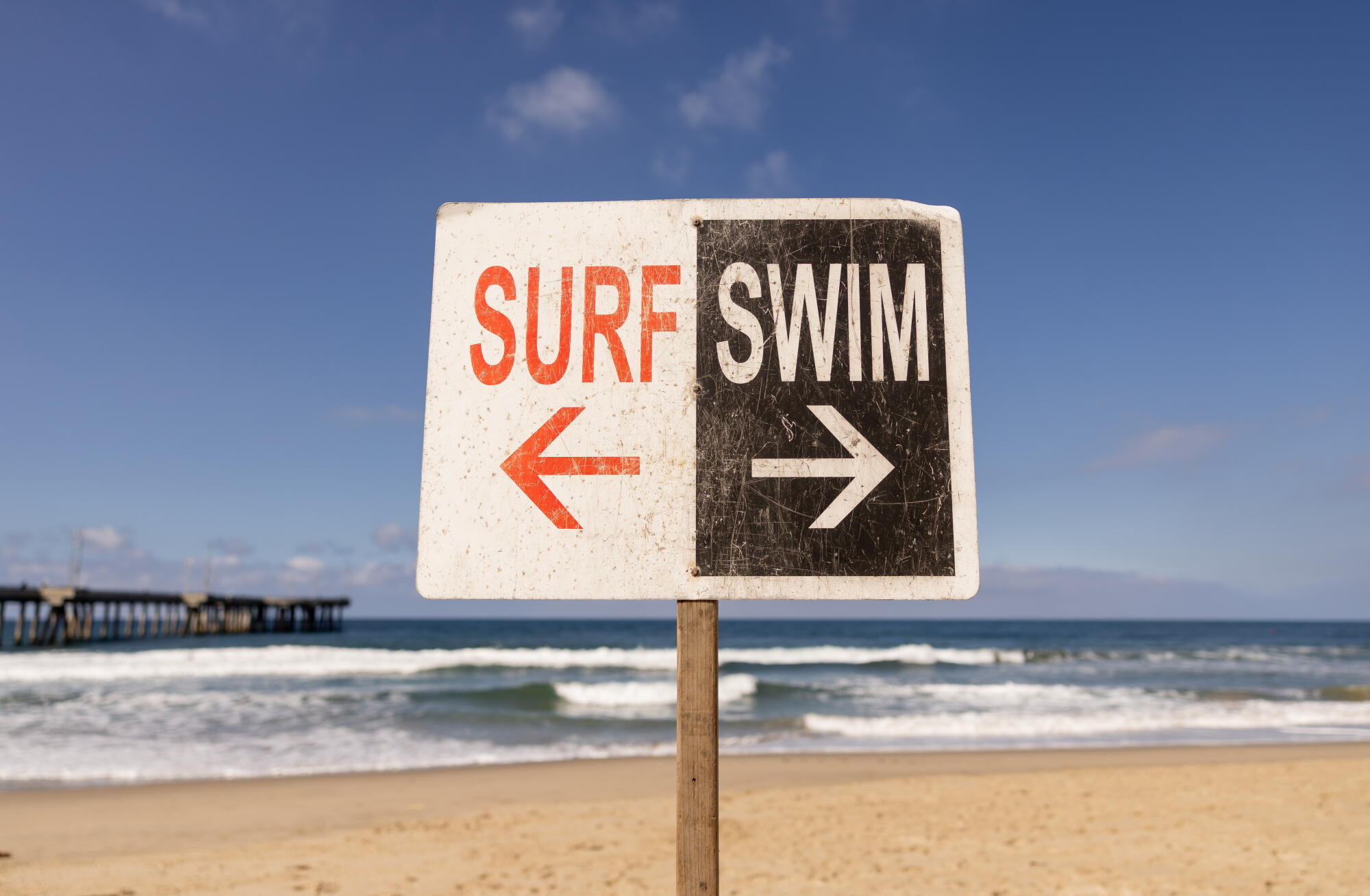
A “Surf Swim” sign greets beachgoers at Venice Beach — a stretch of coast where daily surf reports and grassroots organizing have helped break down traditional surf stereotypes.
(Christina House / Los Angeles Times)
His videos combined informative dispatches with the laid-back vibe of surfer ASMR. “Light offshore wind. Clean, glassy barrels,” he declares softly to the camera as gray waves break behind him. “Lumpy close-out with hollow barrels with low tide, fam.”
At first, the account functioned like a group chat for local surfers. “Friends were asking me how the waves were, and I was texting them. I figured I’d jump on Instagram and start doing it for them,” says Walsh, who has been a Venice resident for 15 years.
What began as a practical update for a handful of friends eventually attracted followers in London, Berlin and Tokyo — people who checked in daily to see whether the surf was firing in Venice Beach. The account has amassed over 10,000 followers, inspiring imitator accounts. “Now it’s just for everybody,” says Walsh. “I built a community around the surf reports. It really blew me away. I didn’t realize that people were so interested.”
His surf reports have made him an unofficial mayor of Venice surf culture, getting recognized at the beach town’s local hangouts like Hinano Cafe and the Cow’s End. “People stop me and tell me they love my surf reports. They don’t even surf, but they see it every day,” says Walsh. “I always tell people I’m very popular between Washington Boulevard, Lincoln Boulevard and Rose Avenue.” His nickname around town is Glenice Venice.
However, the real triumph wasn’t becoming recognizable around Venice — it was finding other queer surfers, something that felt elusive in Walsh’s youth in Southern California. “I had met a lot of other surfers from all over the world and built a queer community of surfers here in L.A.,” says Walsh. “It was pretty awesome.”
Walsh saw an opportunity to use his surf report to not only report on the condition of the ocean — which is especially unpredictable during our current El Niño cycles — but to also create a burgeoning queer space in the Venice surf scene. “I could set up a community-based surf report for everybody, and the fact that I happen to be queer made it a little more unique,” he says. He began to connect with gay surfers, organizing trips with them and building lasting friendships. “It was just a lot of fun, building a little team.”
Later, Walsh became a co-producer and music supervisor of a movie about homophobia in surfing titled “Out in the Line-Up” that premiered at film festivals across the world in cities such as New York, San Francisco and Sydney, Australia. “The movie kind of spoke for itself. It was a worldwide issue — homophobia in surfing.” Since then, Walsh has served on panels about queer people in the surf world. Last June, the film had a 10th anniversary screening in Venice, hosted by the Venice Surfing Assn. “At some point, I brought some diversity to this culture. I put my name on it,” he says.
In recent years, others have joined Walsh’s efforts to create a burgeoning queer surf scene at Venice Beach. In 2020, Shelly Guidera relocated to Venice and noticed that there wasn’t a strong queer presence in surfing. “My friend and I were maybe the only queer people some of these surfers had ever seen,” she says. Shortly after, Guidera started Dream Team Surf, a collective for queer surfers to meet up and build camaraderie.
Its mission is simple. “It’s all of us looking out for each other,” Guidera says. “ Having a team of people makes the experience that much more enriching and safe.”
Surfers ride the waves near the Venice Pier, where Glen Walsh does his daily surf reports.
(Eric Thayer / Los Angeles Times)
Early on, Guidera was inspired by Walsh’s uplifting presence in the Venice surf scene. “This person is respected in the community for what he brings, which is knowledge and insight and fun and flair,” says Guidera. In turn, Walsh has championed Dream Team Surf.
In January 2025, Dream Team Surf hosted a Pride beach party with a banner that read: “Trans bodies belong on the beach.” In some San Diego area beaches, Guidera says, queer representation can still feel like an anomaly. “It’s so funny because it’s like these people have maybe never seen a woman in a bathing suit with hairy legs,” she says. “I’m like, ‘Oh my God, it’s not that deep.’”
Guidera is certified in surf therapy, taking courses through Groundswell Community Project, a surf therapy program that uses surf to promote holistic healing. The mental health benefits of surfing are lifelong, Guidera explains. “Growing up as a swimmer, surfing was a form of play and wellness,” she says. “It eased the brakes on competition and the structure within competitive swimming.”
Group photo of Dream Team Surf, which hosted a Pride beach party.
(Sara Werner)
Even if you don’t shred waves, being in the ocean can promote healing. “To give people access to the ocean that is in and of itself a form of wellness,” she says. “There’s a level of surrender and humility that comes with surfing and that comes with being in nature. … You have to be so present in such a way that makes you a stronger person.”
Like Guidera, Walsh also works as a surf instructor with a similar goal to instill confidence in his students. “I was teaching a lot of people to surf, mostly women who didn’t want a straight man to teach them how to surf because it feels vulnerable enough,” says Walsh. “I try to break down the stereotypes and have a little fun with them and let them become a kid again.”
When done correctly, he argues, surfing can invite expansiveness. “I love seeing people out there. Feel the fear and do it anyway,” says Walsh. “And creating a lifestyle around it — going to different beaches — and meeting friends.”
Poorna Jagannathan has played everything from a ruthless gangster (“Deli Boys”) to an overbearing immigrant mom (“Never Have I Ever”). Now with HBO’s “Lanterns,” she adds an all-powerful galactic android to her acting resume.
Her character’s identity was a secret for much of HBO’s DC Comics series until a reveal in Episode 4 that a rancher’s trophy wife, Zoe Macon (Jagannathan), was, in fact, the deadly Manhunter. Then another great surprise rocked the “Lanterns” universe Sunday when in Episode 5, she is killed by Lantern trainee, John Stewart (Aaron Pierre).
“She is dead, for sure. Maybe …” teases Jagannathan, who had to take a crash course in Green Lantern lore before assuming the role in the eight-episode series from showrunner and co-creator Chris Mundy (“Hell on Wheels,” “True Detective,” “Ozark”).
Jagannathan’s character belongs to an ancient, shape-shifting race created by the Guardians of the Universe as the galaxy’s first police force, but they’ve since gone rogue and are now out to eliminate the human race. Green lanterns are interstellar peacekeepers who wear rings that give them extraordinary powers. When veteran Lantern Hal Jordan (Kyle Chandler) and his mentee Stewart are tasked with solving a murder in rural Nebraska, they trip upon a great mystery that included ferreting out which resident in the small town of Rushville is the Manhunter.
The series has been lauded for elevating the superhero genre while presenting as a gritty crime drama. In this edited conversation, Jagannathan explains the demise of the Manhunter, how she morphed into a comic book villain for the role and what it’s like to feel all powerful at this stage in her career.
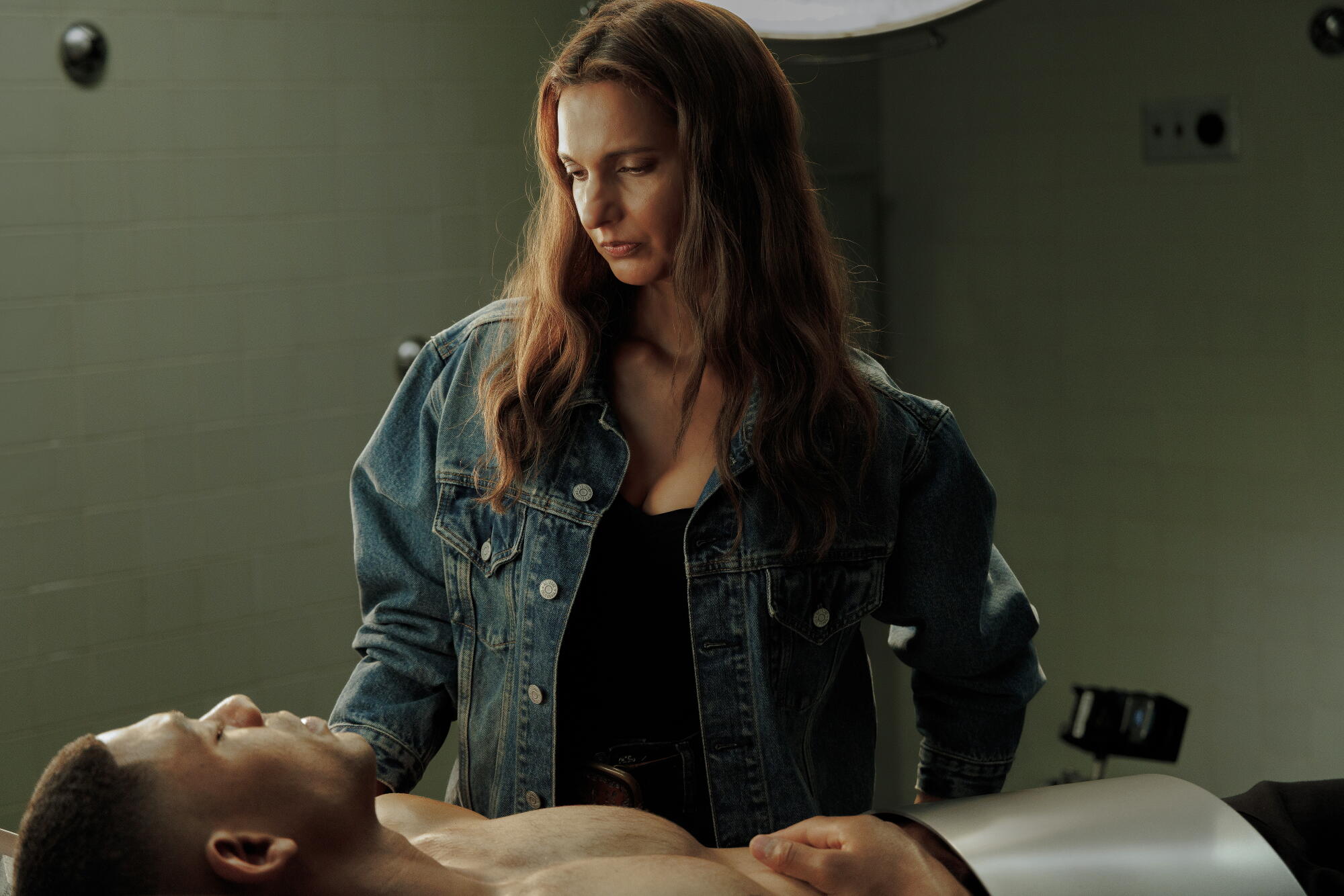
John Stewart (Aaron Pierre) and Zoe Macon (Poorna Jagannathan) in a scene from Episode 5 of “Lanterns.”
(HBO)
How much did you know about the DC universe before taking on this role?
I didn’t understand a lot of this world, but I did grow up on Wonder Woman. I twirled my way into my teens. So at least there’s that. It’s such a huge property, so there’s a lot to learn. But I realized that there’s a lot of similarities between Lucky (the gangster she played in “Deli Boys”) and Zoe. Lucky was originally written for a man. So with “Lanterns,” when I was first reading the script, I just kept looking at the cast of characters and thinking who might it be? I just expected a man would be playing the Maneater.
Maneater?
I mean Manhunter. I kept messing up and saying that when we started working on the show, too. It’s the name of an old Hall & Oates song. [Jagannathan hums, “She’s a man eater… .”]
Explain who or what a Manhunter is.
Manhunters were created by the galaxy as part of a police force, and then they went rogue. They were created to enforce justice, but it was a very particular kind of justice. There was no gray in the Manhunter. No emotion. It was either right or wrong, and they would eliminate what was wrong. But then they started feeling things.
The guardians saw it was an operation that went wrong so they closed it down. She [Zoe] is a sole survivor. She runs away to a place where she adapts quickly to the creatures around her, and learns how to feel. So she’s this feeling machine that battles against her own programming, but at the end of the day she can’t help her programming. When there’s a conflict, she resolves it by killing half the population.
Jagannathan on her character in “Lanterns”: “She’s a sole survivor. She runs away to a place where she adapts quickly to the creatures around her, and learns how to feel.”
(Christina House / Los Angeles Times)
Manhunters morph to fit in with the population around them, but the skin your character chooses is that of a brown Indian woman. She does not look like anyone else in the small, predominantly white town of Rushville. Her explanation of why she made that decision — to essentially not fit in — is really powerful. Can you recall what she said?
I remember that monologue. [John Stewart] asks, “Why did you choose this skin?” I say, “Power.” “How do you conquer a civilization and a people?” You come to it from the outside. “How do you learn about things from the outside?” In your world, you don’t want obstacles, but in my world, I need those obstacles to get a higher vantage point, to see a deeper purpose.
The absolute outsiderness is a relatable point. I did ask Chris about it and he basically said that as an Indian woman in Nebraska, you’re an outsider. You’re already alien. People are not going to ask you a lot of questions. You’re not going to be part of any power structure. So she just is an anomaly, and there’s no more questions around it.
Did you know Zoe would turn out to be the Manhunter when you first auditioned for the role?
No. The scenes that I got were the one at the bar where I’m picking up Stewart, and the scene right before I die, which is [when we’re] in bed and I’m trying to get him to leave. Like “You gotta go or you’ll die!” They didn’t indicate she was extraterrestrial in anyway. There was no E.T. flair to [the dialogue]. It was so grounded that it was easy to inhabit this character. I’m happy because if I had had even an inkling she was the Manhunter, I might have brought an alien touch to the scene. But I couldn’t quite figure out her place in the story. Definitely not during the audition, and definitely not till I read the last [scene].
Your first big breakthrough on American television was in 2016’s “The Night Of.” That was 10 years ago. Now you’re landing all these powerful, commanding and sometimes villainous roles.
I’m telling you, it’s like I couldn’t have imagined a future like this. If you’d asked me back then what kind of role do you want, I’d have no idea. Between Zoe and Lucky, they’re my two favorite TV baddies. Then Nalini (the overbearing mom in “Never Have I Ever”) and Salma (who has an affair with the title character in “Ramy”). All these characters are very strong women.
What is it that you channel to embrace these powerful roles?
The second I turned 50, I just felt an inexplicable comfort in my own skin that I never felt before. A belonging in my own skin. That translates into belonging in different spaces where I could have been uncomfortable in before, so it’s a great time to inhabit these characters. Before I would have really s— myself with a character like Lucky or Zoe, but now it feels a lot more accessible.
1
2
1.Jagannathan as Aunt Lucky in Hulu’s “Deli Boys.”(James Washington/Disney)2.Maitreyi Ramakrishnan as Devi, left, and Jagannathan as Nalini in Netflix’s “Never Have I Ever.”(Isabella B. Vosmikova/Netflix)
Do you see similarities between the characters you’ve played over the past few years?
They’re untethered, powerful women. They will do anything to keep their power. Their north star is power over anything else. Usually with female characters, everything always hearkens back to the family. Zoe is older. She is confident. She weaponizes her femininity right away, and she’s unafraid. She does it with nonchalance. She appears to not give a [damn].
All villains and warriors have an Achilles’ heel, and for female roles in particular, it’s usually sacrificing themselves to protect their family. Family is their kryptonite.
But a character like Zoe is willing to destroy everything, including her family, to keep power. She’s untethered from love and responsibility. You always expect a very masculine force to come in with this kind of power, and the fact that it never does with “Lanterns” is so unique.
You spoke on a “Lanterns” panel at San Diego Comic–Con? Describe the experience.
The [people who come in costume] are better humans than I am. To go somewhere and have your entire family dressed in Spider-Man regalia, roaming the streets of San Diego. It’s a manifestation of pure, unbridled passion from youth then passed down through generations. I wish I too had a passion like that.
“The second I turned 50, I just felt an inexplicable comfort in my own skin that I never felt before,” Jagannathan says. “That translates into belonging in different spaces where I could have been uncomfortable in before, so it’s a great time to inhabit these characters.”
(Christina House / Los Angeles Times)
Were you terrified somebody would ask you a complicated question …
… about Green Lantern?
Yes.
I had to be really upfront and honest and explain that I know so little. It’s Aaron [Pierre] who is really into comic books. He really got into this world. I did speak to a Green Lantern expert as part of the preparation for the role. I do remember him telling me how special John Stewart was in the universe. One of the first introductions of a Black superhero [in mainstream comics] was in Green Lantern, so it holds a very sacred space in comic book history.
Can you talk about your forthcoming Apple TV drama series, “Nocturne.”
It comes out Oct. 30, and it’s basically like if “Silence of the Lambs” was a documentary on Florence Nightingale. That makes it seem so tame, but it’s so, so frightening. The serial killer genre is new for me. I read the book [it’s based on] and had to install a security system in my home. I couldn’t sleep anymore! It’s with Stephen Graham, Liev Schreiber and Zazie Beetz. I play an overworked FBI agent who was brought in to help solve a crime that [law enforcement] initially tried to deal with internally and they messed it up. So they decided they decided to bring in the big guns.
You said earlier that Zoe is an outsider. Did you consider yourself an outsider, too?
Growing up, we moved around a lot. I was literally changing languages every three years. I needed to adapt quickly to whoever was around me, and it often came at the expense of never really knowing myself. You just had to quickly read the society. The language. The gestures. You had to decode quickly in order to fit in.
Even as an adult, I was not fully settled into a point of view until my 40s. That was maybe the allure of acting — getting to show a little bit of my insides through acting. It’s finding out who you might be.
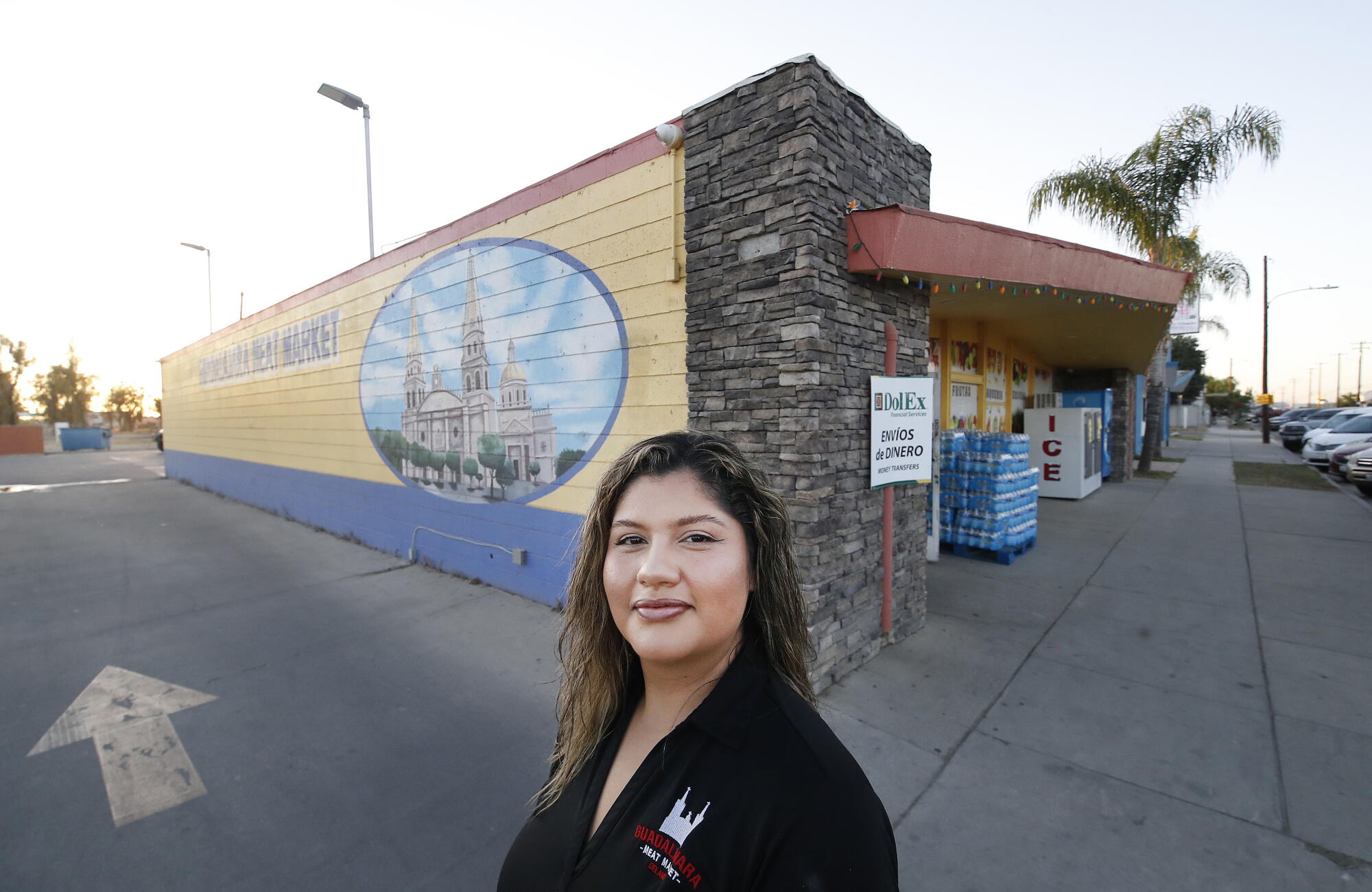
DELANO, Calif. — The rows of candies and nuts at the Guadalajara Meat Market — tamarindo con chile, seasoned pistachios, spicy paletas — sat mostly untouched as customers filtered through this carniceria in the late afternoon heat.
“You see a lot of people consuming the minimum, what they need to get by through the week,” said owner Carina Murillo, 31, as she checked out customers on a recent weekday. “Instead of buying six items, they’re buying three items.”
While customers bypass extras, like the snacks at the front counter, Murillo’s costs have gone up. Imported goods from Mexico and Canada have become more difficult to source and sometimes carry tariffs, she said. Transportation fees have risen as diesel prices respond to the war in Iran. The market’s insurance costs have risen by about a third. All of it has forced Murillo to increase prices.
“You see a lot of people consuming the minimum,” says Carina Murillo, owner of Guadalajara Meat Market. “Instead of buying six items, they’re buying three items.”
As the area struggles, Murillo, a college graduate who years ago felt motivated enough to door-knock for political causes, is among those who have become disillusioned. Those in Washington, she said, don’t understand the lives of the working people who keep the country running.
There have been “years where I feel completely overpowered to the point where I’m not motivated to take part,” said Murillo, who didn’t vote in 2024 but plans to do so in November. “That’s what happens when you feel discouraged or like nothing’s going to change.”
The economic strife plaguing Americans is clear in this rural, majority-Latino Central Valley congressional district, home to the state’smost competitive House race, the closely watched contest between Republican Rep. David Valadao and Democrat Randy Villegas.
Democrats hope the national economic angst will translate into big turnout in the midterm elections, but some in this region worry that years of financial struggle may depress voters’ desire to participate rather than motivate them.
Rep. David Valadao (R-Hanford) presides over a congressional hearing in March. The Republican is in a race against Democrat Randy Villegas that is considered a toss-up.
(Allison Robbert / Associated Press)
And Republicans, who rely on their party turnout beating that of Democrats in rural areas, also face the risk that frustration with the current political climate could dampen enthusiasm.
“Before they can think about Valadao, before Trump or Gavin Newsom or who’s going to run, families are concerned with the immediate: paying the rent, having the food on the table,” said Eliseo Gamiño, who heads the Central Valley Leadership Round Table, a coalition of Latino community leaders and elected officials. “You can’t be thinking about voting when your kids are hungry.”
Few voters who spoke to The Times in this swing district were decided on which party to support in November — or whether to vote at all. Such undecided voters will likely decide the election outcome, and persuading them is the key challenge for both parties as November nears.
Alexa Lopez sweeps up at closing time on a slower than usual Friday that saw one dress sold at Christina’s Fashion in Delano.
In a district that is the third-youngest in population in the country, the simmering uncertainty among Gen Z and millennial voters in particular could affect turnout or results.
Thirty-one percent of its voting-age population is 29 or younger, according to the Tufts University research center CIRCLE, which tracks youth civic engagement, making it among the top swath of House races in which young people could swing the outcome.
California’s swingiest district
The 22nd District, carved from the state’s agricultural epicenter, is one of fewer than two dozen toss-up races nationwide that will likely determine which party controls the U.S. House in the second half of President Trump’s current term. It is also among several high-stakes races nationwide that will test progressive candidates.
Valadao’s seat has long been considered a vulnerable one; Democrats added about 100,000 Fresno residents to the district under Proposition 50’s new map in a bid to help their chances. The boundaries include swaths of Kern, Kings and Tulare counties, along with a very small piece of Madera County.
“It’s going to be crucial in an area that is more purple, more bipartisan, where it’s very clear it can go either way … that these candidates make an effort to get those voters on their team,” said Brittany Martinez, a California-based Republican strategist.
Valadao, 49, who comes from a dairy farming family, is well known in the district and has repeatedly secured victory in close races, retaking the seat in 2020 after losing it in 2018’s blue wave. He saw a close race in 2022, then won by nearly seven percentage points in 2024, outperforming Trump.
His biggest vulnerability this time around may be his vote for the One Big Beautiful Bill Act, which included steep cuts to Medicaid. Local hospitals are bracing for funding cuts, though a carve-out may keep many valley residents from losing coverage. The district has the highest proportion of Medi-Cal recipients of any in the state, with 67% of residents enrolled as of 2025, according to the California Health Care Foundation.
Valadao spent part of the August recess touring the Central Valley for private meetings with local entities including a hospital, a housing program, a sawmill and a school district, and held a telephone town hall last week. Democrats have criticized him for not holding face-to-face voter events, including public town halls.
Democratic candidate Randy Villegas chats with residents during an August town hall in Hanford.
Villegas, 31, a professor and school board member who was endorsed by Sen. Bernie Sanders (I-Vt.) and is aligned with the Working Families Party, bested a Democrat backed by the party’s House campaign arm to win the nomination.
Villegas has banked on a more public-facing approach to win over swing voters — recently handing out popsicles from a pushcart he wheeled around a Labor Day event in Bakersfield, for instance — a strategy his campaign calls “going everywhere.” Republicans have criticized his record as too far left for the moderate district.
Both candidates have attempted to lean away from partisan narratives. Valadao rarely mentions Trump on social media and did not attend the president’s Republican convention in Dallas last week; Villegas has worked to frame the progressive issues he champions as an effort to help Central Valley voters rather than an ideology.
Trump carried the district as drawn now by less than 2 percentage points in 2024. Since then, residents say they have felt squeezed by housing, gas and grocery prices. The war in Iranhas pinched Central Valley farmers — already struggling withwater supply and other issues — by driving up fertilizer prices.
Ailyn Flores, center, picks up balloons for a party at Big Delano Discount store.
Tyler Stidham, 28, and her husband recently moved back to Lemoore from San José with their 1-year-old in order to live with family because they could no longer afford their own place.
“Rent got too high and having a family is expensive,” she said as the couple waited for their order from a food truck at the Hanford farmers market on a recent Thursday evening. They have cut out family trips and started meal-planning and budgeting to save money.
Stidham said she is planning to vote and hoping government leaders can make life more affordable. Her husband recalled a favorable impression of Valadao after once meeting him. Stidham isn’t sure who she’ll be casting her vote for.
“I haven’t done my research [yet],” she said.
Young voters said they felt frustrated waiting for a better economy that has yet to materialize.
“I feel like the government is playing in our face. I feel like everything is a show,” said Emma Woodward, 23, of Hanford.
The Sierra movie theater has closed down in Delano, Calif.
(Gary Kazanjian / For The Times)
A store manager at a coffee chain, Woodward bought a house last year to avoid throwing money at increasingly high rent payments, but it has been “hard to survive.” She got a roommate to help with costs, but the two of them sometimes find themselves using food drives for groceries. She has cut out “fun spending,” including concerts and travel.
Woodward said she wanted to vote in order to send the message to Congress that the economy needs improvement. She, too, wanted to research the candidates further; she leaned toward Villegas but was not yet convinced.
‘Whatever happens happens’
Valadao and Villegas must also battle to reach apathetic voters — those who may sit the election out or who are fed up with both parties. In one indication of voter fatigue, local organizers have found it a challenge to register new voters this year.
Dresses on display at Christina’s Fashion store after closing time on a quiet Friday night in Delano, Calif.
People who are unregistered often express mistrust in the government and the feeling that “nothing’s going to change,” said Biviana Camacho, 23, civic engagement program manager for Loud for Tomorrow, a youth organizing group based in Delano that runs voter registration events.
“A lot of folks have been in survival mode for such a long time,” she added, as the group worked on planning a fall event series on a recent afternoon. Their goal: 20 to 25 new registrations per event.
The group’s head of membership, Rosanai Paniagua, 28, agreed. “Here, there’s not a lot of hope because people haven’t seen what good policy could do for them,” she said. “A lot of apathy, for sure, because change hasn’t really happened here.”
Marco Estrada, 20, taking a break outside the Main Street barbershop where he works in Delano, said he wasn’t sure he could imagine anything Congress could do for him. He’s never voted and doesn’t plan to in November. His two co-workers said the same.
“Whatever happens happens,” Estrada said.
Valeria Valdez, a College of the Sequoias freshman, said she was planning to vote in her first election and said the government should help lower gas prices. The 18-year-old wasn’t sure, though, whether she would make a decision in the House race.
“It feels pretty far away from me, to be honest,” she said. “I just want to do what I can for our community and not focus on how corrupt the government is.”
That sentiment is part of what Villegas is aiming to target as he meets voters.
“It’s easy to feel cynical and apathetic in a moment where so many things seem stacked against us,” Villegas said in an interview. “But I tell people that … their vote and their voices do matter, otherwise we wouldn’t have billionaires and corporations spending millions of dollars trying to influence these election outcomes.”
A spokesperson for Valadao did not respond to a request for comment. Valadao said on a Washington Sun podcast in January that he “absolutely” worries about Republican voter enthusiasm, but noted it was a problem on both sides of the aisle. Earlier this month, he conveyed confidence about his race.
“I’ve won in these types of races. I can win again,” he told the Associated Press. “I think we should be fine.”
Inside Murillo’s market, business picked up as 5 o’clock neared. Murillo rang up tortillas, cuts of meat, and three-liter Mexican soda bottles. She advised a customer about treating a bug bite, helped a man wire money and cajoled a city worker about getting a sidewalk repair.
Congress should “definitely” be helping communities like hers, she said. She plans to research her voting options so she can participate in November. But trusting political candidates, she mused, can feel like a risk for voters.
“Whether they execute what they promise or not,” she said, “that’s shown with time.”
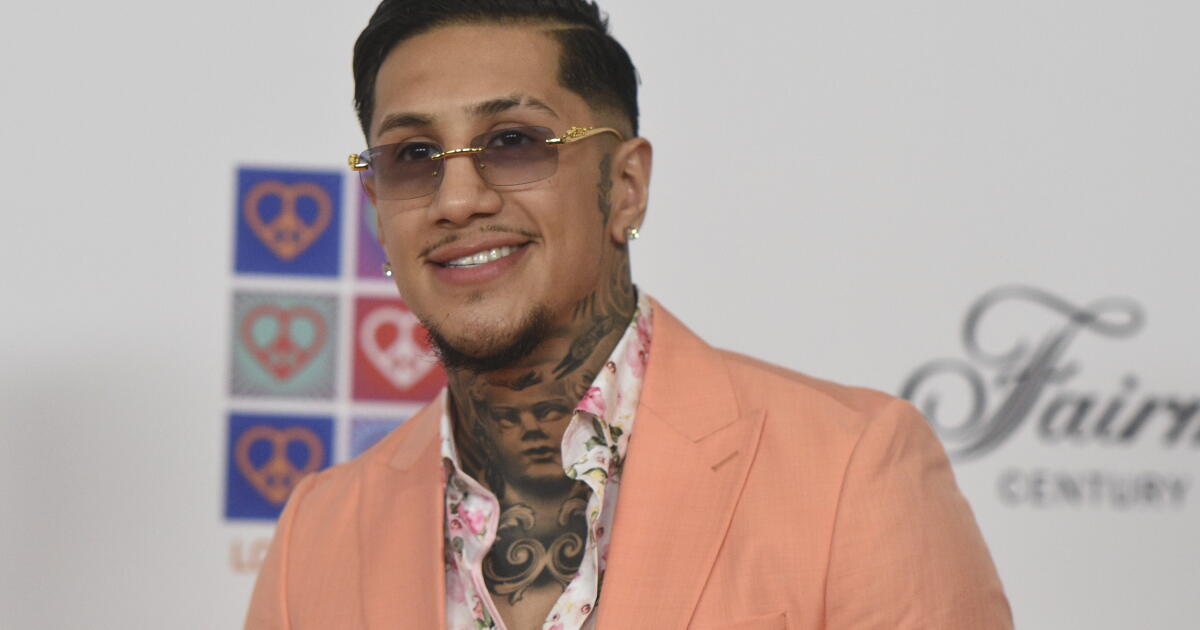
Boxer Fernando Vargas Jr. was arrested on suspicion of DUI following a multi-vehicle collision at a Universal Studios Hollywood parking lot, according to law enforcement and multiple media outlets.
California Highway Patrol responded to the incident on Thursday after receiving a call at 7:51 p.m.
CHP confirmed to The Times that one arrest was made at the scene for “suspicion of DUI.” No other injuries were reported at the scene.
Reports by KTLA confirmed that the 29-year-old was the individual arrested after officers observed “signs of alcohol impairment from Vargas” and conducted a DUI investigation.
Officers took him to the CHP Central Los Angeles Area office. The case will be submitted to the Los Angeles city attorney’s office for possible charges.
Hours before the arrest, Vargas posted a video to Instagram of himself and a woman inside a vehicle, who appeared to be in the passenger seat, TMZ reported.
The super welterweight boxer is the oldest son of two-time middleweight world champion Fernando Vargas. The famed Mexican American fighter from Oxnard — who at one point was the youngest U.S. national amateur champion — also faced legal troubles of his own for his role in a 1999 assault case.
Since fighting his first professional match in 2020, Vargas Jr. himself has built a steady record in the ring with 15 knockouts in 17 wins. His last bout was during the Canelo Alvarez-Terence Crawford card in September 2025, where he lost to Irish boxer Callum Walsh.