lot

Mission League track finals on Thursday will feature lots of speed

Maybe Tom Cruise will make a visit to Sherman Oaks Notre Dame on Thursday for the Mission League track and field finals since he’s the one who said in his 1986 movie, “Top Gun,” that he feels “the need for speed.”

There will be no lacking in speed for the 100 meters, where there are so many runners who have run under 11 seconds this season that a second 100 final could be run if needed. Zion Phelps of Loyola has the fastest time at 10.39. Quincy Hearn of Notre Dame is at 10.52. Jayden Davis of Loyola has run 10.57. And there’s a freshman at Harvard-Westlake, Calvin Portley, who ran 10.69 at Monday’s prelims.

The 4×100 relay also should be outstanding, matching Notre Dame and Loyola. The Notre Dame quartet of Nikko Petronicolos, Quincy Hearn, Beckham Borquez and Emmanuel Pullins has run 40.76. Loyola has a time of 40.73.

Borquez is also a top hurdler and defending state champion JJ Harel of Notre Dame will be in the high jump. Ejam Yohannes of Loyola is one of the favorites to win a state title in the 400.

League finals are scheduled all week, with the Trinity League finals on Friday at 6 p.m. at JSerra.

Southern Section prelims will be held next weekend, followed by the finals on May 16 at Moorpark High.

This is a daily look at the positive happenings in high school sports. To submit any news, please email eric.sondheimer@latimes.com

Source link

Contributor: Carlson’s cautious apology does little to repair Trumpism’s damage

When you break a promise as clear as “No new wars,” you shouldn’t be surprised when even your most loyal supporters revolt. And that’s exactly what is happening to President Trump.

One such disillusioned supporter is Tucker Carlson — who on a recent podcast with his brother Buckley admitted, in essence, “My bad.”

“You wrote speeches for him. I campaigned for him. I mean, we’re implicated in this, for sure,” Tucker Carlson said during the conversation.

“In real ways, you and me, and millions of people like us, are the reason this is happening right now,” Calson confessed, referring to the Iran war. “We’ll be tormented by it for a long time. I will be, and I want to say I’m sorry for misleading people, and it was not intentional.”

Having worked for Carlson for six years at the Daily Caller, I’ve always found him intelligent and funny and generous, even as I have profoundly differed with him on a variety of issues throughout the Trump era.

It did my heart good to hear him accept some responsibility for what Trump has wrought.

A lot of people were complicit in boosting Trump, and some of them have even subsequently criticized him for various sins (failing to release the Epstein files, going to war with Iran, etc.). But this is the first time I can recall anyone of this stature explicitly apologizing for helping elect Trump. And that warrants a certain amount of respect.

Still, let’s be clear-eyed about what Carlson is — and isn’t — saying here. Specifically, it’s worth noting that the apology doesn’t extend to validating those of us who opposed Trump from the beginning.

In fact, it almost can’t.

Doing that would require the confessor to reinterpret not just Trump’s presidency, but also the entire ecosystem that made supporting Trump a viable option in the first place.

It would mean admitting that the framework he used to evaluate Trump was flawed, not just the outcome.

That would end up being perceived as an indictment on the broader Republican electorate — and on Carlson’s worldview and judgment — not just on Trump’s recent performance or (even more conveniently) the notion that Trump has changed or was co-opted by Israel (or whomever) since 2024.

It’s a much bigger ask than saying, “I regret this specific result.”

Specifically, Carlson is not conceding that the “Never Trump” crowd got it right — which is what those of us who have spent a decade opposing Trump (with little fanfare) have been dying to hear for a decade (even more so than “I’m sorry.”)

This is an important distinction, partly because it means that, although Carlson is now a convenient ally in the “resistance,” he is not opposing Trump for the same reasons that most Democrats or Never Trump conservatives oppose Trump.

If you put aside Trump’s decision to go to war with Iran, the Carlsons’ second-biggest criticism of Trump (based on their two-hour-long podcast) is his failure to more vigorously defend the Jan. 6 Capitol rioters.

That’s right. It’s not that he sicced immigration enforcers on immigrants and that they subsequently killed two American citizens. It’s not that DOGE fired lots of good people. It’s not that this president tried to use the Department of Justice to seek vengeance on his political rivals. It’s that Trump — the person who pardoned these people — wasn’t aggressive enough in defending the criminals who stormed the U.S. Capitol while trying to overturn the 2020 election results.

And while there’s no reason to doubt Carlson’s remarks are sincere (he has been a vocal opponent of war with Iran) and meaningful (he’s an influential figure), his comments may also signal something else: a recognition that opportunity awaits.

Consider this: Trump’s political standing is in deep trouble (Trump’s approval rating is down to 33%, according to a new AP-NORC poll).

What is more, Trump’s fading fortunes aren’t just isolated to Trump. As always, there is collateral damage: JD Vance.

Once seen as Trump’s obvious heir, Vance now finds himself in a difficult position, defending the war in Iran and attacking the pope, while simultaneously releasing a book about his Catholic conversion.

In that sense, Carlson’s apology could be less a grudging epiphany than a strategic recalibration. It acknowledges that Trump has gone off the rails but stops short of examining why it was destined to go wrong in the first place.

Carlson gets close to the answer when he tells his brother, “there were signs of low character. We knew that,” but then dismisses it by saying “there are tons of people of low character who outperform their character.”

Without deeper reflection, this apology risks becoming just another pivot — one that has as much to do with positioning as it does with repentance.

And that would be a shame.

It’s easy to regret an outcome. It’s much harder to interrogate the instincts that led you (and tens of millions of Americans) to enable it.

Apologies like Carlson’s won’t close the chapter on this long national nightmare.

Matt K. Lewis is the author of “Filthy Rich Politicians” and “Too Dumb to Fail.”

Source link

How to have the best Sunday in L.A., according to Tig Notaro

Thirty years ago, comedian and actor Tig Notaro didn’t have a clear direction in life, so she followed some childhood friends who wanted to get into entertainment to Los Angeles. Secretly wanting to do stand-up, Notaro decided to try her luck at various outlets in town, which became the start of her successful career.

“I stayed on my friends’ couch near the Hollywood Improv on Melrose, and a couple months later, got my own studio apartment in the Miracle Mile area,” Notaro says. “I love all the options for everything in L.A. — the entertainment, the restaurants. I like to stay active. So many people love the hiking options in Los Angeles, and I’m one of them.”

In Sunday Funday, L.A. people give us a play-by-play of their ideal Sunday around town. Find ideas and inspiration on where to go, what to eat and how to enjoy life on the weekends.

Notaro appears in Season 3 of Apple TV’s “The Morning Show” and is a series regular on Paramount+’s “Star Trek: Starfleet Academy,” as she was on “Star Trek: Discovery.” She’s also a touring stand-up comic and hosts “Handsome,” a comedy podcast, with Fortune Feimster and Mae Martin. The trio will be taping a live show May 4 at the Wiltern with the cast of Netflix’s “The Hunting Wives.” The live shows include interviews, but also “incorporate some ridiculous things,” she says. For example, upon hearing that some of the hosts always wanted to learn to tap dance, Notaro “hired a tap instructor to come to our live show in Austin and teach us how to tap dance in front of the audience.”

Notaro lives near Hollywood with her wife, actor Stephanie Allynne, their 9-year-old fraternal twin boys, Max and Finn, and three cats, Fluff, Linus and Skip. When she’s not touring, her ideal Sundays include sampling vegan restaurants, wandering through bookstores or museums, and doing something physically active with the family.

This interview has been lightly edited and condensed for length and clarity.

6 a.m.: Up with the kids

Because we have active children, we still wake up at 6 a.m. or 6:30 a.m. on Sunday, but there’s not as much of a rush to get going. Stephanie and I will often have coffee and chat in the living room together. I love that part of the day. Stephanie may cook breakfast, but Max and Finn are pretty self-sufficient and can make certain little meals for themselves. Max is really starting to take an interest in cooking, so he’d make breakfast for himself. Our family is vegan, but he eats eggs, so he makes himself an egg sandwich with avocado a lot of times.

9 a.m.: Daily morning walk

After breakfast, we usually have a morning walk around our neighborhood. That’s a daily thing I like to do, regardless of what’s going on. Now that I’m not touring as much, tennis is back on the schedule. So I’d go to Plummer Park in West Hollywood and play for a while, then join the family for lunch.

11:30 a.m.: Hike with a side of chickpea sandwich

I love Trails, a cafe in Griffith Park, where you can eat outdoors. It serves simple food, and has good vegan options. I usually get their chickpea salad sandwich. The food there is great. Afterward, we’d visit Griffith Observatory, where there’s lots to see. There are lots of great trails in the park, so we’d go for an hour hike before leaving.

3 p.m.: Browse the shelves for rock biographies

Bookstores are fun, so we’d head downtown for the Last Bookstore, which is in a historic building with lots of vintage books. I really love all things plant-based, and I’m a very big music fanatic. So I love to look for vegan books, nutrition books, rock biographies and autobiographies. It’s just fun to browse around the stacks.

If we didn’t go to the bookstore, we’d probably go to LACMA. Our sons are huge fans of art and want to go for each new exhibit. They love Hockney, Basquiat and Picasso, to name a few.

4 p.m.: Cuddle with cuties at a cat cafe

We’d then make a quick stop at [Crumbs & Whiskers], a kitten and cat cafe on Melrose for coffee, snacks and to pet the cats. It’s best to make reservations in advance. There’s cats all around the place that need to be adopted. You can visit and pet them, or find a new roommate. I’d love to take some home, but we already have three.

5:30 p.m. Italian or sushi, but make it vegan

We’re an early dinner family. One restaurant we like is Pura Vita in West Hollywood. It’s the greatest vegan Italian food, and for non-vegans, nobody ever knows the difference. It’s the first 100% plant-based Italian restaurant in the United States. They make an incredible kale salad and I love the San Gennaro pizza. It’s got cashew mozzarella, tomato sauce, Italian sausage crumble and more.

Then there’s Planta in Marina del Rey. It’s right on the harbor and you can sit outside and look at the boats coming in and out. They have sushi, salads and other plant-based entrees. They’ve got a really great spicy tuna roll that’s made out of watermelon. They are magicians.

Or there’s Crossroads Kitchen in West Hollywood. They play the best classic rock, and the atmosphere is upscale, fine dining. The appetizers that we always get are called Moroccan Cigars, which are vegan meat substitutes fried in a rolled batter. I really like the grilled lion’s mane steak, their mushroom steak with truffle potatoes, or the scallopini Milanese, that has a chicken or tofu option. I get the chicken with arugula on top. I always love to have a decaf espresso with dessert, which is either a brownie sundae or banana pudding.

7:30 p.m.: Comfort watch or word games

After dinner, the kids often like to watch an episode of “Friends,” a show that all ages enjoy, sports or “The Simpsons.” Or we’d play a game where each of us will add a word to a sentence and create a weird or funny long sentence until one of our sons says period. Then they’ll try and remember the whole sentence and repeat it back.

9:30 p.m.: Bubble bath then bed

The boys usually go to bed at 8:30 p.m. and bedtime for us is 9:30 p.m. Stephanie and I would read or chat. I like to take a bubble bath, if people must know. The best Sundays for me mean finding a good balance of relaxing and being active. I feel very lucky that my family and I can do those things together.


Source link

Dumbfoundead reveals his hip-hop survival story in new book ‘Spit’

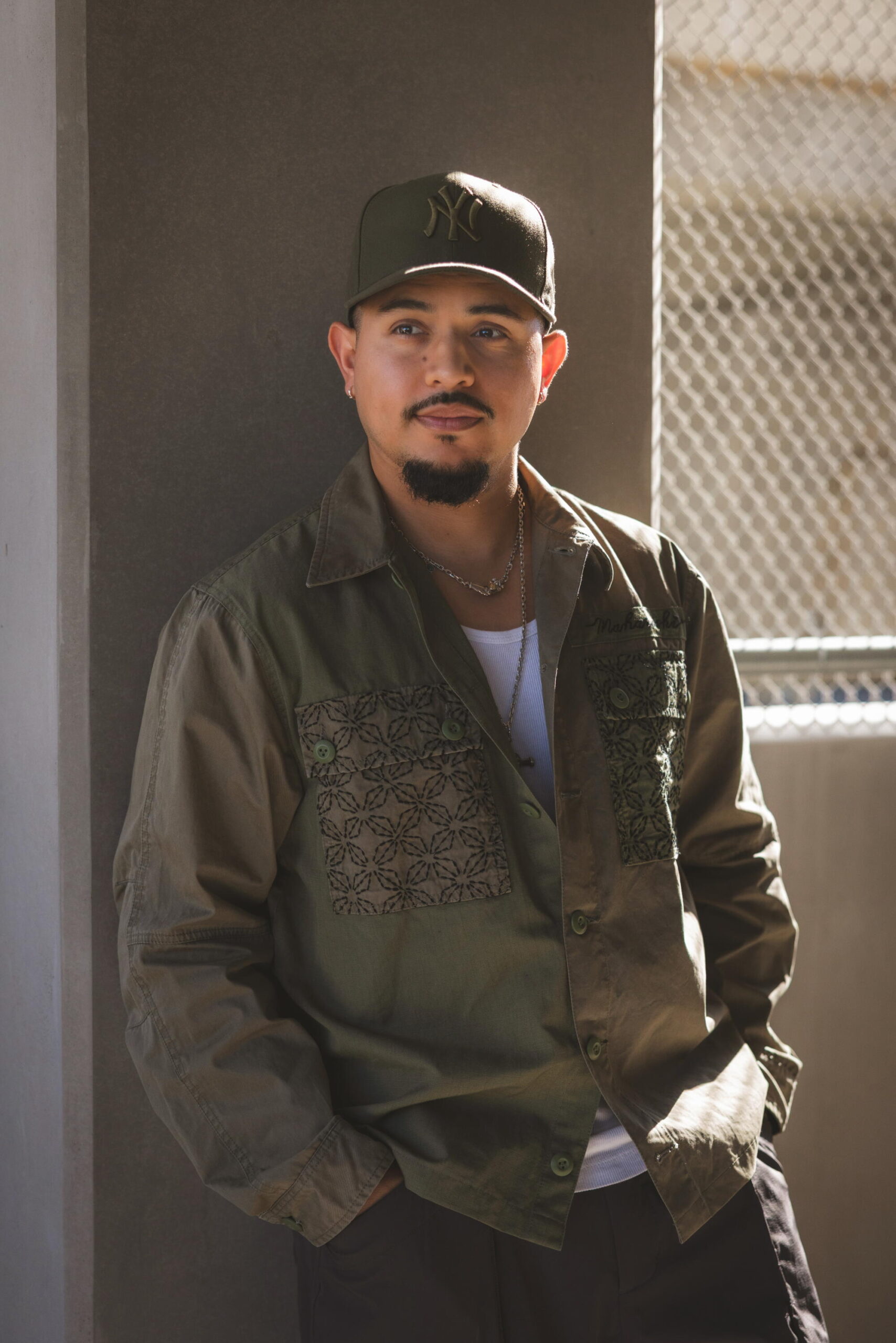
Jonnie Park has always gone by many names. The most Google-able is his hip-hop moniker “Dumbfoundead,” which he’s gone by for decades as a seasoned battle rapper and an artist who’s put out a jaw-dropping 13 albums while becoming one of the kings of legendary Leimert Park hip-hop crew, record label and open mic Project Blowed. As a resident of L.A.’s Koreatown since childhood, he’s still known as “The Mayor of K-town.” To his friends, he’s just “Dumb.” Of all the aliases and titles he’s fought for, “author” might seem to be the most unlikely. But as a professional when it comes to producing scathing hot bars in battle raps, it felt only right to put his journey down the warpath of rhymes on paper in his debut memoir “Spit: A Life in Battles,” released April 14 on Third State Books.

The memoir (which includes a foreword by Park’s longtime friend, R&B star Anderson .Paak) recounts razor-sharp memories starting from childhood, including the harrowing story of his family’s immigration from Argentina to L.A. when he was 3. He talks frankly about the perils and prejudice of growing up Korean American in Southern California and thrusting himself into the hip-hop scene, where, after stumbling in as an outsider to Black culture, he ultimately found his voice on stage. It speaks to the foundation that later served him well as an actor, podcaster, comedian and recently TV writer for season 2 of the hit show “Beef.” But he says his reputation as a battle rapper is the one that will always matter most.

Recently Park spoke to the Times about the hardest parts of writing his new memoir, the importance of Project Blowed and taking his underground rap mentality with him from the gutter to the stars.

For your memoir you purposely take the parts of your life from childhood until about age of 30, the peak of your hip-hop career. What was it like to go back and take that journey again?

To me, it’s always kind of the core of who I am. Even as a multi-hyphenate, I always say I’m first and foremost a battle rapper. It was such a pivotal moment at a time in my life and I take that label with me wherever I go, so it doesn’t feel too distant. But to actually be in that arena feels very distant. I look back and I just think about the audacity of a young Asian kid in that world. I’m just like “Wow, I really had the balls to do this at one point.” And I still love the subculture of battle rap. It’s something I’m a part of and a story that I want to tell in all these other mediums — whether it’s screenwriting or developing a TV show, I still feel like there’s a lot to be done with that subculture.

Why was it important for you to help your readers learn about the technical aspect of battle rap and what it takes to be a battle rapper?

There’s a lot more layers to it than people know. Obviously we know Eminem’s “Eight Mile” was the height of the story of where battle rap got to, and it did a great job of that. Obviously it’s been many years since then. But I also wanted to let people know that the people involved in this subculture aren’t just in poverty trying to make it out and get on a record label. This is a real subculture that people obsess over and I just wanted to find an excuse to nerd about it and also teach people this kind of new era of battle rap. I also highlight some of my peers really deserved it, and including the open mic I went through called Project Blowed. That’s the one thing I love about this book is that I can immortalize some of my personal heroes and places that I hold dear to my heart.

But mechanics of how our brains work when freestyling is something I find interesting. People always ask me “How do you guys freestyle or battle?” And I was really nervous about explaining it. I just didn’t know how I would do that. I had the help of my co-author, Donnie Kwak, who I’ve known for many years. He’s never written a book either, but he’s just kind of like a big brother to me and we’ve had many conversations about this. So being able to break that down was really cool for me. And I still really love that chapter about freestyling and battling for dummies.

Dumbfoundead smiles against a wall

Dumbfoundead’s memoir “Spit” chronicles his rise through underground battle rap, offering deeper insight into the subculture.

(Lenne Chai)

What was it like for you as you were discovering your voice through open mics at Project Blowed?

Project Blowed freed such a big part of me. I think when I saw the other rappers there, and they were taking [rapping] to heights I never imagined, the styles of raps that I would see here, from there, were so unorthodox. At that point, I was listening to everything on the radio along with mix tapes and stuff. But this was not even that. This wasn’t even like the underground mix tapes. It was the most raw and purest form of rap. It was so weird and abstract, even for me, just the young Korean kid at the age of 14 that hadn’t gone south of Pico Boulevard, growing up on Third Street, and all of a sudden I’m on 43rd. It was like another world for me. Next thing I know, I’m immersed in this world where there’s black kids that are into anime, punk rock and rapping their a— off. And I’m like, “This is insane!” So it did a lot for my perception of everything, more than just hip-hop.
Why was it so important for you to kind of showcase your Korean from not only the standpoint of a rapper but also as a writer?

Definitely the Korean American part was very important to me, because we see Korean culture, Korea especially being this global powerhouse, and what we know of it is the “Squid Games,” and the K-Pop of it all. And so I did want to share this more in the perspective of a Korean American. Even more specifically, in Southern California, in Los Angeles, there is a different vibe of Asian American life than the rest of the country. I’m the epitome of that. A lot of our parents have these wholesale businesses downtown or dry cleaners or liquor stores. Growing up in K-town, a lot of Korean families have a dad who’s an alcoholic, and there’s a lot of domestic violence situations. I think through my story, a lot of people will see themselves in these situations.

Cover of Park's memoir "Spit."

Jonnie Park, a.k.a. Dumbfoundead, writes in his memoir about growing up in Koreatown.

(Third State Books)

I think it also just speaks to all the different layers of struggle, battles that you and your family have gone through. Were there any aspects of this book that were really challenging for you?

The hardest part was definitely writing about my father, and knowing that this book is going to be out in the public because it’s so revealing. There’s affairs, there’s businesses that he worked at that are named. These families do exist — I grew up with that family that my dad had an affair with. I don’t talk to them or anything, but it’s all in the book. And I did want to be honest, I just felt like this is a place to do it if I’m going to do it. I don’t know if my dad will read it, but if it ever got translated into Korean, he’s definitely reading it. I still don’t have a great relationship with my father and I just feel like there wasn’t, there’s not much of a closure to that still. And maybe the book will help open up some new conversations between him and I. So that part was a little difficult, and also talking about some of the domestic violence in my house. Growing up with my dad and my mom, it made me feel for my mom a lot.

The beginning and the end is the most difficult part, because the end really discusses kind of like that insecurity as an artist, and where I’m at in my life as an artist, seeing a lot of my friends becoming extremely successful. I really wanted to be honest about that. The book doesn’t necessarily end with me being triumphant and feeling at ease.I still feel that as an artist, and I think that’s why it’s just an ongoing battle.

Describe what that’s like having come out of that underground rap scene and showing your skills to the world in TV and film while holding on to that underground mentality.

Even being in a writer’s room for “Beef” Season 2 — that was my first writer’s room — felt like a cypher. Knowing when to jump into the conversation at the right time, and knowing when to fall back. That just tells you that the skills that I acquired from freestyling and battle rap, I was able to take into the real world and apply it in so many different places.

I think it’s so interesting that I got that “Beef” Season 2 gig because the showrunner and the creator of the show really loves my perspective on Asian American culture on my podcast [“Fun With Dumb”], just based off of that. I got to a place in my life where I just felt very comfortable being vulnerable and self-deprecating through all the things I’ve done in battle rap. I was able to apply it to podcasting, too. And to have that humor and wit and that vulnerability, that comedic sense that I’ve acquired from battling and freestyling, one thing just led to the other. I still have the same kind of slate of stories and ideas that I’ve been trying to get made for many years. That includes stories on battle rap, K-town and being Korean, American. Those are always kind of the things I take with me to whatever I’m trying to make right now, and maybe once I make those, I can move on, but I’m still working on that.

Source link

Stagecoach 2026 ultimate guide: Livestream, set times, weather, tips

Trade the flower crowns and sneakers for a cowboy hat and some boots, because Coachella has moved out of the Empire Polo Club in Indio and the Stagecoach Festival is moving in, April 24 to 26.

Post Malone, who headlined Coachella in 2025 and played a set of country covers at Stagecoach in 2024, is back to headline the country music fest along with Lainey Wilson and Cody Johnson.

From what to know about the festival to how you can watch from home, here’s your guide to Stagecoach.

When is Stagecoach? Where is the venue?

Stagecoach 2026 runs April 24 to 26 at the Empire Polo Club at 81-800 Ave. 51 in Indio.

Who is performing at Stagecoach 2026?

This year’s main stage headliners are Cody Johnson, Lainey Wilson and Post Malone.

You can also expect big sets from Brooks & Dunn, Bailey Zimmerman and more rock-centric acts like Journey, Counting Crows, Third Eye Blind and Bush. Then there’s Ludacris, Pitbull and Diplo, who is bringing back his HonkyTonk dance area as well as performing.

See the full lineup.

Fun fact: Mane Stage performer Teddy Swims played the main stage at Coachella the last two weekends, but we haven’t heard if he’s bringing out David Lee Roth again. And Diplo was also at Coachella with Major Lazer.

What’s new at Stagecoach this year?

The big thing is the new Mustang Stage. Back in the early years of Stagecoach, there was a tent with the same name that featured a lot of cowboy poets and bluegrass. It was much smaller than what we’re expecting of this new one, which is set up where the massive Sahara Tent is during Coachella.

Anyone who has tried to see one of the big artists over at the Palomino Stage during Stagecoach in recent years knows how it can easily overflow, so this should ease some of that congestion for artists like Journey, Hootie & the Blowfish and the Red Clay Strays.

It’s also taking over the late-night sets with Diplo, Pitbull and Ludacris that had previously been done at the Palomino.

Can I still get tickets to Stagecoach? How much are passes?

Yes, there are still passes available for Stagecoach 2026. A general admission three-day pass is $619. (There’s also a deal if you buy a six-pack of GA passes that comes out to $569 per pass.) You can get a GA combo pass that includes shuttle transportation starting at $699. There’s also a GA pass that gets you access to the Rhinestone Saloon adjacent to the Mane Stage and the Rose Garden Saloon next to the Palomino Stage for $974.

If you want to get close to the Mane Stage, a Corral Standing Pit pass is $1,899. Corral reserved seating runs from $1,199 to $2,299. The chairs are folding camping chairs, and the highest tier option has drink holders. If you purchase any of the seating options, you can take the chair home as a souvenir Sunday night. Corral passes (standing or seated) come with access to the more exclusive Corral Saloon as well as the Rhinestone and Rose Garden Saloons.

You can buy tickets at stagecoach.com/passes.

What’s the difference between general admission and Corral passes?

Stagecoach is different from Coachella in that if you want to be close to the largest stage, you will need to pay for a Corral pass. Those in the Corral Standing Pit will be the closest.

If you have a GA pass, be prepared to just see the biggest acts on a screen. For Stagecoach, there are multiple screens set up in the field for the general admission areas — and usually a feed with a screen over by the Beer Barn, too.

GA passholders who are willing to stand typically have access to an area closer to the Mane Stage than those with blankets or low-backed lawn chairs.

That being said, GA passholders have traditionally been able to get up close at all of the other stages.

When does Stagecoach release set times?

Stagecoach set times are already posted. Similar to Coachella’s surprises, the festival recently announced that Dan + Shay are on the bill for Friday on the Palomino Stage.

When do gates open at Stagecoach? How late does the music go?

The parking lots open at noon daily and the gates open at 1. Everything ends at midnight or earlier.

People run with lawn chairs across the field at Stagecoach

As the venue opened, country music fans made a run across the field to secure good concert-viewing positions on the first day of Stagecoach in 2022.

(Allen J. Schaben / Los Angeles Times)

What’s the deal with parking? What about the shuttles? Can I take a rideshare? How’s traffic?

Who says you can’t get anything for free anymore? Day parking is free at Stagecoach.

Like I recommended for Coachella, drop a pin in your phone as soon as you park so you can find your car at the end of the night.

There is a rideshare lot. You can also purchase a shuttle pass for $130. There’s also preferred parking for $299.

Stagecoach doesn’t have as many people as Coachella, so the traffic usually isn’t as bad, but Monday can get congested as people head home from the desert.

If you want to avoid traffic or you’re looking for some off-site adventures during Stagecoach, check out these 14 fun desert side quests.

Where do I put my stuff? Are there lockers? Is there a place to charge my phone?

Stagecoach still has medium-sized lockers available to rent. They are $84 for the weekend and you can reserve them in advance. Small charging lockers for devices are $74 for the weekend.

Backpacks 18” x 13” x 8.5” or smaller are allowed inside the venue.

Beyond the charging lockers, there are places around the grounds where you can charge your own devices. Bring your own cable/plug.

A man drinks a beer from a women's boot  at Stagecoach

A man drinks a beer from a woman’s boot while watching Willie Nelson & Family perform on the Mane Stage on the second day of Stagecoach 2024.

(Allen J. Schaben / Los Angeles Times)

What’s the weather going to be like for Stagecoach and how can I prepare for it?

It’s looking like we’ll hit a high of 90 degrees on Friday, 81 on Saturday and 78 on Sunday, according to Accuweather. The lows will dip into the 50s, though, so you might want to throw in a long-sleeved flannel shirt or hoodie for when the sun goes down and Brooks & Dunn sing about dancing under a neon moon. Since blankets and towels (50” x 70” max) are also allowed, you could also roll yourself up into a Stagecoach burrito, I suppose.

You can also bring in handheld fans (paper or battery-powered).

Plastic personal-sized water misters are allowed in, too, but they have to be empty when you get there.

The wind doesn’t look too bad right now, but it will inevitably kick up. Don’t bring a cough home as a souvenir. Bring a face covering like a bandanna or a PPE mask.

The desert is hot. Are there water stations?

I know lots of people enjoy the beer at Stagecoach, but it’s not the same as water. My mantra in April is dehydration is serious business. And if you’re drinking beer, you definitely want to keep drinking water.

The good news is that there are multiple refill stations around the grounds, and if you need to buy a bottle of water, it’s only $2.

Like Coachella, you can bring in an empty refillable container, but it needs to be plastic (no metal or glass) and 64 ounces or less. Empty hydration backpacks are allowed, too.

For a free boost of electrolytes, the Electrolit booth is back with free samples between the Mane Stage and Diplo’s HonkyTonk. (Pro tip: I stopped there every day on my way in during Coachella. Hydrate early, hydrate often.)

What’s the deal with food at Stagecoach?

If you like barbecue, you’re in the right place. There’s a whole lot of it at Stagecoach. Flavortown also comes to Stagecoach with cooking demos throughout the weekend courtesy of Guy Fieri and friends.

There are a fair number of vendors that were also at Coachella, including Prince St. Pizza, Irv’s Burgers, Love Hour and Oh My Burger, the latter two of which impressed Danielle Dorsey, one of our food editors, at Coachella this year.

If you’re buying food on site, plan on $20 and up for most entrees, with a few deals to be had.

If you’re looking for freebies, the Electrolit and Coca-Cola installations are still there from Coachella and Monster Energy also has a space where it’s giving out samples. (Monster Energy also has a meet and greet with Redferrin after his performance on Saturday and a surprise DJ set on Sunday.) As for free food, sometimes they pass out samples to the crowd after the Guy Fieri demonstrations.

What else can I do while I’m in the desert? Is there time to do anything outside of the festival?

I’m glad you asked. Earlier this month, we put together a collection of side quests around the desert. Some, like snapping a photo of the Forever Marilyn statue in Palm Springs or seeing the former Coachella festival art installation “Sarbalé Ke,” are easy to do before entering Stagecoach for the day. Others are more involved and can be a great way to miss that traffic coming back on Monday.

If you’re looking for more options, we’ve got a Gen Z guide to eating, drinking and shopping in Palm Springs and restaurant critic Bill Addison recently updated his dining guide to Palm Springs.

How can I watch Stagecoach from home?

In recent years, Stagecoach has been streamed on Prime Video, Amazon Music and Twitch.

The streams start each day at 3 p.m. Pacific. There are two channels set up.

A specific schedule hasn’t yet been announced, but a press release from Amazon says the stream will include sets from Cody Johnson, Lainey Wilson, Post Malone, Third Eye Blind, Avery Anna, Ludacris, Michael Marcagi, Pitbull, the Red Clay Strays, Wynonna Judd and Diplo.


Source link

Rams’ Sean McVay says Puka Nacua is ‘doing really well’ after rehab

Star receiver Puka Nacua will fully participate in voluntary offseason workouts, the Rams are getting closer to another contract adjustment with quarterback Matthew Stafford, and coach Sean McVay and general manager Les Snead hope backup quarterback Jimmy Garoppolo decides to put off retirement and return for a third season and possible Super Bowl run.

McVay and Snead addressed those topics and the NFL draft on Tuesday during a videoconference with reporters.

Nacua led the NFL in receptions last season but also was involved in a string of off-the-field incidents the last few months, including an alleged biting incident that led to a civil lawsuit. Those situations put the brakes on any immediate discussion between the Rams and Nacua about a massive extension for the fourth-year pro.

In March, Nacua began a rehabilitation program in Malibu, but he was present for the first day of workouts on Monday.

Nacua, 24, “looks great” and is “doing really well,” McVay said. McVay declined to detail discussions he’s had with the All-Pro, who was a finalist for NFL offensive player of the year.

“He and I have a great relationship,” McVay said. “Feel really good about kind of the direction we’re going.”

Stafford, 38, led the Rams to the NFC championship game last season and is the reigning NFL most valuable player. According to overthecap.com, he is due to carry a salary-cap number of $48.3 million this season.

But Stafford has no doubt demanded, and will receive, a raise and a possible additional year in a deal that the Rams acknowledged two years ago is essentially a year-to-year situation.

“Progress has been made,” Snead said of negotiations.

There is no timeline, Snead said, “but don’t expect any drama, per se.”

Garoppolo, 34, has backed up Stafford for two seasons, and he has been invaluable.

Last year, with Stafford sidelined for training camp because of a back issue, Garoppolo ran the offense and prepped the defense with a skillset honed during a 12-year career that included a Super Bowl appearance. Stafford joined workouts before the season and remained healthy throughout, but Garoppolo was perhaps the most valuable insurance policy in the NFL.

Last season, Garoppolo played on a one-year contract and earned $4.5 million, according to overthecap.com.

McVay expressed confidence in fourth-year pro Stetson Bennett, but said he was hopeful that “when the time is right,” Garoppolo will “change his mind,” and return.

“You leave the door open,” McVay said when asked if there was a point that Rams would press Garoppolo to return. “I don’t think you want to press. What you don’t want to do is ever force a guy to play if in his mind he’s ready to move on.

“But you don’t want to minimize that, ‘Hey, if you do decide you want to play, let’s make sure it’s here with us.”

The Rams have the 13th pick in the NFL draft, which begins Thursday in Pittsburgh. They have one pick in the second and third rounds, one in the sixth round and three in the seventh.

Receiver, offensive line and edge rusher are among the positions the Rams could address with their first top-15 pick since they selected quarterback Jared Goff with the No. 1 pick in 2016.

“There’s a lot of possibilities,” McVay said. “We don’t control what happens in those 12 picks before, and so what we’ve done is a lot of contingency planning and a lot of conversations, and feel really good about that.”

Source link

Mira Costa boys volleyball gets revenge against rival Redondo Union

Serving, blocking, passing and hitting.

Mira Costa put it all together over the final three sets of its Bay League boys’ volleyball showdown with Redondo Union on Monday night, prevailing 26-28, 25-13, 25-18, 25-22 to avenge a five-set loss in the teams’ first meeting and stake its claim for the No. 1 seed in the Southern Section Division 1 playoffs.

“Last time we didn’t think they were as good as they were, but we’ve watched a lot of film since then and saw where they like to go,” said outside hitter Mateo Fuerbringer, who finished with a match-high 27 kills and four of his team’s nine aces. “We didn’t pass that well in the first set, but after that we started spreading the ball around more and our serving was really good tonight. We got them out of system a lot.”

Colby Graham had nine kills and three blocks and ended each of the middle sets with a kill as the Mustangs (31-2, 7-1) totaled 15 stuff blocks. Wyatt Davis added eight kills and three blocks and Enzo Barker finished with five kills and two aces.

Redondo Union’s Vaughn Flaherty, left, and JR Boice try to block a hit from Mira Costa's Colby Graham.

Redondo Union’s Vaughn Flaherty, left, and JR Boice try to block a hit from Mira Costa’s Colby Graham.

(Steve Galluzzo / For The Times)

Mira Costa snapped Redondo Union’s 18-match winning streak and evened up the league standings, but the Mustangs gained the tiebreaker by virtue of fewer sets lost head-to-head.

Mira Costa saved three match points in the first set before Mavrick Essert ended it with one of his eight kills for the visiting Sea Hawks (26-3, 7-1). His older brother Cash Essert had 11 kills and JR Boice added 10 but Redondo Union was unable to maintain its momentum, never leading once in the last three sets.

Redondo Union keyed on Fuerbringer to win the first encounter 27-25, 21-25, 25-22, 21-25, 15-13 on its home court March 26, but Monday’s match was a different story as Mira Costa varied its attack to keep the Sea Hawks on their heels.

“We were gassed the first time because that was right after we played Loyola,” Mustangs setter Jake Newman said. “Loyola took a lot out of us even though we won. So we weren’t prepared for Redondo, but this time around we had two weeks to practice and study their tendencies.”

Mira Costa libero Dane Del Riego returns a serve in a four-set victory over Redondo Union.

Mira Costa libero Dane Del Riego returns a serve in a four-set victory over Redondo Union on April 20, 2026.

(Steve Galluzzo / For The Times)

Newman said closing the match in four sets was critical.

“At 24-22 we were telling each other we have to win, we’re not letting this go five,” he said. “We needed to beat them in four for the league championship.”

Mira Costa lost to Corona del Mar in tournament play early in the season but has since defeated the Sea Kings twice. It also has victories over Huntington Beach, Loyola and Newport Harbor — all of which will likely make the highest division.

Redondo Union won its own Varsity Invitational tournament Saturday, rallying to beat Loyola in the finals, and swept Newport Harbor at home March 21.

Coach Greg Snyder praised the Mustangs for executing the game plan to near perfection but warned it may not be the last time they have to face their archrival.

“That’s a really good team we just beat … we could very well see them again the playoffs,” he said. “I wouldn’t be surprised if that happens.”

Source link

Angels’ World Series hero, taciturn slugger Garret Anderson dies at 53

Garret Anderson, the often misunderstood and always lethal Angels slugger who starred in the 2002 World Series, has died of a heart attack. He was 53.

Anderson’s most memorable moment was belting a decisive three-run double in Game 7 of the only World Series ever played by the Angels. Yet consistency over 17 seasons — 15 with the Angels and one each with the Dodgers and Atlanta Braves — was the hallmark of the taciturn left fielder.

“The Angels Organization is mourning the loss of one of our franchise’s most beloved icons, Garret Anderson,” owner Arte Moreno said Friday in a statement. “Garret was a cornerstone of our organization throughout his 15 seasons and his stoic presence in the outfield and our clubhouse elevated the Angels into an era of continued success, highlighted by the 2002 World Series Championship.

Angels' Garret Anderson runs with the World Series championship trophy.

Garret Anderson, who hit the game-winning three-run double, runs with the World Series championship trophy after the Angels beat the San Francisco Giants in Game 7 of the World Series in Anaheim on Oct. 27, 2002.

(Kevork Djansezian / Associated Press)

“Garret will forever hold a special place in the hearts of Angels fans for his professionalism, class, and loyalty throughout his career and beyond. His admiration and respect for the game was immeasurable.”

Nicknamed “G.A.,” Anderson is the Angels leader in games (2,013), at-bats (7,989), hits (2,368), total bases (3,743), extra-base hits (796), doubles (489) and runs batted in (1,292). And he achieved it all without fanfare.

“Garret didn’t seek the limelight,” said Mike DiGiovanna, The Times’ Angels beat writer throughout most of Anderson’s career. “A classic lunch-pail guy. He was a superstar, he just didn’t act like it.”

Fans occasionally booed Anderson for a perceived lack of hustle. He didn’t dive for fly balls and on rare occasions failed to run hard when he hit a ground ball.

His teammates, however, backed him without hesitation, saying he was one of the smartest players in baseball and made the game look easy through hard work.

“He doesn’t dive for balls because he gets there quicker than most guys,” center fielder Darin Erstad said in 2003.

Fans cheered in shock when Anderson made a diving catch against the Minnesota Twins in 2002.

“But, see, that’s what I’m talking about,” he said. “I never should have had to dive for that ball. I got a bad jump. I study hitters. I have an idea of where the ball is going. I don’t dive because I don’t have to.”

The Angels' Garret Anderson watches the ball after hitting a two-run homer.

The Angels’ Garret Anderson watches the ball after hitting a two-run homer against the Toronto Blue Jays in the seventh inning of a game in Anaheim on July 4, 2008.

(Mark Avery / Associated Press)

Anderson’s understated demeanor fit well in an Angels clubhouse stocked with young, rowdy personalities.

“We have so many emotional guys on this team, Garret is a calming force,” teammate Tim Salmon said in 2003. “He’s criticized for a lack of emotion, but I think it’s good.”

For his part, Anderson possessed a wry sense of humor and wasn’t above poking fun at himself.

“Interesting,” he told The Times Bill Plaschke with a faint smile. “I used to be called lazy. Now that we win a World Series, I’m called graceful.”

After Anderson retired in 2010, he worked as a television analyst for the Angels.

Garret Joseph Anderson was born June 30, 1972, in Los Angeles. He attended Granada Hills Kennedy High, where he starred in baseball and basketball. He remained close to his baseball coach, Manny Alvarado.

“I’ve lost a handful, some of them at a young age, but this one we had a relationship for a long time,” Alvarado said Friday. “I have a ton of memories, some of them from day one and some just recently. The one thing that comes to mind he was kind of an old soul. A lot of major leaguers have a lot to learn from him.

“He was very humble and always picked up the phone. He made it to a lot of alumni games, was very generous.”

Anderson was drafted in 1990 by the Angels in the fourth round and made his major league debut July 27, 1994 versus Oakland before going on to become one of the most productive players in franchise history.

Anderson had a stretch of eight consecutive seasons appearing in at least 150 games for the Angels and played in at least 140 games in 11 of his 17 major league seasons. He was inducted into the Angels’ Hall of Fame in 2016.

“Teammates and fans came to appreciate him for his consistency,” DiGiovanna said. “He was like a metronome.”

In addition to his World Series Game 7 heroics, Anderson batted .300 with four doubles, two home runs and 13 RBIs during the 2002 postseason. He finished fourth in American League Most Valuable Player voting that year.

In 2003, he became the first player since Cal Ripken Jr. to become both the Home Run Derby champion and MVP of the All-Star Game. Anderson batted .293 with 287 home runs in his career.

His final season came with the Dodgers in 2010. At age 38 he batted only .181 but provided a settling influence on young Dodgers stars Matt Kemp and Andre Ethier.

The Angels will honor Anderson by wearing a memorial patch on their jerseys the rest of the season. There will be a moment of silence and a tribute video before Friday’s game.

Anderson is survived by his wife, Teresa, daughters Brianne and Bailey and son Garret “Trey” Anderson III.

Times staff writers Eric Sondheimer and Bill Shaikin contributed to this story.

Source link

‘Beef’ creator breaks down Season 2’s story about couples, class and revenge

There’s a couple somewhere in Los Angeles who unknowingly inspired the second season of “Beef.”

Lee Sung Jin, the creator of Netflix’s anthology drama that swirls in the consequences of class struggles, resentment and the absurdity of life’s curveballs, once again found himself inspired by a tense interaction playing out before him. A road rage incident at a stoplight in Hollywood a few years ago, triggered by Lee’s delayed response to a green light, became the catalyst for the first season. An early idea to write about a men’s doubles partnership gone awry lost its luster after “Challengers,” Luca Guadagnino’s drama about a love triangle between tennis pros, came out. But a heated argument coming from a house in Lee’s neighborhood became the next spark that lit a narrative fuse.

“I told the story to people — it caused a little stir in the neighborhood,” he says. “And what I found fascinating was the different reactions. When I told younger folks, I’d get, ‘Did you call the police? Should you go check on them again?’ Very concerned, having an ideological view on relationships. When I told the story to older friends and couples, they were just kind of like, ‘Who among us hasn’t?’ I thought the idea of juxtaposing these couples at different stages felt like ripe ground.”

The overheard in L.A. moment inspired the eight-episode season,

A man and woman on a couch look at a man and woman sitting in chairs in front of them

Carey Mulligan and Oscar Isaac square off with Charles Melton and Cailee Spaeny in Season 2 of “Beef.”

(Netflix)

The twist-filled, darkly comic thriller kicks off when a young couple, Ashley and Austin (Cailee Spaeny and Charles Melton), who work at a Montecito country club, witness the explosive altercation between their boss Josh (Oscar Isaac) and his wife, Lindsay (Carey Mulligan), an interior designer, the night before the club’s new Korean billionaire owner, Chairwoman Park (Youn Yuh-jung), takes over. She has her own mess to tend to involving her husband (Song Kang-ho), a doctor whose health is affecting his work on patients. The calamities each couple faces spin out into a web of favors and coercion in this tale of broken systems and characters going to great lengths to get what they want.

“The idea of cycles felt interesting,” he says. “A lot of shows and movies cover marriage through the lens of one couple, you don’t really see that multigenerational juxtaposition.”

Speaking from his office on the Raleigh Studios lot in Hollywood, Lee discussed the season’s Montecito setting, the financial anxiety that drives the story and the four-legged breakout star of the show. These are edited excerpts from the conversation, which includes many spoilers.

Why did you want to set this season in Montecito?

Just writing what I know. My goddaughters — their parents are my best friends. They live in Montecito. The dad is my oldest friend in LA. He has a membership to Montecito Club, which is where we shot the exterior of our show. I was house-sitting for him during the writing of all this. He let me use his membership. I remember when he told me about the membership, I was like, “You pay how much? That’s insane, dude.” But then you start using the membership. This idea of hedonic adaptation — how humans so quickly adapt to this new comfort, this new stimulus — it felt like an interesting thing. I was observing how all the members seemed to be mostly boomers and Silent Gen; then all the workers were Gen Z and millennial. I thought: What a perfect metaphor for society right now. No matter how hard the Gen Z and millennials work, they’re never going to get to be members of this club because, as Austin says, “everyone grabbed the bag before they could.” That’s what made me want to set it at a Montecito country club.

A man, gripping a gold club in the air, and a woman have startled expressions while looking out a window
Inside a car, a man grips a steering wheel while he and a female passenger look out the driver's window.

Oscar Isaac as Josh Martin and Carey Mulligan as Lindsay Crane-Martin. Cailee Spaeny as Ashley Miller and Charles Melton as Austin Davis. The second season of “Beef,” follows the two California couples from different socioeconomic backgrounds — though both are struggling — as they spiral into a high-stakes feud. (Netflix)

That feeling of survival and resentment and entitlement really looms over this season. There’s speeches about love, but also capitalism. The anxiety about finances is so prevalent right now.

We certainly didn’t set out to make a season about capitalism. But if you’re constantly trying to chase truth as writers, I don’t know how you say anything in the modern era, in 2026, and not have capitalism be a huge variable because it permeates every aspect of life. It’s like going to get gas. Gas is almost $7 right now. You have to fill your tank and there goes $140? That’s crazy. And relationships face so much stress — everyone is being hit by all these curveballs and trying to keep your head above water — how can you enjoy each other?

It became very obvious to us that if you’re going to write a season about marriage and love to these two couples, financial implications have to be a big factor. There’s a lot of talk about the disappearance of the American dream right now. Birth rates are declining. No one’s owning homes anymore. But then you also see headlines about everyone’s scamming. CVS has everything locked down. You’re like, “Yeah, no wonder.” Everything’s connected. We wanted to really show how that survival instinct, the desperation, is starting to come for everyone. I don’t think it’s going to get easier, especially with AI moving on the horizon, and with leaders who refuse to put checks and balances in place.

Part of Ashley’s story is using the video of the fight between Josh and Lindsay as blackmail to get health insurance so she can afford treatment for her endometriosis. And that moment where she’s waiting in the ER for hours and it’s not until she collapses that they realize she needs emergency surgery — her big concern is whether she has to pay the deductible.

I wrote that episode in a literal day because it was based on an experience I had in an ER with my daughter’s mother. She had this illness fall upon her. We spent 12 hours at the ER and, the whole time, I had my Notes app out and was just writing down everything I saw. Almost everything in that scene is stuff that happened in real life. Our healthcare system is absolutely insane. It’s, again, unhinged capitalism and … felt like it really unlocked so much of the season.

There’s a moment where Josh has to sell some of his prized possessions to pay a gambling debt. Have you been there, needing to sell things to cover your financial obligations?

I’ve been there multiple times. I obviously struggled to find my way for a long time, even after becoming a writer. If you’re in a writing partnership, in a staff job on a show — first of all, this is what the guild has been fighting, trying to get these longer-term employment windows because these jobs sometimes are only … maybe eight to 12 weeks. You’re splitting a staff salary in two [if you’re in a partnership], and you probably haven’t qualified for health insurance by the end of that run. Sure, you’re a working writer, but I remember [by the time I landed at] “Always Sunny in Philadelphia,” my first real writing job, I had amassed so much debt, half of which were from parking tickets. I just didn’t have the money to pay these tickets, and so I just let them run rampant. So, yeah, I’ve been there. There’s this one guitar that I loved; it was the first guitar I bought with my own money after college — it was a Fender Telecaster. I think I bought it for $1,200. I ended up selling it for $300. I’ve sold collectibles. I’ve sold anything that had gold in it. I’ve scrapped to just find anything because you’re desperate.

A man and a woman sit facing each other in front of a large window

Song Kang-ho as Dr. Kim, Youn Yuh-jung as Chairwoman Park in “Beef.” Recalling the opportunity to direct the pair, Lee says: “It just makes me feel like a little kid again. It stops feeling like work and starts feeling like play.”

(Netflix)

You directed this season. Is there a moment that stands out with this cast?

A peak of my career that I think about daily is the moment in Korea where we were shooting at Amorepacific. It’s one of the most beautiful buildings in Seoul. I’m shooting the scene between the great Youn Yuh-jung and the great Song Kang-ho — two of not only my favorite Korean actors, but favorite actors period. They have never been in a scene together in any Korean film ever. They’ve been in a movie together, but never acted together. And here we are making Korean history by having them shoot that breakfast scene and, while I’m in the middle of shooting that scene, director Bong Joon Ho surprises us on set. He comes over laughing, pulls up to me, looks at my monitor, gives me stage fright, then elbows me and says, “You sure you want to frame it like that?” He was teasing. Then we started shooting the scene, it’s all in Korean, and I look back at video village and Bong’s just doubled over in laughter. He is just cracking up. Younger me, and present me, is looking around like: Here I am in Korea, in this building I’ve always wanted to shoot in, two of the greatest living actors and the greatest living director — what is happening? What a crazy sentence to say. It just makes me feel like a little kid again. It stops feeling like work and starts feeling like play.

How did you want race and identity to figure into this season, particularly through Austin?

Charles was the first piece of the whole thing. After Season 1, I got to go to Korea multiple times. I shot a music video for one of the members of BTS. I was experiencing Austin’s journey of being courted by this level of Korea that I’d never been exposed to before and feeling warm and allured by it — I’m having dinners with K-pop idols, like what is happening? So, I knew I wanted to have that element of elite Korea involved. The writers and I discussed a lot whether it should be a Korean American that’s being pulled. We had covered a lot of Korean American ground in Season 1, [but] one of the things we didn’t get to cover is the half-Korean experience. Several of the writers on staff are either half-Asian or half-Korean. We don’t want to repeat things, but let’s do explore a half-Korean character who is about to have a child suddenly get this pull toward Korea.

A blond woman raises her right index finger at a weiner dog dressed in a sweater

Carey Mulligan as Lindsay acting alongside Jones, the dog who plays Burberry, in “Beef.” “Jones is the best dog actor I’ve ever worked with,” Lee says. “A24 is making Burberry merch. There’s going to be a Burberry shirt.”

(Netflix)

There are some pretty gross, petty and violent acts of revenge. One is Ashley swirling her period blood in Josh and Lindsay’s pitcher of orange juice. The other takes place during a flight — Lindsay wiping gunk from the toilet seat and transferring it to the rim of the cup Ashley drinks from. Please explain how you arrived at these acts. Were there any left on the cutting room floor?

Episode 4 was pouring out of me. And I remember I got to the point where Ashley snooping through the house [where Lindsay and Josh live]. Initially, I had her scratching up the trophy. She opened Josh’s pomade and blew a snot booger into it. I was thinking of juvenile things. But I had the thought of her going to the kitchen and having the thing that happened to her being the expression of her revenge. I remember I was so nervous to show the [writers’] room. The way I wrote it, I had her crouching over the pitcher and Anna Moench, as the main female writer on the show, was like, “Sonny, I don’t think you know this works.” So, we revised it. That’s how the OJ one happened. With Episode 7 [and the toilet seat], we wanted to have a bodily episode on a plane, and there’s just such limited ways to get revenge on a plane. But given the OJ drink — there’s so many mirrors between the two couples, we thought it’d be fun to mirror that with a drink from Lindsay to Ashley. The only place to do that on a plane is bathroom. We shot it on stage with a fake toilet and Carey was almost vomiting. She came to me after that scene, and she goes, “Sonny, in all my years in this business, that is the most vile, disgusting thing I’ve ever had to do.”

The final moments of the finale jumps eight years. Did you always know you wanted a time jump? And did you always know Ashley and Austin were going to repeat the cycle?

The Ashley and Austin side, I knew the inverse graph for both characters would be very satisfying — to me, at least. I didn’t know whether that happened in a time jump or not. That’s something we discovered later. There was great debate in the room. I had a couple writers plead with me, “Why aren’t you ending with the kiss? It’s so sweet. It’s so good. I feel so good at the kiss. Can we just end it at the kiss?” I took it very seriously, but then it felt very similar to Season 1’s ending. Taking two people who start apart and they finally discover that connection but too late. I didn’t want to leave with the same feeling. How we can make it different is the “what happens next?” Life comes at you fast. He’s [Josh] still in prison. She’s [Lindsay] got to move on. Once I started heading down that thought experiment, I’m like, “Whoa, you could do a whole coda showing the literal theme of the show, the cycles, that’s where we can show Ashley and Austin becoming Josh and Lindsay.” That’s where we show, even though they found a connection, it’s lost between Josh and Lindsay — even if they’re still hanging on to the past a little bit. You show Troy and Ava still together [laughs] — they have it all figured out. Then you show the billionaire who, even with all the money in the world, is crying at the graveside of her first love, filled with regret.

We didn’t see where Eunice (Seoyeon Jang) ends up.

I wanted to leave it open. I’m very curious what people think. She really put her neck out there. Austin burned her bad. I don’t know where Eunice is at but it’s probably not good.

A shirtless young man lounges on a couch while scrolling on a cellphone

Charles Melton as Austin Davis in “Beef.”

(Netflix)

We can’t talk about “Beef” without discussing the needle drops. When you have Austin listening to Billie Eilish’s “What Was I Made For?” it was over for me.

The needle drops are usually pre-picked even before we shoot. The source music that’s playing diegetically, usually we discover in the edit. Before, as scripted, it had him scrolling Instagram and it was [the song playing on] his Instagram feed — you know how those Reels have music overlayed on a POV? It just wasn’t that funny to me in the edit. He’s so down and out and I wanted to find different source music in there. One day, I told my editor, “Can you rip ‘What Was I Made For?’ And can you just temporarily do it where, as she opens the door, he’s like, pressing the volume up, being like ‘sh— … sh— …’ [intending to make the volume go down]?” Our AE [assistant editor] did the ADR temporarily of the “sh—, sh—,” filmed it on my phone and I texted it to Finneas [O’Connell, the show’s composer, who is Eilish’s brother and collaborator] being like, “Hey, is it cool if we do this?” And he was dying laughing. [O’Connell also makes a cameo in the season.]

Ahead of Season 1, you gifted the writers “The Sopranos Sessions” and also assembled a Letterboxd list of films that served as reference points. What guidance did you provide for Season 2?

I sent another Letterboxd playlist. For inspo, we got “Handmaiden,” “Phantom Thread,” “Force Majeure,” “Eyes Wide Shut,” “The Informant.” For some reason, I have “Margaret” on there, the [Kenneth] Lonergan film. I also had “Michael Clayton,” “Who’s Afraid of Virginia Woolf?” “Burn After Reading,” and lastly, it’s a deep cut, there’s this movie called “Like Crazy,” starring Felicity Jones and Anton Yelchin.

Also, can we take a moment for Burberry’s acting?

Oh my god, Jones! Jones is the best dog actor I’ve ever worked with. He would hit his mark. He would listen. He would look at people when he’s supposed to be looking. It was his first time acting. Crushed it. A24 is making Burberry merch. There’s going to be a Burberry shirt.

Source link

Prep talk: Oakwood is 14-0 in baseball

When you think of Oakwood School in sports, Mitchell Butler comes to mind. He put the basketball team on the map when getting a scholarship to UCLA and playing in the NBA.

Steve Smith, who coached basketball at Windward and in the WNBA, came on as athletic director and has been trying to raise the level of sports commitment at a school known for its academics and having parents in the entertainment business.

The baseball team is certainly showing passion and commitment this season with a 14-0 record, including wins over North Hollywood and Culver City.

Avery Ware, in his seventh season as coach, said, “It’s a lot of being selfless and versatile.”

Shortstop Jake Waco, who transferred from Sherman Oaks Notre Dame last season, has been effective as a fielder and hitter. He’s the son of David Waco, who was an All-City infielder for Chatsworth during the 1980s. He’s committed to Emory. The top pitcher is Trevor Jones, committed to Washington University.

If you believe Ware, the bus rides home have plenty of players singing, so someone might be capable of singing the national anthem before a game.

“We have a few kids with Hollywood ties,” Ware said.

Jones is a math whiz, also participating in competition with the STEM team. Other players are headed to Duke and Brown for academics.

“We’re making progress as a program,” Ware said. “For a lot of years, you could say baseball was a side note.”

Ware has his own celebrity ties. He and his brother, Anthony, were standouts at Hamilton. His cousins, Matt and Aaron Ware, were football stars at Loyola and Oaks Christian, respectively.

The team made an agreement to create a baseball field at North Hollywood Recreation Center next to the school.

And Ware appreciates Smith’s support.

“He’s able to create an environment of trust.”

This is a daily look at the positive happenings in high school sports. To submit any news, please email eric.sondheimer@latimes.com.

Source link

UCLA football coach Bob Chesney says defense is improving

Spring practice continued for the UCLA football program Tuesday morning at Spaulding Field and for the most part head coach Bob Chesney was pleased with his team’s progress.

It marked the sixth of 14 practices leading up to the annual spring game on May 2 at the Rose Bowl.

“The defense took strides today,” said Chesney, who was hired as the Bruins’ 20th head football coach on Dec. 26, replacing DeShaun Foster (fired after an 0-3 start in 2025) and interim coach Tim Skipper. “There were a couple turnovers in there. This was our second day with the officials, it was a different group and they were throwing some flags today. We just have to understand the game we’re in. As you get further along the referees step aside, but early in the season they’re excited to do their jobs and we gave them enough to throw laundry at so we’ll go back and check it all out.”

Receiver Semaj Morgan caught a touchdown pass from quarterback Nico Iamaleava, tight end Brayden Lofton made several fine catches, Troy Leigber rushed for a touchdown, and Donavyn Pellot and Robert Stafford III had interceptions on defense as the squad is motivated to rebound from a 3-9 season (3-6 in Big Ten) — its worst since its debut season under Chip Kelly in 2018.

“Practice six is usually when it dips a little bit,” said Chesney, who led James Madison to the Sun Belt Conference championship and a berth in the College Football Playoff last season. “On defense we did not, on offense we probably slowed down just a little bit. I didn’t feel a dip from the group, which is great, but usually around now is when that starts to happen. [Practices] six, seven, eight are a little bit of a fight and then you gotta come back when you get to nine, 10 and 11. I thought they did a good job today, not a great job, but you have those days. It’s the nature of the beast. I didn’t see any steps backward from anybody, just a little bit of a lull from what they were bringing the other day. ”

One position group that has impressed Chesney since he arrived in Westwood is running back — a unit that returns a number of players.

“Everybody has their pluses and minuses, everyone has things they’re really good at and things they’re mediocre at and our job every day is taking what’s mediocre and turning it into good — and eventually great — and playing to their strengths,” Chesney said. “Each of them has their own running style. I’ve been impressed with them, they’re one of the stronger groups on this team. It’s necessary as a running back for that to be the case. You have to be durable enough, you have to keep your pad level low and keep your body healthy because there’s probably not another position out there that takes as much of a beating … you’re getting tackled by guys who are sometimes much bigger than you.”

Defensive back Scooter Jackson was not at Tuesday’s practice but Chesney expects him to be back Thursday. Offensive lineman Jordan Davis is dealing with a shoulder injury.

“He’s got range, he just doesn’t feel like he has the full strength yet … but he’s close,” Chesney said of Davis. “On Saturday it was a little worse than it is today, so he’s slowly getting better.”

Chesney praised cornerback DJ Barksdale, an All-Sun Belt selection who transferred from James Madison — a player he knows well.

“The nickel and slot corner is important in the bubble game and the screen game,” Chesney said. “You’ve got to be able to fight through some things physically. You’re also tied in a lot as the bonus in the run game and then there’s times when you’re not there and you’re playing straight man-to-man on the other team’s quickest, best receiver so the skillset you’ve got to carry, the confidence you’ve got to carry and the physicality you’ve got to carry is significant. DJ possesses all of those.”

Chesney is excited about the depth in the defensive backfield.

“Rob [Stafford] did a good job,: he said. “In the red zone he’s been really sticky in coverage and he’s done a really nice job. He’s starting to click with his playbook and understand it and that’s kind of where everyone is at this stage of the game, we’re in practice six so everything we’ve done up to this point is six days of full speed stuff. Osiris [Gilbert] made a really big play on a ball that we had trouble with Saturday. To learn and carry that over from the previous practice into the film room and actuality execute it out here was great to see. Jhase McMillan is doing a great job. We’re rotating them through, we put them in different positions to test them in fire and see who can handle all of it. They’re a little more involved in the running game now, Cover 2 things and corner pressures, blitzing off the edge, they’ve done a really nice job.”

Asked who has stood out in the trenches, Chesney cited Aiden Gobaira, Julian Armella and Riley Robell.

“What’s impressed me most about Julian is his passion for this game,” Chesney said. “He’s got to harness that the right way. I’m sure there’s moments when you play with that much emotion and passion it can tip over, but I’ve been impressed with that part. He uplifts a lot of people when he’s out there. There’s never a moment where he’s just out here and it’s not important — it’s all important to him and that’s infectious.”

Pressuring the quarterback is a defensive priority for Chesney and his staff. A year ago the Bruins tied for last in the Big Ten in pass defense, allowing opponents to complete 66% of their passes.

“On the defensive side we have to continue to take bigger steps,” he said. “Our pass rush looks good, the interior pass rush is something we have to work on. A lot of the games that we’re playing inside we’ve got to continue to fine tune things because obviously the offense knows they’re coming and the element of surprise gets defeated The defense is doing a nice job setting them up, then it’s cool watching the chess match go on between both sides.”

Chesney is known for his emphasis on special teams and the Bruins ran drills throughout Tuesday’s practice focused on that phase of the game.

“I don’t want it to be an afterthought — I want to make sure it’s involved in everything we do,” Chesney stated. “I want it to feel like a game as much as it possibly can but I also want our long snapper, our holder, our kickers and our protection guys to know that the whole team is relying on you so when we put them in those situations at the end to pin the ball, they have to know they have to hold up their end of the bargain.”

What has surprised Chesney most in his first few months in Westwood?

“The alums who come out continually and who like being around this program is something I’d hoped for,” Chesney said. “I understood that practices were maybe different and closed and not open to everybody before, but it’s open to all of our alums and to high school coaches. I’d hoped it would happen and to see it actually transpiring day to day is exciting.”

UCLA’s next practice is Thursday on Spaulding Field at Wasserman Football Center.

Source link

Trump promised tax relief, but polling shows most Americans still think they’re overpaying

Most Americans still think their taxes are too high, according to recent polls, even after last year’s tax law fulfilled several of President Trump’s tax-related campaign promises.

In fact, a new Fox News poll indicates people are more upset about taxes than they were last year. The findings from the survey, which was conducted in late March, are another sign that Americans are on edge about their personal finances as the U.S. experiences a spike in inflation and sluggish economic growth. Other polling finds that frustration goes beyond personal tax obligations, with many believing that wealthy people and corporations are not paying their fair share, while others worry about government waste.

The surveys come after Trump and Republicans passed a massive tax and spending cut bill last year. The legislation enacted a range of tax breaks, including a boosted child tax credit and new tax deductions for tips and overtime. Tax refunds are up this season, and many households are expected to see more income from the Republicans’ tax legislation, but the Congressional Budget Office estimated it will ultimately give the largest benefits to the richest Americans.

Republicans have touted the law as evidence that they are making life more affordable for working families. But polling shows that many Americans may not be feeling the benefits, especially as their tax refunds get eaten up by higher prices.

Most say taxes are too high

About 7 in 10 registered voters say the taxes they pay are “too high,” according to the Fox News poll. That’s up from about 6 in 10 last year. The poll shows heightened concern among very liberal voters and Democratic men, but there has also been a sizable increase among groups that Republicans want to court ahead of the midterm elections, such as moderates, rural voters and white voters without a college degree.

Discontent about taxes has been rising for the past few years. Recent polling from Gallup, conducted in March, found about 6 in 10 U.S. adults say the amount of federal income tax they have to pay is “too high,” a finding that’s been largely consistent in the annual poll since 2023. That’s approaching the level of unhappiness found in Gallup’s polling from the 1980s through the 1990s, before President George W. Bush’s 2001 and 2003 tax cuts.

Now, about half of Democrats and about 6 in 10 Republicans say their federal income taxes are too high. Republicans tend to view their tax bill more negatively than Democrats, but Gallup’s polling shows that this gap often shrinks when a Republican is president.

Many believe the rich aren’t paying enough in taxes

Most Americans are troubled by the belief that some wealthy people and corporations don’t pay their fair share of taxes, according to a Pew Research Center poll conducted in January. About 6 in 10 Americans said each of those notions bothers them “a lot,” a measure that is largely unchanged in recent years.

By contrast, only about 4 in 10 U.S. adults in that poll said the amount they personally pay in taxes bothers them a lot.

About 8 in 10 Democrats are bothered “a lot” by the feeling that some corporations and rich people aren’t paying their fair share, the Pew survey found, compared to about 4 in 10 Republicans. Government spending is a bigger issue for Republicans, according to the Fox News poll, which found that 75% of registered voters — and a similar share of Republican voters — say “almost all” or “a great deal” of government funding is wasteful and inefficient.

That points to a perception problem for many Americans. Even if their own tax bill is manageable, the idea that the wealthy are underpaying — or that the government is wasting their dollars — bothers many. About half of Americans, 49%, in the Gallup poll say the income tax they will pay this year is “not fair,” which is in line with the record high from 2023.

Broad unhappiness with Trump’s tax approach

Americans’ tax frustration was rising before Trump re-entered the White House, but it’s still a problem for the president’s party — especially if Americans are not feeling the relief that he promised.

The Fox News poll found that about 6 in 10 registered voters, 64%, say they disapprove of how Trump is handling taxes, up from 53% last April. Disapproval has risen most sharply among independents, but also among Democrats and Republicans.

This aligns with a broader feeling that Trump isn’t doing enough to address inflation. Most Americans said Trump had hurt the cost of living “a lot” or “a little” in his second term, according to an AP-NORC poll conducted in January. Roughly 9 in 10 Democrats and about 6 in 10 independents said Trump has had a negative impact on the cost of living.

Less than half of Republicans, 43%, said Trump had helped the cost of living, while 33% said he hadn’t made a difference and only 23% said he’d helped.

Sanders writes for the Associated Press. The Fox News poll was conducted among 1,001 registered voters from March 20-23. The Gallup poll was conducted among 1,000 U.S. adults from March 2-18. The Pew Research Center poll was conducted among 8,512 U.S. adults from Jan. 20-26. The AP-NORC Poll was conducted among 1,203 U.S. adults from Jan 8-11.

Source link

For Eric Musselman and USC, the margin for error in the portal is much smaller this spring

Welcome back to the Times of Troy newsletter, where it’s officially team-building season across college basketball. It’s a critical time for any program in the transfer portal era. But for Eric Musselman and USC this April, it’s especially paramount.

The last two springs, Musselman has had to rebuild USC’s entire roster essentially from scratch. The coach’s first two teams each had just one carryover from the previous year. Two years ago, just as USC was joining the Big Ten, Musselman had to make over the roster in May … a month after everyone else. Then last spring, he lost his top two scorers (Desmond Claude and Wesley Yates) somewhat unexpectedly — one on the very last day of the portal.

Fight on! Are you a true Trojans fan?

Get our Times of Troy newsletter for USC insights, news and much more.

This offseason, Musselman is starting from a more stable place. USC announced last week that guard Rodney Rice, who was expected to be USC’s best player a year ago, will return next season. He’s a future NBA player. Forward Jacob Cofie should be back after dipping his toes in the NBA draft waters, along with 7-foot-5 center Gabe Dynes. Then there are three top-25 recruits on the way in Darius and Adonis Ratliff and Christian Collins.

It’s looking more and more likely, too, that Alijah Arenas will buck his long-standing plans to declare for the draft and return to college. Whether that would be at USC or somewhere else, however, remains to be seen.

Whatever happens, there is at least a semblance of a nucleus for USC to build around this spring. Which is fortunate for Musselman, given there will be less means to lure players from the portal.

At this time last year, NIL spending had yet to be capped. So Musselman and his staff were given a significant chunk of change to work with, a number nearing eight figures. And they used it to pay up for the likes of not just Rice, Chad Baker-Mazara and Ezra Ausar, but also reserves such as Dynes, Jordan Marsh and Ryan Cornish. The reasoning was to pay a bit above-market to build the team Musselman wanted, to take advantage of their limited window with Arenas, who they hoped would be a program catalyst.

The return on that investment was … less than stellar. Arenas got into a car accident, then had knee surgery, and didn’t play until January. Baker-Mazara, the highest-paid player on the roster, was dismissed from the team before the end of the season. Everything that could go wrong went wrong. But also, many of the bets USC made went belly-up.

This time, the budget won’t be quite as bottomless, both because of NIL restrictions and as a matter of course correction. The approach will have to be more conservative, more targeted. Considering the portal isn’t getting any cheaper, with most starters now going for north of $1 million, it’ll be on Musselman to use his funds expeditiously.

That means, presumably, much less spending on the middle of the roster. It’s part of why Amarion Dickerson isn’t returning, even though USC would’ve presumably welcomed him back. There’s no room to spend up on a sixth man at the moment. Especially one who sat out most of last season.

A lot of basketball programs are reckoning with those realities now that spending is, in some sense, more capped. But many of those programs have a general manager handling those matters. At USC, that’s Musselman. He’s the coach and GM.

He prefers it that way. But it also adds an extra layer of pressure ahead of next season.

Musselman has proven himself plenty capable of building a basketball team. His first serious job in the sport was as general manager of the Rapid City Thrillers in the now-defunct CBA. He built that team into a juggernaut in his early 20’s.

Musselman won’t be able to do that at USC in just a single transfer portal window. But the moves USC makes over the coming weeks should tell us plenty about how much he learned from the last one.

Baseball bounces back

USC pitcher Mason Edwards delivers against Saint Mary's in the Corvallis Regional.

USC pitcher Mason Edwards.

(Shotgun Spratling / For The Times)

After a historically strong start to this season, the Trojans suddenly found themselves in a four-game slump heading into the weekend. But the slide was stopped dead by USC’s ace pitcher, Mason Edwards.

In one of college baseball’s more dominant pitching efforts this season, Edwards struck out 16 of the 30 Iowa batters he faced Friday. Twelve of those 16 came on swinging strikes. Through eight innings, Edwards gave up just one hit before Iowa finally chased him in the ninth.

Thanks to its stellar rotation, USC walked away with a sweep over Iowa, right when it needed one most. Awaiting the Trojans on the road next weekend is Nebraska, which has lost just two Big Ten games this season and just one of its 16 home games.

American Saniyah Hall holds the ball and looks to pass under pressure from Australia's Bonnie Deas on July 20

USC top recruit Saniyah Hall during the final match of the U19 FIBA Women’s Basketball World Cup last summer.

(Lukas Kabon / Anadolu via Getty Images)

—USC has officially hit the $200 million fundraising mark for its Athletics West capital project. That means at least $25 million has been raised since the start of last football season, which is quite a bit to ask of your big-time donors. But what’s maybe more impressive is that during that same stretch, USC also managed to increase the size of the Trojan Victory Fund by more than 770%, according to athletic director Jennifer Cohen. Those extra funds are how USC is managing to stay afloat in this new era where money matters more than ever. The question is whether it can keep up the pace for the foreseeable future.

—The future of USC women’s basketball was on display at the Nike Hoop Summit. A trio of incoming Trojans were featured in Portland last weekend, headlined by No. 1 overall recruit Saniyah Hall, who continues to look like a Day 1 difference-maker on both ends. She led all scorers with 19, while also adding eight rebounds and four steals. Sitaya Fagan and Sara Okeke both suited up for the World team, and Fagan, in particular, impressed with her work in the paint. She got to the line early and often and ended up leading the World team with 15 points.

—The USC women are losing five players to the transfer portal. None of the five — Vivian Iwuchukwu, Gerda Raulusaityte, Yakiya Milton, Dayana Mendes and Malia Samuels — would’ve made much of an impact in a much deeper rotation next season. Samuels played the most of the five last year, but struggled in a reserve point guard role. The Women of Troy will need some reinforcements from the transfer portal, but any additions will be more about padding the rotation instead of finding starters.

—National title-winning Michigan coach Dusty May got his start in college basketball as a USC video coordinator. A quarter-century before May led the Wolverines to a championship, he was a part of the 2001 Trojans team that went to the Elite Eight. Henry Bibby gave May a job on the blind recommendation of two Indiana assistant coaches, who were impressed with his time as an Indiana student manager. He broke down film during the season and ran camps during the summer. In between, he helped out with day-to-day operations. May worked under Bibby through the 2002 season, when legendary Hoosiers coach Bob Knight hired him to do the same job in Bloomington.

Olympic sports spotlight

A hat tip to Times of Troy reader, Craig Schrager, who noted that I’d made no mention recently of USC’s top-ranked women’s water polo team, which had won a dozen matches in a row heading into Sunday’s MPSF tournament final against No. 2 Stanford.

The Trojans looked on their way to a 13th straight win and an MPSF tournament title before the fourth quarter of Sunday’s final. Entering the last quarter with a lead, USC gave up six goals in the final minutes and only responded with two in return, costing them what should’ve been their first MPSF title since 2021.

In spite of the loss, USC should be one of the leading contenders for an NCAA title, when the tournament begins on April 24.

What I’m watching this week

Hannah Einbinder, left, and Jean Smart in "Hacks" season 4.

Hannah Einbinder, left, and Jean Smart in “Hacks” season 4.

(HBO Max)

It’s rare these days that a hit show calls it quits at the right time. More often than not, they hang on too long, wringing out every possible drop of content and damaging the show’s legacy in the process.

Hacks” is a rare exception. I wasn’t sure at the time how this HBO comedy would do a second season, let alone a fifth. But it has proven me wrong at every step. Jean Smart only seems to get better with age, while this show has managed to re-invent itself on multiple occasions. Its final season follows Smart, again as comedian Deborah Vance, as she’s found herself legally unable to perform after breaking her late-night host contract. And somehow, it’s just as funny as ever.

Until next time …

That concludes today’s newsletter. If you have any feedback, ideas for improvement or things you’d like to see, email me at ryan.kartje@latimes.com, and follow me on X at @Ryan_Kartje. To get this newsletter in your inbox, click here.

Source link

Why the Dodgers are being careful with using Edwin Díaz

As Dodgers closer Edwin Díaz prepared to play catch on the field before the series finale Sunday against the Texas Rangers, he hoped to be available in a save situation.

“I’m really happy with how I’m feeling today,” he said, emphasizing that he wasn’t dealing with any physical ailments.

He’d been unavailable the night before during the Dodgers’ 6-3 win. So, manager Dave Roberts went to right-hander Blake Treinen to begin the ninth, and then, after a walk and an error by third baseman Max Muncy, had left-hander Alex Vesia come in to get the last out.

On Friday, Díaz had blown a save opportunity for the first time in his early Dodgers tenure. But Muncy’s walk-off homer secured the win.

Díaz’s velocity has been down this season and Friday, his fastball velocity sat at 95.5 mph and slider at 87.8, according to Statcast, 1.7 mph and 1.3 mph down from last season, respectively.

“Two miles an hour, that’s pretty significant,” Roberts said Sunday. “So I think that’s why we sort of flagged it. We wanted to have him down [Saturday] and kind of see what we get. Because a couple days ago there were a lot of throws in there too. So just trying to also, like we’ve done many times, play the long game with our guys.”

Roberts described his level of concern as “low.” Díaz also emphasized to the coaching staff that he felt good. Roberts didn’t think the velocity dip stemmed from mechanical issues.

“Today I’m still kind of yellow-lighting him,” Roberts said before the game.

Diaz described lower velocity early in the season as a theme since he tore the patellar tendon in his right knee in 2023.

“But as soon as the season starts going, I start feeling better and better and better,” Díaz said. “And my velo at the end of the year will be what I’m throwing always.”

The last two seasons, Díaz’s fastball velocity averaged 96.6 mph in March and April, compared to 97.7 in August and September, according to Statcast. His only injured-list stint in that time, for a right shoulder impingement, sidelined him for the first couple of weeks of June 2024.

Before Díaz’s three-run inning Friday against the Rangers, he had given up only one run and two hits in five appearances.

Dodgers pitcher Edwin Díaz sits in the dugout after blowing a save, giving up three runs against the Rangers on Friday.

Dodgers pitcher Edwin Díaz sits in the dugout after blowing a save, giving up three runs against the Rangers on Friday.

(Gina Ferazzi/Los Angeles Times)

“I didn’t have my life on my fastball and I couldn’t command my slider the way I wanted to,” Díaz said of his blown save. “I was feeling good. But I didn’t have my best stuff that day. That’s part of the game. I just flush it right away.”

His addition has helped elevate the bullpen — which owned a 3.38 earned-run average entering Sunday, an improvement from last year (4.27) — through not only his own performance but also by pushing his fellow relievers up an inning.

On the other end, Dodgers starters had thrown at least six innings in each of their last four games to minimize the tax on the bullpen.

“Everybody’s doing their job,” Díaz said. “All the guys are putting a lot of work together. We are winning a lot of close games. That’s something we want, to help this team to win.”

Source link

Dodgers’ Emmet Sheehan says timing was key to win over Rangers

Dodgers manager Dave Roberts was tracking right-hander Emmet Sheehan’s velocity against the Rangers Saturday, but it wasn’t going to be his primary measurement of the start.

“I think right now, where he’s at, the hitters will tell us the most, not the radar gun,” Roberts said before the Dodgers’ 6-3 win.

Sheehan had both in his first quality start of the season.

Just look at the way he attacked Jake Burger in the sixth inning to close his outing. Sheehan threw three fastballs in the at-bat. That pitch averaged at 95.2 mph on Saturday, almost 1 ½ mph over his season average. And even as his pitch count climbed into the mid-70s, he was sitting at around 94 mph.

Dodger Teoscar Hernández watches his three-run homer clear the left center wall during a win over the Texas Rangers.

Dodger Teoscar Hernández watches his three-run homer clear the left center wall during a win over the Texas Rangers Saturday at Dodger Stadium.

(Gina Ferazzi/Los Angeles Times)

The last pitch he threw was a slider off the plate. Burger was able to get a piece of it, but only enough to ground out to first.

Saturday’s start was Sheehan’s best based on both consistency and results. He held the Rangers to three runs and four hits in six innings.

He’d found a cue in his work between starts. And if the adjustment unlocks a consistent run, that would do a lot to stabilize the Dodgers’ rotation at the back end.

“One of the big things this week was the glove tap,” Sheehan said. “Just timing everything up. Before, I feel like I was getting in good positions, I just wasn’t timing everything up the right way. I think that helped a lot.”

He was cruising through most of it — other than the two home runs he surrendered to Rangers leadoff hitter Brandon Nimmo.

Sheehan turned around his start immediately after the first long ball, on the second pitch of the game.

He came in throwing hard, pumping 96.2 mph on the first fastball, a ball inside, and 95.7 on the second. The latter drifted over the plate, and Nimmo lined it to straightaway center field, just over the “395” printed on the wall.

Sheehan, undeterred, retired the next eight batters. Nimmo hit a two-out ground-rule double that bounced over the left-field fence in his next at-bat, but Sheehan struck out Ezequiel Duran on a slider to quickly end the inning.

Only two Rangers besides Nimmo reached base against Sheehan. Evan Carter drew a leadoff walk in the fifth, and Josh Jung led off the sixth with a single into shallow center field.

Other than that, Sheehan recorded six strikeouts and generated mostly groundball contact.

He was also pitching with a lead for most of his outing, thanks to a solo homer from Shohei Ohtani and three-run shot from Teoscar Hernández in the first. The Dodgers added to their lead in the third inning with two walks, a single, and a run-scoring double play.

So, when the Rangers’ lineup turned over again, and Nimmo stepped up to the plate with a runner on base in the sixth, Sheehan was working with a four-run cushion.

Dodgers pitcher Alex Vesia celebrates after earning a save during the Dodgers' win over the Texas Rangers.

Dodgers pitcher Alex Vesia celebrates after earning a save during the Dodgers’ win over the Texas Rangers on Saturday at Dodger Stadium.

(Gina Ferazzi/Los Angeles Times)

Sheehan stayed away from his fastball, but Nimmo managed to get a hold of an inside slider.

Again, Sheehan responded with three straight outs, this time all infield grounders.

The Dodgers’ bullpen turned in a scoreless performance for three innings, even with Roberts staying away from closer Edwin Díaz, whose velocity was down Friday in his first blown save of the season.

And in the eighth, center fielder Andy Pages kept up his red-hot offensive start to the season with an RBI single into left field for insurance.

The Dodgers are off to the best offensive start of any National League team, whether they’re measured by runs (89), batting average (.297), slugging percentage (.507) or offensive fWAR (30.0).

The unknown entering the game was Sheehan, who had been working through directional issues in his delivery.

“There’s a little bit of east-west with him, and that’s kind of how he gets his power,” Roberts said. “But I think that towards the end of the year and spring, it got a little bit too east-west, where you’re just not back to front as far as direction.”

Everything was synced up for him Saturday, and even Nimmo couldn’t ruin that breakthrough.

“It can definitely be tough sometimes,” Sheehan said. “The past like month and a half we’ve been trying to work on it. It felt like at times it wasn’t progressing the way it should, but just stuck with it.”

Snell feels good after live BP

Left-hander Blake Snell threw an inning of live batting practice at Dodger Stadium on Saturday before the Dodgers’ game against the Rangers, taking a new step in his rehab progression.

“It’s very big,” Snell said. “…To be able to face two good hitters and feel good — I’ve got a lot of work to do still, but definitely a big step.”

Snell was delayed in his buildup entering spring training, after pitching through the postseason. He also dealt with shoulder issues last season, sidelined for about four months with what the Dodgers identified as inflammation in his left shoulder.

“I feel great,” Snell said. “I’ve done a lot of different things than I did last year when I was in this position. So I feel way better. I’m just very excited about how I feel right now, where I’m at, getting back to some normalcy again feels really good. I just can’t wait to pitch.”

He revisited old workouts, added Pilates to his routine and changed his diet.

Snell, an avid gamer, has also kept up his Twitch livestream activity while on the injured list. He recently responded to a harsh comment from a critic about his injury while streaming, cursing as he challenged anyone to match his World Series contributions amid pain. The clip naturally circulated widely on social media.

“I’m trying to game with my people, then trolls want to get in there and got something to say,” he said and then broke into a smile. “I should watch my language a little bit, but outside of that, it was pretty true. I’m going to have fun, going to be myself. I’ve got to watch my language though. If my mom sees that. … She probably will.”

He’s bracing for her call if she does.

Snell will continue to build up his workload in a simulated game environment, before eventually leaving on a minor-league rehab assignment. He didn’t say how many live BP sessions he’d need before that next step.

“You got to talk to the jefes,” he said.

Sitting in the dugout, Snell nodded up to the field where some of those bosses — president of baseball operations Andrew Friedman, general manager Brandon Gomes and Roberts — stood talking.

Roberts later speculated that Snell would build up to about three innings before pitching in games.

“I just miss pitching, it’s what I love,” Snell said. “So to be able to do that again, I was very excited coming to the field today. Like, I finally get to throw and pitch and see where I’m at, see if I’m good, bad, kind of figure myself out.”

On Saturday, he just wanted to throw strikes, see how his stuff played, and get feedback from utility player Tommy Edman and outfielder Alex Call, who faced him.

“The next one I want to be more crisp, want to hit locations more,” he said. “I only have so many starts left before I’m back. So I really have to hone in and make sure these weeks are very important.”

Injury updates

Edman, who underwent ankle surgery this offseason, is still on track to be activated around late May, Roberts said Saturday. In addition to taking live batting practice, he’s been running, but not quite at full speed, according to Roberts.

Shortstop Mookie Betts (strained right oblique) played catch on the field before the game Saturday.

Source link

A Highway 78 spring road trip through Julian and Borrego Springs

In early spring, the California mountain town of Julian sits suspended between seasons. At more than 4,000 feet, up in the Cuyamaca Mountains, it rests among coastal live oak woodlands and Coulter pine forests. Snow sometimes dusts the surrounding slopes, melting by afternoon into damp earth as manzanita and mountain lilac begin to flower. Along Main Street, the mingled scents of woodsmoke and apple pie drift from storefronts.

It is here that my journey along State Route 78 begins, following its long eastward descent from the mountain forest into the stark badlands of Anza-Borrego Desert State Park, then skirting the southern edge of the Salton Sea, crossing the Algodones Dunes and continuing toward the Colorado River — a 140-mile corridor spanning one of the most dramatic ecological transitions across public lands in the American Southwest.

This road trip continues a series exploring California’s overlooked scenic highways, inspired in part by artist Earl Thollander’s “Back Roads of California,” whose sketches and travel notes celebrated a slower way of seeing. After tracing Highway 127 along the edge of Death Valley, the journey now shifts south.

Julian Cafe and Bakery, the start of the trip off Route 78.

Julian Cafe and Bakery, the start of the trip off Route 78.

(Josh Jackson)

Within minutes of leaving town, the pavement twists downward through tight turns and steep grades as the mountain air begins to warm, the vegetation giving way to chaparral and scattered juniper, then to the stark silhouettes of ocotillo and Mojave yucca. By the time it reaches the Pacific Crest Trail crossing 12 miles east of Julian, travelers have already descended nearly 2,000 feet.

Here, the highway passes quietly into Anza-Borrego, homeland of the Kumeyaay, Cahuilla and Cupeño peoples. At nearly 650,000 acres — just smaller than Yosemite — the park unfolds as a vast mosaic of mountains, badlands and open desert valleys extending far beyond the reach of the pavement.

Wildflowers along the route.

Wildflowers along the route.

(Josh Jackson)

Bri Fordem, executive director of the Anza-Borrego Foundation, said the landscape reveals itself slowly to first-time visitors. “I think a lot of people drive right by it and go, ‘Oh yeah, there’s a desert there,’” she said. “But when you stop and you go a little slower and take a closer look, a whole world opens up.”

That invitation begins at mile 18, where the Yaqui Pass Road turnoff leads northeast toward the desert basin and the gateway community of Borrego Springs. The 2.8-mile Borrego Palm Canyon Trail offers one of the park’s most accessible routes into the desert’s interior. Cholla gardens and brittlebush rise from pale alluvial slopes, and a seasonal stream leads to one of California’s few native fan palm oases.

In wet winters, the valleys beyond town awaken in color as sand verbena, desert sunflower, evening primrose and pincushion gather in brief, luminous blooms across the desert floor. The Anza-Borrego Foundation tracks these seasonal displays and offers guidance on how to witness them responsibly.

The short detour returns to Highway 78 along Borrego Springs Road, where the pavement drops abruptly through the Texas Dip near mile 27 — a stark, cinematic wash where scenes from the closing sequence of “One Battle After Another” were filmed. Wandering through the wash, the mind drifts not to the film but to the flash floods that move through this channel after heavy rains, sudden torrents cutting and reshaping the valley floor in a matter of hours.

Ocotillo plants rise up from the desert floor in Anza-Borrego Desert State Park.

Ocotillo plants rise up from the desert floor in Anza-Borrego Desert State Park.

(Josh Jackson)

The sun hangs in the middle of the sky as I drive toward one of the most rapidly changing shorelines in California. From almost any vantage point, the Salton Sea appears lifeless — a gray expanse rimmed with salt and windblown dust. But at its southern terminus, that impression begins to shift. The basin gathers into shallow wetlands where movement returns to the landscape.

Sixty miles from Julian, I turn onto Bannister Road and bump north along a gravel track for three miles into the basin, to a parking lot 164 feet below sea level. The lot sits within Unit 1 of the Sonny Bono Salton Sea National Wildlife Refuge. A short walk along an irrigation canal leads to a weathered observation deck rising two stories above a patchwork of saturated flats where saltgrass, iodine bush and cattail take root. Here, the Pacific Flyway compresses into a living mosaic of wings, water and soil. Each spring, hundreds of thousands of birds gather here to feed and rest before lifting north again, following migratory paths far older than the farms and highways that now define the valley.

The wetlands near the Salton Sea provide a vital habitat for fish and birds.

The wetlands near the Salton Sea provide a vital habitat for birds.

(Josh Jackson)

The place overwhelms the senses: a wash of emerald against open sky, thousands of snow geese honking in chorus, orange-crowned warblers and Abert’s towhees singing in the trees, and the persistent tang of salt in the air.

I meet three birders standing quietly on the platform, scanning the horizon through binoculars and recounting the 73 avian species they had tallied over the last two days — burrowing owls, American avocets, sandhill cranes and black-necked stilts among them. For 30 minutes we watch a northern harrier on the hunt, dive-bombing blue-winged and cinnamon teal, though he always comes up empty. Between scans of the horizon, we bond over “Listers,” the 2025 documentary that turns obsessive birdwatching into both comedy and a tale of devotion.

A burrowing owl stands in the Sonny Bono Salton Sea National Wildlife Refuge.

A burrowing owl stands in the Sonny Bono Salton Sea National Wildlife Refuge.

(Josh Jackson)

Leaving the refuge, the vibrant color palette and moisture give way to muted browns and the returning austerity of desert air. By mile 97, the road rises to the Hugh T. Osborne Overlook, where the landscape shifts once again, opening into a vast ocean of sand.

The Algodones Dunes stretch toward the horizon in pale, wind-sculpted ridges, a narrow ribbon of shifting terrain running south into Mexico. The highway passes directly through their center.

From the overlook, the road reads as a line dividing two expressions of the same dune system. To the south lie the Bureau of Land Management’s Imperial Sand Dunes, where dune buggies and motorcycles trace arcs across bare slopes. North of the pavement, the North Algodones Dunes Wilderness holds a quieter terrain, where sunflower, ephedra and honey mesquite anchor the sand in subtle defiance of the wind.

A person walks along the Algodones Dunes.

A person walks along the Algodones Dunes.

(Josh Jackson)

Here the road becomes a boundary between different ways of moving through — and loving — the same landscape: speed and stillness, noise and silence, crowds and solitude.

By late afternoon, the final miles carry me east toward the Colorado River, where it meanders past willow and cottonwood. The light softened toward sunset, an evening echo of the same violet sky that hovered over Julian at the start of the day. After 140 miles, my road trip had come to an end. Yet as I pitched my tent that night, the motion of the landscapes lingered in mind.

The Colorado continued its long course south. Snow geese lifted north from refuge marshes. Wind reshaped the dunes, erasing the day’s tracks. Wildflowers that had briefly lit the desert floor would soon fade as heat gathered strength. The road ended, but the living systems it crossed moved steadily onward, already turning toward the next season.

Road trip planner: State Route 78

Highway 78 illustrated map.

Highway 78 illustrated map.

(Illustrated map by Noah Smith)

The route: Julian to Palo Verde.

Distance: 140 miles (one way).

Drive time: 3 hours straight through; allow a full day for stops.

Best time to go: October through April. Summer temperatures frequently exceed 110 degrees.

Fuel and essentials:

  • Julian (Mile 0): Gas station, Julian Market and Deli, lots of restaurants.
  • Borrego Springs (Mile 18): Gas station, groceries, cafes.
  • Brawley (Mile 74): Gas station, restaurants.

Eat and drink:

Camping:

Lodging:

Hike and explore:

Safety notes:

  • Water: Carry at least 1 gallon per person per day.
  • Connectivity: Cell service is dependable along the route.
  • Wildlife: Watch for bighorn sheep and coyotes on the road, especially at dawn and dusk.
    Wildflowers along Highway 78.

    Wildflowers along Highway 78.

    (Josh Jackson)

Source link

UCLA coach Bob Chesney grades Bruins on effort not perfection

UCLA football coach Bob Chesney wasn’t looking for star performances during the Bruins’ first spring practice on Thursday — instead, he wanted his players to focus on holding themselves accountable for putting in their best effort.

“We talk about the mirror test. Don’t worry about what your coach says, don’t worry about what your other teammates say,” Chesney said. “Go look at yourself in the mirror. That’s really the only guy that’s gonna know, right?”

There was excitement and intensity but perfection wasn’t expected. For the new head coach, it was about whether the fundamentals UCLA worked on throughout the winter carried over, he said.

“While I watch it out here, the things that don’t take skill, the things that don’t take great genetics, were the things I wanted to focus on today more than anything — the effort,” Chesney said.

UCLA quarterback Nico Iamaleava stretches with teammates at Spaulding Field on Thursday.

UCLA quarterback Nico Iamaleava stretches with teammates at Spaulding Field on Thursday.

(Robert Gauthier/Los Angeles Times)

“We’ll go and watch the film and figure the rest of it out, but I didn’t think it was a bad day.”

Chesney said he plans to build on each practice, and his coaching staff will set a standard that trickles down to the players. He said there will always be something to improve and something to build toward.

Ta’Shawn James, a defensive back who transferred from Iowa to UCLA, showed strength during drills — an encouraging sign early in his progression.

“It’s Day 1, it’s the first time we’re running at full speed, it’s the first time we’re out here seeing people redirecting, what his makeup speed looks like,” Chesney said. “When he makes a mistake, how quickly can he recover? What’s his range in the open field? What’s the speed differential? All those things are things we’re looking through on just about everybody out there.”

Running back Wayne Knight followed Chesney from James Madison and adds to an already gritty running back group that could become one of the team’s deepest units.

“Not to name names, but they are all physical, they’re all downhill players. They protect the football well. What their bodies look like is phenomenal,” Chesney said. “ … There’s some stuff in that room that’s just a little bit different right now, so we got to keep them healthy, keep them playing downhill and doing what they do.”

At right tackle, the competition is wide open.

“A lot of guys, we’re not really at a spot to just nail that down just yet. Give me a couple more days on it. But, right now, there’s a lot of guys rotating through a lot of different places,” Chesney said.

As spring practice gets started, it is not about individuality, Chesney said, but about identifying and correcting mistakes.

“Dwelling on the past, if it was bad, is not gonna get you anywhere. Getting too high in the successful moments isn’t gonna get you anywhere,” he said.

Chesney wants his squad to play without any limitations or hesitations.

“You set these standards, you live by these standards, you hold them accountable to these standards, not only the coaches and the players, but everybody that’s part of this program.

UCLA coach Bob Chesney leads the Bruins through their first spring football workouts on Thursday.

UCLA coach Bob Chesney leads the Bruins through their first spring football workouts on Thursday.

(Robert Gauthier/Los Angeles Times)

“That starts to build trust within the team,” he added.

UCLA’s social media accounts highlighted Chesney’s efforts all offseason to preach personal accountability and serving others, doling out a mix of John Wooden and Ted Lasso life lessons.

Chesney reiterated at the start of the next chapter — spring football workouts — that he wants his players to keep pushing to be great people. If they expect to be successful on the field, Chesney argues, they must first be successful off it.

“You can only be one degree of separation from how you’re living your life,” he said. “… We don’t have any bad guys that are bad students, that are bad teammates, we don’t have any of that, we have really good guys so they have a chance to be great at football.”

Alum donates $10 million

UCLA alumnus Angelo Mazzone III committed $10 million to the football program to help maintain the infrastructure needed to compete at the highest levels.

“For him to be as generous as he is and willing to help us with that, I think that’s a big deal,” Chesney said. “It talks about just the investment and the belief people have in this program at this current moment and rightfully so.”

Source link

Prep talk: Finley Suppan rises as a sophomore pitcher for Chaminade

The Suppan name is well known in West Hills. Jeff Suppan was a superstar at Westhills Pony Baseball before moving on to Crespi and having a 17-year career in MLB. His sister, Karen, was once the girls’ volleyball coach at Chaminade. Brother Mike has been a longtime teacher at Chaminade. Jeff still helps at Westhills Pony Baseball.

Now there’s a new Suppan making a name for herself. Jeff’s daughter, Finley, is the star pitcher as a sophomore for Chaminade (10-2-1).

Asked about her father’s contributions, Finley said, “He’s helped me a lot. We’ve had many car rides together. He told me a lot about the mental side of softball. Also how important it is to just focus one pitch at a time as a pitcher and to control the controllable.”

Dad is learning it’s much harder to watch his daughter pitch than pitch himself.

“I have to admit I don’t know how my parents and my family watched me pitch for all those years,” Jeff said. “I guess that’s why my mom always kept score and now I do to.”

Finley’s complete interview will be on Thursday’s edition of Friday Night Live at 5 p.m. via X at LATSondheimer.

This is a daily look at the positive happenings in high school sports. To submit any news, please email eric.sondheimer@latimes.com.

Source link

‘Scrubs’ star Judy Reyes is milking Hollywood for all it’s worth

Judy Reyes is making every moment count.

Earlier this year, the Bronx-born Dominican actor reprised her breakthrough TV role as Carla Espinosa on the reboot of the beloved ABC medical sitcom, “Scrubs.” For just four episodes, she returned to Sacred Heart Hospital as head nurse and an exhausted mother of four daughters, whom she parents alongside her onscreen hubby, chief of surgery Dr. Christopher Turk (played by Donald Faison).

While fans only caught a quick glimpse of Carla — who is said to be picking up extra shifts elsewhere — her name lingers in the script.

“I’m like the Lord,” said Reyes on a recent video call with The Times. “Just when you think you’re getting away with something, there’s Carla!”

In reality, Reyes has been splitting her time on set with another ABC workplace drama. Now in its second season, “High Potential” sees Reyes leading a top-notch team of crime solvers as Lieutenant Selena Soto, opposite Kaitlin Olson and Daniel Sunjata. “I don’t know any other way to be!” she said of the role. “Latinos are lieutenants and nurses and doctors, et cetera!”

When The Times connected with Reyes, she was crouched down backstage at the Lovinger Theatre at Lehman College in the Bronx. We spoke merely hours before the debut of “Freestyle: A Love Story,” a stage production that follows two lovers who meet at a freestyle show — then reconnect at a concert 20 years later.

Created and directed by George Valencia, with Reyes as one of the executive producers, the story interlaces the history of freestyle music: a Latin hip-hop and pop hybrid genre popularized in the 1980s by acts like Lisa Lisa & Cult Jam, George Lamond and Judy Torres.

“Our very existence is political no matter what. Our joy is a problem for a lot of people,” said Reyes. “It’s really important for us to tell our stories.”

Between the passion project and two highly-rated Hulu shows, which continue to stream on the platform despite eventual plans to merge into the Disney+ app, Reyes is not taking her spotlight for granted — especially amid a sinking Hollywood industry model that’s made it difficult for some to find work — “I’m milking it for all it’s about,” she said.

This interview has been edited and condensed for clarity.

How were you able to film both the “Scrubs” reboot and Season 2 of “High Potential”?
ABC was willing to make it work. “Scrubs” had been in the works for a long time. From Zach Braff and Donald Faison doing their podcast [during the pandemic], to the T-Mobile commercials … A whole new generation became interested in and got hitched to “Scrubs.”] It just so happened at the same time that “High Potential” was happening. My manager was wonderful about making sure [filming] was accommodating.

"Scrubs" Jeff Weddell/Disney

“I’m so honored and so thrilled to be part of what I consider a television history,” said Judy Reyes of her role as Carla Espinosa on the ABC medical sitcom “Scrubs.”

(Jeff Weddell / Disney)

 Did it feel natural to return as your character Carla on “Scrubs”?
 It did. They did right by making all these characters older. We were all older with each other. We’re all friends that don’t necessarily talk to each other every day [except] Zach and Donald — they’re pretty much married — but it was like we never left.

 What has changed in Carla — and what hasn’t changed?
What’s changed in Carla is that she’s got four kids and she’s tired and she’s older. The consuming passion of her work is not what it used to be because it’s physical. Life is catching up. Her kids are older, so everything changes and she’s not able to work her ass off the way she used to and she has to confront that.

In season 2 of “High Potential,” your character Lieutenant Soto faces a moment of defeat when she’s not chosen to be captain. What thoughts popped into your head as you rehearsed the scene?
It’s extremely well-written. Defeat is very relatable as a woman — [and] as a woman of color, as a woman of a certain age and as a woman of a certain position. I think we can all, as actors, relate to not getting something you are sure you deserved. But there’s also the surrendering. It’s opening up to all the [possibilities] because if you don’t do that, then you get paralyzed. It stops you in your tracks. “Well, what if I feel this defeat again?” You might, you know, but what’s your alternative?  You gotta eat s— to move ahead.

A scene in "High Potential"

Judy Reyes portrays Lieutenant Selena Soto in “High Potential,” leading a top-notch team of crime solvers opposite Kaitlin Olson and Daniel Sunjata.

(Jessica Perez / Disney)

There are some moments in “High Potential” when your character is holding up a mug with the Dominican Republic flag. How do you find other ways to incorporate your Latinidad in the story?
When we did the “High Potential” pilot, the props department said I got a mug in the scene and if I wanted anything on it. I was like, “Hmm, no one ever asked me before. Can you do a Dominican flag?” That was in Vancouver and I’ve had it since. The Dominicans lose their f— minds on social media and I love it. It fills my heart.

The other stuff is just being me, which is the purpose of being an artist. I don’t know how much sense it makes to throw in the Spanish word, unless you have other Latino people with you.

Latinos haven’t historically been represented as leaders in Hollywood. Has it evolved?
Things progressed before DEI collapsed. There was an active attempt and pursuit of putting people of color in leadership roles. I’m grateful it’s happened. I’m sad it’s retreated a little bit, but I think it has to start behind the camera. We need to champion writers, directors, producers and the stories or get risky and daring with casting.

What has changed in Hollywood and what has not changed in your perspective?
Many things have changed from the way we view television. Everything is streamed. Now everything is a limited series. There’s such a political impact in what gets seen and what doesn’t. It’s very hard for people right now and I feel challenged to say how it is better, because I’m working. I see how hard it is. The best thing I can do is seize the platform and connect with other creatives who want to go ahead and take a chance and make investments in stories.

Now with the growing monopolies in the entertainment industry, I’m sure that’ll likely change Hollywood too.
It continues to affect the workforce. The workforce is gonna be severely impacted. The more you merge, the more people you fire and the more machines you put in their place. It’s a frightening moment.

I’m grateful I saw Noah Wyle represent against the [Paramount-Warner Bros.] merger. I’m motivated, because I think we ultimately have to protect each other and protect the art for as long as we can.

What grounds you and your art in an era that is often trying to strip you away from your creative liberties?
My company GoodTalk Films, myself and my partner and husband George Valencia are working with the Watford F.C. Women’s League to launch a Latina Women’s Football Club here in L.A.. We [want to] train Latinas to be coaches. That’s another way to reach out to the community and help people see themselves. That keeps you grounded in the creative process.

I see a lot of theater. I make a lot of trips to New York. I just saw [the Broadway adaptation of] “Dog Day Afternoon,” produced by Stephen Adly Guirgis. My kid is in the arts and I hang out a lot with him and help him sing and perform.  The process is what brings joy in working with other people interested in the same thing.

Source link

Linea Personal is all in with LP ‘Todo ø Nada

Is there room in corridos tumbados for a little bit of R&B soul? Linea Personal is betting on it.

For three years, the música Mexicana band Linea from Stockton has been perfecting its sophomore album, “Todo ø Nada,” a 13-track project that incorporates elements of melodic trap, R&B, blues and corridos tumbados.

“It’s slow music, the lyrics transmit good feeling and it’s moody,” said frontman Gustavo Raya Garcia following the album’s release on March 26. “Our R&B style is a lot different from these [corrido] artists.”

At its core “Todo ø Nada” is a sad sierreño escapade that heavily has boisterous elements of corrido tumbados — often through wailing high-pitch strumming from a requinto and thunderous tololoche plucks, most notable in tracks like “Motorola” and “Tarot.”

But most distinct from the LP is the blues-infused “Caperuzita,” which kicks off the album with an ethereal, pitch-shifting cry that wades through the backdrop as an omniscient spirit — an interpolation inspired by Future’s “Wait for U” (featuring Drake and Tems) — while sounds of a banjo speckle about. The band also isn’t afraid to tap into other genres by infusing a drunken, jazzy trumpet into the sex positive “Ülala” — whose infatuating lyrics were partially inspired by the chorus line in Luther Vandross’ ”Never Too Much.

“R&B is our original sound and we wanted to bring that back to this album but a little different,” said Raya Garcia “We wanted it to have a little bit more feeling to it. That’s why we added new instruments.”

For the group — which includes frontman Raya Garcia, his brother and secondary voice Aidan Raya Garcia, requinto player Jorge Ontiveros Zúñiga and guitarist Edgar Lozoya Verduzco — bringing “Todo ø Nada” to fruition was a total slow burn.

The band — who gained traction through their 2024 hustler melodies “Holanda” and the melancholic “Hennessy” — was often stuck in lengthy creative meetings at Street Mob Records, the record label founded by Fuerza Regida’s Jesús “JOP” Ortiz Paz, who signed the band in 2021.

“It taught us a lot of patience and a lot of faith in God’s timing,” said Raya Garcia. “We really wanted this album to come out a year ago, but things happened for a reason.”

To help fuel their creative flow, the group went down to a beach retreat in San Carlos, Sonora, right Mexico’s Gulf of California. They compiled a total of 50 songs, then narrowed it down to the 13-track list.

“What we look at is the lyrics,” said Edgar Lozoya Verduzco, the group’s producer. “The one we were not too sure about was ‘P— Alcohol’ because it was too explicit.”

But at the end of the day, Lozoya Verduzco wanted to push against the grain with the obscenity-laced track whose lyrics’ double meaning are reminiscent of those in Lil Wayne’s 2008 “Lollipop.”

“We’re not scared to try something new,” said Lozoya Verduzco.

Gustavo Raya of Linea Personal

(Cat Cardenas / For De Los)

With the release of “Todo ø Nada,” Linea Personal hopes it can continue to build on the momentum achieved by many of its Mexican American contemporaries — including corrido tumbado forefather Natanael Cano and its mentor, Fuerza Regida. According to Spotify, corridos accounted for 77% of all música Mexicana streaming in 2023.

“We are inspired a lot [by these acts], we see their mentality,” said Lozoya Verduzco. “We need need to be exactly like that or work 10 times harder.”

Source link

How to have the best Sunday in L.A, according to Thundercat

The bass genius Thundercat has, to his regret, been spending way too much time absorbing bad news on his phone.

“We are cellphones at this point, basically,” he said. “That’s what life feels like. It’s a weird one we’re living through right now, to say the least. You have to try to stay inspired, to keep moving forward. But like, you’re processing absolute hell and war in the background, and you’re still supposed to look cute.”

In Sunday Funday, L.A. people give us a play-by-play of their ideal Sunday around town. Find ideas and inspiration on where to go, what to eat and how to enjoy life on the weekends.

That whipsaw feeling — processing grief and destruction, while doing your song-and-dance to survive, all via the same rectangle — is the backdrop of Thundercat’s new album, “Distracted,” his fifth LP and first in six years. The album is a typically dense and playful showcase for his extravagant musicality, and packed with guests like ASAP Rocky, Tame Impala and Lil Yachty.

But it’s poignantly introspective on tracks like “What Is Left to Say” and “I Wish I Didn’t Waste Your Time.” “She Knows Too Much” has a touching cameo from his late friend and frequent collaborator Mac Miller.

“After [Miller’s] death, there were a lot of questions, a lot of stones left unturned,” Thundercat said. “But this song came to be from the simplicity of making music between friends. It’s a language, a snapshot. It was a beautiful moment between us.”

Thundercat, born Stephen Bruner, grew up in L.A. immersed in the city’s progressive jazz scene, playing with everyone from Kendrick Lamar to Suicidal Tendencies. These are some of the places around Los Angeles that still keep his inner comics-nerd satiated and musical curiosity fed — no matter what bleak news is blowing up his phone.

9 a.m. Find some coffee that slaps

If I notice that I’m doomscrolling, if stuff is getting a little bit too dark and weird and twisted, I’ll put my phone down and go drink some coffee and get way too much energy. I’ll go to the good old boys at Commissary. That’s good coffee.

My day doesn’t always consist of me picking my instrument up, but it’s more like as it feels right. If I’m not intentionally writing or working on somebody’s music, a lot of the time it’s just me. The time between is just as important as the time spent with music, so it’s learning to be OK without my bass in my hands for a second.

But there’s still so much to learn about harmony and melody from that instrument, you know? Nothing makes up for spending time with an instrument and learning it in a different manner. That’s how Larry Graham came up with slap bass. It has no bounds for what you want to create. It’s just about how far your mind can go with it.

Noon. Pick up a comic book

I find myself to be very much like a Lebowski-like character. The things that I enjoy bring me peace, like fashion and comics. The family at Golden Apple on Melrose have been my family since I was a child. The family there has always looked out for me and been avid supporters of my career. They remember my dad bringing me in — I remember the day that Image Comics premiered at Golden Apple. It’s nothing but love and artistry and great people to meet in Golden Apple — they’ve been one of the through lines in my life that has just been consistent. L.A.’s landscape keeps changing, but Golden Apple has been a beacon of nerdisms.

5 p.m. Fun at the movies

I have always been a fan of Universal CityWalk’s AMC theaters, even though they charge ridiculous prices. Everybody’s trying to keep their industry alive in this moment; it’s of one of those grit-and-bear kind of things. But at the same time, the experience that you have there is absolutely golden.

I love seeing movies there, because there’s so much to do around there. There’s a comic store, Halloween Horror Nights, Nintendo Land. There’s a Hot Topic, because I am a goth hoochie daddy. I’ve been going my whole life. I just enjoy going to the movies there by myself or with friends. Sometimes they get bored, because I will keep choosing to do this, but I don’t care, because it is a movie theater that I love. It’s always a joy to have AMC at Universal City Walk.

8 p.m. Sushi that’s a cut above

One of my favorite restaurants in L.A. is a restaurant by the name of Asanebo. It’s a sushi restaurant that is of very high prestige. The chefs there are very loving and caring. They make the most amazing food on the planet. It’s a beautiful environment — one of the best sushi restaurants, I would say, in the world. But it’s about the history for me, and the family that is built there, from the waitresses to the hosts. They treat you like royalty there.

10 p.m. Fun with friends and all that L.A. jazz

Most of the time, I don’t know what the hell is going on. A lot of the time, I would rather just sit on the couch and watch “Star Trek.” I’m not always wanting to immediately get up and just go sacrifice myself to the nightlife.

I really enjoyed growing up playing gigs all over L.A., but a lot of those places don’t even exist anymore. We could play outside the Hollywood Bowl. We’d play at a dive bar or play at a wedding, but my childhood friendships were linked to to the functionality of music in my life. If we were playing at a musty bar or some weird coffee house, it was like, “I get to play with Kamasi [Washington], and they’re going to pay us in sandwiches.”

I enjoyed The World Stage in Leimert Park. Low End Theory at the Airliner — I’d be hanging out with Flying Lotus or Tyler would drop an album and come up to perform. It was about my friends and hanging with the people that I love.

I think as time progresses, I enjoy spending time with my friends — whatever that entails. If it’s going out to a club and all that, seeing a friend perform, my friend Anderson has a beautiful club called Andy’s. There’s a restaurant called Verse, that’s owned by my friend Manny, that serves absolutely amazing food and has live music. It’s just fantastic. They just erected a Blue Note here in Los Angeles, which is awesome.

Where would you go to listen to a song by me and Channel Tres where you can dance on somebody’s butt? I’m still gonna say Andy’s, but I can finish off the night at Living Room. That’s a good place to listen and enjoy the nightlife, just a great club.


Source link