A workers’ union at the World Cup venue has asked FIFA to keep ICE agents away from the venue to alleviate their fears.
Published On 7 Apr 20267 Apr 2026
A union representing about 2,000 food service workers at the Los Angeles Stadium has asked FIFA to keep United States Immigration and Customs Enforcement (ICE) away from World Cup operations in the city and warned workers could strike if their concerns are not addressed.
Unite Here Local 11, which represents cooks, servers and bartenders at the Inglewood venue, said on Monday that the workers remain without a labour contract as the World Cup approaches.
Recommended Stories
list of 4 itemsend of list
The union laid out three main demands to FIFA and stadium owner Kroenke Sports & Entertainment: A public commitment that ICE and Border Patrol will play no role in the tournament, protections for union jobs and working conditions, and support for affordable housing for hospitality workers.
Acting director of ICE, Todd Lyons, has said ICE would play a “key part” in the World Cup, a prospect the union said threatened worker and guest safety in Los Angeles.
Local 11 said it also wanted assurances that artificial intelligence and automation would not be used during the tournament to eliminate union jobs.
The union linked its labour demands to broader concerns over housing costs in the Los Angeles area, particularly in Inglewood, and called for support for a workforce housing fund, restrictions on short-term rentals and tax measures aimed at funding affordable housing and immigrant family protections.
“FIFA and its corporate sponsors will pocket billions from Los Angeles while refusing to even acknowledge the cooks, servers, and stand attendants who make this event possible,” Kurt Petersen, co-president of Local 11, said in a statement.
The union said it had repeatedly sought meetings with FIFA since Los Angeles was chosen as a host city, but had been ignored.
The venue is known as the SoFi Stadium, but has been rebranded to the Los Angeles Stadium for the World Cup due to sponsor clashes.
Los Angeles is set to host eight World Cup matches at the stadium, the first being the US against Paraguay on June 12.
Doncic is the NBA’s leading scorer this season with 2143 points for an unequalled average of 33.5 points per game.
However, having been sidelined for four games with a left hamstring strain earlier in the season, and missing two games to return to Slovenia for the birth of his daughter in December, Doncic is set to fall short of the minimum games threshold required to qualify for the NBA’s major end-of-season awards.
Doncic, who is one appearance short of the 65 required, will apply for an “Extraordinary Circumstances Challenge”, according to his agent Bill Duffy.
“This season, Luka Doncic has performed at a historic level, leading the league in scoring, carrying the Lakers to third place in the Western Conference and placing himself in the middle of one of the most tightly contested MVP races in memory,” Duffy told ESPN.
“To ensure Luka’s incredible accomplishments this season are rightly honoured and he can be considered for the league’s end-of-season awards, we intend to apply for an ‘Extraordinary Circumstances Challenge’ to the 65-game rule.”
Doncic was named March’s player of the month following 13 consecutive 30-point performances which helped the Lakers to 13 wins in 14 games prior to the defeat by Thunder.
Spring has sprung, but is it ever a bad time to see a movie in Los Angeles? Not really, especially when local programmers keep upping their game. This month brings the third edition of the Los Angeles Festival of Movies, an event that’s growing in ambition. Meanwhile, we’re about as far away from Halloween as we can get, yet the thrillers keep coming: Martin Scorsese’s ominous remake of “Cape Fear,” David Fincher’s landmark “Zodiac” and (the sometimes scary!) “Pinocchio.”
These screenings feature special guests, archival prints and other surprises. Consider our guide a handy catch-all of the best special screenings of the month, mostly reserved for older films playing in unique circumstances.
Whatever your plans may be, change them for the following 8 events.
ALBANY, N.Y. — Gov. Mario Cuomo vetoed a bill today that would have given New York companies powerful new defenses against corporate raiders, saying the measure was too far-reaching and might be unconstitutional.
Assemblyman G. Oliver Kopell, a chief sponsor of the legislation, said he would make no effort to round up a two-thirds majority in the Assembly to override the governor’s veto. The corporate takeover bill was designed to cover companies incorporated in New York with at least 15% of their stock owned by New Yorkers and with significant ties to New York.
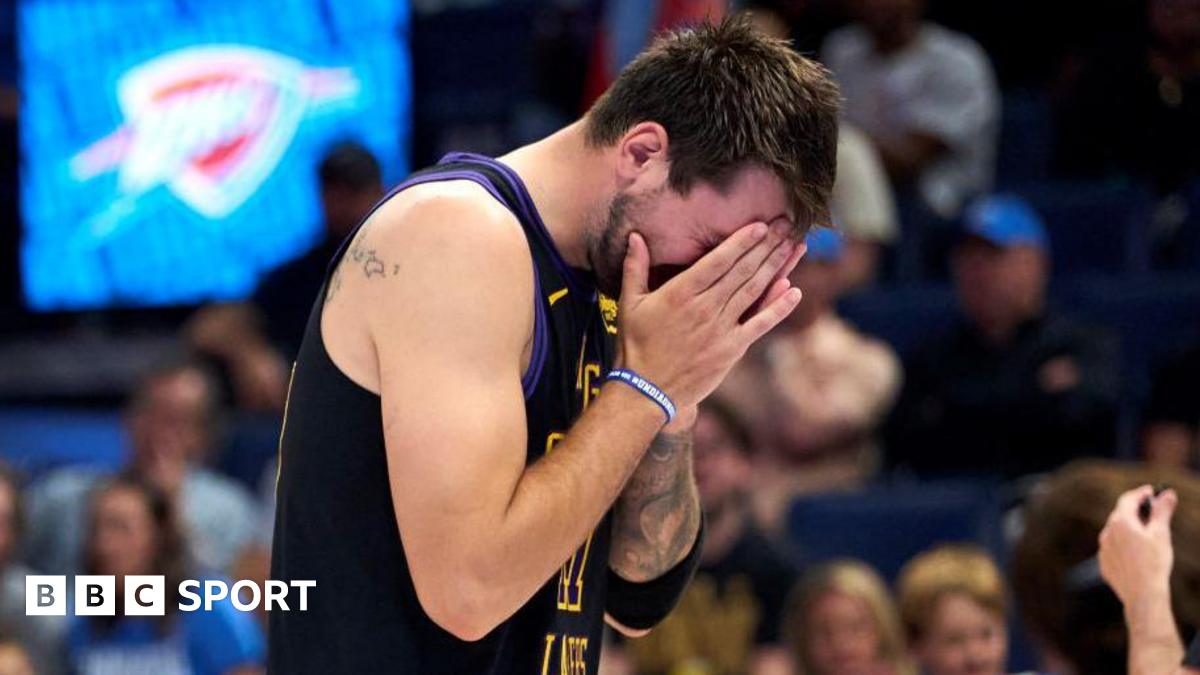
The Oklahoma City Thunder condemned the Los Angeles Lakers to one of the heaviest defeats in their history – one made more painful by an injury to star Luka Doncic.
Reigning NBA champions Thunder claimed a commanding 139-96 victory, helped by 28 points from Shai Gilgeous-Alexander, as they improved their league-best record to 61-16.
The Lakers have only been beaten by a greater margin on six occasions, with this 43-point loss just six points short of their worst margin of defeat against the Dallas Mavericks in 2017.
It was a first defeat in five for the Lakers, who must now wait to learn the severity of Doncic’s left hamstring injury after the Slovenian appeared emotional as he exited the court during the third quarter.
Doncic, who had scored 40 or more points in each of his previous three games and five of his past seven, will have an MRI scan on Friday, Lakers coach JJ Redick confirmed.
Spring has sprung in Los Angeles. In just a couple weeks, thousands of music lovers will make the trek to Indio’s Empire Polo Club for the Coachella Valley Music & Arts Festival, with dozens of L.A. chefs joining them. While in the desert, many festival goers take a detour through neighboring Palm Springs to explore museums, restaurants and bars before the dry climate climbs into the triple digits.
Closer to home, Los Angeles’ food scene is mourning the loss of two legendary haunts forced to permanently close their doors. After months of extensions, Cole’s French Dip closed at the end of March, though owner Cedd Moses said he was still hopeful that the city’s longest-running public house and rumored creator of the French dip sandwich would sell to a new owner. In Echo Park, Taix restaurant closed after 99 years of operation to make way for a six-story housing complex.
But it’s not all bad news for local restaurants. In Melrose Hill, a Bangladeshi chef has returned to the kitchen after a two-decade-long break from the industry. Across town, a viral smashburger spot from a celebrated chef is drawing lines for its juicy Wagyu patties. And for those heading to the desert, restaurant critic Bill Addison insists a modern Mexican pop-up is worth the weekday trip. Here are 13 places to put on your dining agenda this month:
There’s a 12-ticket maximum for each fan across all sports and sessions, plus 12 tickets for soccer sessions that don’t count toward the general maximum. A four-ticket maximum per ceremony for the opening and closing ceremonies is included in the general limit. Each attendee, including children of any age, will need a ticket to attend.
Tickets included in hospitality packages sold by On Location, the official hospitality provider of the LA28 Games, will not count toward the general limit.
Term limits were supposed to usher fresh faces and new ideas into California’s Capitol and city halls. That was the promise when voters approved the limits for state officials in 1990 and for city of Los Angeles officeholders in 1993. Lawmakers who had turned elected offices into perpetual sinecures would be forced out and eager citizen-politicians, unbeholden to the special interests, would step in. Well, it’s a decade later and the faces are more recycled than fresh.
Witness the Los Angeles municipal elections that will take place April 10. Mayor Richard Riordan has hit his two-term limit. Four of the six leading mayoral candidates are being forced out of other offices and are looking for a soft landing in City Hall. Kathleen Connell cannot run again for state controller, City Atty. James K. Hahn and Councilman Joel Wachs have hit city term ceilings, and Antonio Villaraigosa maxed out in the state Assembly.
For the record:
12:00 a.m. Feb. 17, 2001 For the Record Los Angeles Times Saturday February 17, 2001 Home Edition Metro Part B Page 9 Editorial Writers Desk 2 inches; 38 words Type of Material: Correction Term limits–An editorial Sunday incorrectly said Los Angeles City Councilman Mike Feuer is approaching the two-term limit for city officials. Feuer won a midterm special election to the council in 1995 and won his first full term in 1997. He is allowed a second full term.
The influence of term limits rolls through the municipal ballot. Termed-out Councilman Mike Feuer and Rocky Delgadillo, a Riordan deputy mayor soon to be unemployed like his boss, are vying to be city attorney. Council member Laura Chick is running for controller.
Other termed-out politicos are vying for City Council seats whose current occupants are also termed out. Tom Hayden, whose 18 years in the Assembly and Senate are up, and state Sen. Richard Polanco are trying to parlay their Sacramento expertise into an advantage, arguing that they know how to fight for Los Angeles’ fair share of state money.
In the past, local politicians often moved up the ladder to Sacramento and on to Washington; now they arc back to City Hall as well. It’s a safe bet that this electoral whirl is not what most voters thought they’d get. The professional politicians stay in motion but stay on the public payroll, and when new faces do appear they often come to view public service and its attendant perks as a career rather than an interlude in a career.
The pattern is not new. Yvonne Brathwaite Burke and Mike Antonovich, after stints in Congress and the Legislature, respectively, landed on the county Board of Supervisors, which, with no term limits, is the jackpot for local career pols.
Theoretically, there is an upside to all this churning in that the city could benefit from a politician’s previous experience. Meanwhile, the pool gets shallower in Sacramento. In the mid-1990s the Legislature had its first big term limits-induced exodus. By last year, there had been a complete turnover in the state Senate. The learning curve is now steep on such urgent issues as electricity deregulation, especially for the freshman Assembly members–a third of that house–who are still finding their way to the restroom. In this void, the Assembly speaker and the Senate president pro tem are wielding more power than ever–along with the special-interest lobbyists, permanent players with ample access to expertise and cash.
Ten years after voters approved Proposition 140, the consequences of term limits are still playing out. How much better it would have been to enact campaign finance reform; it was mostly fiscal inequality that kept out new faces. But because incumbent politicians declined to handicap themselves with real reforms, they–and voters–now live instead with a merry-go-round.
WASHINGTON — A lead attorney for the Department of Homeland Security suggested that federal agents should have “just started hitting the rioters and arresting everyone that couldn’t get away” during an anti-ICE protest in Los Angeles last June, internal emails show.
The note was in an email chain obtained by the nonprofit watchdog group American Oversight through the Freedom of Information Act and shared exclusively with The Times.
In it, attorneys for Homeland Security appear to be discussing the June 9 lawsuit filed by California Gov. Gavin Newsom over President Trump’s deployment of thousands of California National Guard troops to Los Angeles.
Under the subject line “California DOD Lawsuit,” officials coordinated legal filings defending the Trump administration and included a draft declaration by the Los Angeles field office director of Immigration and Customs Enforcement supporting the deployment of military forces.
The final email in the thread was from Joseph Mazzara, then-acting DHS general counsel, and he appears to be referring to an incident in which protesters tried to breach a protective line at a federal building.
On June 11, he wrote: “Every time I read about the battering ram incident I’m just floored at how wild that is.”
Referring to law enforcement as “they,” he continued: “They should have, when they brought the line in, just started hitting the rioters and arresting everyone that couldn’t get away from them. No one likes being hit by a stick, and people tend to run when that starts happening in earnest.”
The Department of Homeland Security didn’t respond to requests for comment.
Mazzara was later appointed deputy commissioner of U.S. Customs and Border Protection.
Politico reported that Mazzara is among 10 staffers who followed former Homeland Security Secretary Kristi Noem to the State Department after she was fired this month from DHS and given a new role as special envoy for the Shield of the Americas.
The battering ram incident Mazzara referred to is detailed in court documents for the lawsuit.
A June 19 order from a panel judges from the 9th Circuit Court of Appeals states that Trump administration attorneys presented evidence of protesters interfering with federal officers. The protesters threw objects at ICE vehicles, “pinned down” several Federal Protective Service officers and threw “concrete chunks, bottles of liquid, and other objects,” the order said.
Protesters also “used ‘large rolling commercial dumpsters as a battering ram’ in an attempt to breach the parking garage of a federal building,” the order states.
Mazzara’s comment in the email thread with other Homeland Security attorneys was given to American Oversight with a watermark showing the agency had intended to withhold it. American Oversight also received a version of the documents with that statement redacted.
Chioma Chukwu, executive director of American Oversight, said it’s no wonder the administration wanted to keep Mazzara’s comments hidden.
“They reveal a level of hostility toward protesters that is deeply at odds with the government’s obligation to protect civil liberties — and there’s no FOIA exemption that justifies hiding them,” she said.
Kerry Doyle, the former top ICE attorney during the Biden administration, said Mazzara’s comments show a shocking carelessness about the potential for harm against both the general public and the officers he was employed to protect.
The email, she said, “seems to encourage, or, at the very least, support constitutional violations by the operators that are supposed to be getting legal counsel from him to avoid violating the law.” Plus, commenting on operational strategy is outside the scope of his responsibilities, she said.
“He’s doing a disservice to the people that are on the front line, that rely on him and his colleagues to give them the parameters of what they can and can’t do,” Doyle added. “If you give them bad legal advice, you are setting them up for liability.”
Noem’s removal came amid backlash against an escalation of violence during Trump’s crackdown on immigration, including the shooting deaths of U.S. citizen protesters by immigration agents.
Doyle said part of the secretary’s job is to set the tone for the agency so the rank and file know what is expected of them. Mazzara’s comments, she said, show how that tone has permeated all facets of the agency.
After the U.S. Supreme Court cast doubt on the Trump administration’s legal theory for using troops in domestic law enforcement operations, the president in December began removing the National Guard from Los Angeles and other Democratic-led cities.
The protests last summer caused significant property damage in a small section of downtown Los Angeles. But grand juries refused to indict many demonstrators accused by federal prosecutors of attacking agents, and a Times review of alleged assaults found that most incidents resulted in no injuries.
Here are some excerpts from Jesse Jackson’s recent campaign speeches:
PHILOSOPHY:
When we turn to each other, and not on each other, that’s victory. When we build each other, and not destroy each other, that’s victory.
Red, yellow, brown, black and white–we’re all precious in God’s sight. Everybody is somebody.
Where do we find common ground? It’s at the plant gate that locks workers out . . . . It’s at the farm auction, when farmers are driven from their land with no place to go. When someone is sick and dying in the admitting office because they don’t have a green or yellow card.
We the people must come together, demand health insurance. We the people must demand better pay for our teachers, demand jobs and security. We the people must say: drive drugs out, drive jobs in.
No one has earned the right to do less than your best.
Our children need strong men and strong women. But you’re not a man just because you make a baby.
It’s just not right to bring a child in this world and abandon that child. It’s just not right . . . . We must rebuild people–that’s a first step to rebuilding the cities.
THE UNDERCLASS:
When you look at Jesse Jackson, you look at the American dream of hope and possibility unfolding before your very eyes. In a real sense, I was born in the underclass . . . born to a teen-age mother who was born to a teen-age mother.
I went to school where teachers received less pay than their white counterparts, by law . . . .
We lived in a three-room house, bathroom on the back porch, slop jar by the bed for the family. Wallpaper used not for decoration, but for a wind breaker.
As your President, I will open up the door of opportunity, but you must walk through those doors . . . . I have faith in you. I want you to have faith in yourself . . . . If you rise above your circumstances, you can make it.
POVERTY:
People aren’t fighting for welfare. They’re fighting for fair-share.
Most poor people are not black or brown. Most poor people are white, female and young. Color it pain, color it hurt.
Most poor people aren’t on welfare. They work every day. They change the beds in hotels. They raise other people’s children.
They work every day. They drive cabs. They’re orderlies in hospitals. They’re not lazy. They work every day. They bathe the bodies sick with fever. They empty their bedpans. They clean out the commodes. No job is beneath them.
And yet, when they get sick, they cannot afford health insurance, and they cannot lie in the beds they’ve made up every day.
We can do better than that. There are 38 million people in America without health insurance. We need to sit down and devise a national health insurance plan. Because it’s right.
I choose to invest in Headstart, and day care, and prenatal care on the front side of life, rather than jail care and welfare on the backside of life.
THE ECONOMY:
Every generation has a challenge. Our challenge today is to end economic violence.
You know something has gone awry when profits go up and wages go down, and 600,000 farms are foreclosed, and plants are closed and workers are abandoned.
It’s called reverse Robin Hood. It’s taking from the poor and giving to the rich. And that is not fair.
Now the top 1% of wage earners 10 years later pay 20% less in taxes, instead of paying 20% more. Government (has been) used as a lever to take from working people and the poor and to give to the rich.
DRUGS:
The No. 1 threat to this nation is drugs–cocaine, crack, heroin, PCP. We’re consuming $150-billion worth of drugs a year. The No. 1 tax-free industry in America is drugs.
Drugs are corrupting leaders, killing our children. But don’t just focus on children and ballplayers. Children do not buy $150-billion worth of drugs a year. And ballplayers do not launder $150 billion in drug money through banks.
We must get serious about ending the war of drugs in this country. Stop the cocaine, the crack, the heroin. Ban the drugs. Ban the handguns. Make our streets secure and safe again.
In 1986 the Coast Guard interdicted 10,000 pounds of cocaine. In 1987, the Coast Guard interdicted 26,000 pounds of cocaine. Then, the Administration cut the Coast Guard budget by $100 million. They busted the Coast Guard and gave the drug smugglers the green light.
I want to cut the supply of drugs. I want you to join me and cut the demand.
TRADE:
The No. 1 exporter from Taiwan is not Taiwan. It’s General Electric. Which owns RCA. Which owns NBC. Which says, “Buy American,” while NBC workers are forced to strike and make concessions.
The first four years of the Reagan Administration, GE made $10 billion. That’s all right. But as profits went up, wages and jobs went down. They paid zero taxes. That’s not all. They got a $100-million tax rebate, while workers on unemployment compensation had to pay taxes. That is economic violence.
FOREIGN POLICY:
The Russian bear is in check because we have the mental preparedness and the military preparedness. But the drug war is hitting us where we have no defense, in our character, in our lives, in our dreams.
In Latin America, our fight is not with 3 million Sandinistas. They do not threaten us. If they did, 15,000 Contras could not save us from them.
L.A.’s only dedicated cinnamon roll shop was born during the pandemic, when stay-at-home orders prevented Lindsay Sears-McDonald from going to her family’s favorite bakery to satisfy her craving for sticky sweet buns.
Instead, she attempted the dessert at home. When her first try yielded delicious results, she set out to perfect the recipe. Soon, she and her husband Lawrence were popping up at events across Los Angeles, and in 2023 they nabbed a vendor spot at Smorgasburg L.A.
They named their outfit All About the Cinnamon, a play on the hit song “All About the Benjamins” that features Lil’ Kim and Notorious B.I.G. The menu follows a similar theme, with plush cinnamon rolls named after the rap and R&B artists that Lindsay and Lawrence grew up listening to, such as the Em dotted with milk-chocolate M&M’s or the Busta topped with warm Nutella. Last summer the couple opened a small storefront in Sherman Oaks, complete with a mural of hip-hop greats.
In pastry cases across the city, you’ll see a diverse range of sweet buns inspired by the comforting flavors of childhood. That translates to vegan cinnamon rolls with ube halaya and pandan at a Filipino bake shop in Long Beach and miso-honey milkbread buns sprinkled with sesame seeds at a Korean-inspired bakery in Highland Park. Here are 11 of our favorite cinnamon rolls in L.A.
One of the most painstaking architectural renewals in recent Los Angeles memory has finally pulled a world-class jewel of modern architecture from obscurity.
Designed by pioneering Modernist architect Richard Neutra in 1928, with limited collaboration from another Modernist icon, Rudolph Schindler, the Jardinette Apartments had been hiding in plain sight on an unassuming Hollywood street for nearly a century. The complex was a technical and spatial breakthrough, and quickly gained international renown as one of the earliest International Style structures in the United States, not to mention Neutra’s first L.A. commission.
But the building’s original owner, Joseph H. Miller, went bankrupt during construction and skipped town to avoid his creditors, and the Jardinette slipped from view. “After that early burst, it just disappeared,” said Barbara Lamprecht, historical consultant for the Jardinette’s rehabilitation, which is just now wrapping up.
For decades the building stood quietly along West Marathon Street: an austere, four-story complex that most people passed without a second glance. Wedged between Western Avenue and Manhattan Place, amid stucco apartment blocks and scrappy bungalows, the edifice had, until recently, grown increasingly shabby as time and neglect took their unforgiving toll.
That changed with the intervention of a newcomer to historic preservation named Cameron Hassid. For years the tireless local developer and his tenacious team have willed the Herculean restoration project to the finish line. Hassid plans to bring the apartments to market before the end of the month.
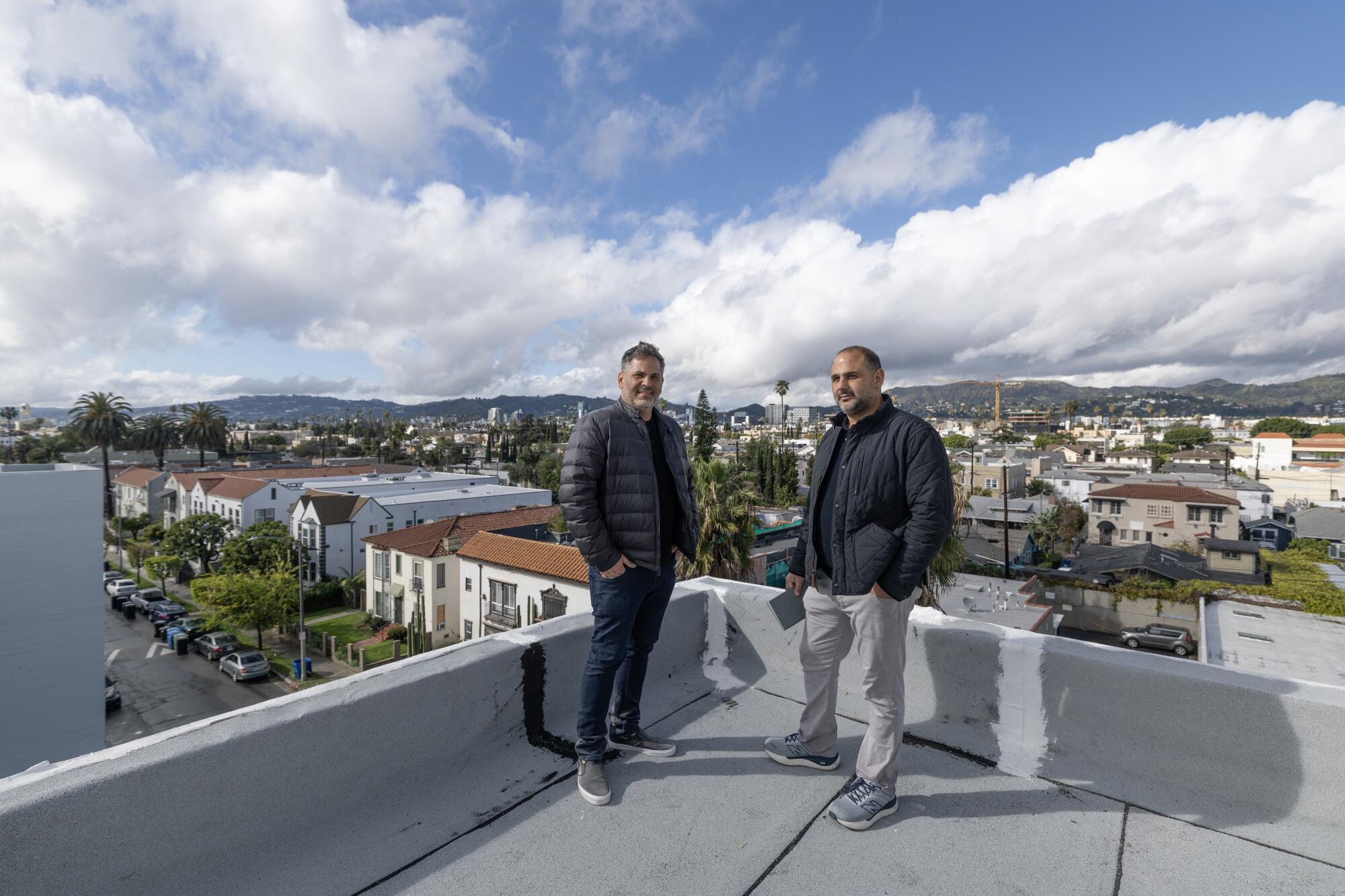
Property owner Cameron Hassid, left, and Neema Ahadian, commercial real estate agent for Hassid, on the scenic rooftop of the Richard Neutra-designed Jardinette Apartments in Los Angeles. Neutra imagined the Jardinette Apartments as a prototype for future garden apartment buildings. Nearly 100 years later, the Jardinette is set to reopen after a lengthy redevelopment.
(Myung J. Chun / Los Angeles Times)
A Radical Design
When the Jardinette first opened it was featured prominently in a seminal survey of early avant-garde apartment housing called “The Modern Flat,” while European architectural publications from Paris to Moscow showcased it as an exemplar of functionalist design, noted Nicholas Olsberg, an architectural historian and curator who has written extensively about Neutra. “It was seen worldwide as one of the signal examples of the new architecture,” Olsberg added.
The Northeast corner of the Jardinette Apartments, circa 1930. When the building first opened in 1928 it was a technical and spatial breakthrough—but it suffered from years of neglect after falling from view.
(Richard and Dion Papers, Collection 1179, UCLA Special Collections)
Built inside and out with reinforced concrete — a modern industrial material that had rarely been employed for housing— the sculpted, U-shaped building, whose jogging corners, projecting sills and swaths of dark and light paint gave it a powerful visual rhythm, used its structural heft to liberate its facade.
Long horizontal bands of easy-to-open steel casement windows, some complemented with concrete balconies, drew daylight and air deep into its 43 efficiently organized units — studios and one bedrooms, ranging from about 400 to 700 square feet — and opened them to wide views of the street and, on higher floors, the Hollywood Hills. Hallways and stairs were saturated with natural light thanks to skylights and strategically placed windows. At the forecourt a modest garden, then dominated by a huge cedar tree, softened the building’s mass, giving the project its name: Jardinette, the little garden.
A roof covered the original skylights in the Jardinette Apartments, but they are now fully exposed.
(Myung J. Chun / Los Angeles Times)
“Arguably my father had more influence on apartment design than he did on house design,” said Neutra’s son Raymond, pointing to several Neutra designs offering indoor/outdoor lifestyles via “garden apartments.” Raymond, who was on site a few weeks ago, has toured the rehabilitation multiple times.
The Jardinette was listed on the National Register of Historic Places in 1986 and designated a Los Angeles Historic-Cultural Monument two years later. Yet despite its formal protections, the building continued its long drift into disrepair.
In 2016 Jardinette’s previous owner, Robert Clippinger, began reviving it, hiring Lamprecht’s firm, Modern Resources, as well as June Street Architecture and land use consultants Cali Planners. The team filed a comprehensive Historic Structure Report that helped secure much-needed tax relief via the Mills Act, a state preservation program. But Clippinger soon faltered under the weight of the many developmental requirements to bring the historic building back. Lawsuits followed. Financing collapsed.
A carpeted hallway beneath an original skylight at the Richard Neutra-designed Jardinette Apartments in Los Angeles. The Jardinette was listed on the National Register of Historic Places in 1986 and designated a Los Angeles Historic-Cultural Monument two years later.
(Myung J. Chun / Los Angeles Times)
Hassid bought the building in December 2020, in the thick of the COVID-19 pandemic, keeping Clippinger’s core designers and consultants in place.
Decades of negligence and neglect had proved both a curse and a blessing. Many original steel windows had been swapped out for cheap vinyl replacements. Larger units had been subdivided. At one point the building had been repainted an unfortunate pastel peach and green. Electrical systems dated back nearly a century. Gas water heaters punched vents through the concrete walls.
Yet because the building never attracted a well-funded modernization campaign, much of its essential fabric remained intact.
“Had it been owned by people with more resources,” noted Lamprecht, “there might have been upgrades that blurred the sense of history.”
Corey Miller, a principal at June Street Architecture, described his first encounter with the almost empty property: “There had been 43 units with 43 different people who had been left to their own devices,” Miller said. “Every time we peeled back a layer, there was something worse.”
Unit 302, inhabited for four decades by a single tenant, retained the most original fabric, including an early icebox cabinet. But it also contained endless layers of grime and clutter. It was “disgusting,” Miller said bluntly, but invaluable as forensic evidence. Much of it — like tiles, windows and millwork — were reproduced around the building.
The 128 Jardinette Apartments were painstakingly restored with an eye toward preserving original details including kitchen cabinets, sinks and iceboxes.
(Myung J. Chun / Los Angeles Times)
The perils of rehabilitating a historic treasure
When Hassid called Miller to ask about buying the building, Miller remembers his response clearly. “You probably have no idea what you’re getting yourself into,” he told him.
Hassid’s love of early modern architecture began as a child. His grandparents lived at 848 N. Kings Road in West Hollywood, with a balcony overlooking Schindler’s famed house. So Hassid was familiar with Jardinette’s geometric forms and clean lines. His mother reacted with angry skepticism when he first raised the idea of acquiring the building, but encouraged him to buy it after she learned about the connection.
Nostalgia did not make the rehabilitation any easier. Technical plans required approval, and fixes weren’t straightforward within a protected treasure. “You can’t just go into a historic building with a sledgehammer,” Hassid said. Every move had to align with federal preservation standards and the commitments embedded in the Mills Act contract. Lambert Giessinger, Los Angeles’ historic architect and Mills Act administrator, acted as liaison. Inspections were frequent. Conditions were exacting.
“It’s stressful to have people looking at everything,” Miller admitted. But he credits both Giessinger and Lamprecht with pragmatism. “They were under no illusion that this was going to be done 100% perfect,” he added.
“There’s a lot of wonky stuff in this building that will remain wonky forever,” noted Lamprecht, pointing to settling areas and imperfect details.
Michael Norberg, a land use consultant for the Jardinette Apartments preservation project, stands on the balcony of a unit at the Richard Neutra-designed complex, which will soon reopen after prolonged development issues.
(Myung J. Chun / Los Angeles Times)
The astonishingly complex rehabilitation revealed a simple-looking building that was anything but. The board-formed concrete carried a subtle wood-grain texture, which had to be left intact, even as seismic reinforcements were added beneath the surface. The finish on white stucco shifted from smooth to pebbled on the walls’ higher reaches, and this had to be carefully re-created.
Original trim had to be salvaged and repaired wherever possible. Kitchens were rebuilt based on archival drawings and surviving fragments. Bathrooms, originally designed around tubs, required discrete tile extensions to accommodate modern showers. The paint scheme, which has been returned to a warm, off-white concrete field with blackish-green bands emphasizing the window walls, had to be reconstructed from historic photographs. Wine red concrete lobby floors were revealed under ungainly tile. Large stairwell skylights were uncovered, while unique, cube-shaped stair post lights were rehabilitated.
Plenty of white tiles replicate the original look in this bathroom in the historic Richard Neutra-designed Jardinette Apartments. One floor of the newly preserved 1928 complex features original doors and kitchen cabinets.
(Myung J. Chun / Los Angeles Times)
Support infrastructure, threaded through the thick concrete frame, was perhaps the messiest challenge. Fire sprinklers, mandated by code, had to remain visible because they could not run through joists without compromising historic fabric. New electrical, plumbing and ventilation had to snake around (or burrow through) beams that original plans didn’t note.
Hassid chose to add air conditioning, and the resulting electrical loads required a 13-foot-deep vault beneath the courtyard. That addition will limit what can be planted in the central garden.
The view from the large windows in a newly restored unit of the Richard Neutra-designed Jardinette Apartments. Original skylights were also preserved during a remarkably complex historic preservation effort.
(Myung J. Chun / Los Angeles Times)
The team preserved as many original steel casement windows as possible on the primary north-facing facade. These are interspersed with custom reproductions throughout.
The rehabilitation costs climbed past $5 million — accounting for structural analysis, waterproofing, electrical overhaul, plumbing, mechanical, windows, flooring, sprinklers, cabinetry, landscaping — an ever expanding list.
“If I knew then what I know now,” Hassid said with a weary laugh, “I’m not sure I would have done it.” He paused. “But listen, I’m happy I did.”
Today, the building’s value is clear. The courtyard, with vegetation still waiting to grow, is again a communal garden framed by cantilevered balconies. The flat facades have regained their subtle play of depth and shadow. New systems hum quietly, concealed as carefully as possible.
But the building’s renewal has not made it immune to its surroundings. Portions of the exterior were tagged during construction, and some windows have even been shot out by BB guns. As it reemerges, Jardinette could become a lightning rod for those who fear gentrification.
Modernist architect Richard Neutra imagined his first Los Angeles project, the Jardinette Apartments, as a prototype for future garden apartment buildings, but the building fell into disrepair and obscurity for decades. A newly completed historic preservation project will allow it to reopen soon.
(Myung J. Chun / Los Angeles Times)
Hassid, who initially planned to keep the building, is now testing the waters for a sale with the help of local broker Neema Ahadian of Marcus & Millichap. He said he’s already gotten calls from potential buyers in both the affordable and market-rate sectors. Affordable housing, he added, would be fitting because the smaller units were originally used that way — often for people working in nearby Hollywood studios. The building’s lack of parking could be another factor pushing the sale in that direction.
“I want to leave my options open,” said Hassid. “It’s bittersweet, because we put so much into it.”
Despite swearing off the project more than once, he is hooked by the process.
“I’m looking for my next historic building. After doing it, I know the mistakes I made and how to minimize the lag,” he said.
“This is such a good niche. Others run away from it. I love it because I love the challenge.”
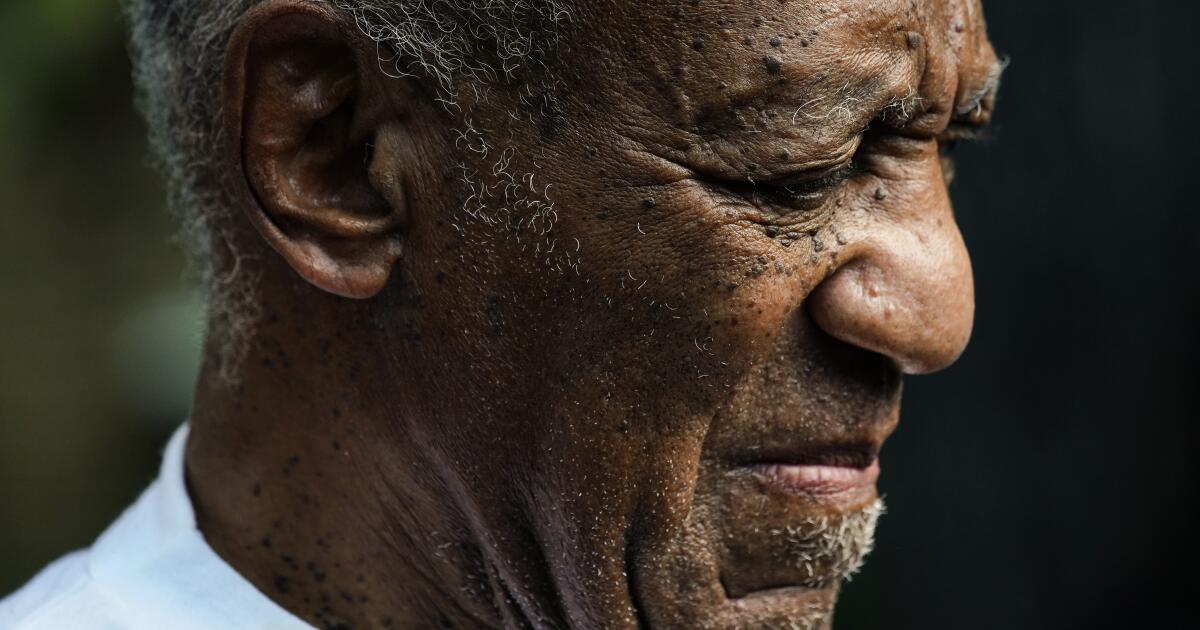
Bill Cosby drugged and sexually assaulted a former waitress in 1972 after escorting her to one of his shows, a civil jury in California concluded Monday, awarding the woman $19.25 million in damages.
The verdict was the latest turn in a series of legal battles the disgraced entertainer, now 88, has faced since allegations that he repeatedly drugged and raped women exploded publicly about a decade ago. Since then, he served about three years in a Pennsylvania prison on sexual assault charges before the case was overturned in 2021.
Donna Motsinger, now 84, said in her lawsuit filed in Los Angeles County Superior Court that Cosby had given her wine and a pill that left her unable to move, and that she woke up in her house wearing nothing but her underwear, according to court records, and that “she knew she had been drugged and raped by Bill Cosby.”
Cosby has denied the allegations, as well as those brought by dozens of other women who claimed they had been drugged and raped. Coming in the early years of the #MeToo movement, a broad social media-inspired campaign to name and prosecute men accused of sexual misconduct, Cosby’s attorneys painted him as an unfair target of mass vigilantism gone awry.
Motsinger sued Cosby in 2023, alleging that, at the time, she was working at a Sausalito restaurant called The Trident that was popular with celebrities, including Cosby, according to the complaint her attorneys filed Sept. 27 of that year. One night, Motsinger accepted Cosby’s invitation to go with him to his show at the Circle Star Theater in San Carlos. Cosby picked her up at her home in a limousine, according to her complaint, and, on the way to the venue, gave her the wine and a pill that she thought was aspirin.
“Next thing she knew, she was going in and out of consciousness while two men attending to Mr. Cosby were putting her in the limousine,” the complaint said. “The last thing Ms. Motsinger recalls were flashes of light,” before waking up in her house in nothing but underwear.
Motsinger didn’t consent to Cosby’s sexual contact and, having been rendered unconscious by drugging, she couldn’t consent to it to begin with, according to the complaint. As a consequence of her ordeal, her complaint says she suffered lost wages, medical bills, pain and suffering and emotional distress.
In 1994, then House Speaker Newt Gingrich promised to post all congressional proceedings on the Internet as a way of launching what he called a “civilizational upheaval” in which “regular people in little towns”–not well-moneyed lobbyists–would manage affairs in Washington. In 1996, the representative from Georgia, swayed by the futurism of writer Alvin Toffler, helped pass the Electronic Freedom of Information Act, which required federal agencies to grant Americans prompt access to any information in their databases that could help “ensure an informed citizenry.”
Three years later, Gingrich’s revolution, far from online, is nowhere in sight. Rather than complying with the 1996 law, most parts of the executive, legislative and judicial branches of the U.S. government stand in blatant violation of it.
While the Supreme Court of Mongolia has its own official Web site, the U.S. Supreme Court doesn’t, forcing Americans to search through unofficial Web sites in hope of finding its briefs and opinions. While the Congressional Research Service makes its reports on vital issues like HMO reform instantly available online to legislators, taxpayers, who fund those studies, can get them only through the mail from their members of Congress.
If you are a soldier who believes he was made ill by the military’s anthrax vaccine, for example, you might want to know what was said in Tuesday’s hearing of the House Committee on Government Reform, in which Rep. Henry A. Waxman (D-Los Angeles) and leading scientists discussed how the government should weigh a vaccine’s risks against its benefits. The full text of the hearing was available Tuesday to anyone who could afford a subscription to a private online data service.
Those hoping to access such supposedly public information on the Web, however, were out of luck. The House Government Reform Committee’s Web site lists transcripts from only a hodgepodge of committee hearings. The most recent transcript available at that site is from June.
Today, Sens. Patrick J. Leahy (D-Vt.) and John McCain (R-Ariz.) plan to hold a press conference in which they will release a study by two Washington public-interest groups on how federal agencies have failed to comply with the 1996 law. McCain and Leahy, along with David E. Price (D-N.C.) and Christopher Shays (R-Conn.) in the House, have introduced similar bills to require Congress to put Congressional Research Service documents online within 30 days. The measures currently are in the House and Senate rules committees.
Fundamental change won’t occur until national leaders like President Clinton, Senate Majority Leader Trent Lott (R-Miss.) and House Speaker J. Dennis Hastert (R-Ill.) call upon all government agencies to honor the letter and spirit of the 1996 law.
Reforming the Congressional Research Service is only a baby step toward the revolution that legislators promised so bombastically. But it’s as good a place as any to start.
To Take Action: Rep. David Dreier (R-San Dimas), chairman, House Committee on Rules, (202) 225-2305, www.house.gov/dreier, click on “Feedback”; Sen. Mitch McConnell (R-Ky.), chairman, Senate Committee on Rules and Administration, (202) 224-2541, e-mail, senator@mcconnell.senate.gov
March 20 (UPI) — At least five people were injured Friday after a Delta Air Lines flight hit severe turbulence on its final approach to Sydney, Australia.
Delta told the BBC that Flight 41 from Los Angeles with 160 passengers and crew on board “encountered brief turbulence” as it landed at Sydney Airport, injuring four flight attendants.
The Airbus A350 touched down “safely and normally,” said a Delta spokesperson.
Three of the injured were taken to hospital by ambulance crews waiting on the tarmac after sustaining what paramedics determined were “musculoskeletal and lower back concerns.”
“I believe five were assessed; in total three were transported to Royal Prince Alfred Hospital with minor injuries,” said Lisa Frow, manager of NSW Ambulance’s Mascot station.
Delta said none of those hurt were passengers, but Australian media listed two 71-year-olds, a 60-year-old-woman and a 37-year-old woman among the injured.
In July, more than two dozen passengers aboard a Delta Air Lines Airbus A330 were hospitalized after it was buffeted by “significant turbulence” en route from Salt Lake City to Amsterdam.
The flight diverted and landed safely at Minneapolis-Saint Paul International Airport with 25 passengers taken to area hospitals.
In June, five people were injured when an American Airlines Airbus A321 hit “unexpected turbulence on flight from Miami to Durham, N.C.
Three flight attendants and two passengers were taken to the hospital.
Passengers reported an unconscious man, a flight attendant with a broken arm and another burned by hot water from a drinks cart.
The American Airlines incident is under investigation by the Federal Aviation Administration, as is standard for incidents where there are injuries.
In May 2024, one person died and 71 were injured, seven critically, aboard a Singapore Airlines flight from London to Singapore that ran into unexpected extreme turbulence when it was at cruise altitude.
The flight deck declared an emergency, but landed the Boeing 777 safely at Bangkok’s Suvarnabhumi International Airport. Health officials determined that Briton, Geoff Kitchen, died of a suspected heart attack.
The incident prompted Singapore Airlines to revise its seat belt policy so that it would no longer provide hot beverage or meal service when the fasten seatbelt sign was illuminated
While strong or severe turbulence — where disturbed air pitches an aircraft violently upward or downward, creating G-forces of up to 1.5 — is on the increase, it remains extremely rare, with only one in 7,000 flights affected.
However, experts warned that flying was likely to become rougher more often in the future due to climate change as temperature changes and shifting wind patterns impact atmospheric conditions.
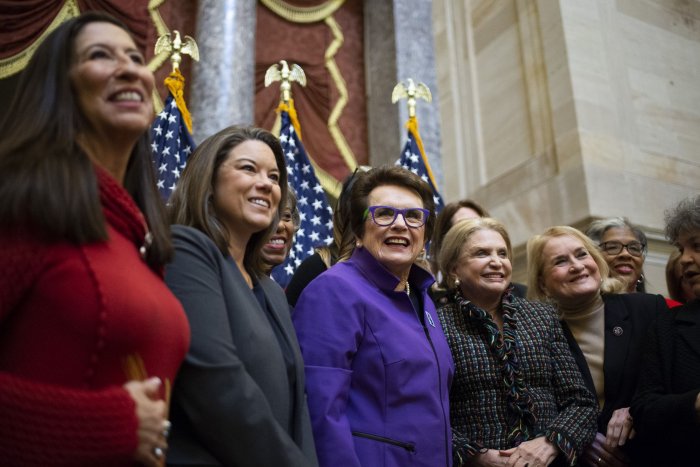
Founder of the Women’s Tennis Association and tennis great Billie Jean King (C) smiles with representatives after speaking during an annual Women’s History Month event in celebration of the 50th anniversary of Title IX in Statuary Hall at the U.S .Capitol in Washington on March 9, 2022. Women’s History Month is celebrated every March. Photo by Bonnie Cash/UPI | License Photo
The war has reignited a debate within the Iranian diaspora about what role the US should play in Iran’s future.
This question is more than a distant geopolitical issue for Iranians in Los Angeles.
Many residents explained that their family histories had been shaped by US involvement in the region, whether it was through US support for Iran’s fallen monarchy or through the US decision to back Iraq’s invasion of Iran in 1980.
Aida Ashouri, a human rights lawyer who is running to be Los Angeles city attorney, was among those publicly condemning the latest US campaign in Iran at the city hall protest on February 28.
“This is a US imperialist war, and we have to make that clear,” she said. “Call a spade a spade. This war is not to liberate the women of Iran or the people of Iran.”
Ashouri was born during the Iran-Iraq war in the 1980s. Her hometown, Isfahan, was also bombed in June last year during the US and Israel’s 12-day war with Iran.
For Ashouri, it was telling that the US and Israel once again launched the first strike in the current conflict. For many legal experts, that made the conflict an unprovoked war of aggression, in violation of international law.
“A war implies two sides are actively engaged, but Iran has done nothing to be involved,” Ashouri said.
“This is a unilateral military invasion, an aggression of the United States and Israel. They are the ones with the power to end it by stopping the bombing.”
She and other protesters drew parallels between the current Iran war and the US-led wars in Iraq and Afghanistan, launched in 2003 and 2001, respectively.
“I lived through the shadow of the war on terror, all the propaganda talking points,” said Shany Ebadi, an Iranian American antiwar organiser with the ANSWER Coalition. “What the Trump administration is saying reminds me a lot of the Iraq war.”
As someone who follows the news closely, Ebadi remembers feeling alarm when the first strikes were launched in February.
“When I got the breaking news notification of the initial attack, my whole body felt paralysed. I felt anger and frustration,” she said.
She and Ashouri both said they fear the military operation in Iran could spark a regional war that might further destabilise not just Iran, but the entire Middle East.
“I fear that war will repeat the disasters seen in Palestine, Iraq, Libya, and Afghanistan,” Ashouri said, listing countries targeted in the US’s “war on terror” over the past two and a half decades.
The question of whether bombs can pave the way to freedom in Iran is a simple one for Ashouri and her fellow antiwar activists. The answer, they say, is simply no.
Don’t blame the beleaguered voter for the record-low statewide turnout of 34% of registered voters in Tuesday’s primary election. Don’t call the stay-at-homes lazy or berate them for failing to do their duty. Don’t wonder why the patriotism stirred by Sept. 11 didn’t translate into an energized electorate.
The truth is, for many Californians, there were just too many reasons not to vote. The lack of hot contests on the Democratic ballot resulted in dismal turnouts of 23% in heavily Democratic Los Angeles County and 27% in San Francisco. The confusing rules of the primary had been changed again as to who could vote for which slate of candidates.
The campaign was overshadowed first by the Super Bowl and then by the Winter Olympic Games. When the political ads finally got the public’s attention, their constant carping and attacks surely turned off many voters. On election day some locales, including Los Angeles, were plagued with the failure of some polling places to open on time, ballots that weren’t delivered and voting locations that were changed or yanked.
The real culprit, however, was the ridiculously early primary date, more than eight months before the Nov. 5 general election. Many Californians didn’t even realize an election was coming up.
The Legislature and governor should make sure this doesn’t happen again. Lawmakers need to take a close look at SB 1975, by Sen. Ross Johnson (R-Irvine), a bill that would move the primary for state and local candidates to the second Tuesday in September every election year while maintaining a separate presidential primary in March.
The idea is to enable California to have a rational primary date while retaining some clout in the choosing of the presidential candidates. More discussion is in order about whether September balloting would allow enough time for an informative general election campaign. However, nine states have August primaries, and 10, including New York, vote on the second Tuesday in September, the day Johnson has proposed. A cheaper proposal would be for the state to stop playing presidential primary leapfrog for ever-earlier dates and move all primaries back to June.
Election officials struggle to make it convenient for Californians to vote, but the process remains complex and confusing. “It felt more like doing your taxes,” one expert said. The first step toward rationality is getting rid of this March madness.
For the third year in a row, De Los, the Latino-centric vertical of the Los Angeles Times, will be returning to South by Southwest in Austin, Texas, and things are a little different this time around. While the music portion of the festival has typically been given its own weekend to shine, in 2026, it’ll be “folded into” a week-long event alongside film, TV and interactive programming.
But despite these changes, one thing is clear: After a banner year for Latin music at SXSW in 2025, it seems like everyone’s doubled down in 2026, with the festival welcoming a historic number of Latin artists to Austin. That includes the De Los showcase.
If our 2024 event was more of an intimate kickback, 2025 was an all-out party. Thanks to energetic sets from acts like trap corrido pioneers Arsenal Efectivo and the clashing cumbia punk stylings of Sultanes del Yonke, the crowd was up on their feet dancing, twirling and even forming a mosh pit at one point — all into the early hours of the morning. We hope to bring those same vibes back to SXSW this year.
If you’re in Austin for the festival, join us at Mala Fama, located at 422 E. 6th St., Austin, on Sunday, March 15 starting at 8 p.m. As always, the festival is a great opportunity to discover new artists and exciting new sounds, so whether or not you’ll be joining us in Texas, we hope this lineup might inspire you to find a new favorite artist, song or band.
Here’s who’s playing at the 2026 De Los showcase.
Hermanos Espinoza
With their South Texas upbringing (Puro 956!), it shouldn’t come as a surprise that this duo’s Norteño sound has plenty of Tejano flair too. Hailing from Edinburg, brothers Joel and Leonel Espinoza broke out not long after making their debut in 2022, when their song “Prueba de Fuego” hit more than 100 million streams. Their lively, accordion-rich music feels classic enough to be right at home on the playlist for your next carne asada.
Noteworthy track: “Dios por Delante”
Vanita Leo
Music is in Vanita Leo’s DNA. Born and raised in San Antonio, the singer’s father and aunt are both Tejano musicians who inspired Leo to take up the family mantle and put her own spin on the genre. With a love for the old-school sound of the 1990s, Leo manages to weave together her flirty, unserious humor with vintage romance, writing songs that’ll either validate your heartbreak over a bad ex or have you ready to dance it off and forget they ever existed.
Noteworthy track: “Caballito”
Tropa Magica
The second sibling duo on our lineup, Tropa Magica is the brainchild of brothers David and Rene Pacheco. Their signature sound, much like the East L.A. neighborhood they grew up in, is a melting pot of influences, combining old-school cumbias, ’90s grunge, and psychedelic rock into something completely unique to them. Since coming onto the scene in 2018, the band has gotten the stamp of approval from established acts like Bomba Estéreo, Los Tigres Del Norte and Chicano Batman.
Noteworthy track: “Ojos de Lágrimas”
Eddy
This is set to be Eddy’s year. Born Eduardo Hernández Payán, Eddy first made waves when he was discovered by corridos singer-songwriter Diego Millán (Calle 24) and signed to his Ondeados Mafia label. Last year, he built up a reputation for being an artist to watch in the Regional Mexican space thanks to collaborations with Gabito Ballesteros and Ed Maverick. Now, Eddy is prepping for the release of his debut album, “Náufrago,” later this month.
Noteworthy track: “Ultimo Cigarro”
Nezza
Many of you might know Nezza from her viral moment last summer, when she went viral for singing the national anthem in Spanish at Dodger Stadium — her form of protest against the immigration raids that had been taking place all over L.A. But just take a listen to the Dominican-Colombian singer’s original music, and you’ll see that she’s much more than a viral moment. With her Spanglish lyrics, soulful vocals and glittery production, Nezza has her sights set on international pop stardom.
Pollyanna partisans of a constitutional amendment to mandate a federal balanced budget have no duty to come forward with plans to help Gov. Wilson and the Legislature draft a balanced budget for fiscal 1992-93. But if they have any ideas they ought to share them.
Obviously, the feds can’t help; their actions cost us $1 billion in daily interest. Our national debt increases by $400 billion or more each year.
California’s fiscal 1991-92 budget cut spending, devoured snack taxes and bottled water, but still came up about $4 billion short. Add that deficit to a shortfall of about $6 billion for fiscal 1992-93 and anyone sees our problem budget needs resuscitation.
Not to worry. A number of legislators have proposed a novel and painless method to balance the state’s budget. They propose to spread the deficit over two years. A two-year budget balances fiscal 1992-93 and spreads deficit payments over 24 months. This program replenishes wealth. If deficits continue to rise and revenues fall, the two-year budget precedent opens budgetary gamesmanship to three- or four-year budgets.
Problem budgets? No problem. God bless the wizards of Sacramento.
The Times has covered Kamala Harris’ political career since 1994, when then-Assembly Speaker Willie Brown appointed her to the California Medical Assistance Commission.
Since then, we’ve written 2,229 articles on Harris, who is a California native, received her law degree here and became the first woman and Black American to serve as the state’s attorney general. She’d later become the first South AsianAmerican elected to the U.S. Senate, and only the second Black woman ever to serve in the 100-member body. She has been the sole Black woman in the Senate during her four years there.
The Los Angeles Times is introducing “Covering Kamala Harris,” a beat dedicated to her historic rise to the White House. She is the first vice president who is Black, South Asian American and female.
This news enterprise beat will be anchored by White House reporter Noah Bierman, who joined The Times in 2015 after reporting on politics and other topics at newspapers including the Miami Herald and Boston Globe. He will also write a special edition of our Essential Politics newsletter focused on Harris every other Wednesday.
Throughout the year, we’ll continue to add resources to our coverage with the goal of being the most comprehensive and authoritative news source as we chronicle Harris’ first year.