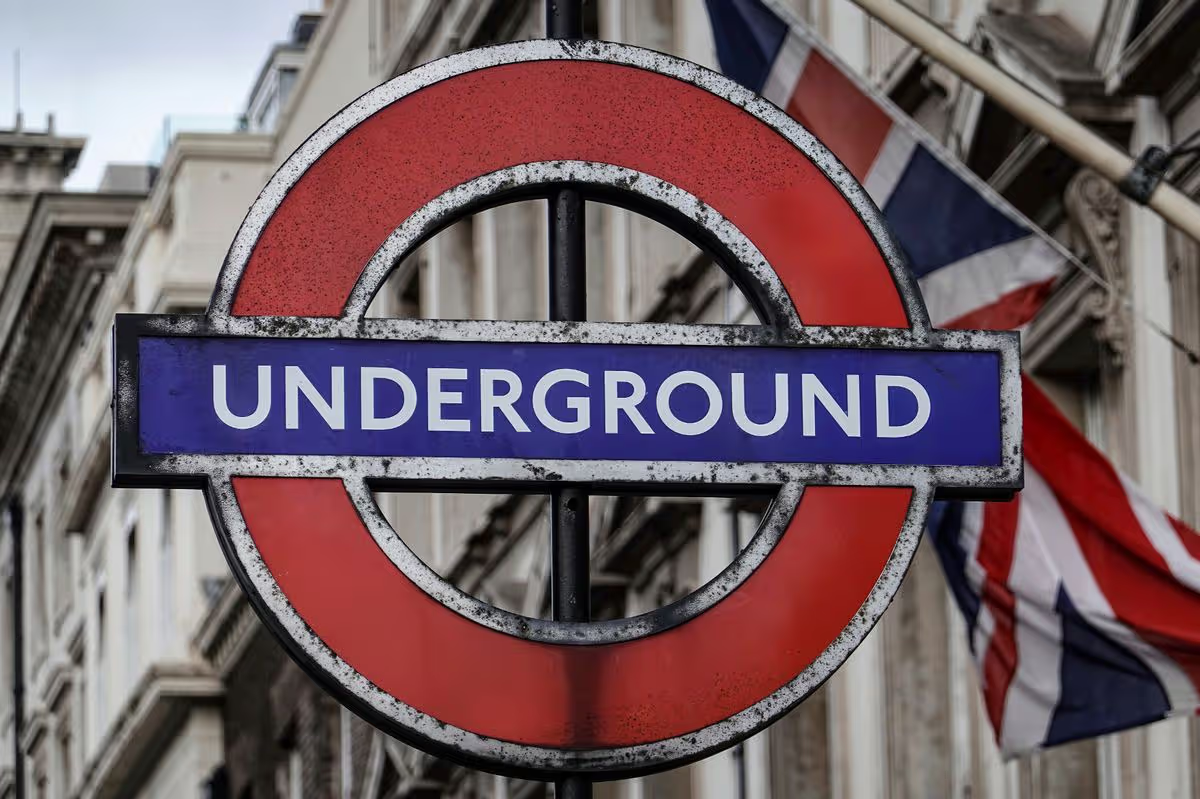

London Underground

UK’s longest tunnel is used by 900,000 people a day and runs for 17 miles

One tunnel holds the record as the UK’s longest at 17 miles, carrying approximately 900,000 people daily – but another will claim the title in 2030.

The UK’s longest tunnel might not be what you’d expect. It’s tucked away out of sight, yet it’s used by a staggering 900,000 people every single day.

The UK has long been celebrated for its world-class and ambitious infrastructure. Perhaps the most renowned is the London Underground.

This globally recognised network of tunnels links the capital beneath its iconic skyline.

However, one of its lines holds the record for the longest tunnel in the UK. The Northern Line, stretching an impressive 17 miles, has ferried millions of passengers since its inauguration in 1937.

It’s the busiest Tube line in London, transporting approximately 900,000 passengers daily and carrying more people annually than any other underground line, according to the London Assembly, reports the Express.

Its tracks run from Morden in the city’s south to East Finchley in the north, with stops at key locations like Bank, Charing Cross and Leicester Square.

But in just a few years, a new contender is set to snatch the title from the Northern Line. The Woodsmith Mine Line, currently under construction, will be significantly longer when it’s slated to open in 2030.

Spanning 23 miles, it will be used to transport polyhalite, a naturally occurring mineral used as fertiliser, beneath the North York Moors National Park. The line will extend from an underground deposit near Whitby to a processing facility in Wilton, close to Teesside.

In December, the tunnel reached a length of 30km, equivalent to just over 18 miles. The tunnel boring machine (TBM), affectionately named Stella Rose, surpassed the record for the longest continuous drive by a single TBM.

The Woodsmith Mine Line is a project undertaken by contractor Strabag on behalf of Anglo American. Recently, Woodsmith Project director Andrew Johnson expressed his pride at this achievement, stating: “We are incredibly proud of this milestone.

“The Woodsmith Project is one of the most innovative mining developments in the world today and construction is progressing well.

“We currently employ 1,100 people in the area of which 75% are local – something we are incredibly proud of.

“We are also proud to have a small international workforce with the specialist expertise we need for this unique world-class engineering project that will provide employment for hundreds of local people for many many years to come.”

Source link

London’s ‘first’ modern tube station reopens after £35million upgrade

A LONDON tube station has reopened after a huge £35million renovation.

Colindale tube station on the Northern Line reopened fully to the public this week with a grand new station entrance.

Colindale tube station has opened with a new lookCredit: TFL

According to Ian Visits, it is London Underground’s first modern tube station built using a timber construction.

Replacing the former station building – which was much smaller – commuters will find the ticketing hall completely decked out with timber wood.

The wood is meant to reference the area’s aviation heritage as well, as the station sits where the London Aerodrome used to be and host air shows with early versions of planes which were made of wood.

The Aerodrome was then later turned into the RAF Hendon military base.

Read more on travel inspo

LUCKY DIP

I tried Wowcher’s £99 Mystery Christmas Market – everything you need to know


CHEAP BREAKS

UK’s best 100 cheap stays – our pick of the top hotels, holiday parks and pubs

The roof has also been designed so that it has a flat section and an arched section, so that the former collects rain and the latter lets rain water run off.

It has been designed this way to stop drains from overflowing.

Part of the roof is also a ‘green’ roof, which means it has plants and vegetation on it.

Inside the ticket hall is the old station clock as well, which has been cleaned up.

There is a new lift for commuters too, as well as large windows letting light flood in and the public to see the trains on the platforms.

Outside the station, pavements have been widened too.

During the construction work, the old platforms were destroyed but two ‘dinner plates’ at either end of the platforms were salvaged.

They were used as warning signals to train drivers during World War II to not stop too long at the station as it was a prime bombing location.

The ‘dinner plates’ were then donated to the local RAF museum.

The final bits of work on the station are currently being completed as passengers use the station once again, with hopes of everything being done by June 2026.

This includes demolishing the old station building, letting out a small retail space – most likely to a café and adding an accessible toilet.

The project on the station has taken place gradually over the past couple of years and has been carried out due to the rising population in the area.

The former station would have been at capacity by the end of 2026, but the new station means that the station will be large enough to accommodate for the new housing projects in the area.

It now features a wood interior, which is the first of its kind in LondonCredit: TFL

London’s Deputy Mayor for Transport, Seb Dance, said: “The Mayor and I feel strongly that everyone should be able to enjoy everything our great capital has to offer, which means it’s vital we make our transport network as accessible as possible.

“I’m delighted that Colindale is now the 94th step-free Tube station and will benefit from a whole host of other improvements to not only improve accessibility but also support major housing developments in the local area, as well as boosting local businesses and inclusive economic growth.

“More than a third of Underground stations across the capital are step-free and we are determined to keep growing this number as we build a fairer, better London for everyone.”

In other rail news, the world’s most famous train is running services from a major UK city next year.

Plus, five abandoned UK railway stations set to reopen with new train routes – as part of £200million expansion.

The station still has its original clock on display tooCredit: Refer to source

Source link