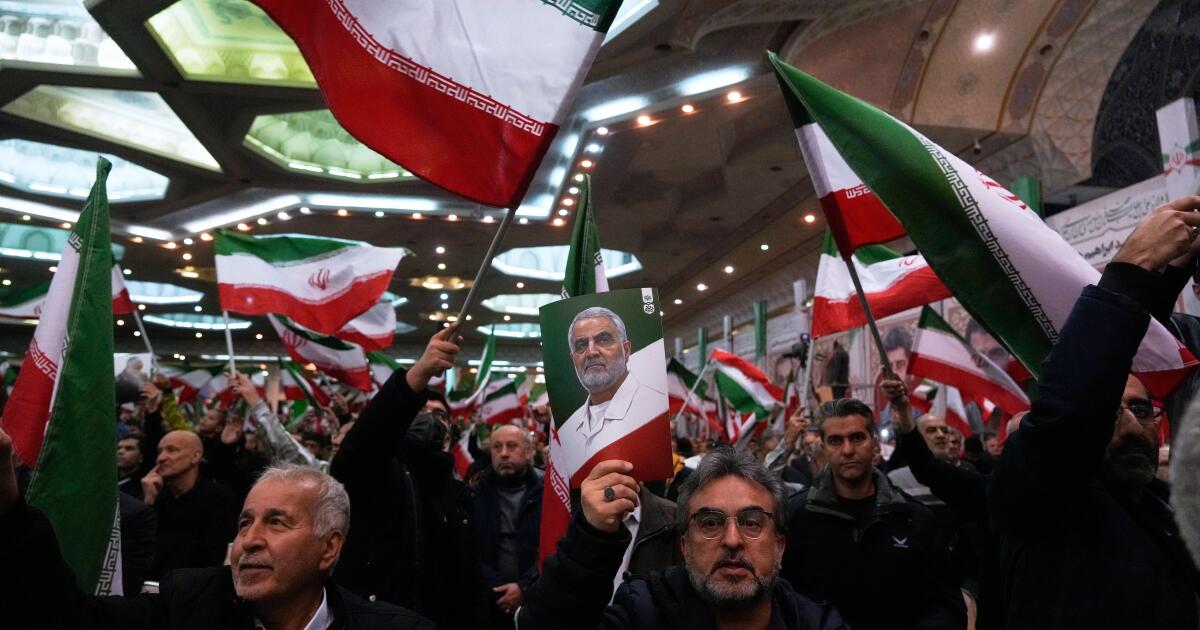
A defiant Iran leaves Trump with few options
WASHINGTON — More than 60 days into his war with Iran, well past public deadlines he had set for its end, President Trump sat through a briefing from U.S. Central Command outlining yet another set of options for a fresh round of strikes.
On offer Thursday were unpalatable choices for a president eager to move on from the conflict he started. Renewed U.S. attacks risk inflaming the war beyond Trump’s control, undermining a fragile ceasefire for which American allies fought hard. But the very need for such a briefing underscored how difficult a position the president has found himself in.
A legal deadline for congressional authorization arrived Friday that threatens to increase pressure on the administration — and underscore lagging support for the most unpopular U.S. war in modern times. Global oil prices remain above $100 a barrel entering the midterm election season. And a diplomatic breakthrough with Tehran appears nowhere in sight.
Signs pointed to another U.S. military buildup in the region this week that could portend a fresh round of fighting. A U.S. Defense official familiar with the matter said the U.S. military has used the weeks-long pause to replenish its munitions. So, too, have the Iranians, who have reportedly increased their efforts to dig out stockpiles of missiles and drones buried by U.S. and Israeli strikes.
“Amateurs look at strategy; pros look at logistics,” said Robert Pape, a professor of international relations at the University of Chicago. “I have seen more buildup of force — actual firepower, with the addition of a third aircraft carrier, and logistics — than we’ve seen since the beginning of the war in February. So there’s been a notable change in the past week.”
The logistical surge appears to be a stream of Boeing C-17 military transport aircraft making their way to the region, alongside the addition of a third aircraft carrier. Only two carriers were in place when Trump first launched the war Feb. 28.
“That’s a pretty good sign that they’re mobilizing,” Pape added. “These are strategic and operational indicators. I would imagine they’re looking for a sharp knock.”
More than 10,000 Marines from expeditionary units are now in theater, giving Trump the option to launch limited ground operations, such as seizing a small stretch of coastline or initiating an assault on Kharg Island, the hub of Iran’s oil industry.
Occupying Iranian territory could provide the Trump administration with leverage in negotiations with Tehran. But it would also carry significant domestic political risks. A clear majority of Americans — including many Republicans — oppose a ground war.
More troops would be necessary to hold ground for any substantial period of time, experts said.
“I do have the impression, from some of the briefings that I have received as well as other sources, that an imminent military strike is very much on the table,” Sen. Richard Blumenthal, a Democrat from Connecticut, told CNN.
Departing Washington for the weekend, Trump told reporters that a “very disjointed” Iranian government, torn internally over whether to agree to a nuclear deal with the Americans, had put his administration “in a bad position,” uncertain whom to negotiate with or whether any agreement it might strike would be enforced.
“Right now we have negotiations going on. They’re not getting there,” Trump said. “They want to make a deal, but I’m not satisfied with it. So we’ll see what happens.”
And yet, the longer talks continue, the more pain Americans can expect to feel as global energy and fertilizer prices continue to skyrocket over disrupted commercial shipping traffic through the Strait of Hormuz, affecting the costs of pocketbook items ranging from food and fuel to airfare.
Trump hopes a brief new round of powerful strikes, potentially targeting Iranian infrastructure, will force Iran’s hard-liners to support a negotiated settlement — a gambit that could backfire, after an inaugural volley of strikes in the war killed off the government’s moderate voices, empowering the militant leadership of the Islamic Revolutionary Guard Corps.
“Do we want to go and just blast the hell out of them and finish them forever, or do we want to try and make a deal?” Trump asked, speaking with reporters on the South Lawn. “I mean, those are the options.”
In a letter addressed to Congress, Trump dismissed a 60-day deadline for congressional authorization for the war set forth in the War Powers Act, claiming the ceasefire with Iran had effectively stopped the clock on the administration’s legal responsibilities. Democrats argue that an ongoing U.S. blockade of Iranian ports constitutes an act of war that, absent a formal diplomatic agreement, requires congressional approval.
Speaking with reporters, Trump offered a less nuanced explanation.
“It’s never been used, it’s never been adhered to,” Trump said of the act. “Every other president considered it totally unconstitutional, and we agree with that.”
The internal debate over resuming the war comes after Pentagon officials informed Congress this week that the conflict, dubbed Operation Epic Fury, had cost taxpayers $25 billion thus far.
Pete Hegseth, the president’s secretary of Defense, defended the effort at a congressional hearing Wednesday, telling lawmakers that the United States was “absolutely” winning the war.
“Militarily,” Hegseth said, “on the battlefield, it’s been an astounding military success.”
He declined to say whether he had advised the president to launch the war in the first place.