Logan

Targeted by Trump, L.A. County took action to speed up counting votes. Officials say it worked

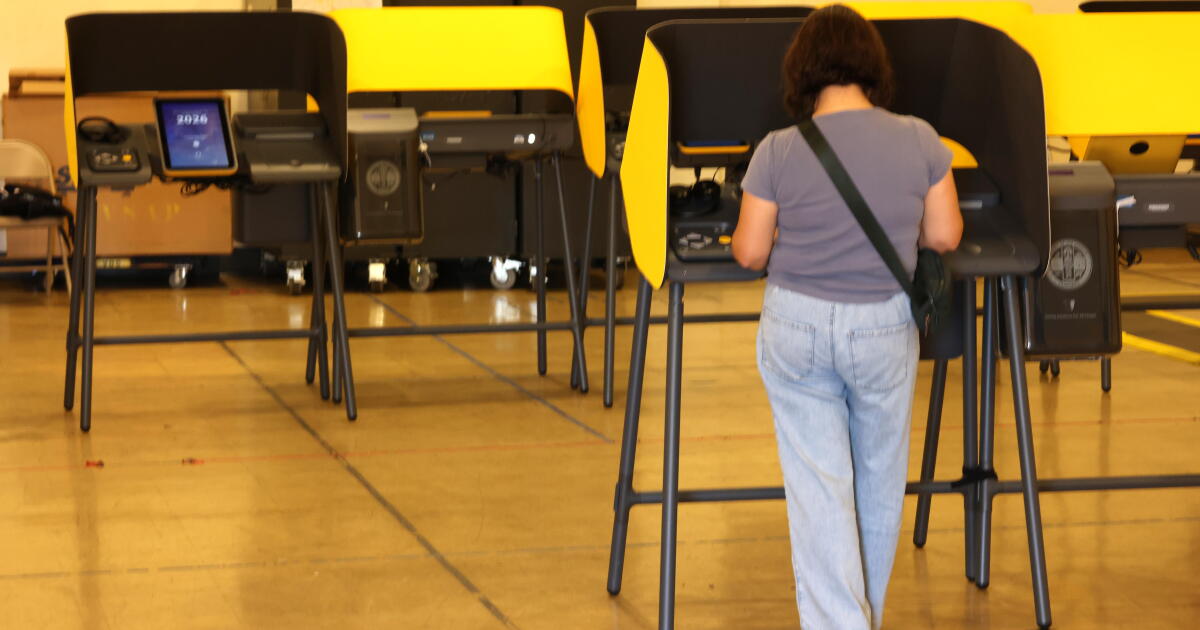
After President Trump’s unfounded claim that California’s slow vote count during the June primary indicated cheating by Democrats, state and local elections officials made changes to speed things up — in part to dispel any questions about this month’s crucial midterm elections.

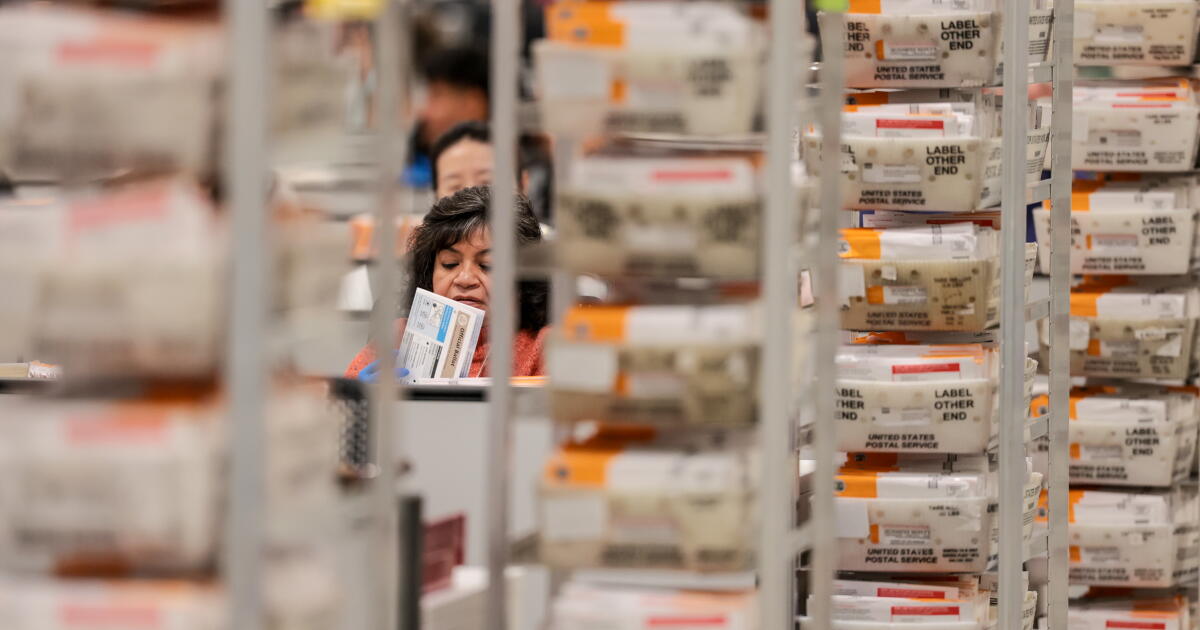
The state of California allocated $29 million for new equipment, election staffing and voter awareness campaigns statewide, about $6 million of which went to Los Angeles County. The county, which opened a massive new ballot processing center in 2024, announced it would shift to around-the-clock ballot counting in the days after the Nov. 3 election and used some of its state funding to purchase a third mail ballot processing machine.

A full analysis of the impacts of those efforts statewide has not been completed, and ballot counting is still underway. But one week after the polls closed, officials in L.A. County and independent election observers say the efforts clearly paid off.

A statewide report on unprocessed ballots as of 5:41 p.m. Tuesday found that L.A. County had processed about 99% of nearly 3.2 million ballots cast in the county, with just 37,800 ballots still to process. That’s well ahead of where it was at the same point after other recent elections.

Kim Alexander, president of the nonprofit, nonpartisan California Voter Foundation, which has for years tracked ballot processing, said that compared to L.A. County having processed 96.9% of ballots a week after the 2024 general election and just 73.3% of ballots a week after the 2022 general election. She said a similar 99.3% of ballots had been counted by the county a week after the June primary — but nearly a million fewer people voted in that election.

Alexander said L.A. County was also well ahead of the state average for ballots processed seven days after an election, which stood at 92.8% processed a week after the June primary, 84.2% processed a week after the 2024 general election, and 71.6% processed a week after the 2022 general election.

On Tuesday, L.A. County, the most populous county in the state, was outpacing other big counties, such as San Diego and Orange counties, which had both processed over 1 million ballots but had 185,000 and 116,660 left to count late Tuesday, respectively. It was also outpacing some of state’s smaller counties, such as Humboldt, which had counted more than 25,000 ballots but had nearly the same amount left to process.

L.A. County Registrar-Recorder/County Clerk Dean Logan said the success of this election was a result of the state funding, which “came very late in the process,” but also years of support from the county — especially for the new $10 million, 144,000-square-feet processing facility.

Before the new facility was opened, the county processed ballots in multiple different locations. “And even on election day, we had to stop processing vote by mail ballots so that we could process the ballots coming in from the vote centers,” Logan said. “Now we have a space that is designed and — provided we have the resources to staff it — we can keep those operations going on simultaneously.”

The county’s purchase of a third mail sorting machine, Logan said, also helped workers to more quickly process the massive influx of ballot envelopes that voters drop off at vote centers or in drop boxes on election day.

Logan said the count this election also may have been quickened slightly by more voters returning their ballots earlier in the process and voting in person.

Alexander called the quickened count, during an election with high turnout and a long and complicated state ballot, “remarkable” — and all the more so given the tremendous amount of pressure the Trump administration was putting on L.A. County.

“I feel this vote count in L.A. and across the state is remarkable in that it appears to be going smoothly and in L.A. clearly very efficiently, but it’s also remarkable given all of the hurdles that we had to overcome to conduct this election,” Alexander said.

The day after California’s primary election in June, President Trump took to social media to allege — with zero evidence — that Democrats were “trying to STEAL THE GOVERNOR OF CALIFORNIA PRIMARY, AND THE MAYOR OF LOS ANGELES, PRIMARY, AWAY FROM TWO GREAT REPUBLICAN CANDIDATES.”

“Votes are all tied up. May not be in for weeks. Under investigation by the U.S. Attorney’s Office in Los Angeles,” Trump wrote. “Why the vote counting DELAY???”

While dismissing such claims as baseless and a threat to democracy, Gov. Gavin Newsom in May acknowledged that the longer it takes to count votes, the “more mis- and disinformation spreads.” That’s why, he said, state lawmakers passed legislation in 2025 to speed up the process.

“We must do all that we can to tabulate votes quickly and accurately,” Newsom said in a letter to elections officials. “Time is of the essence in preventing election lies from taking hold.”

Other states do count votes and call elections faster than California, though California officials say that is for several reasons.

California counts far more ballots than any other state, provides voters with more options for voting than other states, provides a grace period for counting ballots postmarked by election day but received in the days that follow, and provides opportunities for voters whose ballots have an issue — such a signature discrepancy — to cure them in the days after an election.

None of those explanations have convinced Trump, however. And his comments criticizing California were not just bluster.

Instead, they were part of a much larger, highly-coordinated effort by his administration to wrest control over voting processes in the state to institute stricter rules and new federal oversight for mail ballots, stricter requirements around voter ID and proof of citizenship and stricter rules for when ballots must arrive to county officials in order to be counted, Alexander said.

Federal courts, including the Supreme Court, shot down all of those efforts. The Supreme Court also rejected federal demands that California and L.A. County halt the counting of 20,000 ballots the Trump administration alleged could be from noncitizens — but not before Justice Department officials sent letters to county elections officials across the state, threatening them with criminal prosecution if they counted those ballots. Litigation was playing out right up until election day.

Logan said the judicial branch played a pivotal role in defending California’s elections from the Trump administration, and prevented an election disaster. He and other county officials said in court filings that, had they been forced to begin segregating the 20,000 flagged ballots in the midst of the election, “chaos” would have ensued.

Logan also said that the success of this election “is not guaranteed going forward,” and should be understood by state and county officials as further proof that investments in elections in L.A. County and across the state are not only beneficial but critical moving forward — particularly ahead of 2028, when the Trump administration can be expected to target California once more.

“We will continue to be a target of the administration,” he said.
Source link

Patrick Stewart’s best TV and movie performances: Star Trek to X-Men

Patrick Stewart was an imposing figure, on screens big and small, and on stage in the many theatrical productions he starred in over his long career. Depending on the role, his baritone voice could command a legion of Starfleet officers, superhero mutants or a royal court. The actor, who died Wednesday, will be best remembered for the iconic characters he portrayed, particularly in the “Star Trek” and “X-Men” franchises, but over the course of his career, he proved his versatility, playing comedic roles as brilliantly as his dramatic ones. Here, our writers detail some of his most memorable onscreen work.

‘Dune’ (1984)

Even in the wake of Denis Villeneuve’s mega-productions, David Lynch’s dreamy version has found its fandom of acolytes. To watch Stewart commit to the director’s vision is to wish he had more film opportunities outside the shadow of Capt. Picard. He’s playing Gurney Halleck (Josh Brolin does the role in the new movies), a war advisor to young Paul Atreides, and Stewart brings gruff family-friend vibes to his few scenes, which have become legendary in the Lynch pantheon. When Kyle MacLachlan’s Paul says he’s “not in the mood” for combat training, Gurney explodes at him: “Mood’s a thing for cattle and loveplay, not fighting!” Later, you can watch Gurney charging into planetary battle holding — what’s this? — a sweet-looking pug. They must be symbolic to House Atreides. The dogs don’t appear in Frank Herbert’s novel. Lynch just added them. It’s how I choose to remember Stewart. — Joshua Rothkopf

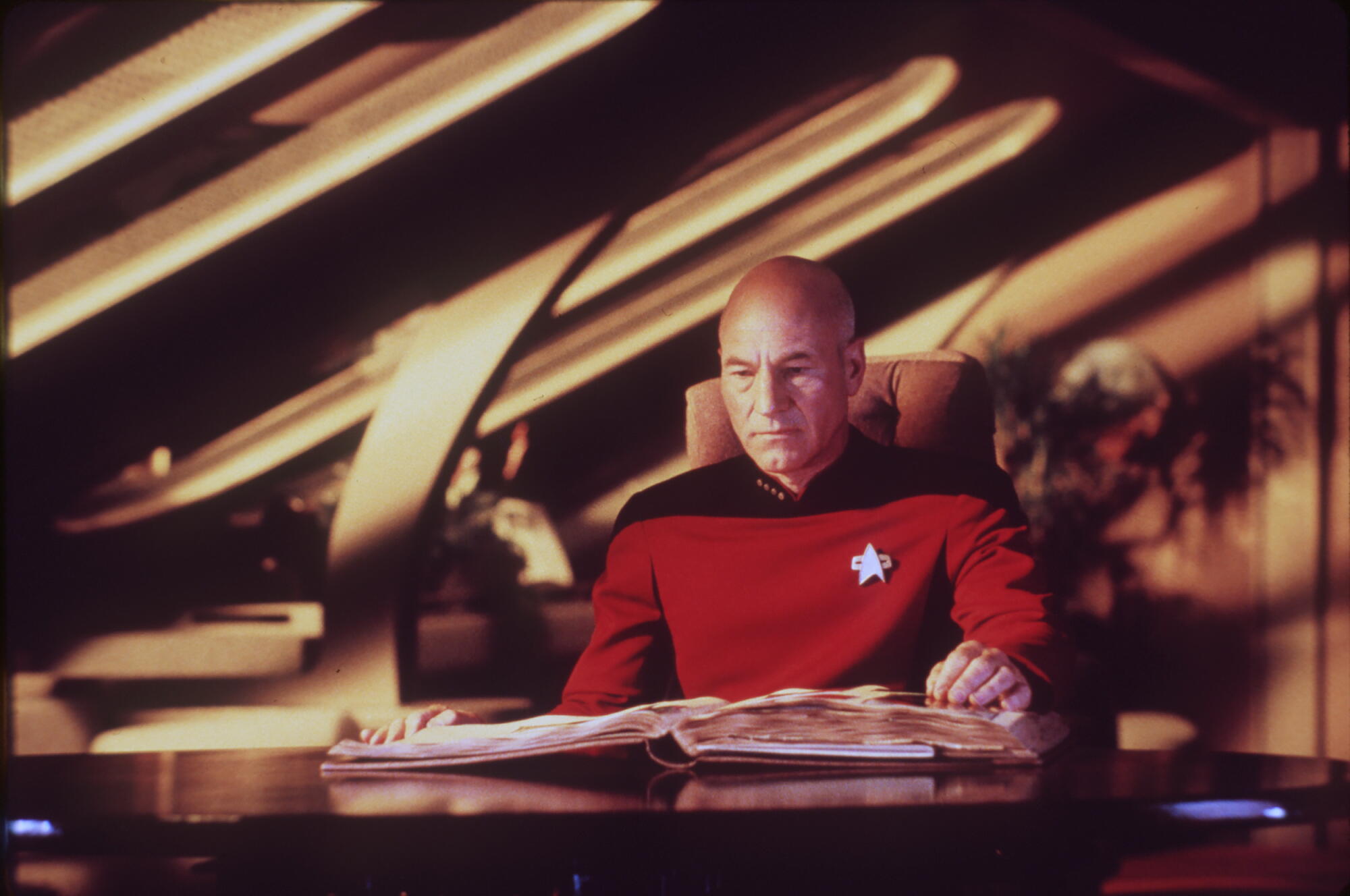
Patrick Stewart, wearing a red uniform, reads at a desk in "Star Trek: The Next Generation."

Patrick Stewart as Captain Picard in “Star Trek: The Next Generation.”

(Elliott Marks/Paramount)

‘Star Trek: The Next Generation’ (1987-1994)

Whichever captain in the “Star Trek” franchise you fancy — Janeway, Kirk, Sisko, Pike, etc. — Jean-Luc Picard was always in the conversation. He was serious, stern, smart, curious, with the hint of whimsy that it takes to soar among the stars with theoretical science and a diplomatic flair with alien races. Undoubtedly, Stewart’s Shakespearean training helped him look past the costumes, sets and CGI into the humanity of what the writers and Gene Roddenberry intended. Though “Star Trek” was set hundreds of years into the future, Stewart gave the character a sense of now, with some of the same problems we face today. Indeed, one of his most famous quotes from the show, from the fifth-season episode “The Inner Light,” embodied how he kept Picard in the present: “Seize the time … live now. Make now always the most precious time. Now will never come again.” — Jevon Phillips

‘Robin Hood: Men in Tights’ (1993)

My nascent cinephilia was nurtured by movies on VHS. One tape (and eventually DVD, then Blu-ray) we often found ourselves watching was Mel Brooks’ “Robin Hood: Men in Tights.” The spoof of early Hollywood’s swashbuckling action-adventure movies is one of the comedy titan’s most quotable films, thanks in large part to the timing of the cast. Stewart, in a cameo at the end of the film, plays a regal King Richard who returns from the Crusades to chastise his younger brother Prince John (played by a scene-stealing Richard Lewis). Stewart gets one of the film’s best jokes, delivering one final indignity to Prince John with the panache that only a formally trained actor of his caliber could. — David Viramontes

James Marsden and Patrick Stewart, sitting in a wheelchair, look at X-rays in "X-Men."

James Marsden, left, and Patrick Stewart in “X-Men.”

(Attila Dory / 20th Century Fox)

‘X-Men’ (2000)

Casting Stewart as Professor Charles Xavier in Bryan Singer’s “X-Men” must have seemed almost too easy. He looked remarkably like the bald, wheelchair-using Marvel comic-book character and had already spent seven seasons playing a similarly cerebral, principled leader as Capt. Picard on “Star Trek: The Next Generation.” But Stewart brought more to the role than a physical resemblance and a voice that could make a grocery list sound like a royal decree. As the powerful telepath who ran a school for young mutants and believed they could coexist peacefully with humans, his Xavier barely needed to raise an eyebrow to command attention, even when surrounded by characters who could sprout claws, control the weather and shoot beams from their eyes. Playing opposite Ian McKellen as Xavier’s old friend turned rival Magneto, Stewart brought a touch of Shakespearean gravitas to the fledgling franchise, returning to the role for seven more films over the next 22 years. He’ll reprise the role a final time in “Avengers: Doomsday” in December. — Josh Rottenberg

Patrick Stewart, sitting in a wheelchair, grabs Hugh Jackman's arms in "Logan."

Patrick Stewart and Hugh Jackman in the film “Logan.”

(James Mangold / Marvel / Twentieth Century Fox)

‘Logan’ (2017)

Previous installments of the “X-Men” films are more typical of the superhero genre, with grand CGI battle sequences and a foe or foes that must be defeated. But “Logan,” which centers on the titular character, a.k.a. Wolverine (Hugh Jackman), is different, with a grounded, gritty story set in 2029 in the desert of Northern Mexico near El Paso. Logan is now a limousine driver addicted to prescription painkillers and he’s a caretaker, along with fellow mutant Caliban, for an elderly Charles Xavier. Ten minutes into the film, we see the professor not in his usual dignified manner, dressed in a sharp suit; instead, we see him thin and frail, in a dirty T-shirt, zooming around in circles in his motorized wheelchair repeating the lines of a Taco Bell commercial. Logan attempts to medicate him so that he and Caliban can rest, but Xavier fights him off, falls out of his wheelchair and has a telepathic seizure that begins to affect everyone around him. “What are you doing to me?” he whispers in a scared voice as Logan tries to inject him. It’s a scene that Stewart imbues with terror and sadness as we see the formerly stoic Xavier shrivel in his hospital bed, reminded of his ailments and his mortality. — Maira Garcia

Source link

9th Circuit panel questions basis for feds’ request to block 20,000 California ballots

In a rare Sunday hearing, a federal appeals court judge appointed by President Trump questioned how the Trump administration’s request to intervene in California’s ongoing midterm election in order to force state officials to set aside 20,000 ballots from voters whose citizenship it questions squares with the U.S. Constitution.

Judge Mark J. Bennett said that while the executive branch is “unhappy” with what California law requires for ensuring voters are citizens, the state has the right to determine the manner of its elections under the Elections Clause of the Constitution and Congress has not challenged that process, despite having the ability to do so.

“It seems to me that you want us to issue an injunction that is entirely inconsistent with the law the California legislature has adopted pursuant to the Elections Clause,” Bennett said. “How can we do that?”

Matthew Donnelly, a Justice Department attorney, said the Trump administration has good reason to believe those ballots are from ineligible noncitizen voters, and has the legal right under seperate federal criminal law to challenge their tabulation until state officials can prove otherwise.

Donnelly said both federal criminal law and state election law bar noncitizen voters from casting ballots, but “the problem is that California isn’t interested in enforcing that provision.”

The exchange came during an hour-long hearing before a three-judge panel of the U.S. 9th Circuit Court of Appeals, over the Justice Department’s unprecedented emergency request that the court order California Secretary of State Shirley Weber and Los Angeles County Registrar-Recorder/County Clerk Dean Logan to immediately stop counting ballots from the 20,000 flagged voters until they can definitively prove those voters are U.S. citizens.

The appellate panel — on which Bennett was joined by circuit Judges Patrick J. Bumatay, another Trump appointee, and Gabriel P. Sanchez, an appointee of President Biden — did not issue a ruling, though a decision is expected soon given the emergency nature of the appeal.

How it will rule is unclear, though both Bennett and Sanchez hammered Donnelly with questions about how the Trump administration’s position squared with the law.

Rick Hasen, director of the Safeguarding Democracy Project at UCLA School of Law, wrote online Sunday that the court seemed “very likely to reject” the Trump administration’s appeal, with Bennett and Sanchez having “expressed great skepticism on both jurisdiction and the merits.”

In addition to questioning its constitutionality, Bennett also questioned how the appellate court even had jurisdiction over the case, given that the Trump administration appealed the matter to the appellate court before the lower district court had a chance to assess the facts in the case or issue an order.

“How do we have jurisdiction when the district court has said it’s going to rule expeditiously?” Bennett said. “I don’t see how we have jurisdiction.”

Bennett also questioned why the appellate court should ignore the claims of state elections officials that having to comply with the Trump administration’s demands in the few remaining days before the Nov. 3 election would be catastrophically disruptive to the election, given that the lower court has had no chance to assess those claims.

“Isn’t that sufficient to give us pause as to whether we should do exactly what [a state expert] avers is going to cause a catastrophe?” Bennett asked.

Bennett’s questions evoked many of the arguments made by the state in its own filings in the matter, which were repeated by California Deputy Solicitor Gen. Samuel P. Siegel during the hearing.

Siegel said there was “nothing” for the appellate court to review, given there has been no fact finding and no order out of the lower court, and that the administration’s demands were unconstitutional and illegal. He said the court did not have to wrestle with many of the arguments being put forward by the Trump administration, because it should simply reject the appeal for lack of jurisdiction and send the matter back down to the lower court.

Bumatay appeared most interested of the three judges in the damage done when noncitizens do vote, and the underlying question of how the state should handle objections to alleged noncitizen voters when they arise.

Siegel and Seth Waxman, an attorney for Logan, said there are existing processes for that — which require the challenger to present extraordinary proof, which they said the Trump administration has not done for the 20,000 voters it has flagged.

Sanchez repeatedly questioned the provenance of the administration’s list, asking which third parties were involved in providing the data. Donnelly could not answer, which Sanchez said raised questions about the reliability of the list.

The Justice Department appealed the case after a lower district court judge declined to immediately rule last week on its request for a temporary restraining order barring California officials from tabulating the flagged ballots.

In court filings, the administration argued that once mail ballots are removed from their envelopes in California, or a ballot has been cast in person, there is “no way to associate the voter with the ballot” or resegregate it from other cast ballots.

Attorneys for California, Weber and Logan have argued the demands are illegal, impossible to comply with before the Nov. 3 election and based on deeply flawed federal immigration and third-party data sets shown to be inaccurate and inclusive of legitimate voters.

In court filings, they have argued that the Trump administration’s argument “rests on mere suspicion, aroused by suspect data,” and that its lawsuit is at best “a reckless political stunt” and at worst “threatens to disenfranchise thousands of Californians this election.”

Independent elections experts have said the Justice Department’s efforts break with longstanding department policy of not wading into election-related issues within 90 days of an election, to avoid disenfranchising legitimate voters.

They also have said the Trump administration’s lists of alleged noncitizen voters and its authority to intervene are both questionable, including because the U.S. Constitution empowers states to run elections with oversight from Congress, not the executive branch.

The Justice Department sued California, Weber and Logan on Oct. 15, two days after Acting Deputy Atty. Gen. Trent McCotter wrote to Weber and Logan giving them 48 hours to set aside the ballots for the 20,000 flagged voters — whom McCotter claimed were “likely noncitizens.”

First Assistant U.S. Atty. Bill Essayli, the lead federal prosecutor in L.A., has claimed federal authorities have “overwhelming evidence” that tens of thousands of noncitizens are registered to vote in California, and has defended the methods used to identify those voters. He and other federal prosecutors in the state also recently charged 28 legal permanent residents in California with election-related crimes, including illegally registering to vote.

On Friday, the Justice Department sent letters to county elections offices statewide with demands that they segregate ballots from voters the Trump administration believes are noncitizens, drawing from the same list of 20,000 at issue in the case against Weber and Logan. In those letters, the Justice Department gave the county officials 48 hours to comply, and threatened them with criminal punishment if they refuse.

State officials have said neither Essayli nor other Trump administration officials have provided proof to back up their claims, and that their list of 20,000 voters is clearly inaccurate. Logan said a preliminary review of a subset of those voters found many were born in the U.S., weren’t registered and had never voted.

More than 3 million people have already cast ballots in California — and more than 500,000 have already done so in Los Angeles County.

The challenge to the 20,000 ballots in California is just the latest Trump administration attempt to intervene in state-run elections ahead of the midterms.

Federal judges in dozens of states have rejected Justice Department lawsuits demanding the states turn over their voter rolls to the Trump administration. Federal judges also have rejected multiple Trump executive orders trying to institute national voter ID and citizenship checks, and his administration’s attempt to empower the U.S. Postal Service to vet mail ballots.

Other cases — including over the Trump administration using unproven and inaccurate federal data sets to question the citizenship of state voters — are pending.

Democrats and voting rights groups are also bracing for fresh litigation from the Trump administration to challenge the outcome of pivotal election results the president doesn’t like — and are already defending against a lawsuit the Justice Department brought at Trump’s urging in Alaska, preemptively challenging a Democratic win in the Senate race there based on a third candidate sharing a similar name as the Republican incumbent.

Times staff writer Brittny Mejia contributed to this report.

Source link