LNG

European gas prices jump by as much as 45% as Qatar stops LNG production

The benchmark European gas price, traded on the Dutch TTF hub, rose by as much as 45% to around €46 per megawatt-hour in early afternoon trading.


ADVERTISEMENT


ADVERTISEMENT

UK natural gas prices also surged, with the NBP benchmark climbing sharply in tandem with continental markets.

High market volatility has driven sharp minute-by-minute swings.

The sharp increase follows US and Israeli strikes on Iran, which have heightened tensions in a region critical to global energy flows.

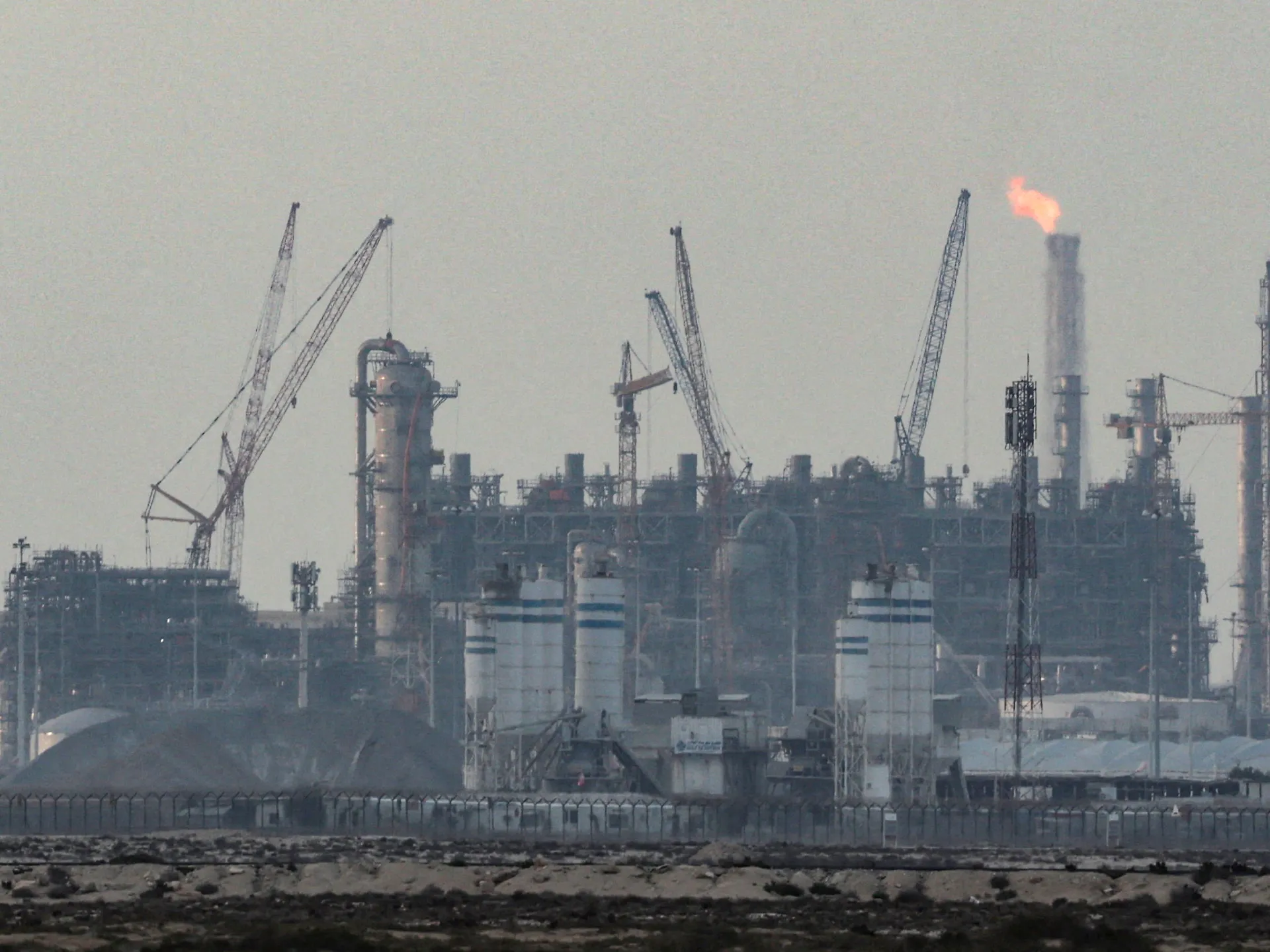
QatarEnergy announced early Monday afternoon that it had halted liquefied natural gas production linked to the giant North Field gas reservoir following an attack on its facilities, but gave no further details as to the extent of the impact on operations.

Strait of Hormuz disruption raises global concerns

A large proportion of the world’s energy supply comes from the Middle East, and before the announcement from Qatar, the seaborne oil and gas transport was at the centre of market fears.

The Strait of Hormuz, a narrow maritime passage largely controlled by Iran, is one of the world’s most important energy chokepoints for oil and LNG, including exports from Qatar.

Iran has moved to block traffic through the strait following the strikes, raising concerns about supply interruptions.

“In modern history, the Strait of Hormuz has never been actually closed, albeit a temporary slowing of traffic has occurred,” said Maurizio Carulli, global energy analyst at Quilter Cheviot.

He added that “about 20% of global oil supply transits through the Strait of Hormuz and 38% of seaborne crude oil trade.”

Carulli does not expect oil shipping companies to send through their vessels until “the military situation de-escalates”, due to the risk of ship damage or seizures, as well as temporary unavailability of insurance cover.

“Satellite data shows that oil tanker transit had virtually halted over the weekend, a precautionary measure by shipping companies,” he added.

Any sustained disruption could affect LNG shipments from Qatar, which supplies around 12% to 14% of Europe’s LNG imports.

Europe exposed to global competition

While Europe does not rely primarily on Qatari gas, analysts say the indirect impact could still be significant.

If supplies to Asia are disrupted, buyers there may seek alternative cargoes, increasing global competition for LNG.

This would likely push prices higher worldwide, including in Europe.

Qatar, the world’s third-largest LNG exporter after the United States and Australia, has become an increasingly important supplier to Europe since Russia’s invasion of Ukraine in 2022 forced European countries to reduce their dependence on Russian pipeline gas.

Low storage levels increase vulnerability

Europe’s relatively low gas storage levels have added to market anxiety.

Storage across the European Union is currently below 30% capacity as the winter heating season draws to a close, compared with around 40% at the same point last year.

Germany and France, the bloc’s two largest economies, are among the most vulnerable.

Germany’s gas storage facilities were 20.5% full as of Saturday, while France’s stood at 21%, according to data from Gas Infrastructure Europe.

Lower reserves leave countries more vulnerable to supply disruptions and price volatility, particularly if global LNG markets tighten further.

Source link

Gas prices soar as QatarEnergy halts LNG production after Iran attacks | Energy News

Qatar’s state-run energy firm says it has halted liquefied natural gas production after Iranian attacks, sending gas prices soaring in Europe, as Saudi Arabia announced it was temporarily shutting down some units of the Ras Tanura oil refinery located near the country’s eastern region after a fire broke out following a drone attack.

“Due to military attacks on QatarEnergy’s operating facilities in Ras Laffan Industrial City and Mesaieed Industrial City in the State of Qatar, QatarEnergy has ceased production of liquefied natural gas (LNG) and associated products,” the world’s largest LNG producer said in a statement on Monday.

Recommended Stories

list of 3 itemsend of list

Shortly after the announcement, natural gas prices in Europe soared by almost 50 percent.

Earlier, Qatar’s Defence Ministry said the country was attacked by two drones launched from Iran. “One drone targeted a water tank belonging to a power plant in Mesaieed, and the other targeted an energy facility in Ras Laffan Industrial City, belonging to QatarEnergy, without reporting any human casualties,” it said in a statement.

“All damages and losses resulting from the attack will be assessed by the relevant authorities, and an official statement will be issued later,” it added.

The Saudi Ministry of Defence, in reports carried by the state-run Saudi Press Agency (SPA), said two drones had “attempted to attack” the Ras Tanura refinery on Monday morning, and that a “small” fire had broken out after they were intercepted.

Footage verified by Al Jazeera showed plumes of smoke rising from the oil facility, located on Saudi Arabia’s Gulf coast. The ministry said the refinery “sustained limited damage”, but there were no casualties.

Ras Tanura oil refinery, one of the world’s largest oil processing facilities located near the eastern city of Dammam, has a capacity of 550,000 barrels per day. The facility is home to one of the largest refineries in the Middle East and is considered a cornerstone of the kingdom’s energy sector.

The attacks come as oil tankers have been piling up on either side of the Strait of Hormuz, through which about a fifth of the world’s seaborne oil and the bulk of Qatari gas flows.

The maritime disruptions and fears of a prolonged conflict have led to a sharp rise in global oil prices, which will have a significant impact on the global economy.

Iran has been launching retaliatory strikes, mainly targeting Israel and military facilities of the United States across the Middle East, after the US and Israel launched massive air strikes on the country.

In a statement published by SPA, the Saudi Ministry of Energy said some operations had been halted as a “precautionary measure” and that it did not foresee “any impact on the supply of petroleum products to local markets”.

Saudi Arabia had earlier said it would “take all necessary measures to defend its security and protect its territory, citizens, and residents, including the option of responding to the aggression” after Iran targeted the capital Riyadh and the country’s eastern region with strikes over the weekend.

The US, Bahrain, Jordan, Kuwait, Qatar, Saudi Arabia and the United Arab Emirates issued a joint statement on Sunday condemning Iranian attacks across the region and affirming their right to self-defence.

Rob Geist Pinfold, lecturer in defence studies at King’s College London, told Al Jazeera that Iran “knows exactly what it’s doing” by attacking the Gulf countries.

“These countries have less of an appetite for a fight because, at the end of the day, this is not their war. So, Iran is banking that they will want a ceasefire as soon as possible, that they will be pressuring the Trump administration. But we have no signs of that whatsoever so far,” he said.

Pinfold added that there seems to be a “show of force” and “of unity” coming from the Gulf states, at least rhetorically.

“They’re trying to get the message across that they are one and that they are united and that they are resilient,” Pinfold said. “But under the surface, there are profound disagreements here about how to engage with Iran and whether to engage with Iran at all.”

Source link