Fabiola José and Fidel Barbarito will offer insights into Venezuelan cultural expressions. (Venezuelanalysis)
The “Cultural Re-existence” column will provide insights into how our ancestral practices, habits, customs, and traditions remain alive today because Venezuelans preserve them through the human spirit they embody and amplify. These are expressions of women and men grounded in reality, history, and a consciousness of their subjective revolutionary role, as well as their responsibility and commitment to defending life.
“La muerte del poeta,” a joropo oriental by Luisana Pérez.
March, in addition to being the month honoring women, is a month of celebration centered on Venezuela’s most widespread traditional rhythm: joropo. (1) And although this is a community tradition with unique variations throughout Venezuela, on March 19 the town of Elorza in Apure state hosts a ten-day festival that draws thousands of people from all over Venezuela and other countries, to participate and enjoy concerts until dawn, joropo llanero singing and dancing contests, sports and recreational activities linked to the Llano culture, as well as culinary and artisan fairs. Another iconic date this month is March 15, since in 2014 the Bolivarian government declared “Traditional Venezuelan Joropo in All its Diversity” to be part of the nation’s cultural heritage. From that moment, this date has been commemorated as National Joropo Day.
As a community-based festival, the Venezuelan joropo in its various forms—in the eastern, north-central coastal, llanos, western, and Andean regions—has seen Venezuelan women become committed cultural creators who are conscious of their community’s identity, the very identity that has allowed them to endure since colonial times, keeping alive the feelings, thoughts, and actions that extend beyond their own lives, into the lives of their children and grandchildren.
Venezuelan women, as practitioners of the various joropos, have had to fight—as women and as joropo creators—against the Inquisition, the nation-state, and the cultural industry for their right to exist. It is well known that these institutions demonized them for “disturbing devotion,” and even today they compel them to adopt a masculinized representation of their own identity or impose the sexualization of their aesthetic expression. There is a historical debt to acknowledge the heroic insurgency that the practice, creation, and celebration of the various Venezuelan joropos have meant for the Venezuelan people, and this debt is owed primarily to the joroperas [female joropo practitioners] for their unrelenting commitment to our identities, even during the most complex moments of our history as an insurgent people.
For these reasons, we wanted to inaugurate our column with the perspective that Venezuelan women have on this popular community festival. Through Fabiola José, we were invited to the 3rd “Mujer Joropo” (Joropo Women) Gathering, held in honor of singer Cecilia Todd and dancer María Ruíz. This was our cue to attend the “Joropazo” organized at the San Carlos Barracks in Caracas on March 15, and to participate as singers and spectators in this gathering of women, an artistic-cultural initiative that brought together singers, dancers, and musicians of all ages, with repertoires integrating both the traditional music and dances of our communities and more contemporary musical and choreographic expressions that speak to multigenerational dialogue and the enduring relevance of this popular art form.
“Semillas de Amor,” a joropo central by Amaranta Pérez feat. Arturo García.
Honoring women’s role in joropo
Carolina Veracierta is the organizer of Mujer Joropo. A dancer, writer, designer, and singer, she explained to us that the project “focuses on women not just in a supporting role but as a protagonist, a creator, and carrier of ancestral knowledge.”
“For me, the joropo isn’t just a musical genre or a dance; it’s the language through which my body and my voice express my very essence. It’s the echo of my childhood in Monagas state and the strength that has sustained me on stages far away,” she explained. “When I dance the joropo, I don’t just move my feet; I shake off my sorrows, celebrate my victories, and honor the women who, before me, kept the rhythm in their skirts and in their songs to accompany the milking of cows.”
Asked about the importance of an event featuring women exclusively, Veracierta argued that joropo has historically had “a very masculine narrative” but that women have always been present, “sustaining the rhythm and in tandem with the man’s foot-stomping.”
“Celebrating it among women is an act of sorority and empowerment,” she concluded. “Joropo has the soul of a woman.”
Amaranta Pérez, another artist featured in the event, told us that joropo brings her an immediate jolt of happiness. “It takes me back to my family’s roots between Parmana and Valle de la Pascua [Guárico state], it is a sort of therapy,” she said. “I especially cherish the lyrics that express the love for our people, landscapes, history, and the folk tales from our wonderful authors that are turned into songs.”
Amaranta defended the importance of events like Mujer Joropo to help correct women’s “unequal” participation in the artistic sphere.
For her part, singer, professor, and bassoonist Luisana Pérez affirmed that “joropo for me is synonymous with Venezuela, from its history to the yellow, blue, red and eight stars that make up the national flag.”
Concerning Mujer Joropo, Luisana explained that “it was unusual to see women playing the mandolin, the harp, or the cuatro” and that these kinds of events “are a beautiful way to reclaim the role played by women in joropo.”
More than 20 artists participated in this third edition of Mujer Joropo, demonstrating the commitment of contemporary Venezuelan women to their own history, to the artistic legacy of their ancestors, and to the responsibility of preserving and promoting the heritage they now hold.
“Zumba que zumba,” a joropo llanero by Fabiola José feat. Ricardo Sandoval and Jesús González.
From underground communal festivity to national identity manufactured by the music industry
On April 10, 1749, the governor and captain general of Venezuela, Don Luis Francisco de Castellanos, published what may be the first documented reference to the joropo. He did so in the form of a decree banning the Xoropo Escobillado, “…due to its extreme movements, insolence, heel-stomping, and other indecencies, it has been frowned upon by some people of sound mind…”. The official decided to consult the Royal Audience on this matter, likely due to widespread controversy, and in the meantime, warned that those who violated the ban would face public scrutiny plus two years of imprisonment, and women would be “…confined to hospitals for an equal period…”.
Although this is the first formal ban to explicitly name joropo, we cannot overlook the fact that, as early as 1532, the Catholic Church’s published constitutions regulated and prohibited popular festivals in general, especially those where the music and dances of Mulatto, Black, and Indigenous women “…disturb devotion…,” or where both sexes mingle in dance, or those where the veneration of saints was a pretext for throwing a party.
If we consider that there is evidence that the first vihuelas [medieval Spanish string instrument] arrived in 1529 in the territory we now call Venezuela, and if we acknowledge the express order of the Catholic Monarchs to ship instruments and musicians starting with Columbus’s second voyage (1493), we could infer that between these dates and Governor Castellanos’s ban, there were some 220–250 years of incubation for what would eventually become an irreversible trend in popular culture, which the colonial order had no choice but to accept.
Although the term xoropo has been interpreted as coming from Arabic as jarabe ( شراب , sharab), for the Andalusian researcher, poet, and musician Antonio Manuel Rodríguez Ramos, the root is undoubtedly that of drinking ( شرب , shurib), and he explains that initially, this is how the festival of drinking, singing, dancing, and eating might have been called. And the fact is that drinking –alcohol– was the best way for converts to avoid suspicion from the Tribunal of the Holy Office of the Inquisition, which was formally operational in our country between 1610 and 1821.
Related to other rhythms including fandangos, jácaras, folías, jarabes, and sones, Venezuelan joropos were documented in the independence struggle that led Bolívar’s armies as far as Peru during the nineteenth century. In the mid-twentieth century, one of these joropos, the llanero, was established as the national music style and dance, though it was a version that had certainly lost its communal and rustic character. By then, the music industry, aware of the deep roots these sounds had in Venezuelans, marketed a series of commercial products featuring music, lyrics, and singers stylized to fit institutional, urban, and bourgeois tastes.
As we noted above, on March 15, 2014, the Venezuelan government declared “Traditional Venezuelan Joropo in All its Diversity” as part of the nation’s cultural heritage, recognizing it as an element of identity and unity –not only in many of our festivities and collective expressions throughout the country, but also as a collective process of community organization. The declaration of the diversity of joropos as cultural heritage was the result of a series of debates that took place both within the community of cultural workers and among research specialists.
With the same strategy of asserting the joropo not only as a dance but as a complex cultural system that integrates music, song, dance, poetry, and oral traditions passed down through generations, Venezuela proposed to the UNESCO Intergovernmental Committee for the Safeguarding of the Intangible Cultural Heritage that the Venezuelan joropo be included on the Representative List of the Intangible Cultural Heritage of Humanity. The committee approved the proposal on December 9, 2025.
Venezuelan joropos thus allow people to come together and reclaim their humanity through the recognition of their own dignity. Through parrandas, festivals for singing, dancing, eating, and drinking, joropo expresses a communal setting where agriculture, cattle rearing, and fishing were the means of sustaining life. Persecuted by the colonial order, homogenized by the nation-state, and commercialized by the music industry through jingle-franchise schemes, Venezuelan joropos also survived the journey from the rural countryside to the oil-driven urban environments.
This continuous history of persecution, denial, whitewashing, and normalization has actually pushed joropo women and men to sneak away, resonate, hold firm, reinvent themselves, and stand out in a permanent process of self-consciousness, recognition, and realization. It is not merely a connection to the land, to love, to our mothers, but to the dream of living in a free land, and the will to produce a cultural liberation project.
Note
(1) With a myriad of local expressions, joropo is the most widespread traditional rhythm in Venezuela. Its execution typically features at least one singer, maracas as percussion, the Venezuelan cuatro [four-stringed instrument], and other string instruments such as the harp or the mandolin. The most well-known variations are the joropo llanero, from the plains region, joropo oriental from the eastern coastal areas and Margarita island, and joropo central from Miranda and Aragua states in the center of the country. Listen to the songs above for examples.
Fabiola José is a Venezuelan singer. She has performed in countries across South America, Africa, Europe, and Asia. Her singles and albums are available on all digital platforms. She hosted and produced “Cantante y Sonante” for Radio Nacional de Venezuela. In 2018–2019, she created a series of videos for social media, published on her YouTube channel #HechoEnCasa. She holds a bachelor’s degree in Music from IUDEM, Caracas (2005); specialized under Maestro Tom Krause in Spain (2007); and an M.A. in Arts and Cultures of the South from UNEARTE, Venezuela (2020).
Fidel Barbarito is a Venezuelan musician and researcher, with a bachelor’s and master’s degrees in music and history, respectively. He teaches in the undergraduate and graduate programs at the National Experimental University of the Arts (UNEARTE). Together with Fabiola José, he promotes several musical projects aimed at disseminating traditional folk repertoires, integrating them with contemporary compositions inspired by these sounds. Joropo llanero. Parranda de reexistencia is one of his published essays.
The views expressed in this article are the authors’ own and do not necessarily reflect those of the Venezuelanalysis editorial staff.
Kylie Jenner said she was ‘living her best life’ as she shared her latest bikini snapsCredit: InstagramThe star looked incredible in her tiny two pieceCredit: InstagramKylie showed off her incredible figure as she stretched out on the sandCredit: InstagramKylie looked every inch a beach goddessCredit: Instagram
Taking to Instagram, Kylieshared a slew of snaps of herself enjoying a dip in the idyllic ocean, whilst on vacation.
The A-list star wore a black string triangle top bikini with matching thong bottoms.
Kylie was then seen pulling various poses in the clear water.
In one snap, the Kylie Cosmetics mogul had a big smile on her face, which matched the caption of her photos, as it read: “Having the time of my life.”
Kylie almost spilled out of her sexy bikiniCredit: InstagramKylie also drove fans wild with more sexy beach snaps yesterdayCredit: InstagramThe star flashed her bum in yesterday’s picsCredit: InstagramThe star is known for her sexy snapsCredit: Instagram
Yesterday, the star was seen again wearing a skimpy bikini as she frolicked on the idyllic shore.
In one snap, she was seen lying in the water as her skin glistened in the sun and in another she’s on bended knees, hair falling loose as she gazed up towards the sun.
Kylie is having the time of her life right now, and is also enjoying a romance with actor Timothee Chalamet, 30.
And his comments came back to haunt him as Academy Awards host Conan O’Brien said: “Security is very tight tonight. There’s concerns about attacks from the ballet and opera communities.”
He waded in again later, saying to Timothée: “We’re vibing, right?”
He then told viewers: “He doesn’t think so.”
Alexandre Singh, who won Best Live Action Short Film for Two People Exchanging Saliva, also took a pop during his speech and said: “We believe art can change people’s souls.
“Maybe it takes ten years, but we can change society through art, through creativity, through theatre and ballet — and cinema.”
Kylie recently wowed at the Oscars with boyfriend Timothée ChalametCredit: Getty
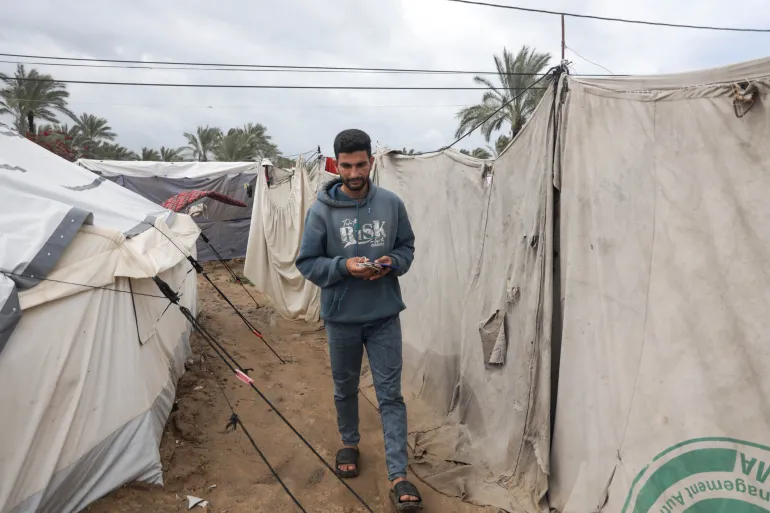
Deir el-Balah, Gaza Strip – Every morning, Abdel Karim Salman begins his routine by heading out carrying his own phone and his wife’s phone, both completely drained of charge. He walks to a nearby charging point to plug them in and recharge them again.
Throughout the night, Abdel Karim relies entirely on the torches from the phones to light the inside of the tent he lives in with his family in central Gaza’s Deir el-Balah.
Recommended Stories
list of 3 itemsend of list
Abdel Karim, 28, a former civil engineer at the Beit Lahiya municipality in northern Gaza, was displaced to Deir el-Balah a year and a half ago with his wife and two children, along with about 30 members of his extended family.
His family home was completely destroyed on October 9, 2023, in the first few days of Israel’s genocidal war on Gaza.
Abdel Karim and his family have been on a difficult journey of displacement since then, with little in the way of normality, and in particular, a regular source of electricity for a bulb in his tent.
So he looks for alternatives to light up the structure, namely the phones, despite the rapid battery drain caused by keeping the torch function on.
“I charge my phone and my wife’s phone, and we use them for lighting at night, especially since my children are under five years old and they get scared if they wake up in the dark,” he says.
Abdel Karim says that the suffering caused by electricity shortages in Gaza is one of the largest “silent” forms of suffering that receives little attention.
For Abdel Karim, the charging process itself has turned into a daily, exhausting burden.
He walks between 150 and 200 metres every day to reach a charging point, paying between two and four shekels ($0.65 to $1.30) per charging session, twice a day.
“That means about eight to 10 shekels ($2.55 to $3.20) per day just for charging phones,” Abdel Karim explains, equivalent to approximately 270 to 300 shekels ($86 to $95) per month, a large amount given the lack of income among displaced families in Gaza amid the territory’s war-driven economic crisis.
“Many days and nights we sleep in darkness inside our tent. When we can’t charge the phones, they turn off, and we are unable to recharge them.”
Abdel Karim Salman heads daily to the charging station to charge his phone and his wife’s phone, which they use as a source of light in their tent throughout the night [Abdelhakim Abu Riash/Al Jazeera]
Few options
With municipality-supplied electricity absent for two years in Gaza, several temporary alternatives have emerged, such as solar-powered lamps, but they remain unaffordable for most residents, having increased tenfold to about 300 shekels ($95) during the war.
As for solar energy systems, they are even more expensive, reaching $420 per panel, and with the additional cost of a battery – about $1,200 – and an inverter. All these items are also scarce due to severe Israeli restrictions on their entry into the Gaza Strip since the beginning of the war.
For Abdel Karim, who lost his job soon after the war began, those sums are out of his reach.
Among the alternative solutions introduced during the war are private generator-based electricity systems operating on diesel fuel.
However, those are also unaffordable for many, and their services have fluctuated due to irregular fuel supplies through the crossings.
And so, with most options simply too expensive, that leaves many in Gaza in the same boat as Abdel Karim.
The impact of the power cuts is not limited to lighting or charging, but extends to every detail of daily life, especially for families with children.
“There is no refrigerator, no washing machine … even baby milk cannot be stored for more than two or three hours,” Abdel Karim explains, as he remembers his previous life, when his home was filled with electrical appliances and reliable power.
“The phone charging socket used to be right beside my bed. I could plug it in whenever I wanted. Today, that has become a dream inside this tent,” Abdel Karim adds.
He also says his children have been psychologically affected, especially his eldest son, due to the lack of any means of electronic entertainment or distraction from his grim surroundings.
“There is no TV or screen. He keeps asking for the phone all the time just to calm down, but that also needs charging. Everything is dependent on electricity.”
According to Abdel Karim, his suffering is not an exception. He believes almost all of the people in Gaza are living the same reality, noting that even families in nearby camps who tried to pool resources to buy energy systems have been unable to afford them.
“We hope God brings relief … because we are truly left without any solutions, as if we were abandoned in the desert.”
Abdel Karim Salman lives with his wife and two children in a tent [Abdelhakim Abu Riash/Al Jazeera]
Longstanding problem
On October 7, 2023, Hamas launched an attack on southern Israel, and Israel then began its war on Gaza.
More than two years on, Gaza has been decimated by Israeli attacks – on top of the more than 75,000 Palestinians killed.
But even before the war, Gaza faced daily rolling blackouts due to limited power imports from Israel and fuel shortages.
Israel, despite withdrawing its illegal settlements from Gaza in 2005, continued to control access into and out of the Palestinian enclave, and repeatedly attacked it.
And so, even in normal conditions, most households only received a few hours of electricity per day, relying on a fragile mix of imported supply and Gaza’s one power plant.
The situation escalated sharply after October 7, when Israel declared a “complete siege” on Gaza, cutting electricity supply and blocking fuel imports.
Within days, Gaza’s power plant shut down due to fuel depletion, and by October 11, 2023, the territory entered a full electricity blackout, according to United Nations agencies.
With no fuel entering and transmission lines cut, homes, hospitals, water systems and communication networks lost reliable access to power, shifting to limited and increasingly unsustainable generator use.
Since then, Gaza’s electricity infrastructure has continued to deteriorate due to both fuel shortages and widespread physical destruction of the grid. Generators remain the primary alternative but are severely constrained by fuel scarcity, affecting essential services such as healthcare, water production and telecommunications.
During the time between 2025 and 2026, Gaza’s power system is widely described as effectively non-functional, with electricity access fragmented, inconsistent and largely dependent on emergency solutions rather than a stable grid.
An opportunity
The severe electricity crisis has created an indirect source of income for Jamal Musbah, 50, who runs a mobile phone charging station powered by solar energy and a generator line.
Before the war, Jamal worked as a farmer and owned two agricultural plots on the eastern borders of Deir el-Balah. Today, they have been bulldozed and fall under Israeli control.
His charging station has instead become his main source of income, supporting his eight children.
“I had an energy system consisting of six panels, batteries, and a device, which I used for pumping water and irrigating the remaining land around my house before the war,” Jamal says to Al Jazeera.
As an alternative income source after the war and the electricity blackout in Gaza, Jamal repurposed his solar system to provide basic phone charging services to residents, though this came with major challenges.
“The demand for charging was extremely high, and my batteries were exhausted within the first months, as electricity became very scarce at home,” he adds.
However, things worsened when a neighbouring house was targeted, destroying four of his six solar panels, significantly reducing his capacity and income.
At the beginning of the service, Jamal also offered food refrigeration services alongside phone and battery charging, but after the damage and battery depletion, he had to stop those services.
“We used to charge about 100 to 200 phones daily. Now we only manage 50 to 60 at most due to reduced efficiency of the solar panels,” Jamal says, attributing this also to weather conditions, clouds and the winter season, when solar efficiency drops significantly.
“In winter, you look for alternatives to solar panels and turn to generators that barely work … the electricity crisis makes you feel like you are running in a never-ending cycle of suffering.”
His charging station now operates with a small system of two panels and one battery.
People from nearby areas, including university students and displaced families, rely on it due to a lack of alternatives and the inability to afford generator-based electricity subscriptions.
“My sons are university graduates and earn their living from this station. We charge 1 to 2 shekels per phone.”
Even though Jamal is able to make some money out of the crisis, he ultimately faces the same hardships as others in Gaza do.
“Economic hardship has affected all of us … even basic services like phone charging have become a heavy burden. There are no local solutions to this crisis.”
“The only real and lasting solution is the official restoration of electricity to the Gaza Strip.”
A Canadian woman who moved to the UK with her partner and three children recently paid a visit to a charity shop where she noticed several differences between the stores here and in her home country
Jess Flaherty Senior News Reporter
08:05, 29 Mar 2026
A Canadian woman noticed some big differences when she visited a charity shop in the UK (stock image)(Image: Nick David/Getty Images)
A Canadian woman currently living in the UK has shared the key differences she noticed when perusing charity shops here as opposed to the “thrift stores” in her home country.
Many people from the United States and Canada relocate to the UK and quickly come to realise that despite sharing the same language, there’s plenty of cultural quirks and differences. This seems to be the case for Jaclyn Walton, who swapped life in North America for England with her partner and their three children.
The mum has praised many aspects of life in the UK, from the school curriculum involving swimming lessons to the “beauty and history” that’s rife, as well as the football opportunities for her son.
She also spotted the different terms used commonly over here, like “sweets” instead of her native “candy” and “holiday” instead of the Canadian term, “vacation”.
Recently, Jaclyn took to Instagram to share a video of herself exploring a small charity shop here in the UK. Over the top of the footage, she narrated her thoughts: “Come with me to a British charity shop – it’s like a thrift store in Canada but here they call them charity shops as the sales help raise funds for charity.
“The differences I notice in Canada and the UK is the culture around charity shops. In the UK, it’s common, easy to pop in, take a look, and pretty normal.
“In Canada, you’re either a thrifter or you’re not. In the UK, like almost everything else, it’s smaller; these little shops with this type of selection.”
She went on: “In Canada, they have small ones like this but you also immediately think of big ones like Value Village where you have aisles and aisles upon selection.”
Content cannot be displayed without consent
Back to her thoughts on UK charity shops, Jaclyn concluded: “These shops often have volunteers working here as well.”
In the comments section, Jaclyn added: “I didn’t love thrift stores in Canada but I do enjoy looking around here… maybe I just wasn’t in my thrifting era yet.
“I feel like with all the history in England, I am looking for a beautiful find.”
Fellow Instagram users were keen to share their thoughts. One said: “I think the difference in the UK is that people donate old stuff and the charity sells it for money.
“A thrift store is a kind of recycling centre where you can sell old stuff like books, which the operator cleans up and resells for a profit.”
Another said: “I never went in charity shops until I developed a book habit! I can now never resist popping int. My hometown is blessed with eight charity shops.
“One in particular is so nicely set out that you would think it is new items only. I look at clothes now and have bought some really lovely items. I’m definitely a thrifter now!”
A third commented: “You can find some really good stuff a charity shops in affluent areas. Try places like in the Cotswolds like Chipping Norton.” And a fourth added: “Love it.”
GO to Dungeon Lane today and it’s strange to think it occupies a special place in Paul McCartney’s heart.
Yet it will go down in pop history alongside other street names associated with him, joining Penny Lane and Abbey Road.
Sign up for the Showbiz newsletter
Thank you!
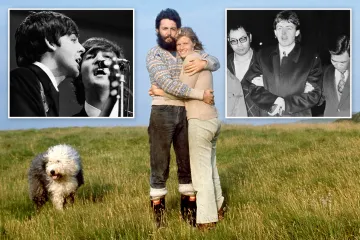
Paul McCartney today in a picture taken by his daughterCredit: Mary McCartneyPaul, left, makes his debut public performance, aged 15, with The Quarrymen, led by John Lennon, right, in 1957Credit: PA:Press AssociationPaul in his early years, aged 8Credit: Alamy
Situated in the Speke neighbourhood of Liverpool, the L24 postal district, a faded road sign sets the tone for its desolate air.
It is bordered on one side by a solar farm business and, on the other, by a fenced-off area of scrubland which separates it from the city’s John Lennon Airport.
Before you get very far, a bright yellow “emergency access gate” bars further exploration.
But, as a child, Dungeon Lane was McCartney’s gateway to a stunning rural idyll where he could escape the hustle and bustle of urban life.
In the Fifties, the lane took him past a daffodil farm to the Oglet Shore on the widest stretch of the River Mersey.
I wonder if young Paul, a keen birdwatcher, ventured into this wilderness clutching his trusty The Observer’s Book Of Birds.
There, he may have spotted any number of waders — curlew, snipe, dunlin, black-tailed godwits.
What we do know is that his lifelong love of our feathered friends began in those days.
This helps explain the compositions dotted through his career such as Blackbird with The Beatles, Single Pigeon with Wings, Two Magpies with The Fireman and solo efforts Jenny Wren and Long Tailed Winter Bird.
To McCartney, his early rambles into the countryside represent humbler, simpler times before The Fab Four exploded on to the scene, before his storied life in the dazzling glare of publicity.
Paul with his dad Jim and brother MikeCredit: GettyPaul’s childhood home at 20 Forthlin RoadCredit: Getty ImagesPaul with mum Mary and younger brother Mike
Sir Paul, 83, has called his 19th solo album The Boys Of Dungeon Lane . . . which is, as he suggests, a trip down memory lane.
He got the title from the lyrics of its first single, Days We Left Behind, released yesterday, a nostalgia-filled acceptance that he has a far longer past than future.
Intimate, beautifully sung with Macca playing acoustic guitar, bass, piano and harmonium himself (how does he do that!?), it is the first taste of a project that has been five years in the making.
“This is very much a memory song for me,” he says. “I was thinking about just that . . . the days I left behind.
“And I do often wonder if I’m just writing about the past — but then I think, how can you write about anything else?”
For McCartney, the song conjures up “a lot of memories of Liverpool. It involves a bit in the middle about John [Lennon] and Forthlin Road which is the street I used to live in. Dungeon Lane is near there.”
Paul was born on June 18, 1942, to his midwife mother Mary and salesman father Jim, and they moved with younger brother Mike to 20, Forthlin Road, Allerton, in the mid-Fifties from Speke, where they had lived since 1947.
We also know that Paul first bumped into John on July 6, 1957, at roughly 4pm, at a garden fete behind St Peter’s Church, Woolton.
In Days We Left Behind, he sings of the bond he formed with the lanky lad 20 months older than him: “We met at Forthlin Road/And wrote a secret code/To never be spoken.”
Continuing his reflection on the song, he says: “I used to live in a place called Speke which is quite working class.
“We didn’t have much at all but it didn’t matter because all the people were great and you didn’t notice you didn’t have much.”
As already mentioned, birdwatching was a hobby, one that required little cash and gave him a lot of pleasure “in the nearby woods and fields”.
Sir Paul with his wife NancyCredit: PA:Press AssociationPaul, a keen birdwatcher, owned The Observer’s Book Of BirdsCredit: Alamy
A recent entry in Macca’s Spotify playlists, under the banner Sticking Out Of My Back Pocket, came accompanied by these musings . . .
“My mum had the midwife’s house on the edge of Liverpool, where we lived,” he says.
“It was where Liverpool just stopped and became deep countryside, so that was when I had the opportunity to do quite a bit of birdwatching.”
He particularly cherishes the moment he saw a “skylark rising into the sky, singing its sweet song”.
That unforgettable sight has found its way into Days We Left Behind, with its lines, “In the skies the skylarks rise/Above the sounds of war/Since that day I knew they’d stay/With me for evermore.”
All these decades later, he reflects: “And now because I live part-time on a farm [in Sussex], I’m able to see a lot of birds and I don’t need The Observer’s Book Of Birds quite so much as I did back then.”
McCartney’s new album promises to be one of the most personal, most autobiographical song cycles he’s ever recorded, while also finding room for up-to-date love songs dedicated to third wife Nancy.
Yesterday’s announcement states that it finds him in a “candid, vulnerable and deeply reflective mood, writing with rare openness about his childhood in post-war Liverpool, the resilience of his parents, and early adventures shared with George Harrison and John Lennon”.
I’m guessing here but songs yet to be heard, Momma Gets By and Salesman Saint, appear to be affectionate remembrances of mum Mary, who died when Paul was just 14, and dad Jim.
Sir Paul has called his 19th solo album The Boys Of Dungeon LaneCredit: SuppliedDungeon Lane, now fenced off on both sidesCredit: supplied
This is not the first time Macca has delved into his early years for songwriting inspiration.
I talked to him about the playful On My Way To Work, which appeared on his 2013 album, New.
He called it a “collection of memories all morphed together”, providing a fascinating glimpse into his life before Beatlemania.
“It’s about me going to my first job, before The Beatles took off, which was working on a lorry for a delivery company called Speedy Prompt Deliveries — SPD.”
McCartney described going to work on the council-run green and cream buses which led to him looking at risqué magazines like Parade.
“I’d go on the bus at some unearthly hour of the morning,” he said. “I might buy a magazine and look at the nudies. I was too young to be interested in the news!”
He remembered how hard-up kids like him ripped the fronts off cigarette packets and traded duplicates with their mates, instead of collecting “football cards or, like in America, baseball cards”.
“It was like, ‘I’ll swap you two Craven A for a Woodbine’. Then there were the posh brands because this bus route went from the centre of Liverpool to the outskirts.
“Posh people would be smoking Passing Clouds or Sobranies and packets of those were very prized.”
Another song, Queenie Eye, referenced a childhood street game from “1940s Britain”.
“It’s what we used to get up to before video games and that whole home entertainment thing,” he said.
“Someone would be elected to be ‘the one’ or the ‘queenie eye’. We’d all stand behind that person and he would throw a ball over his head and one of us would catch it and hide.
“Then we would all chant, ‘Queenie eye, queenie eye, who’s got the ball? I haven’t got it. It isn’t in my pocket!’ It was simple entertainment for simple minds but great fun.”
Now it is time to return to the 2020s and the creation of The Boys Of Dungeon Lane, the follow-up to his captivating lockdown album, McCartney III.
This time, we’re told we can expect “Wings-style rock, Beatles- style harmonies and McCartney-style grooves”.
TRACK LIST
As You Lie There
Lost Horizon
Days We Left Behind
Ripples in a Pond
Mountain Top
Down South
We Two
Come Inside
Never Know
Home to Us
Life Can Be Hard
First Star of the Night
Salesman Saint
Momma Gets By
The process began around five years ago when Macca met American live-wire producer Andrew Watt, known for his work with Ozzy Osbourne, Lady Gaga, Post Malone and The Beatles’ greatest Sixties chart rivals, the Rolling Stones.
Watt, I gather, “pulled a guitar” on his latest rock icon, who instantly happened upon a chord he didn’t recognise.
As the story goes, the ever- experimental McCartney changed one note, then another, until he had a three-chord sequence.
That led to his new record’s opening track, As You Lie There, which in turn set the ball rolling for the other 13 songs.
It’s remarkable that, as with McCartney III, he is credited with playing all the instruments himself across the whole thing.
It brings to mind how at ease this enduring music obsessive seemed as he suggested specific drum beats and fills to Ringo Starr in The Beatles’ Get Back documentary.
With Macca still touring and playing momentous shows like his 2022 Glastonbury epic, Days We Left Behind has been honed over half a decade when time permitted.
During that period, he even managed to introduce the Stones to producer Watt, who helmed their 2023 comeback album, Hackney Diamonds.
When McCartney was in Los Angeles working with Watt, he was brought in to play bass on Mick Jagger and Co’s punk blast, Bite My Head Off.
Upon its release, I spoke to Keith Richards who was made up over their special guest.
“Yeah, Macca just strolled in with his bass,” the guitar legend drawled. “I think the song reminded him of those times [in the Sixties]. Beatlemania was equally as bizarre as Stones mania.”
There’s a moment towards the end of Bite My Head Off where you can hear someone saying, “Come on Paul, play something”.
“That might have been me,” smiled Richards.
But this is all about Britain’s greatest living songwriter, Paul McCartney, and his new album The Boys Of Dungeon Lane.
Time is precious but when it comes to music and life, he’s still facing forward at 83 — even if he’s remembering a youth long ago when “in the skies, the skylarks rise”.
THE creator of the 90s hit movie Air Bud has died aged 63 after a tragic fall from Hollywood stardom.
Kevin DiCicco’s death comes a year after he revealed he was homeless and battling health issues.
Sign up for the Showbiz newsletter
Thank you!
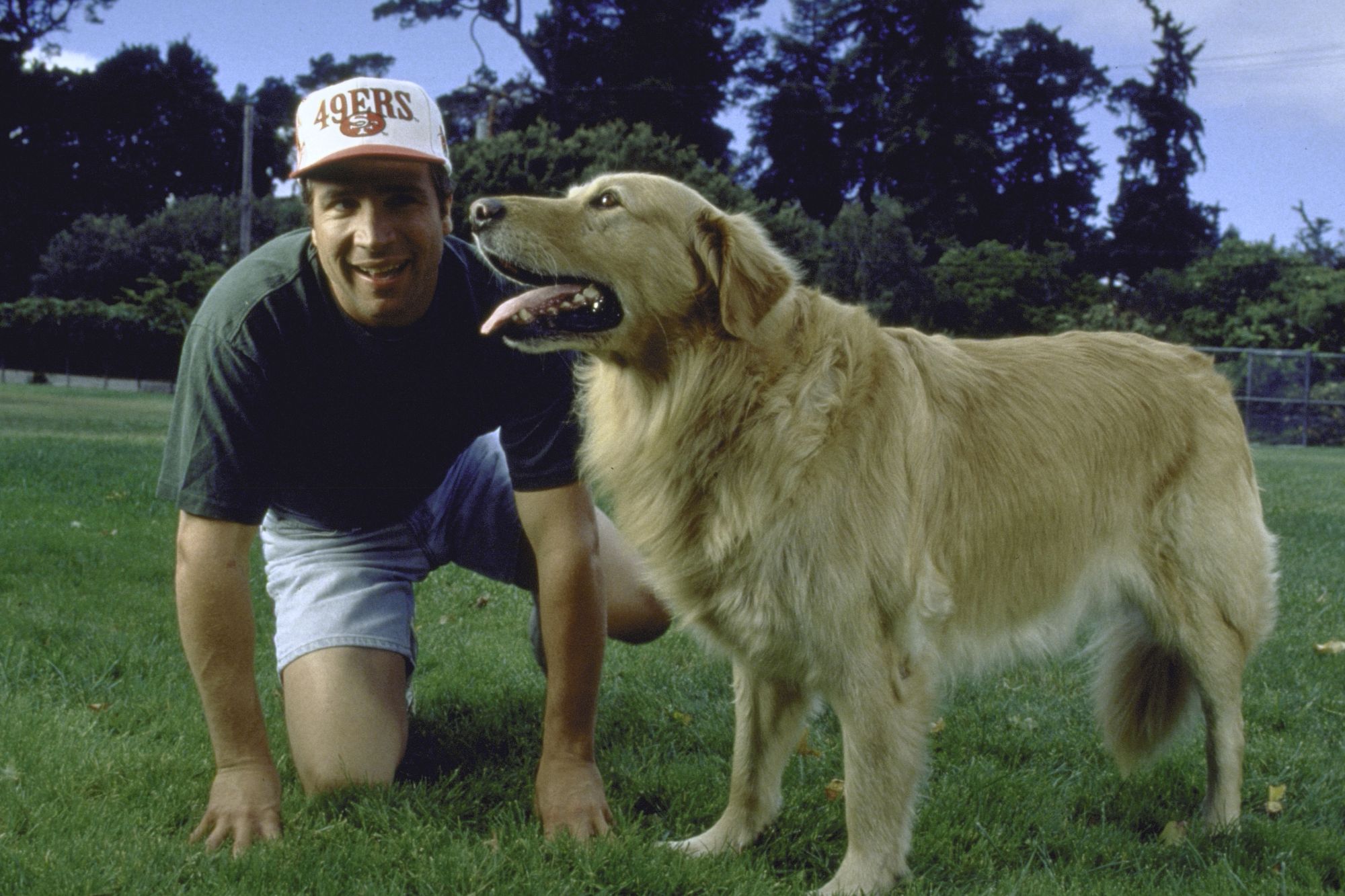
Kevin DiCicco was dealing with homelessness and a series of health issuesCredit: Facebook/GofundmeKevin DiCicco with Golden retriever dog Buddy, thee basketball-playing star of motion picture Air BudCredit: Getty
His sad passing on Saturday March 21 was confirmed by his brother Mark to TMZ.
Kevin was credited as a creator of the beloved 90s film Air Bud, about a lonely boy who befriends a stray dog who has a natural talent for basketball.
Together they experience the highs and lows of life as their friendship remains solid through a series of escapades.
Kevin had found Buddy the dog as a stray, transforming him into a star.
The duo originally found fame on America’s Funniest Home Videos before making a memorable appearance on David Letterman.
More to follow… For the latest news on this story keep checking back at The Sun Online.
Thesun.co.uk is your go-to destination for the best celebrity news, real-life stories, jaw-dropping pictures and must-see video.
It’s time to discover the timeless charm of Türkiye’s Aegean Coast, where you can find sun-drenched olive groves encircling ancient cities, scenic wine routes dotted with Michelin-starred restaurants and buzzing beach clubs…
Sophie Kasaei is willing her boyfriend Jordan Brook better as he battles viral meningitisCredit: Instagram/Sophiekasaei_Jordan’s been in hospital for 12 daysCredit: Instagram
Worried Sophie, 36, was only able to see Jordan for the first time two days ago following his admission and admits she’s never felt so much fear as he goes through treatment.
Alongside loved-up photos of them together, she wrote on Instagram: “Life can come at you really fast. Literally in the blink of an eye.
“One minute you’re dreaming about your future together… and the next, you’re sitting in a hospital room, holding onto hope with everything you have.
“Watching the person I love in pain and fear, something I can’t fight for them is the hardest thing I’ve ever known. And through all this I’m carrying the tiniest piece of us, a reminder that even in the darkest moments, life is still growing, still holding on.”
Sophie continued: “I never imagined I’d feel this much fear and this much love all at once. Life really can change in the blink of an eye. Please don’t take a single moment, a single person, for granted.
“Everyday I fall in love with you more and more @jordanbrook11 this whole thing feels like I’m living in a nightmare waiting to be woke up by you next to me in bed but I’m just grateful your here and fighting for your family.
“Our little baby boy is what is keeping this family going. I love you @jordanbrook11.”
Jordan replied in the comments and vowed he would give everything to recover.
“My darling girl,” he wrote. “I can’t thank you enough for the strength to help me battle this. I will not give up on us.
“I love you more and more every single day.
“‘This too Shal pass’ – we will smile again with our special boy and family.”
The conditions are potentially life threatening, causing inflammation of the brain and spinal cord lining.
In a video posted from his hospital bed, Jordan said: “This is the first time I’ve really been able to speak strong enough about what’s going on.
“I’ve been diagnosed with not one but two joining viruses that are attacking a similar part of my body. I have got viral meningitis and encephalitis together.
“That’s the inflammation of the brain and the lining around it. So this isn’t something small or minor.”
He has had CT scans, MRI lumbar scans, and lumbar punctures — the extraction of cerebrospinal fluid from the lower vertebrae — to find out what is wrong.
Jordan continued: “I’m on IV drips, everything antiviral, pain management, physio, seizure monitoring, to minimise seizure risk at the minute.”
The star added: “But unfortunately the swelling on my brain is getting worse. Really, really tough, even with the simple day-to-day activities and normal things that aren’t easy right now.
“So this is what I’m dealing with day-today.”
What is meningitis?
It can be mistaken as the flu or even a hangover – but knowing the symptoms of potentially deadly meningitis could save your life.
If it is not treated quickly, meningitis can cause life-threatening septicaemia (blood poisoning) and result in permanent damage to the brain or nerves.
The two forms of the disease have different symptoms.




![Abdel Karim Salman heads daily to the charging station to charge his phone and his wife’s phone, which they use as a source of light in their tent throughout the night [Abdelhakim Abu Riash/ Al Jazeera]](https://i0.wp.com/www.aljazeera.com/wp-content/uploads/2026/03/873A6907-copy-1774666645.jpeg?w=640&ssl=1)