AS EUROPEAN city breaks go, Vienna might not get much of a look-in between the likes of Venice and Valencia.
But the picturesque capital of Austria, which has centuries of history and is reachable in two hours, is having a moment.
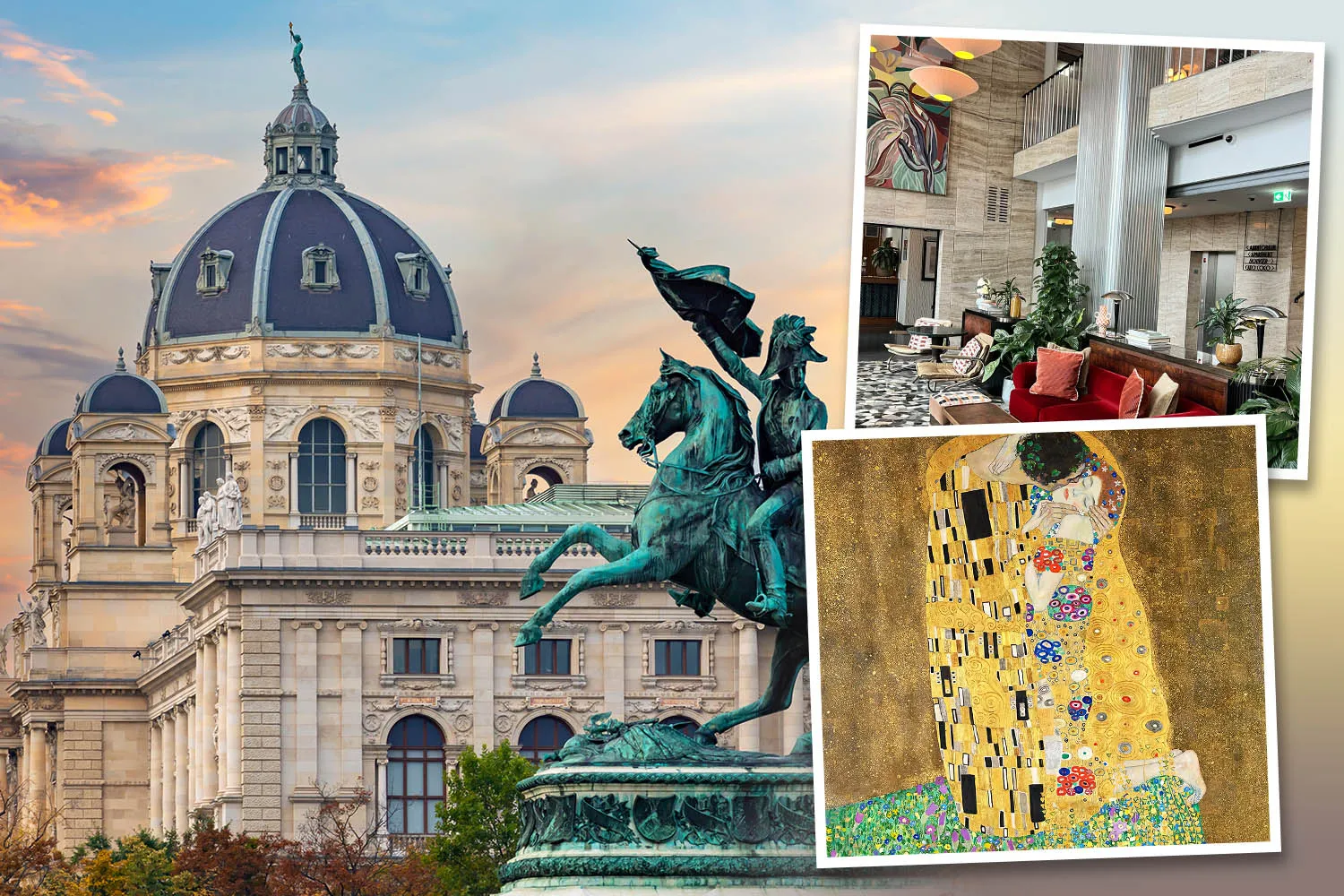
The historic Heldenplatz (Heroes’ Square) in the centre of ViennaCredit: GettyThe Hoxton Vienna is super swish
Not only did Vienna host this year’s Eurovision Song Contest, it’s also been named the city with the best quality of life for three years running, with an abundance of cultural experiences and top cuisine.
WHY SHOULD I GO?
It is impossible not to be mesmerised by the sights, most notably St Stephen’s Cathedral.
Sign up for the Travel newsletter
Thank you!
The striking structure, which dates back to the 12th century, is in the city centre — a Unesco World Cultural Heritage site in itself — and climbing the South Tower’s 343 steps offers breathtaking views.
Vienna has much more than just museums and concerts, though.
It is also home to the world’s oldest operating zoo, founded in 1752, where you’ll find 500 different species, including penguins and koalas.
THESE STREETS ARE MADE FOR WALKING?
The centre — where impressive sights include Heldenplatz — can be reached in around 20 minutes from Vienna Airport by train.
Top tip: take the standard local trains — costing €5.40 (£4.68) — rather than the more expensive CAT train (€14.90, or £12.92) which takes around the same length of time.
In general, the city is very walkable, with lots of flat terrain and pedestrianised areas.
For anything further afield, you can hop on the metro (single ticket €2.40, or £2.07), which even runs through the night on weekends.
If you want to see the sights at a gentle clip-clop, flag down one of the many Viennese horse-drawn carriages, known as Fiakers, with a 20-minute journey costing around €60 (£51.78).
ANYTHING FOR THE BUCKET LIST?
Klimt’s The Kiss can be seen in The BelvedereCredit: Getty
Browse the luxury brands of the Kohlmarkt shopping street until you get to the grand Michaelerplatz.
It is right beside here that you can visit the Spanish Riding School in the Hofburg to watch performances by their incredibly talented Lipizzaner breed of horses.
A short stroll away is the MuseumsQuartier, considered to be one of the largest arts and cultural complexes in the world — with the Leopold Museum (tickets €19, or £16.40) considered a highlight.
If you are in the mood for masterpieces, The Belvedere, the city’s Baroque palace complex, is home to Klimt’s iconic The Kiss painting (entry €23, or £19.85).
WHERE SHOULD I EAT?
Lauren Clark tries out the area’s famous desserts
A trip to Vienna isn’t complete without a wiener schnitzel — the breaded, pan-fried veal cutlet native to the city.
Order it alongside the locals at 160-year-old tavern Gmoakeller.
Further must-haves from the country’s cuisine are its desserts, and the most famous, the sachertorte chocolate cake and the apfelstrudel, can both be enjoyed at Cafe Demel.
A hearty breakfast can be enjoyed at Oefferl, which has a number of branches around the city and bakes fresh pretzels daily.
If you fancy a lighter bite, Bastis Sandwich Bar serves great subs and chicken wings and is close to the impressive Wien Museum of Vienna (free entry).
I FANCY A DRINK…
The coffee house culture in Vienna is so strong that it has been listed an “intangible cultural heritage” by Unesco — and there are numerous cosy spots around the city.
An espresso topped with whipped cream is a traditional caffeine fix here, but you’ll find plenty of other options on the menu at the historic Cafe Hawelka, which has been open since 1945 and was frequented by Andy Warhol.
For an afternoon beer or a glass of wine — including affordable Austrian options that are €5.30 (£4.57) a glass — you can’t go wrong with the terrace of Zum Schwarzen Kameel, especially if the weather is good.
For an evening cocktail, Chez Bernard’s rooftop has outstanding views.
WHERE SHOULD I STAY?
The Hoxton Vienna is within walking distance of the city’s main sights — particularly Belvedere and the scenic Stadtpark.
The hotel used to be the Austrian Chamber of Commerce, and its stylish but warm interiors still have mid-century modern design details throughout.
Guests also have exclusive use of the rooftop pool, which is the largest in the city.
There are also plenty of dining options on site, including the Bouvier restaurant with French elements on the menu, a Cuban- inspired rooftop bar called Cayo Coco and Salon Paradise, a speakeasy-style bar in the basement.
GO: VIENNA
GETTING THERE: EasyJet flies from Gatwick to Vienna from £31.99 each way.
The nation has an excellent publicly funded healthcare system
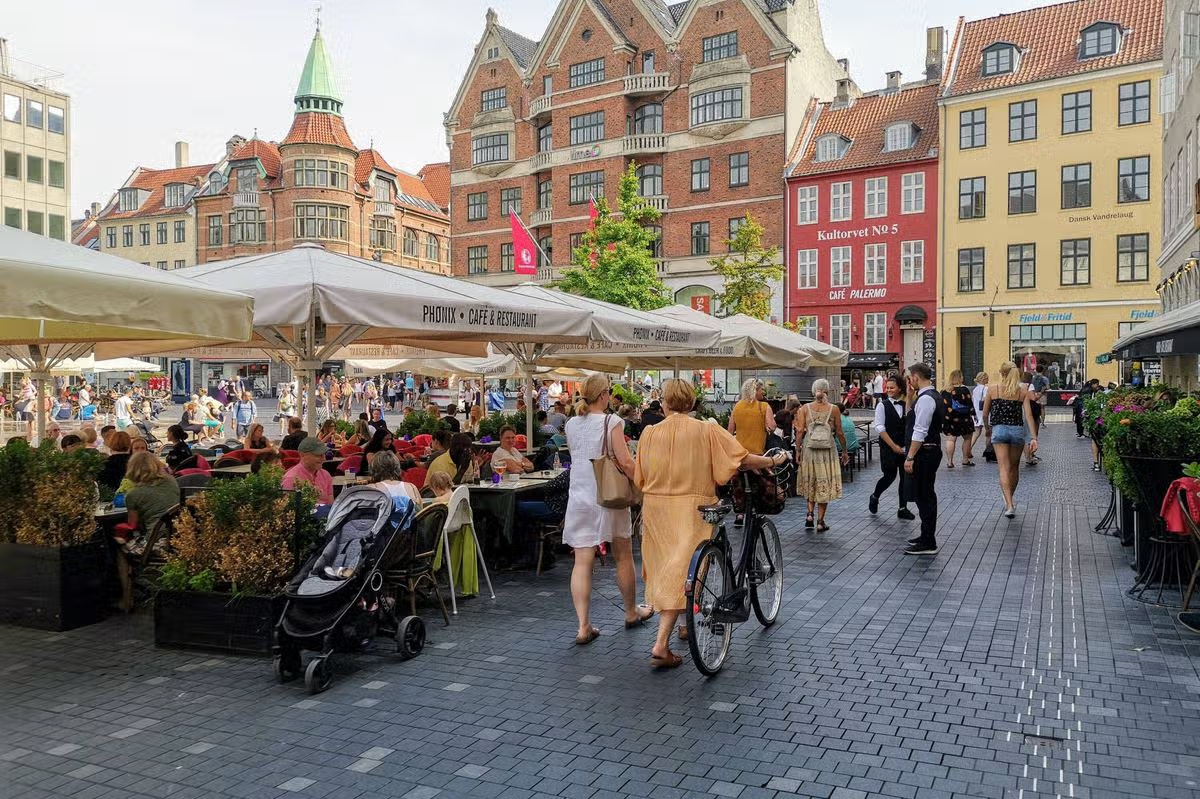
Copenhagen is also one of the world’s most walkable cities in 2026(Image: Getty)
The world’s most liveable city for 2026 has been revealed in The Economist Intelligence Unit’s latest Global Liveability Index. The research examined education, stability, healthcare, infrastructure, and culture across 173 cities around the globe.
Copenhagen, the Danish capital, claimed the top spot as this year’s most liveable city, retaining the title for the second consecutive year. The European city was awarded “perfect” scores across the stability, infrastructure and education categories.
The Economist Intelligence Unit said: “In our 2026 survey, Copenhagen ( Denmark ) retained pole position for the second year running, scoring a perfect 100 out of 100 in three categories and above 95 in the other two, with Vienna ( Austria ) and Melbourne ( Australia ) close behind.”
Copenhagen has also been ranked among the world’s most walkable cities in 2026, according to a recent study by Time Out magazine.
The Danish capital is “compact and mostly flat” with “clearly marked pedestrian zones and elevated pavements”. Copenhagen is also home to Europe’s first and longest pedestrian-only street, Strøget.
Healthcare in Copenhagen is widely regarded as “excellent”. The nation boasts an exceptional publicly funded healthcare system offering free medical treatment, superb infrastructure and highly qualified doctors.
It was praised for both its stability and security, citing its “old-fashioned sense of security”.
It explained: “Young children walk to school unaccompanied by their parents, huge events take place every week without major disorder, and crime rates are consistently low.
Tokyo came in first, with its safety highly praisedCredit: AlamyLisbon’s strong sense of community put it into third placeCredit: Alamy
“Tokyo should celebrate being such a well-mannered metropolis but its exemplary conduct is never taken for granted.”
However, a number of European cities made the top 20 list.
In second place was Copenhagen, citing its “booming restaurant and sauna scene” as well as its low crime rate and urban cycling schemes.
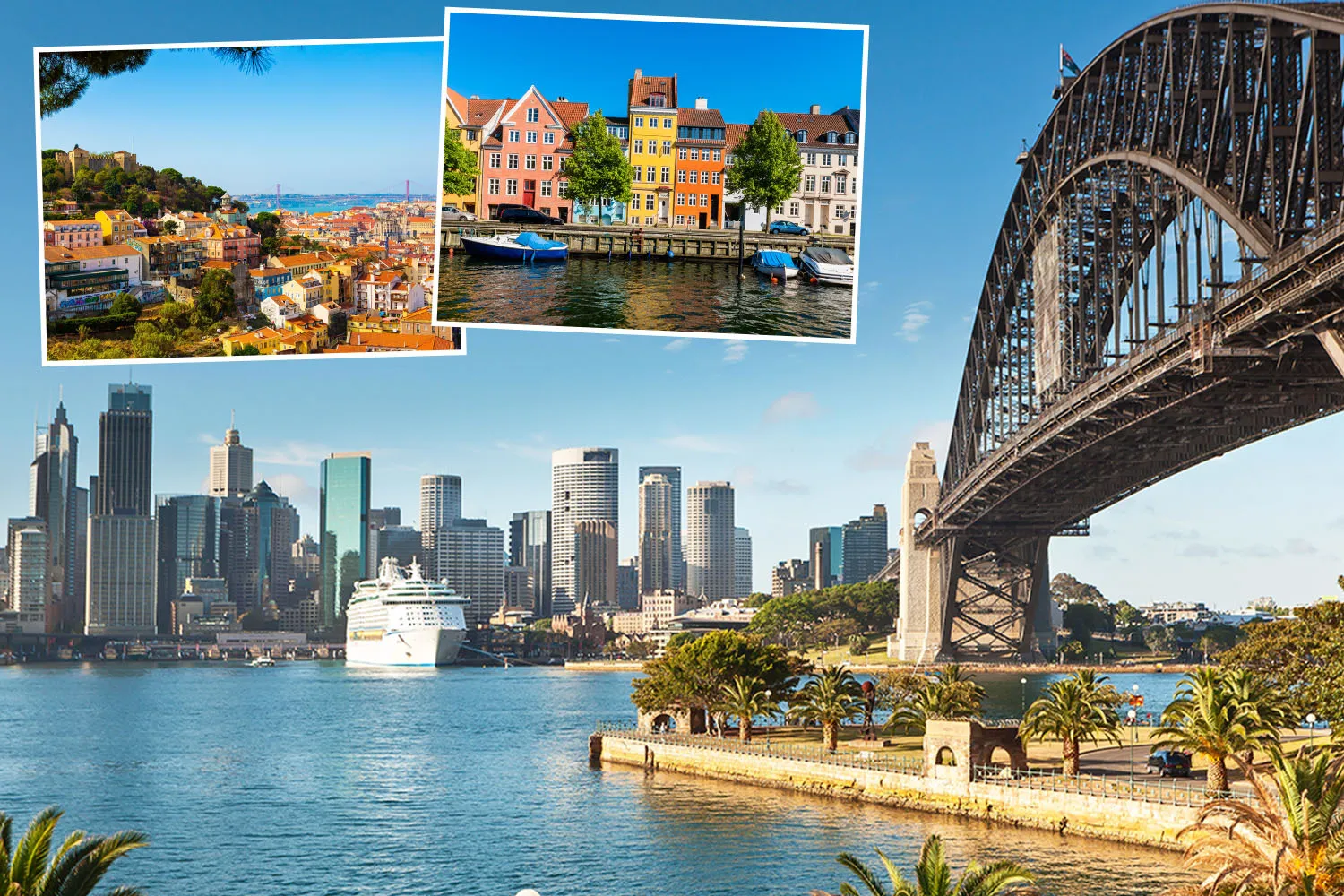
This was followed by Lisbon in third place, for it’s great public transport and local communities.
Sydney was one of the few outside of Europe to make the top 20Credit: Alamy
Lisbon has even become one of the top expat destinations in the world.
Coming in fourth was Vienna, followed by Sydney in 5th.
Other European entries to make the top 10 include Zurich (6th), Madrid (7th), Paris (8th), Munich (9th) and Oslo (10th).
Stockholm, Barcelona, Milan, Amsterdam and Helsinki all snuck into the top 20.