lincoln memorial reflecting pool

Trump tries to blame Reflecting Pool woes on vandalism without proof

The paint is peeling from the Lincoln Memorial Reflecting Pool after the renovation ordered by President Trump, and he is now alleging, without substantiation, that someone damaged it intentionally.

“We’ve had some real problems with Vandalism at the beautiful Reflecting Pool,” he posted on his social media site Friday night. “Just like three days ago, they destroyed the grass outside of the Pool, they’ve also done everything possible to hurt the inside surface that was just installed.” He offered no details to substantiate his claim.

Agencies responsible for law enforcement and upkeep on the National Mall — the U.S. Park Police, National Park Service and Department of the Interior — did not immediately respond to requests for comment.

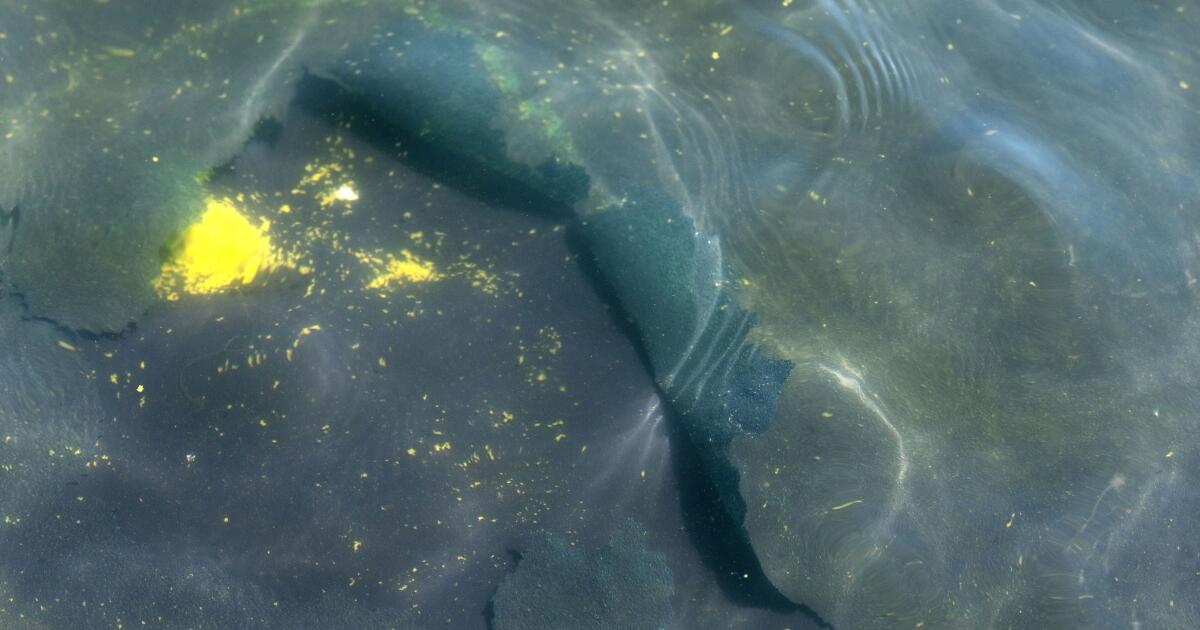
The Washington Post reported that Park Police officers arrested someone Friday who they said was peeling paint from the pool, an act that would not explain the clouds of algae in green water and swaths of loose blue paint detached from the bottom.

Trump insisted something nefarious was going on. “No different than the chemicals that were used on the National Mall, they used something similar in the Reflecting Pool to try to destroy and demean our beautiful work,” he posted.

That was a reference to the discovery of large numbers etched in discolored grass on the National Mall the week before: “86 47,” apparently advocating to “86” — get rid of, in restaurant lingo — the 47th president.

Authorities claimed the numbers may be a threat against Trump, and they are investigating. Trump’s Department of Justice has tried — unsuccessfully so far — to prosecute Trump foe and former FBI Director James B. Comey for posting a photo of seashells arranged in the numerals “86 47.”

Trump’s claims of vandalism came after days of negative attention to the state of the Reflecting Pool, which has raised concerns about the no-bid contract of more than $14 million to refurbish. The president has said the pool rehab was needed as the nation’s 250th anniversary celebrations ramp up.

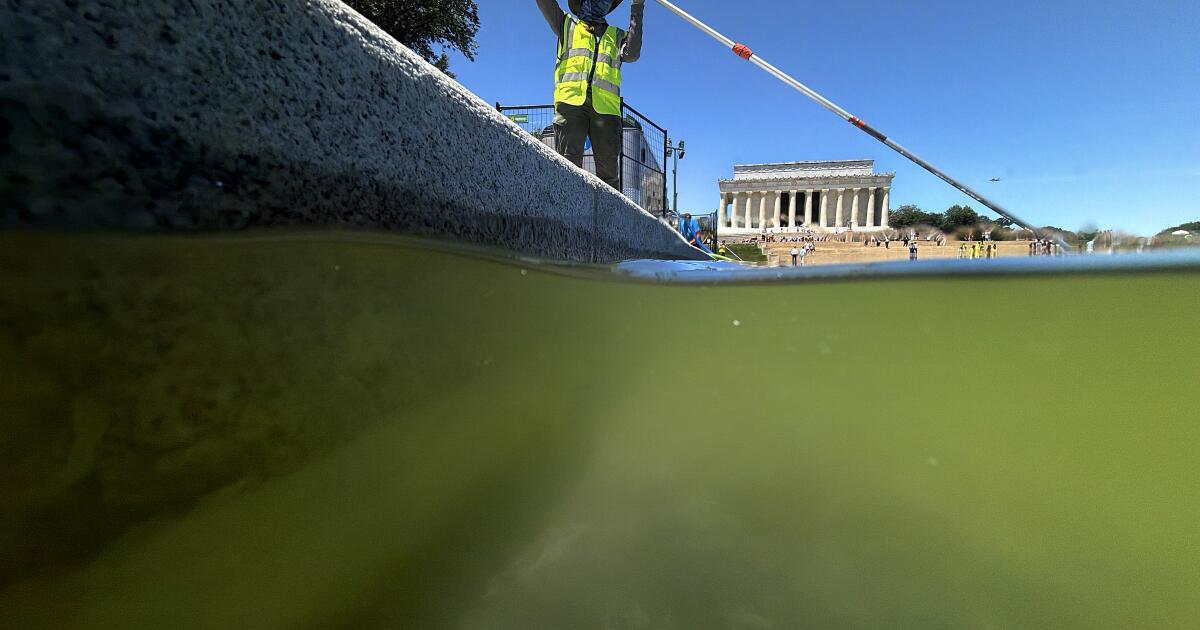
The pool was swiftly beset by an algae bloom that returned its waters to the greenish color that Trump had tried to replace by having the bottom painted “American flag blue.”

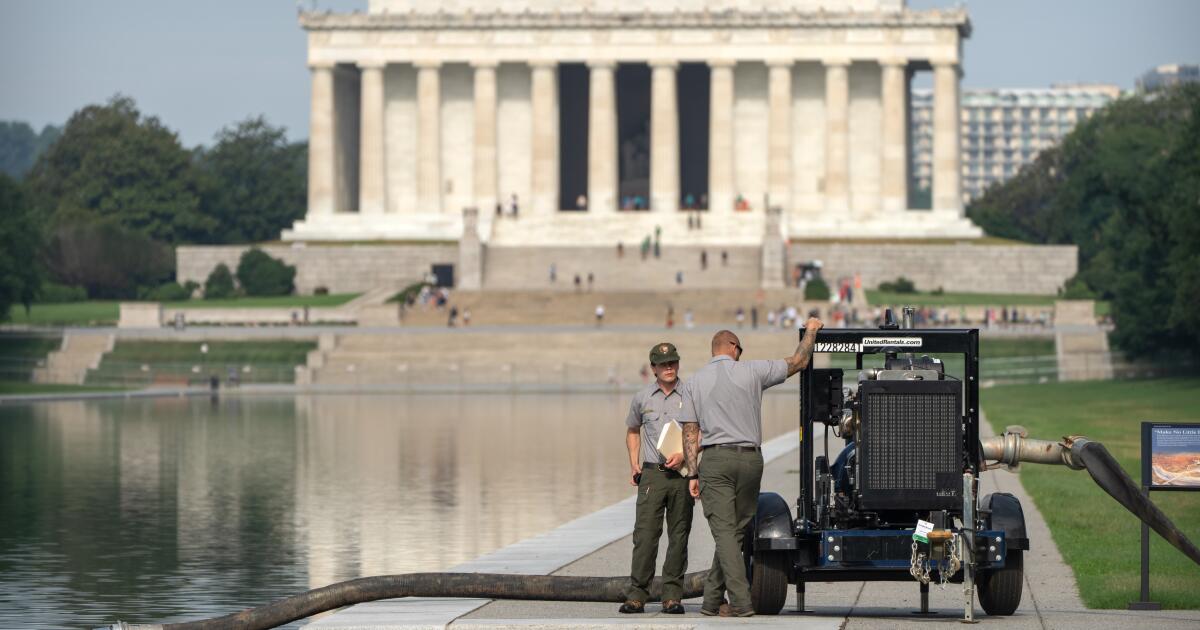
Federal workers treated the pool with hydrogen peroxide to kill the algae. Now, chunks of the blue paint are gone, exposing its rocky bottom.

Source link

Algae persist in Washington, D.C.’s Reflecting Pool, despite administration’s efforts to clear murky waters.

Just days after the Trump administration completed millions of dollars in renovations on the Lincoln Memorial Reflecting Pool to make it American flag-blue, residents and online users noted it had turned a phosphorescent green.

Here’s why:

The calm, still waters of the Reflecting Pool make it an ideal nursery for algae growth. Algae need nitrogen and phosphorus to grow, and the Reflecting Pool is primarily fed by the Potomac River, which gets heavy doses of those nutrients from nearby urban and agricultural lands.

The Potomac also absorbed one of the largest sewage spills in U.S. history earlier this year when a pipe burst five miles upstream of Washington, although that event probably happened too long ago to contribute to the algal bloom today.

Untreated sewage is high in nitrogen and phosphorus. When nutrient levels are high, feasting algae can quickly reproduce.

The Department of the Interior said when the algae first appeared that it was “residual,” from the supply lines to the pool.

Experts also speculate that the darker blue color may be helping the Reflecting Pool absorb more heat. The higher temperatures promote algae growth by allowing their metabolisms to shift into overdrive.

Summer temperatures in D.C. aren’t helping. This week, temperatures are as high as 95 degrees in the city, prompting a heat alert.

The combination probably explains the excessive growth, turning the water surface an opaque green and preventing onlookers from seeing the new blue hue of the concrete basin.

Algae are important and beneficial organisms when the ecosystem is in balance. They’re the base of the aquatic food chain, fed on by herbivores of all shapes and sizes, including shrimp and juvenile fish, which in turn feed organisms higher up the food chain. The single-celled organisms use the power of the sun to produce energy through photosynthesis, similar to houseplants on your balcony.

In an effort combat the algae in the Reflecting Pool, employees of the National Park Service were seen pouring in gallons of hydrogen peroxide, a chemical commonly used in pool maintenance.

The Department of the Interior also is employing a “high-tech nanobubble ozone technology” to destroy the cells of the algae.

Ozone — yes, the same irritant that is in smog — is a gas composed of three oxygen molecules, and the small size of the bubbles allow the most gas transfer into the water, where it can damage algal cells, similar to how it irritates our lungs.

This only treats the symptoms, however. Generally, ozone nanobubbling is effective as a temporary solution for algae blooms. Longer-term fixes would have to address what makes the Reflecting Pool so ideal for algae, such as its depth, darker color and inflow of nitrogen and phosphorus.

In California, ozone nanobubbles also have been used in a project to improve water quality in the Tijuana River. The 120-mile river that runs near the border in northern Mexico and Southern California was the site of a pilot study in 2025. The U.S. section of the International Boundary and Water Commission reported that the nanobubbling reduced “odors and bacteria,” but the project concluded prematurely after a flood swept some of the instrumentation into the river.

Source link

Design plan for Trump’s proposed Washington arch is approved by key federal agency

The U.S. Commission of Fine Arts on Thursday approved the design for the triumphal arch that President Trump wants built at an entrance to the nation’s capital.

Commissioners, all of whom were appointed by Trump, approved the design despite overwhelming opposition from the public. Approval is a key step in the project’s process.

The proposed arch is one of several projects the Republican president is pursuing alongside a White House ballroom to leave his imprint on Washington.

He has said some of his other projects, such as adding a blue coating to the interior of the Lincoln Memorial Reflecting Pool, will beautify the city in time for July 4 celebrations of America’s 250th birthday.

The U.S. Commission of Fine Arts approved the concept for the arch at its monthly meeting in April.

As presented to the federal agency, the arch itself would stand 250 feet tall from its base to a torch held aloft by a Lady Liberty-like figure on top of the structure. The statue would be flanked on top by two eagles and guarded at the base by four lions — all gilded. The phrases “One Nation Under God” and “Liberty and Justice for All” would be inscribed in gold lettering atop either side of the monument.

A public observation deck on top would provide 360-degree views of the surroundings.

The commission’s vice chairman, architect James McCrery II, said in April that he preferred the arch without the figures on top. Removing them would significantly reduce the arch’s height by about 80 feet. Critics of the project, including an overwhelming number of people who submitted public comment in April, said the arch would be taller than any other monument in the capital city and dominate the skyline.

At a height of 250 feet, the arch would dwarf the Lincoln Memorial, which is 99 feet tall, and be close to half the height of the Washington Monument, an obelisk that is about 555 feet tall.

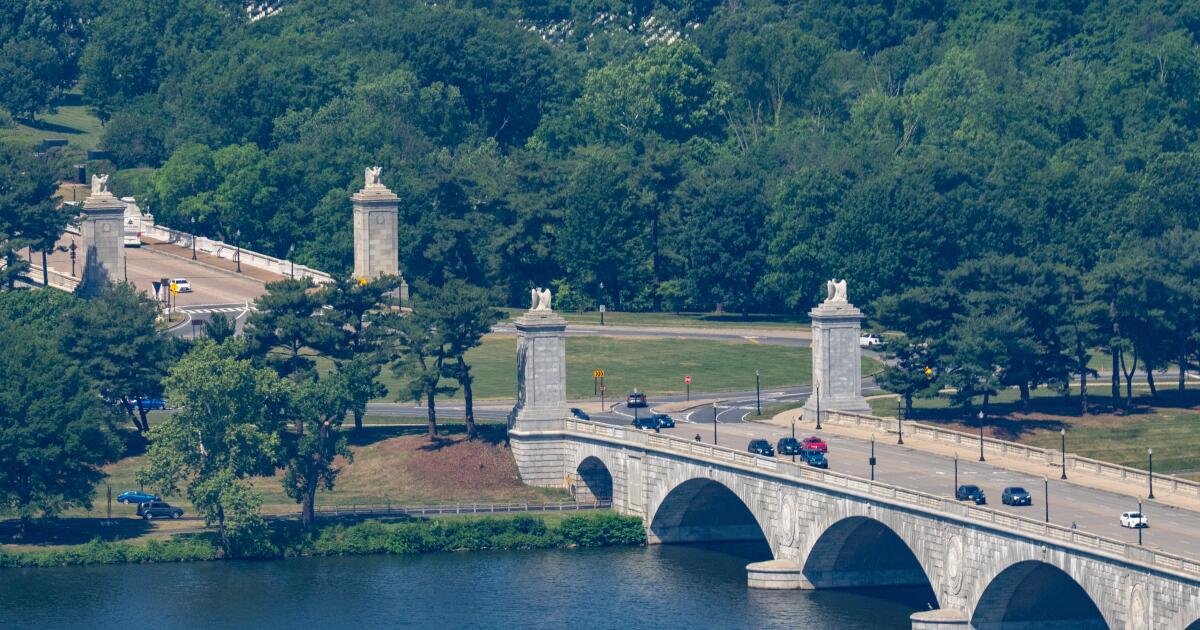
McCrery also recommended that the lions on the base be removed because that animal is “not a beast natural to the North American continent.” And he objected to plans for an underground tunnel for pedestrians to get to the arch, which would be built on a traffic circle between the Lincoln Memorial and Arlington National Cemetery in Virginia.

Preliminary surveys and testing of the site began last week.

A group of veterans and a historian have sued the Trump administration in federal court to block construction on grounds that the arch would disrupt the sightline between the Lincoln Memorial and Arlington House at Arlington National Cemetery, among other reasons.

Trump and Interior Secretary Doug Burgum have argued that Washington is the only major Western world capital without such an arch. Burgum’s department includes the National Park Service, which manages the plot where Trump wants to put the arch.

Trump’s rehab of the Lincoln Memorial Reflecting Pool is also the subject of a court challenge brought by the Cultural Landscape Foundation, which said the administration’s moves to repaint the bottom of the Reflecting Pool blue without first undergoing relevant reviews ran afoul of federal preservation laws governing historic sites.

The nonprofit group argued in a lawsuit filed last week that the changes at the Reflecting Pool are part of Trump’s broader effort to push through dramatic renovations in Washington without proper reviews and undermine the tone of the area.

A hearing in the case was scheduled for Thursday afternoon in federal court in Washington.

Superville writes for the Associated Press.

Source link