WASHINGTON — Expectations were low entering President Trump’s meetings with China’s leader, Xi Jinping, this week, after officials on both sides tempered hopes for a breakthrough. Yet the summit’s stark lack of substance surprised even the closest China watchers.
It was a visual affair designed to project a new phase of managed competition between a prevailing superpower and a rising one — a message that Washington and Beijing are ultimately capable of responsible leadership. But even a cursory look beneath the surface revealed the challenges ahead for the world’s most consequential bilateral relationship.
Industry pleas and bipartisan calls for Trump to negotiate a meaningful framework on artificial intelligence fell on deaf ears. A trade truce between the two sides was extended for a mere two months. And Trump again warned Xi not to assist Iran as the U.S. war there continues — a warning that, so far, has gone unheeded, with millions of dollars’ worth of crucial Chinese parts reportedly arriving in Tehran by the planeload.
“The U.S.-China relationship has settled into a managed stalemate. It has stabilized at the top without stabilizing underneath,” said Craig Singleton, a senior fellow on China at the Foundation for Defense of Democracies.
“The elaborate pageantry matters precisely because there is still relatively little substantive progress to showcase,” Singleton said. “Trump appears to value the personal relationship as an end in itself. Xi treats his relationship with Trump as a means to shape U.S. choices and forestall future competitive actions.”
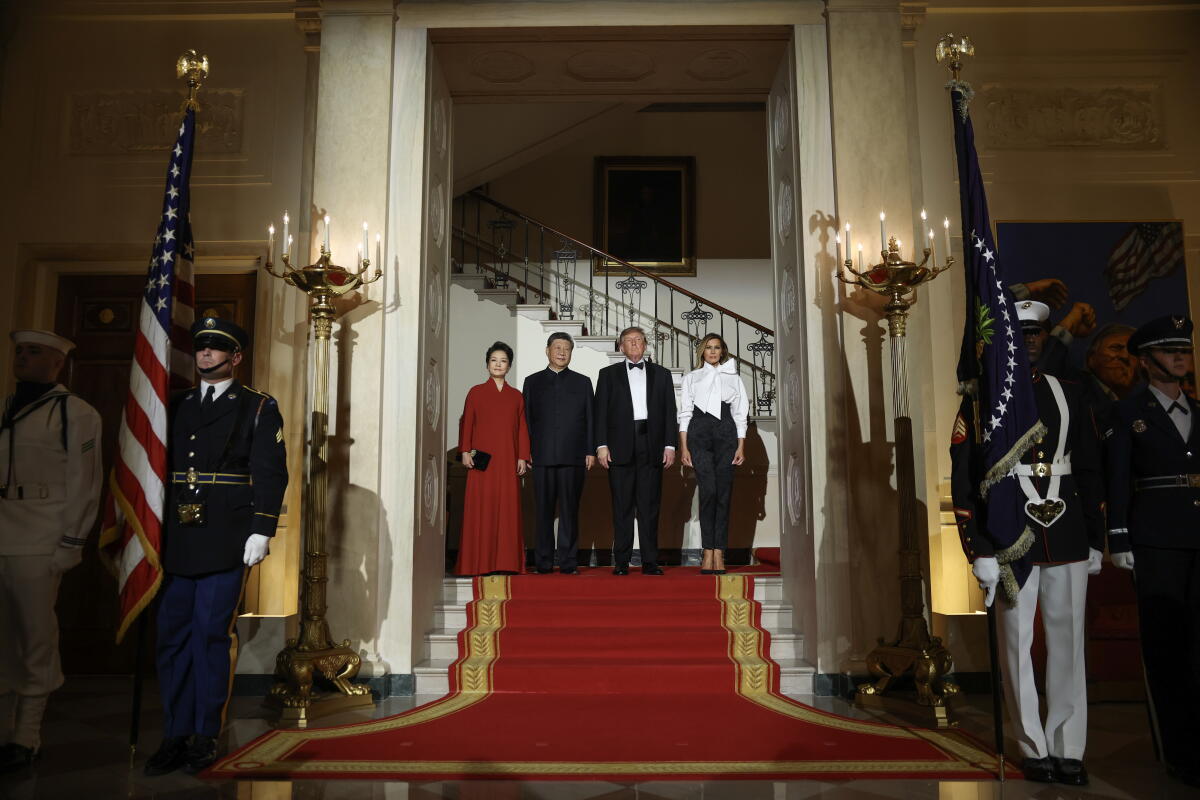
President Trump and First Lady Melania Trump stand with Chinese President Xi Jinping and First Lady Peng Liyuan before Thursday night’s state dinner.
(Kevin Dietsch / Getty Images)
The summit followed a playbook from Trump that has become familiar over the last decade, placing his direct relationships at the center of diplomacy and reducing the complexities of statecraft to blunt attempts at charm.
As he did during his lavish state visit to Beijing this spring, Trump repeatedly patted Xi on the back, a gesture considered highly inappropriate in Chinese political culture that nevertheless reflected Trump’s strategic focus on personal friendship.
He toured Xi around a series of controversial renovations to the White House, including the South Lawn — now paved over with a massive helipad designed as the presidential seal — and the Rose Garden, also paved over in order for Trump to host al fresco dinner parties.
Before entering a heavily gilded Oval Office, Trump walked Xi along a renovated colonnade now adorned with gold-framed portraits of U.S. presidents. He paused at one for his predecessor, President Biden, replaced with a mocking image of an autopen, suggesting the former president was incapable of signing documents himself.
Trump patted Xi on the back once more, and the two men laughed, in a moment that generated outrage online.
“Let’s be very clear on this one point,” John Delaney, a former Democratic member of Congress, wrote on social media. “The President mocking a former President in front of the communist leader of China is the most un-American thing an American president has ever done.”
Tim Cook, executive chairman of Apple Inc., during the state dinner for Chinese President Xi Jinping.
(Annabelle Gordon / Bloomberg / Getty Images)
Part of the state visit included a dinner at the White House that was attended by some of the country’s most prominent tech executives, such as Elon Musk, Sam Altman and Mark Zuckerberg. The tech giants’ presence at the event was notable given that there was heightened public interest in knowing how China and the United States are planning to regulate artificial intelligence.
During the visit, Xi called for artificial intelligence to remain “under human control” as the two countries race for technological advancement in the industry. Lawmakers and AI industry leaders have also called for guardrails on the nascent technology, which experts warn could soon surpass human understanding. Trump, however, has been reluctant to embrace limits on the industry, and it is unclear how much the topic was discussed while Xi was in Washington.
Xi Jinping’s remarks reflect growing concern within China over whether governments in Washington or Beijing will be able to contain a technology with potentially transformative capabilities, according to a U.S. official.
But the visit showed a surprising alignment of visions between the U.S. and Chinese presidents, embracing fierce competition that avoids miscalculation and conflict. Both stressed the importance of dialogue, with Xi invoking the concept of the Thucydides trap, a historical paradigm that holds that rising powers inevitably clash with established ones.
“I don’t think anyone will be surprised if there are no significant agreements,” said David Ochmanek, a senior researcher at Rand. “My sense is that Xi sees little reason to compromise with us on anything right now.”
Trump and Xi arrive for a state dinner in the East Room of the White House on Thursday night.
(Brendan Smialowski / AFP / Getty Images)
The two men are expected to meet twice more this year, alongside other world leaders, at the Asia-Pacific Economic Cooperation summit in Shenzhen, China, and the Group of 20 summit in Miami.
“We do not need to avoid mentioning competition, but our competition should be a healthy one, and should be kept within bounds,” the Chinese president said Thursday from the Cross Hall of the White House. “It should be a race of catching up with one another, not a wrestle in which one either wins or loses. China and the United States must hold the line of no conflict, and no confrontation between us.
“Our two militaries should maintain regular dialogue, and improve mechanisms for crisis communication and prevention,” he continued. “The Thucydides trap can be overcome.”
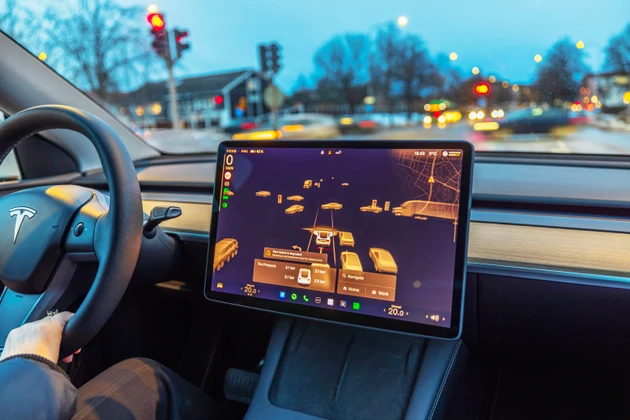
Tesla’s (TSLA) Full Self-Driving system exceeded the legal speed limit in 55% of tested 30-km/h road segments in Brussels and repeatedly attempted to overtake cyclists where the maneuver is prohibited, Belgian road-safety group Johanna.be said.
The U.S. Environmental Protection Agency said Monday it will repeal some carbon dioxide emission rules for power plants, the latest step in the Trump administration’s broader effort to curb the agency’s role in regulating climate change.
WASHINGTON — The Supreme Court has blocked President Trump’s plan to restrict voting by mail, ruling it is too late to impose new postal service rules for the November election.
The justices on Monday turned down an emergency appeal from Trump’s lawyers, who argued the government needed a new and untested system of unique bar codes to track all the ballots of the tens of millions of people who vote by mail.
Instead, the justices left in place a judge’s order that prevents the U.S. Postal Service from enforcing the new rules for the midterm elections.
Concurring, Justice Brett M. Kavanaugh agreed it was too late to enforce the new rules for this election.
Justices Samuel A. Alito Jr. and Clarence Thomas dissented.
The decision in USPS vs. California is a victory for California Atty. Gen. Rob Bonta and the attorneys general for 22 other Democratic-led states who sued to block the new rules.
Last week, they warned there would be chaos and confusion if Trump’s rules were put in effect now.
Bonta cheered the decision late Monday, calling it “a victory for our democracy and a powerful affirmation of the rule of law” in a case where the stakes “could not have been higher.”
“Voting is the fundamental right from which all other rights flow, and all 50 states allow ballots to be cast by mail in some form. In California and several other states, mail voting is the primary way elections are conducted,” Bonta said. “Had this rule been allowed to take effect, the consequences would have been catastrophic.”
He said his office “will remain vigilant in safeguarding our elections,” and urged voters to make their voices heard.
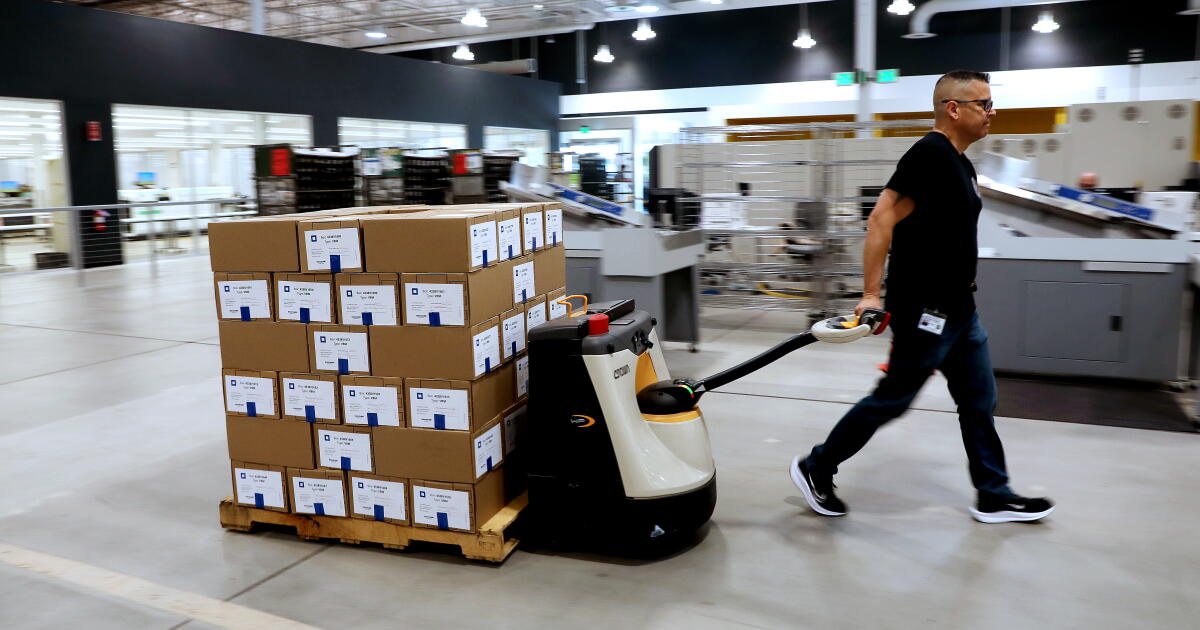
Under the proposed rules, state and county election officials across the nation would be required to enroll each voter with a unique bar code and submit this data to a new online portal that, as of last week, was not yet functioning.
Without the individualized bar codes, states could not send ballots through the mail. In California, that would mean election officials would have to enroll 23 million voters with new bar codes before state ballots could be mailed.
“Compliance with the USPS’ rule would be impossible ahead of the midterms, meaning that millions of voters would be unable to vote by mail and some would not be able to vote at all,” the state attorneys general told the court last week.
The impact would not be limited to Democratic-leaning states. Utah Lt. Gov. Deidre Henderson said it would be “an unmitigated disaster” if the new rules were put into effect now. About 30% of the nation’s voters — and 80% of Californians — cast ballots by mail in 2024.
But Trump has maintained, without providing evidence, that voting by mail leads to widespread cheating and fraud.
In March, he issued an executive order that called on the postal service to do more to “enhance election integrity.”
“Unique ballot envelope identifiers, such as bar codes, enable confirmation that only citizens receive and cast ballots,” he said.
Elections experts say there is no evidence of such widespread fraud, despite robust audits and other searches for it.
State attorneys general argued that the Constitution entrusts states, not federal officials, to conduct elections. While Congress may impose new rules, it is not done to limit voting by mail or to empower the postal service to do so, they said.
Trump and his lawyers maintained the administration had a duty to combat fraud, including in elections.
Solicitor Gen. D. John Sauer described the new rules as “modest measures that will help prevent and restrain potential gross abuses of the mails to perpetrate a fraud on the Nation.”
And he said the federal government, the states and the voting public would face irreparable harm if the new Postal Service rules were not allowed to be applied to the coming election.
But U.S. District Judge Indira Talwani, in Boston, ruled the postal service may not put its new regulations into effect for the Nov. 3 election. She found the Trump administration had presented no evidence to the court of widespread fraud existing, while the states had presented ample evidence that implementing such a system on such a fast timeline posed tremendous risk.
The 1st Circuit Court affirmed her order and said the administration’s lawyers “have not even seriously challenged the … detailed findings about the chaos and widespread disenfranchisement that would occur between now and November 3 should the USPS rule take immediate effect.”
On Sunday, U.S. District Judge Carl Nichols — a Trump appointee — also blocked the new Postal Service rules from being implemented in separate cases brought by the NAACP and Democratic groups, finding they clearly exceeding the Postal Service’s authority in elections.
What the future will hold is unclear. The courts did not declare the new rules to be illegal or unconstitutional, though multiple lower courts have suggested that parts of the plan likely would be — including by exceeding the Postal Service’s authority to intervene in elections.
Much of the debate before the appellate and high court related to the rushed timeline under which the Postal Service was seeking to implement the changes. With that set aside by the Supreme Court’s ruling that the rules will not apply this election, the debate in the lower courts may shift focus to whether the new regulations can be applied to the 2028 elections.
Nevada Secretary of State Cisco Aguilar, chair of the Democratic Assn. of Secretaries of State, said the high court’s ruling was a clear loss for Trump, and that state election officials are ready to continue their fight to protect U.S. elections if necessary.
“This ruling affirms what our Constitution has always held: Elections belong to the American people, not a desperate man in Washington,” he said.
The renewed escalation in Yemen is no longer simply a Yemeni battlefield development. For Saudi Arabia, it is becoming a direct test of national security, economic resilience and the kingdom’s ability to prevent the wider regional war from spilling further across its borders.
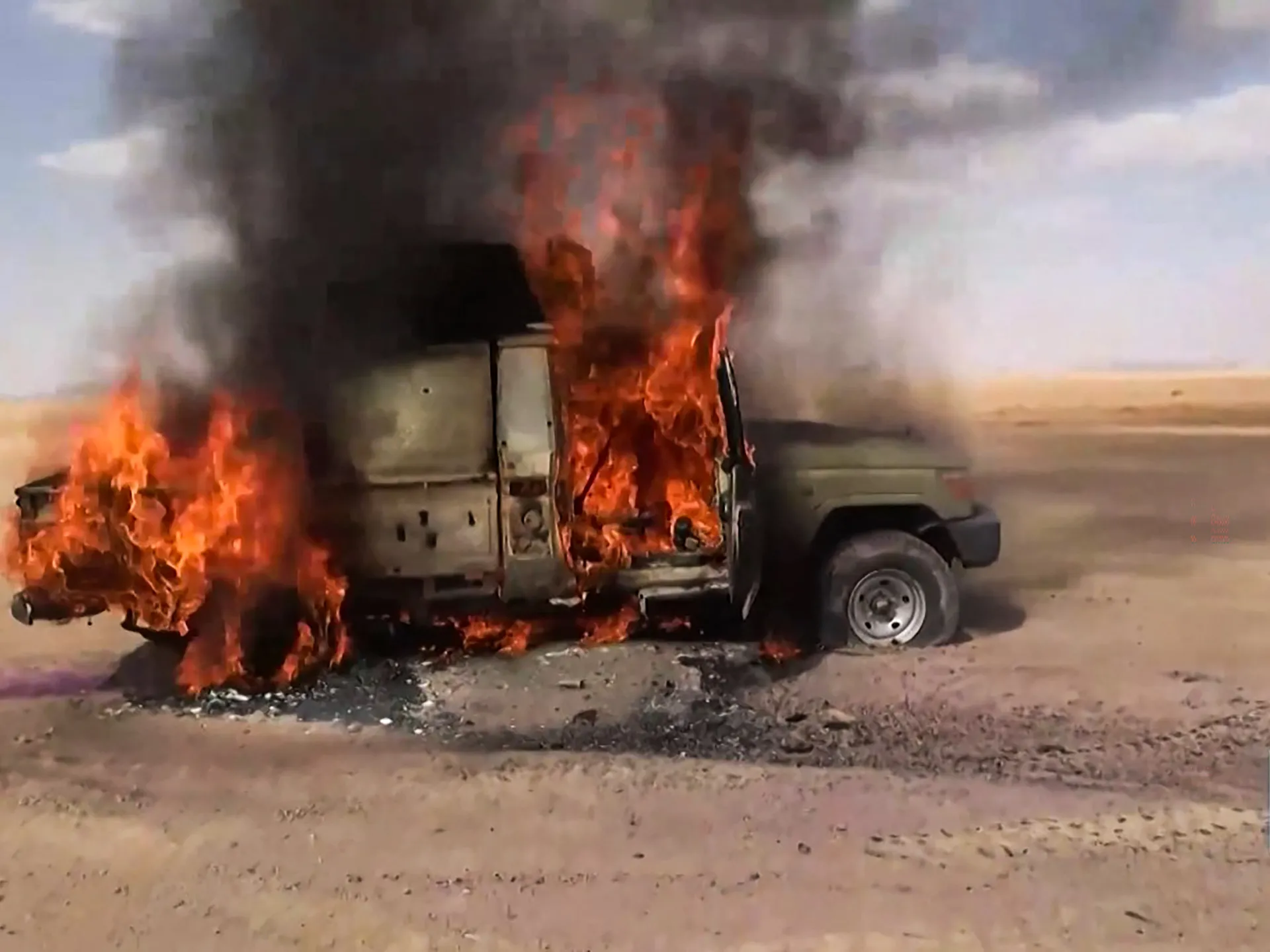
The latest Houthi attacks have demonstrated this clearly. Missiles and drones have hit civilian and economic sites in Abha, Khamis Mushait, Jizan and Najran, injuring dozens of civilians and causing fires and temporary disruption at energy facilities. The attacks came as fighting intensified in Yemen and around the western coast, while the Houthis continued to threaten maritime traffic in the Red Sea and Bab al-Mandeb.
Saudi Arabia therefore faces two interconnected threats: Attacks on its territory and attempts to disrupt the maritime routes on which regional and international trade depends.
This creates a difficult strategic equation for Riyadh. Saudi Arabia has spent the past several years trying to move away from direct military involvement in Yemen and towards diplomacy, de-escalation and support for a political settlement. A return to an open-ended war would contradict that strategy and impose unnecessary political and economic costs.
But restraint cannot mean accepting repeated attacks on Saudi territory.
A different security environment
The security challenge today differs considerably from the first years of the Yemen war.
Saudi Arabia has strengthened its air and missile defences, improved coordination between its military and security institutions and accumulated considerable experience in countering drones and ballistic missiles. It is therefore much better prepared to defend its territory than it was a decade ago.
Yet the Houthi threat has also evolved.
The group possesses a combination of ballistic missiles, cruise missiles and increasingly sophisticated drones. Even when most incoming weapons are intercepted, relatively inexpensive systems can impose disproportionate defensive costs and create uncertainty around airports, industrial facilities, border communities and energy infrastructure.
This means Saudi security cannot depend on interception alone. No air defence system can guarantee a perfect shield indefinitely.
The strategic objective must therefore be deterrence: Convincing the Houthis that attacks on Saudi territory will impose costs greater than any political or military benefit they expect to obtain.
This does not necessarily require returning to the large-scale military campaign of previous years. Riyadh has more options today. These include intelligence operations, strengthening Yemeni government forces, improving border security, disrupting missile and drone supply networks and, where necessary, conducting proportionate operations against facilities directly involved in attacks on Saudi Arabia.
The distinction is important. Saudi Arabia does not need to choose between doing nothing and returning to a full-scale war.
The economic front
The economic consequences are equally important.
Saudi Arabia is one of the world’s largest energy exporters, which makes attacks on its oil infrastructure internationally significant even when physical damage is limited. The latest attacks affected energy facilities and contributed to renewed concern in already nervous global oil markets.
There is an apparent paradox here: Regional instability can push oil prices higher and temporarily increase Saudi oil revenues. But higher prices caused by war should not be confused with economic benefit.
Saudi Arabia’s economic strategy under Vision 2030 depends increasingly on stability, investment, tourism, logistics, technology and the development of major projects outside the oil sector. Persistent missile and drone attacks can raise insurance and transport costs and affect perceptions of regional risk even if the kingdom’s underlying economy remains strong.
The greater strategic concern is maritime security.
Saudi Arabia occupies a strategic position between two of the world’s most important energy corridors: The Strait of Hormuz to the east and Bab al-Mandeb to the west. Disruption of both routes represents a serious challenge not only for Saudi Arabia but for the global economy.
This is why the Red Sea dimension of the Yemen conflict is particularly important. Bab al-Mandeb connects the Indian Ocean with the Red Sea and the Suez Canal. A sustained Houthi ability to threaten shipping there would increase freight and insurance costs and potentially divert vessels around Africa.
Saudi Arabia, however, possesses an important strategic advantage: Its energy infrastructure is not completely dependent on the Gulf. The kingdom can transport significant quantities of oil through its East-West pipeline to terminals on the Red Sea. This provides an alternative to Hormuz and gives Riyadh greater strategic flexibility.
That advantage does not, however, eliminate Saudi Arabia’s exposure to insecurity elsewhere in the Red Sea, including around Bab al-Mandeb.
Protecting Bab al-Mandeb should therefore be understood not simply as a Saudi or Yemeni interest but as an international economic and security requirement.
Avoiding the Houthi trap
The greatest danger for Riyadh may be political rather than purely military.
The Houthis could benefit from drawing Saudi Arabia back into an extensive war. It would allow them to portray the conflict once again as a confrontation between Yemen and an external power rather than a struggle among Yemenis over the future of their state.
Saudi Arabia should avoid this trap.
Confronting the Houthis must remain fundamentally a Yemeni responsibility. The internationally recognised Yemeni government and its forces should carry the principal burden of confronting Houthi expansion on the ground, while Saudi Arabia provides political, economic, intelligence and defensive support.
This is particularly important on the western coast. If the Houthis consolidate their military position around strategic areas overlooking the Red Sea and Bab al-Mandeb, the consequences will extend far beyond Yemen.
The objective should not be to retake Sanaa through another large-scale air campaign or restart an indefinite regional war. It should be to prevent the Houthis from using military force to change the regional balance, threaten neighbouring states or threaten international maritime arteries.
Diplomacy backed by deterrence
Saudi policy is therefore likely to operate on several tracks simultaneously.
First, Riyadh will continue strengthening its air and missile defences and protecting critical infrastructure. Second, it can increase support for Yemeni government forces while avoiding unnecessary direct involvement in ground combat. Third, it will seek broader regional and international cooperation to secure the Red Sea and Bab al-Mandeb.
At the same time, diplomatic channels should remain open.
Saudi Arabia has repeatedly demonstrated its preference for a negotiated settlement in Yemen. But negotiations are sustainable only when both sides believe that escalation carries unacceptable costs.
Diplomacy, therefore, must be backed by credible military power.
Saudi Arabia has strong incentives to prevent Yemen from becoming another permanent front in the wider regional confrontation. The kingdom’s economic transformation requires stability, while its geopolitical interests require secure borders, uninterrupted energy exports and freedom of navigation.
But the same logic that encourages restraint also places limits on it.
If attacks on Saudi cities, civilians and energy infrastructure continue, Riyadh will increasingly regard the issue not as intervention in the Yemeni civil war but as the defence of Saudi territory.
That distinction will shape what comes next.
Saudi Arabia does not need another prolonged Yemen war. Nor does Yemen. But avoiding one requires restoring deterrence while preserving the possibility of a political settlement.
The most effective Saudi strategy, therefore, is neither unlimited escalation nor passive restraint. It is calibrated pressure: Defend the kingdom, strengthen legitimate Yemeni institutions, protect the Red Sea, keep diplomatic channels open and make clear that attacks on Saudi territory will carry consequences.
The views expressed in this article are the author’s own and do not necessarily reflect Al Jazeera’s editorial stance.
China has long been a rare partner to Iran, with the economic heft to blunt the United States’ efforts to strangle the Iranian economy.
Yet even as China opposes US President Donald Trump’s latest pressure campaign, few observers expect it to go much further than the modest economic links it has thus far forged with Iran to shield it.
Recommended Stories
list of 4 itemsend of list
While China opposes the Trump administration’s military attacks and sanctions against Iran, Beijing’s relationship with Tehran is just one consideration in a foreign policy that seeks to balance relations with numerous countries, including the US and the Gulf states, limiting its appetite to prop up the Iranian leadership at any cost, analysts say.
“China, with broader global interests, can only actively promote de-escalation of the US-Iran conflict, and cannot and will not engage in fierce confrontation with the US for Iran’s sake,” said Hongda Fan, director of the China-Middle East Center at Shaoxing University in China.
“Ultimately, the US-Iran conflict must be resolved by the two countries themselves,” Fan said.
China and Iran share substantial trade links, particularly in energy, and a mutual suspicion of US dominance, but their relationship is heavily lopsided, with Tehran depending on Beijing far more than vice versa.
That asymmetry in ties was on full display this week at the annual gathering of the Shanghai Cooperation Organisation, a 10-member bloc widely seen as a counterbalance to US hegemony, where Chinese President Xi Jinping joined more than a dozen non-Western leaders, including Iranian President Masoud Pezeshkian.
While Iranian state media reported that Pezeshkian held a “brief meeting” with Xi on the sidelines of the summit in Bishkek, Kyrgyzstan, Chinese outlets made no mention of the encounter.
Xi immediately followed his attendance at the summit with his first visit to Egypt in a decade on Tuesday, using the visit to call on countries in the Middle East to oppose “external interference” and reiterate his calls for a diplomatic resolution to the Iran war.
As Iran’s top trade partner, China has taken up to 90 percent of Iranian oil exports since the US and Israel launched their war in late February.
Iranian crude, however, accounts for only about 2 percent of China’s overall energy mix.
While China’s oil purchases have been an economic lifeline for Tehran, Chinese importers have not been immune to fears of exposure to US sanctions.
China’s major state-owned refiners such as Sinopec and PetroChina have shunned Iranian oil for years, leaving the trade to independent “teapot” refiners with minimal links to the dollar-based global financial system.
Though the Trump administration has imposed sanctions on these “teapot” refiners and a limited number of China- and Hong Kong-based firms and individuals, it has yet to target major Chinese banks accused of facilitating Iranian oil purchases.
The Trump administration has hinted at targeting China’s financial system as part of its ramped-up sanctions campaign, dubbed “Operation Economic Outcast”, though analysts are sceptical that Washington will risk provoking Beijing’s ire as the sides seek to lower the temperature in their trade war before a scheduled summit between Xi and Trump on September 24.
“The legitimate question is why third countries should be expected to adopt Washington’s unilateral economic policy towards another sovereign state,” said Zichen Wang, deputy secretary-general of the Center for China and Globalization (CCG) think tank in Beijing.
“That does not, however, mean that Beijing will provide Tehran with a blank cheque,” Wang said.
“China is likely to continue opposing US secondary sanctions politically and to defend what it considers legitimate Chinese commercial interests. But past behaviour also shows that major Chinese banks and state-owned companies are highly conscious of sanctions exposure.”
Rhetoric versus reality
Even as Beijing and Tehran have forged closer ties, their relations have for years been marked by a substantial gap between rhetoric and reality.
While China pledged to invest up to $400bn in Iran over 25 years as part of a “comprehensive strategic partnership agreement” signed in 2021, few projects have materialised amid what analysts say is Chinese firms’ reluctance to navigate sanctions and the opaque Iranian bureaucracy.
In 2023, Iran’s then deputy economy minister, Ali Fekri, complained that he was “not satisfied” with China’s level of investment since the agreement, saying it had only amounted to about $185m.
“Iranian experts often blame their government for not doing enough to attract Chinese investors or not pushing Chinese companies to share more technology,” said Andrea Ghiselli, head of research at the ChinaMed Project.
“However, the reality is that there is no point for Chinese companies to give up their ties with the international financial system to expand their business in Iran,” Ghiselli said.
“It is much easier and more profitable to trade and invest elsewhere. Iran’s own domestic physical and bank infrastructure is also an obstacle.”
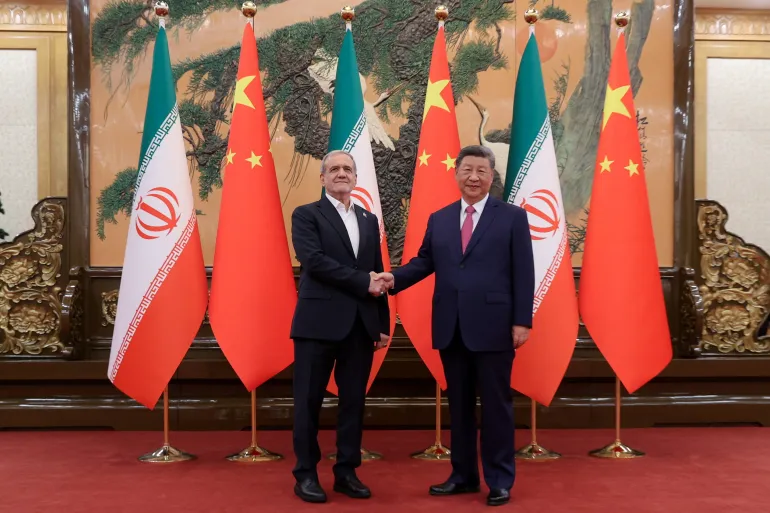
Iranian President Masoud Pezeshkian and Chinese President Xi Jinping shake hands as they meet in Beijing, China, on September 2, 2025 [Iran’s presidential website/Handout via Reuters]
Meanwhile, the most tangible measure of China’s economic support, purchases of Iranian oil, has been dwindling amid the US blockade of Iranian ports.
Iranian crude exports via the Strait of Hormuz, mostly bound for China, fell from an estimated 1.85 million barrels per day (bpd) in March-April to just 240,000bpd in August, according to data from ship-tracking platform Kpler, though millions more barrels shipped before the blockade are still at sea.
In an interview with CNBC on Monday, US Treasury Secretary Scott Bessent said “only” about 30 million barrels of Iranian oil remained on the water and Chinese remittances to Iran were “going to run out”.
Kpler last month estimated that about 80 million barrels were in on-water shortage, enough to provide revenues to Tehran for up to six months.
“For China, Iran is valuable – but replaceable across many dimensions. Iranian oil matters, but China can obtain energy from Saudi Arabia, Russia, Iraq, the UAE, and numerous other suppliers,” said Mordechai Chaziza, an expert on China’s Middle East policy who lectures at Ashkelon Academic College in Israel.
“Iran offers geopolitical access, but China possesses relationships throughout the region. Iran supports China’s multipolar agenda, but so do many other states.”
China’s support for Iran is also not risk-free for Beijing, given its important relationships with Iranian rivals such as Saudi Arabia and the United Arab Emirates, Chaziza said.
“Saudi Arabia and the UAE are major energy and commercial partners.
“Gulf stability is vital because China obtains roughly half of its crude imports from the Middle East,” he added.
The “ideal outcome” for Beijing, Chaziza said, would be “a stable, sovereign, economically connected, and internationally non-Western” Iran, but not one “whose confrontation with Washington, Israel, or the Gulf monarchies forces China to choose sides”.
Wang, at the CCG, said that while Beijing appears determined to defend Chinese commercial interests, it is unlikely to sacrifice its broader interests in the region or elsewhere.
Beijing’s warning that it is ready to take countermeasures against unilateral sanctions is “not the same thing as promising to underwrite the Iranian economy”, Wang added.
For China, Iran is seen more as a customer than an ally, said Kerri Bitsoff, a former senior official at the US Treasury’s Office of Foreign Assets Control.
“I don’t think this is the alliance some people think it is, even though there’s real support. I think of a more like a customer relationship that Iran can’t walk away from,” Bitsoff said.
“And it was good for China – they got cheap oil, they got a US tied up in the Middle East, but I think that only lasts up until the point where it threatens China’s other interests,” she added.
Secretary of Health and Human Services Robert F. Kennedy Jr. listens as Administrator of the Centers for Medicare and Medicaid Services Mehmet Oz whispers to him behind President Donald Trump at an announcement on healthcare affordability on Monday. On Tuesday, Kennedy hosted a symposium on children’s screen time. Photo by Annabelle Gordon/UPI | License Photo
Sept. 1 (UPI) — The U.S. Department of Health and Human Services encouraged families to reduce screen time for their children during a symposium Tuesday in Washington, D.C.
The event, called the Live Real Life Symposium, was held at the Hubert H. Humphrey Building and brought together “leaders from technology, medicine, research, education, government, and advocacy groups to examine the harms of screen use in children and discuss actionable approaches to supporting healthier childhood development,” a press release from HHS said.
The symposium also introduced The Magic Tablet, a children’s book released by HHS meant to communicate the Live Real Life principles in a children’s book format.
“Our children get one childhood, and we cannot allow screens to replace the real-world experiences they need to grow and thrive,” HHS Secretary Robert F. Kennedy Jr. said in a statement. “Through the Office of the Surgeon General’s ‘Live Real Life initiative,’ we are giving families practical tools to put technology in its proper place and get children back to playing, exploring, connecting and experiencing the world around them.”
The event was meant to build on the Surgeon General’s Warning on the Harms of Screen Use issued earlier this year, which outlines how factors such as age, content, design, purpose and duration influence when screen engagement may be beneficial and when it’s harmful.
“The well-being of children is not just important today, but must be an ongoing priority for the public health communities,” said Dr. Stephanie Haridopolos, director of national health communications for the Office of the Surgeon General and principal deputy assistant secretary for health. “Technology has a place in our lives, but it should never come at the expense of our children’s health.
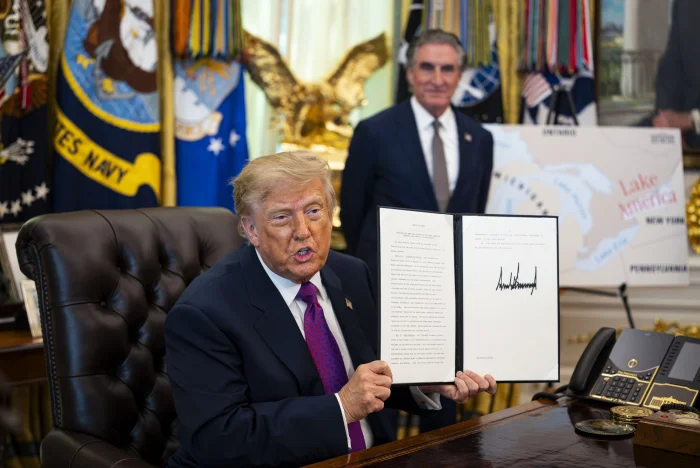
President Donald Trump signs an executive order to rename Lake Ontario as Lake America in the Oval Office of the White House on Thursday. Photo by Al Drago/UPI | License Photo