License

Your last-minute guide to election day challenges in California’s 2026 primary election

It’s election day in California’s 2026 primary, and you’re headed to the polls — until you realize you’re not sure you’re registered, or fear you might not make it to the vote center on time.

Here are some common election day concerns and challenges and how to end your Tuesday with an “I voted” sticker.

I forgot to register to vote

You can still register to vote on election day as a conditional voter through the same-day voter registration process.

Eligible citizens who need to register or re-register to vote within 14 days of an election can complete this process and vote at county elections offices, polling places or vote centers. To register you’ll need to provide a driver’s license, a state identification number or the last four digits of your Social Security number.

A complete list of county election office addresses can be found here.

Your submitted ballot will be processed and counted once the county elections office has completed the voter registration verification process.

If you’re unsure about your voter status, you can find your record here by providing some personal information including your date of birth and driver’s license number.

I don’t know where my polling place is

You can find your nearest polling place on the California secretary of state’s website here.

You can also use Los Angeles County’s voter center locator on the registrar-recorder/county clerk website here.

On election day, voting centers are open from 7 a.m. to 8 p.m. across the state.

I can’t submit my mail-in ballot myself

You can have someone else submit your ballot.

Anyone can drop off your mailed ballot as long as you authorize them to do so and they do not get paid on a per-ballot basis, according to the secretary of state.

You and the person you’ve authorized to submit your mailed ballot must fill and sign the outside of the ballot envelope.

I forgot my check-in code for in-person voting

Los Angeles County election officials say you can check in at a vote center by scanning your “quick check-in code” — a number that verifies your voter registration.

Your code can be found on your mailed sample ballot and vote center postcard. Take either of those hard copies to the vote center.

If you forgot the hard copies, you can retrieve the code by verifying your voter registration here. You’ll need to input your last name, birth date, the house number of your residential address and ZIP Code. For assistance call, (800) 815-2666, Option 2.

I want to drop my ballot in a box but fear it’s too late

There are three ways you can submit your mailed ballot on election day:

  • You can put it in a ballot drop box. The cutoff time for doing so is 8 p.m., which is also when the polls close on election day.
  • Drop it off at a vote center, where the deadline is the same.
  • Drop it off at a United States post office. Be sure to get a hand-stamped postmark from a postal employee. Mailed ballots must be postmarked on election day and received no later than seven days after election day.

I think I forgot to sign by mailed ballot envelope

If you failed to sign your vote-by-mail ballot return envelope, your vote will still count.

Your county elections official will notify you by mail, phone or email, according to the secretary of state. You can also be notified by way of the “Where’s My Ballot?” tracking tool if you have signed up for automatic notifications that will ping you if there are issues with your ballot.

Your county elections office will provide you with a form to fill out and return completed.

The form will be given to you two days prior to the day your county certifies the election, so be sure to fill it out and return it to your county elections office right away.

I’m going to be late getting to the polls; can I still vote?

In California, any voter who is in line at 8 p.m. when the polls are scheduled to close is allowed to vote, according to the secretary of state.

If there is a line when the polls close, a poll worker stands at the back of the line to let people who arrive after 8 p.m. know that the polls have closed.

Any voter who arrives after the polls have closed may not be allowed to vote, even if voters who were in line to vote before the polls closed are in the process of voting.

Source link

Trump’s DOJ sues 4 Democratic-run states over denying undercover license plates for federal agents

President Trump’s administration is suing four states over their refusal to issue undercover license plates to federal agents, the latest front in the wider struggle between the White House and Democratic-led states over the Republican president’s immigration crackdown.

The Department of Justice alleges in separate lawsuits announced Thursday that Maine, Massachusetts, Oregon, and Washington state are imposing unconstitutional restrictions that it says impede law enforcement and threaten agents’ safety.

“By denying undercover license plates to DHS components, including ICE, while issuing them to their own state agencies, these governors are pursuing discriminatory and obstructionist policies against federal law enforcement,” said acting Atty. Gen. Todd Blanche in a statement.

“These actions undermine federal immigration enforcement, allow dangerous criminals to escape justice, and terrorize American communities,” Blanche added.

The Justice Department filed the suits on Wednesday in U.S. district courts in the respective states. The four state governments are accused of trying “to obstruct the Federal Government’s immigration enforcement efforts, even though control over immigration and the nation’s borders is an exclusive federal power.”

Additionally, the Justice Department argues in the suits that the U.S. Constitution’s Supremacy Clause bars state governments from regulating federal law enforcement.

Maine Secretary of State Shenna Bellows, who oversees her state’s plate program and is also a Democratic candidate for governor, said she’s confident her decisions will hold up in court.

“What ICE did in Maine and continues to do was terrorize our friends and neighbors,” Bellows said in an interview Thursday. “There are no secret police in a democracy and we will always stand up for our Mainers safety and freedom.”

A spokesperson for Massachusetts Atty. Gen. Joy Campbell said the state’s lawyers are “reviewing the complaint and will defend the RMV policy to the greatest extent possible.”

Officials in Washington and Oregon did not respond to a request for comment on the federal action.

Feds say agents are endangered when easily identified

The administration asserts that federal agents “frequently investigate and apprehend violent criminals, including cartel members, gang members, sex offenders, human traffickers, and other violent offenders” and says making those authorities easily identifiable subjects them to increased harassment and potential physical harm.

The lawsuit comes after a back-and-forth between the DOJ and some state officials. The administration previously sent state officials letters demanding they justify their policies.

Maine Atty. Gen. Aaron Frey answered the Justice Department last week, defending his state’s policy and disputing the DOJ’s contention that it has hampered federal enforcement actions.

“Rather, the program reflects a legitimate and constitutional policy choice by the SOS not to allow its resources to be commandeered by the federal government for use in civil immigration enforcement activities that have, in Maine and elsewhere, resulted in multiple incidents of abusive and unconstitutional conduct by DHS officials,” Frey wrote.

Bellows, in her role as secretary of state, announced a pause on confidential license plates in January, after federal authorities ramped up their immigration enforcement activities in the state. Bellows said at the time that the state wanted to be “assured that Maine plates will not be used for lawless purposes.”

The federal suit against Maine argues that the state “has issued confidential license plates to law enforcement agencies for many years” and that “such plates are explicitly authorized under Maine law.” The state’s review this year, the suit argues, resulted in unlawful state regulation of the federal government by requiring federal applicants for state license plates to attest that federal vehicles that obtained confidential plates would not be used for civil immigration enforcement. The suit also states that Maine did not impose commensurate requirements on state or local agencies applying for the plates, making the program discriminatory against the federal government.

Bellows has previously defended her decision.

“When ICE asked for confidential license plates, I said no” because “covert civil immigration enforcement is not something Maine will facilitate,” she said last week.

Arguments are similar to debate over agents’ masks

The Trump administration’s arguments on the license plates are similar to its defense of federal agents wearing masks on their deployments to American cities. That became a flashpoint in an extended government shutdown over Department of Homeland Security funding, as Democrats on Capitol Hill demanded key changes to how Trump’s mass deportation plans were carried out after masked federal agents killed two U.S. citizen protesters in Minnesota.

The White House and DHS have maintained the agency’s mask policy, and the administration already has won a federal court order blocking a California law that barred law enforcement officials from covering their faces in the state.

Additionally, the administration has been at odds with so-called sanctuary cities where local law enforcement does not assist federal authorities with immigration enforcement. And Blanche has instructed the Justice Department’s Civil Division to identify all state and local laws, policies, and practices that could impede what the administration describes as “lawful federal operations.”

Barrow and Whittle write for the Associated Press. Barrow reported from Atlanta. Whittle reported from Scarborough, Maine.

Source link

New West Virginia law requiring photo IDs at polling places greets voters in primary election

Presenting a utility bill as a valid form of identification at a voting precinct in West Virginia has gone the way of the tavern polling place and the punch-card ballot.

State lawmakers tightened an existing voter identification law by requiring photo ID at the polls, with some exceptions. The law was used for the first time in Tuesday’s primary election, and officials said they’ve seen very few glitches.

“The whole point of the law is just making sure you are who you say you are,” Secretary of State Kris Warner said Monday.

Voters will nominate candidates for U.S. Senate, U.S. House and state legislature. They also will elect two new state Supreme Court justices.

During the in-person early voting period that ended Saturday, Warner said his office hadn’t heard of anyone who demanded to vote without a photo ID. He said the state had asked residents to use photo IDs for the past few elections, so “it was not a big shock that it was now law.”

During his statewide travels over the past two weeks, Warner said he was told of some instances where people returned to their vehicle to retrieve a photo ID after entering a polling place. Another voter used an exception to the law by filling out a form that was verified by a poll worker who has known them for at least six months. There also were exceptions for first-time voters.

Most states either require or request some form of ID for in-person voting at the polls.

Proponents say the West Virginia law will cut down on voter fraud and that a photo ID is already required for everyday tasks such as getting on an airplane or buying alcohol.

The bill sailed through the Republican-supermajority legislature last year. All votes against it were cast by Democrats, some who argued it would suppress access to the polls. State Democratic Party Chair Mike Pushkin said no credible evidence was shown during legislative debate that West Virginia had a widespread problem with ineligible voting. Pushkin said the legislation was “designed more for political messaging than solving actual problems.”

But Warner said it allows senior citizens to use expired driver’s licenses, as long as it was valid on their 65th birthday

“I wanted to make sure it didn’t prevent anyone from voting,” Warner said.

Forms of identification that are no longer accepted at polling places include utility bills, bank statements, hunting and fishing licenses, bank or debit cards, and concealed carry gun permits. Acceptable forms of photo IDs include a driver’s license, U.S. passport, military ID, employee ID issued by a government agency and a student ID from a high school or college.

Monongalia County Clerk Carye Blaney said for several years her county has used an electronic system to scan bar codes on the back of driver’s licenses to check in voters at polling places.

“I think that it makes voters feel more secure, or it confirms for the voters the security of our elections when we are verifying a photo to a person,” Blaney said.

Raby writes for the Associated Press.

Source link

Trump Administration Issues License Facilitating Venezuelan Debt Restructuring

Venezuela’s foreign debt is estimated to stand as high as US $170 billion. (Archive)

Caracas, May 6, 2026 (venezuelanalysis.com) – The US Treasury Department has issued a sanctions waiver allowing the provision of services related to the restructuring of Venezuelan debt.

General License 58 (GL58), issued on Tuesday, authorizes the provision of “legal, financial advisory, and consulting services” to the Venezuelan government and state oil company PDVSA in relation to “potential restructuring of debt” owed by the Venezuelan state, PDVSA, and PDVSA affiliates.

The license does not allow creditors to transfer or settle debt, nor directly engage with Venezuelan authorities. It additionally forbids any payment to consultants using cryptocurrencies or gold.

The Trump administration’s latest move is a necessary step to locate creditors and assess the size of Venezuela’s foreign debt, estimated to be as high as US $170 billion, split between defaulted bonds, unpaid loans, and international arbitration awards.

Venezuelan bonds, which have steadily increased in value in recent months, rallied again on Tuesday as investor confidence in a restructuring deal grows. Bonds that fell below 10 cents on the dollar are currently trading between 40 and 60 cents on the dollar. Creditor groups have also held meetings with the Trump administration as they seek to engage Caracas.

Though the Nicolás Maduro government prioritized debt service after the Venezuelan economy fell into deep recession after 2014, US economic sanctions beginning in 2017 accelerated the economic tailspin and shut Venezuela out of financial markets, making debt payments impossible. The defaulted state and PDVSA bonds, estimated at around $66 billion, have been accruing interest ever since.

The Venezuelan government, led by Acting President Delcy Rodríguez, has not publicly disclosed plans regarding the country’s external debt. In March, the Trump administration recognized Rodríguez as Venezuela’s “sole leader,” clearing another hurdle for creditors. 

Rodríguez, who previously served as vice president, took over the presidency following the US kidnapping of Maduro on January 3. In the four months since, the acting administration has fast-tracked a diplomatic rapprochement with Washington. Trump officials have made multiple visits to Caracas and have been hosted at the presidential palace.

In parallel, Venezuelan authorities have advanced multiple pro-business legislative reforms in a bid to attract foreign investment in sectors such as energy and mining. Projects to change the Caribbean nation’s labor, tax, and housing laws are currently underway. 

In parallel, Rodríguez has installed a commission to assess the “strategic” value of Venezuelan state assets and their possible privatization. The Cisneros Group, one of the country’s largest private sector conglomerates, has announced plans to raise funds ahead of potential sell-offs of state assets.

Caracas also reestablished ties with the International Monetary Fund (IMF) and the World Bank in April. Economy Vice President Calixto Ortega was recently appointed as the country’s representative before the IMF. Venezuelan leaders have stated that their priority is to access around $5 billion in IMF-issued Special Drawing Rights to address urgent needs in public services and infrastructure.

Rodríguez has stated that there are “no plans” to contract an IMF loan, though a debt-restructuring agreement would place a significant burden on Venezuelan finances. The government’s budget for 2026 was estimated at around $20 billion.

For her part, IMF Managing Director Kristalina Georgieva stated that the Washington-based institution is willing to support a loan program for Venezuela but that clarity on economic data and external debt is a necessary prior step.

Edited by Lucas Koerner in Caracas.

Source link

Kimmel vs. Trump’s FCC: What a license review means for ABC’s stations

Federal Communications Commission Chairman Brendan Carr has shown an ability to make a lot of noise at the government agency known in recent years to be a little sleepy.

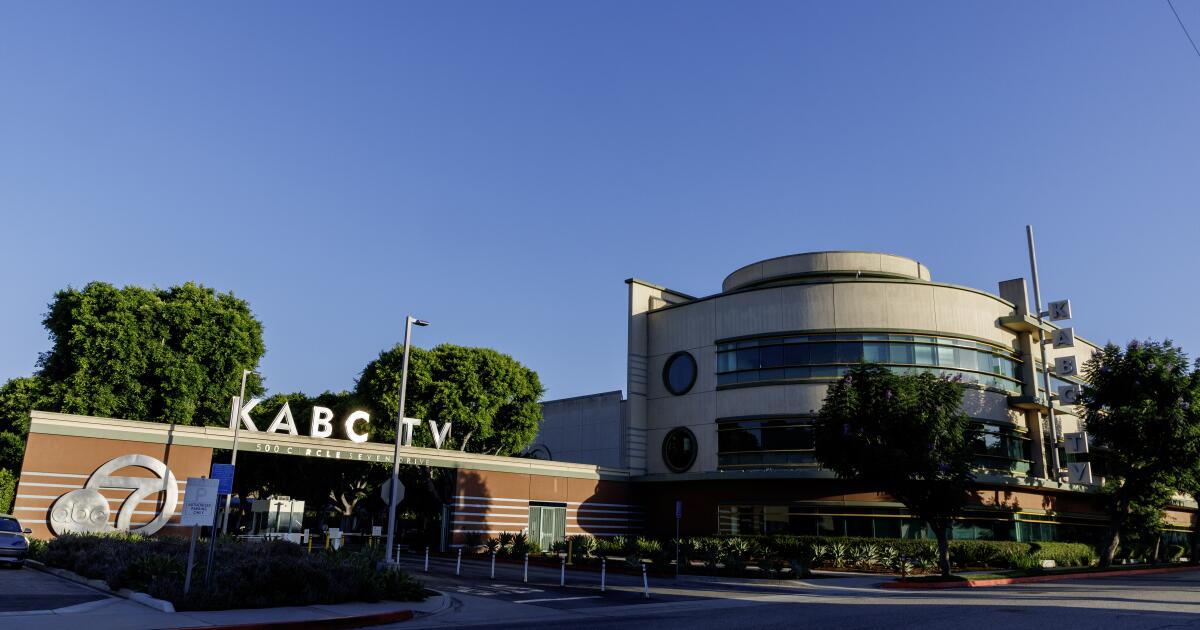
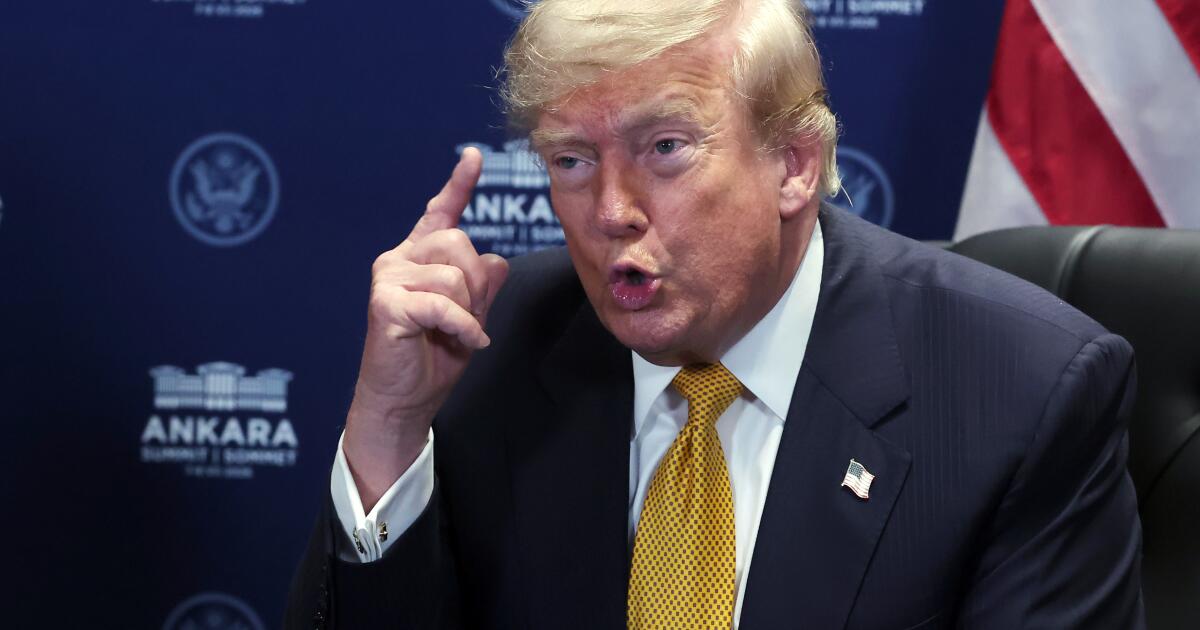
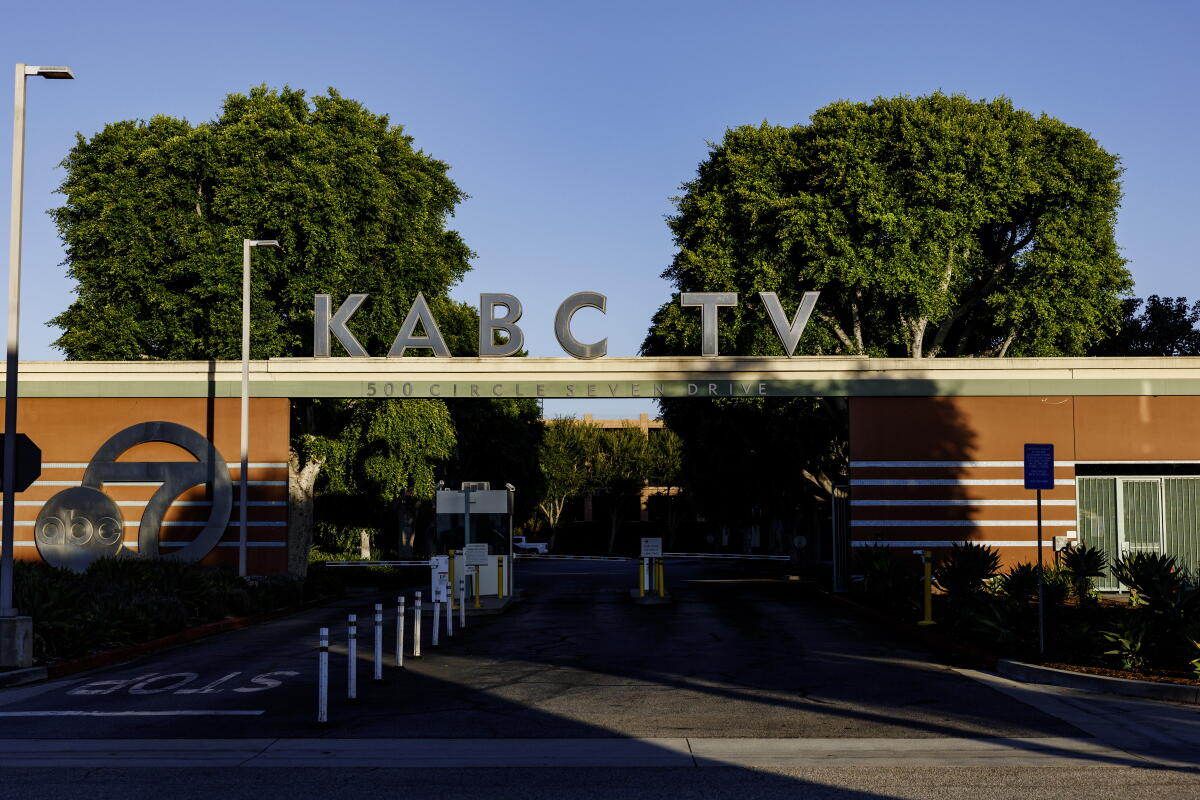
But his April 28 announcement that the Walt Disney Co.’s eight ABC TV stations will undergo an early review of their broadcast licenses is his loudest action yet taken on behalf of President Trump, who repeatedly threatened media outlets that he believes are critical of him.

Carr is calling for the review two years before any of the station licenses are up, citing the agency’s inquiry into Disney’s diversity, equity and inclusion policies and whether they violated federal anti-discrimination rules.

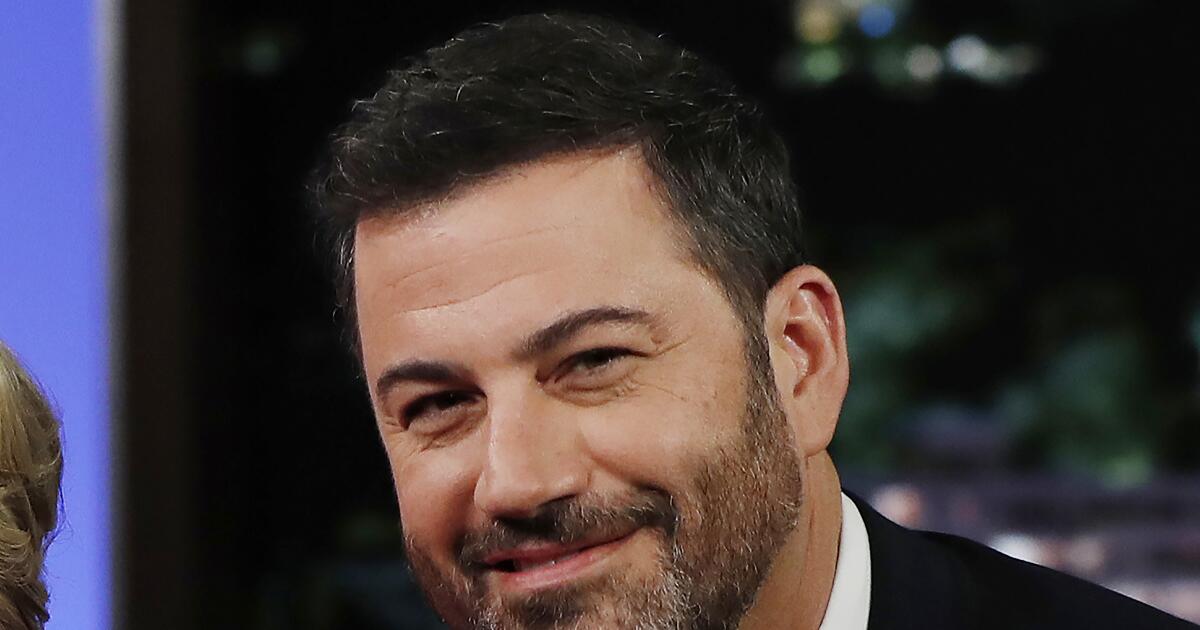
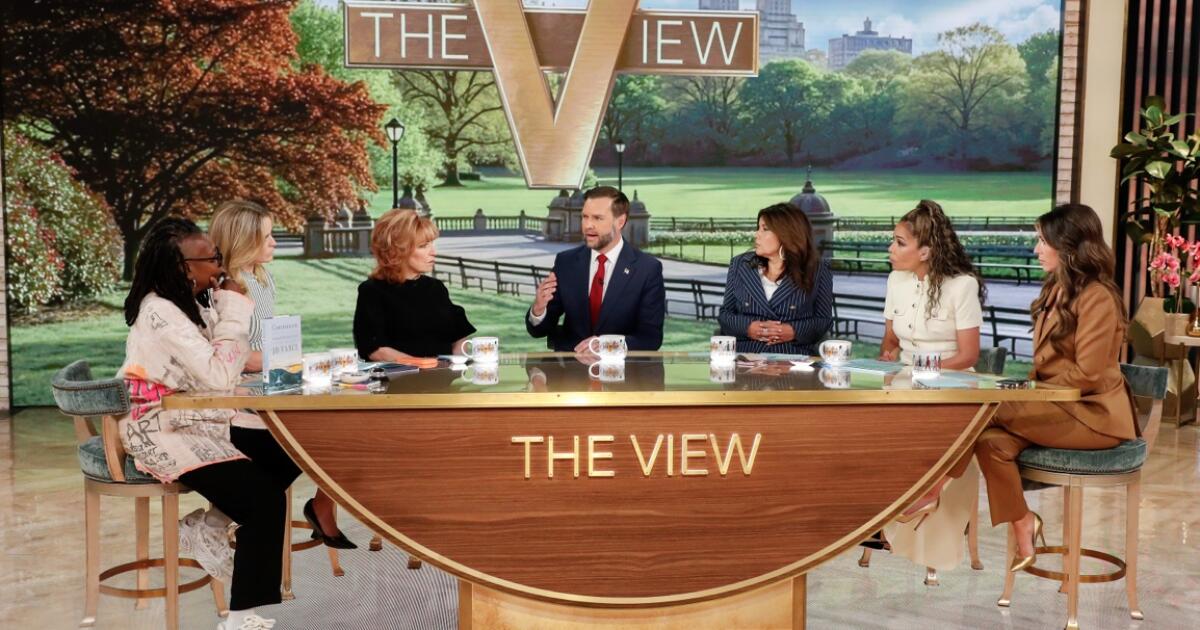
The timing of Carr’s move is raising eyebrows as it comes after First Lady Melania Trump’s call for the firing of ABC late-night host Jimmy Kimmel over his April 23 comedy bit on the White House correspondents’ dinner. A tuxedo-clad Kimmel called Melania Trump “beautiful,” saying she had “the glow of an expectant widow.”

The first lady’s remarks came after a man armed with a shotgun, handgun and several knives breached security at the Washington black-tie event on April 25. The suspect, Cole Tomas Allen of Torrance, was arrested and faces three criminal charges, including attempting to assassinate the president.

Kimmel’s gag became ammunition for right-wing commentators, who claim the left is stoking political violence.

The host said the joke was about the age difference between the 79-year-old president and his wife. Kimmel denied it was a call for violence and has continued to mock the president on his show.

Carr insisted at a Washington news conference last week that his demand for a review is not related to Kimmel’s remarks.

Although many are skeptical, Carr, who was at the April 25 dinner, told The Times there would be an action related to ABC coming soon. The conversation occurred hours before the shots were fired.

The investigation into Disney’s practices began in March 2025, part of a broader effort by the Trump administration to reverse DEI initiatives across private companies, federal agencies, universities and other organizations.

After the 2020 police killing of George Floyd in Minneapolis, which spurred the Black Lives Matter movement, companies such as Disney and NBC-owned Comcast aggressively promoted their diversity efforts.

But experts believe Carr is acting on ABC at the behest of Trump, as the chairman has often expressed support on social media whenever the president criticizes one of the broadcast TV news outlets.

“It might be the case that Disney can get some early relief by saying this should be dismissed because this is really a 1st Amendment issue,” said James Speta, a professor at the Northwestern University School of Law. “We all know what’s going on here — the administration doesn’t like the speech that’s coming out of the talent on the broadcasting airwaves.”

Disney is not commenting on Carr’s DEI investigation, but it earlier defended the record of its TV stations, which are ratings leaders in most markets. “We are confident that record demonstrates our continued qualifications as licensees under the Communications Act and the First Amendment and are prepared to show that through the appropriate legal channels,” the company said.

Here’s a primer on what to know and the challenges Disney may face.

Why are TV stations licensed by the government?

Government licensing regulates the spectrum allocated to broadcast channels, largely to prevent interference between TV signals. When renewals come up, the license holder must demonstrate that the station is serving the public interest by providing local news, program diversity and educational and informational shows for children. The procedure once occurred every three years, but deregulation efforts have extended that period to the current span of eight years.

When was the last time a TV station faced a significant license renewal challenge?

The most notable recent example was Fox Corp.’s Philadelphia station WTXF, which was up for a license renewal in October 2023. Activist groups filing the challenge said Fox was unfit to own the outlet after a judge ruled earlier that year that the company’s Fox News Channel had spread falsehoods about voter fraud in the 2020 election.

Fox paid $787 million to settle a defamation lawsuit filed by Dominion Voting Systems that alleged the cable news channel damaged the company’s reputation.

Fox News, which operates on cable and satellite and is therefore not subject to FCC control, has a different management team than the parent company’s local TV stations, which mostly cover their communities and do not typically present political commentary. The FCC rejected the renewal challenge in January 2025, noting that none of the false information on Fox News was heard on the Philadelphia station. WTXF was not cited in Dominion’s lawsuit.

Are there any other examples?

Yes. Other White House administrations have threatened to pull TV station licenses in response to negative news coverage. At the height of the Watergate scandal in the 1970s, Richard Nixon’s allies unsuccessfully attempted to challenge the TV licenses of three stations then owned by the Washington Post.

Has a company ever lost its broadcast license?

RKO General, a unit of the General Tire and Rubber Co., was the last company to lose broadcast TV station licenses in 1987, including Los Angeles outlet KHJ. The case was related to corporate malfeasance and not broadcast content on the stations.

The process to revoke the RKO licenses took seven years from the moment the FCC voted in favor of the move.

But isn’t this case different?

Yes. Although the rule Carr mentioned is legitimate, the FCC has rarely if ever acted on it, according to one veteran TV executive who was not authorized to speak publicly on the matter. If Disney or any other company was found to violate the nondiscrimination rule, they would in previous eras probably be subjected to a just a fine, not the denial of a license, which would be viewed by many as government censorship.

What happens in the event that ABC licenses are not renewed?

Nothing immediately, as the licenses are in effect through 2028 to 2032, depending on the outlet. If Disney had to sell the stations, the price would probably be depressed due to pressure to unload the properties.

But public communications attorney Andrew Jay Schwartzman told The Times last month that the bar for denying a renewal is high and any effort would be tied up in court on constitutional grounds.

“The law intentionally sets out a very steep burden for the FCC to deny a license renewal; the process takes many years, during which time the licensee continues to operate normally under ‘continuing operating authority,’” Schwartzman said.

Source link