Liberia

Sunday 12 April National Redemption Day in Liberia

Liberia’s history is quite unique amongst other African nations. It began as a settlement of the American Colonization Society who believed black people would face better chances for freedom and prosperity in Africa than in the United States. This meant that Liberia didn’t have the struggle from Independence that marks the history of many African nations in the 20th century.

However, when the settlers arrived, the land wasn’t uninhabited, and the relationship between the new arrivals and the indigenous people would come to define the history of this west African nation.

Liberia had enjoyed a period of stability and prosperity under the leadership of William Tubman, who was president from 1944 until 1971. Though an Americo-Liberian, he had the respect of all Liberians.

After Tubman died in 1971, his Vice President, William Tolbert became President.

Though Tolbert enacted some democratic reforms, he never had the same reverence as Tubman and his attempts to balance the Americo-Liberian and the indigenous Liberians were hampered by a fall in the price of rubber in the 1970s, reducing the income in a key sector of the economy.

When Tolbert’s government increased the price of rice, the opposition party, the Progressive Alliance of Liberia (PAL) called for a peaceful demonstration in Monrovia. The demonstration turned into race riots with many people being killed.

As a result, Tolbert banned the PAL and had its leadership arrested on charges of treason, which would prove to be a fateful and fatal move.

On the morning of April 12th 1980, 17 non-commissioned officers and soldiers of the Armed Forces of Liberia led by Master Sergeant Samuel Doe launched a coup d’état. The group entered the Presidential palace and killed Tolbert, whose body was dumped into a mass grave together with 26 other victims of the coup.

Libya approves first unified budget in more than a decade | Energy News

Libya shows it is ‘capable of overcoming its differences’ with rare budget deal, central bank says.

Libya’s rival legislative bodies have approved a unified state budget for the first time in more than a decade, in a rare moment of cooperation in a country fractured by years of conflict.

The Central Bank of Libya confirmed on Saturday that both chambers had endorsed the budget, describing the move as a step towards restoring financial stability after prolonged division.

Recommended Stories

list of 3 itemsend of list

Governor Naji Issa said the agreement showed the country could overcome internal rifts.

“This is a clear declaration that Libya is capable of overcoming its differences when a unified vision for its future is forged,” he said during a signing ceremony in Tripoli.

Libya has remained split since the 2014 civil war, which created rival administrations in the east and west. The last time the country operated under a single national budget was in 2013.

The deal brings together the eastern-based House of Representatives (HoR) and the Tripoli-based High Council of State, two institutions that have long competed for authority.

Representatives from both sides signed the agreement in the capital, where the internationally recognised Government of National Unity is based under Prime Minister Abdul Hamid Dbeibah.

Despite the breakthrough, political divisions remain entrenched. In the east, forces loyal to Khalifa Haftar maintain control over large parts of the country, including key oil-producing regions.

His self-styled Libyan National Army dominates major export terminals along the northeastern coast, as well as significant oil fields in the south and southeast.

The timing of the agreement underscores Libya’s growing importance in global energy markets. Demand for its crude has increased amid disruptions linked to the Israel-US war on Iran and the blockade of the Strait of Hormuz.

Libya’s geographic position offers a critical advantage. Oil shipments from its ports reach European refineries quickly and avoid the risks associated with Gulf routes, including military escorts and high insurance costs.

Its light, sweet crude also meets the needs of European refiners facing ongoing supply challenges.

Previous attempts to stabilise Libya’s energy sector have relied on informal arrangements rather than institutional agreements. In 2022, during another period of energy crisis triggered by the war in Ukraine, key figures from rival factions struck a deal to keep oil flowing.

The new budget agreement signals a shift towards more formal cooperation, even as Libya’s political fragmentation persists.

Source link

U.S. still wants to deport Kilmar Abrego Garcia to Liberia, despite new agreement with Costa Rica

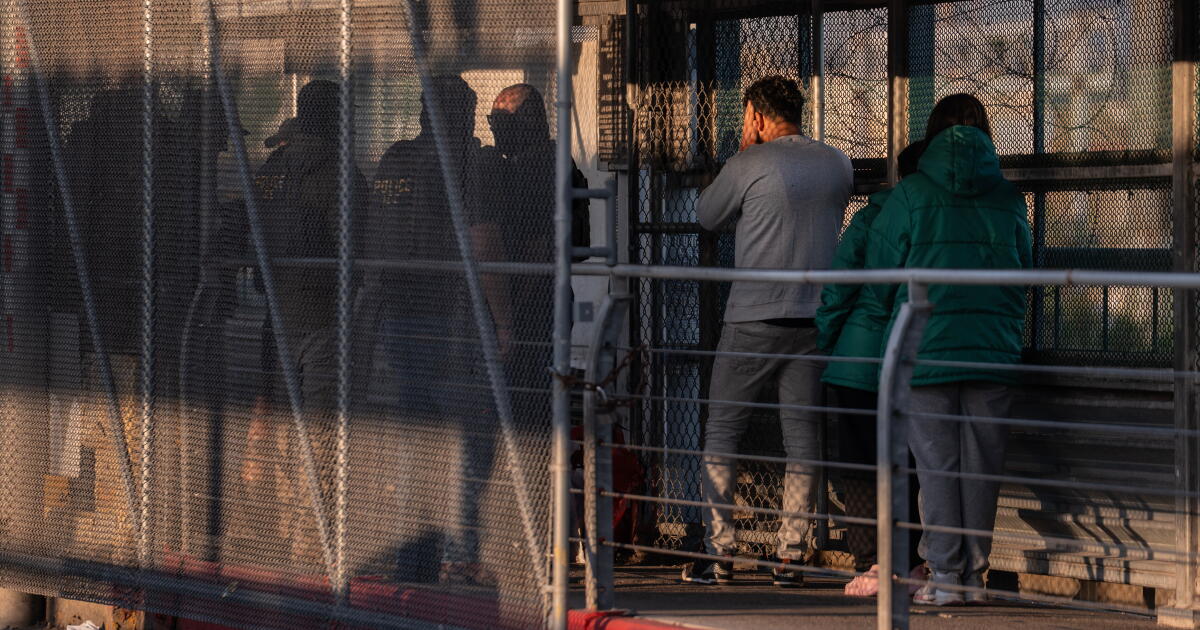
U.S. government attorneys on Tuesday told a federal judge the Department of Homeland Security still intends to deport Kilmar Abrego Garcia to Liberia, despite a new agreement with Costa Rica to accept deportees who cannot legally be returned to their home countries.

The Salvadoran national’s case has become a focal point in the immigration debate after he was mistakenly deported to El Salvador last year. Since his return, he has been fighting a second deportation to a series of African countries proposed by Homeland Security officials.

U.S. District Judge Paula Xinis, of Maryland, previously barred U.S. Immigration and Customs Enforcement from deporting him or detaining him. She has written that the agency has no viable plan to actually deport Abrego Garcia, referring in February to “one empty threat after another to remove him to countries in Africa with no real chance of success.”

Abrego Garcia has argued that if he is going to be deported, it should be to Costa Rica, which previously agreed to accept him. But Todd Lyons, the acting head of U.S. Customs and Immigration Enforcement, said in a March memo that deporting Abrego Garcia to Costa Rica would be “prejudicial to the United States.” Abrego Garcia should be sent to Liberia because the U.S. has spent government resources and political capital negotiating with the West African nation to accept third-country nationals, Lyons wrote.

At a Tuesday hearing in Xinis’ court, Ernesto Molina, director of the Department of Justice’s Office of Immigration Litigation, suggested that Abrego Garcia could “remove himself” to Costa Rica.

Xinis pointed out that the Justice Department is prosecuting him in Tennessee on human smuggling charges. She called it a “fantasy” to say that he can remove himself anywhere while the criminal case is pending. Xinis set a schedule for a briefing on the matter and scheduled a new hearing for April 28.

Abrego Garcia, 30, has an American wife and child and has lived in Maryland for years, but he immigrated to the U.S. illegally as a teenager. In 2019, an immigration judge ruled that he could not be deported to El Salvador because he faced danger there from a gang that had threatened his family. By mistake, he was deported there anyway last year.

Facing public pressure and a court order, President Trump’s administration brought him back in June, but only after securing an indictment charging him with human smuggling in Tennessee. He has pleaded not guilty and asked the judge to dismiss that case.

Loller writes for the Associated Press.

Source link