Legendary Hollywood recording studio is up for sale
One of Hollywood’s legendary music recording studios is for sale as its owner prepares to end his half-century run immortalizing many of the biggest acts.
The list of household names who have recorded at Conway Recording Studios spans generations and genres. Burt Bacharach, Fleetwood Mac, Stevie Wonder, U2, Guns N’ Roses, Daft Punk, Taylor Swift and Kendrick Lamar are just a few of the artists who have recorded there.
While many studios have struggled, the unique space has attracted big names for decades.
Digital production tools and home studios have eliminated much of the need for traditional recording space, allowing artists to produce professional-quality music almost anywhere, real estate data provider CoStar said.
The digital revolution rocked the analog world of art, media and communication on a scale the industrial revolution did to agrarian and handicraft economies more than a century ago. The advent of Pro Tools recording software in the 1990s and the rise of music streaming services in the early aughts irrevocably changed the business.
Yet industry veterans say surviving facilities with expansive live rooms, vintage gear and decades of recording history may be becoming more valuable as they become harder to replicate. U.S. recorded-music revenue rose 7% to $6 billion in the first half of 2026, according to the Recording Industry Assn. of America. Streaming, physical formats and licensing all posted gains.
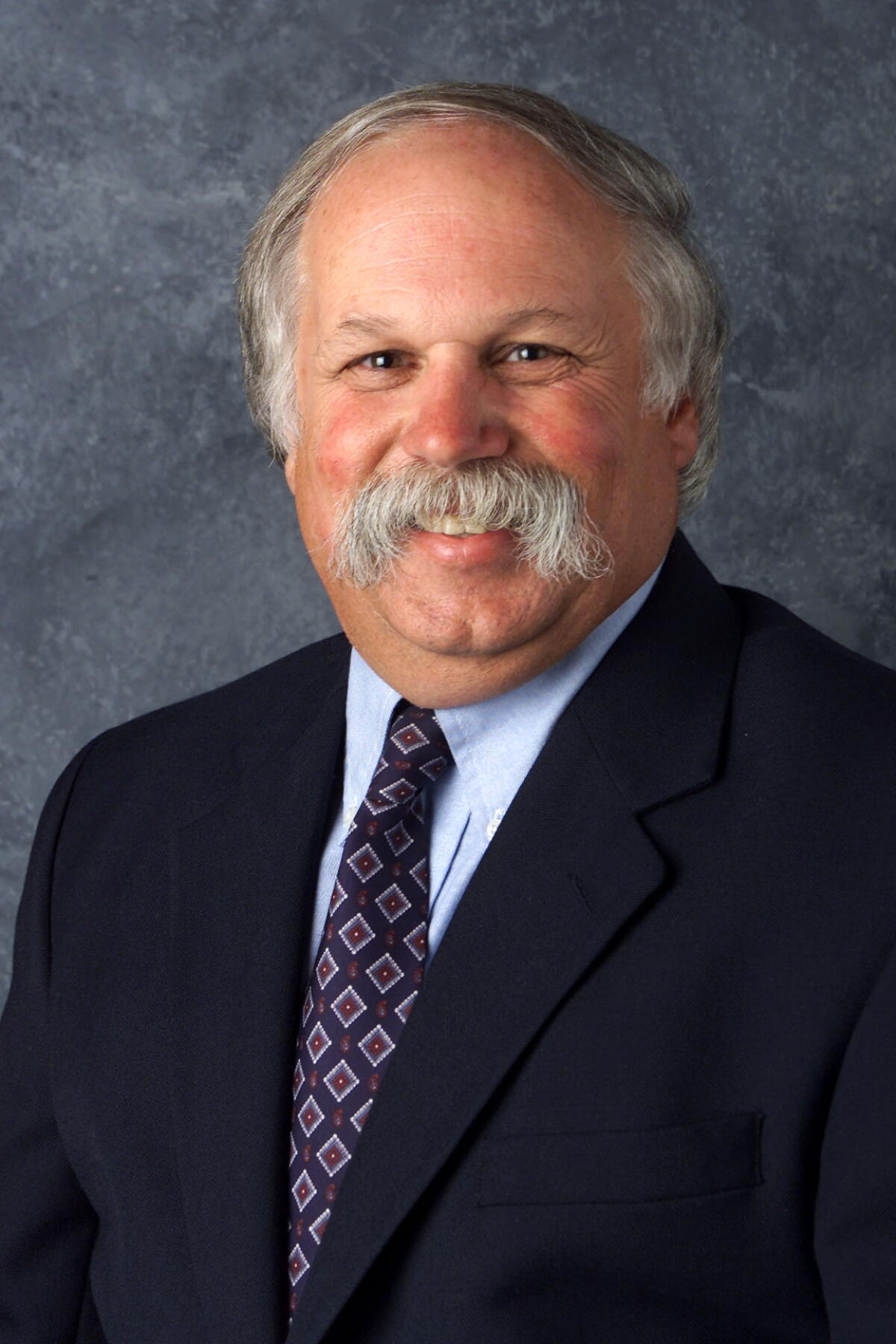
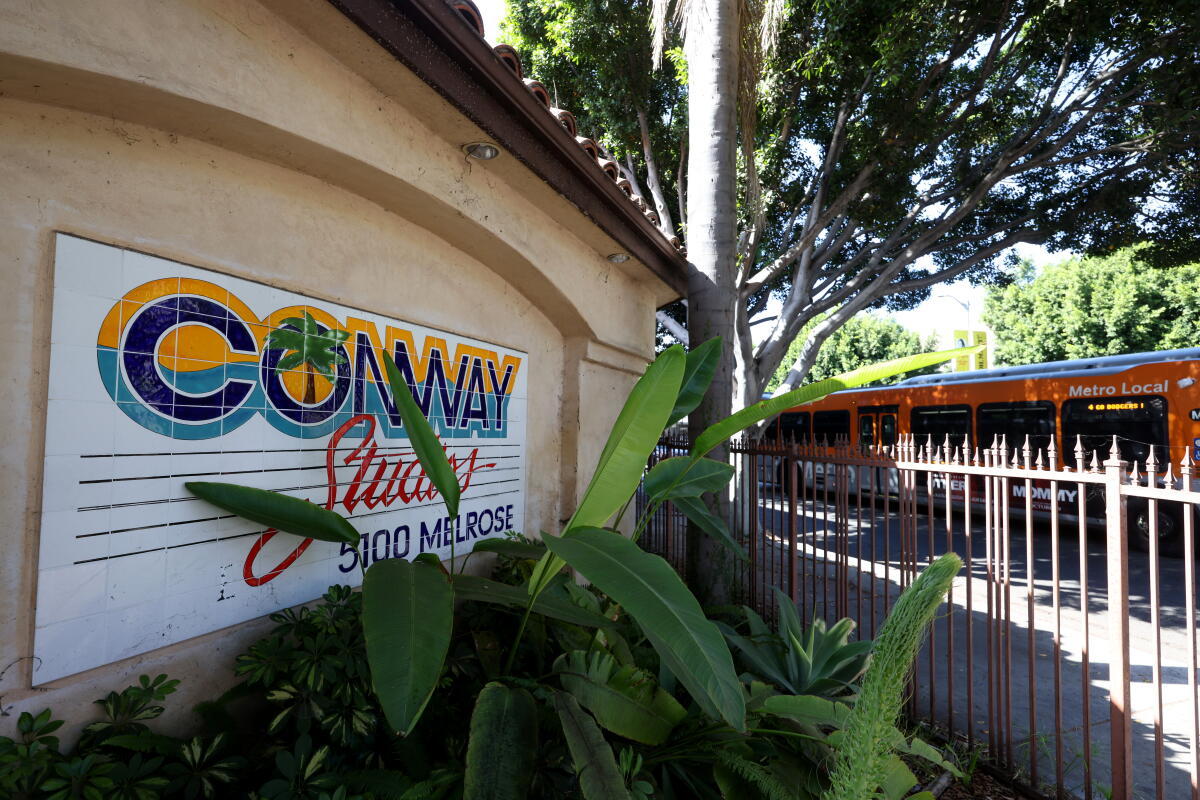
Conway Recording Studios is a jungly hideaway on bustling Melrose Avenue created by a transplant from chilly Buffalo, N.Y., who arrived in the 1970s with a vision to create an L.A.-style oasis in the middle of the city where he could pursue his craft as a sound engineer.
“I moved to California to be outside in the warm,” Buddy Brundo said. “I like sunlight.”
He defied recording studio conventions by bringing in natural light through large, soundproof windows instead of working in chambers sealed on all sides.
“You kind of feel like you’re in Hawaii or somewhere else,” at Conway studios, said entertainment real estate broker Nicole Mihalka of CBRE. “That’s what’s kept Conway so busy over the years.”
Among the musicians who came to work there lately was Korean pop group BTS, the subject of a Netflix documentary released in March that followed the young men as they recorded their comeback album “Arirang” after completing their military service.
Brundo appears in the film.


1. “You kind of feel like you’re in Hawaii or somewhere else,” a real estate broker said of the studios. “That’s what’s kept Conway so busy over the years.” 2. Conway’s clients have included Justin Timberlake, Kendrick Lamar, U2 and Counting Crows. (Genaro Molina/Los Angeles Times)
Taylor Swift is a regular and once created a run on company merchandise by wearing a Conway Recording Studios sweatshirt in public.
People have asked Brundo for years when he might sell the studio he has operated since 1976, said Mihalka, who has the listing.
“Ten years ago I wouldn’t even think about this,” Brundo said. Now, “I’m 83, and how long can I keep this up? It’s best to walk away while I still can.”
He works out three times a week and appears fit, jumping up to play air guitar to Mötley Crüe’s “Girls, Girls, Girls” while showing off the powerful sound system in Studio B. The band recorded the hit 1987 album of the same name at Conway Studios, where members arrived by motorcycle.
Brundo is asking $15 million for the property that spans more than an acre on the edge of Melrose Hill, a niche neighborhood at Melrose and Western avenues known for its trendy restaurants.
It includes three studios, offices, tons of recording equipment, including two grand pianos, lounges, and a kitchen that pointedly lacks a stove.
“Every studio I worked with had a stove, and the kitchen was a mess,” Brundo said.

“Ten years ago I wouldn’t even think about this,” Conway’s Buddy Brundo said. Now, “I’m 83, and how long can I keep this up? It’s best to walk away while I still can.”
(Genaro Molina/Los Angeles Times)
Not that he hasn’t gone out of his way to accommodate his clients. Years ago he shrank his own office to enlarge a lounge for a singer-songwriter who needed space to camp out.
“Courtney Love wanted to book a bunch of time,” but also wanted a place to unwind outside the studio. “We lived here for two months with the kids and the clothes.”
One of his studio innovations was an air-conditioning and filtration system that whooshes out smoke and neutralizes it with charcoal filters and blue lights that kill bacteria, because the official smoking policy is “whatever they want,” he said. On a recent afternoon, a strong scent of cannabis came from Studio A.
To create his rambling California oasis in the middle of a busy neighborhood, Brundo acquired house after house on the south side of his lot over the years so he could keep expanding. He bought and tore down 10 of them.
“Each house was a battle,” he said, particularly one where the owners had an issue with guitarist and outdoorsman Ted Nugent, who accidentally shot an arrow into their yard.

While the property could be used for other purposes, Buddy Brundo hopes to find a buyer who will keep the music going.
(Genaro Molina/Los Angeles Times)
Brundo had set up a Styrofoam deer and a bear on the back of his property to entertain archer Nugent. The musician missed a shot and his arrow passed through the fence and came close to striking a neighbor in her backyard as her husband stood nearby.
“He was really pissed off,” Brundo said of his neighbor. It took Brundo another year to buy the neighbors’ house “because the price went up,” he said.
Today, the foliage a full-time groundskeeper tends has grown tall and thick. Sleek cats roam the grounds.
The parking lot is large for the studio’s size, and its 59 striped spaces have accommodated about $2 million worth of fancy cars at a time, Brundo estimated. It’s also big enough for basketball games, and Brundo recently painted a full court on the asphalt so singer The Weeknd could play ball during downtime.
While the property could be turned to other uses such as stores and housing, Brundo hopes to sell it to someone who will keep the music going even as times change.
The recent backlash against AI-generated music has prompted “a reversion back to the real” with bands using more instruments and needing more space to record, Mihalka said. “There are fewer studios now where you can actually do this.”