leaving

Illinois police capture ‘Slender Man’ attacker after leaving group home

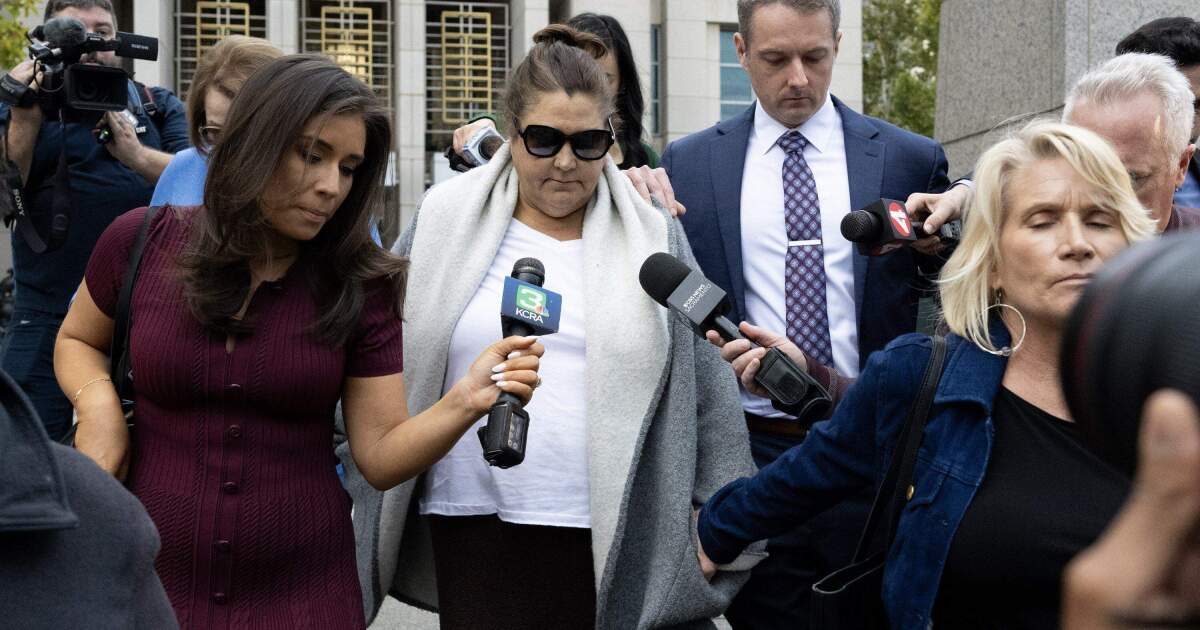
Nov. 24 (UPI) — Police in Illinois said they captured Morgan Geyser, one of the two people who pleaded guilty to stabbing a friend to appease an imaginary creature called Slender Man, 165 miles from the Wisconsin group home where she was staying.

Geyser, 23, allegedly cut off her monitoring bracelet Saturday night before leaving the residence in Madison and meeting up with an acquaintance.

In an incident report, Madison police said the Department of Corrections received an alert around 9:30 p.m. Saturday that Geyser’s GPS monitoring bracelet was malfunctioning. Around 11:35 p.m., group home staff informed DOC that Geyser was not at the home and she had removed her GPS bracelet.

On Sunday night, police in Posen, Ill., a suburb south of Chicago, told ABC News that law enforcement officials took her into custody. Madison police confirmed her capture to CNN.

Madison police said they received confirmation at 10:34 p.m. Sunday that Geyser had been taken into custody in Illinois.

The Posen police said officers found Geyser at a truck stop with another person, identified as a 42-year-old man, who was arrested on charges of criminal trespassing and obstructing identification, WBBM-TV in Chicago reported.

Geyser is scheduled for an extradition hearing on Tuesday in Chicago. She is not facing any charges in Illinois.

Geyser and the friend were found at a truck after police received reports of two people loitering behind the building. They were sleeping on the sidewalk.

Initially, Geyser gave police a false name. She then told police she didn’t want to give her name because she had “done something really bad,” and officers could “just Google” her.

The friend told WBBM-TV she didn’t want Geyser to be alone after Geyser left the group.

They took a bus and then walked to the truck stop.

Geyser and Anissa Weier pleaded guilty to the 2014 stabbing of their friend, Payton Leutner, when all three girls were 12. Geyser and Weier lured Leutner into the woods where they stabbed her 19 times. They told police a creature known as Slender Man threatened their lives and the lives of their families if they didn’t kill Leutner, who survived the attack.

Geyser and Weier were charged with attempted second-degree murder in 2017 but were found not guilty by reason of mental defect.

Waukesha County Circuit Judge Michael Bohren committed them to a psychiatric hospital for 40 years.

Psychiatrists diagnosed Geyser with schizophrenia and she was released to a group home this year.

A spokesperson for the Leutner family released a statement saying they were aware of Geyser’s disappearance.

“Payton and her family are safe and are working closely with local law enforcement to ensure their continued safety,” a statement said.

“The family would like to thank all of the law enforcement entities involved in the efforts to apprehend Morgan.”

The demolition of the East Wing of the White House is seen during construction in Washington, on Monday. President Donald Trump began demolishing the East Wing last month to build a $200 million ballroom at the property. Photo by Bonnie Cash/UPI | License Photo

Source link

Immigration crackdown in Chicago eases, leaving lawsuits, investigations and anxiety

Chicago has entered what many consider a new uneasy phase of a Trump administration immigration crackdown that has already led to thousands of arrests.

While a U.S. Border Patrol commander known for leading intense and controversial surges moved on to North Carolina, federal agents are still arresting immigrants across the nation’s third-largest city and suburbs.

A growing number of lawsuits stemming from the crackdown are winding through the courts. Authorities are investigating agents’ actions, including a fatal shooting. Activists say they are not letting their guard down in case things ramp up again, while many residents in the Democratic stronghold remain anxious.

“I feel a sense of paranoia over when they might be back,” said Santani Silva, an employee at a vintage store in the predominantly Mexican American neighborhood of Pilsen. “People are still afraid.”

Intensity slows, but arrests continue

For more than two months, the Chicago area was the focus of an aggressive operation led by Gregory Bovino, a Border Patrol commander behind similar efforts in Los Angeles and soon Louisiana.

Armed and masked agents used unmarked SUVs and helicopters throughout the city of 2.7 million and its suburbs to target suspected criminals and immigration violators. Arrests often led to intense standoffs with bystanders, from wealthy neighborhoods to working-class suburbs.

While the intensity has died down in the week since Bovino left, reports of arrests still pop up. Activists tracking immigration agents said they confirmed 142 daily sightings at the height of the operation last month. The number is now roughly six a day.

“It’s not over,” said Brandon Lee with the Illinois Coalition for Immigrant and Refugee Rights. “I don’t think it will be over.”

Suburb under siege

Bearing the brunt of the operation has been Broadview, a Chicago suburb of roughly 8,000 people that has housed a U.S. Immigration and Customs Enforcement processing center for years.

Protests outside the facility have grown increasingly tense as federal agents used chemical agents that area neighbors felt. Broadview police also launched three criminal investigations into federal agents’ tactics.

Community leaders took the unusual step of declaring a civil emergency last week and moving public meetings online.

Broadview Mayor Katrina Thompson said the community has faced bomb threats, death threats and violent protests because of the crackdown.

“I will not allow threats of violence or intimidation to disrupt the essential functions of our government,” Thompson said.

Questionable arrests and detentions

The U.S. Department of Homeland Security has touted more than 3,000 arrests, but the agency has provided details on only a few cases in which immigrants without legal permission to live in the country also had a criminal history.

The Trump administration posts photos on social media of supposed violent criminals apprehended in immigration operations, but the federal government’s own data paint a different picture.

Of 614 immigrants arrested and detained in recent months around Chicago, only 16, less than 3%, had criminal records representing a “high public safety risk,” according to federal government data submitted to the court as part of a 2022 consent decree about ICE arrests. Those records included domestic battery and drunk driving.

A judge in the cases said hundreds of immigrant detainees qualify to be released on bond, though an appeals court has paused their release. Attorneys say many more cases will follow as they get details from the government about arrests.

“None of this has quite added up,” said Ed Yohnka with the American Civil Liberties Union of Illinois, which has been involved in several lawsuits. “What was this all about? What did this serve? What did any of this do?”

Investigations and lawsuits

The number of lawsuits triggered by the crackdown is growing, including on agents’ use of force and conditions at the Broadview center. In recent days, clergy members filed a lawsuit against the Trump administration, alleging they were being blocked from ministering inside a facility.

Federal prosecutors have also repeatedly dropped charges against protesters and other bystanders, including dismissing charges against a woman who was shot several times by a Border Patrol agent last month.

Meanwhile, federal agents are also under investigation in connection with the death of a suburban man fatally shot by ICE agents during a traffic stop. Mexico’s president has called for a thorough investigation, while ICE has said it did not use excessive force.

An autopsy report, obtained by the Associated Press last week, showed Silverio Villegas González died from a gunshot fired at “close range” to his neck. The death was declared a homicide.

In October, the body of the 38-year-old father who spent two decades in the U.S. was buried in the western Mexico state of Michoacan.

A chilling effect

Many of the once bustling business corridors in the Chicago area’s largely immigrant communities that had quieted down were seeing a buzz again with some street vendors slowly returning to their usual posts.

Andrea Melendez, the owner of Pink Flores Bakery and Cafe, said she has seen an increase in sales after struggling for months.

“As a new business, I was a bit scared when we saw sales drop,” she said. “But this week I’m feeling a bit more hope that things may get better.”

Eleanor Lara, 52, has spent months avoiding unnecessary trips outside her Chicago home, fearful that an encounter with immigration agents could have dire consequences.

Even as a U.S. citizen, she is afraid and carries her birth certificate. She is married to a Venezuelan man whose legal status is in limbo.

“We’re still sticking home,” she said.

Tareen and Fernando write for the Associated Press.

Source link

UK airline folds cancelling all flights immediately and leaving passengers stranded

The airline’s website told passengers ‘We deeply regret the inconvenience that this will bring to your travel plans’

Blue Islands, the Channel Islands-based airline, has ceased operations and grounded all flights. The carrier, which employed around 100 staff, had been running services to various destinations across the British Isles and beyond for two decades.

This marks the second regional airline to collapse in less than three weeks, after Eastern Airways’ cessation of operations on 28 October. The Jersey-based operator announced on Friday it had stopped trading and cancelled all bookings.

Blue Islands, operating a fleet of five ATR-72 aircraft, had its headquarters in Guernsey but chiefly linked Jersey with airports in England, including Bristol, Exeter and Southampton. From Guernsey, the airline ran flights to Southampton and an inter-island service to Jersey.

The airline’s website tells passengers: “We regret to inform you that Blue Islands has suspended trading effective on 14 November 2025. All future flights operated by Blue Islands have been cancelled. Please do not travel to the airport unless you have made alternative travel arrangements. We deeply regret the inconvenience that this will bring to your travel plans.”

Thousands of passengers who have advance bookings with the carrier are urged to contact their bank or payment card provider if they booked directly. Blue Islands further stated: “For bookings made through our codeshare partner Aurigny but travelling on a Blue Islands flight, please contact Aurigny directly – some flights may still be operating. For bookings made through a travel agent or holiday company, please contact the company through whom you booked for advice and guidance.”

The Jersey government provided Blue Islands with £8.5m in funding, with a report in August 2025 showing that £7m remained unpaid.

Elaine Millar, Jersey’s minister for Treasury and Resources, voiced her dismay: “I am saddened by the announcement that Blue Islands has suspended operations, and my immediate thoughts are with the people whose jobs have been affected and the passengers whose travel will be disrupted.”

She confirmed that “For those employees based in Jersey, government support is ready and available.” She also stressed the vital nature of air links for the island and provided reassurance that backup measures were already prepared to quickly restore connections.

“Government is working with an alternative airline to ensure that Jersey has reliable and sustainable air links for the long term.” she added.

Aurigny and Loganair have confirmed they are adding additional services to their timetables to assist Blue Islands passengers. Loganair announced it was launching services from Jersey to Guernsey, Exeter, Bristol and Southampton alongside Guernsey to Southampton from Sunday, whilst Aurigny has introduced flights for the Southampton to Guernsey and Guernsey to Jersey routes “initially until Wednesday”.

Both carriers confirmed special fares were being offered on the services to help passengers who needed to travel on any of the impacted routes.

A Loganair statement said: “We understand this will be a worrying time for those hoping to travel to and from Jersey and in response we’re starting operations from Sunday 16 November.”

An Aurigny spokesperson said the airline was “deeply saddened” about Blue Islands ceasing trading.

“Following the announcement that Blue Islands has entered administration, Aurigny is taking immediate action to assist Blue Islands customers across the Channel Islands,” the spokesperson added.

Source link

Candidates Shrug Off State’s Early Primary : Politics: Moving California’s election to March was supposed to make it a player in presidential race. But other regions had the same idea, leaving it in 32nd place.

It was going to make California count, make it a contender after decades spent watching all those other pipsqueak states decide who among the legions of presidential candidates got to move into the Oval Office.

When California legislators–and Gov. Pete Wilson–agreed two years ago to move the state’s 1996 presidential primary forward from June to March, you could almost hear the silent chortles: Take that, New Hampshire! Back to the farm, Iowa!

And now that the state’s early presidential primary is a mere six months away, the nation’s most delegate-rich state can witness the result:

Nothing.

Sure, the candidates still plumb the state for money, just as they did in the old days. But apart from President Clinton’s trips, there are precious few actual campaign visits and little attention given to the issues peculiar to California. Even Wilson spent more than twice as much time out of state last month than he did tending to matters in Sacramento.

Some candidates still believe that California could ultimately play a big role in selecting the Republican nominee, even given the current dearth of activity. The state, after all, controls about 16%–or 163 of the 991–delegates needed to win the Republican nomination.

Scenarios abound, with California either putting a runaway victor over the top or deciding between two strong candidates. Then again, it could also add to a muddle of results that would force the nomination to be decided weeks later.

“California is going to play a significant role,” said Mark Helmke, communications director for Indiana Sen. Richard Lugar, who announced his candidacy in April. “It’s just that none of us could speculate on what that role is.”

Others in the perennially optimistic corps of campaign activists insist that California won’t matter because the front-runner (their candidate, of course) will have it all sewn up beforehand.

“The problem is that California is too late. This thing is going to end in the industrial Midwest,” said Mike Murphy, a senior aide in the campaign of former Tennessee Gov. Lamar Alexander. Murphy was referring to a ring of primaries to be held the week before California’s.

This underwhelming outcome was utterly predictable, according to campaign seers. And there are both logical and logistic reasons.

California moved its primary up, but only to March 26, six weeks after the campaign-opening Iowa caucuses. Not eager to be left in the dust, a host of other states began to clamor.

New York, with the third-largest delegate pool, moved from early April to early March. Pennsylvania and Ohio moved from late spring to March 19, where they will join Illinois, Michigan and Wisconsin in the massive Rust Belt regional primary.

The New England states of Connecticut, Massachusetts, Rhode Island, Vermont and Maine similarly coalesced into a Yankee primary on March 5–three weeks before California’s primary.

All the movement left California in 32nd place in the 1996 campaign chronology, only slightly better positioned than if it had left the primary in June.

“We were dead last, along with New Jersey and a few other states,” said state Sen. Jim Costa (D-Fresno), who lobbied for an early primary for 14 long years. “We’re better off than we were then. We’re just not significantly better off.”

Because the early primary is a one-year experiment, legislators will have to take up its fate after next year. Costa said that he may propose moving it up even further for the 2000 election.

The state senator initially wanted to set this year’s primary for March 5, which would have made California the first big state on the election calendar. But he compromised with others in the Legislature, who argued that the state is so big that it would swallow up all but the richest candidates. Give the poorer candidates a chance to make their mark in earlier, smaller states, the argument went, and then their momentum could offset their lack of funds in California.

The upshot is this: Candidates are still cozying up to Iowa, whose caucuses are scheduled for Feb. 12, and New Hampshire, whose first-in-the-nation primary will be held eight days later.

They are patting backs and kissing babies in South Carolina, whose primary will be held March 2, on the grounds that it will serve either as a fire wall to block a surging campaign or will redouble the momentum of an earlier winner.

They are courting voters elsewhere in the South, where the Super Tuesday primary will be held March 12 and where voters will decide the fates of at least two of their own, Texas’ Phil Gramm and Tennessee’s Alexander.

All of this makes compelling strategic sense.

“The first focus has to be the first caucus and primaries,” said Charles Robbins, a spokesman for Pennsylvania Sen. Arlen Specter. “They come first and if you don’t perform, you’re out of the game.”

Put another way, it would be political malpractice for a candidate to hang out in California when his time is better spent in the earlier states. Compounding matters is California’s status as a winner-take-all primary. That means a candidate who put all his marbles into the state and pulled, say, 48% of the vote would walk away without a delegate. Many other states dispense their delegates proportionally.

“No candidate is going to make a serious commitment to resources in a March primary simply because there’s no guarantee you’re going to get that far,” said an adviser to one of the campaigns. “It’s a huge gamble to put up that money and risk walking away with nothing.”

Another hindrance to actively campaigning in California is the fact that the state is so far from Washington, where no less than six of the nine Republican candidates are based.

One recent Thursday, for example, Specter jetted from Washington to Boston, held two campaign events and was back in the Capitol for Senate business by lunchtime.

“You can’t do that to California,” said his aide Robbins. “Just because of the geography, all the way on the other side of the country, it’s a real project.”

While the Republican candidates have not spent much time in California, their campaigns are starting to lay the foundations of an effort here.

Wilson’s campaign is rebuilding his longstanding organization, despite prominent defections to other camps and surveys that show the governor losing the state to front-runner Bob Dole of Kansas.

Besides having the only full-fledged campaign office in the state, Wilson’s operation has staffers specifically working to buoy his standing here, said spokesman Dan Schnur.

“For all their talk, none of the other campaigns are putting any time or energy into California at all,” he said. “They file in and out for fund-raisers, but beyond that there’s no indication of any serious organizational effort on the part of any of them.”

Wilson does have a leg up, but his opponents argue that his campaign may have folded by late March or, even if he stays in the race, they may be able to build enthusiasm here from the momentum of earlier victories.

Gramm has made the biggest splash, garnering the support of Republican legislative leaders Curt Pringle and Rob Hurtt, both of Orange County, and a host of activists. U.S. Rep. Christopher Cox of Newport Beach, who is heading Gramm’s California campaign, said the effort so far is a “very well-organized, low dollar” effort.

It will remain entirely a volunteer effort through the end of the year, he said.

“When you’re running statewide in California, it’s important to have money when it counts, not lavishly throw it around months in advance,” Cox said.

Dole has been here infrequently, but has tried to make a big splash when he has come. He salted one Los Angeles fund-raising trip with a high-profile assault on the entertainment industry.

Overall, the Dole campaign said, it has raised $1.5 million in its visits to California.

“Some analysts are suggesting that it will all be over before California,” said Dole spokesman Nelson Warfield. “Our attitude is that we are contesting every state very vigorously. We’re proceeding on the assumption that it is up for grabs.”

Former television commentator Patrick J. Buchanan has made three multi-day fund-raising trips to California since March–the same time frame in which he has visited Iowa 11 times and New Hampshire eight times. His aides say they are putting together networks of volunteers who will fan out in support of Buchanan.

Lugar and Alexander have raised money in California, and Lugar aides said they had particular luck with a direct mail drive that touted his proposal to abolish the Internal Revenue Service and replace income taxes with a national sales tax. Like the latter two, Specter has had a low profile here.

At some point, the Republican nominee will begin fighting the general election war here–one that President Clinton is already waging. Mindful that he needs to win the state in order to be reelected, Clinton has visited California 19 times in less than three years, more than any other state.

Source link