Leaking

Salvage work begins on tanker leaking oil off Oman, risk firm says | Oil and Gas News

A salvage operation is under way to stabilise the stricken tanker behind a major oil spill off Oman, the risk management company coordinating the effort has said.

The announcement by Ambrey on Thursday came a day after Oman’s environmental authority confirmed that oil from the Caroline Bezengi had reached beaches along the sultanate’s central coast.

Recommended Stories

list of 4 itemsend of list

The tanker, a suspected member of Russia’s shadow fleet used to transport sanctioned Russian oil, has been leaking crude into waters near the Hallaniyat archipelago since June, when the ship’s crew reported an unidentified explosion.

Ambrey said it was working with Omani authorities and that its services had been engaged as part of a “significant international response” that included salvage vessels, aircraft and specialist personnel.

Apart from Oman and an unnamed “leading international oil spill response company”, Ambrey did not elaborate on which other countries or firms were involved in the effort to salvage the vessel, which has flown the flags of states including Cameroon, Palau and Liberia.

The International Maritime Organization (IMO) – the United Nations maritime agency – said on Thursday that it was “closely monitoring” the situation and would “continue to support ongoing efforts”, without providing further details.

The International Oil Pollution Compensation Funds, a pair of intergovernmental organisations established to provide compensation for oil pollution, said it would not be involved in the cleanup operation after determining that the incident likely resulted from an act of war.

Ambrey, based in Hereford in the United Kingdom, said it expected salvage vessels to reach the Caroline Bezengi soon and that specialist personnel had already boarded the vessel to begin stabilising its cargo.

Ed Wollaston, director of global response at Ambrey, said the “extremely challenging situation” had been complicated by adverse weather from the annual Khareef monsoon.

“However, we have deployed the leading experts in each aspect of the response and have mobilised the appropriate supporting equipment, aircraft and vessels,” Wollaston said in a statement.

“We are working around the clock to mitigate the environmental impact of the situation.”

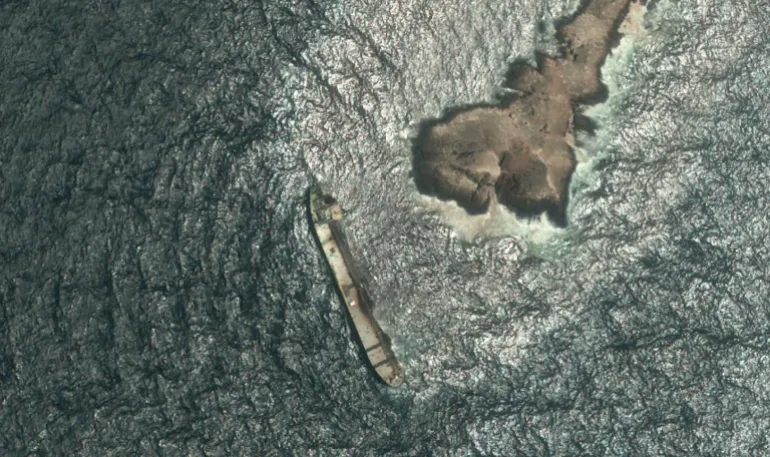
A satellite photo shows the tanker Caroline Bezengi, grounded and partly submerged off the coast of Oman, on August 5, 2026
A satellite photo shows the tanker Caroline Bezengi, grounded and partly submerged off the coast of Oman, on August 5, 2026 [File: Pleiades © CNES 2026, Distribution Airbus DS via AP]

The oil spill has expanded dramatically in size over the past week, according to analyses of satellite imagery, raising fears for coastlines and ecosystems in the region, including a marine reserve established last year off the Hallaniyat archipelago.

Environmental NGO Greenpeace said on Thursday that, based on satellite imagery, the spill had grown from 45 square kilometres (17sq miles) in late July to about 1,300sq kilometres (502sq miles) as of Wednesday.

Omani authorities as recently as Monday estimated the size of the spill at approximately 400sq kilometres (154sq miles).

Hanen Keskes, Greenpeace’s head of campaigns for the MENA region, said the circumstances of the spill made it “especially challenging” to respond to.

“Given the scale of this – a damaged tanker in a remote location, during monsoon season, with no clear owner or verified insurer to compel a rapid response – this is a case where international assistance should be mobilised urgently,” Keskes told Al Jazeera.

“Capabilities like specialised salvage equipment and expertise can exceed what any one country has on hand, and every day of delay allows more oil to disperse.”

Najmedin Meshkati, an expert in oil spills and a professor of civil and environmental engineering at the University of Southern California, said that authorities should have moved faster to contain the spill.

“That two-month interval was the response window, and it closed. In spill response, source control on day three is worth many multiples of source control on day 60,” Meshkati told Al Jazeera.

Meshkati acknowledged, however, that Omani authorities had been dealt a difficult situation.

“It was handed an orphaned wreck with no responsive owner, no verifiable insurer, no functioning flag state, and a compensation regime containing a war exclusion that may void it entirely,” Meshkati said.

“No mid-sized maritime administration on earth is resourced for that. But that is precisely the argument for escalating harder and earlier.”

Damilola S Olawuyi, a professor of energy and environmental law at Hamad Bin Khalifa University in Qatar, said the spill highlighted the need for stronger international mechanisms to hold polluters accountable.

“The obligation of the entity responsible for pollution to pay for the cost of cleanup and remediation, ie, the polluter pays principle, has for long been a bedrock of international law,” Olawuyi told Al Jazeera.

“However, in an era of increasing geopolitical realignments, identifying the responsible polluter has become complex, therefore complicating effective risk reduction, response and remediation measures,” he said.
Source link

Why Your Supply Chain Is Leaking Cash

With $1.7 trillion tied up in inefficient supply chains, CFOs are making liquidity a core strategy.

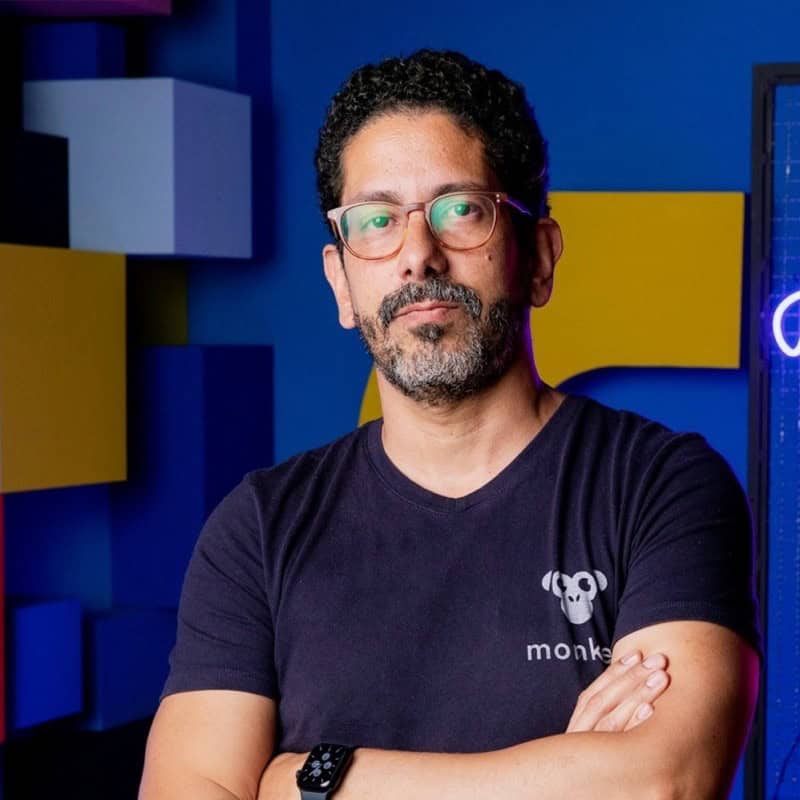
Gustavo Muller, CEO of Monkey
Gustavo Muller,
Monkey

There’s $1.7 trillion of working capital sitting on the balance sheets of the largest U.S. companies: not locked in failed investments or delayed acquisitions, but trapped in slow receivables, excess inventory, and payment structures designed for a different economic environment. 

That money hasn’t disappeared. It remains tied up in processes that no longer reflect how companies manage risk, liquidity, or supply chains. 

For many CFOs, the largest untapped source of liquidity is the cash already embedded in operations. Yet organizations often struggle to unlock it because treasury, procurement, operations, and suppliers continue to pursue different objectives using disconnected systems and metrics. 

J.P. Morgan estimates that hundreds of billions of dollars remain trapped in working capital across large corporations, while consultant The Hackett Group places the opportunity loss at some $1.7 trillion

The culprits include receivables that take too long to convert to cash, inventory accumulated as protection against uncertainty, supplier payment structures that fail to balance liquidity across the value chain, and cash reserves that remain underutilized because companies lack the visibility to deploy them effectively. 

For years, these inefficiencies were manageable. Low interest rates, predictable supply chains, and abundant liquidity reduced the urgency to rethink working capital. Treasury managed liquidity, procurement negotiated payment terms, sales focused on collections, and financial institutions provided financing within established relationships. 

Today’s environment demands a different approach. 

Higher interest rates, geopolitical uncertainty, higher tariffs, supply chain disruptions, and persistent margin pressure have elevated working capital from a finance function to a strategic business priority. Yet many organizations continue to manage liquidity using operating models designed for a different era. 

According to Deloitte’s Q1 2026 CFO Signals survey, siloed organizations and outdated technology remain among the largest internal barriers to cost management. Boston Consulting Group has noted that extending payment terms alone often merely shifts financing costs along the supply chain rather than improving overall efficiency. 

The challenge is therefore broader than financing. It is about coordination. 

Working capital decisions increasingly require treasury, procurement, operations, finance, and suppliers to operate from the same information and align around shared objectives. Without that alignment, companies often optimize individual functions while reducing efficiency across the broader organization. 

Reflecting these realities, investors have changed their expectations. Following several years of tighter capital markets, boards increasingly emphasize cash-flow resilience, capital discipline, and operational efficiency alongside growth. Liquidity has become a competitive advantage rather than simply a financial metric.

Rethinking Working Capital

Companies are responding in different ways. Many are investing in better forecasting and real-time cash visibility. Others are modernizing treasury infrastructure, digitizing receivables and payables, expanding supply chain finance programs, or adopting data-driven tools that improve coordination across functions. Financial institutions are evolving their offerings through broader funding networks, automation, and digital onboarding capabilities.

No single approach will solve the challenge for every organization. What appears increasingly clear, however, is that fragmented processes and limited transparency are becoming more expensive. As supply chains grow more complex and financing conditions remain uncertain, organizations require greater visibility into where liquidity resides, how quickly it can move, and how financing decisions affect every participant across the value chain.

The International Finance Corporation and the World Bank have consistently highlighted digital infrastructure as a key enabler for expanding access to supply chain finance, particularly among smaller suppliers that have historically remained outside traditional financing programs. The objective is not technology for its own sake, but the creation of more efficient, scalable financial ecosystems.

The U.S. has one of the world’s deepest capital markets. Yet many companies continue to face unnecessary constraints in moving liquidity through their supply chains.

The next phase of working capital management, then, will likely depend less on access to capital — which remains abundant — and more on the ability to connect information, participants, and decision-making across increasingly complex commercial networks.

Organizations that succeed will be those that treat working capital not as a quarterly reporting metric but as an enterprise-wide capability that strengthens resilience, improves capital allocation, and creates flexibility in periods of uncertainty.

***

Gustavo Muller is CEO and co-founder of Monkey, a financial solutions marketplace. He has more than two decades of experience in financial markets, having held senior positions at Citibank, XP Investimentos, and as co-founder of Fisher Venture Builder.

Source link