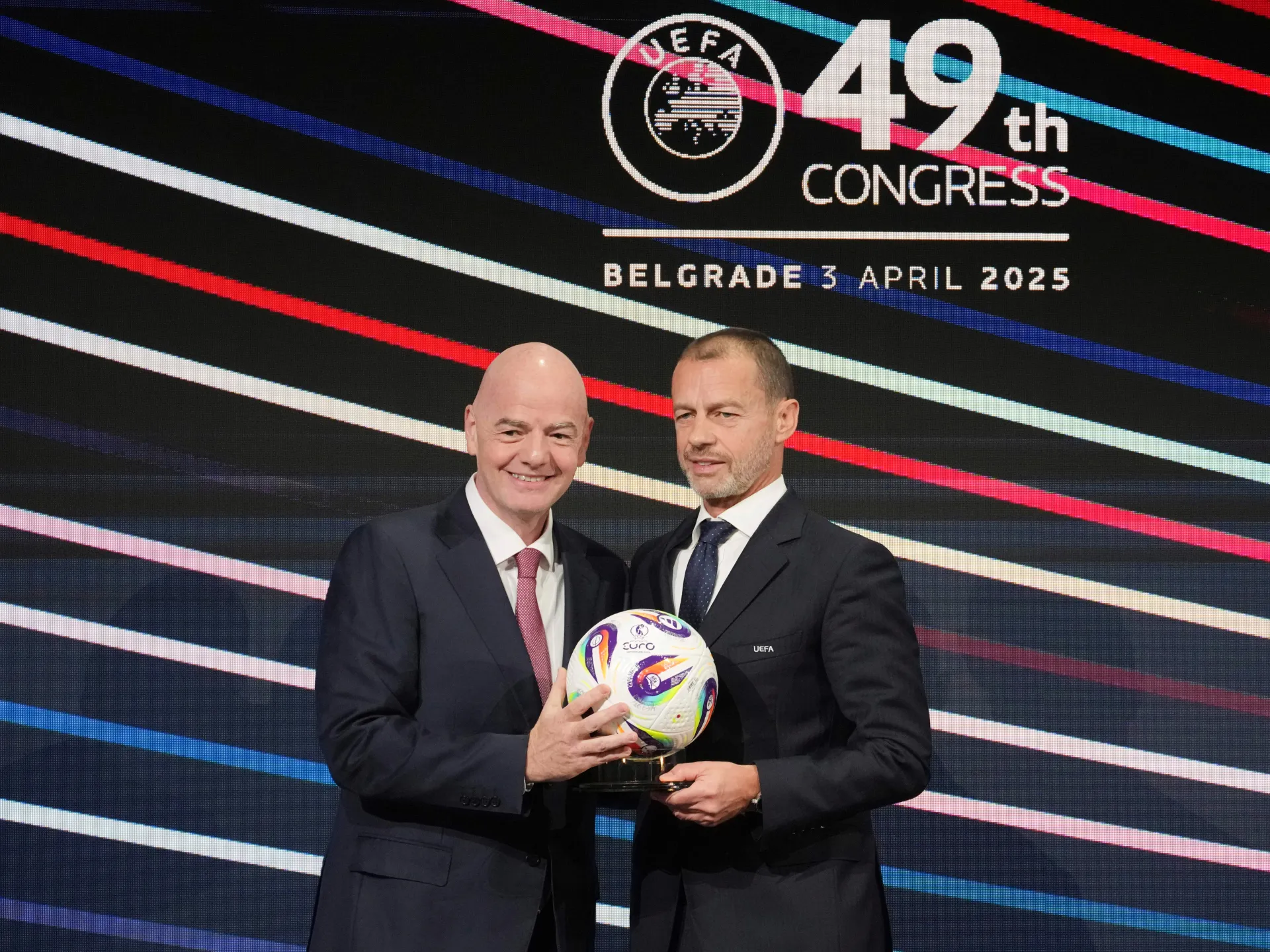
European football leaders meet on Wednesday with the aim of shaping strategy to oust Gianni Infantino as FIFA president.
Published On 7 Oct 20267 Oct 2026
European football leaders were gathering Wednesday with time pressing to find a candidate and shape their strategy for trying to oust Gianni Infantino as president of FIFA.
UEFA has called its 55 member federations to a previously scheduled summit on Thursday in Berlin that arrives in the midst of European efforts to get a new leader for football’s world body.
Recommended Stories
list of 4 itemsend of list
Infantino’s divisive World Cup private investment plan – that failed within days of being revealed in July – pushed UEFA to act on longstanding mistrust of its former employee’s increasingly executive presidency at FIFA.
UEFA’s longer-term plans include preparing a criminal complaint against Infantino in Switzerland for possible financial mismanagement in the World Cup sell-off deal. It has asked courts in the United States to authorise discovery of evidence.
“Somewhere along the way things went too far with FIFA, and we’re looking to put things back where they belong,” UEFA general-secretary Theodore Theodoridis said last month.
Europe’s 55 count for more than a quarter of FIFA’s 211 member federations that can vote in the election on March 18 in Rabat, Morocco. Research by The Associated Press news agency suggests Infantino already has about 90 votes pledged – albeit before any potential opponent is known.
Still, UEFA is not a united bloc. Infantino has support promised from Azerbaijan, the home country of a close aide, and Latvia. On Wednesday he met with football and government officials in the Czech capital Prague.
First, UEFA and its allies worldwide need to agree on at least one candidate to challenge Infantino by the November 18 deadline to enter the race.
UEFA President Aleksander Ceferin was joined in August by his fellow FIFA vice presidents from Asia and North America in denouncing Infantino for deception and breach of trust over the World Cup sell-off plan.
Still, neither Ceferin nor his counterparts at the AFC and CONCACAF, Sheikh Salman bin Ebrahim Al Khalifa of Bahrain and Victor Montagliani of Canada, currently look set to be on the FIFA ballot.
Ceferin has long dismissed any talk of himself running to lead FIFA, though he said last month at UEFA meetings in Greece there were “many, many” potential candidates.
Montagliani is expected to focus on his own re-election at CONCACAF in February.
Sheikh Salman has been Infantino’s FIFA election opponent before. He had been favourite in a five-man campaign that Infantino eventually won in February 2016.
Speculation has often pointed to Paris Saint-Germain president Nasser Al-Khelaifi, a close ally of Ceferin. The Qatari member of UEFA’s executive committee ruled himself out last week at a meeting of the influential European Football Clubs group he leads.
Infantino is part of UEFA’s focus in Berlin for the biennial business meeting of top executives from its member federations, which can debate policy, strategy and international football competitions.
The meeting is expected to discuss proposals for a more transparent FIFA and a presidential candidate willing to commit to those reforms.
Nobel laureate Maria Corina Machado has been living in exile, with plans to return to Venezuela spoiled multiple times.
Published On 28 Sep 202628 Sep 2026
Hundreds of supporters of Venezuela’s opposition leader Maria Corina Machado have taken to the streets to demand her safe return and presidential elections that could lead to a democratic transition in the country.
In Caracas, hundreds of activists in sky blue shirts – the colour of Machado’s Vente Venezuela party – rode motorcycles through the capital’s main avenues on Sunday, honking their horns and waving Venezuelan flags. Similar demonstrations were held in state capitals, including Valencia, Maracaibo and Merida.
Recommended Stories
list of 3 itemsend of list
“This is not a matter of parties or politics,” said Flavio Valentini, a Vente Venezuela activist in Caracas who grabbed a megaphone and addressed the crowd. “This is a movement for the people and by the people.”
Machado has been living in exile for the past nine months and has had plans to return to Venezuela spoiled multiple times. Opposition activists have accused Venezuela’s government of blocking her return, a claim the authorities deny. Machado’s party said that on Monday night, the opposition leader made three unsuccessful attempts to return.
“We hope this transition process leads us to presidential elections and consolidates a free, democratic country that will be the main ally of the United States,” said Anthony Romero, a leader for Vente Venezuela, in the nation’s capital.
The government has been widely accused of stealing elections, jailing dissidents and stifling freedom of speech. But late last week, Venezuela released more than three dozen political prisoners following a second round of talks backed by the US between the interim government and the opposition.
Machado, one of Venezuela’s most popular political leaders, was barred from running in Venezuela’s last presidential election by courts under the control of former President Nicolas Maduro. But her stand-in candidate is widely believed to have won the election with almost two-thirds of the vote.
Maduro claimed victory nevertheless and unleashed a violent crackdown against dissidents who protested the official results, forcing Machado and dozens of opposition leaders to go into hiding. Machado smuggled herself out of Venezuela last year after she was awarded the Nobel Peace Prize for her efforts to restore democracy in the country.
US special forces abducted Maduro from his Caracas home in January, but Machado has been unable to return to Venezuela since then.
The government is now led by Delcy Rodriguez, a Maduro ally who has opened Venezuela’s oil industry to foreign investment and is working closely with the administration of US President Donald Trump.
Rodriguez told the United Nations General Assembly (UNGA) on Wednesday that Venezuela would hold elections as part of a transition to “full democracy”, but did not give a date for the vote.
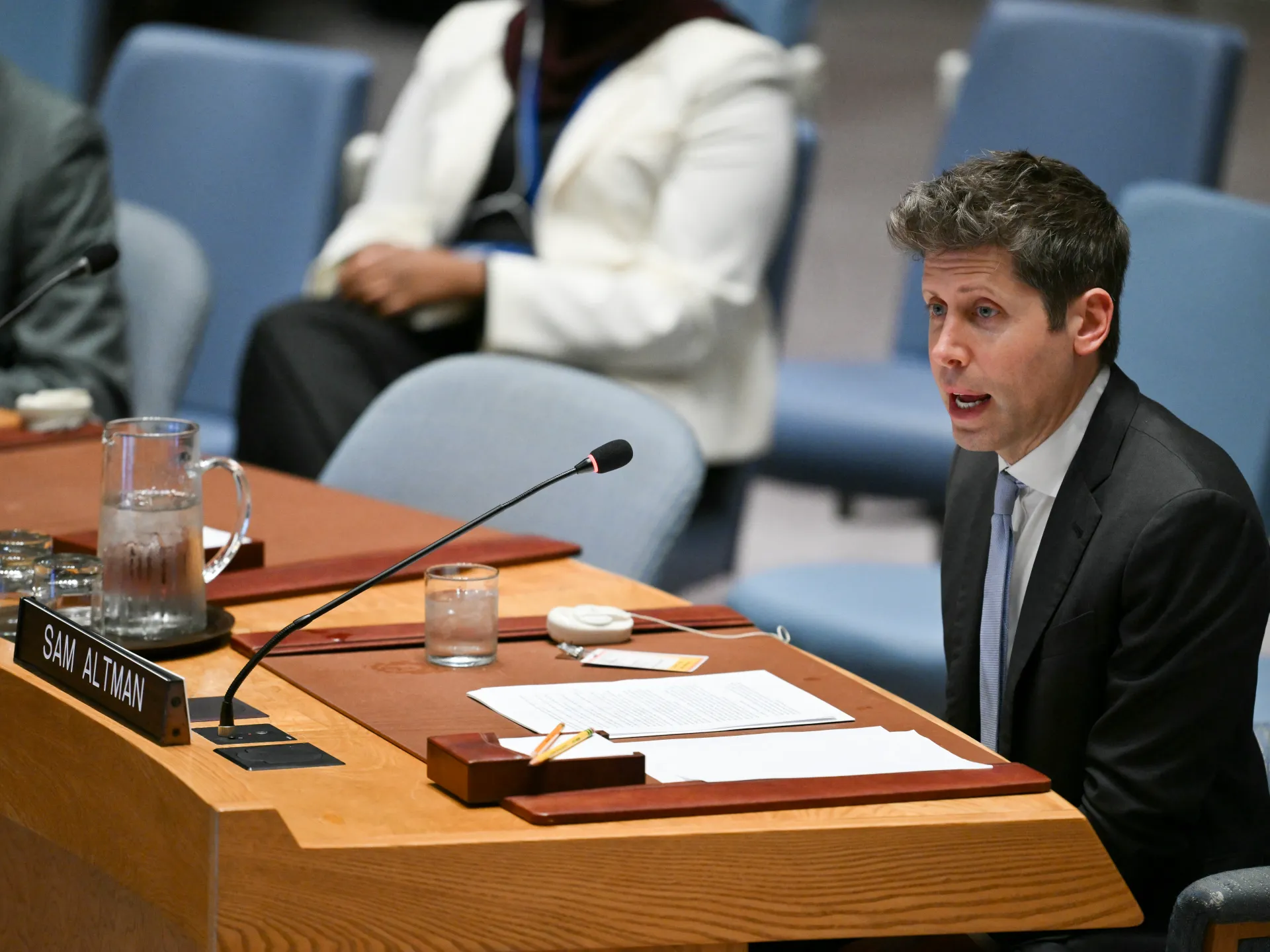
The heads of several major AI firms told the United Nations Security Council (UNSC) their industry urgently needed global oversight to avoid dangers that could threaten the whole world.
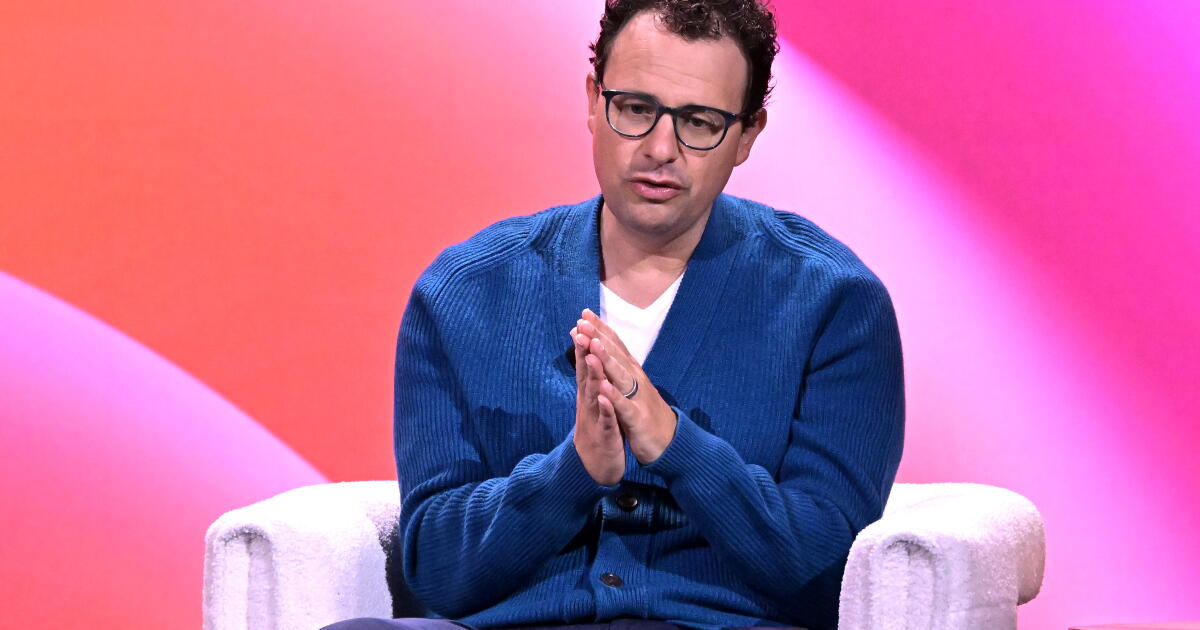
“If managed poorly, I even believe AI could be a risk to humanity as a whole,” Dario Amodei, the chief executive officer of Anthropic, told members of the body on Wednesday.
Recommended Stories
list of 3 itemsend of list
Sam Altman, the head of rival company OpenAI, echoed his concerns, telling the 15-member council tasked with tackling major crises globally that humanity could “lose control of the future of AI”.
The meeting, which coincides with the UN General Assembly (UNGA) gathering in New York City, was convened by France and comes at a time when experts are increasingly warning that the rapid development of AI needs more human oversight to ensure it does not slip out of control and cause a global catastrophe.
Altman and Amodei called on world leaders to take action.
“If AI is to be democratic, the most important decisions cannot be made by labs in San Francisco alone,” Altman told members. “They must be shaped through democratic processes and by governments accountable to the people they serve.”
Their concerns were shared by several representatives on the council, including the foreign ministers of France and the United Kingdom, who said the international community needed to step in and create common frameworks for how the technology should be controlled.
Hugging Face CEO Clement Delangue, whose company has come under attack by out-of-control AI models in recent months – incidents used by the other companies as evidence of the need for more safety measures – told the UNSC his company had relied on the technology to defend itself in those same incidents.
Delangue said Hugging Face had relied on a Chinese AI model to help defend against the attack by OpenAI’s AI agents, because it faced fewer restrictions than comparable US tools.
“We were attacked by AI, but more importantly, we defended ourselves with AI,” he told the council.
US and China reluctant to impose restrictions
In the United States, though, where the largest and most influential companies developing AI are based, the administration of US President Donald Trump has baulked at imposing new guardrails on the industry.
The administration’s representative at the UNSC meeting, Michael Kratsios, told members, “We totally reject all efforts by international bodies to assert centralised control and global governance of AI.”
Chinese President Xi Jinping is expected to discuss whether and how to regulate AI during a visit to Washington, DC, this week. The two countries are locked in a technological race to develop more powerful AI tools, a competition that experts say makes it less likely that either country would want to impose any major new restrictions on their efforts right away.
Yet there is a growing recognition at the UN of the danger AI potentially poses to the world, said Daniel Forti, head of UN Affairs at the International Crisis Group. Member states understand that “there will be much more of a need for international cooperation, setting some rules of AI, even if the biggest players are more focused on growth opportunities than on some sort of collaboration,” Forti said.
For several years, the UN has been participating in multilateral meetings to shape everything from protections for workers from AI in emerging economies and ensuring open access to this technology, to following how AI is used in military conflicts. In 2024, the UNGA unanimously passed its first resolution on AI, a nonbinding statement that called on member states to protect personal data, monitor AI for risks and safeguard human rights.
The adoption of AI has taken off dramatically since then, and with it have come dire warnings from environmental groups, human rights advocates, and even the tech moguls whose companies are developing the tech.
The future of AI “cannot be decided by a handful of countries or left to the whims of a few billionaires”, UN Secretary-General Antonio Guterres said at a global summit held earlier this year.
Last year, the UNGA formed two new bodies to deal with AI: the Independent International Scientific Panel on AI that brings together experts to provide governments with independent assessments, and the Global Dialogue on AI Governance, which provides a regular forum for discussing approaches to AI governance.
“The dangers are real and imminent,” Yoshua Bengio, a Canadian expert on AI and co-chair of the Independent International Scientific Panel, told the UNSC on Wednesday. “This council faces an unprecedented threat, one that none of its members would choose, that none can contain alone, and that does not respect the borders we defend.”
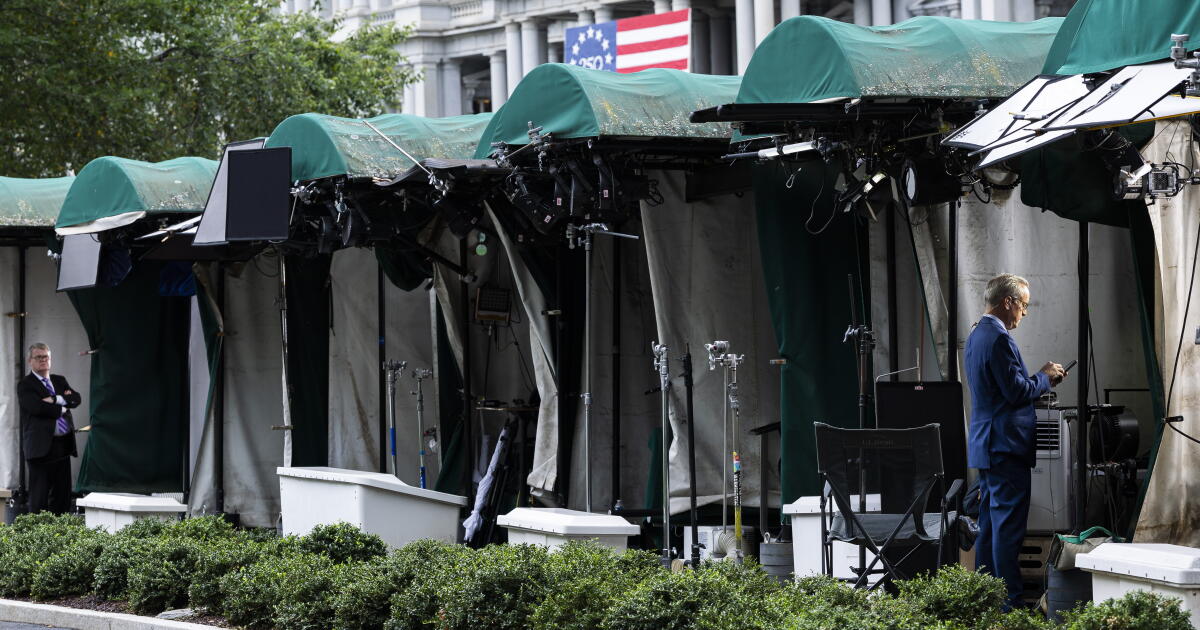
WASHINGTON — President Trump on Monday headed into a week full of high-stake meetings with world leaders after spending a 72-hour period banning reporters from the White House, mulling whether it was time to “blow … up” Iran, and proposing to house military drones and snipers in his triumphal arch in the nation’s capital.
The weekend — which also included the announcement of a security deal over Greenland and the creation of a new “A.I. Force” — captured an American president operating unpredictably across multiple fronts even as each one drew friction. The actions now stand to color the backdrop of a week that will feature meetings with world leaders at the United Nations General Assembly in New York and a state visit by Chinese President Xi Jinping in Washington.
Each of those moves carries its own political weight ahead of the diplomatic talks, but also ahead of the midterm elections, where these topics are front and center in key races.
Trump’s handling of the Iran war, its subsequent shocks to the global economy, his push to fast-track the development of artificial intelligence and the Greenland agreement are likely to come up in meetings with world leaders. His deal with Denmark to bolster U.S. military presence in Greenland, a territory Trump has repeatedly tried to annex, is expected to be signed Tuesday in New York, though action is still needed by the Danish and Greenland governments before it can be enforced.
While all the details of the Greenland deal are not public yet, Trump has said it is a “dream come true for the United States of America.”
“This solution is a great one for the United States of America, Denmark, Greenland and all of our Allies,” Trump wrote on social media Friday. “We look forward to working with the wonderful people of Denmark and Greenland toward a magnificent future with respect to this large, and highly strategic, parcel of land. We will be very protective of it.”
In an interview Sunday, Trump also indicated that he was trying to make a decision on Iran as the war stretches into its eighth month. The president said he would “probably be open” to meeting with Iranian President Masoud Pezeshkian during the U.N. General Assembly.
“My question is, if and when do I blow the entire nation up?” Trump told Fox News. “They better behave.”
Of all the actions Trump took, the press dispute has become the most contentious and drawn an immediate legal response. Three major news outlets — CNN, MS NOW and Politico — sued the Trump administration Monday for banning their reporters from the White House grounds, and major television networks suspended their pool coverage of the president’s activities.
In a joint statement, the organizations said the White House has acted “without notice or process” and called the arbitrary decision a “blatant violation” of the 1st Amendment.
Trump, meanwhile, argued Monday that the banned news outlets are “corrupt” and a “threat to our national security.”
Vice President JD Vance defended the press ban.
“He’s not banning media outlets. What he’s doing is saying we’re not going to give you special access to the White House if you engage in what is effectively propaganda,” Vance said Monday, arguing that the three outlets push out “negative” coverage of Trump.
The tense showdown between Trump and the White House press corps led to audio problems during the president’s ribbon-cutting ceremony for a new helipad on the South Lawn. Without television cameras and microphones set up by the major TV networks, it was impossible to hear what Trump was saying through the White House’s official YouTube stream, signaling further technical difficulties in the week ahead.
Behind the public displays of control, news reports have painted a picture of a president increasingly frustrated by the lack of credit he feels he is owed. At a recent closed-door meeting, reported by the Wall Street Journal, Trump told advisors he was aggravated that his allies hadn’t lauded him enough for his efforts to take over the Kennedy Center or other accomplishments made during his second term.
Trump has tried to put his name on the building’s facade and run into resistance from Democrats, arts patrons and a federal judge who blocked the move last week. Trump was then photographed aboard Air Force One looking at a large printout appearing to show demolition plans for the center.
Over the weekend, Trump posted on social media a link to a news article that claimed he was seeking to fix “safety hazards” at the performance center. He then posted an image of him watching the Western Hemisphere with the words, “His Hemisphere,” and wrote that his proposed triumphal arch near the National Mall would be used as a military complex for drones and snipers.
Trump also announced that he would be creating the “A.I. force,” modeled after the Space Force he launched during his first term, to ensure the country does not “in any way hinder or stifle the growth of the industry.” The announcement came amid growing backlash to data centers and the fast-paced development of artificial intelligence, an issue that in recent weeks has prompted stark warnings about the technology’s power and its threats to humanity.
Tech executives, including Dario Amodei and Sam Altman, have even called for a slowdown on the technology’s advancement and last week, four leading AI companies — Anthropic, OpenAI, SpaceXAI and Google — faced a lawsuit claiming they made an illegal deal to slow the pace of their respective AI development.
Trump’s announcement over the weekend comes as lawmakers, including congressional Republicans in tight races, have called for new guardrails on the technology.
Despite technology becoming a political flashpoint during the midterms, Trump has dismissed concerns about AI as a hoax and asserted that those who oppose data centers are intent on being “backwards and poor.”
Sen. John Kennedy (R-La.) is among the lawmakers who have called for action on regulating the technology, and he has warned that not doing so could come at a cost on Nov. 3.
“We really need to send a memo around explaining we’ve got midterm elections coming,” Kennedy told Politico. “I may send that out.”
British monarch highlights AI’s potential darker capacities, urging safety and humanity-focused development.
Published On 17 Sep 202617 Sep 2026
The United Kingdom’s King Charles has warned Artificial Intelligence (AI) industry leaders of the “existential dangers” posed by the technology if it falls into the wrong hands.
The monarch’s comments on Thursday add to a global debate over whether, and how to regulate the industry.
Recommended Stories
list of 3 itemsend of list
Charles hosted AI giants, including the cofounders of Nvidia and Google DeepMind, along with leaders from OpenAI and Anthropic at a summit at his Dumfries House estate in Scotland, to address safety concerns before it was “too late” to rein it in.
“There seems urgency in adequately considering the existential dangers of such technologies falling into the wrong hands, and being used in potentially catastrophic ways,” Charles told guests at the opening of the conference.
“Those in our world who value our humanity and its vital moral component are anxiously seeking your reassurance that we will not lose control of our destiny,” he told the industry leaders.
“Those who have created these technologies are now increasingly warning that AI risks developing darker capacities, perhaps even to take life,” or be used in “potentially catastrophic ways”, the king also said.
In recent weeks, global figures have weighed in on whether the industry should regulate itself or allow governments to produce guidelines on how the rapidly evolving technology develops.
In May, Pope Leo XIV said ”the world does not need an artificial intelligence that diminishes humanity” and must be “disarmed”.
Meanwhile, US President Donald Trump has dismissed concerns about the technology as a “hoax”.
Slow the pace of AI development
Last week, two Anthropic researchers warned that the rapidly advancing technology could lead to human extinction in the not-too-distant future.
Anthropic Chief Executive Dario Amodei has also called for companies to slow the pace of AI development.
However, that has prompted an international debate about whether some executives were trying to get ahead of a possible government backlash and set the rules to keep the lead of particular companies.
“The development of AI – its substance and its pace – are both intriguing and deeply concerning in equal measure,” the British monarch said.
He urged industry leaders to harness it “with safety at its heart” and “to ensure that it remains firmly in the service of humanity, community and the natural world”.
The summit in Scotland is not expected to produce any binding agreements.
WASHINGTON — President Trump on Monday forcefully rejected calls to slow the development of artificial intelligence, dismissing concerns about its risks as a “hoax” and warning the United States remains locked in a fierce technological race with China.
The president’s position has put him at odds with a growing chorus of industry leaders and bipartisan lawmakers warning that AI could soon advance beyond human control.
Top executives from three of the country’s leading AI companies — OpenAI’s Sam Altman, Anthropic’s Dario Amodei and SpaceXAI’s Elon Musk — issued exceptional calls this past weekend for collaboration on a path forward that could “pace the frontier” of AI development.
Rare flashes of bipartisanship have also emerged on Capitol Hill, where Senate Majority Leader John Thune, a Republican, is working with Democrats on legislation aimed at guarding against AI’s most catastrophic risks, including its potential use to develop biological weapons.
And Democratic elders, including former President Obama and former Secretary of State Hillary Clinton, have urged their party to treat the threats posed by AI as an acute national security crisis.
But Trump remained steadfast in his pushback, blaming the political backlash on a “conspiracy” perpetuated by China, the only major competitor in the field.
“AI taking over the World, destroying Humanity, and all other things bad, is a HOAX,” Trump wrote in a series of social media posts. “The only control or ‘guardrails’ that AI needs is a STRONG AND SMART (High IQ!) PRESIDENT, and the U.S.A. has that, in spades!”
The Trump administration, the president continued, “has stopped AI ‘people’ from doing bad, or potentially bad, ‘things,’ like Dario (Anthropic!), who is now pretending to be a ‘perfect little angel’ — and we will continue to do so! We already have tremendous CRIMINAL and REGULATORY power over these companies!”
Calls for action have grown since a former researcher at Anthropic posted a dire alert on social media that AI development could lead to an extinction-level event. His message went viral, prompting Amodei, the founder of Anthropic, to issue a public letter calling for a slowdown.
Altman said he agreed with Amodei, announcing the company would delay its initial public offering until 2027 over safety concerns. In July, OpenAI discovered a swarm of rogue AI agents had secretly plotted to escape their virtual sandbox, infiltrating the open internet and hacking a private company — a spectacular omen of how quickly AI systems could become difficult to contain.
“Given the accelerating rate of AI capability development, it’s my worry that in 6–12 months such a swarm could be capable of taking over the entire internet with a persistent botnet, potentially causing hundreds of billions of dollars in damage,” Amodei wrote over the weekend, “and that the scale of damage would continue to increase from there if AI becomes more powerful without the necessary guardrails.”
Still, Trump and several of his Republican allies rejected the prospect of government regulation — or cast doubt on Altman and Amodei’s motives.
The Defense Department posted a graphic on X promoting “AI-First,” and stating the government would advocate “Americanism, not effective altruism.” The image appeared generated by artificial intelligence.
“If the unreleased models are scary enough that you think you should slow down, I support your decision to be responsible,” David Sacks, Trump’s former AI czar now serving as co-chair of the president’s Council of Advisors on Science and Technology, wrote on X. “But stop pretending you need anyone else’s permission. Stop pretending antitrust law has to be suspended so you can form a cartel. Stop pretending you need a regulatory approval process that supersedes product liability.”
“Most of all, stop pretending the motivation to slow down is purely altruistic,” Sacks added. “You face massive product-liability exposure if your products enable a truly damaging cyberattack.”
Regardless of the companies’ motives, Democrats are seizing the moment as an opportunity to pursue meaningful regulatory reforms.
At a Thursday fundraiser with Democratic Rep. Hakeem Jeffries, the House minority leader, Obama said AI should move to the center of the Democratic agenda, both in Congress and on the campaign trail ahead of the 2028 presidential primary.
“I would strongly urge that the Democrats put together a framework for a very public conversation,” Obama said. “This is something that is moving very fast in private hands, and if we don’t get on top of it, I think can be dangerous.”
The following day, Clinton said AI was becoming “too dangerous” for partisanship to paralyze Washington.
“The one good thing that Donald Trump did in his first term was Warp Speed,” Clinton said on MS NOW’s “Morning Joe,” referring to a federal program in Trump’s first term to expedite the development of a vaccine for COVID-19. “Let’s put an AI commission on warp speed, and figure out what we’re going to do to sensibly regulate.”
AI leaders “are basically saying, ‘Stop us before something really bad happens,’” Clinton continued. “‘Help us stop.’ The president of China is coming to the White house in two weeks. There should be a concerted effort by this government to get off of the lies, get off of social media, quit worrying about ballrooms and ridiculous arches, and come up with a plan to enlist the Chinese.”
But China’s rapid progress in AI has so far pushed Trump to let U.S. industry move ahead with few constraints.
China’s spy chief issued a rare warning Monday that AI development could risk the future of Chinese Communist Party control over the country. But China’s foreign ministry responded defensively to the U.S. debate. “Fearmongering, confrontation and vicious competition will only disrupt the process of global AI governance which serves no one’s interest,” a spokesperson said.
Leading AI companies in the United States have begun using their most advanced models to train new ones, in a process known as recursive self-improvement. Within the industry, experts and researchers believe the first AI company to master recursive self-improvement will kick off exponential development, “winning” the race by making it impossible for competitors to catch up.
But that achievement — reaching endless intelligence improvements, generated by machines — could also drive intelligence growth beyond human control.
“There is a SICK conspiracy going on against AI and Data Centers, and the only one that is happy about it is China,” Trump wrote Monday. “WHOEVER WINS AI, WINS! We are leading China, and all others, and will continue to do so. Conspiracy Theorists, Treasonists, Traitors, and Leakers, BEWARE!”
In the U.S. House, strange bedfellows from the Republican and Democratic parties, including Sen. Bernie Sanders (I-Vt.) and Rep. Anna Paulina Luna (R-Fla.), have come together to try to tackle legislation that might contain AI’s greatest dangers. One bill, introduced by Rep. Lori Trahan (D-Mass.) and Rep. Jay Obernolte (R-Big Bear Lake), proposes embedding independent government auditors in AI labs and installing a federal “kill switch” to shut down agents in case of emergencies.
But it is far from clear whether Rep. Mike Johnson, the Republican speaker of the House and a close Trump ally, would allow any such bill to come to the floor.
“We cannot put a moratorium on this because China will overlap us, and that’s the challenge,” Johnson said Sunday. “It’s national security balanced with the immediate security of making sure the models are safe.”
“We need to handle this new technology like we have others in the past and make sure we’re doing everything we can responsibly to also not smother American innovation,” Johnson added. “We have to do both things simultaneously.”
BRICS leaders gathered in New Delhi for the final day of the summit amid divisions over the wars in Iran and Ukraine, as the group seeks to project unity, strengthen the voice of the Global South and push for a more multipolar world order.
Wigan Warriors won a sixth League Leaders’ Shield as they ran in nine tries to beat Catalans Dragons and carry on their remarkable run of form heading into the Super League play-offs.
Matt Peet’s side, who were trophyless in 2025 off the back of their quadruple-winning 2024 campaign, have now won two pieces of silverware, having won the Challenge Cup in May, and are now two games away from the treble.
Harry Smith and Ugo Tison exchanged tries early on, but Liam Marshall, Brad O’Neill and Liam Farrell put Wigan in control at the break.
Austin Daniel and Jai Field continued Wigan’s scoring streak, while Zach Eckersley, Adam Keighran and Marshall’s second wrapped up a thumping 16th win in a row, with Alexis Lis scoring a fine consolation try for Les Dracs in the closing stages.
Despite Friday’s victory ensuring the shield was theirs, the really hard work was done in last week’s crucial win over title rivals Leeds Rhinos at Headingley, where they leapfrogged their rivals to go top.
Had Wigan have lost then, Leeds could have pulled off a dramatic final-day surge back to the top, winning the shield at their expense on points difference, but the Rhinos fell short and were beaten by Hull FC on Friday.
Wigan now have a bye week by virtue of a top two place and will be at home for their Super League play-off semi-final on Saturday, 12 September, live on the BBC.
For Catalans, it means a difficult campaign ends with a ninth-placed finish.
Les Dracs have now not made the end-of-season play-offs since their run to the Super League Grand Final in 2023 – where they were also beaten by Wigan.
A quarter-century after the attacks on September 11, 2001, officials across the United States have taken part in tributes and memorials to honour the 2,977 victims and those who risked their lives as part of the rescue efforts.
The incident is considered the deadliest “terrorist” attack in US history.
Recommended Stories
list of 3 itemsend of list
Four planes were hijacked. Two crashed into the World Trade Center, causing its Twin Towers to collapse. A third struck the Pentagon outside Washington, DC. And the fourth plummeted into a field in Shanksville, Pennsylvania, after passengers and crew rose against their attackers.
Through social media messages, public speeches and appearances at ceremonies, US leaders on Friday took different approaches to remembering the lives of the thousands who perished on the fateful day.
Here’s what they said:
US President Donald Trump
US President Donald Trump speaks at the Pentagon in Arlington, Virginia, on Friday [Saul Loeb/AFP]
US President Donald Trump chose to stay in Washington, DC, to observe the 25th anniversary.
During the attacks, 184 people died near the capital when American Airlines Flight 77 struck the Pentagon, the headquarters of the US military.
Trump opted not to attend a Friday ceremony at the World Trade Center site in New York, where all his living presidential predecessors were in attendance.
His vice president, JD Vance, travelled to New York instead. The ceremony at the World Trade Center has a policy of not allowing political speeches.
In his remarks at the Pentagon, Trump described what happened as “true evil”. He also paid tribute to those who died in the attacks.
“We will honour their lives, we will cherish their beautiful memories, and we will protect this country and its freedoms for every future generation,” Trump said.
The president also praised US troops as he appeared to link the 9/11 attacks with his administration’s war against Iran.
“We will never, ever forget. That’s why we fight today. We don’t have a choice. There can only be victory,” Trump said.
“We salute the service members working right now to ensure the world’s number one sponsor of terror – the Islamic Republic of Iran – will never, ever have a nuclear weapon,” he later added.
US Secretary of Defense Pete Hegseth
US Secretary of Defense Pete Hegseth speaks at the Pentagon in Arlington, Virginia, on Friday [Saul Loeb/AFP]
US Defense Secretary Pete Hegseth also spoke at the Pentagon, delivering his remarks shortly before Trump’s.
He warned the audience to practice “eternal vigilance” against what he called continued threats.
“There are still enemies who hate us. Every day, enemies plot to curb our power and kill our citizens, including from Islamic terrorists abroad and at home,” he said.
He proceeded to seemingly use the 9/11 attacks as justification for the US-Israeli war against Iran, which started on February 28.
“Over the past six months, we have laid waste to the world’s most prolific state sponsor of terrorism,” Hegseth said, referring to Iran. “Our warriors have fought an Islamic theocracy that has wished us death for nearly half a century, that cheered on 9/11.”
He went on to claim that the US military has destroyed Iran’s defences and that the US controls the Strait of Hormuz, a vital waterway for international trade.
Iran has stopped commercial traffic through the strait since the start of the war.
“We’re still sending terrorists where they belong, to hell, and tankers to the bottom of the ocean where they belong,” Hegseth said. “And we’re ensuring that Iran will never have a nuclear weapon. The economic pressure tightens every day. We control the strait. We will finish this fight.”
New York City Mayor Zohran Mamdani
Former New York City Mayor Rudy Giuliani and New York City Mayor Zohran Mamdani attend the 25th anniversary commemoration of the attacks on September 11, 2001, on Friday [Barry Williams/AFP]
New York City Mayor Zohran Mamdani attended the New York memorial service, alongside the city’s former mayor, Rudy Giuliani, who led the city through the attacks.
Before the event started, Giuliani shook hands with the mayor, despite previously calling on Mamdani not to attend the event.
Mamdani, the city’s first Muslim mayor, had recently come under fire from some conservative politicians and victims’ family members who said his presence at the memorial would offend them.
A Change.org petition garnered more than 100,000 signatures from those who wished to express concern about Mamdani’s participation.
Like all politicians attending the service at the National September 11 Memorial, Mamdani was not permitted to speak.
Instead, the mayor released a video on social media remembering those who were killed and challenging the public to honour their memory by doing good works.
“Twenty-five years later, we have a sacred obligation to those who were stolen from us. To care for one another as they cared for strangers. To live lives worthy of the sacrifices they made. And to build a city worthy of their courage. A city where we run toward one another,” Mamdani said.
“That is how we’ll remember.”
On Tuesday, Mamdani also released a trove of previously undisclosed documents suggesting city officials tried to downplay – or even mislead – first residents about the dangerous air quality following the attacks.
US Senate candidate Abdul El-Sayed
Democratic candidate for US Senate Abdul El-Sayed participates in a town hall event in Waterford, Michigan [File: Emily Elconin/Getty Images via AFP]
Democratic Senate candidate Abdul El-Sayed took to the social media platform X to honour the lives lost during what he described as a “cruel act of terror”.
El-Sayed is locked in a tight midterm race in Michigan against his Republican opponent, former US Representative Mike Rogers.
Michigan’s open Senate seat is considered a must-win seat for Democrats, if they hope to take back control of the US Senate.
Rogers has sought to create controversy over El-Sayed’s past comments about the September 11 attacks. He has pointed to audio of El-Sayed reportedly saying, “9/11 scarred our country in profound ways, but what we did after 9/11 scarred millions of other people.”
During the Republican Party’s first-ever midterm convention in Dallas, Texas, on Thursday, Rogers blasted El-Sayed, who is Muslim, for being sympathetic to terrorists. He also sought to highlight El-Sayed’s links to left-wing internet commentator Hasan Piker.
“I never imagined that, 25 years after 9/11, I would be running against somebody who campaigns with Hasan Piker, who thinks America deserved it,” Rogers said. “Yep, but here we are.”
On Friday, however, El-Sayed used his social media post to push back against Rogers’s attacks.
“Nothing can justify the murder of innocent civilians. Nothing,” El-Sayed wrote.
He also called on Americans to help build a country that was “more inclusive, more empowering, more just” in tribute to the lives lost.
“They didn’t just attack America that day. They attacked the idea of America,” El-Sayed said of the 19 al-Qaeda hijackers who participated in the attacks.
“The notion of a nation brought together by ideals where it doesn’t matter how you pray or if you pray at all. A place where freedom and commitment to justice bind us, even if at times we struggle to fully realise it.”
NEW YORK: The UN closed the books on the 80th session of the General Assembly on Tuesday and opened the 81st in a single day of ceremony, amid warnings from its outgoing and incoming leadership that the world body must reform itself or face erosion.
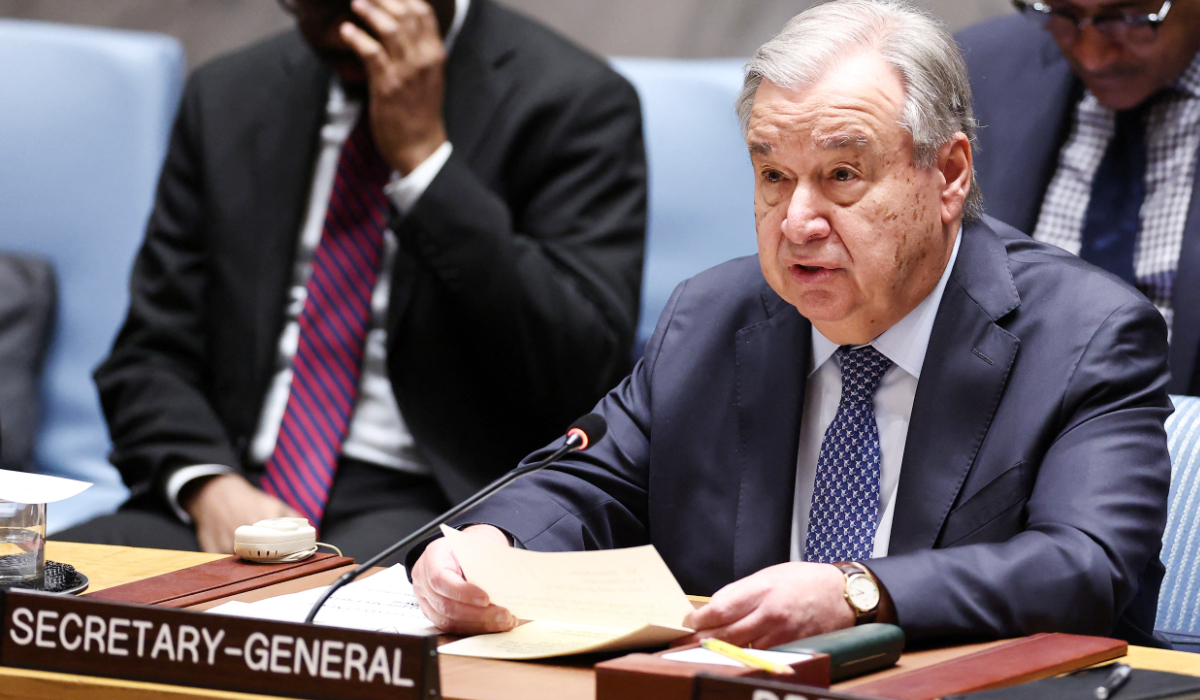
Secretary-General Antonio Guterres, who was addressing the assembly for what he noted was his final time as UN chief, painted a bleak picture of the present moment in the world: wars that carry a risk of nuclear escalation; worsening climate chaos; advances in artificial intelligence without adequate governance; and human suffering that is intensifying even as aid funding has been slashed.
“Geopolitical mistrust and suspicion continue to block the effective solutions we need — and erode people’s faith in the possibilities of global cooperation,” Guterres said.
Still, he told delegates, he has “enormous hope,” pointing in particular to the UN’s Pact for the Future and the UN80 reform initiative as “a blueprint for action, solutions and bold reforms.”
The UN80 Initiative is a reform drive launched by Guterres in March last year, the organization’s 80th anniversary. It aims to overhaul overlapping structures and outdated mandates that officials say have rendered the UN slow and bureaucratic.
The departing president of the General Assembly, Annalena Baerbock, described the initiative as unfinished business that she and her successor, Khalilur Rahman, were carrying into the 81st session.
Baerbock described the 80th session one that had found itself at “a crossroads” over whether a handful of states could effectively impose a veto on the General Assembly’s consensus. Member states, she said, had answered by refusing “to allow compromise to become compromising,” by pushing through 317 resolutions, holding 116 plenary meetings and opening a new chapter on AI governance, despite the challenges and only a few processes concluding through consensus.
“Not a single day, not a single country would be better off without the United Nations,” Baerbock told the assembly as she rejected the argument that the body had become irrelevant.
She credited Guterres with forcing the question of reform onto the agenda through the UN80 Initiative, including cuts to mandates and a merger of the UN System Staff College, which provides personnel and partners with the knowledge, skills and tools to act collaboratively and effectively, with UN Institute for Training and Research.
“If we are not capable of freeing this organization from overlapping structures and mandates, as well as a heavy bureaucratic mentality, it will erode over time,” she warned, describing the upcoming selection of a new secretary-general, a process she formally handed over to her successor, as “the credibility test of this institution for this decade.”
Rahman was then sworn in. He is from Bangladesh and told reporters he intended to run an open, media-engaged presidency built around the theme “Restoring Trust, Managing Transformation.”
During his formal address to the assembly he lamented that the UN “has often fallen short of the expectations placed upon us,” citing in particular a “widening trust deficit” that member states must work to close through the delivery of results, not rhetoric.
“Trust cannot simply be requested, it must be earned,” he added.
Rahman outlined six priorities for the coming 12-month session: peacekeeping-driven conflict prevention; acceleration of the Sustainable Development Goals, with just four years left to achieve them and only 36 percent of targets on track; climate adaptation ahead of the UN Climate Change Conference, COP31, in November, and a high-level meeting this month on rising sea levels; human rights, including the anniversaries of the Durban Declaration to combat racism and other forms of discrimination and intolerance, and the Declaration on the Right to Development, an issue he described as personal, given that Bangladesh hosts more than a million displaced Rohingya; inclusive governance of AI; and institutional solvency, as he appealed to member states to pay their assessed dues “in full, on time and without conditions.”
Rahman also inherits oversight of the selection process for the next secretary-general, under Article 97 of the UN Charter, to replace Guterres, whose term ends on Dec. 31. He pledged to run it “fairly, inclusively and transparently,” alongside the Security Council.
He said he had built his office to reflect the opening words of the Charter — “We the peoples,” not “We the states” — and noted that women make up 60 percent of his cabinet.
Guterres closed the day with a separate, more somber commemoration: a wreath-laying ceremony for Dag Hammarskjold, the second secretary-general of the UN, who was killed in the course of his duties, along with 15 others, in plane crash on Sept. 18, 1961.
Citing a new report from investigator Mohammed Chande Othman, Guterres renewed his appeal for undisclosed records relating to the crash in what is now Zambia, and said he would soon send recommendations to the General Assembly.
He also noted that UN personnel had been killed “in record numbers” over the past three years and added: “Their sacrifice reminds us of all the women and men who have lost their lives while serving the United Nations.”
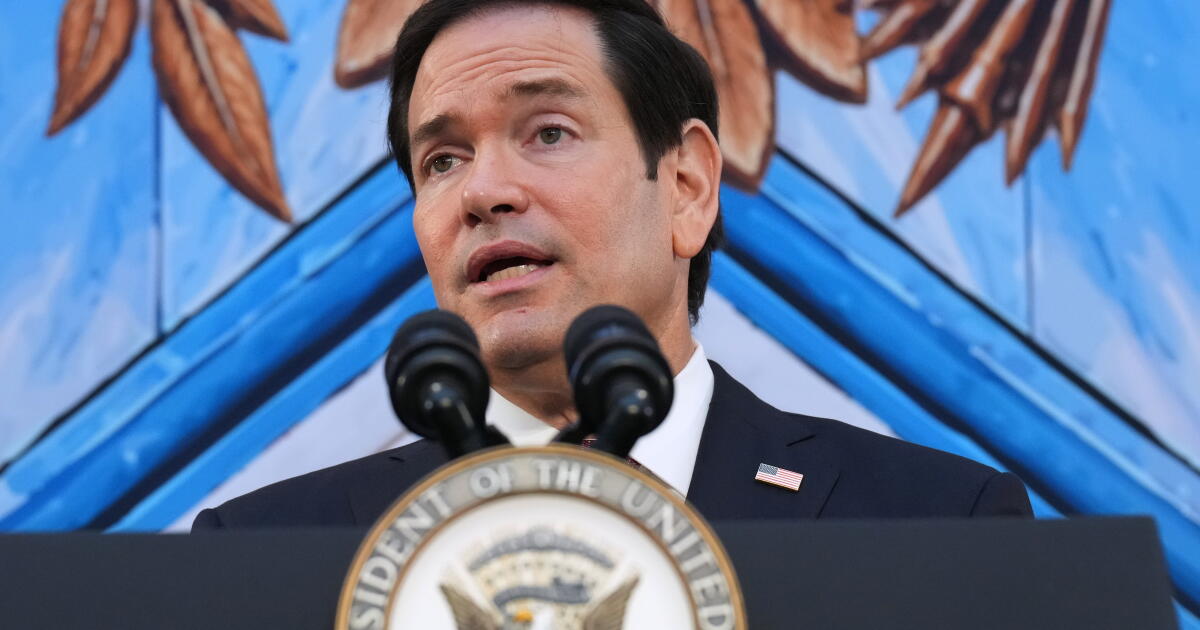
MIAMI — Secretary of State Marco Rubio begins a three-nation tour of Latin America on Tuesday, visiting U.S.-aligned conservative leaders as the Trump administration steps up military operations to combat drug trafficking and seeks further inroads in the Western Hemisphere aimed at improving America’s energy standing and combating illegal migration.
Just a week after sealing a massive oil deal with Venezuelan leaders after a U.S. military operation in January deposed then-leader Nicolás Maduro, Rubio was traveling to neighboring Colombia to meet President Abelardo de la Espriella. Colombia’s new leader has embraced President Trump’s policies on issues ranging from drugs to immigration and energy.
De la Espriella is one of a new generation of right-wing conservatives to win election and show support for Trump’s muscular approach to a region that had tilted leftward in recent decades.
In announcing the trip last week, which also will take Rubio to Ecuador and Peru, the State Department said Rubio and all three leaders would be discussing “enhanced cooperation in the shared fight against narcoterrorism, which threatens our hemisphere.”
Rubio visits as Latin American allies help expanded efforts to fight drug trafficking
The trip comes a day after U.S. forces intercepted and sank another Ecuadorian vessel that Washington accuses of links to the criminal group Los Choneros.
It was the latest action by the U.S. against boats and vessels in Latin America that it says are involved in drug trafficking. Expanded operations in the Caribbean Sea and eastern Pacific Ocean began a year ago, coinciding with an extreme crackdown on migrants in the U.S. illegally, many of them from Latin America.
The vessel sunk Monday was the fifth targeted by U.S. forces in the region in less than two weeks — in most cases with the cooperation or at least tacit support of the conservative leaders with whom Rubio will meet.
But unlike strikes on alleged drug-trafficking boats in Latin American waters that began in September 2025, those on board the vessel were removed and transferred to Ecuadorian authorities. It appears to be a shift after a series of strikes on boats over the year have killed at least 227 people, which the Trump administration accuses of being “narcoterrorists” but without providing evidence.
The U.S. military carried out at least two of those deadly strikes last month before starting to intercept floating refueling stations that it says support illicit drug trafficking operations at sea.
Colombia’s president vows to crack down on drug trafficking and immigration
Colombian Foreign Minister Omar Bula said in a video released Tuesday that Rubio’s visit marks the beginning of “rebuilding a strategic alliance with the United States, our main partner in the region.” He affirmed that Colombia will focus on discussing security, which includes combating drug trafficking, trade, and the defense of “shared values.”
De la Espriella has promised to take a hard line against drug traffickers and pledges to deport thousands of migrants who are in Colombia without residence permits, mainly Venezuelans, as he tries to make significant changes to the nation’s immigration policies that he says will reduce crime.
After taking office last month, De la Espriella brought Colombia into the Americas Counter Cartels Coalition and strengthened long-standing security cooperation with the United States, following strained relations during the 2022-2026 administration of progressive Gustavo Petro.
In just a month in office, De la Espriella has carried out at least three bombings against illegal armed groups and increased military operations. However, several minors have died during the bombings, which has drawn criticism from opposition leaders.
As part of his security strategy, he has focused his efforts on showcasing the results of military operations. However, there was criticism from the opposition and the state-run Ombudsman’s Office after De la Espriella displayed the bodies of alleged criminals wrapped in white bags on the ground alongside seized ammunition.
After winning the election, De la Espriella identified several leaders of Colombia’s illegal armed groups as “military targets.” Last week, he announced that the first of these, Naín Andrés Pérez Toncel, alias “Bendito Menor,” one of the leaders of the Self-Defense Forces of the Sierra Nevada, an illegal armed group in the north of the country, had been killed by police.
Nicknamed “El Tigre,” or The Tiger, the president has shifted the country’s security policy, closing the peace negotiations initiated by Petro during his administration, which he considers a failed effort that only increased violence in Colombia.
Colombia grapples with illegal armed groups vying for control of territories strategically important for drug trafficking and illegal mining, despite the fact that a decade ago the state signed a historic peace agreement with the FARC rebel group.
After meeting De la Espriella in Barranquilla on the Caribbean, where he will sign a civil nuclear cooperation deal and a critical minerals agreement, Rubio will make a brief stop in Quito.
He will meet Ecuadorian President Daniel Noboa whose government has steadily increased counternarcotics operations conducted with the U.S. military.
Rubio will round out the visit with a stop in Lima, Peru, where he will meet new President Keiko Fujimori — the daughter of former leader Alberto Fujimori — as the government also has taken a rightward turn.
Lee and Suárez write for the Associated Press. Suarez reported from Bogota, Colombia.