leader

Why Europe’s far right has split with Trump over Greenland

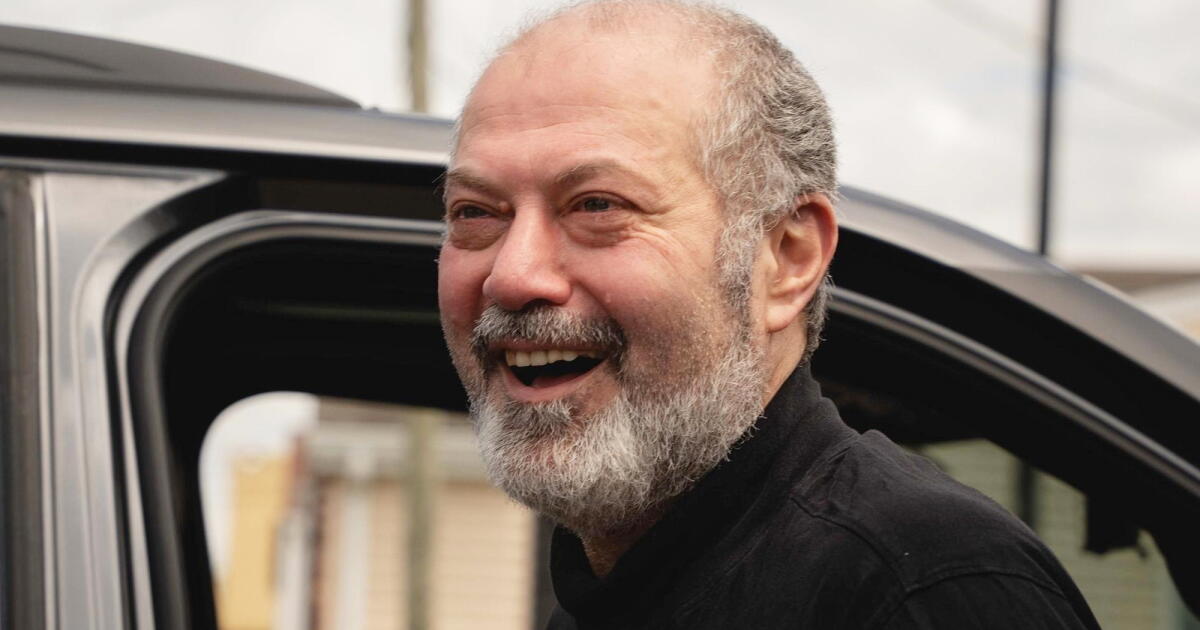
One year ago, days before Donald Trump reclaimed power, the head of Denmark’s People’s Party took a trip to Mar-a-Lago. Morten Messerschmidt thought he and Trump shared a common view on the perils of European integration. Together, he told local media at the time, they could make the West great again.

In Europe, just as in the United States, Messerschmidt thought it was “nationale suverænitet” — national sovereignty — that had over centuries given countries large and small the tools to build their culture, traditions and institutions. Those were the values that conservative movements across the European continent are fighting to protect.

But Messerschmidt now finds himself on the defensive. The far-right politician is suddenly distancing himself from an American president who, off and on over the last year, has made aggressive plays to annex Greenland, targeting Danish borders that have existed for roughly 300 years.

Trump pulled back from military threats against the island this week. “It’s total access — there’s no end,” he said in an interview on Thursday with Fox Business. Asked whether he still intended on acquiring the island, Trump replied, “It’s possible. Anything is possible.”

Despite Trump’s fixation on Greenland since his first term, he declined to meet with Messerschmidt at Mar-a-Lago last January. Instead, the Danish politician found himself discussing the matter with Marla Maples, the president’s ex-wife.

“Portraying me as someone who serves a cause other than Denmark, and who would sympathize with threats to our kingdom, is unhealthy,” Messerschmidt wrote on Facebook this weekend. “It is slander.”

The Danish People’s Party is one of many far-right groups across Europe, which aligned with Trump’s MAGA movement in their fervent opposition to immigration and related issues, suddenly in rebellion against an administration it once thought of as an ideological ally.

The president’s moves are now compelling them to reconcile their alliance with Trump with a core tenet on the political right, that nationalism is largely defined by people and place over historic stretches of time — or as Trump often said on the campaign trail, “without a border, you don’t have a country.”

“Donald Trump has violated a fundamental campaign promise — namely, not to interfere in other countries,” Alice Weidel, co-leader of Germany’s far-right Alternative for Germany Party, or AfD, said in Berlin. Her colleague added: “It is clear that Wild West methods must be rejected.”

The rupture could jeopardize the Trump administration’s own stated goals for a future Europe that is more conservative and aligned with the Republican Party — a plan that relied on boosting the very same parties now questioning their ties to the president.

In its national security strategy, published in November, the White House said it would “cultivate resistance to Europe’s current trajectory within European nations,” hoping to restore “Europe’s civilizational self-confidence and Western identity.”

And it is not clear whether the president’s decision to walk back his most aggressive threats is enough to contain the diplomatic damage. “The process of getting to this agreement has clearly damaged trust amongst allies,” Rishi Sunak, former prime minister of the United Kingdom and leader of its Conservative Party, told Bloomberg on Thursday.

Trump’s pressure campaign urging Ukraine to accept borders redrawn by a revanchist Russia had already strained relations between his inner circle and Europe’s far-right movements. But several prominent right-wing leaders say his aggressive posture toward Greenland amounted to a bridge too far.

On Wednesday in Switzerland, addressing growing concerns over the plan, Trump still left threats lingering in the air, warning European leaders that he would “remember” if they blocked a U.S. takeover.

“Friends can disagree in private, and that’s fine — that’s part of life, part of politics,” Nigel Farage, leader of the far-right Reform UK party in Britain, told House Speaker Mike Johnson in London earlier this week. “But to have a U.S. president threatening tariffs unless we agree that he can take over Greenland by some means, without it seeming to even get the consent of the people of Greenland — I mean, this is a very hostile act.”

In France, the head of Marine Le Pen’s far-right party, National Rally, said the United States had presented Europe “with a choice: Accept dependency disguised as partnership or act as sovereign powers capable of defending our interests.”

With overseas territories across the Pacific, Caribbean and Indian oceans, France has the second-largest maritime exclusive economic zone in the world after the United States. If Trump can seize Greenland by force, what is stopping him, or any other great power, from conquering France’s islands?

“When a U.S. president threatens a European territory while using trade pressure, it is not dialogue — it is coercion. And our credibility is at stake,” said the party’s young leader, Jordan Bardella.

“Greenland has become a strategic pivot in a world returning to imperial logic,” he added. “Yielding today would set a dangerous precedent.”

Source link

Column: New California Senate leader Monique Limón, ‘kind, generous’ and a ‘badass’

People often ask me how things have changed at the state Capitol since I began covering news there many decades ago. My latest short answer: Look at the new California Senate leader.

In fact, look at the entire Senate. Actually, the other legislative house, too, the Assembly.

There was only one female legislator when I arrived very young and green in 1961. She was an Assembly member, Democrat Pauline Davis from mountainous Plumas County in the northeast. You can thank her persistence for highway rest stops.

There wasn’t one Latino in the entire 120-member Legislature. The first two in modern times were elected the next year.

You’re reading the L.A. Times Politics newsletter

George Skelton and Michael Wilner cover the insights, legislation, players and politics you need to know in 2024. In your inbox Monday and Thursday mornings.

By continuing, you agree to our Terms of Service and our Privacy Policy.

Today, the new Senate president pro tem — Democrat Monique Limón of Goleta in Santa Barbara County — is the upper house’s first Latina leader and the first mother who is leader of the Senate. And there are more female senators than males, 21 to 19.

The Assembly’s getting there, too. Women hold 38 of the lower house’s 80 seats. In all, 49% of all legislators are women — 59 of them.

A woman wasn’t elected to the Senate until 1976 when conservative Democrat Rose Ann Vuich, a farm owner, won a seat from Dinuba in the San Joaquin Valley. Vuich made it clear she was “not a part of the women’s liberation movement.” But whenever a male colleague rose to address the “gentlemen of the Senate,” she reminded them of her presence by ringing a small bell.

Even by 1980, only 9% of California legislators were women. The first Latina senator — Democrat Hilda Solis, now a Los Angeles County supervisor — wasn’t elected until 1994. Now, there are 13 Latina senators, including three Republicans.

The first female Senate president pro tem, Toni Atkins of San Diego, was elected leader in 2018. She’s also the only person to have been chosen as both Assembly speaker and Senate pro tem.

There have been three female Assembly speakers, including current L.A. Mayor Karen Bass. The first was Republican Doris Allen of Orange County in 1995, a puppet of departing Democratic Speaker Willie Brown. She was quickly recalled by her constituents.

Six of the last 10 speakers have been Latinos. But before Limón, there was only one Latino Senate leader: Democrat Kevin de León of Los Angeles.

OK, all this history may be interesting. But so what? What difference has it made to California citizens?

“A couple of areas have been the most profound,” says veteran Sen. Tom Umberg (D-Santa Ana), who served in the Assembly in the 1990s and was elected to the Senate in 2018.

“Healthcare and child care. When I first came, I don’t remember child care being a big-deal issue. I certainly don’t remember access to healthcare being an issue. The presence of women has highlighted those things.”

I asked the new Senate leader. Women have provided the Legislature with more “diversity of experiences,” Limón answers. And child care has been made more than just a women’s issue, she adds. “It’s an economic issue. It enables workers to go to their jobs.”

But Latinos? How has their vast increase at the Capitol helped California Latinos?

Not much, complains Mike Madrid, a GOP strategist who has written a book on Latino politics.

“It’s been more about representation than results,” Madrid says. “Representation is not enough. The metrics are worse now than they were years ago: poverty rates, home ownership, 50% of Latino children on Medi-Cal.”

Madrid says Latino politicians have been too focused on immigration issues and not nearly enough on what their constituents really care about: economic opportunity and living costs.

What needs to be done for Latinos? ”Housing, housing, housing,” Madrid says. “Why aren’t Latinos leading this fight?”

Madrid notes that recent reforms of the much-abused California Environmental Quality Act, which has stymied housing development, were pushed by Gov. Gavin Newsom and white legislators.

Limón says she and Democrats are currently focused on a proposed $10-billion housing bond they’re trying to place on the June primary election ballot. It would help finance housing construction for low-income people. But apparently not the middle class.

Limón, 46, the daughter of Mexican immigrants, has a much calmer personality than many of her rough-hewn male predecessors.

She’s “kind, generous and sweet,” Sen. Angelique Ashby (D-Sacramento) told the Sacramento Bee.

But her demeanor masks an inner toughness. You don’t rise to Senate leadership — second only to the governor in raw power — by being a gentle wimp.

At her recent oath-taking ceremony in the Senate chamber, Sen. Caroline Menjivar (D-Panorama City) called Limón in Spanish a “badass.”

Limón appointed Ashby the Senate majority leader, the second in command. Menjivar was named Democratic Caucus chair, a post Limón previously held.

A liberal progressive, Limón was the Democrats’ overwhelming choice for the top job, Umberg says, because “she seems to be fair, a critical quality in a pro tem. She has intestinal fortitude and will stand up to institutional interests. She cares about the [legislative] institution and is pragmatic.”

Longtime Sen. John Laird (D-Santa Cruz) says, “She’s easy to get along with, but she’s outcome-oriented.”

No male bothered to run for Senate leader, Laird says, because the men mostly felt the selection of a woman was inevitable since they now hold the house majority. Limón beat out two other women: Ashby and Sen. Lena Gonzalez (D-Long Beach).

Limón named Laird chairman of the crucial Budget Committee. But she appointed women as chairs of the five deep-diving budget subcommittees.

Other major committees will be headed by a gender mix. For example, women were named chairs of Appropriations, Education, Environmental Quality, Governmental Organization and Health. Men will lead such key panels as Energy, Housing, Insurance, Judiciary (Umberg), Public Safety and Revenue and Taxation.

We won’t know for months how any of this will turn out substantively. But it’s the continuation of a big shift toward more female power in California’s Capitol.

What else you should be reading

The must-read: In San Francisco, Newsom rails against proposed billionaire tax, vows to protect homeless Californians
CA vs. Trump: Trump administration’s demands for California’s voter rolls, including Social Security numbers, rejected by federal judge
In-Or-Out: California Atty. Gen. Rob Bonta opts against running for governor. Again

Until next week,
George Skelton


Was this newsletter forwarded to you? Sign up here to get it in your inbox.

Source link

Military leader Doumbouya sworn in as Guinea’s president | Elections News

Doumbouya was declared victor in the West African country’s first election since he led the 2021 military takeover.

Mamady Doumbouya, a general who led a 2021 military takeover in Guinea, has been sworn in as the West African country’s president.

The Saturday event, which took place in front of tens of thousands of supporters and several heads of state, came after Doumbaya was declared the victor in last month’s election.

Recommended Stories

list of 3 itemsend of list

The vote was the first since Doumbouya toppled President Alpha Conde four years ago.

Although he initially pledged not to run for president after seizing power, Doumbouya ultimately stood for election against eight other candidates. However, his most prominent opponents remained in exile, with the opposition calling for a boycott of the poll.

The West African country’s Supreme Court later said Doumbouya received 86.7 percent of the vote.

Dressed in a traditional gown, Doumbouya swore an oath to uphold the constitution – which had recently been altered to allow him to stand – during an hours-long ceremony at the General Lansana Conte Stadium on the outskirts of the capital, Conakry.

“I swear before God and before the people of Guinea, on my honour, to respect and faithfully enforce the Constitution, the laws, regulations and judicial decisions,” he said.

Heads of state from Rwanda, The Gambia, Senegal and other African countries joined the event, as did the vice presidents of China, Nigeria, Ghana and Equatorial Guinea, as well as officials from France and the United States.

Assimi Goita, a general who has led neighbouring Mali since a military takeover in 2020, was also in attendance.

The election came after Guineans approved a new constitution in September that permitted members of the military leadership to run for office. It also lengthened presidential terms from five to seven years, setting a two-term limit.

Doumbouya has said the military takeover was justified due to alleged corruption and economic mismanagement under Conde, who in 2010 became the country’s first freely elected president since its 1958 independence.

During four years in power, the military dissolved state institutions and suspended the constitution, as it negotiated with regional bodies, including the Economic Community of West African States (ECOWAS), over a return to democratic civilian government.

Doumbouya has cracked down on civil liberties, banned protests and targeted political opponents during his time as leader.

With about 52 percent of the population living in poverty, he has promised to tap the country’s vast natural resources, which include untapped iron ore deposits, as well as the world’s largest bauxite reserves.

Source link

US says it killed al-Qaeda-affiliated leader tied to deadly Syria ambush | Al-Qaeda News

CENTCOM says the strike in northwest Syria on Friday killed a man tied to the December attack that killed US troops and an interpreter.

The United States says an air strike in northwestern Syria has killed an al-Qaeda-affiliated leader who had ties to an ISIL (ISIS) member involved in a deadly ambush of US forces last month.

The US Central Command (CENTCOM) said on Saturday that an air strike a day earlier killed Bilal Hasan al-Jasim, who was “directly connected with the ISIS gunman who killed and injured American and Syrian personnel” in mid-December.

Recommended Stories

list of 3 itemsend of list

“There is no safe place for those who conduct, plot, or inspire attacks on American citizens and our warfighters. We will find you,” CENTCOM Commander Brad Cooper said in a statement.

Two US soldiers and a military interpreter were killed in the ISIL ambush in the Syrian city of Palmyra on December 13.

Since then, the US has carried out a series of large-scale strikes in Syria in what it says is a response to the deadly attack on US forces.

On Saturday, CENTCOM said US forces and their partners had struck more than 100 ISIL “infrastructure and weapons” sites since the US military launched its retaliatory operation in December.

“Additionally, US and partner forces have captured more than 300 ISIS operatives and killed over 20 across Syria during the past year,” it said.

US President Donald Trump had promised to inflict significant damage on those responsible for the deadly attack on US troops.

“I can tell you, in Syria, there will be a lot of big damage done to the people that did it,” Trump said on December 13.

Source link

Venezuelan opposition leader is confident about return of democracy but says little of her plans

Venezuelan opposition leader María Corina Machado said Friday she’s confident of her country’s eventual transition to democracy after the U.S. military ousted former President Nicolás Maduro.

But when pressed, she took pains to avoid giving any details on her plans to return home or any timetable for elections in Venezuela.

Her remarks reflect how President Trump’s endorsement of a Maduro loyalist to lead Venezuela for now has frozen out the nation’s Nobel Peace Prize-winning crusader for democracy. Still, Machado has looked to get closer to Trump, presenting her Nobel medal to him a day earlier at the White House.

As Machado was meeting with Trump, CIA Director John Ratcliffe traveled to Venezuela to meet with acting President Delcy Rodríguez, further confirmation that Maduro’s longtime second in command was the woman the White House preferred to see managing Venezuela for now.

Speaking to reporters at the Heritage Foundation, a conservative think tank in Washington, Machado said she was “profoundly, profoundly confident that we will have an orderly transition” to democracy that would also transform Venezuela’s self-proclaimed socialist government long hostile to the U.S. into a strong U.S. ally.

She rejected the notion that Trump chose to work with Rodríguez, Maduro’s former vice president, over her opposition movement, whose candidate was widely believed to have won the 2024 presidential election.

“This has nothing to do with a tension or decision between Delcy Rodríguez and myself,” she said. But she stopped short of elaborating, instead pivoting to vague assertions about her movement’s popular mandate and the government’s dismal human rights record.

In apparent deference to Trump, she provided almost no details Friday about what they discussed or even what she thought the U.S. should do in Venezuela.

“I think I don’t need to urge the president on specific things,” she said.

Machado traveled to Washington looking to rekindle the support for democracy in Venezuela that Trump showed during his first administration. She presented him with the prize she won last year, praising him for what she said was his commitment to Venezuela’s freedom. The Nobel Institute has been clear, however, that the prize cannot be shared or transferred.

Trump, who has actively campaigned to be awarded the prize, said Machado left the medal for him to keep. “And by the way, I think she’s a very fine woman,” he said. “And we’ll be talking again.”

But her efforts have so far done little to alter the Trump administration’s perception that Rodríguez is best prepared to stabilize the South American nation.

Trump has pressed ahead with plans for American oil companies to revive Venezuela’s crumbling energy infrastructure and is exploring the possibility of reopening the U.S. Embassy in Caracas, which he closed during his first administration.

Trump has said it would be difficult for Machado to lead because she “doesn’t have the support within or the respect within the country.”

Machado crisscrossed Venezuela ahead of the 2024 presidential elections, rallying millions of voters looking to end 25 years of single party rule. When she was barred from the race, a previously unknown former diplomat, Edmundo Gonzalez, replaced her on the ballot. But election officials loyal to the ruling party declared Maduro the winner despite ample credible evidence to the contrary.

Machado, revered by millions in Venezuela, went into hiding but vowed to continue fighting until democracy was restored. She reemerged months later to pick up her Nobel Peace Prize in Norway, the first time in more than a decade that she had left Venezuela.

Goodman and Debre write for the Associated Press. Debre reported from Buenos Aires, Argentina. AP writer Meg Kinnard contributed to this report.

Source link

Why ex-Chino Hills star LaMelo Ball is ’emotional leader’ for Hornets

The gasps from the crowd at Crypto.com Arena — a mix of shock from Lakers fans and anticipation from fans rooting for the local hero — grew each time LaMelo Ball pulled up from seemingly more and more audacious spots on the court. The Charlotte Hornets star guard held three fingers to his bicep each time he splashed a shot through the net. He stared up into the packed stands to meet the eyes of his hometown crowd.

The former Chino Hills star ignited the Hornets to a 135-117 win over the Lakers on Thursday with 30 points and 11 assists. After a quiet three points in the first half, Ball erupted for 27 points after halftime, including eight made three-pointers on 12 attempts in the second half that gave the L.A. crowd flashbacks of the brace-faced freshman on Chino Hills’ famous undefeated team.

“We all know LaMelo,” Lakers guard Marcus Smart said. “He’s been playing like that since he was in high school. To us, they’re some crazy shots, but to him, those are his shots.”

Ball, now 10 years removed from the 35-0, national championship season with the Huskies, still plays with the looseness of the freshman who was hooping with his older brothers. But the 24-year-old is now starting to own the maturity of a six-year NBA veteran.

“He’s always been an explosive scorer, explosive passer, but now he knows how to win games when it comes down to, what, two possessions, one possession,” said Hornets guard Miles Bridges, who had 25 points, including five baskets assisted by Ball. “He knows how to make the right play and win the game.”

Ball, averaging 20.4 points, 7.8 assists and 5.2 rebounds, has a career-high plus-2.8 plus-minus rating this season. Ball’s traditional stats are modest compared to some of his stat-stuffing early seasons when he averaged more than 30 points and eight rebounds in each of his first two years in the NBA, but he is playing more efficiently than ever in some ways. He has a 120.8 offensive rating and a 42.2% assist percentage, which estimates the percentage of a player’s teammates’ field goals they assist while on the court. His assist percentage trails only Denver superstar Nikola Jokic.

“We’ve always marveled at his shot making, but the thing that I think continues to just impress me, the thing that continues to help our team get better and better is that he’s trusting the pass,” said Hornets coach Charles Lee, who called Ball the team’s “emotional leader.” “I think that he’s really maximizing everyone around him. He’s making them better. … And then he just does what Melo does: He’s a shot maker.”

Ball hit back-to-back three-pointers to start the third quarter. With his confidence growing, he started pulling up earlier in the shot clock. He danced with Lakers center Deandre Ayton, driving toward the lane on the 7-footer to only pivot back and drain another three. Fading away out of the corner of the court and almost into the laps of his teammates on the Hornets bench, Ball hit a rainbow three over Smart’s outstretched hand.

“I was really just playing for real,” Ball said.

Ball did not play in the Lakers’ first game against the Hornets in Charlotte, N.C., because of an ankle injury. In November, the Lakers held off a fourth-quarter surge from the Hornets, who showed how dangerous they can be. Young and athletic, with eager drivers and knock-down shooters, the Hornets can be one of the NBA’s most dangerous offenses. In the 15 games since Ball returned from a three-game absence because of an ankle injury, Charlotte has the top-ranked offense in the league. The Hornets hung 150 points against Utah. They blew out the defending champion Oklahoma City Thunder.

“Our coaching staff and the guys in the locker room, we all knew that they got our full respect and attention pregame,” Lakers coach JJ Redick said. “And I thought we fought. Just another team that has a hot shooting night.”

The Lakers, who next play consecutive games at Portland on Saturday and at home against Toronto on Sunday, have lost four out of the last five. They are 25th in opponent three-point shooting, allowing teams to shoot 37.3% from three.

Source link

Venezuela opposition leader Machado presents Trump with her Nobel Prize

Venezuelan opposition leader Maria Corina Machado, who received the 2025 Nobel Peace Price, departs the U.S. Capitol surrounded by security, media and supporters after meeting with members of the Senate Foreign Relations Committee in Washington, D.C., on Thursday, January 15, 2026. Photo by Bonnie Cash/UPI. | License Photo

Jan. 15 (UPI) — President Donald Trump on Thursday greeted Venezuelan opposition leader Maria Corina Machado at the White House where she presented him with her Nobel Peace Prize medal, which he accepted.

Machado, leader of the Venezuela’s center-right Vente Venezuela party, was awarded the medal, which Trump heavily campaigned for, last year for her work to promote democratic rights in her South American nation.

“It was a Great Honor to meet Maria Corina Machado, of Venezuela, today,” Trump said on his Truth Social platform. “She is a wonderful woman who has been through so much. Maria presented me with her Nobel Peace Prize for the work I have done. Such a wonderful gesture of mutual respect.”

In presenting the medal to Trump, she said it is a symbol of the unity of their two peoples on the ideals of freedom, sovereignty and democratic dignity.

“It is also a profound expression of gratitude for the invaluable support of President Trump and the United States for the Venezuelan people in this decisive struggle for our independence and the restoration of popular sovereignty,” she said, according to a statement from her Vente Venezuela party.

The American president has long sought to be awarded the Nobel Peace Prize. Machado first publicly offered to give her medal to Trump earlier this month for the U.S. military operation that resulted in the seizure of Venezuela’s authoritarian president, Nicolas Maduro.

The Norwegian Nobel Committee and the Norwegian Nobel Institute responded to the situation with a statement that “Once a Nobel Prize is announced, it cannot be revoked, shared or transferred to others. The decision is final and stands for all time” — a statement it reiterated on Thursday.

“A medal can change owners, but the title of a Nobel Peace Prize laureate cannot,” it said.

During her visit to Washington, Machado also visited with Republican and Democrat lawmakers at the Capitol.

“I want to assure you that we are going to turn Venezuela into a free and safe country, and into the strongest ally the United States has ever had in this region — when Venezuela is free,” she said.

Ahead of Venezuela’s 2024 election, Machado won her primary bid to oppose Maduro, but was banned from running. Candidate Edmundo Gonzalez was widely seen as having won the election, but the state-run election agency named Maduro the winner.

Machado then left the country.

Despite the removal of Maduro, Maduro’s government remains in power, with Delcy Rodriguez, former vice president of Venezuela, serving as the country’s interim leader.

“If one day, as acting president, I have to go to Washington, I will do so with my head held high, not on my knees,” Rodriguez told lawmakers Thursday in a jab at Machado.

Source link

US seizes sixth tanker as Venezuela’s interim leader vows oil sector reform | Donald Trump News

US forces say another Venezuela-linked tanker seized as Trump continues moves to take control of nation’s oil reserves.

United States forces have seized an oil tanker in the Caribbean that the Trump administration said had links to Venezuela, the sixth tanker vessel detained as Washington moves to take full control of Venezuelan oil resources.

Homeland Security Secretary Kristi Noem said the US Coast Guard had boarded the tanker Veronica early on Thursday.

Recommended Stories

list of 4 itemsend of list

Noem said the vessel had previously passed through Venezuelan waters and was operating in defiance of President Donald Trump’s “established quarantine of sanctioned vessels in the Caribbean”.

US Marines and sailors stationed on board the aircraft carrier USS Gerald R Ford took part in the operation alongside a coastguard tactical team, which Noem said conducted the boarding.

The US military said the ship was seized “without incident”.

The Veronica is the sixth sanctioned tanker seized by US forces as part of President Trump’s promise to take indefinite control of the production, refining and global distribution of Venezuela’s oil products. It was also the fourth ship seized since the US abducted Venezuelan President Nicolas Maduro in a military operation in Caracas almost two weeks ago.

The latest seizure came as Venezuela’s interim president, Delcy Rodriguez, told parliament on Thursday that there would be reforms to legislation governing Venezuela’s oil sector. The Hydrocarbons Law, among other provisions, limits the involvement of foreign entities in exploiting the country’s national resources.

Without providing details, Rodriguez told parliament the reforms would touch on Venezuela’s so-called anti-blockade law, which provides the government with tools to counteract US sanctions in place since 2019.

Rodriguez said the envisioned legal reform would result in money for “new fields, to fields where there has never been investment, and to fields where there is no infrastructure”.

Rodriguez also said funds from oil would go to workers and public services.

Oil exports are Venezuela’s main source of revenue.

Since Maduro’s abduction, Trump has claimed the US now controls Venezuela’s oil sector and has made clear that the takeover of the country’s vast oil reserves was a key goal of his military onslaught against the nation and its leader.

Addressing oil executives last week, Trump said: “You’re dealing with us directly and not dealing with Venezuela at all. We don’t want you to deal with Venezuela.”

Venezuela sits on about a fifth of the world’s oil reserves and was once a major crude supplier to the US.

But Venezuela only produced about 1 percent of the world’s total crude output in 2024, according to OPEC, having been hampered by years of underinvestment, US sanctions and embargoes.

Source link

Machado says she ‘presented’ her Nobel Peace Prize to Trump

Venezuelan opposition leader María Corina Machado said Thursday that she “presented” her Nobel Peace Prize medal to President Trump during a private meeting at the White House, but he has not changed his view that she does not have the support to lead her country.

Machado, who won the prize last year for her work to promote democracy in Venezuela, said she presented the 18-carat gold medal to Trump as a “recognition of his unique commitment to our freedom.” It is unclear whether the president, who has been fixated on getting the prize in recent year, accepted it. The Nobel Peace Center has maintained the award cannot be transferred.

The gesture was made on the day the two leaders met for the first time at the White House. The highly anticipated get-together came as the United States has allowed top deputies of deposed president Nicolás Maduro’s regime to remain in charge as Trump oversees the transition of power.

White House press secretary Karoline Leavitt told reporters that Trump went into the meeting without any expectations, other than to have a “frank and positive discussion about what’s taking place in Venezuela.”

Leavitt added that Trump continues to assert that Machado does not have the “support” or “respect” to lead Venezuela, an assessment he first made on the day of Maduro’s capture to the surprise of many Venezuelans.

“At this moment in time, his opinion on that matter has not changed,” Leavitt said at a news briefing.

While Leavitt described Machado as a “remarkable and brave voice for many of the people in Venezuela,” she also said the United States had found an “extremely cooperative” partner in Maduro’s handpicked vice president, Delcy Rodríguez, who is serving as acting president of Venezuela.

“They have met all of the demands and requests of the United States and the president,” Leavitt said, noting that the Venezuelan government already agreed to release political prisoners and reached a $100-billion deal to rebuild Venezuela’s energy sector.

As Machado left the White House, the scope of the discussions between her and the president remained unclear. She did not take questions from the reporters, but a few of them were able to capture a moment on video when she was greeted by supporters outside the White House. She told them: “Know that we can count on President Trump for Venezuela’s freedom.”

She then left to meet with a bipartisan group of U.S. senators on Capitol Hill. It was after this meeting that Machado told reporters she had presented the medal to the president.

Sen. Rick Scott (R-Fla.) was one of 14 senators who met with Machado. After the meeting Scott said Machado was “very appreciative of the U.S. military” capturing Maduro and was pushing for “free and fair elections and free press.”

“We have got to continue to understand that Delcy Rodriguez is not the leader, she was never elected as a president, she is still the leader of drug cartels,” Scott said. “We need to make sure we hold her accountable.”

It appears unlikely that much will change for Machado after meeting with Trump, who largely has sidelined her and Edmundo González Urrutia, the opposition candidate who won the 2024 presidential election that was stolen by Maduro.

Days after Maduro was captured, Machado told CBS News the people of Venezuela had “already chosen” González Urrutia as the rightful leader of the country and that they were “ready and willing to serve our people, as we have been mandated.”

Trump, however, has maintained that before elections can take place in Venezuela, the United States needs to “fix” the country.

Asked if the president was committed to holding elections in Venezuela, Leavitt said Trump hopes to see “elections in Venezuela one day” but did not have a timeline for them yet.

Trump says he is happy with his administration’s working relationship with Rodríguez. At a White House event Wednesday, Trump called Rodríguez a “terrific person.”

The praise came after Trump said he had a “very good call” with her that morning that left him feeling hopeful that the United States and Venezuela could have a “spectacular” working relationship.

Rodriguez, in turn, used her first state of the union address Thursday to promote oil industry reforms that would drawn in foreign investment, which is in line with the Trump administration’s goals. She also criticized the Washington officials and said there was a “stain on our relations” but said she was open to strengthening the relationship.

“Let us not be afraid of diplomacy,” with the U.S., Rodriguez said in Venezuela.

Source link

Biden infrastructure plan to make U.S. the EV car leader

President Biden wants more than $170 billion to turn the nation from a laggard in the electric vehicle market into a leader. He’s challenging Congress to OK billions more in spending to persuade Americans to part with their gas-powered cars and take public transit, and even to electrify a chunk of the nation’s yellow school bus fleets.

And he’s demanding the country get serious about removing some of the dirtiest diesel trucks from the road, a move aimed in part at improving air quality in neighborhoods choked by smog.

For the record:

6:02 p.m. March 31, 2021A previous version of this story said Biden’s plan includes pledges to spend $165 million on public transit, Amtrak repairs and replacing thousands of miles of track. Those pledges are for $165 billion.

Biden’s $2.25-trillion proposal to overhaul the nation’s infrastructure is about much more than bridges and highways. It’s a blueprint for executing his ambitious goals of decarbonizing the country’s economy by 2050 and restoring America’s role as a leader on fighting climate change.

“Wrapped in what otherwise would be a traditional infrastructure bill is what I would call a light Green New Deal,” said Antonio Bento, a professor of public policy and economics at USC, referring to progressive Democrats’ grand plan for weaning the country off fossil fuels and creating clean energy jobs. “I think this is our best shot ever at reducing emissions.”

The proposal includes huge promises, some of which will be difficult to enact because they require the federal government to spend billions of dollars in coordination with states and the private sector.

Among them are pledges to spend $165 billion to boost the country’s aging public transit systems, address Amtrak’s repair backlog and replace thousands of miles of track. The proposal would provide funding to electrify 20% of school buses and build 500,000 electric vehicle charging stations across the United States by 2030.

The Biden plan would also speed the transition from fossil fuels to renewable energy, extending tax credits by 10 years for wind, solar and energy storage facilities.

It includes a proposal to spend $16 billion to put former fossil fuel industry employees to work plugging leaks from hundreds of thousands of orphaned oil and gas wells and abandoned mines. An additional $10 billion would be spent to create a Civilian Climate Corps to employ Americans in conservation efforts, including works to make Western forests less susceptible to massive wildfires.

Even the country’s beat-up mail trucks would get an upgrade: The plan calls for the government to “utilize the vast tools of federal procurement to electrify the federal fleet, including the United States Postal Service.”

All of this hinges on congressional approval, which is likely to be difficult, even though Democrats have a slim majority. And there’s no guarantee of strong support even from within the party.

As details of the proposal became public Tuesday morning, Rep. Alexandria Ocasio-Cortez (D-N.Y.) tweeted: “This is not nearly enough. The important context here is that it’s $2.25T spread out over 10 years.”

Other progressive lawmakers are likely to join her call for more spending and emphasize their own demands, such as setting a date to phase out gasoline-powered vehicles. The current proposal does not include anything along the lines of California’s requirement that all new cars sold be zero-emission vehicles by 2035.

Meanwhile, some centrists within the party are unhappy at the prospect of being asked to approve another expensive spending package so soon after Biden’s sweeping $1.9-trillion stimulus bill. At least four House Democrats are insisting that the proposal should reverse limits that President Trump placed on the deduction of state and local taxes from federal income taxes.

Republican Party leaders and fossil fuel industry groups have come out against the package, objecting to its size and plans to pay for its proposals through increased taxes on corporations.

Senate Republican leader Mitch McConnell called it nothing more than a “Trojan horse” for tax hikes. Neil Bradley, U.S. Chamber of Commerce chief policy officer, said in a statement that “the proposal is dangerously misguided when it comes to how to pay for infrastructure.” And the American Petroleum Institute, the oil and gas industry’s largest trade group, criticized the plan for not including upgrades to pipelines.

Biden’s proposal comes the same day that the U.S. Environmental Protection Agency made public its plans to restore “scientific integrity” at the agency by removing the members of two important scientific advisory panels, many of them industry figures appointed by the Trump administration. Current members can apply for reinstatement.

Source link

As Canada tries to reduce its dependence on the U.S., its leader will visit China to rebuild ties

A leader of the Canadian government is visiting China this week for the first time in nearly a decade, a bid to rebuild his country’s fractured relations with the world’s second-largest economy — and reduce Canada’s dependence on the United States, its neighbor and until recently one of its most supportive and unswerving allies.

The push by Prime Minster Mark Carney, who arrives Wednesday, is part of a major rethink as ties sour with the United States — the world’s No. 1 economy and long the largest trading partner for Canada by far.

Carney aims to double Canada’s non-U.S. exports in the next decade in the face of President Trump’s tariffs and the American leader’s musing that Canada could become “the 51st state.”

“At a time of global trade disruption, Canada is focused on building a more competitive, sustainable, and independent economy,” Carney said in a news release announcing his China visit. “We’re forging new partnerships around the world to transform our economy from one that has been reliant on a single trade partner.”

He will be in China until Saturday, then visit Qatar before attending the annual meeting of the World Economic Forum in Switzerland next week.

Trump’s tariffs have pushed Canada and China to look for opportunities to strengthen international cooperation, said Zhu Feng, the dean of the School of International Studies at China’s Nanjing University.

“Carney’s visit does reflect the new space for further development in China-Canadian relations under the current U.S. trade protectionism,” he said. But he cautioned against overestimating the importance of the visit, noting that Canada remains a U.S. ally. The two North American nations also share a deep cultural heritage and a common geography.

New leaders have pivoted toward China

Carney has been in office less than a year, succeeding Justin Trudeau, who was prime minister for nearly a decade. He is not the first new leader of a country to try to repair relations with China.

Australian Premier Anthony Albanese has reset ties since his Labor Party came to power in 2022. Relations had deteriorated under the previous conservative government, leading to Chinese trade restrictions on wine, beef, coal and other Australian exports. Unwinding those restrictions took about 18 months, culminating with the lifting of a Chinese ban on Australian lobsters in late 2024.

British Prime Minister Keir Starmer has sought to repair ties with China since his Labor Party ousted the Conservatives in 2024. He is reportedly planning a visit to China, though the government has not confirmed that.

The two governments have differences, with Starmer raising the case of former Hong Kong media magnate Jimmy Lai, a British citizen, in talks with Chinese leader Xi Jinping in late 2024 in Brazil.

Trump, who has said he will come to China in April, has indicated he wants a smooth relationship with China, though he also launched a tit-for-tat trade war, with tariffs rising to more than 100% before he backed down.

Bumpy relations, with Washington in the middle

In Canada, Trump’s threats have raised questions about the country’s longstanding relationship with its much more powerful neighbor. Those close ties have also been the source of much of Canada’s friction with China in recent years.

It was Canada’s detention of a Chinese telecommunications executive at the request of the U.S. that started the deterioration of relations in late 2018. The U.S. wanted the Huawei Technologies Co. executive, Meng Wenzhou, to be extradited to face American charges.

China retaliated by arresting two Canadians, Michael Kovrig and Michael Spavor, on spying charges. While they were imprisoned, Meng was under house arrest in Vancouver, a Canadian city home to a sizable Chinese population. All three were released under a deal reached in 2021.

More recently, Canada followed the U.S. in imposing a 100% tariff on electric vehicles and a 25% tariff on steel and aluminum from China.

China, which is Canada’s second-largest trading partner after the U.S., has hit back with tariffs on Canadian exports including canola, seafood and pork. It has indicated it would remove some of the tariffs if Canada were to drop the 100% charge on EVs.

An editorial in China’s state-run Global Times newspaper welcomed Carney’s visit as a new starting point and called on Canada to lift “unreasonable tariff restrictions” and advance more pragmatic cooperation.

Chinese Foreign Ministry spokesperson Mao Ning said Monday that China looks forward to Carney’s visit as an opportunity to “consolidate the momentum of improvement in China-Canada relations.”

Canada is also repairing ties with India

Carney met Xi in late October in South Korea, where both were attending the annual Asia-Pacific Economic Cooperation summit.

He has also tried to mend ties with India, where relations deteriorated in 2024 after the Trudeau government accused India of being involved in the 2023 killing of a Sikh activist in Canada. The fallout led to tit-for-tat expulsions of senior diplomats, disruption of visa services, reduced consular staffing and a freeze on trade talks.

A cautious thaw began last June. Since then, both sides have restored some consular services and resumed diplomatic contacts. In November, Canadian Foreign Minister Anita Anand said the two countries would move quickly to advance a trade deal, noting the government’s new foreign policy in response to Trump’s trade war.

Carney is also expected to visit India later this year.

Moritsugu writes for the Associated Press. AP journalists Sheikh Saaliq in New Delhi and Jill Lawless in London, and researcher Shihuan Chen in Beijing contributed to this report.

Source link

Mexican president tells Trump that U.S. intervention against cartels is ‘unnecessary’

Mexico President Claudia Sheinbaum said she had “a very good conversation” with President Trump on Monday and that their two governments will continue working together on security issues without the need for U.S. intervention against drug cartels.

The approximately 15-minute call came after Sheinbaum said Friday she had requested dialogue with the Trump administration at the end of a week in which he had said he was ready to confront drug cartels on the ground and repeated the accusation that cartels were running Mexico.

Trump has repeatedly offered to send the U.S. military after the cartels and Sheinbaum has always declined, but after the U.S. removal of Venezuelan President Nicolás Maduro, Trump’s comments about Mexico, Cuba and Greenland carried new weight.

“He (Trump) asked me my opinion about what they had done in Venezuela and I told him very clearly that our constitution is very clear, that we do not agree with interventions and that was it,” Sheinbaum said.

Trump “still insisted that if we ask for it, they could help” with military forces, which Sheinbaum said she again rejected. “We told him, so far it’s going very well, it’s not necessary, and furthermore there is Mexico’s sovereignty and territorial integrity and he understood.”

In an interview with Fox News aired last Thursday, Trump said, “We’ve knocked out 97% of the drugs coming in by water and we are going to start now hitting land, with regard to the cartels. The cartels are running Mexico. It’s very sad to watch.”

Sheinbaum said Monday the two leaders agreed to continue working together.

Mexico’s Foreign Affairs Secretary Juan Ramón de la Fuente spoke Sunday with his U.S. counterpart, Secretary of State Marco Rubio. Rubio asked for “tangible results” and more cooperation to dismantle the cartels, according to a statement from the U.S. State Department.

Sheinbaum said Mexico shared those results, including a significant drop in homicides, falling U.S. fentanyl seizures and fentanyl overdose deaths.

Experts still see U.S. intervention in Mexico as unlikely because Mexico is doing what the U.S. asks and is a critical economic partner, but expect Trump to continue using such rhetoric to maintain pressure on Mexico to do more.

Sheinbaum said the two leaders did not speak about Cuba, which Trump threatened Sunday. Mexico is an important ally of the island nation, including selling it oil that it will need even more desperately now that the Trump administration says it will not allow any more oil shipments from Venezuela to Cuba.

Source link

Column: Some leaders will do anything to cling to positions of power

One of the most important political stories in American history — one that is particularly germane to our current, tumultuous time — unfolded in Los Angeles some 65 years ago.

Sen. John F. Kennedy, a Catholic, had just received his party’s nomination for president and in turn he shunned the desires of his most liberal supporters by choosing a conservative out of Texas as his running mate. He did so in large part to address concerns that his faith would somehow usurp his oath to uphold the Constitution. The last time the Democrats nominated a Catholic — New York Gov. Al Smith in 1928 — he lost in a landslide, so folks were more than a little jittery about Kennedy’s chances.

“I am fully aware of the fact that the Democratic Party, by nominating someone of my faith, has taken on what many regard as a new and hazardous risk,” Kennedy told the crowd at the Memorial Coliseum. “But I look at it this way: The Democratic Party has once again placed its confidence in the American people, and in their ability to render a free, fair judgment.”

The most important part of the story is what happened before Kennedy gave that acceptance speech.

While his faith made party leaders nervous, they were downright afraid of the impact a civil rights protest during the Democratic National Convention could have on November’s election. This was 1960. The year began with Black college students challenging segregation with lunch counter sit-ins across the Deep South, and by spring the Student Nonviolent Coordinating Committee had formed. The Rev. Martin Luther King Jr. was not the organizer of the protest at the convention, but he planned to be there, guaranteeing media attention. To try to prevent this whole scene, the most powerful Black man in Congress was sent to stop him.

The Rev. Adam Clayton Powell Jr. was also a warrior for civil rights, but the House representative preferred the legislative approach, where backroom deals were quietly made and his power most concentrated. He and King wanted the same things for Black people. But Powell — who was first elected to Congress in 1944, the same year King enrolled at Morehouse College at the age of 15 — was threatened by the younger man’s growing influence. He was also concerned that his inability to stop the protest at the convention would harm his chance to become chairman of a House committee.

And so Powell — the son of a preacher, and himself a Baptist preacher in Harlem — told King that if he didn’t cancel, Powell would tell journalists a lie that King was having a homosexual affair with his mentor, Bayard Rustin. King stuck to his plan and led a protest — even though such a rumor would not only have harmed King, but also would have undermined the credibility of the entire civil rights movement. Remember, this was 1960. Before the March on Washington, before passage of the Voting Rights Act, before the dismantling of the very Jim Crow laws Powell had vowed to dismantle when first running for office.

That threat, my friends, is the most important part of the story.

It’s not that Powell didn’t want the best for the country. It’s just that he wanted to be seen as the one doing it and was willing to derail the good stemming from the civil rights movement to secure his own place in power. There have always been people willing to make such trade-offs. Sometimes they dress up their intentions with scriptures to make it more palatable; other times they play on our darkest fears. They do not care how many people get hurt in the process, even if it’s the same people they profess to care for.

That was true in Los Angeles in 1960.

That was true in Washington, D.C., on Jan. 6, 2021.

That is true in the streets of America today.

Whether we are talking about an older pastor who is threatened by the growing influence of a younger voice or a president clinging to office after losing an election: To remain king, some men are willing to burn the entire kingdom down.

YouTube: @LZGrandersonShow

Source link

Yemeni STC leader says group dissolved; others dispute announcement

Some officials for Yemen’s separatist Southern Transitional Council on Friday said the council has been dissolved, but others deny the claim and say the STC is still active in southern Yemen. Photo by Najeeb Mohamed/EPA

Jan. 9 (UPI) — Some leaders of the Southern Transitional Council in Yemen announced the dissolution of the group that controlled southern Yemen territory, but others in the separatist group say it is still active amid peace talks Friday.

STC Secretary-General Abdulrahman Jalal al-Sebaihi announced the STC’s pending dissolution on Yemeni TV while attending peace talks in Riyadh, Saudi Arabia. His counterparts in Yemen said his declaration was made under duress and was not true.

“The decisions relating to the Southern Transitional Council cannot be taken except by the Council in its entirety, with all its institutions, and under the chairmanship of the president,” STC spokesman Anwar al-Tamimi said in a social media post.

“This will happen as soon as the STC delegation present in Riyadh is released,” he said.

“The STC will continue positive and constructive engagement with all political initiatives, which give the southern people the opportunity to determine their future.”

A coalition backed by Saudi Arabia has taken control of the territory in southern Yemen that formerly was held by the STC, which is supported by the United Arab Emirates.

The conflicting statements regarding the STC were made after STC leader Aidarous al-Zubaidi secretly left Yemen on Tuesday night with the help of the UAE instead of traveling to Riyadh to negotiate matters in Yemen.

Instead, he was taken to Abu Dhabi on Wednesday, which raised tensions between Saudi and UAE officials.

In addition to leading the STC, al-Zubaidi was a member of Yemen’s Presidential Leadership Council, which expelled him on Wednesday when he did not show up in Riyadh to discuss matters in Yemen.

The UAE and Saudi Arabia recently worked together to oppose Iran-backed Houthis in Yemen, and the STC wants to have an independent state recognized in South Yemen.

The STC’s dissolution could imperil efforts to re-establish a former north-south divide in Yemen, which existed prior to the nation’s unification in 1990.

Saudi Arabia supports the PLC, which is the internationally recognized government in Yemen, while the UAE backs the STC.

Source link

Saudi-led group says separatist leader left Yemen

Southern Yemeni leader Aidarous al-Zubaidi fled Yemen with the help of the United Arab Emirates on Tuesday night and did not arrive in Riyadh, Saudi Arabia, on Wednesday for planned peace talks. File Photo by Stringer/EPA

Jan. 8 (UPI) — Separatist leader Aidarous al-Zubaidi exited Yemen with the help of the United Arab Emirates after he was charged with treason and expelled from Yemen’s Presidential Leadership Council.

Al-Zubaidi led the Southern Transitional Council in Yemen, which is supported by the UAE, and a Saudi-led coalition said he left the port city of Aden while aboard a boat on Tuesday night, the BBC reported.

The vessel carried him to the UAE-owned port of Berbera in Somaliland, where he boarded a cargo aircraft that flew him to Mogadishu, Somalia, and then a military airport in Abu Dhabi, according to The Guardian.

Neither the UAE nor the STC commented on the matter, which has raised tensions between officials in Saudi Arabia and the UAE.

The PLC expelled al-Zubaidi on Wednesday and accused him of treason when he did not arrive in the Saudi capital of Riyadh for peace talks.

The STC had sought to have southern Yemen declared an independent state and re-establish a north-south divide within Yemen that existed before the nation was unified in 1990.

The STC has controlled Aden for many years, and its leaders recently vowed to wage a guerrilla campaign while al-Zubaidi and many of his supporters remain safely in the UAE.

The STC, though, is undergoing an internal divide that has weakened it and prompted al-Zubaidi and others to leave Yemen.

Saudi-backed forces have regained territory previously held by the STC.

Tensions between Saudi Arabia and the UAE grew after separatists supported by the UAE captured territory in Yemen that reached the border with Saudi Arabia.

Saudi officials called the action a threat to their national security after earlier opposing Houthi forces in Yemen that are supported by Iran.

The UAE and Saudi Arabia had jointly opposed the Houthis, which gained control of northwestern Yemen in a 2022 cease-fire agreement.

Since then, the Saudis have backed Yemen’s PLC, which is in charge of the internationally recognized government of Yemen, while the UAE supports the separatist STC.

Source link

South Korean opposition party leader apologizes for Yoon martial law bid

Rep. Jang Dong-hyeok, leader of the main opposition People Power Party, apologizes for the failed martial law attempt by ousted former President Yoon Suk Yeol during a press conference at its headquarters in Seoul on Wednesday. Pool photo by Yonhap

SEOUL, Jan. 7 (UPI) — The leader of South Korea’s main opposition People Power Party apologized Wednesday for former President Yoon Suk Yeol’s brief declaration of martial law last year, distancing the conservative party from the impeached ex-leader while pledging sweeping reforms aimed at broadening its political appeal ahead of upcoming local elections.

Rep. Jang Dong-hyeok, chairman of the People Power Party, delivered the apology during a press conference at party headquarters in Seoul, as Yoon awaits trial on insurrection charges stemming from the failed December 2024 move.

“The emergency martial law declared on December 3, 2024, was a wrongful measure that did not fit the situation,” Jang said. “It caused great confusion and inconvenience to our people and inflicted deep wounds on our party members who have defended the constitutional order of liberal democracy.”

Jang said the People Power Party bore a “heavy responsibility” for the episode, acknowledging that it failed to fulfill its role as a governing party. He was among 18 PPP lawmakers who rushed overnight to the National Assembly to vote down the decree, which was overturned within hours.

“I gravely acknowledge that responsibility and offer my deepest apology to the people,” he said.

Seeking to move beyond the fallout, Jang unveiled what he called a “Change to Win” initiative, outlining plans to rebuild the party around youth participation, expert-driven policymaking and expanded public outreach.

Proposed measures include mandatory youth nominations in upcoming local elections, new platforms to recruit outside policy experts and standing committees focused on labor, social welfare and generational issues.

The announcement comes less than five months before nationwide local elections scheduled for June 1, as the People Power Party looks to reassert itself as a viable alternative to the current administration of President Lee Jae Myung.

Jang also signaled a willingness to broaden the party’s political coalition, saying the PPP would work with other opposition parties to win future elections.

“If they agree with the values of liberal democracy and share the will to stop the dictatorship of the Lee Jae Myung regime, we will open our hearts and join forces with anyone,” he said.

Lee, a former opposition leader, won the presidency in June following Yoon’s removal from office, with his Democratic Party holding a commanding majority in parliament. Conservatives have accused Lee’s administration of overreach, arguing that the party’s legislative dominance has marginalized the opposition, while the government says its actions are necessary to ensure stability and advance voter-mandated reforms.

Jang said the PPP would press ahead with internal reforms, including stricter anti-corruption rules, centralized oversight of candidate nominations and a possible change of the party’s name.

Past political turmoil, including the martial law episode and Yoon’s impeachment, should be left to the courts and historians, Jang said, urging the party to focus instead on restoring public trust.

“We will cross the river of martial law and impeachment and move toward the future,” he said.

Source link

Venezuela’s abducted leader Nicolas Maduro, wife appear in NYC court | US-Venezuela Tensions News

Venezuelan President Nicolas Maduro – recently abducted with his wife by US commandos from his home – has appeared in a federal courtroom in New York City for a hearing on alleged “narco-terrorism” and other charges.

Maduro and his wife, Cilia Flores, were brought before US District Judge Alvin K Hellerstein at 12pm (17:00 GMT) on Monday for a brief legal proceeding that kicks off a long legal battle over whether they can face trial in the United States.

Recommended Stories

list of 4 itemsend of list

Handcuffed and wearing blue jail uniforms, Maduro and his wife were led into the court by officers, and both put on headsets to hear the English-language proceeding as it was translated into Spanish.

Maduro pleaded not guilty in the US court, telling the judge: “I was captured. I am innocent and a decent man, the president of my country.”

Across the street from the courthouse, the police separated a small but growing group of protesters from about a dozen pro-intervention demonstrators, including one man who pulled a Venezuelan flag away from those protesting the US abduction.

The left-wing leader, his wife, son and three others could face life in prison if convicted of allegedly working with drug cartels to facilitate the shipment of thousands of tons of cocaine into the country. Some observers say there is no evidence linking him to cartels.

Maduro’s lawyers said they’ll contest the legality of his arrest, arguing he is immune from prosecution as a sovereign head of a foreign state, though he is not recognised as Venezuela’s legitimate leader by the US and other nations around the world.

Flores also pleaded not guilty to US charges against her during the arraignment. Hellerstein ordered the Venezuelan leader to next appear in court for a hearing on March 17.

INTERACTIVE - US attacks on Venezuela map-1767437429

‘Attacks’ against US people

Near the end of the hearing, Maduro’s attorney Barry J Pollack said his client “is head of a sovereign state and entitled to the privilege” that the status ensures.

Pollack said there were “questions about the legality of his military abduction”, and there will be “voluminous” pretrial filings to address those legal challenges.

Earlier, images showed the pair being led handcuffed and under heavy guard from a helicopter en route from a detention facility to the courthouse, two days after they were forcibly removed from Caracas in a brazen US special forces operation.

“The United States arrested a narco-trafficker who is now going to stand trial in the United States,” US Ambassador to the United Nations Mike Waltz told an emergency UN Security Council meeting about the US attack on Venezuela on Saturday.

Waltz accused Maduro of being “responsible for attacks against the people of the United States, for destabilising the Western Hemisphere, and illegitimately repressing the people of Venezuela”.

Samuel Moncada, Venezuela’s ambassador to the UN, accused the US of carrying out an illegal armed attack against his country.

Venezuela was subjected to bombing, the destruction of civilian infrastructure, the loss of civilian and military lives, and the “kidnapping” of Maduro and his wife, Moncada said.

The abduction of a sitting head of state breached a core norm of international law, the personal immunity of leaders in office, he added, warning that such actions set a dangerous precedent for all countries.

Vast oil wealth

All eyes are on Venezuela’s response to the swiftly moving events after US President Donald Trump said late on Sunday that the US is “in charge” of the South American nation, which has the world’s largest proven oil reserves.

Interim President Delcy Rodriguez, who took the place of her ally Maduro, initially took a defiant stand against the seizure of the president in what some observers labelled a return to “US gunboat diplomacy”. But she has now offered “to collaborate” with Washington.

Venezuela’s opposition appreciates US intervention to remove Maduro from power, but is alarmed by Trump’s comments about US plans to “run” Venezuela, apparently with members of his government, one analyst said.

“Trump doesn’t recognise the decision of the Venezuelan people. We are not a colony of the US. We are an independent country,” Jose Manuel Puente, a professor at the Instituto de Estudios Superiores de Administracion, a private university in Caracas, told Al Jazeera.

“We want to initiate a transition to democracy, to rebuild the institutions, to rebuild the economy, to rebuild the oil sector. And we don’t see that from Trump until now.”

Rodriguez has served as Maduro’s vice president since 2018, overseeing much of Venezuela’s oil-dependent economy and its feared intelligence service, and was next in the presidential line of succession.

She’s part of a band of senior officials in Maduro’s administration who now appear to control Venezuela, even as Trump and other US officials say they’ll pressure the government to fall in line with their vision for the oil-rich nation.

On Sunday, some 2,000 Maduro supporters, including rifle-wielding men on motorcycles, rallied in Caracas with crowds shouting and waving Venezuelan flags. The Venezuelan military, loyal to Maduro, announced it recognised Rodriguez and urged calm.

The White House indicated on Sunday that it does not want regime change, only Maduro’s removal and a pliant new government that will enable US companies to exploit the country’s vast oil reserves – even if the government is filled with his former associates.

Source link

North Korea fires missiles towards sea as South Korean leader visits China | Weapons News

The missile test comes as President Lee Jae Myung arrives in Beijing to meet his Chinese counterpart, Xi Jinping, their second in two months.

North Korea has launched multiple ballistic missiles off its east coast into the sea as South Korea’s leader begins a state visit to China in its first barrage of the new year.

According to South Korea’s military, the missiles launched at about 7:50am on Sunday (22:50 GMT on Saturday) flew about 900km (560 miles).

Recommended Stories

list of 3 itemsend of list

The military added that the country, as well as the United States, was “closely analysing the specifications” while “maintaining a full readiness posture”.

In a statement, the US forces for the Asia Pacific said the missile launches did not pose an “immediate threat to US personnel or territory, or to our allies”.

Japan also reported that at least two missiles had reached distances of 900km (560 miles) and 950km (590 miles).

“North Korea’s nuclear and missile development threatens the peace and stability of our country and the international society, and is absolutely intolerable,” Japan’s Defence Minister Shinjiro Koizumi told reporters.

The last time Pyongyang tested its ballistic missiles was on November 7.

According to North Korean state media, leader Kim Jong Un on Saturday called for the doubling of production capacity of tactical guided weapons while visiting a munitions factory.

In recent weeks, Kim has visited a series of weapons factories and a nuclear-powered submarine, overseeing missile tests in advance of the ninth party congress of the Workers’ Party, which will take place later this year and set out key policy goals.

Lim Eul-chul, a professor at the Institute for Far Eastern Studies in Seoul, told the Reuters news agency the launches from Pyongyang represented “a message to China to deter closer ties with South Korea and to counter China’s stance on denuclearisation”.

Lim added that it was North Korea sending a message of strength that they were different from Venezuela, after the US launched a series of attacks on Saturday and “captured” President Nicolas Maduro.

South Korean President Lee Jae Myung and his wife Kim Hye-kyung bow at Seoul Air base as they leave for Beijing, in Seongnam, South Korea, January 4, 2026. REUTERS/Kim Hong-Ji
South Korean President Lee Jae Myung and his wife Kim Hye-kyung bow at Seoul airbase as they leave for Beijing, in Seongnam, South Korea, on January 3, 2026 [Kim Hong-Ji/Reuters]

China visit

On Sunday morning, Chinese state broadcaster CCTV reported that South Korean President Lee Jae Myung had arrived in Beijing on a four-day visit.

Lee, accompanied by more than 200 South Korean business leaders, is expected to discuss supply chain investment, the digital economy and cultural exchanges.

The South Korean leader will meet his Chinese counterpart, Xi Jinping, for their second meeting in just two months. According to analysts, the short frequency of the meetings signals Beijing’s interest in increasing economic collaboration and tourism.

Seoul has said peace on the Korean Peninsula would be on the agenda during the Beijing trip.

Lee’s trip comes at a time of heightened tensions between China and Japan after Japanese Prime Minister Sanae Takaichi said in November that her country’s military could get involved if China were to take action against Taiwan.

Before his trip, Lee gave an interview to CCTV, in which he assured that South Korea consistently respects the “One-China” policy when it comes to Taiwan. He said the healthy development of Beijing-Seoul relations depends on mutual respect. Lee also praised Xi as a “truly reliable neighbour”.

Source link