Shake-ups and layoffs reveal a culture clash inside Netflix
As Netflix grapples with fallout from historic layoffs and upheaval in its senior executive ranks, the streaming giant is facing mounting scrutiny from investors about its growth strategy, diversification plans and response to rising competition from the likes of YouTube.
But the biggest challenge confronting the Los Gatos, Calif., company may be something more fundamental: a clash between the firm’s roots as a technology-driven upstart and its ambition to be a force in Hollywood.
Increasingly, tensions have flared between the L.A.-based executives dedicated to movies and TV shows and its engineers and technologists in Silicon Valley. Internal disputes have erupted over how best to expand the business and promote content on the platform to boost audience engagement, according to former Netflix employees and industry insiders who spoke to The Times.
The friction has deepened since co-founder Reed Hastings stepped away from management, handing the reins in January 2023 to Ted Sarandos and Greg Peters, who share the job of chief executive.
The dual-boss structure has at times hobbled the company and contributed to muddled messages and some costly misfires, such as its foray in the games business, said the sources, who were not authorized to speak publicly due to the sensitivity of the topic.
“With two CEOs, it’s hard to have a singular vision,” said a former Netflix executive who was not authorized to speak publicly.
Netflix declined to comment for this article.
But a person close to the company disputed the claim that there was a culture divide in Netflix.
“The idea that this is a power struggle between Hollywood and Silicon Valley misses how Netflix actually operates,” said the person, who was not authorized to speak publicly. “Ted and Greg bring different perspectives to the table, and that’s the point. They debate, make decisions together and recognize that neither great content nor great technology succeeds here without the other.”

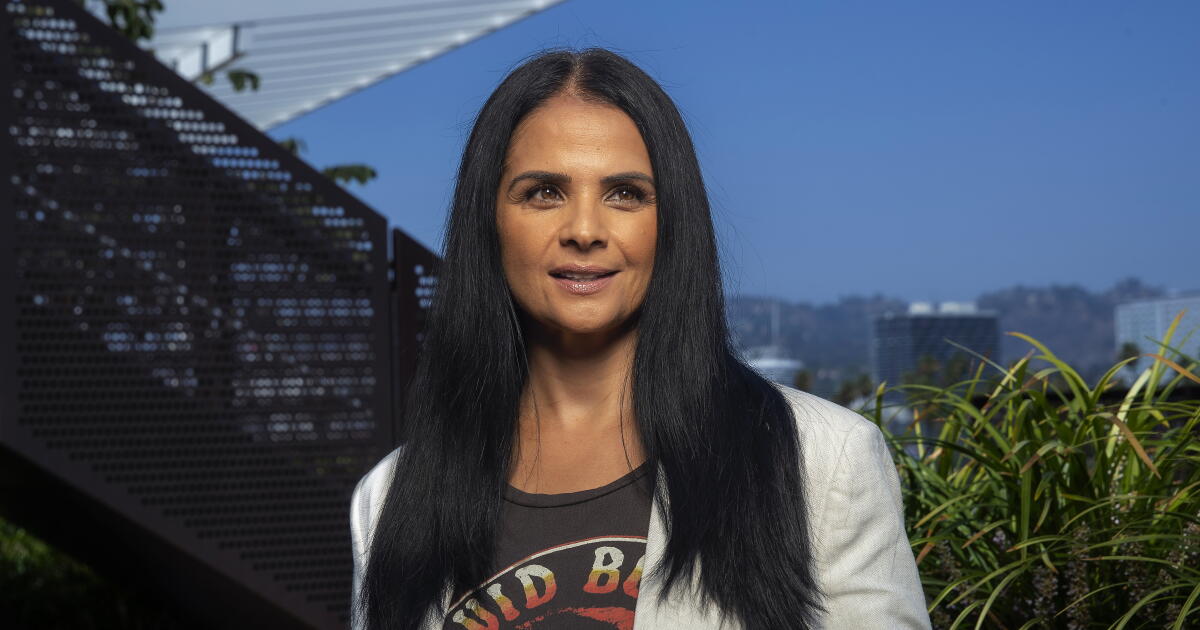
Netflix, which laid off 6% of staff this month, has faced rising pressure after losing its status as a Wall Street darling and a Hollywood star.
(Allen J. Schaben/Los Angeles Times)
Only about 1% of the largest 3,000 publicly traded companies in the U.S. have co-CEOs, according to research firm Equilar. But there are high-profile examples of the arrangement, including software company Oracle, Comcast Corp., Spotify and private equity behemoth KKR.
The Larry Ellison family, which this month merged Paramount Skydance and Warner Bros. Discovery in a $111-billion transaction, installed scion David Ellison as CEO and the former leader of Mattel Corp., Ynon Kreiz, as co-CEO. Hollywood has had prosperous pairings, including longtime Warner Bros. studio chiefs Bob Daly and Terry Semel. Disney achieved tremendous success in the early 1990s when the late Frank Wells worked alongside former CEO Michael Eisner.
“The division of labor is just extremely powerful,” said Henning Piezunka, a management professor at the University of Pennsylvania’s Wharton School. “If there is a disagreement between the CEOs, you still have two very smart people that are battling it out, and I kind of prefer that over one single person making the decision.”
But Netflix’s top leaders now face mounting pressure as the company has lost its status as a Wall Street darling and a Hollywood star.
Netflix’s proposed $82.7-billion bid to buy Warner Bros. late last year failed dramatically, causing its stock price to plummet.
Investors have grown impatient; they want to see better growth metrics, which has become increasingly difficult as the service, which has more than 325 million subscribers, has neared saturation in the U.S.
This month, Netflix laid off 6% of its staff, including several key movie and TV executives. It bounced its chief content officer, Bela Bajaria, replacing her with former Fox and Disney executive Peter Rice, who starts on Monday. Several programming executives were also let go, including film chief Dan Lin and his top deputy, Doug Belgrad, and the director of original TV series, Carolina Garcia.
“They have got to have a plan to reignite revenue growth, and it can’t just be about making better TV content,” said Laura Martin, media analyst with Needham & Co. “Everybody’s trying to make hit content.”

Former Netflix Chief Executive Reed Hastings, left, and Ted Sarandos attend at 2011 launch party in Mexico City.
(Elizabeth Fuentes/Getty Images)
A dynamic leader
Former CEO Hastings, who co-founded the company in Scotts Valley just outside of Santa Cruz in 1997, was a dynamic leader. The mathematics and computer science graduate, who spent two years in the Peace Corps, launched Netflix by mailing DVDs in red envelopes to customers bothered by Blockbuster Video chain’s practices and late fees. In 2007, Netflix began offering streaming.
Hastings oversaw the creation of a pioneering technology that could offer helpful recommendations to users on what to watch next.
That recommendation algorithm has long been viewed as Netflix’s secret sauce. It quickly became the envy of rival entertainment firms that were late to recognize how disruptive the streaming business would become.
With Hastings, a Silicon Valley entrepreneur at the helm, power at the company was cleanly split between the tech teams who worked at its Bay Area headquarters and the executives who worked with talent and content on Sunset Boulevard in Hollywood.
Hastings established Netflix’s unique left-brain/right-brain culture, where people pitching projects were encouraged to openly debate and disagree.
To prepare for an eventual leadership transition, the company set up a dual CEO structure in 2020 by promoting Sarandos, its longtime content chief, to co-CEO.
Hastings, a 66-year-old billionaire, stepped down in 2023 as co-CEO, leaving his lieutenants in charge.
Hastings did not respond to a request for a comment.
Sarandos, 62, was known for making splashy bets on programming that paid off, including agreeing to pay $100 million for the first two seasons of a political drama, “House of Cards,” starring Kevin Spacey and Robin Wright that turned into one of Netflix’s first big TV hits.
Peters, 55, who was previously chief operating officer, has a tech background that complemented Sarandos’ entertainment industry insights. He holds a bachelor degree in physics and astronomy from Yale University and was taught code by his mother, a computer programmer.
Under Sarandos’ leadership, Netflix grew its presence in Hollywood and created content teams internationally. With Hastings no longer in the day-to-day mix, the power tilted toward Hollywood and Sarandos, who oversees the bulk of the company’s $20-billion programming budget.
“Over time, the center of gravity moved to L.A.,” one industry executive said.
The company expanded its business, including offering customers a cheaper subscription plan with ads. It also pushed into live sports, which Bajaria championed, and games.

The Dallas Cowboys’ Gene Jones, left, and Jerry Jones chat with Netflix executive Ted Sarandos during a 2025 premiere at the Egyptian Arena Theatre in Hollywood.
(Amy Sussman / Getty Images)
Escalating tensions
But as Netflix expanded and diversified, internal divisions intensified over operations and strategy.
In one instance, tech employees were surprised when Sarandos’ team signed a deal to release 2024 NFL Christmas Day games on Netflix without consulting tech and product executives, whose staffers would be responsible for providing the tech support for such a key event, two people familiar with the matter said. Those concerns were magnified after Netflix experienced widespread technical difficulties during the streaming of the Mike Tyson-Jake Paul fight that November, though the NFL broadcast was largely free of glitches.
Disputes also emerged over how best to promote and market shows and movies on the platform. Under Hastings, the trailers and thumbnails of programs were overseen by the product team, who analyze consumer behavior. But Sarandos has given the company’s marketing team more control over the promotional assets of programs, leading to disagreements with the product team over how to best to represent programs and engage viewers, two people familiar with the matter said.
Another source of internal friction has centered on Netflix’s aggressive venture into games that Peters championed, as part of a strategy to diversify its business and retain subscribers.
The streamer acquired several game studios beginning in 2021, investing billions into the space, sources said.
But the effort has badly misfired. In August, Netflix announced it was closing Hollywood-based gaming studio Night School and shuttering Finland-based gaming studio Moonloot. It previously shuttered Allen, Texas-based Boss Fight Entertainment.
The focus on games also sparked disagreements between Peters and Sarandos, who believed the tech and product teams were giving too much attention to games, creating confusion among teams over how they should operate, said a source with knowledge of the matter.
The leaders also disagreed in other areas as well, including over a 2025 deal with French broadcaster TF1 to bring its free channels into Netflix in France as a way to draw more viewers to both services.
Peters pushed for the deal, which Sarandos initially opposed, and the debate delayed an effort that could have helped the business sooner, according to three people familiar with the deal who were not authorized to comment. The TF1 partnership was a success that Netflix wants to replicate with other partners.
Sarandos and Peters also raised eyebrows when they appeared to send conflicting signals on the company’s interest in buying Warner Bros. During an Oct. 8, 2025, conference appearance, Peters said Netflix had a deep heritage of being a builder rather than a buyer.
“One should have a reasonable amount of skepticism around big media mergers,” Peters said. “They don’t have an amazing track record over the history of time.”

Netflix executives Greg Peters, left, and Ted Sarandos, right, visit a studio lot with Warner Bros. Discover chief David Zaslav.
(Joe Pugliese and John Nowak / For Warner Bros. Discovery)
A week later, Sarandos called Warner Bros. Discovery CEO David Zaslav to express interest in acquiring Warner’s streaming and studios business, according to regulatory filings. Netflix in December unveiled its $82.7-billion proposal, which Peters also supported, according to knowledgeable sources.
But, after spending months touting the benefits that Warner assets would bring, Netflix abruptly pulled out of the auction in late February when Paramount’s Ellison upped his company’s offer. Warner executives expected Netflix to go the distance, but they soon recognized deep anxiety within Netflix’s board, according to an executive who was not authorized to speak publicly.
Netflix’s stock hasn’t recovered. Its shares traded for $109 before the Warner bid. On Friday, the stock closed at $65.85.
Netflix is profitable, with net income increasing 44% to $3.7 billion in the third quarter and revenue up 12% to $12.87 billion from the third quarter a year ago, but the company remains under scrutiny by Wall Street.
Sarandos in an earnings call last week there is “no need for a fundamental shift in the strategy” but said the company needs to develop more hit shows in the U.S. that can “travel around the world.”
Netflix projected its revenue would come in the lower range of its estimate for the year, citing a lower ad revenue forecast.
“Their advertising growth has been very slow … and the video game business has been disappointing,” Martin, the analyst, said. “The problem is that the market is maturing and they need a Plan B, and they don’t really have a Plan B right now.”