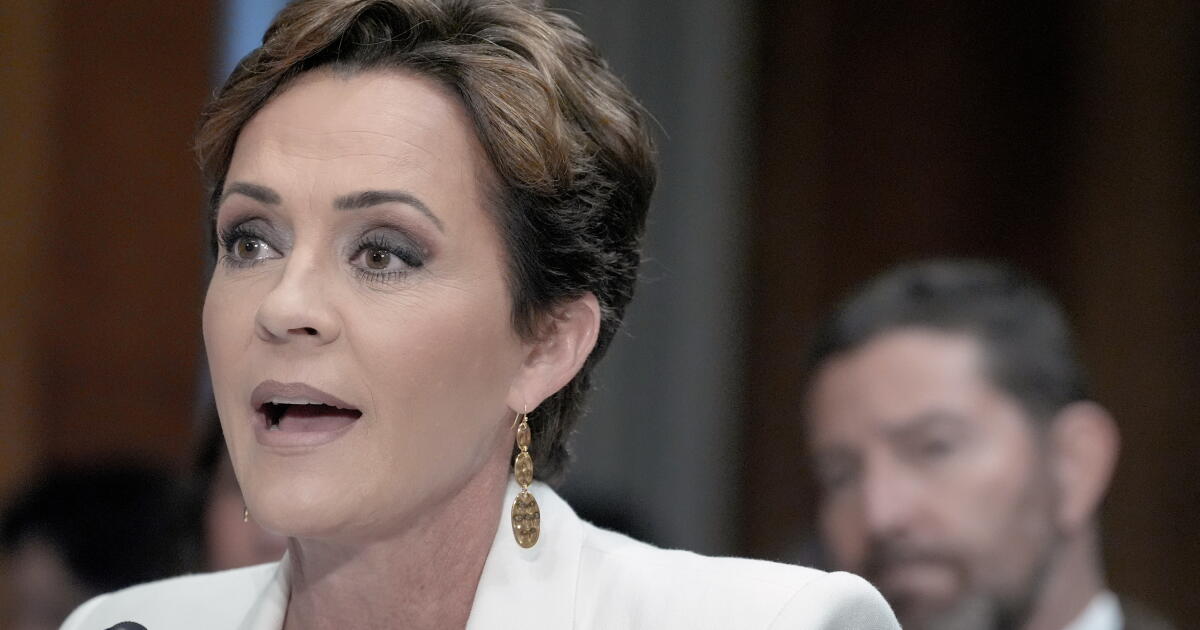
PHOENIX — The U.S. Supreme Court has refused to toss out $122,000 in legal costs that lawyers for former Arizona gubernatorial candidate Kari Lake were ordered to pay for false and misleading statements they made in a lawsuit that sought to require a hand-count of all ballots in the 2022 midterm elections.
The nation’s highest court on Tuesday denied a request from Andrew D. Parker, an attorney who represented Lake in the lawsuit, to review a lower-court decision over the legal costs arising from the unsuccessful litigation.
The lawsuit by Lake and state lawmaker Mark Finchem sought to ban electronic tabulation devices. It was dismissed by a judge who found Lake and Finchem lacked standing to sue and that their lawsuit was filed too close to the election.
In 2022, Lake lost the governor’s race to Democrat Katie Hobbs and Finchem was defeated in the secretary of state’s race by Democrat Andrian Fontes. Both Republicans had promoted the narrative that the 2020 election was marred by fraud.
Maricopa County had sought sanctions against Lake, Finchem and their lawyers, alleging they broke a court rule by making unfounded allegations and by not conducting the necessary research before filing the lawsuit.
U.S. District Judge John Tuchi later concluded the lawsuit’s claims lacked an adequate basis in fact, that the standard inquiry attorneys must make before pressing litigation hadn’t been done and that the lawyers acted recklessly in seeking a court order based on frivolous claims.
The requirement to pay the legal fees applies to the lawyers who pressed the lawsuit, not to Lake and Finchem.
The 9th Circuit Court of Appeals rejected appeals over the lawsuit’s dismissal and the awarding of the legal fees.
The Associated Press left phone and email messages Tuesday for Parker, whose firm is based in Minneapolis.
Earlier this year, Parker asked the Supreme Court to throw out the requirement to pay Maricopa County’s legal fees in the case, arguing such sanctions would deter attorneys from bringing aggressive or novel legal claims.
Maricopa County said lawyers for Lake and Finchem had disregarded a letter that identified false allegations they had made in their lawsuit and relied on some of those claims in a later court filing. The county’s attorneys said those who brought the lawsuit failed to present evidence to support their allegations and falsely alleged that Arizona didn’t use paper ballots and that its electronic voting systems hadn’t been subjected to expert analysis.
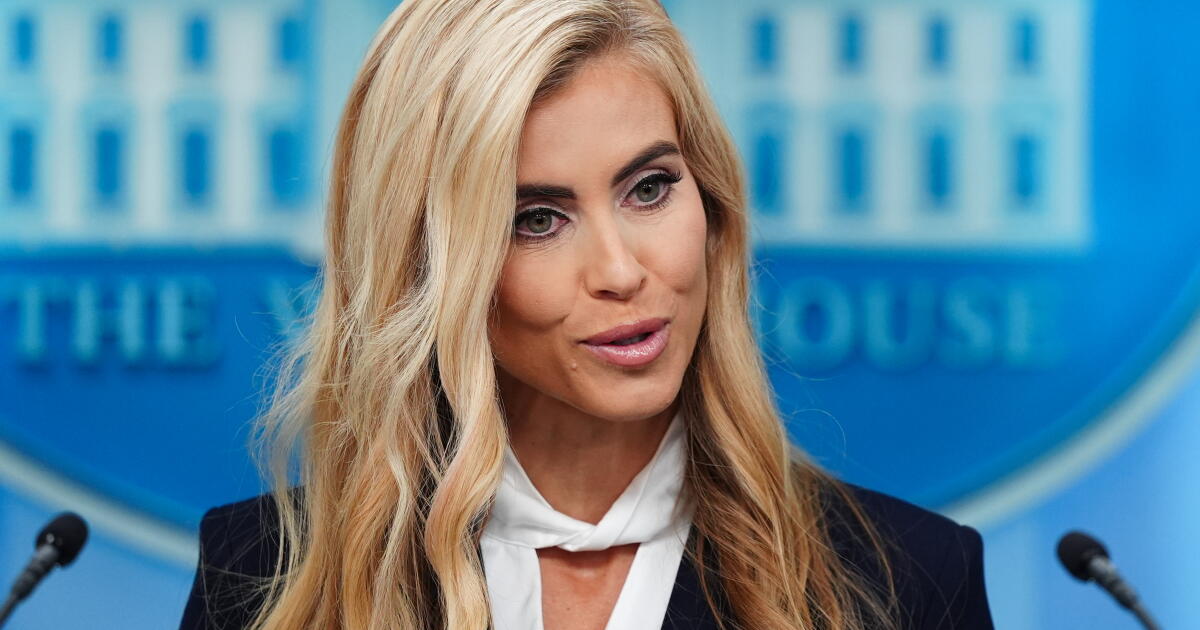
NEW YORK — The new White House press secretary is facing mounting questions about her background and resume as she transitions into her role as the public face of the Trump administration.
Katie Zacharia has long described herself as a lawyer as she has worked to establish herself as a commentator for conservative outlets such as Fox News and Newsmax. But so far, she and the White House have offered no evidence that she passed the bar exam in any state or in China, where she worked for a large law firm years ago.
The questions add to the confusion surrounding President Trump’s decision to hire Zacharia, who had worked for his social media company for only a few months when he announced her appointment and whose debut at the podium on Tuesday has been widely panned.
Afterward, the president was asked by reporters where Zacharia had passed the bar exam, following a report by the independent outlet Popular Information that she did not appear to be licensed in any state.
Trump stepped aside to allow Zacharia to answer.
“When I moved to China,” she responded over the sound of Marine One whirring in the background. It is unclear what she had intended to say or whether she had finished the sentence.
Asked what credentials she held, the White House passed along a statement from Zacharia, who received a bachelor of arts degree from Pepperdine University in 2007 and received her law degree from Pepperdine Caruso School of Law in 2011, according to the school and her LinkedIn bio.
“I practiced international transaction law, with all the appropriate credentials,” it read.
Steven Cheung, the White House communications director, added that Zacharia was “uniquely qualified and whip smart to help inform the American people about all the great things President Trump and his Administration have been doing, and she will do an incredible job as press secretary.”
A resume under scrutiny
According to her LinkedIn profile, Zacharia has been the senior communications advisor at the Trump Media & Technology Group since June and spent two months as deputy assistant secretary for public affairs at the Department of Homeland Security this year.
From 2011 to 2013, it says, she served as an associate on the International Practice Team at the Zhong Lun Law Firm in Beijing. She also worked as the manager of fundraising and communications for Compassion for Migrant Children, which assists the children of migrant workers, from 2012 to 2013.
More recently, it says she served as general counsel for Fix California, a group started by Trump administration official Richard Grenell.
Neither the firm nor the two groups responded to questions about her tenure and background.
Zacharia has long called herself a lawyer. On Instagram, she describes herself as the White House press secretary, “Wife, Mom, & Lawyer” (with three heart emojis after “Mom”).
And her official author page at the California Globe, where she wrote occasional commentary, says that, in addition to being a “regular commentator on Fox News, Newsmax,” she has “extensive experience in political advocacy, international corporate law, and non-profit work, including time as outside counsel for the World Bank and IFC in Beijing.”
A June 2026 news release from NovaRed Mining Inc. announcing her appointment to the company’s advisory board, which was first reported by Popular Information, said her “professional experience includes work related to international legal and financial transactions, including matters involving organizations associated with the World Bank Group and the International Finance Corporation during her tenure with Zhong Lun Law Firm in Beijing.”
In announcing her hire on his social media site, Trump described Zacharia as “a distinguished Graduate of Pepperdine University, and the Pepperdine Caruso School of Law, an attorney, and a frequent Commentator on outlets, including Fox News and Newsmax.”
“She has an unblemished record of support, and has been a loyal and brilliant supporter, right from the beginning. She is, likewise, a devoted fan and member of MAGA!” he added.
‘No record’ found
Zacharia is not listed as a member of the state bar in California, where she currently resides, according to a public database.
Rick Coca, a spokesperson for the State Bar of California, a regulatory agency that oversees state licensing, said in a statement that it has “no record of Kate Sharon Zacharia or Kate Sharon Black” or any version of her married or maiden names “having been licensed to practice law in California.”
Popular Information said the same was the case in all 50 states it had queried, plus Washington.
In response, the watchdog group Campaign for Accountability filed a complaint Wednesday with the State Bar of California asking it to investigate whether Zacharia misrepresented herself as a lawyer in violation of California law.
“In California, calling yourself a lawyer without a license isn’t puffery; it’s a crime. The State Bar should investigate whether Ms. Zacharia has misled the public about her credentials and hold her accountable if she has,” said the watchdog group’s executive director, Michelle Kuppersmith, in a statement.
The State Bar said it could not confirm whether the agency had received the complaint or was conducting an investigation, citing confidentiality laws.
KATIE Price’s third and final day of evidence at Kieran Hayler’s alleged rape trial spiralled into fiery court outbursts and a stark warning from the judge.
The former glamour model lashed out at Hayler’s lawyer – accusing her of “slander” and ranting: “I won’t have anybody call me a liar”.
Katie Price’s evidence descended into fiery exchanges and outburstsCredit: Doug SeeburgShe was giving evidence at Kieran Hayler’s alleged rape trialCredit: PA
Despiter being slapped down about her outbursts, Katie continued to row with Arlette Piercy as her cross-examination became more heated.
In one tense exchange, she asked the defence lawyer: “Are you calling me a liar?”
Sign up for the Showbiz newsletter
Thank you!
Ms Piercy replied: “I am.”
Katie then responded: “I don’t need to be here. You can see in black and white something’s gone on.
Katie also branded Hayler, who is accused of raping and sexually a 13-year-old girl, a “wrong’un” and said: “You shouldn’t turn this case against me”.
She continued: “The real reason why we’re here is what he’s done to a child, not me.”
Ms Piercy then said she “can’t continue like this” after Katie repeatedly spoke over her.
She said: “Because you know I’m right.
“I won’t have anyone tell me I’m a liar. I’m not a liar.”
Hayler was married to Katie Price at the timeCredit: GettyHe and Katie married in 2013Credit: Dan Charity – The Sun
After Ms Piercy then referenced “cocaine and booze benders”, the reality star snapped back: “That’s discrimination.
“Everyone knows I self-medicated on coke due to Kieran introducing it.
“You are wrong and trying to discriminate me. The press know it all because of my journey. I ended up in therapy and tried to kill myself twice.
“You’re not going to slander my name. I don’t care if you are a barrister, you are not going to slander my name like that.
“I don’t need to sit here like a therapy session.”
Judge Mark van der Zwart was forced to intervene and told Katie to “stop talking please”.
He urged: “Take a drink, take a breath, take a moment.”
As she continued to try to talk, the judge continued: “Ms Price, let’s leave it there please.”
It came after she was given a prior warning by the judge to keep her views to herself following another rant yesterday.
Katie had claimed there were “other kids that haven’t come forward” during yet another tense exchange with Ms Piercy.
But the judge said: “When you’re being asked questions today please would you not mention any beliefs you may have whether Kieran Hayler has behaved inappropriately with anyone else apart from (the complainant).”
When she began repeating other allegations, she was slapped down by the judge.
He said: “I’m going to stop you there, Ms Price.
“Ms Price, golden rule: when I talk, nobody else does.”
She replied: “OK, sorry.”
Katie told jurors how she had confronted her then-husband over the allegationsCredit: PAShe called the allegations ‘disgusting’Credit: James Shaw
Hayler has denied the allegations, which allegedly took place in West Sussex while he was married to Katie.
The complainant is not a member of his or Katie’s extended family.
Katie, 48, yesterday told jurors she did not have “any venom” against her ex-husband and said their split was “amicable”.
She also said she had not read any media reports of his trial because she had been “handcuffed to Suella Braverman all week” for a Channel 4 show.
Jurors were told how she had messaged the girl and vowed to make her a “little star” while quizzing her about whether she had kissed Hayler.
The exchange happened in May 2017 – eight months after the last alleged attack by Hayler, it was said.
Katie wrote: “I WON’T say anything and I PROMISE I’ll protect you!
“I’m only asking as this is a serious allegation to say.”
The girl, who was 14 at the time of the message exchange, replied: “It was just a flirt thing and he knew it was wrong. Nothing happened.”
Katie said: “Was it just a flirt and what did he do to realise it was wrong? Did he try (to) kiss you?
“I won’t bring (it) up anymore (I) just want (the) truth! I will make you a little star.
“Please help and tell me… as long as I know the truth, I won’t say. I PROMISE.”
Giving evidence behind a screen, Katie said it was “just a figure of speech” and claimed there was “no agenda or nothing behind it”.
She also denied being “angry and vengeful” towards Hayler and said she did not have a “vendetta” against him.
She ended her evidence yesterday by opening up about her mum Amy, 74, who has lung condition Idiopathic Pulmonary Fibrosis (IPF).
Katie said: “My mum’s dying at the moment and I haven’t been able to see her (because) I’ve got a cold… she’s got days.
“I did promise my mum I’d see her tomorrow.”
The girl, now 23, reported her allegations to the NSPCC in 2021.
The children’s charity then referred it to police and she was interviewed by cops in December 2021, with Hayler questioned the following month.
He denied any of the allegations took place and that anything sexual occurred.
Jurors heard he also told police in his first interview of the allegations in January 2022 that he believed he was being “set up”.
He said “100 per cent” he had not raped the girl, adding: “No never, the thought someone thinks I would do that is horrible, it makes me feel sick.”
Hayler also said to officers that he believed Katie had “planted a seed to (the complainant)”.
He added: “It’s like a smear campaign to ruin me.
“For this to come completely out of the blue I feel like somebody here is trying to set me up.
“Kate would put pressure on anybody. For her to not have anything on me I think kills her a little bit inside.”
In court, Katie described the allegations as “disgusting” but said she never went to the press or police about it and it was the complainant who reported it.
Hayler, who has worked as a stripper and actor, married Katie at a luxury resort in the Bahamas in 2013.
He was her third husband following her marriages to singer Peter Andre and cage fighter Alex Reid.
Katie and Hayler split in 2018 and formally divorced in 2021.
The NFL is urging the Supreme Court to rule on the regulation of prediction markets, arguing in an amicus brief filed Thursday that states — which already regulate legal sports books — are better positioned to oversee sports-related contracts “given the current landscape.”
The NFL is supporting New Jersey’s request for the Supreme Court to rule on the governing authority for prediction markets, which provide an opportunity to trade — or wager — on the result of future events. The Commodity Futures Trading Commission has maintained it has exclusive federal jurisdiction, while states have argued that the array of typically yes-or-no questions is akin to gambling and falls under their purview.
“Absent the clarity that only this Court can provide, (prediction market) operators will continue exploiting the gap between state and federal regulation, endangering consumers and the integrity of sports events across the country,” lawyers for the NFL wrote.
According to the NFL’s brief, on the first Sunday of this season, more than half of the trading volume on prediction markets — $1.8 billion out of $3.3 billion total — was related to the league.
“Any delay from the Court will result in increasing consumer harm and risk to game integrity,” the NFL wrote in its brief.
Kalshi spokeswoman Elisabeth Diana said its top priority is market integrity, and she pointed to its partnerships with the NHL, Major League Baseball and other sports organizations as evidence.
“Contrary to the NFL’s statements, the CFTC is actively policing sports-related markets, which are now listed on nearly every U.S. commodities exchange,” Diana said. “The CFTC’s ongoing rulemaking addresses many of the NFL’s supposed concerns. And those rules sit atop the same comprehensive system of federal enforcement that protects trillions of dollars of transactions in U.S. markets.”
A Polymarket spokesperson said the operator “shares the NFL’s commitment to preserving the integrity of the game,” and it is working on “a harmonized federal framework that delivers a stronger, more consistent form of integrity compared to a patchwork of disconnected state laws built for a bygone era.”
Ohio filed a brief on Wednesday urging the high court to side with New Jersey and preserve the power of all states to regulate prediction markets, as they do casino gambling and sports betting. The filing was backed by 38 states, including Republican and Democratic attorneys general from states including Arkansas, California, Illinois, Missouri, New York, South Carolina and Pennsylvania.
Roughly 20 states are involved in litigation over prediction markets, and a split has formed between appeals courts, making it more likely that the Supreme Court will take up the issue. The 6th and 9th U.S. Circuit Courts of Appeals have ruled in favor of states seeking to regulate prediction markets, while the 3rd U.S. Circuit Court of Appeals agreed with Kalshi in a ruling earlier this year.
“As between the two approaches, the NFL believes the Sixth and Ninth Circuits got it right, given the current landscape,” lawyers for the league wrote in their brief.
The NFL also is questioning the CFTC’s enforcement capabilities. In its filing, the league writes that the commission has 543 employees and their responsibilities include a range of derivatives beyond event contracts.
“Without adequate staff engaged in oversight and enforcement, even the best regulations cannot meaningfully ensure game integrity and consumer protection,” lawyers wrote in the NFL brief.
A message was left by the AP seeking comment from the CFTC.
The NFL has urged the CFTC and prediction markets to adopt a list of prohibited wagers that it feels pose the greatest threats to game integrity, according to the brief, but they have declined thus far. It also has asked the commission to adopt an age limit of 21 for trading on prediction markets, up from the current 18.
Diana said Kalshi has tried to collaborate with the NFL on market integrity, but it has received no response.
Cohen writes for the Associated Press. Associated Press writer Marc Levy contributed to this report.
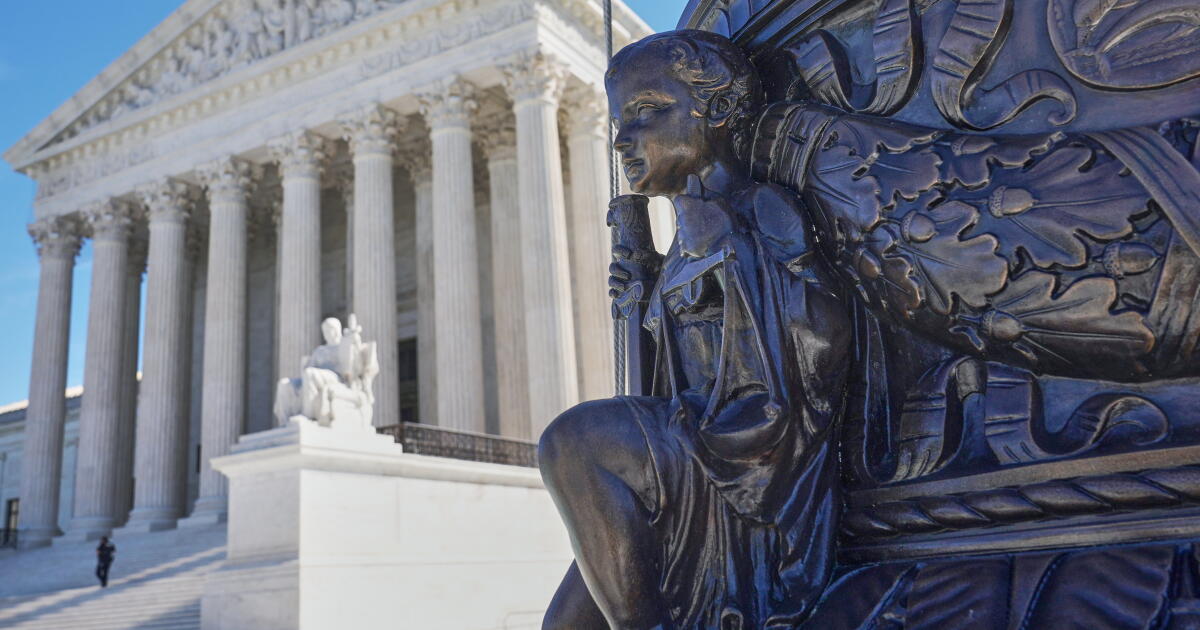
WASHINGTON — The Supreme Court on Thursday agreed to review a Trump administration policy denying bond hearings for immigrants as the government carries out a sweeping crackdown.
The justices will consider whether immigrants who have been living in the U.S. have a right to a hearing to determine if they should remain detained while challenging their possible deportation.
The case will test a key pillar of the Trump administration’s hard-line immigration agenda.
Most appeals courts to have considered the issue have found that it violates federal law to detain immigrants, including those living in the U.S. illegally, without a bond hearing. Those decisions conflict with rulings by the 5th and 8th circuits, which held that immigrants accused of illegally entering and remaining in the U.S. must be detained while their deportation cases are pending.
The high court agreed to hear the case of Ricardo Aparecido Barbosa da Cunha, a citizen of Brazil. Authorities say he entered the United States illegally two decades ago and applied for asylum in 2016. He sought a bond hearing after an immigration judge determined that his detention was mandatory following his September 2025 arrest.
He has never been charged or convicted of a crime, his attorneys said. The court is expected to hear the case in the coming months.
President Trump’s administration had urged the high court to take up a different but related case that involves the broader constitutional implications of the new policy.
Attorneys from the Republican administration argue the circuits’ split is “disrupting the orderly administration of immigration law.” They say the nation’s courts have been inundated with thousands of petitions filed by immigrants challenging the government’s legal interpretation.
“The result is an unworkable patchwork of inconsistent immigration enforcement, where aliens present without admission are subject to mandatory detention in some circuits but are entitled to bond hearings and often released in others,” lawyers for the administration wrote.
The plaintiffs are immigrants represented by the American Civil Liberties Union, which says hundreds of district court judges have joined most circuits in rejecting the Trump administration’s new reading of the statutes. Plaintiffs’ lawyers say the administration is trying to deny bond hearings for immigrants apprehended anywhere in the U.S. — no matter how long they’ve lived in the country — rather than limiting the restriction to noncitizens stopped at the border.
“Millions of noncitizens could be affected by the government’s new interpretation,” ACLU attorneys wrote.
The Trump administration says its new mandatory detention policy is legal under a 1996 immigration law. The policy change departs from the practices of prior administrations, which typically allowed most noncitizens without criminal records to request a bond hearing if they were arrested away from the border.
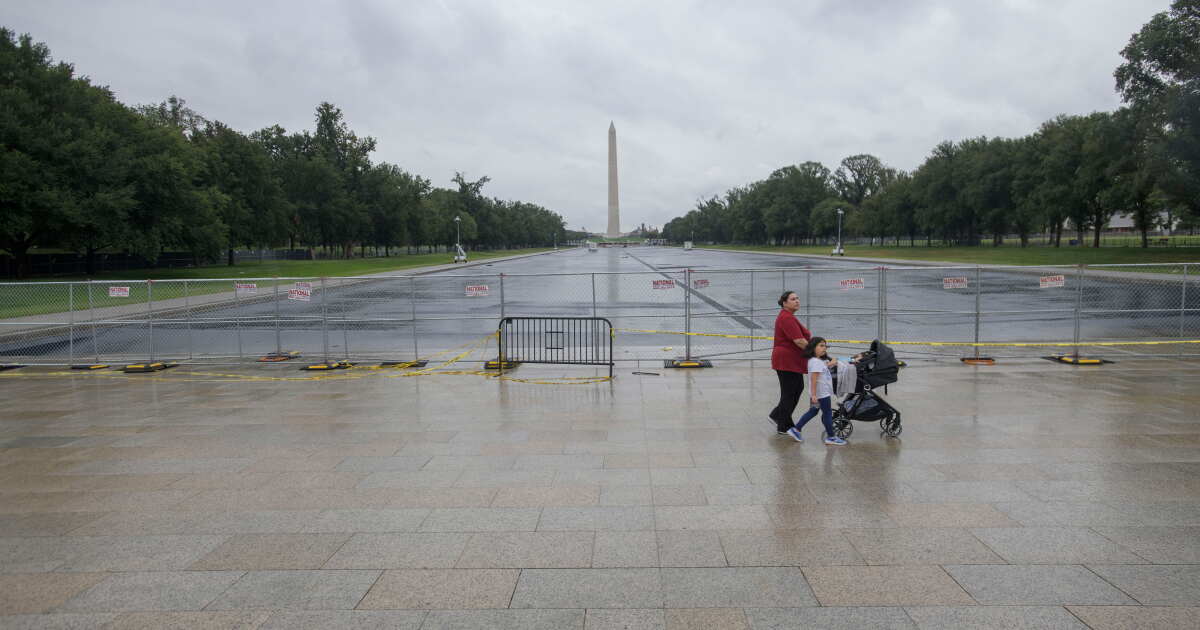
WASHINGTON — A judge in the nation’s capital agreed on Thursday to permanently dismiss a criminal case charging a former Olympian with vandalizing the Lincoln Memorial Reflecting Pool, a move that could prevent federal prosecutors from reviving the case under political pressure from President Trump.
D.C. Superior Court Judge Todd Edelman ordered the dismissal of David Hearn’s case with “prejudice,” which would block U.S. Atty. Jeanine Pirro’s office from refiling the felony charge against him. The judge ruled nearly a month after hearing attorneys’ arguments.
Hearn’s lawyers say Trump administration officials have continued to falsely accuse the Maryland resident of vandalizing the reflecting pool despite Pirro’s decision to drop the case on July 31. Trump responded by saying Pirro “choked” and “folded like an umbrella.”
In a court filing in July, Pirro said new evidence produced by the Interior Department showed Hearn wasn’t responsible for damage to the pool’s lining. Pirro’s office attributed the damage instead to a botched installation by a contractor as well as a rush to complete the project in time for this summer’s America 250 celebration in Washington.
Pirro’s admission was an embarrassing setback for the White House. Interior Secretary Doug Burgum has backed Trump’s claims that vandals damaged the pool.
Hearn has said he was on a bike ride on June 19 when he reached in to examine the pool’s newly peeled coating and briefly touched a chunk attached to the side of the pool. But he said he obeyed a park worker’s command to let go of it.
Hearn was charged with one count of property destruction, which carries a maximum prison sentence of 10 years. His lawyers questioned whether prosecutors properly presented the grand jury with adequate evidence to support the charge and the amount of damage alleged by the government.
Hearn, 67, of Bethesda, Maryland, competed in three Summer Olympics, earning his best finish, ninth, at the 1996 Atlanta Olympic Games, the U.S. Olympic and Paralympic Committee says on its website.
Trump, a Republican, appointed Pirro, a former Fox News host, to serve as the top federal prosecutor for the District of Columbia. Edelman was nominated to the bench by Democratic President Barack Obama.
Hearn’s attorneys said the ruling is “a victory for the rule of law and for an innocent American seeking justice” and allows Hearn to “move forward with his life as he deserves.”
“This administration chose to pursue an unjust prosecution against Mr. Hearn. It should not get repeated chances to wield the power of criminal prosecution against someone who should never have been prosecuted,” the lawyers said in a statement.
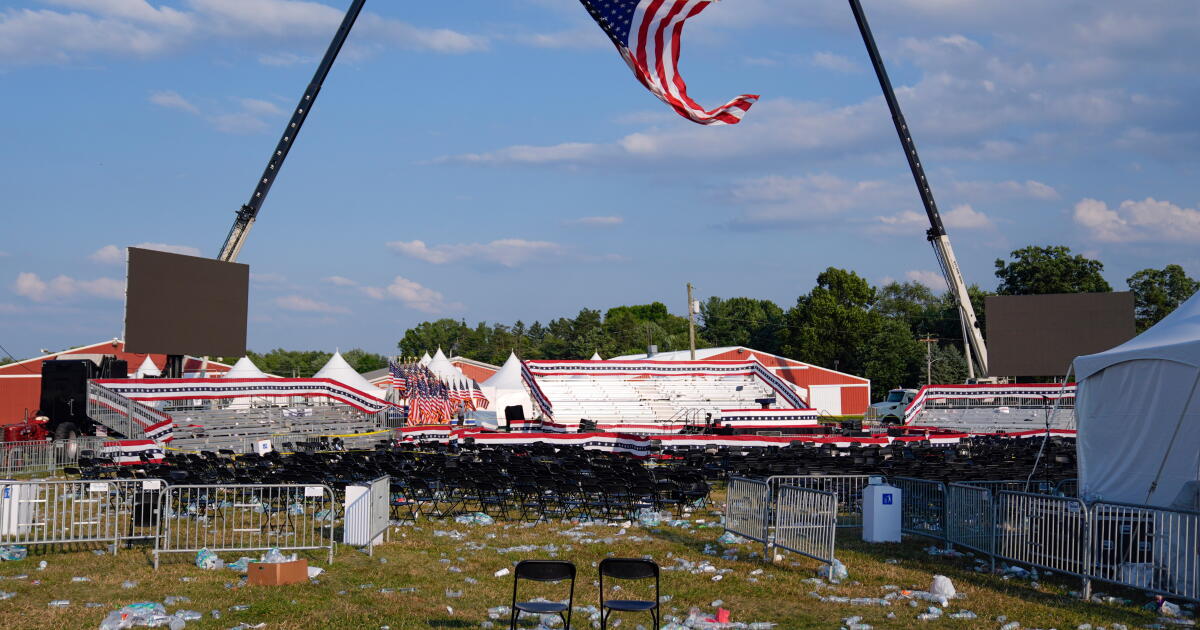
PITTSBURGH — James Copenhaver, one of three campaign rally attendees shot in 2024 during an assassination attempt on then-candidate Donald Trump, has died in Pittsburgh, his lawyer said Thursday. He was 76.
Copenhaver was in the bleachers during the event in Butler, Pa., when a 20-year-old gunman opened fire from a nearby rooftop, grazing Trump’s right ear with one bullet. Copenhaver was struck in the arm and in the abdomen, wounds that left him with lingering injuries and walking with a cane.
Two other attendees were also shot: David Dutch, who survived, and Corey Comperatore, who shielded his family from gunfire and was killed.
Copenhaver died Wednesday at Allegheny Health Network’s West Penn Hospital in Pittsburgh, according to a statement from the Allegheny County medical examiner cited in local media accounts.
Copenhaver’s lawyer, Joseph Feldman, said in a statement issued on behalf of the family that he died surrounded by loved ones. The statement did not specify whether his death was directly related to the injuries he suffered at the rally.
Copenhaver and his wife, Marianne Copenhaver, sued the federal government in June, alleging that the Secret Service and Department of Homeland Security had “utterly failed” to provide appropriate security at the rally. Copenhaver’s injuries required multiple surgeries, including a transection of his colon, and he had lingering kidney and other damage, including a loss of feeling in his leg. The lawsuit described the wounds as “debilitating, grievous, permanent and life altering.”
The family’s statement Thursday called Copenhaver above all else a devoted husband, father and grandfather who instilled the values of hard work, integrity and the service to others in his children.
“James’s dedication to this great country was a defining part of his life,” it said. “As a veteran, he proudly served our nation in the armed forces, and his love of country never wavered. James was a true American patriot who believed deeply in the freedoms and ideals upon which this nation was founded, and he embodied the very best traits of our great nation.”
In a statement posted to social media, President Trump on Thursday called Copenhaver “a true American Patriot.”
“Jim showed tremendous bravery, courageously continuing to FIGHT, FIGHT, FIGHT, and maintaining a positive spirit despite unimaginable hardships,” Trump wrote.
TRENTON, N.J. — New Jersey ’s Democratic lieutenant governor has resigned after the governor demanded he step down over sexual harassment allegations and ethical lapses involving his relationships with women.
Gov. Mikie Sherrill had given Lt. Gov. Dale Caldwell an ultimatum that he resign by Friday, though she lacked the power to remove him if he said no. Sherrill announced the resignation at a news conference that afternoon.
“His decision will allow us to move forward with important work serving the people of our state,” she said. “In my administration we are committed to doing what is right, not what is politically expedient.”
Sherrill picked Caldwell, a Methodist pastor and former president of Centenary University, to be her running mate last year. They were elected together and took office in January, but within four months, Caldwell had become the subject of an anonymous complaint about his behavior with women.
In New Jersey, a governor can’t fire the lieutenant governor, as the post is independently elected. But lieutenant governors can be impeached and removed from office by the Legislature. A governor can strip a lieutenant governor of nearly all duties and responsibilities, effectively sidelining them from the administration.
Sherrill hired the law firm of a former New Jersey attorney general, Christopher Porrino, to investigate.
In a report released Thursday, the lawyers said Caldwell had committed several violations of state policy. It said Caldwell, 66, had made an advance toward a staff member’s friend and when he was rebuffed told the staffer, “you young women are looking for young sperm.”
The report also said Caldwell had tried to get a promotion for a state employee he was dating and brought personal guests to the opera and other ticketed events without paying for them, as required by ethics rules.
Caldwell denied any misconduct and said in a letter included in the report that he suspected his relationships with women were being subjected to extra scrutiny because he was a single Black man.
His lawyer, Thomas Calcagni, said Caldwell never made the sperm statement or used his position to further his romantic life. Caldwell did recommend a female friend for a promotion, Calcagni said, but only because he thought she would be a good candidate for the job. Caldwell denied ordering anyone to promote her or knowingly violating ethics rules by failing to disclose their personal relationship when he recommended her.
Sherrill had said Caldwell needed to resign because he committed “serious, repeated violations of state policy,” despite multiple warnings and trainings.
Besides being the first in line to become governor if Sherrill were to die, be removed from office or become incapacitated, Caldwell also had served as New Jersey’s appointed secretary of state. In that role, he had a supervisory role over the state’s elections.
In neighboring New York, a similar impasse has played out over the last year between Democratic Gov. Kathy Hochul and her estranged Lt. Gov. Antonio Delgado, who launched a caustic primary challenge to unseat her only to withdraw from the race as the election neared.
Hochul is running for reelection in November with Adrienne Adams, the former speaker of the New York City Council, as her replacement lieutenant governor nominee.
Catalini and Marcelo write for the Associated Press. Marcelo reported from New York.
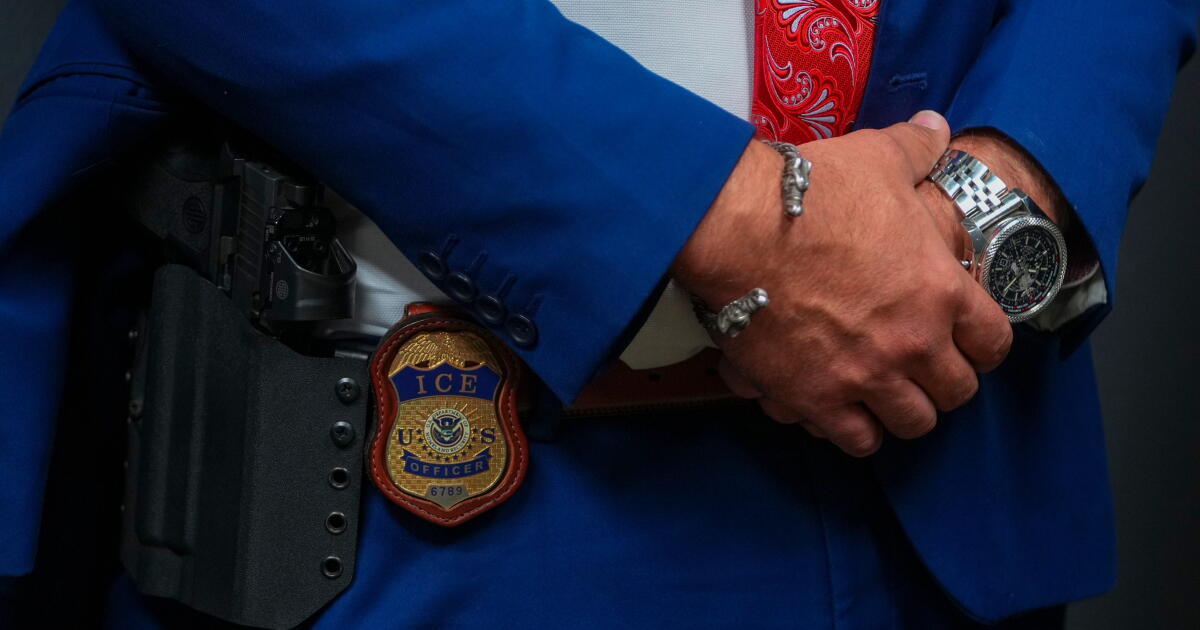
U.S. Immigration and Customs Enforcement has stopped publicly revealing where it is holding thousands of detainees who are subject to final deportation orders, an unannounced move that has made it far more difficult for lawyers and relatives to find them, according to current and former officials familiar with the practice.
ICE removed those detainees from its online detainee locator system on Sept. 15, according to three current and former ICE officials who spoke on condition of anonymity because they were not authorized to discuss the change. Several lawyers contacted by The Associated Press confirmed their clients vanished from the system this week, and the American Immigration Lawyers Association warned its members about the situation Friday.
The move represents a stark departure from previous practice and highlights the hardline nature of President Trump’s immigration crackdown, leaving thousands of detainees exceedingly hard to trace and potentially unable to exercise all of their legal options.
The practice, which applies to detainees who have received final orders of removal from an immigration court, could speed deportations by making last-minute legal challenges harder to pursue, immigration lawyers said. Nearly 16,000 people who were arrested and booked into ICE detention in July were subject to final removal orders, more than a third of the overall bookings, according to ICE data obtained by the Deportation Data Project based at U.C. Berkeley and UCLA.
The practice does not apply to detainees held at a detention facility in Adelanto, California or at temporary holding facilities in Minneapolis, New York City or suburban Chicago, the sources said. Judges have ordered ICE to list detainees in those facilities in the online locator promptly upon their arrival, as part of litigation over their detention practices.
Lawyers and relatives distressed by lack of information on detainees
The effort to hide their locations adds to the ways in which the Trump administration has made life harder for detainees and their families as it has increased pressure on them to waive appeals and agree to deportation.
ICE did not publicize the move and in a statement issued to the AP, the agency did not confirm or deny it. The statement said detainees with final removal orders were being prioritized for deportation, even as ICE faces a “historic number of injunctions” from courts stopping individual removals.
As a result of the change, lawyers and relatives lost track of their clients and loved ones without explanation, which is especially concerning because detainees are frequently moved to new facilities before deportation, said Greg Chen, senior director of government relations at the American Immigration Lawyers Association.
“Families are freaking out because they think the person has been deported and they don’t know where the person might be,” he said. “On the attorney side, this has serious implications for the ability to contact their client. It certainly has implications about how it will interfere with the attorney-client relationship.”
The Department of Homeland Security, ICE’s parent agency, has argued that people who are subject to final removal orders have received due process. That usually means an immigration judge has ordered their removal after a hearing, including cases when immigrants fail to show up, and the decision was affirmed on appeal or not appealed.
Detainees with final removal orders still have options to appeal
Still, those detainees have options to challenge their detention and removal, including seeking to reopen the case or by bringing what’s known as a habeas petition asking a judge to release them on constitutional grounds. Federal judges have granted thousands of rulings ordering that detainees be released or granted bond hearings.
ICE detention facilities held more than 65,000 people as of early July, the most recent available data. Around 30% of them likely have final removal orders, said Michelle Mendez, legal director at the National Immigration Project.
More people have been issued final removal orders after failing to show up for hearings in recent months because the administration’s immigration courts have taken steps to make it harder to participate and to reopen such cases, she said.
“To me, it’s just another iteration of disappearing people,” she said. “Why would we do that in the United States of America? It’s something we’d hear about in another country and be concerned about individual rights and due process.”
Some with final removal orders also have legal protections against deportation to their countries of origin based on the likelihood they would be tortured or persecuted. Many of them are facing removal to third-party countries where they have no ties and their disappearance in ICE’s system will make legal challenges harder, lawyers said.
Lawyers say clients have vanished from ICE locator system
ICE initiated the online detainee locator system in 2010 to allow relatives, lawyers and the public to search for people in custody. Previously they had to call ICE regional offices or individual facilities to try to track them down.
Many advocates and lawmakers have complained that the system updates too slowly and contains too much inaccurate or missing information, allowing ICE to shield the locations of detainees for days or weeks. Minors, people who have been held by U.S. Customs and Border Protection for less than 48 hours, and detainees who are being transported are not in the system, among others.
But the exclusion of detainees with final removal orders has no apparent parallel, several immigration lawyers said. Atenas Burrola Estrada, a deputy program director with the Amica Center for Immigrant Rights, said that “every single one of our clients who has a final order has disappeared from the locator,” including 17 in all as of Monday.
Among those disappeared from the locator system are eight Somali men being detained at the U.S. military base in Guantanamo Bay, Cuba, according to one of their attorneys, My Khanh Ngo, of the American Civil Liberties Union. She said the change could make it “nearly impossible” for people to challenge their removals in some cases.
“If you can’t find your client, don’t know what’s happening to your client, you can’t get that information to the court to stop their removal,” she said.
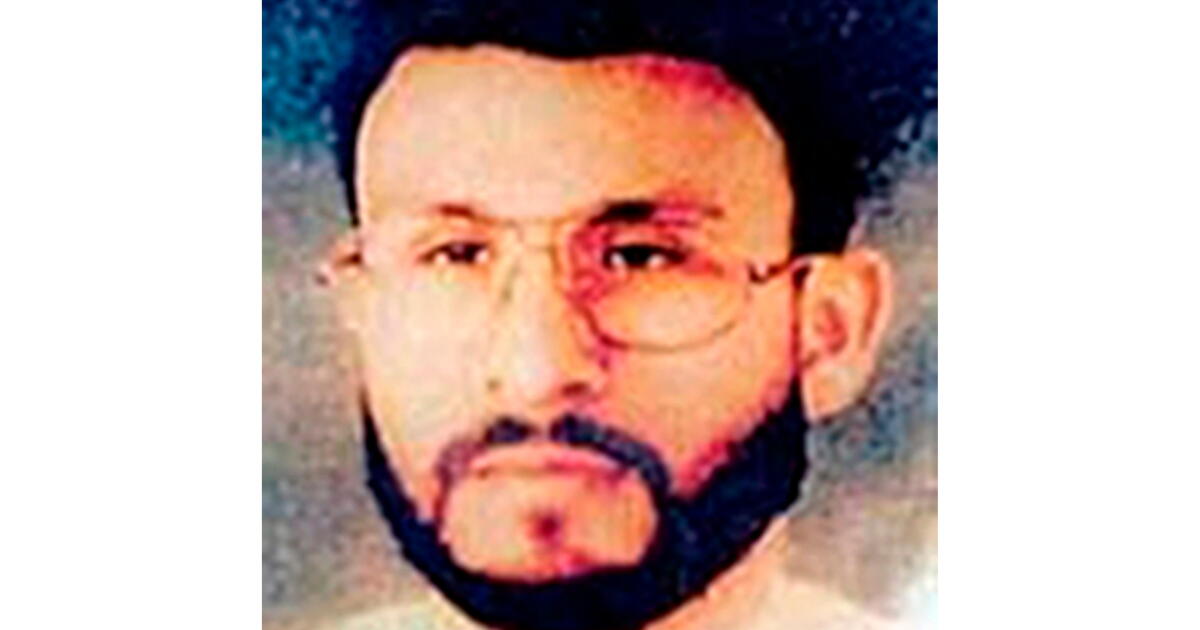
FT. MEADE, Md. — A man initially accused of being a high-profile Al Qaeda figure and who was tortured in CIA custody appeared Thursday at a hearing to review his detention at the U.S. military prison at Guantanamo Bay, Cuba, where he has been held for 20 years without charges.
A U.S. government official said Abu Zubaydah, who wore a neatly trimmed beard and glasses, had “probably” served as one of Osama bin Laden’s most trusted facilitators. The roughly 20-minute hearing offered rare visibility into the secretive military court proceedings of a suspect who had been tortured at CIA black sites during the U.S. war on terrorism and whose case still has not been resolved 25 years after the attacks of Sept. 11, 2001.
Zubaydah’s unidentified government-assigned representative and his private attorney, Annika Conrad, both acknowledged he had known Bin Laden, the 9/11 mastermind. But they said Zubaydah was never a member of the militant group that Bin Laden founded.
Conrad argued that Zubaydah poses no security threat to the United States and that it can no longer justify his detention. She said Zubaydah should be approved for transfer out of Guantanamo, which would kick off a multiyear process that includes finding a country to accept him.
Lawyer describes lasting injuries from torture and says Zubaydah could be monitored if released
Conrad said Zubaydah is prepared to accept a range of security measures, including continuous monitoring. Conrad said he has the financial and personal support of his family, has rejected any extremist views “and simply wants to live a life of peace.”
She also argued that a chief military prosecutor for U.S. military commissions, which oversees the 15 men still held at Guantanamo Bay, has said it is unlikely that Zubaydah will be charged. The Office of Military Commissions declined to comment.
Zubaydah’s attorney said the most the government can offer is a “probable association” to Bin Laden after more than two decades and noted that Zubaydah declined a direct request from Bin Laden to work for Al Qaeda.
Conrad also cited the torture that Zubaydah experienced, describing him as “a greatly injured man” who lost his left eye and his ability to write in English and “frequently struggles to recall words.”
Zubaydah’s detention is being reviewed by a U.S. government panel of senior defense, intelligence and homeland security officials. The Periodic Review Board was created under the Obama administration to evaluate prisoners and determine whether they could be released without posing a threat to national security.
The review panel did not immediately decide on the case
The review panel issued no immediate ruling Thursday. A live video feed of the unclassified portion of his hearing at Guantanamo was made available to reporters at Ft. Meade, an Army base in Maryland.
Detainees are not permitted to speak at their review hearings, and Zubaydah sat in silence next to his attorney and the government representative. Dressed in a gray suit jacket and patterned gray tie, he often pressed his left index finger to his left temple or fidgeted with something in his hands. A worn-looking book sat in front of him.
Zubaydah’s lawyers, Conrad and Ahmed Almudallal, said in a statement before the hearing that he may never face charges.
“For the first time in over two decades, the military’s chief prosecutor believes it is unlikely our client will ever be charged,” the attorneys said. “This is a major change in circumstances that warrants he be cleared for transfer.”
Almudallal and Conrad said Zubaydah has “no intent to engage in violence against the United States in the future.”
“Now, at 55 years old, he’s eager to reconnect with his family and live out the rest of his days as a free person,” they said. “Twenty-four years in prison plus being ‘patient zero’ in the U.S. government’s torture program has been punishment enough.”
He was first in the CIA’s ‘enhanced interrogation’ program after 9/11
Zubaydah was thought to be a high-ranking member of Al Qaeda when he was captured in Pakistan in 2002. A Palestinian born in Saudi Arabia, Zubaydah was tortured abroad before being transferred to Guantanamo in 2006.
The U.S. later dropped the claim that Zubaydah was one of the most senior figures in Al Qaeda, although it has continued to regard him as a security risk. Zubaydah’s lawyers have repeatedly said over the years that he was not an Al Qaeda member and point to waterboarding and other harsh treatment he experienced in the early 2000s.
Zubaydah was the first person in the CIA’s detention and interrogation program after 9/11 and subjected to what is now widely viewed as torture. He was held at CIA black sites in Poland and Lithuania, according to the European Court of Human Rights.
Zubaydah was waterboarded more than 80 times in a month at one point and confined over 11 days in a coffin-size box, among a raft of other mistreatment, a Senate report found.
In 2022, the Supreme Court dismissed a lawsuit by Zubaydah, who was seeking testimony from two former CIA contractors as part of an investigation into his treatment when he was held in Poland. The court rejected his case because the government said it would expose state secrets, despite much of the information having been widely reported.
In January, a lawyer for Zubaydah said the British government had agreed to pay a “substantial sum” to settle a lawsuit that said U.K. intelligence agencies were complicit in his torture. Attorney Helen Duffy said the confidential settlement was symbolically and practically significant for the “intolerable suffering” that Zubaydah endured.
A British parliamentary committee found in 2018 that U.K. security and intelligence services were aware Zubaydah was being tortured but continued to provide questions for the CIA to ask him without seeking assurances of his condition.