lawsuit state

Texas Tech QB sues NCAA to play in 2026 despite gambling infractions

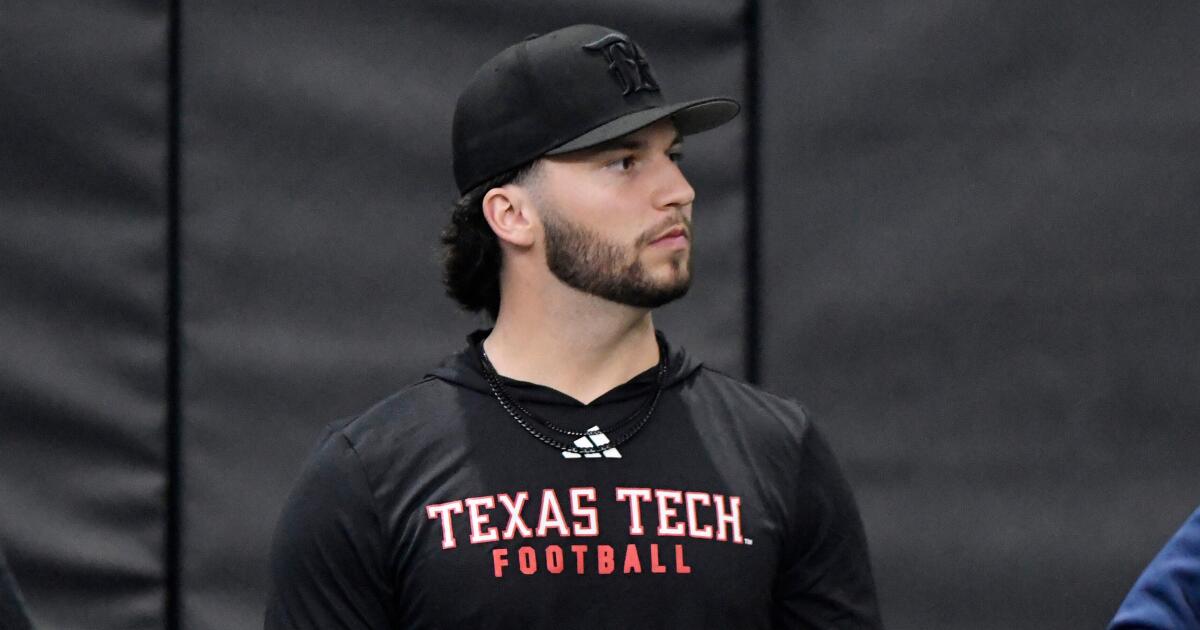
Texas Tech quarterback Brendan Sorsby has sued the NCAA in an attempt to be allowed to practice and play with the Red Raiders in 2026, his final season of college eligibility.

Late last month, Sorsby and the Red Raiders announced that the fifth-year player had entered a residential treatment program for gambling addiction and would be away from the team for an indefinite period of time.

A lawsuit filed Monday in Texas’ Lubbock County District Court requests that Sorsby be declared eligible for all team activities because the NCAA “failed to comply with its contractual commitments” to him as a student-athlete and therefore “is precluded from enforcing its gambling bylaws against Mr. Sorsby to deny or withhold his reinstatement.”

The filing also asks for “temporary and permanent injunctive relief enjoining the NCAA from interfering with his ability to practice, play, and participate fully as a member of the Texas Tech football team for the 2026 season.”

If he remains ineligible for college football, Sorsby intends to declare for this summer’s NFL supplemental draft. Athletes who enter that draft forfeit all remaining college eligibility.

“The relief is narrow: one student-athlete and one senior season,” the filing states. “The NCAA will suffer no cognizable harm from letting Mr. Sorsby play football while this case proceeds. But if this Court does not act, no future judgment can give Mr. Sorsby what the NCAA will have taken from him.”

As a freshman at Indiana and a low-ranked quarterback on the Hoosiers’ depth chart, the lawsuit states, Sorsby “placed small bets — typically between $5 and $50 — on the Indiana football team to win or for teammates to exceed expectations. He was not traveling with the team, and not privy to game plans; betting was his way of feeling connected to a team he could only watch from the sidelines.”

The most recent NCAA guidelines about sports wagering state that student-athletes who bet on their own games or on other sports at their school could “potentially face permanent loss of collegiate eligibility.”

Sorsby stopped betting on Indiana football once he became the backup quarterback, according to the filing, and since then hasn’t bet on any of his teams (he transferred to Cincinnati in 2024 and to Texas Tech this offseason). However, the lawsuit states, “his gambling escalated into a compulsion he could not control.”

According to the filing, Sorsby and Texas Tech were notified by the NCAA in mid-April that it had opened an investigation into the quarterback’s gambling.

“Mr. Sorsby did not deny, deflect, or delay in response,” the lawsuit states. “He immediately admitted to Texas Tech that he had placed bets in violation of NCAA rules, but he also emphasized that he never bet on a game he played in and never took any action to influence the outcome of any game because of a bet. He recognized he had a gambling addiction.

“In response, Texas Tech determined that it would declare Mr. Sorsby ineligible, as required by the Bylaws. But unlike the NCAA, Texas Tech decided to support him in seeking treatment for his addiction and to seek reinstatement of his eligibility in light of the undisputed evidence that Mr. Sorsby had not committed any integrity violation; his gambling was the product of a mental health disorder.”

The lawsuit states that Texas Tech has made multiple attempts to initiate Sorsby’s reinstatement with the NCAA. “Throughout the process, the NCAA has arbitrarily stalled at every turn,” the filing states, “despite the fact that it knows that the clock is ticking for Mr. Sorsby.”

The NCAA said in a statement to media outlets Monday that it “has not received a reinstatement request for this case.”

“The NCAA generally doesn’t comment on pending reinstatement requests, but the Association’s sports betting rules are clear, as are the reinstatement conditions,” the NCAA said. “When it comes to betting on one’s own team, these rules must be enforced in every case for the simple reason that the integrity of the game is at risk. Every sports league has these protections in place, and the NCAA will continue to apply them equally because every student-athlete competing deserves to know they’re playing a fair game.”

Texas Tech said in a statement emailed to The Times: “After finalizing an agreed-upon stipulation of facts between Texas Tech University, the NCAA and Brendan Sorsby, the University has declared Sorsby ineligible for competition. Texas Tech intends to quickly initiate the reinstatement process.

“Texas Tech’s primary focus remains supporting Sorsby’s health and well-being.”
Source link

James Cameron sued by Q’orianka Kilcher over ‘Avatar’ design

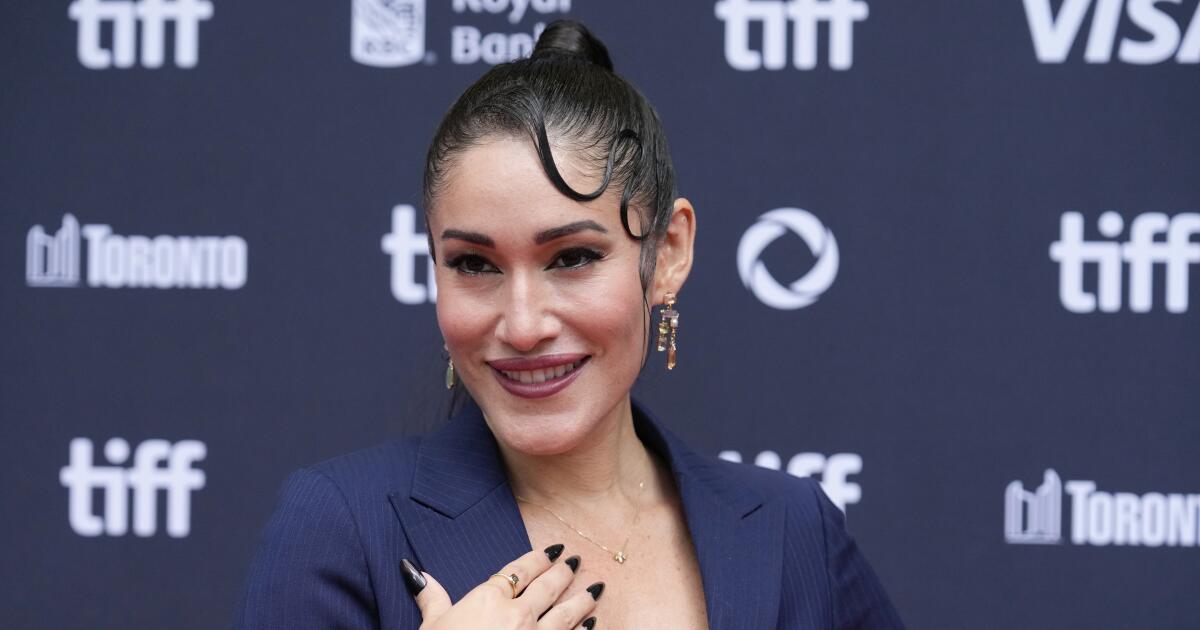
“Yellowstone” and “The New World” actor Q’orianka Kilcher has taken legal action against filmmaker James Cameron, Disney and others she says used her likeness in the wildly lucrative “Avatar” film franchise without her knowledge.

Kilcher, 36, filed her complaint Tuesday in California Central District Court and is suing on numerous counts including misappropriation of likeness, invasion of privacy and interfering with possible financial gain. She is seeking an unspecified amount in damages and a jury trial. The parties involved in the making of the “Avatar” film series “commercially exploited [Kilcher’s] likeness in developing and continuing the Avatar franchise” and “systematically avoided alerting or crediting her,” the lawsuit states.

Disney and a legal representative for Cameron did not immediately respond to a request for comment on Thursday. Cameron’s production company Lightstorm Entertainment, a California-based laser scanning studio and a New Zealand-based VFX firm are also among the co-defendants.

The claim at the core of Kilcher’s lawsuit is that Cameron in 2005 “extracted, replicated and commercially deployed her facial likeness” from a photo of a 14-year-old Kilcher as Pocahontas in the Terrence Malick film “The New World” and used it to inform the facial characteristics of Neytiri, a key character in the “Avatar” franchise played by Zoe Saldaña. Cameron spoke of Kilcher’s influence on the character in an interview with French YouTube channel Konbini. In the video, published in 2024 and noted in the lawsuit, James references the original sketch work for Neytiri. “The source for this was a photograph that was in the L.A. Times as part of the promotion for ‘The New World,’” he said. “It’s a young actress named Q’orianka Kilcher, who played Pocahontas in ‘The New World.’”

He adds in the video: “This is actually her lower face. She had a very interesting face. And I wound up meeting her years later and I gave her a signed print of this [sketch].”

The lawsuit alleges that the final look of Neytiri featured in the “Avatar” films “was not a fleeting inspiration or vague homage; it was a literal transplant of a real teenager’s facial structure into a blockbuster movie character.” In the 2024 interview, Cameron said the model of Neytiri had come to resemble Saldaña after she was cast. The first “Avatar” film was released in 2009 and grossed more than $2.9 billion.

The complaint also claims that the design process for Cameron’s Na’vi character moved on without Kilcher’s consent and that she was not compensated for influencing Neytiri’s design, further alleging that the film team’s actions “violated child performer laws and privacy laws designed to protect minors.” According to the lawsuit, the team behind “Avatar” did not “even attempt to have Plaintiff audition for the role of Neytiri” and refused the actor after her agent attempted to book a reading for the sci-fi epic.

Kilcher accuses Cameron of “creating a misleading narrative that she was simply unavailable” to appear in the original “Avatar” film and of leading her on with the idea of potentially appearing in later “Avatar” movies. Cameron released “Avatar: The Way of Water” in 2022 and “Avatar: Fire and Ash” in 2025.

The lawsuit said Cameron and Kilcher crossed paths at a Hollywood environmental charity event in 2010 and he instructed her to later pick up a “surprise gift” at his production offices. According to the lawsuit, Cameron gifted Kilcher a framed and signed print of the original Neytiri sketch with the note: “Your beauty was my early inspiration for Neytiri. Too bad you were shooting another movie. Next time.” Kilcher said she found the note confusing at the time. She had also contacted Cameron over the years, but “nothing concrete materialized,” according to the lawsuit.

The 99-page complaint describes Kilcher as an Indigenous actor-activist, noting she is of Quechua-Huachipaeri heritage. The lawsuit also alleged Cameron’s actions were hypocritical of his films’ messaging and detailed public backlash Cameron and the films faced for its depictions of Native groups.

“The result was a highly lucrative film franchise that presented itself as sympathetic to Indigenous struggles,” the lawsuit said, “all while silently exploiting a real Indigenous youth behind the scenes.”

According to her complaint, Kilcher “learned of the betrayal Cameron had kept from her” in August 2025, after video of the filmmaker discussing Neytiri’s design came across her social media feed. She “was shocked, heartbroken, and felt utterly betrayed,” and was motivated to reexamine and scrutinize archival “Avatar” materials. That included behind-the-scenes footage featured in a recent Blu-ray DVD release and an “Avatar” production art book, which, according to the lawsuit, did not credit the actor. The suit includes several side-by-side photos of Kilcher in “The New World” and various Na’vi characters from “Avatar” material.

In addition to damages and a jury trial, Kilcher seeks a public statement acknowledging her contributions and correcting “any false or misleading statement about her,” and payment of profits attributable to the “unauthorized” use of the actor’s likeness and identity.

Source link