law

Israel approves law on public trials, death penalty for October 7 detainees | Israel-Palestine conflict News

Rights groups warn that the bill makes the death penalty easier to impose and strips fair trial protections.

Israeli legislators have approved a bill to establish a special tribunal with the power to impose the death penalty on Palestinians accused of involvement in the Hamas-led attacks of October 7, 2023.

The bill passed 93-0 in Israel’s 120-seat parliament, the Knesset, late on Monday.

Recommended Stories

list of 4 itemsend of list

The remaining 27 legislators were absent or abstained from voting.

Israeli and Palestinian rights groups warn that the bill will make the death penalty too easy to impose while also doing away with procedures safeguarding the right to a fair trial.

Muna Haddad, a lawyer with Adalah – The Legal Center for Arab Minority Rights in Israel, told Al Jazeera that the bill intentionally lowers the legal protections to a fair trial to secure the mass conviction of Palestinians.

“The bill explicitly permits mass trials that deviate from standard rules of evidence, including broad judicial discretion to admit evidence obtained under coercive conditions that may amount to torture or ill-treatment,” Haddad said.

“This constitutes a severe violation of fair trial guarantees that falls well short of international law requirements.”

In a departure from standard Israeli judicial practice, which typically prohibits courtroom cameras, the bill mandates the filming and public broadcasting of key moments in the trials on a dedicated website.

This includes opening hearings, verdicts and sentencing.

Haddad warned that this provision effectively “transforms proceedings into show trials at the expense of the accused’s rights”.

“The provisions governing public hearings… violate the presumption of innocence, the right to a fair trial, and the right to dignity,” Haddad explained. “The framework effectively treats indictment as a finding of guilt, before any judicial examination has begun.”

Israel has been holding an estimated 200-300 Palestinians, including those captured in the country during the October 7 attacks, who have not yet been charged.

The Hamas-led assault on Israeli communities along Israel’s southern fence with Gaza killed at least 1,139 people, mostly civilians, according to an Al Jazeera tally based on official Israeli statistics. About 240 others were seized as captives.

Israel’s subsequent genocidal war on Gaza has killed at least 72,628 Palestinians, including at least 846 since a United States-brokered “ceasefire” came into effect last October.

The war, which United Nations experts say could amount to genocide, has left the Palestinian territory in ruins.

Several Israeli rights groups – including Hamoked, Adalah and the Public Committee Against Torture in Israel – said on Monday that while “justice for the victims of October 7 is a legitimate and urgent imperative”, any accountability for the crimes “must be pursued through a process which includes rather than abandons the principles of justice”.

The bill is separate from a law passed in March that approved the death penalty for Palestinians convicted of murdering Israelis, a measure harshly condemned by the international community and rights groups as discriminatory and inhumane.

That law applies to future cases and is not retroactive, so it could not apply to the October 2023 suspects.

Hamas spokesperson Hazem Qassem said the new law “serves as a cover for the war crimes committed by Israel in Gaza”.

The International Criminal Court is probing Israel’s conduct of the Gaza war and has issued arrest warrants for Prime Minister Benjamin Netanyahu and former Minister of Defence Yoav Gallant, as well as ‌three ‌Hamas leaders who have all since been killed by Israel.

Israel is also fighting a genocide case at the International Court of Justice.

It rejects the allegations.

Source link

Fuming Dua Lipa sues Samsung for HUGE sum after firm ‘used her face to sell £300 TVs without her permission’

POP star Dua Lipa is suing Samsung for £11million after the tech giant allegedly used her face to sell £300 televisions without her permission.

A picture of the Levitating singer was on the packaging of Crystal 43in ultra-high- definition sets to promote its XITE Hits music channel.

Fuming Dua Lipa is suing Samsung for £11million Credit: Getty
The tech firm allegedly used her face to sell televisions without her permission

In legal paperwork obtained by The Sun, Dua’s attorneys say she owns the copyright to the photo — taken backstage at a 2024 festival.

She claims it appeared on a “significant portion” of the tellies sold in the US — and her fans even flocked to buy them in the belief she had endorsed them.

The filing, made in the Central District of California Federal Court, reveals that Grammy- winner Dua is demanding a minimum $15million (£11million) in damages — but a jury could decide to award far more.

South Korean firm Samsung is said to have ignored several legal warnings from her team.

DOUBLE TAKE

Why Callum Turner hid Dua Lipa lookalike ex he was WITH the night he met star


LIPA SERVICE

How Dua Lipa is bizarrely key to Fury vs Joshua fighting at Wembley

Her lawyer Christine Lepera wrote: “Samsung used a copyrighted image of Ms. Lipa without authority or licence and prominently featured it on the front of boxes containing Samsung-manufactured televisions for retail sale.”

She added “The substantial revenue made on the sale is inextricably tied to the false message conveyed to consumers that Ms. Lipa has endorsed the Infringing Products when she has not.”

One fan is said to have put a photo of the box online with the caption: “I wasn’t even planning on buying a TV, but I saw the box so I decided to get it.”

Another in Miami who spotted it in a store wrote on Instagram: “I’d get that TV just because Dua is on it. That’s how obsessed I am.”

Dua is the frontwoman for Yves Saint-Laurent’s beauty products Credit: TNI Press
The stunning singer is also the face of Nespresso Credit: Nespresso

A third said: “I’ve always said if you need anything selling, just put a picture of Dua Lipa on it.”

Ms Lepera added that Dua would not have agreed a Samsung deal anyway as she is “highly selective in her commercial partnerships”.

The London-born star, 30, is one of the world’s biggest pop stars, cracking America and winning three Grammy Awards.

She has signed a number of advertising deals to take her net worth in excess of £100million.

Dua is the face of Nespresso, alongside George Clooney, and also the frontwoman for Yves Saint-Laurent’s beauty products.

In 2023, she signed a seven- figure package to become the face of sports car brand Porsche, and she is in a multi-year partnership with sportswear giant Puma.

Samsung had yet to file a defence to the court. Both Samsung and Dua Lipa’s legal firm, MSK, were asked to comment.

Source link

Vacation hotspot rolls out bizarre 10-hour ban in days impacting tourists, residents, and cruise passengers

A UNUSUAL temporary ban is being rolled out in days at a popular vacation hotspot.

The law will impact all residents, tourists, and even cruise lines.

NINTCHDBPICT001079589815
The mass 10-hour ban will impact all residents, tourists, and even cruise lines (stock) Credit: Alamy
NINTCHDBPICT001079590219
Some Royal Caribbean cruise ship passengers are outraged by the booze ban (stock) Credit: Alamy

Alcohol sales will be completely banned across all islands in the Bahamas due to the general election, officials have confirmed.

Polls open on May 12 and between the hours of 8am and 6pm, no alcohol will be available for purchase, per a government notice.

This includes even on private islands that are owned by cruise lines.

Royal Caribbean said it will be abiding by the local laws at Coco Cay, it’s private island in the Bahamas.

“Royal Caribbean is respecting and complying with all local laws and regulations, as we do with every destination we visit,” a Royal Caribbean spokesperson told PEOPLE.

Both the Wonder of the Seas and the Oasis of the Seas ships will be visiting the island on that day.

It’s beach bars Perfect Day and Royal Beach Club Paradise Island will still be open, the cruise line confirmed, and noted that passengers will still be able to get alcohol on board the ships.

Despite this, passengers are fuming about the sudden announcement.

“We scheduled a trip with stops in the Bahamas for our 40th anniversary,” one customer wrote on X.

“We are going with 26 of our friends. Planned activities at CocoCay and Nassau.

“The general election has banned all alcohol for the two days we are there. And we find out only two days before we leave? Not a way to treat customers who cruise four times a year.”

Source link

Brazil judge bars law that could reduce Bolsonaro’s 27-year prison sentence | Jair Bolsonaro News

Brazilian Supreme Court Justice Alexandre de Moraes suspends use of law to reduce prison sentences, pending further review.

Brazilian Supreme Court Justice Alexandre de Moraes has barred the implementation of a law that could dramatically reduce the prison sentence of former President Jair Bolsonaro for involvement in a coup plot after his loss in the 2022 election.

De Moraes ordered the law’s suspension on Saturday until the Supreme Court can convene a full hearing to consider appeals challenging its constitutionality.

Recommended Stories

list of 3 itemsend of list

Bolsonaro’s conviction for involvement in a plot to remain in office after losing to left-wing rival Luiz Inacio Lula da Silva in 2022 has become a cause celebre for the country’s political right, which has pushed for Bolsonaro’s release from prison.

The Supreme Court sentenced the former far-right president to 27 years in prison in September, but a law passed by Brazil’s conservative-majority Congress in December would apply to Bolsonaro and others convicted in the plot, paving the way for reductions in their sentences.

President Lula vetoed the bill in January, but a vote led by Bolsonaro’s allies in Congress overrode the veto in late April.

Plaintiffs have subsequently asked the Supreme Court to overturn the bill, stating it is unconstitutional.

Lawyers for those convicted must file individual requests for sentence reduction. The ruling by de Moraes essentially suspends such requests until the court has had the opportunity to decide on the law’s constitutionality.

Lawyers for the 71-year-old Bolsonaro filed a new appeal to the Supreme Court on Friday, asking it to overturn what they called a “miscarriage of justice”.

Bolsonaro’s conviction and sentencing remain a matter of controversy in Brazil, where his allies have decried it as a political witch-hunt.

Opponents have welcomed it as a necessary form of accountability, from which not even former presidents are exempt.

Source link

Trump’s latest 10% tariffs found unlawful by U.S. trade court

President Trump’s 10% global tariffs were declared unlawful by a federal trade court in a fresh blow to the administration’s economic agenda, several months after the U.S. Supreme Court vacated earlier levies he’d imposed.

A divided three-judge panel at the U.S. Court of International Trade in Manhattan on Thursday granted a request by a group of small businesses and two dozen mostly Democrat-led states to vacate the tariffs. Trump imposed the 10% duties in February under Section 122 of the Trade Act of 1974, which had never previously been invoked.

The court for now only immediately blocked the administration from enforcing the tariffs against the two companies that sued and Washington state, making clear that it was not issuing a so-called universal injunction. The panel found that the other states that sued lacked standing because they aren’t direct importers, instead arguing that they were harmed by having to pay higher prices for goods when businesses passed on tariff costs.

It wasn’t immediately clear what the ruling would mean for now for other importers that had been paying the contested levies.

The majority of the panel rejected the administration’s stance that “balance-of-payments deficits” — a key criterion for imposing the Section 122 tariffs — was “a malleable phrase.” They concluded that Trump’s proclamation imposing the levies failed to identify that such deficits existed within the meaning of the 1974 law, instead using “trade and current account deficits to stand in the place.”

The decision is the latest setback for the president’s effort to levy tariffs without input from Congress. Earlier duties — overturned by the Supreme Court on Feb. 20 — were issued under a different law, the International Emergency Economic Powers Act, or IEEPA. In that case, the justices ruled Trump had exceeded his authority, kicking off a legal scramble by importers for almost $170 billion in refunds.

The U.S. Justice Department could challenge the trade court’s latest ruling by taking the case to the U.S. Court of Appeals for the Federal Circuit, which ruled against the Trump administration during the last tariff fight.

Section 122 allows presidents to impose duties in situations where the U.S. faces what the law defines as “fundamental international payments problems.” Even before Trump issued the tariffs, economists and policy experts debated whether the president would be able to build a solid legal framework using the statute.

In a proclamation declaring the use of Section 122, Trump said that tariffs were justified because the U.S. runs a “large and serious” trade deficit. He also pointed to the negative net flows of income from investments Americans have overseas and other things that showed the U.S. balance-of-payments relationship with the rest of the world was deteriorating.

Under the law, presidents have the ability to impose tariffs on goods imported into the U.S. on a short-term basis to address concerns about how money is flowing in and out of the country. Those concerns include “large and serious United States balance-of-payments deficits” and an “imminent and significant depreciation of the dollar.”

Unlike other legal options Trump might pursue to impose tariffs, Section 122 can be invoked without waiting for a federal agency to conduct an investigation to determine whether the levies are justifiable. But they can still be challenged in court.

The small businesses and states that sued argued that Section 122 became outdated when the U.S. ditched the gold standard decades ago. They say Trump improperly conflated “balance-of-payments deficits” with U.S. trade deficits in order to justify using the law.

They also allege that Trump’s order announcing the Section 122 tariffs was “riddled with omissions and mischaracterizations” around the meaning of a balance-of-payments deficit. The trade deficit cited by Trump is just one part of calculating the country’s balance of payments position, the states say.

Under Section 122, the president can order import duties of as much as 15%. The executive action can last 150 days, at which point Congress would have to extend it. Trump has said he would aim to increase the rate to 15% from 10%.

The states argue that Trump’s new tariffs violate other requirements in Section 122, including that such duties not be discriminatory in their application. The states argue that Trump’s new tariffs improperly exempt some goods from Canada, Mexico, Costa Rica, the Dominican Republic, El Salvador, Guatemala, Honduras and Nicaragua.

According to the complaint, the Trump administration conceded during the previous litigation over his IEEPA tariffs that trade deficits “are conceptually distinct from balance-of-payments deficits.”

The clash over Section 122 emerged just as the legal fight over refunds from Trump’s IEEPA tariffs began to heat up. A different judge in the Court of International Trade, U.S. Judge Richard Eaton, is overseeing the massive refund effort and ordered Customs and Border Protection to give him regular updates on a largely automated process the government will use to issue most refunds.

Larson and Tillman write for Bloomberg.

Source link

California’s single-use plastic law is angering all sides

Within days of California’s long-anticipated single-use plastic law going into effect, environmentalists, anti-waste activists and the packaging industry reacted with anger and frustration.

Anti-plastic activists say Gov. Gavin Newsom’s administration and CalRecycle inserted exemptions favoring the plastic industry into the law’s regulations that weaken it and undermine legislative intent.

“These new rules create huge loopholes for plastic packaging that violate the law,” said Avinash Kar, senior director of the toxics program at the Natural Resources Defense Council.

On the other side, the packaging industry has sued over similar laws in other states. “Our members have real concerns about cost, compliance, and constitutionality,” said Matt Clarke, spokesman for the National Assn. of Wholesaler-Distributors, which sued Oregon earlier this year over a similar waste law.

CalRecycle, the state’s waste agency, did not respond in time for publication. The final regulations putting the law into effect were released May 1 and posted for review Tuesday.

The environmental organizations say the law’s new final regulations open the door to what is known as “chemical recycling,” which produces large amounts of hazardous waste. The law also contains problematic exemptions for certain categories of plastic foodware, they say.

The language of the law forbids any kind of recycling that would produce significant amounts of hazardous waste. The new regulations allow for these recycling methods if the facilities are properly permitted.

The new regulations also exempt certain products if they are already covered by federal law. For instance, a packaging company, retailer or distributor can claim that they have such a preemption, Kar said, and CalRecycle might not immediately review that claim. “And as long as they don’t review it, they’ll get the exemption for as long as CalRecycle doesn’t review it,” creating a potential “forever loophole.”

“Californians were promised a system where producers take real responsibility for the waste they create,” said Nick Lapis, advocacy director for Californians Against Waste. “When regulations introduce broad exemptions and redefine key terms, that promise starts to erode. The details matter here, and right now they don’t line up with the intent of the law.”

Senate Bill 54, the Plastic Pollution Prevention and Packaging Producer Responsibility Act, was signed by Newsom in 2022. It was considered landmark legislation because it addressed the scourge of single-use plastics, requiring plastic and packaging companies to use less of them and ensuring that by 2032, all food packaging is either recyclable or compostable.

Accumulating plastic waste is overwhelming waterways and oceans, sickening marine life and threatening human health.

The law’s intent was not only to reduce it, but also to put the onus and cost of dealing with it on packaging producers and manufacturers, not consumers and local governments. It was supposed to incentivize companies to consider the fate of their products and spur innovation in material redesign.

According to one state analysis, 2.9 million tons of single-use plastic and 171.4 billion single-use plastic components were sold, offered for sale, or distributed during 2023 in California.

Similar laws have been passed in Maine, Oregon, Colorado, Minnesota, Maryland and Washington. Oregon’s law, however, is on hold while a lawsuit by the National Assn. of Wholesaler-Distributors works its way through the courts.

“We see a lot of the same problems in California that we flagged in Oregon,” said Clarke, the trade group spokesman. “Given California’s scale, the cost implications are going to be even larger. Our legal counsel has noted that California’s proposed fees are already higher than what other states have put forward.”

Jan Dell of Last Beach Cleanup, an anti-plastic waste group based in Laguna Beach, doesn’t believe the law will work — irrespective of the final regulations — and said the “exorbitant” cost of its implementation will either spur producers to sue, or they’ll end up passing the higher costs onto consumers.

She referred to a report from the Circular Action Alliance, the state-sanctioned group established to represent and oversee the implementation of the law on behalf of the plastic and packaging industry. It finds the law will increase the cost of disposal between six and 14 times for common products, such as Windex bottles, made of polyethylene terephthalate.

“If the producers don’t successfully sue to stop the fees, this will certainly add to product inflation for CA consumers,” she said in an email. “Californians already have to pay exorbitantly high curbside collection fees for trash, recycling, and organics … so, starting in 2027, our groceries will cost a LOT more but we won’t see a reduction in our waste bills.”

Christopher “Smitty” Smith, a partner at law firm Saul Ewing in Los Angeles, who councils companies and interest groups on SB 54 and other Extended Producer Liability laws, said that although he could see areas of the law that “could be sharper and avoid the legal challenges … you can’t stop people from suing.” Environmentalists and anti-waste activists say they are preparing a lawsuit.

Smith said the law already has sparked changes in how companies think and respond to concerns about waste.

One of his national fast-food chain clients has realized that if its brand name is on plastic packaging, it’s that company’s responsibility, he said, so “they’ve spent the past year mapping out their franchise agreements, their supply chain agreements, their producer agreements, to figure out” what it needs to do to comply.

He said in the past, companies have paid little attention to these details and just let their franchisees figure this kind of thing out. Now, they’re spending a lot of time and money “to wrap their arms around what their supply chain looks like and like, what post consumer use of their plastic products looks like and what their regulatory obligations are.”

It’s bringing a new dialogue within companies. And that, Smith said, is what could make this law so powerful.

Times staff writer Meg Tanaka contributed to this report.

Source link

South Korean court reduces Han Duck-soo’s prison term in martial law case | News

Seoul appeals court cuts ex-prime minister’s prison sentence from 23 years to 15.

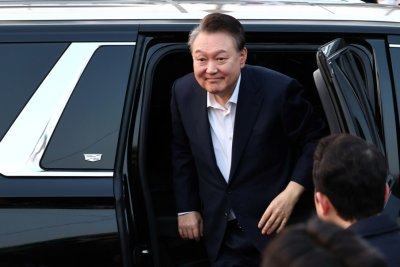
A South Korean appeals court has reduced the sentence of former Prime Minister Han Duck-soo by eight years for crimes relating to ex-President Yoon Suk Yeol’s declaration of martial law.

The verdict was issued in the South Korean capital, Seoul, on Thursday.

Recommended Stories

list of 4 itemsend of list

Yoon’s decree in December 2024 briefly suspended civilian government and plunged South Korea into chaos, but it only lasted about six hours as opposition lawmakers moved quickly to overturn it in a vote.

A lower court had sentenced Han in January to a heavier-than-expected jail term of 23 years for engaging in the insurrection, as well as on related charges of perjury and falsifying an official document.

But the appeals court in Seoul cut that by eight years on Thursday, with the presiding judge announcing: “We sentence the defendant to 15 years in prison.”

The court still maintained most of Han’s convictions but lessened the penalties after taking into account his “more than 50 years as a public official prior to the martial law declaration”.

“The records also make it difficult to find evidence showing that the defendant participated more actively in the insurrection, such as by conspiring in advance or systematically leading the operation,” the judge said.

However, he said Han had “abandoned the grave responsibilities arising from the authority and position entrusted to him and instead sided with those participating in the acts of insurrection”.

Han, wearing a white shirt and a dark suit with no tie, listened to the verdict without showing much emotion.

The 76-year-old has been imprisoned since his original sentence in January.

Han had denied wrongdoing on all charges except perjury, saying in November that while he regretted not being able to stop Yoon from declaring martial law, he “never agreed to it or tried to help”.

Han is an experienced technocrat, who served in senior posts under five presidents.

He became the acting president after Yoon was impeached, before his own impeachment on accusations of having aided Yoon in the martial law declaration.

The Constitutional Court overturned Han’s impeachment, restoring his powers to serve as leader before he resigned from the post to run in a snap election in June.

He ended his bid for the presidency following rifts among conservatives.

Yoon, who faces eight separate trials, was handed a life sentence in February on charges of “masterminding an insurrection”.

Yoon, a former career prosecutor, denied the charges, arguing he had presidential authority to declare martial law and that his action was aimed at sounding the alarm over opposition parties’ obstruction of government.

He has apologised for the “frustration and hardship” brought upon the people by his martial law decree, but said in a statement after the sentencing that he stood behind the “sincerity and purpose” behind his actions.

Source link

Supreme Court resembles a feuding family with arguments that go on for years

The Supreme Court often resembles a feuding family where the same heated arguments go on for years.

The justices disagree over race, religion, abortion, guns and the environment, and more recently, presidential power and LGBTQ+ rights. And while they try to maintain a cordial working relationship, they don’t claim to be good friends.

“We are stuck with one another whether we like it or not,” Justice Amy Coney Barrett wrote last year in her book, “Listening to the Law.”

And like it or not, the testy exchanges and simmering anger have been increasing, driven by the sharp ideological divide.

The three liberals had known since October the conservative majority was preparing to elevate partisan power over racial fairness.

By retreating from part of the Voting Rights Act, the court’s opinion last week by Justice Samuel A. Alito will allow Republicans across the South to dismantle voting districts that favor Black Democrats.

Justice Elena Kagan, who first came to the court as a law clerk for Justice Thurgood Marshall, denounced the “demolition” of a historic civil rights law.

In dissent, she quoted Marshall’s warning that if all the voting districts in the South have white majorities, Black citizens will be left with a “right to cast meaningless ballots.”

But Alito and Chief Justice John G. Roberts joined the court 20 years ago believing the government may not make decisions based on race.

Their first major ruling was a 5-4 decision that struck down voluntary school integration policies in Seattle and Louisville. It was illegal to encourage some students to transfer based on their race, Roberts said.

When faced with a redistricting case from Texas, Roberts described it as the “sordid business … [of] divvying us up by race.”

With President Trump’s three appointees on the court, the conservatives had a solid majority to change the law on race. Three years ago, they struck down college affirmative action policies.

Watching closely were states such as Alabama and Louisiana.

They had been sued by voting rights advocates, and both had been required to draw a second congressional district with a Black majority.

Their state attorneys appealed to the Supreme Court, arguing these race-based districts were unconstitutional.

In a decision that surprised both sides, Alabama lost by a 5-4 vote in 2023.

Roberts said the Voting Rights Act as interpreted by past decisions suggests Alabama must draw a second congressional district that may well elect a Black candidate. The three liberals agreed entirely and Justice Brett M. Kavanaugh cast a tentative fifth vote.

Alito and Justice Clarence Thomas filed strong dissents, joined by Barrett and Justice Neil M. Gorsuch.

Last year, the justices agreed to decide a nearly identical appeal from Louisiana, and this time Roberts joined the conservative majority and assigned the opinion to Alito.

He argued the Voting Rights Act gave “minority voters” an equal right to vote but not a right to “elect a preferred candidate.”

The decision dealt a double blow to Black Democrats because an earlier 5-4 opinion by Roberts freed state lawmakers to draw voting districts for partisan advantage.

That ruling, combined with Wednesday’s decision, will bolster Republicans trying to maintain their narrow hold on Congress.

As if to highlight that point, the court’s six Republican appointees were guests of President Trump at Tuesday’s White House dinner for King Charles.

Just a few days before, Trump had slammed the court in another social media post.

“The Radical Left Democrats don’t need to ‘Pack the Court’. It’s already Packed,” he wrote. “Certain ‘Republican’ Justices have just gone weak, stupid, and bad.” They had struck down his sweeping tariffs, he said, “they probably will … rule against our Country on Birthright Citizenship.”

That didn’t stop him from inviting them to the White House, nor did the partisan appearances dissuade them from attending.

Alito is enjoying his moment of acclaim as the voice of the conservative legal movement.

In March, the Federalist Society held a day-long conference in Philadelphia to celebrate the “Jurisprudence of Justice Alito.”

He is the subject of two new books. One, by journalist Mollie Hemingway, calls him “the justice who reshaped the Supreme Court and restored the Constitution.”

The other, by author Peter S. Canellos, is “Revenge for the Sixties: Sam Alito and the Triumph of the Conservative Legal Movement.”

Alito attended Princeton during the Vietnam War and was put off “by very privileged people behaving irresponsibly,” as he later described his classmates.

He then went to the Yale Law School and, like Thomas, left with a lasting disdain for the left-leaning faculty and students.

Alito has a book of his own scheduled to be released in October. It is called “So Ordered: An Originalist’s View of the Constitution, the Court and Our Country.”

Last month, rumors and speculation had it that Alito and perhaps Thomas planned to retire this year so Trump and the Senate Republicans could quickly fill their seats.

At age 76, Alito is at the peak of his influence and has no interest in stepping down, and he and Thomas confirmed to news organizations they had no plans to retire this year.

For 20 years, Alito has cast reliably conservative votes at the Supreme Court and regularly argued for moving the law farther to the right.

Most famously, he wrote the court’s 5-4 opinion in the Dobbs case that overturned Roe vs. Wade and the constitutional right to abortion.

Roberts issued a partial dissent, arguing the court should uphold Mississippi’s 16-week limit on abortions and stop there.

Alito has called religion a “disfavored right,” and there too a change is underway.

In the decades before his arrival, the court had handed down steady rulings barring taxpayer funds for religious schools or religious ceremonies or symbols in public schools or city parks.

Then, the court viewed these official “endorsements” of religion as violations of the 1st Amendment’s ban on an “establishment” of religion or the principle of church-state separation.

Those decisions have faded into the background, however.

Instead, Alito, Roberts and the four other conservatives see today’s threat as one of discrimination against religion, not official favoritism for religion.

They ruled church schools and their students may not be denied state aid because of religion. Similarly, Catholic charities and other religious groups may not be excluded from publicly funded programs because they refuse to accept same-sex parents, the justices said.

They upheld a football coach’s right to pray on the field. And they ruled for a wedding cake maker in Colorado and other business owners who refused to serve same-sex couples in violation of a state civil rights law.

Religious liberty has now replaced separation of church and state as the winning formula at the Supreme Court.

The next test on that front may come from Louisiana, which calls for the posting of the Ten Commandments in public school classes.

In the past, the court had ruled such religious displays violated the 1st Amendment, but it is not clear that the current majority will agree.

The court’s oral arguments for this term ended last week. Many of them were dominated by questions from liberal Justices Sonia Sotomayor and Ketanji Brown Jackson.

A statistical tally by Adam Feldman for Scotusblog found that Jackson, the newest justice, had spoken twice as many words as the most talkative of the conservative justices.

Her arrival shifted the “center of verbal energy” to the liberal side, Feldman wrote. While Jackson “sits in a class of her own,” Sotomayor also presses the argument on the liberal side.

The court now has about eight weeks to hand down the decisions in 35 remaining cases. Usually, May and June can be a trying time because of intense disagreements over the opinions in close cases.

But for the liberal justices, it also may be a time mostly for writing dissents.

Source link

3 Army officers dismissed from military service; 1 removed over martial law involvement

Seoul’s Defense Ministry said Tuesday it dismissed three Army officers and removed another from service over their involvement in the 2024 martial law bid. One of the officers, Brig. Gen. Kim Jeong-geun, is seen in this December 2024 photo ahead of questioning by special prosecutors. File Photo by Yonhap

The defense ministry said Tuesday it has dismissed three Army officers from military service and removed another from service over their involvement in former President Yoon Suk Yeol’s short-lived martial law declaration.

The decision came after the ministry convened a disciplinary committee meeting last month to review the cases of the four Army officers accused of involvement in the Dec. 3, 2024, martial law bid.

Brig. Gen. Kim Jeong-geun; Col. An Mu-seong, who had been awaiting promotion to brigadier general; and Col. Kim Se-un were dismissed from military service, the highest level of disciplinary punishment, according to sources. The punishment carries a 50 percent cut in military retirement benefits.

Brig. Gen. Kim and An are accused of deploying troops to the National Assembly on the night martial law was declared, while Col. Kim is accused of transporting the troops to the National Assembly building.

Col. Kim Sang-yong, former deputy chief of the Defense Ministry’s Criminal Investigation Command, was removed from military service, the second-highest level of disciplinary punishment, over his alleged role in helping form a team to arrest key politicians and other major figures. The punishment does not affect military retirement benefits.

The latest move came as the ministry has launched an internal probe into about 860 general-grade and field-grade officers and identified some 180 military personnel as having been involved in the martial law bid in late 2024.

Copyright (c) Yonhap News Agency prohibits its content from being redistributed or reprinted without consent, and forbids the content from being learned and used by artificial intelligence systems.

Source link

Probe finds signs of martial law planning in 2024

Kim Ji-mi, an aide to special counsel Kwon Chang-young, attends a press conference at the counsel team’s office in Gwacheon, south of Seoul, South Korea, 04 May 2026. The special counsel team announced that it has found signs a military unit was making preparations for martial law operations in the first half of 2024, well before former President Yoon Suk Yeol’s declaration in December of that year. Photo by YONHAP / EPA

May 4 (Asia Today) — A special counsel team said Monday it has identified signs that South Korea’s military counterintelligence unit may have begun preparing for a declaration of martial law as early as the first half of 2024.

Kim Ji-mi, a deputy special counsel, said during a regular briefing that investigators confirmed indications of early preparations through questioning of officials from the Defense Counterintelligence Command.

She declined to elaborate on who led the preparations or whether specific plans were in place.

The findings differ from earlier conclusions by a separate special counsel team led by Cho Eun-seok, which had investigated allegations of insurrection and foreign conspiracy related to a Dec. 3 emergency martial law declaration. That team charged former President Yoon Suk Yeol as the alleged ringleader, citing a notebook belonging to former intelligence commander Noh Sang-won as evidence that planning began before October 2023.

However, a lower court rejected the evidentiary value of the notebook, ruling that any decision to impose martial law appeared to have been externally expressed no earlier than Dec. 1, 2024. The court said concrete steps toward implementation began only about two days before the declaration.

The court also found that meetings cited by prosecutors – including a presidential residence dinner in December 2023, a series of gatherings with senior military officials through August 2024 and other meetings in Seoul – could not be directly regarded as preparations for martial law.

Separately, the special counsel team said it would impose a one-month pay reduction on an investigator who posted investigation-related materials on social media. The investigator had uploaded photos including a certificate of appointment and a suspect’s signed statement, which have since been deleted.

The team said it questioned two suspects and 43 witnesses last week as part of the ongoing investigation.

— Reported by Asia Today; translated by UPI

© Asia Today. Unauthorized reproduction or redistribution prohibited.

Original Korean report: https://www.asiatoday.co.kr/kn/view.php?key=20260504010000426

Source link

Push to shield immigrant aid workers raising 1st Amendment concerns

The debate over immigration issues has reached a fever pitch nationwide, and Angelica Salas said it’s putting her employees at risk.

Salas, executive director of the Coalition for Humane Immigrant Rights, said her staff experiences harassment and death threats.

“They ask themselves, what if someone who disagrees with our work can find where I live, will my family be safe?” Salas said, addressing state lawmakers at a recent legislative hearing.”People begin to self-censor; they step away from their work and some leave the field entirely.”

Salas was speaking in support of Assembly Bill 2624, which would provide privacy protections for those facing harassment for working or volunteering with organizations that offer legal and humanitarian aid to immigrants. The bill would create an address confidentiality program, like the one already offered to reproductive healthcare workers, and prohibit people and businesses from selling or posting images or personal information about the protected individuals on the internet.

The measure has drawn ire from Republicans, who argue it could have a chilling effect on free speech and the media. Assemblymember Carl DeMaio (R-San Diego) dubbed it the “Stop Nick Shirley Act” and said it would prevent right-wing social media influencers like Shirley from conducting immigrant-related investigations in California.

Assemblymember Mia Bonta (D-Alameda), who authored the legislation, said the proposed law would help keep people safe — but several 1st Amendment experts this week told The Times the bill could have unintended consequences.

“There could be grounds for concern,” said Jason Shepard, a media law and communications professor at California State Fullerton. “It reflects a legitimate and important state interest in protecting people from harassment and threats. But at the same time, this bill punishes the publication of information.”

The legislation defines “personal information” as anything that identifies, describes or relates to the protected individuals, including their names, addresses, telephone numbers, physical descriptions, driver’s licenses, financial information, license plate numbers and places of employment.

Shepard said the potential new law could be applied unevenly, and the language could have a chilling effect on investigative journalism.

Given the polarized political environment, Shepard said the legislation also could prompt other groups to request similar protections, as those working in a range of professions are facing increasingly heated rhetoric or attacks.

“This is not unique to people who are working in immigration support services; this really could apply to anybody engaged in public debate today,” he said.

Carolyn Iodice, the policy director for the Foundation for Individual Rights and Expression, known as FIRE, said the organization has noted an uptick in laws nationwide implementing privacy protections for those in certain professions.

She pointed to a statute enacted a few years ago in New Jersey that protects the addresses of judges, prosecutors and police officers. The law was used in 2023 to block an editor with New Brunswick Today from publishing an article about the police chief living two hours outside of the city.

“It was obviously newsworthy, but this officer was able to wield the law against this journalist, and that is the kind of thing we are worried about,” Iodice said. “When you think about handing what could be a huge number of people the ability to just block anything from being posted about them online — it could easily be abused.”

David Loy, the legal director for the nonpartisan First Amendment Coalition, said the measure would censor the free speech of all citizens, not just those who defamed or threatened immigrant aid workers.

“Someone might have a legitimate dispute with them and wants to refer to it online,” he said. “But they could then basically silence [that person] from referring to them on a Yelp review or Facebook posts that has nothing to do with threatening them — and that is going way beyond the narrow exceptions of the 1st Amendment.”

Loy said the coalition reached out to Bonta’s office and hopes to help tweak the bill.

Meanwhile, the legislation continues to face scrutiny from Republicans.

“We exposed CA Democrats for the ‘Stop Nick Shirley’ Act that silences citizen journalists who expose their fraud and corruption,” DiMaio wrote this week on social media.

Shirley released a viral video last year alleging fraud in Somali-run immigrant daycare centers in Minneapolis. He recently shared videos of himself in Sacramento confronting Democrats who support Bonta’s bill.

“The enemy is truly within,” Shirley wrote on Instagram. “When our politicians would rather protect fraudsters and illegal migrants, it’s time for us to stand up or face mass oppression from the traitors.”

Bonta dismissed the assertion that the bill is intended to deter journalists, stating in a news release that “right-wing agitators” and “ineffective legislators” were intentionally spreading misinformation.

Bonta spokesperson Daniel McGreevy said the bill has a straightforward goal of protecting immigrant service providers. He said the office is working to refine the legislation to address concerns and welcomes good-faith dialogue.

The bill is progressing through the state Legislature and most recently was referred to the Assembly Appropriations Committee.

Source link