Law and Crime

Couple who climbed Empire State Building given supervised release

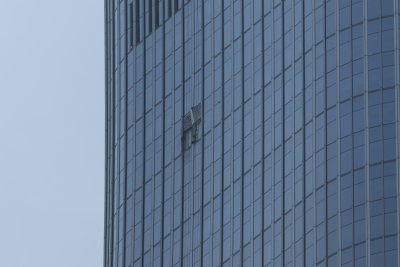
July 2 (UPI) — The couple who climbed to the top of the Empire State Building’s spire to hang a flag and get engaged was arraigned and released Thursday morning.

Angelina Nikolau and Ivan Kuznetsov were charged with burglary, reckless endangerment, criminal mischief and criminal tampering for trespassing in a nonpublic area of the building and scaling the spire, ABC News and the New York Daily News reported.

The couple has made a name for themselves with a series of dangerous climbs around the world, but making it to the top of the Empire State Building gained national attention — and they were arrested when they climbed down.

“These activities continually create a risk to their own lives, as well as the lives of New Yorkers and first responders,” Assistant District Attorney Anthony Giliberti told reporters.

Prosecutors told the court that they believe the duo observed a security door to the building’s 104th floor with a broken lock, accessed it and climbed to the top of the spire.

Although Kuznetsov’s father said that they had already been officially married — and that the proposal at the top of the building was just a stunt — after hanging a flag at the top of the spire, Ivan got down on one knee and asked Nikolau to marry him.

Nikolau and Kuznetsov have been released on supervised bail ahead of their trial.

Source link

China: Skyscraper crash pilot wrote about ‘ending his life’ in diary

Damage is shown on the facade of Citic Tower, also known as China Zun, in Beijing on June 27. The pilot died in the accident, and authorities said the crash was intentional. Photo by Jessica Lee/EPA

July 2 (UPI) — The pilot of a small plane that crashed into Beijing’s tallest building was a 66-year-old man who was suffering from “chronic insomnia and anxiety” and wrote about “ending his life” in his diary, authorities said Thursday.

The man died in the June 26 crash and wounded 13 others in the 109-story Citic Tower.

The pilot was identified as Liu and was a divorced freelancer who lived alone in Beijing, the Chaoyang district government said in a statement.

“The comprehensive investigation concluded that this was a case of endangering public safety caused by personal reasons,” the statement said.

One of the injured people has been discharged from the hospital, officials said.

Liu had taken off from an airport in the Pinggu district. That day he had flown accompanied and solo flights, the Chaoyang government’s statement said.

“During his solo flight, he deviated from the designated area and lost contact with the airport, subsequently colliding with the high-rise building and dying at the scene,” the statement said.

Liu obtained his sport pilot’s license in 2021 and private pilot’s license in 2024.

The plane was a two-seat, single-engine Aurora SA60L manufactured by Chinese company Sunward Aircraft, according to Flightradar24. It’s designed for touring, aerial photography and recreational aviation.

All references to the crash, video and images were scrubbed from social media in China. The state media, whose headquarters is across the street from the tower, didn’t report anything about the crash until the following day.

Chinese authorities often attribute random acts of violence to people seeking “revenge on society,” offering little information on the exact motive.

If you or someone you know is struggling with suicidal thoughts, help is available 24/7. Call or text the 988 Suicide & Crisis Lifeline for free, confidential support. Globally, the International Association for Suicide Prevention has contact information for crisis centers around the world.

Source link

Ukrainian citizen charged with Nord Stream gas pipeline attack in 2022

July 2 (UPI) — A Ukrainian national has been charged in Germany in connection with the 2022 bombing of the Nord Stream pipelines bringing natural gas 760 miles via the Baltic Sea from northwestern Russia to Lubmin in northeastern Germany.

Authorities allege the suspect, named only as Serhii K, led and coordinated an operation with seven others to sabotage the $17 billion gas projects on Sept. 26, 2022, according to reports in German media Wednesday. He is also charged with attacking and destroying civilian energy infrastructure and causing an explosion.

Prosecutors said he is the same individual who was detained by Italian authorities in August and extradited to Germany in November.

He denies all wrongdoing.

German prosecutors further allege he was a serving Ukrainian officer and that he and the others, who were also members of the Ukraine military, were “acting on behalf of state bodies in Ukraine” to deprive Moscow of energy revenues from the pipelines to fund its war against Ukraine.

The finger has variously been pointed at Ukraine, along with Britain and the United States, and even Russian itself, but the Federal Public Prosecutor General’s claim the attack was ordered by Kyiv was highly significant because Germany is one of Ukraine’s staunchest allies, providing military aid and political support.

Kyiv , which has always denied involvement, did not immediately respond to the accusation.

Three of the four pipelines were ruptured east of the Danish island of Bornholm in the attack. Nord Stream 1 was shut down at the time due to technical problems.

Nord Stream 2, a subsidiary of the Russian state-run energy giant Gazprom, was completed in September 2021 after being plagued problems including legal wrangles and U.S. sanctions targeting companies party to the project.

However, it never opened because Germany cancelled its certification process shortly before Russia’s full-scale invasion of Ukraine in February 2022 as it moved to wean itself from its reliance on Russian gas.

The project, which would have doubled Nord Stream’s gas capacity to 110 billion cubic meters annually — said by the company to be sufficient to supply to 26 million homes in Europe and critical to efforts to guarantee the European Union’s “security of supply of natural gas.”

Source link

FBI says some Nancy Guthrie ransom notes not legitimate

Authorities have been investigating the disappearance of Nancy Guthrie, who was reported missing Feb. 1, as a kidnapping and ransom case. File Photo courtesy Pima County Sheriff’s Department/UPI

July 2 (UPI) — Federal authorities said that some of the ransom notes they have received over the course of their investigation into the kidnapping of Today host Savannah Guthrie‘s mother were not legitimate.

The FBI has received several purported ransom notes during its five-month investigation into the disappearance of 84-year-old Nancy Guthrie, who was reported missing from her Arizona home on Feb. 1.

In a statement Wednesday, the FBI’s Phoenix field office revealed that some of those notes “have been deemed to be extortion attempts without legitimacy” while others “may potentially be legitimate and are still being investigated as such.”

The statement seemed to be in response to recent reporting stating authorities believe notes from the purported kidnappers in February that claimed Nancy Guthrie had died and that they didn’t mean to kill her were authentic.

The reports referenced a note sent to local media on Feb. 2 demanding millions in ransom, and a second note from Feb. 6 that stated Nancy Guthrie had died.

On Feb. 7, Savannah Guthrie, appearing alongside her siblings in a video posted to Instagram, said to the kidnappers that “We received your message, and we understand.”

The FBI did not mention any specific notes.

The Pima County Sheriff’s Department, the lead investigating agency in the case, also issued a statement Wednesday, confirming that it has also received information regarding potential ransom notes without commenting further.

“Every tip and lead is taken seriously and is forwarded directly to our detectives, who continue to work in coordination with the FBI,” it said, directing further questions about ransom notes to the federal law enforcement agency.

The FBI said the investigation is ongoing.

“This case continues to be investigated as a kidnapping for ransom case,” it said.

Source link

Judge blocks Pentagon from enforcing reporter escort policy

July 1 (UPI) — A federal judge has temporarily blocked the Defense Department from enforcing its escort policy, at least for reporters with The New York Times, dealing another blow to the Trump administration’s attempt to restrict media access at the Pentagon.

It was not entirely clear whether the order applied to all credentialed reporters or just those associated with The New York Times.

U.S. District Judge Paul Friedman in D.C. issued his preliminary injunction Tuesday, finding the plaintiffs were likely to succeed on their claims that the escort policy was retaliatory and infringed on their First Amendment rights.

“This Court has spoken at several points about the critical importance of protecting the freedoms enshrined in the First Amendment, and that evergreen principle bears repeating: ‘Those who drafted the First Amendment believed that the nation’s security requires a free press and an informed people and that such security is endangered by government suppression of political speech,'” Friedman said in his Tuesday opinion, quoting from one of his previous opinions in the case.

“‘That principle has preserved the nation’s security for almost 250 years.'”

The ruling comes in a protracted case that began when the Defense Department announced a new policy in October permitting the revocation of Pentagon credentials for collecting and reporting information it deemed unauthorized.

After Friedman ruled in March that the policy was unconstitutional, the Department of Defense came back with a new policy that, among other restrictions, mandated reporters be escorted by Defense Department personnel at all times within the Pentagon.

The Trump administration has argued that the new requirements are for national security purposes. By limiting access and requiring escorts, the Department of Defense said it could prevent the gathering and public disclosure of what it calls classified national security information and controlled unclassified information.

The Times then challenged the revised policy, with the court again siding against the Defense Department, which appealed, seeking only a limited stay pending appeal to allow the implementation of only the escort requirement.

In late April, a divided three-judge appeals panel granted the Trump administration’s emergency request, finding that it was likely to succeed in showing that the escort requirement was not within the scope of the lower court’s original order, without weighing the merits of the case. The Times then filed a new, second lawsuit challenging the Pentagon’s escort policy.

The Pentagon on Wednesday said it “strongly disagrees” with the court and will appeal the decision.

In a statement, Sean Parnell, chief Pentagon spokesperson, argued that the removal of the escort policy will make it easier for “sensitive and classified information to reach our adversaries.”

“Unescorted access to the Pentagon allowed journalists to observe activity patterns and develop relationships that contributed to repeated unauthorized disclosures of operational plans and intelligence,” Parnell said.

“The court’s order effectively restores that risky environment at a time when protecting our military’s secrets is more critical than ever.”

The Times argued that the policy was not only a restriction on its reporters’ First Amendment rights, but also retaliatory, an argument that Friedman said would likely succeed in court, pointing to numerous instances of Trump administration officials, including President Donald Trump and Defense Secretary Pete Hegseth, insulting the newspaper and other news organizations.

UPI has contacted The Times for comment.

The Freedom of the Press Foundation celebrated the ruling online, while calling for punishment if the Trump administration tries to find another workaround to enforce its media-restriction policies.

“The DoD can’t be allowed to punish journalism or evade court orders without consequences,” it said in an online statement.

“If the Pentagon keeps trying to avoid this ruling, the court should respond with sanctions or contempt.”

Source link

3 dead in Mexico City World Cup celebrations

Mexican soccer fans react during the Round of 32 match of the 2026 FIFA World Cup between Mexico and Ecuador in Mexico City, Mexico, Tuesday. Three people died by asphyxiation during the celebration. Photo by Sashenka Gutierrez/EPA

July 1 (UPI) — Three people died of asphyxiation in Mexico City as about a million people flooded the streets to celebrate Mexico’s 2-0 World Cup win over Ecuador in the first knockout round.

A 19-year-old woman, a 48-year-old woman and a 44-year-old man were found unresponsive in the crowd Tuesday night. They were each given emergency resuscitation and taken to a hospital where they died.

The celebrations mostly happened around the Angel of Independence monument in downtown Mexico City. The game ended in the first knockout round win for Mexico since 1986.

Mexico City’s health department confirmed that emergency responders treated the three people at different locations around Paseo de la Reforma before taking them to the hospital.

“After performing first aid and CPR techniques on the patients, they were transferred to a hospital for specialized medical care,” the city’s health authority said.

The hospital confirmed they all had died of suffocation.

Mexico City Mayor Clara Brugada offered her “most sincere condolences” to the victims’ families.

In a post on X, Brugada said: “With my heart in my hand, I send a hug and my most sincere condolences to their loved ones. We reiterate the call to always celebrate with responsibility, care, and empathy.”

Mexico City’s metropolitan area is one of the most densely populated places on Earth. More than 20 million people live there.

Mexico players throw goalkeeper Guillermo Ochoa in the air after defeating Czechia 3-0 in their FIFA World Cup match at Mexico City Stadium in Mexico City on June 24, 2026. Photo by Christian Brunskill/UPI | License Photo

Source link

DOJ sues egg companies for alleged price manipulation

June 30 (UPI) — The Department of Justice and 17 state attorneys general filed suit against five egg producers for alleged “unlawful coordinated manipulation of egg prices,” a press release said Tuesday.

The department’s Antitrust Division filed suit against Cal-Maine Foods, Hickman’s Egg Ranch, Centrum Valley Holdings, Versova Holdings and Versova Management Cooperative for unlawful coordinated manipulation of egg prices, the release said.

The department also “filed proposed settlements that will, if approved by the court, prevent these companies from engaging in such coordinated manipulation in the future.”

“No product more quintessentially represents affordability than the price Americans pay for eggs,” Associate Attorney General Stanley Woodward said in a statement. “These actions prove this department’s continued commitment to protecting competition and providing real relief for everyday Americans’ pocketbooks.”

Filed in the U.S. District Court for the Northern District of Iowa, the complaint alleges that Cal-Maine, Hickman’s and Versova coordinated to artificially inflate the daily quotations of Urner Barry Publications, a market reporting company whose publications affect prices that grocery stores, restaurants and others pay for eggs nationwide, the release said.

The complaint also alleges that egg price quotations dropped significantly from their peak after the companies learned of the department’s investigation and were told to save documents in March 2025, the release said.

The attorneys general of Arizona, California, Colorado, Connecticut, Florida, Hawaii, Iowa, Maryland, Minnesota, New York, North Carolina, Ohio, Pennsylvania, Texas, Utah, Vermont and Wisconsin joined the complaint and proposed settlements.

Troops in landing craft approach Omaha Beach on D-Day in Normandy, France, on June 6, 1944. D-Day was the largest seaborne invasion in history and turned the tide of World War II. Photo by UPI | License Photo

Source link

Thousands take part in day of anti-migrant protests across South Africa

Zulu community members in Durban participate in a national day of protest on Tuesday demanding the repatriation of undocumented immigrants to their home countries with marches also held in Johannesburg and other major cities. Photo by Stringer/EPA

June 30 (UPI) — Security forces across South Africa were braced Tuesday for demonstrations coinciding with anti-immigrant and vigilante groups’ self-declared deadline for undocumented migrants to leave the country, amid fears that the protests could turn violent.

Tuesday’s events follow weeks of rallies that have been blamed for inciting violence against migrants in the country, both illegally and legally, by people who believe they are taking jobs from South Africans, carrying out criminal offenses and overburdening schools, hospitals and other essential services.

March and March, one of the anti-migrant organizations, had used the threat of the protests to try to force the “immediate massive deportation of all illegal foreigners currently in the country” by June 30.

However, President Cyril Ramaphosa’s direct appeals for cool heads and for demonstrators not to engage in “intimidation, threats or ultimatums” appeared to have been heard with the Police Ministry reporting that, apart from some looting, the protests went off mostly without incident.

In Johannesburg, five people were arrested for allegedly looting a foreign-owned store in Soweto township while windows of apartments in Yeoville, home to many migrants from other African countries, were smashed by brick-hurling protesters, police said.

Five people were also arrested in Hammarsdale in KwaZulu-Natal province after they allegedly broke into a shop there.

Ramaphosa met leaders of the protests on Monday, ordering them not to resort to violence while acknowledging that the immigration system needed fixing.

“Some foreign nationals who live in South Africa are here lawfully. They work, study, raise families, invest in our economy and contribute positively to our society. They too are entitled to the protection of our laws and our Constitution. The right to protest and freedom of expression does not allow people to threaten or intimidate others, or to engage in acts of vandalism or violence,” he wrote in his weekly blog.

Ramaphosa’s intervention came too late for many immigrants, frightened into leaving by the violence and anti-migrant sentiment in the country.

At least three foreign nationals have been killed in violent attacks in the past month: two Mozambicans when a mob razed a shanty settlement in the Western Cape and a Malawian man at another encampment near Durban during a march against undocumented immigrants that forced hundreds of migrants to flee to the safety of churches and mosques.

Nigeria evacuated 269 of its citizens on Monday — taking the number it has flown home to date to about 600 — with more flights planned over the next few days.

Gardener Kauga Nyirenda told CNN two men turned up at his home threatening to kill him if he didn’t go back to his native Malawi.

“They asked me: ‘When are you going to leave the country? We want to fix our country. If you don’t leave now, you’re going to leave in a coffin because we don’t need anyone after 30th of June,'” said Nyirenda.

In the run-up to Tuesday, about 25,000 others have been sent back to their home countries, mostly elsewhere in Africa, with about 50,000 people detained as illegal migrants since January, according to government agencies, with many of those in temporary camps for their own safety, pending repatriation processing.

Malawi has repatriated about 7,000 of its citizens. Ghana, Mozambique and Zimbabwe have also been laying on air and road repatriation transport for their nationals.

Official figures show there are at least three million documented foreign nationals in South Africa.

Troops in landing craft approach Omaha Beach on D-Day in Normandy, France, on June 6, 1944. D-Day was the largest seaborne invasion in history and turned the tide of World War II. Photo by UPI | License Photo

Source link

Exiled Chinese entrepreneur Guo Wengui gets 30 years for fraud

June 30 (UPI) — A U.S. federal judge has sentenced exiled Chinese entrepreneur Guo Wengui to 30 years in prison for defrauding investors of more than $1 billion.

Guo, also known as Ho Wan Kwok and Miles Guo, is a Chinese national who made his fortune in Chinese real estate before fleeing China, in 2014, relocating to the United States around 2015.

He was arrested in March 2023 on a series of fraud and money laundrying charges. Federal prosecutors alleged that, beginning around 2018, he led a conspiracy that defrauded his online followers of more than $1 billion through investment and membership schemes tied to his anti-Chinese Communist Party movement and related business ventures.

In sentencing him on Monday to the three-decade punishment that the prosecutors had requested, Judge Analisa Torres in a Manhattan courtroom said Guo had “preyed on people seeking to bring democracy to China,” The New York Times reported.

During the trial, the prosecutors alleged that in around 2018, he created two nonprofit organizations, which he used to amass followers aligned against the CCP and who were inclined to believe his business advice.

In the years that followed, Guo established several investment opportunities that he advertised to his online followers, who gave him hundreds of millions of dollars over the years.

Prosecutors alleged that Guo had used the money he stole from his followers to line his own pockets, buying himself and cloase relatives luxuries, such as a 50,000-square-foot mansion, a $4.5 million Ferrari sports car and two $36,000 mattresses. He also used the money to finance a $37 million luxury yacht, they said.

Guo denied the accusations.

During sentencing Monday, Torres also imposed ann $889 million forfeiture order against Guo, chastising his “exploitation of a philanthropic purpose, his history of intimidation of critics and his refusal to accept responsibility,” The Guardian reported.

Yanping “Yvette” Wang, Guo’s former chief of staff, was sentenced to 10 years in January 2025 after pleading guilty to related wire fraud and money laundering charges. A second co-defendant, Kinn Ming Je, also known as Willian Je, has been charged with several fraud and money laundering charges.

Guo is also an associate of Steve Bannon, a longtime ally and former top aide to President Donald Trump.

Bannon was arrested in August 2020 aboard a yacht owned by Guo on charges related to a crowdsourced campaign to raise money to build barriers along the U.S.-Mexico border.

Source link

DOJ sues Massachusetts, Rhode Island to end in-state tuition for noncitizens

June 30 (UPI) — The Trump administration has filed lawsuits challenging Massachusetts and Rhode Island laws that offer in-state tuition benefits to certain undocumented immigrants, alleging they unlawfully discriminate against U.S. citizens.

The lawsuits announced Monday are the latest the Justice Department has filed against state laws that offer in-state rates, financial aid or scholarships to certain undocumented immigrants who meet state residency or education requirements, which generally consist of living in the state for a number of years and attending high school there.

Justice Department lawyers allege these laws are illegal because they offer noncitizens benefits denied to U.S. citizens from other states.

“The Department of Justice is committed to fulfilling President Trump’s promise that illegal aliens will not receive taxpayer benefits or preferential treatment over America’s own citizens,” Associate Attorney General Stanley Woodward said in a statement.

“As our nation marks 250 years of freedom, we will continue to challenge state laws that place aliens over citizens in clear defiance of Congress’ commands.”

Massachusetts has extended eligibility for in-state tuition benefits, financial aid and scholarships at Massachusetts state schools to qualifying undocumented immigrants since 2023, while Rhode Island has allowed qualifying undocumented immigrants to pay in-state tuition costs going back to 2011. Rhode Island then codified this law in 2021.

The lawsuits filed Monday ask the courts to enjoin enforcement of these laws, saying they violate a federal statute, enacted in 1996, that specifically bans offering in-state tuition to any noncitizen “unless a citizen or national of the United States is eligible for such a benefit … without regard to whether the citizen or national is such a resident.”

Proponents of these laws, sometimes referred to as Dream Act laws, argue that without offering in-state tuition rates, post-secondary education will be kept out of reach for undocumented immigrants living in the United States, while such laws can reduce high school dropout rates as well as raise student incomes and tax contributions, among other economic benefits.

The Trump administration has been targeting these laws as part of President Donald Trump‘s aggressive immigration policy that has seen mass roundups and deportations of noncitizens.

In April 2025, Trump signed an executive order directing the attorney general to identify and stop the enforcement of state laws and policies “favoring aliens over any groups of American citizens,” specifically highlighting laws that “provide in-state higher education tuition to aliens but not to out-of-state American citizens.”

Since then, federal prosecutors have challenged laws in 12 states. Four lawsuits, against Texas, Kentucky, Oklahoma and Nebraska, have resulted in orders permanently enjoining the states’ in-state tuition laws, while Kansas last week joined the Justice Department in seeking a proposed consent decree that must be approved by the court.

The remaining challenges are pending against Illinois, Minnesota, Virginia, California, New Jersey, Massachusetts and Rhode Island, all Democratic-led states.

According to the Higher Ed Immigration Portal, about 20 states and Washington, D.C., provide in-state tuition to undocumented students, while 18 and the nation’s capital also provide state financial aid.

Source link

San Francisco archdiocese reaches $395M child sex abuse settlement

June 29 (UPI) — The Archdiocese of San Francisco has reached a $395 million settlement with hundreds of survivors of childhood sexual abuse allegedly committed by members of the clergy, lawyers for the victims and the archbishop announced Monday.

The agreement in principle, which follows three years of bankruptcy proceedings and extensive negotiations between the archdiocese and lawyers representing the victims, affects some 530 survivors, according to lawyer Jeff Anderson, who is among the claimants’ litigation team.

During a press conference streamed live online Monday afternoon, Anderson described the agreement as “a real settlement that provides for a significant measure of accountability, required transparency and an authentic reckoning by those that allowed these indelible horrors to be inflicted upon so many for so long.”

The archdiocese filed for Chapter 11 bankruptcy in August 2023, after hundreds of clergy sexual abuse civil cases were filed against it, which put a stop to all litigation and forced the survivors to reorganize into a committee that was represented by nine claimants.

Those nine claimants then negotiated the settlement on behalf of all of the survivors, according to Anderson, who said the agreement reached also includes a 14-point plan to protect future children from similar abuses and empower survivors.

“This is unprecedented, and this gives me hope and it is the courage of these survivors that has caused it to happen,” he said.

In a letter addressed to members of the Archdiocese of San Francisco, Archbishop Salvatore Cordileone said that they believe “this proposal offers a path toward fair compensation for survivors who have carried the burden of this abuse for a lifetime.”

“We accept the responsibility for the failures that allowed this harm to occur,” he said.

“I sincerely apologize to all those who have suffered because of those failures.”

The lawsuits that prompted the archdiocese to file for bankruptcy were filed after California enacted legislation that opened a three-year window from Jan. 1, 2020, to Dec. 31, 2022, lifting the statute of limitations on allegations of childhood sexual assault so victims of crimes even decades old could seek a civil, monetary resolution from their perpetrators.

Margie O’Driscoll, a survivor of clergy sexual assault and one of the nine committee members, said during the press conference that she was abused as a teenager by a priest at Marin Catholic High School nearly five decades ago.

She spoke directly to those who were similarly abused.

“I, like every survivor, have carried this pain and shame along like a ball and chain for a very, very long time — I see you and I know what you carry,” she said.

“So, while I want to say that today is a significant victory for everyone in the case … it’s really come at a significant cost to the 500 people sexually abused by priests and religious leaders.”

O’Driscoll said some of the victims had been abused more than 70 years ago, during which they carried the shame associated with the crime, while being scorned by the archdiocese and sometimes their accusations not believed by family and friends.

“And I think, today, shame is going to change sides,” she said.

Hundreds, if not thousands, of claims were filed after the passage of Assembly Bill 218, resulting in billions of dollars in settlements for survivors of childhood sexual abuse.

In October 2024, the Archdiocese of Los Angeles reached an $880 million settlement with 1,353 survivors. In April 2025, Los Angeles County reached a $4 billion settlement resolving more than 6,800 claims of sexual abuse allegedly committed at probation department facilities and MacLaren Children’s Center.

Source link

Supreme Court to hear Arizona proof-of-citizenship voting case

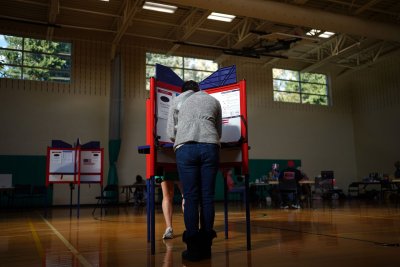
Voters cast their ballots in the 2024 Presidential Election on Election Day at the Walter Reed Recreation Center in Arlington, Va., on Nov. 5, 2024. The U.S. Supreme Court has agreed Monday to hear a case over Arizona’s election law requiring documentary proof of citizenship in voting. File Photo by Bonnie Cash/UPI | License Photo

June 29 (UPI) — The U.S. Supreme Court has agreed Monday to hear a case over Arizona’s election law requiring documentary proof of citizenship in voting.

The high court will hear arguments over whether federal law prohibits such a law when voting in state elections. The court will hear the case during its next term which starts in October.

It is already illegal for non-U.S. citizens to vote in federal and state elections. Some municipalities allow noncitizen voting in local elections.

President Donald Trump has called for a national proof-of-citizenship requirement in elections while continuing to repeat unfounded claims of election fraud. The SAVE Act, a bill being mulled by Congress that Trump is in support of, includes a proof-of-citizenship requirement which Trump is in support of.

In 2022, the Arizona legislature adopted a law requiring voters to provide proof of citizenship when registering to vote on a state form. Documentary proof of citizenship that is allowable under Arizona’s law includes but is not limited to a birth certificate and a passport.

Nonprofit advocacy organizations Mi Familia Vota and Voto Latino filed the lawsuit challenging the proof-of-citizenship requirement.

The Republican National Committee appealed a lower court decision that struck down the proof-of-citizenship law.

The legislature also passed a law outlining how state election officials review voter rolls, putting in place a procedure to cancel the voter registrations of noncitizens.

Source link

Supreme Court allows Trump FTC firing, blocks Lisa Cook’s firing

June 29 (UPI) — The U.S. Supreme Court ruled Monday that Congress’ restriction of the president from firing independent agency employees without cause violates the separation of powers.

The court upheld President Donald Trump‘s firing of Rebecca Slaughter, a Democratic member of the Federal Trade Commission, overturning 90 years of precedence. The ruling came down along ideological lines with the conservative majority upholding Slaughter’s firing in a 6-3 decision.

Writing the majority opinion, Chief Justice Roberts said Congress’ “for cause” removal protections, meant to shield independent agencies from political influence, violate the separation of powers.

“What text, history, and structure settle, our precedent confirms — the president may remove his subordinates at will,” Roberts wrote.

Justice Sonia Sotomayor wrote in the minority opinion that the decision has given the president “far greater power than ever before.”

“It is a power, however, that neither the People, nor Congress, nor the Constitution bestowed upon him. In granting the President this unbridled authority, the Court upends its precedent, misconstrues our history, and sheds any pretense of judicial modesty. I respectfully dissent.”

The court’s decision upends the precedent set in 1935 in the case Humphrey’s Executor vs. United States. The high court in that case ordered that Congress could restrict the president from firing members of the FTC without cause.

“Although it is up to the Senate to decide whether to confirm those with whom the President would prefer to work with, neither Congress nor the courts may saddle him with those with whom he cannot work,” Roberts wrote. “Subordinates who exercise the President’s power are subject to removal by him. Then, and only then, can they remain accountable to the President, and the President to the people.”

While the high court allowed Trump to fire Slaughter, it rejected his bid to fire Fed Governor Lisa Cook from the Federal Reserve for the moment.

Trump attempted to pause a federal court ruling that prevented him from firing Cook last year. A lawsuit was filed challenging the attempt. In a 5-4 ruling Monday, the Supreme Court rejected the attempt by Trump.

Roberts penned the majority opinion in this case as well, joining the three liberal justices and conservative Justice Brett Kavanaugh.

“Not only the fact of independence but also the appearance of independence is key to the Federal Reserve’s design,” Roberts wrote.

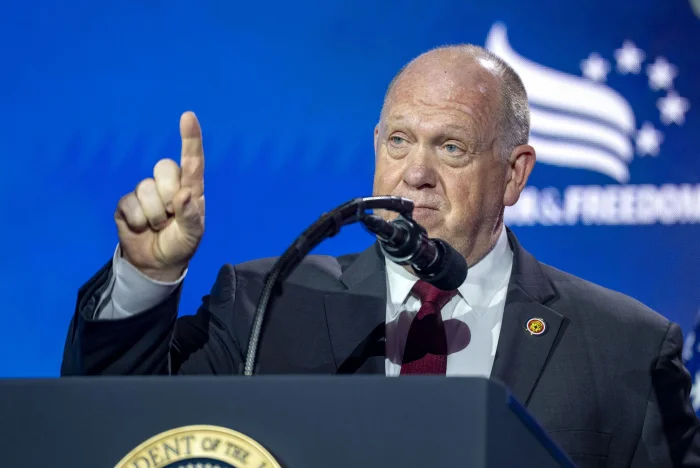
White House Border Czar Tom Homan speaks during the Faith and Freedom Coalition 2026 Road to Majority Policy Conference at the Washington Hilton on Friday. Photo by Bonnie Cash/UPI | License Photo

Source link

Supreme Court declines to hear Trump’s effort to overturn E. Jean Carroll verdict

1 of 2 | Journalist E. Jean Carroll departs from the courthouse after the conclusion of the damages trial against Donald Trump at Manhattan Federal Court on January 26, 2024, in New York City. On Monday, the Supreme Court declined to hear Trump’s challenge to the judgment. File Photo by John Angelillo/UPI | License Photo

June 29 (UPI) — The U.S. Supreme Court on Monday refused to hear President Donald Trump‘s request for the panel to overturn a ruling that found him liable for sexually abusing and defaming writer E. Jean Carroll.

Trump sought to have his $5 million civil penalty tossed, but the high court’s decision Monday leaves that in place, along with a separate $83.3 million in compensatory and punitive damages she was awarded for defamation.

A jury awarded the damages in 2023 after finding him liable for sexually abusing Carroll in a Manhattan department store dressing room in the 1990s and for defaming her by denying the allegations in 2019.

An appeals court also upheld the verdict in 2024. The 2nd U.S. Circuit Court of Appeals said Trump’s lawyers failed to show any errors in the ruling that would lead to a new trial.

Trump has denied Carroll’s allegations since she first made them and called the $5 million judgment excessive.

White House Border Czar Tom Homan speaks during the Faith and Freedom Coalition 2026 Road to Majority Policy Conference at the Washington Hilton on Friday. Photo by Bonnie Cash/UPI | License Photo

Source link

D.C. settles lawsuit over arrest for ‘Imperial March’ protest

June 26 (UPI) — The District of Columbia and the American Civil Liberties Union on Friday settled a lawsuit over the wrongful arrest of a man for protesting the National Guard’s presence in the capital.

Sam O’Hara, who was arrested last year for repeatedly playing the “Imperial March” — Darth Vader‘s theme music in the Star Wars movie franchise — behind members of the Guard who were on patrol in the District, will be paid an undisclosed amount of money in exchange for dropping his lawsuit.

The ACLU filed the finalized settlement on behalf of O’Hara on Friday, ending a months-long negotiation with officials in Washington, D.C., and its Metropolitan Police Department, but a suit against the Ohio National Guard sergeant who had him cuffed and detained was still in litigation, USA Today reported.

“Our right to free speech grants us the freedom to criticize the government,” Scott Michelman, legal director for the ACLU’s Washington, D.C., chapter, told The New York Times.

“Government officials don’t have to like it, but they can’t punish someone for their speech,” Michelman said, noting that O’Hara’s settlement was “not a significant amount” and that the number will not be disclosed.

O’Hara had for months been protesting President Donald Trump‘s deployment of the National Guard in Washington, D.C., by playing Vader’s theme music toward members of the Guard and recording the interactions.

On Sept. 11, however, an Ohio National Guard sergeant told O’Hara that if he continued his protest the MPD would be called to “handle” the situation.

When O’Hara ignored the command, MPD officers were called to the scene and handcuffed him in an effort to end the protest and accused him of harassing members of the Guard, but later released him without charges.

In a statement, O’Hara said the law enforcement effort to end his protest “ultimately backfired and brought more attention to the unjust deployment of the National Guard in Washington, D.C.”

“This settlement serves as a reminder that constitutional freedoms are worth defending, especially when those in power would prefer we stay quiet,” O’Hara said.

The MPD said in a statement after the settlement was announced that its internal affairs bureau is investigating the incident, but also noted that its department policies would not change.

“MPD recognizes the importance of upholding First Amendment rights of individuals to peacefully express their views and is dedicated to facilitating lawful demonstrations while maintaining public safety and order,” the department said in its statement.

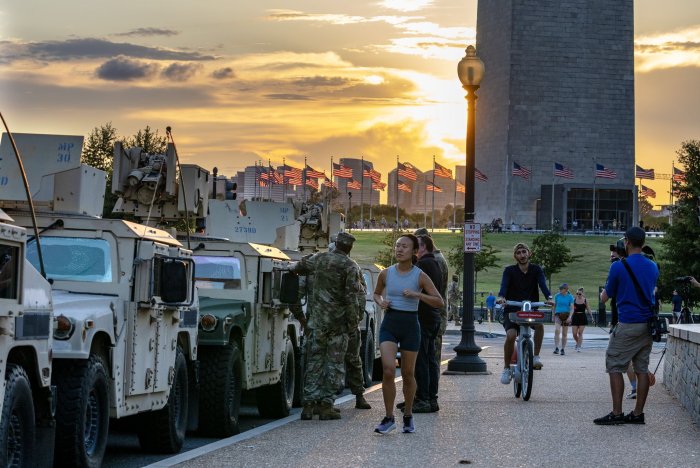
Residents keep with their normal routine and run past National Guard troops on the National Mall near the Washington Monument on August 12, 2025. Photo by Pat Benic/UPI | License Photo

Source link

Paris bans public drinking, takeout alcohol sales amid deadly heat wave

A young man dives from a bridge over the Saint-Martin Canal in Paris on Thursday amid a searing heat wave that prompted authorites in the capital to impose restrictions on drinking alcohol in public and takeout sales for the second time in five days. Photo by Yoan Valet/EPA

June 26 (UPI) — Authorities in Paris implemented restrictions on drinking in public and takeout alcohol sales on Friday for the second time in five days, amid one of the most severe June heat waves on record.

In an effort to reduce stress on the capital’s hospitals, public consumption of alcohol will be banned from noon through 7 a.m. Saturday, local time, and from noon on Saturday through 7 a.m. on Sunday, and can only be sold in bars and restaurants between 6 p.m. and 7 a.m on both days.

Prime Minister Sebastien Lecornu said the health alert level was being raised to its highest, to boost hospital staffing and protect the vulnerable while Paris police chief Patrice Faure said the the capacity of hospitals to cope was “reaching a saturation point.”

“As you know, drinking alcohol with the sun beating down can have a devastating effect,” said Faure.

The bans coincided with a France-Norway game at the FIFA World Cup in Boston, due to kick off in the early hours of Saturday, local time.

Paris Pride, which was due to run Thursday through Sunday, was moved to September, and the Solidays music festival, scheduled to be held over the same period, was canceled because police felt going ahead with either amid the searing temperatures posed a major public health risk.

On Thursday, a three-year-old child died in a hot car in Saint-Gratien in the northern Paris suburbs.

As Paris baked in record temperatures that peaked at 40.9 degrees Celsius earlier in the week, Health Minister Stephanie Rist warned the health impacts of the heat were not restricted to the elderly, infants and other vulnerable groups.

“Even if you are young and in good health with no underlying medical issues, this heat will affect you too. Young people are also suffering from cardiac arrests,” she said, explaining that the Paris ambulance responded to a four-fold jump in cardiac arrests, compared with normal, during a 24-hour period.

Paris mayor Emmanuel Gregoire said the mortality rate was on the increase and urged people, especially the young, to suspend normal physical activity such as jogging.

“We must not believe we are invulnerable. It’s fine to take a couple of days off from exercising,” he said.

Troops in landing craft approach Omaha Beach on D-Day in Normandy, France, on June 6, 1944. D-Day was the largest seaborne invasion in history and turned the tide of World War II. Photo by UPI | License Photo

Source link

S. Korean ex-first lady sentenced to 7 years in prison for taking gifts for job appointments

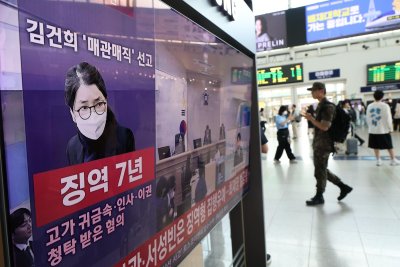
A TV screen shows a live broadcast of former first lady Kim Keon Hee’s bribery trial at Seoul Station on Friday. Kim was sentenced to seven years in prison. Photo by Yonhap

A Seoul court on Friday sentenced former first lady Kim Keon Hee to seven years in prison for taking expensive gifts in return for job appointments and business favors.

The Seoul Central District Court handed down the sentence to Kim, the wife of ousted former President Yoon Suk Yeol, after she was indicted on charges of accepting bribes for mediation, including over 100 million won (US$64,750) worth of jewelry in exchange for a government job for a son-in-law of a construction company chairman.

In total, she was charged with taking approximately 300 million won worth of gifts, and the court found her guilty on all counts.

“The defendant disregarded the social responsibilities associated with the position of first lady and used it merely as a means to pursue her private interests,” presiding judge Cho Sun-pyo said during the hearing, which was televised live.

Kim was indicted in December on charges of receiving a Van Cleef & Arpels necklace and other jewelry from the construction company chairman between March and May 2022; a golden turtle ornament in April 2022 from Lee Bae-yong, former head of the National Education Commission, in exchange for her appointment; a Dior bag worth 5.4 million won from a pastor the same year; and a Vacheron Constantin watch from another businessperson in September 2022.

In February 2023, she was accused of receiving a painting by renowned artist Lee Ufan from a former prosecutor in return for her help in securing him a nomination for an election.

The exchanges mostly took place during the period her husband was in office from May 2022 until his ouster in April 2025.

The judge said Kim sought to evade responsibility for her crimes by returning some of the gifts once an investigation got under way or arguing she had purchased them herself.

“This shows that she was fully aware of the illegality of her actions but tried to conceal it,” he said.

Special counsel Min Joong-ki’s team, which had demanded a 7 1/2-year prison term, welcomed the ruling. Kim’s lawyers said they would appeal.

The court also sentenced the construction company chairman to a one-year prison term, suspended for two years, the businessperson who gifted the watch to a 10-month prison term, suspended for two years, and the pastor to a fine of 8 million won.

The former first lady has already been sentenced by an appeals court to four years in prison in a separate corruption case.

She is also set to stand trial over her alleged involvement in a case where members of the Unification Church were reportedly forced to join the now main opposition People Power Party ahead of the 2022 presidential election in an attempt to influence the outcome of the party primary to pick its presidential candidate, which her husband Yoon won.

Copyright (c) Yonhap News Agency prohibits its content from being redistributed or reprinted without consent, and forbids the content from being learned and used by artificial intelligence systems.

Source link

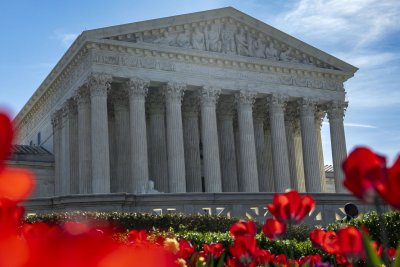
Supreme Court shoots down Hawaii’s private property gun restriction

June 25 (UPI) — The U.S. Supreme Court on Thursday struck down a Hawaiian law that required people to ask permission to carry a concealed firearm onto a private property.

The Court’s majority, in a 6-3 ruling, said that Hawaii cannot block a properly licensed person from carrying a concealed weapon on private properties that are open to the public.

Hawaii was one of five states that enacted similar laws after the Court in a 2018 ruling said that states could not limit gun licenses to “exceptional cases” because it violated the 2nd Amendment right to carry a firearm.

The law required people who wanted to carry their firearm in places such as gas stations, restaurants, grocery and other stores, dry cleaners and other properties that are “open to the public” to get permission to carry their gun.

“Under the new Hawaii law, no one carrying a firearm may enter without the property owner’s express authorization,” Justice Samuel Alito wrote in the majority opinion.

“The effect of this new rule is to impose severe restrictions on the daily activities of residents who have satisfied the State’s rigorous requirements for the issuance of a carry permit,” Alito wrote.

In a dissenting opinion, Justice Ketanji Brown Jackson disagreed with the majority that the Hawaii law is an “attempt to end-run our Second Amendment precedents,” suggesting instead that it applies the first principle of property law, the right to exclude.

In addition to noting that Hawaii has a long history of restrictive gun laws, Brown Jackson said it enacted the permission law in order to prevent confusion among property owners that federal law had affected traditional expectations in the state.

“The public might well have an implied license to enter private property open to the public, and such permission might generally include the ability to enter armed,” she wrote in the dissent.

“But,” she wrote, “any such license is not a matter of right — a license is a creature of state law and custom, and it can vary accordingly.”

Source link

USPS to refuse to mail ballots in states that don’t hand over voter rolls

June 25 (UPI) — The U.S. Postal Service plans to refuse delivery of mail-in ballots in states that don’t turn over their voter lists to the federal government, the postmaster general told Congress.

Postmaster General David Steiner told the Homeland Security and Governmental Affairs Committee about the proposed rule on Wednesday.

“Yes or no — if a state refuses to turn their absentee voter list over to the federal government, will the Postal Service still mail their ballots under this proposed rule?” Sen. Gary Peters, D-Mich., asked Steiner.

“Under our proposed regulation, no. We would tell the state that we need the manifest,” Steiner said.

Steiner argued the policy is to make sure ballots are delivered “securely, efficiently, and accurately.” But President Donald Trump has repeatedly demanded states’ voter lists over the past year and has been suing states to get them.

The proposed rule says that states would have to give the Postal Service the names, addresses and ballot barcode numbers for the people who are to get ballots in the mail. The proposal follows Trump’s executive order from March 31 that requires the federal government to compile state citizenship lists and for the Postal Service to refuse to mail ballots to those the federal government has determined are ineligible to vote.

The proposed rule is posted on the Federal Register, and the public can comment until July 2.

Democrats have pushed back, arguing the rule shows that Trump is trying to federalize elections and said the Postal Service doesn’t have the authority to enforce that rule. The Constitution says states are responsible for running elections.

“Just because President Trump wants to do this does not make it law, doesn’t make it right, doesn’t make it constitutional. There is certainly a massive difference between general mail requirements and regulating elections,” Peters said.

Steiner admitted that his agency doesn’t have the authority to enforce elections but said the rule is a precaution to be sure that only eligible voters will get ballots.

“I would think that states would want the information to ensure that the ballots that they think they’re sending out are the ballots that are actually getting sent out,” Steiner said.

Sen. Elissa Slotkin, D-Mich., said the rule is part of a broader strategy.

“The U.S. Postal Service is now part of this bigger story of this president desperate to federalize our elections. He has tried every which way to say that if he and his party don’t win in these November elections, they were rigged.”

Slotkin asked Steiner directly to stop the plan.

“Please push back on being a pawn in this authoritarian playbook,” she said. “The Postal Service is one of the most important institutions in our country. Don’t taint it with the obsession of this one man.”

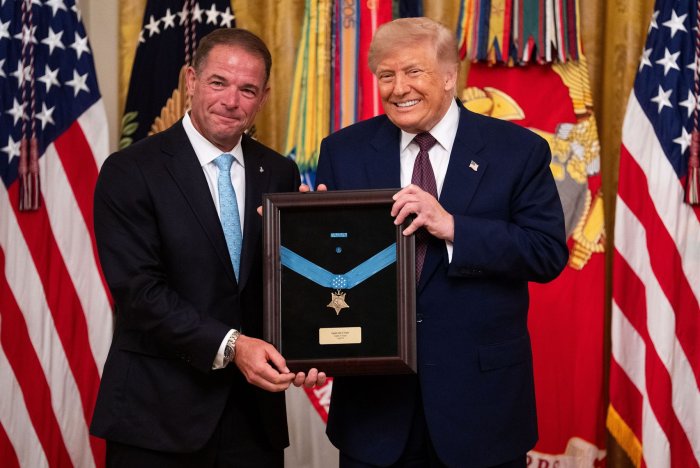
President Donald Trump presents a Medal of Honor to Tom Ripley on behalf of his father, John W. Ripley, during a Medal of Honor award ceremony in the East Room of the White House on Thursday. Photo by Aaron Schwartz/UPI | License Photo

Source link

EU meets with Taliban about deportation

June 23 (UPI) — The European Union and the Taliban met in Brussels on Tuesday to negotiate the return of Afghan refugees to the country.

Officials from the European Commission and 15 member states met discreetly with the regime, and several Europeans criticized the move.

“I am shaken and deeply disturbed by this,” Nobel laureate Malala Yousafzai told Radio Free Europe.

Yousafzai was shot in the face at age 15 by the Taliban for defying its ban on education for girls.

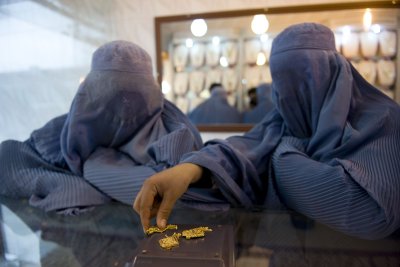
“This is the same Taliban that banned girls from secondary schools and forced them into marriage. The same Taliban that, earlier this month, arrested dozens of women in Herat for how they were dressed. The same Taliban that detains, beats and executes women who dare to speak out or break their rules.”

Brussels has defended the meeting saying European countries need to have a system to deport asylum seekers who commit violent crimes.

Sweden, which has one of the largest Afghan populations, co-chaired the meeting outside the EC’s premises. The meeting was called strictly technical because the EU doesn’t recognize the Taliban government.

Members of the European Parliament have repeatedly backed resolutions condemning the Taliban, which contrasts with the EC’s willingness to meet with the regime, said Socialist Workers’ Party MEP Juan Fernando López Aguilar.

“I’m appalled,” he said. “It’s absolutely an outrage and a total loss of faith and the credibility of the European Union that it can hold such a double standard,” The Guardian reported.

López Aguilar rejected the EU’s argument that it needed to be able to deport migrants.

He accused the EU of allowing the far right to set the agenda.

“We’re 450 million people all together. There’s no reason to panic when you talk about a certain number of migrants fleeing from despair or from a lack of opportunities. Let alone persecution, which is grounds for them to seek international protection,” he said. “Migration is not a threat, not even a crisis. It’s a constant fact of the history of mankind.”

Swedish Migration Minister Johan Forssell told a different story to local media.

“It is incredibly important that these criminals are deported,” Forssell said. “And that is not possible today. They do not want to participate. They do not want to go home.”

Socialist MEP Cecilia Strada called the meeting a “shameful chapter for Europe,” telling Euronews that it grants legitimacy to “a regime that tramples on the rights of women and girls and imposes a system of gender apartheid.”

The European Council on Refugees and Exiles said Afghanistan isn’t safe for return because of deteriorating human rights, the lack of effective legal protection and the ongoing risks of persecution.

Green MEP Hannah Neumann, of Germany, said on social media: “If Europe returns young Afghan men into poverty and hopelessness, many will end up dependent on the only structures still offering shelter and food: Taliban networks and madrassas.”

She said it plays right into the Taliban’s hands.

“This is how authoritarian systems hold power. Not only through violence, but through dependency, social control and enforced loyalty,” she said. “By deporting people into desperation, we are not weakening the Taliban. We risk strengthening the very structures that keep them in power.”

Source link

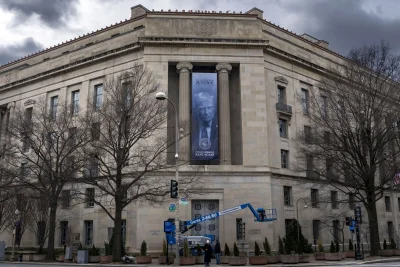
Justice Department withdraws subpoenas for 4 reporters

June 23 (UPI) — The Department of Justice subpoenaed four journalists for a grand jury hearing, though it later withdrew them after The Washington Post and the Wall Street Journal challenged them.

One subpoena was for Washington Post reporter Ellen Nakashima and was related to sensitive reporting on a national security matter, The Post said.

The department also issued subpoenas to three Wall Street Journal journalists, who also reported on national security issues, The Post reported.

“The government’s subpoenas to The Wall Street Journal and our reporters represent an attack on constitutionally protected newsgathering,” Ashok Sinha, chief communications officer for Dow Jones, said in May. “We will vigorously oppose this effort to stifle and intimidate essential reporting.”

At the time, the Journal said the Justice Department issued subpoenas for records on reporting about the Iran war, but it did not report at the time that federal officials were trying to force their testimony.

Olivia Petersen, spokesperson for The Washington Post, confirmed that Nakashima was subpoenaed, calling the move an unwarranted violation of press freedom and “another sign of the government seeking to compel journalists to become instruments of its investigations,” Politico reported.

The Post was fighting the subpoena in federal court in the Eastern District of Virginia in sealed proceedings when the department rescinded Nakashima’s subpoena, an official familiar with the matter told The Post.

The Justice Department also withdrew the subpoenas for the Journal, which had been fighting in the same court. None of the journalists testified before a grand jury, the official said. The reasons for the subpoenas are not clear, though the source said they relate to national security.

In January, the FBI raided a Post reporter’s home, and the Pentagon last year revoked journalists’ credentials for not signing an agreement about what they can report.

Source link

Justice Department says hundreds charged for healthcare fraud

June 23 (UPI) — Acting Attorney General Todd Blanche announced Tuesday that 455 people have been charged in a variety of healthcare fraud schemes totaling $6.5 billion.

Blanche held a press conference to discuss what he called the “2026 national healthcare fraud takedown.” He said 455 people have been charged since June 8 across 56 U.S. attorney’s offices and 45 states and territories.

“These individuals participated in healthcare fraud schemes involving more than $6.5 billion in false claims submitted to Medicare, Medicaid and other healthcare programs,” Blanche said.

Blanche highlighted some of the indictments, including one of a corporate executive in Arizona who was charged for being involved in a $1 billion fraud scheme involving wound grafts.

“This alleged scheme cost Medicare over $1 million per patient,” Blanche said. “In total, our indictment charges 11 defendants for over $2 billion in fraudulent claims in connection to alleged wound care schemes.”

Blanche adds that the money fraudulently claimed in these schemes was used to purchase “multi-million-dollar homes,” cars, jewelry and the construction of a $4.6 million seaside hotel on in the Philippines.

“We’re taking back the money, the luxury cars, the jewelry, and these alleged fraudsters will face justice,” Blanche continued.

Blanche said nine task forces, 57 U.S. attorney’s offices and 41 state attorney general’s offices partnered to investigate healthcare fraud schemes.

Blanche also announced the creation of the West Coast Strike Force and the deployment of more federal prosecutors to bring charges against 295 defendants in Medicaid fraud cases.

President Donald Trump presents a Medal of Honor to Tom Ripley on behalf of his father, John W. Ripley, during a Medal of Honor award ceremony in the East Room of the White House on Thursday. Photo by Aaron Schwartz/UPI | License Photo

Source link