BAYWATCH reboot star Brooks Nader wears a bejewelled bikini ahead of the show’s upcoming launch.
The 29-year-old American model-turned-actress sported the jewelled two-piece ahead of a Sports Illustrated show in Miami, Florida.
Sign up for the Showbiz newsletter
Thank you!
New Baywatch star Brooks Nader wore a bejewelled bikini at a Sports Illustrated show in MiamiCredit: GettyBrooks will play lead lifeguard Selene in the new Baywatch seriesCredit: Getty
She won fame by winning the publication’s swimsuit model search in 2019.
Since then she has been cast in the new Baywatch as Selene, captain of the lifeguards patrolling Zuma Beach in California’s exclusive Malibu.
The remake of the Nineties favourite – which starred David Hasselhoff and Pamela Anderson – is set to hit screens next January.
Brooks said putting on the show’s famous red swimsuit brought her to tears.
Brooks said putting on the show’s famous red swimsuit brought her to tearsCredit: GettyThe remake of the Nineties favourite is set to hit screens next JanuaryCredit:
And she said: “We’re going to pay homage to Pam and all of Baywatch to the best of our ability.”
In addition to her modelling career and stint on DWTS, Brooks stars on the new reality TV series, Love Thy Nader, which premiered on Hulu earlier this year.
The show follows Brooks and her sisters, Mary Holland, Grace Ann, and Sarah Jane, as they navigate building careers in the Big Apple.
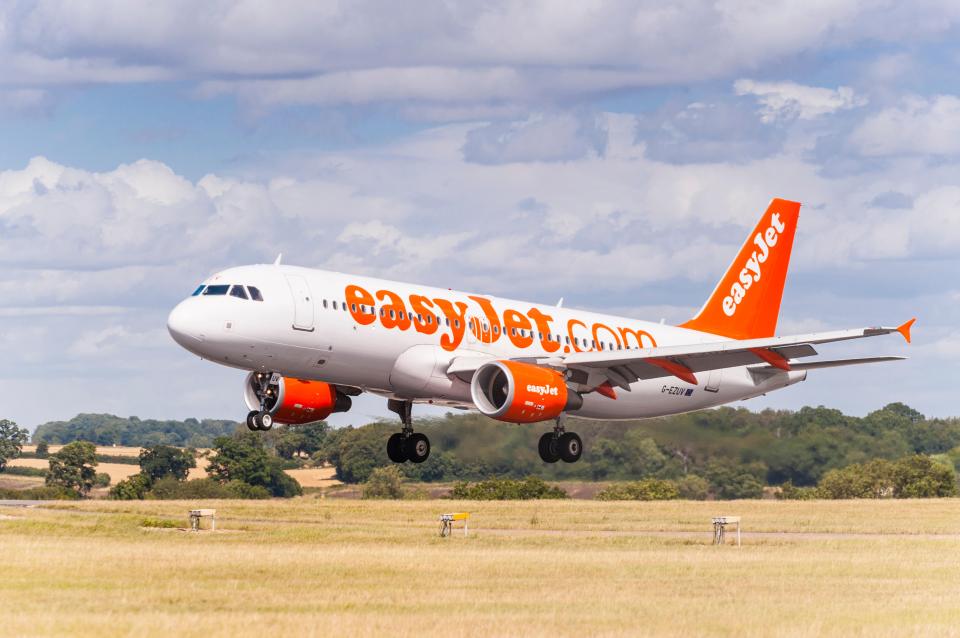
EasyJet is launching 13 new flights from the UKCredit: Alamy
EasyJet will launch a route between Newquay Airport in Cornwall and Geneva in Switzerland – which will be its first international route from the airport.
The route will launch on January 16, 2027 and operate once a week on Saturdays until February 27, 2027.
Among the 12 other routes being launched are new routes from London Luton to Kittila in Finland launching on November 24 and Strasbourg in France launching on November 29.
Flights to Kittila will operate twice a week, on Tuesdays and Saturdays whereas flights to Strasbourg will operate four times a week on Mondays, Thursdays, Fridays and Sundays.
London Southend will get new flights to Edinburgh, Scotland operating twice a week from October 25 on Thursdays and Sundays from £23.99 per person.
From Birmingham you will be able to fly to Copenhagen in Denmark, twice a week on Mondays and Fridays, launching on November 16 and costing from £31.99 per person.
Or if you live near Manchester, you can head to Cairo in Egypt from November 9 – the only direct route from Manchester to the ‘Sphinx’ airport.
The route will operate twice a week on Mondays and Fridays, with flights costing from £131.99 per person.
Liverpool will get two new routes including to Kittilä in Finland and Reykjavik in Iceland.
Flights to Kittila will start on November 25, departing twice a week on Wednesdays and Saturdays with tickets costing from £30.99 per person.
On the other hand, flights will head to Reykjavik from November 2, taking off on Mondays and Fridays, with flights costing from £43.99 per person.
And Newcastle will get several new destinations including Barcelona in Spain, Berlin in Germany, Copenhagen in Denmark, Hurghada in Egypt and Rovaniemi in Finland.
Flights to Barcelona will be the first to launch on October 25, operating twice a week on Fridays and Sundays and costing from £28.99 per person.
Hurghada flights will then start on October 27 twice a week on Tuesdays and Saturdays, costing from £121.99 per person.
Copenhagen flights will launch on November 5, followed by Berlin on November 20 and then Rovaniemi on November 25.
This composite photo, taken Tuesday, shows Rep. Cheon Jun-ho (L), deputy floor leader of the ruling Democratic Party, and Rep. Kim Seung-soo, deputy floor leader of the main opposition People Power Party, prior to their talks at the National Assembly in Seoul. Photo by Yonhap
The rival parties agreed Tuesday to conduct a 45-day parliamentary investigation into the National Election Commission (NEC) over ballot shortages reported during the recent local elections, party officials said.
In a meeting of their deputy floor leaders at the National Assembly, the ruling Democratic Party (DP) and the main opposition People Power Party (PPP) agreed to put the plan to a vote at a parliamentary plenary session on Thursday.
“We agreed to launch the parliamentary probe to swiftly uncover the truth behind the alleged infringement of voting rights of the citizens caused by the ballot shortages and to lay the groundwork for sweeping reforms of the NEC,” Rep. Cheon Jun-ho of the DP told reporters after the meeting.
According to officials from both parties, the special parliamentary committee will be chaired by the PPP and comprise 18 members — nine from the ruling party, seven from the PPP and two from non-negotiating parties.
Rep. Kim Seung-soo of the main opposition PPP said the rival parties agreed to set the investigation period at 45 days in an effort to conduct the probe as swiftly as possible, while leaving open the possibility of an extension if further investigation becomes necessary.
Ballot shortages were reported at more than a dozen polling stations in Seoul during the June 3 local elections, temporarily disrupting voting and prompting protests.
Last week, the DP and the PPP separately submitted requests for a parliamentary probe, though they differed over the scope of the investigation and the number of seats to be allotted to each party on the committee.
Copyright (c) Yonhap News Agency prohibits its content from being redistributed or reprinted without consent, and forbids the content from being learned and used by artificial intelligence systems.
Weekly insights and analysis on the latest developments in military technology, strategy, and foreign policy.
In a significant development for Europe’s future air combat ambitions, Airbus is trying to restart the program to develop a sixth-generation combat jet, now under German and Spanish leadership. This comes less than a week after the Franco-German-led New Generation Fighter (NGF) effort effectively collapsed in its original form, amid acrimony between Paris and Berlin. The NGF was planned as the crewed centerpiece of the pan-European Future Combat Air System (FCAS), which Airbus, as the leading European aerospace corporation, now hopes to get back on track.
An exciting step for European sovereignty at ILA Berlin: “Team Gen 6”, a group of eight leading German defence and aviation companies signed a strategic positioning paper. The German and French governments have announced a realignment of the European Future Combat Air System… pic.twitter.com/aZcjAaO6dE
Airbus’s Defense and Space unit launched the ‘Team Gen 6’ initiative today with a message on X, declaring that it was “an exciting step for European sovereignty.” So far, eight German defense and aerospace contractors have signed a strategic positioning paper as part of the effort. Those firms are Autoflug, Diehl Defense, Hensoldt, Liebherr, MBDA Germany, MTU Aero Engines, and Rohde and Schwarz.
Reflecting the German-Spanish nature of the new program, those companies are now “closely integrated” with firms from Spain, comprising GMV, Grupo Oesia, Indra, ITP Aero, and Sener.
“While the development of the overarching [FCAS] ‘system of systems’ is progressing as before, the sixth-generation fighter aircraft integrated within it requires a new, agile industrial setup,” Airbus said.
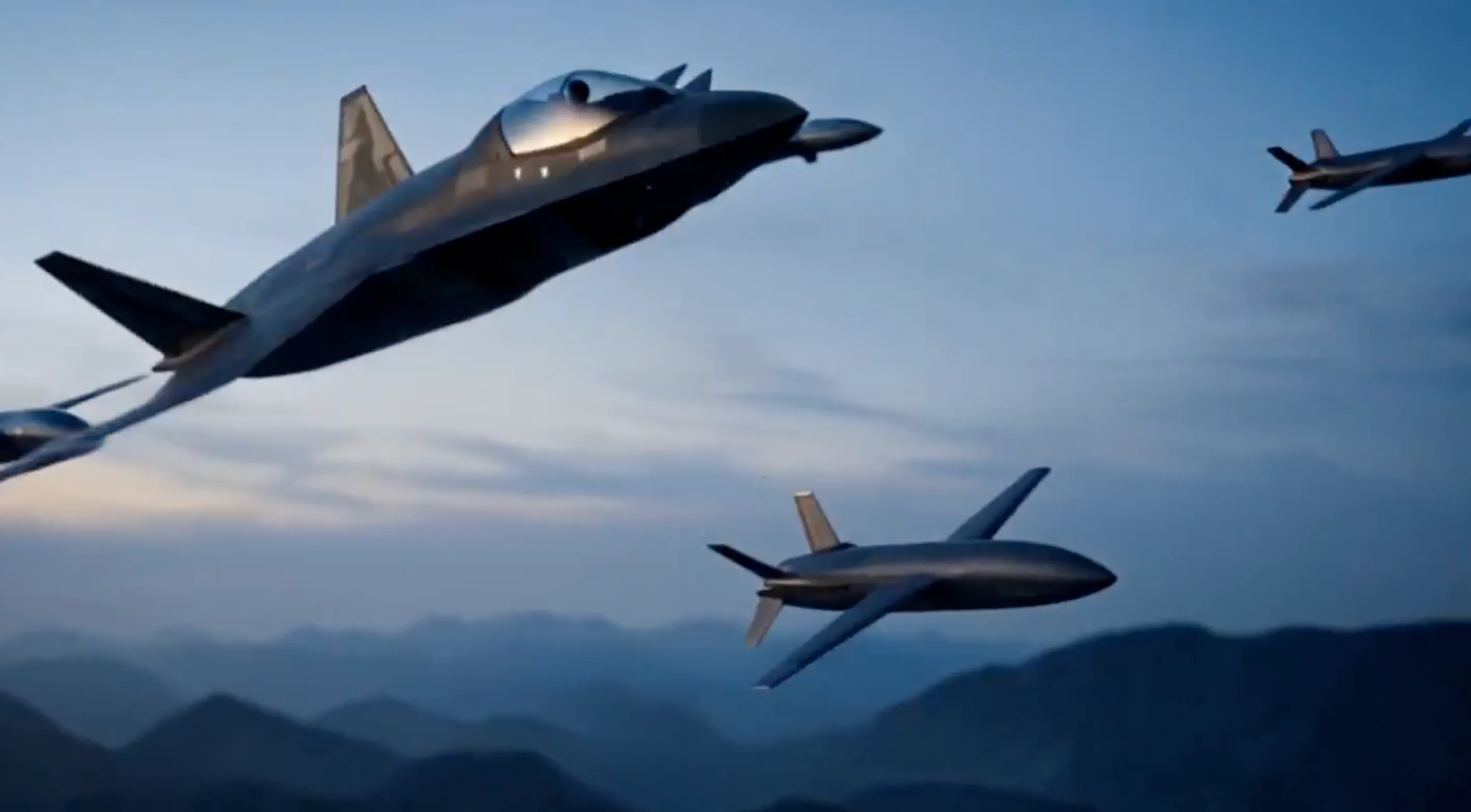
A screencap from an Airbus video showing a notional future fighter working with remote-carrier-type drones. Airbus screencap
“As Team Gen 6, we have the capabilities and the capacities. Now, we are looking for close alignment with policymakers and the air force[s] to drive forward a superior European air combat system for collective security,” the X post stated.
Airbus also presented a video showing a notional concept aircraft flying with multiple uncrewed platforms. While not too much (as in not much at all) should be read into this, the crewed aircraft features canard foreplanes, a chin intake, and an unusual cranked wing.
Speaking just ahead of the announcement, at the ILA Berlin airshow today, where TWZ was in attendance, Jean-Brice Dumont, head of air power at Airbus Defense and Space, said the company remains committed to delivering a sixth-generation combat jet. “There is a need for a bit of a reshaping and reconsidering the reality of today,” Dumont added.
German Federal Chancellor Friedrich Merz (second from left) and Jean-Brice Dumont (second from right), head of air power at Airbus Defense and Space, stand in front of a drone during a tour of the International Aerospace Exhibition (ILA). Photo by Sebastian Gollnow/picture alliance via Getty Images
Dumont explained that the now-abandoned NGF was one of seven separate “pillars” of technology development being worked on under FCAS. As well as the crewed jet, pillars include powerplant, remote carrier vehicles, precision-guided weapons, and data connectivity.
“We have to consider safeguarding areas where it works, and how we reshape,” he added. “At the moment, we are going to seek guidance from our governments [on] what they want us to do. There has to be demonstrated an industrial feasibility of what is being asked — not only technical. That’s probably a lesson now,” Dumont added.
Dumont continued: “The world in 2026 is very different to the world of 2017 when the [FCAS] programme was launched. We have to accept that fact and reshape it — we need another way to get to the same goal, with faster milestones.”
“The problem we had is that we had drawn a line to 2040, and new technologies for everything,” Dumont added, referring to the goal of having the FCAS, including the NGF, in service by that date. “Today, you see demonstrations of connectivity, systems of systems and unmanned vehicles all around the world. The need is there, and in the countries that we are competing with, they are using it already.”
According to Dumont, the company has “put a number of options on the desk of our ministers and ministries of defense,” and is now awaiting further guidance from officials.
As the centerpiece of FCAS, in its original form, the NGF element was the most high-profile and challenging component of the project. However, it had long been dogged by disagreements over industrial workshare and leadership between Airbus and Dassault Aviation, which were the prime contractors for Germany and Spain, and France, respectively.
A 1:1 scale model of the NGF is unveiled at the Paris Airshow in 2019. Dassault Aviation
Dassault had demanded that it play the defining role in NGF, reflecting key requirements for the jet driven by the French Armed Forces. These included the ability to operate from aircraft carriers, and provision to deliver nuclear weapons. Germany or Spain needed neither of these functions.
Despite the disagreements that derailed NGF, Dumont argued that there had still been useful lessons learned from the FCAS program.
“What Phase 1A and 1B [of the program] have given is a very thorough analysis of the repartition of the work between the crewed and uncrewed platforms, and this remains. That kind of shapes what the manned aircraft will have to do.”
As an example of this work, Dumont pointed to ongoing work that will involve trials of a Eurofighter operating as a “command fighter” — a crewed jet that can operate in collaboration with drones, or what Airbus now refers to as uncrewed collaborative combat aircraft (UCCAs). The tests will see a Eurofighter fitted with a Rafael Litening 5 targeting pod modified to serve as the interface between the crewed jet and UCCAs. This should pave the way toward an in-service command fighter capability being introduced to the Eurofighter, something that will be incorporated in the sixth-generation combat jet from the outset.
A German Eurofighter with a Litening laser targeting and reconnaissance pod on the centerline station. Crown Copyright
Initial trials will involve a Learjet test configured as a surrogate command fighter and flying with drones in an “enhanced teaming” mode. Airbus hopes to have the command fighter-configured Eurofighter ready for operational service in 2029.
“The demand from the customers is: be ready early,” Dumont explained. “This is not a contradiction to the Future Combat Air System challenge — it is the need to have our platforms evolved earlier than we had traditionally planned.”
A model of a notional sixth-generation fighter displayed at ILA as part of a command fighter study by the German Aerospace Center (DLR). Thomas Newdick
The termination of NGF and the launch of Team Gen 6 leaves plenty of questions over the future of Europe’s air combat landscape.
TWZ spoke to Douglas Barrie, senior fellow for military aerospace at the International Institute for Strategic Studies (IISS) research institute in London, for his take on what might happen next.
On the matter of Germany and Spain now teaming up under the Airbus umbrella, Barrie said that the relationship makes a lot of sense, but its success is far from certain. On the one hand, the two countries already work together within Airbus, and both Germany and Spain are seeking a replacement for their Eurofighter fleets.
A pair of Spanish Air and Space Force Eurofighters. Spanish Ministry of Defense
“In terms of Team Gen 6, I do wonder if there’s an element of trying to kind of scramble to recover something from the wreckage of NGF, as it were, that the collapse of NGF doesn’t signal the end of Spanish industrial interest in next-gen combat aircraft development,” Barrie said. “But if somebody asked me, do I think between Germany and Spain, they can put together a credible program if nobody else is involved? I think that the numbers would be very difficult to stack up.”
Putting the German and Spanish future fighter requirements together, the two countries might, at best, need to build 300 new combat jets, with a figure of 250 more likely, Barrie contended. Team Gen 6 would then face a real struggle to break even.
This reality will, Barrie believes, force Germany and Spain to look for other partners, which will likely come down to a choice between the British-led Global Combat Air Program (GCAP) and the Swedish next-generation combat aircraft program, led by Saab. Of these, GCAP has the Tempest crewed fighter as its centerpiece, and also involves Italy and Japan. Sweden’s crewed fighter requirements are less clear at this point.
A scale model of a possible Tempest configuration, in Italian Air Force markings. Leonardo
Building a role for Airbus in GCAP would be difficult at this point. With the industrial architecture already in place, bringing not one, but two more partners into that program would be disruptive, particularly in terms of timeline. Already, the Japanese in particular are concerned about the pace of the program, especially since the United Kingdom has not yet fully committed to it in terms of funding.
“My own view is that the United Kingdom remains committed to the program, but there are financial pressures elsewhere,” Barrie noted. “I think that the more likely outcome in all of this is a kind of German, Spanish, Swedish tie-up. The kind of requirements in some ways are aligned a bit better.”
This extends to the size of the aircraft, Barrie observed.
“The kind of aircraft that the Swedes seem to be thinking about, the crewed element is probably more of a bigger Gripen E/F, heading towards Typhoon, in terms of size. This is more in keeping with what the Germans and the Spanish seem to be looking for. Obviously, the United Kingdom and Japan, in particular, need something with longer legs and bigger internal payload, hence GCAP.”
The Saab Gripen E. Saab
“GCAP will be highly capable,” Barrie continued. “That will come with a unit cost to go with it. Maybe what the Swedes, the Germans, and the Spanish might do will be cheaper.”
Provided a German, Spanish, Swedish teaming arrangement could work, the resulting combat jet could still enter a space where it would face competition for important export orders from France, which looks set to continue the development of the Rafale, especially now that NGF has collapsed. Further competition could be provided by South Korea with further developments of its KF-21 and Turkey with the TF Kaan, although these are notably less-ambitious fifth-generation designs.
The Tempest, as currently envisaged, with its very different set of requirements, would not necessarily be a direct competitor to Team Gen 6, Barrie argued, since it would be a closer match to the F-47 in terms of size, capabilities, and cost. While the potential size of this market would be more limited, probably U.S. reluctance to export the F-47 would play in the Tempest’s favor.
An official rendering of the Boeing F-47. U.S. Air Force
As to the possibility of the United States offering a ‘watered-down’ export model of the F-47, Barrie considers this unlikely to generate much interest.
“Yeah, you can have a downgraded version of my super airplane — as a kind of marketing slug that hardly sells, does it?” Barrie continued. “Even if it’s 10 percent less capable, even if it’s 10 percent less expensive, it’s still a likely unit cost of $250 million or more, which is eye-watering.”
This leaves us with the French, and what they might be able to recover from NGF.
If France goes it alone with a sixth-generation combat jet, Dassault will likely be strongly backed by the French government, and the company has traditionally punched well above its weight.
In the medium term, Dassault has a healthy backlog of orders for the Rafale and is very much at the right end of the cost curve. Barrie considers that the Rafale will remain a profitable airplane for the foreseeable future, but at some point, France will need to think about a successor based on an all-new airframe. Industrially, France has the capability to go alone with this, but they would likely look to a partner or partners to come on board. The likelihood of those partners coming from Europe has now been reduced, but other possibilities might be found in the Gulf states.
A pair of Rafales from the Qatar Emiri Air Force. Dassault Aviation www.twz.com
Then there is the question of India, which may still buy more Rafales but which, in the fullness of time, is likely to look for a new-generation fighter, and could be a potential partner for France.
“I don’t see the Indians ever being fully committed to only one country,” Barrie continued. India has already hinted that it might want to try and join the pan-European FCAS or GCAP. Meanwhile, Russia has been a long-term military partner for India, and Barrie thinks that the recent appearance of a two-seat version of the Su-57 Felon may well indicate another effort to sell that fighter to India.
The previously unknown two-seat version of the Sukhoi Su-57 Felon, which appeared earlier this year. UAC UAC
Were India to continue its pattern of buying Russian combat aircraft, that would give any potential European partner serious pause for thought, based on the security implications. Meanwhile, India also remains committed to developing its own next-generation fighter.
What the NGF debacle has demonstrated is that any potential partner with France on its next-generation combat aircraft program will likely have to be happy taking a junior role, with Dassault calling the shots.
The collapse of the New Generation Fighter could well be a pivotal moment for European defense cooperation, but it does not signal the end of Europe’s sixth-generation combat aircraft ambitions.
Airbus’s Team Gen 6 announcement marks the start of a German-Spanish-led industrial approach that its backers hope will be more agile and less contested than its Franco-German-led predecessor. However, significant political, financial, and industrial challenges remain, including the search for a reliable partner, or partners. As with NGF, the success of Team Gen 6 will ultimately depend on whether European governments can align their strategic priorities and industrial interests to deliver a sovereign future air combat capability.
Progress for Kyiv’s membership bid given the green light after Hungary’s new government lifts Budapest’s veto.
Published On 12 Jun 202612 Jun 2026
The European Union has announced that the accession process for Ukraine and Moldova will launch next week.
At a meeting in Brussels on Friday, ambassadors from the 27 EU nations agreed to officially recommence negotiations with the two countries in Luxembourg on Monday.
Recommended Stories
list of 3 itemsend of list
EU leaders agreed to open accession talks with Ukraine and Moldova in December 2023. However, negotiations were paused due to opposition from Hungary, led at the time by pro-Russian Prime Minister Viktor Orban, to Kyiv’s membership bid.
Both Kyiv and Chisinau view EU membership as additional security against Russian aggression. Moscow insists that maintaining control over its “near abroad” – its term for the post-Soviet states – is key to its national security.
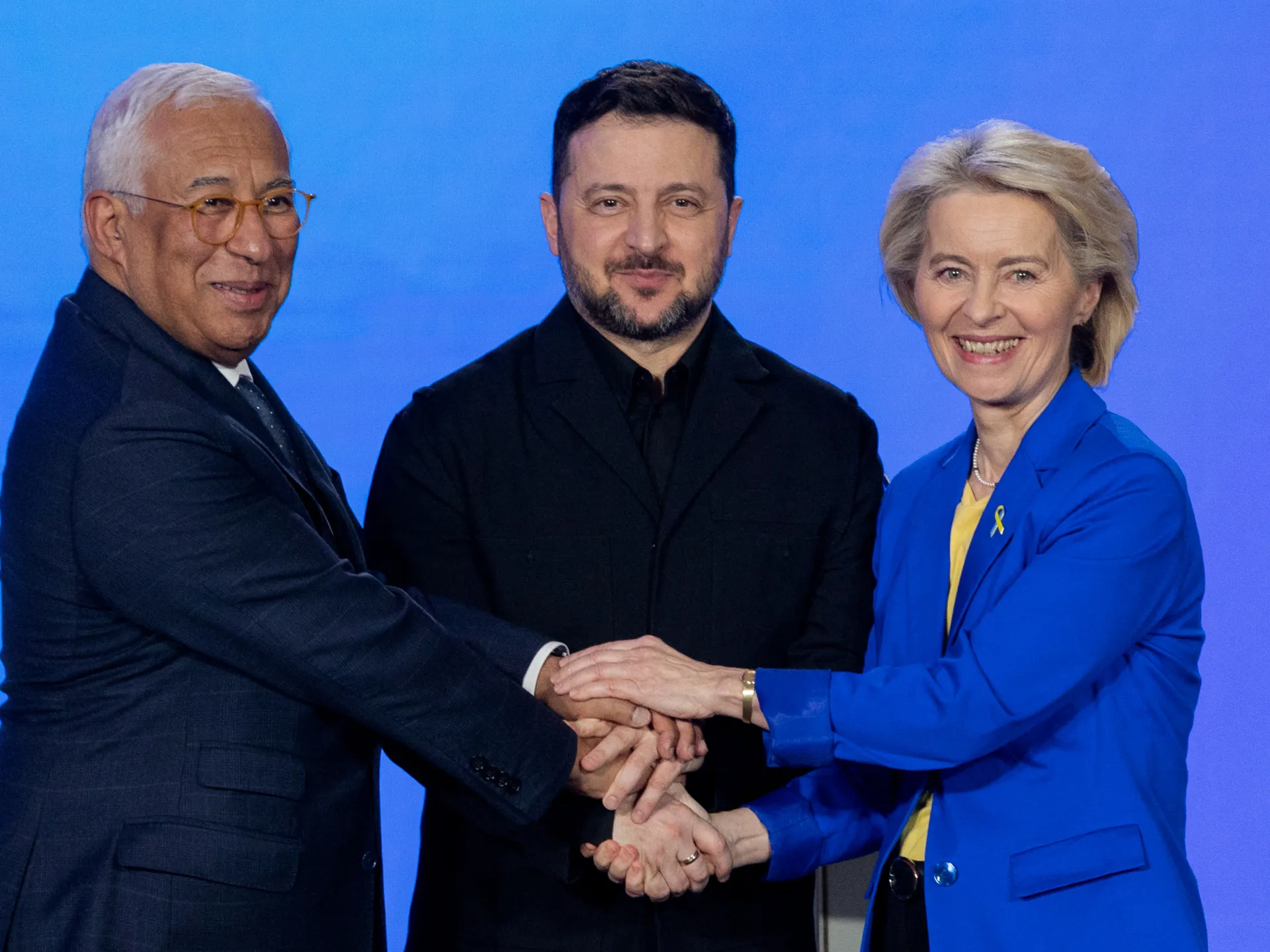
“All member states agreed to open the first accession negotiations cluster with Ukraine and Moldova,” European Council President Antonio Costa and European Commission President Ursula von der Leyen said in a joint social media post.
Hungary’s new government, which took power in May, agreed last week to drop Orban’s veto, allowing the accession process to resume.
“This is a recognition of the determination, courage and hard work shown by both countries in advancing reforms, even in the face of immense challenges,” Costa and von der Leyen said.
“Enlargement is a strategic choice,” they said, adding, “In a world marked by growing uncertainty, a larger European Union is in our common interest.”
Entry negotiations with Kyiv were formally opened in June 2024, kickstarting a complex process that usually takes years and involves negotiations on everything from agriculture to the rule of law.
The move was largely symbolic, intended as a powerful show of support for Ukraine after Russia’s full-scale invasion in 2022.
New Hungarian Prime Minister Peter Magyar struck a deal with Kyiv on the rights of Ukraine’s Hungarian ethnic minority last week. The issue has long been a sticking point between the neighbouring countries.
But Magyar has said Hungary does not support a fast-track procedure for Ukraine to join the EU.
He said Budapest will hold a referendum on Ukraine’s membership, should it “succeed in closing all 33 accession chapters within the next 10 to 15 years”.
Talks will begin on Monday with the opening of the “fundamentals” section of the process, Costa and van der Leyen said in their statement.
This covers basic principles such as rule of law that the two candidate countries will be expected to adhere to.
An artisanal miner in Bolívar state with an “Uncle Sam” t-shirt. (AFP)
Caracas, June 12, 2026 (venezuelanalysis.com) – Venezuela’s Bolivarian National Armed Forces (FANB) have launched a large-scale operation on Tuesday in Bolívar state, one of the country’s main mineral-rich regions in the southeast and also one with a heavy presence of criminal organizations.
Local media outlets and non-governmental organizations reported helicopter overflights, explosions, and the displacements of hundreds of people leaving gold extraction zones in Las Claritas and the area known as Kilometer 88, two key locations within the Orinoco Mining Arc.
According to Bloomberg, the military actions targeted illegal mining operations controlled by armed groups. Former opposition lawmaker for Bolívar state Américo De Grazia claimed that military forces attacked several gold-mining enclaves through aerial bombardments and gunfire.
The Venezuelan government, led by acting President Delcy Rodríguez, and the armed forces have offered no official information regarding the operations, as well as casualties, arrests, or official goals. Rodríguez met with military leaders on Wednesday to discuss a “100-Day Plan” to optimize the functioning of the armed forces but did not comment on the reported Bolívar deployment.
The operation took place in a region where the state has struggled to assert authority in the face of a proliferation of armed groups that control and administer mines, run artisanal mining activities, and regulate economic activity linked to gold extraction.
At the same time, local reports indicated that the military operation could be aimed at capturing Yohan José Romero, known as “Yohan Petrica,” a founding member of the Tren de Aragua criminal outfit, who reportedly operates in the area alongside Juan Gabriel Rivas Núñez, alias “El Negro Juancho,” and a third figure known as “Humbertico.”
Some sources have also not ruled out the presence of Héctor Guerrero, alias “Niño Guerrero,” the top leader of the large-scale criminal group that emerged inside Tocorón prison in Aragua state.
In September 2023, the Venezuelan government deployed “Operation Gran Cacique Guaicaipuro,” with more than 11,000 security personnel, to intervene in Tocorón prison. However, multiple reports indicated that “Niño Guerrero” and other senior gang leaders were warned in advance and escaped through a network of secret tunnels.
Guerrero is currently the subject of an Interpol Red Notice on charges related to transnational organized crime, drug trafficking, money laundering, and arms trafficking. The US State Department is offering a reward of up to US $5 million for information leading to his capture.
For its part, the media platform Miraflores al Momento denied separate reports alleging the presence of US military contingents in El Callao, another major gold-mining area in Bolívar state. Likewise, fact-checking outlets Cazadores de Fake News and CotejoInfo confirmed that images circulating were generated by artificial intelligence.
However, local outlets confirmed that, though without any military presence, US officials and business executives have conducted visits to gold-processing facilities belonging to the state-owned Venezuelan Mining Corporation (Minerven) in El Callao.
Last April, Venezuela approved a new mining law granting expanded incentives for private corporations to exploit gold and other “strategic minerals.” Concessions will last up to 30 years and may be renewed for two additional ten-year periods. The new law
The legislation additionally introduced provisions for international arbitration in dispute resolution, a safeguard sought by investors, and a reduction of royalties and taxes at the Venezuelan government’s discretion.
Among the companies expressing interest are Canadian firms Gold Reserve and Augusta Capital Corporation, which seek to revive the large-scale gold and strategic minerals project known as “Siembra Minera.” Likewise, Roland Mineral Enterprises Corp. has already begun procedures to explore and develop gold, copper, and silver deposits. Swiss commodities giant Trafigura is also advancing a responsible sourcing program in partnership with state-owned Minerven.
There have additionally been corporate initiatives and feasibility studies by US companies—including mining firms such as Hartree, Peabody Energy, Ivanhoe, and TechMet—to enter the sector, though security concerns reportedly remain an obstacle.
Mining municipalities in southern Venezuela report some of the country’s highest rates of homicide, as well as reports of forced labor and widespread sexual violence. The gold extracting activities are mostly unregulated. According to former opposition lawmaker Américo De Grazia, only the gold processed by Minerven enters official records, while the rest circulates through parallel channels.
Similarly, Transparency Venezuela estimates that just 14 percent of the revenues generated by the gold sector reach the Central Bank and public coffers through royalties and export-related payments.
Other features of the festival include chill out zones and a number of VIP areas.
Little other details have been revealed about the festival yet.
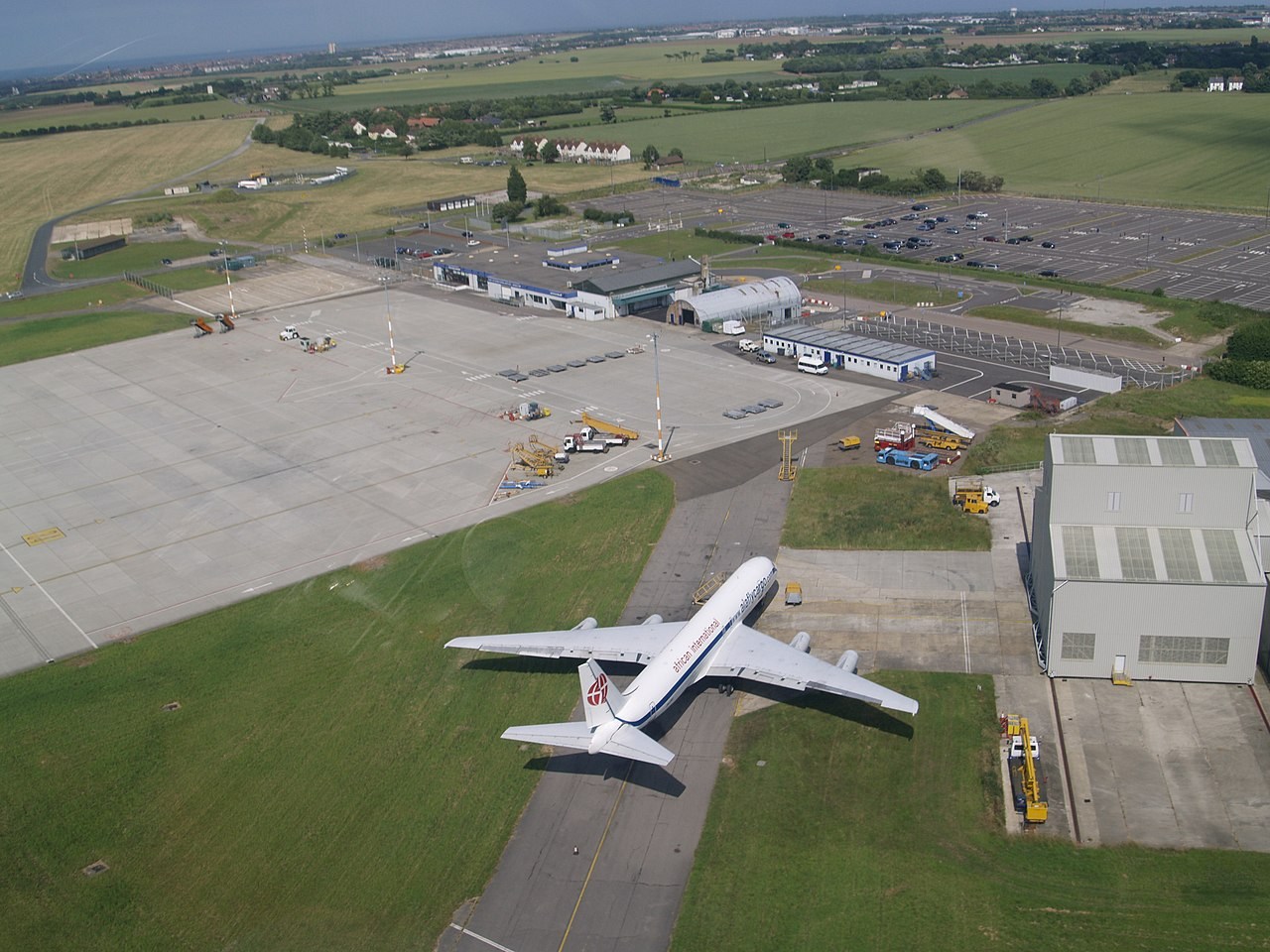
Visitors can even camp right near the runwayCredit: Wikipedia
Visitors can book camping passes for £103, which allow for a pitch with up to 10 people (so £10.30 per person) or a camper van.
And with each camping pass, one weekend festival pass is included (so other guests camping at the pitch will need to purchase their own festival ticket).
A regular weekend pass costs from £37 per person or you can get four for £112.50.
If you fancy heading to the festival for just one day, you can do so for £22 and kids go free.
And the festival will have a cheap shuttle bus from Thanet Parkway Station if travelling to the festival via train.
Manston Airport closed back in 2014 and was used as a former RAF base and a regional hub, flying Brits abroad from the 1960s.
However, there are current talks to see if the airport could reopen, with the return of flights scheduled for 2029 – however this will be for cargo aircraft only.
Initially, the airport planned to reopen in 2025, but this has been pushed back.
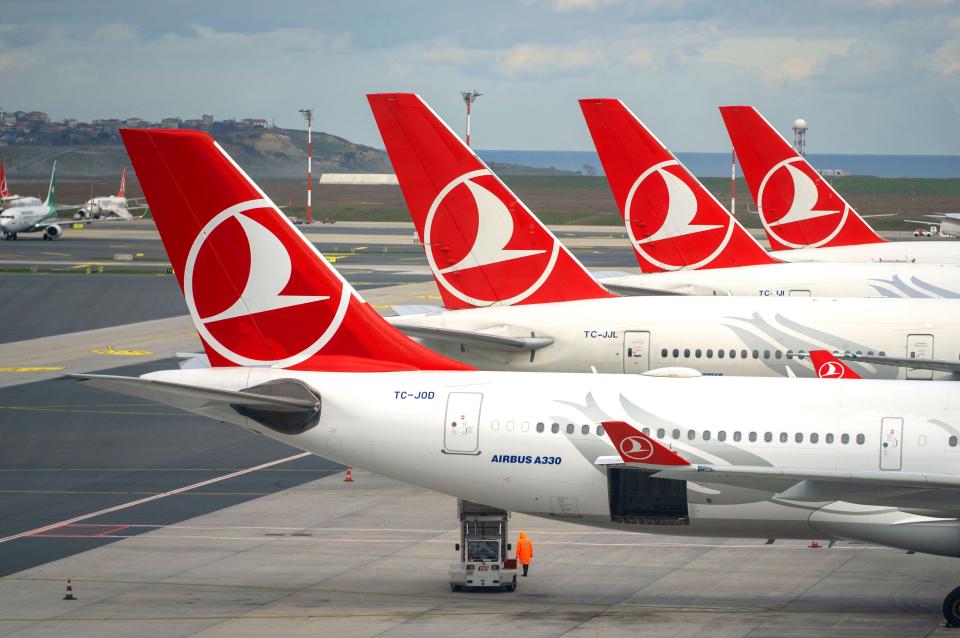
This isn’t the first time that Turkish Airlines has offered premium-style seats onboard.
It used to offer Comfort Class on some of its routes on Boeing 777 aircraft – but these were withdrawn in 2013.
On the subject, Murat Şeker added that the previous offerings were “not the right time” or “the right configuration”.
Currently, Turkish Airlines has economy seats which have adjustable headrests and arms as well as entertainment screens and USB ports in the seats.
The other are in business class which have lie-flat seats with a massage feature, a cocktail table, touchscreen media screens and adjustable head rests.
Previously, the airline had Comfort Class but discontinued these in 2013Credit: Flickr/Luke Lai
This isn’t the first time either, in fact that award marked the tenth win in a row for the airline.
At the same awards, it scooped up eight accolades in total and placed sixth in the rankings for ‘World’s Best Airline’.
Turkish Airlines also won the ‘Best Economy Class in Europe‘, ‘Best Economy Class Onboard Catering in Europe’, ‘Best Business Class Onboard Catering’.
It also was awarded the ‘Best Business Class in Europe’, ‘Best Business Class in Southern Europe’, ‘Best Business Class Onboard Catering in Europe’, and ‘Best Airline in Southern Europe.’
Turkish Airlines also offers cheap flights from the UK to destinations like Istanbul, Antalya, and other Turkish cities, as well as other destinations like New York, Sharm El Sheikh, and Cape Town.
Nvidia Chief Executive Jensen Huang, left, and Naver founder and board Chairman Lee Hae-jin greet attendees at Naver’s 1784 headquarters in Seongnam, south of Seoul, on Monday. Photo by Asia Today
June 8 (Asia Today) — Naver said Monday it will work with Nvidia to build a gigawatt-scale artificial intelligence factory, starting from its hyperscale data center in Sejong.
Naver founder and board Chairman Lee Hae-jin and Chief Executive Choi Soo-yeon met Nvidia Chief Executive Jensen Huang at Naver’s 1784 headquarters in Seongnam, south of Seoul, to discuss a joint business road map and global expansion strategy.
Huang greeted employees and visitors at the building, saying, “I love Naver.” He also joined a Naver Webtoon event and wrote, “Don’t worry! I have GPUs!” in a blank space on a display.
Naver and Nvidia said they agreed to pursue a joint project to build a large-scale global AI factory. The partnership goes beyond technology cooperation, covering demand development, investment and infrastructure construction across the value chain.
Naver will participate as a core partner sharing business results and risks.
The project will be based at Gak Sejong, Naver’s hyperscale data center. Naver plans to begin operating 55 megawatts of infrastructure in the first half of 2027, expand to 100 megawatts later that year and reach 200 megawatts in 2028. The company ultimately aims to build gigawatt-scale AI infrastructure.
Naver plans to use Gak Sejong to serve AI demand not only in South Korea but also in Asia, the Middle East and Europe.
The cooperation centers on combining Naver’s data-center and GPU cluster operation capabilities with Nvidia’s DSX platform. Nvidia DSX integrates chips, servers, software and data-center operating technologies for AI factories. The platform is designed to lower AI model training and inference costs and speed up infrastructure deployment.
Naver plans to use the technology to expand AI infrastructure services for companies, governments and industrial clients.
The companies also plan to broaden technical cooperation. Naver has been improving its HyperCLOVA X AI model by using Nvidia’s open large language model Nemotron. It is also working to develop a “Seoul world model” by combining Nvidia’s Cosmos world foundation model with Naver’s street-view and spatial modeling technologies.
The cooperation is expected to expand into physical AI, robotics and digital twins.
The meeting marked another step in the companies’ existing partnership. Lee and Huang met last year during the Asia-Pacific Economic Cooperation summit in Gyeongju to discuss cooperation on physical AI platforms.
Naver 1784 is considered a showcase for robotics, digital twins and cloud technologies. Huang was expected to review areas for expanded cooperation during his visit.
Naver is seeking to move beyond its role as an internet services company and become a global AI infrastructure provider. Huang recently introduced Naver Cloud as a key partner in the global AI ecosystem during Nvidia GTC Taipei 2026. Naver said it plans to accelerate its sovereign AI and AI data-center businesses through cooperation with Nvidia.
Naver shares also rose Monday. The stock closed at 279,000 won, or about $181, up 9.20% from the previous trading session, according to the Korea Exchange. Market analysts attributed the gain to investor expectations for the large-scale AI factory project and Naver’s global AI infrastructure expansion.
JET2 is launching two new flights to Greece next year – and one of them has the longest beach in Europe.
One of the new routes is from Leeds Bradford Airport to Preveza which starts next summer.
Sign up for the Travel newsletter
Thank you!
One of the most popular places in the Preveza region is PargaCredit: Alamy
The city is home to Monolithi Beach, stretching on for around 15.5 miles – making it Europe’s longest.
It runs along the Ionian Sea from villages Mytikas to Kastrosykia and, thanks to its length, the beach has everything holidaymakers look for whether that’s a sunbed, beach bars, and taverna.
One visitor to the beach said on Tripadvisor: “It’s one of the best beaches I have ever visited! Small pebbles and sand, and blue-green clear waters, and it’s length… I don’t know!”
Another said: “One of the most beautiful beaches I have seen and swum in. Great waters, amazing location. I could live there forever.”
Another popular place in Preveza includes Parga Town.
The region is home to the huge ancient ruins of Nikopolis which have Roman walls, Byzantine basilicas, a stadium, and two theatres.
Another spot worth discovering is Saitan Bazar, a historic lane with tiny independent shops that are covered in vines and known for having lively atmospheres.
It is the ideal destination for reaching Lefkada, meaning travellers can experience two destinations in one trip.
Visitors can take a bus directly from Preveza to Lefkada takes just 45minutes.
Flights to Preveza will be weekly on Sundays until October 10.
Preveza is an ideal location to get to the pretty island of LefkadaCredit: Alamy
From Leeds Bradford Airport, Jet2 will also fly to the beautiful island of Santorini.
Santorini will be served with weekly Thursday flights until October 7, 2027.
Jet2 chief executive Steve Heapy said: “We are seeing continued demand for our award-winning flights and holidays and many people wanting to book ahead for summer 2027, so we are delighted to respond with this expanded programme from Leeds Bradford Airport.
“With two stunning, brand-new routes being announced today, our summer 2027 programme gives holidaymakers exactly what they want – more choice and flexibility.”
A BRAND-NEW train service has been halted just a week after its launch due to a mechanical fault.
The new route promises low prices and faster, direct services to London.
Sign up for the Travel newsletter
Thank you!
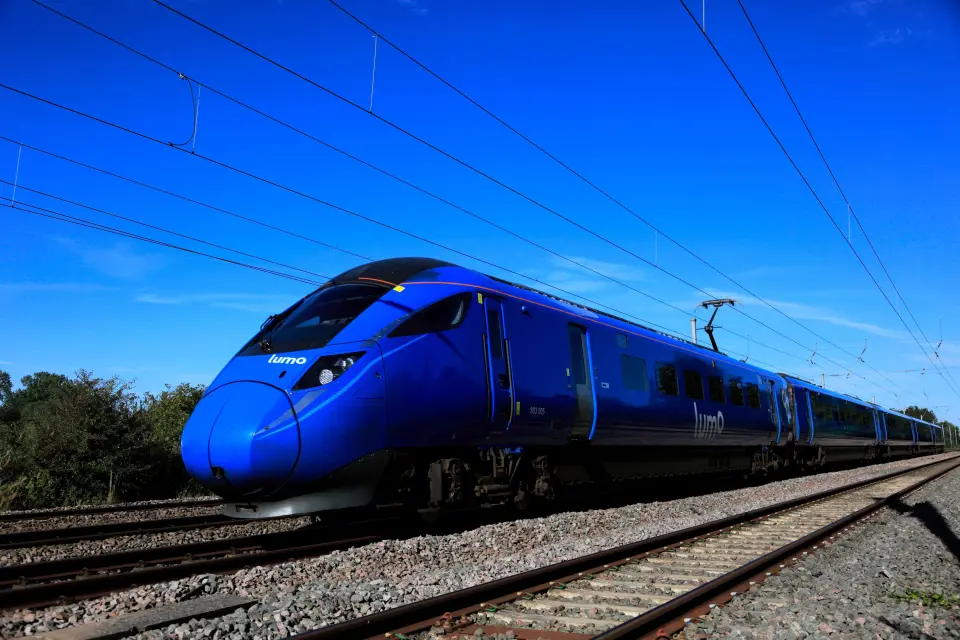
Lumo’s brand-new service from London to Stirling has suspended todayCredit: AlamyThe new, low-cost service launched just a week agoCredit: Alamy
Lumo services between London Euston and Stirling have been cancelled in both directions due to a mechanical fault on the service’s sole train.
The journey was set to depart from Stirling at 8:50am this morning, travelling on the West Coast Main Line to get to London Euston by 3pm.
Passengers have been encouraged to check Lumo’s website for updates, and will face no extra cost for using alternative train services.
In a post on X, Lumo said Stirling and Larbert passengers would receive a taxi or road transport service to Motherwell to join an Avanti West Coast service.
Greenfaulds and Whifflet passengers expected to travel by ScotRail to get there.
Passengers travelling from Carlisle, Preston, Crewe, Nuneaton and Milton Keynes were told to join either Avanti West Coast or London Northwestern services to get to Euston.
A spokesperson for Lumo said: “Since launch, the vast majority of our services have operated as planned, however, a few services have been cancelled with alternative travel offered to customers.
“We apologise for the inconvenience and are working closely with Alstom who maintain the trains to ensure minimal disruption to customer journeys.”
Only launched last week, the new route offers budget travel routes betwen London and Stirling, costing £29.90.
For some Scottish towns, this service became the first direct rail route to London.
The faulty train is said to be a refurbised Class 222 Meridian train, previously used by East Midlands Railway.
Lumo hopes to increase its schedule to four daily services, plus an additional journey between Euston and Preston, as early as late July using more new trains.
It is unknown what caused the train fault, but rail services on the London Euston to Stirling route are expected to resume on Tuesday.