Weekly insights and analysis on the latest developments in military technology, strategy, and foreign policy.
The U.S. Air Force Materiel Command’s secretive NT-43A has been spotted in Florida, taking part in the preparations for the launch of NASA’s long-delayed Artemis II lunar space mission. This highly unique and notoriously shy plane, a converted militarized Boeing 737-200 variant (T-43) also commonly known by the callsign RAT55, has long been used as an airborne signature measurement platform to support work related to stealthy military aircraft. However, during a high-stakes space launch, its two huge radar arrays, modular electro-optical and infrared sensors, and other capabilities would likely be well-suited to gathering telemetry and other valuable data, as you can read more about here.
RAT55 was spotted yesterday flying over Melbourne, on Florida’s eastern coastline, which was already highly unusual. The jet is very easy to identify, even in the distance, due to its heavily modified nose and massive aft radome protruding from the rear of the fuselage. The NT-43A seems to live at the Tonopah Test Range Airport (TTR), a high-security facility in Nevada long associated with shadowy aircraft programs. It is often spotted flying around Area 51 in Nevada and Edwards Air Force Base in neighboring California, both of which are major U.S. military flight test hubs. It is rare to see it anywhere else.
The sighting of RAT55 in the skies above Melbourne aligned with online tracking data for a flight using the callsign NASA522. That track showed the aircraft – apparently miscoded as a C-130 Hercules transport plane – taking off from MacDill Air Force Base, situated to the southwest, and then flying an oval-shaped orbit in restricted airspace around the Kennedy Space Center’s Launch Complex 39B. The aircraft then returned to MacDill.
ADS-B Exchange
The Artemis II mission is currently scheduled to launch from Launch Complex 39B today at 6:24 PM EDT. A Space Launch System (SLS) rocket will take four astronauts in an Orion capsule into space on what is expected to be a nine-and-a-half-day-long trip. This will be the first crewed lunar mission of any kind since Apollo 17 in 1972, but the Artemis II crew will not actually set foot on the Moon. They will instead pass by, hopefully setting a new record for the longest distance that people have traveled away from Earth. The target distance is 252,000 miles, some 4,000 miles beyond the current record, set by the crew of the ill-fated Apollo 13 lunar mission in 1970. The Artemis II mission’s main goal is to help lay the groundwork for future missions to the lunar surface, the first of which is now expected to come in 2028.
The fueling process for the Artemis II rocket has picked up speed. The rocket is now more quickly filling with liquid oxygen and liquid hydrogen.
When the core stage is completely full, it will contain 196,000 gallons of liquid oxygen and 537,000 gallons of liquid hydrogen. pic.twitter.com/wejiCveeNb
NASA regularly uses fixed-wing aircraft to gather imagery and other important data during space launches. One of its high-flying WB-57F research planes, which are routinely used to provide optical tracking, was also flying around Launch Complex 39B yesterday at the same time as the NASA522 flight. The WB-57F conducted that flight from the Kennedy Space Center’s Shuttle Landing Facility (SLF).
This is correct, there are two separate NOTAMs for support aircraft that match both flight tracks. This was an obvious rehearsal. pic.twitter.com/X3i5RbP4T2
A stock image of one of NASA’s WB-57Fs. NASA One of NASA’s WB-57Fs, which carries the U.S. civil registration number N926NA. NASA
It is unclear why RAT55 has been called in to help, especially given that the U.S. military, and the U.S. Navy in particular, has an array of dedicated range support aircraft specially configured to support missile test activities, and a history of using them to support NASA launches in the past. TWZ has reached out to the Air Force and NASA for more information.
Still, as already noted, the NT-43A does have a sensor suite that would likely be very relevant to the space launch support mission. Beyond helping to collect more general telemetry information, the unique capabilities the aircraft has to offer might be used to gain more detailed insights into various aspects of the SLS rocket and the Orion capsule at launch. One of the tasks RAT55 is more typically understood to perform is helping to verify surface coatings on low-observable (stealthy) aircraft. Specialized coatings and other materials, especially to provide critical thermal protection, are a key aspect of space launch rocket and spacecraft design.
Though the WB-57F has numerous modular payload bays, as well as space for sensor and other equipment in underwing pods, the NT-43A offers a more capacious airframe, overall, along with optional dorsal fairings. NASA could fill this space with additional systems to meet other mission requirements.
In addition, it is worth mentioning here that NASA only has three WB-57Fs, and one made a fiery belly landing in Houston, Texas, back in January. The current status of that aircraft is unclear. Whether or not this was a factor in the decision to utilize the NT-43A is unknown.
The Air Force does have its own previous history of supporting NASA Moon missions, specifically, with specialized fixed-wing aircraft, which The Aviationist has noted. During the 1960s and 1970s, the U.S Air Force supported the Apollo program with a fleet of EC-135N Apollo/Range Instrumentation Aircraft (ARIA) planes, which were also used to track missile tests. The ARIA jets carried very large radars in their bulbous noses. Those aircraft were later redesignated as EC-135Es and continued to be used for various flight test activities until the last example was retired in 2000.
An EC-135N/E ARIA aircraft. USAF
Choosing the NT-43A for this task at all is still somewhat curious, given the U.S. military’s array of other missile tracking and range support telemetry aircraft, especially within the U.S. Navy. Those fleets continue to evolve, including with the Navy’s addition of its Gulfstream G550 business jet-based NC-37B. Repurposed RQ-4 Global Hawk drones are even now in the mix. There is a history of similar U.S. military planes supporting NASA launches in the past. It isn’t clear if additional roles for the NT-43A are going to be a common thing, but it certainly appears that its mission set is expanding. This is a very interesting development for an aging aircraft that has lived in the shadows for so long.
Regardless, the Artemis II launch is especially important for NASA, in general. There has only been one all-up launch of an SLS before now, in 2022, and no astronauts were on board at that time. The Artemis program has been dogged by setbacks and delays, with the hope originally that the Artemis III mission would bring Americans back to the lunar surface in 2024.
The video below shows the first SLS launch as part of the uncrewed Artemis I mission in 2022.
NASA’s Artemis I Launches on Nov. 16, 2022
NASA is now in line to finally reach the next Artemis milestone with today’s planned launch, and is doing so with help from the Air Force’s unique and rarely seen RAT55.
UPDATE: 7:42 PM EDT –
We have now received additional information from the U.S. Air Force about RAT55, which you can find in a follow-up story here.
COLEEN ROONEY will mark her 40th birthday today with a series of celebrations at her £20million Cheshire mansion.
But the hundreds of bottles of champers on ice this weekend are far from the only corks she will be popping this year.
Coleen, above at the National Television Awards last year, will mark her 40th birthday with a series of celebrations at her £20million mansion in CheshireCredit: GettyMum-of-four Coleen with former Man Utd superstar Wayne and kids Klay, Cass, Kit and KaiCredit: Instagram
Mum-of-four Coleen — wife of former Manchester United superstar Wayne — has big plans in the pipeline — with one pal telling The Sun: “She’s entering her powerful era.”
One friend explained: “Coleen’s sons are growing up fast and she is excited about the opportunities coming her way.
For a long time her primary focus was being a mum to her four boys. She is the backbone of their household, a constant for her sons and for Wayne.
“But now they’re growing up — the boys somewhat more than Wayne at times — Coleen is ready to reclaim some of herself.
“Going into I’m A Celebrity was a great way for her to dip her toe into the water. She loved it and it was obvious the nation still has a massive soft spot for her.
“Coleen said she would take a break after that to work out her next move.
“Turning 40 and with loads of exciting things coming her way, she’s entering this powerful new era.”
Coleen will celebrate today with Wayne and their sons, budding Man Utd footballer Kai, 16, Klay, 12, Kit, ten, and eight-year-old Cass.
She will then throw a huge bash for her closest friends and family.
An enormous white marquee has been erected in the 50-acre grounds of their home, previously dubbed “Morrisons mansion” because of its vast size and appearance.
“I’m looking forward to it, I love a birthday and a celebration,” Coleen said ahead of her bash.
“I have decided to enjoy a couple of different celebrations with family and friends over the year, and with my birthday falling over Easter weekend, some friends are away — so any opportunity to extend the celebrations…”
Caterers and staff will keep the party running smoothly, with insiders saying no expense has been spared.
“Coleen loves a good knees-up,” another pal explained.
“She can afford a lovely lifestyle and everything at the party will be classy and beautifully done. But for her, plenty of booze, good music and her family is all she will want.
There’s going to be live music and you can guarantee Wayne will be getting up on the microphone
Pal
“There’s going to be live music and you can guarantee Wayne will be getting up on the microphone.
“He loves to sing and will be keen to give everyone a tune or two.”
Those close to Coleen say eyes will be kept on Wayne following a rather embarrassing boozy night out before the Brit Awards in February.
Photographs and videos from a posh bar in Manchester obtained by The Sun showed Wayne struggling to do up his trousers after he spent time chatting with a mystery woman.
He was later seen leaving the venue at 3.45am and getting into a car alone to head home.
At the time, pals close to Coleen said they were furious at his behaviour, which came in the same week Coleen was launching her Primark clothing collection.
Coleen is now said to have big plans in the pipeline, above posing in her range from Primark as part of a deal worth millionsCredit: Matt Healy for PrimarkThe mum, pictured here at a fashion awards event in 2006, will throw a huge bash for her closest friends and family to celebrate her 40thCredit: Shutterstock Editorial
Branding Wayne an “idiot”, one seethed: “It’s upsetting to see Wayne acting this way because it takes the spotlight away from her.”
After dating Wayne since she was 16 years old, Coleen is well-versed in facing down his antics. She has stuck by him through every crisis in their marriage — including visits to sex workers in 2004 and 2009 and being charged with drink-driving in 2017.
In recent years Wayne has curbed his wayward ways, but has still had his share of controversial moments.
Turning 40 and with loads of exciting things coming her way, she’s entering this powerful new era
In 2020 he allegedly poked fun about his lack of a sex life, while the following year he was photographed fast asleep in a hotel room chair while three women struck comic poses around him.
“If Coleen is the angel then Wayne has definitely always been the devil on her shoulder,” one friend joked.
“Her friends think she’s the strongest woman out there for putting up with everything that Wayne has done. It takes a certain kind of woman to tolerate that behaviour and live with it. But Coleen has always just asked for honesty.
“The only time I think she’d draw the line is with anything that could affect her children.
“Her four boys are Coleen’s world. And when it comes to her kids, she is like a lioness with her cubs.
“Wayne absolutely knows that. She is just as fiercely protective over him too, to be honest. Coleen comes across as soft on the surface but she’s got balls of steel. No one would mess with her.”
Coleen herself confessed she was used to Wayne’s poor decision making and said she stuck with him for love.
She told British Vogue: “We’ve had our ups and downs. Obviously everybody knows. It’s been hard to go through it in the public eye but there has always been true love there.
“If the love is gone then, it’s pointless. But if not, you’ve got something to work for.”
Coleen added: “We’ve never backed away from it. We own it.
Coleen was the 2024 I’m A Celebrity runner-upCredit: RexA young Coleen, aged 16, famously photographed in school uniform in 2003Credit: Mirrorpix
‘Cheering her on’
“I remember having a conversation about this with someone and I said, ‘Well, do you know what your wife gets up to every day and night? At least I know what my husband is doing!’
“It might not be good, but I know. People lie to themselves.”
Coleen first came into the public eye when Wayne burst on to the scene as a teenager at Everton — and she was famously photographed in her school uniform aged 16 in 2003.
Her fashion choices saw her becoming a regular at high-end Liverpool boutique Cricket, once dubbed the “unofficial footballers’ wives headquarters” for how often she and other local Wags, including Steven Gerrard’s wife Alex, shopped there.
But it was at the 2006 World Cup at Baden-Baden in Germany that Coleen cemented her status as one of our favourite Wags alongside Cheryl Cole and Victoria Beckham.
Coleen comes across as soft on the surface but she’s got balls of steel. No one would mess with her
Friend
In that same year she teamed up with Asda as the face of its George clothing brand, before kicking off a lucrative deal with Littlewoods four years later for her own range.
It is expected that Disney TV cameras will capture parts of Coleen’s birthday celebrations, with the family opening the doors of their home for a fly-on-the-wall series.
Simply called The Rooneys, the three-parter has filmed both Wayne and Coleen, while also shadowing Coleen as she worked with Primark on her clothing line.
Insiders say the big plan for Coleen is to help make her star shine brighter.
Undeniably, she now has the opportunity to bring in the bigger pay packets.
Her deal with Primark was worth millions, while further lucrative deals have been coming in thick and fast.
Those close to Coleen say eyes will be kept on Wayne following a rather embarrassing boozy night out before the Brit Awards in February, the pair above in 2004Credit: News Group Newspapers Ltd
He now has regular gigs as a pundit on Match Of The Day but, as one pal puts it, that is not going to sustain their lifestyle.
“Coleen is the golden ticket for the family now,” a friend explained.
“Wayne was the breadwinner for so long and now the roles have started to slowly reverse.
“To put it bluntly, Coleen is very marketable. She is popular, unproblematic and relatable. Her decision to create an affordable brand with Primark shows that.
“Watching her next steps is going to be really interesting. Everyone who knows and loves Coleen is cheering her on and wants her to succeed.
“This is just the beginning for Coleen. Now you just have to sit back and watch her rise.
“We just hope Wayne catches on and keeps himself in line.”
In her small shop on Merritt Island, racks of orange, blue and black T-shirts depict hand drawn rockets, mission patches and moonscapes, ready for the crowds who arrive on regular launch days. But this launch is different, she tells us. “We’ve wanted to go back to the Moon since the ’70s. People are excited. People are beyond excited,” she said.
Tehran, Iran – Strikes by the United States and Israel have hit Tehran, Isfahan, and other Iranian cities, as local commanders said they were prepared for a war of attrition involving potential US ground incursions.
Numerous air raids struck areas across the capital before and after midnight – and periodically throughout Tuesday – once more leading to electricity outages in multiple areas. The Ministry of Energy confirmed that shrapnel and shock waves damaged a main power transfer line, but said the disruption was fixed within hours.
Recommended Stories
list of 3 itemsend of list
A number of industrial areas in nearby Karaj and surrounding towns were also struck, while the Israeli army released a new aerial map to warn citizens to stay away from an area of Vardavard, located west of Tehran, pending attacks. The area is a base for multiple pharmaceutical companies.
Authorities reported extensive damage was done to a major pharmaceuticals company, Tofigh Darou, which was believed to have been targeted with multiple projectiles.
Iran produces more than 90 percent of its medicine domestically due to US sanctions, and the company is among the top producers of ingredients used in a wide range of drugs, including cancer medication and immunomodulator medication used to treat multiple sclerosis.
In central Iran’s Isfahan, residents were shocked after a large number of heavy bunker-buster bombs were dropped over a mountainous area next to the metropolis in an apparent attempt to target military installations. The munitions caused secondary explosions that were some of the largest recorded since the start of the war over a month ago and lit up the night sky, followed by massive sounds that reverberated across the city.
In Zanjan to the northwest of Iran, local media showed footage of considerable destruction after a building described as the “administrative department” of Hosseinieh Azam, a major religious centre, was hit. At least four people were killed and others injured, according to local authorities, who did not identify the deceased.
Iranian authorities say that more than 2,000 people have been killed in US-Israeli strikes since the start of the war on February 28, and a large number of residential units, schools, hospitals, and historical sites have been impacted.
US and Israeli warplanes this week also bombed multiple civilian nuclear sites, the country’s top steel manufacturers and their electricity sources, petrochemical plants, and the Iran University of Science and Technology in Tehran, where an imaging satellite had been developed. A professor at the university, who had helped advance Iran’s missile programme, was assassinated along with his two children at their home in northern Tehran last week.
US President Donald Trump again threatened to attack oil and gas installations, destroy power generation plants, and “possibly” obliterate all of Iran’s water desalination plants.
‘Wish they will take to the grave’
The top commanders of Iran’s Islamic Revolutionary Guard Corps (IRGC), currently believed to be running the war and deciding the future of the country, have continued to signal defiance after this week’s attacks.
The spokesman of the Khatam al-Anbiya Central Headquarters of the IRGC said on Tuesday that Tehran’s enemies are “humiliated and on the path of destruction” as the US raises the prospects of launching ground attacks on strategic islands on Iran’s southern shores.
The idea of gaining dominance over the Strait of Hormuz through military attack is a “wish they [the US] will take forever to the grave”, Ebrahim Zolfaghari said in a video message as an Iranian drone attack sparked fire on a Kuwaiti tanker at Dubai Port.
The IRGC also released footage of ballistic missiles fired towards Israel and countries across the region, as well as footage of shooting down what it said were two of the US military’s advanced MQ-9 Reaper drones. It said retaliatory attacks would be launched against technology companies linked to the US and Israel in the region.
State television aired a programme where analysts said they believed a ground military incursion by US soldiers amassing in the region could militarily benefit the Islamic Republic, as they could sustain losses while trying to take over fortified positions held by the IRGC on the islands.
“American vessels are the most vulnerable point of the enemy,” Ali Fadavi, one of the most senior remaining commanders of the IRGC, told state television during an interview broadcast on Tuesday.
He claimed that US warships are generating “fake signals” from their transponders and are actually situated far further from Iranian shores than they show, which the commander said reflected “full preparedness of our forces”.
Ali Akbar Velayati, a former foreign minister and longtime foreign policy adviser to the late Supreme Leader Ayatollah Ali Khamenei, said in a social media post that any ground aggression would escalate the war into an “historical and civilisational defence”, in reference to Israel and US officials branding the conflict a war for civilisation.
Iran announces more executions
Iranian authorities continue to warn through state media that they take any form of local dissent seriously, and are prepared to exact punishments that include execution by hanging.
Two more people were executed on Tuesday morning, the judiciary confirmed, saying they were armed members of the foreign-based Mojahedin-e-Khalq (MEK) group that is considered a “terrorist” outfit by Tehran.
This comes after executions on Monday, as well as others over recent weeks, some of which were also related to Iran’s nationwide protests in January, when thousands were gunned down on the streets of Tehran and cities across the country.
The United Nations and human rights organisations accuse state forces of carrying out an unprecedented crackdown against peaceful protesters, but the authorities blame “terrorists” and “rioters” backed by the US and Israel.
Iran’s judiciary spokesman Alireza Jahangir told state television on Tuesday that new indictments have been issued against 200 “mercenaries” who are accused of assisting the US and Israel, including by recording footage of air strikes and sending them to foreign-based outlets in defiance of the theocratic establishment.
The judiciary reiterated that punishments for national security charges will include full confiscation of assets, as well as execution. A number of local and foreign-based Iranian celebrities and businesspeople have already had their assets seized for opposing the Islamic Republic.
The government of President Masoud Pezeshkian late on Monday held its first cabinet meeting since the start of the war, with an image showing a makeshift space decorated with a blue covering at an undisclosed location serving as the meeting place.
Israel’s Channel 14 alleged in a report that Pezeshkian has been pushing to gain negotiating powers with the US, as Trump claims talks have advanced. But the Israeli outlet said IRGC chief Ahmad Vahidi declined the request and did not want to give concessions to the US and Israel. Iran has not commented on the report.
“Any decision-making about ending the war will be adopted strictly while considering all raised conditions and in the framework of ensuring dignity, security and interests of the great Iranian nation,” Pezeshkian was quoted as saying during the cabinet meeting, in reference to Iran’s demands for guarantees and reparations.
ROYAL Caribbean’s massive new cruise ship is launching next year – and new images have revealed what you can expect onboard.
Hero of the Seas is the fourth Icon Class Ship, and set to cost a huge $2billion (£1.5billion) to build, it will break a number of records.
Sign up for the Travel newsletter
Thank you!
Royal Caribbean has revealed it’s new cruise ship Hero of the SeasCredit: UnknownIt will have nine pools onboardCredit: SuppliedYou can book the three storey treehouse roomCredit: Supplied
The ship will have nine swimming pools – the most ever at sea – including a Caribbean themed one and the biggest swim up bar at sea.
Coconut Cove will be the newest pool, while The Hideaway will be home to the two adult-only pools.
Category Six is be the biggest waterpark at sea, with two new family raft slides as well as the first funnel raft slide at sea.
The kid-friendly waterpark Splashaway Bay will have new features too.
Skywalk-zip line attraction Crown’s Edge will return, as well as the Flowrider surf simulator, golf courses and rock climbing walls.
When it comes to eating and drinking, there are 28 to choose from including the new jazz-themed Orleans Parish Supper Club.
Otherwise there will also be the food hall stalls at the AquaDome market, as well as Italian, steakhouses, seafood and Mexican options as well.
Don’t forget the Royal Promenade neighborhood’s restaurants, bars as well, along with the 30,500 plant Central Park.
Otherwise when it comes to live shows there is the Royal Theatre and the biggest ice arena at sea, Absolute Zero.
One of the most exciting new additions to the ship is the Ultimate Family Treehouse room option.
The three-deck treehouse includes a rooftop terrace over the side of the ship as well as a private hot tub.
Two of the floors will be for teens, with two main bedrooms, ensuites, and abalnies.
The suite even has direct access to Surfside, a family-friendly neighbourhood with cooking classes.
The sailings will include seven night sailings from Miami from August 2027, including stays at the private Perfect Day at CocoCay island.
Room prices are yet to be revealedCredit: SuppliedSwim up bars will also be onboardCredit: Supplied
Royal Caribbean boss Michael Bayley said: ““Icon Class truly set a new standard for family vacations, and Hero of the Seas takes that vision even further.
“With more water, more thrills and more choices for all ages, we’re continuing to build on what our guests love about Royal Caribbean and delivering the experiences families are looking for when vacationing together.”
Holidays are not yet on sale but you can sign up for the waitlist to be contacted as soon as they are on April 2.
As the fourth ship of the Icon Class series, it will be a similar size to their others too.
She said: “Imagine taking Paris’ Eiffel Tower or The Shard skyscraper in London and tipping them on their side. Icon is even longer than they are high.
“While The Shard soars 1,016ft into the sky, Icon of the Seas eclipses that at 1,198ft long – the poor Eiffel Tower pales in comparison at just 984ft.
“The ship is cleverly divided into eight distinct neighbourhoods, with more than 40 places to eat and drink on board.
Our favourite travel essentials
*If you click on a link in this box, we will earn affiliate revenue.
Sleep headphones These soft sleep headphones make listening to music much more comfortable, particularly when you are trying to sleep. Built in are two mini speakers that connect to Bluetooth, saving you that horrible discomfort that comes with traditional headphones.
Underseat cabin bag This perfect underseat cabin bag will become your best friend on flights. Plain black, collapsible and barrel-shaped, this bag is designed to slide perfectly into those pesky luggage-sizers at the airport gates. Save yourself the extra baggage fee and come prepared.
Waterproof mobile phone pouch Keep your phone bone-dry and your hands free with this handy waterproof pouch. If you’re splashing in the sea or jumping on a paddle board, your tech will stay safe from splashes. The touch-sensitive screen means you can still snap selfies, too.
Eye mask Trying to sleep on a brightly-lit plane is next to impossible, but napping becomes much easier with one of these. Eye masks can be useful when travelling with kids who need to sleep, as they block out all the light and distractions.
“Of course the ship’s Adventure Ocean kids’ clubs will keep the little ones happy while you enjoy the sun, and families will also have a ball together visiting the arcades, laser tag, minigolf and the largest ice rink at sea.”
March 30 (UPI) — NASA officials on Monday started the two-day countdown to the Artemis II mission launch, which will send a crew of four around the moon as they test the Space Launch System rocket and Orion spacecraft.
After canceling a launch attempt in February because of a helium valve concern, officials said that the only thing they are worried about ahead of Wednesday’s launch is the weather — and the forecast offers an 80% chance for the right conditions.
The 10-day mission, which will take the crew farther from Earth than any human before, is the next step in the agency’s goal of returning humans to the surface of the moon and establishing a permanent presence there.
With mission engineers starting the clock, the crew — Mission Specialist Jeremy Hansen, Mission Specialist Christina Koch, Commander Reid Wiseman and Pilot Victor Glover — are getting some rest and spending time with their families before starting their own pre-launch activities, officials said.
“The team concluded that everything continues to look good and there are no issues preventing us from pressing ahead,” NASA’s Associate Administrator Amit Kshatriya said during a media briefing from Kennedy Space Center in Florida.
“At this point, as we enter the pre-launch phase, we are in a strong posture and the mission remains on track,” he said.
Countdown to launch
The Artemis II launch window starts at 6:24 p.m. EDT on Wednesday, giving NASA two hours if the cumulus cloud cover is too heavy, which mission engineers said is the only thing about the weather forecast they are worried about.
The SLS and Orion was initially rolled out to the launch pad in February but engineers discovered an issue with a helium valve during a wet dress rehearsal and decided to bring the rock back to the Vehicle Assembly Building to check it out.
After replacing the valve, and checking on other systems, the rocket was rolled back out on March 19.
Monday’s mission management team meeting is similar to the flight readiness review but is a faster rundown than that comprehensive effort as each group updates others on their pre-launch progress.
Charlie Blackwell-Thompson, launch director for the mission, said the launch countdown officially started at 4:44 p.m. EDT on Monday, which corresponds with NASA starting to configure ground facilities at the launch pad.
She noted that, while most people are familiar with a 30-minute or 10-minute countdown, launch countdowns are generally linked to the preparation needed for launch — shuttle countdowns started three days before launch, while commercial launches may often need a countdown of one day or less.
Crew awaits launch
The Artemis crew arrived in Cape Canaveral “on Friday, getting an opportunity for some rest before we work them very hard,” Emily Nelson, the mission’s chief flight director, said of the foursome, which has been in quarantine already for a couple of weeks.
Like many crews of astronauts before them, the Artemis crew has been staying at The Astronaut Beach House, which NASA has owned since 1963 and where space mission crews have spent time ahead of launches for decades.
Before the start of their final meetings and prep for launch, the crew was expected to eat dinner and spend time with their families, all of whom also have been required to comply with some sort of quarantine before getting there.
On launch day, after fuel tanking and last-minute items by a closeout crew around 1:00 p.m. EDT, the crew will board the Orion at 2:00 p.m. EDT to conduct communication system checks, configure the crew module and run the countdown to a 10-minute hold for about 30 minutes, Blackwell-Thompson said.
During that 30-minute hold, mission engineers will run through one more system-by-system before starting the final countdown to NASA’s first crewed mission to the moon in more than 50 years.
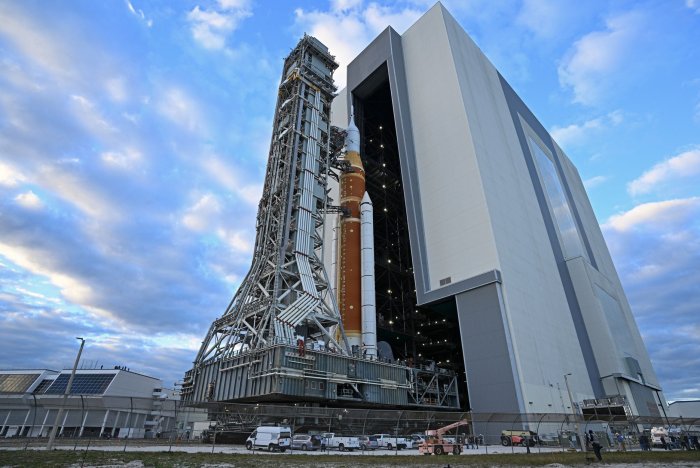
NASA’s Space Launch System rocket emerges on Saturday morning from the Vehicle Assembly Building to start its journey to Launch Complex 39B at the Kennedy Space Center in Florida. Photo by Joe Marino/UPI | License Photo
Japan’s Defense Minister Shinjiro Koizumi speaks with media after meeting with South Korea’s Defense Minister at the headquarters of the Japan Maritime Self-Defense Force Yokosuka District, south of Tokyo, Japan, 30 January 2026. Photo by EUGENE HOSHIKO / EPA
March 29 (Asia Today) — Japan will establish a new Pacific-focused defense unit and expand surveillance and infrastructure in remote island areas as part of efforts to counter China’s growing military presence, officials said.
Japanese Defense Minister Shinjiro Koizumi announced Saturday that the Defense Ministry will create a “Pacific Defense Planning Office” in April, citing what he described as gaps in Japan’s current defense coverage across vast Pacific air and maritime zones.
Speaking after attending a joint U.S.-Japan memorial ceremony on Iwo Jima, Koizumi said strengthening Pacific defenses was an urgent priority.
Japanese media, including the Yomiuri Shimbun, reported that Tokyo plans a comprehensive review of the structure and deployment of the Self-Defense Forces. The initiative will be reflected in planned revisions to key national security documents, including the National Security Strategy, later this year.
The government also plans to expand port facilities and radar networks across the Pacific, particularly in the Ogasawara Islands, which officials view as strategically vulnerable.
About 400 Self-Defense Forces personnel are currently stationed on Iwo Jima, but shallow coastal waters limit the ability of large vessels to dock. Authorities plan to begin feasibility studies next year to upgrade port infrastructure and establish supply systems for fuel and ammunition to support rapid fighter jet deployments. Runway reinforcement and measures to address volcanic risks are also under review.
Japan is also considering establishing an air defense identification zone over the Ogasawara Islands, where no such zone has been formally set since World War II, leaving what officials describe as a surveillance gap. The Defense Ministry plans to deploy mobile radar systems and build a permanent monitoring network in the area.
The moves come amid increased Chinese naval activity in the Pacific. China’s aircraft carrier Liaoning entered the Pacific beyond the so-called second island chain for the first time last year, and there have been instances of simultaneous carrier deployments. Japanese officials have also cited incidents involving Chinese aircraft tracking Japanese military planes near Okinawa.
Koizumi said deepening the U.S.-Japan alliance would be key to maintaining regional stability, adding that the new office would serve as a central hub for reorganizing Japan’s Pacific defense posture.
Iwo Jima, the site of one of the fiercest battles of World War II, remains a strategic location. Nearly 29,000 casualties were recorded there during the 1945 battle between U.S. and Japanese forces. Today, it is being repositioned as a key forward base in Japan’s evolving defense strategy.
EMMA Bunton has been spotted beaming alongside pal Holly Willoughby at a Disney launch after the Spice Girls reunion was cancelled.
The singer, 50, attended the press day of Disney Adventure World and World Of Frozen at Disneyland Paris in France on Saturday.
Sign up for the Showbiz newsletter
Thank you!
Emma Bunton posed alongside pal Holly Willoughby at a Disney press launch in ParisCredit: GettyShe looked chic as she embraced the Disney spiritCredit: Getty
She appeared to put her band’s woes to one side as she posed for pictures with her longtime friend Holly, 45.
Baby Spice got into the spirit of things by donning a pair of Mickey Mouse ears as well as a tie with the famous character on it.
She looked chic in a white shirt tucked into a pair of straight leg jeans and a cream wool coat.
Emma wore her blonde locks straight and opted for a subtle make-up look.
Meanwhile, Holly wore a black t-shirt tucked into jeans with a black coat and some brown boots.
She too got into the Disney spirit with a set of ears as the two put on their widest smiles for photos.
The two women have been firm friends for several years and are often spotted socialising with their group of friends, including Melanie Blatt and Christine Lampard.
Emma’s appearance comes after The Sun exclusively revealed that the Spice Girls’ 30th anniversary reunion has been cancelled after they failed to pull their plans together in time.
Emma, as well as Mel C, Mel B, Victoria Beckham and Geri Halliwell-Horner had been in talks to reunite for a string of concerts to mark three decades since the release of their debut single Wannabe.
The Sun understands they failed to reach an agreement and plans for a comeback tour in 2026 have been ditched.
Confirming the news during an interview on The Smallzy Show on Australia’s KIIS Radio, Mel C, 52, said: “No, there is no reunion.
“We are communicating all the time. We want to do something – who knows when.
“But I still feel very optimistic and I keep my fingers crossed that you will see the Spice Girls together at some point in the future.”
The Sun told last April how Geri, 53, was back in touch with the band’s former manager Simon Fuller and had flown out to Miami to try and agree on a deal.
It comes as it was revealed that the Spice Girls reunion has been cancelledCredit: Instagram
As recently as January, Mel C had insisted they were still in active discussions about celebrating the milestone.
And even Victoria, 51, had prompted hopes she could return to the group, saying she “loves” the idea of a residency at Las Vegas venue Sphere.
She said in October of the prospect: “It would be tempting. But could I take on a world tour? No I can’t. I have a job…
“How good would the Spice Girls be at the Sphere! I love the idea of it. I mean I don’t know if I could even still sing, I mean I was never that great!”
However, in recent weeks, plans have fallen apart, with just a collectible coin from the Royal Mint being announced to mark the anniversary.
A planned Netflix drama based on the group was shelved last month amid reported tensions in the group.
The Spice Girls have not performed together as a five-piece since the London 2012 Olympics closing ceremony.
They last reunited without Posh in 2019 for a sold out 13-date stadium tour of the UK and Ireland, selling 700,000 tickets and making £4.4m each.
The group are celebrating 30 years since the release of their hit song WannabeCredit: Getty
FORMER glamour model Katie Price has sparked mystery as her new travel business venture has been shut down just two weeks after its launch amid backlash.
The 47-year-old had created a “Katie Price Travels” Instagram page, trying to recruit agents for InteleTravel under the brand Travel Smarter Group.
Sign up for the Showbiz newsletter
Thank you!
Katie Price appears to have shut down her new travel venture just two weeks after it was launchedCredit: GettyKatie was spotted advertising for new travel agents as she appeared to set up her business venture alongside Danielle LloydCredit: The Travel Smarter Group
Travel Smarter Group “co-founded” by Danielle, promises travel perks, training and financial protection but does not include clear details of its host agency.
The podcast host received a slew of backlash from the travel industry, who branded the venture a “gimmick” and a “slap in the face.”
Katie was most notably called out by Inspire Europe chief executive Lisa Henning.
She criticised the star’s move and accused her of bringing down the industry name amid the ongoing war in the Middle East.
Lisa wrote, as reported by Travel Weekly: “I very rarely comment publicly on things like this. But seeing this today is a step too far.
“For the past 12 days I have worked non-stop, 24/7, supporting our clients and our agents through the disruption affecting Dubai and other destinations.
“I’ve seen agents in tears because they care so much about their clients and are genuinely worried about what’s happening.
Katie was slammed by Inspire Europe chief executive Lisa who dubbed her business a ‘gimmick’ and ‘slap in the face’ amid the ongoing war in the Middle EastCredit: Splash
“To see promotions suggesting that you can simply ‘earn money from travel’ with a glossy campaign featuring Katie Price and Danielle Lloyd — positioning the role of a travel agent as something you do casually around other commitments — honestly feels like a huge mockery of our industry.
“This isn’t a side hustle. This isn’t a gimmick. And it certainly isn’t ‘easy money while you travel’.”
Lisa continued: ” Seeing this kind of messaging feels like a real slap in the face to the thousands of dedicated agents who work tirelessly behind the scenes every single day.
“Well done and thank you to all of those who continue to give our industry a good name by doing this job ‘properly’. Always book with a ‘real travel agent’.”
Following the negative response, the model appears to have now deleted her travel page on Instagram.
Katie’s PA has responded to the remarks, according to Travel Gossip.
“Katie has never stated that she personally books travel. She is simply sharing this platform with others to help people become independent travel agents and create an additional income – whether that be part-time or full-time.
“All agents within the community receive full training and are committed to supporting their clients.”
She added: “Katie was simply advertising an opportunity call.”
Katie’s PA responded to the comments claiming the star was simply advertising an ‘opportunity call,’ according to Travel GossipCredit: Getty
One of the drone overflights took place earlier this month at Barksdale Air Force Base in Louisiana, home of B-52 Stratofortress bombers and nuclear weapons storage facilities, and a key part of the airborne leg of America’s nuclear triad. Another was at an unspecified installation last month, the commander of U.S. Northern Command mentioned in recent written testimony for the Senate Armed Services Committee (SASC). Both situations took place after the U.S. began bombing Iran in a campaign that has included B-52, B-1 Lancer and B-2 Spirit bombers. It is unknown at this point if there is a connection, however, as we have frequently reported, the military is highly concerned about drones operating with near impunity over its facilities. In addition to interfering with flights and their potential use as weapons, drones can surveil and map the electronic emissions throughout a base, gaining insight into vulnerabilities. They can also photograph key areas and operations, providing additional valuable intelligence for any adversary.
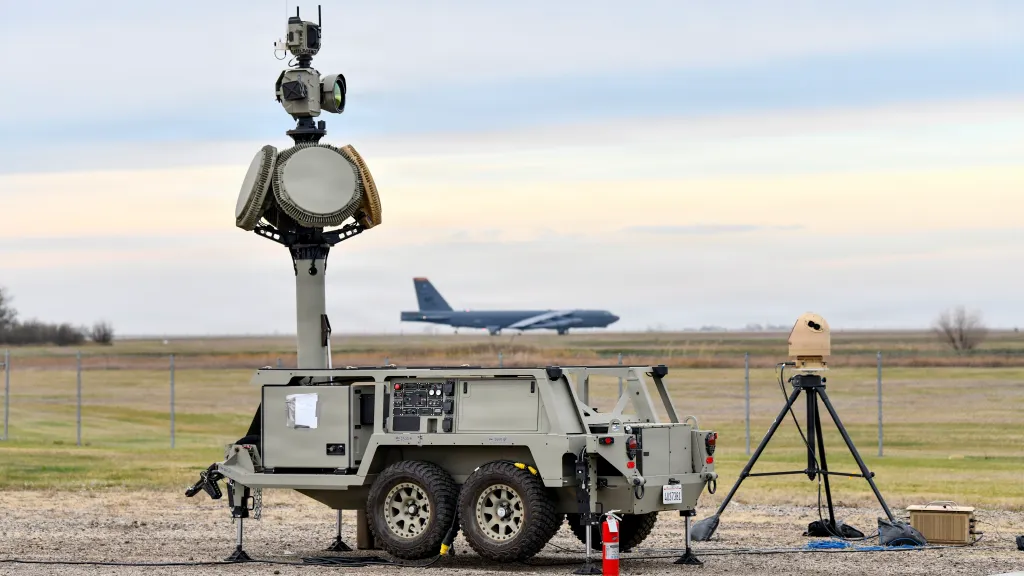
One of these incidents spurred NORTHCOM to deploy its new counter-drone fly-away kit, designed to give installation commanders the ability to detect, quantify, and defeat small drones that they cannot defend against on their own. We’ll discuss that in greater detail later in this story.
A B-52 Stratofortress from the 5th Bomb Wing taxis at Minot Air Force Base, N.D., Oct. 26. 2025. The U.S. Northern Command Counter-small Unmanned Aerial System fly-away kit, seen in the foreground, and operators were rapidly deployed to the North Dakota base as part of an exercise to demonstrate the command’s ability to quickly support installation commanders experiencing a drone incursion. (Department of War photo by John Ingle) John Ingle
The incursions at Barksdale began the week of March 9, a spokesperson for the 2nd Bomber Wing at the base told us, offering few details about what happened beyond saying “we are working closely with federal and local law enforcement agencies to investigate these incursions.”
The incident sparked a shelter-in-place order lifted later that day.
According to ABC News, a confidential briefing document dated March 15 stated that the “drones came in waves and entered and exited the base in a way that may suggest attempts to ‘avoid the operator(s) being located,’” the network reported. “Lights on the drones suggested the operators ‘may be testing security responses’ at the base.”
“Between March 9-15, 2026, BAFB Security Forces observed multiple waves of 12-15 drones operating over sensitive areas of the installation, including the flight line, with aircraft displaying non-commercial signal characteristics, long-range control links and resistance to jamming,” the document stated. “After reaching multiple points across the installation, the drones dispersed across sensitive locations on the base.”
The document added that more drone incursions could be expected and that they “pose a significant threat to public safety and national security since they require the flight line to be shut down while also putting manned aircrafts already inflight in the area at risk.”
It is not publicly known if there have been any additional incursions since the document was issued. Base officials declined to tell us.
A U.S. Air Force B-52H Stratofortress aircraft assigned to the 2nd Bomb Wing sits on the flightline at Barksdale Air Force Base, Louisiana. (U.S. Air Force photo by Senior Airman Laiken King) Senior Airman Laiken King
Another incident took place at an unspecified location in February as the U.S. was beginning to attack Iran.
“In the early hours of Operation EPIC FURY last month, a deployed [fly-away kit] successfully detected and defeated sUAS operating over a strategic U.S. installation,” Air Force Gen. David M. Guillot, the commander of NORTHCOM, explained in a written statement to SASC on March 19.
Guillot did not say which base or provide any other details. On Tuesday, a NORTHCOM spokesperson declined to specify which base Guillot was referring to but confirmed there were multiple incursions and personnel used the flyaway kit’s “jamming protocol.”
“We will not name the base nor the type of installation where our Flyaway Kit is deployed in order to preserve operational security,” NORTHCOM added. “Specifically, connecting the Flyway Kit to a specific base can potentially illuminate that base’s vulnerabilities to an adversary. Additionally, by confirming a specific Counter-small Unmanned Aircraft System (C-sUAS) platform, we would potentially give an adversary an advantage in circumventing our C-sUAS capabilities at that location.”
So far, NORTHCOM has only one fly-way kit, but more should be delivered “in the Spring of 2026,” Guillot added in his written statement.
The kit currently deployed is produced by Anduril. The company describes it as a “rapidly deployable, modular, and battle-tested counter-UAS system designed to detect, track, identify, and defeat Group 1-3 drones.” It uses Anduril’s Pulsar system for radio-frequency detection and electromagnetic effects to jam radio signals controlling drones. There are also drone-on-drone interceptors. You can read more about that in our story about the system here.
While Guillot offered scant details in his written testimony, he provided some additional insights into the military’s efforts to counter drones over the homeland. His command is tasked with coordinating those efforts.
“We’ve seen an increase from last year in the number of detections over military installations over the course of the year.,” he said in response to a question from Sen. Eric Schmitt (R-MO), who represents Whiteman Air Force Base, home of B-2s used in Epic Fury. “Some of that might be due to the fact that we have more detection capability now than we did in the past, and then our ability to defeat them has improved. Whereas a year ago, almost every one that was detected was not defeated, now about a quarter of the ones that we detect we’re able to defeat. I pay particular attention to Whiteman and other strategic bases, whether submarine silos or aircraft, and work very closely with Admiral [Richard. A] Correll at STRATCOM to make sure that either through the services or through our own capabilities at NORTHCOM, we are protecting those vital locations from UASs.”
Northcom, Southcom Commanders Testify Before Senate Armed Services Committee 03.19.2026
Whiteman declined to comment about whether that base has seen any drone incursions, citing operational security concerns.
That these latest drone flights took place in the wake of Epic Fury is alarming. Iran’s drone capabilities loom large in the mind of U.S. intelligence even here in the homeland. Also, it’s worth noting that B-52s at Barksdale sit almost entirely out in the open and, with just 76 of these airframes available across the force, they are extremely valuable assets and thus potentially very high-value targets. This is especially true since there are just a few that could be regenerated if any are lost. Moreover, Stratofortresses are expected to provide a large portion of U.S. conventional and nuclear aerial strike capabilities for decades to come.
We have been warning about the threat to American aircraft on flightlines from even the lowliest of drones for many years. These warnings have taken on new urgency after last year’s Ukrainian near-field attacks on Russian long-range aviation, dubbed Operation Spider Web. This operation alone suddenly turned what were once theoretical nightmares into very real possibilities.
We will continue to monitor this situation and provide updates when warranted.
The Mirus website states: “Designed for airlines operating short to medium-range flights of around 5 hours in standard specification, but available in ‘Enhanced Comfort’ specification to comfortably open up longer routes — the Kestrel transforms travel for passengers through unbeatable levels of legroom.”
They’re set to be rolled out across the Airbus A320neo and A321neo fleet in 2028.
David Morgan, chief operating officer, said: “The additional legroom and enhanced comfort these seats will provide will also deliver an improved onboard experience for our customers which we know they’ll love.”
TURKEY has urged tourists that the country is still safe to visit, after seeing a slight drop in tourism.
The country has not been part of the Iran crisis, and the majority of Turkey – including the tourist resorts – remain safe to travel.
Sign up for the Travel newsletter
Thank you!
Turkey officials are urging the country is still safe to travelCredit: GettyPlaces like Antalya, Istanbul and Bodrum have no travel warnings in placeCredit: Getty
Despite this, On The Beach confirmed that they had experienced a drop in demand for destinations like Turkey.
But tourism authorities in Turkey have since confirmed that tourism is “still normal” across the country, which welcomed more than 4.2million Brits last year.
The Ministry of Culture and Tourism of the Republic of Türkiye has teamed up with Türkiye’s Tourism Promotion and Development Agency (TGA) to reassure tourists.
They confirmed that “holidays to Turkey are operating as usual, and nothing has changed”.
They added: “Every resort, hotel, excursion and experience is operating as booked – and there have been no closures, disruptions or government-issued restrictions on tourism activity anywhere in the country.”
Not only that but they said “no Turkish airport has been subject to closure, restriction or rerouting due to regional events”.
This includes the popular airports of Istanbul, Antalya Bodrum and Izmir.
And there are some super cheap Turkey holidays on sale right now.
You could spend a week all-inclusive at a Turkish holiday resort for just £199 each, which includes your seven night stay, return flights and your food and drink.
The cheap deal is staying at Ares Dream Hotel in Antalya, according to loveholidays.
Or spend a month for nearly half the cost than the average rent in the UK (£1,368), with a 28-night, all-inclusive stay from £619pp.
Even the summer holidays have cheap deals with seven nights at Hotel Linda in Kas from £469pp in August.
The current UK Foreign Office advice is that all of Turkey is safe to travel to, excluding the border with Syria.
Other bits of travel advice is to always carry around some form of photo ID such as a passport when travelling in Turkey.
Smoking is also banned on all public transport, as well as at bars, restaurants and cafes.
It’s not just Turkey that has seen a drop in tourism due to Iran, despite being safe to visit.
Egypt is seeing a drop in numbers, as well as Cyprus following an RAF base attack.
The BHA’s research into underrepresented groups in racing highlighted “negative experiences, barriers to progression (which are often hidden), inconsistent support, and a lack of trust in reporting systems”.
A study which focused on the Urban Equestrian Academy – a social enterprise aimed at providing people from inner-city and diverse backgrounds access to horses and equestrian – found that all 20 participants had reported experiencing racism.
In the same study, all participants said that race had impacted their career progression.
One participant shared that they had thought about suicide “on a few occasions because of the way I was treated”.
Meanwhile, 40% (67) of respondents in a separate survey said they had experienced, witnessed, or had reported to them inappropriate or poor behaviour because of ethnicity or cultural background.
Some reported verbal abuse including aggressive racist language such as “dirty refugee” and “better off if you had been bombed”.
“The strategy is rooted in evidence and shaped by the lived experiences of people working in racing today, and we offer a huge thank you to those who have taken the time and shown the courage to share these with us,” the BHA’s head of diversity and inclusion, Rose Grissell, said.
“Many have positive experiences, but not everyone does, and acknowledging that is an important step in supporting positive progress.
“Our aim is to make inclusion part of everyday practice, not an optional extra.”
The BHA’s new equality, diversity and inclusion strategy includes the following proposals:
Strengthen leadership and accountability
Build equitable practices to address bias and barriers
Improve education and awareness to act inclusively
Better support and celebrate an inclusive culture
Engage new audiences and make the sport more accessible
BHA chief executive Brant Dunshea said the new strategy was about ensuring the “long-term health and success” of horse racing.
“To attract talent, fans and investment, we must ensure that everyone who works in or engages with racing feels safe, respected and able to thrive,” he said.
“British racing is at its best when it is open, welcoming and reflective of the society around us.”
DISNEY is launching another cruise ship next year – with some first time princess appearances.
In 2027, Disney Cruise Line will be launching its ninth ship called the Disney Believe.
Sign up for the Travel newsletter
Thank you!
Disney Cruise Line is launching a new ship next year called Disney BelieveCredit: Disney Cruise Line
The ship will be the fourth ship in the Wish class, joining Disney Wish, Disney Treasure and Disney Destiny.
It will be themed on “dreamers and doers who dare to pursue their own happily ever after”.
On board, stories that will be featured will be from Disney, Pixar, Marvel, and Star Wars.
Each Wish class ship features its own theme, for example Disney Wish is enchantment-themed, Disney Treasure is adventure-themed and the Disney Destiny is heroes and villains-themed.
Disney Believe will be ‘promise and possibilities-themed’.
Disney Cruise Line stated: “Onboard the Disney Believe, powerful tales of characters who believe in themselves and their dreams will come to life in exciting new ways.
“From the mystical worlds of Encanto and Frozen, to the wishing wells of Snow White, to the depths of the sea with Moana and The Little Mermaid, there are endless stories waiting to be discovered and new chapters ready to unfold onboard.”
These characters already feature onboard some of the Wish class ships, with an Arendelle dining experience onboard the Disney Wish.
However, Snow White currently does not feature prominently on any of the current Wish class ships.
The Disney Believe is expected to launch in late 2027.
Disney also announced last month that the Disney Wish ship will be coming to the UK next year.
The ship will sail from Southampton on three to seven-night European sailings.
Entering through the Grand Hall, passengers will meet famous Disney princes and princesses.
Inside each stateroom, passengers will find spacious wardrobes, sprawling beds and a theme specific to a Disney character.
Disney Believe will be promise and possibilities-themedCredit: Disney Cruise
When it comes to food on board the ship, guests won’t be short for choice, with market-style buffet options and immersive dining adventures, such as Arendelle: A Frozen Dining Adventure.
As for other entertainment, passengers can head to West-End style shows including Disney Seas the Adventure, where passengers follow Goofy on a journey sailing the ship.
For a thrilling adventure, head on the Disney AquaMouse ride, which features lighting, special effects and scenes of Mickey and Minnie on different adventures.
And the ultimate night for the whole family is Pirates’ Night, where Captain Jack Sparrow takes a fateful leap from the ship’s funnel.
Parents wanting some time to themselves can check their kids into either the full-service nursery or kids and teens clubs before exploring the ship’s adult-only spaces such as the Senses Spa & Salon.
The cheapest sailing is a three-night Belgium cruise from Southampton, sailing to Zeebrugge (Bruges) in Belgium costing from £1,633 for two people.
In other cruise news, here’s the ultimate family cruise – it has a water roller coaster, a private island and an onboard beach club.
WASHINGTON — Republicans launched an unprecedented effort on Tuesday to hold the Senate floor and talk for days about a bill that they know won’t pass — an attempt to capture public attention on legislation requiring stricter voter registration rules as President Trump pressures Congress to act before November’s midterm elections.
The talkathon could last a week or longer, potentially through the weekend, as Senate Majority Leader John Thune (R-S.D.) tries to navigate Trump’s insistence on the issue and Democrats’ united opposition. Trump has urged Thune to scrap the legislative filibuster, which triggers a 60-vote threshold in the 100-member Senate, or find another workaround to pass the bill, but Thune has repeatedly said he doesn’t have the votes to do that.
Instead, Republicans intend to make a long, noisy show of support for the legislation, which would require Americans to prove they are U.S. citizens before they register to vote and to show identification at the polls, among other things. It’s a risky strategy, with no guarantee it will be enough for Trump, who has said he won’t sign other bills until the Safeguard American Voter Eligibility Act — also known as the SAVE America Act or the SAVE Act — is passed.
The floor debate is expected to eventually end with a failed vote. Republicans need 60 votes to advance the bill to a final vote, but they hold 53 seats, and all 45 Democrats and both independents, who caucus with the Democrats, oppose it.
The debate will “put Democrats on the record,” Thune said. He added that “how it ends remains to be seen.”
The Senate voted 51 to 48 Tuesday to begin the debate, with Alaska Sen. Lisa Murkowski the only Republican voting against moving forward on the bill.
In a social media post on Tuesday morning, Trump issued a warning to any Republican who doesn’t support the bill: “I WILL NEVER (EVER!) ENDORSE ANYONE WHO VOTES AGAINST ‘SAVE AMERICA!!!’”
Creating strict voter registration rules
Trump says, without evidence, that Democrats can only win in the midterms if they cheat and explicitly said Republicans need the SAVE America Act to win in November. The House passed the legislation earlier this year, but the Senate turned to other issues as it became evident that Republicans didn’t have the votes to pass it.
But Trump made clear he wasn’t satisfied and pushed the Senate to act. The Republican president has said he won’t sign other legislation, including a bipartisan housing bill backed by the White House, until the voting bill passes.
The bill contains a slew of provisions that Trump and his most loyal supporters have pushed as part of a broad effort to assert federal control over elections. It would require voters nationwide to provide proof of citizenship when they register and to show accepted voter identification when casting a ballot.
It would also create new penalties for election workers who register voters without proof of citizenship and require states to hand voter data over to the Department of Homeland Security so federal officials could screen for voters who are in the country illegally.
Trump also wants new provisions added to the bill, including a ban on most mail-in ballots.
“It’ll guarantee the midterms,” Trump said of the bill last week. “If you don’t get it, big trouble.”
Democratic opposition to the bill is firm
Democrats and many groups that champion voter access say there is little evidence of noncitizens voting and say the bill would disenfranchise millions of voters — including Republicans — by creating new burdens to prove citizenship.
It is already illegal to vote if you are not a U.S. citizen, but the bill would lay out strict new rules for paperwork that most people would have to present in person to register to vote. Opponents of the measure say those documents are not always readily available for many people and argue that it would kill voter registration efforts and unfairly penalize young people who are registering to vote for the first time, married women who change their last name and people who cannot travel to present their documents, among other groups.
While Republicans have focused on the bill’s new requirements to show identification when they show up to vote, Democrats say they are most concerned that the legislation would allow the federal government to take voters off the rolls.
Senate Minority Leader Chuck Schumer (D-N.Y.) said that Democrats are not opposed to voter identification but “this is about purging the voter rolls in a massive way, so you never even get the chance to show a voter ID when you showed up to vote.”
Expect a show on the Senate floor
Trump, backed by Republican Sen. Mike Lee of Utah, has pushed for a talking filibuster, which would force Democrats to talk for days or weeks to delay passage of the bill. But Thune and the larger GOP conference rejected that idea, arguing that it would end in failure after giving Democrats a stage and the opportunity to offer endless amendments, potentially adding their priorities to the bill.
Republicans are instead taking over the floor with their own speeches, proceeding under regular order but operating outside the normal time limits that are customary when debating legislation. Democrats are expected to answer with their own procedural hijinks, potentially forcing Republicans to come to the floor at all hours for votes, meaning they will need to stay close to the Senate for the duration.
Lee said last week that it’s unclear how it will all play out. He said he thinks Trump “understands that we need to put in an aggressive effort here.”
“And a lot of that,” he said, “is going to have to be determined in real time as we go about it.”
The extent of Trump’s satisfaction with the process, Lee said, “will depend on whether, in his view, we gave it everything we have.”
On Monday night, Lee was rallying voters in Trump’s base on X.
“Once we’re on this bill,” he wrote, “we must stay on it until it’s passed into law.”
Jalonick writes for the Associated Press. AP writer Lisa Mascaro contributed to this report.
The popular Canary Islands holiday destination recorded 84 earthquakes over the weekend near Mount Teide, with officials starting work on a contingency plan in case of an eruption
Tenerife reported 84 earthquakes at the weekend(Image: Getty)
Tenerife experienced 84 earthquakes over the weekend, prompting officials to initiate a “plan for disaster”. The National Geographic Institute (IGN) reported that the tremors were detected in the western part of Las Canadas on the island.
Approximately 59 of these seismic events were accurately located, which they claim occurred around Mount Teide. The most notable activity consisted of two low-frequency pulses around the Canary Island.
One happened between 1.30am and 5.30am on Saturday, with the second recorded between 7.30am and 10.30am on Sunday. It’s believed they both occurred at depths of roughly eight and 21km below Las Canadas, each registering low magnitudes.
However, the IGN has stated that these figures are provisional and could potentially rise. It stresses that this type of activity does not indicate an increased risk of a volcanic eruption in the forthcoming weeks or months, according to Canarias7.
This follows reports that the Santa Cruz de Tenerife Council has begun preparations on a contingency plan in the event of an eruption. Mount Teide, Spain’s tallest peak, last erupted in 1909, reports the Express.
A specialised technical department has now been set up to devise an action plan should it erupt again. The plan aims to bolster the city’s readiness and ensure it can provide shelter and essential services.
It’s believed the city could presently manage a “moderate emergency” but there are concerns a major eruption could pose more significant challenges. Santa Cruz Mayor Jose Manuel Bermudez stated: “We don’t know how it will happen, how it will develop, or when it might occur.
“But scientists have indicated that current volcanic developments on the island are not something normal.”
The IGN monitors seismic activity in Spain through a network of over 100 stations, equipment and sampling points which are deployed throughout Tenerife. This enables continuous surveillance.
Scientists can therefore conduct real-time monitoring to detect potential changes in seismic activity, ground deformations, or geochemistry. Tenerife, the largest of Spain’s Canary Islands, is encircled by volcanic activity.
Whilst the mayor has expressed concerns about preparedness to handle an eruption, the president of the island’s governing council, the Cabildo of Tenerife, Rosa Davila, has previously dismissed speculation.
Teide’s 1909 eruption resulted in “minor damage” on the island. Yet an earlier eruption in 1706 is reported to have destroyed a town along with Tenerife’s main port of Garachico.
“A month and a half ago this activity would not have attracted much attention,” a spokesperson for the local National Geographic Institute said. “However, given the current context we will continue to monitor the situation closely in case anything changes.”
Budget rail operator Lumo is starting a new route between London and StirlingCredit: AlamyStirling is a Scottish city that is north of Glasgow and EdinburghCredit: Alamy
Rail travel across the UK can be very expensive but Lumo, which is part of FirstGroup, is known for its affordability.
Starting July 10, Lumo will start its new route from London Euston to Stirling for as little as £29.90.
When the service launches it will have four daily return trains between the two cities.
Between the two cities, trains will call at Milton Keynes, Nuneaton, Crewe, Preston, Carlisle, Lockerbie, Motherwell, Whifflet, Greenfaulds and Larbert.
For those travelling between London and Preston, tickets start from £23.90.
And between Preston and Stirling, tickets can be booked from £14.90.
Stirling sits north of both Glasgow and Edinburgh and it’s known for its huge historic castle and even has an interactive Old Town Jail attraction.
Visitors often head to The National Wallace Monument which is a 220ft tower in the countryside.
The city also has a high concentration of pubs for its size – the oldest alehouse is The Settle Inn which has been serving ale since the 1700s.
Stuart Jones, managing director of First Rail Open Access, which runs Lumo said: “These fares are about putting customers first.
“By offering simple, low-cost tickets and direct services between Scotland, the north west of England and London, we’re making it easier and more affordable for people to travel for work, leisure and family visits.”
Onboard a Lumo train, there are no first class seat options – but wherever passengers sit, there’s access to USB sockets and tray tables.
Lighting can be personalised by using the button on the back of the seat in front of them.
Lumo has no first class seats but all passengers get USB sockets and free Wi-FiCredit: Alamy
Passengers can also use the free Wi-Fi, and each seat has a winged headrest for comfort and a coat hanger.
Lumo offers other routes too like London King’s Cross to Edinburgh.
But its latest started in December 2025 from London to Glasgow.
The company announced the news on social media, it said: “Our new timetable starts on 14th December 2025!
“Our new Glasgow service will start in December and we’re also adding an additional service from Newcastle to London King’s Cross every weekday.”
Lumo runs two northbound and one southbound service on weekdays and one service in each direction on Sundays between London King’s Cross and Glasgow.
Rangers say “all parties must be prepared to have their actions and decision-making subjected to proper scrutiny”, with Celtic referencing “serious concerns” raised by supporters about pre-match access arrangements.
The Ibrox club have called for the review to be “thorough and wide-ranging” and to “include the broader context” around the match, from initial decisions on ticket allocation through to the post-match incidents.
Their statement adds: “The disorder that occurred on Sunday was unacceptable and we condemn it unequivocally. Safety must always come first in football, for supporters, players and everyone working in and around the game.
“There are now a number of serious issues which require proper examination. For that reason, we agree that there should be a fully independent review into the events surrounding the match.”
Rangers have vowed to represent the club and their supporters “robustly” but say they will take action – “including the potential withdrawal of ticketing privileges and stadium bans” – against anyone identified and convicted.
The club also say they are “appalled” to discover graffiti mocking the Ibrox disaster, which claimed the lives of 66 supporters in January 1971.
They add: “To desecrate their memory is vile. It is cowardly. It is shameful. This is not football rivalry and it is not banter. It is the abuse of a tragedy that claimed 66 lives.”
Meanwhile, Celtic say they are awaiting a response from the Green Brigade regarding safety and security measures – as required by the police and Glasgow City Council’s Safety Advisory Group – to allow the club “to advocate re-entry” of the banned fan group to Celtic Park.
North Korean leader Kim Jong Un (R) oversaw the test-fire of strategic cruise missiles from the naval destroyer Choe Hyon, state-run media reported Wednesday. In the photo, Kim watches the launch via video feed with his daughter Kim Ju Ae. Photo by KCNA/EPA
SEOUL, March 11 (UPI) — North Korean leader Kim Jong Un oversaw the test-firing of strategic cruise missiles from a naval destroyer, state media reported Wednesday, as the United States and South Korea began a large-scale joint military exercise this week.
The North’s Choe Hyon destroyer launched the missiles at island targets in the Yellow Sea on Tuesday, the official Korean Central News Agency said, with Kim watching via a video feed. The missiles flew for roughly two hours and fifty minutes before striking their targets, KCNA said.
Pyongyang described the weapons as “strategic,” a term it typically uses for systems capable of carrying nuclear warheads.
The launches came days after North Korea conducted a similar cruise missile test from the destroyer ahead of its commissioning.
The test also coincided with the start of the allies’ annual Freedom Shield exercise on Monday, an 11-day program of command-post simulations and field training drills.
North Korea has long condemned the joint exercises as rehearsals for invasion. On Tuesday, Kim Yo Jong, the powerful sister of Kim Jong Un, warned that the drills could destabilize the region and lead to “unimaginably terrible consequences.”
After observing the launch, Kim praised the “superiority of the destroyer’s integrated combat system,” according to KCNA.
“The components of our war deterrent are now being included in the very sophisticated operational system … and the country’s nuclear forces have made a switch to the phase of multifaceted operation,” Kim said.
Images released by state media showed Kim watching the test alongside his daughter Ju Ae, who has appeared frequently with her father at major events. South Korea’s spy agency said last month that Ju Ae, believed to have been born in 2013, appears close to being designated as Kim’s successor.
Pyongyang launched the Choe Hyon, its first 5,000-ton destroyer, last April as Kim called for strengthening the country’s naval capabilities. North Korean reports say the vessel carries a range of weapons, including nuclear-capable cruise missiles and tactical ballistic missiles.
Photos released by state media show the ship’s missile and radar systems resembling those found on Russian vessels, prompting speculation Pyongyang may have received technical assistance from Moscow.
North Korea has deployed troops, artillery and weapons to support Russia’s war in Ukraine and is believed to be receiving financial support and advanced military technology in return.
A second destroyer, the Kang Kon, suffered an accident during its launch ceremony last year that left it listing on its side before it was repaired and relaunched in June.
Kim has ordered another 5,000-ton destroyer completed by Oct. 10, the anniversary of the founding of the ruling Workers’ Party of Korea.
As anxiety mounts among California Democrats about the potential of a Republican being elected governor, the state party will spend hundreds of thousands of dollars on polling to assess the viability of the sprawling field of candidates hoping to replace termed-out Gov. Gavin Newsom, according to plans released Tuesday.
“Candidates have filed, and now they’ve got the opportunity to showcase their viability, their path to win. I want to simply ensure that everybody has information to fully understand the current state of the race,” said Rusty Hicks, the leader of the California Democratic Party.
As campaign season ramps up, the series of six polls will allow “candidates, supporters, the media, voters, anyone and everyone to have a clear understanding of what is or is not happening in this particular race,” he said.
The filing deadline to appear on the June 2 ballot was Friday. Three days earlier, Hicks released an open letter urging candidates who did not have a path to victory to withdraw from the race. Of the nine prominent Democrats who had announced runs for governor, only one heeded his call: former state Assembly Majority Leader Ian Calderon.
That means the eight other candidates’ names will appear on the ballot, regardless of whether they decide to later drop out. And that creates the possibility of a Republican winning the race because of how California elections are decided.
The state has a voter-approved top-two primary system, under which the two candidates who receive the most votes in the June primary advance to the November general election, regardless of party.
Two prominent Republicans will appear on the ballot: former conservative commentator Steve Hilton and Riverside County Sheriff Chad Bianco. Even though Democratic voters outnumber Republicans nearly 2 to 1, and the state’s electorate last elevated Republicans to statewide office in 2006, it is mathematically possible for Democrats to splinter the vote, allowing the two GOP candidates to advance.
Under such a scenario, not only would Republicans be guaranteed the leadership of the nation’s most-populous state, but Democratic voter turnout also would probably be depressed in November, potentially affecting down-ballot races such as those that could determine control of Congress.
Hicks’ call last week prompted concerns among candidates of color, including former U.S. Health and Human Services Secretary Xavier Becerra and state Supt. of Public Instruction Tony Thurmond, that the effort was aimed at every nonwhite candidate in the race.
The state party chairman responded that his letter was not aimed at any specific candidate.
“It’s not something I lose sleep over,” Hicks said when asked about the racial claims. But he added that the voter surveys will be conducted by Los Angeles-based Evitarus, the state’s only Black- and Latino-led full-service polling firm, and will oversample historically underrepresented communities: Latino, Black and Asian American voters.
Hicks said the polling will cost “multiple six figures” but did not specify the exact amount.
The first poll will be released on March 24, and then five additional surveys will come out every seven to 10 days until voters start receiving mail ballots in early May.
“We’re putting this forward to ensure everyone is armed with the information they need to clearly have an eyes-wide-open assessment of where the state of the race currently is between now and when ballots land in the mailboxes of voters,” Hicks said.
A UH-60 Blackhawk helicopter takes off from Camp Humphreys in Pyeongtaek on Monday as the United States and South Korea kick off their Freedom Shield joint military exercise. Photo by Yonhap
SEOUL, March 9 (UPI) — The United States and South Korea began their annual Freedom Shield joint military exercise on Monday, as speculation swirled that Washington may be shifting some military assets from the Korean Peninsula to the Middle East amid its widening conflict with Iran.
About 18,000 South Korean troops will participate in the exercise, which runs through March 19 and includes command-post simulations and field training drills. U.S. Forces Korea has not disclosed the number of American personnel involved.
The drills come as local media reports have raised questions about whether U.S. military equipment stationed in South Korea could be redeployed to support operations in the Middle East.
South Korea’s Yonhap News Agency reported Sunday that U.S. C-5 and C-17 transport aircraft landed at Osan Air Base in Pyeongtaek, south of Seoul, late last month before departing between Wednesday and Saturday.
The aircraft movements followed reports that U.S. Forces Korea relocated some Patriot missile defense systems to Osan from other American bases in the country.
Two Patriot batteries deployed with USFK were temporarily rotated to the Middle East in June last year during strikes targeting Iranian nuclear facilities, before returning to South Korea in October.
The Patriot system detects, tracks and intercepts drones, cruise missiles and short-range or tactical ballistic missiles at low- to mid-range altitudes. It forms a key component of South Korea’s layered missile defense network designed to counter threats from North Korea.
U.S. Forces Korea said last week it could not comment on the relocation or movement of its assets due to operational security.
South Korea’s Defense Ministry also declined to address the reports directly during a briefing Monday.
“There is constant communication between the U.S. military and our side,” ministry spokeswoman Jeong Bit-na told reporters. “We are always communicating closely to ensure that there are no security concerns or gaps.”
She added that the Freedom Shield exercise was proceeding as planned.
“The South Korea-U.S. joint exercise is being implemented normally regardless of the situation in the Middle East, and we are thoroughly implementing it as agreed and planned,” Jeong said.
The drills come as the administration of South Korean President Lee Jae Myung seeks to stabilize relations with Pyongyang, which routinely condemns the allies’ joint exercises as rehearsals for invasion.
The number of field training exercises during this year’s Freedom Shield has been reduced to 22, down from 51 conducted during the previous iteration of the drills under the conservative government of impeached former President Yoon Suk Yeol.
North Korea recently concluded a major congress of the ruling Workers’ Party, where leader Kim Jong Unpledged to expand the country’s nuclear arsenal and improve its delivery systems and operational capabilities.
At the same time, Kim appeared to leave the door open to future negotiations with the United States, saying there was “no reason” the two sides could not improve relations if Washington abandons what he described as its hostile policy.
Kim has previously said he has “fond memories” of U.S. President Donald Trump, whom he met three times during Trump’s first term. South Korean officials have pointed to Trump’s planned visit to China later this month as a possible opportunity to revive diplomacy with Pyongyang.
Kim has continued to take a hostile tone toward Seoul, however, recently describing South Korea as “the most hostile entity.”
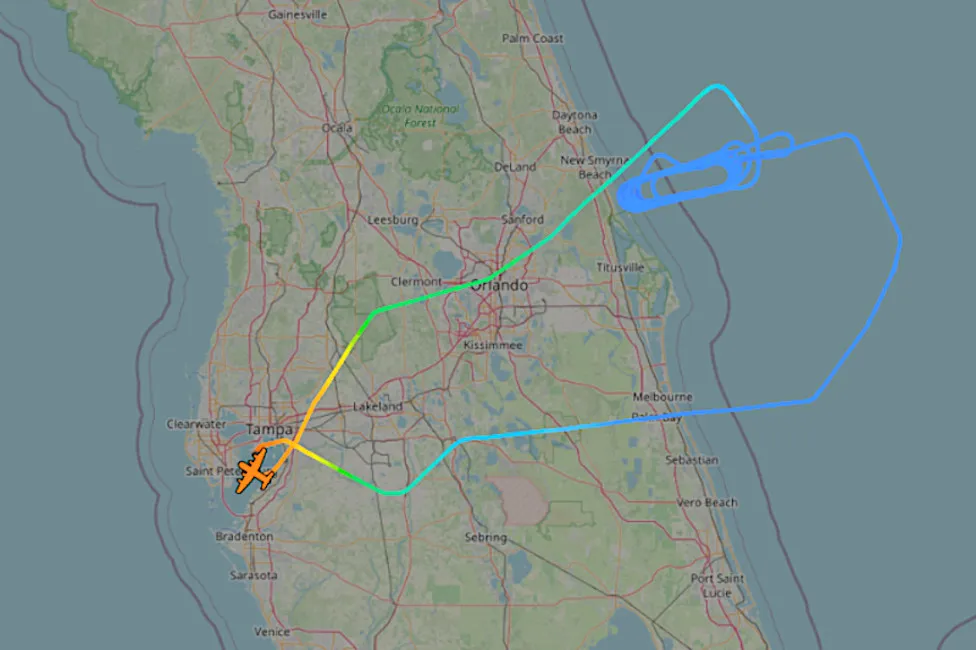





 Google’s Doodle is celebrating the launch of Artemis II. The mission will send astronauts around the moon and back for the first time in 50 years.