Strictly Come Dancing contestant Graeme Hall has been forced to defend his prior dance background on It Takes Two, after it emerged that he took part in ballroom and latin competitions
21:06, 29 Sep 2026Updated 21:06, 29 Sep 2026
Graeme Hall on Strictly Come Dancing(Image: Guy Levy/BBC/PA Wire)
Strictly Come Dancing star Graeme Hall has addressed his dance background on It Takes Two. He was the subject of online speculation after it emerged that he had entered ballroom and latin competitions in the past.
Graeme, 60, made his live Strictly debut on Saturday 26 September, when he and Lauren Oakley danced a Cha Cha Cha and surprised fans with how rhythmical he was. Soon after, fans took to the internet to share that the celebrity dog trainer did, in fact, have dance experience.
An online record was put on social media of Graeme’s dance scores from competitions, dating back to 2013 when he competed in an Over 35s Intermediate Latin contest. His most recent competition was was in 2019, when he took part in the ballroom section of the Champions of Tomorrow competition.
Graeme was asked about his dance experience on Strictly spin off show It Takes Two. Host Ellie Taylor said: “A lot of people online have been talking about the fact that you have had sort of some dance experience – do you think that’s helping you, do you think it’s something to be considered?”
To see more of the Strictly stories you love from The Mirror and to find them easily in Google then make us your preferred source. Free and easy-to-do, just click on the link here to find more from The Mirror at the top of your feed.
Graeme answered: “It does and it doesn’t. You’re right as a hobby I did a bit of ballroom and latin and I entered a few competitions. The problem with that is, I wasn’t very good then and that was quite a few years ago.”
He added that his dance partner Lauren had to “undo all the bad things that I was doing” and put it right and indicated with his hands that their training was very up and down.
Graeme and Lauren’s first dance was to Elvis Presley’s Hound Dog and they received 24 out 40 for their routine. Fans complimented the pair on their dancing, with one writing: “I already loved Graeme and we all know Lauren is a superstar but nothing could’ve prepared me for this! What a fabulous pairing and what a great first dance. Think I’ve found my winners already.”
Another added: “This is the only dance all night that had me smiling from beginning to end! Graeme has such an ease and quiet elegance when he dances and he’s so light on his feet! He also looks like he’s genuinely enjoying himself which translates to the viewer.
“I feel so relaxed and chill watching him and so uplifted! I can’t wait to see what him and Lauren do next. I think they will be fan favourites.”
Graeme has previously coughed up to the dance experience, saying: “I have danced it before, but I’ve had a real mental block over one particular step and my leg just keeps doing something in the opposite direction to the way it’s meant to go.
“I’m convinced it’s a bit of muscle memory from 10 years ago. So it’s as much a hindrance as a help.”
Lisandro Brusco is an Argentine political scientist and Palestine solidarity activist with a track record in geopolitical analysis and journalism focused on Global South struggles. He has contributed as a columnist to international media outlets such as Hispan TV, El Salto, Alma Plus TV, and Huellas del Sur, and is a prominent organizer at Masar Badil. In this exclusive interview, Brusco shares his perspective on the genocide in Palestine, analyzes the expansion of Zionism in Latin America, and outlines the challenges facing anti-imperialist internationalism.
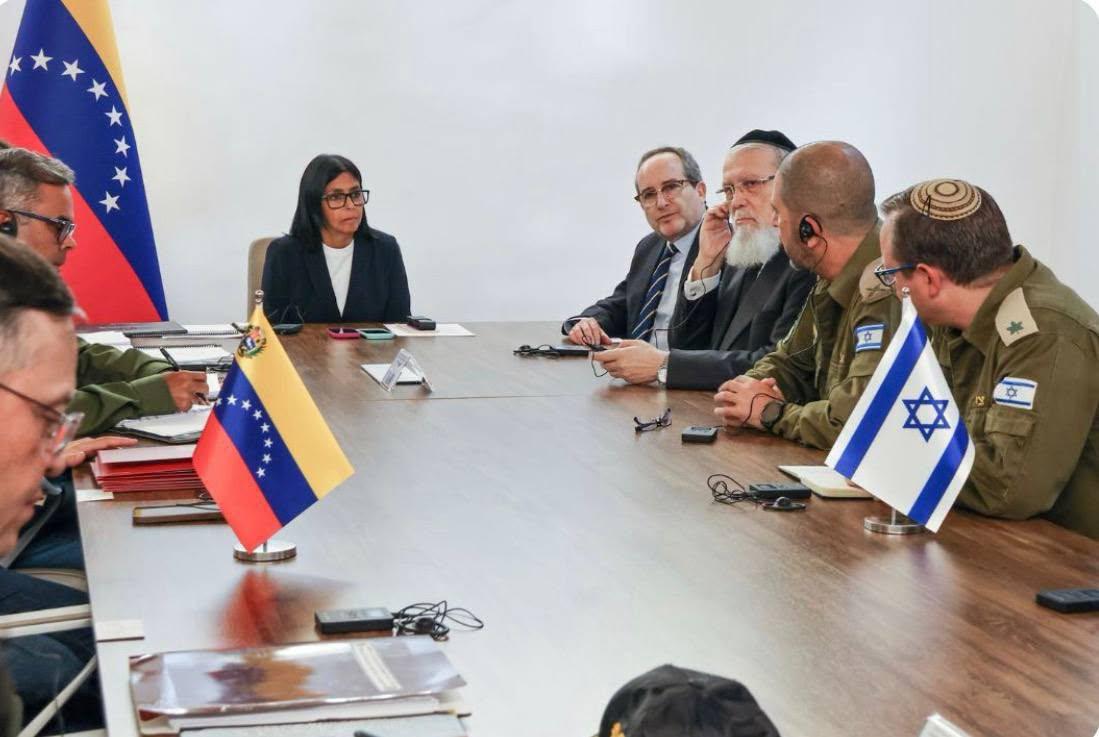
Venezuela recently announced the establishment of consular relations and “technical cooperation” with Israel. The rapprochement began with the arrival of a military-humanitarian contingent days after the June 24 earthquake. How can we explain that an army that destroys hospitals and schools and murders people in Gaza would travel to other countries to portray itself as a lifesaver?
What we saw in Venezuela after the double earthquakes, and in Colombia as well, is part of the Israeli colonial regime’s “humanitarian washing” policy. This involves sending humanitarian contingents to aid the civilian population following a natural disaster. The genocidal state of Israel seeks to restore the image it has lost, especially since October 7. On a global scale, its mask has slipped. People began to see, especially in the West, what the State of Israel was doing to the Palestinian people, even before October 7. After October 7, what we call a “televised genocide” became even more evident. Much credit goes to the press and grassroots journalists, many of whom have been killed, especially in the Gaza Strip.
Israel has lost the legitimacy it once enjoyed in global Western opinion as a democratic state, as a state constantly under attack by neighboring nations, by Arab countries. All those myths are crumbling.
“Humanitarian washing” is an attempt to say, “Here are the good guys coming to show solidarity with this population.”
How is it possible that a regime – which has destroyed more than 70% of the infrastructure in the Gaza Strip, which blows up hospitals, schools, and mosques, which has destroyed the agricultural production capacity, the very little the Gaza Strip had, which blocks the entry of humanitarian aid, could turn around and send so-called humanitarian contingents to other regions?
Some of these contingents include soldiers who have even been accused of genocide and are wanted for arrest.
How can this happen? Because governments complicit in this genocide allow these troops to enter their territories. Unfortunately, this is happening in Latin America.
This entire whitewashing mechanism is also applied on social media. In 2025, Israel invested $1 billion in PR firms, influencers, digital diplomacy, artificial intelligence, and so on. The settler-colonial regime needs to control search engines to steer information in its favor and create a permanent stranglehold on social media, so that the public consumes fake news it produces.
Venezuelan Acting President Delcy Rodríguez held multiple meetings with the Israeli military-diplomatic mission. (Presidential Press)
Israel’s influence in Latin America has been linked to the sale of surveillance technology and “combat-tested” weaponry used against the Palestinian people and on other fronts. As Venezuela normalizes its relationship with Israel, what are the main risks you see?
The Zionist lobby in Latin America operates in tandem with imperialist interests in the region. It is very important to highlight this premise in order to analyze the situation correctly and implement sound political strategies.
This is not a recent development: that organic link already existed between the Israeli colonial entity and the ecclesiastical-civil-military dictatorships that were imposed by blood and fire across Latin America in the 1960s and 1970s.
They were not individual Zionist links with each dictatorship, but with the imperial project being imposed on the region: Operation Condor, the US policy toward Latin America and the Caribbean aimed at quelling the revolutionary movements that were taking shape. Israel sold weapons and provided military training to those dictatorships.
The process continued with the so-called democratic transitions of the 1980s and gained new momentum following the US “War on Terror” offensive beginning in 2001. Today we also see this expressed in a clear strengthening of the ties between the Zionist movement, the State of Israel, and US imperialism.
This is not about particular interests, nor is there any intention to create a situation in Latin America similar to that in Palestine. Israel has no plan to build settlements in the region. Here, Zionism continues to support the capitalist imperialist interests of the United States.
We see this in the trade agreements that various governments have signed with Israeli surveillance, arms, and extractive companies.
For example, the Israeli state-owned water company Mekorot advises various provincial governments in Argentina on water management. Similarly, the Israeli company XtraLit is involved in the extraction of lithium, a strategic mineral for contemporary capitalism. Another example is Navitas Petroleum, an oil company that also extracts resources in Argentina.
The focus of these Israeli companies is the same as that of global capitalism: resources. And to ensure the extraction of resources, they need repression; that is why they have military companies, surveillance software, and so on.
Because what Israel has historically sold to the world is repressive technology tested on the ground. Who can better vouch for military tools than the genocidal regime par excellence?
Obviously, there is a political landscape in the region that facilitates all of this: governments like we have in Argentina, Colombia, Chile, and Ecuador. These are governments subservient to imperialist interests, which even create regional and global political structures such as the Isaac Agreements – signed by the Milei administration – that are set to expand to other nations. All of this goes hand in hand with military initiatives such as the Shield of the Americas.
The presence of Zionism in Latin America is a political concern for anti-imperialist activists: there is a hegemonic bloc that is coming for our resources, our territories, to plunder, pollute, and destroy our land. We must fight this bloc.
Having been on the ground in the West Bank, you describe how the machinery of home demolitions, checkpoints, and the violent expansion of settlements operates on a daily basis. How is the settler-colonial project sustained economically and militarily, and what role does the complicity of the international community play?
Israel is sustained, to a great extent, by the United States, international banks, and European powers such as Germany. Without US support, Israel would not have lasted a week in the recent war against Iran. The US Congress, driven by the Zionist lobby, had to approve emergency funds to support Israel’s military defense.
On the other hand, the settlements in the West Bank are sustained economically by state support from the Israeli regime, through subsidies – largely contributions from multinational corporations, ranging from investment funds to Zionist foundations such as the Jewish National Fund.
And the international community, such as the United Nations, has historically legitimized and normalized this occupation, not only through the resolution that allowed for the establishment of the State of Israel, but also by failing to take action against Jewish settlements in the West Bank, despite declaring them illegal.
It is worth noting that when the Oslo Accords were signed in 1993, there were just over 150,000 settlers in the West Bank. Today there are approximately 700,000. There are entire cities that are illegal settlements, with industries, schools, police stations, and so on.
The UN member states are also doing nothing. They could sever trade and diplomatic ties with this genocidal entity, but even the powers that proclaim themselves anti-hegemonic fail to do so.
The only sovereign state that has no ties to the Israeli regime and whose political goal is the destruction of this colonial entity is the Islamic Republic of Iran. It is the only country that has advocated for the destruction of the Israeli occupation of Palestine since 1948.
In short, there is no political initiative by the international community to at least halt the advance of illegal settlements in Palestine. Recently, although the systematic aggression against Gaza continues, the Zionist entity is making much greater inroads in the West Bank through its settlers.
Settler civilians – the vast majority of whom are armed – set fire to Palestinian homes and fields, kill grazing animals, and prevent Palestinian children from going to school. All of this takes place under the protection of the Israeli occupation army. The situation is desperate, and often – with a few honorable exceptions – Palestinians feel that they are on their own.
Brusco has witnessed the brutality of the Israeli occupation first-hand. (Archive)
In the West Bank, you spent time alongside local families. In the face of Israeli violence, how do the Palestinian people sustain their daily lives, their culture, and their resistance in the face of this ongoing occupation?
It is a question as important as it is difficult to answer, because from our perspective it is hard to understand how the Palestinian people sustain their daily lives, their culture, and their resistance in the face of such genocide and ongoing occupation.
As with all anti-colonial struggles, there is a fundamental factor that the colonizers fail to consider as a variable: the Palestinian people’s deep connection with their land. This goes far beyond a purely utilitarian view; it is an ancestral, cultural, social, and historical bond. That is why, despite the brutal attacks of the Zionist occupation, the Palestinian people have no intention of leaving their territory.
Getting them to leave is the primary objective of the Zionist movement: a project of ethnic cleansing that has failed to do so for over 100 years, despite Western support. As time goes on, the Israeli regime faces increasingly severe crises, while the Palestinian population remains steadfast on its land.
We must bear in mind that there is also a deliberate effort to destroy written historical records, civil registries, libraries, and universities. All of this is part of a very clear mission to erase the written history of the Palestinian people. In the face of this, memory is preserved and expressed through oral history – the stories that refugees pass down to new generations.
Therein lies the idea of return and liberation, symbolized by the key. This goes far beyond the material property that families once owned in what is now the State of Israel. The key embodies the history of a people, of a family, their tradition of struggle, their connection to the land, and their origins. It is not conceived in terms of private property, but rather from a social and historical perspective.
That is why, in every refugee camp – whether in the West Bank, Gaza, Lebanon, Jordan, or Syria – each family preserves not only the key but also its customs and identity. If we ask a third- or fourth-generation Palestinian refugee, born in Beirut, where they are from, they will immediately name the Palestinian village razed in 1948 from which their family hails. That identity remains extremely strong even several generations later. That is why there is such brutal repression against the refugee camps, because that is where the revolutionary spirit is preserved.
This tradition is sustained in large part by the daily efforts of families and, in a very special way, by the educational role of women. They are the ones who pass down oral history to children and take charge of their education, especially in contexts where children are prevented from attending school due to Israeli checkpoints or settler attacks.
Alongside this collective memory, Palestinian society draws on solidarity and community resilience. Facing daily policies of apartheid, displacement, torture, home demolitions, and mass incarceration, the community responds collectively. Committees of prisoners’ family members are organized, and when a home is slated for demolition, the community mobilizes to ensure that the family is not left homeless.
In the face of apartheid and ethnic cleansing, resistance is practiced in daily life.
In your writings, you address the essence of the Zionist colonial project and the imposition of permanent control structures in Gaza. What plans does the Israeli government have in store, together with Trump’s Board of Peace, for Gaza?
The Board of Peace is yet another of the many tools of the Israeli colonial regime. In this case, it was proposed by the United States, just as others came from the British Empire, just as the UN hatched a plan to create the State of Israel on Palestinian territory.
These are proposals imposed by the West to ensure the expansion of the State of Israel – as a Zionist project – across all Palestinian territory and beyond.
Thus, the Board of Peace is a strategic policy of the Zionist movement, a tool for administering this occupation, denying the genocide, and imposing a supposed stability built upon the total massacre of the Palestinian people.
We’ve seen this story before, even in Oslo in 1993. At that time, there was talk of building a Palestinian state, of economic growth, of foreign investment, of an economy integrated into the region, and of the creation of a so-called Palestinian Authority.
Far from that, the result was a territory that became even more controlled, more occupied, more fragmented, and more bombed. The Palestinian Authority, it is now undeniable, serves the occupation, collaborating in the repression of those who oppose normalization and the recognition of the State of Israel.
So, I’ll say it again: Trump’s Board of Peace has nothing to do with peace. It serves to uphold the policy of exterminating the Palestinian population and destroying homes, farmland, water supply systems, roads, hospitals, schools, markets, refugee camps, and so on. All the infrastructure that supported daily Palestinian life in the Gaza Strip has now been destroyed.
And this Board of Peace proposes the reconstruction of this territory. Reconstruction for what purpose and for whose benefit? Who will manage this reconstruction? Who will control food supplies and productive land? This Board of Peace goes hand in hand with a plan for the total colonization of the Gaza Strip and total control over its territory, with the possible establishment of a Palestinian governing body in the future.
But in reality, just like the Palestinian Authority in the West Bank, what it will guarantee is the occupying power’s control over that territory, along with a supply of cheap labor.
“Yankees and Zionists out of Venezuela” banner in a recent protest. (Leo Fernandes)
For years, progressive governments in Latin America firmly condemned Israel, and in some cases even severed ties. In the current climate, where realpolitik prevails and the normalization of the Zionist regime is advancing, what challenges do solidarity movements face in sustaining support for the Palestinian cause?
From a communications perspective, the role of grassroots solidarity movements with Palestine is central. We saw this beginning on October 7, 2023, when Palestinian journalists and media workers in Gaza and Lebanon became military targets of the Israeli colonial regime, in response to the threat that was beginning to emerge in the battle of ideas, in the battle for the hearts and minds of the people.
Communication work is strategic when it comes to fostering critical thinking and a revolutionary, solidarity-based practice that breaks with the commodified conception of news to uphold the basic principles of informing the public.
On the other hand, the role of international movements – both in the West and in West Asia, as well as in the countries of the Global South – is fundamental. What the Al-Aqsa Flood operation did was precisely to mobilize and awaken many peoples who were dormant and to show that the enemy is not invincible.
We can launch our own political initiatives, including military ones, to create crises in these genocidal, criminal, and occupation projects that exist today in West Asia and throughout the world.
One key question to address from a solidarity perspective is: How do we bring these national liberation resistance movements together? We must approach this from an internationalist perspective. For example, any victory for the movements organized around the Axis of Resistance that directly confront imperialism – the United States and Israel – is a victory for the peoples of Latin America who face the same enemy. This is the Guevarist conception that any defeat of imperialism anywhere in the world is a victory for the peoples.
It seems to me that this solidarity bond must be organic and strategic when considering the building of international fronts that break the capitalist domination that prevails in much of the world.
If revolutionary governments came to power in Latin America and truly severed ties with the Israeli entity, that would weaken all those fronts involved in the sale of arms, technology, etc,. and set a precedent for other peoples around the world.
And that is the way to support the Palestinian cause, which is the cause of liberation and return. We, too, must instill in public opinion and in our discussions with all organizations the conviction that Palestine will be free from the river to the sea. Today, we cannot reconcile the liberation of the Palestinian people and their return with the existence of the State of Israel.
We need to build political, organic, and genuine solidarity that focuses on projects of national liberation and collective emancipation. And it seems to me that the Al-Aqsa Flood has, in a way, established precisely that: that the best way to change the status quo is by dealing real and tangible blows to colonialism and imperialism.
Brusco interviewing Georges Abdallah, a Lebanese militant who was released in 2025 after more than four decades as a political prisoner in France. (Resumen Latinoamericano)
The Latin Recording Academy has unveiled the nominees for its 27th Latin Grammy Awards. The ceremony will air live Nov. 12 on Univision from the MGM Grand Garden Arena in Las Vegas.
Edgar Barrera leads the count with a total of 10 nominations, followed by Ca7riel & Paco Amoroso, Jorge Drexler, Karol G and Rosalía, who each received seven nods.
Trailing behind them are indie folk artists Silvana Estrada and Mon Laferte, who each received six nominations.
All nominations are for recordings released between June 1, 2025, to May 31, 2026.
Hit songwriter Barrera — who now holds the record for the most Latin Grammy nominations, reaching 84 this year — could make history once more if he wins in any category.
The Texas-born composer — who has collaborated with the likes of Bad Bunny, Karol G, Shakira and Maluma, along with anglophone divas like Ariana Grande and Madonna — is currently tied with Calle 13’s Residente for the title of most-awarded individual in Latin Grammy history.
Ca7riel & Paco Amoroso took home five Latin Grammy awards last year, which tied them for the most wins that night alongside Bad Bunny — who received no nominations this year.
Now, the kooky Argentine pair are nominated in multiple top categories, following the release of their experimental 2026 LP “Free Spirits” — which features collaborations with British musicians Sting and Fred Again, as well as California’s very own Anderson .Paak and Jack Black. The duo is competing for album of the year, as well as record of the year for the song “Ha Ha.”
Karol G is also contending for top prizes, including album of the year for “Tropicoqueta,” her 2025 survey of Latin American pop. (She previously won the honors back in 2023 for her heartbreak album, “Mañana Será Bonito.”) Her tender pop duet with Marco Antonio Solis, “Coleccionando Heridas,” is also nominated for record of the year and song of the year.
Spanish singer Rosalía is up for record of the year, song of the year and pop song for the song “La Perla” — which features the música mexicana sibling trio Yahritza y Su Esencia. The band resurfaced from the shadows following a public fallout with Mexican media regarding their American-leaning tastes in cuisine; their 2026 album, “Metamorfosis,” is also nominated for contemporary Mexican music album this year.
There are several notable first-time nominees, some of whom De Los has previously profiled. This includes Xavi, whose album “Dosis” is up for contemporary Mexican music album, as well as his viral TikTok song “No Capea,” which he recorded with Grupo Frontera, in the regional song category. Working-class hero Macario Martínez is also in the running for the new artist award.
Colombian artist Ryan Castro is also nominated for the first time alongside Afrobeat singer Kapo and producer Gangsta for their song “La Villa” in the urban performance category. Castro is also nominated for urban music album for his joint LP “Omerta” alongside J Balvin.
Here’s the list of nominees in all general categories:
Record of the year
“Ha Ha” – Ca7riel & Paco Amoroso
“¿Cómo Se Ama?” – Jorge Drexler
“Dime” – Silvana Estrada
“O Amor Nos Encontrou” – Loulu Gilberto
“Coleccionando Heridas” – Karol G & Marco Antonio Solís
“Femme Fatale” – Mon Laferte
“Desde Que Te Tengo” – Carín León
“Niño” – Milo J
“La Perla” – Rosalía Featuring Yahritza y Su Esencia
“Alma” – Elena Ros
Album of the year
“Equilibrivm” – Anitta
“Free Spirits” – Ca7riel & Paco Amoroso
“Taracá” – Jorge Drexler
“Vendrán Suaves Lluvias” – Silvana Estrada
“Tropicoqueta” – Karol G
“Femme Fatale” – Mon Laferte
“Muda” – Carín León
“La Vida Era Más Corta” – Milo J
“¿Dónde Es El After?” – Rawayana
“Lux (Complete Works)” – Rosalía
Song of the year
“Coleccionando Heridas” – Edgar Barrera, Kevyn Mauricio Cruz, Luis Miguel Gomez Castaño & Karol G, songwriters (Karol G & Marco Antonio Solís)
“¿Cómo Se Ama?” – Jorge Drexler & Diego López Crespo “Mauro”, songwriters (Jorge Drexler)
“Hasta Jesús Tuvo Un Mal Día” – Rafa Arcaute, Renee Barri, Ca7riel & Paco Amoroso, Vicente Jimenez “Vibarco”, Martin Kierszenbaum, John Ryan, Gordon Matthew Thomas Sumner & Federico Vindver, songwriters (Ca7riel & Paco Amoroso Featuring Sting)
“La Perla” – Noah Goldstein, David Rodríguez, Ryan Tedder, Rosalía & Dylan Wiggins, songwriters (Rosalía Featuring Yahritza y Su Esencia)
“Mi Gran Amor” – Edgar Barrera, Becky G, Luis Miguel Gómez Castaño, Manuel Lorente, Daniel Rondón & Carlos Santana, songwriters (Santana Featuring Becky G)
MEXICO CITY — He’s been called the “MAGA man” of Latin America, a brash political provocateur whose social media assaults boosted right-wing campaigns from his native Argentina to Central America.
His career as political consultant and co-founder of an ultra-right online outlet made him a rich man and helped elect Trump-aligned politicians across the region. The Economist gave him the “MAGA Man” label, while political commentators gave him another nickname — the “Steve Bannon of Latin America” — a nod to the longtime Trump ally and advisor.
Now, however, Fernando Cerimedo, 45, sits in a maximum-security prison in Bolivia, accused of masterminding a murder-for-hire plot: The attempted femicide of his pregnant mistress, Nadia Beller, 33, a Bolivian lawyer and activist.
It’s a stunning collapse for a onetime ad man with a dodgy reputation who rose to become the go-to digital campaign guru for Latin America’s ascendant right wing. Cerimedo’s signature boasts, exaggerations and peddling of false election-fraud narratives reflected those of his political model, President Trump.
Cerimedo also is another example of how right-wing political operatives outside the United States — as recently in Colombia and Germany — have adopted Trumpian tactics and messaging.
The fall of the “King Midas of the Latin American right,” said Daniel Matamala, a prominent Chilean journalist, stunned “the ecosystem of fake news, bots, trolls and disinformation that has taken this region by storm in recent years.” Speaking on his podcast, Matamala added, “The name of Cerimedo looms like a ghost over the summit of the radical right.”
The Aug. 17 attack on Beller was a seemingly well-planned ambush that was captured by security cameras, the grainy images widely disseminated on social media.
One of two would-be assassins dressed as fast-food deliverymen pulled out a pistol and shot Beller point blank outside a hotel in the eastern Bolivian city of Santa Cruz. She fell to the ground and, according to her account, feigned death. The next day, at dawn, Cerimedo was arrested as he was about to board a plane to Buenos Aires.
Cerimedo set up the hit, prosecutors charge, in a nefarious attempt at damage control. Beller had threatened to expose his alleged criminal behavior and physically abusive behavior toward her while revealing Cerimedo, a married man with two children, as the father of her unborn child.
Cerimedo is also under investigation for alleged illegal enrichment and potential links to cocaine trafficking.
He has denied any wrongdoing.
Even before Cerimedo’s arrest, Latin American journalists had begun unmasking Cerimedo as a prodigious purveyor of fake news — about himself. New reports revealed that his frequent boasts about U.S. connections — that he attended Harvard, trained with U.S. Navy SEALs, worked in the Obama White House — were fanciful.
“He certainly exaggerated things,” said Damian Merlo, a Miami-based consultant who worked with Cerimedo on the 2023 campaign of Argentine President Javier Milei, a Trump favorite. “I never really got the impression that Cerimedo was ‘MAGA’s man in Latin America.’ The guy could hardly speak English! But that’s how he sold himself.”
Many times, the sales pitch worked. It was Cerimedo who helped broker then-candidate Milei’s celebrated 2023 interview with Tucker Carlson, at the time a Trump confidant, an appearance that thrust Milei into the international spotlight.
Like Milei, Cerimedo seemed to relish any proximity to Trump-land.
In February, at the inaugural “Hispanic Prosperity Gala” — a right-wing pep rally held at Trump’s Mar-a-Lago estate — Cerimedo was honored as “Hispanic Political Consultant of the Year.’” From the podium, he spoke of Latin America’s “culture war” and the need to ensure that “the left never again returns” to governments that have elected conservative leaders.
Switching to heavily accented English, Cerimedo gave a shout-out to Brad Parscale, Trump’s former campaign manager, whom Cerimedo thanked for “believing [in] me all the time and giving me your technology.”
Parscale declined to comment.
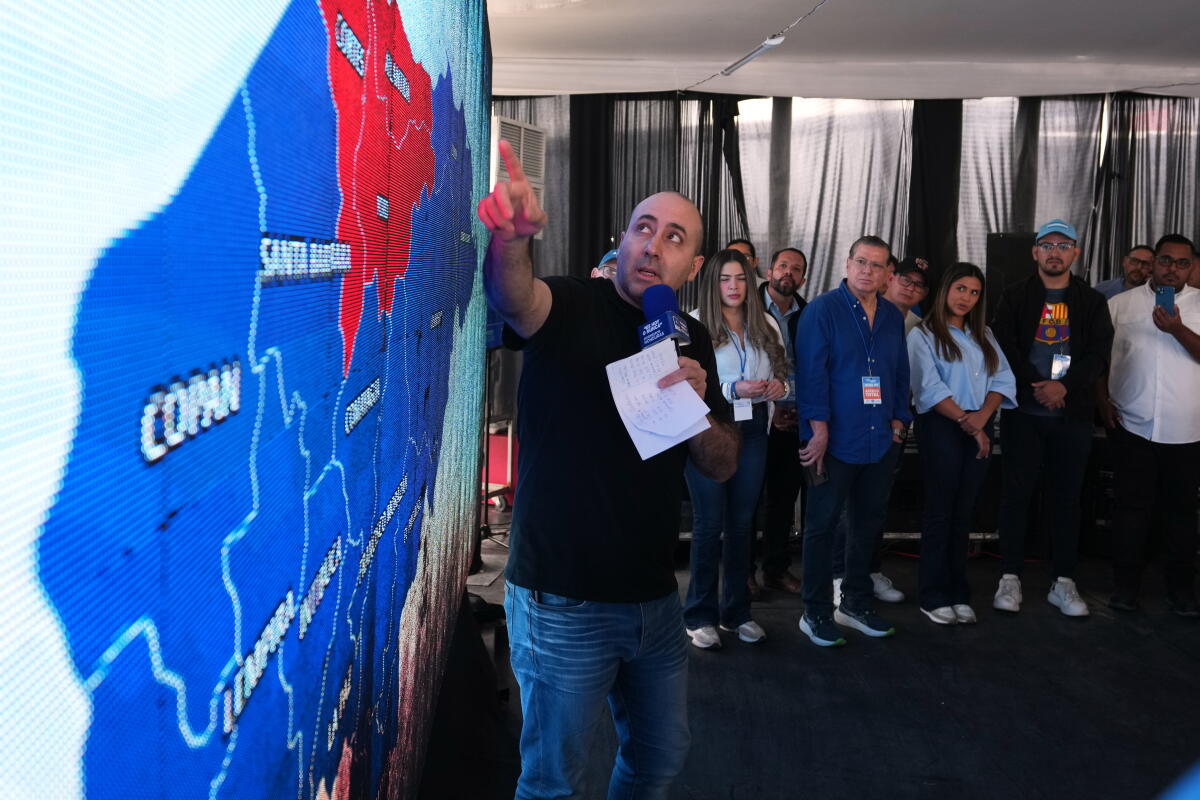
Fernando Cerimedo, an advisor to the National Party, points at a map of Honduras on Dec. 1, 2025, one day after voters went to the polls to elect Nasry Asfura president.
(Moises Castillo / Associated Press)
Both Cerimedo and Parscale were involved in last year’s campaign that resulted in the election of Honduran President Nasry Asfura, whom Trump backed publicly.
Last year, Cerimedo was a key player in the election of Bolivian President Rodrigo Paz, the center-right, U.S.-educated son of a former president who transitioned from Marxist firebrand to moderate. The ascension of Paz broke almost two decades of leftist rule by the Movement for Socialism party of ex-President Evo Morales.
Cerimedo had no official capacity in Paz’s government, but he enjoyed insider status. He accompanied Paz in March to Trump’s anti-narco “Shield of the Americas” summit, a confab of mostly conservative leaders at Trump’s Doral resort in south Florida.
Among the items found in searches of Cerimedo-linked properties, authorities say, was a business card listing him as Paz’s “chief adviser” — a nonexistent post.
“Mr. Cerimedo never had the authorization to represent … the presidency, the government or my family,” a deeply discomfited Paz said in Facebook message last month.
How exactly Cerimedo got into politics — and how he became a right-wing rabble-rouser — remains somewhat opaque. According to media accounts, he worked a series of uninspiring jobs — including stints as a taxi driver, a schoolteacher and an employee of insurance and computer firms — before veering into advertising. In 2019, he assisted the campaigns of several leftist Peronist candidates in provincial races in Argentina, and later founded his own consultancy, Numen.
Cerimedo first gained prominence in neighboring Brazil. That’s where he championed false election-fraud narratives following the narrow reelection defeat in 2022 of President Jair Bolsonaro — a MAGA stalwart — in his reelection bid against Luiz Inácio Lula da Silva, a leftist. Cerimedo’s “Brazil Was Stolen” livestream exacerbated the sense of outrage among Bolsonaro loyalists, who took to the streets in mass protests.
The Brazil exposure helped catapult Cerimedo into successful presidential campaigns in Argentina (Milei), Honduras (Asfura) and Bolivia (Paz). His arrest prompted Chilean lawmakers to create a commission to investigate Cerimedo’s possible role in that nation’s recent electoral shift to the right.
With Cerimedo’s name now toxic, Paz, Milei and other former allies have distanced themselves.
Also ditching Cerimedo was his close partner, Javier Negre, a right-wing Spanish media entrepreneur who, in 2024, purchased 50% ownership of Cerimedo’s La Derecha Diario (The Daily Right), an online, Spanish-language MAGA megaphone. The site strongly backed Colombian President Abelardo de la Espriella — who had Trump’s support — during his tight campaign this summer.
Following Cerimedo’s arrest, Negre announced that he had bought out his former partner in La Derecha Diario.
In Bolivia, the Cerimedo scandal has taken on the character of a Latin American telenovela.
A recovering Beller, shot three times in her upper body, granted interviews from her hospital bed, dishing on her lover’s alleged brutality and criminality.
According to Beller’s testimony to authorities, Cerimedo tricked her into the near-fatal rendezvous outside the hotel. He told her that a source was waiting to share details about the purported rape of a 13-year-old, she said. The supposed rapist? Bolivian ex-President Morales — a despised figure on the Latin American right.
The case has seen the once high-flying Cerimedo reduced to a slumping presence in a hoodie as authorities have shuffled the baldish, heavyset figure to hearings and lockups. Last week, he was transferred while awaiting trial to Bolivia’s maximum-security Chonchocoro prison, infamous for its high-altitude, ill-heated confines.
“I want to see my children!” a sobbing Cerimedo declared at one point in earshot of the media.
His legal team has pushed back. A defense lawyer, Margarita Arce, questioned whether Cerimedo had impregnated Beller and asserted to reporters that Beller staged a “self-inflicted attack” to smear Cerimedo and undermine the Bolivian government.
But prosecutors have sided with Beller, who told the Argentine daily Clarín: “Fernando Cerimedo wanted to kill me because I can tell everything that I know.”
Times staff writer Ana Ceballos in Washington and special correspondents Andrés D’Alessandro in Buenos Aires and Cecilia Sánchez Vidal in Mexico City contributed to this report.
As their customer base grows fast, fintechs across the region are looking to become banks in the full regulatory and economic sense.
This article appears in the September 2026 issue of Global Finance Magazine.
After nearly a decade of explosive growth, Brazil’s fintech industry has crossed a threshold that once looked unthinkable; a digital bank now counts more customers than any of the country’s storied private lenders.
According to recent data from the Central Bank of Brazil, nearly 60% of the nation’s adults now hold an account with Nubank, making it Brazil’s largest private financial institution by customer count, albeit still far from the largest by assets. Similarly, 55% of banked Brazilians primarily identify as customers of a digital bank or fintech, according to research organization Instituto Locomotiva.
“The fintech market has decidedly moved beyond access and into becoming the central piece of the Brazilian banking economy, also from the population’s perspective,” said Álvaro Machado Dias, associate director of Instituto Locomotiva.
The Brazilian experience reflects a broader shift across Latin America. Having secured a competitive customer base, the region’s fintechs are now seeking the licenses, deposits, and balance sheets that could allow them to become the banks they once set out to disrupt.
In Argentina, digital wallets have overtaken every other payment instrument, with 70% of consumers using them over the past six months compared with 52% for cash, according to Mastercard. Nu Mexico reaches roughly 15% of the adult population just seven years after entering the market, while Mercado Pago, the fintech arm of now-Montevideo-headquartered MercadoLibre Inc., now has 83 million monthly active users across eight countries, up 29% over the past year.
The shift is also changing how consumers transact. Sixty-one percent of Brazilian and 47% of Mexican consumers used a mobile device for their latest retail purchase, according to PYMNTS Intelligence’s Global Digital Shopping Index.
Having crossed that threshold with customers, the fintechs are now moving to the next stage: becoming banks in the full regulatory and economic sense. Nubank agreed in July to acquire Banco Porto Real de Investimentos S/A, enabling it to obtain a Brazilian banking license, while its Mexican unit began operating as a bank last month, becoming the first Mexican popular financial society (SOFIPO) authorized to convert.
Mercado Pago is close behind, with its own application reportedly first in line at Mexico’s banking regulator and an ambition to build the country’s largest digital bank. Mexican fintech Plata secured its license in February, while Argentina’s Ualá Bank SAU already holds a full banking license at home and in Mexico and a financing company license in Colombia.
Why A Banking License?
The economics of the transition are straightforward. As fintechs scale, the limitations of lighter regulatory charters become increasingly binding. Nu Mexico’s SOFIPO status, for example, allows deposit insurance of just 25,000 UDIs (Mexico’s inflation-indexed units of accounts) per client; a full banking license raises that ceiling sixteenfold. Banks can also compete for payroll accounts, held by only about a third of Mexican adults and concentrated largely among four incumbent institutions.
Most important, a banking license gives fintechs access to the deposits that provide the cheapest funding for a growing loan book.
Nu Mexico already holds $5.9 billion in deposits, which makes the ability to gather and deploy them at scale an increasingly important side of its business.
“Once a digital bank holds the same license, follows the same rules, and funds itself the same way, it stops being essentially different from a traditional bank,” said Reginaldo Nogueira, national director of Brazil’s Ibmec business and economics school. “The difference shifts to technology, efficiency, and customer experience.”
Accompanying that strategic shift is a much larger investment commitment. Founder David Vélez paired Nubank’s Mexican license with a projected $4.2 billion investment in the country through 2030.
The fintechs’ current profile marks a striking reversal from where the industry began. A decade ago, they were outsiders challenging Latin America’s established banks to control the region’s customers, branches and balance sheets. Today, they have crossed the most important threshold on the customer side. The next step is to acquire the regulatory privileges and funding advantages that underpin the banking business itself.
Thomas Monteiro is a contributing writer based in Spain.
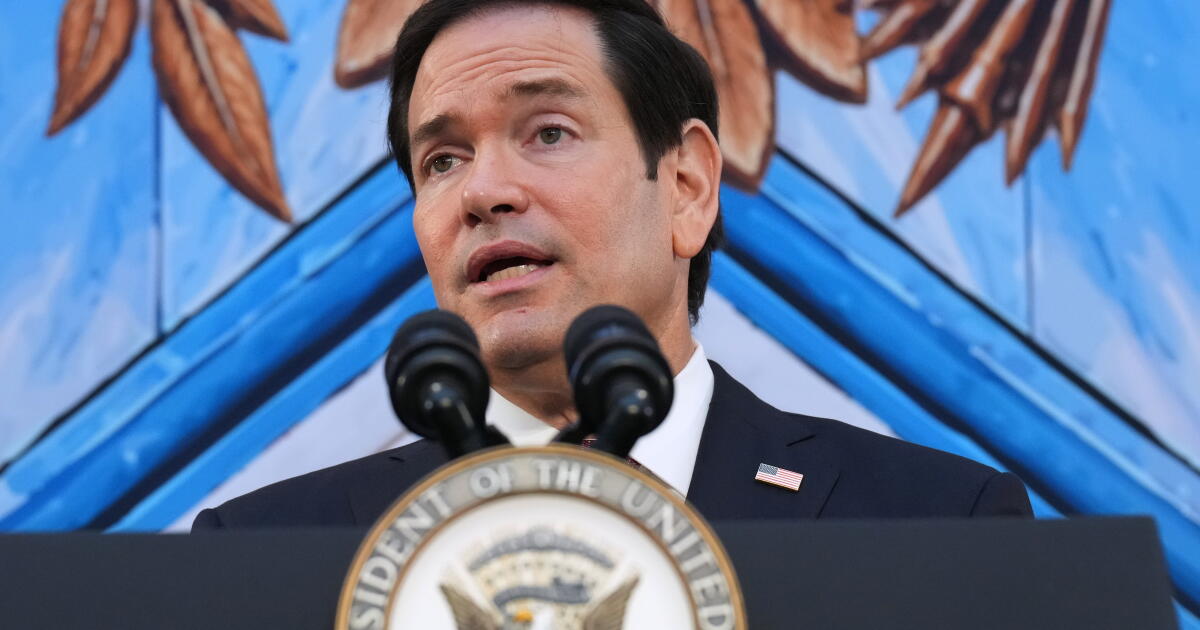
MIAMI — Secretary of State Marco Rubio begins a three-nation tour of Latin America on Tuesday, visiting U.S.-aligned conservative leaders as the Trump administration steps up military operations to combat drug trafficking and seeks further inroads in the Western Hemisphere aimed at improving America’s energy standing and combating illegal migration.
Just a week after sealing a massive oil deal with Venezuelan leaders after a U.S. military operation in January deposed then-leader Nicolás Maduro, Rubio was traveling to neighboring Colombia to meet President Abelardo de la Espriella. Colombia’s new leader has embraced President Trump’s policies on issues ranging from drugs to immigration and energy.
De la Espriella is one of a new generation of right-wing conservatives to win election and show support for Trump’s muscular approach to a region that had tilted leftward in recent decades.
In announcing the trip last week, which also will take Rubio to Ecuador and Peru, the State Department said Rubio and all three leaders would be discussing “enhanced cooperation in the shared fight against narcoterrorism, which threatens our hemisphere.”
Rubio visits as Latin American allies help expanded efforts to fight drug trafficking
The trip comes a day after U.S. forces intercepted and sank another Ecuadorian vessel that Washington accuses of links to the criminal group Los Choneros.
It was the latest action by the U.S. against boats and vessels in Latin America that it says are involved in drug trafficking. Expanded operations in the Caribbean Sea and eastern Pacific Ocean began a year ago, coinciding with an extreme crackdown on migrants in the U.S. illegally, many of them from Latin America.
The vessel sunk Monday was the fifth targeted by U.S. forces in the region in less than two weeks — in most cases with the cooperation or at least tacit support of the conservative leaders with whom Rubio will meet.
But unlike strikes on alleged drug-trafficking boats in Latin American waters that began in September 2025, those on board the vessel were removed and transferred to Ecuadorian authorities. It appears to be a shift after a series of strikes on boats over the year have killed at least 227 people, which the Trump administration accuses of being “narcoterrorists” but without providing evidence.
The U.S. military carried out at least two of those deadly strikes last month before starting to intercept floating refueling stations that it says support illicit drug trafficking operations at sea.
Colombia’s president vows to crack down on drug trafficking and immigration
Colombian Foreign Minister Omar Bula said in a video released Tuesday that Rubio’s visit marks the beginning of “rebuilding a strategic alliance with the United States, our main partner in the region.” He affirmed that Colombia will focus on discussing security, which includes combating drug trafficking, trade, and the defense of “shared values.”
De la Espriella has promised to take a hard line against drug traffickers and pledges to deport thousands of migrants who are in Colombia without residence permits, mainly Venezuelans, as he tries to make significant changes to the nation’s immigration policies that he says will reduce crime.
After taking office last month, De la Espriella brought Colombia into the Americas Counter Cartels Coalition and strengthened long-standing security cooperation with the United States, following strained relations during the 2022-2026 administration of progressive Gustavo Petro.
In just a month in office, De la Espriella has carried out at least three bombings against illegal armed groups and increased military operations. However, several minors have died during the bombings, which has drawn criticism from opposition leaders.
As part of his security strategy, he has focused his efforts on showcasing the results of military operations. However, there was criticism from the opposition and the state-run Ombudsman’s Office after De la Espriella displayed the bodies of alleged criminals wrapped in white bags on the ground alongside seized ammunition.
After winning the election, De la Espriella identified several leaders of Colombia’s illegal armed groups as “military targets.” Last week, he announced that the first of these, Naín Andrés Pérez Toncel, alias “Bendito Menor,” one of the leaders of the Self-Defense Forces of the Sierra Nevada, an illegal armed group in the north of the country, had been killed by police.
Nicknamed “El Tigre,” or The Tiger, the president has shifted the country’s security policy, closing the peace negotiations initiated by Petro during his administration, which he considers a failed effort that only increased violence in Colombia.
Colombia grapples with illegal armed groups vying for control of territories strategically important for drug trafficking and illegal mining, despite the fact that a decade ago the state signed a historic peace agreement with the FARC rebel group.
After meeting De la Espriella in Barranquilla on the Caribbean, where he will sign a civil nuclear cooperation deal and a critical minerals agreement, Rubio will make a brief stop in Quito.
He will meet Ecuadorian President Daniel Noboa whose government has steadily increased counternarcotics operations conducted with the U.S. military.
Rubio will round out the visit with a stop in Lima, Peru, where he will meet new President Keiko Fujimori — the daughter of former leader Alberto Fujimori — as the government also has taken a rightward turn.
Lee and Suárez write for the Associated Press. Suarez reported from Bogota, Colombia.