Large infrastructure projects

Europe’s ‘most hated’ building has £680m renovation project scrapped

This building was so loathed that it inspired a construction ban.

Bursting skyward from one of the most iconic skylines in the world is a building that was so hated after its construction, a law was passed to stop any more like it being built.

Tour Montparnasse is a towering, 210 metre high office skyscraper which juts up above the Montparnasse area of Paris. It was built in 1969, and is the fourth tallest building in all of France still to this day.

The tower does have an observation deck which offers views across Paris. However, there is a common joke amongst Parisians that it is the most beautiful view in the city purely because it is the only place from which you cannot see the tower itself.

Designed by architects Eugène Beaudouin Urbain Cassan and Louis de Hoÿm de Marien, the tower is a simple monolithic office block that is at odds with the rest of the surrounding buildings.

It was so strongly disliked that two years after its construction was finished, a law was passed banning the construction of any building over seven storeys in Paris.

This law stayed in place up until 2015 and was reinstated in 2023 after the construction of the Tour Triangle, the 180 metre tall pyramid-shaped glass skyscraper at Porte de Versailles.

The construction of the building was delayed by 12 years due to the backlash and multiple legal and planning battles.

In 2017, Paris approved a £680 million renovation project to revitalize Tour Montparnasse by stripping it back to its frame and replacing the dark facade with transparent glazing.

There were plans for sky gardens to soften the outline, and openings to allow natural ventilation to the building.

There was even a plan to transform the upper floors into a luxury hotel, but the entire project was scrapped earlier this week.

According to sotiraparis, this is because the asset manager of the building told the co-owners that it no longer wished to pay for the transformation and instead wants to opt for a more modest renovation which isn’t so expensive.

The future of the building now looks uncertain. A new team of architects will need to make a new plan for the renovation, but the building permit expires in November of this year, which makes things even more challenging.

There has been no timeline announced for the new project as of yet.

Source link

Widest bridge in the world cost more than £7 billion to build

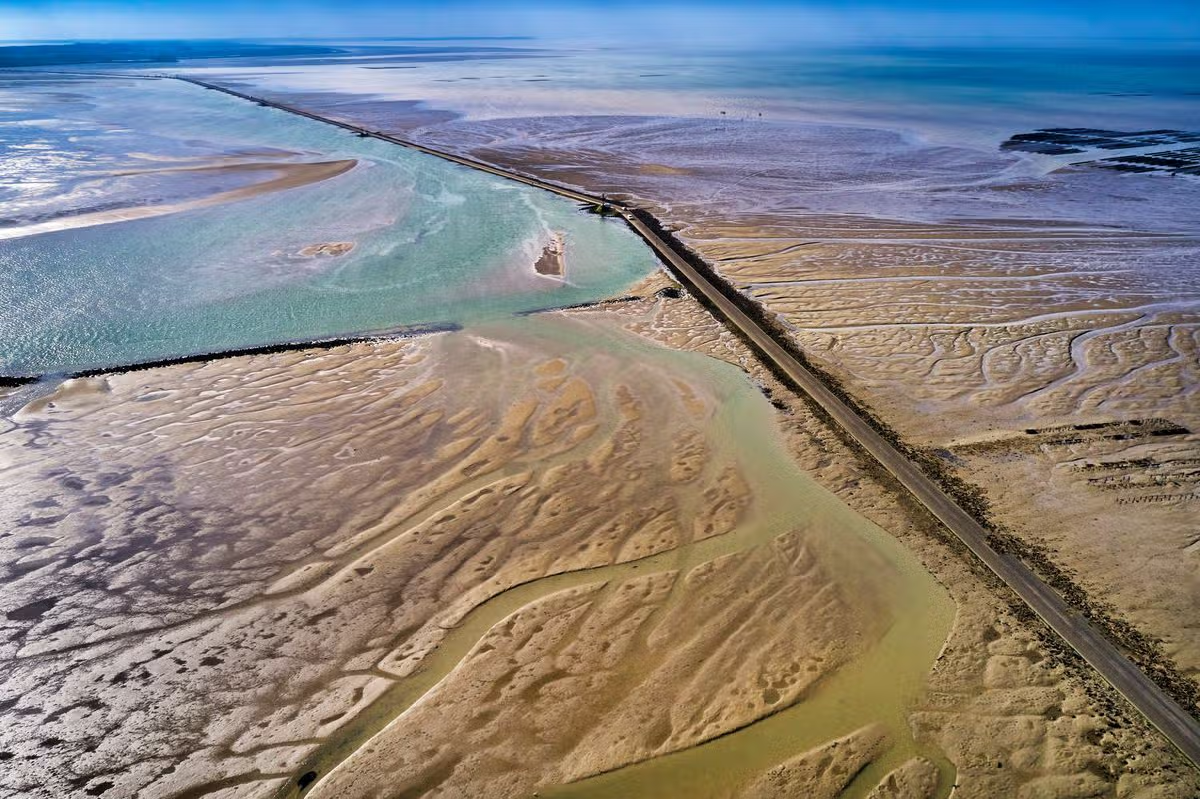
This beach is a marvel of engineering that is totally free to cross.

The world’s widest bridge is a Guinness World Record holder that cost billions of pounds to build. The Rod El Farag Axis Bridge, also known as the Tahya Misr Bridge is a cable-stayed bridge that spans the Nile River through Cairo, Egypt.

The bridge has a whopping width of 67.3 metres, making it the widest bridge in the world. It has six lanes in each direction and is also a big tourist attraction. Pedestrian visitors to the bridge can cross it using the walkway which offers panoramic views out over the Nile.

This walkway is interspersed with glass panels so that it feels as if you are hovering above the rushing river below.

As it is a public road, you can cross it free of charge and enjoy the spectacular views out over Cairo.

The construction of the bridge was implemented by the Armed Forces Engineering Authority (AFEA) in cooperation with a number of national companies.

It took four years, finishing in 2019.

According to Ihab Alphar, the chairman of the AFEA, the basic cost of the project reached an eye-watering £7.43billion.

The bridge is 540 metres long, with 92 metre high suspension towers and has seven different entry and exit ramps.

In order to build the bridge, 4,000 workers, including engineers, technicians and labourers, worked tirelessly to finish the project.

Chief executive officer and chairman of Arab Contractors Company, Mohsen Salah, said: “The engineering crews responsible for the implementation of the bridge faced many difficulties that were overcome with Egyptian engineering innovations.”

He said one of the major issues faced in building the bridge was moving 226.8 tonnes of metal beams to the assembly area.

During the peak of construction, there were 200 cranes deployed at the site to get the bridge up and running.

Builders also had to construct two custom ferry boats that were strong enough to move 544.3 tonnes of equipment to assembly zones

Source link

Most beautiful tunnel in the world cost £75million and stretches 15 miles

This tunnel is famous for its beautiful lighting and top air quality.

Norway has no shortage of beautiful roads. From snow capped mountains to glacial passes, a road trip through this gorgeous country means you will never be bored. It’s not just open road though – Norway is also home to one of the most beautiful tunnels in the world.

The Lærdal tunnel in West Norway is the longest road tunnel in the world, stretching 24.5 kilometres (15 miles) beneath a mountain range. It connects Aurland and Lærdal, in the heart of Sogn, and provides a ferry-free connection between Oslo and Bergen.

Construction of the tunnel began in 1995 and finished in 2000 and during construction an incredible 2,500,000 cubic meters of rock were extracted from the tunnel.

It cost a whopping £75million to construct. The tunnel is divided into four sections separated by three large caves.

The tunnel is known as one of the most beautiful in the world due to the way it has been designed to prevent driver fatigue and claustrophobia.

The main section of the tunnel is brightly lit with white lights, but each cave is lit with blue and yellow lighting around the edges to create the illusion of a sunrise.

These caves were lit with the idea of breaking up the monotony of the tunnel and allow drivers a short break.

The caves also work as turnaround points during the 20-minute journey.

There is also a rumble strip in each lane which stops drivers becoming inattentive and drifting.

At every kilometre, a sign lets you know how far you have travelled through the cave and how much further you have to go.

One of the other impressive things about the Lærdal Tunnel is that it is the first in the world to be equipped with an air treatment plant.

This plant can be found in a cavern 100 metres wide and it removes both dust and nitrogen dioxide from the tunnel air.

Source link